Preferential rules of origin in international trade
←
→
Page content transcription
If your browser does not render page correctly, please read the page content below
1. Preferential rules of origin in international trade
      1.1. Introduction

      Over the last two decades, there has                medium-sized enterprises (MSMEs),                    Business responses showed that
      been a proliferation in the number of               do not take advantage of preferential                the complexity of rules of origin
      preferential trade agreements (PTAs),1              tariffs. This is for a number of reasons:            leads to procedural obstacles that
      with the number in force exceeding                  1) lack of information and                           arise during their implementation.
      500 as of 2022.2 Governments view                      awareness among companies                         Rules of origin are needed to
      them as a channel to foster economic                   about existing trade agreements;                  attribute one country of origin to
      integration and to promote regional
                                                          2) inability to check whether                        each product. They are the criteria
      value chains. A key objective of these
                                                             the product is covered by                         used to define where a product
      agreements is to reduce tariff and
                                                             preferential tariffs and what                     was made and are important for
      non-tariff barriers imposed on exports
                                                             origin criteria apply;                            implementing preferential tariffs.
      from other parties to the agreement.
                                                          3) lack of knowledge of the                          Section II provides an overview of the
      In the case of preferential trade                      accompanying origin provisions;                   new data initiative jointly undertaken by
      arrangements, governments
                                                          4) lack of knowledge or                              the International Trade Centre (ITC) in
      grant preferential tariffs to least
                                                             inability to comply with                          collaboration with the World Customs
      developed and developing countries
                                                             certification provisions.                         Organization (WCO) and the WTO
      on a non-reciprocal basis to help
                                                                                                               to enhance transparency on product-
      these countries achieve economic                    ITC business surveys on non-tariff
                                                                                                               specific rules of origin. Sections III
      development through trade.                          measures conducted in 38 developing
                                                                                                               and IV elaborate on data collection
                                                          countries3 found rules of origin among
      Savings as a result of preferential tariffs                                                              methodology and provide statistical
                                                          the top trade obstacles highlighted
      is one of the most direct and tangible                                                                   insights from the constructed database.
                                                          by manufacturing businesses,
      benefits from PTAs. However, many                                                                        Section V provides conclusions.
                                                          along with conformity assessments.
      traders, particularly micro, small and

      1.2. New comprehensive database of rules of origin

      Consistent with its mission of                      coverage includes rules of origin                    including legal documentation such
      increasing transparency in trade, ITC               in preferential schemes for imports                  as specimen of certificates of origin.
      has collaborated with the WCO and                   originating in least developed
                                                                                                               Consultations are underway to expand
      the WTO to build a comprehensive                    countries based on the notifications
                                                                                                               the Rules of Origin Facilitator database
      database on rules of origin for all active          received by the WTO Secretariat.
                                                                                                               to non-preferential rules of origin,
      trade agreements in the world. This
                                                          The database and online application                  which are related to MFN treatment,
      initiative has resulted in a database
                                                          address information gaps and                         application of trade remedies,
      accessible via a free online tool,
                                                          challenges of using preferential tariffs.            tariff rate quotas, government
      the Rules of Origin Facilitator.4 As
                                                          The Rules of Origin Facilitator allows               procurement, labeling and marking,
      of June 2022, the database covers
                                                          users to identify available preferential             and other non-tariff measures such
      product-specific rules of origin in
                                                          programmes and preferential margins,                 as embargoes and sanitary and
      484 trade agreements,5 mapped
                                                          the product-specific origin criterion,               phytosanitary (SPS) measures.
      with the preferential tariff rates. The
                                                          and origin and certification provisions,

      1   Throughout this chapter, ‘preferential trade agreements’ and ‘trade agreements’ are used to denote all regional trade agreements, such as the EU-
          Japan and Regional Comprehensive Economic Partnership (RCEP), and non-reciprocal preferential trade arrangements, such as the Generalized
          Systems of Preferences (GSP).
      2   Based on the database of trade agreements available at http://findrulesoforigin.org/home/agreements accessed on 1 June 2022.
      3   For details on each survey, see https://ntmsurvey.org.
      4   Accessible for free and without registration at http://findrulesoforigin.org.
      5   List of PTAs for which rules of origin are already available in the tool can be viewed in Agreement list after toggling on “RoO available”, http://
          findrulesoforigin.org/home/agreements

                  Download the data:                                                                                          WTO ITC UNCTAD
230
                  www.wto.org/statistics                                                                               World Tariff Profiles 2022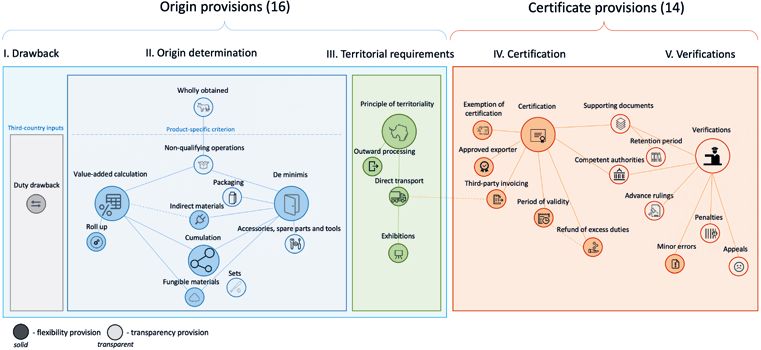
1.3. Preferential origin criteria

Preferential origin criteria define at           are in line with Standard 2 in Annex         that hosts the substantial processing
which point the product acquires                 K of the RKC. According to this              that gives it an essential character.
the origin of the country where it               standard, goods ‘wholly produced
                                                                                              There are several ways to identify
undergoes the last economically                  in a given country’ will be covered in
                                                                                              the fulfillment of the ‘substantial
significant processing. These rules are          exhaustive lists. However, in the case
                                                                                              transformation’ criterion. These include
subject to negotiation by PTA parties.           of ‘substantial transformation’ criterion,
                                                                                              rules that are based on: (i) the change
They can differ from one product to              ‘origin is determined by regarding as
                                                                                              in tariff classification, (ii) the ad valorem
another and take various forms.                  the country of origin the country where
                                                                                              percentage, or (iii) the list of specific
                                                 the last substantial manufacturing
The Revised Kyoto Convention (RKC)                                                            manufacturing or processing
                                                 or processing, deemed sufficient
of the WCO defines two main criteria                                                          operations. These three methods are
                                                 to give a commodity its essential
of origin determination: the ‘wholly                                                          interchangeable, with each having
                                                 character, has been carried out.’6 In
obtained or produced’ criterion and the                                                       certain positive and negative sides from
                                                 other words, if a product is made up
‘substantial transformation’ criterion.                                                       a business perspective. They can be
                                                 of inputs from several countries, it
                                                                                              applied separately or in combination.
With occasional deviations, origin               obtains originating status in the country
criteria in most trade agreements

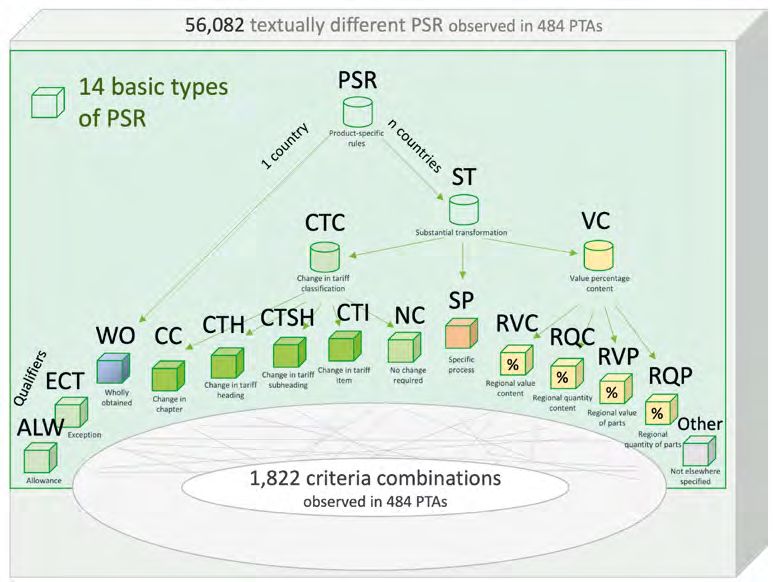
Figure 1. Classification process of 56,082 product-specific origin criteria
in 484 PTAs

                                                                                                                                              IV SPECIAL TOPICS

Note: See table 2 for description.

6   Paragraph E3./F1, Chapter 1, Annex K of the RKC.

              WTO ITC UNCTAD                                                                                    Download the data:
                                                                                                                                                 231
              World Tariff Profiles 2022                                                                        www.wto.org/statistics
Table 1. Substantially identical origin criteria for decorative plastic flowers
(HS 6702.10) formulated differently in selected PTAs
Product EU-Canada SADC EFTA-Mexico China-Korea Trans-Pacific
(2017) (2001) (2001) (2015) Strategic Economic
Partnership (2006)
HS 6702.10 A change from Manufacture from Manufacture in which all the CTH A change to heading 67.01
any other heading. materials of any materials used are classified through 67.04 from any other
heading except within a heading other heading, including another
that of the product than that of the product heading within that group.
Coded criterion CTH CTH CTH CTH CTH
Table 2: Basic types of origin criteria identified in product-specific rules of origin
Presence Rule Definition
6% WO Good is entirely (i.e. wholly) obtained or manufactured in one country without using any non-originating materials.
6% CC The originating status is conferred to a good that is classified in a different HS chapter
than the non-originating inputs.
43% CTH The originating status is conferred to a good that is classified in a different HS heading
than the non-originating inputs.
6% CTSH The originating status is conferred to a good that is classified in a different HS subheading
than the non-originating inputs.
0% CTI The originating status is conferred to a good that is classified in a different HS tariff item
than the non-originating inputs.
2% NC The non-originating inputs are not required to be classified in a different HS code than the final good
to confer originating status.
6% ALW The originating status is allowed to be conferred from non-originating inputs of specific HS codes.
6% ECT The originating status cannot be conferred to a good if the non-originating inputs are from HS codes listed
under exception.
7.5% SP A good originates in the country where a defined technical requirement, i.e. a specified working or processing,
has taken place.
50% RVC A good obtains originating status if a defined regional value content percentage has been reached.
0.2% RQC A good obtains originating status if a defined regional quantity content percentage has been reached.
1.5% RVP A good obtains originating status if a defined regional value content percentage on a part or parts
has been reached.
0.3% RQP A good obtains originating status if a defined regional quantity content percentage on a part or parts
has been reached.
14% Other Origin criteria other than related to wholly obtained, CTC, value (quantity) content, or specified process.
Note: “Presence” means % of presence of the type in origin criteria across all 3 million (PTA x HS6) combinations (as of June 2022).
Table 3. A combination-type origin criterion in USMCA
Origin criterion for high-power industrial vacuum cleaners classified in HS 8508.19 Coded criterion
A change to any other good of subheading 8508.19 from any other heading, except from heading 84.79; or (CTH + ECT) or (CTH
a change to any other good of subheading 8508.19 from subheading 8508.70, whether or not there is also a + ALW + ECT and
change from any other heading, except from heading 84.79, provided there is a regional value content of not RVC 60/50%)
less than: (a) 60 percent where the transaction value method is used; or (b) 50 percent where the net cost
method is used.
Download the data: WTO ITC UNCTAD
232
www.wto.org/statistics World Tariff Profiles 2022The complexity of product-specific method helps reduce more than 56,000 four types of origin requirements:
origin criteria stems from a number of textually distinct origin criteria found CTH, ALW, ECT and RVC.
factors. First, the criteria can be laid in 484 PTAs into 1,800 standardized,
Origin criteria are further complicated
out in different formats. From spanning coded criteria formed as a combination
by footnotes, chapter notes and
several pages, as in the Malaysia- of 14 basic types (see Figure 1).
introductory notes. For example,
Pakistan CEPA (2008), to hundreds
Table 2 presents the statistics on the the origin criterion in Table 3 is
of pages, as in the Australia‑Indonesia
most used types of criteria globally: supplemented by five chapter
CEPA (2019). In some PTAs, a
Regional value content (RVC - notes and the USMCA general
general criterion is applied for all
covering 50% of ROO) and Change interpretative note to the annex on
products, as in ECOWAS (1993).
in tariff heading (CTH – 43%). product-specific rules of origin.7
Second, they can be found in the main
The standardized notation offers a One benefit of a complex origin
text of the agreement or in annexes or
number of benefits: it cuts through criterion, as in Table 3, is that it can
in a separate protocol. In the case of
language barriers (many PTA texts are offer valuable information on input-
non-reciprocal arrangements, they are
not in English), is useful for conducting output which informs quantitative
typically found in national legislation.
economic studies, provides a self- supply chain studies. From the text of
Third, the formulations on rules of assessment tool guiding MSMEs on the rule, it can be deduced that there is
origin are not harmonized (see Table 1). how to qualify for the origin criterion, a possible way to transform mechanical
Finally, there is a wide variety of origin and facilitates capacity building efforts. appliances with individual functions
criteria discussed in more detail below. and their parts (HS 84.79) into
As an illustration of a combination
vacuum cleaners. Also, it is revealed
Origin criteria have been analyzed of the types listed above, the origin
that goods classified in HS 8508.70
and codified into 14 basic types. Any criterion for high-power industrial
are used as inputs for vacuum
origin criterion can be represented as vacuum cleaners classified in HS
cleaners. HS code 8508.70 indeed
one of these types or a combination of 8508.19 under the US-Mexico-
describes parts of vacuum cleaners.
these types. Classification of product- Canada Agreement (USMCA)
specific rules of origin based on this of 2020 (see Table 3) combines
1.4. O
rigin and certification provisions
Product-specific rules of origin cannot • Value-added calculation • Competent authority
be applied in isolation from general • Indirect materials • Period of validity
origin provisions, which are typically
• Direct transport • Retention period
found in the chapter on rules of origin
of the main text of the agreement. • Principle of territoriality • Refund of excess duties/
Relying on the Comparative Study • Packaging retroactive issuance
IV SPECIAL TOPICS
on Preferential Rules of Origin of • Fungible materials • Supporting documents
the WCO8 as the methodological • Third party invoicing
• Sets
basis, information on the following
• Exhibitions • Verifications
16 regime-wide origin provisions9
has been extracted and coded:10 • Penalties
In addition to origin provisions, trade
• Cumulation agreements contain a number of • Advance rulings
• De minimis provisions related to certification of • Minor errors
origin. Based on WCO’s Comparative • Appeals
• Roll up
Study and origin literature, the following
• Duty drawback 14 provisions are extracted and The dataset of origin and certification
• Outward processing coded for each trade agreement: provisions in 484 PTAs reveals signs of
divergence. As an illustration, the value
• Accessories, spare parts and tools • Certification
for de minimis provision11 ranges from
• Wholly obtained products • Exemption of certification 5% to 20% (see Table A1 in the Annex).
• Non-qualifying operations • Approved exporter The most common value is 10% which
7 The additional notes and input lists are captured in the Rules of Origin Facilitator database and are offered to the user as part of the core functionality
of the tool.
8 The latest version, for 2020, can be found at http://www.wcoomd.org/en/media/newsroom/2020/june/wco-publishes-updated-version-of-the-
comparative-study-on-certification-of-origin.aspx.
9 Definition of each provision can be found at https://findrulesoforigin.org/home/help.
10 Texts of relevant articles have been mapped with key provisions and are available for display as part of the database.
11 De minimis is a provision commonly found in rules of origin. It aims to add certain flexibility to the main origin criteria by allowing a tolerance on
non-originating materials not fulfilling the origin criteria. For more details, see https://findrulesoforigin.org/en/glossary?id=XkZ1hBMAACIAuZp-
&returnto=gloscenter.
WTO ITC UNCTAD Download the data:
233
World Tariff Profiles 2022 www.wto.org/statisticsFigure 2. Classification map of general origin and certification provisions
in the Rules of Origin Facilitator
occurs in almost half of PTAs (223). thresholds (weight for textiles, value criteria, which are typically not covered
A third of PTAs (172) do not include for other goods) or separate non- by de minimis provisions. These extra
de minimis provision in their texts. percentage de minimis rules for certain layers of complexity pose challenges
types of goods, typically textiles. for cross-cutting restrictiveness
A higher value of de minimis in general
In several PTAs, certain goods are analyses of rules of origin.
is considered trade facilitating.
excluded from de minimis provision.
However, the provision has an extra A map of general origin and certification
Finally, some of the 172 PTAs that
layer of complexity in many PTAs by provisions is presented in Figure 2.
do not include de minimis provision
having various bases for de minimis
rely solely on ad valorem percentage
1.5. Conclusions
As an area of rule-making that is highly crucial data insights into different The insights from the new database
technical and complex, preferential rules aspects of preferential rules of origin. It are particularly useful for policy-makers
of origin are among the main factors permits more specific categorization of and researchers. They are useful
hindering the utilization of preferential origin criteria and offers more precise inputs for policy discussions when it
tariffs under trade agreements. statistics about the frequency of each comes to the design of rules of origin
The Rules of Origin Facilitator category. In addition, it documents in PTA negotiations. They are also
provides direct benefits to MSMEs for the first time origin provisions in expected to support economic studies
by enhancing their understanding over 484 agreements. This helps to aiming to explain under-utilization of
and application of rules of origin. illustrate their distribution and to extract, preferential tariffs and to estimate the
where applicable, the key attributes. restrictiveness of rules of origin.
Delving into the global database of
product-specific rules of origin provides
Download the data: WTO ITC UNCTAD
234
www.wto.org/statistics World Tariff Profiles 2022Annex
Table A1. De minimis values in origin provisions of 484 PTAs
De minimis value Number PTAs
of PTAs
included (20%) 3 FTA, EFTA-Hong Kong; FTA, EFTA-Indonesia; FTA, EFTA-Philippines
included (15%) 35 AAP.CE 42: Chile-Cuba; AAP.CE 47: Bolivia-Cuba; Cotonou Agreement; Cuba-
Nicaragua; EPA, Cariforum-EU; EPA, EAC-EU (Interim Agreement); EPA, ESA-
EU; EPA, ESA-UK; EPA, EU-CAEMC & São Tomé and Príncipe; EPA, EU-Pacific
Islands; EPA, EU-SADC; EPA, UK-CARIFORUM; EPA, UK-Cameroon; EPA,
UK-Ghana; EPA, UK-Kenya; EPA, UK-Pacific States (Interim); EPA, UK-SACUM;
EU for GSP Countries; EU for GSP+ Countries; EU for LDCs; EU-Overseas
Countries and Territories; FTA, EFTA-SACU; FTA, Mauritius-Türkiye; Norway for
GSP countries; Norway for GSP countries-Botswana/Namibia; Norway for LDCs;
Regional group, EAC; Regional group, SADC; Switzerland for GSP Countries;
Switzerland for LDCs; Türkiye for GSP countries; Türkiye for LDCs; UK for
GSP Countries; UK for GSP Countries (Enhanced Framework); UK for LDCs
chapter-specific (10-15%) 1 EU-UK TCA
included (10% (for EU) and 1 EPA, ECOWAS & Mauritania-EU
15% (for West Africa))
included (15% (Ecuador)/10% (Cuba)) 1 AAP.CE 46: Cuba-Ecuador
included (15% for Cote d’Ivoire/ 1 EPA, UK-Cote dIvoire
10% for UK)
included (15% for Ecuador/ 1 AAP.CE 65: Chile-Ecuador
10% for Chile)
chapter-specific 9 EPA, Brunei-Japan; EPA, Chile-Japan; EPA, Indonesia-Japan; EPA, Japan-
Malaysia; EPA, Japan-Mongolia; EPA, Japan-Philippines; EPA, Japan-Singapore;
EPA, Japan-Thailand; United States Special Trade Preferences for Nepal
included (10% for textiles) 1 Japan for GSP countries
included (10%) 223 AANZFTA; AAP.CE 24: Chile-Colombia; AAP.CE 49: Colombia-Cuba; AAP.CE
51: Cuba-Mexico; AAP.CE 67: Mexico-Peru; Algeria-Tunisia; CECA, ASEAN-
Korea; CECA, India-Malaysia; CECA, India-Singapore; CEP, Hong Kong-New
Zealand; CEPA, Australia-Indonesia; CEPA, India-Korea; CEPA, Indonesia-
Korea; CEPA, Japan-UK; CEPA, New Zealand-Singapore; CER, Australia-
New Zealand; CPTPP; CU, EU-Andorra; Cuba-El Salvador; Cuba-Vietnam;
DCFTA, EU-Georgia; DCFTA, EU-Moldova; DCFTA, EU-Ukraine; Dominican
Republic-Panama; ECA, Belize-Chinese Taipei; EFTA-Costa Rica (CACM);
IV SPECIAL TOPICS
EFTA-Panama (CACM); EHP, Peru-Thailand; EPA, China-Hong Kong; EPA,
Japan-Mexico; EPA, Japan-Peru; EPA, UK-Cameroon; EU-Türkiye (agriculture);
EU-Türkiye (coal and steel); Egypt-Palestine; European Economic Area; FTA,
ASEAN-China; FTA, ASEAN-Hong Kong; FTA, Agadir; FTA, Australia-Chile;
FTA, Australia-China; FTA, Australia-Hong Kong; FTA, Australia-Japan; FTA,
Australia-Korea; FTA, Australia-Malaysia; FTA, Australia-Peru; FTA, Australia-
Singapore; FTA, Australia-Thailand; FTA, Australia-UK; FTA, Australia-United
States; FTA, Bahrain-Jordan; FTA, Bosnia and Herzegovina-Türkiye; FTA, CACM
& Panama-EU; FTA, CACM-Mexico; FTA, CACM-Panama; FTA, CAN-EU;
FTA, Canada-Colombia; FTA, Canada-Costa Rica; FTA, Canada-Honduras;
FTA, Canada-Israel; FTA, Canada-Jordan; FTA, Canada-Korea; FTA, Canada-
Panama; FTA, Canada-Peru; FTA, Canada-Ukraine; FTA, Chile-Hong Kong; FTA,
Chile-Indonesia; FTA, Chile-Malaysia; FTA, Chile-Panama; FTA, Chile-Thailand;
FTA, Chile-Türkiye; FTA, Chile-United States; FTA, Chile-Viet Nam; FTA, China-
Costa Rica; FTA, China-Georgia; FTA, China-Iceland; FTA, China-Korea; FTA,
China-Maldives; FTA, China-Mauritius; FTA, China-New Zealand; FTA, China-
Peru; FTA, China-Singapore; FTA, China-Switzerland; FTA, Chinese Taipei-El
Salvador and Honduras; FTA, Chinese Taipei-Guatemala; FTA, Chinese Taipei-
New Zealand; FTA, Chinese Taipei-Nicaragua; FTA, Chinese Taipei-Panama;
FTA, Chinese Taipei-Singapore; FTA, Colombia-Costa Rica; FTA, Colombia-
Israel; FTA, Colombia-Korea; FTA, Colombia-United States; FTA, Costa Rica-
Peru; FTA, Costa Rica-Singapore; FTA, EAEU-Singapore; FTA, EEU-Vietnam;
FTA, EFTA-Albania; FTA, EFTA-Bosnia and Herzegovina; FTA, EFTA-Canada;
FTA, EFTA-Chile; FTA, EFTA-Colombia; FTA, EFTA-Egypt; FTA, EFTA-GCC;
FTA, EFTA-Georgia; FTA, EFTA-Guatemala (CACM); FTA, EFTA-Israel; FTA,
EFTA-Jordan; FTA, EFTA-Korea; FTA, EFTA-Lebanon; FTA, EFTA-Macedonia;
FTA, EFTA-Mexico; FTA, EFTA-Montenegro; FTA, EFTA-Morocco; FTA, EFTA-
Palestine; FTA, EFTA-Peru; FTA, EFTA-Serbia; FTA, EFTA-Singapore;
WTO ITC UNCTAD Download the data:
235
World Tariff Profiles 2022 www.wto.org/statisticsTable A1. De minimis values in origin provisions of 484 PTAs
De minimis value Number PTAs
of PTAs
included (10%) 223 FTA, EFTA-Tunisia; FTA, EFTA-Türkiye; FTA, EFTA-Ukraine; FTA, EU-Bosnia
and Herzegovina; FTA, EU-Canada; FTA, EU-Chile; FTA, EU-Faroe Islands;
(cont’d) FTA, EU-Japan; FTA, EU-Korea; FTA, EU-Kosovo; FTA, EU-MERCOSUR; FTA,
EU-Macedonia; FTA, EU-Mexico; FTA, EU-Montenegro; FTA, EU-Morocco;
FTA, EU-Serbia; FTA, EU-Singapore; FTA, EU-Switzerland; FTA, EU-Viet Nam;
FTA, Egypt-Türkiye; FTA, Faroe Islands-Türkiye; FTA, GCC-Singapore; FTA,
Georgia-Hong Kong; FTA, Georgia-Türkiye; FTA, Honduras-Peru; FTA, Israel &
Palestine-Mexico; FTA, Israel-Panama; FTA, Israel-Türkiye; FTA, Israel-Ukraine;
FTA, Jordan-Syria; FTA, Jordan-Türkiye; FTA, Jordan-United Arab Emirates;
FTA, Korea-Central America; FTA, Korea-New Zealand; FTA, Korea-Peru; FTA,
Korea-Singapore; FTA, Korea-Türkiye; FTA, Korea-United States; FTA, Korea-Viet
Nam; FTA, MERCOSUR-Egypt; FTA, MERCOSUR-Israel; FTA, Macedonia-
Türkiye; FTA, Macedonia-Ukraine; FTA, Malaysia-New Zealand (MNZFTA); FTA,
Malaysia-Türkiye (MTFTA); FTA, Mexico-Panama; FTA, Moldova-Türkiye; FTA,
Montenegro-Türkiye; FTA, Montenegro-Ukraine; FTA, Morocco-Türkiye; FTA,
Morocco-United Arab Emirates; FTA, New Zealand-Thailand; FTA, Palestine-
Türkiye; FTA, Panama-Peru; FTA, Panama-Singapore; FTA, Panama-United
States; FTA, Peru-Singapore; FTA, Peru-United States; FTA, Serbia-Türkiye; FTA,
Singapore-Sri Lanka; FTA, Singapore-Türkiye; FTA, Singapore-United States;
FTA, Syria-Türkiye; FTA, Triangulo del Norte-Colombia; FTA, Tunisia-Türkiye;
FTA, Türkiye-Kosovo; FTA, UK-Korea; FTA, UK-Moldova; FTA, UK-Singapore;
FTA, UK-Ukraine; FTA, UK-Vietnam; FTA, USA-DRCAFTA; Framework on
Economic Cooperation and Trade between Palestine and Canada; Hoyvík
Agreement; Iceland for GSP countries (LDCs); Indonesia-Palestine; Interim,
EU-Albania; Israel-Jordan; Jordan-Lebanon; Jordan-Sudan; MERCOSUR-
Palestine; MERCOSUR-SACU; Montenegro for LDCs; PACER Plus; PTCA,
UK-Albania; RCEP; Regional group, ASEAN; Regional group, Alianza del
Pacifico; Regional group, CACM; Regional group, CEFTA; Regional group,
EFTA; Regional group, League Of Arab States; Trans-Pacific Strategic Economic
Partnership Agreement; UK-Egypt Association Agreement; UK-Georgia
Strategic Partnership and Cooperation Agreement; UK-Iceland-Norway trade
agreement; UK-Israel Trade and Partnership Agreement; UK-Jordan Association
Agreement; UK-Kosovo Partnership, Trade and Cooperation Agreement; UK-
Morocco Association Agreement; UK-North Macedonia Partnership, Trade and
Cooperation Agreement; UK-Palestinian Authority Political, Trade and Partnership
Agreement (Interim); UK-Switzerland trade agreement; UK-Tunisia Association
Agreement; US-Mexico-Canada Agreement (USMCA)
included (12.5% (7% of weight 1 CECPA, India-Mauritius
for textile products))
included (9%) 1 FTA, Canada-Chile
included (7 or 10%) 4 EPA, ASEAN-Japan; EPA, India-Japan; EPA, Japan-
Switzerland; EPA, Japan-Viet Nam
included (8%) 5 FTA, AAP.CE 41: Chile-Mexico; FTA, AAP.CE 60: Mexico-Uruguay;
FTA, CACM-Chile; FTA, Chile-China; FTA, Chile-Korea
included (7% for apparel) 3 United States for AGOA countries; United States for Caribbean
Basin Economic Recovery Act (CBERA); United States for
Caribbean Basin Trade Partnership Act (CBTPA)
included (7% for textiles) 1 FTA, Morocco-United States
included (7%) 12 AAP.CE 53: Brazil-Mexico; AAP.CE 55: MERCOSUR-Mexico; FTA, AAP.CE
33: Group of Three; FTA, AAP.CE 66: Bolivia-Mexico; FTA, CACM-Dominican
Republic; FTA, CARICOM-Costa Rica; FTA, CARICOM-Dominican Republic;
FTA, Costa Rica-Mexico; FTA, Mexico-Nicaragua; Regional group, NAFTA;
United States for Freely Associated States; United States for Palestine
included (5%) 2 EEU-Iran (Interim); Treaty on CIS FTA
Download the data: WTO ITC UNCTAD
236
www.wto.org/statistics World Tariff Profiles 2022Table A1. De minimis values in origin provisions of 484 PTAs
De minimis value Number PTAs
of PTAs
not included 172 AAP.A14TM 06: Argentina-Brazil-Uruguay; AAP.A14TM 07: Brazil-Uruguay;
AAP.A25TM 06: Colombia for Nicaragua; AAP.A25TM 07: Colombia for Costa
Rica; AAP.A25TM 16: Venezuela for Honduras; AAP.A25TM 20: Venezuela for
Trinidad and Tobago; AAP.A25TM 23: Venezuela for Guatemala; AAP.A25TM
24: CARICOM-Venezuela; AAP.A25TM 25: Venezuela for Nicaragua; AAP.
A25TM 26: Venezuela for Costa Rica; AAP.A25TM 29: Colombia-Panama; AAP.
A25TM 31: CARICOM-Colombia; AAP.A25TM 37: Guatemala-Mexico (Natural
Gas); AAP.CE 13: Argentina-Paraguay; AAP.CE 22: Bolivia-Chile; AAP.CE 23:
Chile-Venezuela; AAP.CE 35: MERCOSUR-Chile; AAP.CE 36: MERCOSUR-
Bolivia; AAP.CE 40: Cuba-Venezuela; AAP.CE 44: Cuba-Uruguay; AAP.CE 50:
Cuba-Peru; AAP.CE 52: Cuba-Paraguay; AAP.CE 62: MERCOSUR-Cuba; AAP.
CE 63: Uruguay-Venezuela; APTA (formerly Bangkok Agreement); Afghanistan-
India; African Continental Free Trade Area (AfCFTA); Agreement on CIS FTA;
Algeria-Jordan; Algeria-Mauritania; Algeria-Morocco; Armenia for Developing
Countries; Armenia for LDCs; Australia for GSP Countries; Australia-Canada;
Belarus (EAEU) for Developing Countries; Azerbaijan-Türkiye; Belarus (EAEU)
for LDCs; Belize-Guatemala; Brazil-Guyana; Brazil-Suriname (Rice); CARICOM-
Cuba; CEPA, Malaysia-Pakistan; CU, EU-Türkiye; Canada for Commonwealth
Caribbean Countries; Canada for LDCs; Canada-New Zealand; Cartagena
Agreement; Chile for LDCs; Chile-India; China for LDCs; China-Macao; Chinese
Taipei for LDCs; ECA, Chinese Taipei-Eswatini; ECOTA; EHP, India-Thailand;
Ecuador-El Salvador; Ecuador-Guatemala; Ecuador-Nicaragua; Egypt-Jordan;
FTA, AAP.CE 38: Chile-Peru; FTA, ASEAN-India; FTA, Armenia-Georgia;
FTA, Armenia-Kyrgyz Republic; FTA, Armenia-Moldova; FTA, Armenia-Russian
Federation; FTA, Armenia-Tajikistan; FTA, Armenia-Turkmenistan; FTA, Armenia-
Ukraine; FTA, Azerbaijan-Georgia; FTA, Azerbaijan-Moldova; FTA, Azerbaijan-
Russian Federation; FTA, Azerbaijan-Turkmenistan; FTA, Azerbaijan-Ukraine; FTA,
Bahrain-United States; FTA, Belarus-Moldova; FTA, Belarus-Russian Federation;
FTA, Belarus-Serbia; FTA, Belarus-Turkmenistan; FTA, Belarus-Uzbekistan; FTA,
COMESA-EAC-SADC; FTA, China-Pakistan; FTA, Chinese Taipei-Paraguay;
FTA, EAEU-Serbia; FTA, Egypt-Morocco; FTA, Georgia-Kazakhstan; FTA,
Georgia-Russian Federation; FTA, Georgia-Turkmenistan; FTA, Georgia-Ukraine;
FTA, India-Sri Lanka; FTA, Israel-United States; FTA, Jordan-Libya; FTA, Jordan-
Morocco; FTA, Jordan-Singapore; FTA, Jordan-United States; FTA, Kazakhstan-
Kyrgyz Republic; FTA, Kazakhstan-Russian Federation; FTA, Kazakhstan-Ukraine;
FTA, Kyrgyz Republic-Russian Federation; FTA, Kyrgyz Republic-Ukraine; FTA,
Moldova-Russian Federation; FTA, Morocco-Tunisia; FTA, Oman-United States;
FTA, Pakistan-Sri Lanka; FTA, Russia-Serbia and Montenegro; FTA, Russian
Federation-Tajikistan; FTA, Russian Federation-Turkmenistan; FTA, Russian
Federation-Ukraine; FTA, Russian Federation-Uzbekistan; FTA, Tajikistan-
Uzbekistan; FTA, Turkmenistan-Uzbekistan; FTA, Ukraine-Turkmenistan; FTA,
IV SPECIAL TOPICS
Ukraine-Uzbekistan; GSTP; Group of Eight (D8); Guinea-Morocco; India for
LDCs; India-Nepal; Iran-Bosnia and Herzegovina; Iran-Pakistan; Iran-Syria;
Iraq-Jordan; Iraq-Morocco; Jordan-Oman; Jordan-Saudi Arabia; Jordan-Tunisia;
Kazakhstan (EAEC) for GSP Countries; Kazakhstan (EAEU) for Developing
Countries; Kazakhstan (EAEU) for LDCs; Korea for LDCs; Kyrgyz Republic for
Developing Countries; Kyrgyz Republic for LDCs; Libya-Morocco; MERCOSUR-
India; MSG; Malawi-Mozambique; Mauritania-Morocco; Mauritius-Pakistan;
Morocco for African LDCs; Morocco-Saudi Arabia; Mozambique-Zimbabwe; New
Zealand for GSP Countries; New Zealand for LDCs; Organization of the Islamic
Conferences (OIC); PATCRA; PICTA; PTA, Indonesia-Pakistan; Panama-Trinidad
and Tobago; Regional group, Aladi: A.REG 04; Regional group, Aladi: AAP.AG
02 (Seeds); Regional group, CAEMC; Regional group, CARICOM; Regional
group, COMESA; Regional group, ECCAS; Regional group, ECOWAS; Regional
group, GCC; Regional group, IOC; Regional group, MERCOSUR (AAP.CE
18); Regional group, SAARC; Regional group, UMA; Regional group, WAEMU;
Russian Federation (EAEC) for Developing Countries; Russian Federation
(EAEC) for LDCs; Russian Federation (EAEU) for Developing Countries; Russian
Federation (EAEU) for LDCs; SPARTECA; Tajikistan for LDCs; Thailand for
LDCs; United States for GSP countries; Zimbabwe-Botswana Trade Agreement;
Zimbabwe-Malawi Trade Agreement; Zimbabwe-Namibia Trade Agreement
not applicable 7 CEPA, EU-Armenia; CU, EU-San Marino; Inter-Korean Exchange
and Cooperation Act; Israeli-Palestinian Customs Union;
Regional Group, Eurasian Economic Union (EEU); Regional
group, SACU; Swiss-Liechtenstein Customs Union
WTO ITC UNCTAD Download the data:
237
World Tariff Profiles 2022 www.wto.org/statisticsYou can also read


