Primary and Secondary School Programs 2020 - Royal Botanic Gardens Victoria Melbourne and Cranbourne Gardens - Royal ...
←
→
Page content transcription
If your browser does not render page correctly, please read the page content below
Royal Botanic Gardens Victoria

Primary and
Secondary School
Programs 2020
Melbourne and
Cranbourne Gardens
Learn with Royal                                  Why visit in 2020
Botanic Gardens
                                                  The year 2020 marks the International Year
Victoria                                          of Plant Health, which aims to raise global
                                                  awareness on how protecting plants can
A visit to the Gardens provides an opportunity    help end hunger, reduce poverty, protect
to experience the wonders of the natural          the environment and boost economic
environment and access a rich nature-based        development.
classroom. As one of the world’s leading
                                                  Give your students an immersive, nature-
botanic gardens, Royal Botanic Gardens
                                                  based learning experience at Melbourne
Victoria aims to support, and showcase how
                                                  or Cranbourne Gardens and support the
Victorian schools and teachers can bring
                                                  protection of plant health for the wellbeing of
curriculum to life through outdoor experiences.
                                                  people and the planet.
Led by education specialists, our learning
programs provide engagement through
stories and hands-on experiences, drawing
upon the rich sensory environment of the
living plant collections.
Learn more at rbg.vic.gov.au/learn

2
What’s inside…
Garden discovery                                         4
Supporting the curriculum                                5
Discover our highlight programs
   Wellbeing                                             6
   Sustainability                                        8
   Indigenous                                          10
   Science                                              12
   Geography                                           14
   Nature Play                                          16
   STEM                                                 18
   Professional Learning                               20
Plan your visit                                         21
Stay in touch                                          23

Royal Botanic Gardens Victoria acknowledges the Traditional Custodians of the land on which we work and learn and we pay
our respects to their Elders past, present and future.
                                                                                                                           3
Discover the Gardens

Melbourne Gardens                                 Cranbourne Gardens
The stunning Melbourne Gardens has long been      Inspire your students through connection
the living heart of Melbourne and an important    with the Australian environment at
cultural site for Indigenous Australians for      Cranbourne Gardens, which is less than an
millennia. Deepen your students’ engagement       hour’s drive from Melbourne’s city centre.
with nature and give them the chance to           Untouched native bushland circles the
explore one of the city’s most cherished          award-winning Australian Garden, where
landmarks with a learning experience in nature.   living plant collections feature species from
The Ian Potter Foundation Children’s Garden       across the continent.
provides green open spaces and plant              Home to more than 170,000 individual native
life from all around the world creates rich       plants, this 363-hectare site is also a hotspot
biodiversity, fresh air and endless learning      for a variety of native wildlife and provides
opportunities.                                    refuge for the last remaining population of
                                                  Southern Brown Bandicoots within suburban
                                                  Melbourne.

4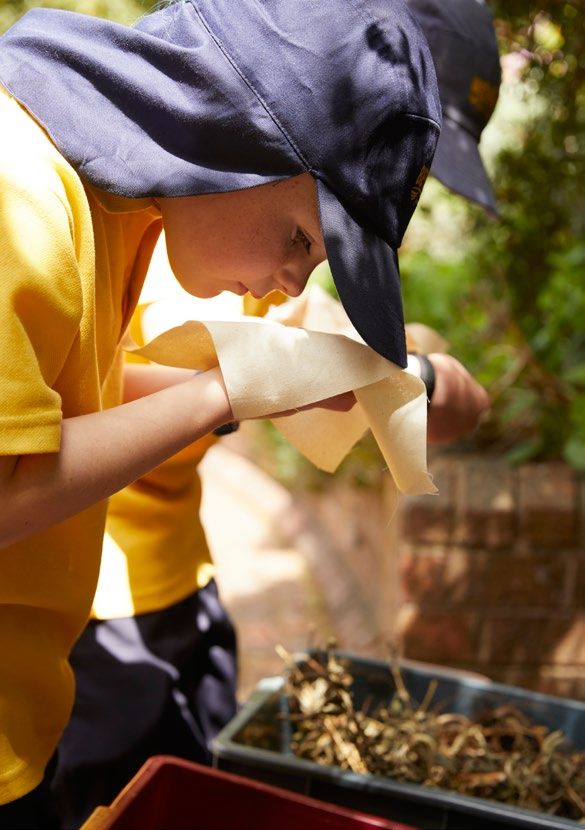
Supporting the
Victorian curriculum
Our school programs are designed to support
a range of Victorian Curriculum requirements
across the following Learning areas.

 Victorian Curriculum
 Learning Areas                  Wellbeing Sustainability Indigenous Science Geography Nature Play STEM

 Civics & Citizenship                                    link            user-graduate
 Critical & Creative
                                                                                         user-graduate                   user-graduate   user-graduate
 Thinking
 Design &
                                                                         link            user-graduate   link            user-graduate   user-graduate
 Technologies
 Economics &
                                                         link
 Business
 English                                 link            link            link            link            link            link            link
 Ethical Capability                                      link            user-graduate                   link            user-graduate
 Geography                                               user-graduate   user-graduate   user-graduate   user-graduate
 Health & Physical
                                         user-graduate                                                                   user-graduate
 Education
 History                                                                 user-graduate                   user-graduate
 Intercultural
                                                                         user-graduate                   link
 Capability
 Personal & Social
                                         user-graduate   link            link            link            link            user-graduate   link
 Capability
 Science                                 link            user-graduate   link            user-graduate   link            link            user-graduate
 Visual Arts                             user-graduate                   user-graduate                                   user-graduate   link

user-graduate Central curriculum focus
link Supporting curriculum link

Accessible and Inclusive
Learning Programs
RBGV aims to ensure all students receive
the most inclusive and accessible learning
experience possible. Please contact us
should you wish to discuss how we can best
accommodate the needs of your students,
for example adjusting teaching strategies to
support students with additional needs.
                                                                                                                                                         5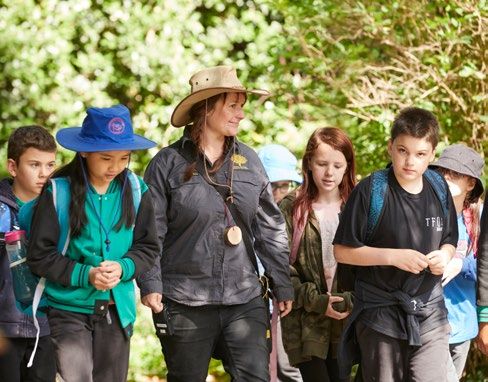
Melbourne Gardens
Wellbeing
Sustainability
Indigenous
Science
Garden Art Health & Wellbeing
Foundation to Year 6 in Nature
Year 3 to Year 10
Get creative using natural resources. Students
Geography
will explore how biology and art can interact, Experience the physical, mental and emotional
identify different patterns in nature and draw benefits of nature and spending time outdoors
inspiration from the natural world to create as you explore the diverse flora of Melbourne
their own artwork. Gardens. Students will be encouraged to see
themselves as part of the natural world and
Student Experiences Include
consider how being in nature can contribute
Nature Play
Discussing how artists respond to and are
to positive emotional and physical wellbeing.
inspired by nature
Creating leaf rubbing artworks Student Experiences Include
Using natural materials to create a collage Discovering healing benefits of plants
or mandala Learning how to improve their wellbeing
Links to Victorian Curriculum Discussing how different activities can
impact emotions
Visual Art
STEM
Science Links to Victorian Curriculum
Health & Physical Education
Personal & Social Capability
Prof. Learning
6 View our complete range of programs and full descriptions at rbg.vic.gov.au/learn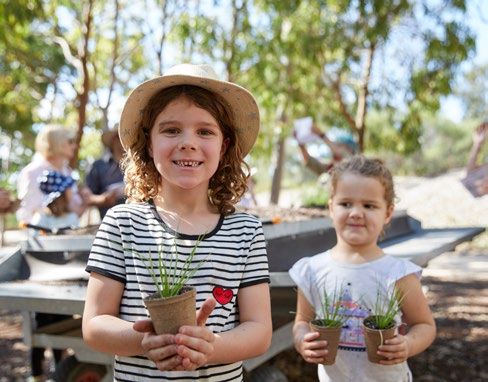
Cranbourne Gardens
Wellbeing
Sustainability
Indigenous
Science
Scents & Senses Health & Wellbeing
Foundation to Year 2 in Nature
Year 3 to Year 10
Engage your senses as you explore the
Geography
Australian Garden. Students will smell Surrounded by the beautiful native plants of
and taste the flavours of Australia, see the the Australian Garden, explore the physical,
strong light illuminating our landscapes and mental and emotional benefits of nature
listen for the sounds of nature often hidden and spending time outdoors. Students will
by our everyday movement. consider how being in nature can contribute
to positive emotional and physical wellbeing
Student Experiences Include
Nature Play
and learn how to nurture greater awareness
Investigating skulls, seedpods and scats
of themselves and others.
Stamping handprints from ochre
Sampling a taste of lemon myrtle tea Student Experiences Include
Learning mindfulness techniques
Links to Victorian Curriculum
Designing mandalas using natural materials
Health & Physical Education
Sampling a taste of native tea
Visual Art
STEM
Links to Victorian Curriculum
Health & Physical Education
Personal & Social Capability
Prof. Learning
7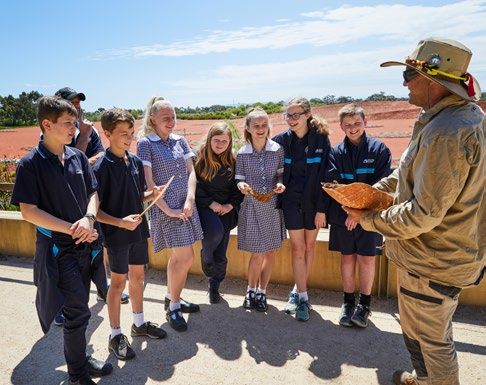
Melbourne Gardens
Wellbeing
Sustainability
Indigenous
Science
Plants & Animals Carbon Futures
Foundation to Year 4 Year 7 to Year 10
Get to know the plants and animals that live Investigate carbon in the environment and
Geography
at the botanic gardens. Learn about cycles in how it relates to climate change. Students will
nature and the fascinating plant and animal learn about the carbon cycle, discover the role
interrelationships and adaptations that exist in fungi play in balancing the ecosystem and the
different environments. importance of soil carbon sequestration.
Student Experiences Include Student Experiences Include
Nature Play
Observing invertebrates in soil and learning Discussing climate change mitigation
about microbes techniques
Creating their own creature using clay Measuring a tree to calculate its
and plant materials carbon content
Meeting carnivorous plants Cultivating their own plant to take home
Links to Victorian Curriculum Links to Victorian Curriculum
Geography Geography
STEM
Science Science
Prof. Learning
8 View our complete range of programs and full descriptions at rbg.vic.gov.au/learn
Cranbourne Gardens
Wellbeing
Sustainability
Indigenous
Science
Sustainable Gardening Endangered Species
Foundation to Year 6 Year 7 to Year 10
Learn about the needs of Australian plants Learn how to identify Southern Brown
Geography
and consider the challenges of creating Bandicoots, discover the conservation
gardens suited to Australia’s climate, while work being undertaken to save this vital
discovering how to create beautiful and species from extinction and uncover why
sustainable garden designs. Cranbourne Gardens has become a home
for the only population remaining within
Student Experiences Include suburban Melbourne.
Nature Play
Designing and constructing a landscape
Learning the importance of worm farming Student Experiences Include
Potting up their own plant to take home Discovering how Southern Brown
Bandicoots contribute to nutrient cycles
Links to Victorian Curriculum Looking for evidence of Southern Brown
Geography Bandicoot activity
Design & Technology Learning about conservation and land
management considerations
STEM
Links to Victorian Curriculum
Science
Geography
Prof. Learning
9
Melbourne Gardens
Wellbeing
Sustainability
Indigenous
Science
Connecting to Country Aboriginal
Year 3 to Year 6 Heritage Walk
Year 7 to Year 12
Develop a greater understanding of and
Geography
respect for local Aboriginal culture. Students Journey into the ancestral lands of the Eastern
will learn about the people of the Eastern Kulin Nation with an Aboriginal guide. Gain
Kulin Nation and examine the sustainable land insight into the rich history and thriving
practices used by Aboriginal people. culture of the local First Peoples, and discover
their connection to plants and their traditional
Student Experiences Include
uses for food, tools and medicine.
Nature Play
Discovering the significance of indigenous
plants and plant knowledge Student Experiences Include
Learning how Aboriginal people care for Discovering indigenous plant uses and their
plants and Country significance to Indigenous Australians
Examining Aboriginal tools and technology Enjoying a refreshing cup of lemon
myrtle tea
Links to Victorian Curriculum
Sharing stories and reflecting on the
Visual Arts
significance of Aboriginal culture
STEM
History
Geography Links to Victorian Curriculum
Intercultural Capability Visual Arts
History
Prof. Learning
Geography
Intercultural Capability
10 View our complete range of programs and full descriptions at rbg.vic.gov.au/learnCranbourne Gardens
Wellbeing
Sustainability
Indigenous
Science
Shared Country Bush Foods
Foundation to Year 6 Year 7 to Year 10
Students will discover the importance of the Discover a variety of Indigenous bush foods
Geography
environment and connection to Country, as and learn about Aboriginal knowledge of
they develop greater insight into Aboriginal agricultural systems and food-related tools.
culture and how plants can be used for fibre, Become familiar with regional edible plants
medicine, tools and food. and discover how land is managed for food
production, harvesting and preparation.
Student Experiences Include
Student Experiences Include
Nature Play
Learning about Aboriginal tools and
native plants Learning about Aboriginal tools and
Using ochre to make paint and create art edible plants
Tasting lemon myrtle tea Grinding wattle seed
Tasting lemon myrtle tea
Links to Victorian Curriculum
Civics & Citizenship Links to Victorian Curriculum
Visual Arts Geography
STEM
Geography Design & Technologies
History
Design & Technologies
Prof. Learning
11Melbourne Gardens
Wellbeing
Sustainability
Indigenous
Science
Plantworks Sustainable Gardening
Year 3 to Year 6 Year 7 to Year 10
Explore the structure and function of plants Develop the basic skills of good gardening
Geography
and discover their evolutionary purpose. practice. Students will learn about water
Students will investigate their amazing conservation, organic gardening, composting
adaptions and features from a variety of and worm farming and consider ideas for
the Gardens’ botanic collections, and, using designing and developing their own garden.
microscopes, will identify the anatomy of a
flower and other plant features. Student Experiences Include
Nature Play
Observing organic and sustainable
Student Experiences Include gardening methods
Observing plant adaptations, features Working in the garden
and functions Cultivating their own plant to take home
Drawing distinctions and connections
between plants and their related biomes Links to Victorian Curriculum
Cultivating their own plant to take home Science
Design & Technologies
STEM
Links to Victorian Curriculum Geography
Geography
Science
Prof. Learning
12 View our complete range of programs and full descriptions at rbg.vic.gov.au/learnCranbourne Gardens
Wellbeing
Sustainability
Indigenous
Science
Minibeasts Freshwater Ecosystems
Foundation to Year 2 Year 9 to Year 10
Investigate some of the creatures that share Investigate the biotic and abiotic components
Geography
our bush and wetlands and discover how they of an aquatic ecosystem. Students will learn
help gardens grow. Students will explore the how the recirculating wetland acts as a natural
life cycle of insects and learn how they live bio-filtration system to support aquatic life.
in Cranbourne Gardens. They will identify
invertebrates and consider why plants attract Student Experiences Include
or repel insects and creatures. Conducting physical and chemical tests to
Nature Play
investigate the health and biodiversity
Student Experiences Include of the wetland
Observing minibeasts through Ponding for aquatic invertebrates to
magnifying glasses support findings
Ponding for aquatic invertebrates
Links to Victorian Curriculum
Examining worms at work in the worm farm
Science
Links to Victorian Curriculum Geography
STEM
Science
Prof. Learning
13Melbourne Gardens
Wellbeing
Sustainability
Indigenous
Science
The Rainforest Food Forest
Foundation to Year 6 Foundation to Year 6
Explore the diversity of rainforest plants from Learn about nutrient cycles and food chains.
Geography
Australia and around the world. Students will Students will develop connections between
investigate the structure and ecology of a plants and healthy diets and be introduced to
rainforest and be challenged to consider the organic and sustainable gardening methods.
importance of rainforest conservation.
Student Experiences Include
Student Experiences Include Learning composting methods
Nature Play
Discussing rainforest structure and ecology Discovering the role of worms in the garden
Understanding the value of rainforests for Cultivating their own plant to take home
the wellbeing of people and the planet
Creating rainforest creatures using natural Links to Victorian Curriculum
materials Geography
Science
Links to Victorian Curriculum Design & Technologies
Geography
Health & Physical Education
STEM
Science
Economics & Business
Prof. Learning
14 View our complete range of programs and full descriptions at rbg.vic.gov.au/learnCranbourne Gardens
Wellbeing
Sustainability
Indigenous
Science
Australian Water in a Dry Country
Environments Year 7 to Year 8
Year 3 to Year 6
Discover water conserving properties
Geography
Discover the diversity and adaptations of plants and learn how the presence
of animals and plants living amongst the or absence of water shapes landscapes.
Australian landscape. Students will explore Students will consider the extreme
the wetlands and plant collections in the conditions of drought and flooding that can
Australian Garden and venture into the be experienced in Australia.
conservation zone to discover the natural
Student Experiences Include
Nature Play
wonders of the Australian bushland.
Constructing a landscape incorporating
Student Experiences Include water-saving techniques
Investigating seedpods, skulls and scats Observing the adaptations of native plants
Exploring the health and biodiversity of
to different environmental conditions
the aquatic environment Links to Victorian Curriculum
Ponding for aquatic invertebrates Geography
STEM
Links to Victorian Curriculum Science
Geography
Science
Prof. Learning
15Melbourne Gardens Cranbourne Gardens
Wellbeing
Sustainability
Indigenous
Science
Homes & Hideaways Baby Bilby
Foundation to Year 2 Foundation
Explore how plant material can be used as Join us for a journey through the Australian
Geography
homes for animals and people and learn what Garden to discover animal habitats. Students
plants need to help them grow. Students will will create landscapes, build burrows and
engage their senses as they explore the Gardens, make tracks using natural resources and
looking out for animals in their natural habitat explore the rhythm of animal movements
and discovering different plant materials. through music and dance.
Student Experiences Include Student Experiences Include
Nature Play
Learning how plants can be used for food Creating habitats using natural materials
and shelter Building burrows in the sandpit
Using natural materials to create shelters Joining in simple song and dance
and cubbies
Cultivating their own plant to take home Links to Victorian Curriculum
Science
Links to Victorian Curriculum
STEM
Design & Technologies
Science
Prof. Learning
16 View our complete range of programs and full descriptions at rbg.vic.gov.au/learnThe program was outstanding. Our students
and teachers cannot speak highly enough
regarding the program and the Royal Botanic
Gardens Victoria education team.
— St John’s Primary School Teacher
17Melbourne and Cranbourne Gardens
Wellbeing
Sustainability
Indigenous
Science
Designed by Nature Bio-Design Challenge
Year 3 to Year 6
The inaugural Bio-Design Challenge will launch
Learn how nature can be used for design in 2020. Through a project-based learning
Geography
inspiration and problem solving through experience, students will be introduced to the
biomimicry. Students will observe the tried field of bio-inspired design whilst working to
and tested biological strategies and patterns find innovative solutions to problems within
of nature and design their own nature-inspired their local community.
STEM ideas for a healthier planet. To find out more and register your interest
visit rbg.vic.gov.au/designchallenge
Student Experiences Include
Nature Play
Exploring the function and form of plants
Developing their own nature-inspired
design ideas
Engaging in systems thinking
Links to Victorian Curriculum
Science
STEM
Mathematics
Technology
Design & Technologies
Critical & Creative Thinking
Prof. Learning
18 View our complete range of programs and full descriptions at rbg.vic.gov.au/learnInside a classroom it gets stuffy, outside I’m
in fresh air. When I’m at the botanic gardens I
feel like I’m having fun because it is so big and
I think better out there. — Lam (Year 4 Student)
19Melbourne Gardens
Wellbeing
Sustainability
Indigenous
Science
Geography
Professional learning
Our curriculum-based professional learning STEPS TO SUSTAINABILITY CONFERENCE
experiences and resources support teachers in When: 25 March, 2020
engaging student learning in, and connecting Location: Melbourne Gardens
Nature Play
with, the natural environment. Programs are Be part of Victoria’s largest sustainability
delivered in partnership with Royal Botanic education conference focussed on the UN’s
Gardens Victoria and leading education International Year of Plant Health.
organisations.
ECO LEARNING NETWORK CONFERENCE View the full range of professional learning
When: 20–21 March, 2020 opportunities available during 2020 at
Location: Melbourne Gardens rbg.vic.gov.au/learn/professional-development
STEM
Join us for the Early Childhood Outdoor
(ECO) Learning Network Nature Education
Conference. Hear from a range of speakers
and attend workshops from leading
Prof. Learning
professionals across Victoria.
20 View our complete range of programs and full descriptions at rbg.vic.gov.au/learnPlan your visit
Here’s what you need to know to
plan and book your visit to the Gardens.
Program availability Program restrictions
Programs run twice daily, 10.15am to 11.45am We can cater for a maximum of 30 students
or 12.45pm to 2.15pm, during the Victorian per class, per program.
school term.
Booking a program
Programs are available Monday to Friday at
All booking requests can be made online at
Melbourne Gardens and Monday to Thursday
rbg.vic.gov.au/learn/booking. We will be in
at Cranbourne Gardens.
touch after receiving your request to confirm
Program cost your visit.
Each program is $13.50 per student (incl. GST).
Invoicing & payment
A minimum charge of 18 students per class
A Tax Invoice will be sent to your school’s
applies. Teachers and adult helpers are free.
Account Officer following your visit. Payment
Arriving at the Gardens of invoice is required within 14 days of receipt.
Please arrive at least 15 minutes prior to your
scheduled start time. We recommend using
this time to have a snack, use the bathroom
and store school bags.
Need more
information?
Visit rbg.vic.gov.au/learn or email
edserv@rbg.vic.gov.au
Alternatively, you can speak to our Learning
Team on (03) 9252 2358. Office hours are 8am
to 4pm Monday, Tuesday, Thursday, Friday.
21Learning in the Gardens provides a nature-rich environment in which students can wonder, explore, investigate and imagine. — Emily Barrow, Senior Learning Facilitator Royal Botanic Gardens Victoria 22
Stay in touch
Visit the Gardens               Join our mailing list      Connect on social media
Melbourne Gardens               envelope rbg.vic.gov.au/   #royalbotanicgardensvic
Birdwood Avenue                 learningenews              w rbg.vic.gov.au
Melbourne VIC 3004                                         Facebook BotanicGardensVictoria
Cranbourne Gardens                                         TWITTER @RBG_Victoria
Ballarto Road & Botanic Drive                              INSTAGRAM @royalbotanicgardensvic
Cranbourne VIC 3977

                                                                                           23
Royal Botanic Gardens Victoria is dedicated to the conservation, display and enjoyment of plants. At Melbourne and Cranbourne Gardens, we share our knowledge and innovative science to foster an appreciation for the inspiration and value plants provide to our lives. Find out more at rbg.vic.gov.au
You can also read


