GUINEA CONAKRY PROJECT "PORRIDGE MUMS": COMBINING INCOME GENERATING ACTIVITIES AND UNDERNUTRITION PREVENTION
←
→
Page content transcription
If your browser does not render page correctly, please read the page content below
GUINEA CONAKRY

PROJECT “PORRIDGE MUMS”:
COMBINING INCOME GENERATING
ACTIVITIES AND UNDERNUTRITION
PREVENTION
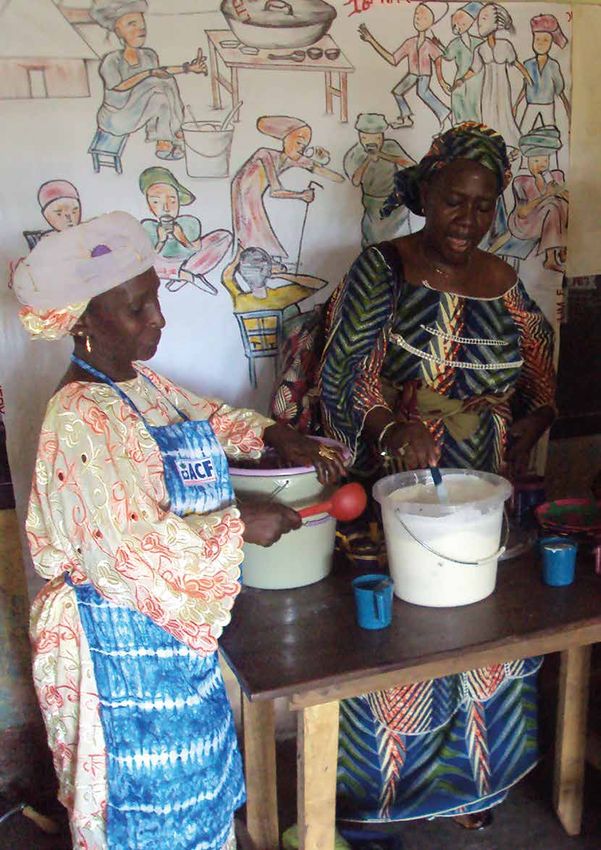
In response to high acute malnutrition rate, ACF Spain with
PRIDE and KDF partners have set up a support program
for women who produce and sell nutritious foods (also
called “Porridge Mums”) in urban communes and Matoto
Ratoma (Conakry). By supporting these income-generating
activities, ACF’s goal is to contribute to poverty reduction
and malnutrition prevention in a sustainable way with local
solutions.

                                                               2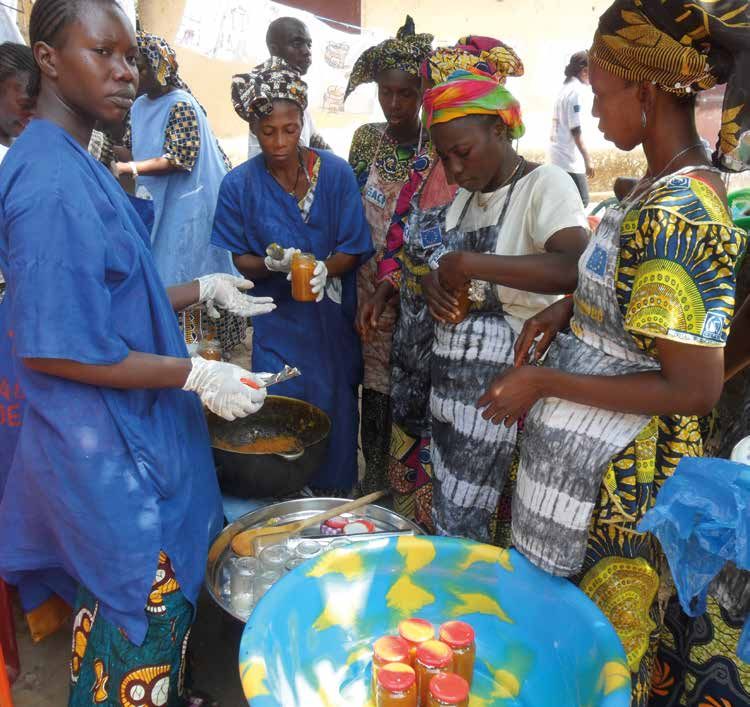
Conakry

Humanitarian context

Background                                          Assessment
                                                    ACF-E rapid investigations showed that
Despite its vast agricultural, fishing and mining   “Porridge Mums” activities were seldom
potential, Guinea remains a poor country            structured. From the poorest social strata,
(172nd in the world rankings HDI) and the           these women often work alone and they
political and economic decline situation since      lack means and knowledge in management,
2008 has led to a sharp deterioration of the        nutrition and hygiene to expand their activity.
households food situation. A survey by the          ACF-E has achieved in April 2010 a survey of
World Food Programme (WFP) conducted                knowledge, attitudes and practices (KAP) of
in 2009 in Conakry shows that 6.4% of the           those in charge of children under 5 years old
capital residents are food insecure. Finally, the   on nutrition, health and hygiene in the Matoto.
national survey (MICS / UNICEF) of January          The results confirm a relatively small knowledge
2008 on the nutritional status of children under    on these subjects. In urban areas (where the
5 years estimated acute malnutrition at 8.3%,       population is consuming more than producing
chronic malnutrition at 40% and underweight         food), income (to a sufficient and balanced
at 20.8%.                                           diet) and nutritional education are the pillars
Since 2008, ACF Spain (ACF-E) is overseeing a       in the fight against malnutrition. ACF-E and its
malnutrition treatment program by supporting        partners have focused their activities on these
five health centers integrated in the Matoto in     two pillars.
Conakry. Around these health centers and in
neighboring markets, local initiatives have been
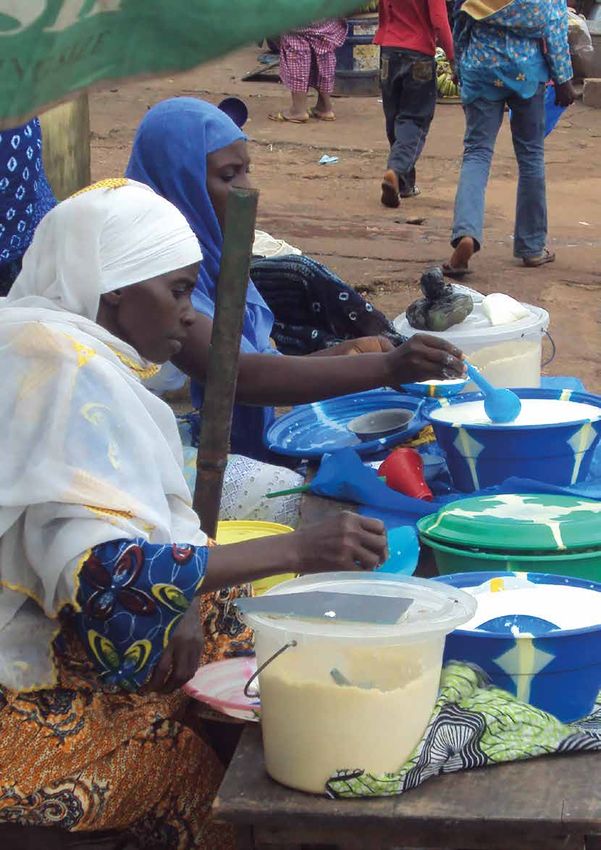
developed. This is the case of “Porridge Mums”
who produce and sell nutritious food (mainly
for babies and young children), and even
though they carry this activity primarily for
profit, they are involved, often without being
aware of, in the prevention of malnutrition.
ACF-E and its partners PRIDE Guinea and KDF
support “Porridge Mums” by strengthening their
capacity to ensure a sustainable improvement
in income and participate, through their action,
to malnutrition prevention.

                                                                                                          3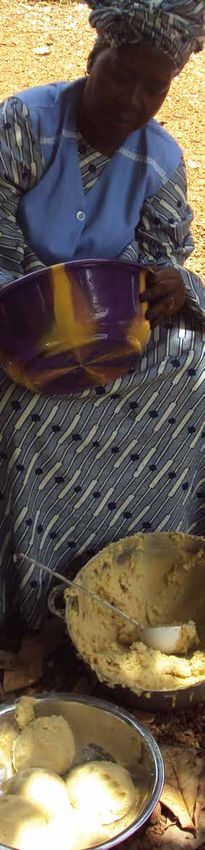
Program overview                                                 Implementation
and rationale
ACF-E and its local partners PRIDE and KDF                       Selection and targeting of beneficiaries
have established this 18-month program that                      ACF-E has selected Matoto and Ratoma
aims to:                                                         communes in Conakry to implement its
1. Increase the income of «Porridge Mums»                        program. This choice is justified by the fact that
    from the sale of nutritious foods;                           Ratoma has the most food-insecure individuals
2. Develop their involvement and role in the                     and Matoto, most populated municipality of
    malnutrition prevention.                                     Guinea, which faces pockets of moderate food
                                                                 insecurity 1. Moreover it is in these two towns
The action is to organize into associations
                                                                 that UNICEF has observed the capital highest
women producing food for children to improve
                                                                 rate of global acute malnutrition (7.4% in
the income of these «Porridge Mums» by
                                                                 Matoto; 8.5% in Ratoma) 2.
strengthening their technical skills and their
entrepreneurial and partnership spirit.                          Women supported by the program were 300,
                                                                 divided into fifteen groups.
Indeed, development support to «Porridge
Mums» associations is an important lever to the                  The direct beneficiaries are women from
prevention of child malnutrition. These women                    vulnerable households who are engaged in
are in regular contact with families and can                     the porridge production for children or in the
raise good nutritional practices awareness,                      food transformation of highly nutritional value.
identify undernourished children and refer                       Outside the “Porridge Mums”, the program
them to the appropriate health centers.                          includes the mothers of children in rehabilitation
                                                                 in health centers who were sensitized of
Project partners                                                 nutrition and trained to prepare baby food.
ACF-E led the project in partnership with two                    Similarly, were also concerned associations
Guinean NGO, PRIDE Guinea (Integrated                            or groups of existing women active in the
Program for Enterprise Development) and                          processing of nutritious foods, but unstructured,
Kanya Donse Fanyi (KDF Well Eating Kindia).                      or others wishing to produce food for children
                                                                 but whose ambitions are limited for reasons of
Each NGO has brought its expertise to                            financial resources or technical knowledge.
the project, whether for training and
nutrition awareness activities for ACF-E, for                    Associations’ establishment, training in
entrepreneurial and associative techniques for                   associative life, and registration
PRIDE Guinea and for processing techniques
                                                                 Once the women gathered in groups of 20,
and local products conservation for KDF.
                                                                 training in associative life was carried out by
                                                                 PRIDE’s team in local languages or French
                                                                 according to women’s groups.
                                                                 Training in associative life, spread over a
                                                                 period of 5 days, relied heavily on pictorial
                                                                 illustration in order to facilitate understanding
                                                                 of all women on the concepts of community life,
                                                                 associations’ legal framework, organizations
                                                                 tools basic management etc. After training
                                                                 each association organized general meetings
                                                                 to draw up the statutes, rules of procedure and
                                                                 an action plan, based on the concepts learned
                                                                 in training.

1
     PAM, ESAC 2009.
2
     National Survey of nutritional status and child survival
      monitor key indicators. UNICEF, May 2008.

                                                                                                             4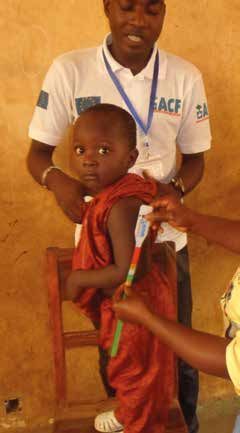
Training for entrepreneurship                              Improved food processing techniques                       Women have received practical lessons
Participants in this training series were the              Different trainings have been implemented with            on porridge enrichment from the leaves of
most literate women of each group and                      KDF: they associated theoretical and practical            Moringa; the consortium has also tested
who were designated by the other members                   aspects, and facilitated experience exchange,             some processing methods useful to women
of associations for their ability to retain                with the aim to teach “Mums” to prepare                   beneficiaries, both for their food supply base
and convey key concepts. The training in                   enriched porridge using local produce (rice and           and for income diversification:
entrepreneurship had for aim to consolidate                cowpea). Topics have been chosen following                -- Drying and storage of cassava leaves, sweet
entrepreneurial spirit of Mums, in order to                the preliminary assessment, based on both                    potatoes and sobon;
help them to well-manage their businesses. This            group discussions with women beneficiaries and            -- Drying and conservation of millet, maize and
series of training consisted of three parts, each          knowledge questions about the nutritional value              rice lumps: they represent an important raw
with a duration of 5 days:                                 of food:                                                     material for the porridge preparation and
-- Entrepreneurship: definition of                         -- Porridge preparation for children over 6                  allow “Mums” to store important quantities
   entrepreneurship concept, the characteristics              months;                                                   rather than relying on the mill every day;
   of a good business idea, the company and                -- Porridge preparation to family and                     -- Jams: their cooking allows women to
   the developer, etc.                                        commercial purposes;                                      avoid wastage of fruits during the period
-- Management: the targeted individuals                    -- Drying and storage of lumps of rice, millet               of abundance and extend the time of
   were composed of associations‘ presidents                  or corn;                                                  consumption of fruits out of season.
   and treasurers as they are responsible for              -- Cowpea cakes manufacture;                              Training “Mums” on the bases of
   managing accounts.
                                                           -- Improved yogurt.                                       malnutrition
-- Training in marketing: strengthening
                                                           During training, it was observed that despite             The section on nutrition concepts addressed the
   knowledge in terms of advertising methods,
                                                           great skills for porridge preparation and food            following topics:
   products and sales techniques promotion.
                                                           processing that the associations had they were            -- Food Groups;
                                                           not used to measure and mix ingredients.
                                                                                                                     -- Malnutrition;
                                                                                                                     -- Breastfeeding;
                                                                                                                     -- Diarrhoeal diseases.
                                                                                                                     In the part about screening, the session was
                                                                                                                     essentially practical and focused on the
                                                                                                                     mid-upper-arm-circumference measurement
                                                                                                                     (MUAC), the deferral and the results’
Figure 1 : Program theory of “Porridge Mums” project                                                                 interpretation.

                  Women’s associations are         Mothers’ skills to detect         Porridge quality (content,      Needs Assessment and material
                formalized, quality equipment     malnutrition and advise on        nutritional value, hygiene) is   endowments
     Results      and inputs are used, their     best practices are improved                  improved
                    activity is promoted                                                                             These grants were intended to allow
                                                                                                                     associations to establish a common property
                                                                                                                     management, reduce costs and work to launch
      Direct       Incomes increased from            Systematics screening,          Improved food consumption       other activities to provide additional sources
      effects       equipment and inputs         referral to health centers and     for “Porridge Mum”’s children    of income and improve their time management.
                                                 consultancy during the project                                      They were carried out in 3 stages:
                 1. Incomes increase through      3. Which sustainability for               5. High cost             1/ The first kit unconditioned, consisting mainly
    Barriers                                                                                                         of raw materials for porridge, was delivered
                     customer increased?         mothers sensitisation activities       of quality porridge?
                                                                                                                     to each association: rice, millet, corn, sugar,
                    2. Behavior change in                                              4. Customer increase?         milk powder, plastic bucket and apron. The
                         households?
                                                                                                                     objective of this first concrete support was to
                                                                                                                     encourage women to participate actively in the
  Nutritional   Sustainable income increase        Counseling and screening           High consumption of high       program (attendance at training).
     impact     and use for the malnutrition’s        sustainable routine                 quality porridge
                         prevention                                                                                  2/ The second material support was made later
                                                                                                                     in the project, after the application of lessons
                                                                                                                     learned during the training, in order to support

                                                                                                                                                                 5
Programme impact
the launch of associations collective activities. Outreach and undernutrition screening A follow-up survey conducted to measure
This support was conditional on both upstream To animate awareness sessions, women activities’ effects on the beneficiaries and to
(minimum conditions in order to obtain the kit) have used the image box at their disposal ensure the achievement of project indicators
and downstream (signing of an agreement (developed by ACF-E and approved by the shows that the socio-economic impact of the
at the association level with the commitments Ministry of Health). After being equipped, project on women beneficiaries’ family is
of good management). It was mainly food women beneficiaries were not only carried out positive.
and preparation materials, the content were malnutrition awareness activities to customers An increase in the income of most women was
determined by the women beneficiaries. but also referenced malnourished children to found: incomes increased from 15,000 FGN 3
3/ In parallel of activities and performances’ health facilities. (about 1.6 euros) to 21,600 FGN (about 2.3
monitoring, last donations were based on The implementation of screening activities and euros) per woman per day, that is to say an
needs analysis aimed at preparing associations SEO by beneficiaries need some prerequisites estimated 40% increase. These incomes were
empowerment. These donations were given on: including contact and awareness of health used largely to meet the family’s needs, such
-- Dryers: for drying without contamination facilities so that “Mums” associations are as food, education and clothing, items of
millet, maize, rice lumps and leafy vegetables; recognized as full-fledged actors of active expenditure which women contribute largely
screening of malnutrition. Under the project, through the activities they develop.
-- Additional food protection umbrellas during
sales activities; 5.179 children were measured and 9 children 87% of the women beneficiaries report
suffering from severe acute undernutrition, 175 that there have been changes in their diet.
-- Tables for associations which sell milk to
suffering from moderate acute undernutrition Greater consumption of fruits (especially after
protect food for sale;
and 196 children at risk were screened. meals), diversification of food diet enrichment
-- Grain mills: established and made available of household’s recipes. 92% of beneficiary
to the beneficiaries ( porridge saleswomen) households have a diet deemed “acceptable”,
to facilitate grain milling. For beneficiaries, rating based on the Food Consumption score
the mills are the only new Income Generating greater than 38.5 for 7 food 4 groups .
Activity (IGA). Around mills management
The three food hygiene basic measures
committees are formed and trained in the use
(cleaning and disinfection of equipment
and maintenance of the asset.
cleaning, hand washing with soap at critical
Associations’ promotion activities moments during the preparation and sale, and
the status of containers selling products) are
Three specific activities were undertaken to respected by 91% of the women.
promote associations:
-- Days “open doors” in Conakry Other indicators showed an improvement of
Considered as small fairs products entrepreneurial skills along the lines of the target
exhibition, open days were focused on groups empowerment: early in the project, only
three main activities: associations and one association could keep a cash book without
products presentation, food tasting, product knowing measure production costs and benefits;
distribution, and mass awareness through 30% of women beneficiaries are now able
small plays, to educate the public on topics to manage cash and all associations have at
such as breastfeeding, nutrition and weaning. least 15 members who know how to evaluate
production costs and profits for their business.
-- Leaflets presentation of each association
This also leads to the conclusion that women
-- International Fair of 9 to 15 April 2012 in have improved their ability to manage the
Conakry household, both in economic terms and in terms
The consortium, through KDF, has involved of knowledge and practices.
associations in the 3rd International Fair To achieve this, a consortium has been
2012 held in Guinea Palais du Peuple. A established whose value was the technical
booth was occupied by women to expose 3
FGC : Guinean Francs complementarity of each of the three partners
their food. They took the opportunity to get 4
The Food Consumption Score (FCS) tool serves as in the communication system, local support
known by distributing leaflets to different a proxy of household dietary adequacy. The FCS is a
as well as mechanisms for monitoring and
customers and traders. composite indicator measuring 3 separate elements: 1)
dietary intake, 2) food frequency – the number of days evaluating implementation. Positive synergies
on which a particular food group is consumed over the have been created throughout the project and
reference period, and 3) the relative nutrient quality of the institutional capacities of each partner are
the different food groups. seen improved.
6Lessons learned and
recommendations
However, the nutritional effect of the project
is rather limited to beneficiaries’ direct family
• To improve the impact of this type of Contact details and further
intervention, it is necessary to work more
members: 67% of the beneficiaries say enrich on the integration of direct beneficiaries
reading:
their porridge for family consumption but only (saleswomen) and indirect (their clients) Julien Jacob, Food Security and Livelihoods
47% of beneficiaries are doing it for the sale. in malnutrition prevention both within the Senior Advisor, ACF Spain,
Women have improved their knowledge and family and the community. jjacob@achesp.org
applied the lessons learned primarily within
their own family: food diversification, porridge • It is recommended to review and Claire Costis, Technical Coordinator,
improvement, food and personal hygiene are refine the beneficiaries’ identification ACF Guinea,
the most mentioned aspects. methodology of malnutrition’s causes. ccostis@gn.acfspain.org
To do this it is advisable to make a
Finally, the screening activity has encountered a joint effort between the nutrition teams For more detailed information, please
number of difficulties, especially related to: and food security in order to better refer to:
-- Illiteracy of the beneficiaries; understand the characteristics of “Mums” -- Final external evaluation report of the project
-- Other multiple occupations of women in their meeting the desired nutritional profile “Programme d’appui aux activités génératrices
sales and home management; and then decide if and how this category de revenus des associations féminines de
can be included in “Porridge Mums” IGA Conakry” - in French only
-- The lack of legitimacy that some women
strategy. -- Baseline survey Report (August 2011) and
were facing in their community;
• To improve awareness of customer and Endline survey report (May 2012) - in French
-- The integration difficulty of the community only
families living in “Mums”’ district of
screening system in some facilities
residence or sell, it must be planned -- Fact sheet project description: “Porridge
from the beginning of the procedure how Mums” in Guinea-Conakry
to identify and monitor throughout the
project a group of clients to see what
type of change may occur at the end
of the project, on the food and nutrition
situation of clients’ children. External
factors must be taken into account and
isolated when possible.
• It is also necessary to better involve
local health facilities in the identification
of potential beneficiaries who meet the
required profile of malnutrition. It’s also
important to consider the possibility of
including community volunteers in the IGA
program.
• Finally, being labeled as “Porridge
Mum” may be considered against-
productive because they do not allow
women to be recognized as other food
vendors. Furthermore, the term “Porridge
Mum” may make it difficult to men to
participate in associations.
7This document is part of a series of case studies of ACF Food Security and Livelihoods interventions aimed at reducing and/or preventing undernutrition. These case studies are developed by the ACF Working Group “Aligning Food security with Nutrition” in order to share experiences and lessons learned on the subject. All the existing case studies can be downloaded in English and in French here: http://www.actioncontrelafaim.org/fr/content/aligning-casestudies The objective of the Working Group “Aligning Food security with Nutrition” is to promote and strengthen nutrition sensitive food security interventions within ACF and partner organizations. The Working Group supports these operations by collecting and disseminating lessons learned, conducting research, developing tools and guides, and capacity building. For more information on the “Aligning” approach, refer to the ACF manual: Maximizing the nutritional impact of food security and livelihoods interventions. A handbook for field workers. http://www.actioncontrelafaim.org/fr/content/maximising
You can also read


