Public Assistance Program Applicant Briefing - OREGON OFFICEOF EMERGENCY MANAGEMENT - State of Oregon
←
→
Page content transcription
If your browser does not render page correctly, please read the page content below
OREGON OFFICE OF
 EMERGENCY M ANAGEMENT

Public Assistance Program
    Applicant Briefing
        FEMA-4599-DR-OR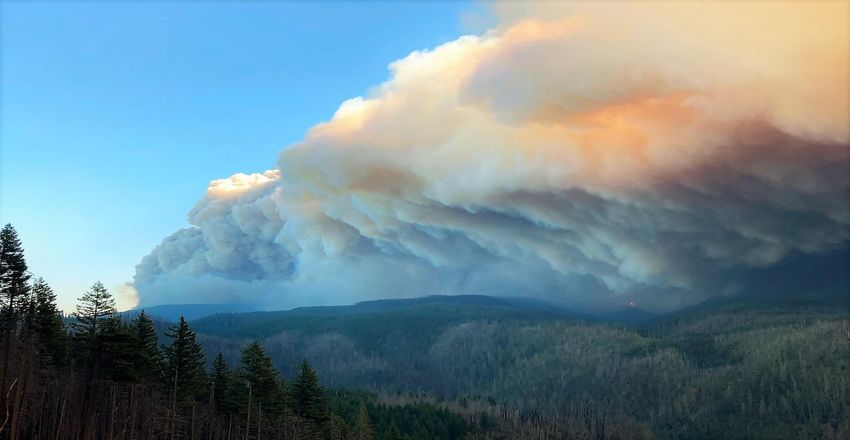
Presentation Overview
•   Major Disaster Declaration (3-5)
•   Overview of the recovery process (5)
•   General program eligibility (7-59)
•   Obtaining a Program Grant (60-71)
•   PA Delivery Model Project Phases (72-78)
•   Public Assistance Process (79)
•   Time Limits (80)
•   Grantee Funding Process (81)
•   Payments and Project Administration (82-83)
•   Administrative Management Costs (85-86)
•   Single Audit Act and OIG Audits (87-89)
•   Appeals (90)
•   Key to PA Program (91)
•   Resources (92)

                                                  FEMA-4599-DR-OR
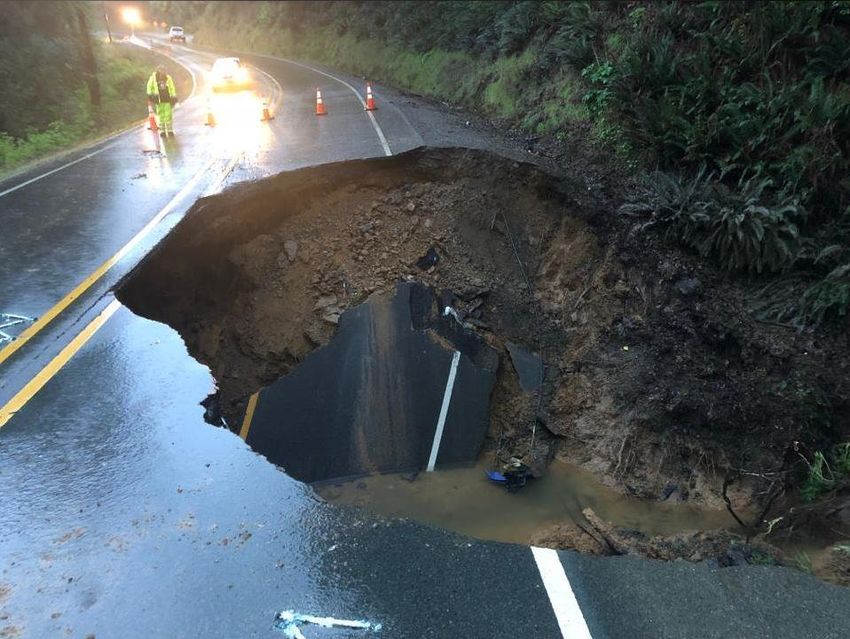
Severe Winter Storms

            Thank you for participating in the Public Assistance Briefing for the
                       February Severe Winter Storms (Ice Storm).

                                    FEMA-4599-DR-OR

OEM recommends applicants reference the FEMA Public Assistance Program and Policy Guide
                        to assist in eligibility determinations:
        https://www.fema.gov/assistance/public/policy-guidance-fact-sheets

       OEM recommends review of the FEMA Grants Portal Video Series available at:
                  https://www.fema.gov/assistance/public/apply

                                             Oregon Office of Emergency Management   5/21/2021   3
FEMA-4599-DR-OR
Declaration: May 4, 2021
Incident: Severe Winter Storm
Incident Period: February 11-15, 2021
                                            Eligible Counties
                                            Public Assistance
               Benton             Marion               The
               Clackamas          Polk                 Confederated
               Linn               Yamhill              Tribes of Grand
                                                       Ronde
                                               Cost Share
               Federal                                 Local/Sub-recipient
               75% of eligible damages                 25% of eligible damages
                                                 Oregon Office of Emergency Management   5/21/2021   4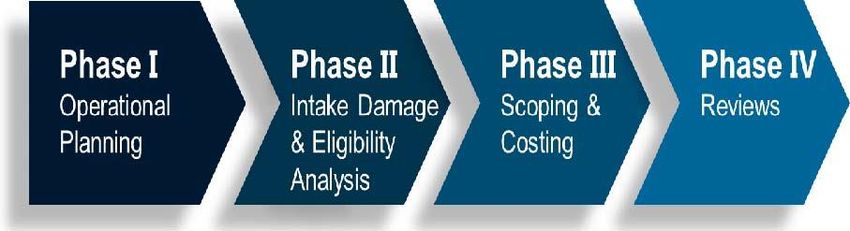
The Recovery Process
                                                                             Presidential
                  Emergency         IDA                  Request for         Declaration
                   Response         PDA                  Declaration             JFO
                                                                             established
      DISASTER
                                                             YOU ARE HERE
February 11-15, 2021
                                                                              Applicant
                                                             Recovery          Briefing
                                Collect and
                                                             Scoping         Request for
                                 validate
                                                             Meeting            Public
                              documentation
                                                                             Assistance
                    PW         PDMG & CRC
 Obligation –                                            Identification
                Development
  Recipient                                                 disaster
                and reviews
     and                                                    damages
                 CRC, EHP,
 Subrecipient                 Develop damage             within 60 days
                 INS, HMP,                                                    Exploratory
                   OEM         description –                 – site            Call with
                                 Essential                inspections           PDMG
                                Elements of
                                Information
                                     Oregon Office of Emergency Management   5/21/2021      5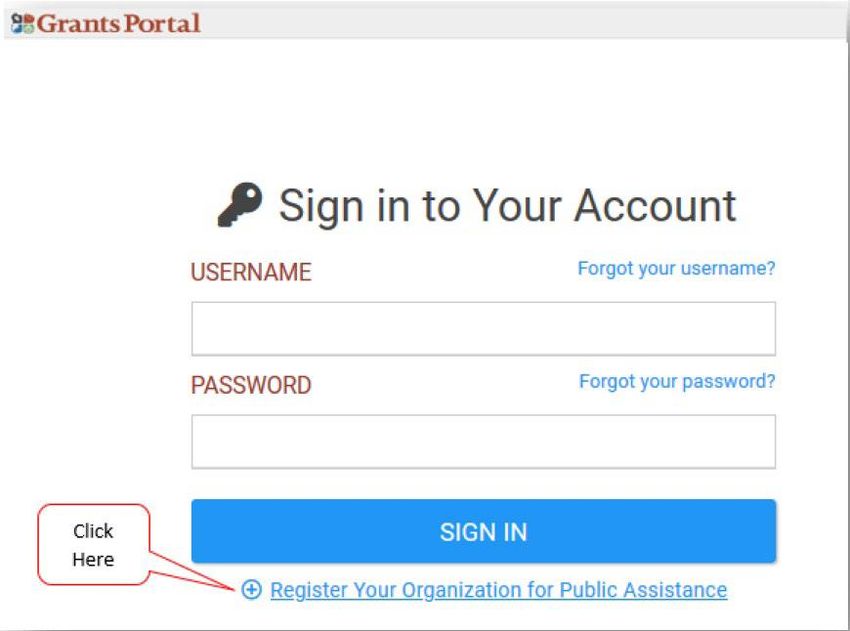
OREGON OFFICE OF
EMERGENCY M ANAGEMENT

FEMA Public Assistance
      Program

                    Oregon Office of Emergency Management
                                            5/21/2021       6
Program Eligibility

              Oregon Office of Emergency Management   5/21/2021   7
Program Eligibility (Applicant)
•   State
•   County
•   City/Town
•   Federally recognized Native American Tribes and Tribal Organizations
•   Qualifying private non-profits (PNPs) organizations
•   Other State Political sub-divisions

                                           Oregon Office of Emergency Management   5/21/2021   8
Private Non-Profit (PNP)
       Subrecipients/Applicants

❑ Critical service providers
  (i.e., power, water, educational, medical)
❑ Non-critical service providers
  (i.e., museums, community centers, performing arts centers,
  Houses of Worship, food banks)

❑ PNPs have specific application requirements
   (FEMA requires information in addition to the RPA                      when
applying for Federal Assistance)

                                Oregon Office of Emergency Management   5/21/2021   9
PNP Application Process

           Oregon Office of Emergency Management   5/21/2021   10
PNP Application Requirements
• Emergency Work:
• All PNPs eligible for FEMA assistance must apply directly to FEMA through the State for emergency
work activities.
• Permanent Work:
• Non-critical PNPs seeking FEMA assistance for permanent repairs must first apply to the U.S. Small
Business Administration (SBA) for a loan for disaster repairs. Application for FEMA assistance should
be made simultaneously.
• Dependent on SBA Loan Application Outcomes:
• If a PNP is declined for an SBA loan, the PNP may be eligible for FEMA Public Assistance.
• If the maximum loan does not fully cover damage eligible under the Public Assistance program, the
PNP may be eligible for FEMA Public Assistance.
• If PNP is approved for an SBA loan that fully covers disaster damage, then assistance
from FEMA is not available.
Oregon Office of Emergency Management 5/21/2021 11Eligibility Pyramid: Facility
COST
WORK
FACILITY
APPLICANT
Oregon Office of Emergency Management 5/21/2021 12Eligibility Facility
❑ Buildings, systems, equipment, or maintained
natural features
❑ Legal responsibility of an eligible
subrecipient/applicant
❑ Located in a designated disaster area
❑ Not under the authority of another
federal agency
❑ In active use at the time of disaster
Oregon Office of Emergency Management 5/21/2021 13Eligibility (Facility/others)
ALTERNATE USE
• Facility is restored to pre-disaster function
• Office to storage facility
UNDER CONSTRUCTION
• Typically the responsibility of the contractor until the owner has accepted the work as complete
REPLACEMENT
• A facility or portion of that facility is under construction for replacement using non-federal funds,
damage to the portion of the facility being replaced is not eligible (if contract is let)
• A facility that has been scheduled for replacement using federal funds and work is scheduled to
begin in 12 months of the time of the disaster strikes, the facility is not eligible for funding
• Repair vs. Replacement threshold is repair costs over replacement
Oregon Office of Emergency Management 5/21/2021 14Eligibility Pyramid: Work
COST
WORK
FACILITY
APPLICANT
Oregon Office of Emergency Management 5/21/2021 15Program Eligibility Work
Work must meet three eligibility criteria to be eligible for public assistance funding:
❑ Direct result of event
❑ Location: the work must be within the designated disaster area.
❑ Legal Responsibility: the work must be the legal responsibility of an eligible applicant.
❑ AND not the responsibility of another federal agency such as,
– Corps of Engineers (Dams, waterways, Levees, etc.)
– Federal Highway Admin
– National Resource Conservation Services (Drainage basins, waterways…)
Oregon Office of Emergency Management 5/21/2021 16Types of Work (categories)
Emergency Work
A. Debris Removal
B. Emergency Protective Measures
Permanent Work
C. Roads and Bridge Systems
D. Water Control Facilities
E. Public Buildings / Equipment
F. Public Utilities
G. Other (Parks, Recreation, etc.)
Oregon Office of Emergency Management 5/21/2021 17Types of Work (Emergency)
Emergency Work: Necessary to eliminate the immediate threat to lives,
public health and safety and to protect improved property.
A. Debris Removal – Approved for 6 Counties: Benton, Clackamas, Linn, Marion,
Polk, Yamhill and The Confederated Tribes of Grand Ronde
B. Emergency Protective Measures – Approved for all 6 Counties and The
Confederated Tribes of Grand RondeCategory A – Debris Removal
For debris removal to be eligible, the work must be in the public interest, which is
when removal is necessary to:
• Eliminate an immediate threat to lives, public health and safety.
• Eliminate immediate threats of significant damage to improved public or private property.
• Ensure the economic recovery of the affected community to the benefit of the community-at large.
Debris removal, includes the clearance, removal and disposal of debris. In all cases the costs associated
with these activities must be reasonable.
Oregon Office of Emergency Management 5/21/2021 19Category A - Continued Applicants need to document the following information to support debris removal claims: ❑ Estimated debris quantities by type ❑ Photographs of debris impacts if available; ❑ Disposal locations and permanent disposal sites ❑ Copies of permits for reduction and disposal sites ❑ Quantities of debris removed, reduced , disposed, and recycled (by type) with load tickets to support quantities (required if contracted) ❑ Documentation to substantiate legal responsibility ❑ The basis of the immediate threat determination ❑ Location of debris ❑ Documentation to substantiate the debris was not pre-existing Note: Private property debris removal has additional documentation requirements to determine program eligibility. Applicants are highly encouraged to review the FEMA Public Assistance Policy and Guide Book for details on program eligibility and documentation requirements – PAPPG page 99-109 5/21/2021 Oregon Office of Emergency Management 20
Category A - Continued
Applicants need to documentation debris operations           ✓ Owned (“Force Account”) equipment:
such as :                                                       ✓ Type of equipment and attachments used
✓ Quantity and type of debris:                                  ✓ Year, make, model, size/capacity
     ✓ Hauled to a temporary staging site                       ✓ Days and hours used
     ✓ Reduced, including reduction method (e.g.,               ✓ Operator name
        chipped, burned)                                     ✓ Contracted equipment
     ✓ Hauled to a final disposal site                          ✓ Certifications of truck size/capacity
     ✓ Recycled                                              ✓ Labor:
✓ Pick-up locations                                             ✓ Name
✓ Disposal locations (temporary staging, recycling,             ✓ Days and hours worked
   and final disposal)
                                                                ✓ Work performed

5/21/2021                                  Oregon Office of Emergency Management                           21
Category A – Other Eligible vegetative debris may include tree limbs, branches, stumps, or trees that are still in place , but damaged to the extent they pose an immediate threat. Hazardous limbs, Trees, and Stumps Documentation key requirements: ❑ Specifics of immediate threat with location and photograph or video documentation that established the item is on public property ❑ Quantity removed ❑ Note diameter of each tree removed (PAPPG page 103) ❑ Quantity, location, and source of material to fill root-holes; ❑ Equipment used to perform work FEMA has specific requirements on Hazardous Limbs, Trees, and stumps please refer to PAPPG page 101- 103 for details. 5/21/2021 Oregon Office of Emergency Management 22
Category A - Continued
Monitoring Debris Operations:
FEMA requires that applicants monitor all contracted debris removal operations. If it does not
monitor contracted debris removal operations, it jeopardizes FEMA funding.
Applicants may use employees (including temporary hires), contractors, or a combination for
monitoring. FEMA will provide debris monitor training to an applicant’s employees upon
request.
It is not necessary, or cost-effective, to have Professional Engineers or other certified
professionals perform debris monitoring. FEMA considers costs unreasonable when associated
with the use of staff that are more qualified than necessary.

                                              Oregon Office of Emergency Management   5/21/2021   23
Category B – Emergency Protective Measures
Emergency Protective Measures conducted before, during, and after an incident if the
measures:
• Eliminate or lessen immediate threats to lives, public health, or safety; or
• Eliminate or lessen immediate threat of significant additional damage to improved public or
private property in a cost-effective manner
– The threat of damage to improved private or public property or to lives, public health and safety as a result
of an event that could reasonably occur within five years is called an immediate threat. For example, for a
flood, the immediate threat would relate to the potential for damages resulting from a five-year flooding
event; i.e. a flood that has a 20 percent chance of occurring in any given year.
Oregon Office of Emergency Management 5/21/2021 24Category B – Emergency Protective Measures
Examples of Emergency Protective Measures include:
• Fire suppression
• Temporary emergency repairs
• Search and Rescue
• Emergency Operations Center
• Non-Congregate Sheltering
• Temporary measures taken to address hazards such as erosion control or stabilization measures and
other activities to protect life, health, safety and protect improved property
Oregon Office of Emergency Management 5/21/2021 25Labor Eligibility
Category A – Regular & Overtime (OT) for regular employees to include benefits (Applicant elects to participate in Alternative
Procedures for Debris Removal)
Category B – OT only to include benefits
Oregon Office of Emergency Management 5/21/2021 26Other Emergency Work Eligibility
Federal Highway Administration (FHWA) Debris Removal
❑ Removal of debris from improved public property and public rights-of-way, including Federal-aid
roads, is eligible.
Mutual Aid Agreement
Reimbursement for mutual aid may be provided if:
❑ A pre-event agreement exists between the requestor and responder specifying reimbursement
❑ A post event agreement is executed between the requestor and responder, within 30 days of the
Applicants’ Briefing, specifying reimbursement
❑ Agreements must not be contingent upon Federal or State
disaster funding
Oregon Office of Emergency Management 5/21/2021 27Non-Congregate Sheltering (NCS)
FEMA Emergency Non-Congregate Sheltering During the COVID-19 Public Health
Emergency (Interim) FEMA Policy 104-009-18
❑ FEMA will fund costs associated with necessary NCS activities which were incurred up to six days
before the incident period begins and for up to 30 days after the incident period ends.
❑ Time extension approval by the FEMA Region Ten Regional Administrator is required for NCS
operations beyond initial 30 days
❑ FEMA will provide flexibility to applicants to take measures to safely conduct non-congregate
sheltering activities through December 31, 2020 in the event of a Stafford Act declaration.
❑ Must have Legal Responsibility.
❑ Pre-approval of NCS is not required.
❑ The Recipient must provide sufficient data and documentation to establish eligibility of the NCS
sheltering activities, including the need for NCS resulting from the declared event, reasonableness,
and costs. For a list of documentation requirements, refer to the PAPPG.
❑ FEMA will fund costs associated with necessary NCS activities which were incurred up to six days
before the incident period begins and for up to 30 days after the incident period ends.
Oregon Office of Emergency Management 5/21/2021 28Donated Resources
• All donated resources being claimed must be documented
(who, what, when, where and why/how)
• Credit against non-fed share – specific project
• Eligible Donated Resources may be claimed only by the applicant
that has received the donation
• Eligible donated services can only be actual working time for
protective efforts and permanent (specific project) categories
• Value of labor at same rate as paid workers for similar work, or
local documented volunteer rate
• Equipment record the same as force account equipment (use
FEMA equipment rates)
• Materials value at purchased, or current commercial rate
Oregon Office of Emergency Management 5/21/2021 29Types of Work (permanent)
Permanent Work (categories C-G) is work required to restore a facility to its pre-
disaster design (size and capacity) and function in accordance with applicable codes
and standards.
C. Roads and Bridge Systems – repairs of roads, bridges and associated features (shoulders,
ditches, culverts, lighting and signs)
D. Water Control Facilities – repair of irrigation systems, drainage channels and pumping facilities
(levees, dams, and flood channels fall under cat. D restrictions to eligibility)
E. Public Buildings / Equipment – repair or replacement of buildings, including their contents and
systems; heavy equipment; and vehicles
F. Public Utilities – repair of water treatment and delivery systems; power generations facilities
and distribution lines; and sewage collection and treatment facilities
G. Other (Parks, Recreation, etc.) – repair and restoration of parks, playgrounds, pools and public
cemeteriesProgram Eligibility Permanent Work)
Permanent Work (categories C-G):
❑ Must repair, restore, or replace
disaster-damaged facilities in accordance with regulations
❑ Must restore to pre-disaster design, capacity, and function in accordance with applicable
codes and standards
❑ Must be required as a result of the disaster
❑ May include cost-effective hazard mitigation measures
Oregon Office of Emergency Management 5/21/2021 31Program Eligibility Permanent Work Eligible work (cont.) ✓ Engineering and Design Services ✓ Adopted Codes & Standards ✓ ADA required upgrades path of travel – up to 20% project cost (PAPPG page 152) ✓ Regulatory requirements and Conditions Making facilities and paths of travel more accessible allows individuals with disabilities to maintain their independence. Compliance with accessibility laws applies to all State/FEMA funded projects.
Other Permanent Work
Codes and Standards Upgrades
❑ Apply to the type of repair work required
      (damaged elements only)
❑ Be appropriate to pre-disaster use
❑ Be reasonable and formally adopted and
  implemented prior to the disaster declaration date
❑ Be applied uniformly to all similar facilities (public and
  private)
❑ Be enforced during the time it was in effect
❑ FEMA Consensus-Based Codes FP 104-009-11 V2
Donated Resources of
a Specific Project Worksheet
▪   Donated labor
▪   Donated equipment
▪   Donated materials          Oregon Office of Emergency Management   5/21/2021   33
Program Ineligibility Permanent Work
Ineligible:
• Applicant/sub-recipient negligence
• Deferred maintenance
• Pre-existing damage
Oregon Office of Emergency Management 5/21/2021 34Special Considerations
Special considerations are issues other than program eligibility that could affect the
scope of work and funding of a project.
These issues include:
– Insurance
– Floodplain Management
– Hazard Mitigation
– Environmental Protection
– Historic Preservation and Cultural Resources
Oregon Office of Emergency Management 5/21/2021 35Important Points
1. EHP review –prior to construction, failure to comply with applicable
federal, tribal, state and local environmental and historical
preservation laws could jeopardize or delay funding;
2. Applicants are responsible for all EHP permits;
3. All applicable environmental laws must be addressed in the EHP
process even if a Statutory or a Categorical NEPA Exclusion (CATEX),
Exemption is obtained; and
4. A change in a project scope will require the EHP process to restart to
address the modification which may delay project start.
5. If work has begun or must begin immediately contact the appropriate
regulatory agencies (keep all regulatory and SHPO correspondence)
Oregon Office of Emergency Management 5/21/2021 36Hazard Mitigation Scenario
Oregon Office of Emergency Management 5/21/2021 37406 Hazard Mitigation
❑ Measures to prevent repetitive damage
❑ Permanent work only
❑ FEMA may approve if cost is:
▪ Up to 15% of eligible project cost
▪ Can be up to 100% of eligible project cost if on FEMA’s pre-approved list
▪ If not on FEMA’s pre-approved list, Appendix J (PAPPG), must be cost effective based upon
acceptable cost/benefit analysis (BCA)
Oregon Office of Emergency Management 5/21/2021 38Hazard Mitigation Grant Program
Hazard Mitigation Grant Program (HMGP (404) – DR 4599)
– Oregon enhanced status, total funded to HMGP is 20 percent of the federal share of
Public Assistance estimate
– The State administers the HMGP program
– Different program than Public Assistance, requires different application process and
timelines
– Competitive Grant
– Only for proposed work to-be-completed in order to prevent future damage
Not having a FEMA-APPROVED NHMP delays any possibility of funding.
Questions contact: Amie Bashant
503.378.4660, or
amie.bashant@state.or.us
Oregon Office of Emergency Management 5/21/2021 39HOW YOU CAN HELP!
• Make the PDMG aware of any known sensitive
environmental issues when a Project is being
written
• Don’t hesitate to call the responsible agency for
clarification or information
• Consider mitigation (Part 406)
• Keep great records (maintain all correspondence
with regulatory agencies) be prepared to submit a
copy of all permit applications and/or approvals to
FEMA
Oregon Office of Emergency Management 5/21/2021 40Eligibility Pyramid: Cost
COST
WORK
FACILITY
APPLICANT
Oregon Office of Emergency Management 5/21/2021 41Cost
Must have $3,300 in eligible costs and be:
Labor (Force Account) Overtime
Contracts and Procurement
• Reasonable and necessary to accomplish the work
Material
• Compliant with federal, state, and local laws, regulations
requirements for procurement Equipment (Force Account &
Rental)
• Title 2, Code of Federal Regulations, Part 200
• Cannot duplicate funding from other Federal agencies or
insurance coverage
• Not contingent upon federal funding
• Reduced by all applicable credits and salvage values
Oregon Office of Emergency Management 5/21/2021 42Costs and Reasonable Reimbursement
• Reasonableness Criteria
✓ Must be fair and equitable
✓ Applicable to type of work
✓ “Prudent” person decision
✓ Is cost ordinary and necessary for facility and type of work?
✓ Were actions taken in prudent manner?
• Reasonable costs can be established through
✓ Historical documentation for similar work
✓ Average costs for similar work in the area
✓ Published unit costs (RS Means)
✓ FEMA cost codes
Oregon Office of Emergency Management 5/21/2021 43Labor
Force Account
Work performed by employees of the subrecipient/applicant:
❑ For emergency work (Categories B)
- typically only overtime is eligible
❑ For permanent work (Categories C through G)
- regular and overtime are eligible
Reassigned Employees Funded from an External Source
Emergency Work - Straight time of a permanent employee funded from an
external source
FEMA Public Assistance Program and Policy Guide (page 70)
➢Straight-time of permanent employee funded from external sources (such
as grant from Federal agency or statutorily dedicated funds) is eligible.
Oregon Office of Emergency Management 5/21/2021 44Labor - Regular & Overtime
Reimbursable
• Jurisdictions need to track labor and equipment hours for each employee and
any additional temporary staff
• Jurisdictions need to keep accurate hourly records for each employee and
temporary staff assigned to debris activities or any eligible PA activity
• Jurisdictions should be have labor agreement or policy available to support
cost claimed
FEMA Summary forms are available to help organize costs: see “labor: regular and overtime reimbursable” on resource page
Oregon Office of Emergency Management 5/21/2021 45Equipment
Force Account Rental
Costs of applicant owned equipment: Invoiced - Subrecipients/Applicants must
❑ Both regular time and overtime identify:
❑ Rate types used (FEMA, state and local) ❑ What was done
❑ When local rate is developed, ❑ When
reimbursement based on local rate or ❑ Where
FEMA’s rate, whichever is lower ❑ How long
❑ Standby time not eligible ❑ What kind of equipment was used
- Intermittent use half day or more ❑ Charges per project
Rates include:
❑ Cost of operation
(Operator costs covered under
FA labor)
❑ Insurance and depreciation
❑ Maintenance and fuel
Oregon Office of Emergency Management 5/21/2021 46Materials
The cost of supplies, including materials, is eligible if:
• Used for eligible work
• Purchased or from stock
• Invoices, historical data, or area vendor quotes
FEMA Summary forms are available to help
organize costs.
Oregon Office of Emergency Management 5/21/2021 47Engineering/Design Services
❑ Necessary to complete eligible work
❑ Typically for large projects
❑ Use local typical percentage of costs or work with your
PDMG
Oregon Office of Emergency Management 5/21/2021 48Public Assistance Requirements for
Contracts and Procurement
The non-Federal entity must use its own documented procurement procedures which reflect applicable
State and local laws and regulations, provided that the procurement conform to applicable Federal
law and the standards identified in this section (2 CFR 200.318-200.326).
In addition include the applicable contract clauses found in 2 CFR 200.326 and 2 CFR Part 200, Appendix
, Required Contact Clauses.
For further information see the following link:
https://www.fema.gov/public-assistance-policy-and-guidance
Procurement Disaster Assistance Team (PDAT), see PDAT Resources:
https://www.fema.gov/procurement-disaster-assistance-team
Oregon Office of Emergency Management 5/21/2021 49Contracts and Procurement
Non-State Subrecipients
Following FEMA’s Procurement Policy Is Important:
2 CFR section 200.110 provides that procurement standards set forth in 2 CFR section
200.317 to 200.326 apply to all FEMA awards issued on or after
December 26, 2014.
Office of the Inspector General (OIG) serves as an independent office within the
Department of Homeland Security (DHS) to oversee audit and investigative functions.
OIG audit reports reveal significant issues representing millions of dollars of Federal
funds.
In FY 2016, OIG audited disaster recovery projects totaling $686 million and
recommended FEMA disallow $155.6 million as ineligible and unsupported.
The #1 reason for deobligated projects is that federal procurement rules
were not followed
Oregon Office of Emergency Management 5/21/2021 50Sole-Source Procurement
Under E&E
FEMA Procurement under
Emergency and Exigent
Conditions Fact Sheet
https://www.fema.gov/grants
/procurement/understand-
exception
Oregon Office of Emergency Management 5/21/2021 51Contracts and Procurement
Non-State Subrecipients
Mistakes that can result in the disallowance of project costs.
Do Not:
Enter into contracts conditional on federal funding.
Award contracts to disbarred or suspended contractors registered on SAM.gov.
Give preference to contractors based on geographic location.
Award contracts to contractors that assisted in design requirements or plans for the project, or the advertisement.
Award time and material contracts for work not related to an ongoing emergency or exigency situation, unless no other
option exists.
(Cancel existing time and materials contracts awarded during emergency as soon as threat has been mitigated, and rebid
remaining work using a fixed price, or unit price contract.)
Award cost plus percentage of cost contracts.
FEMA will not reimburse for these contracts regardless
of the circumstance.
Oregon Office of Emergency Management 5/21/2021 52Contracts and Procurement
Non-State Subrecipients
General Requirements and Best Practices
Document everything.
Retain documents related to procurement.
Include FEMA’s required clauses and provisions in contracts.
Take the required six affirmative steps to encourage small and
woman/minority-owned business to participated in contracting process.
▪ Local Small Business Administration (SBA) office can help with DBE
outreach.
Avoid piggybacking projects off existing contracts.
Document a Cost/Price analysis justifying reasonability of contract’s price
for work to be performed, and selection of the contractor.
Oregon Office of Emergency Management 5/21/2021 53Contracts and Procurement
Non-State Subrecipients
FEMA PDAT Guidance and Tools
FEMA PDAT Procurement Guidance
FEMA Procurement Checklist
FEMA Cost/Price Analysis Guide
FEMA Required Contract Clauses and Provisions
FEMA Procurement Webinar Series
https://www.fema.gov/grants/procurement
Oregon Office of Emergency Management 5/21/2021 54Types of Projects
Oregon Office of Emergency Management 5/21/2021 55Small vs. Large Projects
Public Assistance projects are processed as either small or large projects. If the project
cost is less than the annually updated cost threshold amount ($132,800 FY21) the project
is processed as a small project. If the project cost equals, or exceeds the threshold the
project it is processed as a large project.
Minimum threshold is $3,320 to have a “project”.
Small Projects Large Projects
< $132,800 >$132,800
• Federal cost share is paid upon project • Federal cost share is paid as work is
approval accomplished
• Final assistance is based upon actual
• Funding is based on an initial cost costs incurred or approved estimate
estimate • Quarterly Reports Required on all
open large projects!
Oregon Office of Emergency Management 5/21/2021 56Improved Project
With State/FEMA approval, the applicant may restore pre-disaster function,
and make improvements (for which the applicant is financially responsible.)
Will require FEMA environmental review.
SCHOOL
SCHOOL
Oregon Office of Emergency Management 5/21/2021 57Alternate Projects
Funds used for a project other than repair of the damaged
structure:
• Must receive FEMA & State prior approval
• And will require environmental review
• Reduced to *90% of federal share (*PNP 75% of federal share), or actual cost of alternate
project, whichever is less
Participation in SRIA Permanent Procedure will eliminate the reduced rate
Oregon Office of Emergency Management 5/21/2021 58Project Completion Timelines
Start date (date of major disaster declaration): February 11, 2021
Type of work Time from start date
Debris removal 6 months
Emergency work 6 months
Permanent work 18 months
Notify the State immediately if a time extension may be required.
Oregon Office of Emergency Management 5/21/2021 59Obtaining a PA Program Grant
DR-4562
Project
Application
Applicant submits:
– Request for Public Assistance (Grants Portal)
– Contract between OEM and the Applicant (Applicant becomes Sub-recipient)
– FEMA Grant Portal is opened for Declared Disaster Assigned Program Delivery Managers (PDMG)
– Exploratory Call
– Complete Damage Inventory
– Recovery Scoping Meetings / Kick-off Meeting
– Site Inspections
– Participation in the PA Alternative Procedures (PAAP) Pilot Program - Debris Removal
Oregon Office of Emergency Management 5/21/2021 60Request for Public Assistance (RPA)
The RPA is an application for the Public Assistance Program
(PA). If an applicant (SLTT) government entity or private non-
profit (PNP) wishes to seek PA funding, it must first submit an
RPA to FEMA. FEMA accepts RPAs through PA Grants Portal for
most Applicants. PNPs must submit through the Recipient (OEM)
to FEMA.
Oregon Office of Emergency Management 5/21/2021 61FEMA Grants Portal Applicants must have a Grants Portal account to submit an RPA. This section describes how an Applicant creates a Grants Portal account. • Request an Account Directly from Grants Portal • Go to the Grants Portal home page at https://grantee.fema.gov/ and click “Register your Organization and Request Public Assistance” 5/21/2021 Oregon Office of Emergency Management 62
FEMA Grants Portal
• Grants Portal prompts the Applicant to complete basic information about the organization, contact information,
  and location and then submits the form for Recipient review.
• Grants Portal prompts the Applicant to select its “Organization Type”. If the Applicant selects an incorrect “type”,
  it will delay processing of the RPA.
     • For government entities, the Applicant should continue to submit an RPA with this account creation request.
     • Public non-profit entities, such as those that are agencies or instrumentalities of SLTT governments, are
        generally considered SLTT government entities and do not need to submit additional documentation
        required by PNP Applicants. These entities should select the government organization type that best
        describes them. If an Applicant is unsure of its type, it should consult the Recipient.
• After the Applicant completes the account request and the Recipient and FEMA have approved the RPA request,
  the Applicant receives a system-generated email with a username and temporary password to gain access to
  Grants Portal.
• Grants Portal prompts the Applicant to create a permanent password.

                                                         Oregon Office of Emergency Management   5/21/2021          63
FEMA Grants Portal
• Ensure IT systems allow for incoming emails from
support@pagrants.fema.dhs.gov
• Applicant may need to occasionally check their spam ‘junk’ folder due to IT
email filter setting
Further information:
Contact Selicity Icefire: selicity.icefire@state.or.us with question or assistance
or
https://www.fema.gov/how-apply-and-manage-grants
Grants Portal Hotline: 1-866-337-8448
Oregon Office of Emergency Management 5/21/2021 64Request for Public Assistance
Applicants must complete the following steps to request Public
Assistance:
• The Applicant logs into Grants Portal and selects “Click here to
submit a RPA for your organization” on the Dashboard.
Oregon Office of Emergency Management 5/21/2021 65Request for Public Assistance
• Select the event for which you are applying for assistance and
confirm the DUNS#, FEMA PA Code, and primary address.
Oregon Office of Emergency Management 5/21/2021 66Request for Public Assistance
Please provide information about the Applicant’s level of
experience with the Public Assistance program.
Oregon Office of Emergency Management 5/21/2021 67Request for Public Assistance
Please provide information about the Applicant’s incident-
related impacts
Oregon Office of Emergency Management 5/21/2021 68Request for Public Assistance
Oregon Office of Emergency Management 5/21/2021 69Request for Public Assistance
Oregon Office of Emergency Management 5/21/2021 70Request for Public Assistance Please provide information about the Applicant’s incident- related impacts 5/21/2021 Oregon Office of Emergency Management 71
PA Delivery Model Project Phases
Four phases to the PA Delivery Model
•   Phases I and II are conducted out of the Joint Field Office (JFO)
•   Phases III and IV are completed in the FEMA Consolidated Resource Center
    (CRC)

                                      Oregon Office of Emergency Management   5/21/2021   72
Phase I – Operational Planning
• Major Disaster Declared
• Applicant Briefing
• Applicant Submits Request for Public Assistance (RPA)
• FEMA Grant Portal is opened for Declared Disaster
• FEMA Reviews RPA – Determines Applicant Eligibility
• FEMA PDMGs are assigned to Applicants
• Exploratory Calls to Applicants
• Applicant Completes Initial Damage Inventory
• Contract between OEM and the Applicant (Applicant becomes Sub-recipient)
Oregon Office of Emergency Management 5/21/2021 73Phase I – Operational Planning
Exploratory Call – FEMA to call RPA contact:
What to do?
• Prepare Project List
– Damage Inventory Template (Grants Portal)
• Identify Special issues by project
– environmental, historic, mitigation, insurance, site conditions, etc.
• Identify Priorities
• Damage Inventory
– expanded PDA to identify all claimed damage
• Compile actual costs
– labor, equip, material, contracts, rentals
• Catalog photos by project/location/date
• Prepare project files with documentation (separate files for separate projects)
• Track Management Costs by project
Oregon Office of Emergency Management 5/21/2021 74Phase II - Recovery Scoping Meeting
Recovery Scoping Meeting (RSM) focuses on: DAMAGE INTAKE AND ELIGIBILITY
• Project List
– Damage Inventory Template
• Capture all Applicant’s disaster related-
– Damage within 60 days of the Recovery Scoping Meeting (RSM) / Kick-off Meeting
• Logically group damage sites / line items into projects
• Complete Site Inspections
– Develop DDD and SOW (Project Worksheet)
• Applicants receive Essential Elements of Information (EEI) requests
• Applicants fulfill document disclosure through the Essential Elements of Information (EEI)
process
• Applicant agreement on Damage Description and Dimensions for Standard and Specialized
projects
Oregon Office of Emergency Management 5/21/2021 75Phase III – Scoping and Costing
Completed Work – Routed to FEMA Consolidated Resource Center (CRC)
• Work is 100% Completed
– No more costs to be incurred
• May include work identified to be 100% complete within 2 weeks of Recovery
Scoping Meeting (RSM)
• Small Project Certification
– Requires limited documentation
– Limited to Cat B-G
• Project is only submitted to the FEMA CRC when all required documentation outlined
in the Essential Elements of Information (EEI) is submitted
• Payroll runs, timesheets, equipment, materials, rentals /purchases/contracts used
• Insurance documents, CBA / HR documents, Mutual Aid
Oregon Office of Emergency Management 5/21/2021 76Project Worksheet (PW) Disagreements
• Applicant agents will review damage description written by site inspectors
• Applicant agents will review all project worksheets prior to submitting to CRC for
processing and prior to obligation
• Don’t concur
– Request resolution meeting with FEMA/State
Oregon Office of Emergency Management 5/21/2021 77Phase IV – Final Stage
Final reviews are completed at the FEMA CRC and funding is obligated for the project
• FEMA PDMG continues to serve as the customer service representative for any
communication between FEMA and the Applicant during this phase
• FEMA PDMG will also conduct a Recovery Transition Meeting with Applicant and
Recipient points of contact
• Two-way Communication is Absolutely Vital!!!!
• Communicate early and often!!! FEMA PDMG and State PDMG need to know your
problems and concerns
• Applicants –Seek out Programmatic / Process Guidance
Oregon Office of Emergency Management 5/21/2021 78Public Assistance Process
Project Worksheet (PW) Development and Approvals
Recovery Scoping Applicants
Meeting (RSM) / Kick-off signature
Meeting
State PA
Collect and validate signature
Final FEMA PW Approved
documentation PA Review
supporting damage FEMA EHP
description Grantee Notifies
FEMA
Sub-grantee
Mitigation
Develop damage Insurance Sub-grantee Request
Description – Scope of Payment
Work - Conduct
eligibility determination
79
Oregon Office of Emergency Management 5/21/2021 79Time Limits
• Applying for a Public Assistance Grant - Applicant must submit a Request for Public
Assistance by June 3, 2021.
• Identifying and Formulating projects- Applicant must identify damages within 60 days of the
Recovery Scoping Meeting (RSM).
• Deadline for Emergency Work-The deadline to complete Emergency Work is 6 months from
the declaration date (state can approve an additional 6 months with justification)
• Deadline for Permanent work – 18 months from the declaration date (state can approve up
to an additional 30 months with justification)
• Project Completion- Projects to be closed with FEMA within 180 days of approved project
completion date.
Oregon Office of Emergency Management 5/21/2021 80FEMA PA Grantee Funding Process
FEMA
State
Grantee/Recipient
(OREGON EMERGENCY MANAGEMENT )
County City PNP
Sub-grantee/ Sub-grantee/ Sub-grantee/
Sub-recipient Sub-recipient Sub-recipient
Oregon Office of Emergency Management 5/21/2021 81Grantee Funding Process
Oregon Emergency Management Infrastructure Contract (Public Assistance
Contract):
In order to pass-through FEMA Public Assistance funds, Oregon
Emergency Management (OEM) must have a signed
agreement/contract with the applicant.
– Upon approvals/obligation of Project Worksheet (PW) OEM will send a package of approved PW(s) with
instructions on how to initiate payment and close out the PW
Important…
– Notify OEM immediately as soon as you identify a change to the SOW (before work starts) , and if you need
to request time extensions and cost increases that deviate from the FEMA approved Project Worksheet
Oregon Office of Emergency Management 5/21/2021 82Payments –
check (warrant) or electronic deposit
Small Projects Large Projects
The final payment on small projects is based on estimates and Final payment for large projects is based on actual eligible final
is made shortly after project approval. Submit payment costs submitted with payment request.
request forms for each approved Project Worksheet (PW).
Payment request forms can be submitted for progress
Payment will be processed upon review for payments, or a single payment request form can be submitted
compliance/conditions required on the approved PW. after the project is completed.
The applicant must certify completion (P.4) for each of its small All costs claimed and certification of completion (P.4) and
project as soon as the project is completed. Statement of Documentation (SOD) must be submitted with
claim of final payment. OEM is required to close the Large
OEM is required to certify completion and compliance of the project with FEMA within 180 days of the project completion
applicant’s small projects within 180 days of the applicant’s last date.
small project completed.
A final inspection may be conducted on the site and
documentation is required.
Oregon Office of Emergency Management 5/21/2021 83Quarterly Reports, Closeout,
Appeals, and Audits
Quarterly Progress Reports
A tool for FEMA and the OEM to track the progress of open Large
Projects on a quarterly basis
Project Reconciliation and Closeout
The purpose of closeout is for the Applicant and OEM to certify that all
work has been completed
Appeals
Applicants may appeal any FEMA determination related to an
application for, or the provision of, assistance under the PA Program.
Audits
Recipients and Subrecipients are subject to Federal and non-Federal
audits.
Oregon Office of Emergency Management 5/21/2021 84FEMA PA Management Costs (Interim)
❑ FEMA awards Management Costs up to five percent of actual
eligible Public Assistance project costs, including the non-
federal share, after insurance and any other deductions.
Management Costs are funded at 100 percent federal share
via Category Z PWs.
❑ Actual Cost up to 5% of capped amount
❑ Category B Donated Resources PWs are not included in the
calculation, since not considered project awards.
Oregon Office of Emergency Management 5/21/2021 85FEMA PA Management Costs (Interim)
Management Costs are identified as indirect, direct, and other administrative labor costs related to developing eligible Public
Assistance projects and receiving reimbursement. Activities may include, but are not limited to:
❑ Preliminary Damage Assessments
❑ Meetings regarding PA Program and overall PA damage claim
❑ Organizing PA damage sites into logical groups
❑ Preparing correspondence
❑ Site inspections
❑ Travel expenses
❑ Developing the detailed site-specific damage description
❑ Evaluating Section 406 hazard mitigation measures
❑ Preparing Small and Large Projects
❑ Collecting, copying, filing, or submitting documents to support a claim
❑ Reviewing Project Worksheets
❑ Requesting disbursement of PA funds
❑ Training
Oregon Office of Emergency Management 5/21/2021 86Documentation and Record Keeping
Stafford Act Section 705 - Imposes a three (3) year limit on FEMA’s authority to
recover payments made to State, Tribal, or local government Recipients and
Subrecipients unless there is evidence of fraud.
Oregon State requires Documentation must be retained for 6 years
• The Applicant must maintain all original documentation supporting project costs
claimed.
• The Recipient and the Applicant must keep all financial and program
documentation for 6 years after the date identified in by the State (Recipient).
• Records are subject to audit by State auditors, FEMA, the U.S. Department of
Homeland Security Office of Inspector General, and the U.S. Government
Accountability Office.
Oregon Office of Emergency Management 5/21/2021 87Single Audit Act
• If your organization receives $750,000 or more of federal grant
money in a fiscal year, must perform a single or program-
specific audit as required by OMB Circular A-133.
Oregon Office of Emergency Management 5/21/2021 88OIG Audits
The Office of the Inspector General (OIG), at the Department of Homeland Security (DHS),
determines whether subrecipients can account for expended FEMA grant funding, per
federal regulations and guidelines.
The OIG typically audits:
❑ Costs related to the FEMA-approved scope of work
❑ Procurement procedures: Federal, State, and local requirements
❑ Contract costs
❑ Force Account Labor, Materials, and Equipment costs
❑ Insurance recovery costs/duplicative costs
❑ Other
*Procurement Training Available, Web Search:
“Procurement Disaster Assistance Team”
Oregon Office of Emergency Management 5/21/2021 89Appeals
• Must be submitted within 60 days after notification of a decision regarding
assistance.
• FEMA must render a decision within 90 days following receipt of all related
information.
• Regional Administrator will notify the GAR in writing of the disposition.
• Sub-grantees will receive written notification from the GAR.
• Only two appeals are allowed!
Oregon Office of Emergency Management 5/21/2021 90Key to Public Assistance Program
Establish Grant Portal permissions within jurisdiction
• Submit RPA by registering in FEMA Grants Portal and begin Damage Inventory Template
• Establish project-specific files
• Keep project-specific files together with governing FEMA-State PA documentation,
directives, job aids
• Establish priority projects
• Prepare for FEMA-State-Applicant Exploratory Call
• Assemble right staff for Recovery Scoping Meeting
• Ensure knowledgeable staff is available to work with FEMA-State PDMGs and Project
Specialists
• Two-way Communication
– Speak up, Ask questions!
• Patience
– keep aware of project milestones!
Oregon Office of Emergency Management 5/21/2021 91Resources
• Public Assistance Program and Policy Guide (PAPPG):
https://www.fema.gov/public-assistance-policy-and-guidance
• Procurement Disaster Assistance Team (PDAT)
https://www.fema.gov/grants/procurement
Other Recommended Resources
▪ FEMA PA Grants Portal - Grants Manager YouTube Channel: FEMA's Grants Portal
Video Series
▪ Technical and training support at FEMA’s PA Grants Portal Hotline:
(866) 337-8448
▪ Grants Portal inbox: FEMA-Recovery-PA-Grants@fema.dhs.gov
Questions - Contact Julie Slevin, State Public Assistance Officer, 503-378-2235 email: Julie.Slevin@state.or.us or Dan
Gwin, Deputy Public Assistance Officer, 503-378-3254 email: dan.gwin@state.or.us
Oregon Office of Emergency Management 5/21/2021 92You can also read


