RESEARCH & INNOVATION - PROGRAMME 2021 - 27 THE EU - European Union
←
→
Page content transcription
If your browser does not render page correctly, please read the page content below
THE EU

               RESEARCH &
               INNOVATION
               PROGRAMME 2021 – 27

               This presentation is based on the political agreement of 11 December 2020
               on the Horizon Europe. Information on some parts is pending revision.

               19 March 2021

Research and
Innovation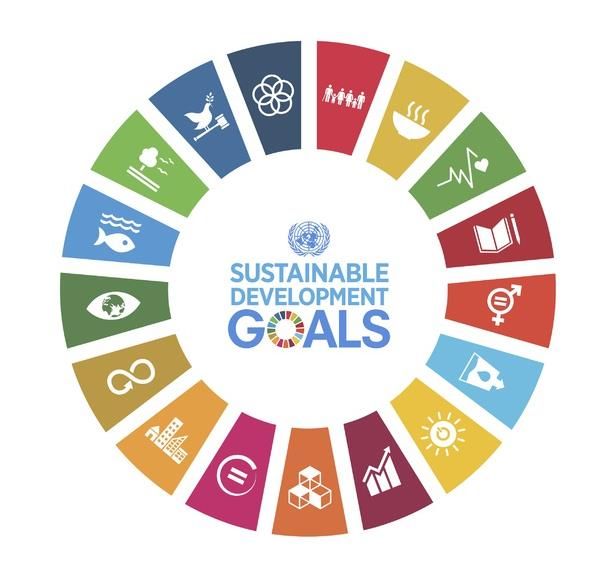
HORIZON EUROPE

Investing to shape our future

Our Vision
The EU’s key funding programme for research and innovation:
● Tackles climate change
● Helps to achieve the UN’s Sustainable Development Goals

                                                              Credits: https://www.un.org/sustainabledevelopment/sustainable-development-goals/
● Boosts the EU’s competitiveness and growth
● Facilitates collaboration and strengthens the impact of
  research and innovation in developing, supporting and
  implementing EU policies while tackling global challenges
● Supports the creation and better diffusion of excellent
  knowledge and technologies
● Creates jobs, fully engages the EU’s talent pool, boosts
  economic growth, promotes industrial competitiveness and
  optimises investment impact within a strengthened
  European Research Area.
While benefiting from world-class research and strong
industries… Our knowledge and skills are our main resources

                                        6% of the world's         1.5% EU business
                                        population                R&D investment

                                        17% of global R&D

                                        25% of all high-quality
                                        scientific publications

                                                                  EU figure is for 2019
                                                                  Figures for USA, Japan, China and South Korea
                                                                  are for 2018. Figures represent R&D as % of GDP
 …Europe can do better at
 transforming this into leadership in
 innovation and entrepreneurship
HORIZON EUROPE                                                                          EURATOM

SPECIFIC                           SPECIFIC PROGRAMME IMPLEMENTING HORIZON EUROPE & EIT*
PROGRAMME:                                                  Exclusive focus on civil applications
EUROPEAN
DEFENCE                       Pillar I                                    Pillar II                              Pillar III             Fusion
                              EXCELLENT SCIENCE                           GLOBAL CHALLENGES &                    INNOVATIVE EUROPE
FUND                                                                      EUROPEAN INDUSTRIAL
Exclusive focus on                                                        COMPETITIVENESS
defence research
                       European Research Council                      • Health                                European Innovation
& development
                                                                      • Culture, Creativity &                      Council

                                                           Clusters
                         Marie Skłodowska-Curie                         Inclusive Society
                                                                      • Civil Security for Society
                                                                                                              European Innovation
                                                                      • Digital, Industry & Space                                       Fission
   Research              Research Infrastructures                                                                 Ecosystems
                                                                      • Climate, Energy & Mobility
    actions                                                           • Food, Bioeconomy, Natural
                                                                        Resources, Agriculture &             European Institute of
                                                                        Environment                        Innovation & Technology*

                                                                         Joint Research Centre
                                                                                                                                         Joint
  Development                                                                                                                          Research
    actions                                                                                                                             Center
                                WIDENING PARTICIPATION AND STRENGTHENING THE EUROPEAN RESEARCH AREA

                        Widening participation & spreading excellence                 Reforming & Enhancing the European R&I system

                     * The European Institute of Innovation & Technology (EIT) is not part of the Specific Programme
Horizon Europe Budget: €95.5 billion (2021-2027)
(including €5.4 billion from NGEU – Next Generation Europe – programme of
EU for Recovery from COVID-19 crisis)

                                     Political agreement December 2020
                                     € billion in current prices
              25.0

                                      Excellent Science

                                      Global challenges and European ind. comp.
       3.4                            Innovative Europe
                             53.5

                                      Widening Part and ERA
             13.6
Lessons Learned Key Novelties
from Horizon 2020 Interim Evaluation in Horizon Europe
Support breakthrough innovation European Innovation Council
Create more impact through mission-
EU Missions
orientation and citizens' involvement
Rationalise partnerships’ landscape New approach to partnerships
Reinforce openness Open science policy
Strengthen international cooperation Extended association possibilities
Encourage participation Spreading ExcellenceEU framework programmes proved powerful
for research & innovation impact
1.5 million 3X €48.2 million
Collaborations from more often among top 1% Directed to coronavirus
more than cited publications R&I just seven days
150 countries compared to output in after the first
Member States EU case reported
84% double 19%
of investments address the proposals received per estimated labour
Sustainable Development year compared productivity increase in
Goals; 30% address to the previous funded companies thanks
climate change programme to the programme*
statistics from Horizon 2020 evaluation and monitoring and *Framework Programme 7 JRC research paperNext: Horizon Europe
The ambitious EU research and innovation framework programme (2021-2027)
fuel EU’s scientific and tackle policy priorities, boost Europe's
technological excellence and including green and digital innovation uptake,
the strengthen the European transitions and Sustainable competitiveness
Research Area (ERA) Development Goals and jobs
Science
Society Economy
& technologyEuropean Innovation Council
Support to innovations with breakthrough and disruptive nature and scale up potential that are too
risky for private investors (70% of the budget earmarked for SMEs)
● Helping researchers and innovators create markets of the future,
leverage private finance, scale up their companies
European ● Innovation centric, risk taking & agile, pro-active
Innovation Council – management and follow up
a one-stop-shop ● Mostly ’bottom up’, but also targeting strategic challenges
● EIC Programme Managers to develop visions for
breakthroughs and steer portfolios
Complementary instruments bridging the gap from idea to market
PATHFINDER TRANSITION ACCELERATOR
R&I grants R&I grants Grants & investment (via EIC Fund) for
(from early technology (proof of concept to single SMEs & start-ups
to proof of concept) pre-commercial) (from pre-commercial to market & scale-up)EU Missions
Relating EU's research and innovation better to society
R&I Missions
and citizens' needs; with strong visibility and impact
A mission is a portfolio of actions across disciplines intended to achieve a bold and
inspirational and measurable goal within a set timeframe, with impact for society and
policy making as well as relevance for a significant part of the European population and
wide range of European citizens.
Horizon Europe defines mission characteristics and elements of governance, and 5 missions
areas. Specific missions will be programmed within the Global Challenges and European
Industrial Competitiveness pillar, but may also benefit from actions carried out within other
parts of the Programme as well as complementary actions carried out under other Union
programmes.Five Missions Areas Adaptation to Cancer Healthy oceans, Climate-neutral Soil health & climate change, seas, coastal & & smart cities food including societal inland waters transformation
Mission Board proposals Sept 2020
●   Conquering Cancer: Mission Possible
    Targets by 2030: more than 3 million more lives saved, living longer and better, achieve a thorough understanding
    of cancer, prevent what is preventable, optimise diagnosis and treatment, support the quality of life of all people
    exposed to cancer, and ensure equitable access to the above across Europe.
●   A Climate Resilient Europe - Prepare Europe for climate disruptions and accelerate the transformation
    to a climate resilient and just Europe by 2030
    Targets by 2030: prepare Europe to deal with climate disruptions, accelerate the transition to a healthy and
    prosperous future within safe planetary boundaries and scale up solutions for resilience that will trigger
    transformations in society.
●   Mission Starfish 2030: Restore our Ocean and Waters
    Targets by 2030: cleaning marine and fresh waters, restoring degraded ecosystems and habitats, decarbonising the blue
    economy in order to sustainably harness the essential goods and services they provide.
●   100 Climate-Neutral Cities by 2030 - by and for the citizens
    Targets by 2030: support, promote and showcase 100 European cities in their systemic transformation towards
    climate neutrality by 2030 and turn these cities into innovation hubs for all cities, benefiting quality of life and
    sustainability in Europe.
●   Caring for Soil is Caring for Life
    Targets by 2030: at least 75% of all soils in the EU are healthy for food, people, nature and climate. The
    proposed mission combines research and innovation, education and training, investments and the
    demonstration of good practices using “Living labs” (experiments and innovation in a laboratory
    on the ground) and “Lighthouses” (places to showcase good practices).
New approach to European Partnerships
New generation of objective-driven and more ambitious partnerships in support of
agreed EU policy objectives
● Strategic orientation
● Systemic approach
Key Features ● Simple architecture and toolbox
● Common set of criteria for the life-cycle
CO-PROGRAMMED CO-FUNDED INSTITUTIONALISED
Based on Memoranda of Based on a joint programme Based on long-term dimension
Understanding/contractual agreed and implemented by and need for high integration;
arrangements; implemented partners; commitment of partnerships based on Art
independently by the partners partners for financial and in- 185/187 of TFEU and the EIT
and by Horizon Europe kind contributions legal acts for 2021-2027Overview of 49 candidate European Partnerships
HORIZON EUROPE PILLAR II - Global challenges & European industrial competitiveness PILLAR III - Innovative Europe
CLUSTER 1: Health CLUSTER 4: Digital, CLUSTER 5: Climate, CLUSTER 6: Food, EIT (KNOWLEDGE & SUPPORT TO INNOVATION
Industry & Space Energy & Mobility Bioeconomy, Agriculture, … INNOVATION COMMUNITIES) ECOSYSTEMS
Innovative Health Initiative Key Digital Technologies Clean Hydrogen Circular Bio-based Europe InnoEnergy Innovative SMEs
Global Health Partnership Smart Networks & Clean Aviation Rescuing Biodiversity to Climate
Services Safeguard Life on Earth
Transformation of health Single European Sky ATM Digital
systems High Performance Research 3 Climate Neutral,
Computing Sustainable & Productive Food
Chemicals risk Europe’s Rail Blue Economy
assessment European Metrology
(Art. 185) Health
Connected and Automated Water4All
ERA for Health Mobility (CCAM)
AI-Data-Robotics Raw Materials
Animal Health & Welfare*
Rare diseases* Batteries
Photonics Manufacturing
Accelerating Farming
One-Health Anti Microbial Zero-emission waterborne Systems Transitions*
Resistance* Made in Europe transport Urban Mobility
Agriculture of Data*
Personalised Medicine* Clean steel – low-carbon Zero-emission road Cultural and Creative
steelmaking transport Safe & Sustainable Food Industries
Pandemic Preparedness* System*
Co-funded or co-programmed Processes4Planet Built4People
Global competitive space Clean Energy Transition CROSS-PILLARS II & III
systems**
Driving Urban Transitions European Open Science Cloud
Institutionalised Partnerships (Art 185/7)
Institutionalised Partnerships / EIT KICs
Co-Programmed
* Calls with opening dates in 2023-24
Co-Funded ** Calls with opening dates not before 2022European Partnerships: more information European partnerships webpage on europa.eu: ● Draft partnership proposals ● Report on coherence and synergies ● Infographics Horizon Europe Strategic Plan – identification of co-programmed and co-funded European partnerships Commission proposals for Art 185/7 initiatives
International Cooperation
                            Tackling together global societal challenges; access to
  International             the world's best talents, expertise and resources;
  Cooperation               enhanced supply and demand of innovative solutions

Association to Horizon Europe
● Third countries with good capacity in science, technology and innovation
● Taking into account objective of driving economic growth in Europe through innovation

● Intensified targeted actions
● Strengthened support to multilateral cooperation
● Openness to international participation balanced with the promotion of EU
  strategic autonomy
Open Science across the programme
Mainstreaming of open science practices for improved
Open
quality and efficiency of R&I, and active engagement
Science
of society
Mandatory immediate Open Access to publications: beneficiaries must retain sufficient
IPRs to comply with open access requirements;
Data sharing as ‘open as possible, as closed as necessary‘: mandatory Data
Management Plan for FAIR (Findable, Accessible, Interoperable, Reusable) research data
● Work Programmes may incentivize or oblige to adhere to open science practices such
as involvement of citizens, or to use the European Open Science Cloud
● Assessment of open science practices through the award criteria for proposal evaluation
● Dedicated support to open science policy actions
● Open Research Europe publishing platformHORIZON EUROPE In detail
Pillar I
EXCELLENT SCIENCE:
reinforcing and extending the excellence of the Union's science base

European Research               Marie Skłodowska-             Research
Council                         Curie Actions                 Infrastructures
Frontier research by the        Equipping researchers         Integrated and inter-
best researchers and their      with new knowledge            connected world-class
teams                           and skills through mobility   research infrastructures
                                and training

€16 billion                     €6.6 billion                  €2.4 billion
European Research Council
Competitive funding to support investigator-driven frontier research across all fields, on the basis of
scientific excellence.
Starting Grant: up to €1.5 million. Duration: up to 5 years. 2-7
years of experience since completion of PhD.
Funding
Consolidator Grant: up to €2 million. Duration: up to 5 years.
7-12 years of experience since completion of PhD.
Advanced Grant: up to €2.5 million. Duration: up to 5 years.
An excellent scientific track record of recognized achievements
10,000+ Over 70% of completed in the last 10 years.
Projects funded ERC projects led to
since 2007 breakthroughs or major Synergy Grant: 2-4 researchers (one can be based outside
advances (according to
independent studies) Europe). Up to a maximum of €10 million for a period of 6 years.
“The expertise that we gathered in cancer trials encouraged us to extend the use of
mRNA vaccines towards the prevention of infectious diseases. Groundbreaking
innovation requires decades of research and contributions from multiple research
7 Nobel Prizes, 4 Fields 80+
Medals, hundreds of Nationalities frontiers until it reaches maturity to provide benefit for humanity.”
important prizes awarded (ERC grantees) ERC Grantee Uğur Şahin, Mainz University
to ERC granteesPillar II - Clusters
GLOBAL CHALLENGES & EUROPEAN
INDUSTRIAL COMPETITIVENESS:
boosting key technologies and solutions underpinning EU policies & Sustainable Development
Goals (6 clusters and JRC – non-nuclear direct actions)
Food,
Culture, Bioeconomy,
Civil Digital, Climate,
Creativity & Natural
Health Security for Industry & Energy &
Inclusive Resources,
Society Space Mobility Agriculture &
Societies
Environment
€53.5 billionPillar II
Budget for clusters & for JRC
in current prices
Cluster 1 Health €8.246 billion
(including €1.35 billion from NGEU)
Cluster 2 Culture, Creativity & Inclusive Societies €2.280 billion
Cluster 3 Civil Security for Society €1.596 billion
Cluster 4 Digital, Industry & Space €15.349 billion
(including €1.35 billion from NGEU)
Cluster 5 Climate, Energy & Mobility €15.123 billion
(including €1.35 billion from NGEU)
Food, Bioeconomy, Natural Resources,
Cluster 6 €8.952 billion
Agriculture & Environment
JRC (non-nuclear direct actions) €1.970 billion
Clusters are including a budget for Partnerships and Missions
NGEU is Next Generation EU programme – Recovery FundPillar III
INNOVATIVE EUROPE:
stimulating market-creating breakthroughs and ecosystems conducive to innovation
European Innovation European European Institute
Council innovation ecosystems of Innovation and
Support to innovations Connecting with regional Technology (EIT)
with breakthrough and and national innovation Bringing key actors (research,
market creating potential actors education and business)
together around a common
The budget: €10.6 billion, incl. up to €527 million goal for nurturing innovation
for ecosystems (including NGEU – Recovery Fund parts
dedicated to EIC). circa €3 billionPart
Widening Participation & Strengthening the
European Research Area (ERA):
Widening Participation and Spreading Reforming and enhancing the EU R&I system
Excellence ● Strengthening the evidence base for R&I policy
● Foresight
● Teaming, Twinning, ERA Chairs,
● Support for policy makers to the ERA development
● European Cooperation in Science and Technology (COST)
● Support to national R&I policy reform, including Policy Support
● Boosting National Contact Points‘ (NCPs) activities, pre- Facility
proposal checks and advice ● Attractive researcher careers and links with higher education
● Brain circulation ● Open science, citizen science and science communication
● Excellence initiatives: ● Gender equality
● Possibility for entities from widening countries to join ● Ethics and integrity
already selected collaborative R&I actions ● Support to international cooperation
● Recognition of participation ● Scientific input to other policies
● Matchmaking services ● Support to the Programme implementation
● Support for National Contact Points
● Support to dissemination & exploitation
€2.96 billion €0.44 billionEURATOM research and training programme (2021-2025) Objective Research and training activities to reduce risks in nuclear safety and security, development of safe nuclear technologies and optimal radiation protection. Key novelties ● Increased focus on non-power applications of radiation (medical, industrial, space) ● Opening mobility opportunities for nuclear researchers through inclusion in Marie Skłodowska-Curie Actions Budget for years 2021-27 €1.981 billion
Strategic Plan
● The implementation of the specific programme and the EIT's KICs shall be supported by a
  transparent and strategic planning of research and innovation activities, in particular for the
  pillar 'Global Challenges and European Industrial Competitiveness' and cover also relevant
  activities in other pillars and the Widening Participation and Strengthening the European
  Research Area part.
● The Commission ensures early involvement of the Member States and extensive exchanges
  with the European Parliament, complemented by consultation with stakeholders and the
  general public.
● The Strategic Planning shall ensure alignment with other relevant Union programmes and
  consistency with EU priorities and commitments and increase complementarity and
  synergies with national and regional funding programmes and priorities, thereby
  strengthening the ERA.
● The result of the Strategic Planning are set out in a multiannual Strategic Plan, for preparing
  the content in the work programmes covering a maximum period of four years, while
  retaining sufficient flexibility to respond rapidly to new and emerging challenges,
  unexpected opportunities and crises.
Strategic Plan
The Strategic plan contains:
● Key strategic orientations for R&I support, including a description of expected
  impacts, cross-cluster issues and intervention areas covered;
● Identification of co-programmed and co-funded European Partnerships;
● Identification of missions;
● Areas for international cooperation;
● Specific issues, such as the balance between research and innovation; the
  integration of Social Sciences and Humanities; the role of Key Enabling
  Technologies and strategic value chains; gender equality, including the
  integration of gender dimension in the R&I content; adherence to the highest
  ethics and integrity standards; priorities for dissemination and exploitation
The first Strategic Plan
The first Strategic Plan covers the years 2021-2024.

It follows a series of intense co-creation activities among European Commission
services and co-design activities with representatives of the Member States, Members
of the European Parliament, stakeholders and the general public over a period of
18 months.

The co-design activities with stakeholders and the public have taken the form of
web surveys and interactive workshops during the 2019 and 2020 editions of the
European Research and Innovation Days.

It was adopted in March 2021.
About the Horizon Europe Work Programmes
Horizon Europe supports research and innovation especially through Work Programmes, which
set out funding opportunities for research and innovation activities.
The ‘main’ Work Programme covers the following components of Horizon Europe:
●   Marie Skłodowska-Curie actions and research infrastructures (Pillar I);
●   all clusters (Pillar II);
●   the European innovation ecosystems (Pillar III);
●   widening participation and spreading excellence, and reforming and enhancing the European
    R&I system (Widening Participation and Strengthening the European Research Area part).
The ‘main’ Work Programme for 2021-2022 is made up of 13 parts:
● the introduction;
● 11 parts covering the components mentioned above (including one on missions);
● and one on the general annexes, which set out rules which apply across the Work
  Programme such as the standard admissibility conditions and eligibility criteria, selection
  and award criteria, etc.
About the Horizon Europe Work Programmes Separate Work Programmes cover: ● the European Research Council (ERC) ● the Joint Research Centre (JRC) ● the European Innovation Council (EIC) The activities of the EIT are set out in separate programming documents. In addition, a significant part of Pillar II of Horizon Europe will be implemented through institutionalised partnerships, particularly in the areas of Mobility, Energy, Digital and Bio-based economy, which will have their separate Work Programmes. Horizon Europe is also implemented through the other Specific Programme (the European Defence Fund) and is complemented by the Euratom Research and Training Programme (each having a separate Work Programme).
InvestEU for Research and Innovation (R&I)
Stimulates more investment in research and innovation, notably by the private sector;
leverages and complements national/regional initiatives
No market distortion: intervention only to address financing gaps in the R&I delivery chain
(notably due to high risk)
Support through:
● InvestEU Fund
● InvestEU Assistance
● InvestEU Portal

 With an EU budgetary guarantee of €6.6 billion, the Research, Innovation and
 Digitisation is expected to leverage an estimated €90 billion of investments into R&I;
 market-based finance for the exploitation and scale-up of European R&I.
Implementation. Simple & fit for purpose rules
● ensuring continuity and consistency for beneficiaries by maintaining
  − Attractive Horizon 2020 funding model, including up to 100% funding rate of
    direct costs
  − Single set of rules principle
● Further alignment to the Financial Regulation
● Increased use of simplified forms of funding where appropriate (building on
  the H2020 lump sum pilot experience)
● Broader acceptance of usual cost accounting practices
● Enhanced cross-reliance on audits benefiting beneficiaries taking part in
  several Union programmes
Implementation Strategy: guiding principles ● Maximising impacts ● Greater transparency and further simplification (model grant agreement and guidance to beneficiaries) ● Fostering synergies with other EU funding programmes ● Easing access through digital transformation and outreach (Funding and tenders portal – one-stop-shop for easy access to EU funding and project implementation) Under each guiding principles, we will implement key measures: https://ec.europa.eu/info/files/implementation-strategy-horizon-europe_en
Synergies with other Union programmes
                       HORIZON EUROPE                                Enhanced synergies

                 Other Union Programmes, including                       COMPATIBILITY
     Common
                                                                     Harmonisation of funding
                       InvestEU      ESF+       Innovation Fund      rules; flexible co-funding
 Agricultural Policy
                                                                         schemes; pooling
                                    Digital     Internal Security      resources at EU level
External Instrument      LIFE
                                    Europe          Fund and
                                                 Instrument for
    Maritime &                       Space           Border
                       EU4Health
  Fisheries Fund                   Programme      Management             COHERENCE &
                                                                     COMPLEMENTARITY
   Connecting                                    Single Market
  Europe Facility
                         ERDF      ERASMUS+       Programme           Alignment of strategic
                                                                     priorities in support of a
  Just Transition                   Creative     Recovery and             common vision
   Mechanism                        Europe     Resilience Facility
HORIZON EUROPE Impact, flexibility, co-design
Horizon Europe legislation defines three types of impact
tracked through Key Impact Pathways
 1. Creating high-quality new knowledge
                                                                      Scientific
 2. Strengthening human capital in R&I
                                                                        Impact
 3. Fostering diffusion of knowledge and Open Science

 4. Addressing EU policy priorities & global challenges through R&I
                                                                       Societal
 5. Delivering benefits & impact via R&I missions
                                                                        Impact
 6. Strengthening the uptake of R&I in society

 7. Generating innovation-based growth
                                                                      Economic
 8. Creating more and better jobs
                                                                         Impact
 9. Leveraging investments in R&I
Why do we need a robust Key principles of Key Impact Pathways
monitoring system? Ambitious & pragmatic framework
● Make sense of a complex funding ● Proximity from broad overview
landscape to continuous monitoring of each project
● Connect micro-data with programme’s ● Attribution details about most granular
objectives details (VAT numbers, researcher identifiers,
● Get insights on time DOIs…)
● Traceability multiple data sources in one
● Account for the inherit risk and time lag
of R&I investments place minimize reporting burden
(publications, patents, companies,
● Uncover the true added value of EU researchers)
funding
● Holistic approach knowing how each part
● Reduce administrative burden on of the programme contributes to its impact
beneficiaries
● Stability building on current systems,
piloting new advanced counterfactual
approachesSteps towards the first Horizon Europe
work programme
From From
Summer Autumn –
2020 2021
2019 Winter
2019/2020
Start of the preparation of the Co-creation at Research & Drafting of the Strategic Plan Adoption of the first Horizon
first Horizon Europe strategic Innovation Days – Sept 2019 and of the Horizon Europe Europe Work Programmes
plan (2021-2024) through and Sept 2020. Extensive Work Programme on the (ERC, EIC, ‘main’, Euratom)
early involvement and exchanges with the new basis of the Strategic Plan and publication of calls
exchanges with Member European Parliament.
States and the European Establishment of new
Parliament, consultation Commission
with stakeholders and the
general publicFollow us and keep up to date via: HorizonEU Commissioner Mariya Gabriel: @GabrielMariya Director-General Jean-Eric Paquet: @JEPaquetEU DG Research and Innovation: @EUScienceInnov @EU_H2020 https://www.facebook.com/EUScienceInnov/ Horizon Magazine: @HorizonMagEU Horizon Europe website: http://ec.europa.eu/horizon-europe European Innovation Council: http://ec.europa.eu/research/eic European Research Council: https://erc.europa.eu/
With Horizon Europe, we step up our ambition
for a sustainable future. The programme will
maximise its impact by strengthening our
scientific and technological bases, boosting our
innovation capacity, driving the green and digital
transitions and supporting an inclusive recovery.
Mariya Gabriel
Commissioner for Innovation, Research, Culture, Education & Youth
Thank you!
                                                                      #HorizonEU
                                              http://ec.europa.eu/horizon-europe

© European Union 2021
Unless otherwise noted the reuse of this presentation is authorised under the CC BY 4.0 license. For any use or reproduction of elements that are not owned by the EU, permission may need to be sought directly from the respective right holders.
Image credits: © ivector #249868181, #251163013, #273480523, #241215668, #245719946, #251163053, #252508849, #241215668, #244690530, #222596698, #235536634, #263530636, #66009682, #273480523, #362422833; © petovarga
#366009967; © shooarts # 121467308, 2020. Source: Stock.Adobe.com. Icons © Flaticon – all rights reserved.
You can also read


