RESTART A HEART DAY Volunteer Briefing and Resource Pack - 16 October 2018 - Yorkshire Ambulance ...
←
→
Page content transcription
If your browser does not render page correctly, please read the page content below
RESTART A HEART DAY
    16 October 2018

      Volunteer
     Briefing and
      Resource
         Pack
Dear L i f e s a v e r s                                                                                                                     Contents
Thank you for registering to take part in Restart a Heart Day 2018! You are joining hundreds of
volunteers across Yorkshire who have signed up to provide schools with life-saving cardiopulmonary
resuscitation (CPR) training on Tuesday 16 October 2018.
                                                                                                                  Restart a Heart Day overview      2
Some of you may have been involved in our campaign previously but a large number of volunteers are
signing up for the first time. By registering with this project you are demonstrating your commitment to our
goal of creating a generation of future lifesavers.                                                            Lead volunteer - role description    4
This year more than 100 schools will take part across Yorkshire, which will equate to more than 25,000
youngsters learning CPR on one day. In 2016 for the first time we shared our award-winning model for
the mass school CPR training session with other UK ambulance services which resulted in 145,000
youngsters learning the skill nationwide. This will be repeated again this year with a national ambulance                          Lesson plan      5
service target of 200,000.

Today, if you suffer a cardiac arrest out of hospital in the UK, you have less than a one in ten chance of
surviving. In places such as Norway where CPR is more widely taught it is as high as four in ten. There
are several other key factors to this success such as increasing the number of Community Public Access
                                                                                                                            Site visit check list   7
Defibrillators (CPADs) in the community, but getting members of the public to initiate CPR before the
arrival of an ambulance is crucial.

The purpose of this pack is to provide you with important information to consider before the big day so                   Check list for the day    8
you are well-prepared for the event.

This year we have launched a prize draw for volunteers. By volunteering to deliver training on Restart a
Heart Day you are automatically assigned a number. All volunteers will be entered into to a prize draw
for their skill grade (clinical, non-clinical, community first responder, St John Ambulance etc). Prizes
                                                                                                                                 Key messages       9
appropriate to skill grade will be awarded to the lucky winners.

Yorkshire Ambulance Service has some of the best survival rates in the country from patients who suffer
an out-of-hospital cardiac arrest and this is partly due to a higher than average bystander CPR rate of                      Media information      11
nearly 50%. We would like that to be as high as places such as Stavanger in Norway where it is 75%.

Thank you once again for your involvement; we’re sure you will have a really memorable day.

Jason Carlyon
Clinical Development Manager - Yorkshire Ambulance Service NHS Trust

                                                                                                                                                     1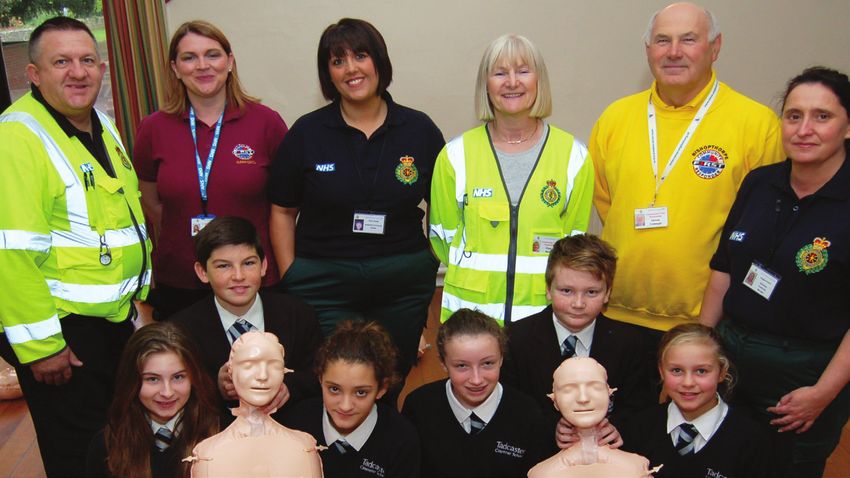
Restart a Heart Day overview
What will the day involve?
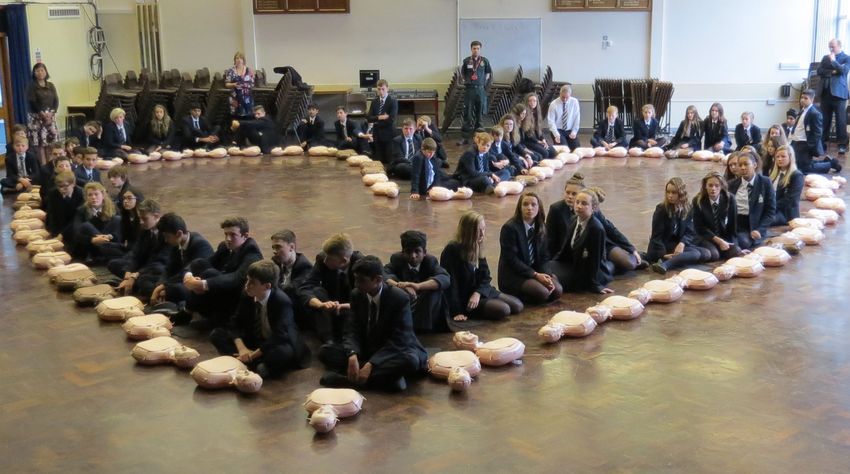
On Restart a Heart Day, a number of instructors (based on the number of students a school has
requested training for) will visit an allocated school. The length of time we will spend at each school
will depend entirely on how many pupils we are teaching. Our instructors will teach the children how
to perform CPR using an interactive DVD and practical instruction on inflatable manikins. Children will
also have the opportunity to ask questions.

How many pupils can receive the training?
We will accommodate maximum class sizes of 35 pupils to match the number of manikins provided
free of charge by the British Heart Foundation in its Call Push Rescue kits. Volunteers will visit a
school for an hour or even the full day to teach as many groups of 35 as possible. Based on the
length of each session, we can potentially deliver 10 sessions in a school day - a maximum of 350
pupils.

Who are the instructors?                                                                                  The Yorkshire Ambulance Service     We have provided schools with fundraising ideas
                                                                                                                                              from holding a non-uniform day to a sponsored
The instructors are predominantly Yorkshire Ambulance Service staff who have volunteered to deliver       Charity is proud to sponsor         CPR-A-THON. For more information please see
this training on their day off. Most will be clinicians (paramedics/emergency medical technicians
etc) but there will also be staff from other departments providing assistance. A large number of
                                                                                                          Restart a Heart Day, and we want    page 8 of the schools pack.
community first responders (CFRs) will be involved and we are also working in partnership with St         to do more! This year we are        The YAS Charity is working across Yorkshire to
John Ambulance, fire and rescue services and other NHS organisations which are also providing                                                 enable everyone to respond appropriately in a
                                                                                                          challenging schools to raise as
volunteers. All volunteers will be Disclosure and Barring Service (DBS) checked. A lead volunteer will                                        medical emergency. We are funding potentially
also be allocated to each school who will be responsible for the event at each location.                  much as they can as part of their   life-saving training (including Restart A Heart Day)
                                                                                                          Restart A Heart Day. The school     as well as installing life-saving equipment in
What resources do we need?                                                                                that raises the most will WIN a
                                                                                                                                              partnership with local communities. For more
We need an appropriate-sized room for the requested number of pupils to be taught (maximum 35                                                 information on the projects we fund please see:
at a time) with plenty of floor space to work on. We also need access to multimedia facilities - a DVD    defibrillator for their school.     www.yascharity.org.uk
player and large-screen television/projector screen (with speakers). We will not need any chairs/
tables as the students are on the floor for the duration of the training.
                                                                                                                                              Here to help: If you receive any queries
Will photos be taken on the day?                                                                                                              with fundraising please ask them to contact
If a school has provided consent for our staff to take photos of the event, these will be collected                                           yascharity@nhs.net or phone 01924 584369
centrally by our Corporate Communications Team as a record of Restart a Heart Day. They may be
used on social media, on our website or in internal publications. They may also be used in the media
if the appropriate consent is received. As a volunteer you will be informed what your assigned school
has provided consent for. As a matter of courtesy it would be sensible to confirm with the school on
                                                                                                           There are lots of ways you can get involved and show your support:
the day before taking any pictures.
                                                                                                            Make a              Raise              Spread the                    House a
                                                                                                           donation             funds                word                      clothing bin

                                                                                                               £
                                                                                                                                                                                      CLOTHING
                                                                                                                                                                                         BIN

                                                                                                                                                                                                 3
2                                                                                                                  Visit www.yascharity.org.uk for more information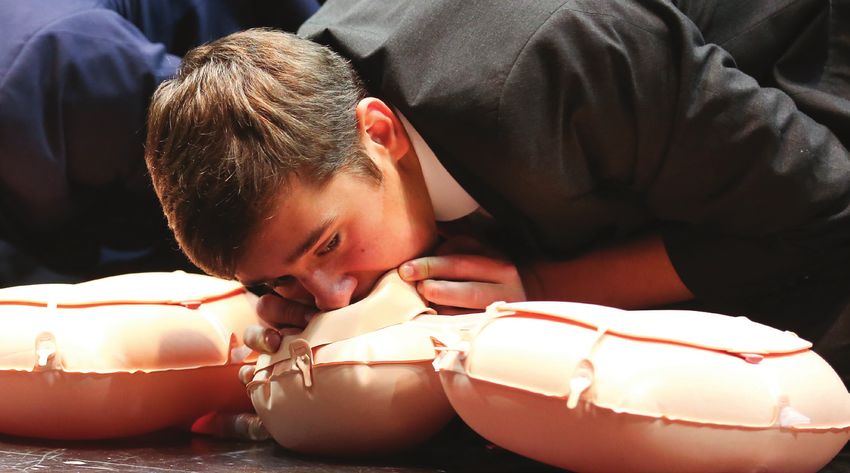
Lead volunteer - role                                                                                   Lesson plan
description                                                                                             The lesson is delivered with the use of an interactive “Call Push Rescue” DVD which is supplied with
                                                                                                        the manikins.

Lead volunteers are being allocated to all secondary schools participating in Restart a Heart Day on    Before starting the DVD, a clinical lead (usually the senior clinician) will give a brief introduction and
Tuesday 16 October. You do not have to be clinically-trained to carry out this role.                    explain the importance of performing CPR. Here is a suggested script for inspiration!

                                                                                                        “Hello and thank you for inviting us to visit your school on Restart a Heart Day.
Roles and responsibilities
                                                                                                        My name is XXXXXX and I work for Yorkshire Ambulance Service. I am going to give you a
1. Carry out a pre-event site visit to your allocated school before Friday 13 July 2018. The primary
                                                                                                        brief introduction about what is happening today.
purpose of this visit is to make contact and introduce yourself to the school but also to ensure that
any potential issues are identified before the day. A site visit checklist can be found on page 7.
                                                                                                        You are one of many schools across Yorkshire taking part in our fifth Restart a Heart Day.
                                                                                                        Over the past four years we have taught more than 76,000 students just like you how to save
2. Be the first point of contact for the team of volunteers which have been allocated to your school.
                                                                                                        someone’s life.
Liaise with the volunteers and ensure they are fully briefed prior to the event and know what is
expected of them.
                                                                                                        Every year about 30,000 people across the country have a cardiac arrest outside of hospital.
                                                                                                        A cardiac arrest is the ultimate medical emergency and is when the patient’s heart stops and
3. Ensure you and your team of volunteers have watched the online briefing video which can be
                                                                                                        they are not breathing.
viewed at:
                                                                                                        In this country about 1 in 10 of these patients survive their cardiac arrest but in countries
www.restartaheart.yas.nhs.uk/day/information
                                                                                                        where CPR is taught as part of the school curriculum it is as high as 4 in 10. We want to equip
                                                                                                        as many young people as possible with the skills and knowledge to potentially save a life in
4. Manage the event on Restart a Heart Day. You will have overall responsibility for the event at
                                                                                                        the future. We need people like you to be able to recognise a cardiac arrest, call for help early
your allocated school on 16 October 2018. You, or someone allocated by you, should provide a brief
                                                                                                        and start life-saving CPR in order to give patients in this area the best chance of survival.
introduction to each training session which will be delivered via an interactive DVD (our volunteers
are there primarily to coach the practical elements of the training).
                                                                                                        By getting involved and performing CPR you can double the chance of survival for that
                                                                                                        person. Furthermore, if you have access to a defibrillator you can triple their chances of
                                                                                                        survival.

                                                                                                        We will be teaching you today using an interactive DVD. The DVD talks you through and
                                                                                                        demonstrates what to do at each stage. You will then be asked to perform the skill it has
                                                                                                        demonstrated. Please do this quietly (unless it is the shout for help section!) as the DVD
                                                                                                        continues and you will miss the next part if you are being noisy.

                                                                                                        There are a number of our staff and volunteers around the room who will be able to assist you
                                                                                                        with the practical elements; feel free to ask for help.

                                                                                                        Please remember, while this is intended to be fun, this is a serious lesson and you could one
                                                                                                        day save a life. Thank you and enjoy!”

4                                                                                                                                                                                                                    5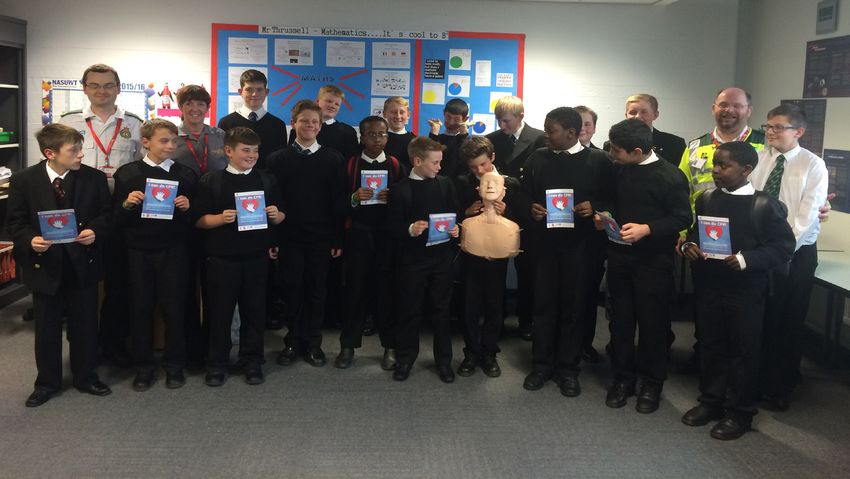
The DVD demonstrates and requires the students to:

1. Call for help
                                                                                                          Site visit checklist
2. Check for signs of life
                                                                                                          In order to ensure the day goes as smoothly as possible we ask that volunteers make a site visit to
3. Perform mouth-to-mouth
                                                                                                          their allocated school in advance. This can be done by one individual or by multiple members of the
4. Perform chest compressions.                                                                            team together. This should be coordinated by the allocated volunteer lead to prevent multiple visits
                                                                                                          (the names of who has been allocated which school will be circulated).
The DVD is intended to be played through without pausing so it must be made clear to students that
breaks to perform a skill are not an opportunity to have a chat with their friends. Any chatter in the    The primary purpose of this visit is to make contact and introduce yourselves to the school but also to
room will mean that the next instructions are missed.                                                     ensure any potential issues are identified before the day.
We are there predominantly to support and supervise the practical element of the training, adding         The following check list will help with your site visit:
professional experiences where necessary and to answer any questions.
                                                                                                            ●    Discuss parking arrangements for volunteers on the day.
We work on a ratio of one instructor to 10 students so if a school is supplying 35 students per session
we will aim to provide at least three (maybe more) volunteers in addition to their teaching staff.          ●    Discuss school security requirements for volunteers, eg are names required in advance?
                                                                                                            ●    Check that the room allocated for training delivery is an adequate size for the number of
Each student will be allocated a manikin for their use only. Between each session the manikins will              students.
need to be cleaned with the hygiene wipes contained in the packs. It will be necessary to provide
                                                                                                            ●    Confirm that no tables or chairs are required in the training room.
additional hygiene wipes if we are to teach a large number of students at a school. It is the school’s
responsibility to provide these. If a school is unable to use the alcohol wipes contained within the        ●    Ensure that there will be a DVD player, projector and speakers in the training room on the day.
packs it is their responsibility to provide a suitable alternative.                                         ●    Confirm that the British Heart Foundation’s Call, Push Rescue kit is on site and all manikins
                                                                                                                 are available, with sufficient numbers for students to be taught.
Each session will last a maximum of 30 minutes. The limitations of what can be taught in 30 minutes
have to be realised. We aim only to equip students with the skills to recognise a cardiac arrest, call      ●    Ensure the school understands that additional hygiene wipes will be required if large numbers
for help and give them the confidence to at least perform CPR until the arrival of an ambulance.                 of students are to be taught and it is the school’s responsibility to provide these.
                                                                                                            ●    Ensure the school understands that the manikins MUST be inflated prior to our arrival.
                                                                                                            ●    Ensure the school understands that their teaching staff will be involved in the day and will be
                                                                                                                 supervising a small group of students performing the practical skills.
                                                                                                            ●    Discuss arrangements for refreshments and lunch for volunteers on the day.
                                                                                                            ●    Discuss if the school has considered making the most of their Restart A Heart Day by theming
                                                                                                                 the day to raise the profile of CPR across the whole school and/or holding a fundraiser to
                                                                                                                 support the work of the Yorkshire Ambulance Service Charity.

                                                                                                          Following your site visit please email restartaheart@yas.nhs.uk with the name of the school
                                                                                                          visited and the following information:

                                                                                                            ●    name of person/s carrying out the site visit
                                                                                                            ●    date the visit was carried out
                                                                                                            ●    name of teacher/s met
                                                                                                            ●    any issues raised.

6                                                                                                                                                                                                                  7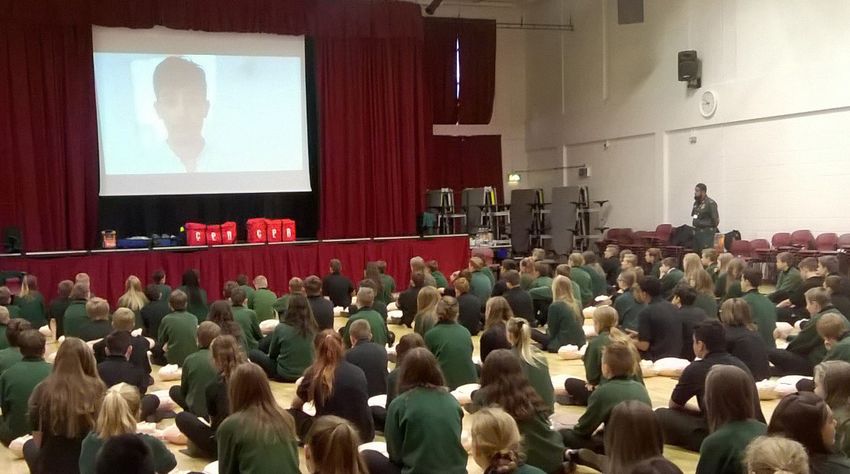
Checklist for the day                                                                                        Key messages
  ●   All volunteers who normally wear uniform ie YAS clinicians, St John Ambulance volunteers and           Here are some key resuscitation messages which may help:
		    fire service personnel will be expected to wear their uniform.
                                                                                                             ●   A cardiac arrest is when the heart’s electrical supply is interrupted resulting in the heart
  ●   All volunteers who don’t normally wear uniform can wear their usual work attire. Please ensure             stopping pumping blood around the body.
		    you have your ID badge with you.
                                                                                                             ●   The heart is a pump which supplies oxygenated blood to all of the body, which is vital for
  ●   Be aware that everything that we say or do is likely to be seen or heard so please maintain                bodily function.
		    professionalism at all times.
                                                                                                             ●   If someone's had a cardiac arrest, they'll be unconscious, not breathing or not breathing
  ●   Media coverage is expected from local and national media. We will try to target media to                   normally.
		    specific schools where a manager will be based to deal with this.
                                                                                                             ●   Call 999 immediately.
  ●   Make sure that the training room is clear of tables and chairs. The students will be using
		    the kneel mats contained in the bags of manikins and therefore a clear floor space is required         ●   All the cells in your body require oxygen to survive. They also require a good supply of
		    to accommodate a maximum of 35 students (or less dependent on your group sizes).                           nutrients and the rapid removal of waste products. Oxygen and nutrients are carried
                                                                                                                 around the body in your blood, which is pumped by your heart. In your lungs, oxygen enters
  ●   Ensure that there is a projector, DVD facilities and speakers in the training room. The majority           your blood stream and carbon dioxide (a waste product) is removed in a process known as
		    of the lesson is delivered via an interactive DVD with our volunteers there primarily to coach             gas exchange. A cardiac arrest is when your heart stops beating. This is not the same as a
		    the practical elements of the event.                                                                       heart attack, although a heart attack may lead to a cardiac arrest.

  ●   Take as many pictures as possible on the day. It would be appreciated if you could share your          ●   There are numerous causes of cardiac arrests, including:
		    pictures with us after the event by emailing restartaheart@yas.nhs.uk
                                                                                                                 - A disturbance in the heart rhythm
  ●   If possible please use social media, particularly Twitter and Facebook, throughout
		    the day. Please post any pictures or updates, tag @YorksAmbulance (Twitter) and                            - Drugs/poisoning
		    @yorkshireambulanceservice (Facebook) and use the hashtag #restartaheart.                                  - Heart disease/a heart attack
		    Your posts will then be displayed on our live feed at www.restartaheart.yas.nhs.uk if you                  - Traumatic injury/blood loss
		    want to watch what’s going on around the region.                                                           - Anaphylaxis (allergic reaction).
  ●   Count the number of students taught at your school on Restart a Heart Day. In order to feed            ●   If a cardiac arrest occurs, blood will stop circulating around the body. Breathing will also cease
		    into the national target of 200,000 students being taught in a day, it is vitally important that you       as well though it may not stop completely for several minutes.Without a supply of oxygen, the
		    provide us with an accurate number of students taught. Please email
                                                                                                                 cells in the body start to die. Brain cells are incredibly sensitive. After about four or five minutes
      restartaheart@yas.nhs.uk at the end of the day with the total number of students taught.
                                                                                                                 of no oxygen, brain cells will begin dying, leading to brain damage and death.

                                                                                                             ●   The purpose of CPR is to keep oxygenated blood flowing around the body to keep the vital
                                                                                                                 organs alive. CPR itself will not restart someone’s heart, it just keeps them alive until a
                                                                                                                 defibrillator arrives. A defibrillator is a device which delivers an electrical shock to the heart to
                                                                                                                 restart it.

8                                                                                                                                                                                                                        9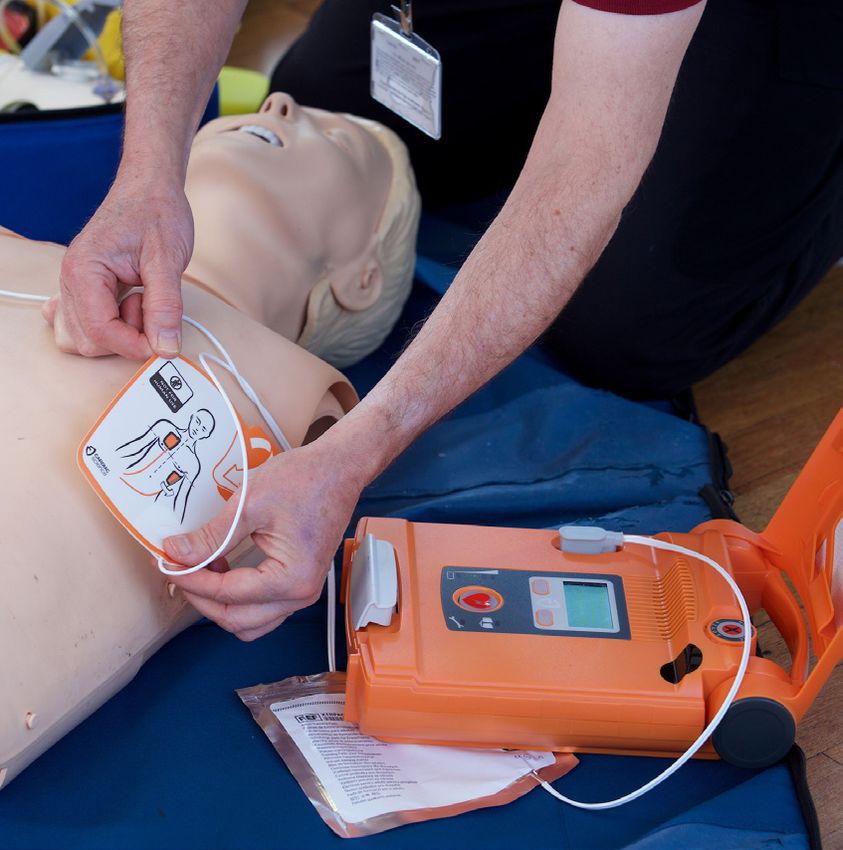
●   happens in front of a bystander who starts CPR immediately before the arrival of the
                                                                                                            Media information
     ambulance, the patient’s chances of survival double.
                                                                                                            All media activity relating to Restart a Heart Day will be managed and co-ordinated by the Yorkshire
 ●   Today, if you suffer a cardiac arrest out of hospital in the UK, you have less than a one in ten       Ambulance Service Corporate Communications Team.
     chance of surviving.
                                                                                                            We will seize proactive and reactive media opportunities to highlight our role in the event and
 ●   Chain of Survival - Early Recognition, Early CPR, Early Call for Help, Early Defibrillation. A         promote key public health messages relating to the benefits of bystander CPR, as well as early
     chain is only as strong as its weakest link. Bystander intervention is vital to improve outcomes.      defibrillation, prior to the arrival of an ambulance.

 ●   Compressions should be at the rate 100-120 per minute, 5-6cm compressing the chest and a               It is anticipated that there will be extensive media interest in Restart a Heart Day as it is the largest
     ratio of 30 compressions to two breaths pressing on the centre of the chest between the                mass CPR training event ever conducted.
     nipples.
                                                                                                            The media will be focused on four schools (representing North, East, South and West Yorkshire)
 ●   Chest compressions and ventilations slow down the rate of deterioration of the brain                   where we will have presence from local YAS managers who will carry out any media interviews.
     and heart.                                                                                             Details of these schools will be circulated nearer the time.

 ●   If a bystander is unwilling to do mouth-to-mouth, hands-only CPR is fine, with the simple              However, there may be requests for photographers/journalists to attend other schools participating
     message ‘hard and fast’ in the centre of the chest to the beat of ‘Staying Alive’. It is most likely   in the event and any interviews at additional locations will be managed by the Corporate
     that the students we are teaching will see one of their family members in cardiac arrest so they       Communications Team.
     will be more inclined to deliver rescue breaths if it is a family member.
                                                                                                            How can you help to raise the profile of the event?
 ●   With each minute’s delay of delivering a defibrillation shock to a shockable cardiac arrest, the
     chances of survival decrease by 10-12%. Public Access Defibrillators are very easy to use and          Take photos
     widely available.                                                                                      All Restart a Heart Day volunteers at schools which have consented to media involvement are
                                                                                                            encouraged to take photos of the activities on the day and email them to restartaheart@yas.nhs.uk at
 ●   Some people are afraid of performing CPR for fear of worsening the situation but if the patient        the earliest opportunity. These will be used for both internal and external publicity, as well as on social
     does not receive CPR there is a good chance that they will die. On occasion, when performing           media. Please check with teaching staff which pupils can be photographed.
     chest compressions it is possible that ribs may be heard to crack, this is normal and not
     something to worry about.                                                                              Tweet
                                                                                                            If you have time, please Tweet! Make sure you mention @YorksAmbulance and #restartaheart.
                                                                                                            Other useful hashtags are #lifesavers and #CPRsaveslives. Please also feel free to mention the user
                                                                                                            names of our partners @YASCFR, @TheBHF, @YAS_Charity, @ResusCouncilUK
                                                                                                            and @stjohnambulance.

                                                                                                            Facebook
                                                                                                            If you have time, remember to post about your Restart a Heart Day activities on Facebook. Make
                                                                                                            sure you mention @yorkshireambulanceservice and #restartaheart. Please also feel free to mention
                                                                                                            the user names of our partners @yascfr, @YASCF, @bhf, @ResuscitationCouncilUK and @SJA.

                                                                                                            Please ensure the school you attend has consented to publicity before posting any identifiable
                                                                                                            messages.

                                                                                                            When posting on social media, remember to be yourself, be factual, be professional, be interesting,
                                                                                                            be relevant and be sensible! For further guidance, contact the Corporate Communications Team,
                                                                                                            email internalcomms@yas.nhs.uk or phone 0845 120 0048.

10                                                                                                                                                                                                                 11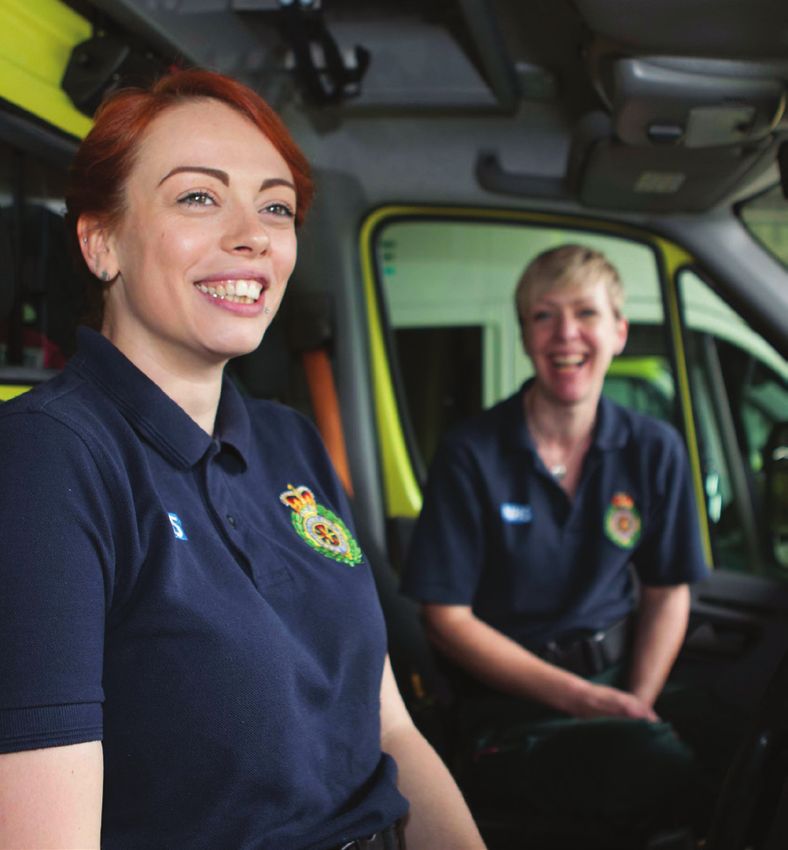
CALL
PUSH
RESCUE
HELP CREATE A NATION OF LIFESAVERS
Three simple steps could mean the difference
between life and death. Learn CPR on Restart
Heart Day on 16 October, and one day you
could help save a life.
                                                                    In partnership with

                             © British Heart Foundation 2017, registered charity in England and Wales
                                                                (225971) and in Scotland (SC039426).
A hearty thanks to our
 sponsors and partners:

         YORKSHIRE
        AMBULANCE
            SERVICE
           CHARITY

www.restartaheart.yas.nhs.uk
             #restartaheart
                               YAS-18-019-04
You can also read


