S TU DENT C ATALOG - ST. MARY'S HOSPITAL SCHOOL OF MEDICAL IMAGING - Bon Secours
←
→
Page content transcription
If your browser does not render page correctly, please read the page content below
STUDENT
        C ATA LO G
         2021–2022

   ST. MARY’S HOSPITAL
SCHOOL OF MEDICAL IMAGING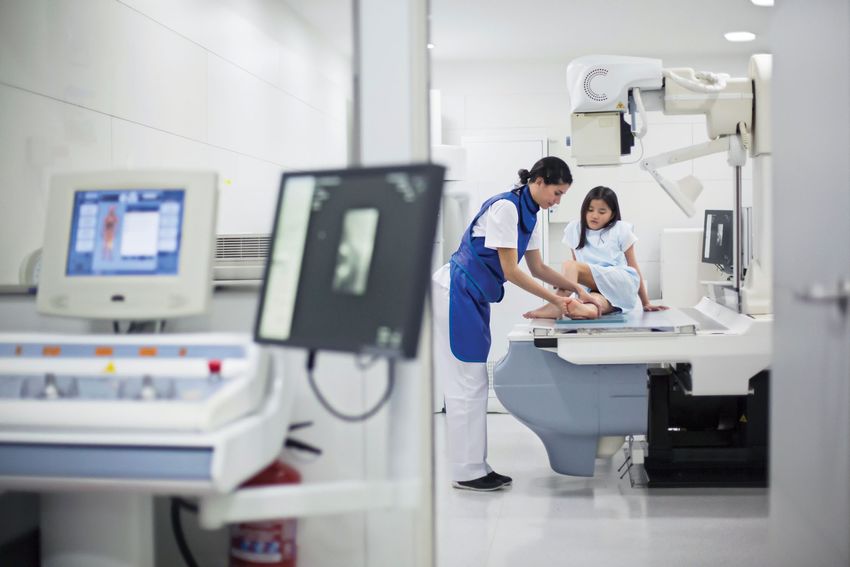
Welcome to Bon Secours St. Mary’s Hospital School of Medical Imaging (SOMI). We are delighted you chose our
WELCOME

          school to pursue your education. Our Radiologic Technology program exceeds expectations, as shown by our
          unsurpassed American Registry of Radiologic Technologist’s (ARRT) examination pass rates on the first attempt,
          a proud distinction of excellence. As a SOMI student, you will be involved in intense coursework, simulation labs,
          and clinical experiences while building personal and professional relationships that will last a lifetime. The School
          emphasizes life-long learning and provides students the opportunity to experience advanced modalities within the
          Medical Imaging profession.
          We are here to guide you through this journey. Our talented faculty and staff maintain an unwavering commitment
          to delivering a rigorous, high-quality, student-centered education. Our school is equally committed to maintaining
          a warm and supportive learning environment for its diverse student body. As you progress through the program,
          the information in this catalog will be vital. Please read and use this document as a reference. When policies and/
          or guidelines are added or modified, updates will appear on the School website at: www.mysomi.org, under Program
          Policies. Best wishes for a successful and memorable 18 months ahead.

          Jody D. Crane, MAEd, RT (R) (BD)
          Dean

          Bon Secours St. Mary’s Hospital School of Medical Imaging
          Bon Secours St. Mary’s Hospital School of Medical Imaging (SOMI) is an equal opportunity education institution. Bon
          Secours St. Mary's Hospital School of Medical Imaging (SOMI) is a division of the Bon Secours St. Mary's Hospital
          of the Bon Secours Virginia Health System. The School reports to the Bon Secours Richmond Board of Directors,
          which is the governing authority for the School. The contents of the School Catalog do not create a contract, nor do
          they constitute a guarantee of continued enrollment at the school. The School reserves the right to modify, amend,
          or delete statements and to make changes to the Catalog, curriculum, calendar, financial aid, and School policies
          as deemed necessary. Policies are available via the school website, www.mysomi.org. Each student is expected
          to abide by the information contained in the Catalog. Failure to read the Catalog will not excuse the student from
          accountability.

             The Governing Board or Owners of the School
             The Bon Secours Richmond Health System (BSRHS) Board is a combined board that governs and has oversight
             for the activities of BSRHS, as well as its five acute care hospitals, ambulatory facilities and Bon Secours
             Richmond Medical Group. The School of Medical Imaging is a division of Bon Secours — St. Mary’s Hospital,
             which is one of the hospitals in the Richmond Health System. BSRHS Board bylaws are maintained by the
             Office of Administration for BSRHS and a copy may be available upon request.

             Stuart A. Bunting                      Birdie H. Jamison                       Jane G. Watkins
             Chandrashekar D. Challa                Joyce C. Lanier                         Kyle Woolfolk
             Elizabeth H. Crowther                  Sr. Anne Marie Mack, CBS                Brian Yanofchick
             John Daniel, III, MD                   Linda Rigsby                            Faraaz Yousuf
             Rosalyn Hobson Graves, MD              Paul Smith
             Chris Hairston-White                   Sr. Victoria Segura, MD, CBS
             Matthew Illian                         Shannon E. Sinclair

          2 | BON SECOURS ST. MARY’S HOSPITAL SCHOOL OF MEDICAL IMAGING
Bon Secours St. Mary's Hospital

                                                                                                               GENERALADMINISTRATION/FACULTY/STAFF
                                                                                                               SCHOOL
School of Medical Imaging
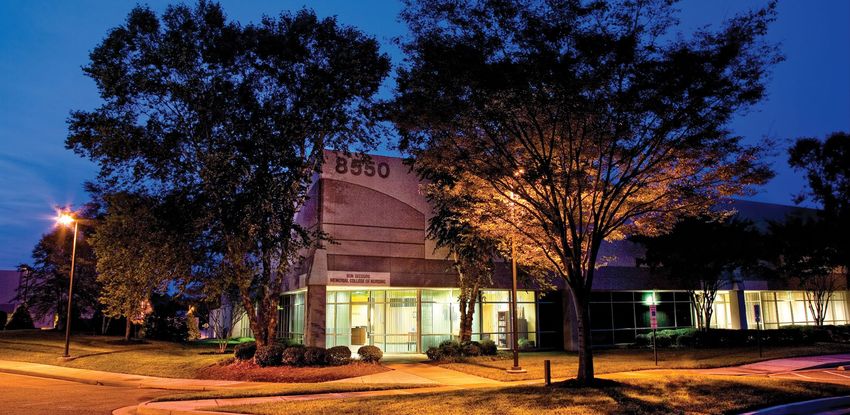
8550 Magellan Parkway, Suite 700                                       Telephone
Richmond, VA 23227                                                     Numbers
School Administration/Faculty/Staff                                    Emergency

                                                                                                                       INFORMATION
                                                                       (Note: Dial 9 first to
Jody D. Crane, MAEd, RT (R) (BD) | Dean (full-time)                    get an outside line)
Delaney Penney, BSRS, RT (R) (CT) | Program Coordinator (full-time)
                                                                       Ambulance Service
Robert Pelter, MBA, RT (R)                                             Fire Department           911
Program Coordinator Clinical Education Experience (full-time)          Police, emergency
Emily Ambrous, BS, RT (R) | Medical Imaging Instructor (full-time)
                                                                       SOMI Operations
Debra Pollard, PhD, RT (R) | Medical Imaging Instructor (part-time)    Coordinator
Joyce Hawkins, BS, RT (R) (M) (CT)                                     (804) 627-5408
Medical Imaging Instructor (PRN/adjunct)
                                                                       Financial Aid Director
Robin Diacont                                                          (804) 627-5350
Operations Coordinator (full-time)
                                                                       Dean
Randy Faulk | Building Coordinator
                                                                       (804) 627-5307
Tina Metzger, MSIS | Librarian
                                                                       Non-Emergency &
                                                                       Security Police
Clinical                      Simulation                      Center   (non-emergency)
Holly        Pugh,         MSHA                  |              Dean   (804) 501-5000
Allan Sackenreuter, BS | Technical Coordinator                         Poison Control
                                                                       (800) 552-6337
Finance Department:
                                                                       Security, Windsor
Amy Pozza, MBA | Dean
                                                                       (804) 335-7901
Melanie Arcibal, BS | Senior Accountant
                                                                       Windsor Property
Kelley Florian, BA | Director of Financial Aid
                                                                       Manager
Harris King, BS | Bursar                                               (804) 264-8005
Jackie Runne, BA | Financial Aid Specialist
                                                                       Windsor, BSMCON
Tate Sanchez, BFA | Financial Aid Counselor                            Building Coordinator
Aqueelah Walker, MSA | Business Office Manager                         (804) 627-5388

IS/IT Department:
Jason Smith, MS | Director of I&T
Nick Kost, BA | Manager, Information Systems and Technology
Sunjun Lee, MS | IT Support Technician
Debra Cantwell | Learning Management System &
Applications Administrator

Student Services Department:
Leslie Winston, MEd | Dean
Lydia Lisner, BA | Director
Allison Peterson, MSEd | Career Counselor
Jared Crist, MEd | Coordinator

                                                                                SCHOOL CATALOG 2021–2022 | 3
TABLE OF CONTENTS
5    Alerts                               Standards for Student                 Financial Policies & Resources:
5    Closings/Delayed Openings               Performance:                       54   Finance
5    Institutional Accreditation          28 Enrollment Agreement               54   Tuition and Fees
5    Programmatic Accreditation           28 Student Rights and                 54   Student Responsibility
5    Certification                           Responsibilities                   54   Registration Bill
6    Service Agreement with               28 Student Discipline                 54   Payment Options
     College of Nursing                   29 Discipline for Misconduct          54   Charges During Add/Drop Period
7    History of the School                29 Disciplinary Process & Sanctions   54   Financial Aid
8    Mission, Program Goals, and          31 Appeal Process for Academic        54   FAFSA
     Student Learning Outcomes               Grievances: Grade Appeal           55   Financial Aid Awarding Principals
                                          34 Appeal Process for Non-Academic    55   Title IV Financial Aid
General Information:                         Grievances
                                                                                55   Alternate/Private Loans
10   Program Information                  38 Honor Pledge
                                                                                55   Third-Party Payors
10   Assessment                           39 Family Educational Rights &
                                                                                56   Veterans Educational Benefits
11   Academic Requirements                   Privacy Act (FERPA)
                                                                                56   Book Advance Program
11   Basic Application Requirements       41 Drug & Substance Abuse
                                                                                56   Satisfactory Academic Progress (SAP)
11   Admissions Procedure                 41 Academic Progression
                                                                                58   Cost of Attendance (COA)
12   Nondiscriminatory Clause             41 Academic Extension
                                                                                58   Title IV Credit Balances
12   Employment Disclaimer                42 Re-Admission/Dismissal
                                                                                58   Refunds
12   Acceptance Process                   43 Add/Drop Period
                                                                                58   Withdrawal
12   Minimum Physical Standards           43 Refund Policy
                                                                                59   Student Overpayment
     (Essential Functions)                44 Student Records
                                                                                59   Enrollment Cancellation
12   Background Checks                    45 Student Files
                                                                                59   1098-T Tuition Statement
12   Drug Screening                       45 Private Communication
                                                                                59   Timeline of Events
13   2021–2022 Academic Calendar                                                61   Appendix
14   Payment Terms and Process/           Academic Policies &
                                             Procedures:                        61   Title IV Financial Aid Sources
     Financial Obligations
                                          47 Attendance
15   18-Month Radiologic Technology
     Program Tuition & Fees               48 Absences                           Campus Safety, Scholarships,
17   Academic Classification/             49 Sanctions                            & Administrative Duties:
     Enrollment                           49 Clinical Leave of Absence          64 Campus Security & Safety
17   Academic Credit Hours                49 Leave of Absence                   64 Scholarship
17   Definition of Academic               50 Grading Scale                      65 Radiologic Technology Program
     Credit Hour                          50 Dress Code                            Scholarships
18   Course Descriptions by Semester      50 Students with Disabilities         66 Powers, Duties & Responsibilities
21   Program Delivery                     50 Transfer Credits                   67 Administrative Offices
22   Clinical Site List                   51 Graduation Requirements            67 Personnel, Administration & Staff
23   Clinical Plan                        51 Radiation Safety Policy &
24   ARRT Pass Rate                          Procedures                         Directions & Parking Guidelines:
24   Program Effectiveness Data           52 Pregnancy Policy                   69 Directions
25   Student Services                                                           69 Parking Guidelines

      4 | BON SECOURS ST. MARY’S HOSPITAL SCHOOL OF MEDICAL IMAGING
Alerts                                                        Institutional Accreditation

                                                                                                                           ACCREDITATION / CERTIFICATION
The School in conjunction with Bon Secours Memorial           Bon Secours St. Mary’s Hospital School of Medical
College of Nursing (BSMCON) has implemented a                 Imaging Radiologic Technology program meets the
broadcast alert and notification system as part of            requirements established by the Accrediting Bureau of
its safety plan. The Deans, and Building Coordinator          Health Education Schools (ABHES), as recognized by
for BSMCON have been assigned system access to                the U.S. Department of Education.
broadcast text message alerts. In case of an emergency,
                                                              The program's latest Self-Evaluation Report and
a BSMCON Administrator will contact all employees and
                                                              certificate of accreditation are available for review.
students via text message and email with an appropriate
alert. Students must activate the text messaging option           Information on ABHES can be viewed at
on the Update Bio link in their information system                www.abhes.org or via contact information:
account. Students who do not have a cell phone or                 7777 Leesburg Pike, Suite 314
who do not request text message alert activation shall            N. Falls Church, Virginia 22043
assume full responsibility for obtaining information              Phone: (703) 917-9503
regarding school closures and related actions via other           E-mail: info@abhes.org
modes of communication.
                                                              Programmatic Accreditation
Closings/Delayed Openings                                     Bon Secours St. Mary’s Hospital School of Medical
The School of Medical Imaging shall parallel decisions        Imaging Radiologic Technology program meets
of the BSMCON regarding inclement weather decisions.          the requirements established by the Joint Review
Announcements will be made on Local Radio Station             Committee on Education in Radiologic Technology
WRVA and Channel 12 TV station under the Bon Secours          (JRCERT), as recognized by the U.S. Department
Memorial College of Nursing name.                             of Education.
Both didactic and clinical classes shall follow the           The program’s latest Self-Study documents and
BSMCON announcements.                                         certificate of accreditation are available for review.
Text messages will be relayed to students through                 Information on the JRCERT can be viewed at
the Student Information System (SIS) in the event of              www.JRCERT.org or via contact information:
changes to the normal schedule.                                   20 N. Wacker Drive, Suite 2850
Local school system closures such as Henrico, Hanover,            Chicago, Illinois 60606-3182
City of Richmond, Chesterfield & New Kent, are not used           Phone: (312) 704-5300
to determine closure of the School of Medical Imaging.            Fax: (312) 704-5304
                                                                  E-mail: mail@jrcert.org
Students are encouraged to use good judgment in
determining ability to safely reach the school or clinical    Certification
assignments. However, time missed by a student due to
inclement weather will count as absences unless classes       Bon Secours St. Mary’s Hospital School of Medical
are canceled. Tardiness associated with inclement             Imaging Radiologic Technology program is certified to
weather when classes are not delayed will count against       operate in the Commonwealth of Virginia by the State
attendance record.                                            Council of Higher Education for Virginia (SCHEV).

Didactic class work that is missed due to delay or School         Information on SCHEV can be viewed at
closure will be absorbed into the remaining class periods         www.schev.edu or via contact information:
if possible. Excessive cancellation of didactic classes may       101 N. 14th Street, 10TH FL
result in the necessity of holding make up classes.               James Monroe Bldg.
                                                                  Richmond, Virginia 23219-3659
                                                                  Phone: (804) 225-2600
                                                                  E-mail: communications@schev.edu

                                                                                            SCHOOL CATALOG 2021–2022 | 5
SERVICE AGREEMENT WITH BON SECOURS MEMORIAL COLLEGE OF NURSING

                                                                 Service Agreement with Bon Secours Memorial College
                                                                 of Nursing (BSMCON)
                                                                 The Bon Secours St. Mary’s Hospital School of Medical Imaging (SOMI) has a purchased service agreement with the
                                                                 Bon Secours Memorial College of Nursing (BSMCON). BSMCON provides the School of Medical Imaging the space,
                                                                 equipment, and services necessary to provide the necessary educational and training services to students of the
                                                                 SOMI. These services include the following:

                                                                 Space/Utilities:
                                                                 •   Physical space dedicated to SOMI equals approximately 1,550.9 sq. ft.
                                                                 •   Reserved classroom space for Medical Imaging students.
                                                                 •   Non-energized lab
                                                                 •   Reserved Clinical Simulation Center/Skills lab space for Medical Imaging students and faculty.
                                                                 •   Student and faculty access to the BSMCON's computer lab.
                                                                 •   Student and faculty access to Library services and four study rooms.
                                                                 •   Use of auditorium and two administrative conference rooms.
                                                                 •   Use of BSMCON’s student lounge and employee kitchen/lounge.
                                                                 •   Adequate restrooms to accommodate the student population; one unisex restroom is available.
                                                                 •   Custodial services to clean and maintain facility as well as set-up for special events.

                                                                 Facility Services:
                                                                 •   Use of building utilities, including phones, internet       Building Coordinator: Randy Faulk
                                                                     access, and wireless technology.                            Phone: (804) 627-5388
                                                                 •   Use of building coordinator support services 		             Email: randy_faulk@bshsi.org
                                                                     including class and event scheduling and coordination.
                                                                 •   Routine maintenance and repairs of heating/air
                                                                     conditioning.
                                                                 •   Office renovations (painting, carpeting, door
                                                                     key changes).
                                                                 •   Landscape maintenance services for upkeep of
                                                                     facility grounds.
                                                                 •   Professional security services.

                                                                 6 | BON SECOURS ST. MARY’S HOSPITAL SCHOOL OF MEDICAL IMAGING
Financial Aid: Administrative Services:
SERVICE AGREEMENT WITH BON SECOURS MEMORIAL COLLEGE OF NURSING
• Processing of Federal Financial Aid for Medical • Provision of administrative services of the
Imaging students. Vice President, Dean of Finance, and Dean of
Student Services.
Director of Financial Aid: Kelley Florian
Phone: (804) 627-5350 Vice President: Melanie Green
Email: kelley_florian@bshsi.org Phone: (804) 627-5346
Email: melanie_green@bshsi.org
Financial Aid Counselor: Tate Sanchez
Phone: (804) 627-5488 Dean of Finance: Amy Pozza
Email: tate_sanchez@bshsi.org Phone: (804) 264-7315
Email: amy_pozza@bshsi.org
Financial Aid Specialist: Jacqueline "Jackie" Runne
Phone: (804) 627-5348 Dean of Student Services: Leslie Winston
Email: jacqueline_runne@bshsi.org Phone: (804) 627-5327
Email: leslie_winston@bshsi.org
Bursar: Harris King
Phone: (804) 627-5362
Email: bsr-bursar@bshsi.org History of the School
Senior Accountant: Melanie Arcibal The School of Radiologic Technology was founded in
Phone: (804) 627-5385 1971. The name was changed to St. Mary’s School of
Email: melanie_arcibal@bshsi.org Radiologic Sciences in 1982. The program’s current
name, St. Mary’s Hospital School of Medical Imaging,
Business Office Manager: Aqueelah Walker
was adopted in July 2002. The school once offered a
Phone: (804) 627-5300
program in Nuclear Medicine Technology and a two-
Email: aqueelah_walker@bshsi.org
year (24-months) certificate program in Radiologic
Technology Services: Technology. The 18-month program (approximately 72
• Student access for use of high-speed printer/ weeks) curriculum was adopted in 2008. The Health
copiers in the Library and Computer labs. System is a private, Catholic, not-for-profit, community-
• Personnel access to high-speed printer/copier based health system whose mission is to provide
(Receiving). “good help to those in need.” The Sisters of Bon Secours
• Computer and audio-visual support services for (French for “good help”), an international religious
personnel computers and instructor workstations. congregation devoted to the care of the poor and sick,
• Computer and laptop upgrades for Medical Imaging
was founded in Paris, France in 1824. In the United
classrooms and personnel.
States, the congregation’s health care ministries, which
• Access to Student Information System (SIS) for
students, faculty, staff, administration; system are operated by the Bon Secours Health System, Inc.,
administration support services. include acute care hospitals, long-term care facilities,
• Storage and maintenance of student transcripts in clinics, physicians’ practices, home health care services,
the event of closing of School of Medical Imaging. and hospices.
• Blackboard Learning Management Services for
courses/instruction. St. Mary's Hospital Sponsoring Institution of
Director, I&T: Jason Smith the School
Phone: (804) 517-9744 Since 1966, St. Mary's Hospital has served Central
Email: jason_smith@bshsi.org Virginia, providing compassionate health care of the
Manager, College IS and Technology: Nick Kost highest quality. The hospital is located in Richmond's
Phone: (804) 627-5349 West End at 5801 Bremo Road; Richmond, VA 23226.
Email: nick_kost@bshsi.org St. Mary’s Hospital has proudly been the sponsoring
institution for the School of Medical Imaging since 1971.
IT Support Technician: Sunjung Lee
Phone: (804) 627-5481
Email: sunjung_lee@bshsi.org
Learning Management System & Applications
Administrator: Debra Cantwell
Phone: (603) 833-1244
Email: debra_cantwell@bshsi.org
SCHOOL CATALOG 2021–2022 | 7PROGRAM MISSION STATEMENT, PROGRAM GOALS AND STUDENT LEARNING OUTCOMES
Program Mission Statement
The Bon Secours St. Mary’s Hospital School of Medical Imaging is dedicated to providing students with a
comprehensive education in Radiologic Technology, which facilitates successful entry into the field of Diagnostic
Medical Imaging. The School encourages students to embrace the values of Bon Secours Mercy Health and to
further their professional and personal growth. Our program seeks to promote commitment to the integrity of the
profession, to develop strong communication skills, and to foster the ability to work within a team environment.
Program Goals | Student Learning Outcomes
1. Students will competently perform routine radiographic examinations.
STUDENT LEARNING OUTCOMES:
• Students will position patients correctly.
• Students will practice radiation protection to patient, self and others.
2. Students will develop effective critical thinking skills.
STUDENT LEARNING OUTCOMES:
• Students will adapt to non-routine radiographic examinations.
• Students will modify technical factors for optimal radiographic images.
3. Students will communicate professionally.
STUDENT LEARNING OUTCOMES:
• Students will effectively communicate verbally.
• Students will communicate effectively through written format.
4. Students will exhibit professionalism.
STUDENT LEARNING OUTCOMES:
• Students will be respectful of patients.
• Students will attend clinical assignments on time and are ready to perform in the clinical environment.
5. The program will graduate entry-level technologists that possess the necessary skills to meet the
needs of the profession.
STUDENT LEARNING OUTCOMES:
• Employers will report that the graduates possess the entry-level skills to prepare them for a career
in the imaging profession.
• Graduates will be satisfied with their educational experience.
• Graduates shall obtain employment in the imaging profession.
• Students will complete the program within a 27 month time frame.
• Students will pass the ARRT national certification on the first attempt.
• Employers will be satisfied with the performance of the graduates.
8 | BON SECOURS ST. MARY’S HOSPITAL SCHOOL OF MEDICAL IMAGINGGENERAL
INFORMATION
10 Program Information
10 Assessment
11 Academic Requirements
11 Basic Application Requirements
11 Admissions Procedure
12 Nondiscriminatory Clause
12 Employment Disclaimer
12 Acceptance Process
12 Minimum Physical Standards (Essential Functions)
12 Background Checks
12 Drug Screening
13 2021–2022 Academic Calendar
14 Payment Terms and Process/Financial Obligations
15 18-Month Radiologic Technology Program Tuition & Fees
17 Academic Classification/Enrollment
17 Academic Credit Hours
17 Definition of Academic Credit Hour
18 Course Descriptions by Semester
21 Program Delivery
22 Clinical Site List
23 Clinical Plan
24 ARRT Pass Rate
24 Program Effectiveness Data
25 Student Services
9Program Information To ensure campus safety all doors to the campus are
GENERAL INFORMATION
locked. All students and school personnel are issued
Bon Secours St. Mary’s Hospital School of Medical coded badges to access the building. Visitors must enter
Imaging offers an 18-month (approximately 72 weeks) and exit through suite 1100 at the reception desk.
residential Radiologic Technology program designed Visitors must sign in, state the reason for visiting, be
to prepare individuals to enter the workforce as entry- escorted to the desired location and upon departure sign
level Diagnostic Radiologic Technologists, also known as out. During off hours the campus maintains its safety by
Radiographers. Graduates of the program are eligible to having a Henrico County police officer on campus.
apply for national credentialing through the American
Registry of Radiologic Technologists www.arrt.org. The School utilizes several web-based computer
We are institutionally accredited by the Accrediting applications for student success.
Bureau of Health Education Schools (ABHES) www.
abhes.org and programmatically accredited by the The computer applications utilized are as follows:
Joint Review Committee on Education in Radiologic • The Student Information System (SIS),
Technology www.JRCERT.org and certified to operate CampusNexus®, contains all student demographic
by the State Council of Higher Education in the State for information, financial and academic records. The SIS
Virginia www.SCHEV.edu. also serves as a communication platform between
The program welcomes individuals that meet all students and school personnel.
admissions requirements to apply during the application
• The Student Learning Management System (LMS),
period posted on the website at www.mysomi.org.
Blackboard®, is utilized for course delivery, grading,
Program hours of operation are Monday–Friday,
student resources, and classroom communication.
8 a.m. to 4:30 p.m., and consists of didactic and clinical
components. The didactic portion of the program • The School utilizes Trajecsys®, a cloud-based clinical
includes both lecture and labs, which are offered documentation system, to track the student’s
in traditional, on-ground format, held at the School clinical progress in regards to exams, competencies,
campus. The clinical component utilizes a variety evaluations, and clinical attendance. Trajecsys also
of health care sites approved by the Joint Review creates reports to measure program benchmarks.
Committee on Education in Radiologic Technology
Students are eligible to apply for national credentialing
(JRCERT), to include hospitals, imaging centers, urgent
with the American Registry of Radiologic Technologists
care centers, freestanding emergency centers, and
(ARRT) upon program completion (Individual criteria
orthopaedic centers. Clinical hours will vary depending
for the ARRT, ASRT & School guidelines must be met by
on individual clinical sites. During the 4th and 5th
each graduate).
semesters, student clinical experience includes an
evening clinical rotation of four weeks duration that
includes: two (2) weeks at a hospital site during the time Assessment
frame of 1:00 p.m. to 9:30 p.m. and two (2) weeks at a School officials assess student learning outcomes on a
KidMed Pediatric Urgent Care Center during the time regular basis to evaluate program effectiveness and
frame of 2:00 p.m. to 10:00 p.m. integrity. The school implements change as new
The School is a full-time residential program and does recommendations and requirements develop or as areas
not offer distance education, part-time, evening or of concern are identified.
weekend classes. Due to the fundamental integration of The school utilizes an assessment plan/schedule and an
clinical and didactic components of the program, advisory committee to guide ongoing evaluation and
the outlined course curriculum posted on the website improvement. Ongoing assessment is a critical element
at www.mysomi.org does not allow for deviation to maintaining JRCERT accreditation.
or modification. Students are expected to maintain
enrollment in line with the structured pace of all Student participation in the assessment process takes
program courses. place through a variety of methods including: end
of semester course evaluations, student evaluation
The Bon Secours St. Mary’s Hospital School of of clinical instructors, advisory committee, student
Medical Imaging campus is located at: planning committee, student affairs committee, and
8550 Magellan Parkway, Ste. 700 student representative meetings with administration.
Richmond, Virginia 23227
10 | BON SECOURS ST. MARY’S HOSPITAL SCHOOL OF MEDICAL IMAGINGAcademic Requirements are required to complete the American Registry
GENERAL INFORMATION
of Radiologic Technologists (ARRT) pre-approval
Candidates must meet the following minimum academic process prior to applying to the School.
requirements for consideration:
This process is conducted by the ARRT for a fee,
• All pre-application courses, listed below, must be
and can take up to eight weeks. A copy of the
from a regionally accredited agency recognized by
ARRT approval must be submitted at the time of
the American Registry of Radiologic Technologists
application, if applicable. Information about
(ARRT) with a minimum grade of "C" and a minimum
pre-approval can be obtained by visiting the ARRT
cumulative GPA of 2.5
website at www.arrt.org
• Candidate must have earned an associate (or more
Questionable offenses, regardless of how long ago
advanced) degree from an accrediting agency
they were committed, must also be cleared by the
recognized by the American Registry of Radiologic
ARRT prior to completing the application process.
Technologists (ARRT) with a minimum cumulative
Dismissed charges that required action must be
GPA of 2.5
reported as well.
• Accreditation agency information can be found at:
www.arrt.org Documentation of approval through the ARRT ethics
committee must be submitted with application.
# OF Failure to receive approval from the ARRT prior
PRE-APPLICATION COURSES POSSIBLE COURSES
CREDITS to submitting an application packet will result in
Written/Oral immediate halt of the admission process.
3 ENG 111, ENG 112
Communications/English 7. Include a copy of your BLS (Basic Life Support) card.
Math above level 120* 3 MTH 121, MTH 126 Contact Health Educators for CPR certification:
Human Anatomy Part I* 4 BIO 141 (804) 553-0460.
Human Anatomy Part II* 4 BIO 142 8. Attend an information session offered through
the School.
Information Systems 3 ITE 115, CSC 155
9. One Observation/Shadowing Session must be
PSY 201, PSY 202,
Psychology or Sociology 3 scheduled through the School for a minimum of
SOC 200, SOC 210
3 hours at a Bon Secours facility only.
Medical Terminology 1 HLT 141, HLT 143
Total Credits 21 Admissions Procedure
Pre-application courses indicated above (*) must have Candidates meeting minimum application requirements
been completed within 5 years of application cycle will be scheduled to take an admission test on a
deadline. scheduled exam day (Applicants will be notified of
appointment by phone or email). The admission exam
Basic Application Requirements assesses: medical terminology, human anatomy, critical
1. Submit completed application with $50 application
thinking and basic math. The admissions test is created
fee no later than the posted deadline for desired
by program faculty and the program does not provide
application cycle (hand deliver, email, fax or mail).
study materials nor is there a specific book to purchase
Applications received after the posted deadline will
to prepare for the test.
not be accepted.
2. Submit official high school transcripts. Candidates that obtain a 70% or better on the
admissions test will be invited to the school for a
3. Submit official college transcripts for verification
personal interview with the admissions committee.
of degree and required pre-application courses.
Interviews will occur on selected dates prescribed by
(See Academic Requirements for pre-application
the committee.
courses list.)
4. Candidates with previous medical experience must Candidates that score below a 70% on the admissions
submit proof, i.e. letter of reference or letter from test will receive a letter of regret.
Human Resource representative. Once the interview process is complete, candidates will
5. Provide two references on School provided Program receive a letter of acceptance or regret regarding entry
Application Reference Form. into the program. A standardized point system is utilized
6. Applicants with misdemeanor or felony offenses for candidate selection. (Acceptance is contingent upon
SCHOOL CATALOG 2021–2022 | 11successful completion of requirements established by fellow students, faculty and all members of the
GENERAL INFORMATION
Bon Secours Richmond Health System including proper health care team.
immunization, drug screening, background screening 3. Vision: Visual acuity is essential to operate
and further required documentation.) radiographic equipment and read information from
Accepted applicants must be 18 years of age on the first printed sources and computer screens. Visual acuity
day of class. is also required for the observation necessary for
patient assessment, care and management.
Accepted applicants must provide and maintain proof 4. Gross and Fine Motor Coordination: requires
of health insurance. manual and finger dexterity and eye-hand
Candidates must meet minimum physical standards coordination for operation of radiographic
(Essential Functions) to be considered for acceptance. equipment.
Other: Requires frequent lifting and carrying items
Nondiscriminatory Clause weighing 50 pounds unassisted. Requires frequent
The School of Medical Imaging is an equal opportunity bending, reaching, repetitive hand movements, standing,
education institution. The School does not discriminate walking, squatting and sitting, with some heavy lifting,
on the basis of race, ethnicity, national origin or descent, pushing and pulling exerted regularly throughout a
color, creed, religion, sex, age, marital status, disability regular clinical day.
(including physical, disease, psychiatric or psychological
disability), medical condition, pregnancy, veteran status, The student must verify by signature that he/she can
sexual orientation, gender identification or expression, perform the physical requirements/essential functions
or physical characteristics. The School will conduct its listed above; A Registered Nurse signature is also
program, services and activities consistent with applicable required for verification. This process will occur during
federal, state and local laws, regulations and orders. the acceptance process with Employee Wellness.
Employment Disclaimer Background Checks
Final acceptance into the Radiologic Technology
program does not guarantee employment upon
GENERAL
Prior INFORMATION
to enrollment at the School, each student is
required to have a national background check to
successful program completion.
include the Virginia Child Protective Services report.
A conviction will not necessarily preclude you from
Acceptance Process consideration for admission, but failure to receive
1. Undergo background and drug screening. Upon approval from the ARRT prior to submitting an
successful completion of step #1, the applicant will application packet will result in immediate withdrawal
proceed with the following: of the student’s contingent acceptance. Students are
2. Undergo physical exam and meet minimum physical required to notify a School official and the ARRT if any
standards (see Essential Functions). changes occur during the course of the program.
3. Receive required immunization.
4. Show proof of major medical insurance (not The ARRT may deny an individual the opportunity to sit
available through the School). for an examination if an applicant has a criminal history
5. Purchase textbooks, clinical shoes, and uniforms or is convicted, pleads guilty or no contest to a felony, or
prior to program start date. other serious crime, or fails to disclose his/her criminal
history.
Minimum Physical Standards Drug Screening
(Essential Functions) Accepted students must successfully complete drug
The following physical requirements must be met by
screening to fulfill admission requirements. Results
students entering the program.
reported to the School that indicate the student is "not
1. Hearing: Adequate to receive verbal communication cleared" for admission due to a positive drug screen
from patients needing assistance and from members will result in immediate withdrawal of the student’s
of the health care team. contingent acceptance. Applicants who are declined for
2. Communication Skills: (speech, reading, writing) this reason may not reapply for 6 months.
Must be able to communicate clearly to patients,
12 | BON SECOURS ST. MARY’S HOSPITAL SCHOOL OF MEDICAL IMAGING2021–2022 Academic Calendar
GENERAL INFORMATION
FALL 2021
August 27 Tuition and Fees for the Fall term are due by 12:00 (noon)
August 30 School semester begins
September 6 Student Holiday (No classes)
September 8 Last day to drop w/100% refund
September 25 Last day to drop w/50% refund
October 20 Last day to drop w/25% refund
October 18–22 Advising & mid semester evaluations
November 24–26 Student Holiday (No classes)
November 25–28 School closed
December 10 Last day of classes
December 13–17 Final exam period
December 17 End of semester
December 20 Final grades due in SIS
December 20–January 2 Winter Break (No classes)
December 24–26, 31 School closed
January 1–2 School closed
SPRING 2022
December 31 Tuition and Fees for the Spring term are due by 12:00 (noon)
January 4 School semester begins
January 13 Last day to drop w/100% refund
January 17 Student Holiday (No classes)
January 30 Last day to drop w/50% refund
February 25 Last day to drop w/25% refund
February 21–25 Advising & mid semester evaluations
February 25 End of 8 weeks — last day for 5th semester students only
March 4 Graduation
March 14–20 Spring Break (No classes)
April 15 Student Holiday (No classes)
April 22 Last day of classes
April 25–29 Final exam period
April 29 End of semester
May 2 Student Break (No classes)
May 2 Final grades due in SIS
SCHOOL CATALOG 2021–2022 | 13GENERAL INFORMATION
SUMMER 2022
April 29 Tuition and Fees for the Summer term are due by 12:00 (noon)
May 3 School semester begins
May 12 Last day to drop w/100% refund
May 29 Last day to drop w/50% refund
May 30 Student Holiday (School closed)
June 23 Last day to drop w/25% refund
June 20–24 Advising & mid semester evaluations
July 4-8 Summer Break (No classes)
July 2–4 School closed
August 19 Last day of classes
August 22–25 Final exam period
August 25 End of Semester
August 26 Student Holiday (No classes)
August 26 Final grades due in SIS
Payment Terms and Process/Financial Obligations
Payment Terms
Tuition and fees must be paid in full through the Student Information System (SIS) student portal; cash is not
accepted. Tuition and fees are due at 12:00 (noon) the Friday prior to the start of classes each semester. Failure to pay
on time will result in the student being withdrawn from classes. See FA5 Financial Refund policy for further details.
Receivables Process for Tuition and Payment
Each semester, the Bursar’s office sends an email to students as a reminder of the tuition due date. After the semester
starts, the Bursar’s office sends a second email to students with an outstanding balance and attempts to contact
those students by phone. The SOMI Operations Coordinator is notified of all students who have an outstanding
balance with a comment field that explains circumstances such as third-party bill, Veterans Affairs, etc.
If the student does not respond to the second email, the Dean will meet with the student to determine payment status.
• Students are emailed through CampusNexus®, which has an email audit track.
• Finance sends the outstanding account(s) to a collection agency used by BSMH.
Unresolved Financial Obligations
In the event of any unresolved balance of any nature on the student’s account, the school will not release official
transcripts or certificates of completion. These records will not be released until the balance is paid in full.
14 | BON SECOURS ST. MARY’S HOSPITAL SCHOOL OF MEDICAL IMAGINGRadiologic Technology Program
GENERAL INFORMATION
GENERAL INFORMATION
Tuition, Learning Resource Fees & Additional Program Fees
2021–2022 Curriculum
First Semester (16 Weeks) Credits Tuition & Learning Resource Fees
RAD 1101 Patient Care, Ethics, Law, and Diversity 3
PRO 1101 Radiographic Procedures I 3
PRO 1101L Radiographic Procedures I Lab 1
RSC 1101 Imaging I 3
CRS 1101 Clinical Radiation Science I 4
CRS 1101L Clinical Seminar Lab I 1
TOTAL 15 $1,725 tuition + $375 fees = $2,100
Second Semester (16 Weeks) Credits Tuition & Learning Resource Fees
PRO 1102 Radiographic Procedures II 3
PRO 1102L Radiographic Procedures II Lab 1
RSC 1102 Imaging II 3
RAD 1102 Radiobiology 3
CRS 1102 Clinical Radiation Science II 4
CRS 1102L Clinical Seminar Lab II 1
TOTAL 15 $1,725 tuition + $375 fees = $2,100
Third Semester (16 Weeks) Credits Tuition & Learning Resource Fees
PRO 2103 Advanced Radiographic Procedures I 3
RSC 2103 Imaging Equipment 4
CRS 2103 Clinical Radiation Science III 6
RAD 2103 Radiographic Pathology I 2
CRS 2103L Clinical Seminar Lab III 1
TOTAL 16 $1,840 tuition + $400 fees = $2,240
Fourth Semester (16 Weeks) Credits Tuition & Learning Resource Fees
PRO 2104 Advanced Radiographic Procedures II 2
PRO 2104L Advanced Radiographic Procedures II Lab 1
RAD 2104 Radiographic Pathology II 3
CSA 2104 Cross-Sectional Anatomy 2
CRS 2104 Clinical Radiation Science IV 6
CRS 2104L Clinical Seminar Lab IV 1
TOTAL 15 $1,725 tuition + $375 fees = $2,100
SCHOOL CATALOG 2021–2022 | 15GENERAL INFORMATION
Fifth Semester (8 Weeks) Credits Tuition & Learning Resource Fees
RAD 2105 Registry review 5
CRS 2105 Clinical Radiation Science V 3
CRS 2105L Clinical Seminar Lab V 1
TOTAL 9 $1,035 tuition + $225 fees = $1,260
FIRST THROUGH FIFTH SEMESTER TOTAL CREDITS 70
TUITION: $115 per Credit
FEES: $25 per Credit for Learning Resource Fees
TOTAL TUITION $8,050
TOTAL LEARNING RESOURCE FEES $1,750
TOTAL TUITION AND LEARNING RESOURCE FEES $9,800
Additional Program Fees: Frequency Cost
Application Fee* upon applying $50
1st Semester Books (estimated)** upon acceptance $700
RadTech Boot Camp** upon acceptance $190
2nd–5th Semester Books (estimated)** prior to semester required $200
Initial Background Screening* upon acceptance $62
Markers* upon acceptance $40
Health Screening* upon acceptance $300
Uniforms* upon acceptance $120
Shoes (estimated)* upon acceptance $150
Trajecsys** upon acceptance $150
TOTAL ADDITIONAL PROGRAM FEES $1,962
TOTAL TUITION, LEARNING RESOURCE FEES & ADDITIONAL PROGRAM FEES $11,762
*Non-refundable **Refunds determined by vendor Tuition and fees subject to change.
Students are responsible for paying the fee to take the ARRT examination upon successful program completion.
There are certain costs that students incur that are not assessed within the Tuition and Fee structure.
Students should budget for these additional expenses: Supplies, ARRT Registry Examination, and Student activities.
Fee Descriptions
Application Fee: fee to process the application for the Uniforms & shoes: Fee to purchase School approved
Radiologic Technology program. uniform pants (2), tops (2), and approved shoes.
Health Screening: fee for booster immunizations, if Books: Fee to purchase books and online learning
indicated, antibody testing, drug testing, physical exam, resources for the program.
fit-testing, TB testing, and assurance student meets the RadTechBootCamp: Video-based online Radiography
minimum physical standards/essential functions required review & Registry exam prep resource.
by the program. Clinical Markers: Fee for 2 sets of numerical Mitchell
Background Check: fee for Background check includes, Lead Markers (includes beads) for student clinical
VA child abuse and neglect and nationwide sex offender identifiers. Students are responsible for purchasing
public registry search. additional markers if School issued markers are lost.
Learning Resource Fee: fees related to student learning Trajecsys: Fee applies to the electronic student clinical
resources, technology, verification services, campus record system.
activities, student benefit funds, and graduation activities.
NOTE: Health Insurance must be maintained by the student for the duration of the program; cost varies per individual and is not
available through Bon Secours for non-employees.
16 | BON SECOURS ST. MARY’S HOSPITAL SCHOOL OF MEDICAL IMAGINGAcademic Classification/Enrollment
GENERAL INFORMATION
Student academic classification is based on the number of credit hours completed including transferred hours.
Classification is as follows:
CLASSIFICATION CREDITS ENROLLMENT STATUS
CREDITS PER
SEMESTER
Freshman 0–29
Full-time 12 or above
Sophomore 30+
Three-quarter time 9–11
Half-time 6–8
Less than half-time 1–5
Academic Credit Hours
Credit/Credit Hour Conversion Chart
Lab/Practical
Curriculum Didactic Credits Clinical Credits Total Credits
Credits
Semester 1 — (16 Weeks) 9 4 2 15
Semester 2 — (16 Weeks) 9 4 2 15
Semester 3 — (16 Weeks) 9 6 1 16
Semester 4 — (16 Weeks) 7 6 2 15
Semester 5 — (8 Weeks) 5 3 1 9
Totals 39 23 8 70
Program Total Credits 70
Credit/Credit Hour: The number of credits awarded for a given course is determined by the number of lecture, lab,
and/or clinical hours spent in instruction.
The following formula is used to calculate credit hours:
One semester credit is equal to:
• One hour of lecture per week for a semester or the equivalent number of hours.
• Two hours of lab per week for a semester or the equivalent number of hours.
• For every sixty-four (64) hours in the clinical setting (practicum) a student will be awarded one (1) credit hour.
Calendar: The 18-month program (approximately 72 weeks) is delivered in four standard semesters (Fall, Spring,
Summer, and Fall) with a final Spring semester of eight weeks.
Definition of standard semester: 15 weeks plus a final exam week.
Definition of Academic Credit Hour
The School’s definition of credit hour is congruent with requirements of the U.S. Department of Education.
A Credit Hour is:
1. One hour of classroom or direct faculty instruction and a minimum of two hours of out of class student work each
week for approximately fifteen weeks for one semester, or the equivalent amount of work over a different amount
of time; or
2. At least an equivalent amount of work of this definition for other academic activities including simulation and skill
laboratory work (practice and check-off), clinical experiences, projects, and focus sheets.
SCHOOL CATALOG 2021–2022 | 17Course Descriptions by Semester
GENERAL INFORMATION
First Semester safety, scatter control, and image receptors to include
CR/DR image formation. Students will explore practical
RAD 1101 Patient Care, Ethics, Law and Diversity application in a lab setting. Written testing will be used
3 credits in the classroom setting. Enrollment in this course
This 16 week course prepares students to provide basic requires completion of the math prerequisite and the
patient care such as measuring vital signs, aseptic candidate must have satisfied all program admission
and sterile technique, venipuncture, recognizing requirements.
and responding to emergency and non-emergency
situations, treatment of allergic reactions, body CRS 1101 Clinical Radiation Science I
mechanics, transfer techniques and other topics needed 4 credits
by the radiologic technologist. Students also learn This 16 week course is a clinical education course
about types of medications, contrast agents and drugs designed to develop and support material taught in
that affect patients. Additionally, students learn about PRO 1101, PRO 1101L, RAD 1101, and RSC 1101. This course
medical law, ethical and cultural issues that affect patient contains a multiple day “Clinical Orientation” in which
care. Testing for this course includes practical and students are taught basic skills to allow entry into the
written testing. This course requires program admission clinical environment. This orientation includes, but
as a prerequisite. is not limited to: Radiation Safety, Body Mechanics,
Standard Precautions, Film/IR Handling, History Taking,
PRO 1101 Radiographic Procedures Legal and Ethical Issues. Students then progress on to
3 credits actual clinical training in which they begin to develop
This 16 week course students will learn basic technical skills, interpersonal skills, critical thinking
radiographic positioning of the chest, abdomen, and skills, and communication skills required to be an entry
extremities. Anatomy pertinent to each radiographic level technologist. Students participate in performing
examination is also studied. Methods of imaging using radiographic examinations 16 hours per week in a
standard diagnostic rooms and portable machinery are Hospital/ Doctor’s Office or Outpatient Imaging Center
also covered. Radiation Safety practice is taught with under the supervision of Registered Technologists and
each unit of study. Critical thinking exercises are utilized Clinical Instructors. Testing methods for this course
to learn adaptive techniques for use on difficult or non- include: verbal and practical. This course requires
standard patients. This course requires human anatomy program admission as a prerequisite.
and program admission as prerequisites.
CRS 1101L Clinical Seminar Lab
PRO 1101L Radiographic Procedures Lab 1 credit
1 credit This 16 week course is a lab component of clinical
This 16 week course is a coordinated lab component of education course CRS1101 and is designed to foster
PRO 1101 where students receive instruction on how to and support material taught in the didactic course PRO
perform the radiographic positions learned in PRO 1101. 1101 and practiced in the clinical setting. This course
During lab, students simulate performing radiographic facilitates oral and written communication between
procedures on fellow students. Students also utilize students and faculty regarding clinical experiences
critical thinking exercises to explore adaptive techniques and the documentation of those experiences. Students
for use on difficult or non-standard patients. The testing also have the opportunity for experiential learning with
method utilizes practical demonstration of radiographic content chosen from the general curriculum appropriate
positioning. This course requires human anatomy and to the semester. This course requires program admission
program admission as prerequisites. as a prerequisite.
RSC 1101 Imaging I
3 credits
This 16 week course introduces and explores factors
related to the use of ionizing radiation in the production
of the radiographic image. Topics covered during
the semester include basic equipment components,
exposure factors, optimal imaging standards, radiation
18 | BON SECOURS ST. MARY’S HOSPITAL SCHOOL OF MEDICAL IMAGINGGENERAL INFORMATION
Second Semester CRS 1102 Clinical Radiation Science II
4 credits
PRO 1102 Radiographic Procedures II This 16 week course is a clinical education course
3 credits designed to continue development of technical
This 16 week course students will learn advanced skills, interpersonal skills, critical thinking skills and
radiographic positioning including pelvic girdle, spine, communication skills required to be an entry-level
thorax, and barium contrast examinations. Students technologist. Students participate in performing
continue to develop critical thinking skills and adaptive radiographic examinations 16 hours per week in a
techniques for use on difficult or non-standard patients. Hospital/ Doctor’s Office or Outpatient Imaging Center
Anatomy pertinent to each radiographic examination under the supervision of Registered Technologists and
is also studied. Methods of imaging using standard Clinical Instructors. Testing methods for this course
radiographic/ fluoroscopic rooms are covered. Radiation include: verbal and practical. This course requires CRS
safety methods are taught with each unit of study. This 1101 or comparable course as a prerequisite.
course requires PRO 1101 and PRO 1101L or comparable
courses as prerequisites. CRS 1102L Clinical Seminar II Lab
1 credit
PRO 1102L Radiographic Procedures Lab II This 16 week course is a lab component of clinical
1 credit education course CRS1102 and is designed to foster
This 16 week course is a coordinated lab component of and support material taught in the didactic course PRO
PRO 1102 where students receive instruction on how to 1102 and practiced in the clinical setting. This course
perform the radiographic positions learned in PRO 1102. facilitates oral and written communication between
During lab, students simulate performing radiographic students and faculty regarding clinical experiences
procedures on fellow students. Students also utilize and the documentation of those experiences. Students
critical thinking exercises to explore adaptive techniques also have the opportunity for experiential learning with
for use on difficult or non-standard patients. The testing content chosen from the general curriculum appropriate
method utilizes practical demonstration of radiographic to the semester. This course requires CRS 1101 and CRS
positioning. This course requires PRO 1101 and PRO 1101L 1101L, or comparable courses as prerequisites.
or comparable courses as prerequisites.
Third Semester
RSC 1102 Imaging II
3 credits PRO 2103 Advanced Radiographic Procedures I
This 16 week course continues to expand the knowledge 3 credits
base of principles involved in image production and This 16 week course students will learn advanced
analysis of quality. Hard copies as well as digital images radiographic procedures and information related to
are used in problem solving evaluation. Archiving specialty areas such as Magnetic Resonance Imaging,
and retrieval of the digital radiographic image, film Computed Tomography, Ultrasound, Radiation
processing, and sensitometry are discussed. Content Therapy, Nuclear Medicine, Angiography, Cardiac Cath,
provides a basic knowledge of quality control. Written Mammography, Bone Densitometry and Radiologist
testing will be the assessment tool for this course. Assistant. The cranium is included in the course of study.
RSC1101 or a comparable course is required as a Students continue to develop critical thinking skills
prerequisite for this course. and adaptive techniques. Anatomy pertinent to each
examination is also studied. Safe practice guidelines are
RAD 1102 Radiobiology taught with each unit of study. This course requires PRO
3 credits 1101, PRO 1101L, PRO 1102 and PRO 1102L or comparable
This 16 week course provides students with information courses as prerequisites.
related to the response of the human body to ionizing
radiation. Factors affecting biological response are RSC 2103 Imaging Equipment
presented, including acute and chronic effects of 4 credits
radiation. Students also learn principles and regulations This 16 week course will address the nature and
related to radiation protection responsibilities for characteristics of radiation, x-ray production and the
patients, personnel and the public. This course requires fundamentals of photon interactions with matter. In
RSC 1101 or a comparable course as a prerequisite. addition, this course provides progression into advanced
Written testing is the assessment method for this course. imaging methods and modalities. Comparison is
SCHOOL CATALOG 2021–2022 | 19made between general x-ray imaging equipment and Fourth Semester
GENERAL INFORMATION
specialized modality equipment. This course requires
RSC 1101 and RSC 1102, or comparable courses as PRO 2104 Advanced Radiographic Procedures II
prerequisites. Written testing will be the assessment 2 credits
method for this course. This 16 week course students will learn advanced related
procedures for headwork and specialty positions/
RAD 2103 Radiographic Pathology I projections in orthopaedics. Students continue to
2 credits develop critical thinking skills and adaptive techniques.
This 16 week course is designed to integrate disease Anatomy pertinent to each examination is also studied.
processes with the radiographic appearance of specific Radiation safety practice is taught with each unit of
diseases and the impact on exposure factor selection. study. This course requires PRO 1101, PRO 1101L, PRO
Study will be body system based. Specific pathologies 1102, PRO 1102L and PRO 2103 or comparable courses as
will be correlated with imaging study options and prerequisites.
imaging examples will be assessed. An opportunity will
be provided for radiologist mentoring of the student PRO 2104L Advanced Radiographic Procedures Lab II
during this course. Testing methods for this course 1 credit
include written testing and pathology identification This 16 week course has students participating in the
on images. This course requires successful completion coordinated lab component of PRO 2104. During lab,
of PRO 1101 and PRO 1102 or comparable courses as students practice radiographic positions learned in PRO
prerequisites. 2104 and simulate performing radiographic procedures
on fellow students. Students also utilize critical thinking
CRS 2103 Clinical Radiation Science III exercises to explore adaptive techniques for use on
6 credits difficult or non-standard patients. Testing methods for
This 16 week course is a clinical education course this course include: practical testing. This course requires
designed to continue development of technical PRO 1101, PRO 1101L, PRO 1102, PRO 1102L and PRO 2103
skills, interpersonal skills, critical thinking skills, and or comparable courses as prerequisites.
communication skills required to be an entry-level
technologist. Students participate in performing RAD 2104 Radiographic Pathology II
radiographic examinations 24 hours per week in a 3 credits
Hospital/ Doctor’s Office or Outpatient Imaging Center This 16 week course is the companion to RAD 2103.
under the supervision of Registered Technologists and It is designed to integrate disease processes with the
Clinical Instructors. Testing methods for this course radiographic appearance of specific diseases and the
include: verbal and practical. This course requires CRS impact on exposure factor selection. Study will be body
1101 & CRS 1102 or comparable courses as prerequisites. system based. Specific pathologies will be correlated
with imaging study options and imaging examples
CRS 2103L Clinical Seminar III Lab will be assessed. An opportunity will be provided
1 credit for radiologist mentoring of the student during this
This 16 week course is a lab component of clinical course. Testing methods for this course include written
education course CRS 2103 and is designed to foster testing and pathology identification on images. This
and support material taught in the didactic course PRO course requires successful completion of RAD 2103 as a
2103 and practiced in the clinical setting. This course prerequisite.
facilitates oral and written communication between
students and faculty regarding clinical experiences CSA 2104 Cross-sectional Anatomy
and the documentation of those experiences. Students 2 credits
also have the opportunity for experiential learning with This 16 week course is a course that teaches basic
content chosen from the general curriculum appropriate Cross-sectional Anatomy as visualized in MRI and CT.
to the semester. This course requires CRS 1101, CRS Testing method for this course includes: written testing.
1101L, CRS 1102 and CRS 1102L or comparable courses as This course requires Human Anatomy and Physiology,
prerequisites. Medical Terminology and PRO 1101, PRO 1102 and PRO
2103 as prerequisites.
20 | BON SECOURS ST. MARY’S HOSPITAL SCHOOL OF MEDICAL IMAGINGYou can also read


