Safer lives independent - Integrating Health & Social Care In North Lanarkshire
←
→
Page content transcription
If your browser does not render page correctly, please read the page content below
safer
     healthier
independent
                                                        PMS

                  lives
Integrating Health & Social Care In North Lanarkshire
Strategic Plan
2016-2026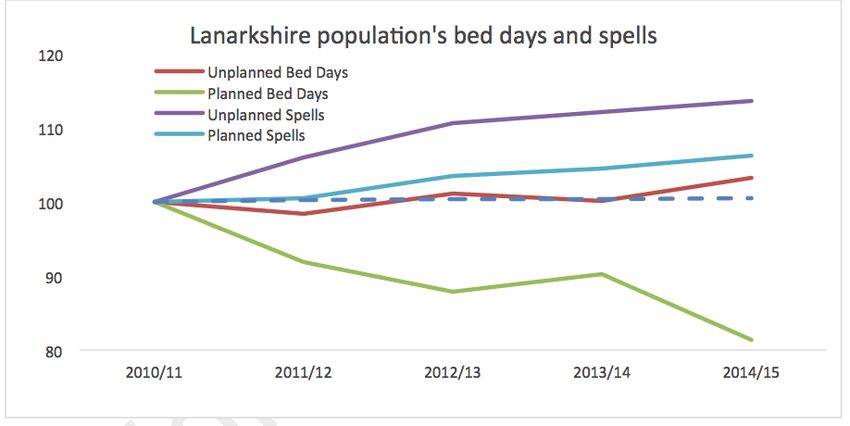
safer
  healthier
independent
         lives

Foreword
In presenting this ten year strategic plan, we have one overarching ambition. We want                In simple terms, it is our view that people in North Lanarkshire would like us to;
to set in motion an approach to delivering health and social care that will lead over time
to achieving the national health and wellbeing outcomes prescribed in the Public Bodies              •   Support our young people to be safe, healthy, achieving, nurtured, active, respected,
(Scotland) Act 2014 and the outcomes linked to The Children and Young People’s (Scotland)                responsible and included;
Act 2014 and the Community Justice (Scotland) Bill.                                                  •   Support people to lead healthier lives;
                                                                                                     •   Support people to live independently;
In North Lanarkshire we have a long history of cooperation and joint working between NHS             •   Support people with offences to minimise re-offending and make our communities safer;
Lanarkshire and North Lanarkshire Council. We have a number of shared services and have              •   When people do need our support, ensure they see people with the right skills to help
worked together in reshaping care for older people, in improving services for children and               them;
young people, supporting offenders and working across agencies in the longer term through            •   Avoid admissions and unnecessary delays in hospital;
community planning.                                                                                  •   When the time comes, let people die with dignity;
                                                                                                     •   Use resources wisely.
The formal integration of adult health and social care services, driven by the Scottish
Government, will allow us to build on these foundations, extend the benefits of integrated           Fundamental to integrating services is closer working with communities. In North Lanarkshire
planning and delivery of services across the population, and strengthen the services we              we have strong and well defined communities; third and independent sector organisations,
provide for everyone living in North Lanarkshire.                                                    carers, staff and others who respect and value their local areas. Our intention is to build on
                                                                                                     local knowledge and experience to ensure services are tailored to community needs and
This opportunity to further improve health and wellbeing outcomes comes at a challenging             the considerable community assets that exist in towns and villages across the area. We want
time for public bodies. Overall economic conditions mean that public sector budgets will             people to live safer, healthier, independent lives by anticipating need before it arises and
continue to be constrained while the need for services will continue to grow.                        through information, local support networks and services.
North Lanarkshire Council is required to save significant sums over the next three financial
years and, likewise, NHS Lanarkshire is undertaking a range of efficiency programmes to              Addressing needs, reducing inequality and supporting communities to reach their potential is
achieve sustained financial stability and best value for taxpayers.                                  not something we can do alone. We are committed to working hand in hand with all agencies
                                                                                                     to ensure that we have a cohesive plan that optimises collective effort to the benefit of those
Faced with this fiscal reality, it is important that we anticipate and, where possible, prevent      who need support.
need before it arises. We need to help and support people, including our children and young
people and those in the community justice system, in making the right life choices and to            Our proposed changes will not happen overnight. This Strategic Plan is a starting point
ensure that the people of North Lanarkshire get full value for every pound spent on their            and a considerable amount of work has to be done to achieve our aspirations for North
wellbeing.                                                                                           Lanarkshire.

This draft Strategic Plan sets out our vision and our priorities for the next ten years. It          We will report annually on our progress towards our aims and will continue to engage and
explains how we will change services to focus on those most in need, and how we will                 consult with our communities to ensure that we are addressing the real issues and taking the
support people to live as independently as possible, by providing support at the right time, in      appropriate actions necessary to improve outcomes for people in North Lanarkshire.
the right place and in the right way. It sets out the actions we will take in our first year as we
refine and develop our longer term commissioning intentions. We will refresh our plan again
in August 2016 to take account of this work.
                                                                                                     Cllr Harry McGuigan, Chair 		                 Dr Avril Osborne, Vice Chair

                                                                                                                                                                                                 1
Our Vision and Purpose
Our Vision
Our Mission
The people of North Lanarkshire will achieve their full potential
through:
Living safe, healthy and independent lives in their
safer
communities.
Receiving the information, support and care they need,
efficiently and effectively, at the right time, in the right
healthier
place and in the right way.
Ensuring North Lanarkshire is the best place in Scotland
to grow up.
Our Mission
independent
lives
Children and young people who realise their potential
and grow to be successful learners, confident
individuals, effective contributors and responsible
citizens.
People and communities who support and respect each
other, exercising both their rights and responsibilities.
People and communities who experience low levels of
crime, fear, alarm and distress.
2safer
healthier
independent
lives
National Agenda For Change Meeting National Outcomes and Standards
Integrating Health And Social Care In North Lanarkshire The legislation sets out that we must contribute to the delivery of nine national
health and wellbeing outcomes for integration. The NLJIB will plan and direct
2014, the Scottish Parliament passed legislation1 requiring Health Boards the delivery of services in a way that will achieve these outcomes. We will also
and Local Authorities across Scotland to integrate adult health and social take into account the national outcomes and legislative requirements for the
planning and delivery of Children’s services and community Justice. We will
care functions. This is the most significant reform to Scotland’s National
publish an annual report on progress to achieve these outcomes, as well as
Health Service and social care service in a generation. The purpose of
on twenty-three pre-determined National Performance Indicators as set out
integrating these services is to improve the health and wellbeing outcomes in Appendix 1. In addition, locally derived performance indicators have also
of people. NHS Lanarkshire and North Lanarkshire Council have chosen to been developed to ensure we have information tailored to North Lanarkshire’s
integrate services through the establishment of the North Lanarkshire Joint circumstances.
Integration Board (NLJIB).
National Health and Wellbeing Outcomes
From 1st April 2016, the NLJIB, a new, legal entity will be responsible for
planning, commissioning and overseeing the delivery of integrated health 1. People are able to look after and improve their own health and wellbeing
and live in good health for longer;
and social care provision, covering community and unplanned hospital
2. People, including those with disabilities or long term conditions or who are
healthcare and adult, children and families and community justice social frail, are able to live, as far as reasonably practicable, independently and at
work in North Lanarkshire. home or in a homely setting in their community;
This strategic plan, based on engagement with the people of North 3. People who use health and social care services have positive experiences of
Lanarkshire, people who use services, carers, staff, independent and third those services, and have their dignity respected;
sector providers and practitioners will determine how integrated health and 4. Health and social care services are centred on helping to maintain or
social care support and services will be delivered in the future. improve the quality of life of people who use those services;
5. Health and social care services contribute to reducing health inequalities;
6. People who provide unpaid care are supported to look after their own
health and wellbeing, including reducing any negative impact of their caring
role on their own health and wellbeing;
7. People using health and social care services are safe from harm;
8. People who work in health and social care services feel engaged with the
work they do and are supported to continuously improve the information,
support, care and treatment they provide; and
1 The Public Bodies (Joint Working) (Scotland) Act 2014 9. Resources are used effectively and efficiently in the provision of health and
social care services.
3Meeting National Outcomes and Standards
National Outcomes for Children and Families Social Work Structural Outcomes
1. Our children have the best start in life and are ready to succeed; 1. Increased community safety and public protection through reducing
2. Our young people are successful learners, confident individuals, effective reoffending;
contributors and responsible citizens; and
2. Improved public understanding and confidence in the effectiveness,
3. We have improved the life chances of children, young people and
appropriateness and quality of community justice services;
families at risk.
3. More strategic, collaborative and integrated provision of community
These outcomes are supported by the eight wellbeing outcomes: Safe, justice services;
Healthy, Achieving, Nurtured, Active, Responsible, Respected, Included.
More effective provision of court mandated activities and alternatives to
Criminal Justice System custody; and Greater equality of access to universal services for people with
convictions or a history of offending.
1. Increased public protection and community safety;
2. Reduction of reoffending; and
3. Increased social inclusion to support desistance from offending. Person-centric outcomes
It is anticipated that these community justice outcomes will be replaced, by a 4. Improved physical and mental well-being and reduced substance
version of the following outcomes, during 2016/17 with the enactment of the misuse;
Community Justice (Scotland) Bill. 5. Improvements in attitudes, behaviour and personal relationships;
6. Improved access to appropriate housing services; and
7. Improved opportunities through engagement with educational,
employability and personal development services.
4safer
healthier
independent
lives
Devolved Services
The NLJIB will plan and have operational oversight of the following children’s and adult
health services and adult social care services.
Community based health services Hospital based health services Community based social work services
Community based Geriatric Medicine Traumatic Brain Injury Accident & Emergency (A&E) Mental Health services
Community based Palliative care Health and Homelessness General Medicine Adults with Disability and Long term conditions
Community based Paediatrics Diabetes service Hospital based Geriatric Medicine Addiction services
Community Children’s Health services Continence service Rehabilitation Medicine Occupational Therapy
Health visiting Prisoner Healthcare Respiratory Medicine Health and Wellbeing improvement
Community Learning Disability Dietetics Hospital based Palliative care Care Home
services
Mental Health and Learning Disability Care Home Liaison service Hospital based Paediatrics Adult and Child Protection
Public Health – Health Improvement Pharmaceutical services Hospital based Addiction / Dependence Carers Service
services
Community Addiction services Primary Medical services Hospital based Mental Health services Community Care Assessment and Planning
(excluding regional or national forensic
services)
District Nursing Primary Care out of hours Kidney Dialysis service Contracted Support services
Sexual and Reproductive Health and GP out of hours GP Inpatient services Intermediate Care service
Blood Borne Viruses
Allied Health Professionals in an Primary Care Administration Aspects of Housing support
outpatient department, clinic or out Speech and Language Therapy
with a hospital
Public, General and Community Ophthalmic services Occupational Health Equipments and Adaptations, Technology,
Dental services Equipment and Telecare
Community based Kidney Dialysis Podiatry Day opportunities and day services
Physiotherapy Homecare services
Children and families social work
Community Justice social work 56
safer
    healthier
independent
        lives

Making it happen
Where We Are Now
                                                                                    The Challenges We Face
Integration is not new to North Lanarkshire and we have a good basis for further    To achieve our vision of safer, healthier, independent living for
reform;                                                                             the people of North Lanarkshire, we need to address a number of
                                                                                    challenges:
•    The need to be outcomes and people focussed is well understood across our
     services;                                                                      •   There are significant and persistent inequalities in North
•    We have a strong relationship with people who use services, carers and the         Lanarkshire that impact on the life opportunities and chances
     third and independent sectors;
                                                                                        people have;
•    We have already successfully integrated some of our services, for example
     addictions, and can evidence the positive impact partnership working has had
                                                                                    •   More people have multiple conditions making their support
     in North Lanarkshire;                                                              and care needs more complex;
•    There is a good recognition that we should provide services, including those   •   Public expectations do not always match how services can best
     delivered by the third and independent sectors, based on the needs of the          be provided;
     individual;                                                                    •   The demand for services is rising whilst the money we have is
•    We plan across public sector organisations through our Community Planning          reducing;
     Partnership;
                                                                                    •   We provide too much care in hospitals and not enough in the
•    There are good local planning arrangements in place between health, social
     care and housing through locality planning groups;
                                                                                        community, this is becoming increasingly unsustainable;
•    Our staff work co-operatively across organisational boundaries.                •   We face a significant challenge to provide accessible housing
                                                                                        for the projected increase in older people;
                                                                                    •   We do not adequately support people, including children and
                                                                                        young people, to take responsibility for their own outcomes;
                                                                                    •   Investment in preventative approaches and anticipatory
                                                                                        services is currently insufficient to meaningfully reduce the
                                                                                        demand on reactive services;
                                                                                    •   Many of our IT systems are not compatible with each other.

                                                                                                                                                    7
Making It Happen
What Needs To Change? Where We Want To Be
To address the challenges that we face and achieve our outcomes we must do a Meeting the National Outcomes and performance standards will
number of things; be a critical measure of successful transition, but the NLJIB has
added its own criteria for determining the success of its aims for
• We need to continue to support those most in need and improve outcomes of the provision of local health and care services. Transformation of
functions and services will be a success if:
all citizens;
• We need to empower people to have choice and control over the supports • We improve the outcomes for people;
and services they access to deliver the outcomes they want to achieve; • People are healthier;
• Children are given the best start in life;
• We need to further invest in preventative and self-management approaches;
• People are fully included in the decisions that affect them;
• We need to provide support and services that are sustainable into the future; • We play our full part in reducing inequalities within our
• We need to support people and communities to take greater responsibility for communities;
• People are less reliant on services and are able to live as
their own outcomes, reducing the need for services;
independently as possible;
• We need to build on the capacity of our localities to deliver with the • People are better able to manage their own conditions;
community, based on the assets that exist within those communities, ensuring • People receive the right support and services for their
individual circumstances;
collaboration and effective local delivery;
• Preventive measures reduce long-term health conditions;
• We need to empower people who use services, people who deliver services, • People only access hospital when they need to, and are
local communities and carers to be full partners in the planning process; discharged as soon as they are able to do so;
• More people can choose to die at home;
• We need to build stronger relationships between staff in hospital and
• Carers receive the support they need and feel supported to
community services; fulfil their caring role;
• We need to invest in our staff to ensure they have the right skills to deliver • We have improved outcomes for offenders, communities and
victims;
support that improves people’s outcomes;
• Our own data provides an accurate and vivid picture of the
• We need to continue to work with all our partners so our combined needs of our communities;
contribution to North Lanarkshire is maximised. • Locality teams are recognised as single entities and functioning
well;
• We work within available finances and resources;
• Staff feel valued and that their work is worthwhile.
8safer
healthier
independent
lives
Commisioning
This strategic plan sets out the framework for how we intend to improve the health Fully understanding the contribution that the third and independent sectors,
and wellbeing outcomes of the people in North Lanarkshire and we will direct NHS staff and independent contractors2, social landlords, carers, and the assets that
Lanarkshire and North Lanarkshire Council to deliver services in line with this plan. people and communities bring is essential in developing our commissioning
To achieve this strategic vision we must commission the right mix of health and plan. Much of this work will be undertaken within localities but we will need to
social care support and services to deliver our aims. Fundamental to successful understand the overall contribution of these partners and ensure that all our
commissioning is understanding; stakeholders are included within the discussions that shape our understanding
of how best to improve outcomes in North Lanarkshire.
• Activity; the support and services that are currently provided by NHS
Lanarkshire, North Lanarkshire Council, our community planning partners, the
third and independent sectors and carers;
• Demand; our population needs now and in the future;
• Resources; the collective resources that all partners bring to provide supports
and services including community assets.
The strategic needs assessment that has been carried out as part of this strategy
goes some way to providing the information that we need. It has enabled us to
identify the broad challenges and pressures that health and social care services will
face over the coming years and how services need to change to improve outcomes.
It demonstrates that the models of service provision that we currently have are not
sustainable within current resources.
The integrated budget that we will have to commission health and social care
services is currently being calculated. This will include the reductions that NHS
Lanarkshire and North Lanarkshire Council are required to make in line with
reduced public sector spending.
NHS Lanarkshire is undertaking a significant amount of work under their healthcare
strategy. This will provide the detailed analysis of activity and future demand for
many of our integrated services and the broader provision of hospital services
across Lanarkshire. North Lanarkshire Council are taking forward similar work with
regards to social work, housing services and public protection. 2 These include GPs, Pharmacists, dentists and opticians
9Strategic Priorities
The NLJIB has identified six strategic priorities that it will focus on over the ten
year lifetime of this strategic plan; Developing Our Detailed Commissioning
Challenges Intentions
We are still in the process of gathering the necessary information
to fully shape our commissioning intentions for the next three
Addressing Prevention and years. A detailed strategic commissioning plan will be developed
Inequalities early intervention and consulted on by August 2016. This will give us the time to
identify the full range of changes that we intend to make to
services over the next three years to deliver better outcomes for
people. It will set out the services that we intend to invest in and
those that we intend to disinvest from. This work will be taken
forward with all of our partners and we will consult on this more
detailed plan with all those who have an interest in health and
Person Effective, safe, quality social care in North Lanarkshire.
centred support and timely care
This strategic plan does set out a number of actions that the NLJIB,
with its partners, have identified as priorities for our first year.
This plan sets out those actions.
Maximising Making the whole
all our assets system work efficiently
These priorities will help the NLJIB and its partners focus on the key challenges that
we identify within this strategic plan and deliver improved outcomes for people.
10safer
healthier
independent
lives
Market Facilitation
Part of the work to develop a comprehensive commissioning strategy is the
development of a ‘market facilitation plan’. A market facilitation plan ensures that
the intentions in a commissioning plan are translated into actual services. For
example, our commissioning strategy may set out that we require more care at
home provision. The market facilitation plan allows our partner organisations
to plan for training and recruiting the necessary staff to provide these services.
In short, it gives confidence to the third and independent sector to invest in the
development of new services and gives public service the confidence to invest in
staff training and development to ensure we have the right workforce.
The process to develop a market facilitation plan will involve all our partner
organisations to ensure that the changes that we wish to make are sustainable and
will be delivered. It will ensure that our partners have the confidence to build their
own capacity, services and supports towards the same shared vision. It will ensure
that as the integration agenda develops, local services are fit for purpose and in a
position to respond to care needs in a joined up, whole systems, person-centred
way.
We will consider, with our partners, the strategic commissioning plan and the
market facilitation plan on an annual basis to ensure that it remains fit for purpose
and is delivering improved outcomes for the people of North Lanarkshire.
1112
safer
  healthier
independent
        lives

North Lanarkshire Health and Care Overview

North Lanarkshire is the fourth largest local authority area in Scotland, by               It looks at;
population, and covers a geographical region of over 180 square miles within
Scotland’s central belt. The area includes a variety of communities ranging                •   Activity; the support and services that we currently collectively provide
from rural settlements to larger towns such as Airdrie, Bellshill, Coatbridge,             •   Demand; our population needs now and in the future
Cumbernauld, Kilsyth, Motherwell, Shotts and Wishaw.
                                                                                           •   Resources; the resources we have available to provide supports and services
It is located at the crossroads of Scotland’s motorway network and has excellent           •   By understanding this information we will be able to deliver better outcomes
rail links including; 25 stations on 10 local routes, three intercity routes, Coatbridge       for the people of North Lanarkshire. The assessment includes;
container terminal, as well as Eurocentral and Mossend, Scotland’s rail freight links      •   Demographic data (Age, deprivation, employment rates, gender etc.);
with Europe via the channel tunnel.                                                        •   Service delivery (Provision of current services, GP practices, care homes,
                                                                                               attendance rates etc.);
The structure of the North Lanarkshire economy has undergone a major
                                                                                           •   Health Outcomes (Prevalence rates for conditions and diseases etc.);
transformation in the last twenty years. North Lanarkshire’s economy has been
most affected by the loss of its heavy industry, particularly during the 1980s and         •   Public Health (Obesity, smoking rates etc.);
early 90s, and more recently significant reduction in its manufacturing sector             •   Public Protection (Adult and children’s protection, criminal justice social work
which has suffered a decline of almost 30% over the period from 2004 to 2013                   etc.);
(representing a loss of some 5,500 jobs).                                                  •   Housing (Housing support services, housing provision etc.);
                                                                                           •   Community Planning Partners (Police, fire services, education, sport and
This rapid decline in manufacturing has, however, been more than offset by the
                                                                                               leisure etc.);
increase in service based industries. The growth in financial and business services
in North Lanarkshire between 1981 and 2008 outstrips that of the Scottish                  •   The contribution of non-statutory partners (Third Sector, Independent Sector,
economy as a whole. As a result, the last twenty years has seen a significant shift            Social Landlords etc.);
from an industrial to a service based economy, with an increasing business start up        •   Available assets (The strengths that people and communities bring).
rate, more people in employment and a growing local economy.

As part of the development of this strategic plan we have undertaken a strategic
needs assessment of North Lanarkshire. This assessment takes into account the
contribution of; statutory agencies, the third and independent sectors and carers.

                                                                                                                                                                            13
We have this information at a datazone level so we can use it to look at Some of the key data we have seen is
the needs of very small areas, wider localities and North Lanarkshire as a
whole. There has been an extensive engagement process to ensure that • 22% of people in North Lanarkshire live in the 15% most deprived areas in
the data we have reflects the experience and knowledge of those that Scotland.
work and live in North Lanarkshire and we have developed detailed locality • In North Lanarkshire, there is up to 13 years difference in life expectancy
profiles that will be published alongside this plan. between our most deprived and most affluent communities.
• Across all tenures, 41% of households were in fuel poverty in North
We have set out some key data below. Our full strategic needs assessment Lanarkshire;
will be developed alongside our detailed commissioning plan by August • There is less ethnic diversity in North Lanarkshire (2%) when compared to
2016. Scotland (4%);
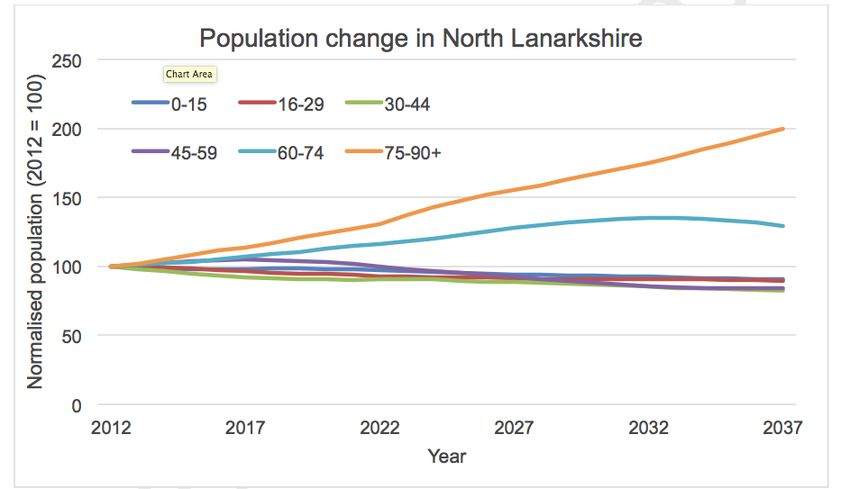
• People aged 75 and over made up 7% of the North Lanarkshire Population
in 2012. By 2037 they are projected to make up 15%.
14safer
healthier
independent
lives
North Lanarkshire Health And Care Overview
• The incidence of all cancers is predicted to rise by 35% by 2027;
• The number of people being admitted to hospital for alcohol related reasons
in North Lanarkshire (525 per 100,000) has risen over the last few years
exceeding the Scottish average (460);
• The unemployment rate in North Lanarkshire is higher (7.3%) than that of
Scotland (5.9%) and of the rest of the UK (5.7%);
• It is estimated that two thirds of the population in North Lanarkshire are
either overweight or obese.
• 84.7% of the bed days used in 2014/15 were related to unplanned care;
• Over the last five years the number of people staying in hospital has risen,
though the time that they stay in hospital for planned procedures has
dropped;
• The number of people in residential care is around 1500, around 9% lower
than in 2011
• The number of homeless applications has fallen from 4,000 in 2004/05 to just
under 2,000 in 2014/15
• Presentations at A&E from North Lanarkshire have been remained constant
over the last 3 years though demand fluctuates in line with the seasons;
• The number of adult protection referrals has doubled every two years since
the enactment of the adult protection legislation;
• The amount of money we have had to spend on health and social care has
reduced in real terms over the last few years. This will reduce further in
2016/17;
• Some people attend A&E or Out of Hours GP services out of convenience
rather than necessity;
• The frail elderly begin to lose their independence after a 72 hour delay in
discharge from hospital. In 2014/15 475 people were delayed for longer than
72 hours.
15North Lanarkshire Health and Care Overview
This strategic needs assessment demonstrates the fundamental planning and To ensure that we have the right focus, this strategic plan sets out the actions
delivery challenges that face the NLJIB, NHS Lanarkshire and North Lanarkshire that we will take in four areas;
Council. The population of North Lanarkshire is changing. Without careful
planning it is likely that this will lead to greater demand for health and social • People; ensuring that people are central to the decision making process
care support and services. Deprivation and inequality are expected to remain and that the supports and services we provide deliver the health and
significant challenges in North Lanarkshire for the foreseeable future and the wellbeing outcomes that they seek;
complexity and numbers of people with multiple long term conditions are • Localities; ensuring that we build on the assets in our localities and that
expected to rise. This will happen earlier in North Lanarkshire than elsewhere teams are strengthened to provide more care closer to home;
because of the areas of deprivation that exist within our communities. • Culture; ensuring that there is a shared vision across service providers
and the public about how to develop sustainable health and social care
Whilst we will continue to make our system more efficient, this alone will not provision for the future;
release enough capacity to meet this rising demand. As public finances currently • Systems; that our systems and processes support integrated service
stand there will not be an increase in finances for health and social care to delivery.
match increasing demand. This tells us that doing more of the same will no
longer meet the needs of our population.
The information also shows us that current service provision does not
necessarily improve the health and wellbeing outcomes of people in North
Lanarkshire in the long term. People are admitted to hospital when supports
and services could be provided in the home and, when they are admitted they
can be delayed and these delays reduce their ability to live independently.
People do not always have access to the best information that could help them
prevent circumstances that limit positive health and wellbeing outcomes or help
them better manage their conditions.
To deliver our outcomes we will have to fundamentally change the way that we
approach health and social care in North Lanarkshire. It will trial and adopt new
models of health and social care and shift resources from traditional to new
service models. As we develop the detailed commissioning plan it will set out
those areas of service provision that we need to transform, those that we need
to redesign and those that need to improve. The detailed commissioning plan
that will be published in August 2016 will set this out for each of the integrated
functions.
16safer
healthier
independent
lives
17People
The purpose of integrating adult health and social care services is to improve the Working with people
health and wellbeing outcomes for the people of North Lanarkshire. To deliver
quality, efficient and timely supports and services we need to ensure that the The Christie Commission report suggested that around 40% of our Scottish health
people we are seeking to support and their outcomes are central to the decision and social care spending is currently accounted for by interventions that could have
making process. been avoided by prioritising a preventative approach3. Christie suggests the focus
needs to shift from meeting the cost of dealing with health or social problems after
We need to give people the skills and knowledge to transform and manage their they have developed to prevention and early intervention.
own health and wellbeing so they can live more positive fulfilling lives with reduced
needs for health and social care services. A partnership approach to enabling Central to our approach to working with people is early preventative intervention
people to achieve their potential, and be safe, healthy and included, by providing and the promotion of recovery and a strengths and assets based approach with
access to high quality housing and support will be required. a strong locality focus. We will work closely with a range of universal services
that support people’s health and wellbeing including NL Leisure, Culture NL and
Many of our traditional approaches to delivering services have been around single North Lanarkshire housing services who are key partners in transforming our
conditions or life circumstances. This is a good way of treating a specific condition, communities to be safe, healthy, vibrant and creative.
but not necessarily a good way of improving the health and wellbeing outcomes
for an individual, their families and carers in the long term. It also does not prevent To enhance the ability of people to care for themselves we will provide a continuum
health and social care needs arising in the first place and often does not take into of support which starts when someone first recognises that they are having
account that many people experience more than one health and social care need. difficulty; through a system of signposting, information and innovative service
To successfully support a person you need to understand their individual provision. We will support people to improve their ability to look after themselves
circumstances. Mental health issues might be linked to unemployment, isolation, and where possible increase the time before long term service provision is
loneliness or abuse. Medical conditions are often linked to diet, exercise, housing required.
and social habits such as smoking and alcohol use. A particular condition getting
worse can often be because people do not have the right information and When required we will offer intensive support to prevent or minimise admission
knowledge to successfully manage their own health and wellbeing or because the to care settings including a range of short term interventions, for example
support that they have in place is no longer appropriate. rehabilitation and reablement, to assist people to regain and build on their skills
and develop self-management techniques.
By ensuring that the person we are trying to support is central to the decision
making process we can tailor services to meet the range of circumstances that If someone requires more intensive support they will be assessed and assisted to
are contributing to ill health or social care need. We can try and support people access self-directed support opportunities. We will seek to build on the existing
to not only overcome the presenting condition but also the underlying causes. As successful approaches that exist in North Lanarkshire.
the number of people with multiple long term conditions grows, tailoring individual
support and services will become ever more important.
3 Christie Commission. The Future Delivery of Public Services.
Public Services Commission; 2011. 18
20safer
healthier
independent
lives
People
Major Care Groups
Individual professionals and teams can work with people to develop support and The Scottish Government’s Early Years Framework published in 2008 and the more
services that deliver their outcomes. However, efficient quality led services have to recently published Early Years Taskforce Shared Vision and Priorities Paper from
be planned across larger groups of people. One way of looking at our population to March 2012 both emphasise the need for all agencies to work together to prioritise
facilitate this planning is within different care groups, for example people with frailty, investment in prevention and early intervention. In addition the national policy
whilst recognising that a person might fall into more than one of these care groups. ‘Getting it right for every child’ is an approach which puts the needs of children,
This helps professionals to establish systems and processes that work better for an young people and their families at the centre of planning, with agencies in the
individual. public and voluntary sectors, working together to better help all children grow,
develop and achieve their full potential.
To enable this focus, we will build upon the Partnership Board structure in North
Lanarkshire that brings health and social care staff and stakeholders together to Getting it right for every child recognises eight wellbeing indicators - safe, healthy,
focus on the needs of our major care groups. We intend to have two Partnership achieving, nurtured, active, respected, responsible and included, as areas in which
Boards that will cover; children need to progress in order to do well now and in the future. This construct
of well being, founded on the United Nations Convention on the Rights of the Child,
• Long Term Conditions, Disabilities and Frailty; is central to understanding how children grow and develop. The Getting it right for
• Addictions and Mental Health. every child (GIRFEC) approach also promotes proportionate and timely intervention.
These Partnership Boards will be underpinned by Locality Improvement Boards This is further reinforced by the legislative framework established by the Children
and Locality Planning Groups to strengthen how we consider and support the and Young People (Scotland) Act 2014. The legislation is a key part of the Scottish
needs of individuals within each of our localities. This structure will ensure that Government’s strategy for making Scotland the best place in the world to grow
all stakeholders are drawn together to consider the best way of delivering holistic up. By facilitating a shift in public services towards the early years of a child’s life,
quality information, support and services across our major care groups and and towards early intervention whenever a family or young person needs help, the
localities in North Lanarkshire. legislation encourages preventative measures, rather than crises responses.
Children and Families GIRFEC underpins single and multi agency work with children, young people and
their families and ensures the child is at the centre, they get the help they need
There have been considerable changes within children’s services in recent years when they need it and intervention and support is proportionate and outcome
including a shift to prevention and early intervention to support children, young focussed. There is a small but significant number of children who may require to
people and their families. Based on research we know that intervening earlier with access additional supports and an even smaller number who may require access to
families can for many, help to prevent a problem escalating, and can generally lead specialist and intensive services to meet their complex needs. To meet the diversity
to better outcomes for children and young people especially in the longer term.
2 Christie Commission. The Future Delivery of Public Services.
Public Services Commission; 2011. 19of needs of all children and young people, early intervention and prevention are at We need to ensure that they are represented, can influence improvements, can
the centre of the planning and delivery of services and supports. feedback on their experiences of services and supports and are actively engaged
We will encompass universal services, additional supports and specialist and at an individual level in processes such as assessment, planning and review. We are
intensive services for children, young people and families to achieve positive committed to independent advocacy to ensure that individuals and groups have
outcomes for children, young people and their families and take a multi agency their views heard and their rights respected.
approach to early intervention and prevention.
We will link to the existing participation and engagement structures, Youth Forums
Our relationships with communities and the public are important in meeting and members of the Scottish Youth Parliament, to involve children and young
outcomes for children, young people and families. Service users and their carers people in the planning and delivery of children’s’ services across North Lanarkshire.
do not live in isolation. Friends, neighbours, local organisations, services and There are many examples of best practice, and tools that have been used, to enable
businesses impact on the quality of all of our lives. These assets are very much part children and young people to express their views. We will build on this experience.
of assessment and care planning.
Carers
The role of individuals and communities in many areas of our work is significant.
A ‘carer’ is someone who provides help and support to family or friends who are
ill, disabled or who just need some extra support. This could be a short term
Examples include:
arrangement, such as supporting someone following a hospital admission or for
others the need for help and support could be long-term, such as caring for a
• Campaigns. Sometimes these are national but we have also had local disabled or ill child, spouse, partner or an elderly relative.
campaigns e.g. raising awareness of child protection concerns and how to
respond have been successfully delivered; Every carer is different, with supportive tasks including personal care, taking
• Recruitment of foster carers and people providing supported care; medication, mobilising, shopping, laundry, cleaning, cooking, filling in forms and
• The benefits of volunteering and valuable contributions of volunteers; managing money. There are estimated to be 49,000 carers in North Lanarkshire
• Our media and communications strategies impact on public perception and providing care on a regular basis.
reputation, not just of agencies but also the individuals and communities we
work with; The very positive role of carers cannot be understated. Caring for a frail, ill, disabled
• Our public information is often the first point of contact for people. We need to or older person can be very rewarding, but research also indicates the demands of
ensure that the rights of individuals are promoted and there is clarity around the caring role can be challenging and support is therefore vital to assist carers in
expectations of services and supports. North Lanarkshire. Through providing good quality information, advice and support
to carers we can support them to develop skills and knowledge that helps them to
Involving children and young people is a priority. The inclusion of children and fulfil their caring role and reduce the impact this can have on their own health and
young people, particularly those considered to be most vulnerable, can be wellbeing.
challenging. 20safer
healthier
independent
lives
People
Inequality
The overall health of North Lanarkshire’s population continues to improve and life In partnership with the North Lanarkshire Partnership, our approach will deliver:
expectancy continues to increase. However there remain significant inequalities
in the health experiences of different groups of people. These inequalities do not • actions that mitigate or reduce the severity of the health and social
occur randomly or by chance, but are socially determined by circumstances largely consequences of social inequalities. These include providing specialist and
beyond an individual’s control. targeted supports to particular population groups (e.g. homeless, looked after
children);
These circumstances include such things as the distribution of power, money • actions that prevent harmful environmental influences and help individuals and
and resources, and the direct influence this has on things like the availability of communities overcome the effects of inequality on health and wellbeing. These
good work, access to quality, affordable housing, social and cultural experiences, include community development activities that increase social capital, and
transport, education and learning opportunities, and services. improvements to the physical environment in deprived areas; and
• actions that undo the underlying structural inequalities in power and resources.
There is much evidence to suggest that people living in the more deprived areas These comprise provision of high quality universal services including education,
and those who are part of specific social groups are more likely to experience housing, and employment, and economic policies that support social mobility
poorer life chances, reduced health and wellbeing and shorter life expectancy than and prevent high wage differentials.
the rest of the population. This ultimately results in unequal outcomes in health,
illness and death across the population. For example in North Lanarkshire, there is Public Protection
up to 13 years difference in life expectancy between our most deprived and most
affluent communities. North Lanarkshire Council and NHS Lanarkshire, together with other public
agencies such as Police Scotland, have statutory duties in respect of public
We will play a key role in tackling health inequalities in North Lanarkshire and we protection. This means matters relating to child protection, adult protection,
will work with community planning partners to tackle some of the longstanding and MAPPA (multi-agency public protection arrangements regarding the management
fundamental causes of social inequality. We recognise that Housing Services play a of high risk offenders) and domestic abuse. These are high profile areas of activity
vital role in contributing to health and wellbeing outcomes through the provision of that involve sophisticated risk assessment and management and as such carry
good quality, warm affordable homes. high operational and reputational levels of risk for the NLJIB. All areas of public
protection are showing increases in demand at a time of sharply falling local
If we are to address the increasing demand for health and social care services and authority resources.
support people to take responsibility for their own health and wellbeing, we need
to take action to prevent, mitigate and reduce the severity and impact of health and A fundamental stated partnership objective is to keep people safe. A national
social inequalities. outcome for integration is that “people using health and social care services are
safe from harm” but the partners’ statutory duties extend beyond people who use
services, and apply to the general population.
21One of the challenges of integration is therefore to ensure risk is assessed, The NLJIB’s approach to managing risk requires to be underpinned by strong
minimised – it can never be eliminated- and managed in ways that demonstrate information sharing and governance arrangements. These are overseen by the
safe and effective partnership working, managerial oversight and professional Lanarkshire Data Sharing Partnership which is currently updating the agreements
practice. To this end there are existing partnership governance structures that for sharing data across the public sector in North Lanarkshire in line with the Public
require to remain in place, as depicted in the diagram below. Bodies Act and the Children and Young People Act.
Many of the messages contained within ‘ A Shared Approach to Effective Risk
CHIEF OFFICER PUBLIC PROTECTION GROUP Management’ – a framework adopted by North Lanarkshire Council and NHS
Lanarkshire in December 2007 – are just as pertinent today, when managing
situations that present significant risk. This was updated in 2010 in adult services
MAPPA
STRATEGIC through the adoption of a joint risk assessment process, building on the adult
OVERSIGHT protection risk assessment format. This is intended to meet the requirements of
VIOLENCE ADULT CHILD GROUP (SOG) a multi-agency record, can be completed by a range of professionals with lead
AGAINST WOMEN PROTECTION PROTECTION
GROUP COMMITTEE COMMITTEE responsibilities, and is designed to help people understand and manage their own
(VAWG) (APC) (CPC) risk where possible, and understand the responsibility of each agency and duty of
care.
A major strength of public protection arrangements and indeed wider partnership In the context of integration and the need for multi-agency records for children
arrangements in North Lanarkshire remains the strong interface between adult and young people, the NLJIB will need to ensure that this is reviewed and refreshed
and children’s services, Joint Adult and Child Protection Committee development accordingly.
activity and regular meetings of all four public protection chairs and lead officers
take place to address cross-cutting issues. This coherence is vital to the efficiency
and effectiveness of the NLJIB’s arrangements.
The Chief Officer Public Protection Group receives and examines performance
reports for each of these areas of activity. In addition the MAPPA Strategic
Oversight Group and the Violence Against Women Group each produce an annual
report; the Adult Protection Committee and Child Protection Committee each
produce an annual report. Both have independent chairs. The chair of the Adult
Protection Committee is also required to produce a biennial report to the Scottish
Government.
22safer
healthier
independent
lives
People
Community Justice
North Lanarkshire Council has delegated responsibility for social work community The shadow/transitional year will begin on 1st April 2016, and this group will then
justice services to the NLJIB. These services include providing support to the become the Community Justice Partnership (CJP) reporting directly to the NLP
Courts and the procurator fiscal, working with offenders and their families from Board in line with reporting requirements.
the start of their sentence, through their stay in prison, and after release, ensuring
offenders comply with court orders relating to drug testing, assessing the risk that The ethos which supports the redesign of community justice is to ensure that
an individual might pose to the public whilst on bail and working with HMP Shotts the identified local statutory partners will be responsible for the delivery of the
to provide support for offenders under their care. The focus of these services is to proposed national strategy at a local level. In North Lanarkshire, it will be the
support offenders and their families to minimise the risk of reoffending, improving responsibility of the statutory partnerships within the CJP to operationally deliver
the outcomes for people and improving community safety. and develop community justice, whilst the role of NLP will be to provide strategic
leadership and governance. The model adopted, allows for links between the
The Scottish Government introduced the Community Justice (Scotland) Bill in broader community planning themes to be incorporated within community
the Parliament on 7th May 2015. It seeks to establish new arrangements for justice and vice versa. It will also enable the use of existing forums, systems and
the delivery and oversight of community justice services. Under the provisions processes to engage with communities and third sector colleagues. The co-
of the Bill, the current model for community justice based on eight Community ordinator for community justice will have a key role in linking with Lanarkshire
Justice Authorities would be abolished. The planning and delivery of community Community Justice Authority, wider CPP themes and in particular the North
justice services would become the responsibility of a core group of statutory Lanarkshire Community Safety Partnership.
partners within the 32 community planning partnerships across Scotland. A new
body, Community Justice Scotland, will be established in October 2016 and fully All partners within the CJSG are aware of their responsibility to contribute
operational by 1st April 2017. It will work closely with statutory Community Justice resources towards the implementation and delivery of community justice
Partners, the Third Sector and a range of other parties to provide support and outcomes and will be accountable through the group and through reporting to
leadership for community justice. the NLP on these outcomes. Information on the future national performance
framework is awaited as is the future funding formula.
In North Lanarkshire, the Community Justice Steering Group (CJSG) was formed
in August 2015. The membership of the group includes North Lanarkshire Integrated Workforce
Council, Police Scotland, Scottish Fire and Rescue Service, North and South Joint
Integration Boards, NHS Lanarkshire, Corporate and Community Planning (NLC), Central to the delivery of better outcomes for people is the health and social care
Lanarkshire Alcohol and Drug Partnership, Voluntary Action North Lanarkshire workforce within public, third sector and independent organisations and those
(Third Sector Interface), Lanarkshire Community Justice Authority (LCJA), Skills who volunteer in our communities. As we develop new services our staff will
Development Scotland and the Scottish Prison Service. It is anticipated that the require different skills and will need to work in different ways, in particular the
membership of the group will be widened as the partnership develops. skills and capacity for early intervention and preventative approaches.
23People – Actions For 2016/17
As part of the commitments made within the Integration Scheme we are developing • Develop our understanding of the needs of our population, the
a workforce strategy to cover NHS and Local Authority staff who work in integrated activity, future demand and costs of services so we can commission
service provision. The workforce strategy will help to ensure that we are able to effectively, including the contribution from the third and
train and recruit the right staff to deliver integrated health and social care services. independent sectors, unpaid carers and the assets that people and
There are already many workforce pressures within the system. We have difficulty communities bring;
recruiting, for example, new GPs, Physiotherapists and Health Visitors. As we plan to • Engage with the North Lanarkshire Community Planning
deliver services we will have to take account of these changing workforce pressures, Partnership to better understand how our detailed commissioning
working with NHS Lanarkshire, North Lanarkshire Council and professional bodies plans can contribute to reducing inequalities;
to ensure that we have the right workforce for the future. The workforce strategy • Develop the governance arrangements for adult and child
will help us to do this effectively. protection to ensure that the NLJIB can fulfil its obligations in this
regard;
We recognise that change can often feel uncomfortable and challenging. However, • Develop an integrated workforce strategy;
we are confident that staff will find that the impact of new ways of working will • Develop a housing contribution statement and contribute to the
delivery of the North Lanarkshire’s Local Housing Strategy.
increase job satisfaction and recognition of the positive impact of their work.
• Develop a market facilitation plan with our stakeholders.
Through developing preventative approaches, improved systems and processes
• Develop a detailed commissioning plan covering all delegated
staff will feel an enhanced sense of focus on their role and recognise the positive
functions by August 2016;
impact of their work on our communities. • Ensure that the shared approach to effective risk management is
reviewed and refreshed by 01 April 2016;
As we develop our detailed commissioning intentions, the third and independent • To put in place a refreshed Partnership Board structure to support
sectors will be able to build the capacity of their staff to deliver the services that we the sharing of good practice for major care groups;
will look to commission. The NLJIB will also look to work with its community planning • To work with the North Lanarkshire Partnership on the Enabling
partnerships to ensure that the right training is available for people to pursue Collaborative Leadership programme to provide stronger leadership
careers within health and social care service provision. and direction in tackling inequalities across North Lanarkshire;
• To work with partners to achieve the stretch aims of the Early Years
Staff governance Collaborative works streams and ensure every child has the best
possible start in life and placing a focus on the needs of looked after
The NLJIB does not employ any staff. In planning integrated service delivery we will children;
take into account the rules, processes, arrangements and procedures that NHS • To develop the assets based approach to improving health and
Lanarkshire and North Lanarkshire Council have in place. Key to this will be working wellbeing within out most deprived communities;
through any consequences of the detailed commissioning plan with our trade union • To work with Community Planning Partners (CPPs) to identify and
partners and HR departments of NHS Lanarkshire and North Lanarkshire Council. address the needs of vulnerable populations with complex health
and care needs. 24You can also read


