SAFETY & SECURITY IN 2021 AND BEYOND WITHIN THE DUPONT CIRCLE BID - MATT SMITH, VICE PRESIDENT, SECURITY JBG SMITH OFFICER JEREMY BRADY, MPD
←
→
Page content transcription
If your browser does not render page correctly, please read the page content below
Safety & Security in 2021
 and Beyond within the
    DuPont Circle BID
       Matt Smith, Vice President, Security JBG SMITH
                 Officer Jeremy Brady, MPD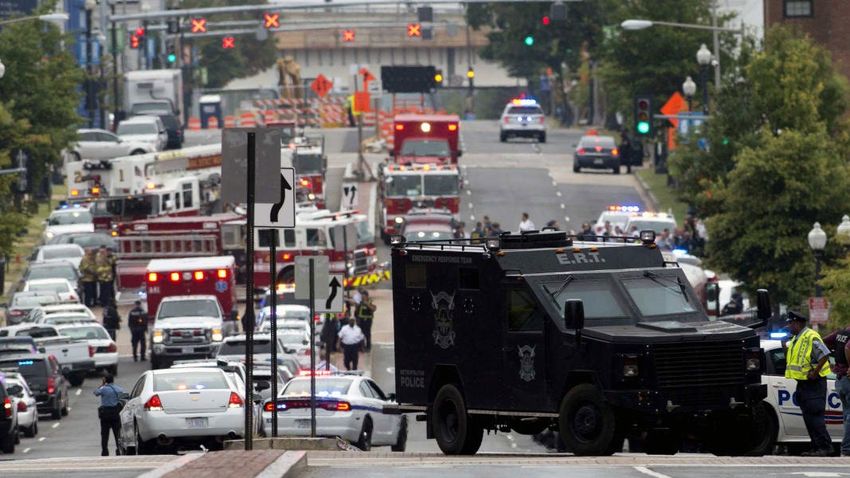
Today’s Agenda

• The ‘New Normal” in 2021
• Crime Trends, Patterns and Safety
• Active Shooter
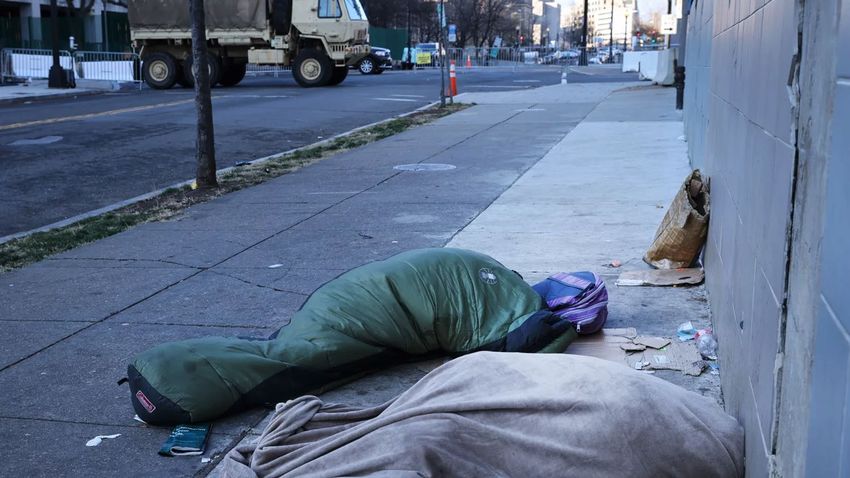
• Homelessness
• Vehicle, Garage and Parking Lot Safety
• Situational Awareness and Communications
• Training Staff
The “New Normal” in 2021
• Social distancing protocols
• Work from home
• Virtual learning for students
• Lower building occupancy rates
• Closed businesses and restrictions on operations
• Increase in homelessness and panhandlers
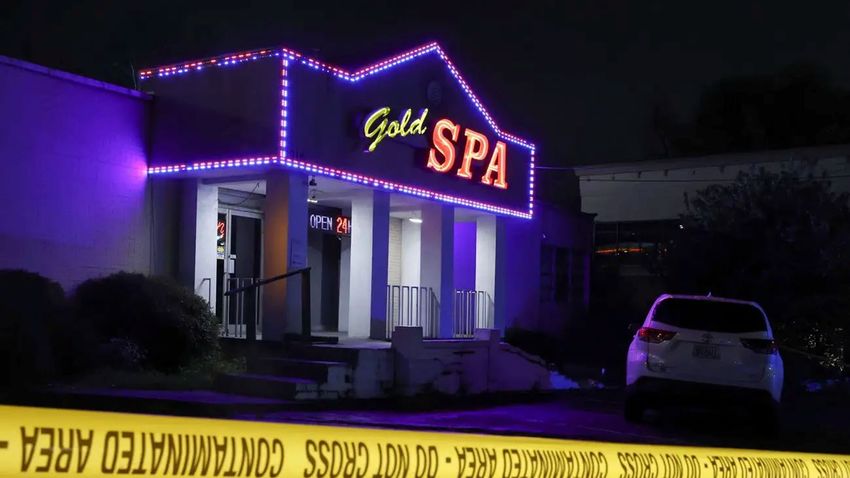
• Increase in criminal activity in NCR
• Civil unrest

????????
  911
 (text service available)

   Or
  311
???????

• Comply if escape and hiding are not
  possible

• Electronic and paper lists

• Maintain a list of key contacts for your
  organization (management, staff, building
  managers/maintenance)

• Have a designated evacuation meeting
  place at a nearby location

• Keep physical keys ready

• Prepare a go-bag

• Drills
• Keep office space secure (even upper
  levels)
• Security camera’s – DC camera rebate
  program
• Avoid grab-n-go items near doorways or
  open windows
• Avoid distractions of dual headphones
• Never leave ANYTHING in view in your
  vehicles
• Never leave a vehicle running, not even
  for a second
• Never double park, preying eyes are
  watching and makes for an easy carjacking
  or vehicle theft
•   Trust your instincts! Call 911
•   If you witness a crime, please be a witness
• Assist by being an advocate
     • Call 311 and request a response from
        DBH. 911 for a person experiencing an
        emergency
•   MPD has several homeless out reach
    coordinators to assist
•   Public space is available to all persons
     • General rule: space for a wheel chair to
        pass must be available
•   Tents on public space are permitted
•   Assistance with barring notices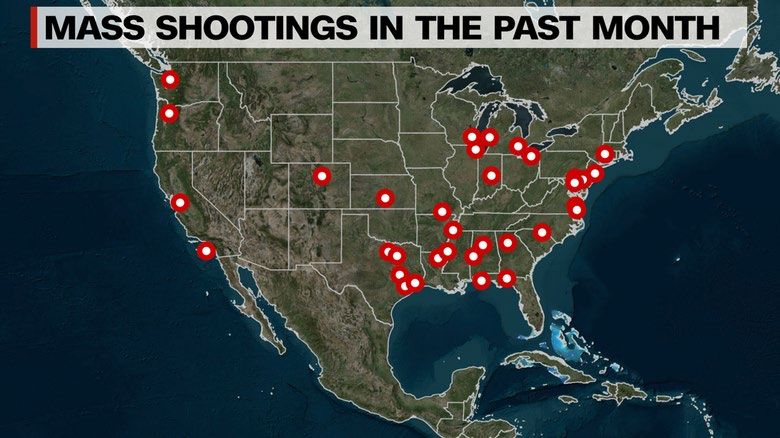
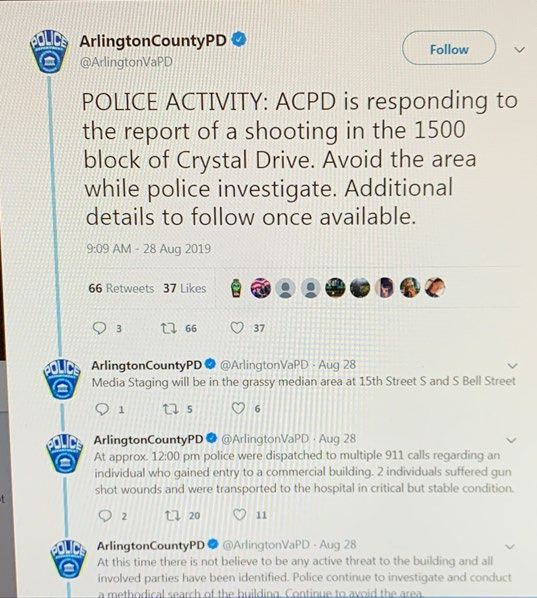
Active Shooter - An individual actively engaged in killing or
                 attempting to kill people in a confined and populated
                 area.” - Active Shooter, How to Respond, DHS 2008

                 Mass Shooting - FBI considers an incident to be a mass
                 shooting if four or more people are shot, wounded, or
                 killed, excluding the gunman.
                 •  March 16, 2021 – April 16, 2021 there were 45 mass
                    shootings in US - CNN
                    147 year to date through April 16th (73% increase from
Active Shooter
                 •

                    2020) - Forbes

                 Active Shooter “Game Changers” – Lessons Learned
                 - Columbine High School - 1999
                 - Virginia Tech - 2007
                 - Navy Yard – 2013
                 - Orlando (Pulse Nightclub) – 2016
                 - Las Vegas – 2017
                 - Dayton - 2019
Mass Shootings in
  US April 15 –
 March 15, 2021
• COVID effect
                      • Isolation
                      • Depression
                      • Unemployment
       Why an     • Polarization in the country
    Increase in       • Hate crimes
                      • Domestic terrorism
Active Shooter    • Mental health issues
       Events?    • Copycat and media sensationalism
                      • “15 minutes of fame”
Preparing and Responding to
an Active Shooter Event
Prepare
• Update contact information
• Obtain situational awareness
• Be familiar with:
• Potential warning signs of workplace violence
• “Safe areas” in office
• Exits
Respond
• Individual response
• Run, Hide, Fight
• Call 911
• How do police respond?Active Shooter
Organizational Preparedness
• Harden Target
• Vulnerability assessment of office/property
• Plan
• Workplace Violence Plan
• Warning signs
• Reporting procedures
• Crisis Management Team
• Emergency Response Plan
• Communications
• Identify “safe areas” and escape routes for evacuation
• Lockdown Procedures
• Business Continuity Plan
• Identify core functions
• Alternate worksite/telecommute
• Employee Assistance Program
• Train StaffHomelessness
Increase in homelessness:
• COVID effect:
• Concerns about contracting Covid
• Economy
• Limited bed space
• Supply and demand
• Social distancing requirements
• Reduction in convenience areas
• Bathroom facilities
• Less cover – more visible, less traffic
• Other
• Lifestyle
• Eviction moratoriumHomelessness
Plan In Advance:
• Know property lines
• Understand the law
• Not against the law to be homeless
• Panhandling
• Quality of life crimes
• Post signage, if necessary
• Keep supply of barring notices accessible
• Be familiar with resources in DC:
• Agencies
• Department of Behavioral Health
• Outreach
• Mobile Crisis
• CPEP Emergency Psyc Services
• Department of Human Services
• MPD Homeless Outreach Officers
• Justice system
• Non-Governmental Partners
• Pathways and other non-profits
• Service providers
• Train staff on enforcement protocolsHomelessness
Enforcement Protocols:
• Be fair and equitable in enforcement – why do you want
person off your property?
• Enforce signage – don’t be selective
• Ask to leave premises and not return (where, when, why)
• Document
• Log Activity
• Serve barring notice
• Staff or Police
• Provide services information
• Notify other staff – share information
• Post picture at lobby desk and share with staff
• Be consistent in enforcementLong-term solutions:
• Communicate with other stakeholders (police,
shelters/advocacy organizations, BID)
• Limited Power of Attorney
• Physical security
• Security officer(s)
• CCTV
Homelessness • Access Control
• Assess areas attracting homeless
• Outdoor furniture, garages, stairwells
• CPTED (Crime Prevention Through
Environmental Design)
• DisplacementVehicle related crimes:
• Larceny From Auto
Vehicle, • “Smash and grab”
• Unlocked vehicles
Garage and • Grand Larceny Auto
Parking Lot • Keys left in vehicles
• Carjacking
Safety • “Jump-ins”
• Delivery driversWhere do Carjacking's Occur? • ATMs • Self-serve gas stations and car washes • Garages and parking lots of shopping malls, grocery stores and mass transit • Intersections that are controlled by stop lights or signs • Highway exit and entry ramps, or anyplace else where drivers slow down or stop • Residential driveways and streets as people get into and out of vehicles
What do if Carjacked?
• If threatened with weapon, don’t fight.
• Call 911 immediately
• Try to remember identifying information;
   •   Race/ethnicity
   •   Height/weight
   •   Hair/eye color
   •   Clothing description
   •   Type of weapon
   •   Your vehicle information
   •   Where occurred and direction of travel
Reducing your Risk of
being a Victim
When you are on the road:
    • ALWAYS keep your doors locked and
       windows rolled up, when possible
    • Drive in the center lane to make it
       harder for potential carjackers to
       approach the car in busy areas.
    • AVOID driving alone at night, when
       possible.
    • When you are coming to a stop,
       leave enough room to maneuver
       around other cars.
    • DON’T stop to assist a stranger
       whose car has broken down. You can
       help instead by driving to the nearest
       phone (or using your cell phone) to
       call police for help.
Getting Out of your Vehicle • Park in well-lighted areas, near sidewalks or walkways. AVOID parking near dumpsters, large vans or trucks, woods, or anything else that limits your visibility. • NEVER leave valuables out in plain view, even if the car is locked. ALWAYS put them in the trunk or out of sight. • Try to park in a garage with an attendant. Leave only the ignition key, with no identification. • Even if you’re rushed, LOOK AROUND before you get out and STAY ALERT to the surroundings. • Always trust your instincts. If the situation doesn’t “feel right,” get away. Source: https://mpdc.dc.gov/page/carjacking
Communications
• How would you communicate with your staff
  in an emergency situation?
     • Text
     • Email
     • “Pony Express”
     • PA system
     • Social Media
     • Mass Emergency Notification System
         • Email, text, voice messaging
“See Something Say Something”
If it is an immediate ongoing event or an emergency,
                call 911. If not:
                       • File an iWatch report at iwatchdc.org
                       • Send an email tip to SAR@dc.gov
How to Report          • Call the NTIC at 202-481-3075
                       • Text 50411
                       • Text 911
Training Staff
Active Shooter Training
https://www.ready.gov/public-spaces
Fire and Evacuation Drills
• What are DC’s requirements?
• Drills waived requirements through June 1, 2021
• How will you train staff/tenants?
• Challenges
• Social distancing
• Low occupancy rates
• Not realistic
• Redundancy
• Document
• Options
• Virtual drill
• Webinar
• DiscussionKey Takeaways
• “See something say something”
• Obtain situational awareness
• Alert DC
• MPD Twitter - https://hsema.dc.gov/page/alertdc
• Be prepared:
• Have a plan(s)
• Identify roles
• Communications
• Exits/Evacuation routes
• Shelter-in-place/Evacuation
• Persons requiring assistance
• Identify “safe areas”
• Train Staff
• Update plan – “living document”Questions
You can also read


