SARS-COV-2 WAVE TWO SURVEILLANCE IN EAST ASIA AND THE PACIFIC: LONGITUDINAL TREND ANALYSIS
←
→
Page content transcription
If your browser does not render page correctly, please read the page content below

JOURNAL OF MEDICAL INTERNET RESEARCH                                                                                                               Post et al

     Original Paper

     SARS-CoV-2 Wave Two Surveillance in East Asia and the Pacific:
     Longitudinal Trend Analysis

     Lori Ann Post1, PhD; Jasmine S Lin2, BA; Charles B Moss3, PhD; Robert Leo Murphy4, MD; Michael G Ison5, MD,
     MSc; Chad J Achenbach5, MD, MPH; Danielle Resnick6, PhD; Lauren Nadya Singh1, MPH; Janine White1, MA;
     Michael J Boctor2, BSc; Sarah B Welch1, MPH; James Francis Oehmke1, PhD
     1
      Buehler Center for Health Policy and Economics, Feinberg School of Medicine, Northwestern University, Chicago, IL, United States
     2
      Feinburg School of Medicine, Northwestern University, Chicago, IL, United States
     3
      Institute of Food and Agricultural Sciences, University of Florida, Gainsville, FL, United States
     4
      Institute for Global Health, Feinberg School of Medicine, Northwestern University, Chicago, IL, United States
     5
      Division of Infectious Disease, Feinberg School of Medicine, Northwestern University, Chicago, IL, United States
     6
      International Food Policy Research Institute, Washington DC, DC, United States

     Corresponding Author:
     Lori Ann Post, PhD
     Buehler Center for Health Policy and Economics
     Feinberg School of Medicine
     Northwestern University
     420 E Superior St
     Chicago, IL, 60611
     United States
     Phone: 1 2039807108
     Email: lori.post@northwestern.edu

     Abstract
     Background: The COVID-19 pandemic has had a profound global impact on governments, health care systems, economies,
     and populations around the world. Within the East Asia and Pacific region, some countries have mitigated the spread of the novel
     coronavirus effectively and largely avoided severe negative consequences, while others still struggle with containment. As the
     second wave reaches East Asia and the Pacific, it becomes more evident that additional SARS-CoV-2 surveillance is needed to
     track recent shifts, rates of increase, and persistence associated with the pandemic.
     Objective: The goal of this study is to provide advanced surveillance metrics for COVID-19 transmission that account for
     speed, acceleration, jerk, persistence, and weekly shifts, to better understand country risk for explosive growth and those countries
     who are managing the pandemic successfully. Existing surveillance coupled with our dynamic metrics of transmission will inform
     health policy to control the COVID-19 pandemic until an effective vaccine is developed. We provide novel indicators to measure
     disease transmission.
     Methods: Using a longitudinal trend analysis study design, we extracted 330 days of COVID-19 data from public health
     registries. We used an empirical difference equation to measure the daily number of cases in East Asia and the Pacific as a function
     of the prior number of cases, the level of testing, and weekly shift variables based on a dynamic panel model that was estimated
     using the generalized method of moments approach by implementing the Arellano-Bond estimator in R.
     Results: The standard surveillance metrics for Indonesia, the Philippines, and Myanmar were concerning as they had the largest
     new caseloads at 4301, 2588, and 1387, respectively. When looking at the acceleration of new COVID-19 infections, we found
     that French Polynesia, Malaysia, and the Philippines had rates at 3.17, 0.22, and 0.06 per 100,000. These three countries also
     ranked highest in terms of jerk at 15.45, 0.10, and 0.04, respectively.
     Conclusions: Two of the most populous countries in East Asia and the Pacific, Indonesia and the Philippines, have alarming
     surveillance metrics. These two countries rank highest in new infections in the region. The highest rates of speed, acceleration,
     and positive upwards jerk belong to French Polynesia, Malaysia, and the Philippines, and may result in explosive growth. While
     all countries in East Asia and the Pacific need to be cautious about reopening their countries since outbreaks are likely to occur
     in the second wave of COVID-19, the country of greatest concern is the Philippines. Based on standard and enhanced surveillance,
     the Philippines has not gained control of the COVID-19 epidemic, which is particularly troubling because the country ranks 4th

     https://www.jmir.org/2021/2/e25454                                                                     J Med Internet Res 2021 | vol. 23 | iss. 2 | e25454 | p. 1
                                                                                                                          (page number not for citation purposes)
XSL• FO
RenderX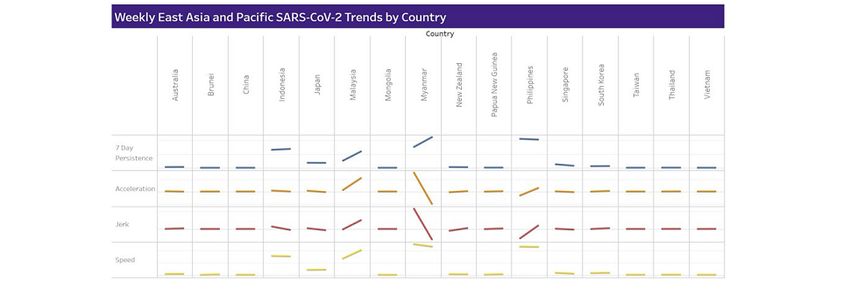
JOURNAL OF MEDICAL INTERNET RESEARCH                                                                                                          Post et al

     in population in the region. Without extreme and rigid social distancing, quarantines, hygiene, and masking to reverse trends, the
     Philippines will remain on the global top 5 list of worst COVID-19 outbreaks resulting in high morbidity and mortality. The
     second wave will only exacerbate existing conditions and increase COVID-19 transmissions.

     (J Med Internet Res 2021;23(2):e25454) doi: 10.2196/25454

     KEYWORDS
     COVID-19; SARS-CoV-2; SARS-CoV-2 surveillance; second wave; wave two; wave 2; global COVID-19 surveillance; Asia
     Pacific public health surveillance; Asia Pacific COVID-19; Asian Pacific SARS-CoV-2; Asia Pacific surveillance metrics;
     dynamic panel data; generalized method of the moments; Asian Pacific econometrics; East Asian Pacific COVID-19 surveillance
     system; Pacific Asian COVID-19 transmission speed; Asian Pacific COVID-19 transmission acceleration; COVID-19 transmission
     deceleration; COVID-19 transmission jerk; COVID-19 7-day lag; Arellano-Bond estimator; generalized method of moments;
     GMM; Australia; Brunei; Cambodia; China; Fiji; French Polynesia; Guam; Indonesia; Japan; Kiribati; Laos; Malaysia; Mongolia;
     Myanmar; New Caledonia; Philippines

                                                                            Democratic Republic, Macao, Malaysia, Marshall Islands,
     Introduction                                                           Federated States of Micronesia, Mongolia, Myanmar, Nauru,
     Background                                                             New Caledonia, New Zealand, Northern Mariana Islands, Palau,
                                                                            Papua New Guinea, the Philippines, Samoa, Singapore, Solomon
     COVID-19, caused by SARS-CoV-2, was first identified in                Islands, Thailand, Timor-Leste, Tonga, Tuvalu, Vanuatu, and
     Wuhan, Hubei Province, China, in December 2019 [1]. Since              Vietnam [2]. Not all of these countries collect or report
     then, it has spread around the globe including to every country        COVID-19 caseloads and deaths, such as North Korea. As of
     in the East Asia and Pacific region, severely straining                October 28, 2020, the World Health Organization (WHO)
     governments, health care systems, economies, and quality of            reports a total of 43,540,739 cases and 1,160,650 deaths in these
     life globally (Figure 1). East Asia and the Pacific, as defined        countries [3]. This global region encompasses countries of
     by the World Bank, consists of American Samoa, Australia,              diverse income levels, political systems, cultures, populations,
     Brunei Darussalam, Cambodia, China, Fiji, French Polynesia,            geography, climate, and health care systems, factors which have
     Guam, Hong Kong, Indonesia, Japan, Kiribati, People’s                  profoundly influenced not only the effects of the virus but also
     Democratic Republic of Korea, Republic of Korea, Lao People’s          the response of each member country.
     Figure 1. COVID-19 timeline in East Asia and the Pacific. WHO: World Health Organization. PDR: People's Democratic Republic.

                                                                            allocated significant resources for public health service and
     Government Response and Public Health Policy                           epidemic prevention and control [6].
     The extreme quarantine implemented in Wuhan and the entire
     Hubei region of China mandated all residents to shelter in place       The prompt response by East Asian countries was informed by
     without exception [4]. Wuhan imposed travel restrictions in and        the 2003 severe acute respiratory syndrome (SARS) and 2015
     out of the city in addition to canceling gatherings, closing public    Middle East respiratory syndrome (MERS) outbreaks [7,8].
     places, and shutting down schools and universities [5]. China          Singapore and Vietnam’s strategy of comprehensive surveillance

     https://www.jmir.org/2021/2/e25454                                                                J Med Internet Res 2021 | vol. 23 | iss. 2 | e25454 | p. 2
                                                                                                                     (page number not for citation purposes)
XSL• FO
RenderX
JOURNAL OF MEDICAL INTERNET RESEARCH Post et al
to detect and contain as many cases as possible has been highly initiate COVID-19 measures including testing, isolation, and
successful in controlling or eliminating SARS-CoV-2 [9,10]. contact tracing [33]. Their result paralleled the United States
Taiwan’s response to the 2003 SARS epidemic also informed with a similar outcome. The first wave is still raging through
COVID-19 response [11,12]. The Taiwan Centers for Disease the islands while the second wave commences around the globe
Control aggressively traced confirmed cases while the [37].
government distributed masks and personal protection
The Pacific Islands have been some of the least affected nations
equipment [13,14]. Taiwan’s interconnected public health,
in the world due to their unique ability to shut down border
medical, and insurance infrastructure reduces barriers to doctor
traffic [38]. As of August 2, 2020, only 6 countries of the Pacific
appointments and follow-up visits, allowing their health care
Islands (Papua New Guinea, Fiji, French Polynesia, Guam, New
system to capture more cases. Furthermore, their single-payer
Caledonia, and Northern Mariana Islands) have recorded
model allows for centralized health records of population-level
positive COVID-19 cases. Among the 12 countries without any
longitudinal data, a valuable tool for analyzing the spread of
confirmed cases, 10 are in this region (Kiribati, Marshall Islands,
the pandemic [11].
Micronesia, Nauru, Palau, Samoa, Solomon Islands, Tonga,
South Korea was the hardest hit country outside of the Middle Tuvalu, and Vanuatu). Furthermore, many nations recently
East during the MERS outbreak in 2015, prompting the Korea strengthened their infectious disease prevention, surveillance,
Centers for Disease Control (KCDC) to prepare for the next and response systems due to the re-emergence of measles in the
infectious disease outbreak [15]. When COVID-19 breached area in 2019 [38-40].
Korea’s borders, the KCDC actively performed contact tracing,
quarantined exposed individuals, and diagnosed and isolated
Health Systems, Vulnerable Populations, and Health
new cases with rapid and extensive testing [16-19]. Disparities
The East Asia and Pacific region encompass a wide range of
New Zealand eradicated COVID-19 by introducing some of the
health care systems with varying capacities for pandemic
strictest lockdown measures early on, allowing the government
preparedness. In New Zealand, approximately one-fifth of the
to pursue an elimination approach rather than the typical,
government’s spending goes to the health sector, and health
mitigation-based model of pandemic planning. Schools and
services are either free or heavily subsidized [41]. In contrast,
nonessential workplaces were closed, social gatherings banned,
some of the world’s smallest, least developed, and most isolated
and severe travel restrictions applied [20-22]. Australia
nations in need of health system strengthening are in the Pacific
implemented similar though somewhat less stringent lockdown
Islands region [42].
measures and border closures, resulting in substantially lower
crude case fatality and hospitalization rates than many other In the Philippines, 43% of the urban population lives in slums,
high-income countries [23,24]. and people living in densely populated urban slums are unlikely
to have the space or economic means to practice social
Some low- to middle-income countries such as Vietnam and
distancing [43,44]. The majority of Filipinos pay out of pocket
Mongolia have also been able to implement successful responses
for health care, a prohibitive cost that disproportionately affects
to the pandemic despite limited resources or shared borders
the country’s 7.5 million senior citizens, many of whom live in
with China. As a result of Mongolia’s travel restrictions,
rural areas [45]. These barriers to access are exacerbated by the
lockdown measures, and surveillance of active infections, they
fact that hospitals in the Philippines are currently overwhelmed
reported no confirmed cases until March 10, 2020, and no
and reaching maximum capacity [45].
intensive care admissions or deaths until July 6, 2020 [25].
Vietnam responded immediately to its first cases by activating In Cambodia, more than 3 million people lack access to safe
an emergency prevention system involving intense surveillance, water, and 6 million lack access to improved sanitation. This
quarantine, and contact tracing. Those who broke social disproportionately affects rural communities, where
distancing measures were severely punished. As of July 8, 2020, approximately 77% of Cambodians live, placing them at greater
the nation had the highest test per confirmed case ratio in the risk from the pandemic [46,47].
world [26-31]. This approach differs vastly from the widespread
Meanwhile, the pandemic has added an additional layer of
testing strategy employed by South Korea, which, although seen
complexity to Indonesia’s longstanding problem of food
by many as a best practice in fighting the pandemic, is more
insecurity and reliance on food imports. In 2018, 55% of the
resource intensive [32].
Indonesian population experienced moderate or severe food
In contrast, the Philippines has become Southeast Asia’s insecurity. Unemployment and other loss of income associated
coronavirus hotspot, overtaking Indonesia with a caseload with the pandemic have likely exacerbated this problem, with
exceeding 360,000 people with nearly 7000 deaths and no 70% of low-income households reporting a loss of income and
coherent strategy for defeating the virus [33]. Although their about the same proportion reporting shortages of some foods
first case was reported in January 2020, a national lockdown or not eating as much as they should, placing 24 million children
was not enacted until March, and when citizens took to the at risk of food insecurity [48].
streets to protest a lack of food and supplies 2 weeks later,
Myanmar has attempted to combat the aggravating effects of
President Rodrigo Duterte threatened that the police and military
food insecurity on its already underfunded health sector by
would shoot those who did not comply with stay-at-home orders
providing emergency rations through strategies such as
[34-36]. Once the lockdown was lifted in June, cases quickly
community-based food banks [49,50], although 10%-15% of
began to climb again. In addition, the Philippines was late to
https://www.jmir.org/2021/2/e25454 J Med Internet Res 2021 | vol. 23 | iss. 2 | e25454 | p. 3
(page number not for citation purposes)
XSL• FO
RenderXJOURNAL OF MEDICAL INTERNET RESEARCH Post et al
the population report consuming reduced quantities of nutritious caseload because public health surveillance systems tend to
foods [51]. pick up the most severe cases [103,104], which is especially
problematic when tracking SARS-CoV-2 because most carriers
Individuals with underlying medical conditions are also known
are asymptomatic, presymptomatic, or only have mild symptoms
to be at greater risk of COVID-19. In Australia, Indigenous
[105-108]. Public health surveillance that can control for these
Australians constitute a uniquely vulnerable population due to
limitations are needed. Moreover, metrics that detect how
the increased prevalence of diabetes and respiratory and
transmission speed of the novel coronavirus, shifts in the
cardiovascular conditions, as well as high reported smoking
pandemic, acceleration in speed, and persistence of COVID-19
rates [52,53]. China is notorious for having the worst air
based on prior infections are needed to supplement existing
pollution problem in the world, which may correlate with
measures [83].
susceptibility to respiratory infections [54-56].
Despite early exposure, a high population density, an aging
Objective
population, and little social distancing measures, Japan reports The objective of our research is to use a longitudinal trend
low rates of infection and death from COVID-19 [57,58]. This analysis study design in concert with dynamic panel modeling
has led to some hypotheses that the Bacille Calmette-Guérin and method of moments to correct for existing surveillance data
(BCG) vaccine against tuberculosis may protect against the limitations [94,96]. Specifically, we will measure significant
virus, as countries that mandate the BCG vaccine have relatively weekly shifts in the increase, decrease, or plateaued transmission
low per capita death rates from COVID-19 [57,59]. of SARS-CoV-2. Our study will measure the underlying causal
effect from last week that persists through this week, with a
Economy 7-day persistence rate to explain a clustering/declustering effect.
Tourism is an important source of revenue for many economies The 7-day persistence rate represents an underlying disease
in developing Asia and the Pacific [50,60,61]. For countries transmission wave, where a large number of transmissions that
like Palau, where international tourism receipts are close to 50% resulted in a large number of infections today then “echoes”
of the GDP (gross domestic product) and over a third of forward into a large number of new transmissions and hence a
international tourists are from China, the decline in tourism due large number of new cases 7 days later. If positive, it is
to COVID-19 has been devastating [60]. consistent with, for example, a mega-event (eg, the large
religious gathering at Daegu’s Shincheonji Church of Jesus in
China is a major trade destination for many developing Asian
South Korea) that causes an increase in the number of cases in
economies such as Mongolia, the Philippines, Singapore, Taipei,
adjoining days, among other explanations [16]. If zero or
and Vietnam [60]. Long quarantine-like conditions have the
nonsignificant, it is indicative of a constant rate of new
potential to deeply harm export-based economies such as
infections and/or a constant size of the infectious population.
Mongolia, where coal exports were reduced due to border
In summary, we will measure negative and positive shifts in
restrictions [25].
the transmission of SARS-CoV-2 or acceleration/deceleration
Culture rates that are not limited by sampling bias.
While Western cultures endorse individualism and a more
independent self-concept, Eastern cultures emphasize Methods
collectivism and a concept of the self as interdependent with
We conducted a longitudinal trend analysis for our study design
others, which may motivate individuals to remain committed
using data extracted from the internet. The COVID Tracking
to COVID-19 precautions even at the expense of personal
Project [109], Our World in Data [110], and The Foundation
freedoms [62]. Some of the actions that have enabled Asian
for Innovative New Diagnostics [111] compiles data from
countries to contain the spread of the virus have been
multiple sources on the web [112]; data for the most recent 4
challenging to Western notions of privacy and individual
weeks were accessed from the GitHub repository [113-115].
freedom; such measures have been almost universally accepted
This resulted in a panel of 26 countries in East Asia and the
in Asian countries [26,32]. Therefore, interpersonal transmission
Pacific with 30 days in each panel (n=780). An empirical
of the virus may be less likely in East Asian countries [63].
difference equation was specified in which the number of
Public health departments, as well as universities and media positive cases in each country for each day is a function of the
outlets, are tracking the novel coronavirus using raw data, prior number of cases, the level of testing, and weekly shift
including the number of new infections, testing, positivity, R0 variables that measure whether the contagion was growing
(reproduction number), deaths, local hospital capacity, etc faster, at the same rate, or slower than the previous weeks. This
[39,64-93]. Public health surveillance informs policy on resulted in a dynamic panel model that was estimated using the
“flattening the curve” of COVID-19 [94-97]. Epidemiologists generalized method of moments (GMM) approach by
have utilized various modeling techniques to forecast the implementing the Arellano-Bond estimator in R (The R
numbers of cases and deaths attributed to the virus [98-102]. Foundation) [94,96,116]. Additionally, we report on the novel
Both the WHO and the Center for Systems Science and dynamic surveillance metrics of speed, acceleration, and jerk
Engineering at Johns Hopkins University have developed [94,96].
tracking tools [98]. While helpful, these static metrics suffer
from incomplete case ascertainment and data contamination
[94,96]. Existing surveillance is a proxy for the true coronavirus
https://www.jmir.org/2021/2/e25454 J Med Internet Res 2021 | vol. 23 | iss. 2 | e25454 | p. 4
(page number not for citation purposes)
XSL• FO
RenderXJOURNAL OF MEDICAL INTERNET RESEARCH Post et al
and Figure 2 [117] are based on these regressions.
Results
The Wald statistic for the regression was significant
Country Regression Results (χ25=49,836,424; PJOURNAL OF MEDICAL INTERNET RESEARCH Post et al
Table 2. Static surveillance metrics for the week of October 5-11, 2020.
Country New COVID-19 Cumulative COVID-19 7-day moving aver- Rate of infec- New Cumulative Death rate
cases, n cases, n age of new cases tion deaths, n deaths, n per 100k
Australia 15 27,244 17.57 0.06 0 897 0
Brunei 0 146 0 0 0 3 0
China 21 90,778 24.86 0 0 4739 0
French Polynesia 0 2692 104 0 0 10 0
Guam 89 3078 54.14 53.20 2 60 1.20
Indonesia 4294 328,952 4207 1.59 88 11,765 0.03
Japan 679 88,912 510.43 0.54 3 1627 0
Malaysia 374 15,096 429.71 1.17 3 155 0.01
Mongolia 0 318 0 0 3 0 0.09
Myanmar 2158 26,064 1365.86 3.99 32 598 0.06
New Zealand 1 1515 2.43 0.02 0 25 0
Papua New Guinea 0 549 1.29 0 0 7 0
Philippines 2156 336,926 2514 1.99 86 6238 0.08
Singapore 7 1,010,010 9.43 0.12 0 27 0
South Korea 58 57,866 73.57 0.11 2 432 0
Taiwan 0 24,606 1.43 0 0 7 0
Thailand 0 527 7.29 0 0 59 0
Vietnam 2 3634 1.57 0 0 35 0
Region 9854 1107 7999 0.43 219 26,684 0.01
https://www.jmir.org/2021/2/e25454 J Med Internet Res 2021 | vol. 23 | iss. 2 | e25454 | p. 6
(page number not for citation purposes)
XSL• FO
RenderXJOURNAL OF MEDICAL INTERNET RESEARCH Post et al
Table 3. Static surveillance metrics for the week of October 12-18, 2020.
Country New COVID-19 Cumulative COVID-19 7-day moving aver- Rate of infec- New Cumulative Death rate
cases, n cases, n age of new cases tion deaths, n deaths, n per 100k
Australia 12 27,383 19.86 0.05 0 904 0
Brunei 0 147 0.14 0 0 3 0
China 30 90,955 25.29 0 0 4739 0
French Polynesia 62 3797 157.9 22.20 0 14 0
Guam 0 3617 77.00 0 3 66 1.79
Indonesia 4301 357,762 4115.71 1.59 84 12,431 0.03
Japan 593 92,656 534.9 0.47 9 1670 0.01
Malaysia 869 19,627 647.3 2.72 4 180 0.01
Mongolia 0 324 0 0 4 0 0.12
Myanmar 1387 34,875 1258.71 2.57 39 838 0.07
New Zealand 3 1530 2.14 0.06 0 25 0
Papua New Guinea 3 581 4.57 0.03 0 7 0
Philippines 2588 354,338 2487.4 2.39 72 6603 0.07
Singapore 3 57,904 5.43 0.05 0 28 0
South Korea 91 25,199 84.71 0.18 1 444 0
Taiwan 0 535 1.14 0 0 7 0
Thailand 7 3686 7.43 0.01 0 59 0
Vietnam 2 1126 2.71 0 0 35 0
Region 9951 1,076,042 8005 0.44 216 28,053 0.01
Tables 4 and 5 provide the novel surveillance metrics for the population was 0.312 for Myanmar, 0.025 for Malaysia, and
weeks of October 5-11 and October 12-18, respectively. During 0.015 for Indonesia. The highest jerk rates were 0.228, 0.027,
the week of October 5-11 (Table 4), French Polynesia had the and 0.008 for Myanmar, Indonesia, and Japan, respectively.
highest speed or velocity of new cases at 37 per 100,000 French Polynesia and Guam ranked 1 and 2 for 7-day persistence
population, followed by Guam at 32.6 cases per 100,000 at 28.68 and 25.14, respectively, meaning these cases were
population. The highest rates of acceleration per 100,000 statically attributed to those persons infected 7 days earlier.
https://www.jmir.org/2021/2/e25454 J Med Internet Res 2021 | vol. 23 | iss. 2 | e25454 | p. 7
(page number not for citation purposes)
XSL• FO
RenderXJOURNAL OF MEDICAL INTERNET RESEARCH Post et al
Table 4. Novel surveillance metrics for the week of October 5-11, 2020.
Country Speeda Accelerationb Jerkc 7-day persistence effect on speedd
Australia 0.07 0 0 0.05
Brunei 0 0 0 0
China 0 0 0 0
French Polynesia 37.24 0 –11.66 28.69
Guam 32.36 –5.12 –9.82 26.14
Indonesia 1.55 0.02 0.03 1.32
Japan 0.40 0.01 0.01 0.37
Malaysia 1.34 0.03 0 0.52
Mongolia 0 0 0 0
Myanmar 2.53 0.31 0.23 1.53
New Zealand 0.05 –0.01 –0.02 0.05
Papua New Guinea 0.01 0 0 0.01
Philippines 2.33 –0.07 –0.11 2.12
Singapore 0.17 0 0 0.26
South Korea 0.14 0 0 0.12
Taiwan 0.01 0 0 0
Thailand 0.01 0 0 0.01
Vietnam 0 0 0 0
Region 0.41 0.01 0 0.33
a
Daily positives per 100k (weekly average of new daily cases per 100k).
b
Day-to-day change in the number of positives per day, weekly average, per 100k.
c
Week-over-week change in acceleration, per 100k.
d
New cases per day per 100k attributed to new cases 7 days ago.
Table 5 presents the novel surveillance metrics for the second Polynesia had the highest positive jerk at 15.4 per 100,000
week of our study period. Between October 12 and 18, French population. French Polynesia and Guam had the largest 7-day
Polynesia ranked first in speed of new infections at 56.5 per persistence during the October 12-18 period (Table 6). In
100,000, followed by Guam at 46 per 100,000. French Polynesia summary, French Polynesia, Malaysia, the Philippines, South
and Guam are several standard deviations higher than the rest Korea, and New Zealand have positive speeds, acceleration,
of the East Asian and Pacific region. French Polynesia had the jerks, and 7-day persistence, indicating an upwards shift in the
highest acceleration rate at 3.17 per 100,000 population, and pandemic.
https://www.jmir.org/2021/2/e25454 J Med Internet Res 2021 | vol. 23 | iss. 2 | e25454 | p. 8
(page number not for citation purposes)
XSL• FO
RenderXJOURNAL OF MEDICAL INTERNET RESEARCH Post et al
Table 5. Novel surveillance metrics for the week of October 12-18, 2020.
Country Speeda Accelerationb Jerkc 7-day persistence effect on speedd
Australia 0.08 0 0.01 0.06
Brunei 0.03 0 0 0
China 0 0 0 0
French Polynesia 56.52 3.17 15.45 33.04
Guam 46.03 –7.60 –19.13 28.72
Indonesia 1.52 0 –0.01 1.38
Japan 0.42 –0.01 –0.01 0.36
Malaysia 2.03 0.22 0.10 1.19
Mongolia 0 0 0 0
Myanmar 2.33 –0.20 –0.12 2.24
New Zealand 0.04 0.01 0.01 0.04
Papua New Guinea 0.05 0 0 0.01
Philippines 2.30 0.06 0.04 2.06
Singapore 0.10 –0.01 –0.01 0.15
South Korea 0.16 0.01 0.01 0.13
Taiwan 0 0 0 0.01
Thailand 0.01 0 0 0.01
Vietnam 0 0 0 0
Region 0.41 0 0 0.36
a
Daily positives per 100k (weekly average of new daily cases per 100k).
b
Day-to-day change in the number of positives per day, weekly average, per 100k.
c
Week-over-week change in acceleration, per 100k.
d
New cases per day per 100k attributed to new cases 7 days ago.
Table 6. Seven-day persistence difference.
Country 7-day persistence
October 11, 2020 October 18, 2020
French Polynesia 28.69 33.04
Guam 26.14 28.72
Philippines 2.12 2.06
Myanmar 1.53 2.24
Indonesia 1.32 1.38
The most populous countries in East Asia and Pacific include speed, acceleration, jerks, and 7-day persistence in Tables 4 and
China, Indonesia, Japan, Philippines, and Vietnam (Table 7). 5.
Countries with larger populations are at risk for having more
For comprehensive surveillance of static or traditional
COVID-19 infections by virtue of size, but this was not
surveillance metrics with novel surveillance metrics for East
necessarily the case when comparing population size to the
Asia and Pacific, see Multimedia Appendices 1-3.
https://www.jmir.org/2021/2/e25454 J Med Internet Res 2021 | vol. 23 | iss. 2 | e25454 | p. 9
(page number not for citation purposes)
XSL• FO
RenderXJOURNAL OF MEDICAL INTERNET RESEARCH Post et al
Table 7. Most populous East Asian countries.
Countrya Population as of 2020, N
China 1,439,323,776
Indonesia 273,523,615
Japan 126,476,461
Philippines 109,581,078
Vietnam 97,338,579
a
Does not include countries that do not track or report COVID-19 cases (eg, North Korea).
result in increased rates of transmission. The new cases in
Discussion countries that previously eradicated COVID-19 indicate a need
Countries in the East Asia and Pacific region have had to reinstate public health guidelines to keep the second wave
differential success in combating the COVID-19 pandemic, of COVID-19 transmission from gaining a larger foothold.
with some countries among the most successful in the world at Moreover, other countries in East Asia and the Pacific who are
containing the pandemic and others in serious jeopardy. China, presently dealing with the first wave will have novel infections
Taiwan, South Korea, and Japan had early outbreaks that were from wave two as well, such as Indonesia and the Philippines
successfully contained through stringent protective measures. who have the highest cumulative infections and cumulative
Some of the smaller islands in the Pacific encountered the deaths from COVID-19. While the Philippines was decelerating
disease much later than other countries, but after initial exposure, during the week of October 5-11, it reversed course and now
French Polynesia and Malaysia had outbreaks that swiftly has a positive acceleration.
affected their nations. The region’s biggest successes are Singapore, New Zealand,
While South Korea, New Zealand, and Australia are Vietnam, South Korea, and China. In theory, it is likely easier
demonstrating some increases in speed, acceleration, jerk, and to control for outbreaks in island nations such as Singapore and
7-day persistence, these nations had successfully implemented New Zealand; however, not all islands experienced their level
COVID-19 control policies that literally eliminated COVID-19. of prevention and mitigation. Moreover, relative to population
However, as wave two of the COVID-19 pandemic has recently size (Table 7), South Korea, Vietnam, and China experienced
began the cycle of transmissions, these countries had either low an initial COVID-19 outbreak and took preventative measures
caseloads or zero caseloads; hence, any new cases are going to to control further spread successfully.
Acknowledgments
This publication was made possible through support provided by Feed the Future through the US Agency for International
Development, under the terms of contract #7200LA1800003. The opinions expressed herein are those of the author(s) and do not
necessarily reflect the views of the US Agency for International Development.
Conflicts of Interest
None declared.
Multimedia Appendix 1
Weekly East Asia and Pacific 7-day persistence map.
[PNG File , 331 KB-Multimedia Appendix 1]
Multimedia Appendix 2
Weekly East Asia and Pacific acceleration jerk map.
[PNG File , 392 KB-Multimedia Appendix 2]
Multimedia Appendix 3
Weekly East Asia and Pacific statistics.
[PNG File , 265 KB-Multimedia Appendix 3]
References
https://www.jmir.org/2021/2/e25454 J Med Internet Res 2021 | vol. 23 | iss. 2 | e25454 | p. 10
(page number not for citation purposes)
XSL• FO
RenderXJOURNAL OF MEDICAL INTERNET RESEARCH Post et al
1. COVID-19 Overview and Infection Prevention and Control Priorities in Non-US Healthcare Settings. Centers for Disease
Control and Prevention. 2020. URL: https://www.cdc.gov/coronavirus/2019-ncov/hcp/non-us-settings/overview/index.html
[accessed 2020-08-06]
2. East Asia and Pacific. The World Bank. URL: https://data.worldbank.org/region/east-asia-and-pacific [accessed 2020-08-02]
3. WHO Coronavirus Disease (COVID-19) Dashboard. World Health Organization. 2020. URL: https://covid19.who.int/table
[accessed 2020-10-28]
4. Cyranoski D. What China's coronavirus response can teach the rest of the world. Nature 2020 Mar 17;579(7800):479-480.
[doi: 10.1038/d41586-020-00741-x] [Medline: 32203360]
5. Lau H, Khosrawipour V, Kocbach P, Mikolajczyk A, Schubert J, Bania J, et al. The positive impact of lockdown in Wuhan
on containing the COVID-19 outbreak in China. J Travel Med 2020 May 18;27(3):37-51 [FREE Full text] [doi:
10.1093/jtm/taaa037] [Medline: 32181488]
6. Zhang S, Wang Z, Chang R, Wang H, Xu C, Yu X, et al. COVID-19 containment: China provides important lessons for
global response. Front Med 2020 Apr 25;14(2):215-219 [FREE Full text] [doi: 10.1007/s11684-020-0766-9] [Medline:
32212059]
7. Coronaviridae Study Group of the International Committee on Taxonomy of Viruses. The species severe acute respiratory
syndrome-related coronavirus: classifying 2019-nCoV and naming it SARS-CoV-2. Nat Microbiol 2020 Apr 2;5(4):536-544
[FREE Full text] [doi: 10.1038/s41564-020-0695-z] [Medline: 32123347]
8. Frieden TR, Lee CT. Identifying and Interrupting Superspreading Events-Implications for Control of Severe Acute Respiratory
Syndrome Coronavirus 2. Emerg Infect Dis 2020 Jun;26(6):1059-1066 [FREE Full text] [doi: 10.3201/eid2606.200495]
[Medline: 32187007]
9. Ng Y, Li Z, Chua YX, Chaw WL, Zhao Z, Er B, et al. Evaluation of the Effectiveness of Surveillance and Containment
Measures for the First 100 Patients with COVID-19 in Singapore - January 2-February 29, 2020. MMWR Morb Mortal
Wkly Rep 2020 Mar 20;69(11):307-311 [FREE Full text] [doi: 10.15585/mmwr.mm6911e1] [Medline: 32191691]
10. Lee VJ, Chiew CJ, Khong WX. Interrupting transmission of COVID-19: lessons from containment efforts in Singapore. J
Travel Med 2020 May 18;27(3):39 [FREE Full text] [doi: 10.1093/jtm/taaa039] [Medline: 32167146]
11. Lin C, Braund WE, Auerbach J, Chou J, Teng J, Tu P, et al. Policy Decisions and Use of Information Technology to Fight
COVID-19, Taiwan. Emerg Infect Dis 2020 Jul;26(7):1506-1512 [FREE Full text] [doi: 10.3201/eid2607.200574] [Medline:
32228808]
12. Wang CJ, Ng CY, Brook RH. Response to COVID-19 in Taiwan: Big Data Analytics, New Technology, and Proactive
Testing. JAMA 2020 Apr 14;323(14):1341-1342. [doi: 10.1001/jama.2020.3151] [Medline: 32125371]
13. Steinbrook R. Contact Tracing, Testing, and Control of COVID-19-Learning From Taiwan. JAMA Intern Med 2020 Sep
01;180(9):1163-1164. [doi: 10.1001/jamainternmed.2020.2072] [Medline: 32356871]
14. Chang CM, Tan TW, Ho TC, Chen CC, Su TH, Lin CY. COVID-19: Taiwan's epidemiological characteristics and public
and hospital responses. PeerJ 2020;8:e9360 [FREE Full text] [doi: 10.7717/peerj.9360] [Medline: 32551205]
15. Her M. Repurposing and reshaping of hospitals during the COVID-19 outbreak in South Korea. One Health 2020
Dec;10:100137 [FREE Full text] [doi: 10.1016/j.onehlt.2020.100137] [Medline: 32373705]
16. Choi JY. COVID-19 in South Korea. Postgrad Med J 2020 Jul 04;96(1137):399-402. [doi:
10.1136/postgradmedj-2020-137738] [Medline: 32366457]
17. Kim KH, Choi EH, Kim SK. Editorial. COVID-19 outbreak and its countermeasures in the Republic of Korea. J Neurosurg
2020 Apr 17:1-2 [FREE Full text] [doi: 10.3171/2020.4.JNS201062] [Medline: 32302997]
18. Her M. How is COVID-19 affecting South Korea? What is our current strategy? Disaster Med Public Health Prep 2020
Apr 03:1-7. [doi: 10.1017/dmp.2020.69] [Medline: 32241325]
19. Choi S, Han C, Lee J, Kim S, Kim IB. Innovative screening tests for COVID-19 in South Korea. Clin Exp Emerg Med
2020 Jun 16;7(2):73-77 [FREE Full text] [doi: 10.15441/ceem.20.032] [Medline: 32295319]
20. Cousins S. New Zealand eliminates COVID-19. The Lancet 2020 May;395(10235):1474. [doi:
10.1016/s0140-6736(20)31097-7]
21. Klein A. New Zealand's success. New Scientist 2020 May;246(3282):9. [doi: 10.1016/s0262-4079(20)30908-8]
22. Varghese C, Xu W. Quantifying what could have been - The impact of the Australian and New Zealand governments'
response to COVID-19. Infect Dis Health 2020 Nov;25(4):242-244 [FREE Full text] [doi: 10.1016/j.idh.2020.05.003]
[Medline: 32507662]
23. Andrikopoulos S, Johnson G. The Australian response to the COVID-19 pandemic and diabetes - Lessons learned. Diabetes
Res Clin Pract 2020 Jul;165:108246 [FREE Full text] [doi: 10.1016/j.diabres.2020.108246] [Medline: 32502693]
24. Antony J, James WT, Neriamparambil AJ, Barot DD, Withers T. An Australian Response to the COVID-19 Pandemic and
Its Implications on the Practice of Neurosurgery. World Neurosurg 2020 Jul;139:e864-e871 [FREE Full text] [doi:
10.1016/j.wneu.2020.05.136] [Medline: 32450310]
25. Erkhembayar R, Dickinson E, Badarch D, Narula I, Warburton D, Thomas GN, et al. Early policy actions and emergency
response to the COVID-19 pandemic in Mongolia: experiences and challenges. The Lancet Global Health 2020
Sep;8(9):e1234-e1241. [doi: 10.1016/s2214-109x(20)30295-3]
https://www.jmir.org/2021/2/e25454 J Med Internet Res 2021 | vol. 23 | iss. 2 | e25454 | p. 11
(page number not for citation purposes)
XSL• FO
RenderXJOURNAL OF MEDICAL INTERNET RESEARCH Post et al
26. Dao TL, Nguyen TD, Hoang VT. Controlling the COVID-19 pandemic: Useful lessons from Vietnam. Travel Med Infect
Dis 2020 Sep;37:101822 [FREE Full text] [doi: 10.1016/j.tmaid.2020.101822] [Medline: 32653477]
27. Duong DM, Le VT, Ha BTT. Controlling the COVID-19 Pandemic in Vietnam: Lessons From a Limited Resource Country.
Asia Pac J Public Health 2020 May 19;32(4):161-162. [doi: 10.1177/1010539520927290] [Medline: 32429676]
28. Ha BTT, Ngoc Quang L, Mirzoev T, Tai NT, Thai PQ, Dinh PC. Combating the COVID-19 Epidemic: Experiences from
Vietnam. Int J Environ Res Public Health 2020 Apr 30;17(9):3125 [FREE Full text] [doi: 10.3390/ijerph17093125] [Medline:
32365851]
29. Hoang VM, Hoang HH, Khuong QL, La NQ, Tran TTH. Describing the pattern of the COVID-19 epidemic in Vietnam.
Glob Health Action 2020 Dec 31;13(1):1776526 [FREE Full text] [doi: 10.1080/16549716.2020.1776526] [Medline:
32588779]
30. Nguyen TH, Vu DC. Summary of the COVID-19 outbreak in Vietnam - Lessons and suggestions. Travel Med Infect Dis
2020 Sep;37:101651 [FREE Full text] [doi: 10.1016/j.tmaid.2020.101651] [Medline: 32247928]
31. Van Nguyen H, Van Hoang M, Dao ATM, Nguyen HL, Van Nguyen T, Nguyen PT, et al. An adaptive model of health
system organization and responses helped Vietnam to successfully halt the Covid-19 pandemic: What lessons can be learned
from a resource-constrained country. Int J Health Plann Manage 2020 Sep 18;35(5):988-992 [FREE Full text] [doi:
10.1002/hpm.3004] [Medline: 32557815]
32. Trevisan M, Le LC, Le AV. The COVID-19 Pandemic: A View From Vietnam. Am J Public Health 2020
Aug;110(8):1152-1153. [doi: 10.2105/ajph.2020.305751]
33. Sullivan M. The Philippines Becomes Coronavirus Hot Spot In Southeast Asia. NPR. 2020 Aug 10. URL: https://www.
npr.org/2020/08/10/900279722/the-philippines-becomes-coronavirus-hot-spot-in-southeast-asia [accessed 2020-08-13]
34. Lo B, Ott H. The Philippines has the worst coronavirus outbreak in Southeast Asia, and critics warn the government could
use it to crack down on dissent. CBS News. 2020 Aug 07. URL: https://www.cbsnews.com/news/
covid-19-philippines-worst-coronavirus-outbreak-in-southeast-asia-crackdown-on-dissent/ [accessed 2020-08-13]
35. Westcott B, Lagamayo A. Critics are accusing the Philippines government of using the coronavirus lockdown to crack
down on dissent. CNN. 2020 Aug 03. URL: https://www.cnn.com/2020/08/03/asia/philippines-coronavirus-duterte-intl-hnk/
index.html [accessed 2020-08-13]
36. Capatides C. “Shoot them dead”: Philippine President Rodrigo Duterte orders police and military to kill citizens who defy
coronavirus lockdown. CBS News. 2020 Apr 02. URL: https://www.cbsnews.com/news/
rodrigo-duterte-philippines-president-coronavirus-lockdown-shoot-people-dead/ [accessed 2020-08-13]
37. Moghnieh R, Abdallah D, Bizri AR. COVID-19: Second Wave or Multiple Peaks, Natural Herd Immunity or Vaccine -
We Should be Prepared. Disaster Med Public Health Prep 2020 Sep 10:1-8 [FREE Full text] [doi: 10.1017/dmp.2020.349]
[Medline: 32907693]
38. Diarra I, Muna L, Diarra U. How the Islands of the South Pacific have remained relatively unscathed in the midst of the
COVID-19 pandemic. J Microbiol Immunol Infect 2020 Jul 10:6-15 [FREE Full text] [doi: 10.1016/j.jmii.2020.06.015]
[Medline: 32665107]
39. COVID-19 Dashboard by the Center for Systems Science and Engineering (CSSE) at Johns Hopkins University. Center
for Systems Science and Engineering at Johns Hopkins University. 2020. URL: https://coronavirus.jhu.edu/map.html
[accessed 2020-09-11]
40. Kerbaj C, Cazorla C, De Greslan T, Serie M, Gourinat AC, Marot B. COVID-19: The New Caledonia Experience. Clin
Infect Dis 2020 Nov 19;71(16):2279-2281 [FREE Full text] [doi: 10.1093/cid/ciaa600] [Medline: 32415955]
41. Bandyopadhyay G, Meltzer A. Let us unite against COVID-19 - a New Zealand perspective. Ir J Psychol Med 2020 May
14:1-4 [FREE Full text] [doi: 10.1017/ipm.2020.44] [Medline: 32404225]
42. Craig AT, Heywood AE, Hall J. Risk of COVID-19 importation to the Pacific islands through global air travel. Epidemiol
Infect 2020 Mar 23;148:e71 [FREE Full text] [doi: 10.1017/S0950268820000710] [Medline: 32202489]
43. Lau LL, Hung N, Go DJ, Ferma J, Choi M, Dodd W, et al. Knowledge, attitudes and practices of COVID-19 among
income-poor households in the Philippines: A cross-sectional study. J Glob Health 2020 Jun;10(1):011007 [FREE Full
text] [doi: 10.7189/jogh.10.011007] [Medline: 32566169]
44. World Development Indicators. World Bank Group. 2020. URL: https://databank.worldbank.org/source/
world-development-indicators [accessed 2020-08-13]
45. Buenaventura RD, Ho JB, Lapid MI. COVID-19 and mental health of older adults in the Philippines: a perspective from a
developing country. Int Psychogeriatr 2020 Oct;32(10):1129-1133 [FREE Full text] [doi: 10.1017/S1041610220000757]
[Medline: 32349826]
46. Cambodia's water and sanitation crisis. Water.org. 2020. URL: https://water.org/our-impact/where-we-work/cambodia/
[accessed 2020-08-02]
47. Water, Sanitation and Hygiene. UNICEF Cambodia. 2020. URL: https://www.unicef.org/cambodia/
water-sanitation-and-hygiene [accessed 2020-08-02]
48. COVID-19 Economic and Food Security Implications for Indonesia. WFP. 2020. URL: https://www.wfp.org/publications/
covid-19-economic-and-food-security-implications-indonesia-3rd-edition-august-2020 [accessed 2020-11-01]
https://www.jmir.org/2021/2/e25454 J Med Internet Res 2021 | vol. 23 | iss. 2 | e25454 | p. 12
(page number not for citation purposes)
XSL• FO
RenderXJOURNAL OF MEDICAL INTERNET RESEARCH Post et al
49. COVID-19 Policy Response (CPR) Portal. International Food Policy Research Institute. 2020. URL: https://www.ifpri.org/
project/covid-19-policy-response-cpr-portal [accessed 2020-08-14]
50. Grundy-Warr C, Lin S. COVID-19 geopolitics: silence and erasure in Cambodia and Myanmar in times of pandemic.
Eurasian Geography and Economics 2020 Jun 16;61(4-5):493-510. [doi: 10.1080/15387216.2020.1780928]
51. Impacts of COVID-19 on Myanmar’s agri-food system: Evidence base and policy implications. International Food Policy
Research Institute. 2020. URL: https://www.ifpri.org/publication/
impacts-covid-19-myanmars-agri-food-system-evidence-base-and-policy-implications [accessed 2020-08-03]
52. Desborough J, Hall Dykgraaf S, de Toca L, Davis S, Roberts L, Kelaher C, et al. Australia's national COVID-19 primary
care response. Med J Aust 2020 Aug 04;213(3):104-106.e1 [FREE Full text] [doi: 10.5694/mja2.50693] [Medline: 32623740]
53. Furlong Y, Finnie T. Culture counts: the diverse effects of culture and society on mental health amidst COVID-19 outbreak
in Australia. Ir J Psychol Med 2020 Sep 14;37(3):237-242 [FREE Full text] [doi: 10.1017/ipm.2020.37] [Medline: 32406358]
54. Xu H, Yan C, Fu Q, Xiao K, Yu Y, Han D, et al. Possible environmental effects on the spread of COVID-19 in China. Sci
Total Environ 2020 Aug 20;731:139211 [FREE Full text] [doi: 10.1016/j.scitotenv.2020.139211] [Medline: 32402910]
55. Kan H, Chen B, Hong C. Health impact of outdoor air pollution in China: current knowledge and future research needs.
Environ Health Perspect 2009 May;117(5):A187 [FREE Full text] [doi: 10.1289/ehp.12737] [Medline: 19478975]
56. Zhu Y, Xie J, Huang F, Cao L. Association between short-term exposure to air pollution and COVID-19 infection: Evidence
from China. Science of The Total Environment 2020 Jul 20;727:138704. [doi: 10.1016/j.scitotenv.2020.138704]
57. Iwasaki A, Grubaugh ND. Why does Japan have so few cases of COVID-19? EMBO Mol Med 2020 May 08;12(5):e12481
[FREE Full text] [doi: 10.15252/emmm.202012481] [Medline: 32275804]
58. Hamidi S, Sabouri S, Ewing R. Does Density Aggravate the COVID-19 Pandemic? Journal of the American Planning
Association 2020 Jun 18;86(4):495-509. [doi: 10.1080/01944363.2020.1777891]
59. O'Neill LAJ, Netea MG. BCG-induced trained immunity: can it offer protection against COVID-19? Nat Rev Immunol
2020 Jun 11;20(6):335-337 [FREE Full text] [doi: 10.1038/s41577-020-0337-y] [Medline: 32393823]
60. Abiad A, Arao RM, Dagil S, Ferrarini B, Noy I, Osewe P, et al. The Economic Impact of the COVID-19 Outbreak on
Developing Asia. Asian Development Bank 2020 Mar:1-14 [FREE Full text] [doi: 10.22617/BRF200096]
61. Yamano T, Pradhananga M, Schipani S, Samson JNG, Quiao L, Leuangkhamsing S, et al. The Impact of COVID-19 on
Tourism Enterprises in the Lao People’s Democratic Republic: An Initial Assessment. Asian Development Bank 2020
Jun:1-8 [FREE Full text] [doi: 10.22617/brf200187-2]
62. Burgess A, Horii M. Risk, ritual and health responsibilisation: Japan's 'safety blanket' of surgical face mask-wearing. Sociol
Health Illn 2012 Nov;34(8):1184-1198 [FREE Full text] [doi: 10.1111/j.1467-9566.2012.01466.x] [Medline: 22443378]
63. Bavel JJV, Baicker K, Boggio PS, Capraro V, Cichocka A, Cikara M, et al. Using social and behavioural science to support
COVID-19 pandemic response. Nat Hum Behav 2020 May 30;4(5):460-471. [doi: 10.1038/s41562-020-0884-z] [Medline:
32355299]
64. Coronavirus World Map: Tracking the Global Outbreak. The New York Times. 2020. URL: https://www.nytimes.com/
interactive/2020/world/coronavirus-maps.html [accessed 2020-08-12]
65. Tracking coronavirus’ global spread. CNN. 2020. URL: https://www.cnn.com/interactive/2020/health/
coronavirus-maps-and-cases/ [accessed 2020-08-12]
66. Coronavirus Disease-19, Republic of Korea. Ministry of Health and Welfare of Korea. 2020. URL: http://ncov.mohw.go.kr/
en/ [accessed 2020-08-12]
67. COVID-19 (SARS-CoV-2-infection). Centers for Disease Control and Prevention. 2020. URL: https://www.cdc.gov.tw/
En [accessed 2020-08-12]
68. COVID-19 - current cases. Ministry of Health of New Zealand. 2020. URL: https://www.health.govt.nz/our-work/
diseases-and-conditions/covid-19-novel-coronavirus/covid-19-current-situation/covid-19-current-cases [accessed 2020-08-12]
69. About Coronavirus Disease 2019 (COVID-19). Ministry of Health, Labour, and Welfare – Japan. 2020. URL: https://www.
mhlw.go.jp/stf/seisakunitsuite/bunya/newpage_00032.html [accessed 2020-08-12]
70. Coronavirus (COVID-19) health alert. Australian Government Department of Health. 2020. URL: https://www.health.gov.au/
news/health-alerts/novel-coronavirus-2019-ncov-health-alert [accessed 2020-08-14]
71. COVID-19 Dashboard. Brunei Darussalam Ministry of Health. 2020. URL: www.healthinfo.gov.bn [accessed 2020-08-14]
72. COVID-19 Information. US Embassy in Cambodia. 2020. URL: https://kh.usembassy.gov/covid-19-information/ [accessed
2020-08-14]
73. Aug 14: Daily briefing on novel coronavirus cases in China. National Health Commission of the People’s Republic of
China. 2020. URL: http://en.nhc.gov.cn/2020-08/14/c_81388.htm [accessed 2020-08-14]
74. COVID-19 Updates. Fiji Ministry of Health and Medical Services. 2020. URL: http://www.health.gov.fj/covid-19-updates/
[accessed 2020-08-14]
75. Guam COVID-19 Dashboard. Department of Public Health and Social Services. 2020. URL: http://dphss.guam.gov/covid-19/
[accessed 2020-08-14]
76. Coronavirus Disease (COVID-19) in Hong Kong. The Government of the Hong Kong Special Administrative Region.
2020. URL: https://www.coronavirus.gov.hk/eng/index.html [accessed 2020-08-14]
https://www.jmir.org/2021/2/e25454 J Med Internet Res 2021 | vol. 23 | iss. 2 | e25454 | p. 13
(page number not for citation purposes)
XSL• FO
RenderXJOURNAL OF MEDICAL INTERNET RESEARCH Post et al
77. COVID-19. Ministry of Health Republic of Indonesia. 2020. URL: https://www.kemkes.go.id/index.php?lg=LN02 [accessed
2020-08-14]
78. Ad hoc committee COVID-19. Ministry of Health – Laos. 2020. URL: https://www.covid19.gov.la/index.php [accessed
2020-08-14]
79. Home | COVID-19 Malaysia. Ministry of Health of Malaysia. 2020. URL: http://covid-19.moh.gov.my/ [accessed 2020-08-14]
80. RMI Covid-19 Update. Marshall Islands National Disaster Management Office. 2020. URL: https://ndmo.gov.mh/ [accessed
2020-08-14]
81. COVID-19 Information. US Embassy in the Federated States of Micronesia. 2020. URL: https://fm.usembassy.gov/
covid-19-information/ [accessed 2020-08-14]
82. COVID-19. Ministry of Health of Mongolia. 2020. URL: https://covid19.mohs.mn/ [accessed 2020-08-14]
83. COVID-19 (Coronavirus Disease 2019) Acute Respiratory Disease. The Republic of the Union of Myanmar- Ministry of
Health and Sports. 2020. URL: https://www.mohs.gov.mm/Main/content/publication/2019-ncov [accessed 2020-08-14]
84. COVID-19. Department of Health and Medicinal Service. 2020. URL: http://www.naurugov.nr/government/departments/
department-of-health-and-medicinal-service/covid-19.aspx [accessed 2020-08-14]
85. CNMI COVID-19 Dashboard. Commonwealth Healthcare Corporation – Commonwealth of the Northern Mariana Islands.
2020. URL: https://cnmichcc.maps.arcgis.com/apps/opsdashboard/index.html#/4061b674fc964efe84f7774b7979d2b5
[accessed 2020-08-14]
86. COVID-19. Ministry of Health Republic of Palau. 2020. URL: http://www.palauhealth.org/ [accessed 2020-08-14]
87. COVID-19 Pandemic. Ministry of Health – Papua New Guinea. 2020. URL: https://www.health.gov.pg/subindex.php?news=1
[accessed 2020-08-14]
88. COVID-19 Tracker. Republic of the Philippines Department of Health. 2020. URL: https://www.doh.gov.ph/covid19tracker
[accessed 2020-08-14]
89. Novel Coronavirus (COVID-19). Government of Samoa. 2020. URL: https://www.samoagovt.ws/category/
novel-coronavirus-covid-19/ [accessed 2020-08-14]
90. Learn about Coronavirus. Solomon Islands Government. 2020. URL: https://solomons.gov.sb/
ministry-of-health-medical-services/essential-services/learn-about-coronavirus/ [accessed 2020-08-14]
91. Updates on COVID-19 (Coronavirus Disease 2019) Local Situation. Ministry of Health of Singapore. 2020. URL: https:/
/www.moh.gov.sg/covid-19 [accessed 2020-08-14]
92. Coronavirus Disease (COVID-19). Thailand Department of Disease Control. 2020. URL: https://ddc.moph.go.th/
viralpneumonia/eng/index.php [accessed 2020-08-14]
93. COVID-19 Updates. Vanuatu Ministry of Health. 2020. URL: https://covid19.gov.vu/ [accessed 2020-08-14]
94. Oehmke J, Moss C, Singh L, Oehmke T, Post L. Dynamic Panel Surveillance of COVID-19 Transmission in the United
States to Inform Health Policy: Observational Statistical Study. J Med Internet Res 2020 Oct 5;22(10):e21955 [FREE Full
text] [doi: 10.2196/21955] [Medline: 32924962]
95. Ibrahim NK. Epidemiologic surveillance for controlling Covid-19 pandemic: types, challenges and implications. J Infect
Public Health 2020 Nov;13(11):1630-1638 [FREE Full text] [doi: 10.1016/j.jiph.2020.07.019] [Medline: 32855090]
96. Oehmke JF, Oehmke TB, Singh LN, Post LA. Dynamic Panel Estimate-Based Health Surveillance of SARS-CoV-2 Infection
Rates to Inform Public Health Policy: Model Development and Validation. J Med Internet Res 2020 Sep 22;22(9):e20924
[FREE Full text] [doi: 10.2196/20924] [Medline: 32915762]
97. Foddai A, Lubroth J, Ellis-Iversen J. Base protocol for real time active random surveillance of coronavirus disease
(COVID-19) - Adapting veterinary methodology to public health. One Health 2020 Jun;9:100129 [FREE Full text] [doi:
10.1016/j.onehlt.2020.100129] [Medline: 32292815]
98. Dong E, Du H, Gardner L. An interactive web-based dashboard to track COVID-19 in real time. The Lancet Infectious
Diseases 2020 May;20(5):533-534. [doi: 10.1016/s1473-3099(20)30120-1]
99. Lin Y, Liu C, Chiu Y. Google searches for the keywords of "wash hands" predict the speed of national spread of COVID-19
outbreak among 21 countries. Brain Behav Immun 2020 Jul;87:30-32 [FREE Full text] [doi: 10.1016/j.bbi.2020.04.020]
[Medline: 32283286]
100. Sajadi MM, Habibzadeh P, Vintzileos A, Shokouhi S, Miralles-Wilhelm F, Amoroso A. Temperature, Humidity and Latitude
Analysis to Predict Potential Spread and Seasonality for COVID-19. SSRN Journal Preprint posted online Mar 9, 2020.
[doi: 10.2139/ssrn.3550308] [Medline: 32714105]
101. Binti Hamzah FA, Lau C, Nazri H, Ligot DV, Lee G, Tan GL. CoronaTracker: Worldwide COVID-19 Outbreak Data
Analysis and Prediction. Bulletin of the World Health Organization 2020 Mar 19:1-32. [doi: 10.2471/BLT.20.255695]
102. Petropoulos F, Makridakis S. Forecasting the novel coronavirus COVID-19. PLoS One 2020 Mar 31;15(3):e0231236
[FREE Full text] [doi: 10.1371/journal.pone.0231236] [Medline: 32231392]
103. Thacker SB, Berkelman RL. Public health surveillance in the United States. Epidemiol Rev 1988;10:164-190. [doi:
10.1093/oxfordjournals.epirev.a036021] [Medline: 3066626]
104. Lee L, Teutsch S, Tacker S, St. Louis M. Considerations in planning a surveillance system. In: Principles and Practice of
Public Health Surveillance. Oxford, UK: Oxford Scholarship Online; 2010:18-28.
https://www.jmir.org/2021/2/e25454 J Med Internet Res 2021 | vol. 23 | iss. 2 | e25454 | p. 14
(page number not for citation purposes)
XSL• FO
RenderXJOURNAL OF MEDICAL INTERNET RESEARCH Post et al
105. Day M. Covid-19: four fifths of cases are asymptomatic, China figures indicate. BMJ 2020 Apr 02;369:m1375. [doi:
10.1136/bmj.m1375] [Medline: 32241884]
106. He J, Guo Y, Mao R, Zhang J. Proportion of asymptomatic coronavirus disease 2019: A systematic review and meta-analysis.
J Med Virol 2021 Feb 13;93(2):820-830 [FREE Full text] [doi: 10.1002/jmv.26326] [Medline: 32691881]
107. Al-Sadeq DW, Nasrallah GK. The incidence of the novel coronavirus SARS-CoV-2 among asymptomatic patients: A
systematic review. Int J Infect Dis 2020 Sep;98:372-380 [FREE Full text] [doi: 10.1016/j.ijid.2020.06.098] [Medline:
32623083]
108. An P, Song P, Wang Y, Liu B. Asymptomatic Patients with Novel Coronavirus Disease (COVID-19). Balkan Med J 2020
Jun 01;37(4):229-230 [FREE Full text] [doi: 10.4274/balkanmedj.galenos.2020.2020.4.20] [Medline: 32279479]
109. Lipton Z, Riley K. The Covid Tracking Project. The Atlantic. 2020. URL: https://covidtracking.com/ [accessed 2020-10-19]
110. Roser M, Ortiz-Ospina E, Hassell J. Coronavirus Pandemic (COVID-19). Our World in Data. 2020. URL: https:/
/ourworldindata.org/coronavirus [accessed 2020-10-13]
111. FINDCov19TrackerData. The Foundation for Innovative New Diagnostics. 2020. URL: https://www.finddx.org/covid-19/
test-tracker/ [accessed 2020-10-13]
112. Brownstein JS, Freifeld CC, Madoff LC. Digital Disease Detection — Harnessing the Web for Public Health Surveillance.
N Engl J Med 2009 May 21;360(21):2153-2157. [doi: 10.1056/nejmp0900702]
113. The Covid Tracking Project. GitHub. 2020. URL: https://github.com/COVID19Tracking [accessed 2020-10-19]
114. FINDCov19TrackerData. GitHub. 2020. URL: https://github.com/dsbbfinddx/FINDCov19TrackerData [accessed 2020-10-19]
115. COVID-19 Data Repository by their for Systems Science and Engineering (CSSE) at Johns Hopkins University. GitHub.
2020. URL: https://github.com/CSSEGISandData/COVID-19 [accessed 2020-10-19]
116. Hansen LP. Large Sample Properties of Generalized Method of Moments Estimators. Econometrica 1982 Jul;50(4):1029.
[doi: 10.2307/1912775]
117. Post L. Global SARS-CoV-2 Surveillance:Policy, Persistence, Transmission-East Asia and Pacific. 2020 Oct 25. URL:
https://public.tableau.com/profile/lori.post#!/vizhome/
GlobalSARS-CoV-2SurveillancePolicyPersistenceandTransmission-EastAsiaandPacific/Story [accessed 2020-10-25]
Abbreviations
BCG: Bacille Calmette-Guérin
GDP: gross domestic product
GMM: generalized method of moments
KCDC: Korean Centers for Disease Control
MERS: Middle East respiratory syndrome
SARS: severe acute respiratory syndrome
WHO: World Health Organization
Edited by G Eysenbach; submitted 09.11.20; peer-reviewed by P Banik; comments to author 30.11.20; revised version received
30.11.20; accepted 16.01.21; published 01.02.21
Please cite as:
Post LA, Lin JS, Moss CB, Murphy RL, Ison MG, Achenbach CJ, Resnick D, Singh LN, White J, Boctor MJ, Welch SB, Oehmke JF
SARS-CoV-2 Wave Two Surveillance in East Asia and the Pacific: Longitudinal Trend Analysis
J Med Internet Res 2021;23(2):e25454
URL: https://www.jmir.org/2021/2/e25454
doi: 10.2196/25454
PMID:
©Lori Ann Post, Jasmine S Lin, Charles B Moss, Robert Leo Murphy, Michael G Ison, Chad J Achenbach, Danielle Resnick,
Lauren Nadya Singh, Janine White, Michael J Boctor, Sarah B Welch, James Francis Oehmke. Originally published in the Journal
of Medical Internet Research (http://www.jmir.org), 01.02.2021. This is an open-access article distributed under the terms of the
Creative Commons Attribution License (https://creativecommons.org/licenses/by/4.0/), which permits unrestricted use, distribution,
and reproduction in any medium, provided the original work, first published in the Journal of Medical Internet Research, is
properly cited. The complete bibliographic information, a link to the original publication on http://www.jmir.org/, as well as this
copyright and license information must be included.
https://www.jmir.org/2021/2/e25454 J Med Internet Res 2021 | vol. 23 | iss. 2 | e25454 | p. 15
(page number not for citation purposes)
XSL• FO
RenderXYou can also read


