Senior Housing & Care - Market Insight 2018 Q1 Review - CBRE
←
→
Page content transcription
If your browser does not render page correctly, please read the page content below

Senior Housing & Care    2018
                          Q1
     Market Insight     Review
IN THIS REPORT

  Senior Housing Market Fundamentals

  5
  Capitalization Rates, Transaction Activity & Underwriting

 17
  Structured Debt Options

 24
  About CBRE National Senior Housing

 26

NATIONAL SENIOR HOUSING PRIMARY CONTACTS

LISA WIDMIER                       MATTHEW WHITLOCK                    ARON WILL                          DEBORAH STREET
Executive Vice President           Vice Chairman                       Vice Chairman                      Vice President
Institutional Properties           Institutional Properties            Institutional Properties           Institutional Properties
National Senior Housing            National Senior Housing             National Senior Housing            National Senior Housing
Capital Advisors, Inc.             Debt & Structured Finance           Debt & Structured Finance          CBRE | Capital Markets
Investment Banking                 CBRE | Capital Markets              CBRE | Capital Markets             T +1 760 438 8559
Member FINRA/SIPC                  T +1 978 282 0024                   T +1 713 787 1965                  M +1 760 715 2076
CBRE | Capital Markets
T +1 858 729 9890
M +1 858 952 4743

NATIONAL SENIOR HOUSING TEAM

MATT KURONEN                ADAM MINCBERG               AUSTIN SACCO                  ASHAY SHAH                    TIM ROOT                      HENRY MCARDLE
Vice President              Vice President              Vice President                Transaction Manager           Senior Production Analyst     Senior Financial Analyst
Institutional Properties    Institutional Properties    Institutional Properties      Institutional Properties      Institutional Properties      Institutional Properties
National Senior Housing     National Senior Housing     National Senior Housing       National Senior Housing       National Senior Housing       National Senior Housing
Debt & Structured Finance   Debt & Structured Finance   Debt & Structured Finance     CBRE | Capital Markets        Debt & Structured Finance     CBRE | Capital Markets

KENNETH QUACH               BRANDON WILLIAMS            SANDY AGUILA                  JUDITH BRIGGS                 NATALIA MANNING
Financial Analyst           Production Analyst          Client Services Coordinator   Client Services Coordinator   Client Services Coordinator
Institutional Properties    Institutional Properties    Graphic Designer              Institutional Properties      Institutional Properties
National Senior Housing     National Senior Housing     Institutional Properties      National Senior Housing       National Senior Housing
CBRE | Capital Markets      Debt & Structured Finance   National Senior Housing       CBRE | Capital Markets        Debt & Structured Finance
                                                        CBRE | Capital Markets

VERTICAL CORPORATE SUPPORT SOURCE

                                                                             CBRE National Senior Housing
                                                                             5780 Fleet Street, Suite 100, Carlsbad, CA 92008
                                                                             Please visit our website at
                                                                             cbre.com/nationalseniorhousing
MITCHELL KIFFE
Senior Managing Director
National Senior Housing
Debt & Structured Finance

                                                               CBRE | Please visit our website at cbre.com/nationalseniorhousing                                         3
CBRE NATIONAL SENIOR HOUSING REPRESENTATIVE INVESTMENT
PROPERTY TRANSACTIONS - 2015 FORWARD
Today’s complex and constant changing market environments require special solutions. CBRE SH Team Members
consistently achieve the highest sale price/best debt terms in the industry for their Clients.

               Sunwest Portfolio                       Vintage Portfolio (19)           The Maestro Portfolio
               $1.29 billion                           $1.15 billion                    $921,000,000
               Nationa Portfolio                       Northern and Southern CA         Alberta and Quebec,
               11,096 IL/AL/MC units/                  (18) and Western WA (1)          Canada
               beds                                    2,590 IL/AL/MC units             8,206 IL/AL/MC units/beds
               Client was The Blackstone               Client was Vintage Senior        Client was Maestro Funds
               Group                                   Living and their private
                                                       investors

               The Fountains Portfolio                Brightview I                     Sunwest Managed
               $640.0 million                         $498,500,000                     Portfolio
               National Portfolio                     National Portfolio (5 States)    $364,250,000
               (11 states)                            1,584 IL/AL/MC units/beds        National Portfolio (11
               3,637 IL/AL/MC and Entry               Client was Affiliate of          states)
               Fee CCRC units/beds                    Prudential Real Estate            3,054 IL/AL/MC and
               Client was Fountains Senior            Investors                        Cottages
               Living Holdings, LLC                                                    Client was Sunwest

               Brightview II                          The Garden Empire Portfolio      Mid-Atlantic Portfolio
               $363,500,000                           $307,500,000                     $186.2 million
               National Portfolio (3 States)          NJ and NY                        Greater Baltimore,
                1,117 IL/AL/MC units/beds              933 IL/AL/MC units/beds         Maryland (5) and Greater
               Client was an Affiliate of             Client was an Affiliate of The   Washington, D.C. (2)
               The Shelter Group                      Carlyle Group                    526 AL/MC units
                                                                                       Client was an affiliate of
                                                                                       Harrison Street

               CCRC Portfolio                         Five Allegro Communities         Lang Nelson Portfolio
               $186,500,000                           $172,500,000                     JV Recapitalization
               Dallas, TX                             FL and KY                        $127,000,000
               1,104 units                            705 IL/AL/MC/NC units/beds       Greater Minneapolis, MN
               Client was Life Care                   Client was Almanac Realty         1,166 IL/AL units/beds
               Services                                                                Client was Harrison Street
                                                                                       Real Estate Capital

               The Meridian Portfolio                 MBK Two California                Three Arbor Terrace
               $110,500,000                           Communities                       Communities
               CO and TX                              $104,500,000                      $101,665,000
                1,042 IL/NC units/beds                Santa Clarita and Rocklin, CA     Greater Atlanta, GA &
               Client was an Affiliate of             293 IL/AL/MC units                Greater Washington,
               ING Real                               Client was MBK Senior Living      D.C.
               Estate Investment                                                        310 IL/AL/MC units
               Management                                                               Client was Affiliate of
                                                                                        Capitol Seniors Housing

                Texas Portfolio                       Vintage Westwood                  The Wellington at
                Price is Confidential                 $96,000,000                       Hershey’s Mill
                Greater Houston, TX                   Los Angeles, CA                   $95,000,000
                431 AL/MC units                       226 IL units                      West Chester, PA
                Client is Confidential                Client was Vintage                297 IL/AL/SNF units
                                                      Senior Living and their           Client was First
                                                      private investors                 Somerset

                Four IL/AL/MC                         IL/AL/MC                          Renaissance on
                Communities                           Communities                       Peachtree
                $80,400,000                           Price is Confidential             $78,600,000
                Western WA                            The Woodlands, TX                 Atlanta, GA
                320 IL/AL/MC units/beds               (Greater Houston)                 229 IL/AL units/beds
                Client was AEW Capital                207 IL/AL/MC units                Client was The Carlyle
                Management                            Client was Harrison               Group and Formation
                                                      Street/Bridgewood JV              Development

4   CBRE | Please visit our website at cbre.com/nationalseniorhousing
5      Senior Housing Market
       Fundamentals
The senior housing market continues to perform           from institutional investors, which have accounted
well and to attract substantial global investor          for approximately 30.0% of year to date transaction
interest. Senior housing demand will continue to         volume. By comparison, institutional investment
be driven by several factors including the aging         accounted for only 11.0% of total senior housing
of baby boomers, a stable housing market and             transaction volume in 2015. Despite the recent uptick
an attractive spread between lending rates and           in activity by public buyers, private equity remains
capitalization rates. Demand growth is also fueled       extremely active in the senior housing investment
by seniors with financial capacity who are becoming      community, accounting for 27.0% of year to date
increasingly educated about the benefits of living       transaction volume, in-line with historical private
in senior housing. Average stabilized occupancy is       equity investment share.
steady and strong (approximately 90.1% during the
past four quarters across primary and secondary          Combined senior housing and care transaction
markets) and absorption of new senior housing            volume through year-end 2017 is reported as
supply remains healthy.                                  $15.9 billion in publicly announced transactions, an
                                                         increase over 2016 ($14.5 billion). Combined senior
The senior housing industry has proven itself as not     housing and care transaction volume through May
only a defensive investment during an economic           29, 2018 totals $3.7 billion with transaction volume
downturn, but also an income and capital return          totaling $13.5 billion for the prior four quarters (Q2
leader across the commercial real estate investment      2017 - Q1 2018), on par with prior years.(1) (2)
spectrum. As of Q1 2018, the Property Index
Performance Data provided by the National Council
of Real Estate Investment Fiduciaries (NCREIF)
reports a total return on investment (ROI) for senior
housing of 14.88% and 12.79% for the prior five
and one-year periods, respectively. These returns
are considerably higher than those of other major
real estate property types. The total return reported
for multi-family for the prior five years is 8.99%,
considerably lower than the return reported by
senior housing for this same period.

According to information compiled by Real Capital
Analytics, the composition of senior housing and
care buyers continued to show a dynamic shift
during the first half of 2018. Historically, publicly-
traded buyers (mainly REITs) have represented
a majority of the transaction volume, although
between 2016 and 2017 the public buyers were              Virginia Widmier and Matilda Looney

less active, many devoting significant resources to
portfolio repositioning efforts through coordinated
dispositions. However, during the first half of
2018, publicly-traded buyers represented 34.0%
of transaction volume, the largest share of the total
year to date transaction volume. Additionally, senior
housing is continuing to attract substantial interest                                           Matilda Looney Celebrating 100th Birthday

                                           CBRE | Please visit our website at cbre.com/nationalseniorhousing                                5
SENIOR HOUSING DEMAND IS DRIVEN BY DEMOGRAPHIC DEMAND
Trends

The baby boomers (post-World War II babies) began                                   per 100,000 standard population. Additionally, age-
turning 65 in 2011 and by 2029, the remainder will                                  adjusted death rates decreased significantly between
also reach age 65 and account for more than 20                                      2013 and 2014 for five of the 10 leading causes.(5)
percent of the total United States population. By 2050,
the 65-plus age group is estimated to equal 88.0                                    Driving this increased life expectancy, and
million, nearly double its current population (49.2                                 consequentially average population age, is the
million). Additionally, by 2056, the 65-plus age group                              advancement in public health strategy and medical
is estimated to be larger than the population under age                             treatment. Life expectancy in the United States has
18. The projected growth in this age group will present                             increased by approximately 30 years over the past
many challenges to policy makers and programs by                                    century, primarily due to the reduction of acute illness
having a significant impact on families, businesses,                                threats. However, an unforeseen consequence of longer
healthcare providers and, most notably, the demand                                  life expectancy has been the increased prevalence of
for senior housing.(3)                                                              heart disease, cancer and other chronic diseases as the
                                                                                    leading causes of death. As Americans age during the
One of the primary drivers in trends for the aging                                  next several decades, the elderly population will require
population is mortality rates. Survivorship rates have                              a larger number of formally trained, professional
shown consistent improvement for many decades. In                                   caregivers as a direct effect of these chronic diseases,
the United States in 1972, the average life expectancy                              which often affect independence and mobility.(3)
of a 65-year-old was 15.2 years. By 2015, this metric
increased by 5.2 years to approximately 20.4 years.                                 Moreover, the problems facing the United States aging
Additionally, it is estimated that about one out of every                           population can be witnessed as a global phenomenon.
four 65-year-olds will live to be 90 years old, with one                            Fifty countries had a higher proportion of people aged
of every 10 expected to live past 95 years of age.(4)                               65-plus than the United States in 2010. This number is
According to NCHS Data Brief No. 229, life expectancy                               expected to increase to approximately 98 countries by
at birth for the United States population reached a                                 2050.(6)
record high of 78.8 years in 2012, with the age-adjusted
death rate for the United States having decreased
1.0% between 2013 and 2014 to a record low of 725

                                               Number of People Age 65 and Over and 85 and Over (millions)
                                                                                                                                      98.2
                            100                                                                                88.0
                                                                                            82.3
    Population (millions)

                            80                                        74.1
                                                     56.4
                            60
                                  40.3
                            40                                                                                                               19.7
                                                                                                   14.6               19.0
                            20           5.5                6.7               9.1
                             0
                                   2010A              2020F             2030F                2040F               2050F                  2060F

                                                            Population 65 +                Population 85 +

Chart Source: U.S. Census Bureau; 2017 National Population Projects: Summary Table 3: Projections of the Population by Sex and Age for the United
States: 2017 to 2060. Released March 2018 historical data per census data.
Note: “A” indicates actuals based on 2010 Census and “F” indicates forecasted population estimates released March 2018.

6                  CBRE | Please visit our website at cbre.com/nationalseniorhousing
SENIOR HOUSING DEMAND IS DRIVEN BY DEMOGRAPHIC DEMAND
U.S. Population Estimates Age 75-Plus
60 14.0%
50 12.0%
% of Total Population
10.0%
75-Plus Population (millions)
40
8.0%
30
6.0%
20
4.0%
10 2.0%
0 0.0%
Population 75+ % of Total Population
Chart Source: U.S. Census Bureau; release date: March 2018 and U.S. Census Bureau, Statistical Abstract of the United States: 2012.
Note: “A” indicates actuals based on Census data and “F” indicates forecasted population estimates released March 2018.
A Multi-Trillion Dollar Industry
In the United States, annual expenditures on healthcare services are projected to total nearly $3.7 trillion in 2018.
Healthcare is one of the largest line items in Federal and State government spending. Healthcare spending is
estimated to grow at an average of 5.5% per year from 2018 through 2025 (4.6% on a per capita basis). Further,
during this same period, healthcare spending is estimated to grow 1.0% faster than GDP per year. As a result,
the healthcare portion of GDP is expected to rise from 18.0% in 2017 to 19.4% by 2025.(7)
$5,091
$5,370
National Health Expenditures (Billions)
$4,819
$6,000
$4,562
$4,322
$4,091
$3,868
$3,675
$5,000
$3,489
$3,337
$3,201
$3,026
$2,879
$2,797
$2,689
$4,000
$3,000
$2,000
$1,000
$0
Source: Centers for Medicare & Medicaid Services, actuals published as of 2/2018. The projections incorporate estimates of GDP and spending as of May 2017.
National Health Expenditures Per Capita
$15,386
$20,000
$14,671
$14,007
$13,378
$12,787
$12,248
$11,685
$11,205
$10,736
$10,364
$10,003
$15,000
$9,516
$9,111
$8,937
$8,647
$10,000
$5,000
$0
Source: Centers for Medicare & Medicaid Services, actuals published as of 2/2018. The projections incorporate estimates of GDP and spending as of May 2017.
CBRE | Please visit our website at cbre.com/nationalseniorhousing 7
SENIOR HOUSING PROPERTY TYPES
Senior housing can be classified according to the level of healthcare services provided.

                                  Multi-Family                                        Congregate Care                                             Healthcare
                                    Senior                   Independent               Assisted Living              Memory Care                 Nursing Care
                                  Apartments                    Living
 Building Facility           Similar to                  Similar to                  Most units do not           Units do not have           Units resemble hotel
                             apartments but may          apartments but has          have a full kitchen,        a full kitchen, only        rooms and many
                             have special access         commercial kitchen,         only dorm room              dorm room size              rooms have shared
                             and common area             dining room and             size refrigerator and       refrigerator and            occupancy.
                             designs.                    additional common           microwave. Many             microwave. Many
                                                         area amenities.             units are studios.          units are studios.
 Ideal Building Size         60 to 200 Units             100 to 150 Units            80+ Units                   24 to 36 Units              120 Beds (70 Units)
 Resident Entry Age (1)      55 to 75                    75 to 84 (avg. 80.6)        75 to 85 (avg. 87)          Included with               80 to 90
                                                                                                                 assisted living
 Percent Revenue             0%                          45%                         65%                         Included with               75%
 from Services (2)                                                                                               assisted living
 Typical Services            Organized social            Restaurant-style            Independent                 Assisted living             Assisted living
 Provided                    activities.                 dining, social              living services plus        services plus special       services plus
                                                         activities, weekly          assistance with             behavior/memory             administration of
                                                         housekeeping,               bathing, eating and         care, secured access        medications. 24
                                                         laundry and                 dressing; medication        only.                       hour care by RA, RN
                                                         transportation.             reminders (no                                           licensed personnel.
                                                                                     administration of
                                                                                     medicine).
 Average Length of           5 to 12 Years               2.0 to 3.6 Years            1.2 to 3.0 Years            1.3 to 2.7 Years            30 Days to 2 Years
 Stay(3)
 Average Monthly
 Rent (4)                                                $3,263                      $4,949                      $6,593                      $9,836

 Trailing 50 Quarter
 Avg. Stabilized
 Occupancy / Current                                     90.5% / 91.4%               90.3% / 88.9%               90.1% / 86.5%               88.8% / 86.7%
 Avg. Stabilized
 Occupancy (4)

 Total Units/Beds in                                     270,926                     240,496                     78,965                      586,246
 Inventory (4)
 Number of Units/
 Beds Under                                              14,426                      17,718                      8,436                       4,915
 Construction (4)
 Construction vs.
 Inventory (4)                                           5.3%                        7.4%                        10.7%                       0.8%

 Penetration Rate of                                     6.0% IL/4.3% CCRC           5.0%                        Included with               10.6%
 75+ Households (4) (5)                                                                                          assisted living

Notes:

(1) IL Data-”Retirement Living Communities: How They Are Changing the Way People Retire,” Senior Homes, accessed October 15, 2015 http://www.seniorhomes.
     com/p/retirement-living-communities/. AL Data- Centers for Disease Control and Prevention, Residents Living in Residential Care Facilities: United States, 2010
     Christine Caffrey, Manisha Sengupta, Eunice Park-Lee, Abigail Moss, and Lauren Harris-Kojetin, NCHS data brief, no 91. Hyattsville, MD: National Center for
     Health Statistics. 2012., http://www.cdc.gov/nchs/data/databriefs/db91.pdf (accessed October 15, 2015).
(2) “A Case for Investment: Seniors Housing” NIC MAP® Data Service (September 2009).
(3) “The State of Seniors Housing 2016.” (Table 8.2) ASHA American Seniors Housing Association (2016).
(4) NIC MAP® Data Service; Primary Market Data.
(5) Ibid. Note: Penetration rate equals inventory divided by the number of households headed by an individual at least 75 years old

8        CBRE | Please visit our website at cbre.com/nationalseniorhousing
SENIOR HOUSING SUPPLY
       Number Communities                                                          Total Units/Beds
  Number Communities             Continuing Care                                                        Total Units/Beds
                                   Retirement                                     Majority Nursing
       Majority Nursing                                                                Care
                                  Communities                                                                                    Continuing Care
            Care                                                                      44.5%
                                       7.7%                                                                                        Retirement
           43.2%                                           Majority
                                                                                                                                  Communities
                                                         Independent
                                                                                                                                      20.0%
                                                        Living 11.0%

                                                                                                                                                 Majority
                                                                                                                                               Independent
                                                                                                                                                  Living
                                                                                                                                                  12.7%

                                                       Majority Assisted
                                                            Living
                                                           38.1%

                                                                                                                           Majority Assisted
                                                                                                                                Living
Source: NIC MAP® Data Service.                                                                                                 22.8%

  Community Location in the NIC MAP Metro Markets

                                       Total No. of           Total No. of                           Location Mix (Units/Beds)
   Region                              Communities             Units/Beds
   Northeast                             3,266                472,652        West,                                                         Northeast,
   Southeast                             3,483                431,494        19.2%                                                         24.8%
   North Central                         3,113                382,817
   South Central                         2,163                252,143
                                                                             South
   West                                  3,278                365,078        Central,
   Top 100 Metro Market Totals         15,303             1,904,184          13.2%

  Note:
  Northeast – CT, DE, ME, MA, NH, NJ, NY, PA, RI, VT                                                                                       Southeast,
  Southeast – AL, DC, FL, GA, KY, MD, NC, SC, TN, VA, WV                                                                                   22.7%
  North Central – IA, IL, IN, MI, MN, NE, ND, OH, SD, WI                     North Central,
  South Central – AR, KS, LA, OK, TX, MO, MS                                 20.1%
  West – AK, AZ, CA, CO, HI, ID, MT, NM, NV, OR, UT, WA, WY

                                                                             Source: NIC MAP® Data Service.

Existing Senior Housing Supply                                                          Some Compelling Math
There are approximately 23,350 professionally managed                                   • A 5.9% increase in the number of seniors
senior housing and nursing care communities (with 25 or more                              is more than the total number of the entire
units/beds) in the United States, representing 3.01 million                               existing supply of professionally managed
professionally managed units/beds nationally. The combined                                senior housing beds/units!(8)(9)
projected total value is $469.2 billion based on values reported
in The Senior Care Acquisition Report for 2017 transactions and                         • A 1.0% increase in the penetration rate
NIC MAP’s industry size projections. The current estimated value                          would necessitate a 17.0% increase in the
is more than twice the value reported as of 2009 ($222.8).(2)(8)                          professionally managed senior housing
                                                                                          supply to meet this incremental demand.(8)(9)

                                                               CBRE | Please visit our website at cbre.com/nationalseniorhousing                             9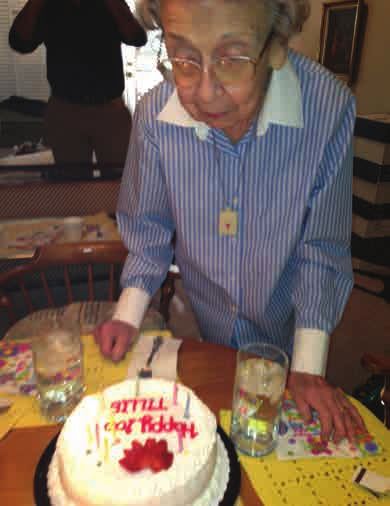
SENIOR HOUSING CONSTRUCTION ACTIVITY
With a Q1 2018 year-over-year growth rate of 2.2%, inventory growth is below the 30-year
average annual growth rate of 4.0%.(8)

The senior housing pipeline (construction versus inventory) is 6.2% as of Q1 2018. New senior housing construction
activity peaked at 11,368 units/beds during the second quarter of 2015. There were reportedly 6,330 units/beds
of new construction starts in the first quarter of 2018, which is just over half of what was reported during this peak.
(8)

                                                                                Senior Housing Inventory Growth
                                       10.00%
                                                                                         (All Markets)
                                        9.00%

                                        8.00%                                                                                                        Inventory Growth %
                                                                                                                                                       at 30 year lows
                                        7.00%
            Growth in Inventory (%)

                                        6.00%
                                                                                                    Average = 4.0%
                                        5.00%

                                        4.00%

                                        3.00%

                                        2.00%

                                        1.00%

                                        0.00%

                                      Source: NIC MAP® Data Service.

         New Senior Housing Construction

                                                                                         New Construction Started by Quarter

         8,000

         7,000

         6,000

         5,000
 Units

         4,000

         3,000

         2,000

         1,000

                  0

                                                                   Majority Independent Living     Majority Assited Living   Majority Nursing Care

Source: NIC MAP® Data Service.

10               CBRE | Please visit our website at cbre.com/nationalseniorhousing
SENIOR HOUSING OCCUPANCY RATES
93.0%
Historical occupancy for seasoned 92.0%
communities (those open 24 months or
longer) is detailed in the graph to the right. 91.0%
Stabilized Occupancy (%)
Independent living occupancy (91.4%) led the
90.0%
pack followed by the assisted living (88.9%)
and memory care segments (86.5%). Nursing 89.0%
care occupancy averaged 86.7% in Q1 2018,
which is consistent with the prior four-quarter 88.0%
average (86.5%).
87.0%
86.0%
85.0%
Source: NIC MAP® Data Service. Independent Living Assisted Living
Memory Care Nursing Care
Occupancy versus Average Monthly Rent “AMR” Growth
Average stabilized occupancy and rent growth for the primary market benchmarks are detailed by care segment in the
graphs below. Aggregated senior housing annual rent growth was 2.2% in Q1 2018. Nursing care reported average
annual rent growth of 2.3% in Q1 2018.
Independent Living Assisted Living
4.0% 4.0%
94% 94%
3.5% 3.5%
92% 92%
3.0% 3.0%
Y-t-Y Growth (%)
Y-t-Y Growth (%)
90%
Occupancy (%)
90%
Occupancy (%)
2.5% 2.5%
88% 2.0% 88% 2.0%
86% 1.5% 86% 1.5%
84% 1.0% 84% 1.0%
82% 0.5% 82% 0.5%
80% 0.0% 80% 0.0%
Stabilized Avg Occupancy Avg AMR Y-t-Y Growth Stabilized Avg Occupancy Avg AMR Y-t-Y Growth
Memory Care Nursing Care
4.0% 4.0%
94% 94%
3.5% 3.5%
92% 92%
3.0% 3.0%
Y-t-Y Growth (%)
Y-t-Y Growth (%)
90%
Occupancy (%)
Occupancy (%)
2.5% 90%
2.5%
88% 2.0% 88% 2.0%
86% 1.5% 86% 1.5%
84% 1.0% 84% 1.0%
82% 0.5% 82% 0.5%
80% 0.0% 80% 0.0%
Stabilized Avg Occupancy Avg AMR Y-t-Y Growth Stabilized Avg Occupancy Avg ADR Y-t-Y Growth
Source: NIC MAP® Data Service.
CBRE | Please visit our website at cbre.com/nationalseniorhousing 11HOW DOES OCCUPANCY STACK UP WITH OTHER PROPERTY TYPES?
Senior housing occupancy has been relatively consistent and never significantly below 90% – even during the
economic downturn in 2008.
Comparison of Occupancy Senior Housing vs. Other Commercial Property Types
90.0%
80.0%
70.0%
60.0%
50.0%
40.0%
2011 2012 2013 2014 2015 2016 2017
Sources: Seniors Housing source is NIC MAP® Data Service; Retail, Office and Multi-family source is Mortgage Bankers Association Q4 2017 Quarterly Data
Book; HotelNewsNow Newswire December Releases 2011-2017.
Office Occupancy
Retail Occupancy
Multi-family Occupancy
Hotel Occupancy
Seniors Housing Occupancy
12 CBRE | Please visit our website at cbre.com/nationalseniorhousingSENIOR HOUSING MANAGEMENT COMPANIES
(Independent Living “IL”/Assisted Living “AL”)
RANK COMPANY OWNERSHIP UNITS/BEDS PROPERTIES
MANAGED
1 Brookdale Public → BKD 102,055 1,048
2 Holiday Retirement Private 37,523 306
3 LCS Private 34,400 141
4 Sunrise Senior Living LLC Public → SRZ 27,125 260
5 Five Star Senior Living Public → FVE 24,476 215
6 Erickson Living Private 21,705 18
7 Senior Lifestyle Corporation Private 19,905 194
8 Atria Senior Living Private 19,541 166
9 Capital Senior Living Public → CSU 12,591 129
10 Enlivant Private 10,794 231
Source: “ASHA 50 Report” ASHA: American Seniors Housing Association, (as of June 1, 2017).
• This is a highly fragmented (“cottage industry”) market.
• The top 50 senior housing providers control 33.0% of the IL/AL/MC total supply. (10)
• The average size of the top 50 providers is only 10,226 units per provider compared to an average of 31,012
units for the top 10.
• Only four providers in the Top 50 are publicly traded companies.
CBRE | Please visit our website at cbre.com/nationalseniorhousing 13NURSING CARE MANAGEMENT COMPANIES
(“SNF” or “NC”)
RANK COMPANY OWNERSHIP BEDS
MANAGED FACILITIES
1 Genesis HealthCare Corp Public → GEN 56,575 512
2 HCR ManorCare Private 34,539 255
3 Golden Living Private 30,267 295
4 Life Care Centers of America Private 28,414 213
5 SavaSeniorCare Private 24,154 200
6 Consulate Health Care Private 22,059 210
7 Signature HealthCARE Private 14,157 113
8 The Ensign Group Public → ENSG 13,205 124
9 Extendicare Health Services Public → EXE 12,086 90
10 Kindred Healthcare Public → KND 11,535 90
Source: Provider Magazine; June 2016 issue. Rankings are based on 12/31/15 bed counts.
• Also a highly fragmented (“cottage industry”) market.
• Nursing care providers provide an array of services and specialty care remains a strong trend for the top
50 providers. Memory care is at the top of the list (47 providers), followed closely by assisted living (43) and
outpatient therapy (42).
• The top 50 nursing care providers control 29.8% of the total nursing care supply.(11)(12)
• The average size of the top 50 providers is only 8,710 beds per provider compared to 24,699 beds for the top
ten providers.(11)(12)
• Only eight providers in the top 50 are publicly traded companies.
14 CBRE | Please visit our website at cbre.com/nationalseniorhousingPUBLICLY TRADED SENIOR HOUSING COMPANIES
The senior housing/healthcare publicly traded providers’ total market capitalization is approximately $6.36 billion
as of June 11, 2018. This is up from $5.20 billion on September 19, 2017.
Public Pricing
52-Week Range
Close 200-Day
Trailing P/E 52-Week Market Cap
Company Ticker Stock Price Moving
Ratio (1) (2) Change (1) High (1) Low (1) 6/11/18
6/11/18 Average (1)
Independent/Assisted
Living:
Brookdale Senior Living BKD 9.05 N/A 8.35 -37.75% 15.66 6.28 1.70B
Capital Senior Living CSU 11.09 N/A 12.06 -26.06% 16.72 9.15 345.26M
Five Star Quality Care FVE 1.55 N/A 1.39 -11.76% 1.85 1.05 78.33M
Total IL/AL $ 2.12B
Nursing Care:
Adcare Health Systems ADK 0.2356 N/A 0.2675 -77.01% 1.14 0.16 4.62M
Diversicare Healthcare DVCR 7 N/A 8.36 -32.31% 12.25 6.45 44.19M
Ensign Group ENSG 37.23 48.35 27.17 84.91% 38.45 18.75 1.94M
Kindred Healthcare KND 9 N/A 9 -15.57% 11.9 5.5 821.35M
National Healthcare
NHC 69.62 18.87 62.57 -4.99% 74.8 57 1.06B
Corp.
Genesis Healthcare GEN 2.3 N/A 1.3 27.93% 2.5 0.6 366.73M
Total NC $ 4.24B
Total Providers $ 6.36B
Notes:
(1) Data pulled by Yahoo! Finance who pulls from multiple sources or calculates internally. Data is for 52-weeks ending 6/11/2018.
(2) Trailing twelve months intraday P/E Ratio.
(3) Market Cap is an intraday value derived by taking outstanding shares multiplied by the current share price. Shares outstanding is taken from the most recently filed
quarterly or annual report and Market Cap is calculated using shares outstanding. (4)
Enterprise Value is a market-based measure of a company’s value and is generally equal to Market Cap plus debt minus total cash and cash equivalents.
Chart Source: Yahoo! Finance
CBRE | Please visit our website at cbre.com/nationalseniorhousing 15PUBLICLY TRADED SENIOR HOUSING DOMINATED REITs
The senior housing/healthcare REIT total market capitalization is $82.48 billion as of June 11, 2018. This is down
slightly as compared to $88.76 billion reported as of September 19, 2017.
REIT Pricing
52-Week Range
Close Trailing
Annual Dividend 52-Week Market Cap
Company Ticker Stock Price Dividend Date (1) Change (1) High (1) Low (1) 6/11/2018 (2)
6/11/2018 Yield (1)
REITs
CareTrust REIT CTRE 16.58 4.44% 13-Apr-18 -11.84% 19.86 12.73 1.26B
HCP, Inc. HCP 24.18 6.08% 22-May-18 -23.02% 33.67 21.48 11.52B
LTC Properties LTC 41.63 5.48% 29-Jun-18 -16.39% 52.85 34.46 1.65B
MedEquities Realty Trust (4) MRT 10.25 8.20% 5-Jun-18 -13.80% 13.06 9.67 326.84M
National Health Investors NHI 74.03 5.15% 10-Aug-18 -4.96% 81.6 62.71 3.07B
New Senior Investment
SNR 7.47 14.09% 22-Jun-18 -24.85% 10.57 6.77 613.65M
Group
Omega Healthcare
OHI 30.81 8.43% 15-May-18 -6.27% 34.84 24.9 6.39B
Investors
Quality Care Properties(5) QCP 21.22 N/A N/A 19.98% 22.91 12.25 2.00B
Sabra Health Care REIT (6) SBRA 20.89 8.25% 31-May-18 -9.85% 25.31 15.78 3.72B
Senior Housing Properties
SNH 17.59 8.87% 17-May-18 -17.80% 22.01 14.86 4.18B
Trust
Ventas VTR 54.91 5.68% 12-Jul-18 -19.55% 72.36 46.55 19.70B
Welltower (7) HCN 58.3 6.00% 23-May-18 39893.11% 60.99 0.11 21.69B
Total REITs $76.12B
Providers & REITs Estimated Market Capitalization Total: $82.48B
Notes:
(1) Data pulled by Yahoo! Finance who pulls from multiple sources or calculates internally. Data is for 52-weeks ending 9/19/2017. (2)
Market Cap is an intraday value derived by taking outstanding shares multiplied by the current share price. Shares outstanding is taken from the most recently filed
quarterly or annual report and Market Cap is calculated using shares outstanding.
(3) Enterprise Value is a market-based measure of a company’s value and is generally equal to Market Cap plus debt minus total cash and cash equivalents.
(4) MedEquities went public on Septembr 28, 2016 at $12 per share, and announced a $0.21 dividend.
(5) Quality Care Properties was spun out from HCP effective November 1, 2016. (6)
Care Capital Properties was merged into Sabra Health Care REIT effective August 16, 2017.
(7) Formerly Health Care REIT.
Chart Source: Yahoo! Finance
16 CBRE | Please visit our website at cbre.com/nationalseniorhousing17 Capitalization Rates, Transaction
Activity & Underwriting
Decade in Review - Senior Housing Transaction Volume
Dollar Value of Publicly Announced
Senior Housing & Care Transactions (2008-2017)
$30 400
350
$25
Transaction Volume (Billions)
Number of Transactions
300
$20
250
$15 200
150
$10
100
$5
50
$0 0
2008 2009 2010 2011 2012 2013 2014 2015 2016 2017
Transaction Volume (Billions) Number of Transactions
Chart Source: The Senior Care Acquisition Report, 23rd Edition 2018.
Senior Housing & Care Transaction Activity By Buyer Type
Cross-Border (Internationally Based) Private
A buyer is defined as “cross-border” if the buyer or major Private, as an investor type, refers to companies whose control is
capital partner is not headquartered in the same country where in private hands and whose business is primarily geared toward
the property is located. An increasing number of firms have operating, developing, or investing in commercial real estate.
subsidiaries accessing capital in multiple countries so a firm may This includes private equity joint ventures, commingled funds and
have two headquarters locations for the purposes of the chart high net worth family offices.
analysis. For example, Deutsch Bank (DB Real Estate) is assumed
to be based in Germany for deals outside of the United States Public Listed/REITs
while their acquisitions within the United States are assumed to be Companies and/or funds traded on open public markets whose
made via its domestic headquartered subsidiary, RREEF. business is primarily geared toward investing in and/or operating
or developing commercial real estate. These include REITs, REOCs
Institutional and publicly-listed funds.
Institutional refers to an investor, such as a bank, insurance
company, retirement fund, hedge fund or mutual fund that is User/Other
financially sophisticated and makes large investments, often held Users of commercial property for specific purposes; business
in very large portfolios of investments. users, government, educational or religious institutions who own
real estate for their own use.
60% Seniors Housing Transaction Activity ($B) By Buyer Type
51%
50% 46%
40% 38%
34%
34.0%
Buyer %
30%
30.0%
30% 27% 26% 25% 27%
27.0%
25% 24% 24% 23%
21%
20%
14% 14%
11% 12%
10% 9%
9.0%
10% 5%
1% 2% 1% 0%
0.0%
0%
2014 2015 2016 2017 2018 YTD
User/Other Private Public Listed/REITs Cross-Border Institutional
Chart Source: Real Capital Analytics, May 29, 2018. Senior Housing transactions only.
CBRE | Please visit our website at cbre.com/nationalseniorhousing 17CROSS-BORDER TRANSACTION ACTIVITY ANALYSIS
During the past three years, the senior housing investment market has witnessed a continual dynamic shift in
the investor profile mix. Historically, publicly-traded buyers (mainly REITs) have represented a majority of the
transaction volume, although between 2016 and 2017 the public buyers were less active, many devoting resources
to portfolio repositioning efforts through coordinated dispositions. However, during the first half of 2018, publicly-
traded buyers represented 34.0% of transaction volume, the largest share of the total year to date transaction
volume. Additionally, senior housing is continuing to attract substantial interest from institutional investors, which
have accounted for approximately 30.0% of year to date transaction volume. Institutional buyers include banks,
insurance companies, retirement (pension) funds, hedge funds and mutual funds. By comparison, institutional
investment accounted for only 11.0% of total senior housing transaction volume in 2015. Despite the recent uptick
in activity by public buyers, private equity remains extremely active in the senior housing investment community,
accounting for 27.0% of year to date transaction volume, in-line with historical private equity investment share.
Private equity buyers include dedicated senior housing funds, opportunity funds and commingled funds with core
plus and value-add investment objectives. Cross-border buyers captured a 9% share of the 2018 YTD transaction
volume. Multinational investment platforms from Europe, Asia and the Middle East are actively seeking investments
in U.S. based senior housing.
Cross-Border Senior Housing Investment by Region
$4,500
$4,062
$4,000
$3,357
$3,500
$3,000
$2,572
$2,500
Millions
$2,000 $1,736
$1,500
$1,000
$535
$500
$0
2014 2015 2016 2017 2018 (YTD)
East Asia Western Europe United States Australia - NZ MidEast United Kingdom Canada Southeast Asia Total
Source: Real Capital Analytics, Q2 2018.
18 CBRE | Please visit our website at cbre.com/nationalseniorhousingGENERAL INDUSTRY PARAMETERS - PRICING
Senior Housing/Nursing Care Value Estimated at $469.2 Billion
Majority Nursing
Care 25.3%
Majority Independent
Living 43.0%
Majority Assisted
Living 31.7%
Chart Source: The Senior Care Acquisition Report; 23rd Edition 2018 and NIC MAP®
Data Service.
Historical Value Per Unit Pricing
Senior Housing (IL/AL) Price Per Unit Independent Living (IL) Price Per Unit
$275 $275
$225 $225
(thousands)
(thousands)
$175 $175
$125 $125
$75 $75
2009 2010 2011 2012 2013 2014 2015 2016 2017 2009 2010 2011 2012 2013 2014 2015 2016 2017
Median IL/AL price per unit Average IL/AL price per unit Median IL price per unit Average IL price per unit
Assisted Living (AL) Price Per Unit Nursing Care (NC) Price Per Bed
$275 $105
$95
$225
$85
(thousands)
(thousands)
$75
$175
$65
$55
$125
$45
$75 $35
2009 2010 2011 2012 2013 2014 2015 2016 2017 2009 2010 2011 2012 2013 2014 2015 2016 2017
Median AL price per unit Average AL price per unit Median NC price per bed Average NC price per bed
Chart Source: The Senior Care Acquisition Report; 14th Edition 2009, 23rd Edition 2018.
CBRE | Please visit our website at cbre.com/nationalseniorhousing 19SENIOR HOUSING CAPITALIZATION RATES
Senior housing aggregate capitalization rates resumed their downward trend during 2017, a rebound from
their brief uptick due in part to the REIT pullback and a high concentration of value-add deals during 2016. An
abundance of affordable equity capital, in tandem with interest rates that can still be considered historically low
has driven this continued compression. An additional contributing factor was the quality of the properties that
traded during 2017, which included a higher proportion of newer and/or stabilized product. Generally speaking,
the capitalization rates reflected in the chart below are after a management fee and before a capital replacement
reserve and NOI is based on the trailing 12-month period before the sale or year-to-date actuals annualized. The
average and median capitalization rates below are unweighted and the average unit weighted capitalization rate
weighs each transaction’s capitalization rate based on its number of units. Consistent with prior years, the average
unit weighted capitalization rate in 2017 (6.6%) was lower than the unweighted average capitalization rate (7.5%).
12.0%
11.0%
Capitalizatoin Rates
10.0%
9.0%
8.0%
7.0%
6.0%
Average Cap Rate
Median Cap Rate
Source: Senior Care Acquisition Report, 23nd Edition 2018
20 CBRE | Please visit our website at cbre.com/nationalseniorhousingSENIOR HOUSING CAPITALIZATION RATES
Summary by Product Type
The following survey reflects the knowledge and collaboration of CBRE Research, Capital Markets and Valuation &
Advisory professionals who provided their estimation of capitalization rate ranges based on recent interactions with
active investors in their market. Core and non-core classifications are based upon the perception of each respondent
and represent their assessment of multiple factors including physical plant and market area characteristics.
Stabilized Property Acquisitions Stabilized Property Acquisitions
PROPERTY CLASS/ PROPERTY CLASS/
SECTOR H2 2017 (%) SECTOR H2 2017 (%)
TYPE SEGMENT TYPE SEGMENT
AA 5.23 A 4.67
Infill B 5.15
A 6.07 C 5.19
Multi-family
CBD A 4.96
B 6.90 Suburban B 5.49
C 6.32
C 8.56 Luxury 7.01
Office
AA 6.38 Full-Service 7.69
CBD
Select-Service 8.05
A 7.14 Economy 9.16
Hotel
Suburban Luxury 7.61
B 8.24 Full-Service 8.23
Suburban
Select-Service 8.60
C 9.67 Economy 9.65
A 5.25 IL 5.40
Industrial All B 6.27 AL 6.10
Core
C 8.07 (Class A MC 6.70
Avg.)
Neighbor- A 5.79 NC 11.20
hood /
B 7.23 Senior CCRC 7.10
Community
Center C 9.03 Housing* IL 6.30
Retail A 6.84 AL 6.60
Non-Core
Power B 7.97 (Class A MC 7.10
Avg.)
C 9.13 NC 11.80
High Street A 4.67 CCRC 6.00
Source: CBRE Research: CBRE North America Cap Rate Survey Second Half 2017
*Note: Senior Housing figures come from CBRE Research’s U.S. Seniors Housing & Care Investor Survey and Trends Report; Winter 2018.
CBRE | Please visit our website at cbre.com/nationalseniorhousing 21SENIOR HOUSING INVESTMENT RETURNS
The Property Index Performance Data provided
by the National Council of Real Estate Investment Cumulative NCREIF Total Returns
Fiduciaries (NCREIF) demonstrates that reporting NPI vs. Multi-Family vs. Senior Housing
senior housing properties have generally Over the last ten years, Seniors Housing returns have consistently
outperformed the broader National Property outperformed other types of real estate.
Index (NPI) since at least 2003. 8,000
7,000
The senior housing total return for Q1 2018 was
Stabilized Senior Housing
6,000
2.14%, which is comprised of a 1.36% income 5,000
return and a 0.79% capital appreciation return.
Index
4,000 Total NPI
Over the past four quarters, senior housing 3,000
returned 12.79% (5.59% income and 6.94%
2,000
appreciation). This is relatively consistent with Apartments
the seven-year total return of 13.63%, and is 1,000
Q1 2011 Q1 2012 Q1 2013 Q1 2014 Q1 2015 Q1 2016 Q1 2017 Q1 2018
5.7% greater than the NPI return of 7.09% and 0
Total NPI Multi-Family Senior Living Stabilized
6.46% greater than the multi-family total return
of 6.33%. Over a seven-year period, senior
Chart Source: NCREIF Query Tool. 3Q04 = 1,000.
housing returns have outperformed the NPI and
multi-family in total returns and income returns.
The stronger performance seen in the senior
Cumulative NCREIF Appreciation Returns
housing sector may reflect the fact that senior NPI vs. Multi-Family vs. Senior Housing
housing has seen continuous rent growth, despite 2,900
significant fluctuations in the general economy. 2,700
The following charts illustrate the returns achieved
2,500
2,300
by the senior housing component as compared 2,100
to the multi-family component and the overall
Index
1,900
1,700
index. Items shown for each quarter represent 1,500
that particular quarter’s return, while periods 1,300
showing a single year or multiple years represent 1,100
900
the compounded annual index returns achieved Q1 2011 Q1 2012 Q1 2013 Q1 2014 Q1 2015 Q1 2016 Q1 2017 Q1 2018
for that period. All returns are before fees. Total NPI Multi-Family Senior Living Stabilized
Senior Housing Returns
Chart Source: NCREIF Query Tool. 3Q04 = 1,000.
Total Returns
Total Total Stabilized
Total NPI Multi-Family Senior Housing
Q1 2018 1.69 1.46 2.14
Q4 2017 1.77 1.62 4.12
Q3 2017 1.70 1.66 2.73
Q2 2017 1.75 1.45 3.24
Q1 2017 1.62 1.30 2.57 Cumulative NCREIF Income Returns
One Year Index 7.09 6.33 12.79
Three Year Index 8.74 7.97 13.16 NPI vs. Multi-Family vs. Senior Housing
Five Year Index 10.06 8.99 14.88
Seven Year Index 10.63 10.09 13.63 2,700
2,600
Capital (Appreciation) Returns 2,500
2,400
Total Total Stabilized 2,300
Total NPI Multi-Family Senior Housing 2,200
Q1 2018 0.57 0.40 0.79 2,100
2,000
Q4 2017 0.63 0.55 2.79 1,900
Q3 2017 0.56 0.59 1.38
Index
1,800
Q2 2017 0.59 0.35 1.82 1,700
1,600
Q1 2017 0.48 0.20 0.96 1,500
One Year Index 2.37 1.90 6.94 1,400
1,300
Three Year Index 3.84 3.32 7.17 1,200
Five Year Index 4.86 4.13 8.43 1,100
1,000
Seven Year Index 5.16 5.00 6.95 900
Q1 2011 Q1 2012 Q1 2013 Q1 2014 Q1 2015 Q1 2016 Q1 2017 Q1 2018
Income Returns
Total Total Stabilized
Total NPI Multi-Family Senior Housing Total NPI Multi-Family Senior Living Stabilized
Q1 2018 1.12 1.06 1.36
Q4 2017 1.13 1.07 1.34
Q3 2017 1.14 1.07 1.36 Chart Source: NCREIF Query Tool. 3Q04 = 1,000.
Q2 2017 1.16 1.10 1.42
Q1 2017 1.15 1.10 1.61
One Year Index 4.63 4.37 5.59
Three Year Index 4.77 4.55 5.70
Five Year Index 5.02 4.72 6.09
Seven Year Index 5.27 4.91 6.36
Source: NCREIF
22 CBRE | Please visit our website at cbre.com/nationalseniorhousingUNDERWRITING GUIDELINES
Because senior housing is a hybrid between multi-family and hotel property types, there is an added complexity to
the underwriting process. Unlike office, multi-family, industrial and retail, simple ARGUS or other canned models
are not conventionally used. Rather, customized Excel models are developed — adding time and complication
to the process. Below are standard assumptions that are often incorporated into underwriting models as well as
questions that underwriters should consider. These assumptions reflect the current environment.
Assumptions based on Community / Market Conditions
Current Occupancy Condition Strong Good Fair / Poor
Occupancy
> 95% Lease-down to 96% Lease-down to 95% Lease-down to 93%
90-95% Lease-up to 95% Lease-up/down to 94% Lease-up/down to 91%
< 90% (Initial Community Lease-up) Lease-up to 95% Lease-up/down to 93% Lease-up/down to 91%
80% - 90% (Not initial lease-up) Lease-up to 93% Lease-up to 90% Lease-up/down to 85%
70% - 80% (Not initial lease-up) Lease-up to 85% Lease-up to 80% Lease-up/down to 75%
60% - 70% (Not initial lease-up) Lease-up to 75% Lease-up to 70% Stabilize at current
< 60% (Not initial lease-up) Stabilize at current Stabilize at current Stabilize at current
Lease-Up/Down Net Units/Beds Per Month
> 95% 4 4 2
90-95% 4 4 2
< 90% (Initial Community Lease-up) 4 4 2
80% - 90% (Not initial lease-up) 3 2 1
70% - 80% (Not initial lease-up) 3 2 1
60% - 70% (Not initial lease-up) 3 2 1
< 60% (Not initial lease-up) 3 2 1
Rate Assumptions
Yr. 1 Yr. 2 Yr. 3 Yr. 4> Yr. 1 Yr. 2 Yr. 3 Yr. 4> Yr. 1 Yr. 2 Yr. 3 Yr. 4>
Current Rates 4.5% 4.5% 4.5% 4.5% 4.0% 4.0% 4.0% 4.0% 3.0% 3.0% 3.0% 3.0%
Street Rates 5.0% 5.0% 5.0% 5.0% 4.5% 4.5% 4.5% 4.5% 3.5% 3.5% 3.5% 3.5%
< 60% (Initial lease-up) 0.0% 2.5% 5.0% 5.0% 0.0% 2.0% 3.5% 4.0% 0.0% 2.0% 3.0% 3.5%
Occupancy Assumptions
P&L or Rent Roll Always use current rent roll if the data is trusted.
Lease-Up Lag Should be zero months unless community specific information dictates otherwise.
Independent Living - 36 months; Assisted Living - 24 months; Memory Care - 20 months and Nursing Care -
Rollover
12 months.
Other Revenue Assumptions
Care Revenue Either Based on trended actuals, Operator Budget, Or Built up through Care Utilization Matrix.
New Resident Fee Based upon actual fee received and trended forward.
Second Resident Fee Based upon actual fee received and trended forward. Increased with in-house rents annually.
Other Revenue Either Based on trended actuals, Operator Budget, Or Built up Lease-Up Utilization Analysis.
Expense Assumptions
Normal Operating Expens-
Either Based on trended actuals, Operator Budget, Or Built up Lease-Up Utilization Analysis.
es
Utilities Either Based on trended actuals, Operator Budget, Or Built up Lease-Up Utilization Analysis.
Insurance (GL & Property) Obtain current quote or base on in-place policy coverage and then grow 3.5% per year thereafter.
Based on current tax bill; increase 3.5% per year thereafter or as state/county dictates based on fixed annual
Property taxes
increases or reassessment triggered by sale.
Management Fees 5.0% of Revenue.
Capital Expenditures $300 to $500 / unit per year.
CBRE | Please visit our website at cbre.com/nationalseniorhousing 2324 Structured Debt
Options
U.S. Treasury Yield Curve Rates
5.0%
4.0%
3.0%
2.0%
1.0%
0.0%
2004 2005 2006 2007 2008 2009 2010 2011 2012 2013 2014 2015 2016 2017 2018
10 Year Treasury 5 Year Treasury Linear (5 Year Treasury)
Source: U.S. Treasury (January 2, 2004 - June 26, 2018)
• The 10-year Treasury note rate is considered one of performance versus other commercial real estate
the major pricing benchmarks in the debt market. As classes, etc.). Senior housing has one of the lowest
illustrated in the chart above, the average 10-year U.S. default rates, yet it has higher interest rate spreads. As
Treasury Yield Curve Rate ended calendar years 2015 such, lenders have become more comfortable with the
and 2016 at 2.27% and 2.45%, respectively, with a nuances of the operating component of assisted living
2017 average rate of 2.33%. and memory care. Note, however, that these lenders
generally have a preference toward 100% private pay
• There was concern when interest rates spiked after the independent living, assisted living and memory care
conclusion of the 2016 U.S. presidential election. The (as opposed to nursing care facilities with government
benchmark 10-year Treasury stood at 2.45% at closing reimbursement dependencies). Nursing care has
on December 30, 2016, up 62 basis points (“bps”) become generally accepted in the lending community
from Election Day on November 8, 2016. In 2017, if it is part of a campus (i.e. a rental continuing care
Treasuries remained flat or slightly down year over year. retirement community with a skilled component), which
Today, the 10-year Treasury sits at 2.90% (as of June includes the full continuum of care.
25, 2018) and the 2018 YTD average is 2.84%.
• A handful of life insurance companies are still quoting
• Although credit spreads remain competitive, the comparable spreads to the Agencies for 5, 7 and 10-year
rise in the 10-year Treasury rate by roughly 50 bps fixed rate mortgages (with preference towards 7 and 10-
in 2018 has undoubtedly increased debt capital costs year fixed-rate). Eligible product types are independent
for borrowers. Given most acquirers in the sector are living, assisted living and, memory care (assuming it’s
now users of secured debt, the cost of debt capital in a small percentage of the campus). In addition, three
a continued rising interest rate environment has begun to four additional insurers are comfortable lending on
to impact valuations; more significantly in the value- 100% independent living product. Most insurers require
add space where a heavier reliance exists upon higher a lower LTV and larger loans ($25M+). There are one to
leverage debt. two life insurance companies with competitive floating
rate programs, however, construction to permanent
• Over the past several years and continuing in 2018,
programs are not currently available programmatically.
there has been a heightened awareness and interest
in senior housing from life insurance companies, other • The multi-family lending caps are intended to further
traditional balance sheet lenders and several new debt the Federal Housing Finance Agency’s (“FHFA”) strategic
providers. These lenders find the sector compelling for goal of maintaining the Agencies (Fannie Mae and
the same reasons as equity investors (demographics, Freddie Mac) as a backstop for the multi-family finance
24 CBRE | Please visit our website at cbre.com/nationalseniorhousingSENIOR HOUSING STRUCTURED DEBT OPTIONS
market without impeding the participation of private 30% to 35% cash equity (resulting in leverage of 65%
capital. For the 2018 calendar year, the Agency volume to 70%) priced at 275 to 350 basis points over 30-day
caps were initially set at $35 billion. Important to note, London Interbank Offered Rate (“LIBOR”). Over the past
loans in affordable and underserved market segments 18 months, non-recourse new construction financing
will operate in the same capacity in as the prior years and (limited to completion guarantees) has become very
are excluded from the cap. If the restricted affordable scarce, even for the highest-caliber firms with significant
housing units make up less than 50% of the total units, track records in the space. This can be attributed to a
the FHFA will exclude 50% of the loan amount from the number of factors including aggregate supply concerns,
cap. Also, if 50%-plus of the units are restricted units, where we are in the current real estate cycle, and HVCRE
the FHFA will exclude the entire loan amount from the High Volatility Commercial Real Estate (“HVCRE”)
cap. Throughout 2018, the FHFA will again review the regulation within the Basel III capital requirements. In
Agency’s estimates of the multifamily loan origination addition, spreads have widened 50 to 75 bps along
market size on a quarterly basis. If the FHFA determines with increases in LIBOR rendering construction loans
that the actual 2018 market size is greater than was approximately 100 to 150 bps more expensive today.
projected, it will apply an appropriate increase to the
capped category. If FHFA determines that the actual
2018 market size is smaller than was projected, it will not
reduce the capped category. Overall, the volume caps
imposed are not impacting the lending climate today the
same way that they did when first implemented in 2015.
• Offering floating rate mortgages with interest rate
spreads lower than any balance sheet lenders, the
Agencies continue to offer the lowest cost floating rate
debt in the sector. However, many regional and national
banks offer competitive floating rate programs with three
to five-year terms and competitive interest only periods.
• New bridge and mezzanine lending sources for non-
stabilized communities have favorably emerged in this
sector. Many of these bridge financing sources are
priced between 100 to 300 basis points above Agency
floating rate spreads. Bridge lenders include select
traditional banks (both national and regional) and other
specialized higher yield financial investment firms. Non-
recourse bridge financing is available for experienced
and strong borrowers at leverage levels up to 80%.
• Construction debt is primarily available through
traditional HUD loans, regional banks, local banks
(particularly for smaller deals when an established
relationship between the borrower and lender exists), and
on a very limited basis, through life insurance companies
via construction to permanent loan programs. Many
larger national banks are also providing construction
debt. Strong borrowers with a strong track record,
evidenced by stabilized portfolios producing solid
overall cash flows, might expect partial recourse with
CBRE | Please visit our website at cbre.com/nationalseniorhousing 2526 About CBRE National
Senior Housing
CBRE National Senior Housing is a fully integrated on senior housing, providing a range of services. We
platform of professionals dedicated to the senior provide investment opportunities to the marketplace
housing industry. The platform consists of four separate across a broad spectrum of senior housing property
and distinct concentrations: investment sales, debt and types including:
structured finance, investment banking, and valuation.
Our investment sales team has successfully transacted • Age-Restricted Multi-family
on over $17 billion in property sales dating back to 1998; • Independent Living
our average annual sales volume since 2014 exceeds • Assisted Living
$1.4 billion. The Team offers a depth of expertise rarely • Alzheimer’s/Memory Care
found in the senior housing sector. Its partners: Lisa • Skilled Nursing and Continuum of Care
Widmier, Matthew Whitlock and Aron Will possess a • Entry Fee CCRC Communities
combined 61-year senior housing-specific industry
experience and $28.9 billion in transaction volume. Our services include:
Our experience personally as developers, institutional • Investment Property Sales
investors, appraisers and owner/operators provides • Structured Debt
us with an intimate familiarity and perspective of a • Investment Banking
transaction from all sides. • Valuation
• General Consulting
CBRE National Senior Housing focuses exclusively
26 CBRE | Please visit our website at cbre.com/nationalseniorhousingOUR NATIONAL PRESENCE
CBRE has assembled a fully integrated Team with the requisite experience, expertise, and successful track record
necessary to successfully structure and execute a transaction to meet the Client’s objectives.
820+ Communities
110,000 Units/Beds
45 States
WA
ME
MT ND
OR MN VT
NH
ID NY
WI MA
SD
WY MI CT RI
IA PA
NE
NV NI
OH MD DE
IL IN
UT
CO WV
KS VA
MO
CA KY
NC
TN
AR OK
NM AR SC
AL GA
MS
TX LA
FL
CBRE National Senior Housing Offices:
San Diego, Houston and Boston
States where CBRE Team Members have conducted business
IN PROCESS TOTAL COMPLETED DEBT
2018 2014-2017 ORIGINATIONS
$3.5B $10.1B TOP 2
CBRE National Senior Principals of the CBRE CBRE National Senior
Housing has closed, is National Senior Housing Housing was ranked
actively marketing, or team completed more than Top Two Senior Housing
is under contract on $10 billion in senior housing Originator in the nation
$2.3 billion of sales and investment sales and debt from 2010 through 2016,
investment banking transactions between 2014 and was the #1 Senior
transactions encompassing and 2017 encompassing Housing/Age Restricted
nearly 6,500 units across more than 46,000 units Originator in the U.S in
the U.S. In addition, CBRE nationwide. both 2013 and 2014 and
National Senior Housing #2 in 2015. The team
has closed or has in originated $3.7 billion in
process approximately $1.2 debt transactions over the
billion of debt originations. past three years.
CBRE is the largest agency
originator (Fannie/Freddie)
in the nation with over $18B
of loan volume in 2017 and
has been Freddie Mac’s #1
Seller Servicer from 2009
to 2017.
CBRE | Please visit our website at cbre.com/nationalseniorhousing 27A PARTIAL LIST OF SIGNIFICANT ASSIGNMENTS
Sales Assignments Consideration Units
Vintage Portfolio (22) $1.3 Billion 3,055
The Sunwest Portfolio $1.25 Billion 11,100
Maestro Portfolio $921 Million ,206
8
The Fountains Portfolio $640 Million 3,637
Brightview I Portfolio $498.5 Million 1,584
rightview II Portfolio
B 363.5 Million
$ ,117
1
The Bristal Portfolio $290 Million 931
ramerica-Sunrise UK Portfolio
P 247 Million
$ 37
4
Pacifica Portfolio $187.7 Million 720
LCS CCR Portfolio $186.5 Million 1,104
7 Community AL/MC Portfolio $186.3 Million 526
5 Community Allegro Portfolio $172.5 Million 705
L ang Nelson Portfolio 127 Million
$ ,166
1
Ventas Portfolio $121.2 Million 1,295
7 Community AL/MC Portfolio $120.7 Million 00
5
Baynorth/Watermark Portfolio $114.5 Million 496
BK California Portfolio
M $104.5 Million 93
2
3 Community IL/AL/MC Portfolio $101.7 Million 310
Debt Assignments Loan Amount nits
U urpose
P Lender
The Fountains Portfolio $410.0 Million 3,663 Sale & Acquisition Agency
Ranger 36 Portfolio $348.6 Million 2,524 Refinance Agency
Credit Facility $271.3 Million 1,258 Acquisition Agency
Two Community CA and AZ Portfolio $80.0 Million 275 Acquisition Life Co.
Regency Oaks of Clearwater $75.0 Million 471 Refinance Agency
Bonaventure Portfolio $72.5 Million 453 Acquisition Agency
CSH Seattle Portfolio $60.0 Million 368 Acquisition Bank
Cascade Portfolio $58.5 Million 469 Refinance Agency
The Village of Woodlands Waterway $55.2 Million 207 Sale & Acquisition Agency
MorningStar Portfolio $53.0 Million 196 Sale & Acquisition Finance Co.
The Arbor Terrace Portfolio- GA 2 $50.5 Million 236 Sale & Acquisition Agency
The Village at River Oaks $49.7 Million 195 Construction Bank
The Cornerstone Portfolio $49.6 Million 172 Acquisition Life Co.
The Golden Pond Portfolio $48.5 Million 578 Sale & Acquisition Finance Co.
Georgetown Development $41.9 Million 210 Construction Other
The Springs at Greer Gardens $40.1 Million 217 Construction Bank
Franklin Park at Alamo Heights $40.0 Million 220 Construction Bank
“ CBRE SH recently closed a $186.5 million senior housing portfolio transaction with first-time Middle
Eastern capital. This transaction is yet another example of how CBRE can deliver superior results
for its clients. Collaboration among four different CBRE practices – Investment Properties, Debt and
Structured Finance, Investment Banking, and Valuation and Advisory Services – made this highly complex
transaction possible, allowed for the existing operator to remain, and also expedited the closing process.
“
28 CBRE | Please visit our website at cbre.com/nationalseniorhousingYou can also read


