Supporting reading and writing in years 1-3 - Inclusive Education
←
→
Page content transcription
If your browser does not render page correctly, please read the page content below

Sup p or ting re ading a nd w r i ti ng i n yea r s 1 – 3

The Ministry of Education and Lift Education would like to thank all those who contributed to
the development of this resource, including the writers of the original material (Kay Hancock
and Sandra McDonald), and those who contributed their time and expertise in developing this
updated version: Judy Aitken, Susan Court, Gemma Dawson, Kay Hancock, Andrea Piters,
Esmay Sutherland, Jane van der Zeyden, Bernadette Wilson, and Melanie Winthrop.

The quotes from Marie M. Clay are used with the permission of the Marie Clay Literacy Trust.

Published 2018 by the Ministry of Education,
PO Box 1666, Wellington 6140, New Zealand.
www.education.govt.nz

Accessed from
http://literacyonline.tki.org.nz/Literacy-Online/Planning-for-my-students-needs/Sound-Sense

First published as Sound Sense: Phonics and Phonological Awareness 2003
for the Ministry of Education by Learning Media Limited.

Text copyright © Crown 2018
Photographs copyright © Crown

All rights reserved.
Enquiries should be made to the publisher.

Publishing services: Lift Education E Tū

ISBN 978 1 77669 233 0

CONTENTS
Introduction . . . . . . . . . . . . . . . . . . . . . . . . . . . . . . . . . . . . . . . . . . . . . . . . . . . . . . . . . . . . . . . . . . . . . 1

     A note on terms . . . . . . . . . . . . . . . . . . . . . . . . . . . . . . . . . . . . . . . . . . . . . . . . . . . . . . . . . . . . . . 1

Building on oral language . . . . . . . . . . . . . . . . . . . . . . . . . . . . . . . . . . . . . . . . . . . . . . . . . . . . . . . . . . 2

The purpose and place of phonics instruction . . . . . . . . . . . . . . . . . . . . . . . . . . . . . . . . . . . . . . . . . . 4

Knowing the learner . . . . . . . . . . . . . . . . . . . . . . . . . . . . . . . . . . . . . . . . . . . . . . . . . . . . . . . . . . . . . . 5

Hearing sounds in spoken words . . . . . . . . . . . . . . . . . . . . . . . . . . . . . . . . . . . . . . . . . . . . . . . . . . . . 7

     Identifying rhyming words  . . . . . . . . . . . . . . . . . . . . . . . . . . . . . . . . . . . . . . . . . . . . . . . . . . . . . . 7

     Identifying syllables . . . . . . . . . . . . . . . . . . . . . . . . . . . . . . . . . . . . . . . . . . . . . . . . . . . . . . . . . . . 9

     Building and breaking words  . . . . . . . . . . . . . . . . . . . . . . . . . . . . . . . . . . . . . . . . . . . . . . . . . . . 9

     Hearing initial sounds  . . . . . . . . . . . . . . . . . . . . . . . . . . . . . . . . . . . . . . . . . . . . . . . . . . . . . . . . 10

     Hearing final sounds and inflected endings  . . . . . . . . . . . . . . . . . . . . . . . . . . . . . . . . . . . . . . . 12

     Hearing medial sounds  . . . . . . . . . . . . . . . . . . . . . . . . . . . . . . . . . . . . . . . . . . . . . . . . . . . . . . . 15

Building alphabet knowledge . . . . . . . . . . . . . . . . . . . . . . . . . . . . . . . . . . . . . . . . . . . . . . . . . . . . . . 16

Reading and writing . . . . . . . . . . . . . . . . . . . . . . . . . . . . . . . . . . . . . . . . . . . . . . . . . . . . . . . . . . . . . 18

     Reading . . . . . . . . . . . . . . . . . . . . . . . . . . . . . . . . . . . . . . . . . . . . . . . . . . . . . . . . . . . . . . . . . . . 18

     Writing . . . . . . . . . . . . . . . . . . . . . . . . . . . . . . . . . . . . . . . . . . . . . . . . . . . . . . . . . . . . . . . . . . . . 20

     Spelling  . . . . . . . . . . . . . . . . . . . . . . . . . . . . . . . . . . . . . . . . . . . . . . . . . . . . . . . . . . . . . . . . . . . 22

     Reinforcement activities: Exploring letters, sounds, and words  . . . . . . . . . . . . . . . . . . . . . . . . 22

References . . . . . . . . . . . . . . . . . . . . . . . . . . . . . . . . . . . . . . . . . . . . . . . . . . . . . . . . . . . . . . . . . . . . 24
Suppor ting rea ding and w r iting in year s 1–3

                          INTRODUCTION
                          Sound Sense: Supporting reading and writing in years 1-3 is a revised and updated edition of Sound Sense:
                          Phonics and Phonological Awareness (2003).

                          The ability to hear the different sounds within words is essential to reading and writing successfully.
                          Sound Sense provides suggestions for how you can support students, particularly year 1 students, in
                          developing and applying understandings about sounds, letters, and words when reading and writing.

                          The suggestions are closely linked to the expectations for students’ learning described in The
                          Literacy Learning Progressions for the first year of school. They include links to specific Ready to
                          Read shared texts, including poem cards. You can find many more suggestions for building and
                          consolidating these understandings in the teacher support materials for all Ready to Read guided
                          texts.

                               Sounds and Words – a clarification

                               Sound Sense provides suggestions for how teachers can support students in years 1-3 to develop
                               and apply understandings about sounds, letters, and words when reading and writing.

                               Sounds and Words is a different online resource, for teachers of students in years 1–8. It has a
                               wider focus than Sound Sense. It provides information about vocabulary and grammar as well as
                               phonological awareness and also includes a summary of the resources available to teachers.

                          A NOTE ON TERMS
                          Phonological awareness Phonological awareness is an overall understanding of the sound systems
                          of a language, for example, awareness that words are made up of combinations of sounds.

                          Phonemic awareness, which is the finest “grain” or level of phonological awareness, involves the
                          ability to identify and manipulate the individual sounds (phonemes) within words.

                          A phoneme is the smallest unit of sound in a word.

                          Phonological awareness includes the ability to recognise syllables, to recognise and generate
                          rhyming words, and to separate the onset (or beginning) of a word from its rime (the cluster of letters
                          that comes after the initial sound of a one-syllable word). For example, for the word “shop”, a child
                          who demonstrates phonological awareness is able to recognise the onset (“sh”) and the rime (“op”).
                          A child who has developed phonemic awareness is also able to identify the phonemes in the word
                          “shop“ (“sh/–/o/–/p”) and understands that new words can be formed by the substitution of phonemes
                          (“hop”, “pop”, “ship”, “shot”).

                          Phonological awareness and phonemic awareness apply to aural discrimination only – they do not
                          involve the written form of words.

                          The relationship between spoken sounds and the letters that represent them is called phonics.

                          Introduction                                                                                            1
Suppor ting rea ding and w r iting in year s 1–3

                          BUILDING ON ORAL
                          LANGUAGE
                                        School entrants can speak a language and need to learn to read and write it.
                                        They need to work out how every aspect of their spoken language relates to
                                        messages in print.
                                                                                                             Clay, 2013, page 116

                          Oral language underpins all literacy learning. From their earliest interactions with others, children
                          learn the importance of language for communication. As they become more proficient users of
                          language, children come to understand that speech is made up of a sequence of sounds. Many
                          children develop the ability to hear the different sounds within words easily with little direct
                          teaching, but some need specific and focussed instruction.

                          As children’s proficiency in spoken English develops, they learn how to modify regular verbs
                          to indicate actions occurring in the past (“he looked”) or in the present (“she looks” or “she is
                          looking”). They come to understand that someone who teaches is a “teacher” and that when they
                          are comparing things, they can use words such as “bigger” or “longer”. They also learn to add “s” to
                          nouns to denote plurals.

                          Building on oral language                                                                               2
A classroom environment that encourages an interest in and enjoyment of language supports all
aspects of literacy learning. A classroom rich in poetry, songs, wordplays, drama, books, language
games, and lively, purposeful talk builds students’ appreciation and awareness of language and
establishes a meaningful context for instruction in the sound structure (phonology) of the English
language. (Learning through Talk, pages 19 and 71, adapted).

           Poetry and songs, jingles and rhymes, and inventing words in play are
           activities that break utterances and words into parts and make words from
           parts. Together with slow articulation of some words in writing and reading,
           these activities can result in significant gains …
                                                                                  Clay, 2014, page 54

Building on oral language                                                                            3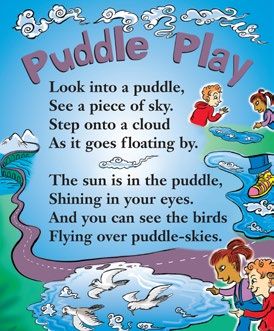
Suppor ting rea ding and w r iting in year s 1–3

                          THE PURPOSE AND
                          PLACE OF PHONICS
                          INSTRUCTION
                          The purpose of phonics instruction (instruction that builds students’ knowledge of letter–sound
                          relationships) is to support students’ reading and writing. Phonics instruction is not an end in itself.

                                        When phonics instruction is linked to children’s reading and writing, they are
                                        more likely to become strategic and independent in their use of phonics than
                                        when phonics instruction is drilled and practised in isolation. Phonics knowledge
                                        is critical but not sufficient to support growing independence in reading.
                                                                                            International Reading Association, 1997

                          There is no need to teach students every combination of letters and sounds that they are likely to
                          come across. As students become more aware of the sounds and patterns of language through many
                          reading and writing experiences, they learn to transfer their understandings to further reading
                          and writing. They become ready to learn some spelling rules and to recognise that there are some
                          words in English that do not seem to conform to any rules! Some students will relish exploring the
                          intricacies of English, while others may find its irregularities confusing and need very clear and
                          focused teaching in meaningful reading and writing contexts.

                          Note that students who speak languages other than English may have to contend with differences
                          between the sound systems of English and those of their first language. For example, in Māori and
                          many Pasifika languages, there is no difference between the sounds represented by “b” and “p” or
                          “d” and “t”. (For further information, see Learning through Talk, page 21.)

                          The purpose and place of phonics instruction                                                               4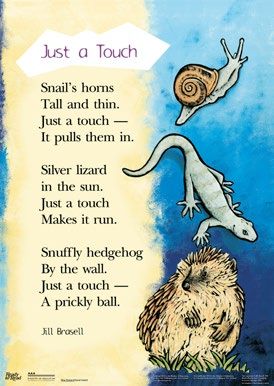
Suppor ting rea ding and w r iting in year s 1–3

                          KNOWING THE LEARNER
                                        Making rhymes and playing with words is one of the most reliable indicators
                                        that children are getting control of language. They are becoming aware of
                                        words and sounds and can manipulate these to express themselves – and to
                                        impress others!
                                                                                                         Cunningham, 2005, page 9

                          Activities such as reading, writing, reciting, singing, and playing word games develop students’ abilities
                          to recognise rhymes and distinguish sounds within words. Such activities, along with the specific
                          suggestions included in Sound Sense, provide many opportunities to monitor students’ developing
                          phonological awareness and confidence with specific aspects of phonics.

                          Knowing the learner                                                                                   5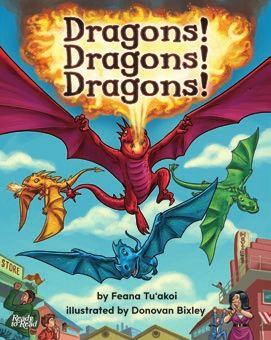
Assessment and monitoring opportunities include:

      • observation and discussion during reading and writing sessions and when the
         students are working on independent activities

      • analysis of the students’ written work

      • analysis of Running Records

      • information from the six-year net in An Observation Survey of Early Literacy
         Achievement (Clay, 2013)

      • occasional simple and specific spelling tests, for example, asking the students
         to write four words that rhyme with “in”.

Knowing the learner                                                                       6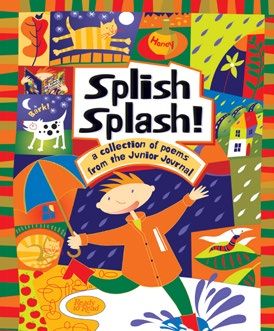
Suppor ting rea ding and w r iting in year s 1–3

                          HEARING SOUNDS IN
                          SPOKEN WORDS
                          An awareness of the sound system of spoken language and the ability to hear the different sounds
                          within words are essential to successful reading and writing. Students need to be able to aurally
                          distinguish sounds and recognise when sounds are the same or different.

                          Throughout the school day, you can incorporate oral activities that will support the students’ ability
                          to differentiate sounds in words. Simple listening games take only a few minutes and help tune
                          students into the similarities and differences between words. Many phonological awareness activities
                          can be incorporated into classroom routines. For example, when sorting students into groups, you
                          could ask them to find another person whose name starts with the same sound as theirs or who
                          has the same number of syllables in their name. When dismissing the class, you could ask each
                          student to say a word that rhymes with a given word or send off the students according to features
                          of their names, for example, “off you go if your name has an ‘a’ in it”. Such activities provide great
                          opportunities for reviewing new learning or anchoring previous learning.

                          The suggestions in this section focus on students learning how to hear and articulate sounds.
                          They start with identifying and differentiating large chunks of sound (rhyme), then smaller chunks
                          (syllables) and, finally, on to activities that involve listening for initial sounds, end sounds, and
                          sounds in sequence within words. Students are generally very quick to recognise rhyme and
                          alliteration. It takes a little longer for most students to be able to recognise words that end the same
                          way or that have the same medial (or middle) sound.

                          Several of the suggestions overlap. For example, when generating rhyming words, students are also
                          differentiating onset and rime; or when identifying medial sounds, they will often also be identifying
                          particular vowel sounds.

                          IDENTIFYING RHYMING WORDS
                          The ability to recognise rhyme requires an underlying awareness that rhyming words end with the
                          same group of sounds. The following are suggestions for developing the students’ awareness of rhyme.

                                   • When reading rhyming texts aloud, emphasise the rhyme and pause at
                                       appropriate points to allow the students to predict the rhyming word.

                                   • Play listening games, such as saying three words (two of which rhyme) and
                                       asking the students to pick the rhyming pair.

                                   • Substitute initial sounds to create new rhyming words (including nonsense
                                       words, for example, “tumpty rumpty”).

                                   • Support the students to differentiate onsets and rimes. Begin with a one-
                                       syllable word, such as “jump”. Say the word. Now, just say the first sound. If we
                                       took away the “j”, what would the word be? Encourage the students to create new
                                       rhyming words by adding new initial sounds to “ump”. Choose new “starter
                                       words” from familiar shared books or poems.

                          Hearing sounds in spoken words                                                                           7
Examples of shared texts that include rhyme In 2012, the existing Ready to Read poem cards were reorganised into two sets of 12 cards. Other Ready to Read poem cards can be ordered individually, as shown below. Poem cards that can be ordered as sets SET 1 2012 SET 2 2012 Baa Baa Black Sheep Bedtime Cat Hey Diddle Diddle Clickety-clack Cicada Hickory Dickory Dock Daisy Chain Higgledy Piggledy I Blew a Bubble Humpty Dumpty Jingle Bells Jack Be Nimble Just a Touch Mary Had a Little Lamb Mice One Two Buckle my Shoe Noke Worm Pat-a-Cake Pat-a-Cake Slooshy, Sloshy Pease Porridge Hot Ten Little Monkeys Sing a Song of Sixpence The Most Wee Willie Winkie Two Little Dicky Birds Poem cards that can be ordered individually Buzzy Bee Crab Footprints Mālō e Lelei My Flower Nanny Octopus Puddle Play Scarecrow Sleep Hearing sounds in spoken words 8
Shared books

Fantail, Fantail

Haere Atu

Is That an Earthquake?

Lost

Monster’s Lunch

Splish Splash! (a collection of poems)

T-shirts

IDENTIFYING SYLLABLES
The following are suggestions for developing the students’ awareness of syllables (relatively large
“chunks” of sound) in words.

        • Together, clap the students’ names. Help them to recognise patterns of one,
            two, three “beats” or more.

        • Use the students’ names to make up a group chant.

        • Clap the syllables in a line of a poem.

        • Find a word from a poem that has one syllable, then a word with two, then one
            with three.

        • Clap a syllable pattern for a word in a particular line of a familiar poem and ask
            the students to identify the word.

BUILDING AND BREAKING WORDS
As students become more proficient in identifying large chunks of sounds within words, you can
begin to model how to:

        • identify phonemes within words

        • build words by blending a sequence of phonemes

        • create new words by substituting phonemes in any position within a word.

Hearing sounds in spoken words                                                                        9
The following are suggestions for developing the students’ ability to identify and blend phonemes.
They involve the identification and articulation of sounds, not letter names.
• Model how to articulate the phonemes in one-syllable words such as “pop” (/p/-/o/-
/p/) “gate” (/g/-/ay/-/t/), “ship” (/sh/-/i/-/p/) and encourage the students to say them
with you.
• Introduce phoneme blending. Articulate the phonemes in a one-syllable word,
for example, “/n/-/i/-/t/” (night). What word do we get when we put these sounds
together? As the students develop their ability to blend phonemes, you could extend
the activity by choosing more complex words, for example, those that include
consonant blends.
• Choose a simple consonant-vowel-consonant word, such as “pin” and have the
students “break it” into its onset and rime. Together, experiment with adding or
changing the initial sound to make new (rhyming) words (“in”, “pin”, “tin”, “chin”,
“win”). As the student becomes more proficient in identifying and manipulating
sounds, they could also experiment with initial consonant blends (“tap”, “flap”,
“clap”) or making new words by replacing the final sound (“pin”, “pit”, “pip”, “pig”).
HEARING INITIAL SOUNDS
When students begin learning to read and write, they rely heavily on their knowledge of initial
sounds. They need to be able to distinguish what the first sound in a word is and to recognise when
initial sounds are the same or different. When helping students to develop their ability to hear
initial sounds, focus on one sound at a time and choose words with distinctive initial sounds, such
as those that start with “b”, “d”, “f”, “m”, “p”, “s”, and “t”. Keep in mind the possibility of confusions
with sounds across languages for multilingual students. (For further information, see Learning through
Talk, page 21.)
The following are suggestions for developing the students’ ability to distinguish particular initial
sounds and to recognise when initial sounds are the same or different.
• Enjoy alliterative texts (texts that repeat initial sounds) with the students.
• Have fun making up tongue-twisters or alliterative phrases.
• Place several objects (such as a ball, a car, a pencil, and plastic animals) inside a
“mystery box” (a box with a hole cut in the lid). Put your hand in the box and pull
out an object. Say the name of the object, its beginning sound, and repeat the
name of the object. Then have the students take turns to choose an object and
follow the three steps. You can extend the activity by having the students name
another word that begins with the same sound. Leave the mystery box out
for the students to use as an independent activity.
• Play listening games such as saying three words (two of which start with
the same sound) and asking the students to pick the two that match.
Hearing sounds in spoken words 10Examples of shared texts with repeated initial sounds (single sounds) Poem cards Hickory Dickory Dock: dickory, dock, down Mary Had a Little Lamb: little, lamb; white, went My Flower: put, pot; seed, sunshine, say; watered, waited, watched Pease Porridge Hot: pease, porridge, pot Wee Willy Winkie: Wee, Willy, Winkie, window Shared books Bubbles: birds, bubbles Dragons! Dragons! Dragons!: cheered, children; Daisy, Damon, Dora, Dylan, day, deep, do, down Fantail, Fantail: peas, pie Greedy Cat: bag, bananas, buns; chips, chocolate; pepper, pot, potato Haere Atu: bag, baggy, beach, board, boy, boys, bumpy; She, she, shorts, shout, shouted Examples of shared texts with repeated initial sounds (consonant blends) Poem cards Just a Touch: snails, snuffly Nanny: criss cross, snip snap Puddle Play: floating, Flying; sky, skies Slooshy, Sloshy: Slooshy, sloshy; squishy, squashy Shared books Dragons! Dragons! Dragons!: blew, blow; dragon, dragons, drew, dropped; flame, flapped, flew; friendly, fruit; stared, stories; swished, swooped Haere Atu: flapped, flew, floppy, fly; slap, slapped, sloppy, Slurp, slurp Hearing sounds in spoken words 11
HEARING FINAL SOUNDS AND
INFLECTED ENDINGS
As students gain confidence with identifying the initial sounds of words, you can help them attend
to final sounds. Again, choose examples with end sounds that are relatively easy for the students
to hear and articulate. These include words that end with digraphs such as “ch” or “sh” or with “y”
(either as a long “i” sound, as in “fly”, or an “ee” sound, as in “Greedy”). You could extend this to
include inflected endings, for example, “s”, “ed”, “ing”, “er”. Be selective in your choice of texts when
drawing attention to “s” as an inflected ending in order to avoid confusion with its use to denote
both present-tense verbs and plurals. With young learners, focus on only one use of these aspects at
a time.

Be aware of possible confusions with sounds across languages for your multilingual students.
Also note that students with hearing impairments may find some end sounds, such as “s”, “sh”,
“ch”, “j” (“dge”), and “th” difficult to distinguish. See Learning through Talk, 21 and 32 for further
information.

The following are ideas for developing the students’ awareness of final sounds.

          • Use intonation to draw attention to the end sound. Ask the students to say the
            word themselves so they can hear and “feel” the sound. Discuss the position of
            their tongue or teeth when articulating the end sound. What sound can you hear
            at the end of “sleep”? Say it softly. Touch your lips with your finger as you say the last
            sound. Can you feel air on your finger? You could use a mirror to help students see
            where to put their tongue to make particular sounds.

          • Within a set of three or four words, ask the students to identify the word that
            ends with the focus sound or inflected ending.

Examples of shared texts with distinctive repeated final sounds

Poem cards

Buzzy Bee: buzz                                               Sing a Song of Sixpence: dainty, twenty

Clickety-clack Cicada: clickety, noisy                        Sleep: sleep, creep, creeps, sweep

Hickory Dickory Dock: dock, clock, struck                     Slooshy, Sloshy: sloshy, squishy, squashy

Mice: touch, much

Nanny: criss cross, snip snap, zig zag school bag

Puddle Play: sky, by

Shared books

Number One: crash, splash

Dragons! Dragons! Dragons!: Daisy, fiery, friendly, library,
lonely, ready, very

Greedy Cat: Greedy, sticky

Hearing sounds in spoken words                                                                            12
Examples of shared texts with inflected endings (s, ed, ing)
Plurals
POEM CARDS SHARED BOOKS
Mice: tails, faces, Chins, ears, things “A Splish-splash Day” (in Splish Splash!):
bits, coats houses, puddles, raindrops, rivers,
Puddle Play: birds, eyes, skies
snails, trees, worms
Bubbles: birds, bubbles
Dragons! Dragons! Dragons!: Dragons,
friends, lives, picnics, princesses, sausages,
shelves, skateboards, stories
Greedy Cat: bananas, buns, chips, sausages
Haere Atu: arms, girls, boys, legs, dads,
mums, shorts
Present-tense verbs (ending in “s”)
POEM CARDS SHARED BOOKS
Octopus: gets, zooms Me and My Dog: barks, bounces, leaps, lifts,
opens, scratches, sits, stands, stretches,
wags, watches, waves
Number One: jumps, runs, says, shuts, stops
Hearing sounds in spoken words 13Past-tense verbs (ending in “ed”)
POEM CARDS SHARED BOOKS
My Flower: watered, waited, watched Dad’s Snore: boomed, bounced, howled,
roared, rolled, yelled, yowled
Dragons! Dragons! Dragons!: cheered,
dragons, dropped, jumped, lived, packed,
screamed, sizzled, stared, swished, swooped
Haere Atu: cried, flapped, jumped, laughed,
reached, shouted, slapped, zoomed
Lost: looked, promised, shouted, waited,
squealed, wobbled, scooped, worked
Present-tense verbs (ending in “ing”)
POEM CARDS SHARED BOOKS
Clickety-clack Cicada: Clinging, shining, Me and My Dog: barking, bouncing,
sleeping Scratching, stretching, wagging, walking,
waving
“Night Noises” (in Splish Splash!): Chasing,
hissing, howling, hunting, Making, prowling,
racing, scratching, Shouting, snorting,
Snuffling, Spitting
Octopus: hiding, lurking
Puddle Play: floating, Flying, Shining
Hearing sounds in spoken words 14HEARING MEDIAL SOUNDS
The identification of medial sounds in words is a relatively challenging task for young readers
and writers, but it is essential if they are to be able to accurately sequence sounds within words,
especially when writing. Make sure the students are reasonably confident with identifying initial
and final sounds before you ask them to focus on medial sounds. (This topic has close links with
“Building and breaking words” above.)
The following are teaching ideas for developing the students’ awareness of medial sounds.
• Start with two-syllable words that have distinct medial consonants or digraphs
(for example, “open”, “before”, “over”, “away”, “again”, “sloshy”, “washing”, “puddle”,
“wobble”) and ask the students to identify the sounds they hear in the middle.
• Move on to activities with single-syllable words that have
strong medial vowel sounds. Give the students three or
four words, for example, “cake”, “face”, “deep”, and “made”,
and ask them to tell you which word has a different sound
in the middle. As the students develop their ability to
distinguish medial sounds, you could introduce examples
with short vowel sounds (for example, “pot”, “dog”,
“then”, “shop”). Short vowel sounds are more difficult to
distinguish because some of the differences between them
(for example, “e” and “i”) are subtle.
Hearing sounds in spoken words 15Suppor ting rea ding and w r iting in year s 1–3
BUILDING ALPHABET
KNOWLEDGE
Building alphabet knowledge (learning letter names, recognising both lower-case and upper-case
formats, and matching letters with their sounds) is a strong focus in year 1 classrooms. With new
learners, avoid focusing on letters that are visually similar (such as “b” and “d” or “n” and “u”) at the
same time. Also, as noted in previous sections, the sounds of some letters can be easily confused
across languages (see Learning through Talk, page 21).
For clarity, use the name of the letter rather than its sound when referring to single letters. There are
letters that have more than one sound and some sounds that can be made by more than one letter.
These are areas to explore after the students are reasonably confident with their alphabet knowledge.
Vowels are an exception to this general rule. If you are focusing on a particular vowel sound, it is
better to refer to the sound rather than the letter name so that the students are very clear about what
sound to listen for.
An awareness of the many sounds of vowels develops over time as students engage in many reading
and writing experiences. The long sounds for vowels will usually be the first ones learned because
they “say their name”. Short vowels are trickier because their pronunciation alters according to the
other letters around them and also because the differences between some of the short vowel sounds,
such as “e” and “i”, are often subtle.
Building alphabet knowledge 16The following are suggestions for developing students’ alphabet knowledge.
• Have a name card for every student and use the cards for alphabet and word activities
(for example, identifying their own name and those of others and identifying the first
letter of their names).
• Give the students large paper cut-outs of the first letters of their names. Talk about
how names always start with capital letters. Have them decorate their letter with
pictures that show their hobbies, family members, pets, and so on. Ask each student
to share his or her letter with a group or the class. Help the group to notice the visual
features of the letters, such as curves, straight lines, and crossbars. Display the letters
and refer to them often. (This is a great introductory activity for small groups of new
entrants.)
• Read and discuss alphabet books often and have alphabet charts and/or picture cards
on display.
• Establish an alphabet centre with a variety of items, such as alphabet books (including
books made by the class), letter stamps and a stamp pad, magnetic letters and a
magnetic board, materials so students can make their own alphabet books (paper,
magazine pictures, paste, and writing implements), and alphabet games, including
digital games.
• When focusing on a particular letter, you could do some or all of the following:
‒‒ brainstorm words starting with the letter
‒‒ display items starting with the focus letter on the alphabet table and add labels
‒‒ link the letter to a language experience activity, for example, focus on “j”
when making “jelly”
‒‒ create alliterative phrases or sentences together and display them for the
students to read
‒‒ use the focus letter to play I Spy
‒‒ reinforce the focus letter during transition times by relating it to the students’
names: If your name starts with (or ends with) “s” or has an “s” in it, line up at the door.
‒‒ create “letter factories”. Have a clear model of the focus letter for each student and
ask them to create copies of the letter using such materials as play dough; sand,
glue, and heavy paper; letter stamps; magnetic boards; large letter stencils;
paint and brushes.
• Have a mirror available or have the students video each other so that they can see the
shapes their mouths make when they articulate particular sounds.
• Encourage the students to find interesting ways of forming letters with their hands or
bodies. For example, they could cross two fingers to make a “t” shape. They may need
to find a partner to make some letters. Take photos and display them.
• Have the students practise “writing” letters with their fingers on each other’s backs.
• Provide activities that involve matching upper-case and lower-case forms of letters.
Building alphabet knowledge 17Suppor ting rea ding and w r iting in year s 1–3
READING AND WRITING
Reading and writing sessions, including the times when students work on
independent tasks, are excellent opportunities for explicit instruction and
focused discussion as the group explores how language works.
Learning through Talk, page 70
The previous suggestions have focused on aural activities and on students building their knowledge
of letter–sound relationships. This section focuses on students applying their awareness and
knowledge of spoken language when reading and writing. Students may need explicit instruction
to show them how they can draw on this knowledge. This section ends with suggestions for games
and activities you can use to reinforce students’ learning. You can find many more suggestions in the
Ready to Read teacher support materials.
READING
The reading focus in years 1–3 is for students to become competent, confident, and enthusiastic
readers and learners. Each student builds a reading processing system that becomes self-extending,
enabling them to operate effectively across a range of increasingly complex texts. The processing
system involves using multiple sources of information (semantic, syntactic, and visual) together with
prior knowledge to make meaning of the text.
Reading and writing 18Shared reading, guided reading, and after-reading activities (as described in the teacher support
materials for guided texts) provide many opportunities for students to build and apply their
knowledge of sounds, letters, and words as they build their reading processing systems.
Make use of opportunities in shared and guided reading
and writing to draw attention to inflected word endings. For
example, to draw attention to “ed” with students reading at
Yellow, you could write the sentence “Katie hugged Greedy Cat”
(from Lunch for Greedy Cat). Ask the students to suggest other
things that Katie could have done (such as “cuddled”, “loved”,
“kissed”, or “squeezed”). Write the students’ suggestions above
the focus word and read the new sentences. Ask the students to
underline the “ed” endings. (Students will often hear the final
“ed” as a “t” sound, so when they are reading and writing, they
need to see it in its written form on many occasions.)
As well as drawing attention to particular features, be on the lookout for “teachable moments” as
students make discoveries (such as that “ph” has an “f” sound in “elephant”). Students are more likely
to make connections between their developing knowledge of letter–sound relationships and their
reading and writing of texts if they are engaged and involved in making discoveries for themselves.
You can draw attention to words that start (or end) with a specific letter, digraph, or consonant blend
in a familiar shared book or poem, for example:
• using the poem card, Pease Porridge: What sound can you hear at the beginning of
“porridge”? What letter makes the sound? Ask the students to listen for (and find)
another “p” word while you reread the rhyme.
• using the poem card, Just a Touch: There are two letters that make up the beginning
sound of “snail”. What sounds can you hear? Support the students in listing other
words that start like “snail” (“sneeze”, “snake”, “snore”).
• using the poem card, Nanny: Reread the second-to-last line (“Snip snap, snip
snap”). What sound can you hear at the end of these words? Have the students
reread the line with you, emphasising the final sounds. Repeat the activity with
lines three and five (“Criss cross, criss cross” and “Zig zag, zig zag”). Together,
reread the whole poem, relishing the repetition of the end sounds. (The
students may also notice the “g” sound at the end of “schoolbag”.)
When students come across unfamiliar words during guided reading, as well as drawing on their
ideas about meaning and language structure, use prompts that encourage them to think about what
they already know that can help them. Useful prompts and questions include:
• Look for something that will help you. What can you see that might help? Do you know
another word that starts with the same letter? Check it. Does it look right and sound
like that? Have a close look at the word. Is there a part that you know?
• If the word was ____________ , what would you expect to see? (in response to an
approximation by the student). Does that look right?
For more examples of useful prompts and questions, see Effective Literacy Practice in Years 1 to 4,
pages 128–130.
Reading and writing 19WRITING
When writing, students need to be able to hear the sounds in words before they can attempt to write
them. Teacher modelling of the slow stretching of words during shared writing provides explicit
opportunities for developing students’ abilities to hear and articulate the sequence of sounds within
words. (If some students have difficulty distinguishing or articulating sounds, see Learning through
Talk pages 31–38 and 70–71 for further information.)
Writing requires the child to pay close attention to the words he has chosen
to write in his story, to hear the sounds in those words and to write down
letters that will represent those sounds. It is an activity well suited to
developing phonemic awareness.
Clay, 2016, page 93
Shared writing provides opportunities to demonstrate a variety of ways of constructing words and
to show students how they can draw upon their existing knowledge. Model ways of writing new
words so that the students feel confident in attempting them when writing independently. Here is an
example of the learning opportunities involved in constructing just one sentence.
The students at the school have been working on an art display that is currently on show at the
local shopping mall. A class of year 1 students have walked to the mall to see the display and are
now recording their experience together. They’ve decided to begin the shared writing text with:
“We saw the art display at the mall.” As the class works through the sentence, the teacher varies
her prompts according to what she knows about the students’ phonological awareness and their
word and letter–sound knowledge.
“We”, “the”, “at” – The teacher draws on the students’ knowledge of high-frequency words.
“saw” – The teacher asks the students to identify the initial sound, but she tells them the rest of
word because she knows that “saw” is not a word they are familiar with in its written form.
“art” – The students know this word because of the art display and their preparation for it; also,
there are labels in the classroom.
“display” – The teacher asks the students to break the word into syllables (orally: clapping the
parts). She asks the students to sound out “dis”. They need a bit of support with “i” so the teacher
tells them it’s the same sound as in “is” and “in”. She draws on their word knowledge (visual
memory) for “play”.
“mall” – The teacher asks the students to identify the initial sound and draws on their knowledge
of “all” to complete the word.
Constructing this sentence has drawn on the students’:
• knowledge of familiar words (their visual memory)
• ability to differentiate initial, medial, and final sounds and to match letters to
those sounds
• knowledge of the “all” rime
• ability to break words into syllables.
Reading and writing 20Teaching and learning sequences like this demonstrate to students how much they know about
sounds, letters, and words and how they can draw on this knowledge in their independent writing.
Use questions and prompts that help students make connections with previous learning. For
example, if a student needs help to write the word “cooking”, remind the student of what he or she
already knows. You know how to write “look”. How could you change “look” into “cook”? What letters do
you need to write “ing”?
Other examples:
• What sound can you hear at the beginning/end of the word?
• It starts like ___________ . You know the letter that ___________ starts with.
• Can you find a picture on the alphabet card that starts with the same sound?
• You’ve got the beginning and end sounds. Now what about the sound in the middle?
Provide examples for the student if he or she needs help to make the connection.
• Can you hear a part that you know? That’s right, it’s got “and” in it. You know how to
write “and”.
Note that while the ability to aurally distinguish phonemes helps build understanding of how
language works, it is important that, when reading and writing, students look or listen for the
biggest known chunks of words:
[A] writer who knows “lunch” is able to work out
“munch” by using the spelling pattern that represents
the rime “unch”. This chunking of information is
generally much more successful than trying to sound
out a word letter by letter or thinking of one letter at
a time when writing.
Effective Literacy Practice in Years 1 to 4, page 36
Reading and writing 21SPELLING
As students begin to acquire a store of automatically produced and recognised words through daily
writing, you can introduce simple spelling activities and short lists of words for them to learn.
Spelling words for students to learn should be words that they are likely to use often. These will
include:
• high-frequency words
• words that have a similar pattern, such as a shared rime
• words from the students’ writing that they can almost spell
• words that are of high interest to the students.
It is helpful to have a variety of class-generated word lists, alphabet-based word lists (“ball”, “beach”,
“boy” …), verb-family lists (“help”, “helps”, “helping”), and dictionaries available in the classroom.
Lists and other reference materials are more effective if they have been generated in discussion with
the students.
REINFORCEMENT ACTIVITIES:
EXPLORING LETTERS, SOUNDS, AND WORDS
The following are suggestions for consolidating the students’ language knowledge, including
knowledge of letter–sound relationships. You can also adapt the activities suggested in Hearing
sounds in spoken words by referring to letter names as well as sounds and by linking them to
reading and writing activities. For example, when creating alliterative phrases together, make the
link to print by writing (and illustrating) them for the students to enjoy reading, or when exploring
onsets and rimes, use magnetic letters or write the onsets and rimes on cards.
• Play listening games that require students to indicate when they hear the word in
a list that starts (or doesn’t start) with a particular letter, digraph, or blend.
• Repeat the “mystery box” activity in the Hearing initial sounds section but use
initial letters rather than just initial sounds.
• Play I Spy (I spy with my little eye something that starts with “b”). Follow this with a
clue about the mystery word, for example, There are many of these in our classroom.
I love reading them to you. As the students gain confidence with the alphabet, you
could introduce words starting with digraphs or consonant blends. Once the
students have solved several clues, ask a student to be the leader.
• Provide matching activities, for example, matching letters with the words for
objects or pictures of objects that start with that letter.
• Using cards, magnetic letters, or digital devices, have the students add initial
consonants, digraphs, or consonant blends to a familiar rime to create new words.
• Establish a word wall in the classroom. A word wall is an area of the classroom
wall with a space for each letter of the alphabet. As the students discover new
words, they or the teacher write the word on a card and add it to the word wall.
Reading and writing 22• Write a simple consonant-vowel-consonant word such as “tin” on the
whiteboard, or make it with magnetic letters. Ask the students to say the word.
Now, just say the first sound. If we took away the “t”, what would the word be? If we
put a “b” here, what would the word be? Ask the students to replace one letter at
a time to make a new word. As they gain confidence with changing the initial
letter, encourage them to experiment with changing the final and medial letters,
for example, a sequence of one-letter changes could be “tin”, “bin”, “Ben”,
“bet”, “wet”.
• Build knowledge of inflected endings by creating class lists, for example,
of singular and plural forms of nouns or of nouns that end in “er”, such as
“teacher”, “runner”, or “player”.
• Build and display sets of verb families (for example, “walk”, “walks”, “walked”,
and “walking”). Use them as a basis for oral language activities (for example,
creating oral sentences using particular forms of verbs) and encourage students
to refer to them when writing. Support the students in adding new sets as they
discover them through their reading.
Reading and writing 23REFERENCES Clay, M. M. (2013). An Observation Survey of Early Literacy Achievement, 3rd ed. Auckland: Pearson. Clay M. M. (2014). By Different Paths to Common Outcomes: Literacy Learning and Teaching. Auckland: The Marie Clay Literacy Trust. Clay M. M. (2016). Literacy Lessons Designed for Individuals, 2nd ed. Auckland: The Marie Clay Literacy Trust. Cunningham, P. M. (2005). Phonics They Use: Words for Reading and Writing, 4th ed. Boston: Pearson/ Allyn and Bacon. International Reading Association (1997). The Role of Phonics in Reading Instruction: A Position Statement of the International Reading Association. Newark: International Reading Association. https://www.literacyworldwide.org/docs/default-source/where-we-stand/phonics-position-statement. pdf Accessed 15 April 2017. Ministry of Education (2003). Effective Literacy Practice in Years 1 to 4. Wellington: Learning Media. Ministry of Education (2009). Learning through Talk. Wellington: Learning Media. Ministry of Education (2010). The Literacy Learning Progressions. Wellington: Learning Media. TSM for Ready to Read guided and shared books can be found on the Ministry’s Instructional Series catalogue. Reading and writing 24
You can also read


