SURVEY: IN THE US, PEOPLE SAY THEIR USE OF MASKS MAY ENDURE - MCKINSEY
←
→
Page content transcription
If your browser does not render page correctly, please read the page content below
Pharmaceuticals & Medical Products Practice

            Survey: In the US,
            people say their use
            of masks may endure
            Americans are largely optimistic about COVID-19’s progression,
            according to a new survey, and their responses suggest that the use
            of face masks will remain commonplace in the months ahead.

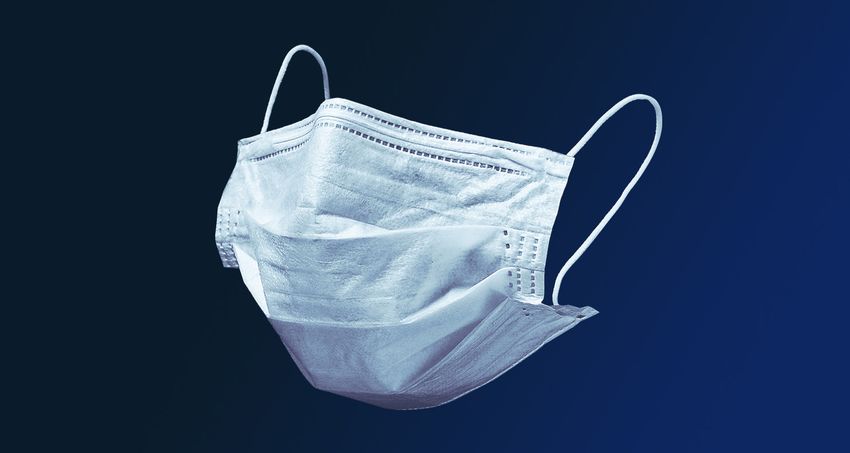
                                                                   © Snezhana Ryzhkova/Getty Images

July 2020
As shelter-in-place restrictions lift across the Furthermore, mask wearing is a behavior that may
United States, more businesses reopen, and most endure. A majority of respondents say they expect
states require face coverings in public settings,1 to wear masks nine months from now,4 and they
results from a new McKinsey survey indicate that also report a generally optimistic outlook on
US consumers are meeting the next normal with COVID-19 (Exhibit 1). Eighty-eight percent believe
their masks on.2 The use of masks and respirators is the country’s infection rate will be lower or the same
nearly universal across the country, with 97 percent in nine months, whether or not a vaccine is available,
of all respondents saying they wear a mask at least while only 12 percent of respondents believe the
once in a typical week.3 COVID-19 situation will get worse. Beyond the near-
Web
Exhibit 1
Exhibit of
respondents expect
Most respondents expectto
towear
wearmasks
masksnine
ninemonths
monthsfrom
fromnow,
now,when
whenmany
many
believe the COVID-19 infection rate will
will be
be lower.
Personal use of face coverings over time,¹ Expectations for COVID-19’s progression
% of respondents reporting at least weekly use in the US, in 9 months,² % of respondents
Currently
Better 44
In 9 months 75 (ie, a lower infection
71 rate), assuming a
vaccine is available
57 57
35 Better
33
assuming a vaccine 27
is unavailable
Same
assuming a vaccine 17
is unavailable
Worse 12
assuming a vaccine
is unavailable
N95 respirator Surgical mask Cloth mask
¹Question: Currently, what is your typical weekly usage of new personal protective equipment (PPE) (and not reused) outside work (eg, for personal use)?
²Question: Nine months from today, do you expect the COVID-19 situation to be better (ie, a lower infection rate), worse, or the same?
1
As of July 1, 2020, 35 states and the District of Columbia had implemented regulations requiring the use of masks in public settings. National
Governors Association, nga.org.
2
Between May 28 and June 8, 2020, McKinsey surveyed 1,021 respondents whose demographic profile is representative of the US population
with respect to gender, age, region, ethnicity, and household income.
3
The use of cloth face coverings in public settings is in line with guidance from the Centers for Disease Control and Prevention. “Use of Cloth
Face Coverings to Help Slow the Spread of COVID-19,” June 28, 2020, cdc.gov.
4
Respondents were asked about their COVID-19 outlook and use of personal protective equipment (PPE) in a nine-month time frame
to correspond with the potential development of a vaccine by Q1 2021. They were also asked about their use of face masks and N95 respirators
in the next three months and the next six months, and there was very little difference in rates of expected usage across the three time horizons.
2 Survey: In the US, people say their use of masks may endureconsensus on mask use and the COVID-19 outlook, use of face masks is highest among respondents
the survey results point to a few patterns in how and ages 18 to 64, particularly for medical-grade
where people are using masks. First, respondents products. Adults 65 and older, a group that the
who are male and younger in age—who are most Centers for Disease Control and Prevention has
likely to be back at the workplace, and more likely identified as one at higher risk of developing more
to have jobs that require face coverings—report serious complications from COVID-19,5 report the
higher rates of medical-grade mask use than others. least frequent overall mask use. Only 13 percent
Second, the use of cloth masks is consistently high of these respondents report wearing an N95
across geographies, though the use of medical- respirator at least once a week. By gender, men and
grade masks is more prevalent in larger cities women report similar use of both surgical and cloth
and urban areas. And third, respondents tend to masks. But 42 percent of men report wearing N95
use their preferred type of mask regardless of respirators at least once a week, compared with 26
their destination. percent of women.
Younger respondents and male respondents are
Respondents at work report higher also more likely than their counterparts to say they
overall mask use have returned to the workplace. At the time of the
While mask wearing is reported broadly, the results survey, more than one-third of all respondents
indicate some notable differences based on age and report working on-site—and those who have
gender (Exhibit 2). Across age groups, the weekly gone back to the workplace report higher use of
Web
Exhibit 2
Exhibit of
Younger and
Younger and male
male respondents
respondents report
report the
thehighest
highestuse
useofofface
facemasks,
masks,especially
especially
for those
for those that are medical grade.
medical grade.
Personal use of face masks,¹ % of respondents reporting at least weekly use
N95 Surgical Cloth
respirator mask mask
AgeN95 respirators than those who have not returned Use of cloth masks is consistent, while
(47 percent, versus 25 percent). By age, younger use of medical-grade masks varies
respondents (18- to 64-year-olds) report working between rural and urban settings and
on-site more than three times as often as respondents by region
who are 65 and older (Exhibit 3). By gender, 43 At the time of publication, 72 percent of US states
percent of male respondents have returned to had mandated the use of masks in public places
the workplace, compared with only 30 percent of (Exhibit 5)—which likely explains why the rate of
female respondents. wearing cloth masks is consistently high regardless
of respondents’ geographic location (Exhibit 6).6
Respondents report similar differences by age and
gender in their reuse of N95 respirators at home For N95 respirators and surgical masks, there are
(Exhibit 4). Those who continued to work on-site notable differences in use based on the setting.
during the pandemic also report higher overall use Respondents in larger cities, where residents are
of N95s, both on the job and for personal use, than in closer proximity, are more likely than those in
others. Of all respondents who report using N95 rural areas, the suburbs, and smaller cities to report
respirators, younger respondents (ages 18–64) are the use of medical-grade masks, especially N95
nearly three times as likely as older respondents respirators. When comparing the use of medical-
to report using the same N95 at work and at home. grade masks by region, respondents in the Midwest
By gender, 57 percent of male respondents wear report the lowest rates of wearing both surgical
the same N95 respirator at home and at work, masks and N95 respirators, while those in the
compared with 35 percent of female respondents. Northeast report the highest rates of wearing
N95 respirators.
Web
Exhibit 3
Exhibit of
Younger respondents
Younger respondents are
are more
morethan
than twice
twiceas
aslikely
likely as
astheir
their older
older counterparts
counterparts
to report working
to workingon-site.
on-site.
Rate of return to on-site work,¹ % of respondents
47 37 13
18–34 35–64 65+
¹Question: Are you physically back to work at your company site?
6
Coronavirus Policy and Guidance Documents, National Governors Association, July 1, 2020, nga.org.
4 Survey: In the US, people say their use of masks may endureWeb
Exhibit
Exhibit 4of
Younger and male respondents
Younger respondents are
aremore
morelikely
likely than others
others to
to say
saythey
theyuse
usethe
the
same
same N95 respirators at work and at home.
respirators at work and at home.
Reuse of work masks for personal purposes,¹ % of respondents
N95 Surgical Cloth
respirator mask mask
Age
18–34 54 55 49
35–64 46 42 35
+65 17 16 18
Gender
Male 57 43 38
Female 35 42 35
¹The figures above reflect the percentages of respondents who, for each type of mask, said they were using it at least once a week outside work.
Web
Exhibit
Exhibit 5of
Currently,
Currently,72
72 percent
percent of all US states require the
states require the use
useof
ofmasks
masksin
inpublic.
public.
States requiring masks in public spaces
Masked
population, 257.6
million
62.6
Mask Mask
recommended required
Source: National Governors Association, May 27, 2020, data; US Census, 2019
Survey: In the US, people say their use of masks may endure 5Web
Exhibit 6
Exhibit of
Respondents in
Respondents large US
in large US cities
cities and
and in the Northeast
in the Northeast are
are the
the most
mostlikely
likely to
to
report the
report the use
use of N95 respirators and surgical masks.
Mask use by geography, % of respondents reporting at least weekly use
Urban–rural category¹ Region¹
80 80
Cloth mask
60 60
Surgical mask
40 40
N95 respirator
20 20
0 0
Rural Towns Small Medium City Large Midwest South West Northeast
cities cities suburbs cities
¹Question: Currently, what is your typical weekly usage of new personal protective equipment (PPE) (and not reused) outside work (eg, for personal use)? The
Midwest includes Illinois, Indiana, Iowa, Kansas, Michigan, Minnesota, Missouri, Nebraska, North Dakota, Ohio, South Dakota, and Wisconsin. The South includes
Alabama, Arkansas, Delaware, the District of Columbia, Florida, Georgia, Kentucky, Louisiana, Maryland, Mississippi, North Carolina, Oklahoma, Tennessee, South
Carolina, Texas, Virginia, and West Virginia. The West includes Alaska, Arizona, California, Colorado, Hawaii, Idaho, Montana, Nevada, New Mexico, Oregon, Utah,
Washington, and Wyoming. The Northeast includes Connecticut, Maine, Massachusetts, New Hampshire, New Jersey, New York, Pennsylvania, Rhode Island,
and Vermont.
Respondents wear their preferred type Over time, individuals’ commitment
of mask wherever they go may be the biggest variable in the use
Finally, respondents report using masks in a variety of masks
of public places—and the type of mask used While the survey reveals a clear consensus on the
varies little by the destination (Exhibit 7). Whether use of face coverings at least once a week, lagging
they are going to a grocery store or pharmacy for usage in several settings suggests that some
essential errands, to an office building, or on public consumers’ initial concerns about COVID-19 may
transportation, respondents most often report the be beginning to fade. As COVID-19 continues to
use of cloth masks, followed by surgical masks and unfold, many elements will guide public opinion and
N95 respirators. For every type of mask, use is behavior: for example, government and business
the highest in enclosed spaces where people can policies about face coverings, recommendations
expect to encounter those from other households from public-health agencies, access to safe
(for example, a retail or grocery store) and lower in and effective face coverings, and the virus’s
outdoor settings or gatherings of friends. epidemiological progression. But ultimately, the US
public’s personal motivation and commitment to
mask wearing will shape how, if at all, the use of face
masks evolves in the months ahead.
6 Survey: In the US, people say their use of masks may endureWeb
7
Exhibit
Exhibit of
Respondents use
Respondents usemasks
masksininaavariety
variety of
of public
public places,
places,and
andcloth
clothmasks
masksare
areused
used
most commonly across
acrossdestinations.
destinations.
Personal use of face masks in public places,¹ % of respondents
60 60
Cloth mask
40 40
Surgical mask
20 20
N95 respirator
0 0
Grocery Retail Food Office Outdoor Public Hotels Outdoor Private Gym
stores stores services² building private³ transit public vehicle
¹Question: Choose all situations from the list below where you use each type of personal protective equipment (PPE). For each setting, respondents were able to
select all types of PPE that applied; the types of PPE that were asked about but not shown include disposable gloves, eye protection, and medical gowns.
²For example, restaurants and food pickup.
³For example, an outing or gathering with friends.
The survey content and analysis were developed by Priya Chauhan, a consultant in McKinsey’s New Jersey office;
Sonja Hellstrom, a consultant in the Washington, DC, office; and Joe Hughes and Josh Rothenberg, a senior partner
and associate partner, respectively, in the Chicago office.
They wish to thank Tony Gambell, Ryan Miller, and Anika Ranginani for their contributions to this work.
Designed by Global Editorial Services
Copyright © 2020 McKinsey & Company. All rights reserved.
Survey: In the US, people say their use of masks may endure 7You can also read


