The e&s STUDENT PERSPECTIVES ON ENGINEERING AND SCIENCE - Louisiana Tech Digital Commons
←
→
Page content transcription
If your browser does not render page correctly, please read the page content below
the e&s
STUDENT PERSPECTIVES ON ENGINEERING AND SCIENCE
                           WINTER 2022 VOLUME 65 NUMBER 1
EDITOR’S NOTE

                   EXPANSION AND IMPROVMENT
                   By Jordan Savoie, Editor E&S Magazine

                   Louisiana Tech is continuing to expand and improve.
                   Last year, the University completed construction on
                   new baseball and softball stadiums. This summer, it
                   began widening and upgrading the pathways around
                   Keeny, Howard, and Bogard Halls so that students will
                   have better access throughout the campus. Harper
                   Hall was replaced with a green space, Cottingham
                   and Richardson were replaced with new buildings,
                   Mitchell has been torn down, and more buildings are
                   springing up around campus.

                   The ongoing changes on campus are highlighted by
                   the sculpture featured on our cover. Aspire, raised
                   last quarter between Keeny Hall and the College of
                   Business Building, is a symbol of Tech’s 21st Century
                   Campus project to make campus greener, more
                   walkable, and more modern. Campus is buzzing with
                   rumors of what’s next.

                   If you’re attentive, you’ll notice that many of the
                   writers in this issue have graduated. That’s because
                   most of this was written over the last couple years
                   under our last editor, Katie McKenzie. We’ll give her a
                   more proper farewell in the spring issue.

                   This was my first magazine as editor. I had a lot of fun
                   putting this together with everyone, and we all hope
                   you will enjoy reading it.

                i | E&S Magazine
CONTENTS        the e&s
                STUDENT PERSPECTIVES ON ENGINEERING AND SCIENCE

                  IN THIS ISSUE                 11                                                          THE E&S MAGAZINE
                                                                                                            P.O. BOX 10348
                                                                                                            RUSTON, LA 71272
           1.     STUDENT SPOTLIGHTS
                  Learn about Civil Engineering alumnae Sydney Bratton and Biomedical and Cyber
                                                                                                            QUESTIONS OR COMMENTS
                  Engineering alumnus Logan McCarthy.
                                                                                                            theengineer@latech.edu

           3.     FACULTY SPOTLIGHT                                                                         EDITOR
                                                                                                            Jordan Savoie
                  Learn about Mathematics and Statistics Professor Dr. Galen Turner, Computer Science
                  Lecturer Dr. Andrey Timofeyev, and Mechanical Engineering Program Chair and Associate     ASSISTANT EDITORS
                  Professor Dr. Kelly Crittenden.
                                                                                                            Behram Dossabhoy
           6.     FAREWELL TO EVA                                                                           Joshua Iselin
                  Eva Dickenson graduated last spring, leaving behind a legacy of relatable COES comics;    Juno Stroderd
                  we’ll miss her bright personality.                                                        Megan Ward
                                                                                                            Jacob Christ
           7.     TOYOTA’S WOVEN CITY                                                                       Katie McKenzie
                  Toyota broke ground on Woven City, a city of the future in early 2021. It will be         Austin Harvey
                  based in Japanese tradition, nature, walkability, and the latest technology.
                                                                                                            STAFF WRITERS
           9.     HISTORICAL SPOTLIGHT                                                                      Eva Dickenson
                  Leonhard Euler was one of the most prolific and influential mathematicians to live. His   Lauren Fogg
                  work has shaped many fields and continues to be relevant to this day.                     Elizabeth Kibodeaux
                                                                                                            Matt Marton
           10. MODERN BIOGRAPHY
                  Best known for the MINX operating system, Andrew Stuart Tanenbaum is a Dutch-             CONTRIBUTING EDITORS
                  American computer scientist whose work primarily focuses on operating systems.            Brandy McKnight
                                                                                                            Charlotte Wilkerson

           11. STARS, SATELLITES, AND SPACEX                                                                GRAPHIC DESIGNER
                  SpaceX and other major corporations are planning for large satellite fleets, which        Estevan Garcia
                  pose a problem to ground-based astronomy.
                                                                                                            FACULTY ADVISOR
                                                                                                            Dr. Hisham Hegab
           13. ENGINEERING MARVEL                                                                           Dean
                  The Eshima Ohashi Bridge rises high above the Nakaumi lake in Japan.                      College of Engineering and Science

           15. ENGINEERING OOPS
                  A welcome center for a small Louisiana town nearly met an unfortunate fate after
                  structural engineers failed to consider all the safety precautions for building on a
                  swamp.

           17. CAN YA DIG IT?
                  Humans have desired to dig through the Earth’s crust into the mantle for a long time.
                  Learn of past endeavors and future plans for such digs.

           19. HISTORY ARCHIVE
                  Tech’s first electronic computer in 1956 represented numbers with analog signals.

           21. COMICS
                  From the archive: Just your typical engineering professor.

           22. STUDENT ORGANIZATIONS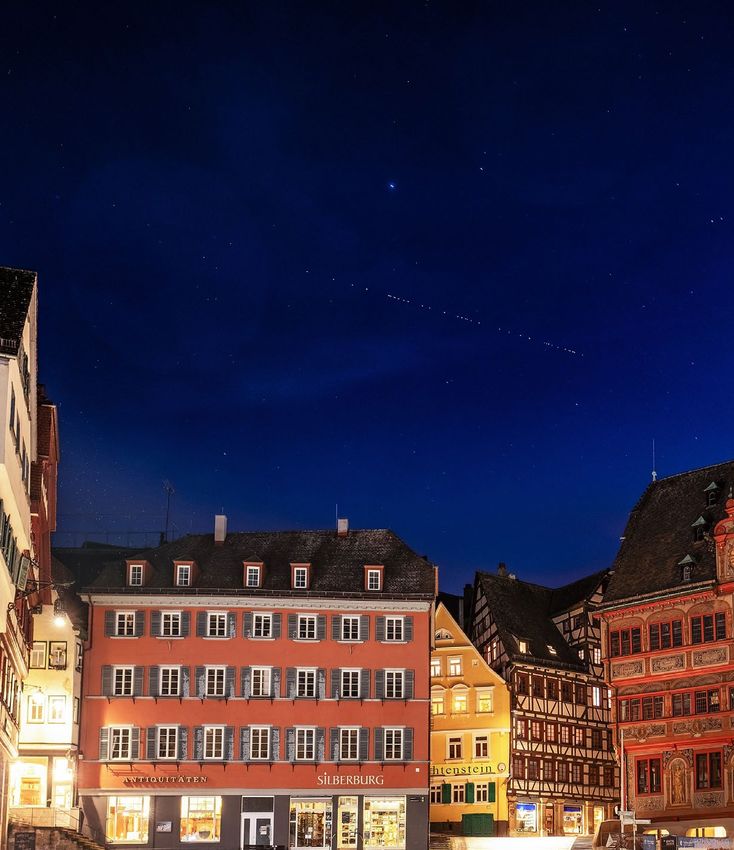
STUDENT SPOTLIGHT
SYDNEY BRATTON
By Megan Ward, Biochemistry ‘21

Sydney Bratton attended Bryant High School in her hometown         Department of Transportation. While she did not necessarily
of Bryant, Arkansas. Knowing she wanted to go out-of-state         do engineering design work, she got to see the application of
for college, she took a tour of Louisiana Tech University and      civil engineering at the construction site of a bridge. In 2020,
instantly fell in love with the campus, community, and all that    Sydney interned for the Crow Group in Morrilton, Arkansas.
Ruston has to offer.                                               The hour-long commute was worth being able to see the
                                                                   design aspect of engineering. She worked on a sewer system
While Sydney was certain about pursuing engineering, she           improvement project and explored environmental and water
could not decide between chemical or civil engineering. She        engineering.
originally declared chemical engineering as her major, however
as the fall quarter of her freshman year progressed, Sydney        Since graduation, Sydney has worked at Halff Associates in
became more interested in civil engineering and joined the         San Antonio, Texas, as part of their water resources team.
Concrete Canoe team. Toward the end of the quarter, she            Through ASCE, she was able to meet with employees and
decided civil engineering was the field for her. When she          learn about the company’s culture. When asked about her
began the process of changing her major, she realized the          plans for ten years from now, Sydney responded with, “A lot
system already had her listed as a civil engineering major and     can change in a decade. Ultimately, I want to look back and be
took it as a sign she had made the right choice. This decision     excited to see the progress that’s happened.”
has borne out because she loved her classes and professors.
                                                                   Most of her free time at Tech was devoted to organizations,
Through her time at Louisiana Tech, Sydney participated in         but she tried to be intentional and spend as much time with
various organizations. She was president of American Society       friends as possible. She enjoys various sitcoms, such as Parks
of Civil Engineers (ASCE) and Civil Engineering Honor Society,     and Recreation, Brooklyn 99, New Girl, and The Office. While
Chi Epsilon. Additionally, she was a student recruiter, College    quarantine presented challenges, she made it through and
of Engineering and Science ambassador, and a member of             rekindled her love for books. Her favorite book is Where the
the Engineering and Science Association Freshman Council.          Crawdads Sing.
Sydney was also a member of the Kappa Delta Sorority
and led a small group at the Bridge Community Church. Her
involvement allowed her to network, develop leadership skills,
and embrace the community aspect of Louisiana Tech.

During her last two summers at Tech, Sydney completed two
internships. In 2019, she worked in Little Rock for the Arkansas

        1 | E&S Magazine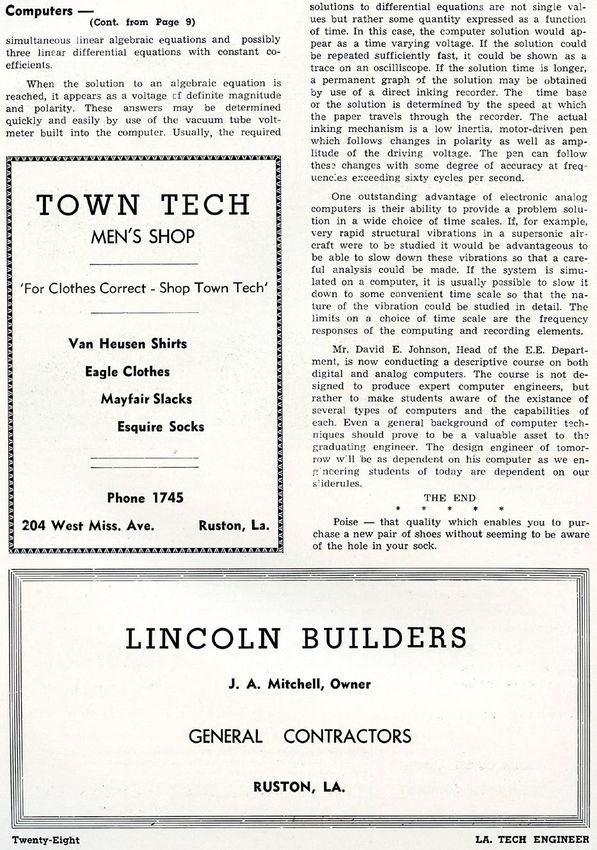
STUDENT SPOTLIGHT
LOGAN MCCARTHY
By Josh Iselin, Cyber Engineering ‘23

How many majors is too many? Logan McCarthy, now in his              On the extracurricular side, Logan was the vice president of
fifth year at Louisiana Tech University, will graduate with a        the Development of Interdisciplinary Research Club, was the
double major in cyber engineering and biomedical engineering.        president of the Biomedical Engineering Society, and became
                                                                     a member of Alpha Eta Mu Beta—the biomedical engineering
Logan graduated from Walker High School in May of 2012               honor society.
and—two weeks after graduation—enlisted in the U.S. Navy.
After spending four years in the service, he chose to pursue an      Once he graduates, Logan has his sights on… nothing! At least
undergraduate degree with his GI Bill benefits, so why not get       for a while. After five strenuous years of engineering, he intends
his money’s worth with two majors?                                   on briefly taking on a 9-to-5 job to relax and pay off some debt.
                                                                     When the interlude ends, Logan wants to become the next
While Logan could have attended a larger, more well-known            Elon Musk. With his passion for neurology and his experience
university, he felt attending a large school would have made         in biomedical engineering, Logan wants to help create the next
him “just a statistic” to his classmates and professors, rather      medical breakthroughs, such as the production of affordable
than a student they could know. For that reason, he chose to         vaccines and mapping of the brain to help cure neurological
attend Louisiana Tech.                                               diseases like Alzheimer’s.

Following the advice of a friend, Logan switched majors after        For all the future engineers and students, Logan says his
his first month at Tech and chose to pursue a double major in        biggest piece of advice is not to rush things and to know your
electrical engineering and biomedical engineering—the latter         limits. Over the years, he’s seen numerous engineers who
due to his love for neurology and “anything having to do with        overworked themselves pursuing a degree for which they had
the brain.”                                                          no passion. While a four-year degree is the most ideal path,
                                                                     plenty of engineers have spent more than five years working
While he was in the first-year engineering Living with the Lab       on their undergraduate degree.
series, he fell in love with programming and quickly traded
electrical for cyber engineering. At one point, he attempted to      While you have the time, there is no serious harm in taking
triple major with computer science as well.                          your time and dipping your toes into a new subject. Try that
                                                                     other major. Try another major. Perhaps you’ll stumble upon
Of the classes Logan has taken, his favorite was one on artificial   your true passion.
intelligence—which makes sense given his two majors. Despite
being one of the hardest courses he has taken, Logan sees it
as one of the most essential going forward with its increasing
presence in engineering and computer science and inherent
relation to neurology.

                                                                                            theengineer.latech.edu | 2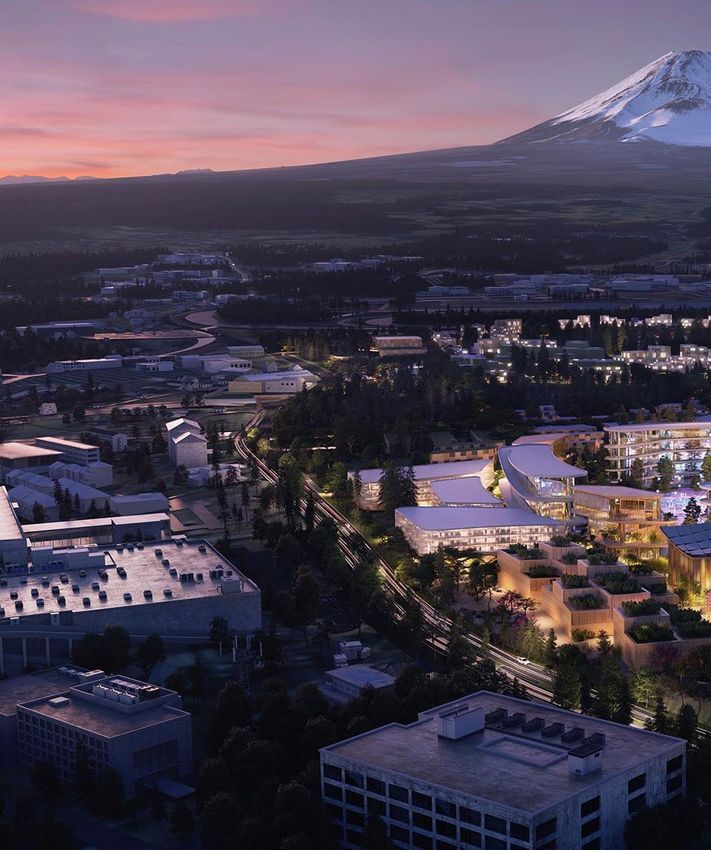
FACULTY SPOTLIGHT
DR. KELLY CRITTENDEN
By Eva Dickenson, Mechanical Engineering ‘20

The E&S Magazine is honored to feature Dr. Kelly Crittenden,    One of his students might print a zany figure found on a site
associate professor and chair of mechanical engineering at      such as Thingiverse, and the next day they might print practical
Louisiana Tech.                                                 and useful parts that make their engineering projects easier.

Dr. Crittenden grew up in a rural community called Oak Hill     Additionally, Dr. Crittenden teaches a multidisciplinary
near Many, Louisiana. Even before college, he was no stranger   capstone design course with Debbie Inman from the College
to fixing things—having helped his father restore cars in his   of Business. In this course, engineering students work with
spare time. In 1992, he began attending college right here      business students to form startup companies. The class counts
at Louisiana Tech and received his bachelor’s and doctoral      as credit for the senior project capstone for the engineering
degrees from the University. Soon after graduating in 2001,     students, who develop a product for the team to sell. These
he accepted a teaching position at Tech.                        teams go on to participate in the New Venture Championship
                                                                on campus, present their products at the College’s Senior
When asked what he likes most about Tech, Dr. Crittenden        Projects Conference, and even sometimes go on to develop
explained that he appreciates the modest size of Tech’s         startups outside of college. Dr. Crittenden works closely
campus and student body. The school is small enough to allow    with these students to develop, critique, and encourage the
him to offer unique and interesting engineering courses—and     engineering side of their projects. For example, he assists
large enough to have a good number of students who want to      students in creating engineering documents for the product to
sign up for these courses.                                      qualify for a U.S. patent. Students come out of this course with
                                                                an entrepreneurial spirit and a passion for their work.
Dr. Crittenden helps develop STEM (science, technology,
engineering, and mathematics) courses on campus. He             Outside of teaching, Dr. Crittenden is a family man. He enjoys
is a versatile professor, and despite his degrees being in      spending time with and being there for his two sons. He also
biomedical engineering, Dr. Crittenden has taught classes       helps his wife, Amy, with the children’s choir at First Baptist
ranging from introductory cyber engineering to upper-level      Ruston, where he is an active member. He also plays the guitar
mechanical engineering such as Basic Measurements and           for the early church service. His personal motto comes from
Machine Element Design. He also teaches a mechanical            his mother: “Nothing lasts forever, so enjoy the good things
engineering elective, Additive Fabrication Methods, in which    and don’t spend too much time on the bad things.”
he shows students how to 3D-print. Dr. Crittenden encourages
students in this course to independently explore their own
interests in 3D-printing, often using their own machines.

        3 | E&S Magazine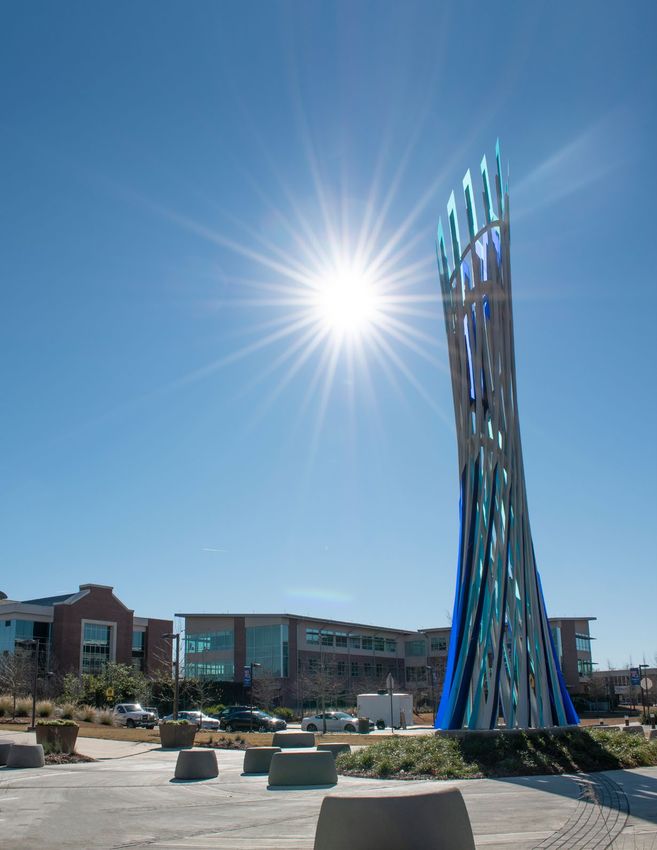
FACULTY SPOTLIGHT
DR. GALEN TURNER
By Jordan Savoie, Electrical Engineering and Mathematics ‘23

 Dr. Galen Turner was born in California, but since his father
 was in the military, he didn’t spend his childhood in any one
 place for long. By the time he was four, his family moved to
 Beeville, Texas; at ten, he moved to Marietta, Georgia; and
 in his first year of high school, his family moved to Belle
 Chasse, Louisiana. He graduated with a BS in Mathematics
 and Religious Studies from Loyola University in New Orleans.
 While earning his master’s degree at Louisiana State
 University (LSU), he “tried on” teaching and learned he liked
 it. In his fourth semester, he found a research area that
 excited him: graph theory. He stayed at LSU and earned a
 doctoral degree in mathematics while continuing to teach.
 After a stint at Stephen F. Austin State University in Texas, he
 came to Louisiana Tech in 2001.

 Dr. Turner mostly teaches math—everything from first-
 year college algebra and calculus to graduate courses in
 graph theory and cryptography. Recently, though, he taught
 something seemingly out of left field: Biblical Hebrew. A couple
 of years ago, a student in his bible study group asked about
 the names in the Book of Ruth and what they really mean—
 “Did someone really name their sons Weak and Failing?” This
 piqued his interest, so he translated the short book, paying
 attention to what the names meant. Eventually, word of this        programs and has been the senior investigator on numerous
 spread to Dr. Ernest Rufleth, director of Tech’s School of         projects funded by departments and institutions within the
 Literature and Language, and he asked Dr. Turner to teach an       U.S. government: the National Science Foundation, National
 honors Biblical Hebrew class. Despite the misfortune of the        Security Agency, Department of Education, Department of
 first class happening during the quarantine quarter—Spring         Homeland Security, and Air Force.
 Quarter 2020—it worked well, and he hopes to offer it again
 and a similar class focusing on the Book of Psalms later.          He’s recently toyed with the idea of developing an encryption
                                                                    protocol using graph theory. Encryption is based on having a
 In contrast to the ‘definition, theorem, example, repeat’          problem that is easy to put together but hard to take apart. This
 routine most professors employ, Dr. Turner always starts           asymmetry makes tampering with encrypted data practically
 with a problem and has his students reason their way to an         impossible and is essential to a secure internet. The problem
 answer—or at least an attempt at one. This flips the script        he is considering using is the travelling salesperson problem,
 on its head. Instead of problems existing to justify teaching      usually stated as “What is the most efficient route through
 us this math, we develop this math so we can do something          each of a list of cities, while only going through each once, and
 about these problems. Even in his Biblical Hebrew class, he        returning to the start?” Trying to compute this is tiring just for
 asked the students to bring a short Old Testament passage          several stops, and it quickly becomes more grueling the more
 which they would translate by the end of the course. Instead       you add. Now of course, why should we care about developing
 of going through the sentence structure, conjugations, cases,      new encryption methods when we have perfectly good ones?
 and vocabulary of the language without ever working with a         Well, there’s no reason that many of our hard problems will
 sample longer than a few sentences, the class focused on           be hard forever. In fact, we already know that most modern
 understanding the text of the Old Testament—which I suppose        cryptographic schemes will be rendered obsolete by quantum
 is the main reason to learn Biblical Hebrew if you’re not a        computers.
 linguist studying Semitic languages.
                                                                    Dr. Turner is active at Temple Baptist Church in the College
 Although Dr. Turner likes teaching, the reason he pursued a        Ministry and spends his free time with friends, colleagues,
 career in higher education was to chase the thrill of conducting   and family.
 research. He is working with several PhD students in the
 Computational Analysis and Modeling and the Engineering

                                                                                           theengineer.latech.edu | 4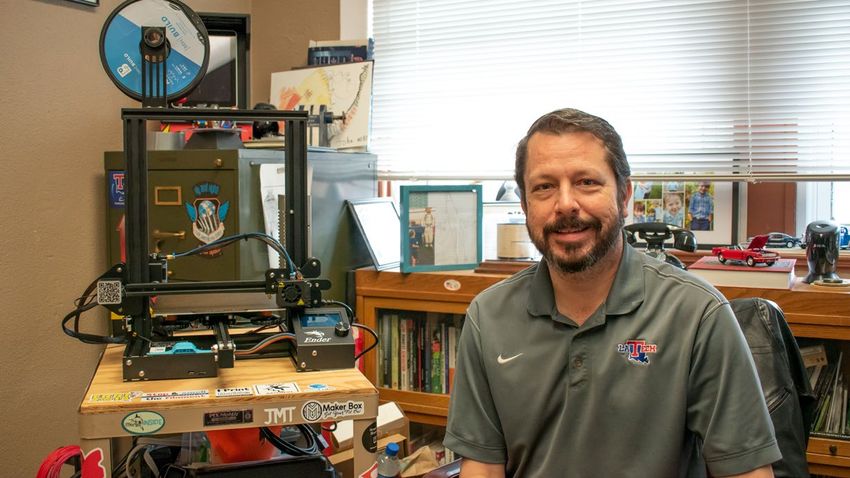
At Louisiana Tech, Dr. Timofeyev studied the application of
                                                                   data science and machine learning for his doctoral degree.
                                                                   While working in the program, he also provided IT support
                                                                   for several College of Engineering and Science programs
                                                                   and developed websites for others. He didn’t shy away from
                                                                   gaining corporate experience during his graduate studies,
                                                                   putting aside time to work an internship at FNC Inc. followed
                                                                   by a research co-op at Monsanto, both of which involved
                                                                   working with data analysis. Soon after graduating with his
                                                                   master’s degree (in mathematics) and his PhD. Dr. Timofeyev
                                                                   was officially hired as a lecturer of computer science at
                                                                   Louisiana Tech.

                                                                   The best thing about the University, according to Dr. Timofeyev,
                                                                   is the people—both faculty and students. To him, teaching
                                                                   at Louisiana Tech is a blessing because of the material that
                                                                   he’s able to work with, as well as the students he’s able to
                                                                   teach. He sees new ideas sparking from discussions and
                                                                   lectures he has with his students in class. Nevertheless,
                                                                   Dr. Timofeyev tries to keep his classes fun and engaging,
                                                                   integrating humor into his lectures and assignments to keep
                                                                   students interested and engaged in the class.

                                                                   While he is now a former international student at Tech, Dr.
                                                                   Timofeyev still considers himself an international student of
                                                                   the United States. During breaks, he enjoys traveling around
FACULTY SPOTLIGHT                                                  the country with his wife, visiting cities and states that
DR. ANDREY TIMOFEYEV                                               neither of them has visited before. However, his favorite food
By Josh Iselin, Cyber Engineering ‘23                              remains Russian dumplings, like Pelmeni, from back home.

Colloquially named “Dr. Timo” by his students, Dr. Andrey          For students pursing degrees in computer science or
Timofeyev is a lecturer in the Computer Science program at         engineering, Dr. Timofeyev’s advice is to be persistent in all
Louisiana Tech University. One of the newest lecturers in the      things, and above all else, to be persistent with managing
College of Engineering and Science, he joined Louisiana Tech       time. Engineering and computer science programs are
as a faculty member in 2018 immediately after earning a PhD        difficult, but any issue can be solved so long as you have the
in Computational Analysis and Modeling from the University.        time to do it. Beyond this, as long as you prioritize tasks every
                                                                   day, it’s possible to work it all out in the end.
The son of Russian parents, Dr. Timofeyev was born and
raised in Kazakhstan and is a native Russian speaker. His          To quote his favorite proverb: “Do the right thing the first
appreciation for technology stems from his childhood. His          time.”
parents bought their first computer when he was in the first
grade. The computer, which ran an early version of Microsoft
Windows, and technology as a whole became a central part
of his family’s house and his life, giving him the drive and the
interest to pursue a degree in computer science.

Dr. Timofeyev graduated from Karaganda State University in
Karaganda, Kazakhstan, in 2011 with a bachelor’s degree in
computer science. He was initially unsure of what he wanted
to do after his graduation. However, after living in the United
States for work and travel, he decided that he wanted to work
in the United States. Additionally, after learning about his
university’s partnership with Louisiana Tech, he decided to
apply for Tech’s doctoral program in Computational Analysis
and Modeling and was accepted.

    5 | E&S Magazine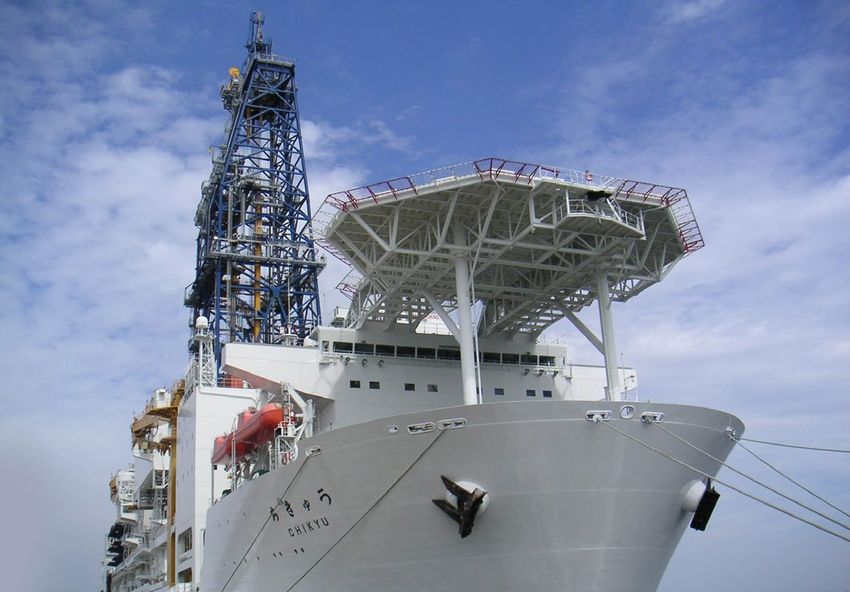
do art commissions. But she was able to learn about other
                                                                 majors. For example, Eva worked as an intern for Louisiana
                                                                 Sugar Refining in St. James Parish where she appreciated how
                                                                 many different people with different majors could apply their
                                                                 distinct talents to produce good and efficient work.

                                                                 If Eva could have her absolute dream job, she would join an
                                                                 animation company. As far as engineering, she was open to
                                                                 anything that allows her to be creative, especially if it involves
                                                                 3-D modeling. She landed a paid training program as a
                                                                 Software Developer Trainee at Genesis10, a highly selective
                                                                 training program for information technology and innovation
                                                                 professionals.

                                                                 Eva kept us entertained the last few years with her original
                                                                 and relatable COES comics, and it was hard to see her go.
                                                                 Over the years, she highlighted the struggles of engineering
                                                                 and science students with hilarious commentary. We wish her
                                                                 luck in everything she decides to do, though we doubt she will
                                                                 need it!

                                                                 She left us with one of her favorite quotes: “The suspense is
                                                                 terrible; I hope it’ll last.” –Willy Wonka.

SENIOR FAREWELL
EVA DICKENSON
By Elizabeth Kibodeaux, Biomedical Engineering ‘21

In this issue, we say goodbye to the magazine’s comic
artist, Eva Dickenson, who was with the magazine from her
freshman year until she graduated last spring.

STEM (science, technology, engineering, and mathematics)
and art are typically seen as subjects that are worlds apart—
what does color theory have to do with spherical coordinates?
Perhaps that was a bad example because the answer to
that question is ‘not much.’ However, Eva is not discouraged
by the wall separating these two subjects. Born in Baton
Rouge, Louisiana, Eva was inspired by her father’s career
in engineering, her own proficiency in art and math, and a
desire to enter a career that would allow her to create. These
factors influenced her to enter Louisiana Tech’s Mechanical
Engineering program.

While traditional art—simple pencil and paper—is her
preferred style, she does not mind working in digital media                One of Eva’s last comics, made with her brother Daniel
for professional pieces. That being said, engineering kept her
busy for much of her time at Louisiana Tech and unable to

                                                                                         theengineer.latech.edu | 6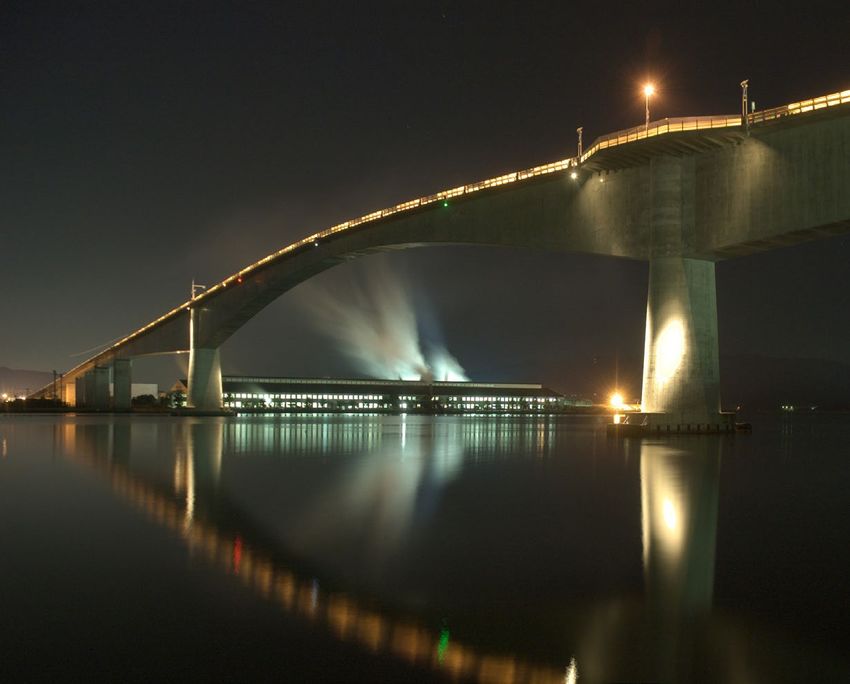
TOYOTA’S WOVEN CITY
By Jordan Savoie, Electrical Engineering and Mathematics ‘23

        7 | E&S Magazine
At the 2020 Consumer Electronics Show in Las Vegas, to be used for purposes ranging from transportation to food
Toyota unveiled its plans for a new city at the base of Mt. trucks), micro palettes, a dog-sized robot for deliveries, and
Fuji. Designed by the American-Danish architecture firm BIG the LQ—a electric car with an AI capable of building a bond
(Bjarke Ingels Group), the project will implement many of the with its driver. These are still in development, and it’s not
ideas floating in futurist and urbanist circles. Specifically, the clear how they will mature—though Toyota does seem serious
city will be a laboratory to see how society might reshape about these, as they’ve already partnered with companies
itself around automation, the environment, new energy who might use them.
sources, and human health and mobility. Toyota invites
other institutions to partner with it as well as individual This might remind some people of Disney’s original plans
researchers interested in the project. Construction began for EPCOT, the Experimental Prototype City of Tomorrow.
in early 2021. It would have been a partnership between Disney and
major corporations, where Disney could correct everything
To minimize unnecessary carbon emissions, the buildings he thought was wrong with the design of cities, and the
will be built largely utilizing traditional Japanese carpentry— corporations would have a large pool of testers for their
joining wood without the use of nails or screws—and products. The idea—make an urban center from scratch,
solar cells on their roofs will provide electricity. Advanced attract corporate partners and investors to fund it and make
automation will be integrated into the homes with AI that will it habitable, and convince the public to go and actually
learn to adapt itself to its inhabitants; for some members live there—only seemed possible to Disney. At that time, it
of the community, this will even include the Toyota Human probably would have only been possible for Disney. Sadly,
Support Robot. These buildings will be placed in a superblock he was unable to implement anything beyond plans and a
structure, with fast-traveling vehicles allowed only on the documentary before his death in 1966 due to complications
outer roads of each block. Within these blocks, vehicles will from lung cancer.
be permitted to move slowly among pedestrians in mixed
streets, but the innermost areas will be pedestrian-only In many ways, the vision for this city of the future differs greatly
pathways. The grid will be distorted, curving the streets to from Disney’s. EPCOT would have been a high-rise business
fit the major community spaces within each block as well as district surrounded by a park-filled green belt through which
make them less car-friendly. people commuted by monorail and PeopleMover from
residential areas on the perimeter. This is a much more
The transportation needs of the city will be served by a fleet regimented and segregated idea than the Woven City, where
of autonomous vehicles manufactured by Toyota. These will homes, places of work, and parks will intermingle. Indeed,
include e-Palettes (mobile platforms which Toyota intends Toyota’s project is similar to pre-car city planning with
modern technology and sustainability measures tacked on.
The concept dives straight toward the natural conclusion
of decreasing car dependence that many cities have been
cultivating over the last thirty years. Because of this, Toyota’s
project seems more likely to succeed than EPCOT ever did.
theengineer.latech.edu | 8a full member of the academy, Euler also worked as a medical
lieutenant in the Russian navy until he became a professor
of physics in 1730. Three years later, Bernoulli would return
to Basel, letting Euler take his place as the senior chair of
mathematics. He soon married Katharina Gsell and would have
thirteen children with her, five of which survived infancy.
Changes in Russian politics put pressure on foreign academics,
so in 1741, Euler relocated to Berlin at the request of Frederick
the Great—though he kept his connections with the academy.
Now the director of mathematics at the Berlin Academy of
Sciences, he supervised many of its projects and facilities,
served on the library and publication committee, was a
government advisor, and maintained an impressive scientific
output, writing around 380 articles as well as books on
calculus, physics, shipbuilding, navigation, and astronomy. In
1759 the president of the academy died, and Euler assumed its
leadership. Euler, however, had lost his favor with Frederick and
found the academy increasingly hostile to him. Euler returned
to St. Petersburg in 1766, greatly angering Frederick. Soon
after, he lost most of his already dimmed eyesight. Despite this,
he produced nearly half his works in this period. Of course, he
did this with the help of collaborators with whom he discussed
and developed his ideas, which they wrote down. Euler died
HISTORICAL BIOGRAPHY in 1783, and St. Petersburg Academy continued to publish his
LEONHARD EULER works for nearly fifty more years.
By Jordan Savoie, Electrical Engineering and Mathematics ‘23
Most people who have studied math and science in their
academic career have, at the very least, heard of Euler
(pronounced “Oiler”). They might recognize Euler’s number,
Euler’s method, the Cauchy-Euler equations, Euler-Bernoulli
beam theory, or maybe even Euler’s formulas. Wikipedia’s
list of things named after Leonhard Euler has over sixty-five
distinct items, ranging from calculus to geometry to physics
to music. Hailed as one of the greatest mathematicians of
the eighteenth century, he shaped the course of math and
science for centuries to come.
Leonhard Euler was born in 1707 in Basel, Switzerland, to How would you cross all seven of these bridges only once? Is it even possible?
Euler’s solution to this led to the invention of the entire field of topology in
Paul Euler III, a minister, and Marguerite Euler. While at the mathematics.
University of Basel, he studied mathematics under Johann
Bernoulli’s guidance, even though—at that point—he was Euler’s work in mathematics was varied and prolific. The books
planning to enter the ministry. He completed his studies he wrote set standards and introduced concepts and notations
in philosophy in 1723 and began to study theology that that are vital to us today: i (the square root of -1), e (the base of
fall, though he could not find passion in the subject. With a logarithm), f(x) (a function), and the well-known π, and many
Bernoulli’s help, he convinced his father to let him pursue other notations. He also solved many problems such as the
mathematics, completing his studies at the university in Basel problem (1+1/22+1/32…=π2/6), the Seven Bridges of
1726. Königsberg, and many others. Without his work, it is difficult to
know where we would be today.
He was offered a position at the St. Petersburg Academy of
Sciences as a teacher of physics with regard to medicine, but
he waited to accept it until well into the next year because
he was waiting for a position in Basel. By the time he arrived
in 1727, Daniel Bernoulli (Johann’s younger brother) and
Christian Goldbach had secured a position for him in the
Academy’s division of mathematics and physics. Not being
9 | E&S Magazineand reliability than other operating systems—such as Linux—
which was built on a monolithic kernel. Most modern kernels
use a hybrid design, including some elements of microkernels
without going as far as they would. Back when it was first
released, MINIX was cheaper than many UNIX-based operating
systems, making it popular among students, hobbyists, and
developers. However, because of its original proprietary
licensing, it would be overshadowed by operating systems
released under free licenses. Now, MINIX has changed its
direction in development. The third revision of MINIX supports
low-end, low-resource devices, while focusing on security,
reliability, and mobility.
Tanenbaum worked on smaller projects, too, such as:
• The Amsterdam Compiler Kit: a toolkit developed for
producing portable compilers,
• Amoeba: a distributed operating system developed as a
timesharing system that allows a single user to interact
with an entire network of computers that all show up as a
single machine,
• Globe: a wide-area operating system, and
• Electoral-Vote.com: A website that analyzes opinion polls
for national U.S. elections to predict the outcomes. The
MODERN BIOGRAPHY website is still functional and is running for the 2022
midterm elections.
ANDREW STUART TANENBAUM
By Behram Dossabhoy, Computer Science ‘21
During his time at VU Amsterdam, Tanenbaum hosted several
doctoral and master’s degree students, many of whom have
Andrew Stuart Tanenbaum was born to Jewish parents in
gone on to make their mark on the computing world. Former
New York City on March 16, 1944, and grew up in nearby
students include Werner Vogels, Amazon’s Chief Technology
White Plains, New York. He graduated from White Plains High
Officer and Leendert van Doom, a distinguished engineer at
School in 1961 and went on to receive his bachelor’s degree
Microsoft. He was also the first dean of the Advanced School
in physics at the Massachusetts Institute of Technology in
for Computing and Imaging (ASCI) in the Netherlands, which
1965. He then received his doctoral degree in astrophysics
he helped cofound in the early 1990s. ASCI was an endeavor
from the University of California at Berkley in 1971 with a
spearheaded by the Dutch government to help connect
dissertation titled A Study of the Five-Minute Oscillations,
multiple research-oriented universities to work on problems in
Supergranulation, and Related Phenomena in the Solar
the field of advanced computer systems.
Atmosphere. After finishing his education, Tanenbaum
moved to the Netherlands with his Dutch wife where he
Tanenbaum is a fellow of the Association of Computing
taught computer science courses (namely those focused
Machinery (ACM), a fellow of the Institute of Electrical and
on operating systems) at Vrije Universiteit Amsterdam
Electronics Engineers, and a member of the Royal Netherlands
(VU Amsterdam) until he retired in 2014.
Academy of Arts and Sciences. He has also garnered thirty-
one awards, the most recent being the Lifetime Achievement
Tanenbaum is best known for his MINIX, or mini-Unix,
Award from European chapter of the ACM Special Interest
operating system. He single-handedly developed MINIX in
Group on Operating Systems, which he received in 2015.
1987 to supplement his textbook, Operating Systems: Design
and Implementation, to teach his students how operating
systems work. AT&T forbade the teaching and instruction of
the UNIX internals—claiming that UNIX was its intellectual
property—so developing his own version of the operating
system for teaching made sense, as free operating systems
weren’t common then.
In addition to teaching, he developed MINIX to challenge
how operating systems were built. Since MINIX was built on
an unconventional microkernel, it provided better security
theengineer.latech.edu | 10STARS, SATELLITES,
AND SPACEX
By Matthew Marton, Mechanical Engineer ‘21
A Starlink constellation over city hall in Tübingen, Germany. Dktue on Wikimedia Commons.
11 | E&S MagazineOn August 16, 1858, the first transatlantic telegram was sent. Commercial expansion in space is inevitable and something
Suddenly, the speed of global communication diminished from that governments, scientists, and companies will have to
weeks or days to minutes. The story of global communication compromise on. With hundreds of space missions planned
is the story of humankind. What began with horse riders over the coming decades from dozens of countries and
charging across the Eurasian Steppe has reached a peak with companies, the satellite issue is merely the tip of the iceberg.
the world wide web. However, this progression has not been What the public sees now reflects a growing problem of space
equal across the planet. Many places still have limited or no debris that has no easy solution. Hopefully with thousands of
internet access. In recent years, work has started on several engineers working on the challenge, society will see a solution
projects to provide low-cost, high-speed internet to every part soon.
of the globe. SpaceX’s Starlink is the highest profile and most
successful of these attempts. The goal of the project is to
launch thousands of small satellites that will provide internet
to the most remote places.
Elon Musk began the endeavor as a way to raise money for
SpaceX’s Mars missions. While this is still the stated goal,
outside investors have begun to support the project to fully
connect the planet. The growth of the project has led to
a standoff between the company and the astronomical
community as Starlink has come under scrutiny for the
satellites’ potential impacts on astronomy. Satellites are made
of shiny materials that are excellent reflectors of sunlight. The
International Space Station demonstrates this perfectly since
it can be seen racing across the sky on a clear night. Most
commercial satellites are coated with anti-reflective paint or
have predictable orbits. However, this was not the case for
the initial batch of Starlink satellites that were deployed.
Not only were they highly reflective, they also had on-board
programming that would reposition them based on the need
to provide internet coverage. This meant that their flight paths
were unpredictable even to SpaceX. Astronomers could not An image from the Blanco 4-meter telescope Cerro Tololo Inter-American
Observatory in Chile. The five-and-a-half minute exposure shows many
plan for the satellites crossing the paths of their telescopes
streaks from the second batch of Starlink satellites launched in November
and interrupting research. As the long-term goal of launching 2019.
thousands of these satellites became public knowledge,
scientists panicked. Such a large number of satellites would
mean that these objects would eventually outnumber the stars
in the sky, all but ruining ground-based space observations.
Unsurprisingly, this is not the first time in the history
of astronomy and communication that the two areas
have come into conflict. Harvey Liszt, a radio astronomy
specialist, explained in The Atlantic that the same problem
occurred with the advent of GPS in the 1970s. “Without
very strict regulation, it’s all too easy for users of the radio
spectrum to spill over into each other’s spectrum,” said
Liszt. Eventually, the U.S. government and the International
Telecommunication Union stepped in to help regulate the
distribution of the radio spectrum around the world. While
the Federal Communications Commission has to approve
the launch of the satellites, it holds no power over what the
satellites do after they are in space. This problem requires a
solution because other major companies, like Amazon, have
committed to deploying thousands of satellites over the next
decade to provide internet.
theengineer.latech.edu | 12ENGINEERING MARVEL
THE ESHIMA OHASHI BRIDGE
By Katie McKenzie, Biomedical Engineering '21
The Eshima Ohashi Bridge rises like a rollercoaster over the Nakaumi lake, connecting Matsue and Sakaiminato in Japan.
In a world where amphibious cars are not available on the When construction finished in 2004, the bridge crossed
mass market, humankind still relies on bridges to cross non- Lake Nakaumi and connected the cities of Matsue and
oceanic bodies of water. When civilizations first started growing Sakaiminato which are in Shimane Prefecture and Tottori
in Mesopotamia, bridges became the go-to aid for crossing Prefecture, respectively. Often called the Rollercoaster Bridge,
obstacles like rivers. The ancient Romans revolutionized because when looking at the incline from the road before the
bridge building when they learned that ground-up volcanic bridge, it appears as if cars are traveling to the precipice of
rock makes great mortar. After that discovery, the Romans a rollercoaster drop before disappearing over the edge. The
were able to build better structures than ever before. Their bridge spans roughly a mile and was designed, at forty-four
discovery of arches allowed them to build lighter bridges able meters tall, to ensure that ships could pass beneath it.
to support heavier loads. Yet, after the fall of Rome, the growth
of bridge architecture slowed. Growth rates were renewed As one of the largest fishing towns in Japan, Sakaiminato is
with the use of rope suspension and cast iron as construction famous for tuna and crabs and boasts some of the largest
methods. Then, when iron lacked the tensile strength desired, annual hauls of seafood in the nation. When the drawbridge
the use of steel rose to prominence. It was during this era of was in use, it was extremely inconvenient for car travelers, as a
revolutionary architecture that the Eshima Ohashi Bridge in multitude of ships passed to and from the port every day. The
Western Japan was conceived. Eshima Ohashi replaced a drawbridge that would halt traffic
every time a ship needed to pass. Without it, traffic stuttered
at best.
13 | E&S MagazineThe allowance for the passage of ships causes the steep
incline of the bridge. Yet, with respect to this bridge, steep is a
relative term. On the Tottori side of the bridge, the gradient is
5.1 percent. The Shimane side of the bridge has a 6.1 percent
gradient. This means that, in the case of the Tottori portion
of the bridge, for every 100 feet traveled horizontally, the
commuter also travels 5.1 feet vertically. For reference, the
gradient of a standard U.S. Interstate on-ramp is somewhere
between 3 and 6 percent, depending on the design speed of
that stretch of road. So the grade of the bridge is not insanely
large. The steepness of the incline has more to do with the
length of the bridge and the fact that it is a bridge and not the
ground. Despite this, people suffering from gephyrophobia, or
fear of bridges, are still deeply intimidated by this bridge which
looks as if it has a 45 degree incline.
Despite not being as extreme as some images make it out to
be, this bridge is still very large as far as rigid-frame bridges go.
It is the largest rigid-frame bridge in Japan and the third-largest
in the world. One of the reasons the steep incline came into
the world’s limelight is because a company used the bridge in
an ad that aired in 2015. The Daihatsu Motor Company made
a commercial centered around their Tanto minivan that drove
across the steep incline of the Eshima Ohashi bridge to show
the durability of the vehicle. A lot of the angles the company
used emphasized the optical illusion that made the roadway
look like an insurmountable climb. Although this effect was
primarily that of cinematic illusion, the commercial made the
humble minivan look rather strong.
When engineers first conceived the plan for the Eshima Ohashi
bridge, did they consider the media attention it would gain?
Although most of the attention surrounding this structure is
due to an optical illusion achieved by wide-angle shots from
a camera, the bridge is still a work of art. Its construction is
the culmination of thousands of years of waterway crossing
innovation.
The Eshima Ohashi Bridge is a rigid-frame bridge. Also known
as Rahmen Bridges, these structures were first used in
Germany in the early twentieth century, combining previous
architecture techniques to use materials more efficiently
than bridges of previous styles. Although they perform well
at moderate span, rigid-frame bridges are more difficult to
design and construct than other types of bridges. These
bridges connect the superstructure and substructure into one
complete unit. The superstructure is the area of the bridge that
encounters the load being applied to it. The substructure is
the portion of the bridge underneath the superstructure that
creates the support of the bridge all the way to the ground.
The internal connections within these two structural regions
are rigid, which allows for the transfer of the bending moment,
axial forces, and shear forces.
theengineer.latech.edu | 1415 | E&S Magazine
ENGINEERING OOPS                                                     They argued that tourists would stop to rest and see all that
                                                                     the city had to offer.
MORGAN CITY                                                          St. Mary officials created the Morgan City Atchafalaya

SINK CENTER
By Lauren Fogg, Mechanical Engineering ‘21
                                                                     Gateway Initiative to make the parish an attractive place
                                                                     for the thousands of vehicles that travel on US 90 through
                                                                     Morgan City daily to stop and spend money. Eventually, the
                                                                     Tourist Commission managed to procure $1.35 million, which
The Cajun Coast Welcome Center in Morgan City, Louisiana,
                                                                     proceeded to bond markets to become $1.7 million. The
was only six weeks away from opening when on June 14, 2012,
                                                                     Commission received $0.425 million in state capital outlay
a painter noticed a crack in the sheet rock. After the painter
                                                                     proceeds and another third of a million dollars from the
warned one of the contractors, the building was evacuated
                                                                     state’s Department of Natural Resources. Finally, in 2009,
and continued slowly sinking. From a distance, the flexing roof
                                                                     Aegis Construction of LaPlace, Louisiana, was awarded the
and the cracking chimney were plainly visible. The building was
                                                                     construction contract with a bid of $3.77 million.
intended to draw tourists into the city and to local businesses.
Instead, locals began gawking and taking pictures of the center
                                                                     But why was the welcome center constructed on swampy
sinking. Once officials came on site, the 16,000 square-foot
                                                                     terrain? Developers believed that implementing the swamp as
building had sunk nearly five feet into the ground. About seven
                                                                     the backdrop to the center—with moss draped in its cypress
months later, the settlement paperwork for the structural
                                                                     trees, their knees protruding from the top of the water, and
failure was completed and signed. This gave contractors the
                                                                     the beautiful Lake Palourde to the north—would seem idyllic
funding and permission to repair the building. A company
                                                                     to passing visitors. The original plans for the building included
named Expert House Movers (EHM) lifted the building so that
                                                                     interactive, educational “pods.” One of the ideas for these
the foundation could be strengthened and other necessary
                                                                     pods was a program titled “In the Air,” which would have
repairs could be made. The EHM contractors cut through the
                                                                     offered visitors information on bird watching in the area as
center’s cement bottom, hydraulically jacked the building back
                                                                     well as a local aviation museum not far from the center. This
up an inch at a time, added on to the piles, and drove the piles
                                                                     educational pod was also intended to include information
much farther into the earth. The Tourist Commission stated
                                                                     relevant to Tarzan of the Apes, the first Tarzan movie, which
that the number of piles went from 57 to 228, all driven 120
                                                                     was shot in Morgan City in 1917 and featured Tarzan swinging
feet below ground.
                                                                     from vine to vine in the swamp.
Piles are the primary type of deep foundation, a type of
                                                                     Despite the initial impediments to its construction, the center
foundation that anchors structures into the ground where the
                                                                     has fully recovered and garnered an impressive amount of
immediate surface is not stable. Although in most situations,
                                                                     attention from tourists. As with any visitor center, it includes
a slab of concrete on compacted earth can hold up light
                                                                     numerous brochures and pamphlets of local organizations,
structures, large buildings may require foundations burrowed
                                                                     sites, and companies, allowing tourists to learn more about
deep into the ground. Often skyscraper foundations will reach
                                                                     what Morgan City has to offer.
all the way into bedrock to stabilize their tall, heavy buildings.
                                                                     Additionally, the welcome center manages many displays that
Because of the slow, gradual sinking of the building—as well
                                                                     highlight the rich nature of the area and allow outsiders to
as modern advancements in design that allow buildings
                                                                     learn about the rich wildlife that Morgan City—and Louisiana
to bend instead of break—the interior and the remainder of
                                                                     as a whole—has to offer. Because of the center, tourists are
the building’s center were largely free from damage, helping
                                                                     able to easily access and learn of the importance of Louisiana
expedite its repair. Two years after the incident, the welcome
                                                                     swampland. While strolling the covered walkway surrounding
center was completed and fully functional. The cost to fix the
                                                                     the building, visitors can view tupelo and cypress trees, listen
building was roughly $3.4 million. This money went toward
                                                                     to the familiar song of the cicadas, and possibly glimpse a bald
elevating, reconstructing, and finishing the welcome center.
                                                                     eagle in flight. Additionally, visitors can view what is perhaps
The original building budget covered about a quarter of a
                                                                     the center’s most attractive sight: Cayenne, a six-foot American
million dollars of the funds to fix the building. The rest came
                                                                     alligator and resident of the swamp.
from contributions from the various insurers.

The idea to put a welcome center in Morgan City was first
envisioned in 2003, nine years before the initial structure was
built. This center was governed by the nine-member St. Mary
Parish Tourist Commission, which lacked sufficient funding for
the initiative. To obtain money for the project, the commission
led a demonstration proving that three welcome centers in
Richmond, Virginia, contributed to the area’s economic growth.

                                                                                          theengineer.latech.edu | 16
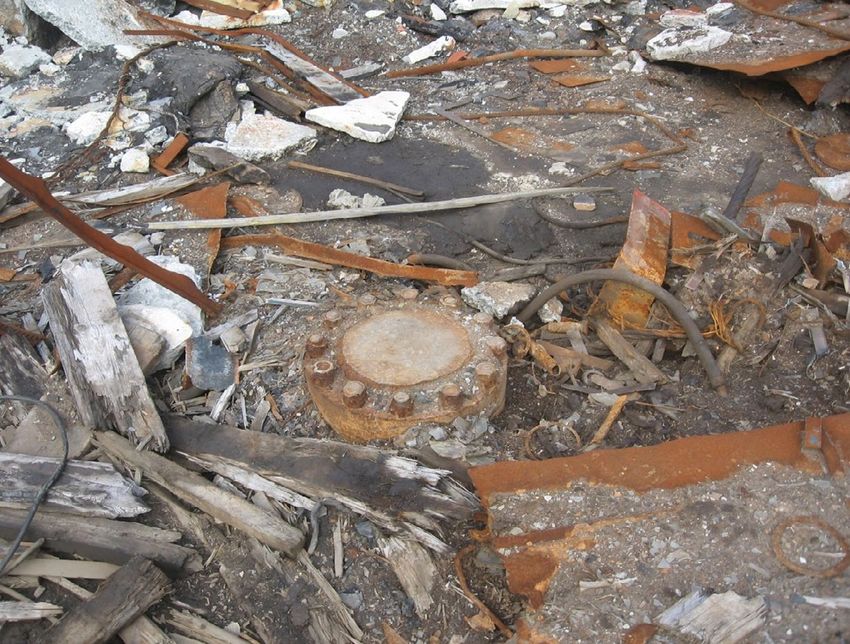
The Kola Superdeep Borehole, welded shut since project abandonment.
CAN YA DIG IT?
By Austin Harvey, Computer Science ‘21
Throughout human history, from our cave dwelling ancestors due to a combination of higher than predicted temperatures
to modern people in mines, humanity has dug holes. Typically, and the stress of maintaining the hole at that level damaging
we cut them for practical purposes such as finding useful the equipment being used. Though the objective of busting
metals or rocks to power cities, but digging also allows us to through the crust was never achieved, the team running the
discover the planet’s deep past. One such dream is to bore drill made some unexpected discoveries. A vast amount of
through Earth’s thin crust to touch the mantle and learn how information on the composition of the deep crust, such as
the depths of the planet behave. This quest has led humans to unexpected metamorphic changes in the rock and even billion-
create unimaginably deep holes. year-old microscopic plankton fossils, was found six kilometers
below the surface. Although the Kola Superdeep never
The Kola Superdeep Borehole holds the record for the deepest reached the mantle, the discoveries it made were invaluable
hole on planet Earth. With a 23-centimeter diameter, this hole in understanding how the planet works. Since the days of the
might sound small, but its depth is a whopping 12,262 meters Kola Superdeep Borehole, several oil companies have dug
or roughly 132 football fields. When drilling began in May 1970, holes exceeding its length, but it remains the deepest hole
the goal was simple: dig until you reach the mantle. The mantle humanity has dug.
was never reached, and, in 1992, the hole was abandoned
17 | E&S MagazineWith significant advancements in drilling technology Due to high costs and potential needs for technological
exponentially speeding up drilling and decreasing resistance, improvement, it is unknown if or when humanity will achieve
the desire to dig as deep as possible becomes more feasible. the dream of drills penetrating the mantle, but as past digs
What once took 20 years can now be done in a matter of weeks have uncovered, there is much yet to learn in the depths.
or months. While the mantle has yet to be reached, many
scientists still yearn to dig further. The International Ocean
Discovery Program (IODP) is a coalition of oceanic drillers who
desire one such effect. One of the program’s most important
projects, the MoHole to Mantle (M2M), is a plan inspired to
pick up where a long-abandoned U.S. drilling plan from the
60s known as Project Mohole left off: find a point on the sea
floor where the crust is thin, drill through, and bust the crust.
The crew of the Japanese drilling ship Chikyū (Earth) aims to
chase this endeavor. The 210-meter-long by 38-meter-wide
ship currently contains a riser drill capable of reaching depths
of 10,000 meters and a laboratory for studying rocks obtained
from coring. This riser drilling method uses special casing pipes
overlaid on one another in order to prevent the borehole’s sides
from caving in, at the cost of the hole narrowing the deeper the
drill goes. Improvements in such drilling methods could extend
this depth, but the project would be costly. It is estimated M2M
would cost one billion dollars.
The Japanese drilling ship Chikyū.
theengineer.latech.edu | 18Pages 9 and 28 of Vol. 12 No. 2, March 1956 19 | E&S Magazine
theengineer.latech.edu | 20
Comic on page 21 of Vol. 11 No. 1, January 1955.
             If you know what the artist’s signature means, please contact with us. We’re also confused.

21 | E&S Magazine
ACE aims to support underclassmen in classes such as
THE IEEE the Engineering 120-series and Computer Science/Cyber
NANOTECHNOLOGY Engineering 130-series. Our Peer-to-Peer (P2P) Mentorship
Program connects upperclassmen with underclassmen to
COUNCIL assist in their studies and college life. We collaborate with
other clubs with events such as Arduino and Raspberry Pi
coding nights to further aid students with their assigned
projects.
The IEEE Nanotechnology Council (IEEE NTC) of Louisiana If you have any questions or would like to know more about
Tech University is a multi-disciplinary group whose ACE, please contact us at acecoes@latech.edu.
purpose is to advance and coordinate work, education,
and student networking in the field of nanotechnology
carried out throughout the IEEE in scientific, literary,
and educational areas with other organizations,
schools, faculty, and the nanosystems industry. The
Council supports the theory, design, and development
of nanotechnology and its scientific, engineering, and
industrial applications. Events hosted by our chapter
include industry speakers, webinar streams, research THE BIOMEDICAL
seminars, study nights, and other recreational activities.
Membership is free and open to all those who share the ENGINEERING SOCIETY
purpose of the society and have educational, practical,
or research experience in nanotechnology or in an The Biomedical Engineering Society (BMES) is a professional
allied scientific field. All members and officers must be organization focused on improving human health through
students currently enrolled at Louisiana Tech University. engineering and innovation. At Louisiana Tech, BMES seeks to
If you are interested in becoming a member, please look help students in any major learn how they can connect what
for our emails throughout the academic year. they learn to the field of medicine as well as offer a variety
of events and functions throughout the year. We offer weekly
study nights for all interested students, a mentorship program,
professional development events, and fun social events. We
hope to be able to bring greater awareness to the diverse
options within biomedical engineering and show everyone
how they can be part of this incredible field.
This year, we are bouncing back from COVID with several
THE ASSOCIATION OF amazing events to get everyone back in a great mood after a
CYBER ENGINEERS year of lockdowns and severely decreased social interactions.
One such event that we recently held with NSBE (the
National Society of Black Engineers), SWE (Society of Women
Engineers), and SHPE (Society of Hispanic Professional
The Association of Cyber Engineers (ACE) is an Engineers) was the Halloween Bash. During this event a live
organization that is committed to promoting the field DJ provided entertainment while students enjoyed pizza,
of cyber engineering. We strive to implement a hands- pumpkin painting, and a costume contest. We also held our
on method of learning so that students can gain a solid Friends-giving event at the end of fall quarter, where students
understanding of the dynamic world of cybersecurity. were able to eat, socialize, and be merry with their classmates
ACE provides a platform for students and club members and schoolmates in an evening of relaxation in the beautiful
to excel in their college career, hone their skills, and fall weather.
make connections with industry professionals.
Our mentorship program is continuing this year. It is designed
ACE meetings include a variety of topics, such as to pair underclassmen with upperclassmen that have more
password cracking, port scanning, malware analysis and experience in the biomedical engineering program and who
creation, and multiple other Linux tools. Meetings are can assist their mentees through the curriculum. Mentors are
designed to encourage students to follow along with the also available to help choose classes, help with homework, and
presentations so that they are more comfortable using assist with applying to undergraduate research experiences,
cybersecurity tools and more prepared for real-world or REUs, and internships. The goal is that this program will help
application. retain and encourage the biomedical engineering students at
Tech, and we are looking forward to another fruitful year.
theengineer.latech.edu | 22PICTURES AND ILLUSTRATIONS
Cover Photo: ASPIRE Sculpture on Louisiana Tech’s Ruston
campus. Credit: Jordan Savoie.
i: Photo: Jordan. Credit: Estevan Garcia.
THE AEROSPACE ENGINEERING CLUB
1: Photo: Sydney Bratton. Credit: Provided by Sydney Bratton.
The Aerospace Engineering Club works on projects related to
the field of aerospace. Projects include high-altitude balloons, 2: Photo: Logan McCarthy. Credit: Josh Iselin.
drone racing, rocketry, model planes, and more. We do this to
get experience for our members in aerospace and to stimulate 3: Photo: Dr. Crittenden. Credit: Jordan Savoie.
interest in the field on campus. One of our long term goals
is to get an aerospace program started at Louisiana Tech by 4: Photo: Dr. Turner. Credit: Jordan Savoie.
demonstrating significant student demand for classes in the
subject. 5: Photo: Dr. Timofeyev. Credit: Jordan Savoie.
This summer we volunteered at the Chennault Airshow in Lake 6: Photo: Eva Dickenson. Credit: Provided by Eva Dickenson.
Charles and got to see many wonderful planes and amazing
pilots while rupturing our ears. This school year, our major 7: Graphic: Concept art of Woven City on by Toyota. Epcot
goals are to get several of our members certified to use heavier Spaceship Earth Credit: Chensiyuan, CC BY-SA 4.0.
model rocket motors and to start participating in drone racing
competitions. We have speakers with industry experience 9: Graphic: Portrait of Leonhard Euler. Credit: Jakob Emanuel
come and talk at some of our general body meetings, which are Handmann, public domain.
open to anyone. We also host casual Kerbal Space Program
tourneys in the esports room above the TONK. Graphic: Solutio problematis ad geometriam situs
pertinentis, Fig. 1 (cleaned up), public domain.
If you want to join and contribute to any of our projects or even
start your own, reach out to aero@latech.edu. 10: Photo: Andrew Tanenbaum in 2012. Credit: Jantangring,
CC BY-SA 4.0.
11: Photo: Starlink über dem Rathaus in Tübingen. Credit:
Dktue, CC0 1.0.
12: Photo: Image Taken with the Blanco 4-Meter Telescope.
Credit: Clara Martínez-Vázquez and Cliff Johnson,
CC BY 4.0.
13: Photos: Eshima Ohashi. Credit: mstk east, CC BY 2.0.
15: Photo: White Egret in Cajun Swamp and Lake Martin,
near Breax Bridge and Lafayette. Credit: spiritofamerica,
Adobe Stock #232552589.
17: Photo: The sealed top of the Kola Borehole. Credit:
Rakot13, CC BY-SA 3.0.
18: Photo: Deep-sea drilling vessel Chikyu. Credit: Gleam,
CC BY-SA 3.0.
23 | E&S MagazineYou can also read


