The Walt Disney Company, 2068 - WUMUNS
←
→
Page content transcription
If your browser does not render page correctly, please read the page content below
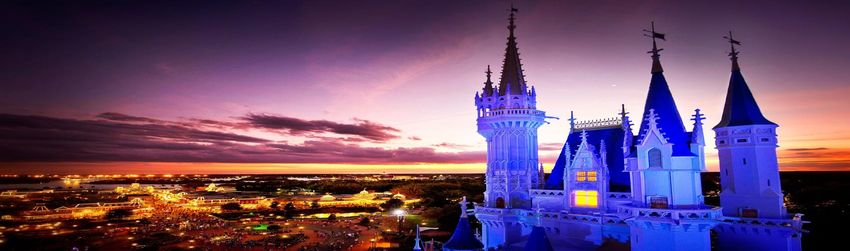
The Walt Disney Company, 2068
“The riskiest thing thing we
can do is maintain the status
             quo.”

—Robert Iger, CEO of Disney

                                2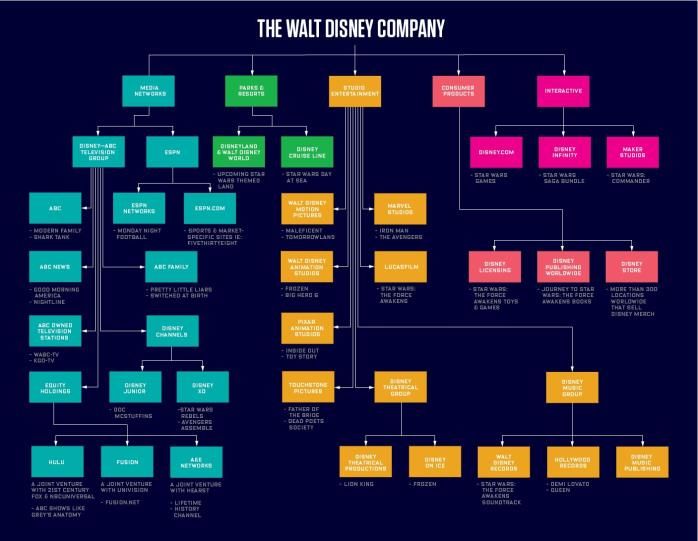
Dear Delegates,

         My name is Thomas Moy and it is my pleasure to welcome you to
WUMUNS 2018! I am a member of the Class of 2021 at Washington University
where I study International Area Studies in the College of Arts and Sciences.
Before I arrived here on campus, I had never participated in Model UN. Since I
joined, however, it has become a staple of my college experience. The idea for this
committee arose from my love of all things Disney, something I hope you share as
well.
         In this committee, delegates will represent various executives and
employees within The Walt Disney Company and others from outside the
company. The year is 2068, and Disneyland in California has just closed its
doors for the final time. Disney has been on a steady decline over the past few
decades, and the closure of this legendary park may be the beginning of the end
of the company. Your job as a committee is to save Disney from its impending
doom and restore it to its former glory.
         As a director, I hope to create a challenging and fun experience that will
make you think both critically and creatively. This is a futuristic committee,
which can be challenging for research efforts. I encourage you to focus your
preparation on what you as a delegate and as a character would like to
accomplish. One does not need to know all of the details of the world fifty years in
advance to interact with it successfully; much of the world will be shaped by the
way you as individuals and a body interact with it. Be creative and embrace the
flexibility presented to you as an opportunity, not an obstacle. That being said, if
you have any questions or concerns, please email me at tmoy@wustl.edu.

Walt Disney once said, “the way to get started is to stop talking and start doing.”
With that, I wish you good luck.

Sincerely,

Thomas Moy
tmoy@wustl.edu

                                                                                      3
Contents
Committee Mandate……………….…………..……………………… 5

Historical Background…….……………………………...…………. 6
Battle for the Spotlight: A Profile of Time Warner.…………….. 8
Innovation & Change of the 21st Century……………………......... 9
Topic A: Competition and External Affairs………………. 10
Topic B: Content and Creativity....................................... 11
Topic C: Management and Internal Affairs……….……… 12

Delegate Positions………………………………………………………. 14
Sources………………………………………………………..………………. 22

                                                                            4
Committee Mandate
Lights. Camera. Showbusiness. You all gather today as members of the
Special Emergency Board of the Walt Disney Corporation. The year is 2068. After
a century-and-a-half of upward momentum, the juggernaut of media that is
Disney has faltered. Market forces are shifting. Concept wells are running dry.
Old competitors are bursting with new energy. The stakes are high and the future
is uncertain; that’s why the shareholders have called on you, the helmsmen and
women of one of the world’s largest entertainment empires, to guide Disney and
its subsidiaries through this tumultuous time. Members include leaders who
represent Disney Corporation as a whole and others who represent specific
entities, such as theme park or movie divisions. The meeting takes place in 2068
at the Disney headquarters in Burbank, California.
Business experts, creative geniuses, and assorted representatives from all
walks of life gather now in the Executive Boardroom. Your task will be to save the
company from failure. The committee will be given full power as to what actions
the company will take; anything the committee decides goes. The committee will
also have full access to any product or service the company provides (movies,
parks, toys, etc.). This being said, certain members will have specific advantages
with these products depending on their positions. For example, an animator will
be more able to utilize resources in the film production department than the
director of parks. Each member of committee is encouraged to use these
advantages for both the good of the group and for personal gain. While the focus
of the committee will mainly be contained to the United States, it may be
expanded internationally. By your efforts, Disney will rise again to the
international spotlight, or tumble, like so many great corporations of the past,
into oblivion. Ladies and gentlemen, the future of Disney is in your hands.
5Background
On October 16,1923, Walt Disney and his brother Roy signed a contract
with a distributor to create a series of films called “Alice Comedies.” The studio
was originally called “Disney Brothers Cartoon Studio,” but was later changed to
the “Walt Disney Studio.” Then on November 18, 1928, Steamboat Willy opened
in New York City, marking the birth of the famous Mickey Mouse.
As time went on, Disney’s success grew. Snow White and the Seven Dwarves was
released in 1937; it soon became the highest grossing film of all time until Gone
With the Wind broke that record two years later. The momentum continued on
July 17, 1955 when Disneyland in Anaheim, California first opened its doors. This
marked the world’s first
“theme park.” However, in
1966, the company hit a large
bump when Walt Disney
passed away. Despite the fact
Walt’s brother, Roy, took over,
Disney became dormant.
Except for the opening of Walt
Disney World in Orlando,
Florida in 1971, not much was
accomplished during the 70’s
and 80’s. This era was
subsequently labelled “The
Dark Age of Disney.”
In 1989, The Little Mermaid was released. Produced by Walt Disney Feature
Animation, this new take on the old animated musical romance story kick-started
the Disney Renaissance. The film was a massive success. It won two Academy
Awards and marked Disney’s return to prominence after more than a decade of
relative obscurity. The Little Mermaid was followed by a plethora of iconic
movies, including Beauty and the Beast, Aladdin, The Lion King, Pocahontas, The
Hunchback of Notre Dame, Hercules, Mulan and Tarzan within a ten year period
from 1989-1999. The movies won 11 Oscars and many of the songs were awarded
multi-platinum status by the Recording Industry Association of America.
In the next decade, Disney returned to its pre-Renaissance state. Though the
recently acquired Pixar studio churned out a few successes, such as Finding
Nemo, Toy Story and Monster’s Inc., the era was marked by a lack of consistency
in Disney studio projects. Chicken Little, Bolt, and The Princess and the Frog
were all generally received as dissapointments. In 2005, Robert Iger took over as
president of the company.
Under Iger’s watch, Disney rebounded from a period of hardship. In 2013,
Frozen came out and became the highest grossing animated film of all time.
Then, in 2016, Moana was released, and the second Disney Renaissance begun.
The acquisition of Marvel in 2009 and Lucasfilm in 2012 proved to be genius, as
6the continuation of the Star Wars saga and Marvel Cinematic Universe was a
lucrative endeavor. Its success continued throughout the 2020’s and 2030’s.
During this time period, Disney surpassed Comcast over as the largest
entertainment company by a large margin.
However, this momentum abruptly ended with the sudden death of Robert Iger
in 2042. Without a clear leader, the quality of Disney’s product severely
decreased and thus so did viewership, attendance at parks, and toy and
merchandise sales.
In 2056, one of
Disney’s primary
competitors became a true
threat when Time Warner,
Inc. (former parent
company of Time Warner
Cable and current owner
of Warner Brothers
Studios) entered a period
of explosive expansion
when the company
purchased Snap Inc.,
owner of Snapchat, massively expanding its social media capabilities. It had an
unparalled ability to distribute its content to a large portion of the American
population. This greatly increased the new entertainment behemoth’s
technological capabilities and influence in society. In 2020, it opened its first
park in Abu Dhabi. The park closed after a few years due to political instability in
the region, but from it Time Warner learned some valuable lessons about how to
run a theme park. In 2060, Time Warner opened its first park in America, in
Miami, Florida. Unlike its Middle Eastern predescesor, it was a huge success. Its
ticket sales rivaled those of nearby Disneyworld. Characters under the Warner
Brothers dominion became the vanguard of pop culture as the classic cast of DC
Comics and Loony Toons stars joined with new icons from HBO’s premium
television shows. Mickey Mouse, Captain America, and Han Solo were losing out
to Bugs Bunny, Batman, and Daenerys Targaryen. As Time Warner began to grow
in terms of parks, movies and merchandise, and overall cultural significance,
Disney began to fade. In 2063, Time Warner surpassed Comcast, leaving it and
Disney as the top 2 entertainment companies in the world. Every year, Disney
and Time Warner vie for the title of most influential entertainment company;
however, Time Warner has come on top every year in the past 5 years.
Compounding Disney’s plight was the deterioration of Orlando, Florida,
home to the famous Disney World. After years of protests from animal rights
activists, Sea World eventually closed. As the smallest of the three main
attractions in the area, the damage was minimal. However, the real tragedy came
in 2060, when the Comcast-owned Universal Studios closed its doors for the final
time. In 2057, Time Warner purchased the rights to Comcast’s most valuable
asset, the Harry Potter franchise, marking the beginning of the end for Comcast.
7With Time Warner’s rapid ascent, Universal Studios could no longer compete,
leaving Disney World as the only major attraction in Orlando. As Disney World’s
attendance fell, tourism in the city sharply decreased, causing the economy to
deteriorate, with crime rising rapidly as a result. Gangs are now in control of the
streets and a disproportionate amount of its citizens live in poverty. It now ranks
as one of the most dangerous cities in America.
Disney’s greatest symbolic blow came in 2068, when after over a century
of service, Disneyland in California closed. Its closure was mainly caused by a
failure of Disney to create new, exciting movies to draw customers in, and the rise
of Time Warner’s parks’ popularity.
Battle for the Disney’s main competition is Time Warner. After Time Warner’s
Spotlight: A meteoric rise in the past few decades, it has become clear that Disney will not
Profile of Time return to prominence without a new competitive edge. Its finances are
particularly strong; it owns a variety of entertainment companies such as HBO,
Warner
Warner Brothers and Turner Broadcasting system, which includes brands such as
Adult Swim, Bleacher Report, Cartoon Network, CNN, TBS and TNT.
Of those companies, three particularly successful assets that will be
important to committee are addressed below:
Content - HBO: HBO has always been a pioneer in the field of premium
TV, but after massive hits like Westworld and Game of Thrones, it became a
leader in the creation of original content. Since the original series concluded
its history-making 8-season run in 2018, Game of Thrones spin-offs
continue to be successfully produced to the present day. Its online presence
makes it accessible to almost anyone in the world and increases its
viewership.
Producution Studio - Warner Brothers: Warner Brothers is the
primary entertainment arm of Time Warner, and is thus the biggest threat to
Disney’s film and amusement park divisions. After recovering from some
lackluster efforts in the first few decades of the century, DC Films and
Entertainment is now constantly in contention with Marvel on the superhero
movies front. After seeing the success of the Harry Potter and Lord of the
Rings films, Warner Brothers has cemented itself as every author’s go-to if
he or she wants their book into a movie. Though still lacking on the
animated film front, Warner Brothers is world renowned for its flexibility
and attention to detail. Their studios in Los Angeles are able to churn out
film after film that is not only low-cost but high quality.
News - CNN: CNN is the news media arm of Time Warner. After
constantly being attacked during the 2010’s, CNN came out of the Trump
presidency stronger than ever. Since the era of Anderson Cooper, many CNN
anchors and personalities are revered as intellectual celebrities. Perhaps no
better example is Alejandra Lopez, a vibrant young woman described as a
mix of Walter Kronkite and Oprah Winfrey. But the area where CNN has
succeeded most over its rivals (Disney’s ABC and Comcast’s NBC) is its
8digital presence. CNN is the news source of technology, from the latest
smartphones to social media to smart home appliances. It has a dedicated
userbase among young adults. Its impeccable journalism regarding all things
politics has given it a very solid reputation. It’s rock solid reputation has
made it the most viewed news network in the country.
Time Warner also owns four amusement parks around the world: two in
the United States, one in London, England, and one in Seoul, South Korea. These
parks are the main regional competition for its Disney counterparts. For
example, Disneyland Paris and Time Warner’s Park in London compete annually
for highest attendance in Europe.
The company’s meteoric rise came in 2056 when it bought Snapchat. This
came in wake of the failed 2018 merger with AT&T that was shot down by the
Justice Department due to a violation of the nation’s anti-trust laws. The
company took advantage of Snapchat’s unparalleled ability to access millions of
people across the world. It made it especially easy for people to share content
with each other, thus increasing the company’s viewership. Snapchat’s ability to
instantly reach millions of people truly revolutionized the industry, something
Disney has failed to adapt to.
The past fifty years have seen a number of groundbreaking innovations
Innovation & and several continued patterns in technological capabilities. Smartphones,
Change of laptops, and tablets remain popular and have improved in processing speed and
the 21st power, but these devices have seen little radical change. Social media continues
Century to be a major presence in daily life with Facebook still reigning supreme as the
major player in the industry, despite several anti-trust scares. Thanks to
philanthropic (and profit building) partnerships between companies like Google
and Amazon and national governments, only a tiny fraction of the world has no
access to the internet. Even the most remote villages of India or Amazonian
Brazil now have access to communal tech centers where they can stay connected
to the world.
Perhaps the most notable development has been in the field of automated
labor. Robots of today – mobile and fixed varities – are more efficient, reliable,
and capable than ever before. A majority of industrial facilities now operate
almost entirely by automation, supervised by a handful of engineers. Despite a
slew of early failures lasting through the late 2030s, self-driving cars are now
considered a safe and mundane technology. It is estimated that less than a third
of the cars currently on America’s highways are driven by a human. This has had
the most profound impact on shipping industries, as trucks are now able to
operate and drive goods around the country twenty-four hours a day, seven days
a week.
Improvements in language modeling software has improved synthetic
speech recognition and production capabilities to the point where many robotic
workers have a seamless user interface. This has contributed to the newest and
most significant breakthrough: the entry of robotic workers into service-sector
jobs. Set up costs are high, but automated labor runs without complaint and
without need for wages. This makes the prospect extremely enticing for many
employers, especially struggling companies like Disney. While the conversation is
9only emerging, worries are already flying around the HR department as
whispered rumors say Disneyland never would have closed if low-level jobs had
instead been automated. Introduction of automated workers would surely lower
Disney’s operating costs substantially – perhaps making parks profitable once
again – but would cause extreme rifts internally as thousands of employees are
fired and entire departments are cut down. As the committee convenes,
automation of santitaion, food, and entertainment workers is a question that
simmers quietly below the surface of professional pleasantries.
Topic A: Competition and External
Affairs
Due to Disney’s financial misfortunes, there are a plethora of companies
that would be willing to merge with it. Reminiscent of the 2056 merger between
Google and Time Warner, any potential merger would cause a seismic shift in the
industry. Disney is a massive company, worth roughly $165 billion, so a full
buyout may not be feasible, however, a partial buyout of any of Disney’s assets is
possible.
Any potential deal
must avoid inference
breaching any anti-trust
laws and thus,
governmental interference.
In America, there are three
core anti-trust laws: the
Sherman Act (1890),
Clayton Act (1914) and
Federal Trade Commission
Act (1914). According to
the Federal Trade
Commission (“FTC”), the
Sherman Act outlaws
“every contract,
combination, or conspiracy
resistant to trade” and any “monopolization, attempted monopolization or
conspiracy or combination to monopolize.” The Clayton Act and Federal Trade
Commission Act both essentially double down and reinforce the Sherman Act.
Any violation of these laws can have serious consequences. Companies may be
fined $100 million and individuals $1 million, accompanied by up to 10 years in
jail. Both the FTC and Department of Justice (“DOJ”) enforce these laws. The
FTC may go to federal courts to obtain an injunction or civil penalties, while only
the DOJ can use criminal punishment.
Disney’s major assets include:
- Content – Walt Disney Pictures: Walt Disney Pictures absorbed its
sister companies, Lucas Films and Marvel Studios, and now houses most
of the company’s creative personel. Lucas Films is best known for its
10creation of two legendary franchises: Star Wars and Indiana Jones. Both
of these hold considerable nostalgic weight for older demographics, but
Star Wars is held in much higher regard within the public. However, it
has failed to engage a younger audience. While many of the spin-off
series were successful in the 20’s and 30’s, any attempt after that was
relatively unsuccessful. Constant remakes of what seems like the same
movie has caused the public to lose interest. The movies no longer
routinely break box office records like the sequels and anthology series in
the 10’s and 20’s. The Marvel Cinematic universe is one that is ever
expanding and remains profitable for Disney. While it started with Spider
Man and Captain America, Marvel has evolved into an entertainment
company that has a more diverse cast. The wide range of characters has
given it the reputation of being a progressive entertainment company, a
characteristic Disney values due to its past problems with racism and
sexism.
- Production Studio – Walt Disney Studios: Though the company is
struggling, Disney remains king in one arena: animation. As successful as
Time Warner has gotten, they can’t seem to figure out what makes
Disney’s animation so… magical. That being said, producing animated
films is not only time consuming, but costly. They simply cannot produce
movies at the same rate as Warner Brothers. Additonally, all of the
content it produces is generated in-house; it has trouble attracting people
from outside the company, whether they be authors or other creative
speciallists.
- News - ABC: ABC is made up of two main divisions: news and
entertainment (including ABC, ESPN, etc.). Its entertainment division is
consistent and, while it doesn’t produce any massive successes, Disney is
looking for a new strategy to promote its content and stable revenue
growth after its failed attempt at creating a streaming service to cmpete
with Netflix deacades ago. there are shows that will bring are a constant
and stable source of revenue. The news, division, however, is struggling
in line with current trends in the U.S. television news industry.
Questions to Consider:
• How can Disney surpass Time Warner and become the top company in
the entertainment industry?
• Should the company merge with another company or sell some of its
assets or keep them and hope they improve in the long run?
Topic B: Content and Creativity
Due to Disney’s many failures over the past few decades, its public image
has dropped significantly. Starting in the early 2000’s, Disney was constantly
ranked as one the world’s most reputable companies. It maintained this
reputation in following years and was often at the top of that list during its peak
years in 20’s and 30’s. However, when the company failed to produce popular
movies after the death of Iger in 2042, its public image declined drastically. This,
in turn, resulted in a significant drop in ticket and toy sales along and a moderate
slump in television viewership. The greatest humiliation came with the closure of
11Disneyland. Amusement parks are now and have forever been the most visible
symbol of Disney’s power – what child born in the last century doesn’t instantly
recognize Cinderella’s castle? Yet the Anaheim facility’s doors have now been
shut and the numerous rides and attractions have begun to rust. This closure has
tarnished the company’s public standing. The sense of wonder the Disney logo
once instilled is increasingly being replaced by ridicule and dismissal. If Disney is
to reclaim its spot as the top company in the entertainment industry, this must be
remedied.
In addition, it has been decades since Disney has released a legendary
movie akin to Snow White and the Seven Dwarves or The Lion King causing its
popularity to decrease dramatically. The success of Time Warner has led many
creativity specialists to go to it instead of Disney. It has also caused these
employees that work at Disney to leave and work at Time Warner. Committee
must find a way to attract creativity specialists to the company and keep those
already employed. Engaging and emotionally compelling movies have been the
hallmark of Disney’s success, in order to once again rise to the top, it must go
back to that.
Questions to Consider:
• How does Disney prevent employees from leaving the company and
going to work for competitors?
• How will Disney create an iconic movie to bring the company back to
prominence?
Topic C: Management and Internal
Affairs
A large part of Disney’s legacy and influence in society is its various
theme parks and resorts around the world. According to the Themed
Entertainment Association (“TEA”), Disney’s theme parks attracted 132.5 million
visitors in 2013, more than double its closest competitor. However, attendance at
the parks fell sharply in the 40’s. Part of this trend was attributed to shifting
vacation preferences in the market as a whole, but the impact of guests attending
rival parks is certainly another important factor. With the closure of Disneyland
in California, the company has 6 parks and resorts left around the world: Disney
World in Florida, Aulani (resort in Hawaii), Disneyland Paris, Tokyo Disney,
Hong Kong Disneyland and Shanghai Disney. While these attractions remain
profitable, current operating costs of $1.718 billion could certainly be spent
elsewhere to help improve the company. The committee may decide to close any,
some, or all of the parks through committee directive.
Committee also has the option to improve the parks to increase
attendance. Recently, the parks have failed to attract high school and younger
visitors who lack that sentimental value that many adults possess. Finding a way
to draw visitors from this demographic is vital for the revival of Disney.
In order to run the parks, Disney maintains a massive staff. Disney World
alone employs over 62,000 people. There is a sense of uncertainty amongst
them. After the closing of Disneyland, they know that the company isn’t doing
very well and that there is a chance they will all be out of a job very soon. This is
12leading to a frustrated and inefficient workforce which in turn is harming the
park experience for visitors. A movement among park workers to ensure safety
net measures are implemented in case their parks are closed as well is starting to
spread in Orlando. There are rumors spreading throughout the employees of
drastic action being taken in order to ensure their future safety.
Questions to Consider:
• How can the company increase attendance at its parks?
• How can another park closing be avoided?
• How can the company create a better working environment for its
employees?
13Delegate Positions
A decorated officer of the United States Army, White is a disciplined man.
Jonathon White distinguished himself as an outstanding serviceman through
White, Vice exemplary leadership during the United States’ response to violent uprisings
President for that threw Puerto Rico into chaos during the 2050s. Ultimately retiring at the
rank of Colonel, White has spent the last fifteen years bouncing from
Security company to company. He developed an impressive resume in security
services, eventually landing at Disney. In his current role, he oversees all
divisions of corporate security including park security personnel, office
security and survaillance systems, and cyber defense. Throughout his career,
one thing has motivated him: his steadfast belief in the law. He will protect
this principle at any cost, whether it be on park grounds or surrounding areas.
Disney’s failures may have been a public relations nighmare, but they could
Sabrina Garcia, always be worse. Sabrina Garcia is the reason they aren’t worse. She is, by the
Chief report of her many secretaries and assistants, the perfect mix of intelligence,
Communications charisma and toughness. The statements she issues to the press are
Officer compelling and convincing enough that often it seems as if she can
manipulate the media anyway she wants. There’s just one problem; Garcia
wants more. She feels as if she is going to put a pretty face on a struggling
company, she deserves more of a voice at the decision-making table and her
department deserves more funds and more respect. As meetings of the
committee begin, Sabrina is dedicated to the company but determined to
work with others in the company to ensure her needs are satisfied.
Kenji is a recent addition to Disney’s board of directors. Originally hailing
Kenji from Osaka, Japan, Kenji is a very successful busnissman with a unique
Yakamoto, international perspective. But Kenji’s success was not entirely a result of his
Representative own hard work and perserverence. His brother, Hideki, is a prominent gang
of the Board of leader in Orlando. By pulling a few strings with certain Disney World officials,
Hideki was able to vault Kenji from a job as a director of park infrastructure
Directors and technology all the way up to the executive penthouse. Thus far, Kenji has
largely been kept clean but his brothers influence always looms behind him.
For many other executives in upper management, Kenji’s dark ties represent
the corruption that has crept into the company and undermined the
principled values upon which it was built. With a powerful new position and a
great deal of savvy at his disposal, Kenji must seize the opportunity to
redefine his reputation or face the consequences of suspicion.
As daughter of Christine McCarthy. Disney’s former CFO, Taylor grew up
Taylor experiencing Disney’s second renaissance from the inside. Every evening, her
McCarthy, mother would come home exhausted yet satisfied from the work of the day.
Chief As the company began to spiral downward, she feels as if she has contributed
to destroying the legacy her mother helped to create. For Taylor, this is a
Financial personal matter. Armed with an outstanding education from one America’s
Officer finest private schools and undergraduate and graduate degrees from an
outstanding universities, Taylor feels confident in her capabilities. Her
14numerous wealthy friends on Wall Street, in the federal government, and in
main competitor Time Warner itself don’t hurt either. She is willing to do
anything it takes and spend any amount of money to return the company to
its former glory.
Jacque Bernard, Jacque was born in Paris to a French-American family. If you ask him about
his upbringing, he will tell you his Parisian mother gave him his love of food
Executive while his Texan father taught him discipline and the meaning of hard work.
Coordinator for In 2052, Jacque saw that hard work pay off when he graduated from
International Washington University in St. Louis at the top of his class. With a double
major in international relations and corporate strategy, Bernard started work
Interests at the Walt Disney Company. He quickly rose up the ranks of Disney before
becoming head of international affairs for the company at the young age of
38. Perhaps due to his success or perhaps due to his French accent, he is
extrememly cocky. As time has passed, he has come to realize that the
American spirit his father spoke of in his youth has vanished. Now, he firmly
believes that Americans live in a lazy, technology-dependent culture. Further
investment in America, in Bernard’s opinion, is a lost cause. If Disney is to
prosper and remain competitive, it must look outward and break into new
markets.
Carter has worked extremely hard to get to the position he is at today. He
Carter Fox, began working as a sanitation working right out of high school, and has
Head of Park slowly worked his way into being Head of Park Staff. At the ripe old age of 70,
Staff he has seen ebbs and flows of the company. Ultimately, doesn’t want the
career he worked so hard to build to be destroyed. That’s why the issue of
automated staff infuriates him. He feels that he cannot sit idly by and watch
as robots replace the hard-working concession stand workers and clean-up
crews that he loves and respects. There are very few things that get past Fox’s
mild and kind-hearted disposition but the prospect of over-reaching
executives firing his staff and cutting his division does the trick. Fox is a firm
believer that the old ways are the best ways. From janitors to food-concession
workers to costumed characters, Fox loves his employees and will protect
their interests with steadfast resolve. That honest and earnest personality has
made him extremely well respected by his staff who will do just about
anything for him.
Through hard work and sometimes cutthroat determination, Rebecca
Rebecca Goldstein has been successful throughout her whole life. She wasn’t use to
Goldstein, failure. That is why the closure of Disneyland was extrememly embarrassing
Chairman of and a large blow to her ego. She has promised herself that she will not allow
Walt Disney another failure of such a magnitude and severity. Recently, Goldstein’s
marriage has suffered as she spends many a sleepness, coffee-fueled night in
Parks and her study drawing up new ideas for resort package deals or new advertising
Resorts campaigns for Disney world. Delegation has always been a weakness of hers,
America and though her skill is high she must be careful she does not push herself too
far. Still, there is nothing worse to Rebecca than failing to do her job correctly.
She must prove to the board that she is still capable of doing it well.
15Disney has always prided itself in its ability to transport its park visitors to
Maria another world. This cannot be done without the imagineers. They work
Peterson, tirelessly to create rides and attractions that are seemingly impossible to
Director of create. There is no better example than Maria Peterson. Throughout her
many years at Disney, she has played a role in many of the company’s most
Park successful attractions. Before rising through the ranks of management, she
Improvement was a front-line imagineer. A graduate of the California Institute of
and Chief Technology, she was responsible for numerous technological integrations that
Imagineer improved customer experience within the park. Her advocacy of automated
concessions and sanitation services threatens to cut numerous park
employees, putting her at odds with numerous officials in the Park Staff
department. Yet given the recent closure of Disneyland and the troubling
financial records of other parks, Maria sees little other choice. Pushback on
the issue of automated staff and restrictions on her creativity in new projects
have increasingly frustrated Peterson. She has a job offer from Time Warner
and while she would never want to betray Disney, she is seriously considering
it
Animation is what Disney does best and nobody does it better than David
David Gonzalez. During his time at Disney, he has overseen and directed many of
Gonzalez, its most iconic films in the past few decades. However, he has seen far too
Chief many of his colleagues leave for the green pastures at Time Warner. Though
none of them are as skilled as he is, every departure feels like a betrayal. The
Creative toughest blow came when his closest pupil -- and his son -- Adrian, went to
Officer of the rival company. They still remain in close contact, sometimes even
Pixar Studios exchanging ideas. Gonzalez remains one of the most trusted and powerful
voices in Disney’s creative process. While recent new ideas have been a flop,
– Gonzalez feels that something big is coming – the idea that will save the
company and save his career. Until that idea comes, David will continue
tinkering around in his studio and writing to his many e-mail pen pals in the
creative arts.
Aaron has been under an extreme amount of pressure lately. Disney has failed
Aaron to produce a successful move in quite a long time. It was the recent failure of
Jenkins, live-action catastrophe 1,001 Dalmations that cost the last Chairman his job
Chairman of – Jenkins hopes with all his heart he will avoid such a calamity. As Chairman,
Jenkins has a great deal of influence over the production and brainstorming
Walt Disney of new movies; he can even veto a concept, though this is far form a popular
Studios option. Before landing the job as Chairmanship, Aaron was a successful
director and maintains connetions with many of the top producers and
directors in the entertainment industry. Despite recent instability, Jenkins is
a long-time leader in Disney and his word is highly respected among others in
the company – including the CEO, XXXXX, a close friend and ally. He plans
to use his connections and this status as an “elder statesman” to ensure
success of the company.
The daughter of South Korean automotive tycoons, Emily has never really
Emily Kim, had to work for anything in her life. Generally acting with a somewhat ditzy
Owner and yet loveably professional demeanor, she is a regular judge on the long-
Proprietor of running ABC show Shark Tank. On the show, she comes across as a spoiled
heiress. In reality, she is anything but. Kim is tight-fisted genius when it
Huingae
Capital 16comes to managing her money – and she has a lot of money. When she was
21, she used her inheritance to found Huingae Capital, a massively
successfully venture capitalism firm. Every second of her free-time is spent on
the phone with her clients, her employees, and her legion of brokers on Wall
Street. She herself very rarely funds new projects – only the best of the best
make the cut. Only once on the show has she funded a contestants project; it
was an instant pizza maker that made millions of dollars on the market.
Disney invited Huingae in hopes that the company could provide the spark of
expertise and cash that could ignite its restoration. On the board, she hopes to
provide such a service but will only do so when she is sure it will benefit her
interests.
Growing up in Los Angeles, Amelia spent her childhood less than an hour
Amelia Brown, away from Disneyland. She first visited when she was sixth months old. By
Representative the time she was two, she was more comfortable toddling around the park
from D23 than she was in her living room. At age four, her family purchased the
highest-tier frequent visitor pass. By the time she entered grade school, her
Disney Fan average week consisted of five days in the class, one day with her devout
Club mother at church, and one day in Disneyland. While her mother may be a
Christian, Amelia’s relgion is Disney. Her bedroom is filled wall to wall with
Moana and Aladdin posters. Every night, she slept with tattered BB-8
plushie. She can sing the entire Lion King soundtrack, backwards. It’s safe to
say that she is the biggest Disney fan there currently is, and probably ever will
be. When Disneyland closed, she was heart-broken. Rumor has it the
nineteen year old still wakes up early every Saturday morning to deliver a
bouquet of roses to the foot the Mickey statue that stands outside the parks
chained gates. Somehow, she caught wind of this secret meeting, she snuck
past the guards, and got a seat. Once the executives realized she provided a
direct link to the legions of fans who still love Disney dearly, they allowed her
to stay. Now, she hopes to see the company she loves – and she wishes to hold
whoever closed her favorite place in the world responsible.
Jackson has made some… questionable calls in the past. As Director of
Jackson Programming, Jackson has a singnificant influence over what content goes on
Bryant, air and what time slot each show gets. Starting as an intern on Good Morning
Director of America with his long time rival Shelly Klein, Bryant has risen rapidly up the
Programming, ranks. There is no doubt he is talented – ABC remains very popular among
viewers, despite the fact that network television has largely declined as an
ABC News industry. Yet many of Bryants calls have been almost disastarous; the
decision to interrupt the 8 o’clock news with ad breaks every two minutes
decimated viewership numbers for a solid six months and almost became a
public relations fiasco. Looking forward, Bryant knows he will continue in
the ambitious and innovative strategies that have built his career – he just
hopes he will be able to be a little more careful.
In 2060, Feinstein was a rising star within the ranks of Snap Inc. He
Frederick successfully created a streaming service through the Snapchat app, adding a
Feinstein, whole new dimension to the viewership experience. However, his superior,
Director of Ben James, took the credit for this breakthrough. Frederick quit in outrage
Social Media over the betrayal. Eventually he sued James and his former employer but lost
the case in court. The whole experience left Feinstein with a bitter resentment
–
17of other social media companies and a strong distrust of lawyers. In his duties
as Director of Social Media, he is known for his intuitive knowledge of what
resonates with users, his knowledge of the industry, and his uncompromising
yet effective skill as a negotiator. Now he must balance the interests of the
company with his own interest in sweet, sweet, vengance.
In an industry full of people willing to stab you in the back, Liam is propably
Liam Jacobs, the most pure-hearted person outhere. In high school, he was voted the best
Vice counselor at the summer camp where he worked. In college, the Chancellor
President for himself gave him an award for outstanding service as an RA. Now, he has no
Human other motivation other than for the good of the employees. As a good friend of
Carter Fox, Head of Park Staff, he has worked tirelessly to make sure all of the
Resources employees are treated fairly and well. But sometimes Liam’s dreams of fair
and equitable treatment for all don’t materialize. The primary source of his
headaches is his own department. Disney’s Human Resources Department is
a massive sprawling enterpise that attempts to manage and coordinate across
all subsidies with limited success. Liam would like to see this complicated
network simplified and cut down, to the point where he can oversee and
direct more day-to-day operations. While his wholesome reputation has
earned access to the personal files of all employees, the increases in power
and oversight that Jacobs desires will be much harder to achieve.
Catherine was formerly employed by the Federal Trade Commission, working
Catherine in its anti-trust division. She eventually left the noble yet mind-numbing work
Whelan, of civil service for the glitz and glamor of corporate entertainment
Director of conglomorates. Flipping sides lost her a lot of friends in Washington, but her
Government charm, expertise, and restriction-free corporate credit has earned her plenty
more. Now, she uses her anti-trust law expertise to defend the mergers,
Lobbying buyouts, and bold corporate moves that Disney wishes to make. Given recent
Caucus struggles, Disney Executives know that the corporate empire has grown too
large and unweildy. Selling off divisions may be on the horizon. Whelan is the
first line of defense and the spearpoint of offense in such a deal. Although she
is many years out of her government job, she still has the know-how and close
contacts that may help the company push through big deals and avoid
punitive regulations.
Who can forget Dominic Waters, who starred as Troy Bolton in Disney’s 2043
Dominic remake of High School Musical, the most successful movie of the decade?
Waters, Certainly not Dominic Waters. He’s never forgotten what it felt to bathe in the
Actor and spotlight. During the fever of HSM, “America’s Sweetheart” was treated to
weeks of special treatment, constant media attention, and exclusive party
Former Teen invitations. Waters thrived. Tragically, after the excitement surrounding the
Idol movie died down and Dominic’s youthful faces started to garner wrinkles, he
faded into irrelevance. Many thought the name Waters would never heard
again. Until now. Now in his mid forties and spiraling in a mid-life crisis,
Dominic has started using his charisma, his powerful Hollywood friends, and
his personal fortune to weasel his way back into the center of the national
stage. As one of the most iconic Disney actors of the past few years, he was
invited to the board meeting. While he’s happy to see the company succeed,
his first priority is to get back into the spotlight and return to his pampered
life.
18Every morning, the sun rises over America. The birds chip, the coffee is
Shelly Klein, brewed, and the beaming bleach-blonde face of Shelly Klein beams into living
Host of Good rooms around the country. As a host on Good Morning America, Klein is on
Morning TV almost everyday and is the face of ABC. But while the peppy banter she
shares with her co-host is entertaining, it leaves Shelly feeling… empty. Her
America dream job is to be a true journalist, to be the anchor of the 8 o’clock news.
Sadly, obstacles stand her way. Many circle around her long-time nemisis,
Jackson Bryant. The two interned together during their first days at ABC with
Shelly in front of the camera and Jackson behind it. A fragile but necessary
truce currently exists between the two as calculating Jackson handles the
programming logistics of ABC’s daily schedule and widely beloved but hot-
headed Shelly brings in the viewership numbers the company desperately
needs. Still, Shelly’s dream persists. With a little bit of luck, a good deal of
diligent networking, and a whole lot of smiles it may yet be hers…
Chad made his name as a YouTube icon. From hilarious pranks to gut-busting
Chad Pesto, commentary on popular movies (including Disney’s popular yet painfully
YouTube over-recycled Cars 13), Chad was the name on everyone’s lips throughout the
Sensation early 2060’s. He was especially famous for his vlog series, Chad Abroad, in
which he traveled the globe and lived in various international cities. In April
and Celebrity of 2064, Pesto broke the record for most views on a single video in YouTube’s
Vlogger Lifestyle and Vlogging category. Recently, other vloggers have started to
move in on his dominance. These aren’t imitators replicating his distinct style
or stealing his famous catchphrase.1 This is much worse. This is new talent.
Tweens and teens are flocking to this next generation of YouTube celebrity,
causing Chad to turn to employment from Disney for more stable income
streams and causing him to worry constantly about his ever-increasing age.
Hopefully no one in the audience notices this insecuirty – or the single grey
hair he found on his left temple yesterday morning. While he is still the best,
a gnawing fear in his gut says won’t be for long. He comes into the board
meeting wanting to maintain his level of fame—at any price.
Disney has always prided itself in its use of music to enhance its movies.
Julia Quinn, Songs like The Circle of Life, How Far I’ll Go, and Let it Go are a large part of
Broadway the legacies of their respective movies. These are songs of wonder and
Representative imagination, the kind of stuff parents and kids can’t get enough of. There’s no
bigger hub for that kind of razzle dazzle than Broadway. For precisely that
reason Julia Quinn, famed actress turned producer extraordinaire, was
invited to the meeting. Quinn brings decades of Broadway experience, bother
writing and performing. Though she’s a old name, she is well-versed in
technology and is a forward-thinker; thespians and fans alike all remember
her heart-wrenching revival of Phantom of the Opera which seamlessly
incorporated cutting edge virtual reality technology to make the audience
members feel like they themselves had been dragged down to the catacombs
of Paris with Christine. Her disposition is quintessential broadway – cheery
and enthusiastic yet histrionic and more than mildly narcisscistic. But don’t
be fooled, Quinn’s more than just a character: she’s also a ruthless busniness
woman. After seeing the success of both the Lion King and Frozen Broadway
1
“Life’s better with a little bit of Pesto!”
19shows, she wants to get the rights to another Disney franchise and turn it into
a show for her benefit.
Formerly an executive at Google, Sherman has contacts throughout the
Kurt Sherman, software industry. After getting his masters in computer science from
Software Stanford, Sherman founded Goliath, his own database and communications
Development management firm. Disney currently has a contract with Goliath for a variety
Consultant of internal operations, from human resources to research & development. In
this respect, Sherman primarily works with Anna French, who is in charge of
online security, to protect the company’s electric files from outside forces. He
couldn’t be happier. Born and raised on classics like Coco and Incredibles 2,
Kurt has an almost fanatical devoution to Disney’s animated movies.
Privately, however, he is disatsified with his work. He believes his talents
could be used in other ways, ways that actively benefit Disney and turn
Goliath into something more than an electronic bureaucrat. He wants to go
on the offensive and use his skills to attack Disney’s enemies. He’s got the
know-how and he’s got the capabilities. All he needs now the authorization to
act.
Anna French is charge of security for all of Disney’s digital files. If Disney
Anna French, operates through its own cloud server, imagine French as the vigilent and
Director of mildly wrathful angel perched on top of that cloud. While she manages a very
Information large and very nerd division of engineers and automated protocol algoritms,
she ultimately has perview over everything from the company’s financial data
Security to everyone’s weekly lunch order. But Anna would never think of misusing
this power; she always remains true to her ethics. Rather than mess about in
the darkness, French sees herself as the moralistic beacon of light that brings
justice to those who do wrong and keeps unscrupulous business professionals
on the straight and narrow. While the nature of her job allows her to see the
company’s deepest secrets, she does her best to squint whenever she looks.
It’s good that she stays so grounded – after all, she is constantly monitored by
her the higher-ups in the company to make sure there is no breach in
security.
Mikhail “Mike” Abadi was born in Munich, Germany to a family of refugees
Mike Abadi, who fled the civil war decimated Syria in the 2010s. To support his struggling
General family, he began working in a local pub at age 15 as a dish washer. Through
Counsel diligent work and a patient and earnest personality, he soon rose through the
ranks until he was a host and waiter. Because the job was at a rather fancy
restaurant, Abadi had exposure to many members of the visiting international
elite. One such guest was Melinda Dagtree, a prominent New York lawyer.
The two quickly began a friendship that blossomed beyond service formalities
into a true close connection. Dagtreee became Abadi’s mentor, ultimately
guiding him through and partially financing undergraduate and law school
degrees from Columbia University in New York. Abadi is now the happy
resident of a manhattan penthouse apartment, a fluent trilingual (Arabic,
German, and English), and the pride and joy of Disney’s legal team. Be it
worker’s rights disputes or mergers and acquisitions, Abadi is the first man to
call when things get tricky. His status as a legal authority also gives him a
great deal of leverage over other committee members; he can halt all work on
a project if he fears it violates copyright law or safety regulations. While the
20hard-working Abadi is generally against aggressive use of these powers, he is
pragmatic enough to know that desperate times for the company call for
desperate measures from its employees.
Research and Development is an often overlooked division of the
Andrea entertainment giant that is Disney. Funding is generally low and projects are
Lawrence, Vice often sidelined by the Board of Directors for being too ambitious or risky. It’s
President for frustrating work. Thankfully, Lawrence has the enthusiasm and manic
creativity to drown that frustration. She’s never afraid to get down into the
Research and weeds of her numerous project, be it designing new toys with the
Development merchandising department or consulting with the imagineers on a park’s
newest ride. Because her personal knowledge of everything from chemistry to
electrical engineering is near unlimited, many of her coworkers have called
her Disney’s own “mad scientist.” But while she may be a energetic force of a
person, Lawrence remains extremely responsible. As VP of R&D, she oversees
the imagineering department and keeps them on a fairly tight leash of high
expectations. An innovator who believes the boundaries of science must
always be pushed, Lawrence believes automation is the way forward in many
of Disney’s struggling projects.
Some of the most beloved—and some of the strangest—Disney products of the
Patty Okwando, past 20 years have been the direct brain-children of Patty Okwando. The life-
Vice President sized Mike Wazowski plushie, featuring a two-foot diameter glass eye? Patty’s
for creation. The autonomous BB-8 home companion, designed to follow its
Merchandising owner around the house and chirp in a cute yet slightly unnerving way? Patty
pulled some strings in R&D and made it happen. The mildly disastarous yet
extremely profitable Mickey and Friends Sticker Gun, which launched
extremely adhesive plastic stickers of the beloved cartoon figures as far as 50
feet in calm air conditions? Once again, Patty. If there’s one thing that
surpasses Okwando’s creativity, it is her belligerent team of ace salespeople.
Patty can push any product and turn even semi-dangerous flops into lucrative
money makers. No one’s quite sure how Merchandising does it, but do it they
do. While this has made Okwando’s department one of the most reliable in
the current profit sink that is the Disney Corporation, it has gotten her into
some trouble with legal officials. Rumor has it Patty owes General Counsel
Mikhail Abadi more favors than Patty has employees. Rumor has it Patty’s
close connections to R&D officials are the only reason she hasn’t been fired.
Rumor has it Patty is the reason why HR recommended that Chief
Communications Officer Sabrina Garcia see a therapist for workplace anxiety.
As Disney moves forward, Patty is determined to leverage her business
contacts and her many friends in foreign manufacturing to keep the
merchandising profit flowing – even if it means going where no sane member
of the board would.
21Sources
“About - Leadership, Management Team, Global, History, Awards, Corporate
Responsibility.” The Walt Disney Company.
Caplinger, Dan. “How Much Is The Walt Disney Comdrpany Worth?” The Motley
Fool, The Motley Fool, 8 Sept. 2016
“Disney History”, D23.
“Fiscal Year 2016 Annual Financial Report.” Walt Disney Corporation, 2016.
Fung, Brian. “Why AT&T's Merger with Time Warner Is Such a Huge Deal.” The
Washington Post, WP Company, 21 Oct. 2016
Jones, Amani. “The 9 Eras Of Disney Animation.” The Odyssey Online, 6 Nov.
2017.
Strauss, Karsten. “The World's Most Reputable Companies In 2017.” Forbes,
Forbes Magazine, 2 Mar. 2017
Sylt, Christian. “The Secrets Behind Disney's $2.2 Billion Theme Park Profits.”
Forbes, Forbes Magazine, 21 Nov. 2014
Telling, Gillian. “10 Crazy Things You Never Knew about Walt Disney World.”
TODAY.com,
“The Enforcers.” Federal Trade Commission, 15 Dec. 2017
“WarnerMedia .” Company | WarnerMedia,
22You can also read


