Year 7 Curriculum Handbook - Aspley State High School Junior Secondary
←
→
Page content transcription
If your browser does not render page correctly, please read the page content below
Aspley State High School
  Junior Secondary

                  Year 7
                Curriculum
                Handbook

   The Department of Education trading as: Education Queensland International (EQI) CRICOS Registration Number 00608A
www.aspleyshs.eq.edu.au

                                          INTRODUCTION

  Dear Parents

  Thank you for selecting our school as the school of choice for your child.

  We understand the significance of our role in your child’s life. In the next six years, we will work
  with your child and your family to create a terrific educational experience.

  Our goal is for all students to graduate from our school with the best results possible to ensure the
  pathway that best suits them. In the modern educational context, there are many pathways –
  University, Vocational Study (TAFE), School Based Traineeships and Apprenticeships. Given this
  reality, our responsibility is to ensure that the Junior Secondary School Curriculum offered, builds
  student capacity and achievement in a broad way, to success in the senior years.

  The Aspley High School Junior Secondary Curriculum has been deliberately built around:

     •   A belief that all students can learn and succeed
     •   High expectations of learning and teaching
     •   Understanding of the principles of middle years schooling and learning
     •   Nationally recognised standards

  As you read the subject details, you will see that we have put the subjects of English, Maths,
  Science and Social Science at the core – they are compulsory and our courses are written and
  delivered to ensure a smooth transition from Primary to Secondary. Our teachers are experts –
  they understand how students learn in these critical areas and organise their classrooms so that all
  students continue to improve.

  Our elective offerings are broad with excellent instruction from specialist teachers. Many have
  industry experience and are current practitioners in their chosen field. Our facilities are excellent.
  Our smaller size allows access to specialist rooms for all junior secondary classes.

  This is just the start of an exciting six year partnership. We are looking forward to getting to know
  your child. They will continue to need your love and care in the coming years to support their
  learning. With good communication between home and school, we will be able to nurture your
  child through their high school years.

  Regards

  Jacquita Miller
  Principal

  Respect                            Responsibility                      Co-operation   -1-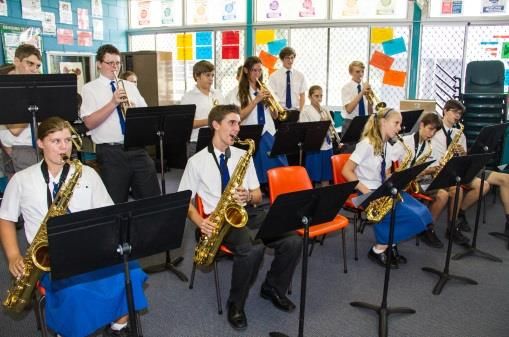
www.aspleyshs.eq.edu.au

                           Curriculum Structure Year 7
  Our curriculum structure follows the guidelines and timelines of the national curriculum. In Year 7
  our students study English, Mathematics, Science, Social Science (History and Geography), Health
  and Physical Education and LOTE for the full year. Students also study one semester of
  Technology and one semester of The Arts.

  The table below outlines the curriculum structure, time allocations and number of teachers that
  underpins our teaching and learning at Aspley State High School for Year 7. (Please note the
  number in brackets indicates the amount of minutes allocated to that subject each week.)

                    Semester 1              Teacher           Semester 2             Teacher

               English/Literacy (280)          A         English/Literacy (280)        A
                Social Science (140)                      Social Science (140)

                Mathematics (280)               B         Mathematics (280)                B
                 Science (140)                             Science (140)

               Health and Physical             C         Health and Physical           C
             Education (140 + 70 sport)                Education (140 + 70 sport)

                     LOTE (70)                 D               LOTE (70)               D

            The Arts or Technology (210)        E     The Arts or Technology (210)         E

  Respect                           Responsibility                    Co-operation   -2-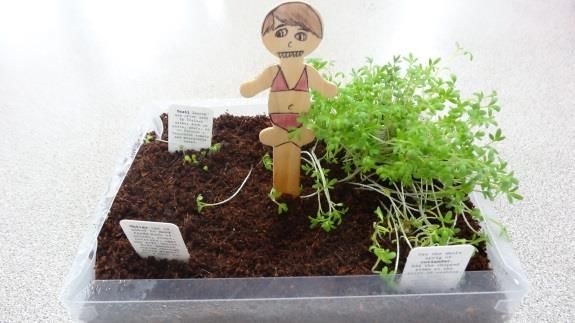
www.aspleyshs.eq.edu.au

                                                 ENGLISH
                                     Welcome to the English Faculty
  The goals of Year 7, 8 and 9 English at Aspley State High School are to develop student skills so that
  they are able to meet the demands that will face them in the senior phase of learning. We also aim to
  provide a framework that will enable them to access the opportunities available to them in society
  and be productive and critically literate citizens.

  In Year 7 all students study English. At the beginning of Year 7 students will be divided into ability groups
  based on results in Year 5, NAPLAN scores and other test results and teacher recommendations. These
  classes will run into Year 8 & 9 and student progress carefully monitored.

  English is one of the most important subjects, in that a good grounding in reading and writing will serve
  students well throughout their lives. It is the foundation of learning in all subjects. A pass in English is
  necessary for a QCE (Queensland Certificate of Education) and employers expect a pass in English as
  a pre-requisite for most careers.

  One of the most important aspects of Junior English studies will be preparation for NAPLAN tests which
  occur in May in Year 9. Students will be given extensive practice in the genres required, particularly in
  persuasive and narrative genres; our goal as always is to build on results achieved in previous years.
  We have a firm belief in the value of comprehension, grammar, spelling and punctuation and
  complete text book units once per fortnight focusing on these areas. Students complete homework
  activities in a systematic workbook format and use the TEEL paragraph strategy, (topic sentence,
  evidence, expansion, link) in English and across the school, as a visible and consistent structure in their
  writing.

  We have adopted the National Curriculum units as provided by the Queensland Education
  Department. The use of technology in the classroom has reached new heights and students need to
  develop flexible skills which enable them to access the incredible world of information now available,
  literally at their fingertips. We are prepared through developing computer access across all grades for
  the many challenges that await us all in these areas.

  Junior English is now at the forefront of state and nationwide testing. It is a
  vital part of the school curriculum and students at Aspley State High
  School are given every opportunity to improve their English skills in a range
  of important areas. We take pride in student achievement and look
  forward to your child’s participation in our subject.

  Junior English Assessment

  Students will complete four to five pieces per semester to be used in determining final grades. There is
  a National Curriculum component in the form of an oral assignment or extended written piece every
  term. In combination there will be a strong literacy component, tested in the form of a grammar and
  punctuation test, based on homework content and word lists.

  Homework Expectations

  Students will complete homework workbooks across Year 7, 8, and 9. They will also have ongoing tests
  and assignments, which will require them to draft and research at home. They will be given some time
  in class to complete drafting, but our philosophy is to keep students busy in class with content based
  activities, so the majority of drafting will be done at home. We enable students the opportunity to
  continually improve their English skills, an essential lifelong learning.

  Respect                             Responsibility                        Co-operation    -3-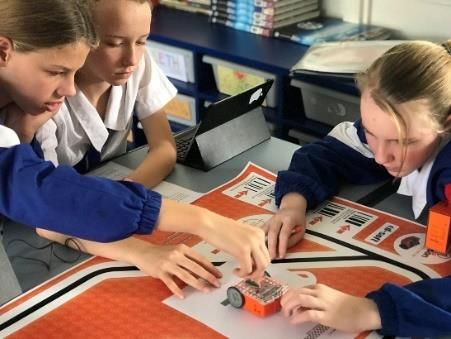
www.aspleyshs.eq.edu.au

                                             English Pathways
                                                      Year 7 English
                                          A combination of national curriculum and
                                              literacy units. No ability grouping.

                                                     Year 8 English
                                        A combination of national curriculum and
                                      literacy units. Ability grouped classes begin.

                                                     Year 9 English
                                      A combination of national curriculum and
                                      literacy units. Core and extension classes

                                                    Year 10 English
                                                8 national curriculum units.
                                                Core and extension classes

                                                                                          Year 11 English
            Year 11 English Essential                                                   6 senior units per year.
            Vocationally based English.
                                                                                       Academic based English

               12 English Essential                                                       Year 12 English
             Vocationally based English.                                                6 senior units per year.
                                                                                       Academic based English

                                                   TAFE or University or

                                                 Leads to Employment in

                          •   Announcer                                        •   Humourist
                          •   Attorney                                         •   Journalism
                          •   Author                                           •   Lecturer
                          •   Childcare                                        •   Librarian
                          •   Commodities Trader                               •   Personal Assistant
                          •   Copywriter                                       •   Politics
                          •   Foreign Affairs                                  •   Project Co-ordinator
                          •   Historian                                        •   Teacher

                                            And thousands of other careers

  Respect                                 Responsibility                             Co-operation      -4-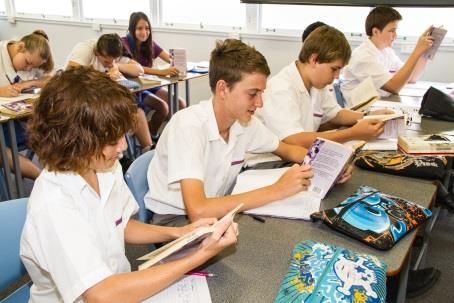
www.aspleyshs.eq.edu.au

                                          MATHEMATICS
                                 Welcome to the Mathematics Faculty
  Mathematics is an integral part of a general education and relates to many aspects of daily life to
  ensure our students are confident and active members of the community.

  Studying Mathematics at Aspley State High School uses the latest equipment and techniques
  available. The Mathematics Faculty has its own computer laboratory for use with a variety of software
  such as Word, Excel, Graphmatica, Maths300 and various web or internet resources. Every classroom
  has its own interactive data projector to facilitate electronic display. These facilities enhance and
  extend student learning opportunities.

  In the senior school, students can access computers and a graphics calculator to enhance their
  studies. The performance of students in Senior Mathematics at Aspley State High School is outstanding.

  The range of career opportunities requiring higher levels of mathematical competence is expanding in
  areas such as health, environmental science, economics and management, while remaining crucial in
  such fields as the physical sciences, engineering, commerce, medical technology and information
  technology.

  The relationship between mathematical achievement and career opportunities is very clear.
  Consequently, students should attempt the highest level of mathematics that matches their ability. At
  Aspley State High School, mathematics is delivered in an ability grouped environment. Students are
  placed in Core or Extension classes to maximise performance and ensure students are working at an
  appropriate level. Groupings of students are made at the start of Year 8 and reviewed each semester
  thereafter.

  Mathematics in the junior school follows our detailed curriculum plan which is directly drawn from the
  Australian Curriculum. Students have a range of experiences in class that focus on achieving the
  benchmark set by the Australian Curriculum.

  Our Assessment plan allows students to achieve in a variety of situations. A profile sheet is maintained
  for every student to track their performance and assist with future planning. All student assessment is
  filed for future reference.

  Assessment

  Students will be assessed in their ability to perform with:
     • concepts, facts and procedures in routine and familiar situations
     • application of problem solving processes in non-routine situations
        and real-world contexts
     • communication and organisation of ideas.

  Assessment techniques will include written assignments, reports, investigations and formal examinations
  and will be balanced across the semester units. A profile sheet will be created for each student and
  results will be collated. These will be periodically issued to students with recent amendments to assist
  with tracking and continual student improvement.

  Careful tracking of student performance allows us to plan a pathway for the student (see diagram
  below). Students showing an aptitude, interest or career goal requiring complex mathematics are
  placed in our extension programme to prepare them for the senior school subjects they require.

  Respect                            Responsibility                       Co-operation   -5-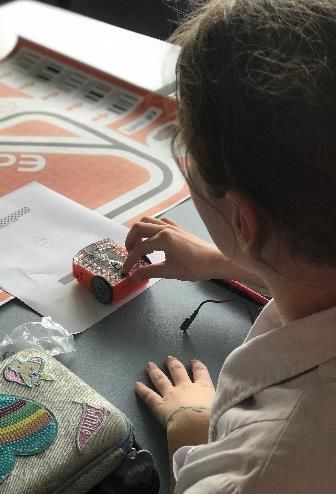
www.aspleyshs.eq.edu.au

                                        Mathematics Pathways
                                                       Year 7
                                                     Mathematics

                           Year 8                                                Year 8
                         Mathematics                                       Mathematics Extension

                           Year 9                                                Year 9
                         Mathematics                                       Mathematics Extension

                           Year 10                                               Year 10
                         Mathematics                                       Mathematics Extension

                  General Mathematics                                      Mathematical Methods
  Senior:                                                                            and
                                                                           Specialist Mathematics

            Further study or careers involving                            Further study or careers
            General use of mathematics or                                 involving general use of
            mathematical concepts.                                        mathematics or mathematical
                                                                          concepts.

   Future        Courses/Careers in:                             Courses/Careers in:
   Options:
                     •   Most TAFE courses                          •   University courses in Maths or Science
                     •   Careers/University courses involving       •   Mathematician or Statistician
                         solid Mathematics skills                   •   Mathematics, Science or IT Teacher
                     •   Careers/Courses in the Arts or Social      •   Scientist (Physicist or Chemist)
                         Sciences                                   •   Engineer (all types)
                     •   Primary or Special Education               •   Computer Scientist (all types)
                     •   Secondary Education (not Maths,            •   Pilot or Navigator
                         Science or IT)                             •   Software, Database or Network
                     •   Self-employed persons                          Engineer
                     •   Business Owners/Managers                   •   Medical, Dental, Pharmaceutical or
                     •   Aircraft Maintenance                           Veterinary
                     •   Trades/Trade Apprenticeships               •   Radiologist
                                                                    •   Optometrist

  Our Extension Program covers the Australian Curriculum in more depth but also accelerates student
  learning. This allows students to move faster through the curriculum and avoids repetition of concepts
  already mastered. There are also a number of topics that can be explored in greater depth once
  students have mastered the concepts.

  Students in the core classes consolidate the curriculum standard and work toward development of
  process and reasoning skills necessary for General Mathematics in the senior school.
  Students are offered opportunities to participate in various competitions throughout the year.

  Respect                                 Responsibility                     Co-operation     -6-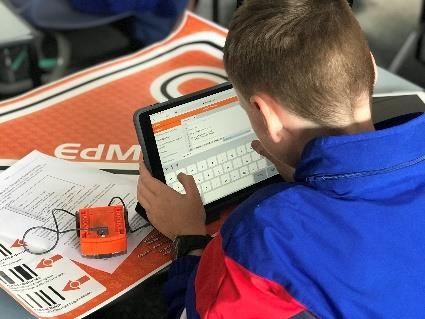
www.aspleyshs.eq.edu.au

                                      Mathematics
                                Year 7 - Semester 1 and 2
  Students will undertake theoretical and practical activities to underpin the important concepts.
  This unit involves the sub-strands of real numbers, linear and non-linear relationships, number and
  place value, money and financial mathematics and using units of measurement.

  Assessment:
  Students will be assessed in their ability to perform with:
     • concepts, facts and procedures in routine and familiar situations
     • application of problem solving processes in non-routine situations and real-world contexts
     • communication and organisation of ideas.

  Assessment techniques will include written assignments, reports, investigations and formal
  examinations and will be balanced across the semester units. A profile sheet will be created for
  each student and results will be collated. These will be periodically issued to students with recent
  amendments to assist with tracking and continual student improvement.

  Homework Expectations:
  Homework will be given and students are expected to complete the homework tasks. Students
  are also expected to follow up on class tasks and complete those to ensure full coverage of the
  work from class. If problems are encountered, students should seek assistance from their teacher
  at the next opportunity.

  Aspley State High School also operates a specialised consolidation program. Each week in Year 7,
  8 and 9, students are given tasks in Mathletics which are designed to consolidate skills for the
  NAPLAN examination. NAPLAN preparation tests are run through the Mathletics program.

  Respect                           Responsibility                    Co-operation   -7-
www.aspleyshs.eq.edu.au

                           Science and Digital Technology
                     Welcome to the Science and Digital Technology Faculty

  The Science and Digital Technology Faculty at Aspley State High School delivers a comprehensive
  and engaging curriculum across all years of Secondary Schooling. Enrolment in the science
  program is compulsory across Years 7-10 whilst in Years 11 and 12, students have the opportunity
  to engage in the disciplines of Biology, Chemistry, Earth and Environmental, Psychology, Physics
  and/or Science in Practice.

  The Science Curriculum is delivered using our six designated science laboratories located in the
  Science Precinct at the front of the school. These laboratories offer the latest multimedia
  equipment and wireless connectivity for student learning. They also allow students to access data
  loggers, iPads, Microbits and digital microscopy to enhance their learning. Students have the
  opportunity to engage in extra-curricular activities such as the FIRST Lego League competitions
  and QUT STEM workshops.

  Students may also choose to study subjects in the area of digital technology. Edustem (years 8-10)
  is a program that uses Lego robotics platforms to engage students in robotics, programing,
  problem solving and design. In senior years, students may also choose to study Digital Solutions
  and/or Design.

  Science students at Aspley State High School will experience a modern curriculum that provides
  all participants the opportunity to achieve their best in a supportive and caring environment.

  In Year 7, students explore the diversity of life on Earth and continue to develop their
  understanding of the role of classification in ordering and organising information. They use and
  develop models such as food chains, food webs and the water cycle to represent and analyse
  the flow of energy and matter through ecosystems and explore the impact of changing
  components within these systems. They consider the interaction between multiple forces when
  explaining changes in an object’s motion. They explore the notion of renewable and non-
  renewable resources and consider how this classification depends on the timescale considered.
  They investigate relationships in the Earth, sun, moon system and use models to predict and
  explain events. Students make accurate measurements and control variables to analyse
  relationships between system components and explore and explain these relationships through
  increasingly complex representations.

  Respect                          Responsibility                   Co-operation   -8-
www.aspleyshs.eq.edu.au

                                               Science Understanding

             Term 1                        Term 2               Term 3               Term 4
        Year Chemical                      Physical Sciences    Earth and Space      Biological Sciences
        7    Sciences                                           Sciences
                                           Change to an         Predictable          There are
                     Mixtures,             object’s motion is   phenomena on         differences within
                     including             caused by            Earth, including     and between
                     solutions, contain    unbalanced           seasons and          groups of
                     a combination of      forces acting on     eclipses, are        organisms;
                     pure substances       the object.          caused by the        classification helps
                     that can be           Earth’s gravity      relative positions   organise this
                     separated using       pulls objects        of the sun, Earth    diversity.
                     a range of            towards the          and the moon.        Interactions
                     techniques.           centre of the        Some of Earth’s      between
                                           Earth.               resources are        organisms can be
                                                                renewable, but       described in terms
                                                                others are non-      of food chains and
                                                                renewable.           food webs; human
                                                                Water is an          activity can affect
                                                                important            these interactions.
                                                                resource that
                                                                cycles through
                                                                the
                                                                environment.

                                          Science as a Human Endeavour

                       Nature and Development of Science         Use and Influence of Science
            Year 7     Scientific knowledge changes as           Scientific understanding, including
                       new evidence becomes available,           models and theories, are
                       and some scientific discoveries have      contestable and are refined over
                       significantly changed people’s            time through a process of review by
                       understanding of the world.               the scientific community.
                       Science knowledge can develop             Advances in scientific understanding
                       through collaboration and                 often rely on developments in
                       connecting ideas across the               technology and technological
                       disciplines of science.                   advances are often linked to
                                                                 scientific discoveries.

  Respect                                  Responsibility                     Co-operation   -9-
www.aspleyshs.eq.edu.au
Science Inquiry Skills
Questioning and Planning and Evaluating
Predicting Conducting
Year 7 Identify questions and Collaboratively and Reflect on the method
problems that can be individually plan and used to investigate a
investigated conduct a range of question or solve a
scientifically and make investigation types, problem, including
predictions based on including fieldwork and evaluating the quality
scientific knowledge. experiments, ensuring of the data collected,
safety and ethical and identify
guidelines are followed. improvements to the
In fair tests, measure method.
and control variables, Use scientific
and select equipment knowledge and
to collect data with findings from
accuracy appropriate investigations to
to the task. evaluate claims.
Processing and Analysing Data and Communicating
Information
Year 7 Construct and use a range of Communicate ideas, findings and
representations, including graphs, solutions to problems using scientific
keys and models to represent and language and representations using
analyse patterns or relationships, digital technologies as appropriate.
including using digital technologies
as appropriate.
Summarise data, from students’ own
investigations and secondary
sources, and use scientific
understanding to identify
relationships and draw conclusions.
Assessment Processes:
In Year 7, assessment in Science will incorporate 3 summative pieces per semester. These pieces
may include, written tests, folios of practical work and research reports. Students will also
participate in regular reading assessments in the context of science to support and extend the
literacy skills of all students.
Homework:
In Year 7, it is expected that students will complete 45-60 minutes of homework per week. This
would include 15-20 minutes of homework directly from each of their two lessons per week and an
additional 15-20 minutes of revision.
Respect Responsibility Co-operation - 10 -www.aspleyshs.eq.edu.au
Science and Digital Technology Pathways
Technology Pathways
Junior Secondary
Science
Elective
Edustem
Year 8-10
Senior Secondary
Sciences Digital Technology
General General
Biology Design
Chemistry
Earth and Environmental
Psychology
Physics Digital solutions
Applied
Science in Practice
Further study in: Future study
Tafe or University Tafe or University
Possible Career paths Possible Career paths
Health and Medicine Information technology
Education Web Designer
Engineering Game Designer
Sports Science Architecture
Laboratory Technician Robotics
Research Scientist Engineering
Veterinary Science Data Analyst
Agriculture and Forestry Computer Technician
Geologist/Geophysicist Designer
Mining Software Engineer
Brewing and Food Science Cyber Security
Psychologist Marketing
Respect Responsibility Co-operation - 11 -www.aspleyshs.eq.edu.au
SOCIAL SCIENCE
Welcome to the Social Science Faculty
Through our subject offerings we aim to broaden our students’ knowledge of significant world
events and issues. Students will be challenged to become active and informed citizens who are
aware of the major issues facing Australia and the world. All students will study the National
Curriculum in History and Geography.
In Years 7, 8, 9 and 10, students are introduced to the crucial skills associated with the Social
Sciences. Students gain a knowledge and understanding of the key events and processes which
have shaped the history of our nation, region and world. By studying one semester of Geography
and History in Years 7, 8, and 9, students are exposed to people, places and issues influencing our
lives today. In Year 10, students may specialise in History and Geography.
In Years 11 and 12, our senior students have the opportunity to specialise in areas of interest –
Ancient History, Modern History, Economics or Geography or Social and Community Studies.
Through the Social Sciences, we challenge our students to embrace their roles as members of
society and encourage them to question why the world is the way it is and how they can
contribute to making it better. With an excellent team of teachers whose experiences, interests
and passions are varied, the Aspley State High Social Science Faculty are proud of their motto
“bringing the world to a brain near you”.
Respect Responsibility Co-operation - 12 -www.aspleyshs.eq.edu.au
Year 7 Geography
Overview of the Semester
The study of Geography can be a truly amazing thing. So we will start at the very beginning with
“What is Geography”? Students will then study extended units on “Water in the World” and “Place
and Liveability”
1. Water in the World
Students will study:
• Weather and Climate
• Weather Hazards and Disasters
• Water: A Renewable Resource
• Australia’s Water Resources.
2. Place and Liveability
Students will study:
• Decisions and Liveability
• Places People Live
• Change and Liveability
• Enhancing Liveability.
Assessment
Students will complete two pieces of assessment over the semester:
• A short response test
• A written assignment.
Homework Expectations
Students are expected to complete nightly homework that may be
given by their teacher, finish work that was not completed at school,
keep their History/Geography book up to date, work on assignments
(if required) and spend some time in the day reading either newspapers or a book that relates to
social science in some way.
Watching the news and good quality documentaries on television is a good way of students
developing their general knowledge. This can be a significant advantage to students as they
make their way through Social Science.
Respect Responsibility Co-operation - 13 -www.aspleyshs.eq.edu.au
Year 7 History
Overview of the Semester
We set the scene for a study in ancient times. You’ll be the detective in the ancient past and
study the Stone Age, Ancient Egypt and Ancient China.
1. Investigating the Ancient Past
Students will study:
• What is History?
• Archaeology
• Primary and Secondary Sources
• Measuring Time.
2. Overview of the Ancient World
Students will study:
• Hunters and Gatherers
• The Stone Ages
• Tools and Artefacts.
3. Ancient Egypt
Students will study:
• The Nile
• Pharaohs
• Beliefs
• The Afterlife.
4. Ancient China
Students will study:
• Chinese Dynasties
• Religion
• Daily Life
• Technology.
Assessment
Students will complete two pieces of assessment over the semester:
• A short response test
• An extended writing task.
Homework Expectations
Students are expected to complete nightly homework that may be given by their teacher, finish
work that was not completed at school, keep their History/Geography book up to date, work on
assignments (if required) and spend some time in the day reading either newspapers or a book
that relates to Social Science in some way.
Watching the news and good quality documentaries on television is a good way of students
developing their general knowledge. This can be a significant advantage to students as they
make their way through Social Science.
Respect Responsibility Co-operation - 14 -www.aspleyshs.eq.edu.au
Social Science Pathway
One Semester of
History & One
Semester of
Year 7 Geography.
One Semester of
History & One
Year 8 Semester of
Geography.
Year 9 One Semester of
History & One
Semester of
Geography.
History for both One Semester of
or History &
Year 10 Semesters One Semester of
Geography.
Year 11 & 12
Ancient Modern Senior Senior Social and
History History Economics Geography Community
Studies
Respect Responsibility Co-operation - 15 -www.aspleyshs.eq.edu.au
HEALTH & PHYSICAL EDUCATION
Welcome to the Junior Secondary Health & Physical Education Program
At Aspley State High School, Health and Physical Education studies is highly valued and
recognised in helping develop our students’ physical, social and emotional well-being.
For all students in our Junior Secondary years, HPE is a core subject exposing every student in Years
7 to 9, to the benefits of an engaging program encompassing both a theoretical and physically
active program. In addition, students have the opportunity to be involved within our school’s
Football program, the Aspley Eagles Football Academy, providing quality curriculum
differentiation catering for some of our talented young athletes.
Guided by the Australian Health and Physical Education National Curriculum Guidelines, our junior
secondary curriculum incorporates the national HPE curriculum objectives with outstanding sports
and recreation facilities to provide an outstanding platform for students to be immersed within a
variety of relevant, interesting and challenging life topics within our Health and PE program.
Continually aiming to add value to our students’ education and keeping an eye on building skills
required to be successful in the senior phase of learning, the Aspley SHS HPE Department sets a
clear line of sight in preparing students for senior HPE pathways. Under the Art and Science of
Teaching framework, clear learning intentions are established to develop a key knowledge base,
both declarative and procedural, helping students practice and deepen their knowledge to
become more independent learners and better athletes.
Running throughout the entire year, ASHS’s Year 7 HPE program explores a number of life topics,
sports and peer related activities to ensure quality student engagement in helping all students to
reach their academic, physical, social and emotional potential.
For ASHS students in Years 8 and 9, throughout semester one all Year 8 students will study Core
HPE, with all Year 9 students studying Core HPE during semester 2. At the conclusion of Year 9,
students can select HPE in Year 10 as one of their elective subjects helping prepare themselves for
senior studies.
Respect Responsibility Co-operation - 16 -www.aspleyshs.eq.edu.au
Year 7 Health and Physical Education and Aspley Eagles Academy (Football)
Year / Unit Unit 1 Unit 2 Unit 3 Unit 4
Nutrition Relationships Anatomy
7 HPE Challenge
Swimming Indigenous Games Touch Football
Relationships
Nutrition Anatomy
7 Football Football
Challenge Indigenous Games
Football
and Football
Health and Physical Education
Year / Unit Unit 1 Unit 2 Unit 3
Safety. Skill Acquisition. Relationships.
8 HPE Volleyball or Futsal Athletics Gaelic Football
Community
Fitness Substance Safety.
9 HPE Connections
Swimming
Basketball or Netball
Aspley Eagles Academy (Football)
Year / Unit Unit 1 Unit 2 Unit 3 Unit 4 Unit 5
8 Football Safety. Skill Relationships. World Game Psychology.
Football Acquisition. Football (History and Football
Football Rules).
Football
9 Football Biomechanics. Nutrition Community Fitness Substance
Football Football Connection Safety
Year 10 Health and Physical Education and Aspley Eagles Academy (Football)
Year / Unit Unit 1 Unit 2 Unit 3 Unit 4
10 HPE Energy and Coaching Tournaments and
Biomechanics
Training. Events
Volleyball
Touch Football
10 Football Energy and Coaching Biomechanics Tournaments and
Training. Football Football Events
Football Football
General Physical Education
Year / Unit Unit 1 Unit 2 Unit 3 Unit 4
11 PED Motor Learning. Biomechanics Psychology. Equity – Barriers
Volleyball Aerobics and Enablers.
12 PED Tactical Ethics and Energy, Training Energy, Training
Awareness. Integrity. and Physical and Physical
Volleyball or Touch Activity. Activity.
Football Volleyball or Touch
Football
Sport and Recreation and Sport and Recreation Football
Year / Unit Unit 1 Unit 2 Unit 3 Unit 4
11 Sport and Coaching. Strength and Community Event
Recreation. Conditioning. Recreation. Management.
12 Sport and Strength and Coaching. Community Event
Recreation Conditioning. Recreation. Management.
Respect Responsibility Co-operation - 17 -www.aspleyshs.eq.edu.au
Year 7
Year 7
Health and Physical
Soccer
Education
Year 8
Year 8
Health and Physical
Soccer
Education
Year 9
Year 9
Health and Physical Soccer
Education
Year 10
Year 10
Health and Physical
Soccer
Education
Year 11 & 12 Year 11 & 12
Sport and Sport and
Recreation Recreation
(Applied) Soccer
(Applied)
Year 11 & 12
General Physical Education
Respect Responsibility Co-operation - 18 -www.aspleyshs.eq.edu.au
The Arts
Drama, Dance, Music and Visual Art
Welcome to the Arts Faculty.
The Arts encompass those artistic pursuits that express and communicate - through
dance, drama, media, music and visual art - what it is to be human.
Through these five distinct art forms, we develop, share and pass on understandings of
ourselves, our histories, our cultures and our worlds to future generations.
The Arts provide students with the knowledge, skills and understandings to express ideas,
observations, experiences, values and beliefs.
Students use their creativity, imagination and senses as they develop, extend and
enhance their understanding of arts practice through active inquiry, engagement and
reflection, both individually and collaboratively.
Respect Responsibility Co-operation - 19 -www.aspleyshs.eq.edu.au
The Arts
Drama, Dance, Music and Visual Art
Year 7 – Semester One - Belonging
Studying the arts is enriching, rewarding and fun. Students gain an
understanding of the importance of the arts in our society as both
professional and recreational pursuits. Learning about the world through
the arts develops empathy for others and an understanding of a rapidly
changing world that continues to increase in cultural diversity and
complexity. Through the arts, students gain skills to read messages from a
variety of perspectives. They are encouraged to express themselves creatively, vocally and
physically with confidence. Students achieve this through sharing ideas and working
independently, collaboratively with their peers and teachers.
Course Outline (Topics):
Students learn about the creative process through exploring and working in the five art disciplines.
They develop and use their creativity, imagination and senses to express ideas about social,
cultural and historical contexts through developing Dance, Drama, Media, Music and Visual Art
skills. Students create their own art works and present and respond to their own and others’ work.
They consider intended audiences and intended purposes when making creative decisions about
their works.
Students study The Arts for three lessons per week over a semester. Students will gain the skills of
performance, interpretation of text, sound and movement through practical workshop lessons in
Percussion, Movement and Vocal activities. Students will gain the skills in producing and
responding to meaning in media texts. Students will think critically in new and creative ways. The
theme ‘Belonging’ will be explored as a starting point. Students will be set a creating problem
each week and will devise artistic solutions. These students will also have the opportunity to
participate in the school’s annual ‘Connecting Cultures’ Day held in May.
Students undertake an initial unit in Team Work, followed by building foundation skills in Music,
Drama, Dance, Art and Media. The units are:
Team Work: Learning to be an effective team player
Drama: ‘Finding Myself’
Music: ‘Making Music’
Dance: ‘I Can Dance’
Media: ‘Introduction to Media’
Visual Art
Unit Assessment:
Students will complete three major pieces of assessment.
• A creating/making task
• A presenting/performing task
• An appreciation/responding task – research assignment.
Homework Expectations:
Students studying this subject, are expected to complete a range of homework activities. This can
include completion of class tasks, regular revision and/or readings to ensure they keep up to date
with their studies.
Respect Responsibility Co-operation - 20 -www.aspleyshs.eq.edu.au
The Arts Pathways
Junior Secondary
Students will study The Arts
Instrumental Music
Year 7
(Drama, Dance, Music, Visual Art)
for one Semester of Year 7
Students will study The Arts
Instrumental Music
Year 8
(Drama, Dance, Music, Visual Art)
for one Semester of Year 8
Students can elect to study for
Year 9 one Semester of Year 9:
Instrumental Music
Drama Dance Music
Visual Art
Senior Secondary
Students can elect to study for
two Semesters of Year 10:
Year 10 Instrumental Music
Drama Dance Music
Visual Art
Students can elect to study for
two years:
Years Authority Drama Authority Music Instrumental Music
11 & 12 Authority Visual Art
SAS Creative Art
Respect Responsibility Co-operation - 21 -www.aspleyshs.eq.edu.au
Languages
Welcome to the Languages Faculty
In our Languages Faculty we study either German or Chinese. In Year 7 all students will study either
German or Chinese for one lesson per week.
German or Chinese - Year 7
Overview of the Unit
Learning about another culture through language is a great way to improve literacy skills. These
languages link with the English language. The learning activities in our Languages Other Than
English (LOTE) program are practical ones that are very much spoken language based.
Unit Focus
• Interpreting a range of spoken and written texts
• Having conversations for different purposes, contexts and audiences
• Constructing simple, cohesive spoken and written words
• Noticing and comparing similarities and differences between the Chinese/German
language and English
• Noticing and comparing students’ own beliefs, attitudes and practices and those reflected
in Chinese/German culture
• Reflecting on and evaluating the suitability of language choices for purpose, context and
audience
• Reflecting on learning, applying new understandings and identifying future applications.
Assessment
Over the course of the semester, students will complete assessment items that will be of either a
written or oral nature.
Homework Expectations
Students are expected to complete set tasks given by the teacher as well as revising and
practicing new language features that have been learnt in the week.
Respect Responsibility Co-operation - 22 -www.aspleyshs.eq.edu.au
Technology
Digital Technology - Year 7
Coding Sustainable Futures
Design and Technologies, a group of subjects in which students’ use design thinking and technologies
to generate and produce designed solutions for authentic needs and opportunities. Students will study
one term of Home Economics and one term of Digital Technologies.
Overview
In Year 7, learning in digital technologies focuses on further developing
understanding and skills in computational thinking, such as decomposing
problems and engaging students with a wider range of information
systems as they broaden their experiences and involvement in the world
in which they live. They will design increasingly complex algorithms that
allow data to be manipulated automatically. Students will have the
opportunity to express and explore sustainable futures through data
collection, representation and interpretation. They will use design and
project management processes to model solutions and events that
solve problems faced by technology users in the digital age that are
physically and legally responsible.
Course Outcomes
• Understand and investigate how data is transmitted in
networks
• Understanding of binary numbers and how computers
use them
• Investigate innovative solutions for the sustainable use
of water using coding
• Work collaboratively and communicate ideas online,
taking safety and online norms into account
• Evaluate how designed solutions meet needs and take
into account future risks and sustainability
Assessment
Portfolio of Evidence – in-class and at-home time allocated
In-class exam
Homework
Students will be expected to engage in subject specific reading,
programming and coding.
Respect Responsibility Co-operation - 23 -www.aspleyshs.eq.edu.au
Practical Technology Pathway
Junior Secondary
Year 7
Term Elective
Year 8, 9, 10 Edustem
Semester Elective
Senior Secondary
Year 11/12 Digital
Solutions (general)
Post School
Further Study:
Finance Analyst
App Developer Possible Careers:
Strategic Planner Draftsperson,
Aerial Surveyor Applied Graphics,
Software Engineer Planning
Robotics Engineer
Cloud Services Engineer
Information Security Consultant
Computer Network Architect
Respect Responsibility Co-operation - 24 -www.aspleyshs.eq.edu.au
Technology
Practical Technology - Year 7
Home Economics – Grow, Cook and Share
Practical Technology involves students studying one term of Home Economics.
Course Outline
Being able to live in our world without taking more of its resources than can be replaced is one of
the major issues that society has to address. This unit will follow Jamie Oliver’s fruit and vegetable
adventure as we ‘Grow, Cook and Share’ our food with family and class mates. Students will use
a variety of fruits, vegetables and herbs to prepare simple, nutritious, tasty meals and snacks. They
will also explore how to grow, tender and record a variety of plant foods.
This course examines:
• Implement the food models in food preparation
• Design, make and analyse healthy foods using fruits, vegetables and herbs to produce
quality products
• Plant seeds to observe, measure, and compare growth across groups
• Gather, record, analyse and share data
• Understand the nature of materials and techniques to manipulate materials
• Propose and enact safe working behaviours.
Practical Cookery Students will be expected to participate in practical cookery each
week. One practical lesson will be designated as a practical exam.
Written Assignment Duration 3 weeks. Topic - Vegetables
Time allocated in class: Approx 4 x 70 mins
Students to complete at home.
Written Exam In class exam. Multiple Choice.
Homework Students will have a weekly reading task and production sequence
requirement.
Respect Responsibility Co-operation - 25 -www.aspleyshs.eq.edu.au
Home Economics Pathway
Year 7 & 8
Home Economics
Year 9
Food Studies Home Economics
Year 10
Food Studies Home Economics
Year 11/12
Hospitality Fashion
TAFE
Hospitality Fashion
Tourism Interior Design
Events Management Textiles
Business Community services
University
Hospitality Management Fashion Design
Hospital Food Service Management Food Technology
Food Technology Interior Design
Business Health
Management Childcare
Dietetics Teaching
Nutrition
Work
Chef, Baker, Pastry Chef
Barista
Bar Attendant
Dietician Interior Designer
Flight Attendant Fashion Designer
Waiter Nanny, Childcare Worker
Club/Hotel/Restaurant Manager Community Worker
Events Co-ordinator Theatrical Costume Maker
Nutritionist
Food Technologist
Respect Responsibility Co-operation - 26 -You can also read


