YEAR 12 CURRICULUM GUIDE - one ninety 2021 - Pulteney ...
←
→
Page content transcription
If your browser does not render page correctly, please read the page content below

CURRICULUM GUIDE – one ninety
          2021

          YEAR 12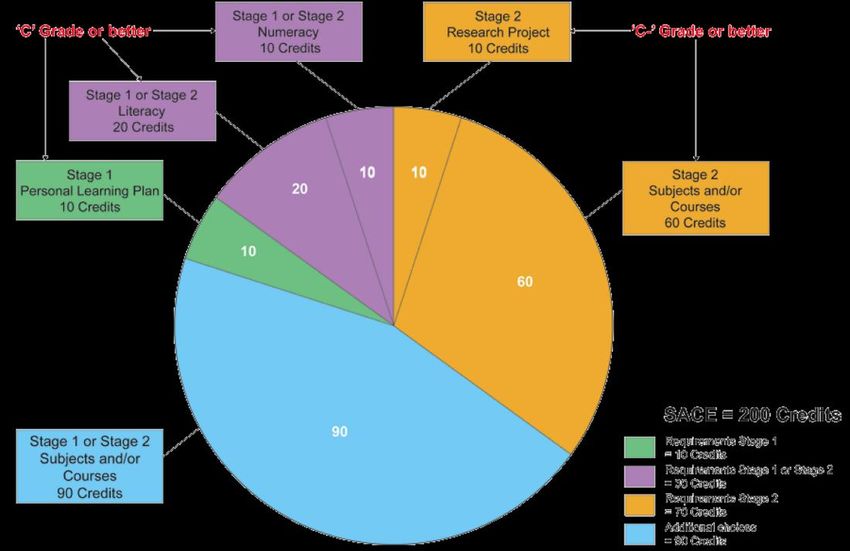
Contents
                                                                  Page

WELCOME TO one ninety                                                    4

The SACE                                                                 5

VOCATIONAL EDUCATION TRAINING (VET)                                      6

HEADSTART (Adelaide University Extension Program)                        7

FREQUENTLY ASKED QUESTIONS                                               8

SUBJECT GUIDES

 LEARNING AREA: Digital Technologies

 Subject                               Credit Value
 Digital Technology Studies            20 Credits (full year)            9

 LEARNING AREA: English

 Subject                               Credit Value
 English                               20 Credits (full year)        10
 English Literary Studies              20 Credits (full year)        11
 English as an Additional Language     20 Credits (full year)        12
 Essential English                     20 Credits (full year)        13
 Media Studies                         20 Credits (full year)        14

 LEARNING AREA: Health and Physical Education

 Subject                                 Credit Value
 Outdoor Education                       20 Credits (full year)      15
 Physical Education                      20 Credits (full year)      16

 LEARNING AREA: Humanities

 Subject                               Credit Value
 Accounting Studies                    20 Credits (full year)        17
 Economics                             20 Credits (full year)        18
 Geography                             20 Credits (full year)        19
 Integrated Learning                   20 Credits (full year)        20
 Legal Studies                         20 Credits (full year)        21
 Modern History                        20 Credits (full year)        22
 Tourism                               20 Credits (full year)        23

                                                                             2
LEARNING AREA: Languages
Subject Credit Value
Chinese (Background) 20 Credits (full year) 24
German (Continuers) 20 Credits (full year) 25
Japanese (Continuers) 20 Credits (full year) 26
LEARNING AREA: Mathematics
Subject Credit Value
Essential Mathematics 20 Credits (full year) 27
General Mathematics 20 Credits (full year) 28
Mathematical Methods 20 Credits (full year) 29
Specialist Mathematics 20 Credits (full year) 30
LEARNING AREA: Performing Arts
Subject Credit Value
Drama 20 Credits (full year) 31
Music Explorations 20 Credits (full year) 32
Music Performance – Ensemble 10 Credits (full year) 33
Music Performance – Solo 10 Credits (full year) 34
Music Studies 20 Credits (full year) 35
LEARNING AREA: Science
Subject Credit Value
Biology 20 Credits (full year) 36
Chemistry 20 Credits (full year) 37
Nutrition 20 Credits (full year) 38
Physics 20 Credits (full year) 39
Psychology 20 Credits (full year) 40
LEARNING AREA: Visual Arts
Subject Credit Value
Visual Arts 20 Credits (full year) 41
3Welcome to one ninety
Our teaching staff are inspired by the belief extra-curricular activities available, thus
that our young men and women will leave us gaining valuable leadership experience and
with a vision of an ever-expanding world, be learning the benefits of a balanced lifestyle.
sensitive to its problems and ever alert to its
advances. Leadership experience is also fostered in
Tutor groups. Each student belongs to one of
We are confident that they will be able to the four houses: Bleby-Howard, Cawthorne-
use what they have learned with us, to be Nicholls, Kennion-Miller and Moore-Sunter.
innovative and creative in their thinking, and Each house is divided into Tutor groups
caring in their dealings with others. Our according to year level.
fervent hope is that one day we shall see
them become wise adaptors and initiators in Parents are encouraged to contact Heads of
their chosen fields. House, Tutors and Subject Teachers if they
are concerned about any aspect of their
In one ninety, we are proud to build on the child’s life at school.
excellent academic foundations and
behavioural practices established in the first We welcome you to our focused community
three phases of life at Pulteney – Kurrajong, in one ninety and assure you that, at all times,
Prep School and the Middle School. the very best interests of each individual
student are of the greatest importance to us.
On entering one ninety, each student, with the
help of parents and staff, including our We commend this Year 12 Curriculum
Coordinator of Futures, makes some very Guide to both parents and students as a
significant choices about future life directions. valuable resource, as together you make the
Some are very fortunate to know these subject choices to ensure a suitable
directions clearly at Year 10, others may not preparation for the future.
know them even after they complete Year
12. Nicholas Brice
Head of one ninety
Whatever the aspirations of the students as
they enter one ninety, critical, creative and
ethical intelligences continue to play an
important role in the learning and teaching of
each individual subject.
The increased variety of subject choice is
balanced by the SACE pattern for Years 11
(Stage 1) and 12 (Stage II) established by
South Australian Certificate of Education
(SACE) Board of South Australia to ensure
that each student selects an educationally
sound programme.
Staff members in one ninety are enthusiastic
and committed to providing quality education
while striving for academic excellence.
It is the expectation that each student will
achieve his or her individual best, not only
academically but also in the wide variety of
4The SACE
What is the SACE Board of South What is the SACE?
Australia?
The SACE is the South Australian
The SACE Board is an independent body Certificate of Education awarded to
formed by the State Government and it is students who successfully complete their
responsible for: secondary school education.
The development of subject outlines for a The SACE has been designed to enable
wide range of subjects designed to cater students to:
for a diversity of abilities and interests at Develop the capabilities to live, learn, work
Stage 1 and II (Years 11 and 12). and participate successfully in a changing
The assessment of subjects for which it world.
provides or approves curriculum Plan and engage in a range of challenging
statements. achievable, and manageable learning
The issuing of the South Australian experiences, taking into account their
Certificate of Education (SACE) to all goals and abilities.
students in South Australia who Build their knowledge skills and
satisfactorily complete the requirements understanding in a variety of contexts
of the SACE. (e.g. schools, workplaces, and training
and community organisations).
Gain credit for their learning achievements
against performance standards.
For more information regarding studying in
the SACE and detailed discussion
regarding assessment please visit the
SACE Board website.
5VET Information: Year 11 and Year 12
Vocational Education and Training (VET) courses allow A student should think twice about doing a VET
students to achieve a nationally-accredited qualification, course if:
whilst also studying subjects within SACE. Most • They need to keep their options open by doing a
Pulteney students who are looking to undertake a VET range of school subjects. In this case, more
program, will do so in Year 11 or Year 12. traditional school subjects might better suit the
student’s needs
VET courses can be a valuable part of a student’s OR
secondary education, but they are not the best • They are considering a VET course because they
option for all students. It is important for both think it will be easier than a subject at school
students and parents to carefully consider the reasons
for undertaking a VET course whilst at school, and There are a range of courses available to students wishing
research the requirements, so that informed decisions to pursue VET options, including (but not limited to):
can be made. Please be aware that many VET programs • Aged Care
have a compulsory work experience component. • Animal Studies
• Automotive
Our experience is that successful participation in, and • Beauty Services
completion of, a VET course is more likely if: • Business
• Students have an interest in the particular • Childcare
career/industry area they are studying • Construction
• Students have a level of maturity and
• Electrical
independence that would accommodate a more
• Fitness
adult style of learning and training. Evidence of
• Hospitality
managing part time work, or other related
responsibilities, would be relevant • Photography
• Competent literacy and numeracy skills are • Plumbing
essential components of the work environment
and students will need to be able to Involvement in a VET course in Year 11 is not likely to
demonstrate an appropriate skill level in both affect university entrance selection, however, if students
choose to continue a VET pathway into Year 12, this may
The Pulteney VET program operates with a lower affect university entry directly from Year 12. If a student
level of direct supervision of students than if they wants their VET subject to contribute towards their
were in a classroom, and therefore relies on students ATAR, they must satisfactorily complete a Certificate
to be responsible and to manage their time well. III or higher qualification (Certificate III in Retail
Operations does not fall into this category).
A VET course might be a good choice if:
• A student has a clear idea about their career For further information about VET at Pulteney, please
pathway and the VET course is going to give go to the Pulteney Grammar Future's Website and click
them skills and a qualification towards their goal on the red button.
OR they are keen to pursue a VET course to
explore an identified industry area as a possible For further information about VET in SACE, please
career option click here.
AND
• The student has a real talent and/or interest in
that particular practical area
AND
• The student is good at managing their time,
staying organised and focussed, and learning
independently
6Headstart (Adelaide University • A portfolio of practical evidence, i.e.
Extension Program) Art portfolio.
• A- grade in accelerated Stage 2
subject/s and/or A- grades from
Headstart provides gifted and highly semester 1 and current grades at the
motivated Year 12 students with a challenge time of application.
beyond the Year 12 curriculum as they
combine secondary school and university Process for selection:
studies. Students accepted into Headstart can
choose to replace or supplement their Year The school’s standard for the selection
12 subjects with university courses (subjects). process for Headstart is purposely set high to
University grades are recorded, and students ensure that students can successfully
are able to credit these grades towards their combine their studies. While students
SACE Stage 2 level studies and ATAR. undertake the course independently, schools
Headstart students may also receive credit are required to provide a recommendation
towards their university degree if they enrol which is why it is crucial that we have a
in a University of Adelaide program after rigorous selection process; exemplary
attending Pulteney Grammar (one ninety), behaviour is also an expectation.
enabling them to complete their university
study early or study a wider range of courses Once applications have been received, the
than usual. Successful Headstart applicants will Head of one ninety and the Gifted and
also receive a scholarship from the University Talented Coordinator and Teacher, will meet
of Adelaide exempting them from both and decide if further evidence or tests are
tuition fees and the student services and required. Results will be collated with the
amenities fee for one course per semester. student’s formal application and a vetting
process will take place to shortlist those who
Who can apply for Headstart: will be invited to apply for Headstart.
There are strict guidelines that Year 11
students will need to adhere to, and meet For successful applicants, the school will
should they wish to apply. In the first arrange a meeting with the, Coordinator of
instance, the students need to fill in a Headstart, from the University of Adelaide.
proforma outlining their study and career Students will then be advised how and when
path. Students also need to submit a personal to submit their application online which
statement outlining why they should be occurs the following year.
considered for the Headstart program. The
following evidence will also need to be
provided: Further information about Headstart can be
found at
https://www.adelaide.edu.au/headstart/ or
• Any evidence, such as letters of
you can contact Angelika Portolesi,
reference from experts in the subject
Coordinator of Headstart:
specific field, competitions, etc.
angelika.portolesi@adelaide.edu.au.
placing the student in the top tenth
percentile.
7Frequently Asked Questions
How many subjects do I undertake in place before the end of the second week of
Year 12? Term 1. Following this, changes will not be
considered.
At Pulteney Grammar, students traditionally
undertake 5 subjects within Year 12. This will Should a student wish to change courses,
provide students with the opportunity to they are to approach their subject teacher
obtain 100 SACE credits (each individual and Head of House to have detailed
subject being worth 20 credits each). discussion regarding the potential
consequences.
To achieve an ATAR, students must
successfully undertake subjects which total Following this discussion, students must
90 credits (4 subjects + the Research Project obtain written parent approval for the final
– worth 10 credits). By studying 5 subjects, decision to change subjects be considered
students have the ability to have ‘insurance’ and potentially approved.
should they not achieve the result they
hoped for or if something was to How do I know what subjects to choose
detrimentally affect their study of an so as to qualify for a potential tertiary
individual (or all) subjects. degree or course?
Alleviations to subject loads are more readily Tertiary course prerequisites are different
made should a student be undertaking (or for each individual institution. Further
have undertaken) a VET course or other differences exist from state to state. Students
external course(s) which will award (or have are therefore highly encouraged to visit or
awarded) SACE credits. contact the individual institutions they are
considering. However, to assist, you may
Can I withdraw from a subject and, if wish to visit the following sites:
so, by when?
• South Australian Tertiary Admissions
After choosing 5 subjects, students have the Centre (SATAC): Undergraduate
opportunity to withdraw from a subject at Courses
any time up until the end of Term 3.
• Australian Tertiary Institutions
Should a student wish to make the decision
to withdraw, they are to approach their Disclaimer
subject teacher and Head of House to have
detailed discussion regarding the potential The information found within this guide
consequences. concerns subject choices and further tertiary
studies. Every effort has been made to obtain
Following this discussion, students must up-to-date and correct information.
obtain written parent approval for the final However, details for courses, at Pulteney, at
decision to be considered and potentially tertiary institutions and offered through the
approved. SACE Board of South Australia, are subject
to change. Students are advised to contact
Can I change subjects after beginning a the relevant Pulteney Learning Area Leader,
course? SACE or tertiary institution to verify any
information contained in this curriculum
Students have the opportunity to change guide.
from one subject to another at the beginning
of the year. However, this change must take
8LEARNING AREA: DIGITAL TECHNOLOGIES
Subject Name: Digital Technology Studies
Level of Study: Stage II
Length of Course: Year
Prerequisite: NA
What will be in the course?
Digital Technology Studies is extremely flexible at the Year 12 level with a focus on student choice,
initiative and entrepreneurship. The course content is based on student interest, but is always developed
around programming skills. In the past, students have used Arduinos with Raspberry Pis to collect and
analyse sound data in the Centre for Senior Learning, created interactive voting websites for Triple J,
applied facial recognition to automatically sort and tag party photographs. Depending on student interests
and skills, it is also possible to explore game and app development. The course culminates in a term-long
major project, where students make a software solution to help others.
How will I be assessed?
School Assessment (70%) External Assessment (30 %)
• Project Skills (50%) • Individual Digital Solution (30%)
• Collaborative Project (20%)
Why would this interest me?
Click on the below video to listen to views from an old scholar.
Year 12 Curriculum Guide 2018 9LEARNING AREA: ENGLISH
Subject Name: English
Level of Study: Stage II
Length of Course: Year
Prerequisite: A Stage I English course (excluding English as an
Additional Language)
What will be in the course?
Students analyse the interrelationship of author, text, and audience, with an emphasis on how language and
stylistic features shape ideas and perspectives in a range of contexts. They consider social, cultural, economic,
historical, and/or political perspectives in texts and their representation of human experience and the world.
Students explore how the purpose of a text is achieved through application of text conventions and stylistic
choices to position the audience to respond to ideas and perspectives. They have opportunities to reflect on
their personal values and those of other people by responding to aesthetic and cultural aspects of texts from
the contemporary world, from the past, and from Australian and other culture.
How will I be assessed?
School Assessment (70%) External Assessment (70 %)
• Assessment Type 1: Responding to • Assessment Type 3: Comparative Analysis
Texts (30%) (30%)
• Assessment Type 2: Creating Texts
(40%)
Why would this interest me?
Click on the below video to listen to views from an old scholar.
one ninety curriculum guide 2018 10LEARNING AREA: ENGLISH
Subject Name: English Literary Studies
Level of Study: Stage II
Length of Course: Year
Prerequisite: English (Stage 1) or English Literary Studies (Stage I)
What will be in the course?
English Literary Studies focuses on ways in which literary texts represent culture and identity, on the
dynamic relationship between authors, texts, audiences, and contexts, and on the skills and strategies of
critical thinking needed to interpret texts. Through shared and individual study of texts, students encounter
different opinions about texts, have opportunities to exchange and develop ideas, find evidence to support
a personal view, learn to construct logical and convincing arguments, and consider a range of critical
interpretations of texts. Students develop an understanding of the power of language to represent ideas,
events, and people in particular ways and of how texts challenge or support cultural perceptions
How will I be assessed?
School Assessment (70%) External Assessment (30%)
• Assessment Type 1: Responding to • Comparative Text Study (15%)
Texts (50%) • Critical Reading (SACE issued
• Assessment Type 2: Creating Texts examination) (15%)
(20%)
Why would this interest me?
Click on the below video to listen to views from an old scholar.
one ninety curriculum guide 2018 11LEARNING AREA: ENGLISH
Subject Name: English as an Additional Language
Level of Study: Stage II
Length of Course: Year
Prerequisite: NA
What will be in the course?
English as an Additional Language is designed for students for whom English is a second language or an
additional language or dialect. These students have had different experiences in English and one or more
other languages. Students who study this subject come from diverse personal, educational, and cultural
backgrounds.
How will I be assessed?
School Assessment (70%) External Assessment (30%)
• Assessment Type 1: Academic Literacy • SACE issued examination (30%)
Study (30%)
• Assessment Type 2: Responses to Texts
(40%)
Why would this interest me?
Click on the below video to listen to views from an old scholar.
one ninety curriculum guide 2018 12LEARNING AREA: ENGLISH
Subject Name: Essential English
Level of Study: Stage II
Length of Course: Year
Prerequisite: A Stage I English course (excluding English as an
Additional Language)
What will be in the course?
Students respond to and create texts in and for a range of personal, social, cultural, community, and/or
workplace contexts. Students understand and interpret information, ideas, and perspectives in texts and
consider ways in which language choices are used to create meaning and to position the audience to respond
to ideas and perspectives.
How will I be assessed?
School Assessment (70%) External Assessment (30%)
• Assessment Type 1: Responding to • Assessment Type 3: Language Study (30%)
Texts (30%)
• Assessment Type 2: Creating Texts
(40%)
Why would this interest me?
Click on the below video to listen to views from an old scholar.
one ninety curriculum guide 2018 13LEARNING AREA: ENGLISH
Subject Name: Media
Level of Study: Stage II
Length of Course: Year
Prerequisite: NA
What will be in the course?
Students develop media literacy and production skills. They research, discuss and analyse media issues, and
interact with, and create media products. Students explore the role of media in Australian and global contexts,
and how media can exert a significant influence on the way people receive and interpret information about
the world, explore their own and other cultures, make economic choices, develop political ideas, and spend
their leisure time.
How will I be assessed?
School Assessment (70%) External Assessment (30%)
• Assessment Type 1: Folio (30%) • Assessment Type 3: Investigation (30%)
• Assessment Type 2: Product (40%)
one ninety curriculum guide 2018 14LEARNING AREA: HEALTH AND PHYSICAL
EDUCATION
Subject Name: Outdoor Education
Level of Study: Stage II
Length of Course: Year
Prerequisite: NA
What will be in the course?
Students develop their sense of self-reliance and build relationships with people and natural environments
and enhance their awareness of environmental issues through observation and evaluation. Students gain an
understanding of ecology, environmental sustainability, cultural perspectives (including Indigenous Australians’
perspectives about land), and physical, emotional, and spiritual health. Through outdoor journeys, students
increase their effectiveness as members of a group and develop skills in leadership, self-management, group
management, planning and evaluating, personal reflection, assessing and managing risks, managing safety, and
minimising environmental impacts for sustainable futures.
How will I be assessed?
School Assessment (70%) External Assessment (30%)
• Folio (20%) • Investigation (30%)
• Group Practical (30%)
• Self-Reliant Journey and Report (20%)
Why would this interest me?
Click on the below video to listen to views from an old scholar.
one ninety curriculum guide 2018 15LEARNING AREA: HEALTH AND PHYSICAL
EDUCATION
Subject Name: Physical Education
Level of Study: Stage II
Length of Course: Year
Prerequisite: NA
What will be in the course?
Students gain an understanding of human functioning and physical activity, and an awareness of the community
structures and practices that influence participation in physical activity. Students explore their own physical
capacities and analyse performance, health, and lifestyle issues. They develop skills in communication,
investigation, and the ability to apply knowledge to practical situations.
How will I be assessed?
School Assessment (70%)
• Diagnostics task (30%) External Assessment (30%)
• Improvement analysis (40%) • Group Dynamics (30%)
Why would this interest me?
Click on the below video to listen to views from an old scholar.
one ninety curriculum guide 2018 16LEARNING AREA: HUMANITIES
Subject Name: Accounting
Level of Study: Stage II
Length of Course: Year
Prerequisite: NA
What will be in the course?
Accounting helps students to develop problem solving skills and is useful whether you want to become a
business entrepreneur, a manager in an organisation or understand the stock market or your own personal
finances better. Accounting is the language of business and is used to tell the financial story of an entity
communicating past events and current activities. Accounting helps business owners and managers to
understand their organisation so that they can make informed decisions when faced with challenges and
opportunities such as those presented by the Global Financial Crisis and Covid-19 pandemic. The course
requires students to apply their knowledge to real-world scenarios.
Students will learn how to prepare and analyse profit and loss statements, balance sheets, cashflow
statements, and various specialist reports. Ratio analyses are conducted in order to examine a range of
business problems and give advice to business owners and stakeholders on how to improve margins and
cashflow. Accounting is suitable for students of all mathematical abilities.
Learning takes place around two focus areas:
- Financial Literacy: Cash and debtors control, inventory control, profit and loss statements, balance
sheets and innovation
- Providing accounting & business advice from business data: such as preparing forecasts, changes to
ownership structure, finance options, breakeven analysis, business location & financial viability of
proposal
How will I be assessed?
School Assessment (70%) External Assessment (30%)
• Assessment Type 1: Skills and • SACE issued examination (30%)
Applications Tasks (50%)
• Assessment Type 2: Report (20%)
Why would this interest me?
Click on the below video to listen to views
from an old scholar.
one ninety curriculum guide 2018 17LEARNING AREA: HUMANITIES
Subject Name: Economics
Level of Study: Stage II
Length of Course: Year
Prerequisite: NA
What will be in the course
The study of Economics can lead to a diverse range of career paths for students because of the skills it
helps develop. It is a subject that helps you understand the world around you and how governments,
consumers and businesses deal with issues such as the Global Financial Crisis and Covid-19. Central to the
study of Economics is the study of human behaviour and how best to use our scarce resources.
Economists look at costs and benefits, and trade-offs such as efficiency versus fairness, and what provides
the most good for society. Students learn through problem-based learning where they are given scenarios
in which they apply critical thinking skills.
How will I be assessed?
School Assessment (70%) External Assessment (30%)
• Assessment Type 1: Skills and • SACE issued examination (30%)
Applications Tasks (30%)
• Assessment Type 2: Folio (40%)
Why would this interest me?
Click on the below video to listen to views from an old scholar.
one ninety curriculum guide 2018 18LEARNING AREA: HUMANITIES
Subject Name: Geography
Level of Study: Stage II
Length of Course: Year
Prerequisite: NA
What will be in the course?
Geography helps students shape their thinking about local and global issues which affect their future. In our
increasingly globalised world, a deep understanding of current affairs — mitigating and adapting to climate
change, the influence of China, the sustainability of population growth – is critical. The contemporary
course studied at Pulteney Grammar will prepare students for an uncertain future and equip them with the
skills and knowledge to help solve the ‘wicked problems’ facing not only Australia, but the world.
Stage 2 Geography includes an independent fieldwork investigation which equips students with robust data
collection and analytical skills for further study in both Humanities and more scientific fields.
Topics covered include:
• Climate Change
• Global Inequalities
• Globalisation
• Population Change
• Ecosystems and People
• Geographic Skills
How will I be assessed?
School Assessment (70%) External Assessment (30%)
• Assessment Type 1: Geographical Skills • SACE issued examination (30%)
and Applications (40%)
• Assessment Type 2: Fieldwork Report
(30%)
Why would this interest me?
Click on the below video to listen to views from an old scholar.
one ninety curriculum guide 2018 19LEARNING AREA: HUMANITIES
Subject Name: Integrated Learning
Level of Study: Stage II
Length of Course: Year
Prerequisite: NA
What will be in the course?
Integrated Learning is a subject framework that enables students to make links between aspects of their lives and their
learning. Schools design Integrated Learning programs for a specific purpose, product, or outcome according to the
interests and needs of students in their local context.
Through the lens of the program focus students develop their learning about a real-world situation, task, event, or
other learning opportunity, while also growing their knowledge about themselves as learners, and their capabilities.
In Integrated Learning, students develop, extend, and apply critical thinking skills through inquiry about aspects of the
program focus that are of interest to them.
Students extend their self-awareness, personal identity, and values through collaborative processes that build from
peer and self-assessment. They make meaning from experiences in order to recognise themselves as confident and
creative individuals, and critical and evaluative thinkers with the necessary life skills to contribute to society as active
and informed citizens.
Potential Projects
The program focus should have relevance for students and give context to their learning. It is the lens through which
students make links with their knowledge of themselves as learners, and develop, extend, and apply their capabilities.
Some potential starting points for designing a program focus may include:
• Environmental management and sustainability • Technology and Production
• Child development and nutrition • Small business enterprise
• Marine and maritime studies • Arts and performance
• Career-related study • Information and processing and publishing
• Innovation, invention and enterprise Initiatives • Hospitality and catering
This list is neither prescriptive nor exhaustive and further information can be accessed via the SACE website (Stage 1
Integrated Learning Subject Outline.
How will I be assessed?
School Assessment (70%) External Assessment (30%)
• Assessment Type 1: Practical Inquiry • Assessment Type 3: Personal Endeavour (30%)
(40%)
• Assessment Type 2: Connections (30%)
one ninety curriculum guide 2018 20LEARNING AREA: HUMANITIES
Subject Name: Legal Studies
Level of Study: Stage II
Length of Course: Year
Prerequisite: NA
What will be in the course?
The study of Legal Studies enables an understanding of the operation of the Australian legal system, its
principles and processes and prepares students to be informed and articulate in matters of the Law and
society. Through an exploration of the competing tensions that arise students evaluate, analyse and apply
contextually appropriate legal principles, processes, evidence and cases to demonstrate their arguments.
Students consider a range of perspectives to make recommendations for reforms to the legal system and
laws. They will explore rights and responsibilities, sources of law and adversarial and inquisitorial dispute
resolution processes. Students will examine how people, governments and institutions shape the law and
how law controls, shapes and regulates interactions between people, institutions and government.
Teachers are required to teach both Focus Areas 1 and 2, and must choose one Optional topic listed
below for exploring the questions and tensions:
• Focus Area 1: Sources of Law
• Focus Area 2: Dispute Resolution
• Optional Area 1: The Constitution
• Optional Area 2: When Rights Collide
How will I be assessed?
School Assessment (70%) External Assessment (30%)
• Assessment Type 1: Folio (50%) • SACE issued examination (30%)
• Assessment Type 2: Inquiry (20%)
Why would this interest me?
Click on the below video to listen to views from an old scholar.
one ninety curriculum guide 2018 21LEARNING AREA: HUMANITIES
Subject Name: Modern History
Level of Study: Stage II
Length of Course: Year
Prerequisite: NA
What will be in the course?
Students research and review sources within a framework of inquiry and critical analysis, and make sense of
a complex and rapidly changing world by connecting past and present. Through the study of past events,
actions, and phenomena since c.1500, students gain an insight into human nature and the ways in which
individuals and societies function.
The Stage 2 Modern History course consists of the study of two key topics.
These topics are:
• The United Nations and establishment of a global perspective (1945- )
• Germany (1918-1948)
How will I be assessed?
School Assessment (70%) External Assessment (30%)
• Assessment Type 1: Historical Skills • SACE issued examination (30%)
(50%)
• Assessment Type 2: Historical Study
(20%) External assessment (30%)
Why would this interest me?
Click on the below video to listen to views from an old scholar.
one ninety curriculum guide 2018 22LEARNING AREA: HUMANITIES
Subject Name: Tourism
Level of Study: Stage II
Length of Course: Year
Prerequisite: NA
What will be in the course?
Tourism added $3.2bn to South Australia’s economy in 2018-19, and despite global challenges, our numbers
of inter- and intrastate tourists are robust. Tourism draws together fundamental concepts from Business and
Economics, Geography, and Research Project and gives students to apply their creativity and problem solving
in unfamiliar (and often sunny) locations. Students apply and evaluate academic tourism models, using them
to assess the impacts of tourism on the economy, the environment, and society. Tourism students enjoy the
problem-solving aspects of the course, and the university tutorial style class discussions. The contemporary
curriculum is continuously updated to reflect the latest tourism issues, such as the cruise industry and over-
tourism.
Stage 2 Tourism includes an independent investigation, as well as practical data collection tasks. The blend
of timed assessments and analytical reports suit a range of learning styles
Topics covered include:
• Structures and Operations of the Tourism Industry
• Global and Local Trends
• Responsible Tourism
• Role of Government
• Special Interest Tourism (including food and wine tourism)
How will I be assessed?
School Assessment (70%) External Assessment (30%)
• Folio – 3 tasks (20%) • SACE issued examination (30%)
• Practical Activities– 2 tasks (25%)
• Investigation (25%)
Why would this interest me?
Click on the below video to listen to views from an old scholar.
one ninety curriculum guide 2018 23LEARNING AREA: LANGUAGES
Subject Name: Chinese (Background Speakers)
Level of Study: Stage II
Length of Course: Year
Prerequisite: Chinese Background Speakers
What will be in the course?
The Chinese (Background Speakers) course is designed for students who have studied Chinese for more
than one year in their home country. Students develop a deeper understanding of contemporary China,
including the development of their own perspectives on significant issues relating to China today. Students
interact and critically analyse texts and the ways in which culture is expressed through language. Through a
range of tasks in different contexts, students think critically, respond to the views and ideas of others, and
express and justify their own opinions on a range of issues
How will I be assessed?
School Assessment (70%) External Assessment (30%)
• Assessment Type 1: Folio (50%) • Written Examination (21%)
- Interaction • Oral Examination (9%)
- Text Analysis
- Text Production
• Assessment Type 2: In-depth Study (20%) on
topic of choice
Why would this interest me?
Click on the below video to listen to views from an
old scholar.
English Language Video
•
Chinese Language Video
one ninety curriculum guide 2018 24LEARNING AREA: LANGUAGES
Subject Name: German (continuers)
Level of Study: Stage II
Length of Course: Year
Prerequisite: German (Stage I)
What will be in the course?
Students will develop and apply linguistic and intercultural knowledge, understanding, and skills through the
study of such topics as: stereotypes and identity, immigration, school and further study, social media and
the environment. They will interact with others to exchange information, ideas, experiences and opinions in
German. They will create texts in German and analyse a range of texts in German to interpret meaning.
They will also examine relationships between language, culture, and identity, and reflecting on the ways in
which culture influences communication.
How will I be assessed?
School Assessment (70%) External Assessment (30%)
• Assessment Type 1: Folio (50%) • Written Examination (21%)
- Interaction • Oral Examination (9%)
- Text Analysis
- Text Production
• Assessment Type 2: In-depth Study (20%)
on topic of choice
Why would this interest me?
Click on the below video to listen to views from
an old scholar.
one ninety curriculum guide 2018 25LEARNING AREA: LANGUAGES
Subject Name: Japanese (continuers)
Level of Study: Stage II
Length of Course: Year
Prerequisite: Japanese (Stage I)
What will be in the course?
The continuers level Japanese subject is designed for students who have studied the language for 400 to 500
hours by the time they have completed Stage II, or who have an equivalent level of knowledge. Students
interact with others to share information, ideas, opinions and experiences. They create texts in language to
express information, feelings, ideas and opinions. They analyse texts to interpret meaning, and examine
relationships between language, culture and identity, and reflect on the ways in which culture influences
communication.
How will I be assessed?
School Assessment (70%) External Assessment (30%)
• Assessment Type 1: Folio (50%) • Written Examination (21%)
- Interaction • Oral Examination (9%)
- Text Analysis
- Text Production
• Assessment Type 2: In-depth Study
(20%) on topic of choice
Why would this interest me?
Click on the below video to listen to views
from an old scholar.
one ninety curriculum guide 2018 26LEARNING AREA: MATHEMATICS
Subject Name: Essential Mathematics
Level of Study: Stage II
Length of Course: Year
Prerequisite: Essential Mathematics (Stage 1 – Semester 1 and 2) or
higher
What will be in the course?
Essential Mathematics offers senior secondary students the opportunity to extend their
mathematical skills in ways that utilise practical problem-solving in everyday and workplace
contexts. Students apply their mathematics to diverse settings, including everyday calculations,
financial management, business applications, measurement and geometry, and statistics in social
contexts. In Essential Mathematics there is an emphasis on students developing their
computational skills and expanding their ability to apply their mathematical skills in flexible and
resourceful ways. This subject is valuable for students planning to pursue a career in a range of
trades or vocations.
How will I be assessed?
School Assessment (70%) External Assessment (30%)
• Skills and applications tasks (30%) • SACE issued examination (30%)
• Folio (40%)
Why would this interest me?
Click on the below video to listen to views from an old scholar.
one ninety curriculum guide 2018 27LEARNING AREA: MATHEMATICS
Subject Name: General Mathematics
Level of Study: Stage II
Length of Course: Year
Prerequisite: General Mathematics (Stage 1) or higher
What will be in the course?
General Mathematics extends students’ mathematical skills in ways that utilise practical problem-solving. A
problem-based approach is integral to the development of mathematical models and the associated key
concepts. These cover a diverse range of applications of mathematics, including personal financial
management, the statistical investigation process, modelling using linear and non-linear functions, and
discrete modelling using networks and matrices. Successful completion of General Mathematics at Stage II
prepares students for entry to tertiary courses requiring a non-specialised background in mathematics.
How will I be assessed?
School Assessment (70%) External Assessment (30%)
• Skills and applications tasks (40%) • SACE issued examination (30%)
• Mathematical Investigations (30%)
Why would this interest me?
Click on the below video to listen to views from an old scholar.
one ninety curriculum guide 2018 28LEARNING AREA: MATHEMATICS
Subject Name: Mathematical Methods
Level of Study: Stage II
Length of Course: Year
Prerequisite: Mathematical Methods (Stage 1)
What will be in the course?
Mathematical Methods further extends students’ mathematical knowledge, skills, and understanding through
the study of calculus and statistics. By using functions and their derivatives and integrals, and by
mathematically modelling physical processes, students extend their understanding of aspects of the physical
world based on relationships involving rates of change. Students use statistics to describe and analyse
phenomena that involve uncertainty and variation. Mathematical Methods provides the foundation for
further study in mathematics, economics, computer sciences, the sciences, and careers that may involve the
use of statistics, such as health or social sciences. When studied together with Specialist Mathematics, this
subject can be a pathway to engineering, physical science, and/or laser physics.
How will I be assessed?
School Assessment (70%) External Assessment (30%)
• Skills and application tasks (50%) • SACE issued examination (30%)
• Mathematical Investigation (20%)
one ninety curriculum guide 2018 29LEARNING AREA: MATHEMATICS
Subject Name: Specialist Mathematics
Level of Study: Stage II
Length of Course: Year
Prerequisite: Specialist Mathematics (Stage 1)
What will be in the course
Specialist Mathematics draws on and deepens students’ mathematical knowledge, skills, and understanding.
It provides opportunities for students to develop their skills in using rigorous mathematical arguments and
proofs, and the use of mathematical models. It includes the study of functions and calculus. The subject
leads to study in a range of tertiary courses such as mathematical sciences, engineering, computer science,
and physical sciences. Students envisaging careers in related fields will benefit from studying this subject.
Specialist Mathematics is designed to be studied in conjunction with Mathematical Methods.
How will I be assessed?
School Assessment (70%) External Assessment (30%)
• Skills and application tasks (50%) • SACE issued examination (30%)
• Mathematical Investigation (20%)
Why would this interest me?
Click on the below video to listen to views from an old scholar.
one ninety curriculum guide 2018 30LEARNING AREA: PERFORMING ARTS
Subject Name: Drama
Level of Study: Stage II
Length of Course: Year
NOTE: It is strongly recommended that students have
undertaken Stage I Drama if considering Stage II
Drama
What will be in the course?
Students acquire the skills and understanding to generate creative and imaginative solutions to the challenge
of staging theatrical works. They explore all forms of learning, integrating the creative, physical and
intellectual, and analyse texts, performances, and their own learning.
How will I be assessed?
School Assessment (70%) External Assessment (30%)
• Assessment Type 1: Group • Assessment Type 4: Group Production
Presentation (20%) (30%)
• Assessment Type 2: Folio (30%)
- 2x Theatre Reviews + 1x Group
Production Report
• Assessment Type 3: Interpretative
Study (20%)
Why would this interest me?
Click on the below video to listen to views from an old scholar.
one ninety curriculum guide 2018 31LEARNING AREA: PERFORMING ARTS
Subject Name: Music Explorations
Level of Study: Stage II
Length of Course: Year
Prerequisite: Music (Stage 1)
What will be in the course?
Students develop their critical and creative thinking, their aesthetic appreciation of music, and their ability to
respond in written and compositional means through the study of this subject. Students engage with live and
recorded performances, analyse written scores, artists, and performers, compare and evaluate compositions
and performance, and make artistic judgements based upon their observations. These concepts form the
basis of two folios of compositional and creative work; one major folio (Music Explorations Folio) and one
minor folio (Creative Connections Folio).
How will I be assessed?
School Assessment (70%) External Assessment (30%)
Assessment Type 1: Musical Literacy (30%) Assessment Type 3: Creative Connections
Task 1: Comparative Essay (10%) A creative work which comprises of the following:
Comparison of two or more works discussion An original creative work which should be presented to
composition technique, style, musical elements, and a live audience (6 to 8 minutes in duration)
other unique features (1000 words, or equivalent OR
in multimodal format) A creative work that is a composition or arrangement
Task 2: Analytical Response (10%) which should be notated and recorded (3 to 4 minutes
A reflection on and critique of one or more works in duration)
presented in a live music performance (750 words,
or the equivalent in multimodal format) Commentary: Composer’s statement should be in oral
or multimodal format (maximum of 7 minutes)
Task 3: Original Melody (10%)
The creation of an original melody composition of
32 to 48 bars with a composer’s statement (32 to
48 bars music and 250 word commentary, or the
equivalent in multimodal format)
Assessment Type 2: Music Explorations Folio (40%)
A folio of works which comprises of the following:
A set of short performances which should be
presented to a live audience. (8 to 10 minutes in
duration)
OR
A set of compositions which explore a range of
styles and genres of interest to the student to
inform their final Creative Connections task (4 to 6
minutes in duration)
Commentary: Composer’s statement of 1000
words, or the equivalent in multimodal format.
one ninety curriculum guide 2018 32LEARNING AREA: PERFORMING ARTS
Subject Name: Music Performance - Ensemble
Level of Study: Stage II
Length of Course: Year
Prerequisite: Music (Stage 1)
NOTE: 10 credit course
What will be in the course?
Students develop and extend their practical music-making skills through performing works in an ensemble.
They apply their musical understanding, musicianship, interpretation, and techniques in refining and
performing music. Students analyse their repertoire, and critique strategies to rehearse and develop their
performances, and contribute and collaborate as effective members of an ensemble. They apply their
knowledge and understanding of the style, structure, and conventions appropriate to the repertoire, in
developing and refining their musical performances, their stylistic interpretation, their musical imagination,
and their own ideas about and appreciation of music.
How will I be assessed?
School Assessment (70%) External Assessment (30%)
Assessment Type 1 (30%) Assessment Type 3 (30%(
• 6 to 8 minute performance with • 6 to 8 minute performance with ensemble
ensemble in a public concert in a public concert
• 2 minute individual part-test • 2 minute individual part-test
• 500 word written commentary OR 3
Assessment Type 2 (40%) minute oral presentation OR the
• 6 to 8 minute performance with equivalent in multi-modal format
ensemble in a public concert
• 2 minute individual part-test
• 800 word written commentary OR 4
minute oral presentation OR the
equivalent in multi-modal format
Why would this interest me?
Click on the below video to listen to views
from an old scholar.
NOTE: This video applies for all Music subjects
one ninety curriculum guide 2018 33LEARNING AREA: PERFORMING ARTS
Subject Name: Music Performance - Solo
Level of Study: Stage II
Length of Course: Year
Prerequisite: Music (Stage 1)
NOTE: 10 credit course
What will be in the course
Students develop and extend their practical music-making skills through performing works for instrument(s)
and/or voice. They apply their musical understanding, skills, technique, and accuracy in refining and performing
music, and in developing stage presence and the appropriate performance conventions in engaging an
audience. Students analyse their chosen repertoire, and critique strategies to develop their performances,
and reflect on and evaluate their performances as a soloist. They apply their knowledge and understanding
of the style, structure, and conventions appropriate to their chosen repertoire, in crafting their musical
performances, in creating a stylistic interpretation, in developing their musical imagination, and in
communicating their own ideas about and appreciation of music.
How will I be assessed?
School Assessment (70%) External Assessment (30%)
Assessment Type 1 (30%) Assessment Type 3 (30%)
• 6 to 8 minute public performance on • 6 to 8 minute public performance on
chosen instrument chosen instrument
• 500 word written commentary OR 3
Assessment Type 2 (40%) minute oral presentation OR the
• 6 to 8 minute public performance on equivalent in multi-modal format
chosen instrument
• 800 word written commentary OR 4
minute oral presentation OR the
equivalent in multi-modal format
one ninety curriculum guide 2018 34LEARNING AREA: PERFORMING ARTS
Subject Name: Music Studies
Level of Study: Stage II
Length of Course: Year
Prerequisite: Music (Stage 1)
What will be in the course?
Music Studies aims to develop a complete musician: performer, composer/arranger, musicologist, and critic.
Students apply their knowledge and understanding of the elements of music, and musical conventions and
styles, to develop and refine their musical works, their musical imagination, and their own ideas about and
appreciation of music. Students create their own compositions, write arrangements, and craft performances
of musical works. They reflect on and evaluate their own and others’ creative works. Through their studies,
students develop and extend their understanding of music theory and standard notation, score-reading,
aural skills and application of technical language in discussing and manipulating the elements of music.
How will I be assessed?
School Assessment (70%) External Assessment (30%)
Assessment Type 1: Creative Works (40%) Assessment Type 3: Examination (30%)
A performance or set of performance of original Students will complete 130-minute examination where
works presented to a live audience (10 to 12 they demonstrate and apply their aural, analytical, and
minutes in duration) creative skills in a selection of musical and aural
OR examples.
Composition or set of compositions of original
works notated using traditional or graphic notation.
(5 to 6 minutes in duration)
Composer’s Statement: Commentary of
performance(s) or composition(s) (750 words
written, or the equivalent in multimodal format)
Assessment Type 2: Musical Literacy (30%)
Task 1: Musical Application
Demonstration of harmonisation or other musical
manipulation of a single-line melody (2 minutes in
duration)
Task 2 and Task 3: Musical Analysis + Response
Students may choose from the following:
• Comparison of two or more works
• Analysis of chosen score using elements
of music
• Musical manipulation of harmony or
melody of existing score
• Creative application of aural skills in a
chosen genre
Commentary: Written commentary of 2400 words,
15 minutes oral, or the equivalent in multimodal.
one ninety curriculum guide 2018 35LEARNING AREA: SCIENCE
Subject Name: Biology
Level of Study: Stage II
Length of Course: Year
Prerequisite: NA
What will be in the course?
The study of Biology is constructed around inquiry into and application of understanding the diversity of life
as it has evolved, the structure and function of living things, and how they interact with their own and other
species and their environments.
Students investigate biological systems and their interactions, from the perspectives of energy, control,
structure and function, change, and exchange in microscopic cellular structures and processes, through to
macroscopic ecosystem dynamics. These investigations allow students to extend the skills, knowledge, and
understanding that enable them to explore and explain everyday observations, find solutions to biological
issues and problems, and understand how biological science impacts on their lives, society, and the
environment. They apply their understanding of the interconnectedness of biological systems to evaluate
the impact of human activity on the natural world.
Students pursue scientific pathways, for example, in medical research, veterinary science, food and marine
sciences, agriculture, biotechnology, environmental rehabilitation, biosecurity, quarantine, conservation, and
ecotourism.
How will I be assessed?
School Assessment (70%) External Assessment (30%)
• Assessment Type 1: Investigations • SACE issued examination (30%)
Folio (30%)
• Assessment Type 2: Skills and
Applications Tasks (40%)
Why would this interest me?
Click on the below video to listen to views from an old scholar.
one ninety curriculum guide 2018 36LEARNING AREA: SCIENCE
Subject Name: Chemistry
Level of Study: Stage II
Length of Course: Year
Prerequisite: Chemistry (Stage 1)
What will be in the course?
In their study of Chemistry, students develop and extend their understanding of how the physical world is
chemically constructed, the interaction between human activities and the environment, and the use that
human beings make of the planet’s resources. They explore examples of how scientific understanding is
dynamic and develops with new evidence, which may involve the application of new technologies.
Students consider examples of benefits and risks of chemical knowledge to the wider community, along
with the capacity of chemical knowledge to inform public debate on social and environmental issues.
Through the study of Chemistry, students develop the skills that enable them to be questioning, reflective,
and critical thinkers; investigate and explain phenomena around them; and explore strategies and possible
solutions to address major challenges now and in the future (for example, in energy use, global food supply,
and sustainable food production).
Students pursue future pathways, including in medical or pharmaceutical research, pharmacy, chemical
engineering, and innovative product design
How will I be assessed?
School Assessment (70%) External Assessment (30%)
• Assessment Type 1: Investigations • SACE issued examination (30%)
Folio (30%)
• Assessment Type 2: Skills and
Applications Tasks (40%)
Why would this interest me?
Click on the below video to listen to views from an old scholar.
one ninety curriculum guide 2018 37LEARNING AREA: SCIENCE
Subject Name: Nutrition
Level of Study: Stage II
Length of Course: Year
Prerequisite: NA
What will be in the course?
Students integrate scientific knowledge and skills gained in their study of nutrition and apply them to
designing and carrying out investigations that explore the links between food, health, and diet-related
diseases. In practical investigations, students formulate and test hypotheses by collecting, presenting,
analysing, and evaluating empirical data in order to describe trends and clarify theoretical concepts related
to nutrition. This acquired knowledge helps students to reinforce or modify their own diets and lifestyle
habits to maximise their health outcomes, so that they may participate fully in their communities.
Students investigate methods of food production and distribution that affect the quantity and quality of
food, and consider the ways in which these methods and associated technologies influence the health of
individuals and communities.
The study of Nutrition encourages students to think about the role of nutrition in their own futures and,
more broadly, about its importance in social, economic, and cultural development in Australia and the rest
of the world.
How will I be assessed?
School Assessment (70%) External Assessment (30%)
• Assessment Type 1: Investigations Folio • SACE issued examination (30%)
(40%)
• Assessment Type 2: Skills and
Applications Tasks (30%)
Why would this interest me?
Click on the below video to listen to views
from an old scholar.
one ninety curriculum guide 2018 38You can also read


