Subject Selection Book 2021 - Years 9 and 10 Electives - Varsity College
←
→
Page content transcription
If your browser does not render page correctly, please read the page content below
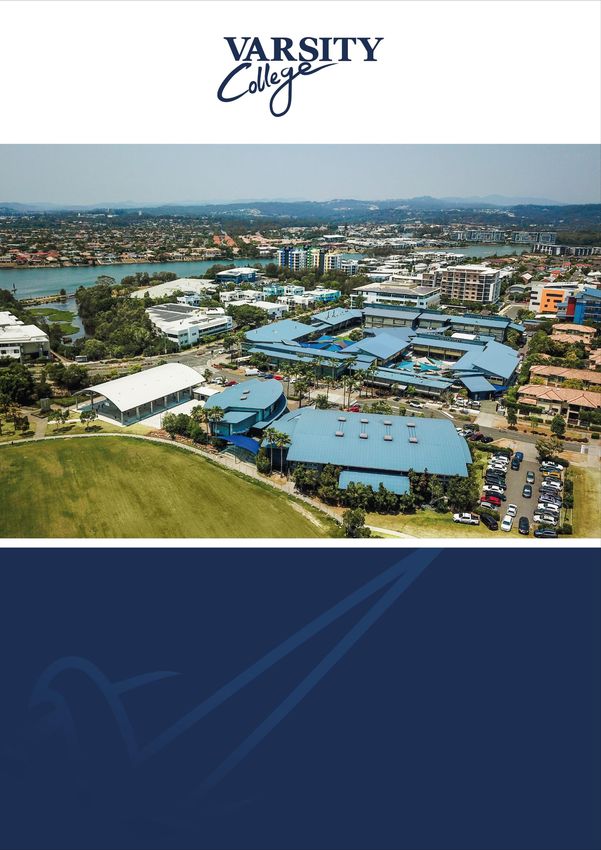
Subject Selection Book 2021
Years 9 and 10 Electives

                           1|Page
Subject Selection Booklet Years 9 to 10 Junction – 2021
Year 9 Semester I – End of Junior Secondary
Year 9 Semester II and Year 10 Semester I – Senior School Transition
Cover page 1
Contents 2
YEAR 9 SUBJECT OVERVIEW – End of Junior Secondary 4
Chinese 6
Aspire Chinese 7
Digital Solutions 8
Drama 9
Aspire Drama 10
Engineering 11
Health and Physical Education (HPE) 12
Hospitality 13
Industrial Graphics 14
Media 15
Music 16
Aspire Music 17
Industrial Technology 18
Visual Art 19
Aspire Visual Art 20
The Year 9 and 10 Juncture 21
Year 9 Semester II and Year 10 Semester I subject overview
Social Science
Accounting 22
Chinese 23
Aspire Chinese 24
Economics 25
Geography 26
History 27
2|PageScience
Biology 28
Chemistry 29
Aspire Chemistry 30
Physics 31
Aspire Physics 32
Practical Arts
Engineering 33
Industrial Graphics 34
Hospitality 35
Industrial Technology 36
Digital Solutions 37
Physical Education
Physical Education 38
Mathematics
Mathematics 39
Aspire Mathematics
40
Creative Arts
Drama 41
Film and Television 42
Music 43
Aspire Music 44
Visual Art 45
46
English
3|PageYEAR 9 and 10 transition 2021 The Two Year Senior Preparation Process
Year 9 and 10 are important foundation years for a student’s development and transition to Senior Schooling. In these pivotal years, Students will engage in career education, explore and research various educational
pathways and be exposed to a variety of new and challenging subjects. They will also develop the foundation of skills and content knowledge for subjects and begin preparing for their Senior Phase of Learning,
external exams and the world of work.
Student study habits and school organisation will be vital for success. In these two years students will have the flexibility with their learning to move and change subjects at specific juncture points that will not be
possible in subject offerings in Years 11 and 12.
Year 9 Semester I Transition Year – Year 9 Sem 2 and Year 10 Sem 1 Year 10 Semester II
Year 9 Semester II Year 10 Semester I
Core Subjects Core Subjects and Aspire Programs Core Subjects and Aspire Programs
English English (G)
and Aspire Programs
Mathematics General Mathematics (G) or
Transition Year Subject Selection (9 and 10) 2021
English
Mathematics Mathematics Methods (G)
SET Plan Subject Selection (10 to 11) 2022
Humanities and Social Science
History (G), Economics (G) or Geography (G)
Science
Biology (G), Physics (G) or Chemistry (G)
Aspire History (G) or Aspire Geography (G) Post Senior Education and
Elective Options Elective Options
(Two choices only) (four choices only – semester subjects)
Training plan interview
Aspire Chinese (application only) Aspire Chinese (application only) (ACARA Curriculum)
Athlete Development Program Athlete Development Program (application only) Senior Subject
(application only) Aspire Drama (application only)
Aspire Drama (application only) Aspire Music (application only) preparation
Aspire Music (application only) Aspire Visual Design (application only)
Aspire Visual Design (application Accounting (G)
only)
Industrial Graphics(A)
Chinese Chinese (G)
Drama Drama (G)
Engineering Engineering(G)
Health and Physical Education Health and Physical Education (G)
Hospitality Hospitality (A)
Media Industrial Technology (A)
Music Digital Solutions (G)
Industrial Technology Film and Television (G)
Visual Art Music (G)
Visual Art (G)
Additional Additional Additional
GIPSA Sport GIPSA Sport External exam preparation
Positive Education Positive Education Preparation for Traineeships and
DARE Program DARE Program and Career Education (SET plan) Apprenticeships
4|PageYEAR 9 SUBJECT SEMESTER I
In Year 9 students will study the core areas of Mathematics, English, Science and Social Science (History and
Geography). Students also have the opportunity to select two elective subjects in Semester I.
At the end of Semester I, students and parents have the opportunity to select their subject choices for the
transition Year for the Second Semester of Year 9 and First Semester of Year 10.
Core Subjects and Aspire Programs Semester 1
Aspire English
Aspire Mathematics
Aspire Humanities and Social
Science
Aspire Science
Core areas of study
English
Mathematics ENGLISH MATHS
Humanities and Social Science
Science
HUMANITIES AND SCIENCE
SOCIAL SCIENCE
Elective Options
(Two choices only)
Aspire Chinese (application only)
Athlete Development Program Two elective options
(application only)
Aspire Drama (application only)
Aspire Music (application only)
Elective choice Elective choice
Aspire Visual Design (application
only) 1 2
Chinese
Drama
Engineering
Health and Physical Education
Hospitality
Media
Music
Industrial Technology
Visual Art
GIPSA Sport
Additional
GIPSA Sport Positive Education
Positive Education DARE Program
DARE Program
Stem 2021
Bridge and Duke of Edinburgh
5|PageCHINESE
SUBJECT INTRODUCTION
Learning additional languages widens horizons, broadens cognitive and cultural experience and develops
communication and intercultural understandings.
Year 9 LOTE Chinese aims to develop language skills acquired in the compulsory Year 8 program. In Year 9,
students will further their communication skills through reading, writing, listening and speaking in Chinese in
relevant, meaningful contexts. Students have the opportunity to host visiting Chinese students to develop their
Chinese language skills, as well as participation in a study tour trip to China in their senior years of study of
Chinese.
In addition to studying the language, students will engage in a variety of cultural activities including cooking
Chinese food, visiting restaurants, and participation in a range of Chinese celebrations. Opportunities to
participate in various speech and language competitions will also be offered to students.
Year 9 Chinese is a pre-requisite for the study of Chinese in Years 10-12.
Learning Themes:
• Nutrition: Students will develop language to describe the taste of the food and be able to identify
nutritious food. Students will design a weekly heath food plan using their written and listening skills.
• House Design: Students will develop language to describe homes and the items in those homes.
Students will design a house plan, labelling rooms and the items inside utilizing their writing and
reading skills.
EXAMPLES OF ASSESSMENT
Short response exam
Extended response exam
Combination response exam
LINKS TO SENIOR/FUTURE PATHWAYS
Chinese as a second language is highly valued by a diverse range of employers as the global nature of industry
and the growth of Asian markets creates a high demand for multilingual employees. Career pathways may
include the tourism industry, international relations, translator, interpreter, teacher, flight attendant,
engineering, hospitality, journalism, foreign affairs or politics.
6|PageASPIRE CHINESE
SUBJECT INTRODUCTION
Learning additional languages widens horizons, broadens cognitive and cultural experience and develops
communication and intercultural understandings.
Year 9 ASPIRE Chinese aims to develop language skills acquired in the ASPIRE enrichment courses in Years 7 and
8. In Year 9, the program aims to strengthen students’ proficiency in Chinese language as well as extend their
thinking skills, creativity and overall cognitive development. Students engage in an accelerated program of study
aimed at increasing their level of language fluency.
In addition to studying the language, ASPIRE Chinese students will engage in a variety of cultural activities
including cooking Chinese food, visiting restaurants, and participation in a range of Chinese celebrations.
Opportunities to participate in various speech and language competitions, as well as the China trip will also be
offered to students. ASPIRE Chinese students are also invited to participate in a range of extra-curricular
opportunities including university and Confucius Centre programs aimed at developing their language skills and
cultural understanding.
Year 9 Chinese is a pre-requisite for the study of Chinese in Years 10-12.
Learning Themes:
The World of Work: Students will compare and contrast employment prospects in their own, and in Chinese-
speaking communities. Students will discuss a variety of perspectives of job opportunities.
• Chinese Culture and Festivals: Students will identify how Chinese traditional culture is maintained in the
modern world, by learning to about and to discuss festivals, events, rites of passage and community
celebrations. Students will analyse how aspects of Chinese culture have made diverse contributions to
communities around the world.
EXAMPLES OF ASSESSMENT
Short response exam
Extended response exam
Combination response exam
LINKS TO SENIOR/FUTURE PATHWAYS
Chinese as a second language is highly valued by a diverse range of employers as the global nature of industry
and the growth of Asian markets creates a high demand for multilingual employees. Career pathways may
include the tourism industry, international relations, translator, interpreter, teacher, flight attendant,
engineering, hospitality, journalism, foreign affairs or politics.
7|PageDIGITAL SOLUTIONS
SUBJECT INTRODUCTION
Digital Solutions will improve student information technology skills with a strong focus on problem
solving. Digital Solutions explores the digital world in which students live through the development of a
solid knowledge base and practical experience.
Learning Themes
Interactive Applications
Students learn core programming concepts through hands on coding tasks. Once students gain
fundamental object oriented programming skills, they develop an application that could be a game,
interactive story book, information kiosk or educational program.
Network Systems
Students explore remote computing communication. Looking at the Internet, the World Wide Web and
wireless systems, students gain an understanding of digital communication and data security.
EXAMPLES OF ASSESSMENT
Assessment will include:
Coding tasks
Software projects
Exams
LINKS TO SENIOR/FUTURE PATHWAYS
Further study: Tertiary Entrance – University, TAFE and technical colleges; diplomas, advanced-diplomas
and bachelor degrees
Career Pathways: software design, computer science, aerospace industry, research and development.
8|PageDRAMA
SUBJECT INTRODUCTION
The Year 9 Drama program will provide students an opportunity to develop knowledge of the elements
of drama and conventions associated with contemporary forms of Realism, including Magical Realism
and Australian Gothic. Students will develop their skills of drama that are interrelated and underpin the
knowledge and processes needed to create/make and respond to dramatic action and meaning.
Students analyse the elements of drama, forms and performance styles and evaluate meaning and
aesthetic effect in drama they devise, interpret, perform and view. They use their experiences of
drama practices from different cultures, places and times to evaluate drama from different viewpoints.
EXAMPLES OF ASSESSMENT
Assessment will include:
Project: Directorial Vision and Performance (Making)
Exam (Responding)
LINKS TO SENIOR/FUTURE PATHWAYS
This course provides the foundation for Senior Drama and is helpful for building skills relating to other
Creative Arts subjects, Music and Film and Television. Drama develops group skills and can be a helpful
form of self-expression. Drama provides communication skills that are necessary in ‘real life’.
9|PageASPIRE DRAMA
SUBJECT INTRODUCTION
The Year 9 Aspire Drama program will provide students an opportunity to develop knowledge of the
elements of drama and conventions associated with contemporary forms of Realism, including Magical
Realism and Australian Gothic. Students will develop their skills of drama that are interrelated and
underpin the knowledge and processes needed to create/make and respond to dramatic action and
meaning.
Students analyse the elements of drama, forms and performance styles and evaluate meaning and
aesthetic effect in drama they devise, interpret, perform and view. They use their experiences of
drama practices from different cultures, places and times to evaluate drama from different viewpoints.
In the second semester, Aspire Drama students extend their skills by participating in a full class
production of a published playtext. Students will also devise their own dramatic work through a journal
and storyboard after responding to a professional production to understand how meaning is
communicated through the manipulation of dramatic languages.
EXAMPLES OF ASSESSMENT
Assessment will include:
Performance (Making)
Project: Dramatic Concept (Making & Responding)
Project: Directorial Vision and Performance (Making)
Exam (Responding)
LINKS TO SENIOR/FUTURE PATHWAYS
This course provides the foundation for Senior Drama and is helpful for building skills relating to other
Creative Arts subjects, Music and Film and Television. Drama develops group skills and can be a helpful
form of self-expression. Drama provides communication skills that are necessary in ‘real life’.
10 | P a g eENGINEERING
SUBJECT INTRODUCTION
Engineering Technology provides students with an opportunity to experience both theoretical and practical
learning activities focusing on engineering mechanics, engineering materials and rapid manufacturing (CNC
machining and 3D printing). The course will require students to learn theory, then apply their knowledge to solve
design challenges.
LEARNING THEMES
Varsity Drag Racing Challenge
In the Varsity Drag Racing Challenge unit, students explore what is required to design and manufacture a CO²
powered balsa wood Formula 1 style car. Their goal is to consider the theory of engineering mechanics to justify
design decisions that meet specifications prescribed by REA (Re-Engineering Australia). Students design,
produce, test and evaluate their designs by utilising manufacturing techniques, such as CAD, CNC machining and
3D printing, smoke tunnel and wind tunnel testing, as well as track testing.
EXAMPLES OF ASSESSMENT
Assessment will include:
Design analysis folios
Written examinations
Practical design challenges
LINKS TO SENIOR/FUTURE PATHWAYS
This course prepares students for Senior Engineering Technology. It also provides students with skills related to
Senior Industrial Graphics Skills and Industrial Technology Skills.
11 | P a g eHEALTH AND PHYSICAL EDUCATION
SUBJECT INTRODUCTION
The Year 9 Health and Physical Education program supports students to refine and apply strategies for maintaining
a positive outlook and evaluating behavioural expectations in different leisure, social, movement and online
situations. Students learn to critically analyse and apply health and physical activity information to devise and
implement personalised plans for maintaining healthy and active habits. They also experience different roles that
contribute to successful participation in physical activity, and propose strategies to support the development of
preventive health practices that build and optimise personal and community health and wellbeing.
All units of study have both practical and theoretical components:
Theoretical
Through the theory lessons, students will study:
Health Status of a Nation
Respectful Relationships
Practical
During the practical lessons, students will participate in Invasion Sports (Viper Ball/European Handball) & Striking
& Fielding games (Cricket/Volleyball/ T-Ball/Softball) where they will develop the skills, tactics and game sense of
these sports.
EXAMPLES OF ASSESSMENT
Assessment will include a combination of the following:
Ongoing practical assessment of skills, tactics and game play
Biomechanics exam
Multi-modal presentation of the digital analysis of a specific training technique/skill
LINKS TO SENIOR/FUTURE PATHWAYS
This course helps to prepare students for Senior PE as well as Personalised Pathway courses such as the
Certificate II Recreation/Certificate III in Fitness and Recreation offered in Years 11 and 12. This course also
develops skills and knowledge to help students lead an active and healthy lifestyle.
12 | P a g eHOSPITALITY
SUBJECT INTRODUCTION
Hospitality will help develop in students an appreciation of the flavour and texture of a variety of different foods.
Students will gain an understanding of the relationship between eating well and enjoying good health, growing
things and caring for the environment as well as the social etiquettes involved in preparing, presenting and
sharing food.
LEARNING THEMES
Foods of the World – Customs, Traditions & Celebrations
Principles of Food
Personal and Environment Hygiene
Measurement, Time and Resource Management
Australian Foods, Foods in Season, Herbs and Spices
Practical Cooking – Soups, Pies, Quiches, Stir fries
Cuisine of other countries – Italy, Thailand, France
Christmas treats from ‘Around the World’
EXAMPLES OF ASSESSMENT
Create and prepare a contemporary Australian menu that reflects the changes in Australian eating patterns.
Students select their own cuisine to study in detail and produce main course and dessert.
LINKS TO SENIOR/FUTURE PATHWAYS
Food Studies will link to Year 10 Hospitality and Hospitality Practices in Years 11 and 12. Skills gained will be
suitable for part-time employment in the Hospitality industry.
Please note full participation in all practical cooking activities is required to complete this course successfully.
13 | P a g eINDUSTRIAL GRAPHICS
SUBJECT INTRODUCTION
Industrial Graphics provides students with the opportunity to develop their drafting skills within two different
contextual areas. Students will use the latest industry standard software whilst they complete tasks and activities
within the areas of ‘Building and Construction Drafting’ and ‘Engineering Drafting’.
LEARNING THEMES
Unit 1 Timber toy – Engineering Drafting
In the timber toy unit students are required to draw existing plans for a timber toy within Solid Edge (CAD software).
They are then asked to modify the design to make it more appealing for the desired audience. Students will produce
and number of different technical drawings including orthographic drawings, assembly drawings, and renders.
Throughout the drafting process students will continually be working within the Australian standards and completing
their work to industry standard.
Unit 2 Residential housing – Architecture/Building and Construction Drafting
Throughout the residential housing unit students use CAD software (ArchiCAD) to draw an existing floor plan of a small
house. Students then explore design features of a house so that they can effectively renovate the home and graphically
communicate their ideas in a digital folio. Their digital folio will include technical drawings including floor plans,
elevations, sections and renders for their designs. Once students have completed their digital folio they will have the
opportunity to view their designs in virtual reality (VR).
EXAMPLES OF ASSESSMENT
Assessment will include:
Digital PowerPoint Folios
FUTURE PATHWAYS
This course prepares students for Senior Industrial Graphics. It also provides students with skills related to Senior
Engineering Technology and Industrial Technology Skills.
Further study: professional- town planner, architect, engineer, industrial designer, surveyor
Career Pathways: draftsperson, pattern maker, landscaper, graphic designer, builder, carpenter
14 | P a g eMEDIA
SUBJECT INTRODUCTION
The Year 9 Media Arts program will provide students an opportunity to analyse how social and cultural
values and alternative points of view are portrayed in media artworks they make, interact with and
distribute. They evaluate how genre and media conventions and technical and symbolic elements are
manipulated to make representations and meaning. They evaluate how social, institutional and ethical
issues influence the making and use of media artworks.
Students produce representations that communicate alternative points of view in media artworks for
different community and institutional contexts. They manipulate genre and media conventions and
integrate and shape the technical and symbolic elements for specific purposes, meaning and style. They
collaboratively apply design, production and distribution processes.
EXAMPLES OF ASSESSMENT
Exam (Responding)
Stylistic Project (Making and Responding)
LINKS TO SENIOR/FUTURE PATHWAYS
This course provides the foundation for Film and Television and is helpful for building skills relating to
other creative arts subjects, such as Music, Drama and Visual Art, as well as Information Processing and
Technology. Film and Television develops group skills and can be a helpful form of self-expression as
well as analysis skills to work out how media is used to communicate meaning.
15 | P a g eMUSIC
SUBJECT INTRODUCTION
The Year 9 Music Program will provide students an opportunity to analyse different scores and
performances aurally and visually. They evaluate the use of elements of music and defining
characteristics from different musical styles. They use their understanding of music making in different
cultures, times and places to inform and shape their interpretations, performances and compositions.
Students interpret, rehearse, perform and record solo or ensemble repertoire in a range of forms and
styles. They interpret and perform music with technical control, expression and stylistic understanding.
They use aural skills to recognise elements of music and memorise aspects of music such as pitch and
rhythm sequences. They use knowledge of the elements of music, style and notation to compose,
record and share their music.
EXAMPLES OF ASSESSMENT
Performing: Recording a performance of a small group/ensemble/band.
Composing: Creating your own contemporary song and communicate it through music
technology.
Listening/Theory: Demonstrating aural, notational and music structures in an exam situation
Analysing: Deconstructing the individual characteristics of music styles and genres in an exam or
assignment situation.
LINKS TO SENIOR/FUTURE PATHWAYS
This course helps prepare students for Senior Music and is helpful for other creative arts subjects such
as Drama. This course can lead to tertiary music study, employment in the music industry or a
satisfying leisure pursuit.
16 | P a g eASPIRE MUSIC
SUBJECT INTRODUCTION
The Year 9 Aspire Music Program will provide students an opportunity to analyse different scores and
performances aurally and visually. They evaluate the use of elements of music and defining
characteristics from different musical styles. They use their understanding of music making in different
cultures, times and places to inform and shape their interpretations, performances and compositions.
They also work through the AMEB Music craft Theory program to develop a strong foundation of music
symbols, language, processes and deconstruction.
Students interpret, rehearse, perform and record solo or ensemble repertoire in a range of forms and
styles. They interpret and perform music with technical control, expression and stylistic understanding.
They use aural skills to recognise elements of music and memorise aspects of music such as pitch and
rhythm sequences. They use knowledge of the elements of music, style and notation to compose,
record and share their music.
EXAMPLES OF ASSESSMENT
Performing: Develop recording and performance skills in a small ensemble or as a soloist in a style of
their choice.
Composing: Selecting appropriate musical structures, devices and manipulating music technology to
create music in a style of their choice.
Listening/Theory: Working through guided aural programs and AMEB Musicraft theory curriculum with
in-class support to gain accredited outcomes that are recognised by tertiary institutions.
Analysing: Determining how composers manipulate musical structures, compositional devices and music
technology to create modern music.
LINKS TO SENIOR/FUTURE PATHWAYS
This course helps prepare students for Senior Music and is helpful for other creative arts subjects such as Drama.
This course can lead to tertiary music study, employment in the music industry or a satisfying leisure pursuit.
17 | P a g eINDUSTRIAL TECHNOLOGY
SUBJECT INTRODUCTION
Industrial Technology involves the design and manufacture of products that comprise the manmade
environment. Students create products to solve real-world problems, satisfy human needs and wants, and to
capitalise on opportunities. They develop an informed understanding of the characteristics of materials and an
ability to select and manipulate materials to meet design challenges.
Students identify potential hazards and risks in workshops and industrial environments and demonstrate safe
practices in their own work environment.
LEARNING THEMES
Unit 1 Workplace Health and Safety
Workplace Health & Safety exposes students to relevant information on the safe and correct operating
procedures that will be utilised in the workshop and the workshop and the wider community.
Unit 2 Skills
Skill Development Exercise 1 develops, through guided practice, the correct/safe use of hand/power tools and
marking out, separating, forming, combining and finishing techniques.
Skill Development Exercise 2 develops, through guided practice, the correct/safe use of hand/power tools and
marking out, separating, forming, combining and finishing techniques.
Unit 3 Designing
Students are challenged to design and produce an article that satisfies a descriptive brief.
EXAMPLES OF ASSESSMENT
Students will prepare design folios and be graded on their practical work.
LINKS TO SENIOR/FUTURE PATHWAYS
Skills gained in this subject will help students who wish to study Engineering Technology or Industrial Technology
Skills in Years 11/12.
18 | P a g eVISUAL ART
SUBJECT INTRODUCTION
The Year 9 Visual Arts program will provide students an opportunity to evaluate how representations
communicate artistic intentions in artworks they make and view. They evaluate artworks and displays from
different cultures, times and places. They analyse connections between visual conventions, practices and
viewpoints that represent their own and others' ideas. They identify influences of other artists on their own
artworks.
Students manipulate materials, techniques and processes to develop and refine techniques and processes to
represent ideas and subject matter in their artworks.
EXAMPLES OF ASSESSMENT
Assessment will include:
Projects (Making)
Exam (Responding)
LINKS TO SENIOR/FUTURE PATHWAYS
This course helps prepare students for Senior Art and develops skills and processes that are useful in other
Creative Arts subjects such as Film and Television and Drama.
Most TAFE and University visual arts and design courses require a folio as part of their application. This course
establishes this practice with students.
19 | P a g eASPIRE VISUAL ART
SUBJECT INTRODUCTION
The Year 9 Aspire Art & Media program will provide students an opportunity to develop their
knowledge and skills across both Media and Visual Arts. In the first semester, students complete year 9
foundation studies across both Media and Visual Arts. They will evaluate and create artworks across
both art forms and analyse connections between visual conventions, practices and viewpoints that
express their own and others’ ideas.
Students manipulate materials, techniques and processes, and manipulate genre and media
conventions and integrate and shape the technical and symbolic elements to develop and refine
meaning communicated in artworks.
In the second semester, students will build on their skills and knowledge and work on larger scale
projects to extend their skills in their preferred Arts discipline area.
EXAMPLES OF ASSESSMENT
Projects (Making and Responding)
Exam (Responding)
Assignment (Responding)
LINKS TO SENIOR/FUTURE PATHWAYS
This course helps prepare students for Senior Visual Art and develops skills and processes that are
useful in other Creative Arts subjects such as Film and Television and Drama.
Most TAFE and University visual arts and design courses require a folio as part of their application. This
course establishes this practice with students.
20 | P a g eYear 9 - 10 Transition to Senior Schooling
Subject Selection Guidelines
English and Mathematics are yearlong subjects
In Term 4 of 2020, the Head of Department for Mathematics will provide recommendations for Year 9
students based on the students’ academic progress for subject selection to either General Mathematics or
Mathematics Methods in semester I Year 10.
Year 9 Year 10 Year 10 Year 11 and 12
Semester II Semester I Semester II
General Mathematics Essential Mathematics
General Mathematics General Mathematics
Mathematics Mathematics Methods Mathematics Methods
Mathematics Methods Specialist Mathematics Specialist Mathematics
(elective) (Elective)
Please note that students who wish to study Mathematics Methods in Year 11 MUST be in Mathematics
Methods in Semester in Year 10. Students in Mathematics Methods can choose Specialist Mathematics as
an elective. (Students must be studying in Mathematics Methods to choose Specialist Mathematics).
Students who wish to study Specialist Mathematics in Year 11 must select this option in Semester II Year 10.
Science is a compulsory subject in Year 9 Semester II and Year 10 Semester I
Choose at least one Science subject in each semester: Biology, Chemistry and Physics (please note that each
semester students must study a different Science subject).
Year 9 Year 10 Year 10 Year 11 and 12
Semester II Semester I Semester II
Choice of either: Selection of a different Options Options
Science subject
Biology Biology Biology Biology
Chemistry Chemistry Chemistry Chemistry
Physics Physics Physics Physics
Students must select one Students must select
a different science subject
Social Science is a compulsory subject in Year 9 Semester II and Year 10 Semester I
Choose at least one in each semester: History, Geography and Economics (please note that each semester
students must study a different Science subject).
Year 9 Year 10 Year 10 Year 11 and 12
Semester II Semester I Semester II
Choice of either: Selection of a different Social Options Options
Science subject
History History History History
Geography Geography Geography Geography
Economics Economics Economics Economics
Students must select one Students must select
a different social science
21 | P a g eSOCIAL SCIENCE DEPARTMENT OFFERINGS:
ACCOUNTING
SUBJECT INTRODUCTION
Accounting focuses on the study of accounting principles and practices and enables students to understand
the processes involved in generating, recording, classifying, analysing, interpreting and reporting
accounting information as a basis for planning, control and effective decision making.
Learning Themes:
• Fundamental Accounting Principles
• Transactions to Journals to Ledger to Trial Balance
• Statement of Profit or Loss
• Statement of Financial Position
• Business Organisations
• Excel spread sheets
EXAMPLES OF ASSESSMENT
Short response – theory and practical
Project
FUTURE PATHWAYS
Further study: Bachelor of Business, Bachelor of Commerce (Accounting, Commerce, Finance), Bachelor of
Law, Diploma and Advanced Diploma of Accounting
Career Pathways: accountancy in a variety of industries, bookkeeping, business project manager, banking
and finance, financial planner, small business manager, business analyst
22 | P a g eCHINESE
SUBJECT INTRODUCTION
Learning a language other than English widens horizons and leads ultimately to the capacity to view
the world from the perspective of a new language and culture, to develop cross-cultural
understanding and the acquisition of empathy. In an increasingly globalised world in which China is
emerging as a major power, Chinese language skills are increasingly valued by employers and the
wider community. Chinese is an Authority subject that develops students’ abilities to communicate
both verbally and in writing in Chinese, commonly referred to as Mandarin in the western world.
Year 9 Chinese is a prerequisite for this course of study.
Learning Themes:
• Education: Students will compare and contrast different education systems around the world,
with a focus on expectations and traditions. Students will analyse the benefits and challenges
of study and contrast experiences of young people in a variety of educational settings.
• Lifestyle and Leisure: Students will consider how interests, traditions, events and celebrations
impact on family identity, community connections and cultural values in their own and
Chinese-speaking communities.
EXAMPLES OF ASSESSMENT
Short response exam
Extended response exam
Combination response exam
FUTURE PATHWAYS
Further study: Bachelor degrees in business, education, manufacturing and trade, international
relations, politics
Careers Pathways: foreign affairs and trade, translation, international business, tourism, customs,
defence
23 | P a g eASPIRE CHINESE
SUBJECT INTRODUCTION
Year 9/10 ASPIRE Chinese aims to develop language skills acquired in the ASPIRE enrichment courses in Years
7, 8 and Semester 1 Year 9. In the 9/10 transition program, students strengthen their proficiency in Chinese
language as well as extend their thinking skills, creativity and overall cognitive development. Students engage
in an accelerated program of study aimed at increasing their level of language fluency.
In addition to studying the language, ASPIRE Chinese students will engage in a variety of cultural activities
including cooking Chinese food, visiting restaurants, and participation in a range of Chinese celebrations.
Opportunities to participate in various speech and language competitions, as well as the China trip will also be
offered to students. ASPIRE Chinese students are also invited to participate in a range of extra-curricular
opportunities including university and Confucius Centre programs aimed at developing their language skills
and cultural understanding.
Year 9 Chinese is a pre-requisite for the study of Chinese in Years 10-12.
Learning Themes:
Technology and the Media: Students will consider the central role of technology in their own lives and
will assess the impact of, and trends in, technology on young people in the 21st century.
Tourism in China: Students will describe travel and tourism in China and Chinese speaking
communities, and have conversations about travel options and experiences.
EXAMPLES OF ASSESSMENT
Short response exam
Extended response exam
Combination response exam
FUTURE PATHWAYS
Further study: Bachelor degrees in business, education, manufacturing and trade, international relations,
politics
Careers Pathways: foreign affairs and trade, translation, international business, tourism, customs, defence
24 | P a g eECONOMICS
SUBJECT INTRODUCTION
Economics focuses on the allocation of scarce resources compared to the unlimited wants and needs
of the population. The discipline of economics is integral to every aspect of our lives: our employment
opportunities, business operations and living standards. The subject challenges us to use evidence
and be innovative when solving problems in a world of complex global relationships and trends,
where a knowledge of economic forces and flows leads to better decisions. In Economics, decision-
making is core: how to allocate and distribute scarce resources to maximise well-being.
Learning Themes:
• Personal Economics: consumer rights, selecting a mobile phone or savings account,
budgeting, smart shopping, insurance and superannuation, tax and debt
• Income Inequality: issues of poverty and inequality around the world and how economic systems
can address these issues.
EXAMPLES OF ASSESSMENT
• Short response exams
• Research reports
• Response to stimulus exams
FUTURE PATHWAYS
Further study: Bachelor of Economics, Bachelor of Business, Bachelor of Commerce, Bachelor of
Finance, Bachelor of Education (Secondary), Bachelor of Laws
Career Pathways: stockbroker, banker, real estate agent, human resource management, manager,
economist, entrepreneur, lawyer and teacher.
25 | P a g eGEOGRAPHY
ASPIRE GEOGRAPHY
SUBJECT INTRODUCTION
Geography focuses on the study of spatial information regarding people and their relationship with the
environment. In Geography, students engage in a range of learning experiences that develop their geographical
skills and thinking through the exploration of geographical challenges and their effects on people, places and
the environment. By observing and measuring spatial, environmental, economic, political, social and cultural
factors, geography provides a way of thinking about contemporary challenges and opportunities.
Learning Themes:
• Biomes and Food Security
• Environmental Change and Management
EXAMPLES OF ASSESSMENT
• Combination examinations
• Data report
• Field Report
FUTURE PATHWAYS
Further study: Bachelor of Environmental Management, Bachelor of Urban Planning, Bachelor of Education,
Bachelor of Science
Career Pathways: town planner, geographer (GIS) surveyor, meteorologist, coastal/environmental engineer
26 | P a g eHISTORY
ASPIRE HISTORY
SUBJECT INTRODUCTION
In their study of History, students examine traces of humanity’s recent past so they may form their own
views about the Modern World. History seeks to have students gain historical knowledge and understanding
about some of the main forces that have contributed to the development of the Modern World and to have
them think historically and form a consciousness in relation to these same forces.
Learning Themes:
• Ideologies: How did the emergence of new ideas shape the world we live in?
• World War II: How did World War II shape the Modern World and Australia’s place in it?
EXAMPLES OF ASSESSMENT
• Response to stimulus exam
• Written research task
FUTURE PATHWAYS
Further study: Bachelor of Education, Bachelor of Arts/Law, Bachelor of International Relations
Career Pathways: law, diplomacy, journalism, education – teaching
27 | P a g eSCIENCE DEPARTMENT OFFERINGS:
BIOLOGY
SUBJECT INTRODUCTION
Biology is the science of life and of living organisms, including their structure, function, growth, origin,
evolution, and distribution.
Learning Themes:
The transmission of heritable characteristics from one generation to the next involves DNA and genes.
The theory of evolution by natural selection explains the diversity of living things and is supported by a range
of scientific evidence.
Global systems, including the carbon cycle, rely on interactions involving the biosphere, lithosphere,
hydrosphere and atmosphere.
Nature and development of science and the use and influence of science.
Questioning and predicting, planning and conducting, processing and analysing data and information,
evaluating and communicating.
EXAMPLES OF ASSESSMENT
Exams
Practical report
FUTURE PATHWAYS
Further Study: Bachelor of Science, Bachelor of Biosciences
Career Pathways: medical professions, biomedical research, bioinformatics, microbiology, genetic
counselling, bioengineering, biotechnology, environmental health science, ecology
28 | P a g eCHEMISTRY
SUBJECT INTRODUCTION
The science of the composition, structure, properties, and reactions of matter, especially of atomic and
molecular systems.
Learning Themes:
The atomic structure and properties of elements are used to organise them in them in the periodic table
Different types of chemical reactions are used to produce a range of products and can occur at different
rates.
Nature and development of science and the use and influence of science.
Questioning and predicting, planning and conducting, processing and analysing data and information,
evaluating and communicating.
EXAMPLES OF ASSESSMENT
Exams
Practical reports
FUTURE PATHWAYS
Further Study: Bachelor of Science, Bachelor of Medicinal Chemistry, Nanotechnology, Molecular Biology or
Biochemistry
Career Pathways: agricultural chemistry, biochemistry, chemical engineering, environmental chemistry,
forensic chemistry, medicinal chemistry, oil and petroleum, water chemistry
29 | P a g eASPIRE CHEMISTRY
SUBJECT INTRODUCTION
Core Curriculum: The science of the composition, structure, properties, and reactions of matter, especially of atomic
and molecular systems.
Academic Extension: The core curriculum is covered in depth and students participate in highly skilled, complex
experiments. In addition, the class extend basic concepts and skills via problem based scenarios that focus on the
common curriculum elements of Senior Chemistry.
Academy Chemistry students participate in addition units that focus on targeted Chemistry uses and developments in
society.
Learning Themes:
The atomic structure and properties of elements are used to organise them in them in the periodic table
Different types of chemical reactions are used to produce a range of products and can occur at different rates.
Nature and development of science and the use and influence of science.
Questioning and predicting, planning and conducting, processing and analysing data and information, evaluating and
communicating.
EXAMPLES OF ASSESSMENT
Exams
Extended Experimental Investigations
FUTURE PATHWAYS
Further Study: Bachelor of Science, Bachelor of Medicinal Chemistry, Nanotechnology, Molecular Biology or
Biochemistry
Career Pathways: agricultural chemistry, biochemistry, chemical engineering, environmental chemistry,
forensic chemistry, medicinal chemistry, oil and petroleum, water chemistry
30 | P a g ePHYSICS
SUBJECT INTRODUCTION
The science of matter and energy and of interactions between the two, grouped in traditional fields such as
acoustics, optics, mechanics, thermodynamics, and electromagnetism, as well as in modern extensions
including atomic and nuclear physics.
Learning Themes:
Energy conservation in a system can be explained by describing energy transfers and transformations.
The motion of objects can be described and predicted using the laws of physics.
The universe contains features including galaxies, stars and solar systems and the big bang theory can be
used to explain the origin of the universe.
Nature and development of science and the use and influence of science.
Questioning and predicting, planning and conducting, processing and analysing data and information,
evaluating and communicating.
EXAMPLES OF ASSESSMENT
Exams
Practical report
FUTURE PATHWAYS
Further study: Bachelor of Engineering, Bachelor of Science, Mathematical Physics
Career Pathways: astronomy, astrophysics, atomic/molecular physics, environmental physics, engineering,
medical physics, nanotechnology, nuclear physics
31 | P a g eASPIRE PHYSICS
SUBJECT INTRODUCTION
Core Curriculum: The science of matter and energy and of interactions between the two, grouped in
traditional fields such as acoustics, optics, mechanics, thermodynamics, and electromagnetism, as well as in
modern extensions including atomic and nuclear physics.
Aspire Extension: The Core Curriculum is covered in depth and students also have access to technical
equipment to complete their experiments. The Aspire class extend their theoretical and skills capabilities via
extension projects that focus on logic, design process and problem solving skills.
Aspire students participate in an extra unit that focuses on collaboration, systematic thinking, skills transfer
and common curriculum elements relating to Senior Physics.
Learning Themes:
Energy conservation in a system can be explained by describing energy transfers and transformations.
The motion of objects can be described and predicted using the laws of physics.
The universe contains features including galaxies, stars and solar systems and the big bang theory can be
used to explain the origin of the universe. Nature and development of science and the use and influence of
science. Questioning and predicting, planning and conducting, processing and analysing data and
information, evaluating and communicating.
EXAMPLES OF ASSESSMENT
Exams
Extended Experimental Investigation
FUTURE PATHWAYS
Further study: Bachelor of Engineering, Bachelor of Science, Mathematical Physics
Career Pathways: astronomy, astrophysics, atomic/molecular physics, environmental physics, engineering,
medical physics, nanotechnology, nuclear physics
32 | P a g ePRACTICAL ARTS DEPARTMENT OFFERINGS:
ENGINEERING
SUBJECT INTRODUCTION
Engineering Technology is a course of study that provides an opportunity for students to gain an understanding
of the underlying concepts and principles of engineering in its broadest sense.
It is concerned with those concepts related to the study of materials, engineering mechanics and its
applications, control systems and the way technology has affected industry and society.
Integrated throughout the areas of study is the development of communication skills suited to engineering.
The course draws upon the fundamental principles of science and technology, encouraging a positive interest
in the translation of theory into practice.
EXAMPLES OF ASSESSMENT
Examination
Practical project
Engineering folio
FUTURE PATHWAYS
Career Pathways: engineer (mechanical, aviation, mechatronic, civil), electronic and electrical architect
33 | P a g eINDUSTRIAL GRAPHICS
SUBJECT INTRODUCTION
Industrial Graphics is a course of study that provides students with the opportunity to gain an understanding
of industry practices within two main contexts; building and construction drafting and engineering drafting.
It is concerned with the graphical communication of design ideas using technical drawings specific to the context of the
unit. It will develop students’ knowledge of industry practices and continually develop and build upon their CAD skills.
Students will be using industry standard CAD software throughout the course of study and will be encouraged to
consider all technical aspects and uses for all drawings produced. They develop visual literacy as they view, read,
comprehend and generate graphical presentations and consider what can be seen and how people interpret what is
seen.
EXAMPLES OF ASSESSMENT
Knowledge and application exams
Contextually based drawing assignments – design folios
FUTURE PATHWAYS
Further study: professional- town planner, architect, engineer, industrial designer, surveyor
Career Pathways: draftsperson, pattern maker, landscaper, graphic designer, builder, carpenter
34 | P a g eHOSPITALITY
SUBJECT INTRODUCTION
The year 10 hospitality course is designed to support students to gain practical cooking skills, operational skills
and food knowledge essential for those students who will be completing Hospitality Practices in years 11 and
12. This course is also beneficial for those students wanting to further engage their passion for cooking or
develop more life skills in this practical area. The course will provide students with a variety of intellectual,
technical, operational and workplace skills. There is a strong focus on practical cookery skills, technical
knowledge, food sustainability and emerging global trends and movements.
Learning Themes:
Contemporary food concepts and issues – Slow food movement, food sustainability, our food future.
Development of students’ food knowledge, practical cooking and operational skills.
Italian Cuisine
Artisan Food Production – bread and cheese making or yeast cookery and pasta making
EXAMPLES OF ASSESSMENT
Practical cooking – individual and team tasks
Research tasks
Portfolio of evidence – class activities developing food knowledge
FUTURE PATHWAYS
Further study: Certificate I & II Hospitality, Certificate III Hospitality, Certificate III Events, Diploma of
Hospitality, Advanced Diploma of Hospitality
Career Pathways: tourism, hospitality and events
35 | P a g eINDUSTRIAL TECHNOLOGY
SUBJECT INTRODUCTION
Technology studies offer a variety of perspectives and depth of study oriented towards work, training and
university pathways. The course aims to prepare students for careers including the building and service
professions, industrial design, environmental design and manufacturing design areas.
EXAMPLES OF ASSESSMENT
Project proposals
Project realisations
Project appraisal
Investigative analysis
FUTURE PATHWAYS
Technology studies will help students in the following University/TAFE courses: Industrial Design, para-
professional fields, manufacturing fields.
36 | P a g eDIGITAL SOLUTIONS
SUBJECT INTRODUCTION
Digital Solutions will improve student information technology skills with a strong focus on problem
solving. Digital Solutions explores the digital world in which students live through the development of a
solid knowledge base and practical experience.
Learning Themes
Interactive Applications
Students learn core programming concepts through hands on coding tasks. Once students gain
fundamental object oriented programming skills, they develop an application that could be a game,
interactive story book, information kiosk or educational program. Students continuing from year 9
Digital Solutions have the opportunity to learn concepts of Artificial Intelligence through programming
autonomous bots in a capture the flag competition.
Network Systems
Students explore remote computing communication. Looking at the Internet, the World Wide Web and
wireless systems, students gain an understanding of digital communication and data security.
EXAMPLES OF ASSESSMENT
Assessment will include:
Coding tasks
Software projects
Exams
LINKS TO SENIOR/FUTURE PATHWAYS
Further study: Tertiary Entrance – University, TAFE and technical colleges; diplomas, advanced-diplomas
and bachelor degrees
Career Pathways: software design, computer science, aerospace industry, research and development.
37 | P a g ePHYSICAL EDUCATION DEPARTMENT OFFERINGS:
PHYSICAL EDUCATION
SUBJECT INTRODUCTION
The year 10 course prepares students for the learning experiences found in years 11 and 12. During the
course of the semester, students will participate in a range of physical activities including volleyball,
badminton and touch football, linked to theoretical areas including motor learning, sport psychology, energy,
fitness, training and sport. Assessment items include performance, exam, project and investigation.
EXAMPLES OF ASSESSMENT
Exams - In class examinations
Project - Multi-modal presentations
Investigations - Written assignments
Performance
FUTURE PATHWAYS
Physical Education is a subject suited to students who are interested in pathways that lead to tertiary studies,
vocational education or work. A course of study in Physical Education can establish a basis for further
education and employment in the fields of exercise science, biomechanics, the allied health professions,
psychology, teaching, sport journalism, sport marketing and management, sport promotion, sport
development and coaching.
38 | P a g eMATHEMATICS DEPARTMENT OFFERINGS:
MATHEMATICS
SUBJECT INTRODUCTION
Mathematics is an integral part to any student’s general education. Through enhanced understanding of
mathematics, individuals can become better informed economically, socially and politically in an increasingly
mathematically oriented society. Students will start the year in a class which reflects both their Semester 2
Year 9 results and their numeracy level. Students will be placed in General Mathematics or Mathematical
Methods for the start of Year 10.
Year 10 Year 10
Years 11 and 12
Semester 1 Semester 2
Essential Mathematics
General Mathematics General Mathematics
General Mathematics
Mathematical Methods Mathematical Methods
Mathematical Methods
Specialist Mathematics Specialist Mathematics
Essential Mathematics is the simplest of the senior mathematics subjects and will involve the study of mathematical
applications in real-life contexts, this option is available Year 10 and throughout Years 11 and 12.
General Mathematics will involve the study of financial mathematics, algebra, applied geometry, statistics and
operational research.
Mathematical Methods is the most challenging of the senior mathematics subjects and will involve the study of
calculus, logarithms, periodic functions, inferential statistics and exponential functions.
Students wishing to study Mathematical Methods in Year 11 must be studying Mathematical Methods throughout Year
10 and achieving at a high level. Students who study General Mathematics in Year 10 will not be able to select
Mathematical Methods or Specialist Mathematics in the following year.
EXAMPLES OF ASSESSMENT
Exams
Assignments
39 | P a g eMATHEMATICS DEPARTMENT OFFERINGS:
ASPIRE MATHEMATICS
SUBJECT INTRODUCTION
Mathematics is a fundamental subject when considering future careers in science, technology, engineering
and mathematics. Aspire Mathematics focuses on students progressing towards the study of Mathematical
Methods as a senior subject choice.
The core Mathematical Methods curriculum is covered extensively, developing a deeper understanding of
the intricacies in mathematics. Problem solving techniques are explored to develop effective thinking
strategies and enhance the quality of communication, both essential skills for high levels of achievement in
the senior mathematics subjects.
The Specialist Mathematics elective further develops and broadens a students’ mathematical knowledge and
are consequently encouraged as elective choices for students who are passionate about mathematics and
hold an interest in pursuing a career with a foundation in the sciences, engineering and/or mathematics.
Year 10 Year 10
Years 11 and 12
Semester 1 Semester 2
Mathematical Methods Mathematical Methods
Mathematical Methods
Encouraged to select Specialist Mathematics
Specialist Mathematics available as a subject studied
as an elective concurrently with Methods
In Years 11 and 12, Mathematical Methods will include the study of calculus, logarithms, periodic functions,
inferential statistics and exponential functions. Specialist Mathematics extends calculus and trigonometry
and introduces mathematical proof, combinatorics, matrices and dynamics.
Students wishing to study Mathematical Methods in Year 11 must be studying Mathematical Methods
throughout Year 10 and achieving at a high level. Students who study Mathematical Methods may choose to
additionally study Specialist Mathematics in Years 11 and 12.
EXAMPLES OF ASSESSMENT
Exams
Assignments
40 | P a g eDRAMA
SUBJECT INTRODUCTION
Year 10 Drama is a semester long elective that develops knowledge and prepares students to take Drama in
Senior Schooling. In this Drama program, students will explore the theatre movement of Realism into Magical
realism, and work with the ideologies presented by Bertolt Brecht through Epic Theatre. Further to this,
students will learn how Drama can be used to challenge our understating of humanity, empower us to
question society and advocate change. Students will gain skills in performing, responding to theatre and
devising theatrical concepts for audiences.
EXAMPLES OF ASSESSMENT
Performance (Making)
Project: Dramatic Concept (Responding & Making)
Exam (Responding)
FUTURE PATHWAYS
Further study: Bachelor of Acting, Bachelor of Stage Management, Bachelor of Education – Drama, Bachelor
of Creative Industries
Career Pathways: screen, advertising, creative industries. Tour
ism, Psychology
41 | P a g eFILM AND TELEVISION
SUBJECT INTRODUCTION
In Film and Television, students explore 20th century film and art movements and their impact/influence on
the 21st century modern age moving-image media. Students will expand on film conventions through camera
movements and elements of mise-en-scene by analysing film form movements such as Dadaism, Surrealism
and Impressionism, along with interpreting the use of these conventions to create further symbolic and
metaphoric meaning. Students will engage in a selection of approved films, as well as create their own
experimental production piece whereby using industry level programs such as Adobe Premiere Pro and Adobe
After Effects.
EXAMPLES OF ASSESSMENT
Investigation (Responding)
Stylistic Project (Making and Responding)
Exam (Responding
FUTURE PATHWAYS
Further study: Certificates III, IV or Diploma in Screen or Multimedia, Bachelor of Screen, Bachelor of
Journalism
Career Pathways: filmmaker, journalist, graphic designer, camera operator, editor, sound technician, creative
industries, advertising
42 | P a g eYou can also read


