1,2 Ilmu Komunikasi Universitas Pembangunan Jaya, Tangerang Selatan, Indonesia
←
→
Page content transcription
If your browser does not render page correctly, please read the page content below
Communicare : Journal of Communication Studies
Volume 6 No. 2, December 2019, p 156 - 176
P-ISSN: 2089-5739, E-ISSN: 2502-2091
DOI : https://doi.org/10.37535/101006220194
http://journal.lspr.edu/index.php/communicare

Children Exploitation in Disruptive Technology Era; Child
Endorsers in Indonesia
Suci Marini Novianty 1, Emma Rachmawati 2
1,2 Ilmu Komunikasi Universitas Pembangunan Jaya, Tangerang Selatan, Indonesia

ABSTRACT
It is impossible to ignore the fact that social media as powerful marketing too in this              KEYWORDS
disruptive era. The user, transform and claim themselves as a content creator, such                  Children
as endorser and social media influencer. Meanwhile, children are also included in this               Exploitation;
social media endorser phenomenon. Children are juvenile and not capable of making                    Content
decisions for themselves. This study aims to map how child exploitation in social                    Creator;
media platforms, such as Instagram and YouTube, are conducted. Using the case                        Technology
study method, we observe various child influencer accounts. Based on the research,                   Disruption
we found that there are several parties related to child exploitation in social media.
Social-media platforms, advertisers, state agencies, followers or subscribers, parents,
and children are the parties related to the case. Social-media platforms, verifying the
underage accounts. Advertisers are those who choose the children endorser; State
agencies as the lawmaker who let this kind of case slip without any further action;
Follower or Subscriber who support the contents; Parents who play their power role
to use their children; and children as the labor. These findings lead to conclude;
children are regarded as workers who generate profit from investments made by
their parents.

ABSTRAK
Di era disrupsi teknologi saat ini, sulit untuk mengabaikan fakta bahwa media sosial                 KATA KUNCI
adalah alat pemasaran yang berpengaruh. Pengguna, mentransformasikan dan                             Eksploitasi Anak
mengklaim diri mereka sebagai pembuat konten, seperti endorser dan influencer                        - Anak; Kreator
media sosial. Sementara anak-anak juga termasuk dalam fenomena pendukung                             Konten; Disrupsi
media sosial ini. Penelitian ini menemukan bahwa anak-anak sebagai endorser                          Teknologi
sebenarnya adalah bentuk eksploitasi anak terbaru. Anak-anak tidak mampu
membuat keputusan untuk diri mereka sendiri. Penelitian ini bertujuan untuk
memetakan bagaimana eksploitasi anak-anak di platform media sosial, seperti
Instagram dan Youtube, dilakukan. Menggunakan metode studi kasus, kami
mengamati berbagai akun influencer anak. Kami menemukan bahwa beberapa
pihak terkait dengan eksploitasi anak di media sosial. Platform sosial-media,
pengiklan, pemerintah, pengikut atau pelanggan, orang tua dan anak-anak adalah
pihak yang terkait dengan kasus ini. Platform sosial-media, karena memverifikasi
akun di bawah umur. Pengiklan, adalah mereka yang memilih penggunaan anak-
anak; Pemerintah sebagai pembuat hukum yang membiarkan kasus seperti ini
bergulir tanpa regulasi; Pengikut atau Pelanggan yang mendukung konten; Orang
tua yang memainkan peran kekuatan mereka untuk menggunakan anak-anak
mereka; dan Anak-anak sebagai pekerja. Temuan ini mengarah pada kesimpulan,
anak-anak dianggap sebagai pekerja yang menghasilkan laba dari investasi yang
dilakukan oleh orang tua mereka.

CONTACT Suci Marini Novianty. Ilmu Komunikasi, Universitas Pembangunan Jaya. Jl. Cendrawasih Raya Blok B7/P, Sawah
Baru, Ciputat, Kota Tangerang Selatan, Banten 15413. Email : suci.marini@upj.ac.id
ARTICLE HISTORY Submitted: September 2019, Accepted: December 2019, Published: June 2020
157                Children Exploitation in Disruptive Technology Era; Child Endorsers in Indonesia | Novianty & Rachmawati

      INTRODUCTION

      Social media nowadays, in many ways, succeeded in transforming our daily life. It goes
      along with how technology evolving. One of the signs is shown in the rapid growth in
      social media applications. They all serve a similar purpose, as an existence proof of one
      human being. They also serve as a bridging tool to connect people.

      However, their service is widening. Their nature, as a public sphere, is a place to also
      conducting marketing activities. Where seller and consumer meet, supply and demand
      are in one place—also, promotion in needed to be the market leader. Therefore, the
      service of ambassador service is inevitable.

      There is a distinctive term of a brand ambassador in social media today. They are not
      coming merely from a well-known background offline since online interaction gives
      another chance for anyone to be internet famous. Furthermore, the research conducted
      in 2018 (Sadrabadi, Saraji, & Monshizadeh, 2018), cyberspace provide new tools to
      improve efficiency by doing interpersonal communication with potential consumer
      online. The paper also mentioned how the ambassador affected the effect since it can
      stimulate electronic word of mouth advertising.

      A 2019 research conducted by Jin, Muqaddam, and Ryu found that the current trend
      shows that Instagram influencers are more reliable than traditional celebrities (Jin,
      Muqaddam, & Ryu, 2019). Their quantitative method aimed to test the effect of two types
      of influencers, Instagram influencers and traditional. Traditional is defined by their
      portfolio where the career is launched by being active in people's sight being an athlete,
      actor, politician, musician, et cetera. The research focused on source trustworthiness,
      brand attitude, envy, and social presence.

              "The results indicate that consumers exposed to Instagram celebrity's brand posts
              perceive the source to be more trustworthy, show a more positive attitude toward the
              endorsed brand, feel a stronger social presence and feel more envious of the source than
              those consumers exposed to traditional celebrity's brand posts." (Jin, Muqaddam, & Ryu,
              2019)

      Becoming an Instagram influencer is not easy. Ordinary people ought to build their
      personal brand from nothing. An article written in influencermarketinghub.com has six
      simple steps to become Instagram famous (InfluencerMarketing, 2018).

      First, one has to define the central niche of their account. By doing so, they will gather a
      particular type of audience who has similar interests. Then, it will also help them grow
      their account and brand by developing ideas from the chosen niche. However, this article
      also stated that it is possible to focus on more than one niche as long as they are related
      to each other, fitness enthusiasts, and a healthy lifestyle, for example. Deciding the main
      aesthetic tone for the account is listed as second. Aesthetic is related to the main tone

               Communicare : Journal of Communication Studies | Volume 6 No. 2, December 2019 p. 156 - 176
Novianty & Rachmawati | Children Exploitation in Disruptive Technology Era; Child Endorsers in Indonesia   158

used in photos since Instagram is mainly about images. A hashtag is also playing an
important role to reach a wider audience. Another step that will crucially affect one's
account is posting consistently. By posting consistently, the account will become a more
visible and higher chance of impression to attract followers. The fifth step is engaging
with their follower. In order to make the follower loyal, one has to create a connection by
replying to comments, responding to direct messages, or creating a mutually beneficial
relationship with followers. Last, the 'call to action' message will drive more engagement
to posts, because according to the article, asking a relevant question and invite them to
answers will lead the followers to feel more connected.

Moving to the Youtube platform, a 2018 research had a similar result as Instagram. Xiao,
Wang, and Chan-Olmsted stated that scholars consider Youtube influencers' success is a
matter of trust perception (Xiao, Wang, & Chan-Olmsted, 2018). Therefore, their
heuristic-systematic model revealed that trustworthiness, social influence, argument
quality, and information involvement are influential factors affecting consumer perceived
information credibility on YouTube. This research also stated that a strong and positive
correlation between perceived information credibility and brand/video attitudes.

A further paper by Mlodkowska titled "Influencers on Instagram and Youtube and Their
Impact on Consumer Behaviour" disclosed that Instagram and Youtube influencers are
perceived as a credible source of information (Mlodkowska, 2019). Their followers or
subscribers tend to see them whenever they need a product review. The positive reviews
on Instagram and Youtube are also the consumer's consideration when choosing to buy
the products.

Another research from Yuan and Lou, the relationship between influencer and their
followers is very important in maintaining the marketing potential (Yuan & Lou, 2020).
The relationship appeals to corporates and brands, who become the potential business
partner. Followers' perceived attractiveness of influencers, similarity to influencers,
procedural fairness, and interpersonal fairness of their interaction with influencers are
positively related to the strength of their parasocial relationship with influencers, which
further mediates the effect of the factors above on followers' interests in influencer-
promoted products.

Hence, it proves that Instagram and Youtube are a powerful marketing tool. It is
transforming social media into a marketing tool because it is effective. Mlodkowska also
stated that collaboration with influencers could result in gaining new customers, sharing
positive information about new products, and increasing sales (Mlodkowska, 2019).

Indonesia is no different in this trend. Nowadays, it is rather easy to classify influencers
by their follower or subscriber number. In an article written by Ismail in 2018, social
media influencers are defined as mega, macro, micro, or nano (Ismail, 2018). A mega
influencer typically has more than a million followers or subscribers, and often, they are

            Communicare : Journal of Communication Studies | Volume 6 No. 2, December 2019 p. 156 - 176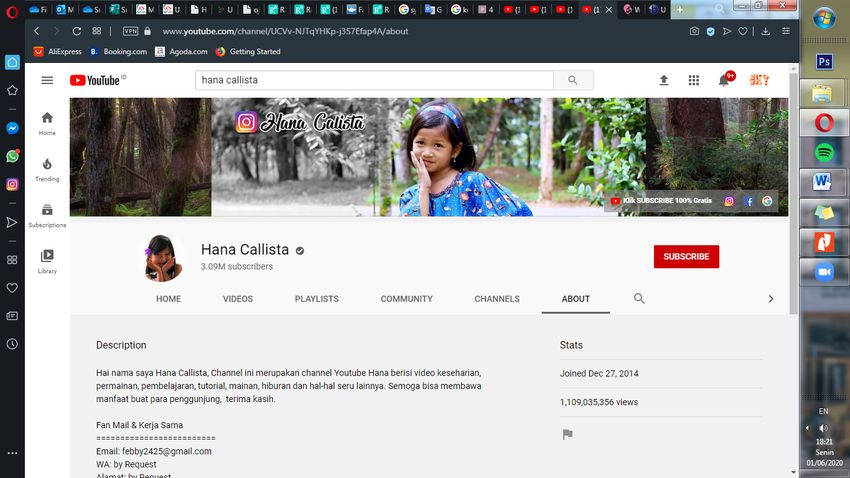
159                Children Exploitation in Disruptive Technology Era; Child Endorsers in Indonesia | Novianty & Rachmawati

      just famous people than influential. They usually are the traditional celebrities who
      opened social media accounts. The audience is diverse, and the relationship is distant
      with their followers.

      After mega, there is a macro influencer. Their follower or subscriber should be between
      100,000 to a million. The macro usually an internet-made famous by their viral posts.
      Notch down from macro, and we talk about the micro-influencer. They have between
      1,000 to 100,000 followers. In micro-influencers scope, they tend to focus on a specific
      niche or topic since they are an expert in that issue. Micro influencer usually has a closer
      bonding with their followers or subscribers, often uniform audiences.

      The newest breed in the influencer term is nano. They might have the lowest number of
      followers or subscribers, less than 1,000. They are close to you and mere ordinary people.
      A sense of intimacy is what the product seeks. Nano influencers can be a community
      leader, priest, or local government leader.

      There are various success stories in Indonesia, from zero to a hero by being a social media
      influencer. Unlike the article stated above, it is possible for someone to be a mega
      influencer just because they are famous on the internet.

      Atta Halililantar on the Youtube platform, for example. By now, his subscribers reach
      more than 23 million. He was not a celebrity initially. He was a young businessman and
      first became popular with people because his mother was a book author of "Kesebelasan
      Gen Halilintar: My Family My Team." Where she wrote about her family of 13 people (11
      children, two parents) went on various worldwide vacations without any helpers.

      On Instagram, there is Karin Novilda (@awkarin), who has more than 5 million followers.
      She built her account since 2011 when Instagram is still limitedly known in Indonesia.
      Amid controversies she created, she still one of the famous Instagram influencers.

      Halilintar and Novilda, are privileged with their parent's wealth to begin. They happen to
      gain their profit through social media. There is also another story of a successful
      influencer who once poor. He is going by the name Reza 'Arap' Oktovian, a famous
      Youtuber in the gaming segment. He once had 2,3 million subscribers (Ekarista, 2018)
      before decided to donate his account to a cancer organization. Although, he is now back
      to Youtube-sphere with his'YB' account and regained more than 1 million subscribers
      ever since. He is also known for his slump background before arose and achieving his top
      influencer status.

      Those various background stories of Instagram and Youtube famous create a tale that
      everyone can also be popular on the internet. However, in those cases, we have to
      acknowledge that those people made their accounts consciously. Their account is made
      by themselves, knowing the purpose and consequences.

               Communicare : Journal of Communication Studies | Volume 6 No. 2, December 2019 p. 156 - 176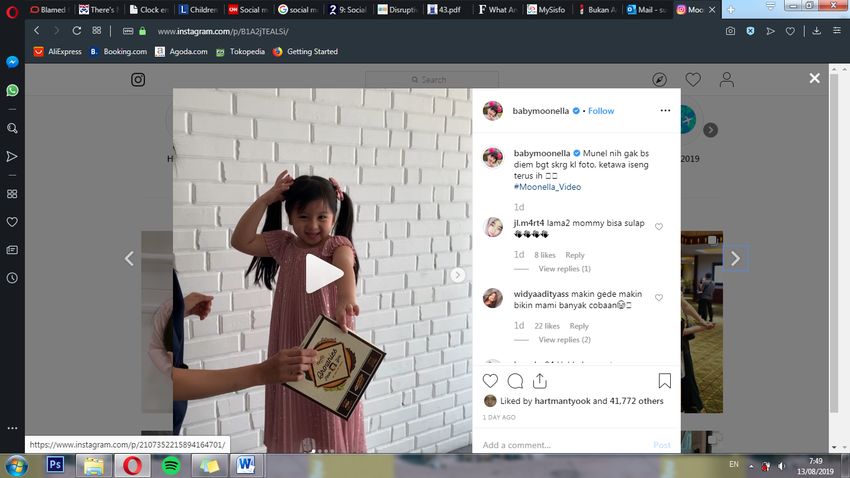
Novianty & Rachmawati | Children Exploitation in Disruptive Technology Era; Child Endorsers in Indonesia   160

When they have the liberty to choose for themselves, they are not likely to become an
exploitation object in social media. Nonetheless, the adult is not the only group who enter
the ambassador and influencer industry. Even there is always a certain age limit to make
an account, children account also sneaking in and be the player in the industry. For baby
and toddler accounts, we found that they cannot read and write, let alone making an email
address and signing up for an account. As their social media platform, they are a tool for
adults to boost followers and subscribers by being a star on Instagram and Youtube.
When they gain thousand or millions of followers and subscribers, next, it becomes
money for whom managing the accounts. There are social media stars who are underage,
be it in Indonesia or around the world.

For example, there are @babymoonella, who has more than 1.3 million followers on
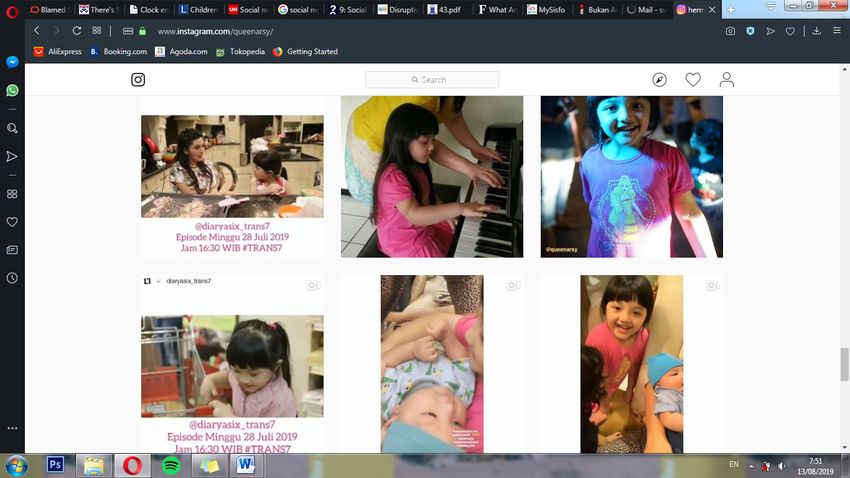
Instagram, or @queenarsy, with more than 6,7 millions follower; she is also the daughter
of a famous Indonesian public figure. They both have their account using their names,
with mothers as the primary account's admin. In Youtube, Lifia Niala account has 2,18
million subscribers. Based on their 'About' section in Youtube account, "Lifia Niala is a
sibling from Pekanbaru, Riau. Lifia is still 10 years old, while Niala is only 7 years old, and
Elsa is the smallest 4 year old sister. This channel displays a variety of children's activities
and reviews of children's toys, for example, Mandi Bola, tries mermaid costumes, plays
playdoh, count, learning, learns colors, open packages, unboxing, eggs surprise to vlog. Of
course, Lifia and Niala videos have an education and safe to watch family and positive
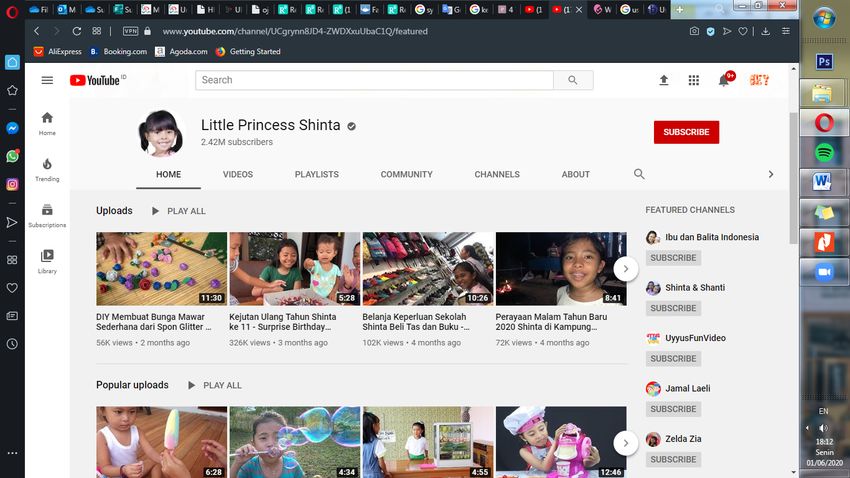
moral messages for early childhood." There is also Little Princess Shinta account, which
stars Shinta an 11 years old girl from Palangkaraya, as the main actor. Little Princess
Shinta's account joined in 2015, or approximately since Shinta was 6 years old and per
June 2020 reaches 2,42 million subscribers.

Underage children who become internet stars in Indonesia, age vary between newborn
(usually they are the babies of public figures); baby; toddler; and kids below 12 years old.
Surprisingly, many are making underage accounts for economic purposes, as they see on
their descriptions on how to contact them and endorse them. By giving access to monetize
the account, the account holder, mainly parents, is actually playing a role in children
exploitation.

Exploitation is the term fit its condition because, according to UNCHR, "Exploitation is the
abuse of a child where some form of remuneration is involved or whereby the
perpetrators benefit in some manner – monetarily, socially, politically, etc. Exploitation
constitutes a form of coercion and violence, detrimental to the child's physical and mental
health, development, and education." (UNCHR) The act of making them famous by giving
the world access to their world is clearly violating their nature, to play and observing
their world without the need to give their parents money.

Based on UN Conventions on the Rights of Child, article 31 (UN, 1989),

            Communicare : Journal of Communication Studies | Volume 6 No. 2, December 2019 p. 156 - 176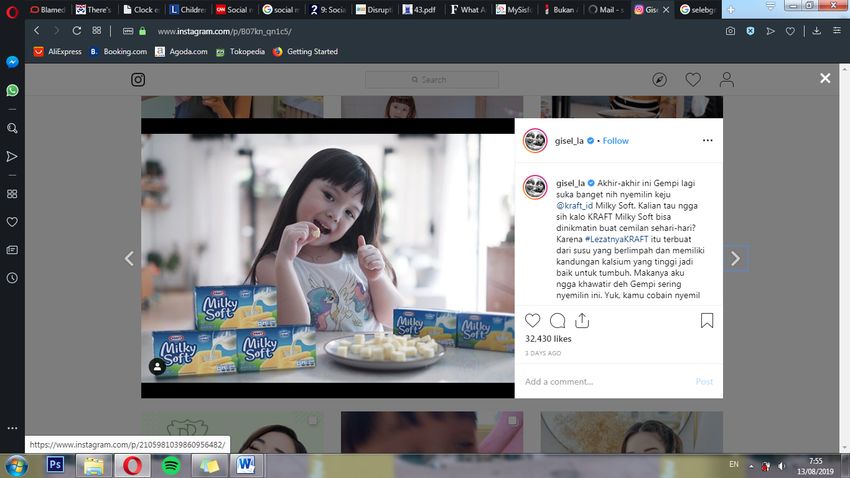
161                Children Exploitation in Disruptive Technology Era; Child Endorsers in Indonesia | Novianty & Rachmawati

              "That every child has the right to rest and leisure, to engage in play and recreational
              activities appropriate to the age of the child and to participate freely in cultural life and
              the arts. Those member governments shall respect and promote the right of the child to
              participate fully in cultural and artistic life. They shall encourage the provision of
              appropriate and equal opportunities for cultural, artistic, recreational, and leisure
              activity."

      By giving them the burden to be on camera and broadcasted to generate income, it is
      violating the conventions above. There are several forms of children exploitation
      (Rahmiaji, 2016); body exploitation, economic exploitation, exploitation of growth and
      development, exploitation of leisure time, and exploitation in the access to education.

      This study aimed to map how the children's exploitation in social media platforms, such
      as Instagram and Youtube, are conducted. We seek to find how adults are exploiting
      children. Using case study methods and observing various children influencer accounts.

      Nowadays, it is rather simple to make somebody famous through the cyber world. One
      only needs their smartphone and internet connection. If your content is inviting enough
      for the people, they will organically be your fans. They will like or love what you do and
      support you, no matter what. According to Smith (Smith, 2013), what makes someone
      become your fans is 3 rhetorical tradition of analyzing it: ethos, logos, and pathos.

      Ethos is choosing the message source. The audience is considering accounts to support
      by seeing 3C, credibility, charisma, and control. While credibility and charisma is only
      their perception, control is heavily related to the content creator. It brings us to logos or
      choosing the content, it has to be clear and straightforward, to make the audience
      understand. There are four propositions of the message, a formula to produce the text:
      factual (the fact), conjective (probable logic), value (positive values related), and policy
      (rules). The last is pathos, or emotional approach, either in a positive or negative way.
      The positive emotional approach includes love, values, humor, and sex. Negative ones are
      fear and guilt.

      From that reason, we see how the content creator behind the children accounts are using
      the kids to attract by using their charisma, a childish cuteness, and misusing their control
      by giving access to the children's daily life. The creators are also choosing to juggle upon
      those 3 propositions, (exclude policy) to entertain the audience. A positive emotional
      approach is also included in their posts by showing the humor, values, and love.

      Children, in their natural state, are known to be very pure. They are still human beings
      who act according to the surrounding, so the famous quote of "Children see, children do"
      is valid. They do not know how social media works, but the parents who introduce them.
      They do not know the urgency of likes and love for their life but the surrounding telling
      them. They were also clueless that they are famous, but people recognizing them and goes
      wild when meeting them. One case, once uploaded by an account on Instagram,

               Communicare : Journal of Communication Studies | Volume 6 No. 2, December 2019 p. 156 - 176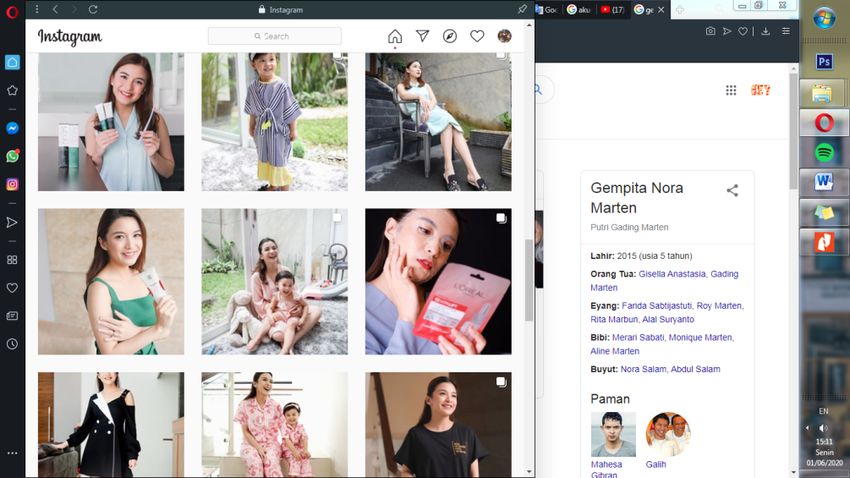
Novianty & Rachmawati | Children Exploitation in Disruptive Technology Era; Child Endorsers in Indonesia   162

@retnohening (account with the mother's name), who is famous with her daughter,
Kirana back in 2015. She was telling the audience to stop going to their family's house
while they were in Indonesia because her child was feeling overwhelmed and
uncomfortable seeing strangers. She claimed that her daughter was happy if the intention
was only for playing, but Kirana was angry when all the guest's main priority was taking
pictures and videos of her (Hening, 2015).

When you are an Instagram or Youtube famous, it is rather easy to generate money.
According to our observation, there are several methods to monetize accounts. First, for
some micro-influencer, they just open for endorsement without any fee. The account
owner is going to receive brand products. In return, the brand will receive promotions in
arranged images, or be included in a video where they were purposively using the
product and rate them good. Second, influencers would also add an endorsement fee to
promote them. Therefore, products are sent, and influencer is paid to compliment and
promote the brand. Third, we also found, mainly in Indonesia, hard selling is also used by
influencers, where they open for paid promotion. The paid promoting system is slightly
different from an endorsement. Paid to promote is where the influencer receive paid
promotion fee and using content made by the brand, including the captions, and all the
influencers need to do is posting them. There is also a form of collaboration where the
influencer gets their share whenever anyone is using their code to purchase the initiated
product. In Youtube, you also gain money per 100,000 views you get in one video.

This business process is where the children are the primary influencers smiling in front
of the camera and their parents (managements or other adults included), and the brand
is similar to worker commodification. The difference is merely from its form. It is now
emphasizing in social media. Rahmiaji (2016) stated that children commodification
happens related to power relations, jointly and mutualist form a system of production,
distribution, and consumption of resources, including communication resources. She also
added that resources, in this case, is child labor. Then, the political economy can explain
how power relations influence the production process that exploits child labor. We also
found that social media exploitation is also the reposition of children as a worker
commodification in disruptive media.

Commodification happens ever since people understand what it takes to be a capitalist in
an economic system. Appadurai in Ertman and Williams (Ertman & Williams, 2005)
proposed that commodification is a term used when goods, services, ideas, and people as
objects to be traded (commodities). Shortly, it is "anything extended for exchange." In this
paper, we are emphasizing the people as commodities.

People as commodities mean that they are turned into mere objects where there are
economic needs. For a long time, we recognize people as commodities in the
communication business are found in the media industry. They are the worker whose
rights have been violated by their company. For their time, payment and individual

            Communicare : Journal of Communication Studies | Volume 6 No. 2, December 2019 p. 156 - 176
163                Children Exploitation in Disruptive Technology Era; Child Endorsers in Indonesia | Novianty & Rachmawati

      consent are taken for granted (Tuckman, 2005). For Meszaros, commodification today is
      expanding to the level of intimate aspects of life; every part of our life is a profitable
      commodity (Meszaros, 2020).

      Concerning social media influencers, a paper by Natalia Krzyżanowska explored the
      commodification of motherhood, and this research found that contemporary practices of
      commercialised self-mediation by "celebrity mothers" increasingly normalise a strongly
      commodified and consumption-driven vision of motherhood (Krzyżanowska, 2020).
      Drawing on the affordances of mediatization and self-mediation embedded on the
      broader neoliberal and celebrity culture mindset, the article analyses how motherhood
      becomes increasingly linked, in public discourses, to economic relations of acquiring or
      gaining material goods-rather than being viewed as a socially or individually significant
      process or role. This shows how powerful the commodification in mass media is shaping
      the audience.

      However, children commodification is rather an issue in various topic around the globe.
      Petrie in 2015 wrote an article titled '"Commodifying" Children: the Impact of Markets in
      Services for Children in the United Kingdom' (Petrie, 2015), the issue when children's
      well being is at stake because political trajectory. Children become object whom being
      consider with use-value commercial exchange in internal and external market. Hence,
      this paper is focused on how children are becoming laborers who generate income for
      adults.

      The dissertation of Rahmiaji (2016), titled "Commodification of child labor on soap opera
      industry in Indonesia naturalization exploitation of child labor in the soap opera titles
      Raden Kian Santang," also focused on children as the main object. It found that in
      Indonesia, child labor exploitation is seen as a natural and taken for granted. The research
      also stated that it is the result of power relations which involves various stakeholders and
      interest in the television industry. This entanglement of various parties (television
      stations, production houses, advertisers, agencies, state agencies, schools, parents, and
      children themselves artists) make exploitation continued through the naturalization
      process.

      Using the political-economic analysis, this study found how power relations, jointly and
      mutualism form a system of production, distribution, and consumption of resources,
      including communication resources. In this case, is child labor. The political economy side
      can give a further explanation on how power relations influence the process of
      production that exploits child labor. It is proved significant for developing countries, in
      this case, Indonesia. Related to the educational, income, and the level of legal awareness
      and implementation of public policies that affect the level of exploitation and the success
      of the industry is doing mystification or owners of capital.

               Communicare : Journal of Communication Studies | Volume 6 No. 2, December 2019 p. 156 - 176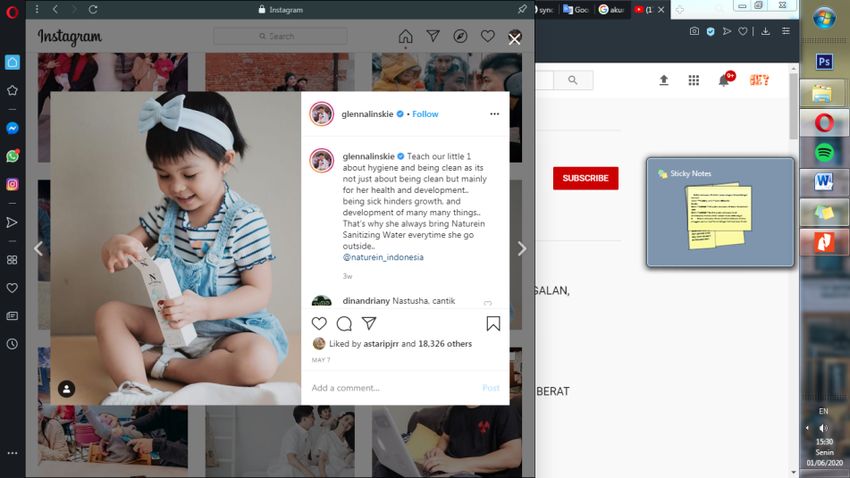
Novianty & Rachmawati | Children Exploitation in Disruptive Technology Era; Child Endorsers in Indonesia   164

This study showed that child labor commodity is experiencing double mystification,
reification, and naturalization. Rahmiaji (2016), explained that naturalization, as part of
the mystification is the industry's efforts run more systemic and well-planned.
Naturalization can not be done only by industry but is also supported by the parties
associated with the production process. Naturalization is responsible for eliminating the
production process, domination, and exploitation industry. Here the mass media play a
vital role in disseminating naturalization exploitation.

Today, its form is changing from conventional media, television, to digital. Furthermore,
the digital space is creating a 4.0 sphere, with social media as the environment where
people are actually free. Hence, like any media invented before, it also becomes a place to
gather potential monetary benefits.

METHOD

This study aimed to map how the children's exploitation in social media platforms, such
as Instagram and Youtube, are conducted. To seek whether the result is identical to
children exploitation in television. We ought to prove that there is a shifting phenomenon
in children exploitation through social media. In Instagram platform, we conducted this
research by listing accounts with minimum a million followers, the children are toddler
(12 – 36 months) and kids (above 3 years old and below 12 years old), stated clearly they
monetize the account, post regularly with the children's face as the main focus, and also
posting their product placement from time to time. While on Youtube, we focused on the
number of subscribers, usual views, and the main focus of the story within the content. In
both of the platforms, we seek upon all package of its content, the photo, video, also the
captions.

In this matter, we chose a case study method to examine this matter, since we need to use
a flexible method to get the expected result. Based on Rahim, Norhayate, and Daud, it is
common for social science researchers using case study method to investigate
contemporary real-life situations and provide the basis for the application of ideas and
extension of methods (Rahim, Norhayate, & Daud, 2015).

It is necessary because the resources may not come merely from one media to enhance
the result. In addition, we acknowledge that this is still an initial paper upon children
exploitation in social media. Therefore, this case study as a third-generation qualitative
method is suitable to conduct the research (Bennet & Elman, 2008). This results in a
descriptive study upon the matter. We conducted a case study that enables the
researchers to get a feeling for potentially essential variables and to describe the
phenomenon in the appropriate contextual things. Yin (2014) defined a case study as an
empirical inquiry that investigates a contemporary phenomenon (the 'case') in-depth and
within its real-world context.

            Communicare : Journal of Communication Studies | Volume 6 No. 2, December 2019 p. 156 - 176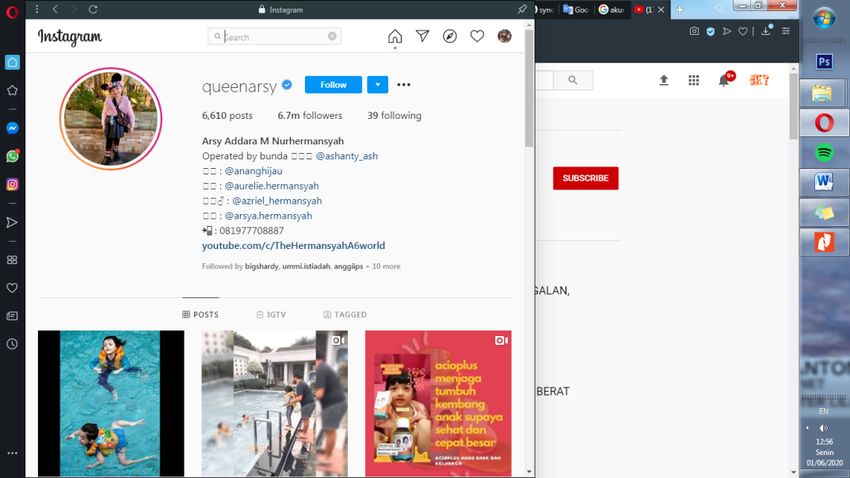
165                Children Exploitation in Disruptive Technology Era; Child Endorsers in Indonesia | Novianty & Rachmawati

      RESULT AND DISCUSSION

            Picture 1. The Findings in Instagram platform (per June 2020) Moonella Sunshine Jo
                                              (@babymoonella)

                                        Source : instagram.com/babymoonella

      Moonella Sunshine Jo (@babymoonella) account uses the real girl name. Per June 2020,
      the account has 1,3 million followers. She is defined as kids because her current age is 5
      years old. The account clearly says that it monetizes the account by giving direct access
      to endorsement offer for her.

               Communicare : Journal of Communication Studies | Volume 6 No. 2, December 2019 p. 156 - 176
Novianty & Rachmawati | Children Exploitation in Disruptive Technology Era; Child Endorsers in Indonesia 166
This account is mainly capturing Moonella and her daily activities along with product
placements in posts. Moonella’s mother is the one behind the account. Moonella related
family accounts and business is also mentioned in her bio. Interesting fact, this kid’s
account is verified by Instagram.
Picture 2. The Findings in Instagram platform (per June 2020) Arsy Addara M Nurhermansyah
(@queenarsy)
Source : instagram.com/queenarsy
Arsy Addara M Nurhermansyah (@queenarsy) account uses the girl's real name. Per June
2020, the account has 6,7 million followers. She is defined as kids because her current
age is 5 years old. The account clearly says that it monetizes the account by giving direct
access to endorsement offer for her. She is the daughter of a popular public figure.
This account is mainly capturing Arsy and her daily activities along with product
placements in posts. Arsy’s mother is the one managing the account. Arsy’s related family
Communicare : Journal of Communication Studies | Volume 6 No. 2, December 2019 p. 156 - 176167 Children Exploitation in Disruptive Technology Era; Child Endorsers in Indonesia | Novianty & Rachmawati
accounts and business is also mentioned in her bio. Interesting fact, this kid’s account is
verified by Instagram.
Picture 3. The Findings in Instagram platform (per June 2020) Retno Hening Palupi
(@retnohening)
Source : instagram.com/retnohening
Retno Hening Palupi (@retnohening) is actually the mother’s account. As per June 2020,
the account has 1,2 million followers. She has two daughters, yet who makes the account
famous is her firstborn, ‘Kirana.’ Kirana is 6 years old, making her a kid in our definition.
Retno used to merely post her daughter's activities and not mentioning any paid
promotion through her account. However, it began when one of their loyal followers had
a financial issue, and she used her platform to do paid promote to help them. The paid
promote remains still until now. However, unlike the two accounts above, she is not
opening any endorsement. The monetization only comes from paid promotion. This
account is also verified by Instagram.
Communicare : Journal of Communication Studies | Volume 6 No. 2, December 2019 p. 156 - 176Novianty & Rachmawati | Children Exploitation in Disruptive Technology Era; Child Endorsers in Indonesia 168
Picture 4. The Findings in Instagram platform (per June 2020) Gisella Anastasia (@gisel_la)
Source : instagram.com/gise_la
Similar to @retnohening, this account belongs to the mother. She is a famous singer. As
per June 2020, this account has 28,7 million follower. Her daughter made the headline
since she was born. Her daughter, ‘Gempi,’ is also one of the main subject in her account
to place endorsement. Her face found in the majority of Gisella’s post. Gempi is classified
as a kid because she is merely 5 years old. This account is verified by Instagram.
Picture 5. The Findings in Instagram platform (per June 2020) Nastusha Olivia Alinskie
(@nastusha.olivia.alinskie)
Communicare : Journal of Communication Studies | Volume 6 No. 2, December 2019 p. 156 - 176169 Children Exploitation in Disruptive Technology Era; Child Endorsers in Indonesia | Novianty & Rachmawati
Source : instagram.com/nastusha.olivia.alinskie
Nastusha Olivia Alinskie (@nastusha.olivia.alinskie) account is different. It mainly
capturing Nastusha’s daily activities. She is a 4 years old daughter of Indonesia’s popular
actors. There is no endorsement or paid promotion activities in this account. However,
when we track down to her mother and father’s account, posts use her face to endorse
various kinds of products. Instagram also verifies this kid’s account.
We conclude that the various accounts on Instagram show how the guardian is making
the children the main attraction. Give followers an up-close, and personal photo, video,
or captions of their children face, and daily activities, along with their favorite things. The
endorsement is made clear by giving ways to reach the account owner in their bio. Except
for Nastusha’s account where the endorsement is directed to her parents, her account is
clear from any product placement. It is interesting to find, despite the age limit given to
make an Instagram account, those kids' accounts are all verified, such as @babymoonella,
@queenarsy, and @nastusha.olivia.alinskie.
After we observed the Instagram-sphere for kids influencer, we also did the same thing
with Youtube accounts. Shown below is the table for Youtube accounts in Indonesia, we
choose to see the number of subscribers, the photo used, description, and also the views
in one video from various identity.
Communicare : Journal of Communication Studies | Volume 6 No. 2, December 2019 p. 156 - 176Novianty & Rachmawati | Children Exploitation in Disruptive Technology Era; Child Endorsers in Indonesia 170
Picture 6. The findings in Youtube platform (as per June 2020) Lifia Niala
Source: https://www.youtube.com/user/LifiaTubeHD/featured
Lifia Niala is a leading Youtuber whose account consists of three siblings. Based on their
description, Lifia is the oldest of them (10 years old), Niala is the middle child (7 years
old), and Elsa the youngest (4 years old). They all classified as kids. Per June 2020, they
reach 2,18 million subscribers since they joined 6 years ago. The account clearly says
that it monetizes the account by giving direct access to business and endorsement
inquiries for them. It also shows in their content. Children in this account follow around
the script to review the endorsed product.
This channel focuses on various children activities, toy’s reviews, and besides those, they
also stated that they provide educational videos with a positive message for children. This
account is verified by Youtube.
Picture 7. The findings in Youtube platform (as per June 2020) Little Princess Shinta
Source: https://www.youtube.com/channel/UCgrynn8JD4-ZWDXxuUbaC1Q/about
Little Princess Shinta account uses the real girl name. Per June 2020, the account has 2,42
million subscribers. She is 11 years old and lives in Central Borneo. She mainly does
unboxing, reviewing, and vlogging. Unboxing is a trendy word nowadays. It is an act of
removing a new product from its packaging and examining its features. Unboxing is
filmed and shared on social media. Therefore unboxing and reviewing are the same.
Communicare : Journal of Communication Studies | Volume 6 No. 2, December 2019 p. 156 - 176171 Children Exploitation in Disruptive Technology Era; Child Endorsers in Indonesia | Novianty & Rachmawati
This account is mainly capturing Shinta and her daily activities along with product
placements in posts. Most of her videos’ comment section is turned off. This account is
verified by Youtube.
Picture 8. The findings in Youtube platform (as per June 2020) Zara Cute
Source: https://www.youtube.com/channel/UCBOSOWt_VXm_XBWNbTMDwnw/featured
The girl, Zara, is 8 years old. Her mother manages this account. As Per June 2020, the
account has 2,8 million subscribers. The content provides daily homeschooling activities
and educational videos. Interestingly, this account is the only one to promote separate
family accounts, her little brother, and their mother. This particular account is also
monetizing the account from endorsement and viewers. Youtube also verifies zara Cute.
Picture 9. The findings in Youtube platform (as per June 2020) Hana Callista
Source : https://www.youtube.com/channel/UCVv-NJTqYHKp-j3S7Efap4A/featured
Hana is the name of the main Youtuber. She is a 6 years old girl. Among others, based on
our observation, she is the most hefted with product placements in her videos. It is also
publicly shown where to contact regarding the business inquiries. The account put the
placement in a drama-like story or challenge. She is also the most popular among our
samples. She has 3,09 million subscribers per June 2020. This account is verified by
Youtube.
Communicare : Journal of Communication Studies | Volume 6 No. 2, December 2019 p. 156 - 176Novianty & Rachmawati | Children Exploitation in Disruptive Technology Era; Child Endorsers in Indonesia 172
Picture 10. The findings in Youtube platform (as per June 2020) Aqilla’s Diary
Source : https://www.youtube.com/channel/UC_WUCjT0d97YiX-9E078Zkw/featured
Aqilla is a 7 years old girl, who mainly does the video with her mother. Aqilla is classified
as a kid based on her age. This account's subscriber, as per June 2020, is 1,83 million
subscribers. The account joined Youtube in 2016 and monetizing the account by views
and endorsement. Based on our observation, this account uses a drama-like story to
convey its message and put the product placement as the main storyline. Aqilla's type of
content is similar to Hana. Youtube also verifies Aqilla's diary.
In Youtube, we found that most of them identify the account using the child's name.
However, parents are heavily contributed to their videos because we found that the
videos posted are mostly scripted and conscious product placement within. Views are
counted to be money on Youtube. Thus money-generating comes in various ways. All of
the about sections on Youtube are all included in the contact if anyone interested to do
business with the account. Those underage accounts are all verified by Youtube.
After observing those 10 accounts, in both Instagram and Youtube, we found two kinds
of accounts performing children exploitation; (1) Accounts with parents' names endorse
are addressed to the children via their parents' account; (2) Accounts with children's real
names, endorsements are directed to their name.
Both kinds of accounts are using children as the main attraction. To entertain the people
by looking cute or performing their daily life. Not aware of how their wellbeing is
threatened by the adults, or in this case, their parents.
Accounts name are essential because we can gather the information, whether or not the
adults are violating the social media rules. Because, for babies, toddlers, and kids, it is
impossible to make themselves an account under their real identity. It is also supported
by the basic regulations made by the company. Instagram stated in their official FAQ,
"Instagram requires everyone to be at least 13 years old before they can create an account
(in some jurisdictions, this age limit may be higher). If your child is younger than 13 and
created an account on Instagram, you can show them how to delete their account." While
Youtube, requires account holders to be 18, but a 13-year-old can sign up with parent's
permission. Still, nothing allowed kids below 12 to enter their connecting world. Funny
Communicare : Journal of Communication Studies | Volume 6 No. 2, December 2019 p. 156 - 176173 Children Exploitation in Disruptive Technology Era; Child Endorsers in Indonesia | Novianty & Rachmawati
enough, both on Instagram and Youtube allow those underage accounts to be verified by
them.
Being verified in the Instagram platform, based on the official explanation by Instagram's
team, is "A verified badge is a check that appears next to an Instagram account's name in
search and on the profile. It means Instagram has confirmed that an account is the
authentic presence of the public figure, celebrity, or global brand it represents." Hence, it
only proves that its account holder is a public figure, regardless of their underage
situation, which clearly violating their term of service.
In Youtube's situation,
"If a channel is verified, it's the official channel of a creator, artist, company, or public
figure. Verified channels help distinguish official channels from other channels with
similar names on YouTube. To be eligible to apply for verification, your channel must
reach 100,000 subscribers. After you apply, we'll review your channel. We verify
channels that are authentic: Your channel must represent the real creator, brand, or
entity it claims to be. We'll check different factors to help verify your identity, such as
the age of your channel. We may also ask for more info or documentation. Your channel
must be public and have a channel banner, description, channel icon, and content, and
be active on YouTube. In some cases, YouTube may also proactively verify channels with
fewer than 100,000 subscribers that are well-known outside of YouTube."
Once again, underage accounts are passed the verification. Even though the main
Youtuber is still children, breaking their own rules.
We acknowledge that emails are made using the adult's identity. Nevertheless, the
verification process from Instagram and Youtube's team should also look to the content
created, who is the main attraction in the account?. Kids are not eligible to enter the social
media sphere with their own account based on the rules. Accordingly, a broken system is
actually created from the platform provider, Instagram, and Youtube. This system hole is
used by the adults around the kids to use and monetize the account on behalf of their
children.
These findings lead to conclude; children are regarded as workers who generate profit
from investments made by their parents. Although most of the parents or account owners
stated that they never force the children to pose, having a rate card ready to be given to
potential business partners is an indicator of how they use the kids' innocence as one of
the aspects to be traded.
Based on the research, we also found that in children exploitation cases in social media,
the stakeholders are different from the previous paper on television found. Advertisers,
state agencies, followers, or subscribers, parents, and children are the parties related to
the case. Advertisers are those who choose the children endorses; State agencies as the
lawmaker who let this kind of case slip without any further action; Follower or Subscriber
who support the contents; Parents who play their power role to use their children; and
Children as the labor.
Communicare : Journal of Communication Studies | Volume 6 No. 2, December 2019 p. 156 - 176Novianty & Rachmawati | Children Exploitation in Disruptive Technology Era; Child Endorsers in Indonesia 174
Followers or subscribers make exploitation continued through the naturalization
process. Since seeing there is a broad audience for individual child endorsers, advertisers
following the wave and contacted the parents to collaborate. Children are powerless.
Here is the missing place which supposed to be played by the state agencies, protecting
them.
CONCLUSION
Children exploitation is widespread in social media, especially Instagram and Youtube.
This research mapped that account using children as the main attraction is either using
their name or their parent's name, posting their faces or activities regularly, and
monetizing from the accounts by selling their account as open for endorsement. However,
consent is not lawfully given since they are still juvenile. Children are juvenile and not
capable of making decisions for themselves. They jumble upon their face and innocence
are being sold as an influencer. Adults, as their guardians, intentionally using them to
generate income.
Unfortunately, this is actually controlled by the platform, Instagram, and Youtube, as they
verified all underage accounts when they meet a certain number of followers or
subscribers. Not by double-checking the account holder, which by their terms of service
is violating the age limitation.
Advertisers are those who choose the children endorser, are also becoming part of this
exploitation—state agencies as the lawmaker who let this kind of case slip without any
action. There are no rules regarding social media usage for underage or else protection
for kids' influencers.
Followers or subscribers who support the contents and unconsciously helping them grow
bigger and keep using the kids to finish business deals. Parents who play their power role
to use their children and children as unprotected labor.
These findings lead to conclude; children are regarded as workers who generate profit
from investments made by their parents. We found that children are positioned as the
powerless labor who need to be saved by clear regulations to protect their rights. In
Indonesia, such actions to protect them is not yet to be found.
REFERENCES
Bennet, A., & Elman, C. (2008). Case Study Methods. In C. Reus-Smit, & D. Snidal, The Oxford
Handbook of International Relations. Oxford: Oxford University Press.
Communicare : Journal of Communication Studies | Volume 6 No. 2, December 2019 p. 156 - 176175 Children Exploitation in Disruptive Technology Era; Child Endorsers in Indonesia | Novianty & Rachmawati
Ekarista, R. (2018, 9 18). Punya 2,3 Juta Subscriber, Reza 'Arap' Oktovian Sumbang Akun Youtube-
nya untuk Yayasan Kanker. Retrieved from Tribun News:
https://kaltim.tribunnews.com/2018/09/18/punya-23-juta-subscriber-reza-arap-
oktovian-sumbang-akun-toutubnya-untuk-yayasan-kanker
Ertman, M., & Williams, J. C. (2005). Rethinking Commodification: Cases and Readings in Law and
Culture. New York: New York University Press.
Hening, R. (2015). Instagram Post Regarding Her Daughter Feeling. Retrieved from
http://www.instagram.com/retnohening
InfluencerMarketing. (2018, October 24). How to Become Instagram Famous: 6 Simple Steps to
Mastery. Retrieved from Influencer MarketingHub:
https://influencermarketinghub.com/how-to-become-instagram-famous-6-simple-
steps-to-mastery/
Ismail, K. (2018, December 10). Social Media Influencers: Mega, Macro, Micro or Nano. Retrieved
from CMS WiRE: https://www.cmswire.com/digital-marketing/social-media-
influencers-mega-macro-micro-or-nano/
Jin, S. V., Muqaddam, A., & Ryu, E. (2019). Instafamous and Social Media Influencer Marketing.
Marketing Intelligence & Planning Vol. 37 No. 5, 567 - 579.
Krzyżanowska, N. (2020). The commodification of motherhood: normalisation of consumerism
in mediated discourse on mothering. Social Semiotics, 2 - 28.
Meszaros, J. (2020). Commodification of Intimacy and Sexuality. In N. A. Naples, Companion to
Sexuality Studies (pp. 258 - 278). New Jersey: John Wiley & SOns Ltd.
Mlodkowska, B. (2019). Influencers on Instagram and YouTube and Their Impact on Consumer
Behaviour. Journal of Marketing and Consumer Behaviour in Emerging Markets 1(9), 4-13.
Petrie, S. (2015). “Commodifying” Children: the Impact of Markets in Services for Children in the
United Kingdom. International Journal of Child, Youth, and Family Studies 6(2), 275 - 294.
Rahim, M. A., Norhayate, W., & Daud, W. (2015). The Case Study Method in Business. Scholars
Journal of Arts, Humanities, and Social Sciences, 105 - 109.
Rahmiaji, L. R. (2016). Commodification of Child Labour on Soap Opera Industry in Indonesia
Naturalization Exploitation of Child Labour in the Soap Opera Titles Raden Kian Santang.
Depok: Universitas Indonesia.
Sadrabadi, A. N., Saraji, M. K., & Monshizadeh, M. (2018). Evaluating the Role of Brand
Ambassador in Social Meia. Journal of Marketing Management and Consumer Behavior Vol.
2 Issue 3, 54-70.
Smith, D. (2013). Strategic Planning for Public Relations 4th Edition. Routledge.
Tuckman, A. (2005). Employment Struggles and the Commodification of Time: Marx and the
Analysis of Working Time Flexibility. Philosophy of Management Volume 5 Number 2, pp. .
Nottingham, 47 – 57.
UN, G. A. (1989, 11 20). Convention on the Rights of the Child. Retrieved from UN:
https://www.refworld.org/docid/3ae6b38f0.html
Communicare : Journal of Communication Studies | Volume 6 No. 2, December 2019 p. 156 - 176Novianty & Rachmawati | Children Exploitation in Disruptive Technology Era; Child Endorsers in Indonesia 176
UNCHR. (n.d.). Action for the Rights of Children (ARC): Abuse and Exploitation - Revision 04/01.
Retrieved from UNCHR: https://www.unhcr.org/3bb81aea4.pdf
Xiao, M., Wang, R., & Chan-Olmsted, S. (2018). Factors affecting YouTube influencer marketing
credibility: a heuristic-systematic model. Journal of Media Business Studies Vol. 15, 188 -
213.
Yuan, S., & Lou, C. (2020). How Social Media Influencers Foster Relationships with Followers: The
Roles of Source Credibility and Fairness in Parasocial Relationship and Product Interest.
Journal of Interactive Advertising .
Communicare : Journal of Communication Studies | Volume 6 No. 2, December 2019 p. 156 - 176You can also read


