2016-2017 NFHS SPIRIT RULES - Rules Changes Situations and Rulings Points of Emphasis
←
→
Page content transcription
If your browser does not render page correctly, please read the page content below

2016-2017 NFHS SPIRIT RULES
National Federation of State                            Take Part. Get Set For Life.™
 High School Associations

                               Rules Changes
                               Situations and Rulings
                               Points of Emphasis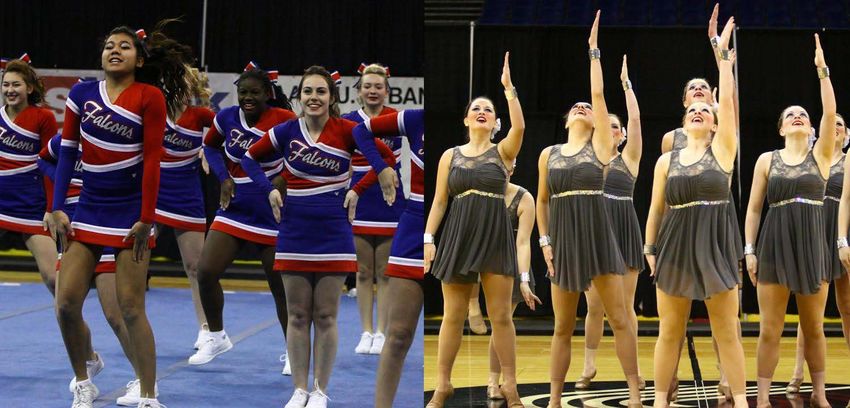
NATIONAL FEDERATION OF
STATE HIGH SCHOOL ASSOCIATIONS
NFHS (located in Indianapolis, IN – Est.
1920):
National leadership organization for high school
sports and activities;
National authority on interscholastic
activity programs.
Conducts national meetings;
Sanctions interstate events;
Produces national publication for
high school administrators;
National source for interscholastic coach
training and national information center.
www.nfhs.org
NATIONAL FEDERATION OF
STATE HIGH SCHOOL ASSOCIATIONS
Membership = 50 member state associations and D.C.
NFHS reaches more than 19,000 high schools and 12
million participants in high school activity programs,
including more than 7.8 million in high school sports.
www.nfhs.org
NFHS RULES REVIEW COMMITTEE

   The NFHS Rules Review Committee is chaired by the chief
   operating officer and composed of all rules editors. After
   each committee concludes its deliberations and has
   adopted its recommended changes for the subsequent
   year, such revisions will be evaluated by the Rules Review
   Committee.

Davis Whitfield      Bob Colgate        Elliot Hopkins    Susie Knoblauch       Mark Koski     Becky Oakes     Dan Schuster     Sandy Searcy      Theresia Wynns
Chief Operating   Football and Sports   Baseball and     Lacrosse and Spirit   Field Hockey   Cross Country,    Ice Hockey       Softball and      Basketball and
    Officer            Medicine           Wrestling                                            Gymnastics,                    Swimming & Diving       Soccer
                                                                                              Volleyball and
                                                                                               Track & Field

                                                                                                                                            www.nfhs.org
NATIONAL FEDERATION OF
 STATE HIGH SCHOOL ASSOCIATIONS
The NFHS writes playing rules for 17 sports
for boys and girls at the high school level.
   • Publishes 4 million pieces of materials
     annually.

                                               www.nfhs.org
2016-17 NFHS SPIRIT RULES BOOK
Available for purchase at www.nfhs.com
https://www.nfhs.com/p-909-2015-16-spirit-rules-
book.aspx
$8.20 plus s/h
www.nfhs.org
WWW.NFHS.ORG/EBOOKS/
Apple users can visit
iTunes for available
books.
Apple, Android and
Kindle users can buy
e-books from
Amazon.com and view
them through the
Kindle app.
Price: $5.99 each
www.nfhs.org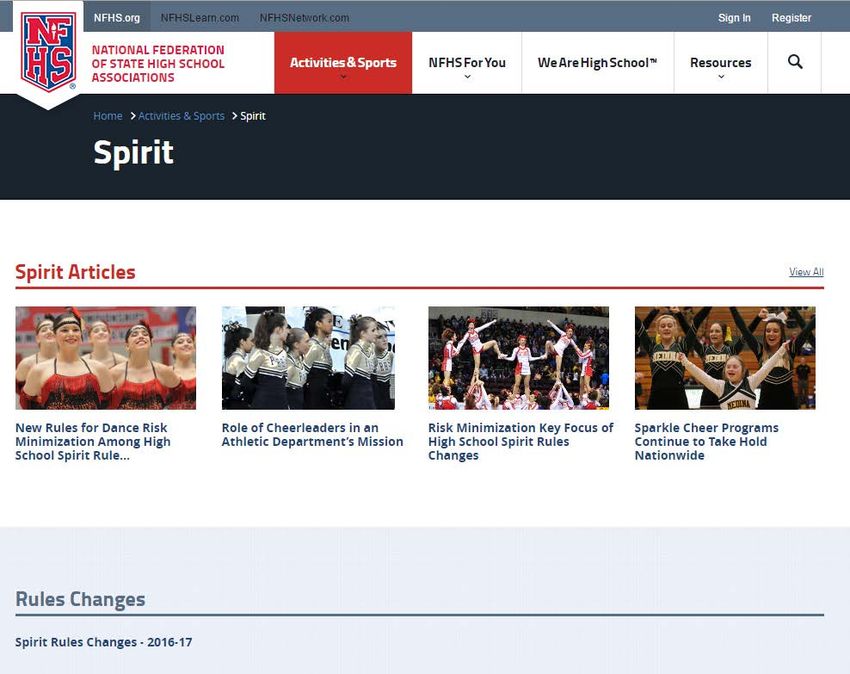
NFHS RULES BOOK AS E-BOOKS

             ▪ E-books features:
                • Searchable
                • Highlight areas of
                  interest
                • Make notes
                • Desktop laptop
                  availability
                • Easy navigation
                • Adjustable viewing size
                • Immediate availability

                                     www.nfhs.org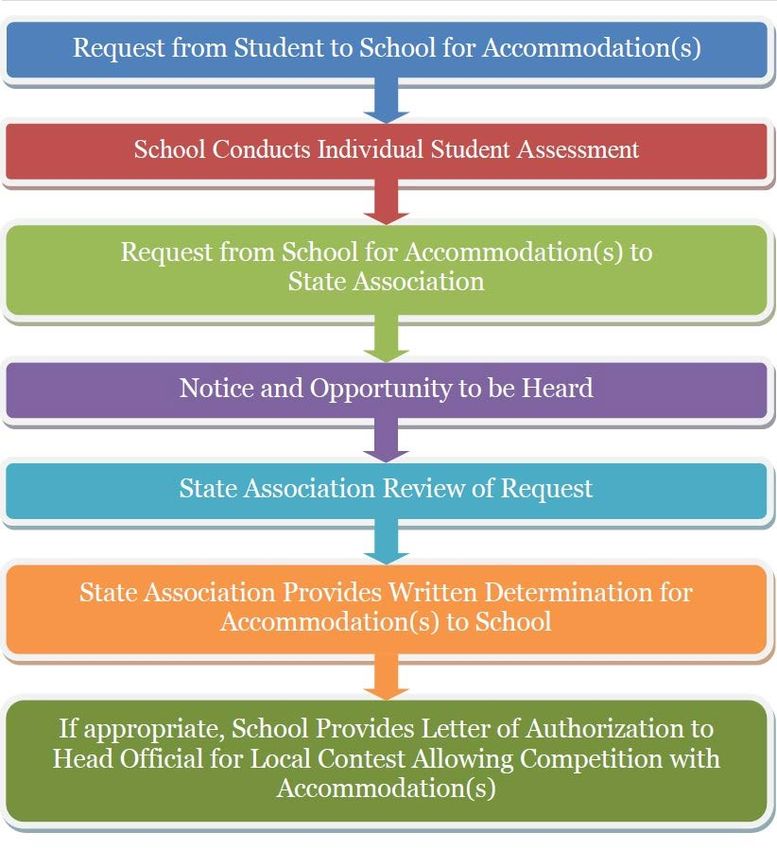
NFHS SPIRIT RULES COMMITTEE

                          www.nfhs.org
WWW.NFHS.ORG
ACTIVITIES & SPORTS – SPIRIT

                               www.nfhs.org
APPLICATION OF
NFHS SPIRIT RULES BOOK
✓ Spirit rules provide the minimum safety standards followed by all spirit teams
(cheerleading/dance/drill/pom, etc…)
✓ Spirit rules should be followed while participants are in a supporting role at an
interscholastic contest and during all competition.
✓ RULE 1 contains definitions of terms that are used throughout the rules book.
✓ RULE 2 contains general information and safety rules that apply to all spirit groups.
✓ RULE 3 contains apparel requirements and performance safety rules that apply only to
cheerleading.
✓ RULE 4 contains apparel requirements and performance safety rules that apply only to
dance/drill/pom.
✓ Situations and photos are provided as examples only, and do not cover all circumstances
in which the rules apply.
www.nfhs.orgEDUCATION-BASED
ATHLETIC/ACTIVITY PROGRAMS
✓ Interscholastic athletics/activities shall supplement the educational
environment and provide students with educational experiences.
✓ Participation in education-based activity programs promotes student
academic achievement.
✓ Spirit teams are very visible and in a position of great influence and
therefore high standards for appearance and conduct are essential.
✓ Coaches should ensure uniforms, costumes, music and materials are
age-appropriate and suitable for the educational environment.
✓ Coaches are expected to be advocates and models of good
sportsmanship and follow all rules as written.
www.nfhs.org2016-2017 NFHS Spirit Rules
Changes
RULE 1 – DEFINITIONS
www.nfhs.orgRULE 1 - DEFINITIONS
✓Bracer – A top person who is connected to another top
person.
✓Cradle Position (New) – A face-up, open-pike position.
✓Quick Toss – A release that begins with the top person in
having both feet in weight-bearing contact with the
performing surface and ends in a partner stunt or pyramid.
www.nfhs.org2016-2017 NFHS Spirit Rules
Changes
RULE 2 – GENERAL RISK MANAGEMENT
RULE 3 – CHEER
RULE 4 – DANCE/DRILL/POM
www.nfhs.orgRule Change
3-2-7 F
A spotter is required for extended stunts except:
f. Triple-base extended stunts in which the top person is
horizontal.
Rationale: Risk minimization.Rule Change
3-3-4 a, B
Braced inversions in a pyramid that do not flip are
permitted provided the following conditions are met:
a. Braced inversions that do not release must follow non-
release stunt Rule 3-4.
b. Braced inversions that release must follow release
transition Rule 3-5-5.
Rationale: As a point of clarification, these stunts are
legal when not braced; therefore, two bracers are not
necessary for non-flipping inversions.Rule Change
3-3-5 a
Braced flips in a pyramid are allowed provided all the
following conditions are met:
a. The top person maintains continuous hand-to-
hand/arm contact with two bracers who are in multi-
base preps with a spotter. The top person is not behind
the bracers.
Rationale: Braced flips may start in a single-base stunt
but still require two bracers in preps. The bracers may be
on any side, including behind the top person.
www.nfhs.orgRule Change
3-3-6 b
In all other inversions:
b. Static inversions at prep level require two bases or a
base and spotter. The spotter is not required to be in
contact with the top person.
c. A release transition from a static inverted position to a
non-inverted position is permitted provided:
1. The top person lands at or below prep level.
2. The top person does not twist more than 1⁄4
rotation.
3. There is a spotter.
www.nfhs.orgRule Change
3-3-6 C
In all other inversions:
c. A release transition from a static inverted position
to a non-inverted position is allowed provided:
1. The top person lands at or below prep level.
2. The top person does not twist more than ¼
rotation.
3. There is a spotter.
www.nfhs.orgRule Change
3-3-6 F, G
In all other inversions:
f. When the stunt begins in an inversion and goes to a non-
inverted position, the upper body contact may be released
before the top person is no longer inverted.
g. Dismounts from inverted stunts to a cradle or an upright
position on the performing surface are allowed provided the
top person begins in a static or “pump and go” position and
does no more than a one-quarter turn.
Rationale: Inversion section is simplified and reorganized. Rules
for inverted stunts are less restrictive and permit additional low
level/low risk stunts without creating undue risk to participants.
www.nfhs.orgRule Change
3-4-3
In pyramids where one static extended stunt braces
another static extended stunt the connection must be
hand/arm to hand/arm.
Rationale: Removing the requirement for bracers of non-
release, static stunts to be at shoulder height or below
does not create undue risk.
www.nfhs.orgRule Change
3-4-13
A participant must not jump unassisted onto the back of
a base who is in a horizontal position.
Rationale: Risk minimization.
www.nfhs.orgRule Change
3-5-2 B, E
In all release stunts and tosses:
b. The top person must not land in an inverted
position.
e. The top person must not make more than 1 1/4
twists during the release.
Rationale: Risk minimization.Rule Change 3-5-4 (P) ART. 4 . . . A switch liberty is permitted as an exception to Articles 3-5-2 and 3-5-3. Rationale: The exception for a switch liberty does not create undue risk.
Rule Change

   3-5-5 b

Release transitions are permitted provided all of the following
conditions are met throughout the transition:
    b. The top person maintains hand-to-hand/arm contact with at
       least one bracer except for the following:
       1. A non-braced top person in a vertical position at prep level
          may be released to a stunt at any level provided the top
          person remains vertical.
       2. A non-braced top person in a cradle position or horizontal
          position at prep level or below may be released to a loading
          position or stunt prep level or below.

Rationale: With the advancement of cheerleading skill, allowing lower
level non-braced transitions do not create undue risk.

                                                              www.nfhs.org
3-5-5 C c. The top person and each bracer (who is at shoulder level or below) have a separate spotter with the exception of bracers in shoulder sits and thigh stands.
Rule Change

  3-6-2 A, C

Non-braced suspended splits that originate from or pass
through prep level are permitted provided
   a. At least three bases slow the momentum of the
      top person.
   c. At least two of the bases support under the top
      person’s legs and the third base may support
      under the legs or be in contact with the top
      person’s hands.

Rationale: Reducing the number of required bases for
suspended splits does not significantly increase risk.
Rule Change 3-7-3 Dismounts to the performing surface from prep level or above that involve a skill require two bases or a base and a spotter. Assistance is required from at least one base or spotter. Rationale: Requiring just one base/spotter to assist the top person to the floor does not cause undue risk.
Rule Change

  SECTION 10
  (NEW)

CHEERING ON PROPS AS BASES

ART. 1 . . . The height of the prop must not exceed 3 feet.
ART. 2 . . . Jumps and/or stunts are not permitted on props.

Rationale: Specifically clarifies that cheerleaders have
limitations when cheering on props.

                                                       www.nfhs.org
Rule Change
4-1-5 B
b. Footwear that covers the entire foot/feet and has non-slip
soles must be worn for:
1. Stunts/lifts at prep level in which the top person’s
foot/feet are in the hands of a base(s).
2. Airborne tumbling with the exception of front and side
aerials.
Rationale: Additional restrictions will minimize risk to
dance/drill/pom participants.Rule Change
Rule Change

 4-2-7 F

A spotter is required for stunts in which the supporting
hands of the base(s) is(are) above the head, except for
the following:
   f. Triple-base stunts in which the top person is
      horizontal.

Rationale: Removing spotting requirements for such
stunts does not increase risk to participants.

                                                 www.nfhs.org
Rule Change
Rule Change

  4-3-5

Braced flips are not permitted in Dance/Drill/Pom.

Rationale: Minimizes risk for high school dancers who
are generally not properly trained to execute higher level
stunts that require lead-up skills and progressions.

                                                  www.nfhs.org
Rule Change BRACED FLIP
Rule Change

   4-3-6

In all other inversions:
    b. Static inversions at prep level require two bases or a
        base and spotter. The spotter is not required to be in
        contact with the top person.
    c. Release transitions from an inverted position are not
        permitted in Dance/Drill/Pom.
    f. When the stunt begins in an inversion and transitions to
        a non-inverted position, the upper body contact may be
        released before the top person is no longer inverted.
Rule Change
4-4-2
Stunts/lifts in which base(s) support an extended top
person under the foot/feet are not permitted in
Dance/Drill/Pom.
Rationale: Minimizes risk for high school dancers who
are generally not properly trained to execute higher level
stunts that require lead-up skills and progressions.
www.nfhs.orgRule Change
4-4-4 A
A top person may be moved from a vertical position to a
horizontal or cradle position provided:
a. The top person begins at or below prep level and
does not pass through an extended position.
Rationale: Minimizes risk for high school dancers who
are generally not properly trained to execute higher level
stunts that require lead-up skills and progressions.
www.nfhs.orgRule Change 4-3-6 B
Rule Change

  4-4-2

Stunts/lifts in which base(s) support an extended top
person under the foot/feet are not permitted in
Dance/Drill/Pom.

Rationale: Minimizes risk for high school dancers who
are generally not properly trained to execute higher level
stunts that require lead-up skills and progressions.

                                                  www.nfhs.org
Rule Change
4-4-4 A
A top person may be moved from a vertical position to a
horizontal or cradle position provided:
a. The top person begins at or below prep level and
does not pass through an extended position.
Rationale: Minimizes risk for high school dancers who
are generally not properly trained to execute higher level
stunts that require lead-up skills and progressions.
www.nfhs.orgRule Change
4-4-6
A participant must not jump unassisted onto the back of
a base who is in a horizontal position.
Rationale: Minimizes risk of injury to participants.
www.nfhs.orgRule Change
4-4-11
In pyramids where one static extended stunt braces
another static extended stunt the connection must be
hand/arm to hand/arm.
Rationale: Removing the requirement for bracers of
static stunts to be at shoulder height or below does not
create undue risk.
www.nfhs.orgRule Change 4-4-11
Rule Change

  4-4-13, 4-4-14

ART 13. Single-base stunts in which the base is the
primary support for two extended top persons are not
permitted in Dance/Drill/Pom.
ART 14. Single base stunts in which the base uses only
one arm to support an extended top person are not
permitted in Dance/Drill/Pom.

Rationale: Minimizes risk for high school dancers who
are usually inadequately prepared to execute stunts/lifts
that require lead up skills and progressions.
                                                  www.nfhs.org
Rule Change
4-5-2
The following release stunts are not permitted in
Dance/Drill/Pom:
a. Tosses
b. Braced release stunts and braced release
transitions.
c. Swan Dives
d. Switch Liberties
Rationale: Minimizes risk for high school dancers who are
usually inadequately prepared to execute tosses and higher
level braced and non-braced releases.Rule Change
4-5-3 A,B
Non-braced release stunts are permitted:
a. The top person must begin and end at prep level or
below.
b. The top person must not begin or end in an inverted
position.
Rationale: Allows lower level release stunts for
dance/drill/pom participants.
www.nfhs.orgRule Change
4-6-2 A,C
Non-braced suspended splits that originate from or pass
through prep level are permitted provided
a. At least three bases slow the momentum of the top
person.
c. At least two of the bases support under the top
person’s legs and the third base may support under the
legs or be in contact with the top person’s hands.
Rationale: Reducing the number of required bases for
suspended splits does not significantly increase risk.Rule Change 4-6-4 The top person in braced suspended splits must not be released by the bases in Dance/Drill/Pom. Rationale: Reinforces Rule 4-5-2 which prohibits braced releases in Dance/Drill/Pom.
Rule Change

  4-7-3

Dismounts to the performing surface from prep level or
above that involve a skill (e.g. toe touch, twist, etc.)
require two bases or a base and a spotter. Assistance is
required from at least one base or spotter.

Rationale: Requiring just one base/spotter to assist the
top person to the floor does not cause undue risk.
2016-2017 NFHS Spirit Rules
POINTS OF EMPHASIS

                              www.nfhs.org
Points of Emphasis
POINTS OF EMPHASIS - NAVIGATING
THE SPIRIT RULES BOOK
To facilitate the navigation of the NFHS Spirit Rules Book,
the following guidance is offered:
• Cheer related sections include Rules 1, 2, and 3.
• Dance related sections include Rules 1, 2, and 4.
When seeking information regarding a specific skill, it is
helpful to identify the section in which it is located.
• For further assistance in understanding rules and/or
skills, go to spiritrules.com. This website is a valuable
resource that offers video footage illustrating skills and
supporting the explanation of spirit rules.Points of Emphasis
POINTS OF EMPHASIS – NAVIGATING
THE SPIRIT RULES BOOK – RULE 3
CHEER
• Sec 1 Apparel/Accessories
• Sec 2 Stunting Personnel
• Sec 3 Inversions
• Sec 4 Non-release Stunts
• Sec 5 Release Stunts
• Sec 6 Suspended Stunts
• Sec 7 Dismounts
• Sec 8 Tumbling
• Sec 9 Drops
• Sec 10 Props as BasesPoints of Emphasis
POINTS OF EMPHASIS - NAVIGATING
THE SPIRIT RULES BOOK - RULE 4
DANCE/DRILL/POM
• Sec 1 Apparel/Accessories
• Sec 2 Stunting Personnel
• Sec 3 Inversions
• Sec 4 Non Release Stunt/Lifts
• Sec 5 Release Stunts
• Sec 6 Suspended Stunts
• Sec 7 Dismounts
• Sec 8 Tumbling
• Sec 9 Drops
• Sec 10 Props as Bases
• Sec 11 Spotting Props
• Sec 12 Dismounting PropsPoints of Emphasis
POINTS OF EMPHASIS - SURFACES
Consideration of practice/performance surfaces are a
vital component of risk minimization. The following skills
are only allowed on a mat, grass, or rubberized track
surface:
a. Basket tosses, elevator/sponge tosses and other similar
multi-base tosses.
b. Partner stunts in which the base uses only one arm to
support the top person.
c. Twisting tumbling skills (Arabians, full twisting layouts,
etc.). EXCEPTION: Cartwheels, round-offs and aerial
cartwheels are allowed on surfaces other than a mat,
grass or rubberized track.Points of Emphasis POINTS OF EMPHASIS – APPLICATION OF NFHS SPIRIT RULES BOOK
Points of Emphasis

   POINTS OF EMPHASIS –
   CONCUSSIONS
NFHS SUGGESTED GUIDELINES FOR
MANAGEMENT OF CONCUSSION IN SPORTS

                   In the Appendix
                        of the
                    2016-17 NFHS
                     Rules Book
Points of Emphasis POINTS OF EMPHASIS – COACHES RESPONSIBILITY
INCLUSION OF STUDENTS WITH DISABILITIES
GUIDELINES FOR SCHOOLS AND STATE ASSOCIATIONS FOR CONSIDERATION
OF ACCOMMODATIONS
NFHS INFORMATION Rule Change Proposal Form – February 1, 2017 Spirit Rules Committee Meeting March 4-6, 2017 Rules Online Interpreters Meeting July 17, 2017
NFHS SPORT QUESTIONNAIRE
NFHS LEARNING CENTER
THE NFHS LEARNING CENTER

Mission: Provide ongoing professional development for
Coaches, Administrators, Students, Parents and
Officials on the role they play within interscholastic
athletics and activities.

                                            www.nfhslearn.com
WWW.NFHSLEARN.COM
Register on
NFHSLearn.com and
receive the following
great benefits:
• Immediate access to all 18 NFHS free courses
• Opportunity to receive email updates on your sport,
upcoming courses and much more
• Access coursework 24/7/365
• Access completion certificates 24/7/365
www.nfhslearn.comNFHS FREE COURSES
▪ Concussion in Sports ▪ Learning Pro – Suite of 4 courses
▪ Coaching Pole Vault ▪ Coaching Unified Sports
▪ NCAA Eligibility ▪ Creating a Safe and Respectful
▪ Positive Sport Parenting Environment
▪ Sportsmanship ▪ Engaging Effectively with Parents
▪ Sports Nutrition ▪ Sudden Cardiac Arrest
▪ Heat Illness Prevention ▪ Captains Course
▪ Introduction to Music Adjudication ▪ Interscholastic Officiating
▪ Introduction to Pitch Smart
National Coach Certification Program
www.nfhslearn.comCoaching Cheer and Dance
Course Objectives Units
■ Learn how to match your coaching philosophy to the role of the spirit team in the school setting
■ Coaches
■ Create a fair tryout system where you make the final decisions Performance
■ Understand the difference between game day/sideline responsibilities and competitions Responsibilities
■ Recognize a team member’s physical performance readiness ■ Coaches
■ Work with safe spotting techniques and motion techniques Administrative
■ Teach appropriate and safe jumping techniques Responsibilities
■ Fundamental
■ Understand the legal liability and responsibilities of a cheer or dance coach
Technique
■ Use the rule situations in the NFHS Spirit Rules Book to effectively interpret the spirit rules
■ Risk Management
More Information at
nfhslearn.com!NFHS NETWORK
NFHS NETWORK
By 2020, every high school
sporting event in America will
be streamed live.
The NFHS Network will
be THE DESTINATION for
fans to view these
broadcasts.
#WeAreHighSchool
www.NFHSnetwork.comWWW.NFHSNETWORK.COM
NFHS INFORMATION

▪ Contact Information:

                           NFHS
           Director of Performing Arts & Sports
   National Federation of State High School Associations
           P.O. Box 690 | Indianapolis, IN 46206
                      (317) 972-6900
                      www.nfhs.org

              Assistant – Angela Hays   ahays@nfhs.org
THANK YOU! www.nfhs.org
You can also read


