#2018CUT @COMINUPTOGETHER WWW.COMING-UP-TOGETHER.CA - TOWARDS ENDING & PREVENTING YOUTH HOMELESSNESS IN ONTARIO, CANADA & BEYOND - COMING UP TOGETHER
←
→
Page content transcription
If your browser does not render page correctly, please read the page content below
Towards Ending & Preventing Youth Homelessness
    in Ontario, Canada & Beyond
    February 20 - 22, 2018

#2018CUT
@CominUpTogether
www.coming-up-together.ca
                                                     February 20 - 22 2018   1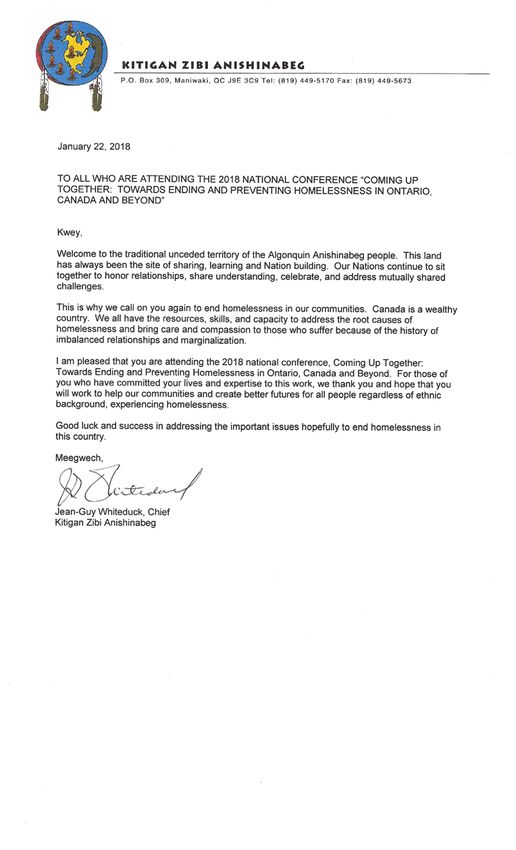
Contents                                                                      Financial Support
From Convenor Kennelly				3                                                   The Coming Up Together conference would not
                                                                              have been possible without the generous financial
From Chief Whiteduck					4
                                                                              support of:
From Deputy Mayor Taylor				5
                                                                              A Way Home Canada
From Minister Milczyn					6
                                                                              Alliance to End Homelessness Ottawa/A Way
From Minister Duclos					7                                                    Home Ottawa
Coming Up Together Committees			                                    8         Canadian Observatory on Homelessness
                                                                              York University
Visitor Information					9
                                                                              Centre for Research in Education and
Local Resources for Youth				10                                               Community Services (CRECS), uOttawa
Lunch Time & Evening Activities			                                  11        City of Ottawa
                                                                              Youth in Culture Pilot Program
Youth Homelessness Memorial Spirit Flags		                          12        Carleton University:
Youth Stream						13                                                          Department of Sociology and Anthropology
                                                                              Faculty of Arts and Social Sciences
Plenary Panel Descriptions				16                                              Faculty of Public Affairs
                                                                              Office of the Provost and Vice-President Academic
Plenary Panelists 					18                                                     Office of the Vice President Research and
Day 1: Tuesday February 20				                                      22        International

Day 2: Wednesday February 21			                                     23        Economic and Social Development Canada
                                                                              (Homelessness Partnering Strategy)
Day 3: Thursday February 22				                                     24        Home Depot Canada Foundation
Youth Stream Schedule				25                                                   Individual donor (anonymous)
Abstracts						26                                                             Mitacs
uOttawa Campus Maps				46                                                     Social Sciences and Humanities Research
                                                                              Council of Canada (Connections program)
Conference Buildings					47
Participant Directory					48
Notes							51

 guOttawa Participants can use the guOttawa WiFi network. No password required.
 Photos Photos will be taken during the conference.
2   Coming Up Together: Towards Ending and Preventing Youth Homelessness in Ontario, Canada and Beyond
From Convenor Kennelly

Our vision has always been that Coming Up Together will be more than just a conference. Rather, it is an opportunity to
build bridges across the often siloed sectors who are impacted by, responding to, and researching youth homelessness. It
is a chance to engage young people in policy-making, to fertilize conversations between academics and the youth-serving
sector, to influence government, and to ultimately move concretely from talk to action.

Planning for Coming Up Together began 1.5 years ago, in the summer of 2016. We began with a multi-sectoral steering
committee with representatives from all levels of government, from academia, from the youth-serving sector, and from
young people with lived experiences of homelessness. We had, at that point, no funding, no venue, and only the vaguest
idea of what the final event would look like. From there, we have built something that I think lands squarely in the category
of magical. With the energy, insight, optimism, and concrete experience of our steering committee, we began to lay the
foundation for the conference you are now attending.

This conference would not be what it is without two other groups of amazing people. The first group I’d like to
acknowledge are my phenomenal graduate students. These talented folks have attended to the nitty gritties of everything
-- from website development, to crafting and sending out the CFP, to writing grant applications, to soliciting funding, to
recruiting and training volunteers, to coordinating and facilitating meetings, to constructing the schedule and program, to
ordering food, to organizing workshops, to a massive miscellany of other tasks too numerous to list here. Thank you for all
that you have given to make this event such a success.

The other group of individuals that have elevated this conference into something much more than a conference are the
youth team. Corinne, Tiffany, Charlotte, Aya, and Scyndy have transformed what would otherwise have been a staid
group of adults talking about ending youth homelessness into a vibrant, interactive, and arts-infused event that showcases
youth resiliance, highlights the unnecessary tragedy of youth homelessness, and celebrates the achievements and
successes of young people. Under their leadership, this conference incorporates a youth art show, a youth musical and
poetry showcase, youth-led walking tours, and a memorial project to make visible the lives that have been tragically and
needlessly lost because of our societal failure to address the national crisis of youth homelessness. They have also
helped craft three days of youth-focused programming that include workshops on skills development, political and legal
advocacy, and feedback to government on programs and policies.

Talking about ending youth homelessness is an important first step, but it is not enough. Thanks to the leadership of
conference partner A Way Home Canada, we are very pleased to be integrating into the third afternoon of the program a
facilitated engagement process that will help us move from talk to action. All conference participants are invited to attend
this large-scale World Café style session, and join in on transforming our shared knowledge into concrete steps to prevent
and end youth homelessness.

If you like to Tweet, please use conference hashtag #2018CUT, and share your learnings with people who cannot attend
the conference. Follow us on Twitter @CominUpTogether.

I hope that you enjoy the fruits of our labour, and walk away from Coming Up Together inspired, invigorated, and with
more tools for tackling youth homelessness in your respective communities. This is a social issue that can only be
addressed through multi-level coordination and collective action. Youth homelessness: we must end it.

Dr. Jacqueline Kennelly
Associate Professor
Dept of Sociology and Anthropology
Carleton University

                                                                                                                 February 20 - 22 2018   3
From Chief Whiteduck

4   Coming Up Together: Towards Ending and Preventing Youth Homelessness in Ontario, Canada and Beyond
From Deputy Mayor Taylor

         A PERSONAL MESSAGE FROM THE DEPUTY MAYOR OF OTTAWA

February 20th, 2018

It is my pleasure to welcome everyone attending the 2018 Coming Up Together: Towards Ending and
Preventing Youth Homelessness in Ontario, Canada and Beyond Conference. I hope that in addition to all
the great conference activities, you will have some time to enjoy all that Ottawa has to offer, from
Parliament Hill to skating on the Rideau Canal.

One of the highlights of the Conference will surely be your plenary panels. The speakers on each panel
are inspiring individuals who are certain to share ideas to incorporate into your work as champions
working to respond to youth homelessness in Canada. I think that you can expect plenty of thought-
provoking presentations and other moments of inspiration throughout the conference along with
discussions that will effect meaningful change.

In my role as the City of Ottawa’s Special Liaison for Housing and Homelessness I am seeing many positive
steps we are taking as a community, but there is more to do to address the issue of youth homelessness
and we will be looking to conferences like this, and individuals like you, to help find real solutions.

On behalf of the City of Ottawa and my Council colleagues I would like to recognize and thank the
volunteers and organizers whose work made this event possible. Best wishes to everyone for informative
sessions and enjoyable networking and learning opportunities over the next few days.

Sincerely,

Mark Taylor
Deputy Mayor and City Councillor for Bay Ward
Special Liaison for Housing and Homelessness
City of Ottawa

                                                                                                  February 20 - 22 2018   5
From Minister Milczyn

                                   A PERSONAL MESSAGE FROM THE ONTARIO MINISTER OF HOUSING

                   On behalf of the Government of Ontario, I am pleased to extend warm greetings to everyone
                   attending Coming Up Together (CUT): Towards Ending and Preventing Youth Homelessness in
                   Ontario, Canada and Beyond.

                   Ontario has committed to ending chronic homelessness by 2025, and we can only achieve this
                   goal if all of us work together. I am very pleased that all levels of government are now working
                   in partnership and with stakeholders, service providers, the private sector and people with lived
                   experience to ensure everyone has a secure place to call home.

                   Ending youth homelessness is a priority for Ontario. Youth are overrepresented in homeless
                   populations – making up 20 per cent of the homeless in Canada. Over 6,000 young people use
                   emergency shelters each night. Once homeless, youth are vulnerable to exploitation and the
                   longer youth go without a home, the greater the negative impacts on their health and life
                   chances. It’s imperative that we keep youth safe and provide better opportunities for the
                   younger generation.

                   This event will be an opportunity to encourage the development of an evidence-informed
                   system through the exchange of knowledge between academic researchers, service providers,
                   policy makers and young people with lived experiences of homelessness.

                   I would like to commend everyone involved with CUT for their commitment to facilitating a
                   knowledge exchange that will build and accelerate momentum in Ontario and Canada for
                   ending youth homelessness.

                   Please accept my best wishes for a successful and productive conference.

                   Yours Truly,

                   Peter Milczyn
                   Minister of Housing and Minister Responsible for the Poverty Reduction Strategy
                   Province of Ontario

6   Coming Up Together: Towards Ending and Preventing Youth Homelessness in Ontario, Canada and Beyond
From Minister Duclos
February 20 - 22 2018 7Coming Up Together Committees
Steering Committee: Youth Stream Team:
Alex Abramovitch, Independent Research Scientist Stuart Atkins
Centre for Addiction and Mental Health
Aya Fawzi
Mike Bulthuis, Director
Holly Petersen
Making the Shift Youth Homelessness Social Innovation Lab
Tiffany Rose
Kaite Burkholder-Harris, Program Coordinator
A Way Home Ottawa Scynthia Ross
Derek Csath (past member) Corinne Sauvé
Ontario Ministry of Municipal Affairs and Housing
Charlotte Smith
Cathy Edwards, Campus Facilitator
Social Innovation, Carleton University Planning Committee:
David French, Director of Policy and Planning Alex Bing
A Way Home Canada Warren Clarke
Stephen Gaetz, Academic Director Cathy Edwards
Canadian Observatory on Homelessness, York University
Genevieve Johnston
Janet Gwilliam, Homelessness Partnering Strategy
Employment and Social Development Canada Jacqueline Kennelly
Kristen Holinsky, Executive Director Justin Langille (past member)
Alliance to End Homelessness Ottawa Cora MacDonald
Paul Lavigne, Program Development Officer Kevin Partridge
City of Ottawa Housing Services Branch
Technical, pragmatic, and operational support:
Mary-Jane McKitterick, Community Planning Manager
A Way Home Canada Alejandro Gomez Umana, Coordinator
Centre for Research on Educational and Community Services
Melanie Redman, President uOttawa
A Way Home Canada
Kayla St-Jean, Coordination Agent
Tiffany Rose Conventions and Reservations Service, uOttawa
Youth member
Media Relations
Corinne Sauvé
Youth member Department of University Communications, Carleton
University. With special thanks to Beth Gorham, Steve
Tina Slauenwhite Reid, and Elizabeth Murphy
Ottawa Aboriginal Coalition
John Sylvestre, Vice-Dean, Research
Faculty of Social Sciences, University of Ottawa
Kathryn Watson – Manager, Homelessness Secretariat,
Ontario Ministry of Municipal Affairs and Housing
8 Coming Up Together: Towards Ending and Preventing Youth Homelessness in Ontario, Canada and BeyondVisitor Information
Smudging
Naloxone Training and Methodone Access:
Although we were not able to designate a room for
To ensure the safety of participants, the majority of smudging during the conference, participants are welcome
Coming Up Together volunteers have received Naloxone to smudge outside, weather permitting, on U of O campus.
administration training and Naloxone kits will be available
on-site throughout the conference. GOURMET XPRESS: A SOCIAL ENTERPRISE
In addition, if you or someone you know requires Food and refreshments at Coming Up Together: Towards
methadone access during the conference, please contact Ending and Preventing Youth Homelessness is brought
the Rideau Pharmacy, 390 Rideau St., at 613-789-4444 to you by Gourmet-Xpress, a non-profit catering business
and social enterprise in Ottawa. Its mandate is to offer
Winter Clothing Bank (Room FSS 4014, days 1 and 3; VNR participants the opportunity to gain practical skills in a
2075, day 2): commercial kitchen, including customer service, and to
We know that Ottawa is cold in February! That is why we find and keep employment in their new field. With the
have created a temporary Winter Clothing Bank for all skills acquired and the assistance of our job developers,
conference participants to access. If you don’t have quite candidates with employment barriers have an equal
enough warm winter layers for our chilly Ottawa winters, chance to develop their abilities and enter the job market.
please feel free to borrow some items from the Winter PLACES TO EAT:
Clothing Bank, located in Room FSS 4014 (days 1 and 3) All conference registrants can eat breakfast and lunch
and Vanier 2075 (day 2). Watch for signs directing you to with us, as part of their registration. Below is a list of local
the correct room. inexpensive and mid-range restaurants that you can try for
Any winter clothing items left after the conference will be dinners. Please also check out the Ottawa Tourism map
donated to Operation Come Home, a local youth-serving and Info Guide included in your registration packages for
agency. more.
On uOttawa campus:
Mental Health Support
At all times during the Coming Up Together conference, 24/7 Dining Hall
we have Mental Health volunteers available to talk with Jock-Turcot University Centre
you should you be experiencing distress or are feeling 85 University Private
triggered or anxious. These volunteers either work in this Ottawa, ON K1N 9A7
arena in their professional lives, or are in advanced stages
Around U of O campus:
of training for providing mental health supports. They can
sit down and talk with you, direct you to resources, or help Ahora Restaurant (Inexpensive Mexican)
you connect with crisis services, should you need them. 307 Dalhousie St, Ottawa, ON K1N 7E8
Room FSS 5026 is a dedicated Mental Health space Aulde Dubliner and Pour House (Pub food)
where you can go to talk with a Volunteer. Mental Health 62 William St, Ottawa, ON K1N 7A3
volunteers will be floating between the Youth Chill Out
space (FSS 5015) and the Memorial room (FSS 4004). Father and Sons Restaurant (Pub food)
Volunteers in these rooms will know how to contact the 112 Osgoode St, Ottawa, ON K1N 6S1
Mental Health volunteer who is on call at that time. Govindas Vegetarian Buffet
212 Somerset St E, Ottawa, ON K1N 6V5
February 20 - 22 2018 9Local Resources for Youth
24/7 Crisis Line (Youth Services Bureau) Mental Health
In Ottawa — 613-260-2360 Mental Health Walk-in Clinic
Long distance toll-free — 1-877-377-7775 Youth ages 12 to 20, and their parents, are welcome to
Crisis Chat Hours: Thursday to Sunday, 4 p.m. to 10 p.m. access the Walk-in during the hours posted below.
Mobile interventions: 7 days a week, 2:00 p.m. to 10 p.m. Hours: Tuesdays and Thursdays, 12 noon to 8 pm (last
Distress Centre: 613-238-3311 session is at 6 pm).
Good2Talk: 1-866-925-5454 Address: 2301 Carling Avenue (corner of Richardson Ave.)
First Nations and Inuit Hope for Wellness Helpline: 1-855-
242-3310 Harm Reduction
LGBT Youthline: 1-800-268-9688 Site Needle & Syringe Program,
179 Clarence Street, Ottawa
Drop-In Services Monday to Friday: 8:30 am to 4:30 pm
Youth Services Bureau Site mobile van travels to various locations within the City
147 Besserer Street of Ottawa
The Drop-in is open from Monday to Friday from 12 pm to 7 days a week: 5 pm to 11:30 pm
6 p.m. and Saturday and Sunday from 1 p.m. to 6 p.m. 613-232-3232, Collect calls accepted
Youth are encouraged to drop in or call 613-241-7788.
If you experience distress during the Coming Up Together
Operation Come Home conference, please reach out to the designated Mental
150 Gloucester Street Health volunteers, who will be available in the Youth Chill
Monday-Friday 8:00am-11:30am Out Lounge (FSS 5015) and will be dropping in at the
613-230-4663 Youth Memorial Spirit Flag room (FSS 4004) throughout
1-800-668-4663 the conference.
10 Coming Up Together: Towards Ending and Preventing Youth Homelessness in Ontario, Canada and BeyondLunch Time & Evening Activities
Lunch will be available in portable boxes, so you can pick it up Day 2, evening Feb 21st, 8 pm to 10 pm,
and carry it with you to our exciting and stimulating lunch time Mavericks Club, 221 Rideau St:
events!
Youth Musical Arts and Poetry Showcase The Youth Stream
Day 1, lunch time Feb 20th, 12:30 to 1:15, Room FSS 4007 Planning Committee invites you to join us for an evening of
music, poetry, and more! This event will showcase the talents
Exploring LGBTQ2S youths’ experiences of homelessness through of performing artists with lived experience of youth homeless-
film Please join Dr. Alex Abramovitch in a viewing of a short (30 ness. Our peers who will be performing are highly talented in
minute) film on the experiences of LGBTQ2S youths’ experi- music, singing, storytelling, stand-up comedy, acting or spoken
ences with homelessness. Dr. Abramovitch will be available for word poetry. However, they lack time to devote to advancing
questions and discussion after the screening of the film. their careers due to conflicting priorities---sometimes as dire
Nowhere To Go: A Brokered Dialogue brings together 6 as finding a place to sleep and food to eat. As homelessness
people who would not normally engage in dialogue to provide is always the result of other severe underlying issues, some of
a glimpse into the reality of LGBTQ2S youth homelessness us and our peers also currently experience or have overcome
and mental health challenges. It shows the ways that film challenges such as violence and/or instability in the house-
and dialogue can work together to help people understand hold, poverty, placement in CAS care, mental health concerns,
certain complex issues. Brokered Dialogue is a new film- systemic discrimination and/or racism, sex trafficking, addiction,
based qualitative research method designed to foster dialogue intergenerational trauma (Aboriginal, Métis and Inuit youth), as
on controversial health and social issues, particularly in well as cultural shock and tensions (newcomer youth). We hope
circumstances in which dialogue is either absent or highly that this event can help empower young artists to recognize
contested. their immense potential, talent, and accomplishments.If you are
a young person who would like to perform but have not signed
Day 2, lunch time Feb 21st, 12:15 to 1:15, Room FSS 4007 up yet, it’s not too late! There will be an open mic following the
Partnering for Change Forum Theatre Performance. Please join scheduled acts. There is no additional charge for this event,
the Partnering for Change (P4C) project for a Forum Theatre and non-alcoholic beverages and light snacks will be served.
performance examining the intersection of disability, education, Please note that although alcoholic beverages will be available
and employment among homeless youth from Toronto, Ham- for purchase onsite, Mavericks may require ID as proof of age.
ilton and Niagara. The P4C project is a collaborative research Day 3, lunch time (Feb 22nd, 12:15 to 1:15, sign up and meet at
project involving academics, doctoral students, and community Registration Desk):
agency partners. Importantly, seven people living with intel-
lectual, developmental or learning disabilities, and having Youth-led walking tours – Sign up in advance! Please join Ot-
experiences of homelessness, are actively involved as co-re- tawa-based young people who have experienced homelessness
searchers. Forum Theatre is a participatory form that draws in this city as they take you on a tour of Ottawa through their
audiences into the action. The scene reflects interwoven stories eyes. Walking tours will explore issues like the criminalization
of disabled youths’ experiences in homelessness services, of public space, the effects of gentrification, survival sex work,
stories collected from youth with intellectual, developmental and the resilience required to live on Ottawa’s streets. Tours are
and learning disabilities across the three project sites. expected to last about an hour. If you need warmer clothing for
Our performance of the scene is intended to make visible the a walking tour, please visit our Winter Clothing Bank, in Rooms
struggles many disabled youth face in their engagement with FSS4014 (days 1 and 3) and FSS 2075 (day 2). Walking Tours
the shelter system. We call into question the variable and are limited to 15 participants each. To sign up for a Walking Tour,
often inconsistent ways in which the homelessness sector please see the descriptions at the Registration desk, and add
understands and responds to ‘disability’. After performing the your name. We recommend signing up early, as there will not be
scene once, we invite workshop participants to take part – to enough space for all conference registrants to participate!
join in and thereby disrupt and change the scene. And, by doing Please also note that media may accompany some of the
so, to engage in discussions that help us to imagine different walking tours. Let your Tour leader know if you would rather not
responses and ways of supporting disabled youth experiencing be filmed by media.
homelessness.
February 20 - 22 2018 11Youth Homelessness Memorial Spirit Flags
FSS 4004
Youth homelessness is a preventable tragedy. Youth who are This dedicated room has a selection of supplies and materials
homeless are far more likely to die young than other youth. to choose from. You are encouraged to bring along a photo, a
Those who die without safe and secure housing must be memento, or another token to personalize the flag even more.
recognized, and memorialized. The Youth Homelessness Each flag will have friendship pins attached to the bottom. We
Memorial Spirit Flags have been created to remind everyone encourage you to take one and wear it as a sign that this life
that their lives were important, and that we can do better than mattered – that we see them, we will remember, and we will
this for our young citizens. fight to change the unjust systems that cost them their lives.
Scyndy Ross, an artist and member of the Coming Up Together This memorial is dedicated to all young people who have
Youth Stream planning team, was already collecting names for died, unnecessarily and tragically, because they did not have
a memorial that would honour and remember these friends and adequate housing or supports.
loved ones when she joined the Youth Stream team. The Youth
Stream planning team then worked together to develop the idea If you experience distress in relation to the Youth Memorial
of a physical memorial, and created the first Memorial Spirit Spirit Flags, or any other aspect of the confernece, please
Flags, available to view at the conference. reach out to the designated Mental Health volunteers, who
will be available in the Youth Chillout Lounge (FSS 5015) and
If you know of a homeless youth who lost their life, please join will be dropping in at the Youth Memorial Spirit Flag room
us in creating a Spirit Flag in their memory in room FSS 4004. throughout the conference. Please also reference the list of
resources available in the program, and in the Youth Hangout
Space.
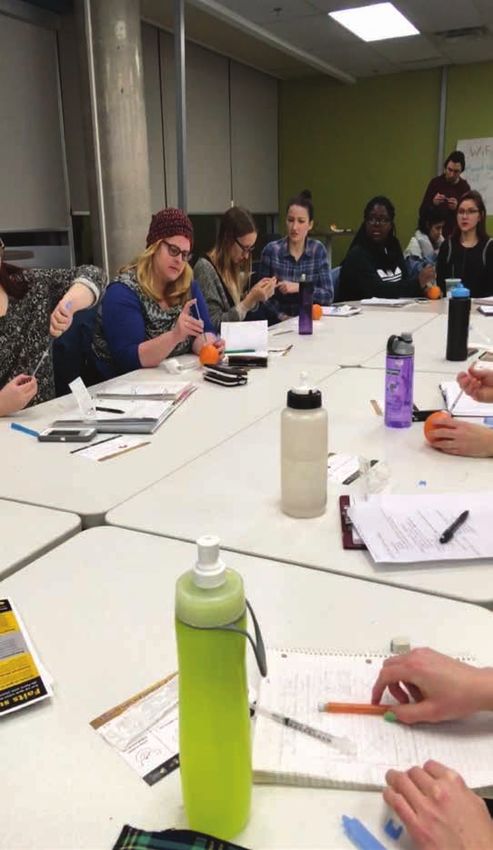
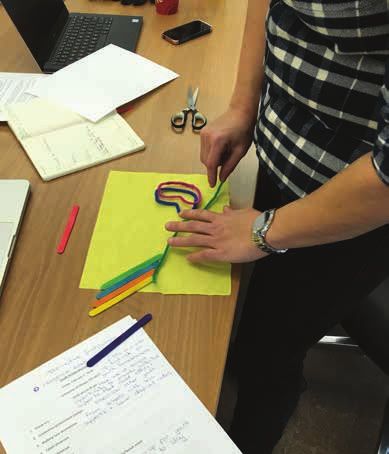
‘Youth planning committee member experiments with different Public Health Nurse Melissa Carisse training Coming Up Together
designs for Memorial Spirit Flags’ volunteers to administer Naloxone.
12 Coming Up Together: Towards Ending and Preventing Youth Homelessness in Ontario, Canada and BeyondYouth Stream
The Coming Up Together organizers made a commitment
to appeal to homeless or formerly homeless young people YOUTH STREAM WORKSHOPS
through dedicated youth content and events. Designed by our All Youth Stream Workshops will take place in FSS 4006
youth planning committee, made up of young people with lived All youth participants are encouraged and welcome to attend
experiences of homelessness, the conference’s dedicated the plenary panels at the beginning and end of each day!
youth stream will provide information, workshops, and Youth stream workshops will not be running at those times.
resources for young people who are currently or were formerly Note also that youth participants may attend any sessions in
homeless. There will also be a low-stress hangout space the conference! Do not feel that you can only attend the youth
provided for young conference attendees. stream.
VISUAL ARTS SHOWCASE – FSS 4012 FEBRUARY 20TH: DAY 1
Visual art created by homeless and formerly homeless Harm Reduction – Ottawa Network of People Acting for Harm
young people will be available for purchase throughout the
Reduction (ONPAHR) [10:30-11:45, FSS 4006]
conference. All sales are cash or cheque, with 100% of
The Ottawa Network of People Acting for Harm Reduction
proceeds going to the artists. The visual arts showcase is
(ONPAHR) is a grassroots organization of current and former
located in room FSS 4012 on the 4th floor and will be open:
drug users founded in September 2015. They are a network of
►► Tuesday, February 20th 9:00 am – 5:00 pm peers who are driven, passionate and eager to make changes
►► Wednesday, February 21st 9:00 am – 5:00 pm for the drug using community. In this workshop, participants will
►► Thursday, February 22nd 9:00 am – 5:00 pm learn about harm reduction services in Ottawa. Participants will
also receive naloxone training and drug-testing kits.
YOUTH CHILL OUT LOUNGE – FSS 5015
A lounge will be available for young conference attendees (30
Knowing Your Rights – Ottawa Ticket Defence Program and
and under) seeking a low-stress space away from the hustle
Justice for Children and Youth (Toronto) [1:15-2:30, FSS 4006]
and bustle of the conference. The chill-out lounge is located
The ticket defence program (TDP-PDC) is a community
in room FSS 5015 on the sixth floor and will be equipped with
organization that provides juristic information and basic legal
refreshments, games, arts and crafts. The lounge will be open:
services for street-involved or homeless people.
►► Tuesday, February 20th 9:00 am – 5:00 pm
►► Wednesday, February 21st 9:00 am – 5:00 pm Their goal is to challenge the application of laws that are unjust
►► Thursday, February 22nd 9:00 am – 5:00 pm to this already vulnerable segment of the population. They
provide representation before the provincial courthouse. TDP
YOUTH-LED WALKING TOURS – SIGN UP IN ADVANCE! accepts two categories of tickets. Within the primary category
Please join Ottawa-based young people who have experienced are those tickets issued under the Safe Streets Act (SSA) that
homelessness in this city as they take you on a tour of Ottawa target people living on the streets. The secondary category
through their eyes. Walking tours will explore issues like the includes Property Regulations, “jaywalking” tickets under City
criminalization of public space, the effects of gentrification, of Ottawa Bylaws, and “liquor infractions” under the Liquor
survival sex work, and the resilience required to live on License Act. This workshop will educate young people about
Ottawa’s streets. Tours are expected to last about an hour. If knowing their rights and how to access TDP services in Ottawa.
you need warmer clothing for a walking tour, please visit our
Winter Clothing Bank, in Room FSS 4014 (days 1 and 3) and Julia Huys, Hons B.A., J.D., is a Street Youth Legal Services
VNR 2075 (day 2).. Lawyer at Justice for Children and Youth (Toronto). She will add
perspectives and experiences from Toronto to this important
►► Feb 22nd (Day 3), 12:15 to 1:15, sign up and meet at workshop.
Registration Desk
Limited to 15 participants each. Sign up early at the
registration desk, space is limited. Media may accompany
some of the walking tours. Let your Tour leader know if
you would rather not be filmed or you have mobility issues.
February 20 - 22 2018 13Youth Stream
Fighting Systemic Barriers – Ethnocultural Youth Advisory make their own choices that affect themselves, their lives, and
[2:45-4:00, FSS 4006] their bodies. We strive to challenge gender roles, create safe
Working with the Youth Services Bureau of Ottawa, the Ethno- spaces, and value diversity.
Cultural Youth Advisory Committee is a volunteer-based team
of dedicated individuals who aim to advocate for the voices Think nationally, act locally: including youth first voices in HPS
of ethnocultural youth in Ottawa. We work with organizations community planning processes - Homelessness Partnering
offering services to youth and communities to identify and meet Strategy (HPS) and A Way Home Canada Provincial Community
the needs of newcomer youth and their families. By promoting Planning team [2:45-4:00, FSS 4006]
on-going dialogue and building strong relationships with service The Homelessness Partnering Strategy (HPS) is a
providers, the committee helps to ensure that ethnocultural community-based program aimed at preventing and reducing
youth and their families have access to the services and homelessness by providing direct support and funding to 61
supports they need to transition into Canadian society designated communities and to organizations that address
successfully. Aboriginal homelessness across Canada.
According to the Youth Services Bureau’s annual report, 57% of This consultation will focus on how HPS communities can
individuals that are housed in their Long Term Housing Program meaningfully include youth perspectives in their planning
come from ethnocultural backgrounds. In this workshop, we processes. In round-table discussions, youth will be invited
will be discussing the systemic barriers that create obstacles for to share insights about ideas, challenges and promising
ethnocultural youth to navigate the housing supports system. practices for youth engagement. Following this session youth
Furthermore, together we hope to create actionable solutions in will have the opportunity to work with HPS to prepare a report
overcoming systemic barriers in the housing system, especially summarizing discussions. This report will be shared with
for ethnocultural youth. participant and stakeholders and inform a model for the federal
government to engage marginalized youth in an inclusive,
FEBRUARY 21ST: DAY 2 meaningful, and barrier-free way.
Pet-care - Michelle Lem [10:30-11:45, FSS 4006]
Michelle Lem is a local veterinarian who provides free FEBRUARY 22ND : DAY 3
veterinary care for pets belonging to homeless or at-risk people
Innercity Arts– Ottawa Innercity Ministries [10:30-11:45, FSS 4006]
in Ottawa. Since beginning her outreach services, Michelle
The Ottawa Innercity Ministries Arts Program provides a safe
has helped to establish outreach services in three other cities:
and supportive environment for Ottawa’s street-involved youth
Toronto, Hamilton, and Kitchener-Waterloo. She will deliver a
to engage in the arts community. They believe that every youth
workshop about pet care and education.
has unique strengths that can be built upon to produce lasting
G(r)o(w)ing Through Homelessness – Purple Sisters [1:15-2:30, change. Through a Strength-Based Approach, youth develop
their strengths, gain self-esteem and build positive relationships
FSS 4006]
with their community. This arts-based workshop will be an
Through our lived experience, this workshop will challenge
opportunity for youth to spend time doing visual arts and learn
the social norms and myths surrounding young women and
about services available to young people in Ottawa.
homelessness. We will focus on how to deal with isolation
and support, as well as learning to trust yourself through your Democratic Participation of Homeless Youth: Understanding
experience with homelessness and keeping safe. We will give
Barriers to Voting- Elections Canada [1:15-2:30, FSS 4006]
you the tools to tap into your biggest resource: yourself.
Elections Canada (EC) is mandated to inform electors about
This workshop is led by the Purple Sisters, a young woman’s the exercise of their democratic rights through electoral
committee that works in partnership with the Youth Services participation, specifically around registration and voting. On our
Bureau of Ottawa. The Purple Sisters works to empower Outreach and Stakeholder Engagement team, one of our main
young women from all backgrounds, regardless of class, race, goals is to reduce information and access barriers to voting
and age, sexual and gender identity, religion and physical participation faced by particular groups. Internal and external
and mental ability. We believe that women have the right to research shows us that certain segments of the population
14 Coming Up Together: Towards Ending and Preventing Youth Homelessness in Ontario, Canada and Beyondexperience additional barriers
compared to the general public; Coming Up Together volunteers
homeless youth is among one of participate in Naloxone training
these groups.
This youth-centered workshop
will focus on the barriers to voting
faced by youth experiencing
homelessness. Representatives
from EC will undertake an
interactive and tactile activity
with participants to spark a
conversation about democracy in
Canada and youth engagement in
civic processes.
“Nowhere to Come Out: Finding
your Q-mmunity” - Queer Youth
Action Team and HF4Y Peer Sup-
porters [2:45-4:00, FSS 4006]
This workshop will focus on the
intersection of queer/trans identity
and homelessness. Based on
the three principles of Repair,
Reconnect, and Reunite, the
workshop tackles the obstacles
faced by youth in both accepting
their identity and building their
community. Among the issues
discussed: intimate partner
violence (IPV), identity policing
(both within and outside the
LGBTQ community), locating
necessary services, developing
a found family, and connecting
their lived experiences to their
community in a meaningful way.
The Queer Youth Action Team
(QYAC) and peer workers from
the Housing First for Youth (HF4Y)
Peer Support Program from the
Youth Services Bureau of Ottawa
will deliver this workshop. These
teams work actively to support the
queer and trans youth community
in Ottawa.
February 20 - 22 2018 15Plenary Panel Descriptions
DAY 1 : 9:15 AM TO 10:30 AM DAY 2: 9:00 AM TO 10:15 AM
Housing as a Human Right Panel, with Scynthia Ross, Mary Constructing and Deconstructing Youth Homelessness, with
Birdsell, Clare Nobbs and Naomi Nichols Tiffany Rose, Larissa Silver, Cheyanne Ratnam and David
In 2016, the UN Special Rapporteur on the Right to Farrugia
Housing challenged governments across the globe to In this plenary panel, invited speakers will discuss the
make the elimination of homelessness a top human rights construction of ‘youth homelessness’ and its implications.
priority with particular attention on youth. Embracing this Rather than being understood as the result of systemic
call to action and the fundamental, legal right of all young patterns of inequality, homelessness is often viewed
people to be free of homelessness and have access to as an individual circumstance. People experiencing
adequate housing, this panel brings human rights to the homelessness are then perceived as indolent, immoral
forefront of strategies for ending youth homelessness. and inferior. These presumptions can have profound
Based on their research and experience, panelists will effects on how people feel about homeless youth and how
share how those who are developing local and national youth feel about themselves. Based on their research
strategies, community plans, and policies for homeless and experience, panelists will discuss the constellations
youth can ground their work in international human rights. of meaning that contribute to the image of a homeless
young person and share how to challenge myths about
DAY 1: 4:15 PM TO 5:30PM
homelessness and improve young people’s sense of self-
Closing the Margins: Overrepresented Demographics, with worth.
Edgar Mbaraga, Sydney Blum, Tina Slauenwhite and Alex
Abramovitch DAY 2: 4:15PM TO 5:30PM
The experiences of homeless youth are not homogenous. Meaningfully Engaging Youth, with Aya Fawzi, Sheldon
Indigenous youth, Inuit youth, LGBTQ2S youth, racialized Pollett, Erica Morton, and Cath Larkins
youth and newcomer youth are overrepresented in Young people who experience homelessness frequently
homelessness statistics and many are doubly or triply experience social exclusion and have few opportunities
marginalized, not just because of their homelessness, but to meaningfully participate in decisions affecting them,
also due to racism, homophobia and transphobia. Although or in research about them. Barriers to their inclusion
the specific needs of these subpopulations are frequently include structural conditions and processes rooted in
cited, they are rarely the focus of research, policy power imbalances; stigma, stereotypes and myths about
responses or service provision. Panelists will discuss homelessness; and the lack of resources (e.g. housing,
how the experiences, barriers and needs of these sub- income, transportation) and/or opportunities to participate
populations can be more effectively captured, identified in policies and programs in ways that are meaningful to
and addressed in research, policy and service work. In our them. Based on their research and experience, panelists
effort to end youth homelessness, it is imperative that we will share how those working with homeless youth can
understand the diverse needs of young people so that we develop partnerships with young people who experience
can respond accordingly. homelessness, to better understand what social exclusion
means and how inclusion can be facilitated and fostered in
solutions to ending homelessness in ways young people
find meaningful.
16 Coming Up Together: Towards Ending and Preventing Youth Homelessness in Ontario, Canada and BeyondDAY 3: 9:00AM TO 10:15AM
Youth Homelessness Prevention Road Map, with Corinne
Sauvé, Melanie Redman, Stephen Gaetz, and Mike Lethby
Communities across Canada are recognizing that we
need to do more than simply manage the problem of youth
homelessness. While communities have been moving in
the direction of supporting chronically homeless people
to exit homelessness through Housing First, until recently
little attention has been paid to how we might prevent
the problem. The Youth Homelessness Prevention Road
Map is designed to help provide a conceptual framing for
the prevention of youth homelessness, but also draws
on international and local examples to show how this
can be done. This panel begins by highlighting results of
consultation with youth with lived experience, and then
provides practical strategies on prevention for communities
of every size, couching these interventions in systems
planning. The panel ends with a practical case study of
what a shift to prevention looks like at the community level.
DAY 3: 4:15PM TO 5:30PM
Moving Forward from Here, with François-Olivier Picard, Jesse
Thistle, Bhavana Varma, David French and Irwin Elman
In this final plenary panel, invited speakers will participate
in a facilitated discussion on the lessons learned from
the conference and from the third afternoon’s World
Café entitled ‘Where do we go from here?’ The mission
of the Coming Up Together conference is to break down
silos and foster cross-sectoral communication that leads
to concrete solutions. To conclude our collaborative
three-day exchange, the panel will discuss solutions
to youth homelessness - ranging from immediate
interventions to preventative strategies designed to stop
youth homelessness before it begins - shared by youth,
community and service providers, researchers and policy
experts throughout the conference.
February 20 - 22 2018 17Plenary Panelists (1/4)
Alex Abramovich. Independent Scientist Aya Fawzi
Institute for Mental Health Policy Research Carleton University
(IMHPR), Centre for Addiction and Mental Aya is completing her Masters of Design
Health (CAMH), Assistant Professor, Univer- at Carleton. She has done research with A
sity of Toronto Way Home Ottawa and uOttawa, exploring
Dr. Alex Abramovich has been addressing experiences of homelessness in marginalized
the issue of LGBTQ2S youth homelessness groups. She worked exploring artists and their
for over 10 years. His program of research focuses on health care experience creating artworks. Aya currently works at the Ottawa
utilization and service access for LGBTQ2S youth experiencing Hospital in the Center for Practise Change Research exploring
homelessness and transgender and gender expansive individuals. perceptions around implementing technology. Her interests are in
Alex has worked closely with municipal and provincial governments to ethical design for behavioural change and understanding complex
develop strategies that address the needs of LGBTQ2S youth. systems.
David French. Director of Policy and
Mary Birdsell. Executive Director Planning, A Way Home Canada
Justice for Children and Youth
With 20 years experience working with
Mary Birdsell is a lawyer and the Executive
Alberta’s most vulnerable young people,
Director at Justice for Children and Youth, a
David has a passion for developing programs
child and youth rights legal aid clinic. Mary
& policy that meet their unique needs. David
advocates for the rights of children across a
led the development of Supporting Healthy
range of legal subjects, and at every level of
and Successful Transitions to Adulthood: A Plan to Prevent and
court in Canada. She established the clinic’s unique program offering
End Youth Homelessness, Canada’s first targeted plan to address
legal services to homeless and unstably housed young people more
youth homelessness, and supported its implementation across ten
than 15 years ago. Mary regularly speaks about the rights of children
communities. David has taken a leave from Government of Alberta,
and youth, with young people and the professionals who work with
to support A Way Home’s national youth homelessness efforts as the
them.
Director of Policy and Planning. He is a firm believer in harnessing
the strength and leadership of the community and the voices and
Irwin Elman experiences of young people in helping shape effective and long-
Provincial Advocate for Children and Youth lasting policy change.
of Ontario
Irwin was appointed the Provincial Advocate Dr. Stephen Gaetz CM. Professor York Uni-
for Children and Youth in 2008 to elevate versity. Director of the Canadian Observato-
the voices of children and youth. Drawing on ry on Homelessness/Homeless Hub
the strength of young people, the Advocate’s
Office has worked to fill the gap between what government, service Dr. Gaetz is a leading international researcher
providers and policy-makers intend, and the reality experienced by on homelessness, and is director of the
some of the most vulnerable children and youth in Ontario. Canadian Observatory on Homelessness
at York University. He focuses his efforts
on conducting research and mobilizing this knowledge so as to
David Farrugia . Senior Lecturer have a greater impact on solutions to homelessness. Stephen has
Sociology and Australian Research Council played a leading international role in knowledge dissemination of
& Fellow at the University of Newcastle, homelessness research through the Homeless Hub.
Australia
David Farrugia is Senior Lecturer in Sociology
and Australian Research Council ‘DECRA’
Fellow at the University of Newcastle, Australia.
His research expertise covers the sociology of youth, including youth
homelessness, rural and regional youth, and young people and
(un)employment. He is the author of ‘Youth Homelessness in Late
Modernity: Reflexive Identities and Moral Worth’ published in 2016.
18 Coming Up Together: Towards Ending and Preventing Youth Homelessness in Ontario, Canada and BeyondPlenary Panelists (2/4)
Mike Lethby. Executive Director Clare Nobbs. Director
Niagara Resource Service for Youth Transitional Housing, Egale
Born and raised in Niagara, Mike worked in Clare Nobbs is the Director of Transitional
the local auto sector before graduating Brock Housing at Egale. She has fifteen years of
University with an honours B.A. in Political experience in community development, housing
Science and History. Mike also holds a Masters advocacy and support, counselling and program
degree in Political Science from the University of Western Ontario. administration with LGBTQI2S youth. Her Master’s research explored
Mike is currently Executive Director of the Niagara Resource Service the impact of culturally connected mentoring on the emotional
for Youth (The RAFT) a not-for-profit agency in the Niagara region wellbeing and resilience of LGBTQI2S youth. While at Ryerson,
working with at-risk youth and their families. Mike is an innovative she worked with Dr. Dawn Onishenko to explore the experiences
leader working to create a systemic approach to addressing youth of sexual and gender minority youth within the residential youth
issues and youth homelessness in Niagara. He is a principal actor in justice and child welfare systems. Clare now oversees Egale’s
moving the region’s youth service model from a reactive institutional counselling and crisis drop-in centre, Egale Youth OUTreach, as
crisis model to a preventative community model. Mike has overseen well as a Section 23 classroom for LGBTQI2S youth struggling with
the development and implementation of Youth Reconnect (School mental health challenges, and in early 2019, Egale Centre - a 30-unit
based homelessness prevention) and Eternal Routes (Kinship finding transitional housing facility in the downtown east end of Toronto.
and connection) programs as well as launching Niagara’s Housing
First for Youth response. Mike is currently working with the Province François-Olivier Picard
of Ontario to launch a Social Impact Bond to support the scaling of François-Olivier Picard habite la ville de
the RAFT’s Youth Reconnect program to neighbouring communities. Québec où il étudie présentement à la
maîtrise aux Hautes Études Internationales
Naomi Nichols. Assistant Professor de l’Université Laval. Il est fortement impliqué
Integrated Studies in Education, McGill comme leader sur son campus. Il est un
University vétéran de l’équipe de débat de FSA Ulaval
et ancien vice-président des Affaires externes pour l’Association
Naomi Nichols is an Assistant Professor in the
étudiante. Il a siégé à la délégation de la Ligue des États arabes de
Faculty of Education at McGill University. She is
l’Université Laval et travail présentement au Bureau international de
the Principal Investigator for a Social Sciences
cette même Université. Il a mis sur pied une entreprise avec laquelle
and Humanities Research Council (SSHRC)
il offre des visites guidées de la ville de Québec à la course. En tant
project titled, Schools, Safety, and the Urban Neighbourhood and a
que membre du Conseil, François-Olivier souhaite encourager la
SSHRC Insight Development project titled: Mapping the Influence
participation des jeunes Canadiens à la vie politique.
of Engaged Scholarship. Prior to joining the Faculty of Education
at McGill, Nichols completed a Post-doctoral Fellowship with Sheldon Pollett. Executive Director
the Canadian Observatory on Homelessness at York University. Choices for Youth.
Nichols’ research activities and publications span the areas of youth
homelessness; youth justice; alternative education and safe schools; Sheldon has been the Executive Director
inter-organizational relations in the youth sector; “youth at risk;” and since 2001. During his tenure, the organization
community-academic research collaborations. has become a national leader and partner
in identifying best practices in the design
Edgar Mbaraga and delivery of services to youth. Sheldon is
Member of the Youth Team of A Way Home the former co-chair of the National Learning Community on Youth
Ottawa Homelessness and is a founding Board member of A Way Home
Canada. He is also a member of the Canadian Observatory on
Homelessness and a Board member of Raising the Roof. Sheldon
is the current Chair of the Minister’s Advisory Committee on
Mental Health and Addictions, vice-Chair of End Homelessness St.
John’s, and a member of the Centre for Social Enterprise Advisory
Committee at Memorial University.
February 20 - 22 2018 19Plenary Panelists (3/4)
Cheyanne Ratnam. Project Coordinator Scyndy Ross
A Way Home Toronto Scyndy is a prolific mediocre artist who is an
Cheyanne Ratnam is the Project Coordinator ex-homeless young adult. She does a lot of
for A Way Home Toronto; a City of Toronto volunteering within her community on a peer to
and Cross-Sectoral Community Collaborative peer level doing outreach and health education
working with Young People as Key Partners, to street youth. Recently she and others have
Stakeholders and decision makers regarding the formation of a started an outreach program run by current and ex-street youth/
Cross-Sectoral Youth Homelessness Strategy for Toronto in addition transitional age youth.
to an Implementation and Sustainability plan. Previously Cheyanne
was the Founder and co-manager of Project ‘What’s The Map?!’ Corinne Sauvé. Youth Committee Advisor,
– mobilizing young people with lived experience of homelessness A Way Home Ottawa. Peer Supporter, Youth
from the global south to nurture a more coordinated system through Services Bureau of Ottawa
multi-governmental policy circles and cross-sectoral community Corinne’s lived experience of homelessness
engagement. Some topics she has experience in (lived experience as a youth is what drives her work in this field.
and professional), and is highly passionate about include: youth She has been working as a Youth Committee
homelessness, youth in/from, care, educational outcomes of Advisor and Peer Researcher for A Way Home
vulnerable populations, childhood sexual abuse, youth development, Ottawa since 2016, where she had the chance to collaborate on The
mobilization and engagement, and human rights issues. Opportunity Project: Telling a New Story About Youth Homelessness
in Ottawa. In the same year, she was also hired by the Youth
Melanie Redman. Executive Director Services Bureau of Ottawa as a Peer Supporter, mainly to advise on
A Way Home: Working Together to End the implementation of a housing first model to better serve homeless
Youth Homelessness in Canada or precariously housed youth. In 2017, she collaborated as a Peer
Melanie was the Director of National Initiatives Researcher in the Sex work, Safety and Housing study led by the
at Eva’s. She directed the National Learning Alliance to End Homelessness.
Community on Youth Homelessness, the Eva’s
Awards for Ending Youth Homelessness, and Larissa Silver. Director of Community Ser-
the Mobilizing Local Capacity to End Youth Homelessness Program, vices. Youth Services Bureau of Ottawa
which works with communities to craft, implement, and sustain plans Larissa is an experienced leader in the non-
to end youth homelessness. She serves as the Chair of the Youth profit sector with over a decade of senior
Homelessness Research Priority Area at the Canadian Observatory management experience. As the Director of
on Homelessness. Melanie is the Chair of the Board of the Rainbow Community Services at the Youth Services
Food Education Foundation. Her passion for addressing the root Bureau of Ottawa, Larissa has focused her
causes of complex social issues drew her to co-develop A Way Home department’s programs for homeless and at-risk youth on the
with partners across Canada. Housing First for Youth principles. YSB Community Services
includes two shelters, transitional housing units, three long-term
Tiffany Rose. Youth Committee Advisor apartment buildings and a drop-in centre downtown all serving youth
Next Up 14-24. Thanks to capital funding support from the City of Ottawa
Tiffany Rose was born in London, ON and YSB is building another 39 unit apartment building with a service
moved to Ottawa in 2014 for a fresh start. hub along Riverside Drive. Prior to YSB Larissa was the Director of
She is passionate about making a difference Programs and Services at Western Ottawa Community Resource
in issues regarding homelessness, addiction, Centre where she provided leadership across several programs
mental health, sex work, women’s abuse, including a 25 bed shelter for women and their children fleeing
and child abuse (specifically, Shaken Baby Syndrome). Currently a violence, counselling services, services for seniors and services for
community-based researcher, she has plans to work with youth and children and youth. She was the Executive Director at Volunteer
women on harm reduction and drug use in the future. Her work and Ottawa right after moving to Ottawa from Calgary via Toronto. Her
passion is motivated by personal lived experiences. When Tiffany educational background includes Women’s Studies, Sociology and
isn’t working, you can find her watching Netflix with her partner. She Public Administration and Evaluation.
loves the colour purple as well as Greek and Caribbean food, and
considers coffee and chips her vices.
20 Coming Up Together: Towards Ending and Preventing Youth Homelessness in Ontario, Canada and BeyondPlenary Panelists (4/4)
Jesse Thistle. Trudeau-Vanier Scholar and Erika Morton
the Resident Scholar of Indigenous Home- Erika Morton has worked with the Social
lessness at the COH Planning and Research Council of Hamilton
Jesse Thistle is a Trudeau-Vanier Scholar (SPRC) since 2010. She has a BA in Sociology
and the Resident Scholar of Indigenous and a BSW from McMaster University. At the
Homelessness at the COH. He is a road SPRC she is the Project Coordinator of the
allowance Metis from Saskatchewan. His journey from homeless Street Youth Planning Collaborative (SYPC) which is a community
addict to successful university student is unusual among graduate based group comprised of youth service directors, front line
students, but his path has shaped the way he approaches homeless workers and youth with lived experience of street-involvement and
studies, Indigenous history, criminology, social work, and addiction homelessness. She is also the Project Coordinator of the Youth
studies. His distinct perspectives were further developed as he Housing Support Project (YHSP) which is an initiative of the SYPC
participated in a wide range of Social Sciences and Humanities that provides a continuum of housing based supports for youth who
Research Council (SSHRC) and Canadian Institutes of Health are either at risk of or who are experiencing homelessness.
Research projects as a research assistant and researcher.
While working as a field researcher for Dr. Carolyn Podruchny on the Sydney Blum
SSHRC project “Tracing Metis History through Archives, Artefacts, As WoodGreen’s Director of Community
Oral Histories, and Landscapes: Bison Brigades, Farming Families, Impact, Sydney brings a decade of experience
and Road Allowance People,” Jesse and Carolyn noticed a vein of building meaningful inter-sectoral relationships
unaddressed historic trauma in their road allowance Metis informants. and catalyzing holistic housing and community
The intergenerational trauma Jesse wrote about linked unresolved service delivery. Sydney is leading the
battle trauma, or post-traumatic stress disorder, to the descendants incubation and launch of WoodGreen’s new
of Metis veterans who fought during the 1885 Resistance at Batoche, program, Free 2 Be (Housing First for Youth Leaving Care). She has
Saskatchewan. Jesse’s research in intergenerational trauma has already also managed the province-wide scaling of WoodGreen’s Homeward
begun a process of healing within Saskatchewan Metis and Cree. Bound program across Ontario, including collaborative development
of the Urban Indigenous Homeward Bound which is a cultural and
place-based adaptation of Homeward Bound in 6 Friendship Centre
Bhavana Varma. President & CEO of Unit-
communities. Sydney has a BA in Sociology from the University of
ed Way of Kingston, Frontenac, Lennox &
Chicago and her MSc in Ecological Economics from University of
Addington.
Edinburgh. Outside of WoodGreen, Sydney is a volunteer and board
Bhavana Varma is the CEO of the United Way member with the StopGap Foundation.
in KFL&A. She provides leadership to the
Youth Homelessness initiative in Kingston and Tina Slauenwhite
area. Informed by the voice of youth, service Planning Committee Member, Ottawa Ab-
providers and community stakeholders, the United Way provides original Coalition
backbone coordination to the plan to End Youth Homelessness in
Tina is Mi’kmaq and a Member of the
Kingston and Area through collective action.
Sipekne’katik band, located in Nova Scotia.
In 2002, Tina moved from Nova Scotia to
Dr Cath Larkins. Director, Centre for Chil- Ottawa to complete her education, and in 2003
dren’s and Young People’s Participation, received her certificate as an Addictions Worker. Since that time, with
University of Central Lancashire. a focus on working with marginalized Aboriginal women and youth
Cath has worked with marginalised children in Ottawa, Tina has held various positions from frontline worker to
and young people for over 20 years using Executive Director of an Aboriginal youth transition house. In 2014
co-research with children and young people Tina was appointed by her peers as Chairperson of the Aboriginal
across Europe to challenge discrimination and Community Advisory Board (ACAB), which is comprised of Aboriginal
improve services. She writes on citizenship theory and participation. agencies who work with the homeless Aboriginal population in the
She chairs Eurochild’s Advisory Group on Participatory Methods for city of Ottawa.In her capacity as ACAB Chairperson, Tina currently
involving children and young people in vulnerable situations and is participates as an active member on various committees, including “A
Co-Convenor of the European Sociological Association childhood Way Home Ottawa” Steering Committee, giving voice to the diverse
network. needs of homeless and at risk Aboriginal population in Ottawa.
February 20 - 22 2018 21You can also read


