Strategy Statement 2019-2021 - IHREC Strategy Statement 2019-2021 - Irish Human Rights and ...
←
→
Page content transcription
If your browser does not render page correctly, please read the page content below

Strategy
Statement
2019–2021

IHREC Strategy Statement 2019–2021   a

First published in January 2019
    by Irish Human Rights and Equality Commission
    16–22 Green Street, Dublin 7, D07 CR20.
    Copyright © Irish Human Rights and Equality Commission 2019

    The Irish Human Rights and Equality Commission was established under
    statute on 1 November 2014 to protect and promote human rights and
    equality in Ireland, to promote a culture of respect for human rights, equality
    and intercultural understanding, to promote understanding and awareness
    of the importance of human rights and equality, and to work towards the
    elimination of human rights abuses and discrimination.

b                                                                                     IHREC Strategy Statement 2019–2021
CONTENTS

           Foreword                         1
           Who We Are                       2
           The Commission                   3
           Our Vision                       4
           Our Mission                      4
           Our Values                       5
           Strategic Priorities             6
           Section 25(2) Use of Resources   8
           Impact                           8
           Section 42 Statement             9
OUR FOUR STRATEGIC PRIORITIES
    2019 TO 2021

                  1. P
                      rotect the rights of individual
                     persons who face the greatest
                     barriers to justice

                  2. I nfluence legislation, policy and
                     practice

                  3. E
                      ngage with key organisations to
                     address discrimination and human
                     rights abuses

                  4. R
                      aise the quality and broaden the
                     extent of the dialogue on human
                     rights and equality issues

d                                               IHREC Strategy Statement 2019–2021
FOREWORD

                            I am very pleased to hereby submit the second Strategy Statement
                            on behalf of the Irish Human Rights and Equality Commission, to the
                            Houses of the Oireachtas, pursuant to section 25 (1) of the Irish Human
                            Rights and Equality Commission Act, 2014.
                           The legislation requires the Commission to prepare a Strategy Statement
                           every three years and lay it before both Houses of the Oireachtas.
                           This second Strategy Statement covers the period 2019 to 2021.
                           The statement is informed by our statutory mandate, set out in our
                           founding legislation, the Irish Human Rights and Equality Commission
                           Act 2014, by the UN Paris Principles which set the international standards
                           for national human rights institutions and by standards developed
                           for national equality bodies by the European Commission and Council
                           of Europe.
                            In preparing this strategy statement, and in accordance with section
                            25 (3) of the Act, we have consulted with organisations concerned with
                            the promotion or protection of human rights or equality. In addition, we
                            continue to keep abreast of international best practice through regional
                            and international networks with colleagues in similar institutions in other
                            jurisdictions.
                            As a Commission, we have agreed four strategic priorities over the next
                            three years:
                              • Protect the rights of individual persons who face the greatest
                                barriers to justice
                              • Influence legislation, policy and practice
                              • Engage with key organisations to address discrimination and human
                                rights abuses
                              • Raise the quality and broaden the extent of the dialogue on human
                                rights and equality issues
                            We are very appreciative of the participation of the many people interested
                            in the promotion and protection of human rights and equality in Ireland. In
                            publishing this statement, we share our mission to build a just and inclusive
                            society that protects and promotes human rights and equality in Ireland.

                            Emily Logan
                            Chief Commissioner
                            Irish Human Rights and Equality Commission

IHREC Strategy Statement 2019–2021                                                                          1
WHO WE ARE

                 The Irish Human Rights and Equality Commission is Ireland’s national
                 human rights institution and national equality body.
                 Our work is determined independently by the fifteen members of the
                 Commission who were appointed by our Head of State, President
                 Michael D. Higgins and account directly to the Houses of the Oireachtas.
                 Our founding legislation, the Irish Human Rights and Equality
                 Commission Act, 2014 sets out our mandate to protect and promote
                 human rights and equality. In addition, we are required to encourage
                 the development of a culture of respect for human rights, equality and
                 intercultural understanding in the State.
                 We are supported by the Director and staff of the Commission.
                 Our work ranges from operating at the policy level to review the
                 effectiveness of human rights and equality law, policy and practice in
                 the State and within public bodies, to working with communities and
                 civil society to monitor and report on people’s real-life experiences of
                 human rights and equality in practice.
                 Our legal powers include giving practical help, including legal assistance,
                 to give people an understanding of the means by which to vindicate
                 their rights. We also intervene as amicus curiae in the Superior Courts in
                 cases relevant to human rights or equality rights.
                 Whether addressing individual concerns, engaging with government or
                 public bodies on policy and practice issues or raising awareness with
                 public audiences on human rights and equality, our mission is to build a
                 just and inclusive society that protects and promotes human rights and
                 equality in Ireland.

2                                                            IHREC Strategy Statement 2019–2021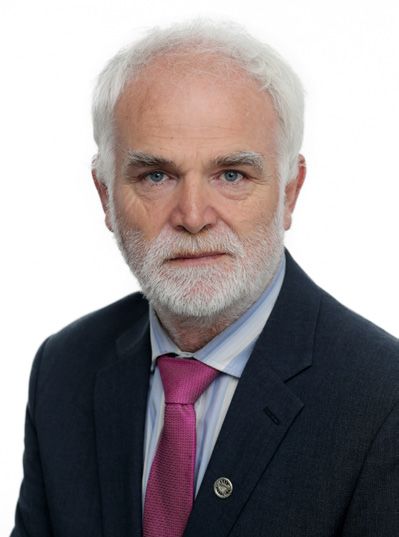
MEMBERS OF THE
COMMISSION

                                     Emily Logan              Teresa Blake SC          Frank Conaty
                                     Chief Commissioner

                                     Patrick Connolly         Prof. Caroline Fennell   Heydi Foster Breslin

                                     Tony Geoghegan           David Joyce              Salome Mbugua

                                     Sunniva McDonagh SC      Prof. Siobhán Mullally   Prof. Ray Murphy

                                     Dr. Fidèle Mutwarasibo   Colm O’ Dwyer SC         Orlagh O’ Farrell

IHREC Strategy Statement 2019–2021                                                                            3
OUR VISION

                  Our vision is of an inclusive Ireland where human
                  rights and equality are respected, protected and
                  fulfilled for everyone, everywhere.

    OUR MISSION

                  Our mission is to build a just and inclusive society
                  that protects and promotes human rights and
                  equality in Ireland.

4                                                 IHREC Strategy Statement 2019–2021
VALUES

                            Our values define how we approach our work, how
                            we work as a Commission and how we engage
                            with people living in this state. We believe that our
                            values are key to our culture, and critical to our
                            performance as an organisation.

                            Non-Discrimination and Equality
                            We commit to supporting people who face the greatest barriers to
                            justice as part of human rights and equality protection for all.

                            Respect
                            We build respect and trust by valuing the contribution and initiative
                            of everyone within our organisation and those we work with.
                            Respecting the trust placed in us, we conduct our work to the highest
                            professional standards.

                            Independence
                            We value our independence and act, where others cannot always
                            do so, in furtherance of human rights, equality and intercultural
                            understanding. We take action based on the highest quality evidence
                            and robust decision-making.

                            Accountability
                            We are fully committed to the values of openness, transparency and
                            accountability to the people and to the Oireachtas.

                            Participation
                            We recognise the personal autonomy and self-determination of all
                            rights holders and duty bearers. We are committed to hearing and
                            learning from others’ perspectives.

                            Responsive
                            We are responsive to opportunities to advance our mission, and we
                            ensure that our governance, resources, and ways of working support
                            this approach.

                            Collaborative
                            We collaborate across and beyond the organisation so that we act
                            promptly and effectively.

IHREC Strategy Statement 2019–2021                                                                  5
STRATEGIC PRIORITY 1: Protect the rights of individual persons who face
    the greatest barriers to justice

                 Objectives
                • Ensure through public information campaigns and digital engagement that
                  the rights and equality of individuals and the means to vindicate them are
                  widely understood.
                • Provide people facing discrimination and human rights violations with the
                  knowledge, skills and information necessary to vindicate their rights.
                • Assist individuals in situations of particular concern to vindicate their rights
                  through our enforcement powers.

                 Outcomes
                • Increased public awareness of rights and equality and an understanding of
                  the means by which to vindicate them.
                • Increased engagement with the staff of the Commission from people facing
                  the greatest barriers to justice through Your Rights and other points of
                  access.
                • Effective strategic litigation, including through the use of our amicus curiae
                  function before the Superior Courts.

    STRATEGIC PRIORITY 2: Influence legislation, policy and practice

                 Objectives
                • Hold government, public bodies, agencies and businesses to account.
                • Continue to develop evidence-based decision-making through an active
                  and ongoing research programme.
                • Use our enforcement powers including conducting an inquiry as most
                  appropriate and proportionate, and move to enforcement of the Public
                  Sector Equality and Human Rights Duty.

                 Outcomes
                • Greater impact for our interventions across all functions.
                • Increased awareness and enhanced implementation of the Public Sector
                  Equality and Human Rights Duty.
                • Effective compliance with the Public Sector Equality and Human Rights
                  Duty through enforcement.

6                                                                     IHREC Strategy Statement 2019–2021
STRATEGIC PRIORITY 3: Engage with key organisations to address
discrimination and human rights abuses
Objectives
• Increase community engagement in the work of the Commission.
• Strengthen relationships with civil society and foster an enabling
environment for human rights development, including through formal
advisory committee structures.
• Engage with any organisation relevant to advancing our mandate and
strategic priorities.
Outcomes
• Civil society, other stakeholders and individuals regard the Commission
as open, responsive and respectful.
• The Commission extends the knowledge of our work nationally and
enhances the use of our legal assistance powers by members of the public.
• The Commission remains informed and anticipates emerging human rights and
equality issues.
STRATEGIC PRIORITY 4: Raise the quality and broaden the extent of the
dialogue on human rights and equality issues
Objectives
• Facilitate a strong and shared culture of respect for human rights, equality
and intercultural understanding including through education, particularly
of young people.
• Promote an understanding of human rights as inter-related and
interdependent, with a particular emphasis on socio-economic rights.
• Anticipate, identify and highlight issues so as to enable the Commission to
respond appropriately to human rights and equality issues in the State.
Outcomes
• Measures of public sentiment demonstrate improvements in understanding
of the value of diversity and respect for human rights and equality.
• Positive impact on the perceptions of all people with regards to rights,
equality and intercultural understanding.
• Impact positively on the extent and content of public debate to ensure that
human rights are respected across all media platforms.
IHREC Strategy Statement 2019–2021 7SECTION 25(2) USE OF RESOURCES
In meeting the requirement of section 25(2) regarding the use of
resources, the Commission has resolved to use a significant portion of
its budget on pro-actively advancing four aspects of its work.
Promoting access to justice
Whatever our thematic choices, we are committed to supporting
people who face the greatest barriers to justice as part of the human
rights and equality protection for all.
Socio-economic rights
We believe that the adoption and application of economic, social and
cultural rights play a fundamental role in the creation of a more just,
inclusive and sustainable society.
We commit to advancing socio-economic rights and the social
protection of all families and individuals. Among the thematic areas
of socio-economic rights, we will prioritise:
• Housing
• Health
• Decent Work1
Combatting racism and promoting intercultural understanding
Countering racism and hate speech is imperative to the building of
acceptance of diversity and respect for the dignity of all persons. We
commit to playing a leadership role in combatting racism and promoting
intercultural understanding.
Disability
Following the ratification of the UN Convention on the Rights of
Persons with a Disability, we commit to establishing a Disability Advisory
Committee to enhance our role as the independent monitor of the
rights of people with disabilities in the State.
IMPACT
As part of this strategy, we have also set objectives which relate to our
impact. These objectives are to:
• Improve our ability to monitor and evaluate our work and its impact.
• Regularly engage with groups and individuals on the progress of
our strategy and seek their feedback on the impact of our work and
areas in which we can improve.
1 International Labour Organisation definition of Decent Work - 2019
“Involves opportunities for work that is productive and delivers a fair income, security in the workplace and social protection for families,
better prospects for personal development and social integration, freedom for people to express their concerns, organize and participate
in the decisions that affect their lives and equality of opportunity and treatment for all women and men.”
8 IHREC Strategy Statement 2019–2021SECTION 42 STATEMENT
Section 42(1) of the Irish Human Rights and Equality Act 2014
provides that:
A public body shall, in the performance of its functions have regard to
the need to:
a) eliminate discrimination
b) promote equality of opportunity and treatment of its staff and the
persons to whom it provides services, and
c) protect, promote and fulfil the human rights of its members, staff
and the persons to whom it provides services.
As a public body, the Irish Human Rights and Equality Commission is
required to set out in its strategic plan an assessment of the human
rights and equality issues it believes to be relevant to its functions and
purpose, and the actions it is taking or proposes to take to address
those issues.
The Irish Human Rights and Equality Commission is unique, in that
the protection and promotion of human rights and equality, and the
elimination of discrimination, are core to our functions and purpose.
Therefore this strategy statement as a whole sets out how the
Commission proposes to give effect to that mandate.
However, the Public Sector Equality and Human Rights Duty not
only applies to what a public body does, but also how it does it. The
Commission has a number of operational functions, including the
provision of legal services; the provision of information to the public
about their rights; a strategic engagement function, which oversees
external communication and engagement with stakeholders, including
public bodies; a policy and research function; and a corporate services
function, which includes procurement and human resources.
The Commission has undertaken an assessment of the human
rights and equality issues it believes are material to the execution
of its functions. The Commission has a significant role in engaging
with the public, both directly as through our legal service and Your
Rights information line, and indirectly through our role in raising public
awareness. Progressively increasing the accessibility of our services
will be a key priority for the Commission over this strategic cycle, as will
positive action to engage minority groups who could benefit from our
services. The Commission will also develop a customer charter which
reflects our commitment to equality, diversity and the elimination of
discrimination, and a complaints mechanism for users of our services
which takes this into account.
The Commission will review its consultation processes to ensure that,
where consultation is required, our process is consistent, inclusive, and
evidence-based. The Commission will also consider where there may
IHREC Strategy Statement 2019–2021 9be scope to reflect its Public Sector Equality and Human Rights Duty
in its procurement processes, with due regard to both the scale of the
Commission’s procurement and its obligation to operate within public
procurement rules.
As Ireland’s national human rights institution and national equality body,
it is important that our organisation is reflective of the diverse society
we serve. As a public body, the Commission operates within the rules
which govern recruitment, and the employment terms and conditions,
of the wider civil and public service. However, the Commission will
proactively consider how it can promote and develop greater diversity
among our staff body over this strategic cycle.
In considering its obligation to eliminate discrimination, and to protect
and promote the human rights and equality of its staff, the Commission
has identified three thematic areas of focus. These are the accessibility
of our working environment for people with disabilities; a consideration
of work practices to take account of issues relating to family status and
other equality grounds; and building capacity of management and staff
to manage human rights and equality issues in the workplace.
The Commission will commence reporting on actions taken to address
the issues identified in this assessment in its 2019 Annual Report.
However, the Public Sector Equality and Human Rights Duty is a
permanent and ongoing obligation, and the Commission will continue
to monitor and report on its activities in this regard.
10 IHREC Strategy Statement 2019–2021IHREC Strategy Statement 2019–2021 11
12 IHREC Strategy Statement 2019–2021
You can also read


