2020-21 Honors Academy Handbook - honorsacademy.nebrwesleyan.edu - Nebraska Wesleyan ...
←
→
Page content transcription
If your browser does not render page correctly, please read the page content below

2020–21 Honors Academy Handbook

   honorsacademy.nebrwesleyan.edu

VITAL INFORMATION & INSTRUCTIONS
How do I …
 1. Remember my username and password?
    a. Write it down in this handbook – HERE and add it to your Honors Academy file:
       NWU Office 365: username (NWU email) _______________ password ____________
       NWU Computer system: username ______________ password ________________
    b. If you forget your username and/or password, you will need to email Marian. We
       can send your username and/or send an activation code to reset your password.
 2. Check my roster?
    a. Go to www.nebrwesleyan.edu
    b. Click on “Inside NWU”
    c. Click on “WebAdvisor”
    d. “Login” using your NWU Computer system username and password.
    e. Click on “Faculty”
    f. Click on “Class Roster”
    g. VERY IMPORTANT: Under “select a term” find “Honors Academy 20‐21”
    h. Click on the class that you want to check and hit “submit”. You will see your roster.
 3. Post Final Grades?
    a. Follow a‐e in number 2 above.
    b. Click on “Roster & Final Grading”
    c. Select the course you want to enter grades for
    d. Click on “Grading”
    e. Select the “Final Grade” tab. If this tab does not appear, log out, clear your
       browser’s cache & log back in.
    f. Enter a letter grade for each student using the drop‐down menu.
 4. Spend my curriculum fund money?
    a. Ask Marian or her Assistant, how much money you have available in your c‐fund.
    b. Spend some money on something that allows you to improve your ability to offer
       your course. Or, have your school spend the money. Save receipts or POs.
    c. Email or mail receipt(s) to Marian. Bill are insufficient; you must show payment.
    d. If you spent the money, the item is forever yours and money is deposited into your
       personal bank account. If the school spends the money and we reimburse them, the
       item belongs to the school. If we have a receipt by a given Tuesday at noon, the
       money is usually in your account by Friday of the same week.
IMPORTANT DATES
                                             2020‐2021

June – August - Faculty Workshops over Zoom – All current and prospective WHA Instructors invited.

August 1 – ACE scholarship application open for Fall and Full-year courses.

October 2 – On-time deadline for Registration for all Fall Semester, Full-year, and First Block WHA courses.
This is also the last day to DROP without a petition.

October 16 – Late Registration deadline for Fall, Full-year, and First Block courses. ADDs after this date are
by petition only.

November 2 – On-time deadline for Registration for Fall courses starting in October.

November 15 – ACE application for Spring semester courses opens.

November 16 - Late Registration deadline for Fall courses starting in October. ADDs after this date are by
petition only.

December 1 – Last day to submit late ADD petitions for Fall semester courses that end in December.

December 15 – Deadline for ACE applications for Fall and Full-year courses.

January 8 at 5 pm – Grades due for courses that end in December.

January 12 – First semester transcripts available for students to request (for accounts paid in full), IF
everyone submitted grades on time.

February 12 – On-time deadline for Registration for Spring Semester courses starting in January. This is also
the last day to DROP a spring course without a petition.

February 26 – Late Registration deadline for Spring courses starting in January. ADDs after this date are by
petition only.

March 19 – On-time Registration for Spring courses starting in March.

March 31 – Late Registration for courses starting in March.

May 1 – Last day to submit Late ADD petitions for Spring and Full-year courses that end in May or June.

May 15 – ACE application for Spring Semester courses closes.

June 1 at 5:00 p.m. – Final grades due for second semester and full-year courses.

June 3 – 2020-21 Transcripts available for students to request (for accounts paid in full), IF everyone
submitted grades on time.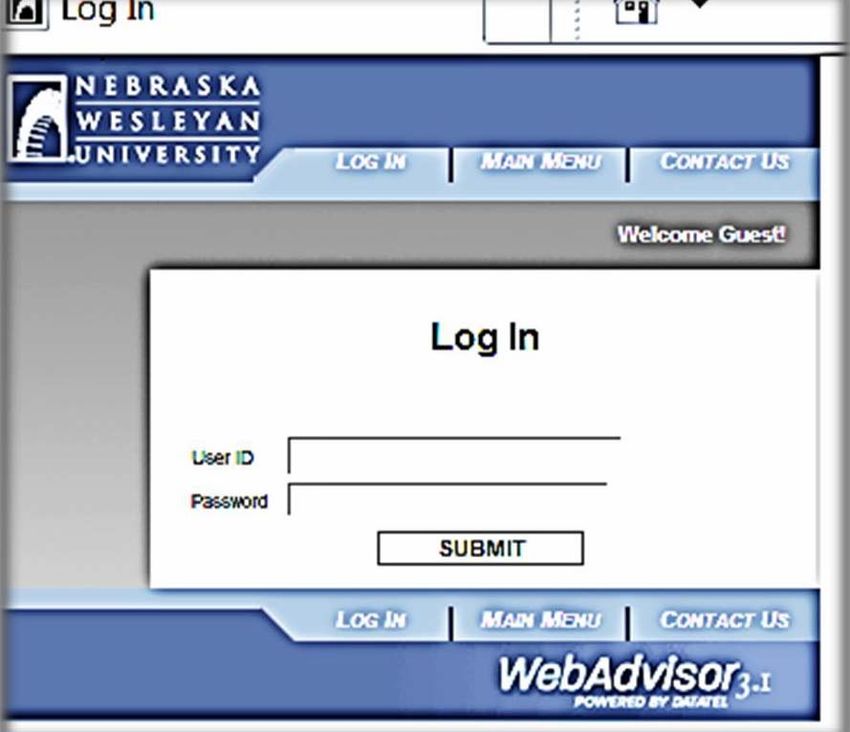
Nebraska Wesleyan Honors Academy
                           2020-2021
                           Handbook

                                        Table of Contents

Program Overview ...................................................................................... 2

Faculty Information ..................................................................................... 4

Student Information .................................................................................... 9

Transfer of Credits .................................................................................... 13

Drug and Alcohol Policy ............................................................................ 15

Course Descriptions.................................................................................. 16

Staff Contact Information .......................................................................... 23

Frequently Asked Questions ..................................................................... 25

Registration Procedures .......................................................................... 27

Appendix A: Faculty List by Name and Discipline ..................................... 28

Appendix B: Participating Schools/Courses/Instructors............................. 32

Honors Academy Forms ........................................................................... 40
The Wesleyan Honors Academy
Welcome to the Wesleyan Honors Academy!
This handbook is designed to provide
program information for potential and
approved teachers, as well as Honors
~ Our Mission ~
Academy students.
The Wesleyan Honors Academy
(WHA) program seeks to promote
Wesleyan Honors Academy (WHA) offers Nebraska Wesleyan University’s
students an opportunity to experience commitment to partnering
college-level expectations—challenging them relationships with secondary
with a rigorous academic curriculum and schools to provide talented and
earning college credit in selected advanced- highly motivated high school
level courses taught by highly-qualified and juniors and seniors with a quality
motivated high school teachers nominated by honors educational experience.
school officials and approved by the The mission of Wesleyan Honors
respective Nebraska Wesleyan University Academy complements the
mission of Nebraska Wesleyan
Department.
University to promote intellectual
and personal growth within the
In addition to receiving credit toward high context of liberal arts education.
school graduation for these selected academic
courses, students may also enroll concurrently
in courses approved for college credit
through Nebraska Wesleyan University.
Students who register and complete Honors Academy-approved high school courses receive a
grade on a Nebraska Wesleyan University transcript and credit toward a degree at
Nebraska Wesleyan University. Students who elect to attend another college or university may
transfer the credits earned from Nebraska Wesleyan.
What is the most important impact NWU Honors
Academy has had on your school?
Giving students an opportunity to experience the challenge of college level
curriculum with the safety-net of a High School.
The NWU Honors Academy allows our students to take a rigorous class load. This
helps us create an academic atmosphere that our students flourish in.
Credibility with the parents and accountability with the students
Students have been able to earn credits at many universities around the country that
have accepted the DE credit and thus saved time and thousands of dollars
NWU Honors Academy has challenged our students in their English classes. The
result of this has been a strong sense of readiness for college level classwork
among our students.
--Sampling of Responses from a 2014 Administrator Survey
Wesleyan Honors Academy 2 2020‐2021Accreditation
Nebraska Wesleyan University is fully accredited by the Higher Learning Commission of the
North Central Association of Colleges and Schools.
The Nebraska Wesleyan Honors Academy program is also an accredited member of the
National Alliance of Concurrent Enrollment Partnerships (NACEP). This means
Wesleyan’s Honors Academy has met NACEP’s
rigorous program quality standards which are
Wesleyan’s Honors Academy has recognized by four-year and two-year institutions
met NACEP’s rigorous program across the U.S.
quality standards which are
recognized by four-year and two-
year institutions across the U.S.. Nebraska Wesleyan University is the only
institution in Nebraska (and one of the few in
the Midwest) to earn accreditation and, as a
result can assure its high school partners that it maintains the
highest quality in its concurrent enrollment (dual credit)
programming. This includes Honors Academy policies and
practices which ensure that:
Concurrent enrollment courses offered in the high
school are equivalent to the courses offered on-campus
by Nebraska Wesleyan University;
Students enrolled in concurrent enrollment courses are
held to the same standards of achievement as students in
on-campus courses; and
Instructors teaching WHA courses through the
concurrent enrollment program meet the rigorous
academic requirements for adjunct faculty and
instructors teaching at Nebraska Wesleyan University.
Additionally, the standards encourage greater accountability for concurrent enrollment
programs through required impact studies,
student surveys, and course and program
Nebraska Wesleyan University is evaluations.
the only institution in Nebraska
Because of this NACEP designation, South
to earn NACEP accreditation.
Dakota public universities accept Nebraska
Wesleyan transfer credits without question. Since
NACEP is recognized across the country, WHA
credits may be more successfully transferred to out-of-state institutions. However, it is
important for students to work with their chosen colleges to ensure a smooth transfer
process. See page 13 for more guidance on transfer of WHA credit.
Wesleyan Honors Academy 3 2020‐2021Policies and Procedures: Faculty
Faculty Qualifications
A high school teacher who wishes to become an Adjunct Instructor in the Wesleyan Honors
Academy program should hold a master’s degree in the subject area of the courses they
propose to offer for the Wesleyan Honors Academy. Teachers who have a master’s degree
in a field other than the subject they are offering may qualify if they have an undergraduate
degree in the discipline and have acquired a minimum of 18 hours of graduate credit and
other specialized preparation in the relevant subject field. The high school teacher will also
be expected to submit a letter of support from his/her administration and documentation of
his/her teaching expertise.
Faculty Application Process
The Wesleyan Honors Academy Director will work
Two-step Faculty with high school principals and/or central school
Application Process: district curriculum specialists to identify high school
courses and teachers for participation in Wesleyan
1.Teacher Application Honors Academy and invite them to apply. Teachers
may also request information and an application directly
2.Course Application
from the Honors Academy Director or use the forms in
the back of this book.
The Teacher Application Form and The Course Application Form is
supporting materials should be submitted submitted once the instructor is approved
first. Official transcripts showing by the appropriate department at Nebraska
applicable undergraduate and graduate Wesleyan. This form requires a course
course work must be included for the description which includes scope,
application to be evaluated. The Director organization, teaching style, expectations of
will initially review the application materials students, and the textbook or reading
for minimal requirements and then forward requirements. In addition, teachers must
the packet to the appropriate Departmental submit sample examinations and research,
Liaison. writing, or speaking assignments. The high
school principal or appropriate
administrator must also send a letter of
support to the Honors Academy Director.
Art instructors must send visuals of their
and their students’ artwork.
After reviewing the materials, the Honors Academy Director will forward them to the
appropriate Wesleyan Departmental Liaison for review and final determination. This decision
will be conveyed in writing stating whether the teacher is Approved, Provisionally Approved
(with provisions stated), or Not Approved at this Time (with concerns discussed).
Wesleyan Honors Academy 4 2020‐2021Probationary Status
Approval to teach in the Wesleyan Honors Academy program is considered probationary for
the first year that a teacher participates. After the first year, a teacher will automatically be
considered qualified to remain in the Program under the following conditions: the teacher
has met, or is making significant progress toward meeting, any specified provisions; the
Honors Academy Director and the respective Departmental Liaison approve continued
participation.
Site Visits by Departmental
Liaisons
The Departmental Liaison will attempt to arrange a
minimum of two site visits with a newly appointed
Adjunct Instructor during the first year of the
appointment and once a year thereafter. The purpose
of site visits is to become acquainted, and observe the
Adjunct Instructor in the classroom. The visits also
allow campus faculty to communicate assessment
strategies and assist in assessment implementation.
University Computer
System Access
All Wesleyan Honors Academy
Instructors are issued a user
name and password for the
University computer system
and Office 365. Keep the
information you receive in a
secure place because it will take
time to assign a new password
and issue a new letter if it is
misplaced. Using this access
information, the instructor can:
• utilize on-line resources
including library databases
and Canvas;
• find out information
about Wesleyan events
and programs; and
• use WebAdvisor to check
rosters and post grades.
Wesleyan Honors Academy 5 2020‐2021The following list is from the NWU student handbook and is meant to guide the instructor –
and his/her students – in the proper use of the Wesleyan computer service:
What can you do? What can’t you do?
You may use NWU Computing You may not allow another person to
Resources for activities relevant to use your user name and password, nor
your role at NWU. use another person’s user name and
You may use NWU Computing password, to access NWU computing
Resources for academic and resources.
educational purposes, including You may not use NWU computing
involvement in professional resources to support or advocate any
organizations. commercial, political, or nonprofit
In using NWU Computing Resources organization without the written
you must respect the rights of other permission of the NWU
members of the NWU community Administration.
and of the larger internet community. You may not use NWU computing
You must use NWU Computing resources for any illegal or deceiving
Resources in an ethical and purpose including, but not limited to,
responsible manner. unauthorized copying of software.
You must abide by all security You may not be wasteful of NWU
restrictions on NWU Computing computing resources, use them
Resources. unfairly, or disrupt their intended use.
You may not intentionally damage
NWU computing resources.
You may not use NWU computing
resources for unauthorized access to
other resources.
Faculty ID
A faculty ID card is provided when a high school instructor first becomes a Wesleyan
Adjunct Faculty member and should be retained until you no longer participate in the
Honors Academy. You will use the card to access various resources available through the
Honors Academy Program such as admission to fine arts productions and athletic events.
Replacement of the card is costly and will cause disruption to your services; please keep it
secure. For your safety and security, you may be requested to present your ID card to
campus security or University officials. If you are asked for identification by security or any
University official, you must present it.
Wesleyan Honors Academy 6 2020‐2021Program Benefits
Nebraska Wesleyan University has established a Curriculum Development program to assist
Honors Academy teachers in providing the highest level of instruction and most effective
learning environment for students enrolled in Honors Academy courses.
WHA Curriculum
Curriculum Enhancement Fund Enhancement Fund
A special fund (c-fund) is established for each instructor, Total Credit Amount
with the award based on the enrollment chart shown at Hours Awarded
right. “Matching Funds” will be mailed to each district 1 - 24 $ 350.00
offering Honors Academy courses during the subsequent 25 - 49 $ 400.00
year if the school is still involved. Through this program 50 - 74 $ 450.00
75 - 99 $ 500.00
Nebraska Wesleyan is able to help participating schools 100 - 124 $ 550.00
acquire new books, equipment, and other curricular 125 - 149 $ 600.00
materials. 150 - 174 $ 650.00
175 - 199 $ 700.00
Faculty Development Opportunities 200 - 224 $ 750.00
225 - 249 $ 800.00
Honors Academy Instructors are offered annual paid 250 - 274 $ 850.00
Professional Development opportunities. Instructors are 275 - 299 $ 900.00
300 - 324 $ 950.00
invited to attend to discuss changes in policies and/or 325 - 349 $1000.00
procedures, to interact with other Honors Academy 350 - 374 $1050.00
Instructors and Wesleyan Academic Departmental 375 - 399 $1100.00
Liaisons concerning assessment and updates to the
curriculum in their disciplines. Honors Academy
Instructors are encouraged to work closely
with the Departmental Liaisons throughout the “I enjoyed putting faces with names. The best part of the day is
academic year in areas of curriculum that it became very obvious to me how passionate Marian is
development and assessment coordination about her work and that she truly wants to help me in any way
she can. I've already emailed a few questions her way and she
with the on-campus courses in their area. responds quickly. So far I feel confident in my work.”
--August 2015 Workshop participant
Several departments have also offered
discipline-specific workshops throughout the academic year, based around special speakers
or activities on campus. These events allow teachers to expand their academic resources and
interact with off-campus colleagues and campus-based professors.
Campus Resources
As an adjunct faculty member, the high school teacher has access to all of the resources and
programs granted to on-campus faculty. This includes free admission to fine arts
productions, athletic events, and use of the library services. High school faculty members
are invited to attend guest lectures and can ask for class tours and admittance of their classes
to special events.
Wesleyan Honors Academy 7 2020‐2021Degree Completion Assistance
The Honors Academy offers the Post Graduate Scholarship which is available to teachers who
are within 18 hours of qualifying to teach Honors Academy courses. Tuition at the institution
of his/her choice will be reimbursed for the teacher according to the allocation schedule
shown below:
Degree Completion Assistance
One 3-hour course remaining................. Up to $2,000.00/course
Two 3-hour courses remaining ............... Up to $1,000.00/course
Three 3-hour courses remaining ............ Up to $670.00/course
Four 3-hour courses remaining .............. Up to $500.00/course
Five 3-hour courses remaining ............... Up to $500.00/course
Six 3-hour courses remaining................. Up to $500.00/course
During the 2019-2020 school year, the Honors Academy provided over
$215,400 in support to teachers and schools including teacher scholarships and
payments to teachers and schools for computers, books, conferences, costumes,
international travel and much more.
Wesleyan Honors Academy 8 2020‐2021Policies and Procedures: Students Eligibility Students must have junior or senior status and be enrolled for the entire semester/year in a course approved for Wesleyan Honors Academy credit that is being taught by a qualified Wesleyan Honors Academy adjunct instructor. All Honors Academy instructors and courses for each high school are listed on the Honors Academy web site and in the Appendix of this document. Students should have a B+ or better average in their previous high school courses. The high school teacher and counselor serve an important role in advising students interested in Honors Academy and assessing their likely level of success. Enrollment To enroll for Nebraska Wesleyan credit, a enrollment/withdrawal deadlines. student must complete and submit an on- line registration form found on the The Nebraska Wesleyan Business Office Honors Academy web site at will mail an invoice for tuition due. See honorsacademy.nebrweselyan.edu page 11 for details. Directions are available from the Enrollment in Honors Academy for instructor. (See also page 27 in this college credit is not a high school activity handbook) The online form includes the and is not required. Students may be conditions of credit, including the title of enrolled in the advanced high school the high school course and the course and not in Nebraska Wesleyan’s comparable Nebraska Wesleyan course, Honors Academy. the college credits available, tuition, and Wesleyan Honors Academy 9 2020‐2021
If the student drops the high school course and has registered for the college course, he/she
 must also DROP the Nebraska Wesleyan course by the deadline stated on the enrollment
 form for a refund of tuition. If a student withdraws from the Wesleyan course after the
 deadline, a refund will not be granted. Failure to follow withdrawal procedures will result in a
 grade of “F” on the college transcript.

 Enrollment in Honors Academy does not translate into application and admission to
 Wesleyan University as a full-time student after high school. Honors Academy students who
 are interested in attending Wesleyan University after high school graduation should contact
 the Wesleyan Admissions Office.

                                        Registration

     Regular registrations must be entered by the registration deadline noted on the
     registration flyer the student receives. You will then be billed for the course. The
     2020 deadline for most Full-Year and Fall Semester classes is October 2, 2020.
     Deadline for most classes which begin second semester is February 12, 2021.

     Late registrations will be accepted for registrations completed within two weeks
     of the registration deadline. There will be a $15.00 late registration fee assessed for
     late registrations between the registration deadline and two weeks after the
     registration deadline. The $15.00 fee will be assessed and included in the bill for
     the course. Failure to pay the fee will result in the student’s registration being
     declined. Late registrants do not receive a t-shirt or ID Card.

     Registration after the two-week, late-registration time-period. Students who
     wish to register after the two-week, late registration period will have their request
     considered through the University’s Academic Petition process. The student must
     have a legitimate reason for the request. Students should use the online petition
     form, found on the Nebraska Wesleyan website under the Honors Academy, to
     request their late addition. The form will be forwarded to the high school instructor
     who must sign in support of legitimacy of the addition. The Honors Academy
     Director and NWU Dean of Academic Affairs must also approve the addition. If
     permission to add is granted, the student must pay for the credit and the late
     registration fee immediately. All petitions must be submitted by December 1
     for the fall term and May 1 for year-long and spring courses.

     No student having already completed a high school course will be
     allowed to then register for college credit for that course.

Wesleyan Honors Academy                            10                                    2020‐2021
Tuition Payment
Tuition is currently $95.00 per credit hour. There are no
additional fees or charges for textbooks or labs.
The three ways to pay for Honors Academy courses are as
follows:
1. The student or parent/guardian may mail a check or
money order for the full amount after they receive
their bill from the NWU Business Office.
2. Parents or students may pay with a credit/debit card by calling the NWU Business
Office. There is an additional fee for using a card. For more information, contact the
NWU Business Office at (402) 465-2119 or businessoffice@nebrwesleyan.edu.
3. Students demonstrating financial need may apply for and receive an ACE (Access
College Early) scholarship available through the Coordination Commission for Post-
Secondary Education. The high school counselor is the contact person for students.
The scholarship application should be completed as soon as possible, as this scholarship
is on a first-come /first-serve basis. Students need to register for the class before the
scholarship can be awarded.
Student ID
A student ID card is provided when a student completes the registration process for their
first Honors Academy course. This ID will have an identification number on it. The ID
card should be retained until all possible Honors Academy courses have been completed.
The student will use the card and number to access various resources available through the
Honors Academy Program such as admission to fine arts productions and athletic events.
Information about Wesleyan events and programs can be found on the NWU website.
Replacement of the card is costly and will cause disruption to the student’s services; please
keep it secure. For safety and security, students may
be requested to present a student ID to campus
security or University officials and if so, must
present it.
Wesleyan Honors Academy 11 2020‐2021University Computer System Access
At the request of the High School instructor, Wesleyan Honors Academy students may be
issued a guest login for the University computer system. Using this access information, the
students can utilize on-line library resources.
The following list is from the NWU student handbook and is meant to guide the instructor –
and his/her students – in the proper use of the Wesleyan computer service:
What can you do? What can’t you do?
You may use NWU Computing You may not allow another person to
Resources for activities relevant to use your login information, nor use
your role at NWU. another person’s user name and
You may use NWU Computing password, to access NWU computing
Resources for academic and resources.
educational purposes, including Do not use NWU computing resources
involvement in school-supported to support or advocate any commercial,
student organizations. political, or nonprofit organization
You may use NWU Computing without the written permission of the
Resources only while you are an NWU Administration.
enrolled NWU student. NWU computing resources cannot be
You must use NWU Computing for any illegal or deceiving purpose
Resources in an ethical and including, but not limited to,
responsible manner. unauthorized copying of software.
You must abide by all security You may not violate other NWU
restrictions on NWU Computing policies in your use of NWU computing
Resources. resources.
You may not be wasteful of NWU
computing resources, use them unfairly,
or disrupt their intended use. You may
not intentionally damage NWU
computing resources or use them to for
unauthorized access to other resources.
Pass/Fail – Not Allowed
Even if a student may take the advanced high school course on a pass/fail basis, he/she
may not do so for the Nebraska Wesleyan course. The high school teacher must record a
letter grade on the Nebraska Wesleyan transcript, per Nebraska Wesleyan’s grading policy.
Wesleyan Honors Academy 12 2020‐2021Dropping a Course
If a student doubts that he or she will be able to complete a course with a satisfactory grade,
he or she should consult with the high school teacher about the option of dropping the
course. If the student decides to drop the course from his or her college level experience, he
or she must contact the Honors Academy Staff Assistant or Director to inform them of their
intent to drop.
If this request falls after the established drop deadline for the Honors Academy courses, the
student may complete the online petition form found on the website under the Honors
Academy section. If the college course is not dropped, and the student fails the course, a
grade of “F” will appear on the transcript.
A successfully dropped course includes a tuition refund. Leaving a class after the drop
deadline requires using the petition process for a “withdrawal”. There is no refund of tuition
with a withdrawal.
Grades
The student is issued a letter grade by the high school
instructor at the conclusion of the course. Grades are
available on the transcript at the end of the term*.
*January 8 for fall semester classes and June 1 for full-year and spring
semester classes.
Transfer of Credits
If a student elects to attend a college or university other than Nebraska Wesleyan, he or she
will need to request a transcript from the NWU Registrar’s Office.
While Nebraska Wesleyan cannot guarantee that another college or university will accept the
transfer of credit from Honors Academy
courses, experience has shown that the
vast majority of colleges and universities If possible, students should contact the
Registrar at the colleges or universities they are
do accept transfer grades of “C” or better. considering attending prior to enrolling in Honors
Honors Academy students have Academy courses to ascertain how the course
previously transferred credit to many will transfer.
public and private colleges and
universities throughout the country, The transfer.Nebraska.edu portal is a good place
including the University of Nebraska – to check for transfer equivalencies. See the
Honors Academy website for more information.
Lincoln and its branch campuses.
Wesleyan Honors Academy 13 2020‐2021Most schools that accept Wesleyan Honors Academy credit will do so as one or more of the
following:
1. The hours will count towards the total hours required for graduation from that
institution (general elective);
2. The course will replace a course required in the general education curriculum; and/or
3. The course will replace a course required in a major or minor at the accepting school.
It is important that the student clarify this information as soon as he/she knows which
school will be attended. In most cases, the transferred NWU grade is not included in the
GPA calculations at the accepting institution. If the student brings Honors Academy credit
to Nebraska Wesleyan University, the course will count in the same area as the on-campus
equivalent and the grade will become part of the student’s GPA calculations.
Requesting Transcripts
Transcripts of academic records are available to students and alumni whose accounts
are paid in full. To request a transcript, go to:
https://www.nebrwesleyan.edu/academics/honors-academy-dual-credit/grades-and-
transcripts Order Transcripts link on the right side of the page.
Transcript requests can be made via the Web 24/7 through the National Student
Clearinghouse. You can place as many orders as you like in one session using any major
credit card, and your card will only be charged after your order has been completed. You can
also track your order online using your email address and order number. Order updates are
available via mobile text message and will also be emailed to you. An online signed consent
is required to complete this order. For your convenience, a consent form will be generated
for your order that you can approve instantly online.
Transcript pricing is as follows:
Official transcript ordered online and sent as a hard copy: $5.50
Official transcript ordered online and sent electronically: $6.50
Official transcript ordered in the Registrar’s Office: $8.00
Contact the NWU Registrar’s Office at 402-465-2243 or registar@nebrwesleyan.edu with
transcript questions.
New student registration events at colleges and universities may occur prior to the time that
the Wesleyan University transcript arrives at the other institution. We recommend that a
student take a listing of his or her Wesleyan Honors Academy courses to the college
registration event in order to reflect the anticipated college credit from Wesleyan University.
A student’s account with the business office, library, and other pertinent campus offices
must be paid in full before an official transcript will be issued.
Wesleyan Honors Academy 14 2020‐2021Drug and Alcohol Policy
Nebraska Wesleyan University urges its probation, fines, restitution, revocation of
members to exercise mature judgment and privileges or restriction of activities, disciplinary
social responsibility when making decisions suspension or expulsion as well as termination
regarding the use of alcoholic beverages and of the residence hall contract. Local authorities
other drugs, and will implement appropriate may impose legal sanctions that may include
procedures to protect the interests of the incarceration and/or fines for those found
students and the University community. Such guilty of violating local, state and federal law.
procedures may include a screening process or
the request for an evaluation from a qualified The health risks of using illegal drugs and/or
professional to determine the seriousness of the alcohol are difficult to predict due to the
problem. This University community prohibits unknown chemicals involved in these
the sale, possession, distribution or use of illegal substances. Beverage alcohol is a central
drugs by students, faculty or staff. nervous system depressant. It slows down
bodily functions such as heart rate, pulse and
Violations of law and/or violations of the Code respiration. Drinking large enough amounts of
of Student Conduct shall be adjudicated by the alcohol over a period of time can produce
proper judicial bodies. Consumption or psychological and physical dependence or
possession of alcohol is prohibited in any public alcoholism. Prolonged heavy drinking can lead
area. It is a violation of the laws of the State of to stomach irritation, ulcers, malnutrition, high
Nebraska and the alcohol policy for students blood pressure, lowered resistance to disease,
under the legal drinking age (21 years of age) to and possible irreversible brain and nervous
consume or possess alcoholic beverages. It is system damage. Alcohol can be harmful to
also illegal for a person under the age of 21 to unborn babies, resulting in fetal alcohol
be present at gatherings where alcohol is syndrome.
present. The University will take action against
students involved in procuring alcoholic There is also a wide range of health risks
beverages for minors. associated with the use of illegal drugs such as
marijuana, cocaine and anabolic steroids. The
Guests are bound by the same rules regarding diminishment of intellectual ability, long-term
alcoholic beverages and illegal drugs. Violators genetic damage and other health risks may be
will be asked to leave the campus and/or severe and lead to permanent impairment or
referred to local authorities. even death.
Violations may be referred directly to local For information and access to counseling,
authorities and/or action may be taken by the treatment, support groups and rehabilitation
University. The University Judiciary will impose programs contact Student Health Services (ext.
sanctions on students for violations of the 2375), the Career and Counseling Center (ext.
Alcohol and Drug Policy consistent with local, 2224) and/or the Lincoln Council on
state and federal law. These sanctions Alcoholism and Drugs (402-475-2694).
may include disciplinary warning, disciplinary
To view the complete NWU Alcohol and Drug Policy, go to: www.nebrwesleyan.edu/about-
nwu/policies-and-procedures/alcohol-and-drugs-policy
Wesleyan Honors Academy 15 2020‐2021Course Descriptions
There are currently fourteen Nebraska Wesleyan University departments that offer Honors
Academy courses. A total of 43 separate courses are available in these areas. A school’s ability
to offer courses depends entirely on the qualification of its staff members and the
administration’s decision to allow qualified instructors to offer the courses. A given school
may offer any of the following courses (numbers in brackets represent credit hours).
Art
Lisa Lockman, M.F.A., Departmental Liaison
Art History 1010: Survey of Western Art History: Ancient to Medieval (4)
This course surveys western art chronologically from prehistory through the fifteenth century.
Discussions center on understanding various civilizations through their visual arts, the cultural
exchange between these civilizations, and how images are used for political, economic,
religious, and social purposes. Students gain familiarity with movements, time periods, and
individual works of art. Students learn to identify works of art, are introduced to art
terminology, practice the fundamentals of visual analysis, and develop the ability to analyze the
content and contexts of works of art.
Art History 1020: Survey Western Art History: Renaissance To 21st Century (4)
This course surveys Western art chronologically from the Renaissance period to the present
day. Guiding themes within this course, such as patronage, gender, identity, political/religious
turmoil, colonialism, and global trade, will introduce students to why certain types of art are
created and how these works of art function within society. Students gain familiarity with
movements, time periods, and individual artists. Students learn to identify works of art, are
introduced to art terminology, practice the fundamentals of visual analysis, and develop the
ability to analyze the content and contexts of works of art.
Art 1050: Basic Design (3)
This course gives students a working comprehension of the elements and principles of
design in a variety of media. Students are expected to develop a strong studio work ethic,
increase creative problem-solving capabilities, and discover ways to communicate ideas
visually. Students learn through making, self-reflection, and critique to develop a
verbal/visual vocabulary that forms the foundation for the future study of art.
Art 1300: Drawing 1 (3)
An introduction to drawing by surveying its use as a foundation for future study in all 2D
and 3D media.
Other courses may be reviewed.
Wesleyan Honors Academy 16 2020‐2021Biology
Dr. Angela McKinney, Departmental Liaison
Biology 1010: Perspectives in Biological Science (4)
Designed for non-science majors, this general education course will examine the principles of
biology within the context of the human experience and covers cell biology, physiology,
genetics, evolution, ecology, and the interaction of humankind and the environment.
Business and Economics
Dr. Thom Jackman, Departmental Liaison
Accounting 1310: Principles of Accounting I (3)
This is an introduction to the basic accounting model and the framework for developing
financial statements. The major focus is on the study of generally accepted accounting
principles as they apply to the measurement of income and the presentation of a firm’s
financial position.
Accounting 1320: Principles of Accounting II (3)
The role of accounting in the formation and capitalization of corporations is studied. Other
topics include cash flow, analysis and interpretation of financial statements, and basic
managerial accounting. Prerequisite(s): Grade of "C-" or better in Accounting 1310.
Economics 1530: Macroeconomic Principles (3)
An examination of the macroeconomic theories, problems, and policies of the U.S. economy.
Topics include supply and demand, a description of the main sectors of the economy, and the
role of government in stabilizing the economy with monetary and fiscal policies.
Economics 1540: Microeconomic Principles (3)
An examination of the microeconomic theories, problems, and policies of the U.S. economy.
Topics include the theory of the firm, market structures, and current economic issues such
as income distribution, antitrust policy, poverty, the farm problem, and international trade.
Business Administration 1800: Personal Finance (3)
Personal Finance is focused on giving college students the fundamental understanding and
basic implementation skills in the following areas: insurance, investment, buying/leasing a car,
renting/buying real estate, and personal accounting. This is accomplished through lecture,
discussion, community experts, on-line resources, and completion of an extensive personal
finance portfolio.
Wesleyan Honors Academy 17 2020‐2021Chemistry
Dr. Jodi Ryter, Departmental Liaison
Chemistry 1110: Chemical Principles (3)
A study of the fundamental principles of chemistry including structures of atoms and
molecules, periodicity, stoichiometry, reactions, solutions, gases and thermochemistry.
Chemistry 1110L: Chemical Principles Laboratory (1)
Laboratory supporting Chemical Principles.
Communication
Dr. Rachel Pokora, Departmental Liaison
Communication 1000: Fundamentals of Communication (3)
This course is designed to help students develop the skills necessary to effectively
communicate in a variety of settings. The course will focus on a broad base of
communication concepts and skills and offer students the opportunity to apply those skills.
Students will explore several models of communication, including: invitational, persuasive
and dialogic. Once they have developed an understanding of the theoretical underpinnings of
effective communication; students will develop the skills necessary to overcome the anxiety
associated with public speaking, analyze audience needs, prepare
effective speeches, deliver engaging speeches, better participate in small group discussions, and
improve listening and response skills.
English
Mary Hickman, M.F.A., Departmental Liaison
English 1010: English Language and Writing (3)
A course designed to help students write with clarity, confidence, and conviction through regular
practice in writing (including argument and exposition, writing as discovery, and personal
exploration). Particular attention will be given to the role of revision in the writing process. This
course also includes a study of language and its social roles, with special attention to the origin,
development, and current nature of the English language.
English 1020: Composition, Language and Literature (3)
This is a course in which students develop their composition skills through reading and writing
about literature. The course includes a discussion of multiple genres and of literary works’
historical and cultural contexts. Students will develop skills of writing in multiple forms and will
learn the skills and terminology appropriate to discussing literary works in different genres.
Students will receive instruction in writing skills such as structuring an argument, using evidence
from multiple sources, using conventions appropriately, and refining an essay through revision.
Wesleyan Honors Academy 18 2020‐2021History
Steve Wills, Departmental Liaison
History 1010: Topics in U.S. History to 1877 (4)
A survey of United States history beginning with pre-contact cultures, examining the varied
colonial and native cultures, and tracing the political, economic, social and cultural development
of the United States, and concluding with Reconstruction.
History 1020: United States Society and Culture since 1877 (4)
A survey of United States history beginning with post-Civil War Reconstruction period, tracing
economic, social and cultural development to the present, emphasizing the emergence of a
dominantly urban-industrial society, multiple civil rights movements, the expanded role of
government in the lives of individuals, and the increasing involvement of the United States in the
world.
History 1110: World Civilizations (4)
An in-depth study of one time frame across world cultures. The course is designed to introduce
students to the uniqueness and interconnectedness of cultures in the global community. Historical
dimensions of today's ethical and political concerns will be examined in order to foster
responsible world citizenship. Course topics change regularly and may include a global survey of
the twentieth century or the history of indigenous nations leading up to the Age of European
Exploration.
History 2130 Western Civilization through Literature (4)
A chronological survey of Western Civilization from 1500 to the present, focusing on the
literary record which exemplifies changing societies; artistic and literary styles; and
philosophical, religious, and political patterns. The course will include a reexamination of
Biblical texts in the Reformation, the revival and imitation of classical texts in the Renaissance,
absolutism and its critics, the revolutionary and Romantic movements, ethnic minorities,
colonialism, the crisis of Western thought in the twentieth century, and the impact of
totalitarianism.
Mathematics
Dr. Kristie Pfabe, Departmental Liaison
Math 1300: Statistics (3)
An introduction to statistics concepts with an emphasis on applications. Topics include
descriptive statistics, discrete and continuous probability distributions, the central limit
theorem, confidence intervals, hypothesis testing, and linear regression.
Math 1600: Calculus I (5)
An introduction to calculus of a single variable. Topics include limits, continuity,
differentiation and beginning integration, with applications. Assignments help build
proficiency in the use of a computer algebra system.
Wesleyan Honors Academy 19 2020‐2021Math 1610: Calculus II (5)
A continuation of Mathematics 1600. Topics studied include integration techniques and
applications, differential equations, numerical approximations, sequences and series, and
sectors. Assignments are given that help build proficiency in the use of a computer algebra
system. Prerequisite(s): grade of "C" or better in Mathematics 1600.
Music
Dr. Steven Kaup, Departmental Liaison
Music 1610: Fundamentals of Music Theory(3)
A review of the fundamentals of music (scales, key signatures, intervals) and the presentation
of triads and their harmonic and melodic implications.
Modern Languages
French
Dr. Sara Miles, French Liaison
Anne Hajek, Assessment
French 1010: French Stage I: Personal Perspectives (4)
Stage 1: Personal Perspectives begins the development of the basic concepts of French
language and culture, thus providing the necessary knowledge and skills for students to
interact in French about familiar topics.
French 1020: French Stage II: Personal Connections (4)
A continuation of Stage 1: Personal Perspectives, Stage 2: Personal Connections expands on the
basic concepts of French language and culture, thus providing the necessary knowledge and
skills for students to interact in French about familiar topics. Prerequisite(s): MFREN 1010
French Stage 1: Personal Perspectives or appropriate placement.
French 2010: French Stage III: Cultural Perspectives (4)
Stage 3: Cultural Perspectives invites students to explore cultural perspectives of French-speaking
countries and their own as they review and develop their listening, speaking, reading, and writing
skills and intercultural competence, thereby enhancing their ability to interact in French with
more confidence on familiar topics. Prerequisite(s): MFREN 1020 French Stage 2: Personal
Connections or appropriate placement.
French 2020: French Stage IV: Global Connections (4)
Stage 4: Global Connections invites students to enhance their intercultural and linguistic
competence by exploring cultural, geographical, historical, and social perspectives of French-
speaking countries as they develop their listening, speaking, reading, and writing skills and
intercultural competence, thereby allowing them to engage and interact more effectively with
native speakers of French. Prerequisite(s): MFREN 2010 French Stage 3: Cultural Perspectives
Wesleyan Honors Academy 20 2020‐2021or appropriate placement.
German
Dr. JoAnn Fuess, German Liaison
German 1010: German Stage I: Personal Perspectives (4)
Stage 1: Personal Perspectives begins the development of the basic concepts of German
language and culture, thus providing the necessary knowledge and skills for students to
interact in German about familiar topics.
German 1020: German Stage II: Personal Connections (4)
A continuation of Stage 1: Personal Perspectives, Stage 2: Personal Connections expands on the
basic concepts of German language and culture, thus providing the necessary knowledge and
skills for students to interact in German about familiar topics. Prerequisite(s): MGRMN 1010
German Stage 1: Personal Perspectives or equivalent.
German 2010: German Stage III: Cultural Perspectives (4)
Stage 3: Cultural Perspectives invites students to explore cultural perspectives of German-
speaking countries and their own as they review and develop their listening, speaking,
reading, and writing skills and intercultural competence, thereby enhancing their ability to
interact in German with more confidence on familiar topics. Prerequisite(s): MGRMN 1020
German Stage 2: Personal Connections or equivalent.
German 2020: German Stage IV: Global Connections (4)
Stage 4: Global Connections invites students to enhance their intercultural and linguistic
competence by exploring cultural, geographical, historical, and social perspectives of German-
speaking countries as they develop their listening, speaking, reading, and writing skills and
intercultural competence, thereby allowing them to engage and interact more effectively with
native speakers of German. Prerequisite(s): MGRMN 2010 German Stage 3: Cultural
Perspectives or equivalent.
Japanese
Dr. Yuko Yamada, Japanese Liaison
Japanese 1010: Japanese: Stage I: Personal Perspectives (5)
Stage 1: Personal Perspectives begins the development of the basic concepts of Japanese
language and culture, thus providing the necessary knowledge and skills for students to interact
in Japanese about familiar topics.
Japanese 1020: Japanese: Stage II: Personal Connections (5)
A continuation of Stage 1: Personal Perspectives, Stage 2: Personal Connections expands on the
basic concepts of Japanese language and culture, thus providing the necessary knowledge and
skills for students to interact in Japanese about familiar topics. Prerequisite(s): MJPAN 1010
Japanese Stage 1: Personal Perspectives.
Wesleyan Honors Academy 21 2020‐2021Spanish
Katie Whyrick, Spanish Liaison
Anne Hajek, Assessment
Spanish 1010: Spanish Stage I: Personal Perspectives (4)
Stage 1: Personal Perspectives begins the development of the basic concepts of Spanish
language and culture, thus providing the necessary knowledge and skills for students to interact
in Spanish about familiar topics.
Spanish 1020: Spanish Stage II: Personal Connections (4)
A continuation of Stage 1: Personal Perspectives, Stage 2: Personal Connections expands on the
basic concepts of Spanish language and culture, thus providing the necessary knowledge and skills
for students to interact in Spanish about familiar topics. Prerequisite(s): MSPAN 1010 Spanish Stage
1: Personal Perspectives or appropriate placement.
Spanish 2010: Spanish Stage III: Cultural Perspectives (4)
Stage 3: Cultural Perspectives invites students to explore cultural perspectives of Spanish-speaking
countries and their own as they review and develop their listening, speaking, reading, and writing
skills and intercultural competence, thereby enhancing their ability to interact in Spanish with more
confidence on familiar topics. Prerequisite(s): MSPAN 1020 Spanish Stage 2: Personal Connections
or appropriate placement.
Spanish 2020: Spanish Stage IV: Global Connections (4)
Stage 4: Global Connections invites students to enhance their intercultural and linguistic
competence by exploring cultural, geographical, historical, and social perspectives of Spanish-
speaking countries as they develop their listening, speaking, reading, and writing skills and
intercultural competence, thereby allowing them to engage and interact more effectively with native
speakers of Spanish. Prerequisite(s): MSPAN 2010 Spanish Stage 3: Cultural Perspectives or
appropriate placement.
Physics
Dr. William Wehrbein, Departmental Liaison
Physics 1600: Principles of Physics I (4)
The principles of classical mechanics, waves, light, electricity, and magnetism. Algebra and
trigonometry will be utilized in descriptions and problems.
Physics 1700: Principles of Physics II (4)
A continuation of Physics 1600 with emphasis on waves, sound, electricity, magnetism, and
electronics. Prerequisite(s): Physics 1600: Principles of Physics I.
Wesleyan Honors Academy 22 2020‐2021Political Science
Dr. Kelly Clancy, Departmental Liaison
Political Science 1000: United States Government and Politics (3)
This course will introduce students to ideas about institutional structures, political actors, and
constitutional debates in U.S. government and politics. We will explore the historical
development and founding of the United States, discuss major debates about the structure of our
republican form of government, connect the three branches of government to contemporary
politics and elections, examine the role of race and gender in American politics, and critique the
American constitutional system.
Psychology
Dr. Marilyn Petro, Departmental Liaison
Psychology 1010: Introduction to Psychological Science (4)
The Introduction to Psychological Science course will engage students in a learner-centered
approach to the science of behavior and mental processes by synthesizing these areas of
psychology: Scientific Inquiry, Biopsychology, Development and Learning, Sociocultural
Context, Individual Variations, and Applications of Psychological Science.
Religion
Dr. Jonathan Redding, Departmental Liaison
Religion 1150: World Religions (3)
This course is a study of the cultural settings, lives of founders when appropriate, oral or
written traditions and literature, worldviews, myths, rituals, ideals of conduct, and development of
some of the world's religions. Religions studied will typically include tribal religions, Hinduism,
Jainism, Buddhism, Taoism, Confuciansim, Shinto, Zoroastrianism, Judaism, Christianity, Islam,
Sikhism, and Bahai. Readings, videos, and websites will help introduce and illustrate not only the
cultural settings in which these religions appear, but also the voices and faces of contemporary
religious practitioners.
Religion 2250: Religion, Peace and Social Justice (3)
This course explores religious responses to social justice issues such as conflict, poverty,
oppression, discrimination, and the environment.
Wesleyan Honors Academy 23 2020‐2021Administrative Staff
Please feel free to contact the following people with general questions about the program,
scheduling concerns, registration information and various miscellaneous information you may
need.
Marian Borgmann-Ingwersen, Ph.D.
Director, Wesleyan Honors Academy
402-465-2415
mborgman@nebrwesleyan.edu
Krista Cox Andrea Howell
Asst. Director, Wesleyan Honors Academy Staff Assistant, Wesleyan Honors Academy
308-991-3897 402-465-7605
kcox@nebrwesleyan.edu ahowell@nebrwesleyan.edu
Departmental Liaisons
Please become comfortable with your respective departmental Liaison. They should be in
contact with you during the semester and are your source for answers to curriculum and
assessment related questions.
ART ENGLISH
Lisa Lockman Dr. Jim Schaffer
llockman@nebrwesleyan.ede jrs@nebrwesleyan.edu
BIOLOGY Dr. Mary Hickman
Dr. Angela McKinney mhickman@nebrwesleyan.edu
amckinne@nebrwesleyan.edu
Krista Cox
BUSINESS AND ECONOMICS kcox@nebrwesleyan.edu
Dr. Thom Jackman
taj@nebrwesleyan.edu Pat McCoy
gaeleng13@gmail.com
CHEMISTRY
Dr. Jodi Ryter HISTORY
jryter@nebrwesleyan.edu Dr. Steve Wills
swills@nebrwesleyan.edu
COMMUNICATION
Dr. Rachel Pokora MATHEMATICS
rpokoroa@nebrwesleyan.edu Dr. Kristie Pfabe
kpfabe@nebrwesleyan.edu
Wesleyan Honors Academy 24 2020‐2021MODERN LANGUAGES MUSIC
Katie Whyrick: Spanish Dr. Steven Kaup
kwhyrick@nebrwesleyan.edu skaup@nebrwesleyan.edu
Dr. Sara Miles: French PHYSICS
smiles@nebrwesleyan.edu Dr. William Wehrbein
wmw@nebrwesleyan.edu
Dr. JoAnn Fuess: German
jmf@nebrwesleyan.edu POLITICAL SCIENCE
Dr. Kelly Clancy
Dr. Yuko Yamada: Japanese kclancy@nebrwesleyan.edu
yy@nebrwesleyan.edu
PSYCHOLOGY
Anne Hajek: Assessment Dr. Marilyn Petro
ahajek@nebrwesleyan.edu mpetro@nebrwesleyan.edu
RELIGION AND PHILOSOPHY
Dr. Jonathan Redding
jredding@nebrwesleyan.edu
Wesleyan Honors Academy 25 2020‐2021You can also read


