Admissions 2020 INFORMATION - A local school with a global outlook - St Margaret's Anglican Girls School
←
→
Page content transcription
If your browser does not render page correctly, please read the page content below

Admissions
2020 INFORMATION

   A local school with a global outlook
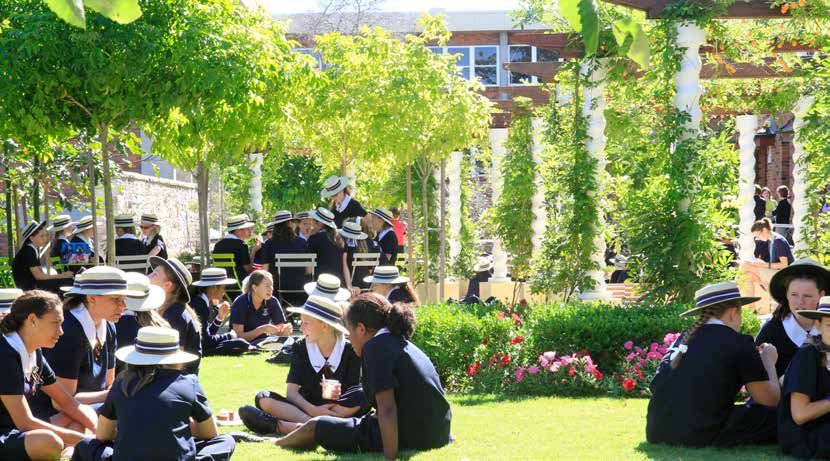
Preparing confident,
  compassionate,
  capable women
able to contribute in
a global community
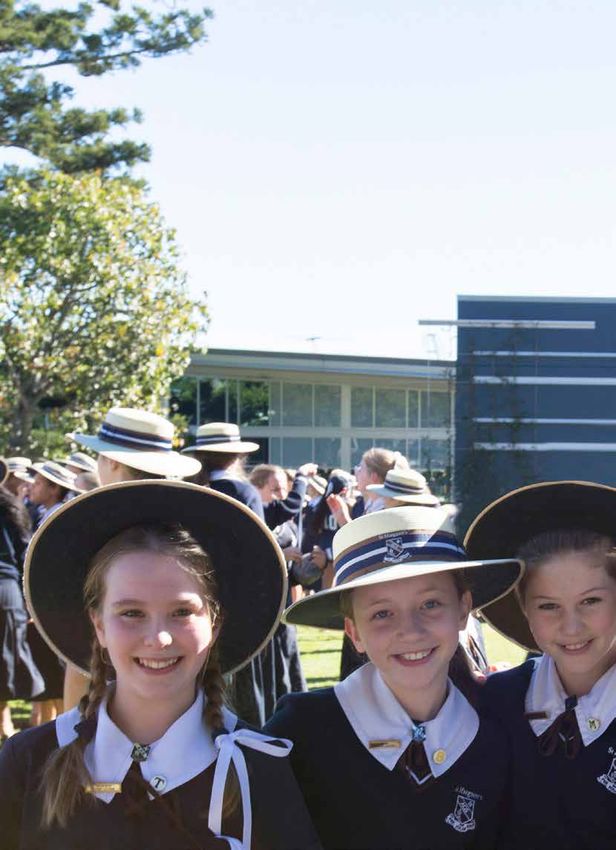
From the Principal
Welcome to St Margaret’s and thank you for considering our school for your daughter.
For 125 years St Margaret’s has been a leader in providing quality education for young women
and girls. At the heart of our school you will find the values and wisdom of our founders, the
Sisters of the Society of the Sacred Advent, who established St Margaret’s in 1895. The Sisters
undertook to empower young women and prepare them not only for tertiary admission, but most
importantly to live a life imbued with good and generous character. These threads of our founders
have been woven into the tapestry of the school throughout its history.
St Margaret’s combines a steadfast affection for this wonderful tradition and its legacy with
a commitment to future-focused innovation across all teaching and learning areas and
life-long scholarship.
Today our mission is to prepare capable, compassionate, confident young women, who are able to
contribute significantly to a global society.
We are a local school with a global outlook, committed to preparing students to be globally ready.
There are many opportunities for students to be exposed to global experiences and thinking
such as the school’s Global Exchange Program which offers Year 10 students the chance to
study abroad.
When your daughter attends St Margaret’s, she will experience a broad, balanced and flexible
curriculum in state of the art facilities, within a warm and nurturing environment.
The school has a strong academic record, providing extensive and personalised support,
including a tailored program for high achieving scholars, athletes and performers, called The
Flyers Program. All students are inspired to participate in life beyond the classroom through
our comprehensive sport, music and arts programs.
St Margaret’s has a proud boarding history. Generations of women from across Queensland
and the world have walked through the doors of our boarding house and into the care of our
committed and specialist boarding staff. St Margaret’s boarders are integral to our school
community and bring diversity, energy and another level of experience to all our girls.
The active and friendly parent body along with experienced and dedicated staff contribute to
St Margaret’s warm and welcoming community.
We would love to show you our school. Please contact our Admissions team on +61 7 3862 0777
to arrange a personal tour on any working day, or if you have any questions. We hold an Open
Day and Open Morning each year and I encourage you to also join us on those occasions.
I commend our school to you and invite you to consider how a St Margaret’s education will offer
your daughter both a personalised learning journey and a gateway to the world.
We look forward to seeing you.
Ros Curtis
BA(Hons), DipEd, MLitSt,MEd(Leadership and Management),ASDA, FACE, FACEL, FIML, GAICD

                                                                                                     3
Our Vision
    To always be an outstanding day and boarding school for girls

    Our Mission
    In a supportive Christian environment, reflecting the philosophy of the Sisters
    of the Society of the Sacred Advent, St Margaret’s Anglican Girls School aims
    to provide excellence in teaching and learning within a broad, balanced and
    flexible curriculum complemented by other school activities, preparing confident,
    compassionate, capable women able to contribute in a global community.

    Our Motto
    Per Volar Sunata (Born to Fly Upwards)

4
Our Values
Our six core values:

Spirit                                                                   Integrity
A St Margaret’s girl will value and demonstrate an enthusiasm            A St Margaret’s girl is known for her honesty, trustworthiness,
for the school, our heritage and our environment. The                    loyalty, courtesy, understanding, reliability and ethical
St Margaret’s spirit is in all students and is there for life. It is a   behaviour.
thread which connects St Margaret’s girls with each other.
                                                                         Courage
Faith                                                                    A St Margaret’s girl has strength of character and confidence in
A St Margaret’s girl welcomes and embraces all in sharing                doing what is right. She has the courage to embrace challenge
the Christian message, the spirit of love through example,               and change.
compassion, hope and charity. She demonstrates her faith
by service to those members of the wider community who                   Respect
need assistance.
                                                                         A St Margaret’s girl has respect for herself and others. She
                                                                         understands that she is a member of a diverse community and
                                                                         she takes responsibility as a team member to care, support and
                                                                         cooperate with others.

                                                                         Passion
                                                                         A St Margaret’s girl has a positive outlook on life. She
                                                                         understands that commitment and persistence are necessary
                                                                         for learning and achievement.

                                                                                                                                           5
St Margaret’s Snapshot
School established                 1895
Year Levels                        Pre-Prep to Year 12 (girls); Pre-Prep and Prep (boys)
Total number of students           Approximately 1080
Number of primary students         330
Number of secondary students       750
Number of boarders                 185
                                   Our boarders hail from regional and rural areas of Queensland, Northern New South
                                   Wales, Northern Territory, Western Australia and overseas, as well as Brisbane
Number of international students   Approximately 50
                                   Our international students hail from China, Hong Kong, Japan, Korea, Malaysia,
                                   Papua New Guinea, Singapore, Soloman Islands Taiwan, Thailand, Vanuatu,
                                   and Vietnam
Technology                         All students at St Margaret’s are supplied with devices
Sports                             18 in secondary, 8 in primary
Music ensembles                    24
Clubs and activities               Approximately 13, including a Robotics Club and Drone Academy
STEM programs                      STEM Extension subject in Years 9 and 10
Academic results                   In 2019, ranked in top 15 in Queensland for NAPLAN results across Years 3, 5, 7
                                   and 9. Our primary school was named the number one school in the state and our
                                   secondary school was number 9, and the first all girls’ boarding school in the state. In
                                   2019, almost 70 per cent of students received an OP 1-10 and 93 percent an OP 1-15
St Margaret’s alumni               St Margaret’s graduates pursue diverse pathways with notable past students
                                   including Olympians Bronte Barratt OAM, Sally Kehoe and Maddie Edmunds,
                                   fashion designer Keri Craig-Lee OAM, former Family Court of Australia judge and
                                   current barrister Michelle May AM QC, internationally renowned artist cj Hendry
                                   and performing artist Geraldine Turner OAM
Global experiences                 Year 10 students have the opportunity to participate in our signature Global
                                   Exchange Program studying at one of 10 schools in six countries.
                                   Other international touring opportunities are offered throughout the year for
                                   students in both the primary and secondary schools
Outdoor education                  Students participate in camps from Years 3 to10
Learning enhancement               Award winning Academic Advising Program
                                   Supervised Study Sessions
                                   English as an Additional Language
                                   The Flyers Program
                                   Learning Support

6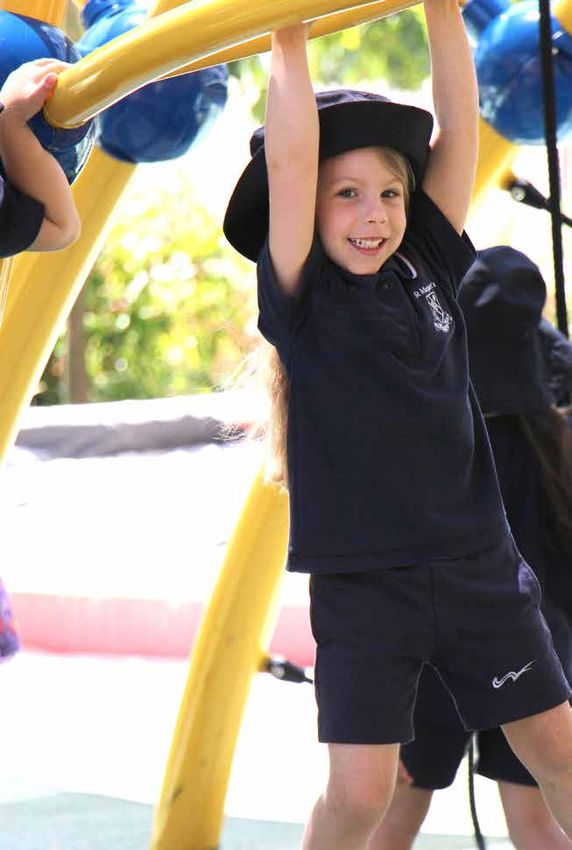
Faith
     A St Margaret’s girl welcomes and                              Religious and Values Education lessons are an integral part of
                                                                    the curriculum throughout the school. Students are encouraged
   embraces all in sharing the Christian                            to contribute to informal discussion, question and answer
     message, the spirit of love through                            sessions and debates on moral issues. Girls in Years 4 to 6
                                                                    form a Eucharistic community in the primary school, whilst
  example, compassion, hope and charity.                            secondary girls have the opportunity to worship through
                                                                    year level Eucharists, where the theme of the liturgy itself
  She demonstrates her faith by service to                          is generated to reflect the learning in Religious and Values
  those members of the wider community                              Education lessons and the Pastoral Care Program.
           who need assistance.                                     There are opportunities for spiritual journeying. The
                                                                    Year 4 curriculum includes a unit which prepares students
We are a living faith community, welcoming many groups from
                                                                    for Admission to Holy Communion. Girls from Years 4 to 12
within and beyond the school. The school chapel stands as a
                                                                    who wish to be admitted to Holy Communion take part in a
constant reminder of the Christian faith which is at the core of
                                                                    special evening service in Term 2. The prerequisite for Holy
St Margaret’s philosophy.
                                                                    Communion is Baptism, and each year, some girls, who have
Our chaplain is responsible for worship, which is set within the    not already been baptised, are baptised in the school chapel.
Anglican tradition and in conjunction with the history and the      Confirmation is available to those wishing to make their mature
presence of the Sisters of the Society of the Sacred Advent.        commitment to the Christian faith, with the Bishop joining us
                                                                    for the annual service.
Within the school day, there are regular year level and House
services in the secondary school. Primary girls (Prep to Year 6)
fill the chapel with much life and light each week. An invitation
is extended for all, both in the primary and secondary schools,
to attend family year level services of Holy Communion.
Students play a very active role in all school liturgies, some
filling the roles of sacristans (Year 12) and chapel assistants
(Year 6).

                                                                                                                                 7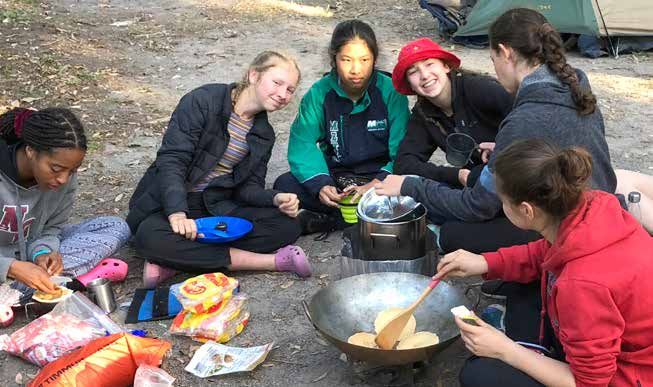
Pre-Prep
St Margaret’s operates a five-day, co-educational Pre-Prep
program, from 8.20am to 2.30pm, during school term.
The program offers a safe, secure and stimulating learning
environment for girls and boys turning 4 by June 30 of the year
of enrolment.
The Pre-Prep curriculum is based on Belonging, Being and
Becoming: The Early Years Learning Framework (EYLF) which
is a national document and the Queensland Kindergarten
Learning Guideline (QKLG) which was developed to support
this national document.
EYLF describes the principles, practice and outcomes essential
to support and enhance young children’s learning from birth to
five years of age, as well as their transition to school. The EYLF
has a strong emphasis on play-based learning and recognises          Children have the opportunity to learn within each of the five
the importance of communication and language (including              contexts in both indoor and outdoor environments. Longer
early literacy and numeracy), and social and emotional               blocks of time for engaging and active learning through play,
development.                                                         real-life situations and investigations are interspersed within
                                                                     meaningful routines and transitions and focused learning and
The QKLG identifies learning and development areas which are
                                                                     teaching.
used in programming and planning. These are underpinned by
the elements of thinking and communicating:                          Pre-Prep provides students with the opportunity to partake in
                                                                     specialist lessons which may include: music, HPE, library and
•   Identity – building a confident self-identity through
                                                                     modern languages.
    independence, perseverance and trust.
                                                                     The Pre-Prep learning environment offers:
•   Connectedness – building relationships respecting
    diversity and environments                                       •   a sand and mud pit for little adventurers
•   Wellbeing – building a sense of physical, social and             •   organic gardens for little green thumbs
    emotional wellbeing
                                                                     •   natural play area for little outdoor explorers
•   Active Learning – engaging and exploring learning
                                                                     •   colourful play equipment for little climbers
•   Communicating – exploring and engaging in numeracy
                                                                     •   consistent teacher and teacher aide for little learners
    and literacy in personally meaningful ways.
                                                                     •   air-conditioned building and fridge for packed lunches.
                                                                     Pre-Prep students may access the before and after school care
                                                                     (OSHC) and vacation care located in the primary school.

8
Primary School (Prep to Year 6)
Our primary school is a community of learners which fosters         STEM Learning in the Primary School
relationships with parents, students and staff. Students are
encouraged to be responsible, take initiative and be active         From Prep, our primary students are engaged in coding
participants in their educative journey.                            applications and robotic devices are used to ignite and develop
                                                                    the girls’ science, technology and engineering acumen.
Students participate in a comprehensive and balanced
curriculum program within the following areas: English,             Specialist teachers such as our Primary Maths Specialist bring a
Mathematics, Humanities, Science, Health and Physical               higher level of expertise to the primary curriculum and further
Education, Art and Music, Modern Languages (Mandarin and            inspire students’ learning.
French), Technology and Religious and Values Education.             A maker style space, ‘Atelier’, is part of the primary school. From
Students also have the opportunity to engage in a variety           paper craft to 3D printing, in this environment small hands will
of additional activities. These include year level specific         combine with youthful imagination to invent and construct,
curriculum programs, house meetings and activities, and             cultivating our students’ creativity, social-emotional capacity,
chapel services.                                                    innovative thinking, problem solving, skilled communication
                                                                    and design thinking. The Atelier space will honour the innate
The Core Plus Cluster Program is a manifestation of our             curiosity of our learners through real-life experiences in food
commitment to differentiation and evidence-based practice.          technology, tinkering, design, robotics, environmental studies,
Highlighting the concept of teaching ‘stage not age’, learning at   media studies, science and materials technology.
our school acknowledges the different developmental progress
of each student. It accepts individual differences and focuses
on the development of the whole child as an intellectual,
physical, spiritual, social and emotional being. There is also
a commitment to exemplary teaching and to empowering
students to set and monitor their own learning through
reflection, goal setting and feedback.
Core Plus Cluster comprises two components:
•   The Core Program is the year level program which
    dominates the timetable
•   In the Cluster Program, students can be grouped across
    the year level and in vertical groupings (PP-Prep, Prep-2,
    Years 3 and 4, Years 5 and 6). These groupings within the
    cluster are flexible. The Cluster Program has a numeracy
    and/or literacy focus. The specific focus of the cluster
    program (e.g. spelling, reading – guided reading, literature
    circles) will often change to reflect the whole school goal.

                                                                                                                                      9
Secondary Learning
(Years 7 – 12)
In keeping with our philosophy of personalised learning, we
offer a broad, balanced and flexible curriculum, designed to
provide an optimal learning environment for each student.
We are focused on teaching our girls HOW to learn, with
specialised programs based on effective learning techniques
and critical and creative thinking skills. This leads to a deeper
understanding of subject matter, which students can apply
across their academic subjects and then transfer to alternative
contexts.
Students in Years 7 to 10 are offered a wide range of subjects,
providing a breadth of experience in all disciplines. In Years 11
and 12, students are able to specialise in areas of interest with a
view to tertiary study and post-secondary interests.
St Margaret’s is a multi-pathway school. As well as our rigorous
academic program, we offer students a portfolio of pathway
                                                                      Years 11 and 12
options which includes Vocational Education and Training              Students will choose one of the following QCE pathways:
(VET) programs in their study. This means that each individual
                                                                      1. Australian Tertiary Admissions Rank (ATAR) pathway –
can engage in the program which best meets her needs.
                                                                         students selecting this pathway must select six General
The school works extensively with Queensland TAFE Colleges
                                                                         subjects from the following groups:
and registered training organisations such as Barrington
College to ensure that we provide a range of opportunities,               Group A (students choose at least one subject): English,
including school-based traineeships, Certificate III and                  Literature, English as an Additional Language
Diploma level qualifications.
                                                                          Group B (students choose a minimum of three and
                                                                          a maximum of five subjects): Chemistry, Economics,
Years 7 and 8                                                             Mathematical Methods, Specialist Mathematics, Physics,
Students study a broad core curriculum of English,                        Digital Solutions, French, Music, Chinese, Modern History,
Mathematics, The Arts, Science, Humanities, Health and                    Ancient History, Biology
Physical Education, Modern Languages and Religious and
                                                                          Group C (students choose a minimum of 0 and a
Values Education.
                                                                          maximum of two subjects): Accounting, Drama,
                                                                          Geography, General Mathematics, Visual Art, Physical
Year 9 and 10                                                             Education, Legal Studies, Design
Students study core curriculum subjects including English,            2. Portfolio pathway – students selecting this pathway are not
Mathematics, Science, History, Health and Physical Education             eligible for an ATAR. All students must select three General
and Religious and Values Education. Additionally, students               subjects from the following groups:
select three elective subjects (one Major and two Minors)
that will be studied in both Years 9 and 10. Electives are                Group A (choose one subject): English
organised into Majors (four lessons a week) and Minors                    Group B (choose a minimum of 1 or a maximum of
(three lessons a week), allowing for a breadth of experiences             two Diplomas): Diploma of Business, Diploma of Project
to be offered to students.                                                Management
Students choose from Major electives: French, Chinese                     Group C (choose two ATAR subjects from Groups B & C)
(Mandarin), Music, Drama, Visual Art and Geography and
Minor electives: Geography, Food and Design, Economics and                Group D: Special Project – a school-based program
Entrepreneurial Studies, Legal Studies, Physical Education,               will be offered to provide additional access to work,
English as an Additional Language, Digital Technologies,                  apprenticeship and study options
Music, Drama and Visual Art.
Year 10 students have the opportunity to apply to participate in
                                                                      Vocational Education Courses*
the school’s Global Exchange Program, which allows them to            There are further opportunities to study vocational subjects
study abroad for a term.                                              under the national Vocational Education and Training Program.
                                                                      Students may choose to complete a Diploma in Business or
                                                                      Project Management. Other study options include Certificates
                                                                      I, II, III and IV in wide-ranging subject areas from fashion to
                                                                      aged care.
                                                                      *Not offered for international students

10
Learning Enhancement Primary Learning
Learning enhancement categorises the practices in place which
reflect the school’s commitment to ensuring that each student Enhancement
is given the opportunities necessary for her to make meaningful In the primary school the focus of learning enhancement is on
progress in learning. It is relevant to all students although of early identification and intervention in the areas of extension
particular importance to those with specific needs, either for and support. A Response to Intervention Model is followed:
enrichment, extension, support or modifications. St Margaret’s
approach to learning enhancement is founded on the belief that Extension Support
all students have the right to an education which challenges
Tier 1 Differentiated Differentiated
them and allows them to make meaningful progress. It involves
classroom curriculum, classroom curriculum
the following practices.
incorporating incorporating
extension. adjustments, embedding
Embedded Classroom Differentiation Cluster Program individual student’s
Differentiation is a key pillar of the St Margaret’s Quality needs.
Teaching and Learning Framework and as such is expected in Cluster Program.
all learning contexts at the school. It relates to every element Learning enhancement
of the learning environment and needs to shape all interactions teacher or teacher-aide
with students. Ultimately differentiation means dealing with support in class
each student and her needs in the most effective way for her. Tier 2 Enrichment and Small group intervention
It involves ensuring that the curriculum is accessible extension activities at in literacy and numeracy
to each girl regardless of her particular level of development school and provided
or understanding. by outside agencies
Tier 3 Alternate pathways; 1:1 intervention with
Whole and subject Learning enhancement
acceleration. teacher or allied
Independent research health professional
projects. Pathway such as occupational
is determined by therapist, speech
off-level testing, language pathologist or
educational educational psychologist.
psychologist report Referral is determined by
and IOWA report diagnostic testing
Personal Learning Plans
Personal learning plans are developed for students with a
diagnosed disability. This plan outlines adjustments the student
requires to access the curriculum and all teachers are issued
with these plans in order to make these adjustments.
English as an Additional Language (EALD)
In the primary school, students with EALD learn English by
being immersed in the class curriculum, with learning needs
met on a case by case basis. On arrival, the EALD student’s
linguistic level is assessed and reported using the NLLIA
Bandscales (2nd Ed.) A profile of student’s levels in four macro
skills – reading, writing, speaking and listening – is shared with
her teachers.
11Secondary Learning Supervised Study Sessions
Enhancement St Margaret’s provides complimentary Supervised Study
Sessions for day students, 12 years and over, to complete their
Academic Enrichment - The Flyers Program homework under the supervision of tutors.
Students in Years 7 to 10 who are achieving at a very high Tutors supervise the study/homework sessions in the senior
standard and/or not being appropriately challenged within the library from Monday to Thursday every week of term (apart
classroom disciplines are identified during Term 1 and invited from the first and last weeks). The sessions run from 5pm to
to be part of the academic enrichment program, called the 7.30pm, with students having the option of purchasing dinner
Flyers Program. This program is designed to engage students from the boarding house for $10 (at approximately 6pm).
at a level significantly beyond usual classroom learning Parents can feel comfortable knowing that their daughters
experiences through their academic rigour, transdisciplinary are completing their homework and assignments under
approach and independent learning requirements. (see page 13) supervision, in a safe environment. For students attending these
sessions after an afternoon of sport, transport is available to and
Classroom Program to Support Literacy from Windsor Park. For those staying on after school to attend
and Numeracy the homework sessions, the senior library is open up until 5pm
prior to the commencement of the study sessions.
Students who require support in literacy, numeracy or with
English as an Additional Language are able to engage in classes How to Book
specifically designed for these purposes. Entry into these classes
is based on needs assessments from academic staff. While the study sessions are free of charge, bookings are
limited to 25 students and should be made in advance to
Individualised Learning Program ensure a place is available. Bookings are to be made through
Flexischools. If dinner is required, payment must be paid at the
Students with specific, identified needs are provided with
time of booking.
individualised learning plans. There are three types of plans.
• Diagnostic Learning Plan (DLP) – this is for students with
diagnosed disabilities or learning needs
• Learning Support Plan (LSP) – for students with identified
needs which impact upon their capacity to engage
effectively in learning
• Altered Learning Plan (ALP) – this is for students who are
entitled to an alteration in their program owing to high
level (state, national or the equivalent) commitments in
either sporting or cultural endeavours
12The Flyers Program
St Margaret’s understands the commitment and dedication Sports and Performance Flyers Program
it takes to achieve great things. Our Flyers Program supports
outstanding scholars, athletes and performers to follow their The Flyers Program for outstanding athletes and performing
passion, while successfully balancing all other aspects of their artists assists students to achieve both their academic and
education. extracurricular goals through personalised learning. The
program assists students through:
Academic Flyers Program (Years 7 to 10) • independent learning options
The Flyers Program for outstanding scholars provides students • mentoring
with opportunities to extend themselves academically and • access to specialist seminars and workshops
embrace intellectual challenge. The program’s objective is to
• practice and training opportunities
inspire, encourage and extend students through:
• communication with key staff and coaches
• extension electives in the fields of Science, English
• networking with professionals and organisations
and Music
• scholarship and grant application assistance
• Science, Technology, Engineering and Maths (STEM)
• academic care
programs
• parent seminars
• Specific advanced projects undertaken while given leave
• peer to peer meetings.
from regular classes
Each student reports to a Flyers mentor such as Head of
• Involvement in transdisciplinary projects Performance, Head of The Arts and Design or Head of Sport.
• Workshops with experts in various fields, for example Students must be performing at an exceptional level to apply.
writing workshops with published authors. Potential music participants should be performing at the
Students are selected based on the recommendation of Heads level of the Queensland Youth Orchestra; athletes must be
of Faculty or one of the Academic Deans in consultation with state or national representatives in the relevant semester; and
the Deputy Principal. Selection is based on records of high candidates in other fields will only be accepted if they are
achievement and demonstrated ability. performing at comparative eligibility levels to sport and music.
Further information and application forms for the Sport
or Performance Flyers Program are available online at
www.stmargarets.qld.edu.au. For further information and to
enquire about entry into the Flyers Program please contact
Ms Karen Gorrie, Deputy Principal via phone 3862 0771 or
email kgorrie@stmargarets.qld.edu.au.
13Academic Advising Continuous Reporting
St Margaret’s has established an innovative, award-winning St Margaret’s regularly reports on progress to students
Academic Advising Program for students in Years 9 to 12. and their parents in Years 5 to 12 through our Continuous
Reporting Program.
Students are assigned to an academic advisor, who they meet
with in small groups, twice a week during timetabled academic Through a student portal, students can view and reflect on their
advising sessions. results and feedback including where they sit comparatively in
the cohort, their GPA, and teacher comments.
With assistance from their advisor, students set academic
goals and track their progress through our Learning Analytics They can then utilise this relevant and timely feedback
Program. The sessions also provide another opportunity to to identify steps to take to improve, set goals and evaluate
check in on a student’s general wellbeing. their progress.
When the girls are not with their advisor, they have a block This process promotes effective self-management, where
of time to use appropriately. It provides them with the students can take responsibility and ownership of their
responsibility and freedom to practise skills of self-monitoring learning, with their advisors assisting them to develop
and self-regulation. this independence.
Primary Reporting
Academic advising gives students the tools and confidence to
personally evaluate their results and take ownership of their
own learning and its outcomes.
The assessment processes and schedule in the primary school
Through the student ownership of school data, the mentoring align with the reporting procedures in order to provide a
from a staff member and the increasing conversation between comprehensive overview of student achievement and to track
teachers/students and student/parent, we aim to increase progress over time, along with enhancing ownership of learning
the girls’ learning capacities and enable them to gauge their and goal setting. Summative assessment generally occurs at
own learning. the end of a unit of work or at set intervals during the year.
This form of assessment informs the allocation of grades and
achievement standards on reports. Formative assessment is
often referred to as assessment FOR learning. It is assessment
that occurs daily, weekly and termly to inform the next steps in
learning. This assessment takes many forms and informs both
teachers and students of their next learning goals and targets.
More detailed information regarding reporting and assessment
in the primary school can be found in the Primary Handbook.
14Outdoor Education
Outdoor education can offer students life-changing weaknesses. Such challenges can extend her personal
experiences including: limitations and bring success physically, emotionally and
socially. The skills and aptitudes our girls acquire through
• the development of initiative, self-reliance, co-operation,
the Outdoor Education Program are transferable; these
decision making, creative problem solving and leadership
programs assist students to apply what they have learnt on their
• opportunities for deep personal and social learning creating expeditions to other aspects of their lives.
strong relationships
While the overall goals for each level may be similar – for
• the improvement of brain resilience through the
example in Years 8 to 10 it might be to develop initiative,
progressive, repeated exposure to custom-built outdoor
co-operation, decision making, creative thinking and leadership
challenges
skills – the specific aims of the expeditions will vary greatly. For
• increased cognitive ability and adaptability example, in Year 7 there is focus on equipping students with
• communication, teamwork, problem solving, the basic skills required for participation in outdoor education,
self-management, planning and organising whereas the Year 10 expedition will have specific aims such as
• applying technology, learning, initiative and enterprise. navigation skills, including the use of a map and compass, and
leadership skills including task delegation.
Our Outdoor Education Program is a compulsory component
of the curriculum for students in Years 7 to 10. Run in Curriculum content can also be embedded into the expedition
conjunction with QCCC Expeditions and Higher Ground, programs, value adding to both the outdoor experience and the
each student is encouraged to take risks in a supportive opportunity to explore the curriculum beyond the classroom.
environment, so she can learn about her strengths and
St Margaret’s Outdoor Education Program is as follows:
Year Number of Location Activities
Level Nights
Year 7 2 The Mapleton Centre at Mapleton in the Theme: Fun and friendship
Sunshine Coast Hinterland – one night in a On-site activities include canoeing, archery,
dorm, the other night in a tent low ropes activity, giant swing, an indoor climbing
wall, outdoor cinema and bonfire
Year 8 3 National and state parks near Kenilworth Hiking, cooking, canoeing
Year 9 3 Caloundra region staying in tents Hiking, canoeing, surfing, rock pool discovery,
camp setup, camp cooking
Year 10 3 Noosa North Shore Beach bushwalking expedition or white-water
canoeing expedition
15Primary School Camp Program
The primary school offers a sequential, structured program for
students in Years 3 to 6 focusing on respect and responsibility
for self, others and the natural world. Each year’s program
builds on the previous years by increasing the number of days
and building on activities that require more self-regulation. The
outdoor experiences not only provide opportunities to interact
with nature, but also provide challenges and risks for the girls in
a safe environment. The camps in each year level contribute to
the development of a girl’s disposition of risk-taking which sets
the foundation for the challenge of learning.
St Margaret’s primary school camp program is as follows:
Year Number Activities and Venue Theme Description
Level of Nights
Year 3 1 Mudjimba Apex Camp Exploring the We believe students should have the opportunity
Australia Zoo environment to play in and explore the natural environment.
Beach Games the fun way Students will participate in an overnight camp
experience. This will offer students an opportunity
to have fun in the outdoors by taking part in
activities including a visit to Australia Zoo, beach
games and an outdoor cinema at night time.
Year 4 2 Alexandra Headland Away with We believe that this experience is a progressive step
Bli Bli Aqua Park your friends for the students to become independent individuals.
Alexandra Headland Beach The Year 4 camp emphasises personal growth and
Surf awareness and rock climbing self-management. The students develop confidence,
Headland Beach team skills and awareness of the beach environment.
Tenpin bowling at ‘Suncity Tenpin’
Year 5 2 Tamborine QCCC (3 days): Beginning The girls are encouraged to take small steps or meet
Team building activities Leaders far-reaching challenges, while learning to live in
problem solving and initiative harmony with the environment and other people.
games The girls participate in environment education,
Creative art team and individual physical challenges. This
Rainforest hike program is also the basis for the leadership program.
Night fire stories It is important for students to develop a strong
School: Leadership activities sense of the individual as a leader, as well as a deeper
(2 days) understanding of their potential as a team.
Year 6 3 Canberra with visits to: Leadership The Year 6 trip offers authentic learning as the
Electoral Education Centre Today students experience their classroom learning in
War Memorial context. A strong component of this trip is to
National Museum engender the students’ role in the community and
National Gallery gain an understanding of their citizenship in the
Questacon democratic process.
Australian Institute of Sport
Parliament House (New and Old)
National Museum and Gallery
Portrait Gallery
High Court
National Capital Exhibition
Dinosaur Museum
16Beyond the Classroom
At St Margaret’s we believe education is more than an academic Bands
result; it is a holistic learning experience, and art, music and
sport are an important part of a well-rounded education. Rock Bands
Cultural, community and sporting activities promote leadership • Highly Strung (primary rock band)
qualities, develop teamwork skills, responsibility and resilience
in a fun environment. The emphasis is on participation, fair • Rock Band (secondary students)
play, self-regulation and initiative.
Concert Bands
Our students are encouraged to develop their curiosity, find • Jackson Wind Ensemble
a passion and seek knowledge in all areas of life, through the
many and varied extracurricular activities and clubs available • Sister Helen Wind Symphony
at school. • Chaseley Concert Band
In 2019, St Margaret’s Plus was introduced initially to
Year 11 students. St Margaret’s Plus aims to provide a student Jazz Ensemble
portfolio documenting the breadth and depth of students’ • Stage Band (secondary students)
extra-curricular experience at the school and also the key 21st Smaller ensembles are also available to students and include
century skills they have developed. In 2019, the program won flute, clarinet, saxophone and percussion ensembles.
an Innovation Award.
As part of the Primary Music Program, students have the
Music opportunity to participate in a group band lesson. Students are
allocated an instrument at the beginning of Year 5.
Our Music Program offers students a broad range of
opportunities through which they can enjoy and experience Choral
music. The program encourages students to reach their highest • Serenata (Years 2-3)
potential from beginners through to those studying for their
music exams. Students can participate in one of 24 string, band • Belle Voci (Years 4-5)
or choir ensembles. • Primary Chorale (Years 5-6, non-auditioned but a higher
level of commitment required)
Strings
• Elevarsi Voices (Years 6-8)
String Ensembles • Encorah (Years 9-12)
• Tutti Strings (Junior strings for beginners)
• Exultate (auditioned Years 9-12, suited to more
• Amati Strings (for AMEB Preliminary to AMEB Grade 2 experienced singers)
approximately)
• Stradivari Strings (for approximately AMEB Grade 3 to 5) Private Music Tuition
• Chamber Strings (for approximately AMEB Grade 6 Specialist private music teachers provide tuition to students
and above) from Pre-Prep to Year 12 at an additional cost. Tuition is
available for the following:
String Quartets - Violin, Viola, Cello, Double Bass, Classical Guitar,
• Beath String Quartet (for primary intermediate level Bass Guitar
students)
- Trumpet, Trombone, Baritone Horn, Euphonium,
• Sculthorpe String Quartet (for secondary advanced level French Horn, Tuba
students)
- Flute, Oboe, Clarinet, Bassoon, Saxophone
As part of the Primary Music Program, students in Years 3 and
- Piano, Percussion (including drum kit), voice and
4 have the opportunity to participate in a group string lesson
AMEB theory
playing the violin, viola, cello or double bass.
International Music Tours
An international music tour is generally offered every two
years, dependent on the level of interest. The 2018 music tour
travelled to Prague, Vienna and Salzburg. These tours include
international performance opportunities, workshops and
masterclasses for travelling students.
17Performing Arts Sport
Dance St Margaret’s has a long, proud history of women in sport. Our
program offers 18 sporting activities. The school was one of
Involvement in dance not only develops fitness and co- three founding members of the Queensland Girls Secondary
ordination, but also teaches discipline, commitment and Schools Sports Association (QGSSSA), an association that
team work, while enhancing memory, posture and musical continues today. St Margaret’s is also a member of Andrews
awareness. Students in Years 8 to 12 have the opportunity to Cup, the Brisbane Netball Association, the Brisbane Schoolgirls’
audition for one of two dance groups. Rowing Association (BSRA), Brisbane Water Polo Association
• Synergy – a performance-based group Inc (BWPI) and Downey Park Netball Association (DPNA).
• Fusion – incorporates some technical training as well Students also have the opportunity to compete in state
as rehearsal time to learn routines for school-based secondary school competitions.
performances Sports on offer include:
Drama • Athletics
Private Speech and Drama tuition is available for students • Badminton
in Years 2 to 12. The program is designed to develop • Basketball
communication, presentation and performance skills in a
fun, supportive environment. Students explore drama, mime, • Cricket
improvisation, poetry, prose and public speaking, developing • Cross country
their imagination, confidence, clear speech, vocal and facial
expression and love of literature. Students can strive for their • Soccer
AMEB Speech and Drama exams or participate in one of the • Gymnastics (Artistic and Rhythmic)
many performance opportunities throughout the year.
• Hockey
Theatresports • Lifesaving
Drama students in Years 8 to 12 are greatly encouraged to • Netball*
be involved in the St Margaret’s theatresports teams that
participate in the Youth Theatresports Competition in Terms 1 • Rowing
and 2. • Softball
School Musical • Swimming
A school musical is produced every second year and there are • Tennis
several opportunities for students to be involved both through • Touch football
performance on stage, in the orchestra pit or even behind the
scenes. The production is staged in a professional venue such • Volleyball
as La Boite Theatre providing students with the complete • Water polo*
performance experience.
*Also played at Club level
18Clubs and Activities
Primary Sports St Margaret’s has a variety of thriving clubs and activities
giving students the opportunity to broaden their horizons and
St Margaret’s Primary School competes with nine other discover their true interests and passions.
schools in the Queensland Girls Primary Independent Schools
competition known as Andrews Cup. Ten sports are played
during the school week, as listed below.
Primary Clubs (outside school hours)
Challenge Club (Invitational)
Term 1 Term 2 Term 3 Term 4 Debating (Year 6)
Core Sports: Andrews Cup Japanese Club (Years 4 and 5)
Swimming Cross Athletics Public Speaking (Year 5)
Cross Country
Strategy Club (Years 1-6)
Country
Writing Club
Elective Sports: Andrews Cup
Touch Soccer Netball Cricket Primary Activities (after school,user pays)
Football Gymnastics Gymnastics Chess
Tennis Cricket Basketball
Cricket
Basketball
French
Club Sports:
Mandarin
Netball Netball Water Polo
Tennis
Eligible students for the different sports include: Yoga
• Girls in Years 2 to 6 can participate in athletics,
swimming, cross country and gymnastics Holiday Clubs (user pays)
• Years 4 to 6 can participate in basketball, cricket, netball, Coding (selected pupil free days and holidays)
soccer, tennis and touch football SmART workshops (selected week long art workshops)
Secondary Sports Secondary Clubs and Activities
Secondary sports and when they are played:
Astronomy Club
Term 1 Term 2 Term 3 Term 4 Cooking Club
Sports in regular weekly competition Dance
Cricket Basketball Hockey Softball Debating
Softball Touch Netball (Years 7-9) Digital Art Club
(Years 10-12) Football Rowing Cricket
Duke of Edinburgh
Water Polo Football Tennis Water Polo
(Soccer) Volleyball Enviro Club
Core Sports: Major Sporting Carnivals Mooting
School Musical
Swimming Cross Rowing – Athletics
Country Head of the smART Club
River Robotics Club (Year 7)
Other Sports: Usually have singular competition dates Speech and Drama
Artistic Rhythmic Badminton Student Representative Council
Gymnastics Gymnastics Theatresports
Lifesaving
In addition, students in upper primary through to secondary can
participate in the St Margaret’s Drone Academy which provides
an introduction to the world of drones and unique opportunities
to become immersed in the engineering and science behind
flying drones as well as highlighting future career pathways
through showcasing the wide range of drone uses.
Different programs are offered at different developmental
stages, ranging from practical flying skills and text-based coding
for Year 6, coding and design through to Year 9 and the chance
to complete a Drone license course in Year 10.
Students can also gain their Remote Pilot’s Licence from the
Civil Aviation Safety Authority.
19Service Learning
St Margaret’s has a strong culture of philanthropy and Year 10 Global Exchange Program
aims to inspire students to begin a life-long commitment
to giving through activities that have a positive impact on The signature Year 10 Global Exchange Program enables our
the communities in which they live and will, one day, work. girls to acquire and further develop new skills in problem
Through the many philanthropic endeavours in which the solving, independent decision-making and social poise; expand
school is involved, it is intended that students will improve their cultural and ethnic awareness; enhance their passion for
their understanding of current community issues and, in doing learning; and become exceptional ambassadors of the program
so, build important relationships between the school and the overseas and in the St Margaret’s community.
community. Philanthropy at St Margaret’s is driven by selected The program promotes the vision of the school in providing
senior students who form the Philanthropy Group. These girls unique opportunities for students to participate in global
collaborate with other groups throughout the school to raise citizenship in the context of school and family life and
awareness and funds for many causes and organisations within encourages active demonstration of the six core values of
the broader community. St Margaret’s – passion, respect, spirit, integrity, courage
St Margaret’s service learning opportunities also involve Year and faith.
Level Service Learning Projects as well as philanthropy groups Successful applicants have the opportunity to study at one of
such as Toc H. Year 11 students participate in Sony Camp and the following schools situated in six countries across the globe
students drive other initiatives throughout the year such as the for a term.
annual Ponytail Project.
• Crofton House School, Vancouver, British Columbia,
In the primary school students participate in the Cornerstone Canada
Project, House Charity and Year Level Service Learning
Projects. This program is diverse and benefits the local, national • Shawnigan Lake School, Vancouver Island, British
and international communities. This community engagement Columbia, Canada
is embedded as part of our school ethos and learning. It aims • Saint-Nom-de-Marie, Montreal, Canada
to develop a sense of social responsibility in our students.
Each year level is involved in a project that is reflective of their • Chatham Hall, Chatham, Virginia, USA
understanding and is used as a tool to enhance and enrich • Augusta Preparatory Day School, Augusta, Georgia, USA
classroom learning; for example, Prep to Year 2 students
visiting Aveo with handmade gifts. The Cornerstone Project is • Ursulinenschule Hersel, Bornheim, Germany
conducted in Year 6 and the aim of the project is for students • Konan Girls High School, Kobe, Japan
to plan and conduct a project that contributes to the wider
community. In 2018, students knitted scarves for the Mission • Nga Tawa, Wellington Diocesan School for Girls, Marton,
to Seafarers. New Zealand
Global Experiences
• St Margaret’s College, Christchurch, New Zealand
(Rowing Exchange)
• St Anne’s Diocesan College, Hilton, South Africa
Global Tours
• St Mary’s Diocesan School for Girls, Kloof, South Africa
St Margaret’s regularly offers international tours across a range
of activities and interests. These can be cultural/languages/ Service Learning Abroad
history trips, music touring, NASA space trips, philanthropic
projects or of a more recreational nature such as our recent Every second year, the adventurers amongst our senior
New Zealand skiing tour. Each seek to broaden our girls’ students are offered the opportunity to participate in a service
horizons and give them a greater global perspective of the learning abroad expedition. Whether building roofs for a
world in which they live. community in Peru or a concrete path in Vietnam and trekking
through difficult terrain, these expeditions provide the chance
Primary Japan Tour for our girls to explore and embrace a world beyond our
borders. Trekking, community service and cultural and social
Every second year, the primary school offers a cultural trip to interaction are at the essence of these adventures and girls
Japan for Years 5 and 6 students. The tour commences with return having learnt and experienced a great deal.
two nights in Tokyo, followed by a bullet train to Kobe where
the students stay within the Konan University complex. The Study Tours
students’ trip also includes visits to Kyoto, Nara, Hiroshima and
Miyajima Island, Osaka and Universal Studios. The highlight is Students are offered the opportunity to buddy with an
the visit to our sister school, Konan Elementary School in Kobe, international student visiting St Margaret’s on a study tour.
where students experience a day in the life of a Japanese child
and participate in drumming, calligraphy, Kendo and classroom
activities.
20Student Wellbeing
Pastoral Care Program
St Margaret’s Pastoral Care Program is designed to prepare
confident, compassionate and capable women who are able to
contribute in a global community. We know that positivity and
gratitude have an immense impact on our emotional wellbeing,
thus creating an environment where we all can flourish.
We believe student wellbeing sits at the heart of effective
learning; is the central component of high quality education;
relies on the themes of connection and belonging in the
school context; and is the responsibility of all members of
the community, not just those identified as having pastoral
care responsibilities.
In 2019, a Student Wellbeing Framework was launched
to articulate the beliefs, aims and practices relating to the
facilitation of student wellbeing at the school. The framework
ensures that our student wellbeing programs aim to:
• establish a connection between each student and the school
which promotes a sense of belonging
• assist students to become dynamic and passionate
members of the broader community
• build a culture that celebrates difference and diversity
• promote the development of empathy and compassion
within each individual
House System
St Margaret’s house system forms part of our focus on student
• foster students’ social, emotional, spiritual, ethical and
wellbeing. Each of our eight houses take part in sporting,
physical development in order to reduce risk-taking
cultural and community activities, where the emphasis is on
behaviours and minimise harm
fostering a sense of community and belonging. The house
• imbue students with an understanding of their power as system generates integration and interconnectedness across
authors of their lives. all year levels, encouraging the formation of friendships and
fostering both a strong house identity as well as strengthening
The Student Wellbeing Framework is aligned with The
whole school spirit. The house system also provides
St Margaret’s Way and the school’s values. The St Margaret’s
opportunities for developing leadership and teamwork skills,
Way was developed to guide our school community in the way
learning cooperation, and putting service to others before
in which we strive to do things; the way in which we seek to
personal ambitions.
treat people throughout our community; and the way in which
we aim to serve others.
Anti-Bullying
Whilst it is our firm belief that student wellbeing is the
In both the primary and secondary schools, regular events and
responsibility of all members of our community, we do have
activities are held to heighten awareness of the issue of bullying
staff members dedicated to developing the social and emotional
amongst students. There is a very clear anti-bullying policy and
aspects of each student’s education including a Pastoral Care
documented procedures which are followed should any child
Coordinator, School Chaplain, School Counsellor, and the
experience bullying.
Heads of Year, as well as dedicated Pastoral Care Coordinators
for international and boarding students.
21Boarding
St Margaret’s is the only full time girls boarding school in Boarding House Information
Brisbane. Our boarders have a significant impact on the
Our Head of Boarding, Lesa Fowler, has spent 28 years working
life of the school, contributing to the wonderfully diverse
and teaching in Australian boarding schools. She oversees
school community.
the care of the 180 plus girls living in the boarding house,
Our first three students enrolled in 1895 were boarders along with 10 housemothers, and is responsible for ensuring
and, since then, St Margaret’s has spent 125 years educating the experience at St Margaret’s is rewarding and fulfilling.
generations of women from rural, regional and remote areas Supporting the Head of Boarding is a Head of Junior House,
of Queensland, Australia and the world. Head of Senior House and a Pastoral Care Coordinator.
The boarding house is located in the heart of the school
grounds, nestled in the leafy suburb of Ascot, with gardens
Supervision
and wonderful city views. It is a busy place with a warm The role of all boarding house staff is to act as carers for the
and friendly atmosphere, built on the values of respect, girls and the emphasis is on working together as a team –
consideration and honesty. parents, boarders and staff – to meet the needs of boarders and
their families. Housemothers provide 24-hour supervision of
The school welcomes boarders from Years 5 to 12, with a
the boarders, with a dedicated team sleeping over each night.
recently opened wing dedicated to our youngest residents
They supervise study, monitor the girls’ academic progress,
(Years 5 to 7). The majority of our housemothers are all
communicate with their teachers and provide extra academic
qualified teachers, so their personalised supervision of prep-
support. The housemothers are also responsible for the social,
time, along with current teaching staff, provides excellent
emotional, physical and spiritual wellbeing of all the girls.
academic support for our boarders.
Our ancillary staff are also very qualified: the on-site team Study
of experienced chefs prepare over 1000 restaurant quality Boarders prep is held every evening after dinner, from Monday
meals every day and our modern Health Centre is staffed by to Thursday. Prep is supervised by St Margaret’s teachers,
registered nurses. who provide specialised tutoring for students. Most of our
Strong friendships are forged between day and boarding housemothers are qualified teachers and work alongside
students, with many invitations exchanged for boarding house the teaching staff. This personal approach contributes to the
sleep overs, home visits and weekends. longstanding history of academic success in the boarding house.
22Student Wellbeing Day/ Boarder Weekend
All boarding house staff are well-qualified in their roles to Boarders have the opportunity to take a day girl home with
care and support the girls. Housemothers provide the day to them for the weekend. This is an opportunity for our boarders
day care of the girls and really get to know them well. There to show the day girls where they live and what they do when
is one housemother to each year level and they are with them they are home. Day girls gain a better understanding of the
for the whole year. A pastoral care coordinator supports the diversity within boarding and boarders certainly benefit from
housemothers in this pastoral role. In addition to the support of the strengthening of bonds with their peers.
the staff, a structured Big Sister Program sees Year 11 students
taking on the guided responsibility of mentoring newcomers to
the house, to help them navigate the early challenges of settling
into boarding and ensuring they have an ‘older sister’ to call on.
Family Involvement
At St Margaret’s we always welcome family visits and
understand these can happen at varying times. Parents are
encouraged to share a meal with the girls in the dining room
whenever they are in town. Boarding families have always been
enthusiastic members of the St Margaret’s community. There
are many special events, including the Boarding Parent Cocktail
Party. The Boarders’ Support Group was formed in 1991 and
aims to promote a close relationship between boarder parents,
school staff and parents of day girls.
Regular communication via email, newsletter, and phone calls
keeps families connected with their daughter’s achievements
and progress. We also have a private Facebook group for
boarding parents that allows regular, “everyday” photographs of
the girls to be shared.
Activities/ Health Centre
Our Activities Coordinator regularly organises a wide range of
events to keep the girls entertained and happy during non-
school times. These activities also help to encourage a sense
of community within the boarding house and are a chance
to enhance relationships across all year levels. The activities
include movie nights, dances, socials, trips to the beach,
community activities, themed dinners, treasure hunts and
many more.
General medical attention is provided to all boarders at the
school, in the Health Centre or at the doctors’ rooms. The
Health Centre is staffed by two registered nurses and is open
Monday to Friday from 6:30am – 9:00pm, and on the weekends
from 4:00pm – 8:00pm, with a nurse on call all weekend.
23You can also read


