SIXTH FORM OPTIONS GUIDE AND COURSE OPTIONS - ACADEMIC YEAR 2020-2021
←
→
Page content transcription
If your browser does not render page correctly, please read the page content below

SIXTH FORM
OPTIONS GUIDE AND
COURSE OPTIONS
ACADEMIC YEAR 2020-2021

PAGE | 03

                                                                                                                                                       CONTENTS
                                                                                                                                                   CONTENTS

Welcome from the Head of Sixth Form; Miss Gathercole...........................................................................................................Page 4

Class of 2020 University Destinations...............................................................................................................................................Page 6

Introducing our Student Leaders.......................................................................................................................................................Page 8

What is the International Baccalaureate?........................................................................................................................................Page 9

IB Diploma Programme......................................................................................................................................................................Page 11

IB Career Programme.........................................................................................................................................................................Page 17

Application Process.............................................................................................................................................................................Page 23

The IB Learner Profile.........................................................................................................................................................................Page 27

How does Assessment Work?...........................................................................................................................................................Page 28

Course Options ...................................................................................................................................................................................Page 30

IBCP BTEC Options..............................................................................................................................................................................Page 52

Why choose the IB? ............................................................................................................................................................................Page 55
PAGE | 04

                                              WELCOME

                         Sophie Gathercole
             Head of Sixth Form - Assistant Headteacher

Dear Parents,

Choosing the right education pathway for your child at ‘Post-16’ is so
important and often a daunting task. At Wellington International School, we
hope to be able to support you with this process by explaining the variety of
options we have and how your child can reach their wildest and most vivid
aspirations with us.

It is our absolute belief that an IB education will grant students the skills to
become successful life-long learners. ‘The IB Programmes present a
combination of academically rigorous, yet holistic curricula that aim to
develop inquiring, knowledgeable and caring young people who help to create
a better and more peaceful world through intercultural understanding and
respect’ (IBO Mission Statement).

The Sixth Form students at WIS are resilient, ambitious and active global
citizens who can challenge notions and ideas in the world around them with
confidence and enthusiasm. They are independent and reflective; showing an
ability to take ownership of their learning and a flair for active communication.
Everyday, I am proud to work with such ambitious students and it brings great
pleasure to discuss the IB education we offer.

At Wellington International School, we offer three International Baccalaureate
programmes of study to suit every child:

    The International Baccalaureate Diploma Programme (IBDP)
   International Baccalaureate Career Programme (IBCP)
   International Baccalaureate Courses

We hope that you are able to use the information here to make the right and
most informed decision for your son or daughter. If you have any further
questions about any of the programmes, please do not hesitate to get in
touch with myself or a member of the Sixth Form Team.

Sophie Gathercole
Head of Sixth Form, Assistant Headteacher
s.gathercole_wis@gemsedu.com

PAGE | 06

                 UNIVERSITY DESTINATIONS

                          Kavita Bedi
                IBDP & IB Courses Coordinator
                  k.bedi_wis@gemsedu.com

          Beth Swinscoe
        IBCP Coordinator
 b.swinscoe_wis@gemsedu.com

                        Ciara Watson
             Head of Year 12 & 13 (Pastoral Lead)
                c.watson_wis@gemsedu.com

LAST YEAR, OUR EXITING COHORT WENT TO
VARIOUS UNIVERSITIES ACROSS THE GLOBE.
   HERE IS A SNAPSHOT OF WHERE OUR
     STUDENTS ARE NOW STUDYING:

CLASS OF 2020 UNIVERSITY DESTINATIONS

PAGE | 08

                                                                                                    STUDENT LEADERS

INTRODUCING OUR
STUDENT LEADERS
                             As a student currently completing the IB Diploma Program, I believe that the academic freedom here at WIS
                             has given me the opportunity to explore my interests in depth. However, I’ve gained much more than the
                             academic content. Components such as the IA and EE have allowed me to develop research skills through
                             experiential learning. Additionally, they’ve engendered creativity and independent thinking to synthesize
                             cohesive arguments about unfamiliar concepts. Moreover, through TOK, I’ve gained a better understanding
                             of how we process the world and its implications on the construction of knowledge. Finally, I believe the
                             breadth, depth, and academic rigor of the DP, along with the incredible support here at WIS, has prepared
                             me well for future studies and my future career.
     Chetan Nair
 Head Boy for 2020-21

IB has taught a lot of us to be hardworking in every task and work we put forward. IB has taught me to be a
risk-taker, to be reflective, inquisitive and to be open-minded in every discussion that takes place in lessons.
The rigor of the programme, although difficult in Years 12 and 13, is one that assists in many future
endeavors, especially in preparing for university. The vast opportunities and constant guidance offered by
WIS has allowed me to not only strengthen my academic abilities but also helped broaden my
understanding of the advantages of studying in an international community.
                                                                                                                         Poushali Ray
                                                                                                                      Head Girl for 2020-21

                           IB students are encouraged to be inquisitive, principled and reflective. I strive to embody the IB learner profile
                           and have realised the importance of a professional environment, as offered by the rigorous course. The
                           guidance and broad range of career-developing opportunities offered at WIS enhance the academic
                           experience, ensuring diversity and a strong work-ethic. Wellington’s international community combines our
                           distinctive qualities and aptitudes, preparing us for university and beyond. In Sixth Form, the flexibility
                           offered while taking the IB matures one’s independence and responsibility - I now understand the value of
                           productive risk-taking and am able to reflect on my work diligently.
    Vlad Stoicescu
   Deputy Head Boy

    IThe IB curriculum strives not only to develop and create students that are knowledgeable, inquisitive and
    reflective, but also teaches students to respect global communities. Being an IB student in WIS, I’ve grown to
    become reflective and inquisitive to question limits in order to explore and discover the unknown. I’ve
    learned that it’s never too late to be a risk-taker to experiment and utilise many opportunities that are
    presented to you. Most importantly, with the support from my teachers and classmates, I’ve developed to
    become caring and open-minded to appreciate the inclusive, diverse and the multicultural community in
    WIS.
                                                                                                                          Oyku Birce Ozyucel
                                                                                                                           Deputy Head Girl

                           Being an IB student has enriched me in many ways. I have started to embody the IB learner profile,
                           becoming more open-minded, inquisitive, caring, and knowledgeable as I progress through the diploma. I
                           believe after completing the IB, I will be prepared to the fullest capacity for higher education. The individual
                           components of each subject I take, such as IAs for the sciences and coursework for Film ensure that my
                           educational experience isn't limited to only one aspect. The IB truly does help a person become well rounded,
                           and I’m excited to see how it will contribute to my future life.
     Ada Zeylan
   Deputy Head Girl
PAGE | 09

                                                                             WHAT IS THE IB?

   WHAT IS THE
 INTERNATIONAL
BACCALAUREATE?
The International Baccalaureate Organisation was established in 1968 to meet the educational needs of
students in International Schools. From these early days it has grown to an organisation that teaches over
1 million students in over 4000 schools in 146 countries. The IB is now taught in both International Schools
and State sector schools across the globe, with the highest number of schools being in the United States.

The International Baccalaureate Organisation (IBO) is based in Geneva with its head curriculum office for
the Africa, Europe and Middle Eastern (AEM) region located in The Hague, Netherlands. There are regional
offices that deal with Professional Development and administration of the program in different parts of
the world in the Asia Pacific, North America and Europe, Middle East and Africa.

The IB offers four programmes, the Primary Years Programme (PYP); the Middle Years Programme (MYP);
the Career Related Programme (CP) and the Diploma Programme (DP). GEMS Wellington International
School, implements the Diploma and Career Related Programme into its Post-16 cohort at Year 12 and 13.
GWIS intends to maintain the current curriculum arrangements at Year 7-9 where a broad curriculum
based on the English National Curriculum is taught and at Year 10 and 11 where the GCSE and IGCSE
programmes will continue to run. Both of these programmes are seen as very good groundings for the IB,
and prepare students adequately for the rigours of an IB programme in the Post-16 IB Diploma Courses.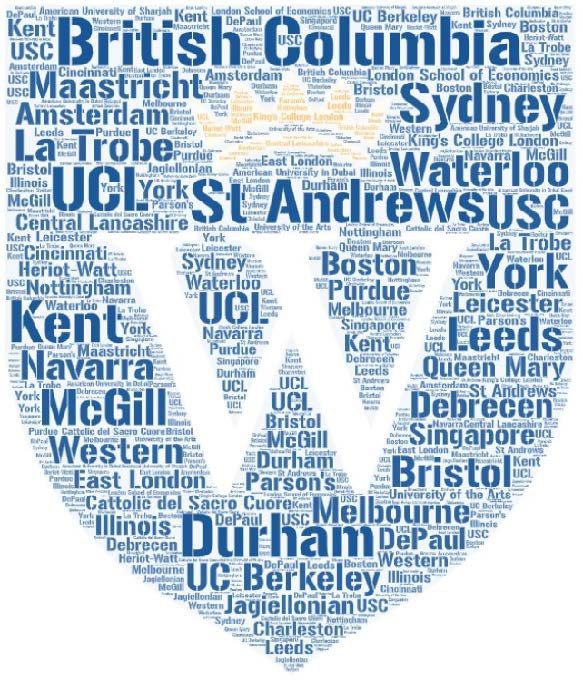
PAGE |10

                                                                                   WHAT IS THE IB?

In addition, students undertake four core components, Personal and Professional Skills, the Reflective Project,
Language Development and Service Learning. The IBCP core specifically promotes attributes of an IB education
such as reflection, open-mindedness, communication and thinking.

IBO Mission Statement
The International Baccalaureate aims to develop inquiring, knowledgeable and caring young people who help to
create a better and more peaceful world through intercultural understanding and respect.

To this end, the organization works with schools, governments and international organizations to develop
challenging programmes of international education and rigorous assessment. These programmes encourage
students across the world to become active, compassionate and lifelong learners who understand that other
people, with their differences, can also be right.

Curriculum
The IBDP is a comprehensive two-year pre-university course that aims to prepare students for the rigours of
university but also to be caring, compassionate, global citizens with an appreciation of lifelong learning. Students
must do a range of subjects, one taken from each of the six groups, doing three subjects at Higher Level (4 if HL
Maths is chosen) and three at Standard Level over two years, as well as compulsory studies in Theory of
Knowledge (TOK), Creativity, Activity and Service (CAS), and a 4000-word research-based Extended Essay (EE).
Students are examined at the end of their second year.

Whilst subjects in the IBDP are no harder individually than traditional Sixth Form subjects, the requirements that
students do a broad range of subjects including the core mean that the IB Programmes provide a curriculum of
breadth. Because of this, graduates with IB qualifications are not only recognised, but are highly sought after by
universities around the world.

University Recognition – IBDP
The International Baccalaureate Diploma Programme is widely recognised and often pursued by universities
around the world as a qualification of excellence. In many cases IB graduates are often preferred over other
qualifications because of the breadth of their prior studies. Even a modest Diploma pass fares favourably with
other qualifications like the British A level. Students wishing to study in the UK are given very generous UCAS
tariff points with an IBDP pass. Many Universities in the United States even give advanced credit for IBDP
graduates. Nevertheless, like all High School qualifications, it is important to check your target university to see
specific university and course requirements. GWIS will offer clear, informed guidance on university selection and
tertiary options over the course of the Diploma Programme.
PAGE | 11
IB DIPLOMA PROGRAMME
University Recognition – IBCP
The International Baccalaureate Career-related Programme (IBCP) is a programme that combines academic rigour
with professionally focused skill development. IBCP students have the opportunity to engage in a specialised,
career-focused pathway that genuinely interests them. The GWIS IBCP in Business or Creative Media consists of
the IBCP core, three IB Diploma courses and a Level 3 BTEC. The BTEC provides a practical, real-world approach to
learning and is designed to accommodate the needs of employers and allow progression to university and is a
truly global qualification, currently available in over 100 countries worldwide. Opportunities for further education
continue to develop as the IBCP continues to grow in popularity worldwide. The BTEC and the IB Diploma courses
are already recognised as separate components by universities. Students applying for further education should
enquire directly with their chosen universities to discuss specific entry requirements. However, through our
network of staff a number of reciprocal arrangements have been made with UK universities who actively
encourage applicants from GEMS Wellington International School.
Since October 2015, The Knowledge & Human Development Authority of Dubai and the Ministry of Education fully
recognises the equivalency status of the IBCP as a pre-university course. UAE universities may now accept the
IBCP as entrance to a degree course. A large range of UK, USA and European universities already fully accept the
IBCP as entrance to specified degree Courses. GWIS will provide clear guidance for applying and communicating
with universities.
IBDP PROGRAMME
IBDP make-up: Standard Level and
Higher Level courses
Students choose three subjects at
Standard Level and three at Higher Level.
Standard level subjects contain 150 hours
of teaching time over the two years, whilst
higher level subjects have 240 hours of
teaching time. In groups 1, 2, 3 and 6
Higher Level is differentiated from
Standard Level by the depth and breadth
of work studied as opposed to the
difficulty per se. In groups 4 & 5 however,
the challenge is greater at Higher Level.
Students who take Higher Level Maths will
be required to take 4 Higher Level
subjects.PAGE | 13
A T TIEBNDDIAPNL C
OEM A NPDR O
PUGN
R ACM
T UMAEL I T Y
Group 1 - English
English Language & Literature HL /SL
Group 2 - Languages
French HL/SL and Ab Initio SL
Spanish HL/SL and Ab Initio SL
Italian Ab Initio SL
German Ab Initio SL
Arabic HL/SL
NOTE: Students choosing Ab Initio courses are not expected to have any prior
language study in the chosen language. Students who have studied the designated
language in previous years cannot study the same language at AB Initio level.
Group 3 - Individuals and Society
History HL/SL
Geography HL/ SL
Business and Management HL/SL
Economics HL/SL
Information Technology in a Global Society (ITGS) HL/SL
Psychology HL/ SL
Global Politics HL/SL
Group 4 - Experimental Sciences
Biology HL/SL
Chemistry HL/SL
Physics HL/SL
Computer Science HL/SL
Environmental Systems and Society SL (only)
Sports, Health and Exercise Science HL/SL
Design Technology HL/SL
Group 5 - Mathematics
Mathematics Analysis and Approaches HL/SL
Mathematics Applications and Interpretation HL/SL
Group 6 - The Arts
Visual Arts HL/SL
Music HL/SL
Film HL/SL
Theatre HL/SL
Please Note: Subjects offered will be dependent on student interest. The school
however is committed to offering as many subjects as possible to maximise the
opportunities for our cohort.PAGE | 15
IB DIPLOMA PROGRAMME
Creativity, Activity and Service (CAS)
CAS is a core requirement for all IB students. This requires students to participate in extra-curricular activities
related to creativity, activity and service and underpinned by the idea that the students “think globally, act locally”.
It is an excellent opportunity to get involved in activities both here at GWIS and also in the wider context of Dubai
and beyond. Student talents and skills are given a structured and reflective framework through which to explore
their sense of holistic education.
Activities planned by students in the past have included: raising funds for various charities, supporting external
relief agencies such as Médecins Sans Frontières, assisting surgery in Bangladesh; working with Feline Friends;
sports coaching; expeditions to Borneo/Vietnam/Nepal; tutoring both in GWIS and externally; learning to scuba
dive and help survey reefs; setting up and running clubs and societies; learning to drive on a race track, teach a
language or skill and so on.
This area of the IB Diploma is where the student can develop their personal interests and try out new things and is
core to the whole ethos of the IB in developing internationally aware, healthy young people. The requirement of
meeting 7 CAS outcomes implemented by 5 CAS stages over the two years is an expansive opportunity for
students to cultivate themselves beyond the purely academic rigours of school life.
Here at GWIS we offer a comprehensive array of creative activities, events such as the World Scholars event,
expeditions overseas, the Model United Nations and sports opportunities. Expeditions and service related
opportunities to allow students to complete the specific requirements of this core component while also providing
them with structured support at all stages through the utilization of the online ManageBac system. Activities
planned and completed as part of the CAS programme significantly augment a student’s curriculum vitae and helps
differentiate them at both university and employment related interviews.
The Extended Essay (EE)
The Extended Essay (EE) is the final compulsory element of the course. Students are required to plan, research and
write a 4000 word essay on a subject of their choice,. Students will be allocated an extended essay supervisor who
will assist in the planning and drafting of the essay along with comprehensive instruction on how to research, draft
and annotate their work. The EE is seen by universities as a very positive and preparatory undertaking because it
ensures students have had access to the conventions of extended writing, research skills and intellectual honesty.
Many an extended essay has formed the basis of university theses and academic journal publications and as such
constitutes the perfect stepping stone for the rigours of university life.PAGE | 16
IB DIPLOMA PROGRAMME
Theory of Knowledge (TOK)
The Theory of Knowledge (TOK) course encourages critical thinking about knowledge itself with the aim of trying to
help young people make sense of what they encounter. As such, it constitutes a flagship element at the core of the
Diploma Programme. By its very nature, TOK is an interdisciplinary course that aims to identify and critically
analyse how we learn, by transcending and unifying different academic areas, as well as encouraging appreciation of
other cultural perspectives, in an attempt to arrive at a coherent approach to learning. TOK
instruction is approximately 100 hours spread out over the two years of the IB Diploma. Its core content is questions
like these: What counts as knowledge? How does it grow? What are its limits? Who owns knowledge? What is the
value of knowledge? What are the implications of having, or not having, knowledge?
It is a commonplace to say that the world has experienced a digital revolution and that we are now part of a global
information economy. The extent and impact of the changes signalled by such grand phrases vary greatly in different
parts of the world, but their implications for knowledge are profound. Reflection on such huge cultural shifts is one
part of what the TOK course is about. Its context is a world immeasurably different from that inhabited by
“renaissance man”. Knowledge may indeed be said to have exploded: it has not only expanded massively but also
become increasingly specialized, or fragmented. At the same time, discoveries in the 20th century (quantum
mechanics, chaos theory) have demonstrated that there are things that it is impossible for us to know or predict.
Students entering the Diploma Programme typically have 16 years of life experience and more than 10 years of
formal education behind them. They have accumulated a vast amount of knowledge, beliefs and opinions from
academic disciplines and their lives outside the classroom. In TOK they have the opportunity to step back from this
relentless acquisition of new knowledge, in order to consider knowledge issues. These include the above-mentioned
questions, viewed from the perspective of the student, but often begin from more basic ones, like: What do I claim to
know [about X]? Am I justified in doing so [how?] Such questions may initially seem abstract or theoretical, but TOK
teachers bring them into closer focus by taking into account their students’ interests, circumstances and outlooks in
planning the course.
The course encourages students to share ideas with others and to listen to and learn from what others think. In this
process students’ thinking and their understanding of knowledge as a human construction are shaped, enriched and
deepened. Student will learn to make connections between knowledge encountered in different Diploma
Programme subjects, in CAS experience or in extended essay research and learn to make distinctions between
different kinds of knowledge.
This course aims to:
1. Make connections between a critical approach to the construction of knowledge, the academic disciplines and
the wider world
2. Develop an awareness o.f how individuals and communities construct knowledge and how this is critically
examined.
3. Develop an interest in the diversity and richness of cultural perspectives and an awareness of personal and
ideological assumptions.
4. Critically reflect on their own beliefs and assumptions, leading to more thoughtful, responsible and purposeful
lives.
5. Understand that knowledge brings responsibility which leads to commitment and action.PAGE | 17
IB CAREER-RELATED PROGRAMME
IB CAREER-RELATED PROGRAMME (IBCP)
The IBCP Overview
The IBCP framework allows students to specialize in, and focus on, a career-related
pathway. The programme’s three-part framework comprises the study of three Diploma
Programme courses alongside career-related studies and the distinctive IBCP core which is
designed to create a bridge that connects each student’s chosen Diploma Programme
courses and career-related studies. For IBCP students, both the Diploma Programme
courses and career-related study provide the theoretical underpinning and academic
rigour of the programme; and the IBCP core helps them to develop skills and
competencies required for lifelong learning.PAGE | 17
IB CAREER-RELATED PROGRAMME
International Baccalaureate Career-Related Certificate in Business
The entry requirement for the IBCP in Business is 5 GCSEs at grade C or above including
Mathematics and English Language. The Pearson International Level 3 BTEC Extended
Diploma in Business provides the career related focus of the IBCP in Business at GWIS
and is equivalent to 2 A Levels. It is possible to follow the Pearson International Level 3
BTEC Extended Diploma in Business (15 Units which are a 3 A Level Equivalent) and this
option should be discussed with members of the Business department.
IB Diploma Courses are chosen from Groups 1, 2, 3 and 6 of the IB Diploma Programme.PAGE 18
PAGE | 19

                                                                      IB CAREER RELATED PROGRAMME

International Baccalaureate Career Related Certificate in Creative Media

The entry requirement for the IBCP in Creative Media is 5 GCSEs at grade C or above including Mathematics and
English Language. The BTEC Level 3 National Diploma in Creative Media provides the career-related focus of the
IBCP in Creative Media at GWIS and is equivalent to 2 A Levels. It is possible to follow the Extended National
Diploma (3 A Level Equivalent) and this option should be discussed with members of the Creative Media
department.

3 IB Diploma courses can be selected from across the DP programme dependent upon
subject blockings.

   THE IBCP CORE

  The Core of the IBCP consists of the Reflective Project (RP), Language Development (LD), Service
  Learning and Personal and Professional Skills (PPS).

  The Reflective Project
  The Reflective Project is a structured piece of work that can take a variety of forms including an
  academic paper, a video documentary, a short film or a website to name but a few options.
  A student will be able to identify, analyse, explore, critically discuss and evaluate the ethical dilemma of
  an issue arising from their career-related study and linked to some contemporary event or situation.
PAGE | 20
IB CAREER RELATED
PROGRAMME
Language Development
Language Development provides the students with the necessary skills and intercultural
understanding to enable them to communicate using the chosen language in a variety of
contexts.
A Language Portfolio is required to demonstrate students’ engagement with the language.
FORMAT MAXIMUM LENGTH
Service Learning
Through Service Learning, students will develop working relationships with the
community.
They will explore the Principles of Service Learning:
Knowledge development
Social development
Civic development
Personal developmentPAGE | 21
IB CAREER RELATED
PROGRAMME
Personal Professional Skills
Personal Professional Skills is a professional,
ethical thinking course which explores the
ethical context of the career-related study
and its implications in the real-world. The
course aims to develop transferable skills
with an emphasis on the nature of thinking
critically and ethically and being able to
communicate effectively.
PPS is designed for students to develop the skills they need to be successful in both
personal and professional situations. The key skills covered are transferrable and can
be applied to a wide range of situations and include: interpersonal skills, reflection,
responsibility, perseverance, self esteem and academic honesty.
The course focuses on five themes: Personal Development; Intercultural
Understanding; Effective Communication; Thinking Processes; Applied Ethics.
Language Development
Language development ensures that all students have access and are exposed to an
additional language, which is a central tenet of an IB education and will increase their
understanding of the wider world. Students are encouraged to begin or extend the
study of a language other than their best language that suits their needs, background
and context. It develops students in the areas of oral, visual and written linguistic and
communicative abilities.
A minimum of 50 hours is expected to be devoted to language development. Each week
students will update their Language Development portfolio, demonstrating how they
are developing their understanding the language based upon a clear rubric to guide
the process.PAGE | 23
APPLICATION PROCESS
Application Process GWIS IB Programmes
The procedure for application and entry into any of the IB Programmes is outlined below:
Entrance Criteria – General Expectations
Applicants need to be able to demonstrate the following:
be fully committed to their IB studies
utilise non-contact time productively
become independent learners
take responsibility for their own learning
embrace all opportunities presented to them
undertake community service, especially within the school
undertake positions of responsibility and leadership
act as positive role models for the rest of the school
deliver at least one assembly to the year group during the year
be approachable and available to support and assist younger students
high level of attendance during the academic year
Entrance Criteria – IB Diploma Programme (IBDP)
IGCSE/GCSE Entry Requirements
All Applicants: Students require a minimum of 5 A-C at GCSE/IGCSE (including
Mathematics and English Language) to be considered for the IB Diploma Programme at
GWIS.PAGE | 22
ENTRY REQUIREMENTS
GROUP SUBJECT ENTRY REQUIREMENT
English Language and Literature SL 9 - 5 in Language
1
English Language and Literature HL 9-7 in Literature and 9 - 7 in Language
French/Spanish/German SL 6 in GCSE French/Spanish
2 French/Spanish/German HL 8 in GCSE French/Spanish
Ab initio courses 4 in a GCSE language
Business Management SL 5/C in GCSE Business Studies or English
Business Management HL 6/B in GCSE Business Studies or English
Economics SL 6 in GCSE Maths and/or Economics
Economics HL 7 in GCSE Maths and/ or Economics
ITGS C in GCSE IT or Computing
3
Geography 6 in GCSE Geography for HL
Psychology 6 in GCSE Psychology or English
5 in GCSE History or English for SL
History
6 in GCSE History or English for HL
5 in GCSE History, Geography or English for SL
Global Politics
6 in GCSE History, Geography or English for HL
A at GCSE for HL
Computer Science
B at GCSE for SL
Grade 6 for SL students on Triple Science Course
Grade 7 (Grade 8 Ideal for Physics) for HL for
students on the Triple Science Course
Biology, Chemistry and Physics Grade 8 for HL for students on the Combined
Science Course
Grade 7 for SL for students on the Combined
Science Course
4
HL– 6 for Triple Science or 7 for Combined Science
Sports Science
SL - 5 for Triple Science or 6 in Combined Science
Two 5 grades in any of the three Sciences or 5 5 in
ESS
Combined Science
HL– 6 in GCSE DT
DT
SL - 6 in Triple Science or 7 in Combined Science
5 in iGCSE Maths for SL
Mathematics: Applications & interpretation
8 in iGCSE Maths for HL
5
7 in iGCSE Maths for SL
Mathematics: Analysis & approaches
8+ in iGCSE Maths plus 6 in iGCSE Further Maths HL
Film Distinction at BTEC L2 Creative Media Production
Music B at GCSE Music for HL
6 B at GCSE Art for HL or a portfolio to demonstrate
Visual Arts
ability.
Theatre HL—7 in GSCE Drama
SL—5 in GCSE DramaPAGE | 26
ENTRY REQUIREMENTS
OLD ALPHABETICAL NEW NUMERIC
GRADING SYSTEM EQUIVALENT
Please note: due to the residual change over to A* 8
the 1-9 grading criterion some subjects will retain
A*-G grading. Where this is not the case for the A 7
purposes of entry to our DP subjects the following
conversion will apply; B 6
C 5
NOTE:
Where students have failed to meet the minimum entry requirement for a
particular subject, a meeting will be required with the Director of Sixth Form. A
decision for a place at GWIS is made on the understanding that occasionally a
weakness in a particular subject can be compensated by demonstrated strengths in
the other five subject chosen as part of the IB Diploma seeing as it is a programme
of study as opposed to individualised examinations.
Where a student fails to meet the minimum entry requirement for two or more
subject then the alternative Diploma Courses option should be sought.
Entrance Criteria – IB Career-related Programme (IBCP)
GROUP SUBJECT LEVEL ENTRY REQUIREMENTS
Career Related BTEC: Level 3 National
3 5 C’s and above at GCSE
Study Diploma
IB Diploma A selection of three DP
As above course entry
Courses Courses from Option HL/SL
requirements
blocks 3 & 6.PAGE | 27
THE IB LEARNER PROFILE
THE IB LEARNER PROFILE
The aim of all IB programmes is to develop internationally minded people
who, recognizing their common humanity and shared guardianship of the
planet help to create a better and more peaceful world. The IB Learner
Profile is embedded in all assessment and as such constitutes the beating
heart of the programme.
IB learners strive to be:
Inquirers - They develop their natural curiosity. They acquire the skills necessary
to conduct inquiry and research and show independence in learning. They actively enjoy
learning and this love of learning will be sustained throughout their lives.
Knowledgeable - They explore concepts, ideas and issues that have local and global
significance. In so doing, they acquire in-depth knowledge and develop understanding
across a broad and balanced range of disciplines.
Thinkers - They exercise initiative in applying thinking skills critically and creatively to
recognise and approach complex problems, and make reasoned, ethical decisions.
Communicators - They understand and express ideas and information confidently and
creatively in more than one language and in a variety of modes of communication. They
work effectively and willingly in collaboration with others.
Principled - They act with integrity and honesty, with a strong sense of fairness, justice
and respect for the dignity of the individual, groups and communities. They take
responsibility for their own actions and the consequences that accompany them.
Open-minded - They understand and appreciate their own cultures and personal
histories, and are open to the perspectives, values and traditions of other individuals and
communities. They are accustomed to seeking and evaluating a range of points of view,
and are willing to grow from the experience.
Caring - They show empathy, compassion and respect towards the needs and feelings of
others. They have a personal commitment to service, and act to make a positive difference
to the lives of others and to the environment.
Risk-takers - They approach unfamiliar situations and uncertainty with courage and
forethought, and have the independence of spirit to explore new roles, ideas and
strategies. They are brave and articulate in defending their beliefs.
Balanced - They understand the importance of intellectual, physical and emotional
balance to achieve personal well-being for themselves and others.
Reflective - They give thoughtful consideration to their own learning and experience.
They are able to assess and understand their strengths and limitations in order to support
their learning and personal development.PAGE | 28
ASSESSMENT
Assessment
How Does Assessment Work?
The maximum total marks available for an IBDP student are 45. Each of the six subjects
are given a final mark out of 7 meaning that a total of 42 is available for subjects
areas, whilst a total of 3 marks is given for the EE and TOK assessments combined.
Each subject area has between 20-35% coursework that is internally marked and
externally moderated. The remainders of the marks, constituting the final
examinations, are externally marked.
Generally a student needs to achieve a minimum of 24 marks to receive their Diploma
and must successfully complete all three elements of the core.
Pass Requirements
The IB diploma will be awarded to a candidate whose total score is 24 points or
above, provided all the following requirements have been met.
CAS requirements have been met.
There is no “N” awarded for TOK, the EE or for a contributing subject.
There is no grade E awarded for TOK and/or the EE.
There is no grade 1 awarded in a subject/level.
There are no more than two grade 2s awarded (HL or SL).
There are no more than three grade 3s or below awarded (HL or SL).
The candidate has gained 12 points or more on HL subjects. (For candidates who
register for four HL subjects, the three highest grades count.)
The candidate has gained 9 points or more on SL subjects. (Candidates who register
for two SL subjects must gain at least 5 points at SL.)
The candidate has not received a penalty for academic misconduct from the final
award committee.
A maximum of three examination sessions is allowed in which to satisfy the
requirements for the award of the IB diploma.PAGE | 29
ASSESSMENT
Pass Requirements
The IBCP will be awarded subject to satisfactory completion of the following requirements
by a student.
The candidate has completed the specified career-related study.
The candidate has been awarded a grade 3 or more in at least two of the DP courses
registered for the IBCP.
The candidate has been awarded a grade of at least D for the reflective project.
All Personal and Professional Skills, Service Learning, and Language Development
requirements have been met.
All candidates will receive the IBCP results detailing achievement in the IB DP courses
taken and reflective project grading along with the status of completion for all other
aspects of the IBCP core.PAGE | 31
ENGLISH LANGUAGE & LITERATURE
[Group 1] Course Description:
Language A: Language and Literature is comprised of three areas of exploration—Readers, writers and texts, time and
space and intertextuality. Each of these represent a different approach to the analysis and evaluation of language and
literature texts.
The study of the texts produced in a language is central to an active engagement with language and culture and, by
e x t e n s i o n , t o h o w w e s e e a n d u n d e r s ta n d t h e w o r l d i n w h i c h w e l i v e . A k e y a i m o f t h e L a n g u a g e A : L a n g u a g e a n d
Literature course is to encourage students to question the meaning generated by language and texts, which, it can be
argued, is rarely straightforward and often ambiguous. Through detailed study, students focus closely on the language of
texts and become aware of the role of each text’s wider context in shaping its meaning.
The Language and Literature course is specifically designed to address the needs of students of today, particularly those
of being a student in this digital age. Students will be exposed to a wide range of written, oral and visual materials in
order to explore how language develops in specific cultural contexts; how it impacts on the world; and the ways in which
language shapes both individual and group identity. They will examine different forms of communication within different
societal contexts and develop an awareness of the potential for educational, political or ideological influence of the
media and demonstrate appreciation of the way mass media use language to inform, persuade or entertain.
A significant part of this course is Literature: students will learn that literary texts are not created in a vacuum but are
influenced by social context, cultural heritage and historical change. Through the close reading of literary texts, students
will be able to consider the relationship of literature to issues at large such as gender, power and identity. Students will
be encouraged to consider how texts build upon and transform the inherited literary and cultural traditions. The
compulsory study of translated texts will encourage students to reflect on their own cultural assumptions through an
examination of work produced in other languages and cultures.
Topics:
Individual teachers within the English department have the flexibility to select works of their choice for individual
classes; hence, the titles of works will be informed to students at the outset of the course.
A wide range of text types will include single and multiple images with or without text, literary and non-literary written
texts and extracts from, media texts, for example films, radio and television programmes. Students will have the
opportunity to explore a variety of scripts and electronic literature such as video sharing websites, Web pages, SMS
messages, blogs, wikis and tweets. Oral texts will include readings, speeches, broadcasts and transcripts of recorded
conversation; making it a well-rounded informative yet creative course. Students will study at least four works of literary
merit in total, out of which must be originally written in English and one work translated into English.
ASSESSMENT AT A GLANCE
TYPE WEIGHTING
FORMAT
% HL/SL
EXTERNAL TOTAL 80 75
Paper 1 Guided textual Analysis 35 35
Paper 2
Comparative essay 25 35
Essay HL essay 20 -
INTERNAL Individual Oral 20 30PAGE | 32
FRENCH, SPANISH, ARABIC,
GERMAN & ITALIAN
[Group 2] Course Description:
The Ab initio language courses are language-learning courses for
beginners, designed to be followed over two years by students who have
no previous experience of learning the target language or have not Ab Initio Prescribed Topics
studied this language at IGCSE/GCSE level. The main focus of the course is · Individual & Society
on the acquisition of language required for purposes and situations in · Leisure & Work
e v e r y d a y s o c i a l i n t e r a c t i o n . T h o u g h a s t u d e n t d o e s n o t re q u i r e a n y · Urban & Rural Environment
previous experience with the designated language in order to access an
Ab Initio course, it should be borne in mind that an Ab Initio language is Core Topics (HL/SL)
just as challenging as the Standard/Higher level courses in terms of skills · Communication & Media
required to do well in the subject as students are expected to acquire a · Global Issues
new language and develop it to a good degree of competency. · Social Relationships
Standard Level is for a language learner who has ideally 3 to 5 years Options (HL/SL)
experience of the target language. · Cultural Diversity
· Customs & Traditions
IB Standard Level is a language course designed to be followed over two · Health
years by students who have some previous experience of learning in their · Leisure
chosen language. The focus of this course is the reinforcement of all the · Science & Technology
basics previously learned and developed to a sophisticated degree at a
Standard Level.
This course will give the students an excellent degree of competency in language skills allow them to explore the cultural context
of the target language. The aim of this course is also to prepare students to be world citizens who are able to communicate
fluently in a different foreign language.
Higher Level is for a language learner who has a minimum of 4 to 5 years experience of the target language and intends to study
the language for a future career.
These courses will give the student a high degree of competency in the language and all them to explore the cultural context of
the target language. The types of language structures needed for these purposes and situations are more refined. The IB
Language course at Higher Level offers students an enriched study of language, literature, and culture with relevance to
international societies.
Ability in languages opens many doors particularly in areas such as Business, Law, International Relations and Tourism.
ASSESSMENT AT A GLANCE
TYPE FORMAT WEIGHTING
HSL Abinitio
EXTERNAL
75% 75%
Paper 1 One writing task (250-400 words SL, 450-600 words HL) 25 25
Ab Initio—two written tasks of 70-150 words
Receptive skills—separate sections for:
Paper 2 Listening (1 hr HL, 45 mins SL and Ab Initio
50 50
Reading (1 hr HL, SL and Ab Initio)
Comprehension on three audio passages and three written texts.
INTERNAL A conversation with the teacher 25 25%
HL—Based on an extract from one of the literary works
studied in class followed by a discussion based on one
Oral or more of the themes from the syllabus.
Assessment SL— Based on a visual stimulus followed by a 25 25
discussion on an additional theme.
AB— Based on a visual stimulus and at least one
additional course theme.PAGE | 33
PSYCHOLOGY
[Group 3] Course Description:
The IB Diploma Programme higher level psychology course aims to develop
an awareness of how research findings can be applied to better TOPICS:
understand human behaviour and how ethical practices are upheld in
psychological inquiry. Students learn to understand the biological, Research Methodology
cognitive and socio-cultural influences on human behaviour and explore · Types of research and sampling
alternative explanations of behaviour. They also understand and use · Quantitative/Qualitative research
diverse methods of psychological inquiry. · Ethics
Fundamentally, Psychology is the scientific study of the mind and
behaviour. It investigates the reasons why people think and act in the Levels of Analysis
ways that they do. This enables better understanding of both the self and · Biological approach to
others. Psychological theories are founded on academic research and understanding behaviour
students learn about the findings of these studies. However, the validity · Cognitive approach to
of findings rests on the quality of the research and students learn to understanding behaviour
evaluate this in order to decide between competing theories. · Socio-cultural approach to
The role of Psychology is to enable greater understanding of what it is to understanding behaviour
be human in order to improve the quality of human life. It is applied in a
range of practical fields and is best suited to students with an interest in Options
people and who are considering a career in which human interaction is a · Abnormal Psychology
key factor. This course will address complex issues regarding research · The Psychology of Human
methodologies and the use of technology by looking at how people Relationships
interpret meanings, relationships and health, both between different
cultures, and across different groups within the same culture.
ASSESSMENT AT A GLANCE
TYPE WEIGHTING
FORMAT
% HL/SL
EXTERNAL TOTAL 80 75
Paper 1 Three short answers and one extended response 40 50
Paper 2 SL: One extended essay response
20 25
HL: Two extended essay responses
Paper 3 Answer short answer questions on previously unseen stimulus material 20 -
INTERNAL
Experimental Study A report of a simple experimental study conducted by the student 20 25
ReportPAGE | 34
HISTORY
[Group 3] Course Description:
The DP history course is a world history course based on a comparative and multi-perspective approach to history. It
involves the study of a variety of types of history, including political, economic, social and cultural, and provides a
balance of structure and flexibility. The course emphasizes the importance of encouraging students to think historically
and to develop historical skills as well as gaining factual knowledge. It puts a premium on developing the skills of critical
thinking, and on developing an understanding of multiple interpretations of history. In this way, the course involves a
challenging and demanding critical exploration of the past. Teachers explicitly teach thinking and research skills such as
comprehension, text analysis, transfer, and use of primary sources.
ASSESSMENT AT A GLANCE
Paper One:
HL/SL Prescribed subjects One of the following, using two case studies, each taken from a different region
of the world
1. Military Leaders
2. Conquests and its impact
HL SL
3. The move to global war
20% 30%
4. Rights and protest
5. Conflict and intervention
Paper Two:
HL/SL World history topics. Two of the following, using topic examples from more than one region of the
world
1. Society and economy (750-1400)
2. Causes & effects of medieval wars (750-1500)
3. Dynasties and rulers (750-1500)
4. Societies in transition (1400-1700)
5. Early Modern states (1450-1789)
6. Causes & effects of early modern wars (1500-1750) HL SL
7 . O r i g i n s , d e v e l o p m e n t & i m p a c t o f i n d u s t r i a l i z a t i o n ( 1 7 5 0- 2 0 0 5 ) 25% 45%
8. Independence movements (1800-2000)
9. Evolution of democratic states (1848-2000)
1 0 .A u t h o r i t a r i a n s t a t e s ( 2 0 t h c e n t u r y )
1 1 .C a u s e s & e f f e c t s o f 2 0 t h - c e n t u r y w a r s
1 2 .T h e C o l d W a r : S u p e r p o w e r t e n s i o n s a n d r i v a l r i e s ( 2 0 t h c e n t u r y )
Paper Three:
HL only. In depth study one of the following
1. History of Africa and the Middle East
2. History of the Americas HL
-
3. History of Asia and Oceania 35%
4. History of Europe
HL/SL Internal Assessment
Historical Investigation 20% 25%PAGE | 35
GEOGRAPHY
[Group 3] Course Description:
IB Geography is an important subject in the existing climate of globalisation with its reshaping of cultural
demographics and strain placed upon natural resources. The ability to view issues from a wider perspective is
appropriate for working in many different career paths especially seeing as the nature of peoples’ working lives is
changing. It is less likely that someone will spend all of their life in one company or organisation. If your career path is
to be varied, you will need to develop a transferable and flexible skill-set. IB Geography fosters these qualities and
provides a firm base for life-long learning.
IB Geography will open your eyes to the ways in which people interact with their environment. Students of this course
will develop a clear understanding of many of the problems facing the world today such as global warming, natural
hazards, GM crops, the world wide refugee crisis and the conflicts surrounding world trade and debt. A huge range of
practical skills will be learnt, including research techniques, decision making and fieldwork data collection. Such
transferable skills will prove beneficial to a wide range of further education courses and future careers.
IB Geography gives students the opportunity to understand what is happening to our world. Few subjects are more
relevant to our future; a future whose Geography is played out on the screens of our televisions every day. This course
will look at the issues humanity faces in the 21st century and the range of methods we can use to manage those
potential crises. Fieldwork experiences bring this course to life so that students can truly appreciate the world we are
living in.
A clear outline of the proposed topics of study is shown below:
SL/HL TOPICS HL ADDITIONAL TOPICS
Oceans and coastal margins Leisure, Tourism and Sport
Geophysical hazards Power, places and
Changing population networks
Global Climate—vulnerability
Human development and
and resilience
diversity
Global resource consumption
Global risks and resilience
and security
ASSESSMENT AT A GLANCE
TYPE WEIGHTING
FORMAT
% HL/SL
EXTERNAL TOTAL 75 80
Paper 1 Short answers and one extended response 35 35
Paper 2
Short answers and one extended response 40 25
Paper 3 Two essays - 20
INTERNAL Written report based on fieldwork 25 20PAGE | 36
BUSINESS & MANAGEMENT
[Group 3] Course Description:
The Business and Management course addresses the rationale for forming business organisations and the principles,
practices and skills commonly employed to make the decisions that make them successful. The ideals of international
cooperation and responsible citizenship are at the heart of business and management.
The aims of this course are to: promote importance of exploring from different cultural perspectives; encourage a
holistic vi ew of the world of business; enable a student to develop to think critically; enable a student to understand the
concepts of global economy, business ethics and social responsibilities of all stakeholders of the business environment;
provide progression fro m school to higher education or employment in industry or commerce. A variety of resources will
be used in order to encourage students to use business simulations and computer programmes. A number of external
industrial visits and also talks by visiti ng guest speakers should be available to enhance student learning. Much
emphasis is placed on analysing real, rather than hypothetical cases.
Business and Management is a field of study that often involves ethical and moral questions and lends itself to critical
thin king and Theory of Knowledge style discussions plus analysis.
HL & SL CORE TOPICS
Unit 1: Business organization and Unit 2: Human resource Unit 3: Finance and accounts
environment management 3.1 Sources of finance
1.1 Introduction to business 2.1 Functions and evolution of human 3.2 Costs and revenues
management resource management 3.3 Break-even analysis
1.2 Types of organizations 2.2 Organizational structure 3.4 Final accounts
1.3 Organizational objectives 2.3 Leadership and management 3.5 Profitability and liquidity ratio
1.4 Stakeholders 2. 4 M o t i v a t i o n analysis
1.5 External environment 2.5 Organizational (corporate) culture 3.6 Efficiency ratio analysis 3.7 Cash
1.6 Growth and evolution 2.6 Industrial/employee relations flow
1.7 Organizational planning tools 3.8 Investment appraisal
3.9 Budgets
Unit 4: Marketing Unit 5: Operations management
4.1 The role of marketing 4.2 Marketing planning 5.1 The role of operations management 5.2 Production
4.3 Sales forecasting 4.4 Market research methods
4.5 The four Ps 4.6 The extended marketing mix 5.3 Lean production and quality management 5.4
of seven Ps Location
4.7 International marketing 5.5 Production planning 5.6 Research and development
4.8 E-commerce 5.7 Crisis management and contingency planning
ASSESSMENT AT A GLANCE
TYPE WEIGHTING
FORMAT
% HL/SL
EXTERNAL 75 75
Paper 1 Structured questions based on case study 40 35
Paper 2
Structured questions based on stimulus material 35 40
INTERNAL Written commentary or research report 25 25PAGE | 37
ECONOMICS
[Group 3] Course Description:
The study of economics is essentially about HL AND SL TOPICS
dealing with scarcity, resource allocation and
the methods and processes by which choices Unit 1: Unit 2:
are made towards the satisfaction of human 1.1 What is economics? 2.1 Demand
needs. As a social science, economics uses 1.2 How do economists 2.2 Supply
scientific methodologies that include approach the world? 2.3 Competitive market equilibrium
2.4 Elasticity of demand
quantitative and qualitative elements.
2.5 Elasticity of supply
2.6 Role of government in
The IB Diploma Programme economics course
Microeconomics
emphasizes the economic theories of 2.7 Market failure – Externalities
m i c r o e c o n o m i c s , wh i c h d e a l w i t h e c o n o m i c 2.8 Economics of the Environment
variables affecting individuals, firms and (HL only)
markets, and the economic theories of 2.9 Market failure – Public goods
macroeconomics, which deal with economic 2.10 Market failure – Asymmetric
variables affecting countries, governments and information (HL only)
societies. These economic theories are not to 2 . 1 1 M a rk e t f a i l u r e – M a r k e t p o w e r
be studied in a vacuum—rather; they are to be (HL only)
applied to real-world issues. Prominent among
these issues are fluctuations in Unit 3: Unit 4:
economic activity, international trade, 3.1 Measuring economic 4 . 1 B e n e f i t s o f i n t e rn a t i o n a l
economic development and environmental activity and illustrating its trade
sustainability. variations 4.2 Types of trade protection
3.2 Variations in economic 4.3 Arguments for and
The ethical dimensions involved in the activity: aggregate demand against trade
and aggregate supply controls/protection
application of economic theories and policies
3.3 Macroeconomic objectives 4.4 Economic integration
permeate throughout the economics course as
3.4 Economics of Inequality 4.5 Exchange rates
students are required to consider and reflect
and Poverty 4.6 Balance of payments
on human end-goals and values.
3.5 Demand management 4.7 Sustainable development
The course seeks to develop values and (demand side policies) – 4.8 Measuring development
attitudes that will enable students to achieve a Monetary policy 4.9 Barriers to Development
degree of personal commitment in trying to 3.6 Demand management – 4.10 Economic growth and/or
resolve these issues, appreciating our Fiscal policy economic development
shared responsibility as citizens of an 3.7 Supply side policies strategies
increasingly interdependent world.
ASSESSMENT AT A GLANCE
TYPE WEIGHTING
FORMAT
% HL/SL
EXTERNAL 80 80
Paper 1 Extended Response Paper 30 40
Paper 2
Data Response Paper 30 40
Paper 3 Extended Response Paper from choice of 3 questions 20 -
INTERNAL Production of Portfolio with written commentaries 20 20PAGE | 38
GLOBAL POLITICS
[Group 3] Course Description:
The global politics course explores fundamental political concepts such as power, liberty and equality in a range of
contexts and at a variety of levels.
It allows students to develop an understanding of the local, national, international and global dimensions of political
activity, as well as allowing them the opportunity to explore political issues affecting their own lives.
G l o b a l p o l i t i c s d r a w s on a v a r i e t y o f d i s c i p l i n e s i n t h e s o c i a l s c i e n c e s a n d h u m a n i t i e s . I t h e l p s s t u d e n t s t o u n d e r s t a n d
abstract political concepts by grounding them in real world examples and case studies, and also invites comparison
between such examples and case studies to ensure a transnational perspective.
Developing international mindedness and an awareness of multiple perspectives is at the heart of this course. It
encourages dialogue and debate, nurturing the capacity to interpret competing and contestable claims.
CORE UNITS:
People, politics and politics. Four HL EXTENSION:
compulsory units:
1. Power, sovereignty and Global political challenges
International politics Political issues in two of the following
2. Human Rights six global political challenges are
3. Development researched and presented through a
4. Peace and conflict case study approach.
1. Environment
Engagement activity (HL and SL) 2. Poverty
An engagement on a political issue of 3. Health
personal interest complemented with 4. Identity
research 5. Borders
6 . Se c u r i t y
ASSESSMENT AT A GLANCE
TYPE WEIGHTING
FORMAT
% HL/SL
EXTERNAL 60 70
Paper 1 (1hr 15 min) 4 short answer questions 20 30
Paper 2 (2 hrs 45 min) 2 essays from a choice of 8 40 40
INTERNAL 4 questions based on a pre-seen case study 40 30
Engagement Activity 2000 report on a political issue 20 30
Global Political 2 video recorded oral presentations on 2 global case
20 -
Challenges studiesYou can also read


