Students Handbook The Academy of Arts, Architecture - Umprum
←
→
Page content transcription
If your browser does not render page correctly, please read the page content below
Students Handbook
The Academy of Arts, Architecture
and Design in Prague (UMPRUM)

                              Visual Arts    Master’s Program in English
                                              Academic Year 2020-2021

umprum.cz/en
umprum.cz/web/en/study/visual-arts-program                                          UMPRUM, Prague 2020
facebook.com/visualartsumprum                                              The Academy of Arts, Architecture
facebook.com/groups/1635071876503921                                                             and Design
1.1 About UMPRUM
1.2 About the Visual Arts Program
1.3 Structure of the Program
1.4 History of the Visual Arts Program
1.5 VA Graduates
2.1 VA Schedule for Academic Year 2020/2021
3.1 Visual Arts Curricula
3.1.1 Consultations
3.1.2 Lectures and Seminars
3.1.3 Elective Workshops
3.2 VA Credit Scheme
3.3 Grading System at UMPRUM
4.1 Other Useful Information
4.2 Services UMPRUM Offers to Its Students
5.1 Other Prague Art and Architecture Schools
5.2 Prague Libraries
5.3 Shops
5.4 Prague Galleries
5.5 Smaller Prague Cinemas
5.6 Festivals and Events
Index
Index
1.1 ABOUT
  UMPRU
     The Academy of Arts, Architecture, and Design in Prague (UMPRUM) was
  founded in 1885 as the first school of its kind to be established in the Czech
  lands. Today it is a modern, dynamic and outward-looking institution that
  consistently ranks among the most prestigious art universities in Western and
  Eastern Europe. The school is located in the historic centre of Prague and housed
  in a Neo-Renaissance building that features traditional atelier-style studios.
     Though the Visual Arts (VA) program is a relatively recent addition to this
  legacy (since 2007), the contribution made by VA students has made significant
  impact both on UMPRUM, Prague, and the Czech Republic as a whole. With the
  network of students and professors of UMPRUM at their disposal, VA students
  are uniquely positioned to take advantage of all the city has to offer in and out
  of their field.
     All UMPRUM activities and events are updated regularly also on the
  UMPRUM facebook, instagram and YouTube.

3 Students Handbook 2020/2021
1.2 ABOUT THE
VISUAL ARTS
PROGRAM
   Launched in February 2007, Visual Arts is a two-year postgraduate
international program in English (three-year program across UMPRUM’s
architecture studios) that combines practical studio-based seminars and
workshops with theoretical lectures on art theory and history.
   It is designed for BA/BFA or MA/MFA degree holders from universities and
colleges abroad, irrespective of country. It aims at providing foreign students
with sound education in their chosen discipline/studio in order to prepare
them for individual and collaborative work in their profession all over the world.
 Successful Visual Arts students – who after two years of studies (or three years
       across Architecture studios) pass the final state exam on history of art and
            defend both a diploma thesis and project – gain an internationally
               acknowledged academic degree MgA, which is equivalent to MA,
                MFA, MLitt.

                                  Students Handbook 2020/2021 4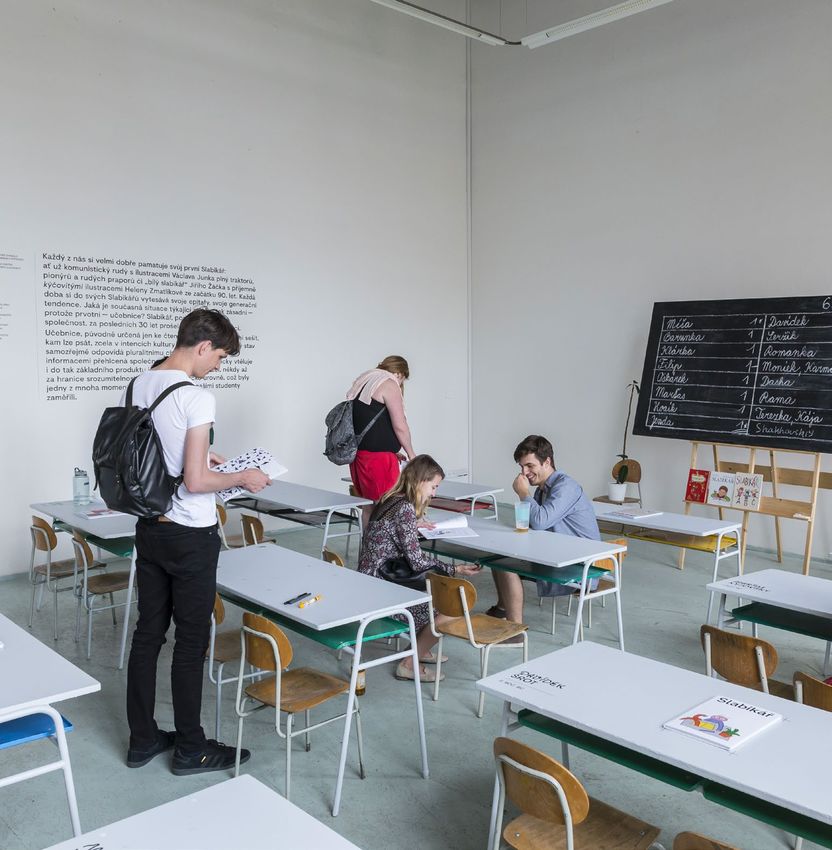
1.3 STRUCTURE OF
THE PROGRAM
      Over two/three years of intensive       techniques, etc. A key element in the
study, VA students both deepen their          VA mission is the organization and
knowledge in their field of specialization,   realization of group exhibitions of VA
and expand their horizons at group            students’ work outside of the confines
Visual Arts meetings: each student            of UMPRUM. These experiences help
participates in their specific studio (e.g.   students develop their skills in curating,
Painting, Intermedia, Glass) where they       installing, and promoting, and are de‑
attend regular consultations, present         signed to help them establish contacts
their end-of-semester projects each           in the Czech Republic and beyond.
semester, and present and defend their
diploma projects. They also attend
group VA consultations and take part
in extra activities (e.g. exhibitions)
organized by the VA tutor; emphasis
is put on theory and critical reflection
of current issues. VA students are
offered a unique chance to be taught
by respected authorities on modern
and contemporary Czech art and visual
culture, graphic design, applied arts,
design and architecture of the 20th and
21st centuries. At the same time, they
are encouraged to take up elective
workshops and develop and hone their
skills in bookbinding, drawing, painting,
clay modelling, photography, jewellery,
ceramics, printing and model-making

                                         5 Students Handbook 2020/2021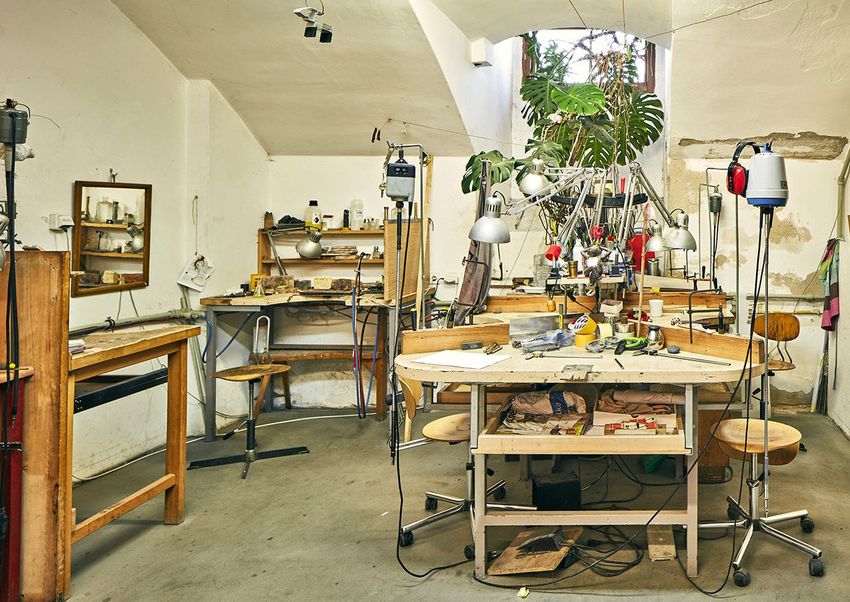
1.4 HISTORY OF THE
VISUAL ARTS
PROGRAM
     After a few years of preparatory       was Alan Záruba, a prominent graphic       on the professional installation of the
activities and approval hunting, the        designer working for renowned TV           works. This combination of risk-taking,
Department of Art History and Theory,       broadcasting companies. His meetings       experimentation, and professionalism
namely Martina Pachmanová, an art           for all MA students from various studios   is what the VA program aims at, helping
theoretician and former UMPRUM              were called Interdisciplinary Dialogues    students develop into highly dynamic
vice-rector, succeeded in gaining the       and their aim was to offer students        artists and designers who have a broad
accreditation for the post-graduate         time and space to discuss their work       range of skills to draw on in their future
follow up program in English, granted by    produced in their respective studios and   careers. Apart from curating the end-
the Czech Ministry of Education, Sport      become familiar with the Czech visual      of-semester exhibitions at UMPRUM,
and Youth in 2006. It took Alan Záruba,     culture scene.                             Milena also organized other VA group
a former VA tutor and graphic designer,                                                exhibitions in or outside of Prague
and Hana Smělá, the VA Program Head,             Since summer term 2008, the VA        (Doubice, Munich, Mikulov).
another year to promote VA, address         studio was tutored by Milena Dopitová,
prominent teachers and lecturers to join    a well-established Czech conceptual             Milena Dopitová had two assistants.
the program, and launch the VA course       artist, who followed up on Alan Záruba`s   The first one was Conrad Armstrong,
in summer 2007. At first, there were only   Interdisciplinary Dialogues, and held      a visual artist, curator, and language
4 out of 23 UMPRUM studios in which VA      special Team Project consultations each    and art teacher based in Prague, who
students could gain their MFA degree in     week. Within these sessions Milena         graduated from the Intermedia studio of
English, however, throughout the course     challenged all VA students to work         UMPRUM in 2010. He worked as the VA
of the VA program, more and more            outside of their comfort zone to develop   Assistant from 2011 to 2014 and was VA
studios gradually joined VA and now VA      work that was both conceptually            Tutor for the academic year 2019/2020.
students can study and gain their MFA       strong and visually compelling. In this    The second assistant was Rudolf
degree in all 24 of UMPRUM studios.         framework, graphic designers tried         Matějček, a visual artist, radio dj, art
                                            their hand at working with sound, or       teacher, and web and graphic designer.
      Over the years of VA’s existence,     painters took on working with video.       He graduated from the Intermedia
an essential part of the MA curriculum      These efforts reached fruition in the      Studio in Pilsen and held the position
is also group consultations and meetings    end-of-semester exhibitions held at the    from 2014 to 2016.
with the VA tutor. The first VA tutor       school, in which an emphasis was put

                                                     Students Handbook 2020/2021 6
In summer semester 2015 Milena                  The VA tutor for the academic              In academic year 2017/2018 the               The VA tutor in the academic year
Dopitová applied for the position of          year 2016/2017 was Václav Janoščík,         position of the VA tutor was held by         2018/2019 was Milan Mikuláštík, a
the head of Intermedia Studio at the          a prominent Czech curator and               Jimena Mendoza, who is a up-and-             Czech Prague-based visual artist,
Academy of Fine Arts in Prague (AVU),         art theoretician, also a teacher of         coming Prague-based Mexican visual           social and political activist, an influential
won the fierce competition, and left          philosophy and media theory and             artist, a VA graduate from Intermedia        curator working in the NTK Gallery
the VA program together with Rudolf           contemporary art. He temporarily            studio, and also a Professor Assistant       (and many other smaller institutions),
Matějček in June 2016.                        renamed the former Team Project and         at the Academy of Fine Arts in Prague        a member of MINA and GUMA GUAR
                                              called it “VA/Very Anxious meetings”.       since 2018 (Studio of Sculpture). In her     art groups, and a former Professor
      After a long great period of Milena     He offered a radically open format of       VA meetings she focused each week            Assistant in Supermedia Studio at
being the only tutor of the VA program,       consultations that followed the needs       on a different topic, ranging from body      UMPRUM (now transformed to the
the concept of VA was amended, so             of diverse group of VA students; he         art, performance, working in artist          Guest Artist Studio). Like his VA
instead of having one VA tutor for many       aimed at finding a compromise between       groups, collectivism, futuristic ideas and   predecessors, Milan aimed at making
years, since October 2017, the VA tutors      practical and theoretical aspects of fine   modernism in cinema, visions of new          the VA meetings diverse and suitable
only stay in the program for usually          art education. His intention was to focus   societies, archives and museums, and         for all VA students from various fields of
one academic year. Since then the VA          on art “appreciation”, self-awareness,      design questions. Apart from bringing        interest. He not only gave guided tours
tutors have been chosen from amongst          critical thinking and even political        various readings and books to the VA         of Prague`s remarkable architecture,
Prague-based curators, activists, visual      issues with the emphasis on exhibition      meetings, Jimena guided students             dived into the political and historical
artists, and art theoreticians. By having     or project-based practice. He offered       through big and small Prague galleries,      context of the city while walking the
two VA tutors during their two-year           a broad variety of topics and forms of      organized a field trip to Warsaw, Poland,    streets of Prague, but he also took
studies (3 tutors in three-year studies for   education. During the VA meetings,          invited guests to meetings, and finally      students to many significant Prague-
Architecture students), VA students can       students read theoretical texts on          curated the “Koruna” exhibition in the       based museums and galleries. Milan,
experience different approaches and           various topics and met many guests.         City Surfer Office Gallery in Prague 3       as his predecessors, also curated a
it’s more likely that the meetings will be    At the end of winter semester (January      (April 2018).                                group exhibition of all VA students
enjoyable and fitting for all VA students,    2017) Václav also organized and curated                                                  (34 students) in HYB4 gallery situated
no matter their background.                   an exhibition Draw Me In in GAMU                                                         in Hybernská street in the centre of
                                              gallery in Prague 1.                                                                     Prague (December 2018).

                                         7 Students Handbook 2020/2021                    History of the Visual Arts Program
Since the academic year               endeavors in the United States. In
2019/2020 the position of the VA tutor     addition to this, he is involved with the
has been held by Conrad Armstrong.         organizing of exhibitions at Villa P651
Conrad is an American artist and           in Prague, where he aims to take an
teacher who has lived and worked in        inclusive and experimental curatorial
Prague since 2004. Having initially        approach.
studied painting at the Rhode Island
School of Design, Conrad earned his             In academic year 2019/2020 he
MFA degree from the UMPRUM studio          curated three VA exhibitions, two in Villa
of Intermedia Confrontation in 2010.       P651 and one group VA show called
In his professional teaching life, he      Love Connection in HYB4 Gallery in
has worked with a range of ages and        Prague 1 (May 2020). Due to the unstable
abilities, which included functioning      times in coronavirus crisis and because
as the VA assistant to Milena Dopitová     of his qualities, he is – unlike other VA
from 2011 to 2014. His artistic pursuits   tutors since 2016 – staying with the VA
in painting, drawing, sculpture, and       program for one more academic year.
performance involve elements
of storytelling, exploration of the
possibilities of association, and often
aim to engage viewers on a playful and
inquisitive level. Conrad frequently
collaborates with Viktor Valášek as part
of the painting duo CONVICT. He has
exhibited widely in the Czech Republic
and frequently pursues artistic

                                                  History of the Visual Arts Program    Students Handbook 2020/2021 8
1.5 VA
        GRADUATES
   There have already been 65 Visual Arts students
to graduate from UMPRUM, gaining their MFA
degree during the official final commencement in
the Church of Saint Anne, Prague. Eight more are to
supposed to graduate in November 2020.

                        9 Students Handbook 2020/2021
Here’s a list of all VA graduates:

November 2020                               June 2015
Anastasia Filatova (Russia, AIII), Begüm    Katharina Rohdin (Sweden, Architecture
Erçam (Turkey, Industrial Design),          I); Pal Steinar Gumpen (Norway,
Sebastián Segura Espinel (Colombia,         Intermedia); Timo Hirschmann
K.O.V.), Kristin Jermstad Gravdal           (Germany, Film and TV Graphics); Yukiko
(Norway, AIII), Marie Helen Tite (Canada,   Taima (Japan, Illustration and Graphics);
Photography), Miyuki Shiotsu (Japan,        Tomoko Kumagai (Japan, Supermedia);         (Mexico, Painting); Noa Nahari (Israel,
K.O.V.), Jonne Väisänen (Finland,           Jorge Abraham Garcia Razo (Mexico,          Supermedia); Li Xu (China, Graphic
Photography), Lok Kiu (Ingrid) Wong         Product Design).                            Design and Visual Communication); Qin
(Hongkong, Sculpture)                                                                   Zou (China, Graphic Design and Visual
                                            June 2014                                   Communication).
June 2019                                   Fanny Rocio Acero Reyes (Colombia,
Emel Erdem (Turkey, Glass); Yu-Lin          Intermedia); Nelson Fernando                June 2011
Huang (Taiwan, Glass); Yea-Eun Jang         Echeverria Ruiz (Ecuador, Fashion           Luis Guillermo Cerdas (Costa Rica,
(Korea, Film and TV Graphics); Ksenija      and Footwear); Marko Mikičic                Studio of Film and TV Graphics); Mark
Markovič (Montenegro, Furniture and         (Croatia, Graphic Design and Visual         Hale (Turkey, Film and TV Graphics);
Interior Design); Ayaka Tajiri (Japan,      Communication); Vlada Shamava               Luying Huang (China, Glass); Wiley
Intermedia); Hsin-Yin Tsai (Taiwan,         (Belarus, Graphic Design and Visual         Jackson (USA, Glass); David Yule
Ceramics and Porcelain).                    Communication); Qiyuan Zheng (China,        (Australia, Glass).
                                            Interior and Furniture Design).
June 2018                                                                               June 2010
Jung-Jiea Hung (Taiwan, Photography).       June 2013                                   Conrad Armstrong (USA, Intermedia
                                            Thorarinn Jonsson (Iceland, Sculpture);     Art); Kaori Fujita (Japan, Film and TV
June 2017                                   Jana Ivanovska (Macedonia, Textile          Graphics); Ine Harrang (Norway, Glass);
Miloš Djikanovic (Montenegro,               Design); Nurten Erdogan (Turkey,            Marta Mancusi (Italy, Illustration); Yumiko
Architecture III); Celeste Hill (USA,       Intermedia); Anej Nuhanovic (Bosnia/        Ono (Japan, Intermedia); Sadie Renwick
Intermedia); Rebeka Molnár (Hungary,        USA, Sculpture); Akane Hayakawa             (Scotland, Intermedia); Karim Talaat
Film and TV Graphics); Ping Ping Zhao       (Japan, Illustration); Aysegul Cakiroglu    (Canada, Intermedia).
(China, Glass).                             (Turkey, Product Design); Grant Conboy
                                            (USA, Painting); Akira Otsubo (Japan,       June 2009
June 2016                                   Photography); Roberto Lucio Fuentes         Carolyn Agis (USA, Film and TV
Asawari Niteen Bhagwat (India, Interior     Rangel (Mexico, Painting); Qing Mei         Graphics); Christian Bulmahn
and Furniture Design); Piyakorn             Xing (China, Typography); Zhichao Zhu       (Germany, Graphic Design and Visual
Chaverapundech (Thailand, Graphic           (China, Film and TV Design).                Communication); Cigdem Cevrim
Design and Visual Communication);                                                       (Turkey, Typography); Matěj Hlaváček
Saki Matsumoto (Japan, Illustration         June 2012                                   (Czech Republic, Typography); Atsushi
and Graphics); Jimena Mendoza               Hwan Bang (Korea, Film and TV               Makino (Japan, Film and TV Graphics);
(Mexico, Intermedia); Urvi Sethna (India,   Graphics); Himanshu Choudhary               Kateřina Šachová (Czech Republic,
Intermedia); Alison Freedman (USA, Film     (India, Photography); Takeshi Ito           Illustration and Graphics); Winnie Tan
and TV Graphics).                           (Japan, Glass); Giselle Olguín Jiménez      (Singapore, Typography).

                                                                                                  Students Handbook 2020/2021 10
2.1 VA SCHEDULE
FOR THE ACADEMIC
YEAR 2020/2021
Note: If you want to go for longer The academic year starts 5th October 2020 and finishes 30th June 2021.
holidays during the academic year,
the best time is between the end of
In the winter semester 2020, all classes, seminars and workshops start 5th
December and mid-January (from 22nd October and finish 22nd December 2019; in the spring semester 2021 they
December 2020 to 24th January 2021
when you have to be back to install your begin 22nd February and end 7th May 2021. The time from 22nd December
end-of-semester work), and – if you have
finished all your exams – between the
to 24th January and from 7th May to 30th May is a period for preparation of
beginning and end February (from 4th the end-of-semester work, which has to be installed on 25th January (winter
February to 21st February 2021). The
academic year officially finishes the end
semester) and 31st May (spring semester).
of June, however, all first-year students Diploma, i.e. second-year students (third-year Architecture students), don’t
can leave – if they have taken all their
exams – after the de-installation of their have to present their end-of-semester work for the winter semester 2020 in
end-of-semester work in their studio,
which should be after 9th June 2021.
January 2021 (they present half of their thesis instead) and they don´t have to
attend any classes and workshops in the spring semester 2021. They solely
focus on their thesis and diploma project.
There’s no need to come before 4th October or do anything special
like signing up for classes, picking up your student card or paying for the
semester. Everything can be done the first week of October.
11 Students Handbook 2020/20215th Oct Beginning of winter semester, some members from the Department of studies (the questions/topics can be 1st—3rd Jun Evaluation of klauzuras
Meeting with the VA Coordinator – a Art Theory (e.g. if you’re from Intermedia found on the intranet) / your end-of-semester projects – 15
chance to learn about the VA schedule, Studio, you belong to Fine Arts Depart- minutes’ presentation of your final work
important dates in the academic cal- ment, and the jury will comprise teachers 2nd—5th Apr Easter holidays – for the semester in your studio
endar, life in Prague (student/ISIC card, / assistants from Photography, Painting, school closed
schedule, etc.), and to tour the Academy Guest Artist Program, and Sculpture) 3rd Jun Klauzura Show Opening –
+ Lectures and consultations start DIPLOMA STUDENTS if situation allows
28th Jan, 7pm Klauzura Show Opening 30th Apr Deadline for official con-
7th Oct First consultation with the VA – if situation allows sultation/presentation of your diploma 4th Jun—30th Jun Examination period
Tutor Conrad Armstrong — an opportunity project with/before the members of the
to meet all VA students (first-year, second- 29th Jan—3rd Feb Klauzura exhibition; department your studio belongs to 4th—8th Jun Klauzura exhibition; if
year and third-year students) and the VA tutor if possible, open to public in all + Last chance to submit the names of possible, open to public in all UMPRUM
UMPRUM studios from from 10am to diploma opponents – this will be done studios from from 10am to 6pm
11th Oct Deadline to sign up for classes 6pm (you will be asked to take turns by the heads of your respective studios
(for more details see p.26) in SIS in guarding the studio) 9th Jun De-installation of your
(Student Information System) 1st and 8th May Public holidays – klauzura and studio cleaning (If you are a
29th Jan—19th Feb Examination school closed for students (two Satur- first-year student, your summer holidays
10th Oct Doors Open Day – online period (you should pass all obligatory days) can start and last till the first week of
exams by 19th Feb) October 2020)
28th Oct Public holiday – school 7th May End of summer semester,
closed for one day DIPLOMA STUDENTS i.e. no more lectures and seminars DIPLOMA STUDENTS
1st Feb Registration for the Final State 10th—13th Jun Installation of your
DIPLOMA STUDENTS Exams on the theory and history of visual DIPLOMA STUDENTS diploma project in your studio or in a
2nd Nov Deadline for submitting culture + Deadline for submitting 10 17th May Deadline for submitting gallery of your choice
your diploma work topic (a filled-in pages of your diploma thesis to the con- your diploma thesis + USB with photos
diploma form) to the VA Coordinator sultant of your thesis and the head of of your diploma project; you will have 14th—16th Jun Diploma work
and the name of your consultant, i.e. a your studio (the exact date will be fixed to print out two copies: one will go to defense – 30 minutes’ presentation
person you consult your thesis with (for by the consultant) the VA Coordinator, and the other one of your diploma project before a
more info, see p. 23) has to be placed next to your diploma jury consisting of teachers from the
4th Feb De-installation of your end-of- project during your diploma defence and department your studio belongs to,
22nd Dec End of winter semester, no semester work and studio cleaning the diploma exhibition; your opponent a few members of the Department of Art
more theoretical lectures till 22nd February can get an electronic version. The theory and one or two external guests/
2021; Christmas holidays – school closed 15th—19th Feb School closed due to diploma thesis has to be around 15— renowned professionals in their field
for two weeks from 22nd December to 1st the selection process of applicants for 20 pages long (written text in English
January BA and MA programs in Czech Language without pictures 1 standard page is 1800 16th Jun, 7pm Graduation Show
characters with spaces), accompanying/ Opening – if situation allows
25th Jan Installation of your end-of- 22nd Feb Beginning of spring semes- describing/or being inspired by
semester project (called klazura) in your ter, i.e. lectures and consultations start your diploma project; more detailed 17th—23rd Jun Diploma work
studio (e.g. in Illustration and Graphics, information on what the thesis should exhibition – open to the public
Intermedia, etc.) DIPLOMA STUDENTS look like, see the UMPRUM intranet
25th—26th Feb 29th—30th Jun De-installation of
26th—28th Jan Evaluation of klauzuras / 1st—2nd Mar (only one of these days) 31st May Installation of your your diploma work, studio cleaning
your end-of-semester projects – 15 minutes’ State Exams on the theory and history end-of-semester project / klazura in
presentation of your final work in your studio of visual culture: an oral exam on some your studio (e.g.in Film and TV Graphics, 28th Jun Graduation commencement
before a jury consisting of the members of the obligatory subjects you’ve taken Photography, etc.)
of the department you belong to and during the three semesters of your VA3.1 VISUAL
ARTS CURRICULA
CONSULTATIONS, LECTURES,
SEMINARS AND WORKSHOPS
First-year students (second-year klauzura. In the spring semester 2021,
Architecture students) i.e. from 22nd February to 7th May, you
Each semester, i.e. from 5th October don’t have to attend any classes and
to 22nd December, and from 22nd workshops, you can focus on finishing
February to 7th May, you have to your thesis and diploma project.
regularly attend first, consultations
in your studio (e.g. Type Design and There’s no need to sign up for the
Typography, Intermedia, etc.), second, courses before 5th October 2020.
VA meetings in the VA room, third,
three obligatory lectures, and forth,
at least one elective seminar or
workshop.
Diploma students (i.e. second-year
students + third-year architecture
students)
In the winter semester 2020, i.e.
from 5th October to 22th December,
you have to regularly attend first,
consultations in your studio (e.g. Type
Design and Typography, Intermedia,
etc.), second, VA meetings in the VA
room, third, two obligatory lectures,
and forth, at least one elective seminar
or workshop. You don’t have to present
your end-of-semester work for winter
semester in January 2020; you present
half of your thesis instead of the
Students Handbook 2020/2021 133.1.1
CONSULTATIONS
At UMPRUM, you can
obtain credits by attending:
Consultations (mandatory) Studio Consultations VA Meetings
Once or twice a week, usually on Once a week. Obligatory for all students. students a broad variety of topics and
Mondays and Thursdays. Obligatory for VA Tutor for Academic Year 2020/2021 – forms of engagement: the meetings
all students. Conrad Armstrong usually involve group discussions on
various topics (brought by the tutor or
Attendance and work in the studio Group VA meetings are an open the students), student presentations,
VA students are accepted to (e.g. space for VA students to generate new screenings, tours, guest visits, visits to
Sculpture, Painting, Illustration and opportunities through collaboration various Prague museums, galleries, and
Graphics, etc.) is the most important and sharing of experiences, ideas institutions, and last but not least, field
part of the VA curricula. Your studio is and knowledge. They are designed trips outside of Prague. The tutor also
the place where you are expected to for all first-year and second-year (or curates a group VA exhibition which is
spend most of your time, discuss with third-year) Visual Arts students from held once an academic year in Prague.
your fellow Czech and international all studios and cultural backgrounds
students, consult your work in progress to come, share and learn together. With Conrad Armstrong as the VA
with your studio heads during regular Thanks to the vibrant environment and tutor, the regular VA meetings first and
consultations, work on semestral communication during these group foremost aim to create opportunities
assignments, install your end-of- meetings, all VA students can test their for students to benefit from the diverse
semester project called “klauzura” both own critical thinking, opinions and views, abilities and perspectives of their
in winter and spring semesters (January, find different perspectives about their colleagues. The meetings will consist of
June) and present it in front of a jury. own work, and with the help of others, guest speakers, visits to sites of interest,
shape and pursue their projects in new workshops, and team projects (including
Note: The semester work (i.e. work on mi- and interesting ways. The meetings, exhibitions). This varied program aims
nor assignments and your attendance of group activities and exhibitions are to provide a shared experience that will
consultations) is assessed by the heads of organized by a VA tutor who provides complement each individual’s creative
the studio, and the klauzura project is eval- students with both theoretical and practice and collaborative abilities.
uated and graded by the summoned jury. practical assistance. All VA tutors offer
14 Students Handbook 2020/2021 Visual Arts Curricula3.1.2
LECTURES
AND SEMINARS
At UMPRUM, you can
obtain credits by attending:
Consultations (mandatory) First-year students and second-year architecture students are expected
+ to attend regularly at least 3 lectures each semester. First of all, you need to
Lectures (mandatory) sign up for the classes which are marked obligatory or recommended for your
studio/department, and only then are you free to choose other classes from
the list. If you attend more lectures per semester than is necessary for your
credit score, you can save the extra credits for the following semesters.
Diploma students (second-year students + third-year architecture students)
have to attend two more 2 obligatory lectures in winter semester 2020
(if you have attended 6 lectures in the previous academic year).
The total number of obligatory
theoretical lectures you have to attend
in 3 semesters of your two-year studies
is 8 (10 for Architecture students in 5
semesters of their three-year studies).
For more info, see the Study Plans
Section on the Intranet.
Visual Arts Curricula Students Handbook 2020/2021 15Architecture of the 20th Century I, II Contemporary Czech Art I, II, III of visual communication ranging from Contemporary Philosophy
(Michaela Janečková – Jehlíková (Zuzana Štefková) illustration, calligraphy, metal type, typo (Václav Janoščík)
Obligatory for students of Architecture Obligatory for students from Fine photo to digital type and corporate Obligatory for all VA students.
(AI - AIV) and Design Department Arts Department (Sculpture, Painting, identity. In light of the theories and
(Product, Industrial and Furniture and Intermedia, Photography I, Guest Artist themes discussed in the winter term, Once a week, spring semester.
Interior Design Studios). Program). a historical approach named The
Chapters from GD History is preceded The one-semester course will outline
Once a week, winter and spring Once a week, winter and spring by the best known examples in the the conditions of contemporary thinking
semester. semester. 20th century. and engage its diverse forms within
the dynamic rhythm of current global
The course concept is based on This three-semester seminar seeks problems and artistic or pop-cultural
exploring the architects´ practise to acquaint VA students with different examples. The topics will range from
through their writing on architecture. approaches and strategies of History of Design of 20th Century I, II contemporariness as a philosophical
Reading accompanied by discussing contemporary art and introduce a wide (Veronika Rollová) problem in itself, the philosophy of
the content and looking for related range of figures operating within the Obligatory for students of Architecture, the 19th and 20th century and their
buildings, projects or drawings of the Czech and international contemporary Design and Applied Arts Department role in contemporary thinking. A broad
architects will be the strategy tested. art scene. This will be done by means of (AI - AIV; Product, Industrial and Interior scope of current philosophies, such as
Through readings and building, topics direct contact and exploration of Prague and Furniture Design; Glass, Ceramics speculative realism, object-oriented
essential for the second half of the galleries and the cities’ exteriors. The and Porcelain, K.O.V., Textile Design, ontology and new materialism will also
20th century should be touched - choice of the sites of interest will reflect Fashion and Footwear Design). be discussed. The seminar will involve
modernity, postmodernity, historicism, the current offer of the local art scene. non-extensive reading of principal
deconstructivism or phenomenology in The course participants are expected Once a week, winter and spring texts with the emphasis on discussion
architecture. The course doesn´t require to respond to selected works of art semester. and links with both the contemporary
any previous experience or knowledge and curatorial concepts based on art world and the practice of students
of architectural theory. Czech their direct exposure to and personal The two-semester course will introduce themselves.
architecture will be included through experience with the works. VA students to the history of design and
guided tours and guest lectures. cover all the topics required for the final
state exam. It is focused on both the
Czech (Czechoslovak) and international Ancient Philosophy
Architecture of the 21st Century I, II Graphic Design in Context I, II design in a broader context of art, (Václav Janoščík)
(Igor Kovačevič) (Alan Záruba) architecture and historical development. Obligatory for all VA students.
Obligatory for students of Architecture Obligatory for students from Graphic The topics of the lectures will range
(AI - AIV) and Design Department Design Department (Graphic Design, from the definition of design, applied art, Once a week, winter semester.
(Product, Industrial and Furniture and Illustration and Graphics, Typography, design, to Cubism and Art-Deco, early
Interior Design Studios). Film and TV Graphics, Photography II). Modernism, Functionalism and Avant- Rather than dealing with specific
Garde design, design and propaganda, theories and works by main
A series of lectures, four or five times in Every other week, winter and summer to design and WWII, organic design and philosophers, the one-semester
winter and spring semester semester. development of plastics, legacy of the course will address broader topics of
Bauhaus, design and World Exhibitions, ancient thinking, for example myth,
The lecture series provides a basic The two-semester Graphic Design Czech glass, design and the Cold War, agency, public sphere, metaphorical
overview of the key theoretical seminar offers selected topics from Space-Age design, Postmodernism, thinking, tragedy or the concept of
concepts, the basic development thetypology of the subject in the winter and last but not least contemporary empathy. The course will try to grasp
trends and creative approaches in term and historical milestones from design. ancient philosophy as a necessary
contemporary architecture. The political Graphic Design history in the summer preconception of our modern
and economic context underlying term. The Typology part explores the thinking and make it an alternative to
architecture will also be presented. main features, themes and concepts contemporary philosophy. In such trainof thought, audiovisual examples from Czech Art in International Context I, II Introduction to Art History I, II Computational Design
popular culture comparing them with (Jan Wollner) (Jitka Šosová) (Shota Tsikoliya)
the concepts of myth, tragedy, heroism, Obligatory for students from the Obligatory for students from the Obligatory for students from the
narrative or empathy will be used. Main Department of Fine Arts, Graphics and Department of Fine Arts, Graphics and Department of Architecture (AI-AIV).
popular culture sources will be films Applied Arts (Intermedia, Photography, Applied Arts (Intermedia, Photography,
such as Blade Runner, True Detective, Sculpture, Painting, Guest Artist Sculpture, Painting, Guest Artist Once week, winter semester.
Matrix, MacGyver, etc. Studio, Graphic Design, Illustration Studio, Graphic Design, Illustration
and Graphics, Typography, Film and and Graphics, Typography, Film and The Computational Design seminar
TV Graphics, Photography II, Glass, TV Graphics, Photography II, Glass, investigates fundamental changes
Ceramics and Porcelain, K.O.V., Textile Ceramics and Porcelain, K.O.V., Textile brought to the field of architecture
Acoustics in Architecture Design, Fashion and Footwear Design). Design, Fashion and Footwear Design). and design by the introduction of the
(Karel Šnajdr) digital tools. Computer-aided design
Obligatory for students from the Once a week, winter and spring Once a week, winter and spring and computer-aided manufacturing
Department of Architecture. semester. semester. have become a new mainstream and
are followed by new generative and
Once a week, spring semester. The two-semester course will trace the The class is aimed to introduce students computational approaches, interactive
main chapters of Czech modern art to basic concepts of visual art and systems and artificial intelligence. The
In this one-semester course students in a broader international context and visuality in general. In course of two changes brought by the new digital
will learn the basic laws of physics in the explain how political history and artistic semesters, topics touched upon by paradigm are not only of a technical
field of acoustics with special focus on development are interrelated. At the artists in multiple historical eras will be nature, related to the understanding
building acoustics, noise protection and same time, it will prepare VA students explored. Despite modern art being the and knowledge of the new tools and
room acoustics. Students will grasp the for their final state exams. The series will main focus, students will learn about techniques, but also of the acceptance
importance of acoustics in architecture follow the major movements and leading historic roots of a number of key concepts of a different mode of thinking about
and understand how to avoid design personalities in a rather traditional and should be able to develop a contextual the nature of design itself. The course
mistakes that aggravate the acoustic chronology but at the same time, the thinking about their own practice. will provide a theoretical foundation
qualities of a building/room of diverse traditional and canonical interpretation to the field of computational design.
functions. The course will not only focus will be partly deconstructed by Through the analysis of various projects,
on the way sound travels through air or references to marginal events and The Czechoslovakian Book participants will discuss new chances
structure (wave qualities propagation, figures of visual culture. The topics (Jan Čumlivski) and challenges brought by this new
reflection, diffraction, absorption, covered will include Czech art at the Obligatory for students from Graphics paradigm.
diffusion, etc.), human noise perception turn of the century, Symbolism, Abstract Department (Graphic Design, Illustration
and measurement of noise, acoustic Art, Expressionism, Cubism, Futurism, and Graphics, Typography, Film and TV
parameters of constructions (acoustic Suprematism, Surrealism, Bauhaus, Graphics, Photography II)
absorption, airborne sound insulation, art under totalitarian regimes, Socialist Generative Design I, II
impact noise insulation and reduction of Realism, Informel, Constructivism, New Series of lectures in winter semester. (Shota Tsikoliya)
vibrations), or room acoustics properties Figuration, visual poetry, happenings, Obligatory for students from the
and the regulations governing the and Postmodernism. Theoretical The one-semester series of lectures Department of Architecture (AI-AIV).
acceptable noise levels in architecture classroom lectures will be accompanied will introduce students to the history
and requirements for acoustic by visits to permanent collections of the of book design in Czechoslovakia from Once week, winter and spring semester.
properties of building structures, but it National Gallery in Prague. 1918 to the early 1990’s. The course
will also showcase examples of good will focus on the evolution of book Computational technologies and
and bad acoustics in architecture and typography and illustration, on its main digitalization of architectural tools have
show how the bad examples can be authors and designers and also the had a great impact on architectural
improved or fixed. influence of politics and ideology on practice. The two-semester subject offers
the means of design. students an introduction to new fields
of generative design and computationaldesign, an overview of existing digital Legislation in Architecture designing, realization, and restoration), Experimental Music – Listening to
platforms and a thorough experience (Martin Pospíšil, Faculty of Architecture, the effects of the local environment Sounds and the Present
with visual and classical programming Czech Technical University) (moisture, deterioration), the relationship (Pavel Klusák)
languages Grasshopper and Python. In Obligatory for the students from the between the structures and architecture, Obligatory for students from the Fine
the first semester students will learn the Department of Architecture historical development and the heritage Arts Department.
basics of working with Grasshopper and preservation. The theoretical lectures
Python in Rhinoceros 5.0 program and Once a week, winter or spring semester. will be accompanied by a field trip to A series of lectures in winter or spring
try out various methods of computational spaces and buildings which are closed semester.
designing. In the second semester The series of lectures is aimed to general public where the construction
students will explore specific applications at acquainting students with the issues will be demonstrated and Alternatives, experimental music, forms
of computational methods when constitutional system, the Building Act, explained in relation to architecture, of independence and subversion,
designing a product and architecture, and their broader legal context. The national heritage preservation between concert, performance and
simulation of static and dynamic features lectures will additionally cover provisions values and historical development. sound art; the series of lectures deals
and the basics of digital fabrication. related to construction, heritage Vaulting tectonics will be shown in the with progressive music in over the past
preservation, and the competencies documentation of the building. After fifty years and mainly focuses on the
and duties of professionals according to taking the course, students should topics such as minimalism, various
Introduction to the History of Czech the Building Act (including the activities be able to recognize various types of forms of improvisation, noise, silence,
Glass and Basic Glass Techniques of authorized personnel, other regulated load-bearing structures, use the basic sound of the real world, sampling and
(Vendulka Prchalová) individuals, and authorized inspectors). terminology and understand technical conceptual music, copyright versus
Obligatory for students from the The lectures will also introduce students qualities of historical materials (durability, creativity, and digital as a metaphor. The
Department of Design and Applied Arts. to the system of legal conditions for the and mechanical, thermic, chemical and aim of the series is not only to make
independent pursuit of the architectural physical properties). students familiar with distinctive styles
Series of lectures five times in spring profession and teach them what their and prominent people, but also to
semester. responsibilities for the design of a offer them new ways of listening to and
building or a structure are. perceiving the world in general. Listening
The intensive course – consisting Urbanism, the Theory and the City to music and watching short videos will
of a series of theoretical lectures (Jana Moravcová) be an essential part of the lectures.
accompanied by field trips to museums Obligatory for students from the
of glass design and glassworks out Historic Load-Bearing Structures and Department of Architecture and Design.
of Prague – will introduce the long Their Tectonics Chapters from the History of
tradition and history of glass-making (Jan Vinař) A series of lectures in winter or spring Typography
in Bohemia. In theoretical lectures, Obligatory for students from the semester. (Otokar Karlas)
students will learn the basic principles Department of Architecture. Obligatory for students from the
of glass-making, the materials and In this course, students will focus on Department of Graphics (Graphic
technologies used, and the history A series of lectures in winter and spring the expectations, principals, needs and Design, Illustration and Graphics,
of glass and European glass design; semesters. parameters of urban and landscape Typography, Film and TV Graphics,
during field trips, they will be able to design discussed within the Prague City Photography II).
see examples of various styles in glass The course will introduce basic types of region. They can practice their future
design in Prague museums (UPM, load-bearing structures (log, timbered roles, processes and responsibilities of Every other week, spring semester.
Portheimka), and watch glass workers and brick walls, frames, vaults, arches, an urban architect within a competition
at work, melting, blowing, shaping and foundations), the materials they are design and experimental representation The seminar will showcase the work
cutting glass in glass design companies built of (wood, bricks, stones, masonry, of urban/land space. Regular theoretical of renowned Czech type designers of
(Nový Bor, Železný Brod). During a one- metal, clay, mud), their functions lectures and seminars will be the 20th century (Vojtěch Preissig, V.
day workshop, they will try their hand (bearing, thermal and safety properties, accompanied by visits to several Prague H. Brunner, František Kysela, František
at glass making in one of the smaller architectural function), various architecture offices and team work on Muzika, Karel Teige, Ladislav Sutnar,
glassworks in Prague (Ateliér Z in Letná). construction systems (their principles, practical assignments. František Štorm, etc.) and typographersfrom all over the world (Edward – the place and specific genius loci
Johnston, Eric Gill, Rudolf Koch, Jan of the city of Prague. The lectures
Tschichold, Hermann Zapf, Adrian and walks will focus on historical
Frutiger, Herbert Lubalin, Neville Brody, architecture buildings, mainly Gothic
etc.). Special attention will be paid to and Baroque, and 20th century
significant 20th Century type designs architecture, with a lot of examples of
and type foundries (Berthold, Monotype, modernist, functionalist, and cubist
Linotype, Adobe, HTF, 1. Střešovická architecture designed by Bruno Paul,
písmolijna). Jan Kotěra, Adolf Loos, Josef Gočár,
Josef Chochol, etc. Contemporary
visual culture – ranging from painting, to
Typography for Graphic Designers sculpture, to new media experiments –
(Filip Blažek) related to the places students visit will
Obligatory for students from the Graphic also be discussed.
Design Studios and Type Design and
Typography.
Introduction to Feminist and Queer
A series of lectures five times a Theory in Contemporary Art
semester, spring semester. (Zuzana Štefková)
Elective course, recommended to Fine
This one-semester course will focus on Arts students.
understanding and practical application
of typography rules in every-day graphic Once a week in Celetná 20 (Charles
designer`s practice. Students will learn University), spring semester.
the key rules of typesetting and more
general typography issues in books, The course seeks to introduce students
magazines or on websites. Emphasis will to the richness and diversity of feminist
be placed on the usage of page layout, and queer theory in relation to a vast
paragraph, character and object styles array of examples of contemporary
and other tools applied in InDesign art. The course will combine lecture
and other programs. The course will format with reading and interpretation of
also teach students how to work with selected theoretical texts dealing with
typefaces: the choice of fonts and their a broad variety of topics ranging from
combinations, buying fonts, etc. identity, embodiment, race, sexuality,
post-colonial condition, authorship,
institutional critique, to spectacle and
Genius Loci of Prague gaze, among others. Students will be
(Milan Mikuláštík) encouraged to analyse ideological
Elective course, recommended to inscriptions and the effects of the sex/
Architecture and Design students. gender system and heteronormativity
and invited to challenge the related
Series of guided tours of Prague`s overlapping, and contradictory systems
architecture in spring semester. of power that shape our lives and
political options.
This course will cover various topics
which all have one thing in common To be continued…3.1.3
ELECTIVE
WORKSHOPS
At UMPRUM, you can
obtain credits by attending:
Consultations (mandatory) You have to sign up for only one elective class
+ each semester, however, if you’re interested in more
Lectures (mandatory) of them, you are free to take as many electives as
+ you want.
Electives
20 Students Handbook 2020/2021The following five electives are held Czech Modern and Contemporary Art The following 13 electives are held
each semester: (Zuzana Bauerová, Věra Borozan) upon request: they are mostly series of
Once a week, winter and spring sessions four or five times a semester.
Bookbinding and Book and Paper semesters. If there are enough students (at least
Restoration 3) who are interested in taking the
(Jan Hybner, Vladimíra Šturmová) Excursions to art galleries and workshops below, you need to ask the
Once a week, winter and spring museums lead by visiting lecturers are VA Coordinator to organize them.
semesters. focused on both Czech art history and
old architecture and contemporary art Capacity limited to 8 students per
The bookbinding workshop teaches and modern architecture as well. semester:
VA students the basics of bookbinding Painting Course
(eight popular types of brochures and Photography Workshop
hang-up bookbinding with solid covers Basics of Animation
(V1-V8 types) and a Japanese Yotsume Art Law
Toji — style bookbinding. A follow-up (Iva Javorská) Capacity limited to 4 students per
course held in the second semester semester:
focuses on book and paper restoration. The series of lectures and seminars Clay Modelling
on Art Law will prepare you for your Presentation Skills
artistic practice, relationships with Basics of Lithography
producers, clients, galleries etc., and Basics of Print-Making Techniques
Drawing Course help you understand copyright, licenses, Jewellery Workshop
(Libor Kaláb) contracts for work, the difference 3D Cutting and Model Making
Once a week, winter and spring between inspiration and plagiarism and Workshop
semesters. teach you how to negotiate conditions Silk Screen Workshop
of cooperation and how to react to Ceramics Workshop
The course is intended for anybody who copyright infringement. Letter-print Workshop
wants to improve their perception of Glass Workshop (Glass Casting and
reality, try various drawing techniques Painting)
and compare their work with others. The
course mainly focuses on live drawing Field Trips
of a human figure from observation of a Two-day trip/workshop in winter or/and
live model (the models are nude, both spring semester.
male and female), but it’s also possible
to choose different themes for drawing
(architecture drawing, still-life, etc.).
Czech Language for Foreigners I, II, III
(Gabriela Novotná)
Beginners and Advanced Learners
Once a week, winter and spring
semesters.3.2
VA CREDIT
SCHEME
ECTS stands for European Credit Transfer System. 60 ECTS credits
represent a full academic year of study at undergraduate level and 30 ECTS
credits and more normally represent one semester. 1 ECTS credit equals 1
credit at UMPRUM.
To be able to enroll in the following year of their studies (the second or third
year), students must have earned all the credits from obligatory classes from
the previous academic year by mid-September of the following year. It’s only
possible to miss two obligatory classes in one year and transfer them to the
following semester; if students don’t have enough credits, they have to repeat
the whole academic year again (and pay a reduced tuition again).
You can check the number of credits you need to gather each semester in
the Study Plans section (you will need your password and username to access it).
22 Students Handbook 2020/2021To graduate from the Visual Arts program, you must:
1 Attend all obligatory classes 4 Write and defend your diploma 6 Install, present and defend your
for your field and gather the required thesis: your diploma thesis should diploma project; your diploma project
number of credits (see Study Plans explain or thematically accompany your has to be finished and installed – either
section). diploma project; it has to be around 15— in your studio at school or elsewhere –
20 pages long (at least 1800 characters by 13th June and presented/defended
× 15—20 in total), A4 format and bound before a jury one day from 14th to
with hard covers; the deadline for 16th June; before that, by 30th April,
2 Pass an oral state exam about submitting the first part of the thesis (at your studio should recommend you
the history and theory of art – you draw least 10 pages of text) to the consultant an opponent of your diploma project,
2 questions; the 1st question will be of your project is 26th January, the final i.e. somebody external (outside of
on the theory of art in general, and the thesis has to be submitted by 17th May UMPRUM) who will write an opponent’s
2nd one will concern the history of the to the VA Coordinator (together with a evaluation paper on your diploma
particular discipline you are gaining your USB containing the thesis and photos project; this paper is read at the diploma
MFA in (Fine Arts, Design, Applied Arts, of your diploma project); you will have presentation and you cannot defend
Architecture, Graphics); you will have 20 to print out two copies: one will go to without it. Your diploma project will be
minutes for preparation, and 20 minutes the VA Coordinator, and the other one exhibited, if possible – together with
for the presentation of the two topics/ has to be placed next to your diploma other diploma students’ work – from
questions before a jury consisting of project during your diploma defense 16th to 23rd June, and you need to take
at least 3 experts on the particular and the diploma exhibition; your turns in guarding the exhibition from
fields; (the questions/topics can be opponent can get an electronic version; 10am—6pm. Your work has to be de-
found on the Intranet (you will need your for more details how to write the thesis, installed by 30th June. The graduation
password and username to access it). see the Intranet. commencement will be held 28th
June in the Church of St Anne/Prague
Note: you have three attempts at Crossroads in Prague 1.
passing the final state exam, however, if
you happen to fail for the third time, your 5 Present your work-in-progress to
studies will unfortunately be terminated. the members of the department your
studio belongs to (e.g. Intermedia stu-
dents present their work to professors
from Sculpture, Intermedia, Painting,
3 Choose a diploma topic by 2nd and Photography) at least once an
November and have it approved by the academic year; the assistant professor
head of your studio; at the same time, from your studio will inform you when
you are required to submit a special di- the official presentation date is.
ploma form to the VA Coordinator by the
same deadline – the form will be given
to you by the Coordinator or you can find
it on the Intranet – and find a consultant
who you will consult your thesis with
(the list of recommended consultants
can be also found on intranet).
Students Handbook 2020/2021 233.3 GRADING
SYSTEM AT
UMPRU
At UMPRUM, we use 4 point grading system, with grade 1 as the best,
and 4 as the worst. If you earn grade 1, it means your performance was
“excellent” and you got A+, A, and A-. Grade 2 means your performance was
“very good”, which is equivalent to grade B+, B, and B- . Grade 3 stands for
C+, C, and C- and evaluates your performance as “good”. In case your grade
is 4, it means you failed (F) because your performance was “insufficient and
unsatisfactory”. In case fail an exam or a state exam, you have two more
attempts to pass them. If you get F for your klauzura/ semester work, you
have one more attempt to gain the credits for these subjects.
However, it´s not only grades you can earn for your klauzuras (end-of-
semester projects) and for the work during the semester. The studio and the
jury evaluate your work and performance by giving you the following score: 12,
11, 10 points (A+, A, A–, grade 1); 9, 8, 7 (B+, B, B-, grade B), 6, 5, 4 (C+, C, C-,
grade C) and 3 – 0 (F, grade 4 or 5).
24 Students Handbook 2020/20214.1 OTHER
USEFUL
INFORMATION
Student Cards and ISIC Cards Tuition Fee Payment
All VA students are entitled to The deadline for tuition payment
receive a student card or ISIC card. is 15th October for winter semester
The card will serve as a proof of your and the 29th February for spring
student status, give you access to semester. You can either pay in cash
special student discounts in museums, (CZK, at the cash desk, room 107) or by
galleries, and public transport, and bank transfer (in Czech Crowns) to the
enable you to enter the UMPRUM following bank account:
building and print in the UMPRUM IT
rooms. To see the benefits of having an Bank Details:
ISIC card, see: isic.cz/en Bank: Komerční banka, as. (KB), Na
Příkopě 33, 110 00 Praha 1
You can get the Student/ISIC card Bank Account No: 19–5599810247/0100
in Celetná 13, Prague 1 IBAN: CZ 1401000000195599810247
Swift Code (BIC): KOMBCZPP
Opening Hours: Local Currency Account: CZK
Monday 9am—12pm / 12:30pm—6pm (identification code: 701)
Friday 9am—12pm / 12:30pm—4pm
The VA tuition fee is 79 000 CZK
Prices: (approx. 3000 €) per semester; there are
Student card 100 CZK two semesters in one academic year.
ISIC card 230 CZK
Note: All VA students who have to
Note: Don’t forget to bring your passport repeat the previous academic year,
with you! have to pay the fee by 30th September.
Students Handbook 2020/2021 25You can also read


