2020 Papua New Guinea Centre for Judicial ...
←
→
Page content transcription
If your browser does not render page correctly, please read the page content below
PAPUA NEW GUINEA
                            CENTRE FOR JUDICIAL EXCELLENCE

   “Delivering effective and responsive Judicial Education for an independent, honest and competent Judiciary“

                                                       2020
           Chief Justice Sir Gibuma Gibbs Salika,
                   GCL, KBE, CSM, OBE

        Deputy Chief Justice Ambeng Kandakasi,
                         CBE

PngCJE Annual Report 2020                                                                                        1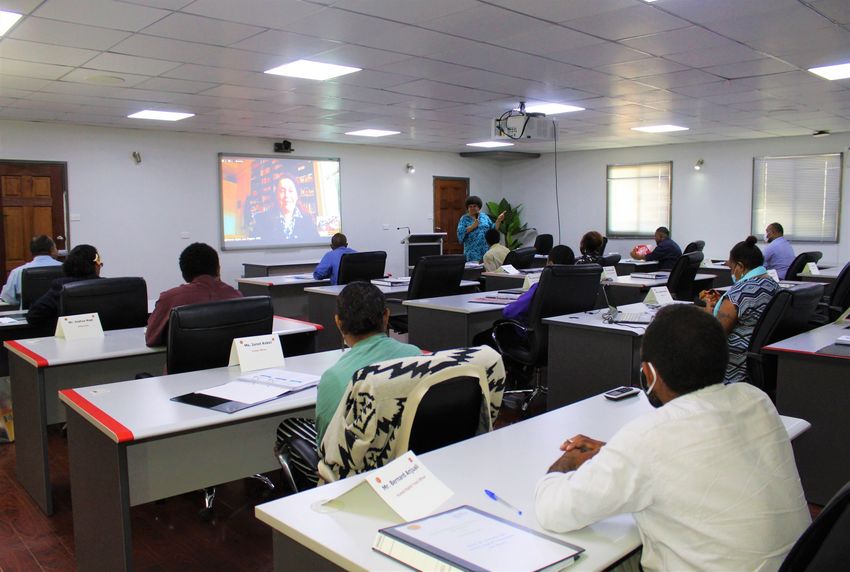
Contents
         Abbreviations                                               3
         Foreword from the Chief Justice of Papua New Guinea         4

         Executive Director’s Remarks                                5
                Our Board of Directors                             6—7

                About PngCJE                                         8

                Our Partners                                         9

                Assistance to Other Pacific Island Jurisdictions     9

                Organizational Structure                           10—11

                Development of Facilities                          12—13

                PngCJE Professional Development Activities          14
                Coping with the COVID-19 Pandemic                   15
         2020 TRAINING PROGRAMS                                     16
                NATIONAL and SUPREME COURTS                        17—22

                DISTRICT COURT                                      23

         Other Programs                                             24

         Conclusion                                                 25

PngCJE Annual Report 2020                                                  2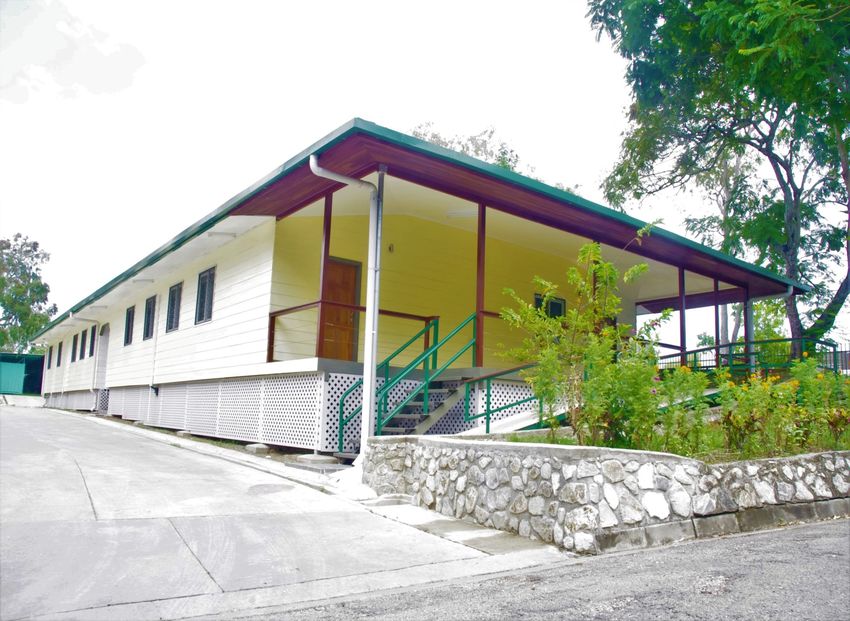
Abbreviations
                 CBE        - Commander of the Most Excellent Order of the British Empire

                 CDS        - Court Docketing System

                 CJ         - Chief Justice

                 CJEI       - Commonwealth Judicial Education Institute

                 CM         - Chief Magistrate

                 CMJA       - Commonwealth Magistrates and Judges Association

                 CSM        - Companion of the Order of the Star of Melanesia

                 DCJ        - Deputy Chief Justice

                 DCM        - Deputy Chief Magistrate

                 DJAG       - Department of Justice and Attorney General

                 GCL        - Grand Companion of the Order of Logohu

                 IJS        - Institute of Judicial Studies

                 JP         - Justice of the Peace

                 JSS4D      - Justice Services and Stability for Development

                 KBE        - Knight Commander of the Most Excellent Order of the British Empire

                 LJSA       - Law and Justice Sector Agencies

                 MoU        - Memorandum of Understanding

                 NJCA       - National Judicial College of Australia

                 NJSS       - National Judicial Staff Services

                 OBE        - Officer of the Most Excellent Order of the British Empire

                 PicCJE     - Pacific Island Countries Centre for Judicial Excellence

                 PILAG      - Pacific Institute of Leadership and Governance

                 PJSI       - Pacific Judicial Strengthening Initiative

                 PngCJE     - Papua New Guinea Centre for Judicial Excellence

                 PNGHRI     - Papua New Guinea Human Resource Institute

                 PNGMS      - Papua New Guinea Magisterial Services

PngCJE Annual Report 2020                                                                          3
Foreword from the Chief Justice of Papua New Guinea
                                             2020 has proved to be a challenging year for the world and especially
                                             for Papua New Guinea, with the global onset of Covid-19 pandemic
                                             which has drastically changed the way we conduct day-to-day
                                             business, and has led to a “new-normal” with the mandatory
                                             implementation of protocol measures as part of our daily lives.

                                             This has hindered delivery of the quota of training programs and
                                             workshops by the Papua New Guinea Centre for Judicial Excellence
                                             (PngCJE) during the first half of the year, and as such the bulk of our
                                             scheduled training programs were delivered in the second half of the
                                             year. This demonstrates PngCJE’s resilience in ensuring that
                                             professional judicial education continues despite such challenges.

                                             The PngCJE focuses on assisting Judicial officers, Court staff and other
                                             officers involved in the court system administer their oath to exercise
                                             the rule of law and ensure justice is accessible to all. Its main objective
  is to provide professional judicial educational training programs to strengthen and advance the judicial system
  in Papua New Guinea as well as in other Pacific island countries that share similar jurisdictions.

  I am pleased to say that despite these new challenges, PngCJE has continued to deliver professional and
  continuing judicial education by working in collaboration with key domestic and international stakeholders
  such as the Pacific Judicial Strengthening Initiative (PJSI) and the Commonwealth Judicial Education Institute to
  design and source training programs for Papua New Guinea and other Pacific Island countries.

  In keeping in line with the Covid-19 protocols, much of the training and workshops conducted was to smaller
  groups. Some of the topics covered were Judges and the Media, Gender Equity and Social Inclusion, and
  Human Rights Awareness to name a few.

  The first ever training topic covered using virtual conferencing was the Training of Trainers workshop, which
  was a success in terms of meeting our key objectives. The plan going forward is for PngCJE to conduct more
  training activities using this delivery mode via virtual conferencing or e-learning platforms.

  It is pleasing to note that the delegates’ responses to these workshops and training programs have been
  encouraging as they have also guided PngCJE to design and develop in-depth and tailored judicial educational
  training on relevant topics relating to the overall efficient function of the Papua New Guinea Judiciary and
  magistracy.

  Continuing judicial education training is paramount to developing and enhancing legal expertise that assist the
  Courts in performing their function of administering the rule of law and ensuring justice is served. As a Fellow
  of the Commonwealth Judicial Education Institute, I have benefited from these judicial training programs which
  have greatly enhanced my career.

  At this juncture I commend the Executive Director and his staff at the PngCJE for their tireless efforts,
  particularly this year in ensuring that professional judicial training education continues to be a priority to
  enhance the performance of Papua New Guinea Judiciary and magistracy, and to strengthen our legal system.

  Sir Gibuma Gibbs Salika, GCL, KBE, CSM, OBE
  Chief Justice of Papua New Guinea
  Supreme and National Courts of Papua New Guinea

PngCJE Annual Report 2020                                                                                                  4
Executive Director’s Remarks

                                            In 2020 the Covid-19 pandemic swept across the world putting
                                            everyone at a stand-still. The PngCJE conducted the Judges and Media
                                            Seminar in January 2020 before all other programs were put on hold
                                            when the PNG Government decreed a nationwide lockdown to combat
                                            the spread of the virus after the first case was detected in Port Moresby
                                            in April of 2020. Once restrictions were eased PngCJE rescheduled its
                                            training activities to the second half of the year, ensuring strict
                                            observation of COVID-19 Protocols by training recipients. This affected
                                            the quantity of training activities that were completed as opposed to
                                            those that were planned for the year and the number of participants for
                                            an activity was reduced to adhere to social distancing.

                                         To advance our technological capabilities and online presence, the
                                         PngCJE adopted the global practice of working remotely and
                                         conducting meetings, webinars, and training activities via online video
  conferencing platforms such as Zoom and Webex. This gave the opportunity to test our state-of-the-art polycom
  video conferencing system during the Advanced Train the Trainer workshop which was conducted remotely
  through Zoom and facilitated by PJSI’s Dr Livingston Armytage. Dr. Armytage’s compliments to the smooth
  running and success of the workshop is a testament to PngCJE’s capacity to elevate to a regional provider of
  judicial education.

  Considering the global situation during the height of the pandemic, PngCJE was able complete a total of 16
  training activities. The training activities ranged in topics such as Judicial Orientation for newly appointed
  Judges to Gender Equity and Social Inclusion (GESI) for PngCJE staff.

  PngCJE strives to maintain high standards of facilitating judicial education programs and is grateful for the
  vastly skilled trainers who facilitated the training activities in 2020. I would like to commend and thank all the
  Program Officers, through the guidance and leadership of the Deputy Executive Director, for persevering and
  reaching set targets.

  I would also like to thank the Chairman and Chief Justice Sir Gibuma Gibbs Salika, and the Board of PngCJE for
  their steadfast support; to our stakeholders, facilitators, and participants for their contribution to the successful
  completion of the 2020 training year. To the Deputy Executive Director, Managers, and the administrative staff
  of PngCJE, I would like to thank you for your hard work in such trying times. It reassures my confidence in
  your ability to push PngCJE to PicCJE status.

  In 2021, PngCJE has so much to look forward to with new, exciting training programs for the year, final stages
  of recruitment of staff and to the introduction of the Learning Management System.

  To conclude, hope we can all reflect on 2020 and the pandemic and one thing we can take from it is that it has
  brought us closer to our friends and families by giving us time to think about what is important in our lives and
  that we should not take anything or anyone for granted.

  Mr. John Carey, JP, PhD

  Executive Director

  PNG Centre for Judicial Excellence

PngCJE Annual Report 2020                                                                                                 5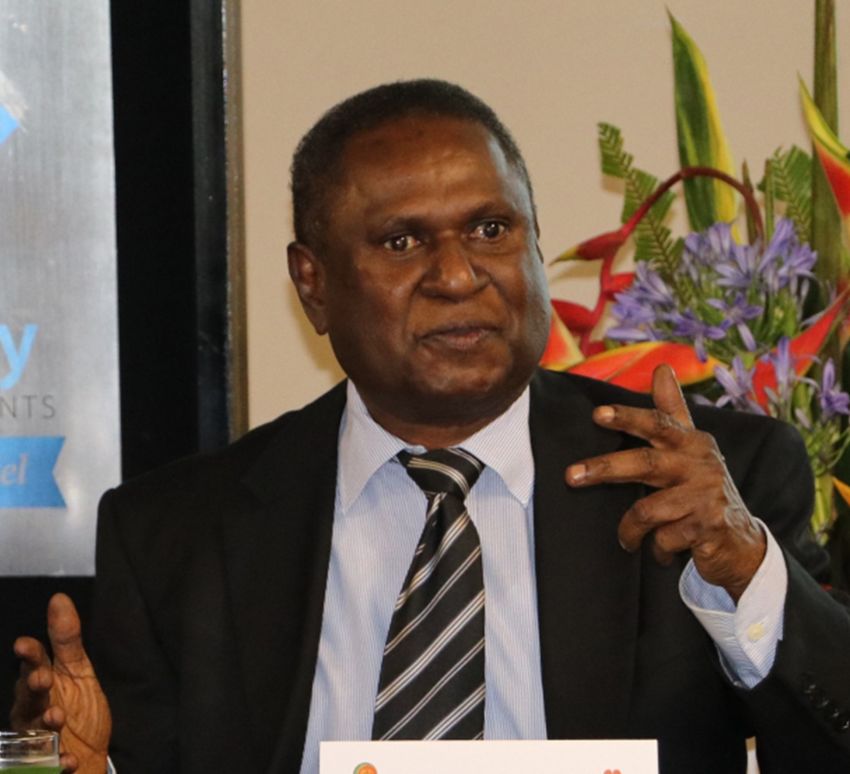
Our Board of Directors

                                                                       Honorable Ambeng Kandakasi, CBE
                                                                      Deputy Chief Justice of Papua New Guinea

 Honorable Sir Gibbs Salika, GCL, KBE, CSM, OBE                                 Mr. Mark Pupaka

           Chief Justice of Papua New Guinea                                      Chief Magistrate
            Chairman of the Board - PngCJE                                     of Papua New Guinea

      Ms. Rosemary Koimo                         Mr. Ian Augerea                          Mr. Jack Kariko
     Deputy Chief Magistrate of                      Registrar                               Secretary
        Papua New Guinea
                                           Supreme and National Courts of           National Judicial Staff Services
                                                Papua New Guinea

PngCJE Annual Report 2020                                                                                              6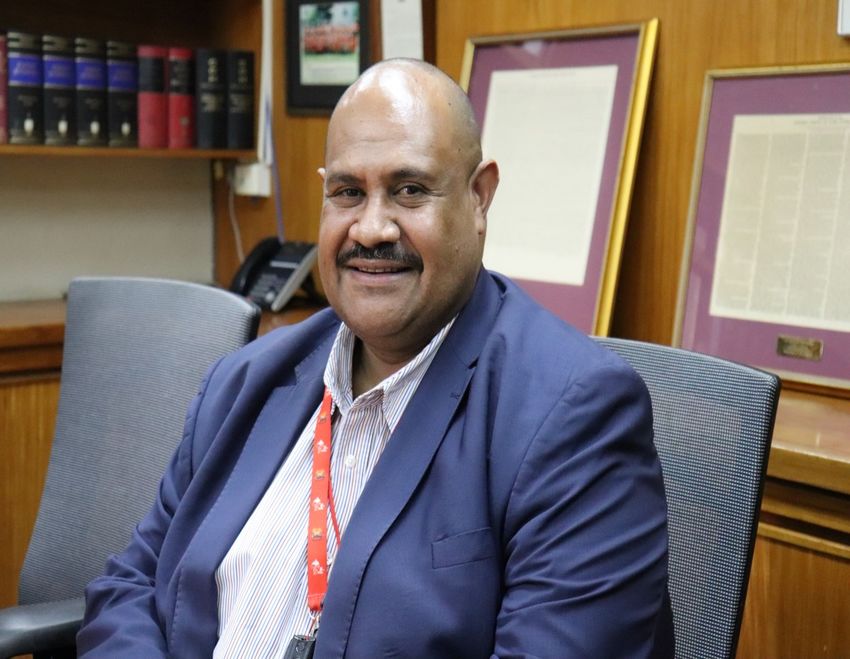
Our Board of Directors

             Dr. Eric Kwa                     Ms. Miriam Kias                 Mr. Allan Mana

    Secretary and Attorney General      Acting Deputy Secretary – Legal   President—PNG Law Society
   Department of Justice and Attorney    Policy & Sate Legal Services      Partner—Corrs Chambers
                General                   Department of Justice and                Westgarth
                                             Attorney General

          Angelyn Paranda                 Mr. John Carey, JP, PhD            Mr Sam Kaipu, OBE
               Director                       Executive Director           Deputy Executive Director
     PNG Legal Training Institute                  PngCJE                          PngCJE

       Professor John Luluaki

 Acting Executive Dean—School of Law

    University of Papua New Guinea

PngCJE Annual Report 2020                                                                              7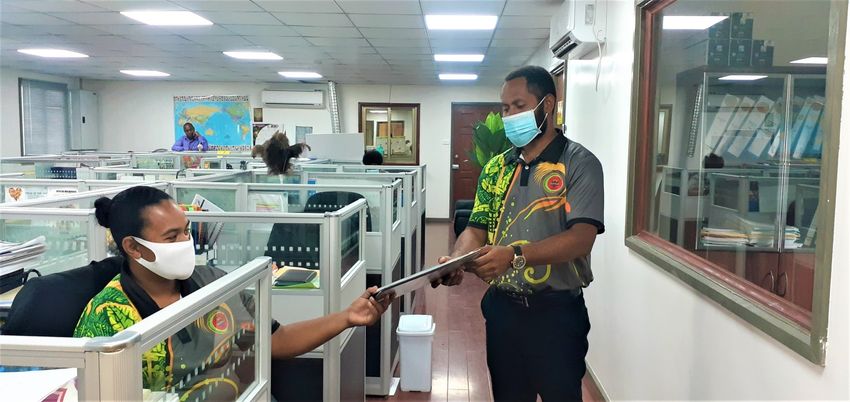
About PngCJE
The Papua New Guinea Centre for Judicial Excellence (PngCJE) was established in 2010 under a
Memorandum of Understanding signed between the Chief Justice of the Supreme and National Courts of
Papua New Guinea, the Chief Magistrate and the Secretary for the Department of Justice and Attorney
General. The Centre is primarily responsible for the delivery of professional continuing judicial education,
trainings and development activities for Judges, Magistrates, Court Staff and other officers of the Law and
Justice Sector Agencies (LJSA).
Key Objectives for the Establishment of
PNGCJE
Promote Judicial Excellence;
Promote professional development and
training; and
Foster an awareness of judicial administration,
developments in the law and social and
community issues.
Our Core Values
The core values that underpin the professional
development activities of PNGCJE are:
Excellence in the professional integrity and
competence of Judicial officers and Court Staff;
Excellence in dispensation of justice by the
courts according to international best practices;
High level of competency, skills and
experiences of Judicial Officers and Court Staff;
Maintenance of democracy, good governance
and the Rule of Law by the judiciary.
PngCJE Annual Report 2020 8
Our Partners
                            The PngCJE works closely with regional judicial training institutions from
                            jurisdictions that share similar legal systems as Papua New Guinea. Some of these
                            institutions include the Commonwealth Judicial Education Institute (CJEI) of
                            Canada, Judicial Commission of New South Wales, Pacific Judicial Strengthening
                            Initiative (PJSI), National Judicial College of Australia (NJCA), Institute of Judicial
                            Studies New Zealand (IJS), and UK Judicial College. The PngCJE also works in
                            partnership with local stakeholders in the Government and Private Sectors that
                            directly partake in the court and legal systems.

                            Assistance to other Pacific Islands Jurisdictions
                            The PNG Judiciary through the PngCJE is a major player in the Pacific region. It
                            contributes to judicial capacity building in the region through offering judicial
                            education programs to other Pacific jurisdictions. Since its establishment, the
                            PngCJE has delivered programs that saw judges from other Pacific Island
                            countries attending and participating. The PngCJE is on the verge of becoming a
                            fully-fledged judicial education institution that will serve the PNG Judiciary as
                            well as other judiciaries in the Pacific under the name Pacific Island Countries
                            Centre for Judicial Excellence (PicCJE).

PngCJE Annual Report 2020                                                                                             9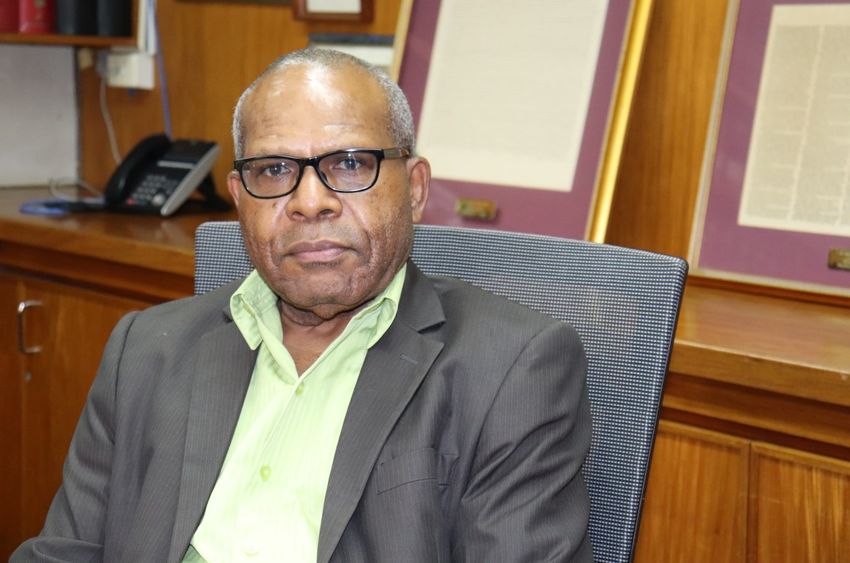
PngCJE Organizational Structure
     PngCJE is governed by a Board established under the Memorandum of Understanding that draws its
     membership from all Law and Justice Sector agencies that are concerned with judicial administration and
     development. PngCJE has a Secretariat that is headed by an Executive Director who also serves as the
     Secretary of the Board.

     The MoU for the establishment of the Centre provides an organizational structure which has been
     implemented during the term of the first PngCJE Business Plan. The Memorandum of Understanding is
     only a short-term arrangement; however, the long-term plan is to institutionalize PngCJE through a
     legislation.

     In February 2020, PngCJE engaged the new Deputy Executive Director Mr Sam Kaipu, OBE, along with
     two new employees. The two new staff members consist of Driver Kori Tolpari and IT Officer Harry Vai.
     The Centre has successfully executed interviews for three (3) Program Officers (Regional Positions) which
     saw the recruitment of Program Officer Ms Emmah John in 2020 and Mrs Stacy Levakia-Wali who will be
     joining the team in 2021.

                                              The Management

                    Mr. John Carey, JP, PhD                            Mr. Sam Kaipu, OBE
                       Executive Director                             Deputy Executive Director

              Mr. Gitu Lago                    Ms. Debbie Laudiwana                      Mr. Barry Ludin
             Finance Manager               Research & Publications Manager                 IT Manager

PngCJE Annual Report 2020                                                                                        10
PngCJE Organizational Structure
The Staff
Mrs. Caribbean Parkop Mr. Tongia Kekebogi Ms. Arabella Owen Mr. Peter Michael
Executive Officer Program Officer – Judicial Program Officer – Lay Program Officer –
Officers Judicial Officers National Judicial Staff
(PngCJE & PicCJE) Services (NJSS)
Ms. Vali Kila Ms. Emmah John Ms. Stella Tadies Mr. Gideon Kindiwa
Program Officer – Program Officer – Finance Officer Research & Editorial
Law and Justice Sector Magisterial Services Assistant
Agencies
Mr. John Lelegi Mr. Harry Vai Ms. Susie Vaieke Ms. Jennifer Thomas
Research & Editorial IT Officer Secretary / Admin Secretary / Admin
Assistant Assistant Assistant
Ms. Olivia Paru Ms. Jessica Pako Mr. Oliver Bommok Mr. Kori Tolpari
Secretary / Admin Secretary / Admin Driver / Clerk Driver / Clerk
Assistant Assistant
PngCJE Annual Report 2020 11Development of Facilities—New PngCJE Office
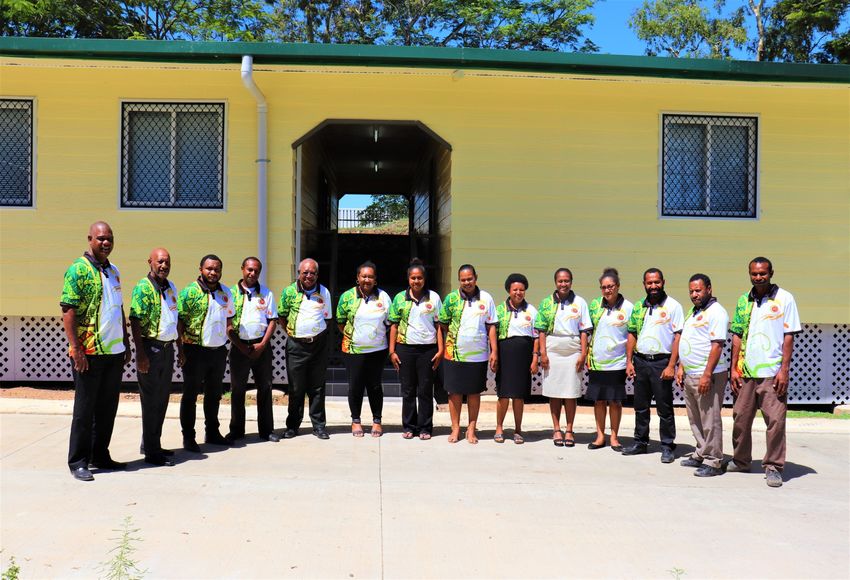
The PngCJE now operates from a new
office building within the Waigani
National and Supreme Court premises
in Port Moresby.
Under a budget of K3 million, the office
building consists of two parts; an office
space for more than 20 employees, and
a training room with a capacity of 50
persons.
Major construction of the office was
completed in April 2020. PngCJE staff
started using the office since then.
Certain parts of the building such as the
ablution blocks are expected to be
complete and ready for use by early
2021.
The new office is fully equipped with
built-in IT equipment, air conditioning,
office furniture and a kitchen.
The building is divided into five office
rooms for the Executive Director,
Deputy Executive Director, Research
and Publications Manager, Finance
Manager and the IT Manager. All other
employees have been allocated office
cubicles for their workstations. The
building also has a Conference Room
for meetings.
PngCJE Annual Report 2020 12Development of Facilities—New PngCJE Training Room
Another major development for PngCJE
is the completion of the new Training
Room. Located in the same building as
the office, the completion of the
Training Room has ticked one of the
most important goals on PngCJE’s list—
”a permanent training venue”.
The Training Room catered for 14
PnGCJE programs plus several other
meetings and activities by the NJSS
Corporate and Registry divisions in
2020.
The Training Room has modern
conference facilities with built in IT and
multimedia equipment installed for
interactive learning, online conferences
and other related programs.
This paves way for more development
in the years to come as the Centre
continues to grow.
PngCJE Annual Report 2020 13PngCJE Professional Development Activities
Since its formation in 2010, the PngCJE has been conducting judicial trainings in PNG, aimed at improving
knowledge, skills and attitudes of judicial officers and court staff.
The trainings are designed, delivered and evaluated by the National and Supreme Court judges as well as
other senior judicial officers, court staff and members of the Law and Justice Sector agencies.
Stages of Curriculum Development The Judicial Training Cycle
The Secretariat of PngCJE identifies topics for study
which are aimed at improving performance.
A three-dimensional approach to conducting needs
assessment for developing curricula is conducted.
Program topics for different categories of Judicial
Officers and Court Staff are identified as follows:
a. Judicial Officers (Judges and Magistrates);
b. Judicial Officers (Village Court Magistrates and
Lay/Non-lawyer trained Court officers);
c. Court Registry and NJSS Corporate Staff;
d. Lawyers, LJS agency officers and stakeholders;
e. PngCJE Staff (Organizational and Capacity
Building).
Once a specific program is designed and
developed, PNGCJE organizes the conduct /
facilitation of the program.
The program is evaluated once completed and the
workshop evaluation results are presented to the
PngCJE Board for recommendation.
Understanding Judicial Education
Judicial Education is a specialised area in which law and education intersect. Its development and
acceptance in the judiciary is relatively new when compared with jurisprudence which has been
around for centuries.
Judicial Education is all about:
Promotingcompetency and professionalism of judicial officers and court staff through a
comprehensive system of continuing education and training;
providing a unique forum outside of the adjudicative process for judges, magistrates, and court
staff to enhance their knowledge, skills, and attitudes;
assisting judicial officers and court staff develop an understanding of their roles and
responsibilities in the court system.
PngCJE Annual Report 2020 14Coping with the Covid-19 Pandemic
The Covid-19 pandemic has had a drastic effect on the normal way of
living, thus, forcing people into adapting new systems of conduct.
Upon reporting the first Covid-19 case in PNG, the PNG Government
took measures to prevent the spread of the disease—the country went
into lockdown. This has affected the PngCJE 2020 Calendar and altered
training schedules and plans. Despite that, the PngCJE went on to
successfully execute a total of 16 training programs.
The Centre began running programs in January 2020 starting with the
Judges and the Media Workshop in January 31 and continued on with
the Executive Director and Deputy Executive Director’s visits to Courts
in Lae, Wewak and Madang in February.
Due to the lockdown, the Judicial Wellness Workshop and the
Cybercrime Electronic Evidence Workshop were rescheduled to 3—4
September and 31 August to 2 September respectively, as per
directives from the Chief Justice. However, due to clashes in training
schedules, the two workshops were moved to 2021.
The PngCJE staff underwent self-isolation and worked on shifts as
preventive measures against the pandemic while keeping the office
running. Anyone with flu-like symptoms during the isolation period
was advised to seek medical attention as soon as possible and restrain
from work.
Judicial education programs that were conducted after the lockdown
were strictly carried out in compliance with Covid-19 preventive
measures and Government regulations. As part of the measures, hand
sanitizers and tissues were placed at every entry and exit points in the
training room, every participant was issued a hand sanitizer, masks
became a compulsory requirement for all participants and facilitators
and social distancing was fully practiced.
Despite that, work progressed and the centre is looking forward to
continue play its function in coordinating and facilitating judicial
education for the courts in PNG and the Pacific in 2021 onwards.
PngCJE Annual Report 2020 152020 Training Programs
The PngCJE has designed and delivered numerous trainings and programs in 2020, despite being faced
with uncontrollable challenges brought forth by the Covid-19 pandemic.
Most of the programs that were initially set to be delivered throughout the year were postponed towards
the end of the year or cancelled. However, enormous effort by the management and staff has seen a
successful execution of 16 trainings for PngCJE’s clients and stakeholders.
Date Training Program Recipients
31 January Seminar on Judges and the Media Judges
19 June Judicial Protocol CJ and DCJ Support Staff
29 June—03 July Judicial Orientation Newly Appointed Judges
22 July Financial Literacy 1 NJSS Corporate and Registry Staff
13—14 Customer Service Training PNGMS Secretaries / Admin
Assistants
17—21 August Training of Trainers for NJSS NJSS Corporate and Registry Staff
24—28 August Public Service Induction PNGMS Staff
25 August GESI—Gender Equity and Social Inclusion PngCJE Staff
03—04 September Training of Trainers—Trafficking in Persons NJSS Corporate and Registry Staff
09—11 September Computing Skills (MS Excel) PNGMS Staff
15 September GESI—Gender Equity and Social Inclusion PngCJE Staff
22—24 September Leadership, Professionalism and Personal NJSS Managers and Senior Officers
06—07 October Financial Literacy 2 NJSS Corporate and Registry Staff
20—21 October Human Rights Awareness—Southern Region Waigani Based NJSS Staff
25—26 November Human Rights Awareness—Highlands Region Highlands Region NJSS Staff
08—09 December Human Rights Awareness—New Guinea Islands NGI Region NJSS Staff
PngCJE Annual Report 2020 16Judges
Seminar on Judges and the Media
31 January
The Seminar on Judges and the Media was the first judicial education program for 2020
delivered by the PngCJE. It was held at the Hilton Hotel in Port Moresby for Waigani
based judges of the National and Supreme Courts.
The seminar engaged the judges in interactive sessions about latest developments in
the mainstream media, social media and technology and how these developments
could be used positively to improve the delivery of justice.
PNG National and Supreme Courts
Former ABC Radio broadcaster and lawyer Mr Jon Faine was invited by the PNG
Judiciary to share experiences on issues relating to judges, the courts and the media as
encountered in some parts of the world including Australia, PNG and the Pacific.
Judges and participants who attended the seminar included:
• Chief Justice Sir Gibbs Salika • Justice Jim Wala Tamate
• Justice Colin Makail • Justice Royale Thompson
• Justice Hitelai Polume-Kiele • Justice Theresa Berrigan
• Justice Jeffrey Shephard • Justice Nicholas Miviri
• Justice Danajo Koeget • Mr. John Carey, JP, PhD
PngCJE Annual Report 2020 17Judges
Judicial Orientation
29 June—03 July
The Judicial Orientation was a week-long workshop aimed at introducing newly
appointed judges to their duties on the bench. It was held at the new PngCJE Training
Room at the Waigani Supreme and National Courts in Port Moresby.
The newly appointed judges who attended the orientation included:
• Justice Regina Sagu
PNG National and Supreme Courts
• Justice Dr Vergil Narokobi
• Acting Justice Paul Tusais
• Acting Justice Elizabeth Nalaii Suelip
• Acting Justice Paulus Mapa Dowa
The primary objective of the program was to assist newly appointed judges with their
transition from the bar to the bench by facilitating the development and refinement of
skills, knowledge and attitudes necessary for the effective and efficient judicial duties.
Senior judges who facilitated the workshop included the Chief Justice Sir Gibbs Salika,
Justice Nicholas Kirriwom CMG, Justice Les Gavara-Nanu OBE, CSM, Justice Panuel
PngCJE Annual Report 2020 18NJSS Registry and Corporate Staff
Judicial Protocol
19 June
Judicial Protocol was a one-day training for the Chief Justice and Deputy Chief
Justice’s support staff. The staff were issued with important tools to continue
improving their performance and maintaining efficiency in their respective duties.
The purpose of the training was to remind the officers of the need to maintain high
level of professionalism in their work environment.
Topics deliberated during the workshop included Judicial Protocol and Procedures,
PNG National and Supreme Courts
communication in the workplace, time management and various professional
technicalities and processes when dealing with special events/activities and logistics.
The training proved to be very useful and was a success with positive feedback from
the participants.
Financial Literacy
22 July and 6–7 October
The PngCJE delivered its first Financial Literacy course for NJSS Corporate and
Registry Staff on two separate dates. The first part of the course was delivered on 22
July followed by the second workshop on the 6—7 October.
PngCJE Finance Manager Mr Gitu Lago emphasized the importance of maintaining
financial stability at home in order to reduce unnecessary stress at work.
Topics covered included financial management, understanding different types of
loans and how they affect people, budgeting income, the concept of financial
intelligence, and using debt to generate income.
A total of 26 participants from various divisions within the NJSS attended the
workshop, all giving positive remarks about the content and presentation of the
program.
PngCJE Annual Report 2020 19NJSS Corporate and Registry Staff
Gender Equity and Social Inclusion Awareness
25 August and 15 September 2020
The PngCJE facilitated an inhouse GESI awareness for its staff to promote the
importance of the PNG Government’s Gender Equity and Social Inclusion policy
within PngCJE and NJSS. The main objective of the training was to encourage PngCJE
employees maintain a respectful and inclusive work environment where all staff
members feel supported and confident in carrying out their duties.
The Gender Equity and Social Inclusion (GESI) Policy promotes equal opportunities
PNG National and Supreme Courts
and inclusive environments for all irrespective of differences in gender, and
associated roles and responsibilities.
The awareness program was facilitated by PngCJE Research and Publications
Manager Ms Debbie Laudiwana on two separate dates. Vital discussions during the
sessions revolved around GESI principles and values, and how to deal with issues
relating to sexual harassment, workplace bullying, and people leaving with
disabilities, and HIV /AIDs.
Training of Trainers (ToT)
17—21 August 2020
The Training of Trainers for Judges and Court staff was attended by participants and
conducted by facilitators from different parts of the Australia and the Bahamas via the
Zoom online platform.
In collaboration with the Pacific Judicial Strengthening Initiative (PJSI), the training
focused on equipping upcoming trainers/facilitators with knowledge and skills on
how to design, deliver and evaluate training activities for judicial officers and any
other officers involved in the court system.
PJSI Technical Director Dr Livingston Armytage was the lead facilitator of the
workshop. Co-facilitators were PJSI Human Rights Advisor, Dr Carolyn Graydon in
Sydney, PJSI Gender and Family Violence Advisor, Ms Margaret Baron in Melbourne,
Mr. John Carey, JP, in The Bahamas, and PngCJE Deputy Executive Director, Mr. Sam
Kaipu, OBE, who attended in person.
A total of 17 participants were issued an Advanced Training of Trainers Certificate at
the end of the workshop.
PngCJE Annual Report 2020 20NJSS Corporate and Registry Staff
Leadership, Professionalism and Personal Effectiveness
22—24 September 2020
The Leadership, Professionalism and Personal Effectiveness course was delivered by
PNGHRI Director Mr Jerry Wemin. Specifically designed for managers and senior
officers, the program covered significant areas of personal and organizational
management.
The purpose of the workshop was to promote effective leadership and management for
an efficient delivery of justice. A total of 44 topics were covered under five headings –
The Science Behind Management, Performance Planning, Leadership and Management
PNG National and Supreme Court
Competencies, Professional Excellence and Personal Viability.
The program was attended by 24 managers and senior officers from the National
Judicial Staff Services (NJSS). All participants were inspired to maintain integrity and
competence, and to perform their duties to the best of their abilities.
Human Rights Awareness
October and November 2020
The Human Rights Awareness was delivered in the Southern, Highlands and New
Guinea Islands regions of Papua New Guinea in 2020. Held in partnership with the
PJSI, the program was aimed at raising awareness on how to identify and address
issues of human rights abuse in PNG.
The program for the NGI region was conducted in Kokopo from 8 to 9 October, while
the Southern Region workshop was held in Port Moresby from 20 to 21 October. The
last awareness workshop was facilitated in Mt. Hagen from 25—26 November 2020.
UPNG Law School lecturer, Ms Tapora Isorua, was the lead facilitator in the Highlands
and New Guinea Islands. PJSI Human Rights Advisor Dr Carolyn Graydon lead the
online session in the Sourthen region with the assistance of Ms Isorua.
The program was funded by Pacific Judicial Strengthening Initiative and the PngCJE.
PngCJE Annual Report 2020 21NJSS Corporate and Registry Staff
Training of Trainers (Trafficking in Persons)
3—4 September 2020
The PngCJE in partnership with the International Organization for Migration (IOM)
conducted a Training of Trainers workshop as part of a three-year project to raise
awareness on human trafficking, and to strengthen capacity of participants to identify
cases and refer victims to specialized support services
The goal of the workshop was to equip participants with knowledge and skills in
delivering training activities on trafficking in persons. Participants were encouraged to
PNG National and Supreme Court
deliver similar trainings using the materials provided in their respective workplaces, so
that everyone is educated and skilled in identifying and dealing with trafficking cases.
The training was facilitated by IOM Counter Trafficking and Migration Consultant
Ms Sharon James and coordinated by PngCJE Law and Justice Sector Program Officer
Ms Vali Kila.
PngCJE Annual Report 2020 22PNG Magisterial Services
Public Service Induction
24—28 August 2020
The Public Servants Induction for the Magisterial Services was held in Lae, Morobe
Province on the 24 to 28 August. The induction had the objective of improving the
performance of public administration and its ability to deliver basic services effectively
to citizens. Sixteen (16) MS Corporate Service and Registry staff from around the
Momase region of PNG were oriented into the Public Service, the Magisterial Services
and their individual roles and responsibilities.
The program was conducted by the Magisterial Services, in partnership with the
PngCJE and the Pacific Institute of Leadership and Governance.
Facilitators included Ms Susan Mimiko from the PILAG, MS HR Manager Mr Steven
Wak, Training and Development Officer Ms Elling Namean, Monitoring & Evaluation
Officer Melvina Wagi, Internal Auditor, Ms Melissa Mafung, and PngCJE Research and
PNG District Court
Publications Manager, Ms Debbie Laudiwana.
Computer Skills (MS Excel)
9—11 September 2020
The Microsoft Excel training was a step towards moving to a paperless court system.
The three-day intensive workshop facilitated by the PngCJE and the PNGMS was
designed to refresh participants on the different features of Excel. The workshop
covered areas of workbook management and daily record keeping systems.
Sixteen (16) District Court staff including clerks of court, key board operators,
secretaries and dispatch officers had attended the computer training.
PngCJE Program Officer for Magisterial Services, Ms Emmah John facilitated the
introductory sessions on 9 September, with assistance from PngCJE IT Manager, Mr
Barry Ludin. NJSS IT Trainer, Ms Joanne Numbuk took the lead in facilitating the rest
of the program from 10—11 September.
Customer Service Training
13—14 August 2020
The PngCJE partnered with the PNGMS in delivering the Customer Service Training
for Magisterial Staff. The training was for Secretaries and Administrative Assistants to
master knowledge and skills in providing basic customer service, and upholding
protocol and etiquette when dealing with clients.
The two-day training was held at the March Girls Resort in Central Province and was
attended by 14 participants from the PNGMS.
MS Training Coordinator, Ms Elling Namean was the lead facilitator assisted by
PngCJE Program Officer Ms Emmah John, and Secretary/Administrative Assistant
Ms Susie Vaieke.
PngCJE Annual Report 2020 23Other Programs
Visits to Lae, Madang and Wewak Courts
17—22 February 2020
PngCJE Executive Director Mr. John Carey, JP, PhD and Deputy Executive Director Mr.
Sam Kaipu, OBE visited National Court and District Court judges and staff in Lae,
Madang and Wewak in February 2020.
The purpose of the visit was to discuss training needs and look at how PngCJE can play a
part in designing and delivering trainings for the court staff at the three provincial
centres.
PngCJE’s commitment to assisting the Lae, Madang and Wewak courts in securing
training was made known to them by Mr Carey and Mr Kaipu.
PngCJE Annual Report 2020 24Conclusion
The PngCJE has once again delivered upon expectations in 2020, with 15 training
programs for nearly 200 recipients. With the Covid-19 restrictions in place, some training
programs have been postponed to 2021.
However, due to the tireless efforts of the staff members, the managers and the board,
plus the committed partners and stakeholders, the 2020 programs were successfully
delivered.
The Centre is continuing to grow and will soon transition into the Pacific Island
Countries Centre for Judicial Excellence (PicCJE) with a regional role to play in judicial
education.
With the inclusion of two new program officers and possible recruitment and expansion
of staff, the Centre is expecting greater results in the years to come.
Looking forward to a productive and prosperous 2021!
PngCJE Annual Report 2020 25You can also read


