UNIVERSITY OF CAPE TOWN - 2024 UNDERGRADUATE PROSPECTUS
←
→
Page content transcription
If your browser does not render page correctly, please read the page content below
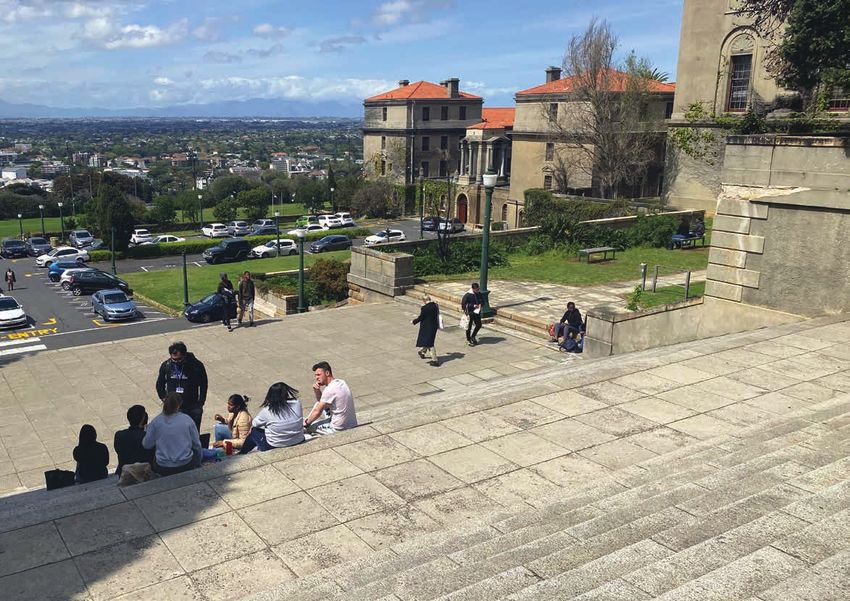
2024 UNDERGRADUATE
PROSPECTUS
CONTENTS
4 | Message from the Vice-Chancellor   13 | Application and Admission to UCT
7   | Using this Prospectus            18 | National Benchmark Tests
10 | Visiting UCT                      22 | Faculty of Commerce
11 | About Cape Town and UCT           32 | Faculty of Engineering & the Built Environment
12 | Key dates                         40 | Faculty of Health Sciences

50 |     Faculty of Humanities                       83   |   International Students
64 | Faculty of Law                                  86   |   Tuition Fees & Residence Costs
70   |   Faculty of Science                          87   |   Funding your studies
77   |   Student Housing                             90 |     Student Life at UCT
80 |     Sports, Student Clubs & Student Societies   94 |     Contact information
MESSAGE FROM THE
                                                                       VICE-CHANCELLOR

                                                     Events in South Africa and around            Our staff and students are committed to addressing a wide spectrum of issues facing our
                                                   the world over the last few years              continent through our research – including those related to health, economics, social
                                                have taught us all that life holds many           justice, poverty alleviation and humanitarian relief. If working on problems affecting your
                                             uncertainties. We must be prepared to adjust         own community excites you, UCT can help you begin to make a meaningful contribution
                                        to change, to lead ourselves and others through           to society.
every new challenge, and even to turn a challenge around to create an opportunity.
                                                                                                  Our students have access to the best education, along with academic and social support to
This is why studying at the University of Cape Town (UCT) is so important. As an institution,     help students thrive, no matter the circumstances. We follow a blended educational format
we have made a commitment to lead in changing the world for the better – or, as we say in         that uses different learning platforms, including face-to-face sessions as well as online access
our Vision 2030 strategic plan: to unleash human potential to create a fair and just society.     to academic support and learning resources.

We are so pleased that you are interested in studying at UCT, and I invite you to join us in      Of course, your health and safety are our first priority. We recognise that many new students
achieving this goal.                                                                              will be away from home for the first time, so UCT has support structures that provide a safety
                                                                                                  net for students who may need guidance in adjusting to campus life. To help build a healthy
This publication contains all the information you need to choose an academic programme            and balanced student life, we invite you to join one or more of our 40 sports clubs and the
within one of our six faculties: Commerce, Engineering & the Built Environment, Health            100+ societies that can provide an outlet for your cultural or spiritual interests, enable you
Sciences, Humanities, Law and Science. They each offer an internationally recognised              to engage with social justice issues, or help hone your entrepreneurial skills.
qualification at one of the world’s most beautiful and diverse campuses.
                                                                                                  UCT alumni remain among South Africa’s most sought-after graduates, with one of the
UCT also offers you a personally enriching student life, where you can make lasting friendships   country’s highest graduate employment rates. Our students are often recruited directly into
and begin to establish a network that will serve you for the rest your professional life.         the private sector, thanks to the sterling work undertaken by UCT’s Career Service unit, which
                                                                                                  connects employers with future graduates. Career advice is available to all UCT students and
Should you need financial assistance for your studies, please turn to the section that outlines   remains a free service for three years after graduation. We also provide opportunities for
how to seek funding from the National Student Financial Aid Scheme (NSFAS) and/or how to          student entrepreneurs who want to develop their own businesses.
apply for one of a number of UCT scholarships.
                                                                                                  Good luck with making this important decision about your future.
There are many good reasons for choosing to study here. Many of our academics are
internationally recognised experts in their fields. Their scholarly work and engagement in        All the best,
ground-breaking research guarantee your studies will be informed by the latest advances in        Emeritus Professor Daya Reddy, Interim Vice-Chancellor
knowledge. UCT consistently performs well in various world university ranking systems due
to the excellence of our research, teaching and social responsiveness.

 4    |   2024 UNDERGRADUATE PROSPECTUS
UMYALEZO OVELA                                                                            Iziganeko eMzantsi Afrika nakwihlabathi jikelele kule minyaka imbalwa
                                                                                                          idlulileyo zisifundise into enye: ubomi buphethe izinto ezininzi
                                                                                                          ezingaqinisekanga. Sonke kufuneka silungele ukuziqhelanisa notshintsho

            KUSEKELA-TSHANSELA                                                                            kwaye sizikhokele thina kunye nabanye kuwo wonke umngeni omtsha -
                                                                                                          kwaye sijike umngeni ukudala ithuba.

Yiyo le nto ukufunda kwiYunivesithi yaseKapa (UCT) kubaluleke kakhulu. Njengeziko, sizibophelele   bezentlalo, ukunciphisa intlupheko kunye noncedo loluntu. Ukuba ukusebenza kwiingxaki
ekukhokheleni ekutshintsheni ihlabathi libengcono. Injongo yethu enkulu yenguqu, esiyichaza        ezichaphazela indawo ohlala kuyo kuyakuchulumancisa, i-UCT ingakunceda ukuba uqalise
kuMbono wethu wesicwangciso-qhinga soMbono ka-2030, kukuveza isakhono soluntu sokudala             ukwenza igalelo elibonakalayo eluntwini.Abafundi bethu banokufikelela kweyona mfundo
uluntu olunobulungisa.                                                                             igqwesileyo, kunye nenkxaso yezemfundo nezentlalo ukunceda abafundi ukuba baphumelele,
                                                                                                   nokuba zithini na iimeko. Silandela indlela yemfundo exutyiweyo esebenzisa amaqonga okufunda
Sinovuyo kakhulu ngokuba unomdla wokufunda e-UCT, kwaye ndiyakumema ukuba uhlangane                ahlukeneyo, kubandakanywa izifundo zobuso ngobuso kwakunye nokufumaneka kwe-intanethi
nathi ekuphumezeni le njongo. Olu papasho luqulathe lonke ulwazi oludingayo ukuze ukhethe          kwinkxaso yezifundo nezibonelelo zokufunda.
inkqubo yokufunda kwelinye lamacandelo ethu amathandathu: ezoRhwebo, ezobuNjineli kunye
neNdawo yezaKhiwo, ezoNyango neeNzululwazi kwezeMpilo, ezoLuntu, ezoMthetho kunye                  Ewe, impilo yakho kunye nokhuseleko zezona zinto ziphambili kuthi. Siyaqonda ukuba abafundi
neNzululwazi. Ngalinye kuwo abonelela ngesiqinisekiso esamkelwa kumazwe ngamazwe kwenye            abaninzi abatsha baza kube bengekho ekhaya okokuqala, ngoko ke i-UCT inothungelwano
yezona khampasi zintle nezahlukeneyo zehlabathi.                                                   lwemibutho yenkxaso ebonelela ngomnatha wokhuseleko kubafundi abasenokufuna uncedo
                                                                                                   nokhokelo ekuziqhelaniseni nobomi basekhampasini. Ukunceda ukwakha ubomi bomfundi
I-UCT ikwabonelela ngobomi bomfundi obutyebisayo, apho unokwenza ubuhlobo obuhlala                 obunempilo nobulungeleleneyo, i-UCT ikunika ithuba lokuyinxalenye yenye okanye ngaphezulu
buhleli kwaye uqalise ukuseka uqhagamshelwano oluza kukunceda kubomi bakho bonke                   kwimibutho yethu yezemidlalo engama-40 kunye ne-100+ yemibutho enokuthi inike ithuba
bomsebenzi wakho.                                                                                  lokuvula umdla wakho wenkcubeko okanye womoya, ikwenza ukwazi ukubandakanyeka
                                                                                                   kwimiba yobulungisa ekuhlaleni, okanye uncede uphucule izakhono zakho zoshishino.
E-UCT, senza konke esinako ukuququzelela inkxaso-mali kubafundi abafanelekileyo. Ukuba
udinga uncedo lwezemali kwizifundo zakho, nceda utyhile kwicandelo elichaza indlela yokufuna       Abafundi abaphumeleleyo base-UCT baphakathi kwabafundi abaphumeleleyo eMzantsi
inkxaso-mali kwi-National Student Financial Aid Scheme (NSFAS) kunye/ okanye usifaka njani         Afrika kwaye bonwabela elinye lawona mazinga aphezulu eliqeshwayo elizweni. Abafundi
isicelo kwenye yezeengxowa-mali ze-UCT.                                                            bethu bahlala bebizwa ngokuthe ngqo kwicandelo labucala, ngenxa yomsebenzi ogqwesileyo
                                                                                                   owenziwe licandelo lenkonzo yomsebenzi ye-UCT, edibanisa abaqeshi kunye nabathweswa-
Zininzi izizathu ezifanelekileyo zokukhetha ukufunda apha. I-UCT iqhuba kakuhle                    zidanga bangomso. Ingcebiso ngamakhondo omsebenzi kunye nokubonisana okubonelelwa
ngokungaguqukiyo kwiinkqubo ezahlukeneyo zokubeka iiyunivesithi zehlabathi ngenxa                  leli candelo kuyafumaneka kubo bonke abafundi base-UCT kwaye ihlala iyinkonzo yasimahla
yokugqwesa kophando lwethu, ukufundisa kunye nokusabela kwethu eluntwini. Uninzi                   iminyaka emithathu emva kokuthweswa isidanga.
lwezifundiswa zethu ziingcali ezivunyiweyo kwihlabathi kwiinkalo zazo, kwaye zizisa obo buchule
kwigumbi lokufundela. Umsebenzi wabo wokufunda kunye nokubandakanyeka kwabo kuphando               Iminqweno emihle ekwenzeni isigqibo sakho.
oluya kuqinisekisa ukuba izifundo zakho ziya kuxhaswa kukuhambela phambili kolwazi.
                                                                                                   Konke okuhle,
Abasebenzi nabafundi bethu bazimisele ukujongana nemiba ebanzi ejongene nelizwekazi                UNjingalwazi oPhezulu Daya Reddy, Usekela-Tshansela weThutyana
lethu ngophando lwethu - kubandakanywa nezo zinxulumene nempilo, uqoqosho, ubulungisa

                                                                                                                                                 2024 UNDERGRADUATE PROSPECTUS           |   5
BOODSKAP VAN DIE                                                                     Gebeure in Suid-Afrika en regoor die wêreld oor die afgelope paar jaar het ons een
                                                                                                      ding geleer: die lewe hou baie onsekerhede in. Ons almal moet bereid wees om
                                                                                                      aan te pas by verandering om onsself en ander te lei deur elke nuwe uitdaging – en

                   VISIE-KANSILIER                                                                    om self ‘n uitdaging om te keer deur ‘n geleentheid te skep.

Dit is hoekom dit so belangrik is om aan die Universiteit van Kaapstad (UK) te studeer. As ‘n          As werk aan probleme wat jou eie gemeenskap raak jou opgewonde maak, kan UK jou help
instansie het ons ‘n verbintenis gemaak om die voortou te neem om die wêreld ten goede                 om ‘n betekenisvolle bydrae tot die samelewing te maak.
te verander. Ons massiewe transformerende doel wat ons in ons visie 2030 se strategiese
plan definieer, is om menslike potensiaal te ontketen om ‘n gelyke en regverdige samelewing            Ons studente het toegang tot die beste opvoeding, tesame met akademiese en sosiale
te bewerkstellig.Ons is baie opgewonde dat jy belangstel om aan die UK te studeer en ek nooi           ondersteuning om studente te help floreer, ongeag die omstandighede. Ons volg ‘n gemengde
jou uit om by ons aan te sluit om die doel te bereik.                                                  opvoedkundige formaat wat verskillende leerplatforms gebruik, insluitend aangesig-tot-
                                                                                                       aangesig sessies sowel as aanlyn toegang tot akademiese ondersteuning en leerhulpbronne.
Hierdie publikasie bevat al die nodige inligting om ‘n akademiese program te kies uit een van
ons ses fakulteite: Handel, Ingenieurswese en die Bou-omgewing, Gesondheidswetenskappe                 Natuurlik is jou gesondheid en veiligheid ons eerste prioriteit. Ons erken dat baie nuwe
,Mense en Wysbegeerte, Regte en Wetenskappe. Elke fakulteit bied ‘n internasionaal erkende             studente vir die eerste keer weg van die huis sal wees, dus het die UK ‘n netwerk van
kwalifikasie by een van die wêreld se mooiste en mees diverse kampusse. UK bied ook vir jou            ondersteuningstrukture wat ‘n veiligheidsnet bied vir studente wat dalk hulp en leiding nodig
‘n persoonlik verrykende studentelewe, waar jy blywende vriendskappe kan maak en ‘n                    het om by die kampuslewe aan te pas. Om te help bou aan ‘n gesonde en gebalanseerde
netwerk kan begin vestig wat jou vir die res van jou professionele lewe sal dien.                      studentelewe, bied UK aan jou ‘n geleentheid om by een of meer van ons 40 sportklubs en die
                                                                                                       100+ verenigings aan te sluit wat as ‘n uitlaatklep vir jou kulturele of geestelike belangstellings
By UK doen ons alles in ons vermoë om befondsing vir verdienstelike studente te fasiliteer.            kan dien, wat jou in staat stel om betrokke te raak by sosiale geregtigheidskwessies , of te help
Indien jy finansiële bystand vir jou studies benodig, blaai asseblief na die afdeling wat uiteensit    om jou entrepreneursvaardighede te slyp.
hoe om befondsing by die Nasionale Finansiële Hulpskema vir Studente (NSFAS) te soek en/of
hoe om aansoek te doen vir een van ‘n aantal UK-beurse.                                                UK-alumni bly onder Suid-Afrika se mees gesogte gegradueerdes, met een van die land
                                                                                                       se hoogste gegradueerde indiensnemingsyfers. Ons studente word dikwels direk na die
Daar is baie goeie redes om van te kies om hier te studeer. UK presteer deurgaans goed                 privaatsektor gewerf, danksy die uitstekende werk wat deur die UK se Loopbaandienseenheid
in verskeie wêrelduniversiteitsrangordestelsels vanweë die uitnemendheid van ons navorsing,            gedoen word, wat werkgewers met toekomstige gegradueerdes verbind. Loopbaanadvies
onderrig en sosiale responsiwiteit. Baie van ons akademici is internasionaal erkende kundiges          wat deur hierdie eenheid aangebied word, is beskikbaar vir alle UK-studente en bly ‘n gratis
in hul velde, en hulle bring daardie kundigheid na die klaskamer. Hul vakkundige werk en               diens vir drie jaar na graduering. Ons bied ook geleenthede vir studente-entrepreneurs wat
betrokkenheid by baanbrekende navorsing waarborg dat jou studies ingelig sal word deur die             hul eie besighede wil ontwikkel.
jongste vooruitgang in kennis.
                                                                                                       Sterkte met die neem van hierdie belangrike besluit oor jou toekoms.
Ons personeel en studente is daartoe verbind om ‘n wye spektrum van kwessies wat ons
vasteland in die gesig staar deur ons navorsing aan te spreek - insluitend dié wat verband hou         Alles van die beste,
met gesondheid, ekonomie, sosiale geregtigheid, armoedeverligting en humanitêre verligting.            Emeritus Professor Daya Reddy, Tussentydse Visekanselier

 6    |    2024 UNDERGRADUATE PROSPECTUS
To help you understand the contents of this prospectus, we list
                                                                               below some of the terms that we use in this prospectus and
                                                                               what we mean by these terms.

                                                                               ADMISSION POINTS SCORE (APS):
                                                                               This is a score calculated from your secondary school
                                                                               performance.   View the calculation formulae in this
                                                                               prospectus.

                                                                               ADMISSIONS SELECTION CRITERIA:
                                                                               We use these to select whom we will accept to study at UCT.
                                                                               First, we decide who has met the admission requirements.

                                                                               Then, we apply the admissions selection criteria for the
                                                                               programme concerned.

                                                                               APPLICANT:
                                                                               A person who applies to study for a degree, diploma or
                                                                               certificate. Once you register at UCT, you become a student.

                                                                               APPLICATION FEE:
                                                                               This is the fee required as part of your application. It is non-
                                                                               refundable, even if your application is unsuccessful.

                                                                               APPLICANT NUMBER:
                                                                               An alpha-numeric ‘number’ will be allocated to you to
                                                                               identify and track your application. It normally consists of
                                                                               the first three consonants of your surname, and the first
                                                                               three characters of your first name, followed by a three digit
                                                                               number. It is important that you quote this number in any
                                                                               subsequent correspondence that you have with us.

  USING THIS   This prospectus is a guide for school-leavers and others who
               are interested in studying for an undergraduate qualification
               at the University of Cape Town (UCT). It introduces you to
                                                                               APPLICANT STATUS:
                                                                               Once you have submitted your application, you may monitor
                                                                               the progress of your application online by logging into Student

PROSPECTUS     life at UCT, describing the campus and detailing the services
               and facilities we provide for students.
                                                                               Self-Service with the username and password we provide you
                                                                               after application.

               Details of all undergraduate programmes offered are             DISADVANTAGE FACTOR:
               provided. We recommend that you also visit the websites of      This is a percentage, from 0 to 10%, by which we adjust the
               faculties and departments in which you may be interested.       FPS of South African, NSC candidates to arrive at the WPS.
The disadvantage factor is in turn derived
                                                                                    from factors related to the disadvantage
                                                                                      experienced by applicants in their school and
                                                                                       at home.

                                                                                        EARLY CONDITIONAL OFFER:
                                                                                        This is an offer of admission, made during
                                                                                        the course of the year preceding admission,
                                                                                        which is conditional on performance in
                                                                                        your final secondary school examinations.
                                                                                        Early conditional offers are not made to all
                                                                                        applicants.

                                                                                       An early conditional offer will be withdrawn
                                                                                     if the conditions for admission are not met.

                                                                                  FACULTY POINTS SCORE (FPS):
                                                                                This is the score we use to rank applicants. In two
                                                                              faculties, Health Sciences and Science, the APS is
                                                                            adapted to calculate the FPS. In the other faculties,
                                                                          the APS equals the FPS.

                                                                  FACULTY:
                                                             A faculty is a grouping of departments that offers specific degree,
                                                       diploma and certificate programmes. There are six faculties at UCT.
                                                Students register in a faculty.

                                        MATRICULATION / MATRICULATION ENDORSEMENT:
                                        If you obtain a NSC endorsed for bachelors degree study you do not need a matriculation
                                        certificate or a certificate of exemption. If your school-leaving certificate is from another
                                        examining authority you will need to obtain a matriculation exemption certificate.

                                        MINIMUM ADMISSION REQUIREMENTS:
                                        What you must have: for example, Mathematics is required for admission to some
                                        programmes. These are necessary requirements you must meet, but are not necessarily
                                        sufficient for entry.

                                        NATIONAL BENCHMARK TESTS (NBTS):
                                        Most undergraduate applicants who normally reside, or have completed/are completing
                                        schooling, in South Africa must write the NBTs. Applicants applying for admission to a
                                        programme only in the Faculty of Engineering & the Built Environment are not required to

8   |   2024 UNDERGRADUATE PROSPECTUS
GLOSSARY AND
                                                                                                                                          ABBREVIATIONS OF COMMON
                                                                                                                                          APPLICATION-RELATED TERMS

                                                                                                                                A Level   Advanced Level

                                                                                                                                AL        Academic Literacy

                                                                                                                                AP        Advanced Programme

                                                                                                                                APS       Admission Points Score

                                                                                                                                AS        Advanced Subsidiary Level
write the NBTs. Applicants applying for admission to a       REGISTRATION:
programme in the Faculty of Health Sciences, excluding and   If you are offered a study place, you must register as a student   FPS       Faculty Points Score
the Advanced Diploma in Cosmetic Formulation Science,        before the start of the first term. We call this registration.
and all applicants to the undergraduate LLB programme        Registration gives you a student status, commits you to a          GCSE      General Certificate of Secondary Education
must write the NBTs, wherever they may reside.               certain programme, and commits you to pay fees for it.
                                                                                                                                IB SL     International Baccalaureate Standard Level
NATIONAL SENIOR CERTIFICATE (NSC):                           SCHOOL SUBJECT REQUIREMENTS:
                                                                                                                                IB HL     International Baccalaureate Higher Level
Since 2008, South African school-leavers write the NSC       The subjects and ratings that you must obtain to be
examinations. This may be under the auspices of one          considered for admission for a particular degree,                  IGCSE     International General Certificate of
of three examining authorities: The Department of            diploma or certificate programme. Obtaining the                              Secondary Education
Basic Education (DBE), the Independent Examinations          NSC with bachelors endorsement and meeting the
Board (IEB) or the South African Comprehensive               minimum admission requirement does not guarantee                   NBT       National Benchmark Tests
Assessment Institute (SACAI). Scores in this prospectus      you admission to UCT.
are calculated for NSC applicants.                                                                                              NSC       National Senior Certificate
                                                             UNDERGRADUATE:
PROGRAMME:                                                   Denoting or relating to a first qualification. This                NSSC      Namibian Senior School Certificate
Students enter a degree, diploma or certificate              prospectus is intended for you if you wish to be
                                                                                                                                OL        Ordinary Level
programme, which is a combination of subjects that           admitted to an undergraduate programme at UCT.
have been constructed to provide you with a particular                                                                          QL        Quantitative Literacy
knowledge and skills base, and leads to a qualification.     WEIGHTED POINTS SCORE (WPS):
                                                             For South African NSC applicants only, this is the faculty         WPS       Weighted Points Score
REDRESS CATEGORY:                                            points score weighted by the disadvantage factor
The redress category is derived, for South African           applicable to each applicant.                                      ZIMSEC    Zimbabwean Schools Examination Council
applicants only, from the racial classification of their
parents during Apartheid.

                                                                                                                                            2024 UNDERGRADUATE PROSPECTUS        |   9
This prospectus can only give you a flavour of life at UCT. While there
                                                    are ordinarily many opprtunities for applicants and their parents to
                                                    visit our campuses, restrictions as a result of the pandemic may apply.
                                                    Please monitor developments during the course of 2023.

                                                    UCT OPEN DAY

                                                    Every year we host Open Day aimed at secondary school learners in
                                                    grades 10, 11 & 12, their families and teachers. Unfortunately, due to
                                                    restrictions caused by the pandemic, no Open Day was possible in 2021
                                                    and 2022. The risks considered in 2021 and 2022 remain present, and
                                                    in 2023 an Open Day is on our calendar for May.

                                                    THE ADMISSIONS OFFICE

                                                    The Admissions Office is open between 08h30 and 16h30, Mondays to
                                                    Fridays, except for Thursdays when we open at 09h30.
                                                    Most of our services remain available remotely, including:
                                                    •    Addresses to grade 11 and 12 learners at schools
                                                    •    Grade 9 subject-choice talks
                                                    •    Individual interviews with applicants
                                                    •    Advice on study options
                                                    •    Assistance with the application procedure
                                                    •    Campus tours

                                                    PARENTS’ ORIENTATION

                                                    Parents of new undergraduate students are invited to attend Parents’
                                                    Orientation each year. The programme allows for parents to be addressed
                                                    by the Vice-Chancellor, and meet the Deans.

                                         VISITING   For more information about visiting UCT or the
                                                    services listed above, contact:

                                              UCT   THE ADMISSIONS OFFICE:
                                                    Tel:
                                                    Email:
                                                             +27 (0)21 650 2128
                                                             admissions@uct.ac.za
                                                    Website: www.uct.ac.za

10   |   2024 UNDERGRADUATE PROSPECTUS
ABOUT CAPE TOWN
Many sports are offered at UCT and there is an active cultural life, both on campus and
in and around the city. Cape Town forms the hub of the Western Cape, and it is the
centre of politics, business, industry and services in the region. This region provides
an ideal ‘laboratory’ for much of UCT’s teaching and research. UCT is the oldest
AND UCT university in South Africa and is one of the leading research universities on the African
continent. UCT has over 29 000 students, of whom 30% are postgraduates. Some
5 500 degrees and diplomas are awarded each year in our six faculties: Commerce,
Engineering & the Built Environment, Health Sciences, Humanities, Law and Science.
We pride ourself on our diverse student body, which reflects the many cultures and
One of the most popular destinations in the world, Cape Town has it all. With beaches, backgrounds of the region.
mountains, forests and UCT on your doorstep, Cape Town is a historic, cosmopolitan
city with a vibrant, contemporary culture of music and art, as well as a host of sport We welcome international students and are currently home to over 5 000 international
and leisure activities. students from over 100 countries.
UCT’s main campus lies on the lower slopes of Devil’s Peak in the Cape Peninsula. The UCT has a tradition of academic excellence and research that is respected world-wide.
Peninsula and its environs feature some of the most breath-taking scenery in the world Past students include five Nobel Laureates – Max Theiler, Alan Cormack, Sir Aaron Klug,
and offer you a unique natural environment to explore during your leisure time. Ralph Bunche and J M Coetzee.KEY
DATES 31
OCT
• For applicants finishing
secondary school in 2023, all
15
NOV
• Deadline for international
applicants to attract an
grade 12 interim results, or offer of admission. This
2023 predicted scores in the case of is necessary to allow for
non-NSC candidates, are due. sufficient time to obtain a
• Interim and past transcripts for study visa.
transferring applicants are due.
• Proof of English language
proficiency is due.
31
03 • All applications open DEC
• All final transcripts and
non-NSC school-leaving
APR • Registration for the National Benchmark results (except CAIE, IB,
Tests (NBTs) open. NSSC and ZIMSEC) must
14 • The final date to write the
be submitted.
OCT NBTs for admission to UCT.
13 • UCT Open Day
MAY
2024
31 • All undergraduate applications close.
15 • Final CAIE, IB, NSSC and
JULY We do not accept late applications.
• Applications for student housing close. 31 • Closing date for undergraduate JAN ZIMSEC results from the
November 2023 session
• Final date to submit the Bachelor of AUG programme changes.
Architectural Studies (BAS) portfolio Requests must be sent to are due.
• The last date to write the NBTs if you admissions@uct.ac.za with
wish to be considered for a conditional the subject line “Request for
offer by the Faculty of Health Sciences. programme change”.
• Bachelor of Arts in Fine Art (BA(FA))
portfolios are due.APPLICATION &
ADMISSION TO UCT
ADMISSIONS POLICY
percentage of the FPS to the FPS to derive the weighted
Our admissions policy is designed to ensure that top achievers Faculty Point Score (WPS). For more information visit
are offered places at UCT, and to ensure a diverse student Disadvantage Factor Calculator.
body by incorporating measures for redress and measures
to ensure that the incoming cohort increasingly reflects the In other words, if the disadvantage factor is 7%, we calculate
demographic diversity of our country. the WPS as follows: WPS = FPS + (7% X FPS).
WE START BY: If there is a zero redress factor (no school or family disadvantage
• setting minimum levels of academic achievement for or an international applicant) then the factor is 0% and WPS
each programme, below which we will not offer a place; = FPS + 0 = FPS.
• setting the class size for each programme and
• setting an aspirational demographic enrolment target for REDRESS FOR DIVERSITY
each programme; and determining selection methods. We categorise all South African applicants (not international
applicants) according to the categorisation of their parents’
THE FACULTY POINTS SCORE race under apartheid. This allows us to have a proxy for the
The Faculty Points Score (FPS) (calculated in different ways to applicant’s race.
meet the needs of each faculty) is used to rank applicants; a
small number of the best applicants will be offered places on We use these categories to give priority in making selection
the basis of the FPS. decisions to ensure that we meet the diversity targets we set
for each programme/plan.
REDRESS ON THE BASIS OF DISADVANTAGE
As our South African history has been, and in many These are the four designated redress categories used to give
cases continues to be, one of gross inequality usually effect to our admissions policy.
structured along racial lines, a key element of Redress category 1: An applicant with at least one parent
our admissions policy is to provide for redress classified as Black under apartheid
for South African citizens and permanent Redress category 2: An applicant with at least one parent
residents on the basis of disadvantage. classified as Coloured (and the other not as Black) under
To do this we look at the school the apartheid
applicant attends/attended and their Redress category 3: An applicant with at least one parent
family background. This yields a classified as Indian (and the other not as Black or Coloured)
disadvantage factor, expressed under apartheid
as a percentage from 0% to Redress category 4: An applicant with at least one parent
10% (or for the programmes in classified as Chinese (and the other not as Black, Coloured or
the Faculty of Health Sciences, Indian) under apartheid
from 0% to 20%). We add this
2024 UNDERGRADUATE PROSPECTUS | 13SELECTION METHODS receipt and asking you to check the data we have captured from your
HOW TO When making offers, we:
• select a proportion of the programme/plan using the unweighted
FPS; this we call Band A.
form. Once we have your application our faculties will consider it and
all updates/decisions will be sent to your registered email address.
APPLY • select a proportion (usually a bigger proportion) of the class
using the weighted score – the WPS – in which we make a
significant allowance for school and/or family disadvantage and
When we acknowledge receipt of your application, we will give
you your applicant number, (which is also your username, campus
ID and student number) and password for access to Student Self-
this we call Band B. Service. At any stage you will be able to track the status of your
• select the remaining members of the class in FPS rank order from application, using these log-in credentials. If all your applications
Apply online at
http://applyonline.uct.ac.za redress categories in order to constitute each class for diversity; are cancelled/denied, you will no longer have access to Student
this we call Band C. Self-Service. Use your applicant number when you contact us as it
Alternatively, contact the Admissions will help us track and update your application. You may check the
Office for an application form or WHAT IS THE APPLICATION FEE? status of your application and update your application, as required,
download one from our site at http:// South African and SADC applicants must pay a non-refundable at studentsonline.uct.ac.za
www.students.uct.ac.za/students/ application fee of R100. Other international applicants are required
applications/apply/forms. You must to pay an application fee of R300. Application fees will not be Your application will have one of several statuses while it is being
submit only one application. refunded under any circumstances. processed. These include:
• Application submitted: typically shortly after we first receive
Your application allows you to choose
Paying your application fee does not mean you will be offered a place your application
two programmes. It is in your interest
to seek advice about your programme to study at UCT. The application fee may be paid by direct deposit, • Decision deferred: for any number of reasons, we may not
choices, since this selection may affect electronic funds transfer (EFT) or credit card. Cash payments may only be able to take a decision to admit or deny an application yet
your chances of admission. be made at the Cashiers Office, Kramer Building, Cross Campus Road, because we do not have enough information. An example
Middle Campus, UCT. Credit card payments must be made online at would be that the applicant’s performance at school is not yet
When you apply to UCT, your payments.uct.ac.za/admissions/. Currently registered UCT students, strong enough to attract an offer of admission
application will be dealt with by the UCT graduates and Semester Study Abroad applicants do not pay an • Conditional offer: we have made an offer of admission, based
Admissions Office and by the Faculty application fee. on certain conditions being met
that offers your choice of study. • Firm offer: we have made a firm offer of admission, without
WHAT HAPPENS WHEN YOUR APPLICATION HAS any conditions
You can contact the Admissions
BEEN SUBMITTED? • Deny: the application is unsuccessful
Office at any time before or during
You will get an email acknowledgement setting out what you have to • Waitlisted: you have met all the criteria for admission, but
the application process, and we will
be happy to give you help or advice. do next. If you apply by completing a paper application form, and you we are unable to make you an offer because, for example, the
do not have an email address, we will write to you, acknowledging applicant pool is very competitive
YOU CAN CONTACT US:
Tel: +27 (0)21 650 2128
Email: admissions@uct.ac.za
Website: www.uct.ac.za
Twitter: @uctadmissions
FOLLOW US ON YOUTUBE AT
https://www.youtube.com/c/
UCTAdmissionsEARLY CONDITIONAL OFFERS GENERAL ELIGIBILITY FOR ADMISSION TO
Conditional offers are offers of admission which are dependent on you meeting one or more conditions. We will UNDERGRADUATE PROGRAMMES
specify such conditions to you in our communication. We make conditional offers throughout the application cycle.
In order to be considered for admission to a programme, an
For NSC applicants, conditional offers will usually (but not necessarily) be made once a strong enough set of internal applicant must, in the first instance, be eligible for consideration.
As an undergraduate applicant to UCT you must be aware of the
examination results and the NBT results are available. Conditional offers will only be confirmed once the final FPS and
following, and satisfy criteria which apply to you.
NBT results are available, and provided both the FPS and NBT results confirm that the admission criteria have been
satisfied. For applicants doing international secondary school leaving qualifications, we typically require all possible • National Senior Certificate (NSC) applicants must, for
submissions before final secondary school leaving results are available. Examples of important submissions to support admission to higher certificate, diploma or degree
conditional offers are predicted scores, IGCSE results and SAT results. programmes have met the NSC requirements for such
endorsement.
SCORE CALCULATIONS FOR NATIONAL SENIOR CERTIFICATE (NSC) APPLICANTS ONLY • If you do not meet the minimum requirements for UCT
admission but you are 23 years or older and have a Grade 12
For applicants writing the NSC we use an Admission Points Score (APS), a Faculty Points Score (FPS) and, in the case (school-leaving) certificate, you may qualify for a mature age
of South African applicants, a Weighted Points Score (WPS) to assess your performance at school. The scores are exemption. If you fall into this category, you should discuss
described in detail on the next pages. the possibility of conditional exemption with the relevant
faculty office. Applicants with mature age exemption are not
The percentages achieved in NSC examinations (preliminary and final examinations) will be allocated an admissions considered for programmes offered in the Faculties of Health
score equal to that percentage. Sciences or Law.
• Applicants with non-South African secondary school leaving
To calculate your APS (a score out of a maximum of 600), add English and the five best other subjects percentages, certificates must have met the requirements for matriculation
excluding Life Orientation and scores for AP subjects, but including any other required subject(s) for the relevant exemption.
programme. (In other words, for a programme where Mathematics and Physical Sciences are required, take the • All applicants, in the final secondary school leaving
scores for English, Mathematics, Physical Sciences and the next best three subjects other than Life Orientation and AP assessment, must have achieved the minimum criteria for
subjects to calculate your APS.) Results below 40% for any subject do not attract a score. In order to determine which admission to the programme/s of their choice. These include:
subjects are required for admission to particular programmes, refer to the faculty sections that follow. - the required APS, FPS or WPS as it may apply to the
programme of choice
To calculate your FPS, the APS will be adjusted as described below in the calculation examples. Two faculties - performance for required secondary
(Health Sciences and Science) adjust the APS when calculating the FPS. For the rest (Commerce, school subjects
Engineering & the Built Environment, Humanities and Law), the APS equals the FPS. In order to - performances in the applicable
calculate the FPS for the Faculty of Science, double the scores achieved for Mathematics and components of the NBTs
Physical Sciences (the Science FPS is out of 800). Where an applicant has not completed - any other requirements, as
Physical Sciences, Information Technology or Life Sciences may be doubled (this is outlined in the faculty
only allowed for certain majors as stipulated in the faculty entry). ections, that may be
applicable to specific
When calculating the FPS for the Faculty of Health Sciences (a score out of a programmes.
maximum of 900), add the sum of the three NBT scores to the APS.
For South African applicants only, in order to calculate the WPS, adjust the
FPS by the disadvantage factor applicable to you. This is a percentage from
0% to 10%, except for applications for admission to the programmes in
the Faculty of Health Sciences, where the range is from 0% to 20%.EXAMPLES OF POINTS SCORE CALCULATIONS FOR NSC APPLICANTS
Note: Technical Mathematics and Technical Science may not be used as substitutes for Mathematics and Physical Sciences respectively.
Examples of points score calculations for NSC applicants Use the disadvantage factor to derive the weighted score: for the purpose of this example
the disadvantage factor is 20%.
1. FACULTIES OF COMMERCE, ENGINEERING & THE BUILT Add 20% as follows: Disadvantage factor = 20% x FPS = 20% x 628 = 125.6
ENVIRONMENT, HUMANITIES AND LAW WPS = 754 (628+125.6)
In these faculties, the FPS is calculated out of 600. [for South African
English Home Language 75% = 75 pts applicants only]
isiXhosa First Additional Language 70% = 70 pts
Mathematics 84% = 84 pts An additional 10 points are added if you have passed a third official South African language
Life Sciences 86% = 86 pts at Home or First Additional Language Level.
Geography 79% = 79 pts
Accounting 69% = 69 pts 3. FACULTY OF SCIENCE
Life Orientation 80% = 0 pts The FPS is calculated out of 800.
Total = 463/600 English Home Language 75% = 75 pts
FPS = 463 isiXhosa First Additional Language 70% = 70 pts
Mathematics 84% = 84 pts
Use the disadvantage factor to derive the weighted score: Physical Sciences 86% = 86 pts
for the purpose of this example the disadvantage factor is 10%. Geography 79% = 79 pts
Disadvantage factor = 10% (46) Accounting 69% = 69 pts
WPS = 509 (463+46) Life Orientation 80% = 0 pts
[for South African
applicants only] APS = 463/600
2. FACULTY OF HEALTH SCIENCES Scores for Mathematics and Physical Sciences are doubled; therefore, 170 (84+86)
The FPS is calculated out of 900. is added to the APS:
English Home Language 75% = 75 pts FPS = 633 /800
isiXhosa First Additional Language 70% = 70 pts
Mathematics 84% = 84 pts Use the disadvantage factor to derive the weighted score: for the purpose of this example
Life Sciences 86% = 86 pts the disadvantage factor is 0%.
Physical Sciences 79% = 79 pts Disadvantage factor = 0%
Accounting 69% = 69 pts WPS = 633 (633+0)
Life Orientation 80% = 0 pts [for South African
APS = 463/600 applicants only]
NBT Scores of: AL: 55%
QL: 60%
MAT: 50%
Make a total 165/300, added to 463
FPS = 628/900
16 |SCORE CALCULATION FOR SELECTED
NON-SOUTH AFRICAN EXAMINING AUTHORITIES
ADMISSION POINTS TABLE
NSSC AS A
Points IGCSE IB SL IB HL
HL LEVELS LEVELS
10 A 7
9 B 6
8 1 A C 7 5
7 2 B D 6 4
6 A 3 C E 5 3
5 B D 4
4 C E
The table above is an indication of how we rate results for subjects, taken at various levels, for
some school-leaving qualifications. In some faculties we do not use an APS for admission, but subject
requirements are published as minimum requirements, and applications are considered individually.
Please note, applicants require six different subjects, excluding Life Orientation and any of the AP
subjects in order to apply.
CURRENT UCT STUDENTS APPLYING FOR UNDERGRADUATE TRANSFERS
If you are currently registered for an undergraduate programme at UCT, and wish to transfer to
another faculty other than Health Sciences or another programme in your faculty, you are not required
to submit a new application but must consult with the faculty that you wish to transfer to. If you wish
to transfer to the Faculty of Health Sciences, you must apply online on or before 31 July 2023.
TRANSFERRING STUDENTS
If you are studying at, or completed studies at, another higher education institution, you will be
considered on the basis of your school-leaving results and your higher education results. In addition,
transferring applicants are required to write the NBTs, and may be asked to submit a letter of motivation.
To be considered for admission, you must have met the school-leaving requirements and have a good
academic record and satisfactory conduct from your previous institution. You will need to submit an
interim academic transcript and a certificate of good conduct with your application, and your final, year-
end transcript as soon as they are available and no later than 31 December 2023.Listening, 19 in Writing, 20 in Reading,
and 22 in Speaking.
• A valid (no more than 2 years old) IELTS
Academic Test Report Form with an overall
score of band 6.5 or above, with at least 6.0 in
each component.
• A valid (no more than 2 years old) PTE Academic
Score Report with an overall score of 67 or above, with
at least 59 in each communicative skills component.
For more information about the TOEFL (including information
on how to register for the tests and dates when tests are
APPLICANTS REPEATING NSC SUBJECTS held), use one of the following contacts:
For applicants that are repeating one or more NSC subjects, we Email: toefl@ets.org
will use your best mark for that subject, when evaluating your Website: www.toefl.org
application. Information on TOEFL is also available from the American
Embassy or Consulate in your country.
ENGLISH LANGUAGE PROFICIENCY
English language proficiency is a requirement for study at Information about the IELTS may be obtained from the British
UCT. All international students for whom English is not a first/ Council at the British Embassy or Consulate in your country.
home language or have not passed English at NSC Grade Information on IELTS is also available from the British Council,
12, AS-level, IGCSE, IB, NSSC, ZIMSEC level or equivalent South Africa:
secondary school-leaving qualification from an English Tel: +27 11 560 9300
medium-of-instruction institution must provide proof of Email: ssa.enquiries@britishcouncil.org
English language proficiency. Website: www.britishcouncil.org.za/exam/ielts
UCT’S ENGLISH LANGUAGE ADMISSION If you are writing an English proficiency test you must ensure
REQUIREMENTS ARE that the test score is received by our Admissions Office no
As part of your application to study at UCT, you must submit later than 31 October 2023.
one of the following:
• A valid (no more than 3 years old) NBT Academic The NBTs are offered by the Centre for Educational
Literacy Test Plus report with an overall score of Upper Assessments (CEA) and can be arranged to be taken
Intermediate or above. The NBTs are offered by the Centre anywhere in the world (visit www.nbt.ac.za for details). For
for Educational Assessments (CEA) and can be arranged graduate applicants, this is 68% (proficient) or above on the
to be taken anywhere in the world. (Visit www.nbt.ac.za Graduate Academic Literacy (G-AL) and 70% (proficient)
for details) or above on the Graduate Quantitative (G-QL) Tests, unless
• A valid (no more than 2 years old) TOEFL iBT Score Report otherwise stipulated.
with an overall score of 88 or above, with at least 19 in
18 | 2024 UNDERGRADUATE PROSPECTUSWHAT ARE THE NATIONAL BENCHMARK TESTS?
The NBTs are three multiple-choice tests written as a combined
Academic Literacy and Quantitative Literacy test and a separate
Mathematics test. The Academic and Quantitative Literacy Test (AQL) is
a three-hour test which consists of an Academic Literacy (AL) section and
a Quantitative Literacy (QL) section. The results of the two sections of the
test are reported separately.
The Academic Literacy (AL) Test tests your capacity to engage successfully with
the demands of academic study in the language of instruction which is English at
UCT. The Quantitative Literacy (QL) Test targets your ability to manage situations
or solve problems in a real context that is relevant to higher education study,
using basic quantitative information that may be presented verbally, graphically, in
tabular or symbolic form. The Mathematics Test is a three-hour test which targets
a writer’s ability related to mathematical concepts formally regarded as part of the
secondary school curriculum relevant for Higher Education studies.
WHO WRITES WHAT?
Applicants to the Faculties of Humanities, Commerce and Law write the Academic
and Quantitative Literacy test only. Applicants to Health Sciences and Science
write the Academic and Quantitative Literacy test as well as the Mathematics test.
The completion of the Mathematics syllabus is not a prerequisite for writing the
Mathematics Test.
NATIONAL
Admissions and placement tests have been used REGISTERING FOR YOUR NATIONAL BENCHMARK TESTS
at UCT for over 30 years. The National Benchmark Write the NBTs as early as possible in 2023.
Tests (NBTs) are administered by the Centre for
BENCHMARK
Educational Assessment (CEA). NOTE: The 2023 NBT test calendar has twenty five test dates. Five of these test
dates are Online NBT test sessions and twenty sessions will be held at physical
All undergraduate applicants who are normally venues for pencil and paper NBT tests.
TESTS
resident or at school in South Africa must write
the NBTs, and all applicants to programmes in the The final date to write the NBTs for admission to UCT is 15 October 2023. If you
Faculty of Health Sciences must write the NBTs wish to be considered for a conditional offer by the Faculty of Health Sciences,
wherever they reside. International applicants to you must write the NBTs by 31 July 2023; if you write the NBTs after 31 July, you
undergrad LLB must write the AL part of the NBT. will only be considered for an offer in early 2024 after the final NSC examination
The only exception is application to programmes in results are received. In summary, our advice to you is to:
the Faculty of Engineering & the Built Environment, • write the NBTs on the day for which you registered, as you are liable for the
for which NBTs are not required. Applicants are fees regardless of whether you write or not
responsible for the costs of writing the NBTs. • rewrite the NBTs if you wish to improve your results. Whether you write once
Information regarding the use of the test scores or twice, your results for tests written after 15 October 2023 may not be
in each faculty can be found in the faculty pages. considered at UCT.HOW ARE THE TEST RESULTS USED?
The test results are used in addition to secondary school-leaving academic performance and If both tests are written, you will probably complete them at about 17h00. They must also be
do not replace the use of school-leaving results. In the case of applications to the Faculty of written at the same sitting. Testing dates and venues are available on the NBT web site at www.
Health Sciences, the National Benchmark Test results make up a specific proportion of an nbt.ac.za. Alternatively please call the NBT Project.
applicant’s overall Faculty Points Score. (See the Faculty specific section in this prospectus for
more information). MAY I WRITE THE NBTS MORE THAN ONCE?
You may attempt the NBTs at most twice in one test cycle, but:
The NBT results may also be used to decide admission to an extended or foundation programme. • you will have to register for each attempt;
• you will have to pay the NBT test fee each time you do so;
CAN I WRITE THE NBTS OUTSIDE OF SOUTH AFRICA? • you will receive one unique registration number for both NBT attempts;
Yes. Writing the NBTs in a remote venue, or outside of South Africa Remote sessions are run • If you write a second time, and the admission requirements applicable to you require you to
when someone is unable to write online or at an institution that generally facilitates the National write the AQL and Mathematics tests (three domains), you must rewrite both tests;
Benchmark Test sessions. Usually, these are for test writers in another country or in an area too • we will use your best NBT results for each of AL, QL and MAT.
remote to be able to make a trip of a reasonable distance to the nearest testing centre, and
where a suitable internet connection is not available. Should you wish to request a remote venue, WHAT MUST YOU TAKE TO THE TESTS?
please contact the NBT Project at nbtremote@uct.ac.za. • Online tests have a minimum computing requirements that are detailed on the NBT website.
• your SA identity or non-SA passport
PROVISION FOR CANDIDATES WITH DISABILITIES • lunch (not all physical venues are close to shops)
Provision is made for test candidates with disabilities. We have successfully accommodated • HB pencil and eraser
candidates who are blind, visually, hearing or mobility/physically impaired, have a learning • bus/train/taxi fare for returning home
disability, or have a chronic illness that requires special accommodations. Time concessions, • please note that you will not be allowed to use calculators, dictionaries or rulers in any of
readers, scribes, and braille versions of the tests have been made available. Please contact the the tests.
NBT Helpdesk for further information and for special accommodations.
2023 TEST VENUES
HOW TO REGISTER FOR NBTS NBTs are available online in a secure proctored environment, or as pencil and paper tests.
You may register online at www.nbt.ac.za. After reading the general information and the FAQs,
select the ‘Book a test’ option and follow all instructions. Note that you will need your SA identity For the pencil and paper tests of the NBTs, please check & confirm venues on the website at
number or non-SA passport number in order to register. www.nbt.ac.za. The testing venues will be clearly sign posted on the days the tests are written.
The NBT Project reserves the right to change the venue as circumstances require.
If you encounter problems during the registration process, call +27 (0)21 650 3523 or send an
email to nbt@uct.ac.za for assistance. HOW DO YOU GET YOUR TEST RESULTS?
About four weeks after writing, you may access your results on the NBT website. Log on using
your SA identity number or non-SA passport number. Your scores will also be sent to UCT for use
THE NBT HELPDESK IS STAFFED in processing your application.
From 08:00 to 16:00 weekdays and
From 07:00 to 10:00 on national test days
(Full support is available during online sessions). NBT CONTACT INFORMATION
Tel: +27 (0)21 650 3523
THE DAY OF THE TESTS Email: nbt@uct.ac.za
The tests begin at 08h00 at many venues throughout South Africa. The Academic and
Website: www.nbt.ac.za
Quantitative Literacy (AQL) test is written in the morning session and the Mathematics (MAT)
Twitter: @nbt_za
test in the afternoon.
Instagram: @nbts_sa
20 | 2024 UNDERGRADUATE PROSPECTUSDEGREE BENCHMARK PERFORMANCE LEVELS NBT DATES FOR 2023/2024 APPLICANTS
Academic Literacy Quantitative Literacy Mathematics All dates contained in our publications and correspondence are subject
Benchmark
to change.
Performance Levels Minimum Maximum Minimum Maximum Minimum Maximum
Proficient 69 100 70 100 69 100
REGISTRATION FOR ALL NBT SESSIONS OPENS 3 APRIL 2023
Intermediate 35 68 40 69 37 68
Basic 0 34 0 39 0 36 NBT Test Dates 2023 Last day to Results available
for 2024 Intake register online to writers
DEGREE BENCHMARK PERFORMANCE LEVELS SPLIT INTO UPPER AND LOWER 13** 23 Apr 12 Jun
BOUNDARIES* May
20 30 Apr 19 Jun
Benchmark Academic Literacy Quantitative Literacy Mathematics
Performance Levels Minimum Maximum Minimum Maximum Minimum Maximum 3 14 May 3 Jul
Proficient Upper 85 100 85 100 85 100 10 21 May 10 Jul
June
Proficient Lower 69 84 70 84 69 84 11* 21 May 10 Jul
Intermediate Upper 52 68 55 69 53 68
24** 4 Jun 24 Jul
Intermediate Lower 35 51 40 54 37 52
1 11 Jun 31 Jul
Basic Upper 18 34 20 39 19 36
Basic Lower 0 17 0 19 0 18
2* 11 Jun 31 Jul
8 18 Jun 7 Aug
DIPLOMA AND HIGHER CERTIFICATE BENCHMARK PERFORMANCE LEVELS Jul 15 25 Jun 14 Aug
Benchmark Academic Literacy Quantitative Literacy Mathematics 16* 25 Jun 14 Aug
Performance Levels Minimum Maximum Minimum Maximum Minimum Maximum 22** 2 Jul 21 Aug
Proficient 61 100 66 100 63 100 29 9 Jul 28 Aug
Intermediate 33 60 34 65 33 62
12 23 Jul 11 Sep
Basic 0 32 0 33 0 32
13* 23 Jul 11 Sep
Aug
DIPLOMA AND HIGHER CERTIFICATE BENCHMARK PERFORMANCE LEVELS SPLIT 19 30 Jul 18 Sep
INTO UPPER AND LOWER BOUNDARIES*
26** 6 Aug 25 Sep
Benchmark Academic Literacy Quantitative Literacy Mathematics
9 20 Aug 9 Oct
Performance Levels Minimum Maximum Minimum Maximum Minimum Maximum
Sep 16 27 Aug 16 Oct
Proficient Upper 81 100 83 100 82 100
Proficient Lower 61 80 66 82 63 81
30 10 Sep 30 Oct
Intermediate Upper 47 60 50 65 48 62 7** 24 Sep 6 Nov
Oct
Intermediate Lower 33 46 34 49 33 47 14 24 Sep 13 Nov
Basic Upper 18 32 17 33 17 32
Basic Lower 0 17 0 16 0 16 *Sunday test session
* Equated scores are reported as a whole number percentage (i.e., rounded, with zero decimal places) **Online SessionsFACULTY OF COMMERCE ABOUT THE FACULTY
UCT’s Commerce degrees and diplomas prepare you for the employment
needs of the expanding world of business and professional services and
equip you to participate in the global economy.
A Commerce degree will give you the educational foundation to enable
you to succeed in a rapidly changing environment, whether you want
to work locally or internationally, change jobs or even careers.We do not expect students new to university to finalise their standard form or as academic development programmes tailored for
specialisation choices before being exposed to the disciplines at a students who may have had varied educational and life experiences
tertiary level, so the more similar the specialisation, the more flexibility including disparities.
students have to move around as they discover where their strengths
and interests lie. In the early stages of the degree, you may choose The degree certificate will stipulate whether you have graduated with a
to move from one degree to another, changing specialisations as you BCom or BBusSc and the area of specialisation. All BBusSc students also
understand more about the disciplines. take courses in the functional areas of Finance, Marketing and People
Management. In their final year, students take a course in Strategic.
WHAT WE OFFER Thinking that integrates all the courses covered in the previous years
of study. This course also includes exposure to entrepreneurship,
The Faculty of Commerce offers two undergraduate degrees, the recognising that many students will ultimately run their own businesses.
Bachelor of Commerce and the Bachelor of Business Science.
If you are offered a place in Commerce you can choose either degree,
BACHELOR OF BUSINESS SCIENCE (BBUSSC) & BACHELOR BCom or BBusSc and any specialisation for which you meet the entrance
OF COMMERCE (BCOM) requirements.
Both degrees allow for a variety of specialisations to cater for both EDUCATION DEVELOPMENT UNIT (EDU COMMERCE)
the interests of our students and the employment needs of our www.educommerce.uct.ac.za/
country. The first year curriculum is more or less common as all
Commerce graduates need a solid academic foundation in core The Education Development Unit (EDU) has a mandate to assist the
subject areas: Accounting, Information Systems, Economics, Business Faculty of Commerce with its transformation agenda and to engage with
Law, Mathematics, Business Statistics, Mathematical Statistics, the quality of teaching and learning, ensuring student success and the
Critical thinking (Evidence-based Management) and broad development of competencies and skills. The values which inform
Business Ethics. the work of the EDU are shaped by social justice and equity concerns.
The BBusSc is a four-year qualification, and The EDU houses the academic development programmes which have
the BCom is a three-year qualification. been designed to enable students with a disadvantage factor greater
than 1.0 to complete Commerce degrees over either a standard or
Both degrees are offered in the extended period.
UG PROSPECTUS 2024 ADMISSION | 23a one-year Postgraduate Diploma in
Accounting (PGDA), followed by a
three-year training contract and
two SAICA qualifying professional
exams (including an exam
preparation course).
The General Accounting option
is designed for the student who
does not wish to pursue the CA(SA)
designation but may still be interested
in obtaining a Chartered Accountant
designation from other international
professional bodies such as the Association
of Chartered Certified Accountants (ACCA)
or the Chartered Institute of Management
Accountants (CIMA).
Graduates of either stream may go into areas of
commercial specialisation such as tax advisory, internal
audit, financial consulting, or external audit and assurance,
AREAS OF STUDY OFFERED although certain professions may require specific professional
designations such as CA(SA).
ACCOUNTING
www.accounting.uct.ac.za/ ACTUARIAL SCIENCE
Accountants understand the flow of money. Accounting uses financial information to assist www.actuarialscience.uct.ac.za/
with operational and strategic decision making in organisations. All organisations employ This is intended for students with a strong numerate ability who wish to enter the actuarial
professional accountants. Accountants can work in different areas, including financial or allied professions. In Actuarial Science, students learn to identify and evaluate uncertain
reporting, tax, management accounting and decision making, auditing and corporate future events and financial risks for organisations. Actuaries use statistical techniques to solve
governance, or the broader economy. Many people who qualify as professional accountants financial and business problems. Actuaries typically work in insurance, risk management,
later choose careers in senior management. and banking.
It is NOT necessary to have done Accounting at school if you wish to do Accounting at UCT, Quantitative Finance shares the same foundations as Actuarial Science, but with more
although you must have done Mathematics and English. emphasis on applications in the investment and financial industries. Career options include
fields like investment banking, derivatives trading, and quantitative asset management.
A CA(SA) is someone who becomes a chartered accountant through the South African
Institute of Chartered Accountants (SAICA). Commerce offers two undergraduate COMPUTER SCIENCE
programmes that allow students to follow the CA(SA) path – the three-year BCom Financial www.sit.uct.ac.za/
Accounting: Chartered Accountant and the four-year BBusSc Financial Accounting: Finance Computer Science is about the creation of computer software using programming languages,
with Accounting. After either of these undergraduate degrees, students need to complete which is required for economic, social and for human development in every country. ComputerYou can also read


