A GUIDE TO GLOBAL HEALTH DIPLOMACY - SPEAKERS - Graduate Institute
←
→
Page content transcription
If your browser does not render page correctly, please read the page content below
A GUIDE TO GLOBAL HEALTH
DIPLOMACY

SPEAKERS
OPENING REMARKS:

TEDROS ADHANOM GHEBREYESUS
Director General, WHO
                                 Dr Tedros Adhanom Ghebreyesus was elected as WHO
                                 Director-General for a five-year term by WHO Member States
                                 at the Seventieth World Health Assembly in May 2017. He is
                                 the first WHO Director-General to have been elected from
                                 multiple candidates by the World Health Assembly, and is the
                                 first person from the WHO African Region to serve as WHO’s
                                 chief technical and administrative officer. Immediately after
                                 taking office on 1 July 2017 Dr Tedros outlined five key
                                 priorities for the organisation: universal health coverage; health
                                 emergencies; women’s, children’s and adolescents’ health;
                                 health impacts of climate and environmental change; and a
                                 transformed WHO. Prior to his election as WHO Director-
General, Dr Tedros served as Ethiopia’s Minister of Foreign Affairs from 2012–2016. In this
role he led efforts to negotiate the Addis Ababa Action Agenda, in which 193 countries
committed to the financing necessary to achieve the Sustainable Development Goals. Dr
Tedros served as Ethiopia’s Minister of Health from 2005–2012, where he led a comprehensive
reform of the country’s health system. All roads lead to universal health coverage for Dr Tedros,
and he has demonstrated what it takes to expand access to health care with limited resources.
The transformation he led as Ethiopia’s Minister of Health improved access to health care for
millions of people. Under his leadership Ethiopia invested in critical health infrastructure,
expanded its health workforce, and developed innovative health financing mechanisms.
Beyond Ethiopia, Dr Tedros’ global leadership on malaria, HIV/AIDS, and maternal and child
health has been immensely impactful. He was elected as Chair of the Global Fund to Fight
AIDS, Tuberculosis, and Malaria Board in 2009, and previously served as Chair of the Roll
Back Malaria Partnership Board, and Co-chair of the Partnership for Maternal, Newborn and
Child Health Board. Born in the city of Asmara, Eritrea, Dr Tedros holds a Doctorate of
Philosophy (PhD) in Community Health from the University of Nottingham and a Master of
Science (MSc) in Immunology of Infectious Diseases from the University of London. Dr Tedros
is globally recognised as a health scholar, researcher, and diplomat with first-hand experience
in research, operations, and leadership in emergency responses to epidemics. Throughout his
career Dr Tedros has published numerous articles in prominent scientific journals, and
received awards and recognition from across the globe. He received the Decoration of the
Order of Serbian Flag in 2016, and was awarded the Jimmy and Rosalynn Carter Humanitarian
Award in recognition of his contributions to the field of public health in 2011.

ALAIN BERSET
Federal Councillor of Home Affairs, Switzerland
                                 Alain Berset was born in Fribourg on 9 April 1972. He studied
                                 Political Science and Economics at the University of Neuchâtel
                                 where he graduated in 1996 and later obtained a doctorate in
                                 2005. He is married and the father of three children. In 2003
                                 Alain Berset was elected to the Council of States for the canton
                                 of Fribourg and was its president in the year 2008/2009. He
                                 was elected to the Federal Council by the United Federal
                                 Assembly on 14 December 2011. Since January 2012 he has
                                 been head of the Federal Department of Home Affairs (i.a.
                                 Health, Social and Retirement Insurances, Food Safety and
                                 Veterinary Office, Statistics, Culture Affairs). In 2017 Alain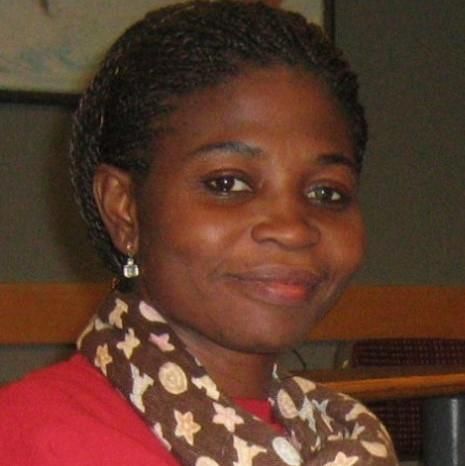
Berset was Vice-President of the Federal Council, and in 2018 he was President of the Swiss
Confederation.

HIGH LEVEL STATEMENTS:

JOSEP BORRELL FONTELLES
High Representative of the European Union for Foreign Affairs and Security Policy; Vice
President, European Commission
                                Josep Borrell is the European Union’s High Representative for
                                Foreign Affairs and Security Policy and Vice-President of the
                                European Commission, in charge of coordinating the external
                                action of the European Union. Between 2018-2019, he was
                                Minister of Foreign Affairs, the European Union and
                                Cooperation of the Government of Spain. In 1991 and until
                                1996 he also joined the Council of Ministers as Minister of
                                Public    Works,     Transport,    Telecommunications      and
                                Environment after serving as State Secretary for Treasury from
                                1984 to 1991. In 2004, he was elected President of the
                                European Parliament and three years later he served as
                                Chairman of the Committee on Development until 2009. He
holds a Bachelor’s degree and Doctorate in Economic Science from the Complutense
University of Madrid and a Bachelor’s degree in Aeronautical Engineering from the Polytechnic
University of Madrid. He holds two Master’s degrees in Oil Industry Economics and Technology
from the French Institute of Petroleum and in Applied Mathematics from Stanford University.

MARGARET CHAN
Former Director General, WHO
                              Dr Margaret Chan, from the People's Republic of China,
                              obtained her medical degree from the University of Western
                              Ontario in Canada. She joined the Hong Kong Department of
                              Health in 1978, where her career in public health began. In
                              1994, Dr Chan was appointed Director of Health of Hong Kong.
                              In her nine-year tenure as director, she launched new services
                              to prevent the spread of disease and promote better health.
                              She also introduced new initiatives to improve communicable
                              disease surveillance and response, enhance training for public
                              health professionals, and establish better local and
                              international collaboration. She effectively managed outbreaks
                              of avian influenza and of severe acute respiratory syndrome
(SARS). In 2003, Dr Chan joined WHO as Director of the Department for Protection of the
Human Environment. In June 2005, she was appointed Director, Communicable Diseases
Surveillance and Response as well as Representative of the Director-General for Pandemic
Influenza. In September 2005, she was named Assistant Director-General for Communicable
Diseases. Dr Chan was elected to the post of Director-General on 9 November 2006. The
Assembly appointed Dr Chan for a second five-year term at its sixty-fifth session in May 2012.
Dr Chan's last term began on 1 July 2012 and ended on 30 June 2017. On 2 April 2020, Dr
Chan was appointed as inaugural Dean of Vanke School of Public Health, Tsinghua University,
China.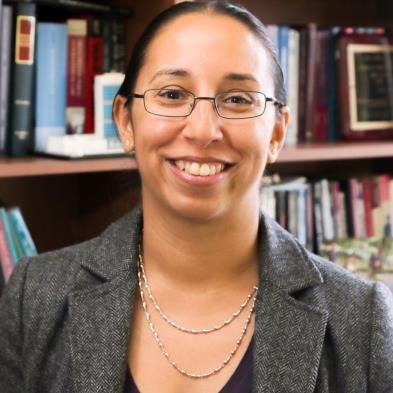
JONAS GAHR STØRE
Former Minister of Foreign Affairs, Norway
                                  Jonas Gahr Støre is the Leader of the Labour Party and Labour
                                  Party Parliamentary Group of Norway. Since 1989, he has held
                                  several senior posts in the Norwegian government. From 1989
                                  to 1998 he served as Diplomatic Advisor to the Prime Minister
                                  and from 1995 as Director General of the International
                                  Department. From 1998 to 2000, Gahr Støre was chief of staff
                                  at the World Health Organization (WHO). From 2000 to 2001
                                  he served as State Secretary and Chief of Staff to Prime
                                  Minister Jens Stoltenberg. From 2003 to 2005, he was
                                  Secretary General of the Norwegian Red Cross. From 2005-
                                  2012 he served as Norway’s Foreign Minister and from 2012
                                  to 2013 as Minister of Health. He has been a member of
Parliament since 2009. He is currently Member of Parliament from Oslo and member of the
Standing Committee on Foreign Affairs and Defence. Jonas Gahr Støre earned his degree in
political science at the Institut d’Etudes Politiques de Paris in France in 1985 after attending
the Royal Norwegian Naval Academy.

JULIAN BRAITWHAITE
Ambassador and Permanent Representative of the UK to the UN and other International
Organisations in Geneva
                               Julian Braithwaite is the UK’s Permanent Representative to the
                               UN and other International Organisations in Geneva including
                               the WTO. Mr Braithwaite joined the FCO in 1994. He spent
                               much of his early career dealing with the conflicts in the former
                               Yugoslavia, first in the FCO during the war in Bosnia, with the
                               UN at the end of the war in Croatia, in Belgrade in the run up
                               to the conflict in Kosovo, on secondment in NATO in 1999, and
                               then with Lord Ashdown in Bosnia. He has worked twice in
                               Downing Street, first for four years as a press officer and then
                               speechwriter for Prime Minister Tony Blair, and then running
                               the Government’s communication campaign during the Libya
                               crisis in 2011. He has also served in Washington where he led
the trade and global issues team and most recently in Brussels, as the UK’s Ambassador to
the EU Political and Security Committee. He is married to Biljana Braithwaite and has two
daughters.

ILONA KICKBUSCH
Founding Director, Global Health Centre
                                Ilona Kickbusch is the Founder of the Global Health Centre at
                                the Graduate Institute in Geneva. Her areas of expertise
                                include the political determinants of health, health in all policies
                                and global health. She advises countries on their global health
                                strategies, trains health specialists, and is involved in German
                                G7 and G20 health activities. Professor Kickbusch publishes
                                widely and serves on various commissions and boards. She is
                                a member of the Global Preparedness Monitoring Board and
                                Co-Chair of UHC 2030, and the Lancet and Financial Times
                                Commission on "Governing health futures 2030: growing up in
                                a digital world". She has had a distinguished career with the
World Health Organization. She was a key instigator of the Ottawa Charter for Health
Promotion and WHO’s Healthy Cities Network and has remained a leader in this field, most
recently advising on WHO’s activities related to Health in the SDGs. She was the Director of
the Global Health Division at Yale University School of Public Health and responsible for the
first major Fulbright Programme on global health.

2020: THE YEAR OF COVID-19 DIPLOMACY

MICHEL KAZATCHKINE
Member of the Independent Panel for Pandemic Preparedness and Response
                                Michel Kazatchkine has over 30 years of experience in the fight
                                against AIDS as a leading physician, researcher, administrator,
                                advocate, policy-maker, and diplomat. He attended medical
                                school in Paris and has completed postdoctoral fellowships at
                                St. Mary’s hospital in London and Harvard Medical School. He
                                is Professor of Immunology at Université René Descartes in
                                Paris and has authored or co-authored over 500 publications.
                                Professor Kazatchkine has played key roles in various
                                organisations, serving as director of the national Agency for
                                Research on AIDS in France (1998-2005), and as French
                                ambassador on HIV/AIDS and communicable diseases (2005-
                                2007). In 2007, Professor Kazatchkine was elected Executive
Director of the Global Fund to fight AIDS, Tuberculosis and Malaria, a position in which he
served until March 2012. Between 2012 and 2017, Professor Kazatchkine served as the UN
Secretary General’s Special Envoy on HIV/AIDS in Eastern Europe and Central Asia. Since
2018, he is the Special Advisor to the Joint UN Programme on HIV/AIDS (UNAIDS) for Eastern
Europe and Central Asia. He is also a Senior Fellow with the Global Health Centre of the
Graduate Institute of International and Development Studies, and a member of the Global
Commission on Drug Policy.

JAOUAD MAHJOUR
Assistant Director-General, WHE Programme, WHO
                               Dr Jaouad Mahjour has been appointed as Assistant Director-
                               General of the Emergency Preparedness Division within the
                               World Health Organization’s Emergency Programme, as of 15
                               March 2019. Most recently, he served as the Director of WHO's
                               Country Health Emergency Preparedness & International
                               Health Regulations Department. A national of Morocco, Dr
                               Mahjour is a public health specialist with over 30 years of
                               experience in designing, implementing and evaluating disease
                               control programmes at national and international levels. He
                               joined the World Health Organization as the Country
                               Representative to Lebanon in 2005. In 2007, he took up the
                               position of Director, Communicable Diseases Control in the
WHO Eastern Mediterranean Regional Office. From 2014 to 2018, he served as Director of
Programme Management, and additionally was designated by the Director-General as Acting
Regional Director for the Eastern Mediterranean Region from October 2017 to May 2018. For
more than ten years, Dr Mahjour led the implementation of the International Health Regulations
2005, and overall health security, preparedness and outbreak prevention and control
programmes in the WHO Eastern Mediterranean Region Office and most recently in WHO
Headquarters. Dr Mahjour holds a Doctorate of Medicine from the Faculty of Medicine and
Pharmacy in Rabat (Morocco), and a Master’s degree in Public Health. Prior to joining WHO,
Dr Mahjour was the Director of Epidemiology and Diseases Control in the Ministry of Health of
Morocco.

SUERIE MOON
Co-Director, Global Health Centre; Professor of Practice, Graduate Institute
                               Suerie Moon, MPA, PhD, is Co-Director of the Global Health
                               Centre and Professor of Practice at the Graduate Institute of
                               International and Development Studies, Geneva. She also
                               teaches and advises doctoral students at the Harvard T.H. Chan
                               School of Public Health as Adjunct Lecturer on Global Health.
                               Her research and teaching focus on global governance, the
                               political economy of global health (focusing on innovation and
                               access to medicines; outbreak preparedness and response;
                               trade, investment and intellectual property rules; and
                               development assistance for health), the evolution of
                               international regimes, and innovative policies for addressing
                               global problems. She is the author, with Wolfgang Hein, of
                               Informal Norms in Global Governance: Human Rights,
Intellectual Property Rules, and Access to Medicines (Routledge, 2013). She has conducted
research on the policies and politics shaping innovation and access to medicines for twenty
years, starting at Médecins Sans Frontières in 1999. She has served on a number of expert
advisory bodies, including most recently the Board of Directors of the Drugs for Neglected
Diseases initiative, WHO Fair Pricing Forum Advisory Group, Expert Advisory Group to the UN
Secretary General’s High-Level Panel on Access to Medicines, Proposal Review Committee
of UNITAID, and US National Academies of Medicine Forum on Antimicrobial Threats. Prior to
joining the Graduate Institute, she was Study Director of the Harvard-LSHTM Independent
Panel on the Global Response to Ebola, and co-founded and led the Forum on Global
Governance for Health, a focal point at Harvard University for research, debate and strategic
convening on issues at the intersection of global governance and health. She received a BA
from Yale, an MPA from Princeton, and PhD from the Harvard Kennedy School of Government.

TRUDI MAKHAYA
Economic Advisor to the President, South Africa
                               Trudi Makhaya is a writer, economist and entrepreneur. In
                               April 2018, she was appointed as full time economic advisor
                               to His Excellency President Cyril Ramaphosa. In this role, she
                               provides analytical support to the President on economic
                               policy. This includes regular input on key issues and initiatives,
                               interfacing with advisory structures and engaging with
                               economic policy stakeholders. Trudi also serves as South
                               Africa’s G20 sherpa. Before taking up this role, Trudi led
                               Makhaya Advisory, a boutique consulting firm with a focus on
                               helping business navigate economic policy, including
                               competition policy (anti-trust). Trudi has held non-executive
                               directorships at Vumelana Advisory Fund and MTN South
Africa. An active public commentator, Trudi’s columns have appeared in Business Day, Daily
Maverick and Acumen. She has also published academic journal articles on competition
economics and policy. Trudi holds an MBA and an MSc in Development Economics from
Oxford University, where she studied as a Rhodes Scholar. From the University of
Witwatersrand, she holds an MCom in Economics, an honours degree in economics and a
BCom in Law and Economics. Trudi was an economist and later a member of the executive
committee at the Competition Commission of South Africa from 2010 to 2014. She joined the
Commission as Principal Economist, assessing the competitive effects of mergers and
acquisitions, analysing complex competition enforcement cases and appearing as an expert
witness at the Competition Tribunal. Trudi represented the Commission at various international
fora including the OECD, BRICS, International Competition Network and the African
Competition Forum. Prior to joining the Competition Commission, Trudi held various
management consulting and corporate roles at Deloitte South Africa, Genesis Analytics and
AngloGold Ashanti.

SUHASINI HAIDAR
India Diplomatic Editor at The Hindu, Delhi
                                  Suhasini Haidar is the Diplomatic Editor of The Hindu, one of
                                  India’s oldest and most respected national dailies, regularly
                                  writing on foreign policy issues. Prior to this, Suhasini was
                                  Foreign Affairs editor and prime time anchor for India’s leading
                                  24-hr English news channel CNN-IBN (2005-2014), where she
                                  presented the signature show “WorldView with Suhasini
                                  Haidar”, and Correspondent for CNN International’s New Delhi
                                  bureau before that. In 2015, she was the recipient of the most
                                  prestigious Indian print journalism ‘Prem Bhatia’ award, and
                                  has won a series of awards for her work in Television as well.
                                  Over the course of her 20-year reporting career, Suhasini has
                                  covered the most challenging stories & conflicts from the most
diverse regions including Pakistan, Sri Lanka, Libya, Lebanon and Syria. In India, she has
covered the foreign affairs beat for over a decade and her domestic assignments include
political profiles and in-depth reportage from conflict zones including Kashmir, where she was
injured in a bomb blast in 2000. Suhasini Haidar worked with CNN International from 1995-
2005, regularly reporting from India, Pakistan, Nepal, Sri Lanka and Bangladesh. She was part
of the CNN team that won the Columbia-Dupont Broadcast Journalism Award in 2005 for
coverage of the tsunami in India, and worked for CNN.com in New York for a month during its
9/11 coverage.

THOMAS BOLLYKY
Council on Foreign Relations, Washington DC
                                Thomas J. Bollyky is director of the Global Health programme
                                and senior fellow for global health, economics, and
                                development at the Council on Foreign Relations (CFR). He is
                                also an adjunct professor of law at Georgetown University. Mr.
                                Bollyky is the author of the book Plagues and the Paradox of
                                Progress: Why the World Is Getting Healthier in Worrisome
                                Ways and the founder and managing editor of Think Global
                                Health, an online magazine that examines the ways health
                                shapes economies, societies, and everyday lives around the
                                world. Prior to coming to CFR, Mr. Bollyky served in a variety
                                of positions in the U.S. government, most recently at the Office
                                of the U.S. Trade Representative. Mr. Bollyky has testified
multiple times before the U.S. Senate, and his work has appeared in many publications
including Foreign Affairs, New York Times, Science, and the New England Journal of Medicine.
He has served as a consultant to the Bill and Melinda Gates Foundation and as a temporary
legal advisor to the World Health Organization. In 2013, the World Economic Forum named
Mr. Bollyky as one of its global leaders under forty. Mr. Bollyky received a BA in biology and
history from Columbia University and a JD from Stanford Law School.

THE FUTURE OF GLOBAL HEALTH DIPLOMACY:

JUAN JOSÉ IGNACIO GÓMEZ-CAMACHO
Mexican Ambassador to Canada; Permanent Representative of Mexico to the UN (2016–
2019)
                                Ambassador Juan José Gómez Camacho was appointed
                                Ambassador of Mexico to Canada in March, 2019, after serving
                                as Permanent Representative to the United Nations in New
                                York since February, 2016. He is a career diplomat since 1988,
                                who has held different positions within the Ministry of Foreign
                                Affairs and abroad, amongst them: Head of Mission to the
                                European Union and Ambassador to Belgium and
                                Luxembourg; Permanent Representative to the United Nations
                                and other International Organisations in Geneva; and
                                Ambassador to Singapore, Myanmar and Brunei Darussalam.
                                Ambassador Gómez Camacho holds a Master’s Degree in
                                International Law from Georgetown University.

NÍSIA TRINDADE LIMA
President of Fiocruz, Brazil
                                  Nísia Trindade Lima holds a master’s degree in Political
                                  Science (1989) and a PhD in Sociology (1997). She is on her
                                  second mandate as president of the Oswaldo Cruz
                                  Foundation, where she also served as Vice-President of
                                  Teaching, Information, and Communication from 2011 to 2016.
                                  Linked to Brazilian Ministry of Health, Fiocruz is the largest
                                  Public Health Academic Institution in Latin American and the
                                  Caribbean Region. In December 2020 she was elected full
                                  member of the Brazilian Academy of Sciences (ABC) in the
                                  Social Sciences category. Her research and teaching interests
                                  include the history of science and health, especially the social
                                  sciences, and Brazilian social thought. She is a researcher at
the Casa Oswaldo Cruz and coordinates Fiocruz’s Social Sciences and Zika Network, She sits
on the editorial boards of several relevant journals in the areas of the history of science and
health. She established a Fiocruz's Strategy on 2030 Agenda, and served as a member of the
WHO Advisory Committee for the Research, Development, Innovation, and Access
Accelerator of the Global Action Plan for Healthy Lives and Well-Being. During her mandate,
she has given centrality to the Fiocruz Gender and Race Equity Committee, and is currently a
member of the Steering Committee of the Gender Summit. She also served as a member of
the International Steering Committee (ISC) of the Nairobi Summit on ICPD25 and participated
in the Fiocruz’s activities that contribute to the ECOSOC - High-Level Political Forum for
Sustainable Development on different topics. She is in the forefront of the response to the
COVID-19 Pandemic from its early stages. She participated in the two editions of the WHO
Global Research and Innovation Forum, in February and July, and coordinates Fiocruz´
institutional efforts in the response to the COVID-19 pandemic. She is also a member of the
Lancet Covid-19 Committee, and co-chaired the Economic Recovery Steering Group, one of
five steering groups created to assist in the development of a United Nations Research
Roadmap for the recovery of COVID-19. Fiocruz is the reference institution in Brazil for testing
the novel coronavirus (SARS-2-COV), in addition to working in primary and specialised care;
and conducting research from biomedical to social sciences. The Foundation participates and
leads, in Brazil, an important research response to Covid-19, the Solidarity trial, launched by
the World Health Organization (WHO), and has an agreement to purchase lots and transfer
technology for the national production of the Covid-19 vaccine developed by the University of
Oxford.

TANISHA M. FAZAL
Professor of Political Science, University of Minnesota
                                 Tanisha Fazal is a Professor of Political Science at the
                                 University of Minnesota. Her scholarship focuses on
                                 sovereignty, international law, and armed conflict. Fazal’s
                                 current research analyses the effect of improvements in
                                 medical care in conflict zones on the long-term costs of war.
                                 She is the author of State Death: The Politics and Geography
                                 of Conquest, Occupation, and Annexation (Princeton
                                 University Press, 2007), which won the Best Book Award of the
                                 American Political Science Association’s Conflict Processes
                                 Section, and Wars of Law: Unintended Consequences in the
                                 Regulation of Armed Conflict (Cornell University Press), which
                                 won the Best Book Award of the International Studies
Association's International Law Section and the American Political Science Association's
International Collaboration Section. Her work has also appeared in journals such as the British
Journal of Political Science, Daedalus, Foreign Affairs, International Organisation, International
Security, International Studies Review, International Studies Quarterly, and Security Studies.
A frequent commentator on international relations and foreign affairs, she has been a fellow at
the Center for International Security and Cooperation at Stanford University and at the Olin
Institute for Strategic Studies at Harvard University. In 2002 she was awarded the Helen
Dwight Reid Award of the American Political Science Association.

OLUBUKOLA S. ADESINA
Lecturer, University of Ibadan, Nigeria
                                Olubukola S. Adesina is an Associate Professor of
                                International Relations in the Department of Political Science,
                                University of Ibadan, Nigeria, where she engages in research,
                                teaching and supervision at both undergraduate and
                                postgraduate levels. Dr Adesina holds a doctorate in Political
                                Science from the University of Natal (now University of
                                Kwazulu-Natal), Pietermaritzburg, South Africa. She is
                                currently Sub-Dean (Postgraduate) of the Faculty of the Social
                                Sciences, University of Ibadan. She has over several years of
                                research, consulting and tertiary teaching experience in the
                                areas of International Relations, Human Security, and Social
                                Protection. She has published extensively in both local and
                                international journals.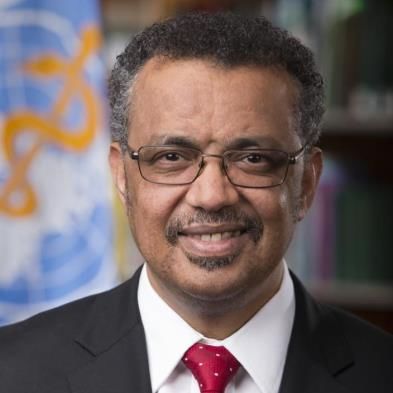
STÉPHANIE SEYDOUX
Ambassador for Global Health, France
                                Stéphanie Seydoux was appointed French Ambassador for
                                Global Health in May 2018. She has served as the head of the
                                Women's Rights and Gender Equality Division, assistant to the
                                Director General of Women's Affairs and social cohesion from
                                2014 to 2017. Since November 2017, she has been in charge
                                of a support mission to the government for the revision of the
                                bioethics law. After starting her career at the Ministry of Foreign
                                Affairs, she joined the General Inspectorate of Social Affairs
                                (IGAS) in 2004. From 2007 to 2010, she was responsible for
                                the promotion of equality in the High Authority for the fight
                                against discrimination and for equality (HALDE). From 2010 to
                                2013, she joined the Ministry of Foreign Affairs as the first
advisor, assistant to the head of post at the French Embassy in Kenya. She holds a Master's
degree in Literature from the University of Oxford, is a graduate of the Paris Institute of Political
Studies (Sciences Po) and a former student of the National School of Administration (ENA) -
promotion "Léopold Sédar Senghor."

GAUDENZ SILBERSCHMIDT
Director, Health and Multilateral Partnerships, WHO
                                 Gaudenz Silberschmidt is Director, Health and Multilateral
                                 Partnerships of the World Health Organization (WHO) since
                                 May 2019 where he is responsible for WHO’s engagement with
                                 partnerships, parliaments, multilateral organisations, the
                                 private sector and NGOs. He is also responsible for the
                                 creation of a WHO Foundation and a World Health Museum.
                                 He has advised the previous Director-General of WHO on
                                 reform issues since joining the WHO Secretariat in October
                                 2012. He was appointed Director for Partnerships and Non-
                                 State Actors in February 2015, responsible for the process
                                 leading to the adoption of the Framework of Engagement of
                                 Non-State Actors (FENSA). From 2015-2017 he was also
Director and interim of Coordinated Resource Mobilisation. Before joining WHO, Gaudenz was
the Swiss Ambassador for Global Health, heading the International Affairs Division of the Swiss
Federal Office of Public Health from 2003-2012. He represented Switzerland as member of
the Executive Board of the WHO, where he also chaired several negotiations during the World
Health Assembly including the drafting group leading to resolution WHA 58.3 on the Adoption
of the International Health Regulations (IHR 2005), and is a former member of the bureau of
the OECD health committee. He initiated the OECD / WHO reviews of the Swiss health system
and led the elaboration of the Swiss Health Foreign Policy. For the Global Health Centre at the
Graduate Institute he chaired the external advisory group and regularly teaches in global health
diplomacy courses in Geneva, Beijing, Nairobi, Jakarta and Cairo. Gaudenz received his
medical degree from the University of Zurich, holds a master degree in International Relations
from the University of St. Gallen and a Diploma in Tropical Medicine and Public Health from
the Swiss Tropical Institute in Basel.
You can also read


