A STORY OF COMMITMENTS - September 2020 - L'OCCITANE Group
←
→
Page content transcription
If your browser does not render page correctly, please read the page content below
A STORY OF
COMMITMENTS
  September 2020
L’OCCITANE en Provence                                        2
6 Commitments

                                         01

                              Respecting
                          BIODIVERSITY
                               A story of generosity

                                         02

                              Supporting
                           PRODUCERS
                                 A story of fairness

                                         03

                                 reducing
                                  WASTE
                          A story of respect for the planet

                                         04

                              Empowering
                                WOMEN
                              A story of emancipation

                                         05

                                   caring
                             FOR SIGHT
                                  A story of vision

                                         06

                             Celebrating
                         CRAFTSMANSHIP
                                  A story of talent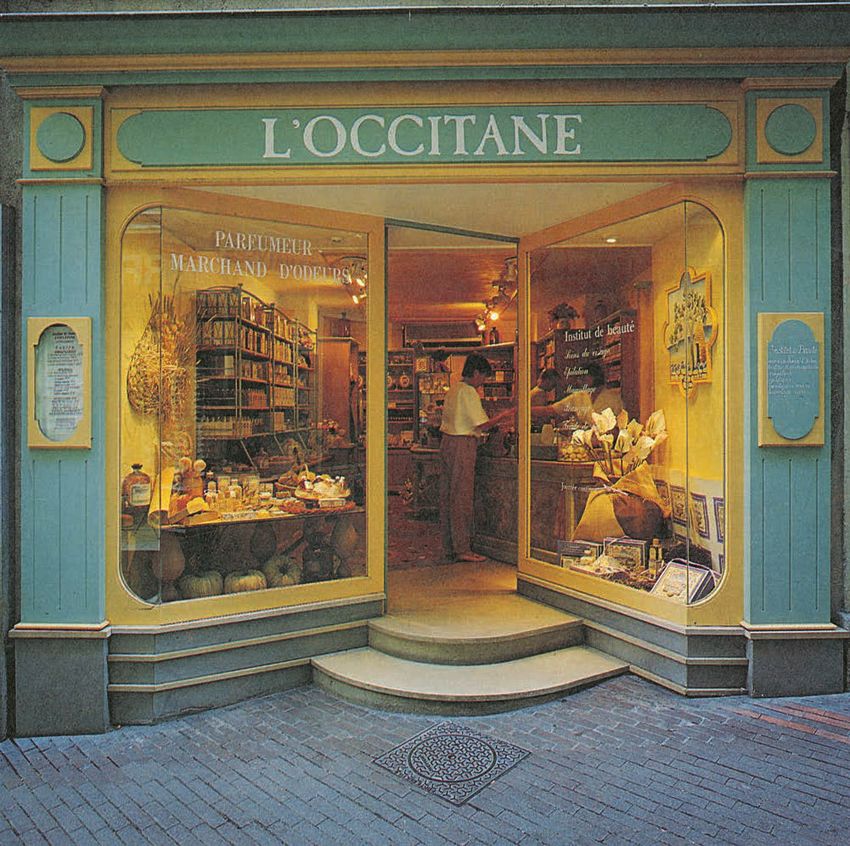
Beauty with respect for people & nature
From the beginning, it’s been crucial for us at L’OCCITANE to protect the nature from which we have so much to learn
from: the secrets of plants, their exceptional properties and the incredible powers of their active ingredients.
Committing to protecting this nature and the people around it was an obvious choice. We made sure we worked fairly
with our producers, we invited customers to bring back their empty bottles in order to recycle them, and we added
Braille on the packaging to make them more accessible.
Based on these solid foundations, L’OCCITANE defined six key areas of action : Respecting biodiversity,
Supporting producers, Reducing waste, Caring for sight, Empowering women and Celebrating craftsmanship.

                       “L’OCCITANE has an original and intrinsic link with the Living.
 Our societal and environmental commitment - in favor of the protection and regeneration of biodiversity
      and the reduction of our environmental carbon and plastic footprint - is therefore only natural.
        Our mission is to take care of humans and to reconnect them with Nature, by transmitting
         the diversity of our natural heritage. Because Nature’s heritage is our common wealth.
                                   Adrien Geiger, Group Sustainability Officer
                                                                                                        ”
L’OCCITANE en Provence                                                                                                                    4
Our Targets

                                                OUR TARGETS
                                                                                                                              TODAY    2025

   Respecting               Plant varieties protected                                                                             950 1000
BIODIVERSITY

                                                                                                                              TODAY    2025

   Supporting               Fair-trade certifications for iconic ingredients producers                                         SHEA
                                                                                                                                      100%
 PRODUCERS                                                                                                                   BUTTER

                                                       TODAY                                                                           2025

                           Recycled plastic
                           in our bottles               32%                                                                           100%
       reducing                                                           TODAY                                                        2025
        WASTE              Recycling service in our
                           owned boutiques                                  47%                                                       100%

                                                                                                                                       2020 *

    Empowering              Women supported in Burkina Faso                                                                           33000
      WOMEN
                         * We have today almost reached our 2020 objective of supporting 33000 women and we will set, for 2025,
                         a new more ambitious objective.

                                                                                                 TODAY                                 2025

         caring            Beneficiaries of eye care                                           10 MILLION                            15 MILLION
    FOR SIGHT

                                                                                          TODAY                                        2025

   Celebrating             Artisan “savoir faire” supported                                 12                                          20
CRAFTSMANSHIP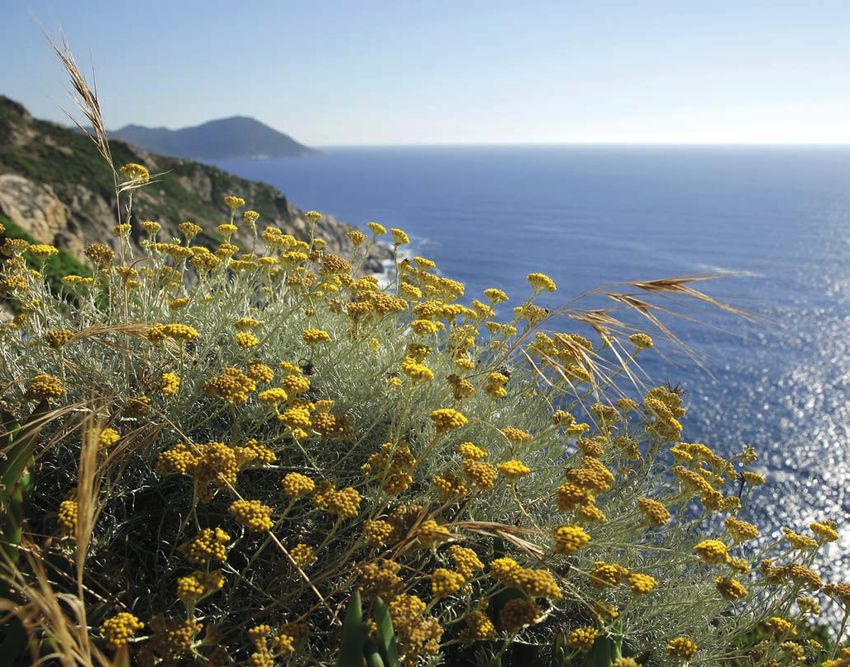
01

  RESPECTING
BIODIVERSITY
     A story of generosity

 LET’S REGENERATE BIODIVERSITY
   FOR FUTURE GENERATIONS.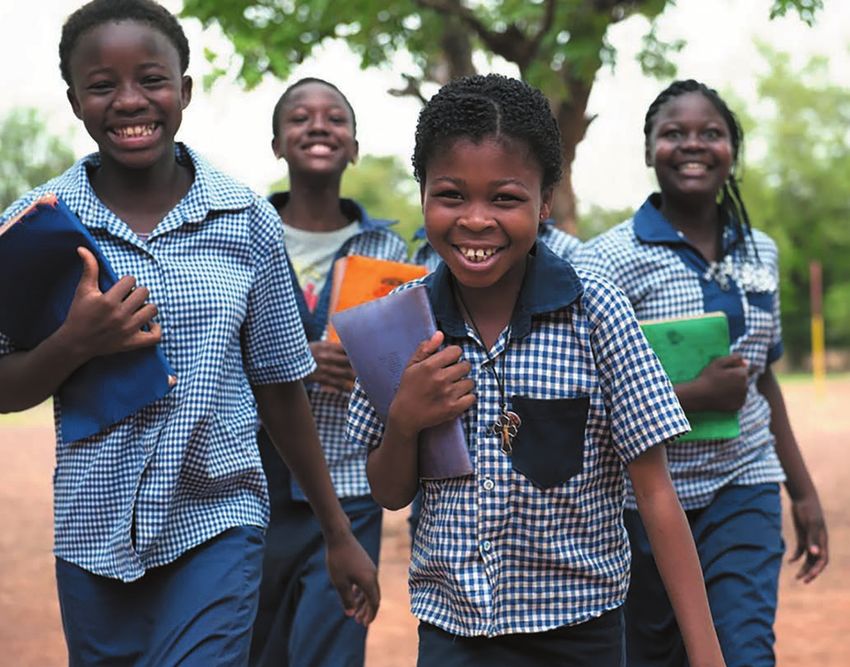
L’OCCITANE en Provence                                                                                                            6
Commitment 01 - Respecting Biodiversity

                                                 OUR COMMITMENT
At L’OCCITANE, we are fascinated by the power of nature and its ability to surprise and teach us. It nurtures a passion
in us, inspiring our determination to protect biodiversity in the long run through concrete actions that make a real
difference.

                                             OUR PLAN OF ACTION
We are dedicated to defending and promoting the unique biodiversity of our lands, both cultivated and wild. Since our
brand was born in Provence, this is where we’ve first started this challenge. We then extended our focus to the entire
Mediterranean Basin as, not only is it close to home, but it’s also one of the richest ecosystems in the world (a “biodiversity
hotspot”) where there are major conservation issues at stake. Now we’re going further, in Burkina Faso, and the rest of
the world. Wherever we can help maintain the diversity of ecosystems, working with key players, and implementing
concrete actions, that’s where we’ll be.

    WHAT’S AT STAKE

The FAO (Food and Agriculture
                                                       OUR ACTIONS
  Organization of the United
                                                                  THE AIM:
Nations) has estimated that 75%
   of crop diversity was lost
  between 1900 and 2000**.                     To have contributed to protecting
                                                 and promoting 1,000 species                                       BEYOND OUR
                                                and varieties of plants by 2025*.                                   BUSINESS

              SUSTAINABLE SOURCING.                     PROTECTING THE ENVIRONMENT TOGETHER.
              We secure the traceability of our           - We help preserve the diversity of the ecosystems
          iconic ingredients but also the longterm            that surround the ingredients on our lands,
                monitoring of our producers,             but also beyond, thanks to our Foundation’s projects.
             whose agroecological practices not             - We contribute to creating territorial dynamics
      only respect biodiversity but also regenerate it.      of respect for cultivated and wild biodiversity.

* We’re already very close with 950 varieties protected today, and are thinking about a new, more ambitious objective for 2025.
** FAO report ”The State of the World’s Plant Genetic Resources for Food and Agriculture” - 2010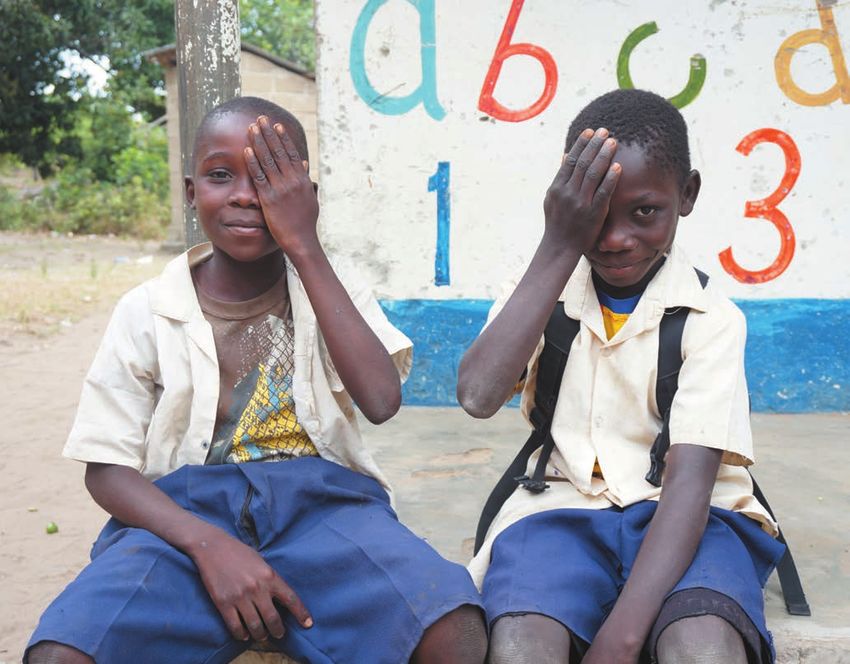
L’OCCITANE en Provence                                                                                                   7
Commitment 01 - Respecting Biodiversity

                                       SOURCING LOCAL VARIETIES
                                     AND PROTECTING THEIR FUTURE
L’OCCITANE is dedicated to developing sustainable supply chains and helps maintain them, so that they have
an enduring and viable future. We not only want to protect the future of our plants, but also the biodiversity that
surrounds them. Our approach contributes to maintaining biodiversity dynamics, among our producers, and more
broadly on a regional scale. We’ve contributed to numerous projects: Haute Provence PDO fine lavender, the comeback
of French almonds, organic immortelle and the preservation of shea parks in Burkina Faso.

                      1                                     2                                              3
    Source and promote                      Protect the future of our plants                    Initiate territorial
     local varieties, and                   via sourcing from producers we                     dynamics to maintain
   favor certified organic                support, respecting ecosystems and                       biodiversity.
        ingredients.                       applying agroecological principles.

      “ We have a strong presence on the ground, and as a result                                 220 missions
we have a perfect knowledge of our raw materials and our producers.                             On the ground
  This guarantees a relationship of trust and complete traceability,                          led by our dedicated
             from the seed to the finished product.                                               Biodiversity &
                                                              ”                              Sustainable ingredients
     J-C LHOMMET, Biodiversity & Sustainable Ingredients Manager                                  team in 2019.

                                                  AGROECOLOGY - WORKING WITH NATURE
                                                  This includes many methods, such as plant covers, agroforestry
                                                  (planting trees on cultivated fields), mulching, creating natural
                                                  habitats for birds and insects... to create beneficial ecosystems
                                                  within and around the fields. It allows our producers to use less
                                                  or no pesticides/chemical fertilizers, less water and contributes to
                                                  limit and store carbon emissions. It’s, without a doubt, the
                                                  agricultural model of tomorrow that we strive to develop, thanks
                                                  to agroecological diagnoses on our producer’s fields and the
                                                  creation of a new collective, gathering 15 of our family farm
                                                  partners, so they can share their best practices and get trainings.
L’OCCITANE en Provence                                                                                                 8
Commitment 01 - Respecting Biodiversity

 IMMORTELLE

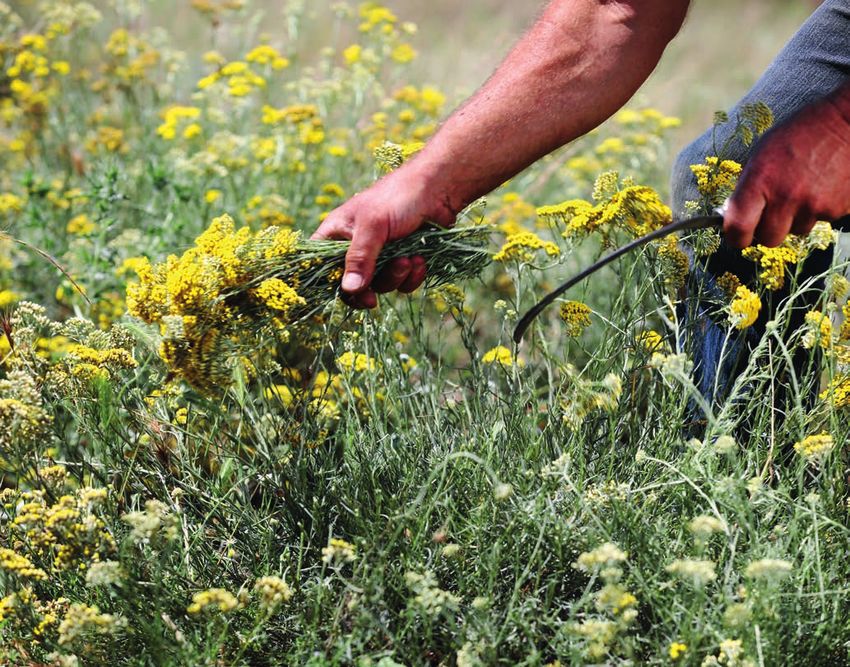
Following the success of our immortelle range, L’OCCITANE launched in 2004 the first 100% organic planting program
of the flower in Corsica. As this wild plant had never been domesticated before, our sustainable sourcing makes sure
we do not put pressure on the plant’s natural environment.
A few producers of aromatic plants joined us in this new adventure and began growing the “golden sun” of the
Corsican maquis. Thanks to our research and efforts, 100% of Corsican immortelle cultures are organic. Proving that
it was possible, we’ve boosted territorial dynamics and continue to help our producers find, and implement, even
greener processes.

The helichrysum italicum endemic to Corsica
has an unsurpassed quality: its essential oil
contains a high concentration of the valuable
neryl acetate molecule, that gives it anti-ageing
properties. We believe it is therefore crucial to
preserve the genetic specificities of this
Corsican plant. The seeds used by our producers
are certified Corsica Grana (guaranteed 100%
Corsican), and come from the wild, four corners
of Corsica, for more diversity. It’s like a mini-
Corsican territory in our producer’s fields.

                                                       ALMOND

                                                      Up until the beginning of the last century, the almond tree was
                                                      a strong symbol of the Provençal landscape. But then almond
                                                      cultivation was abandoned to make way for more profitable
                                                      crops, such as lavandin, and by the 1950’-1960s, the tree had
                                                      virtually disappeared from the region. L’OCCITANE
                                                      is committed to sourcing its almonds from producers of the
                                                      south of France and the Mediterranean basin in order to help
                                                      bring back the traditional production of almonds. We aim to
                                                      boost the sustainable and qualitative cultivation of almond
                                                      trees in Provence, via our contribution to France Amande,
                                                      a French organization dedicated to promoting the almond
                                                      industry by bringing together all key players of the supply chain,
                                                      producers and manufacturers.

                   France Amande’s objective:
                + 900 000 almond trees planted
                      in Provence by 2025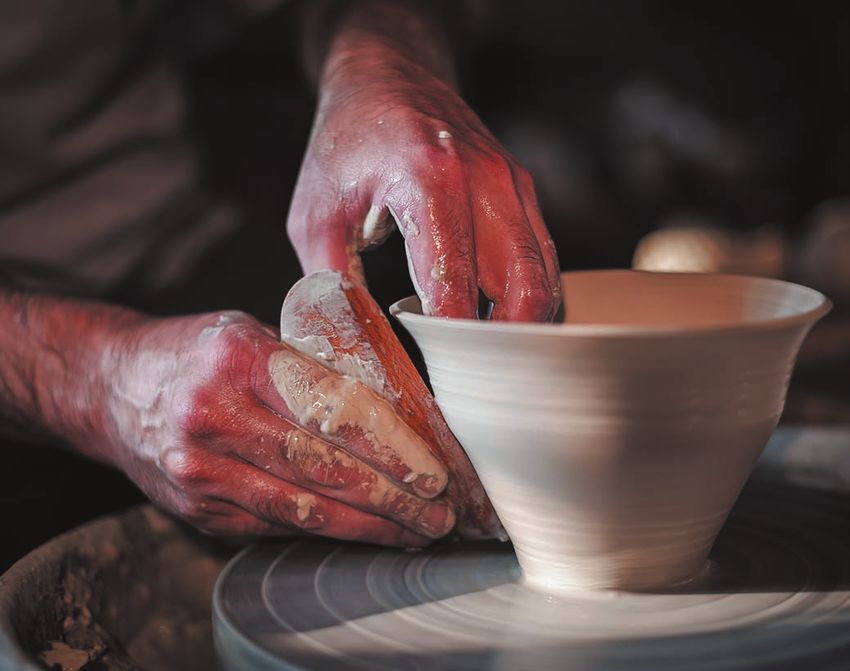
L’OCCITANE en Provence                                                                                                  9
Commitment 01 - Respecting Biodiversity

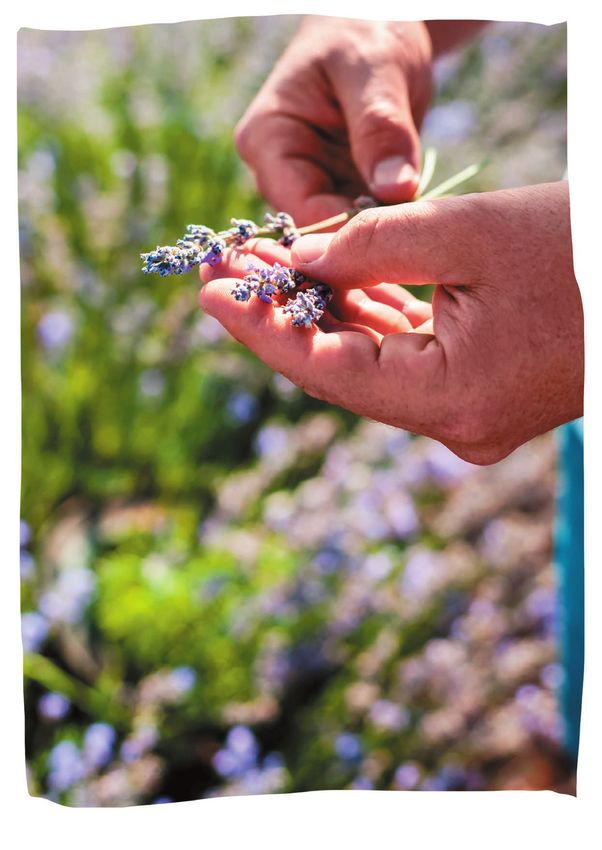
 LAVENDER

Provence lavender is under threat from climate change, directly exposed to its impacts. Not only does it cope with
drought-like conditions, but it is also being attacked by disease-carrying insects, such as the leafhopper, which thrives
in dry weather. Lavender decline is a very real and very alarming phenomenon.
Since 2012, L’OCCITANE has been supporting French research institutes with a dedicated fund and its team of
agronomist experts. The objective is to find ecological solutions to save lavender from threats by selecting new
varieties of plants and looking into new, innovative cultivation techniques, such as grassing for example, creating a
natural barrier against the devastating leafhopper.

A fine lavender PDO (Protected Designation of Origin) is essential to preserve the genetic identity of the plant,
its wealth and benefits. As we helped create The Haute Provence fine lavender PDO label, we are the biggest buyers
of its production (fulfilling 100% of our needs) and some of our experts contribute to its olfactory committee.

                                           These grassy fields are the future of lavender landscapes!
                                We’ll no longer have purple rows as far as the eye can see, but multicolor ones.
                                     Preserving biodiversity also means changing landscapes as we know them.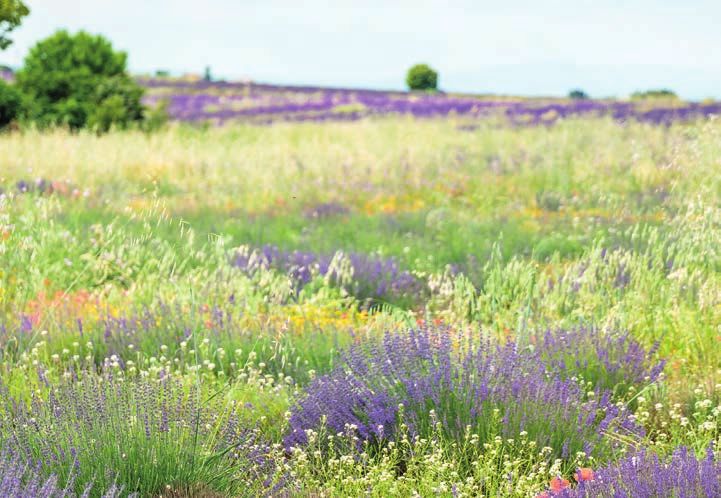
L’OCCITANE en Provence                                                                                                  10
Commitment 01 - Respecting Biodiversity

                                     USING RESOURCES SUSTAINABLY
 RÉOTIER SPRING WATER

When L’OCCITANE discovered the extraordinary water of the Réotier spring, we were keen to harness its skincare
benefits, but also determined to protect the surrounding environment.
Located at the gateway of a natural park, the Réotier spring has been recognized by the European Union as one of the
Natura 2000 nature protection areas. Nurtured by the highly mineral water, the flora and fauna look like what you
might see on coastal territories, with a mountainous twist – resulting in a unique biodiversity, with very rare fauna and
flora species, that’s made this site a national treasure.

And we decided to go further than regulatory
studies to better the knowledge of this little-
studied site and all its issues:
• A hydro-geologist, a landscape designer and an
environmental consultancy firm spent two years
assessing the site, drawing up recommendations
to collect the water.
• We continue working on a precise inventory of
all the different species of life present on the site
to help us develop a strategy of preservation for
future generations.
• We finance the Sustainable Management Plan
that resulted from those studies.

Based on these, L’OCCITANE never collects more than 0.04% of the annual volume of water discharged from the
spring, making sure that there is no negative impact on water flow and the spring’s environment.

 A SUSTAINABLE PICKING CHARTER

Shea, meadowsweet, rosemary, myrtle, cade

L’OCCITANE oversees the growing and harvesting of its cultivated ingredients. However, some plants, such
as meadowsweet and cade, can only be found in the wild. If these plants are harvested irresponsibly, there can be
a significant impact on the natural environment. That’s why we decided to work with local partners to draw up a
sustainable picking charter protecting the integrity and habitat of these plants. All of the10 000 pickers for shea butter
and the 12 pickers for rosemary, myrtle and meadowsweet flowers have signed it.
L’OCCITANE en Provence 11
Commitment 01 - Respecting Biodiversity
SHEA BUTTER
Shea butter supply chain’s RESIST program
For over 30 years, L’OCCITANE has been sourcing shea butter – one of its most iconic ingredients – from cooperatives
of women producers in Burkina Faso. We purchase their organic and fair-trade* certified shea butter directly from
them, to help them build sustainable livelihoods and pass on their skills from generation to generation.
Building on this, we launched RESIST (Resilience, Ecology, Strengthening, Independence, Structure, Training),
a $2 million holistic program thats aims to protect the resources of 10 000 women in Burkina Faso facing economic
& climatic challenges.
This program is financed by L’OCCITANE but also thanks to
public funds such as as the United States Agency for International
Development & the German Federal Government**.
This three-year program helps secure organic nut access by
preserving the parks where shea trees grow naturally.
The objective is to have 33 certified-organic shea parklands
and to train women pickers in the preservation of shea trees.
It also seeks to modernize shea processing, to strengthen
alternative fuel wood sources by promoting nut waste, and to
improve the working conditions. Finally, it aims at generating
new income for the women, diversifying their activities and
helping them to be more economically resilient.
The program is recognized as ‘exemplary’ by the United Nations Development Program (UNDP). L’OCCITANE was
invited to attend the “Business Call to Action” Forum about Inclusive Business (taking place on the sidelines of the
United Nations General Assembly in New York City) in sept 2019, to present its holistic approach to development in
favor of the women shea butter producers of Burkina Faso, and its promotion of local biodiversity.
See page 29 for more information on our commitment for women involved in the shea value chain.
RESPONSIBLE PALM OIL
Palm oil comes from the fruit of the oil palm tree. It’s mainly used in food products, but can be found in certain
cosmetics and personal care products. The intensive cultivation of oil palm trees can have major consequences on the
environment and biodiversity.
Although we do not directly purchase or use palm oil in our own formulas, our soap noodles and certain derivatives
(such as surfactants, which give a formula its foaming properties) may, however, contain it.
Since 2011, we have been a member of the Roundtable for Sustainable Palm Oil (RSPO), a non profit organization that unites
all stakeholders across the palm oil industry to develop and implement global standards for certified-sustainable palm oil.
Since 2015, 100% of our soaps (excluding shaving soap and special sizes dedicated to professionals) are formulated with
traceable and sustainable palm oil, in accordance with one of the highest levels of traceability defined by the RSPO.
But there is still more work to be done:
• 100% of the palm oil contained in the derivatives that we buy from our suppliers will be RSPO certified by the end of 2020,
• we intend to reduce our consumption of palm oil by 20 to 25% by continuing our development of palm-oil-free
soaps – an objective that we hope to achieve by 2023.
* Fair-trade certified according to the Fair for Life standard available at www.fairforlife.org
** Funded by the German Federal Government, Federal Ministry for Economic Cooperation and Development (BMZ),
via sequa as part of the develoPPP.de programL’OCCITANE en Provence 12
Commitment 01 - Respecting Biodiversity
BIODIVERSITY BEYOND OUR SOURCING
THE L’OCCITANE FOUNDATION
Preserving biodiversity in Provence, in the Mediterranean and beyond.
Born in the Alps of Haute Provence in 1976, L’OCCITANE has always cared deeply about this region. Indeed,
one of our Foundation’s three fields of action is to preserve Provence’s natural heritage. Today, having grown
into an international company, it’s essential to us that our efforts cross borders and reach lands in need
throughout the world.
IUCN PARTNERSHIP
(International union for conservation of nature for the Mediterranean - French committee)
To help us understand where we need to act, which plants and ecosystems are endangered in our region,
the L’OCCITANE Foundation financially supports the IUCN French Committee to produce the Red List of Ecosystems
for France’s Mediterranean coastlines and forests. This list is a knowledge tool that informs policy makers, environmental
stakeholders and the general public.
Since 2015, 31 Mediterranean ecosystems have been identified and assessed. The studies reavealed in 2019 and 2020
that 21% of Mediterranean forest ecosystems are threatened and 37% are almost threatened. Concerning sandy
coastal ecosystems, which represent a quarter of French coastlines, almost all (7 over 9) are threatened. Those studies
will be used to build conservation strategies, identify priorities for action and help regulations on nature management
and conservation evolve.
In January 2021, we will participate in the World Conservation Congress, organized by the IUCN, in Marseille,
to present all of our actions for the preservation of biodiversity and contribute to sensitize the public on the topic.
THE SHARED MEDITERRANEAN CONSERVATORY
Since 2018 the L’OCCITANE Group is member of the Shared
Mediterranean Conservatory (SMC). It establishes – for the
first time – a community of individuals, organizations, institutions
and producers from the region, brought together to maintain,
preserve and promote strategic plants and varieties for the
biodiversity of cultivated areas around the Mediterranean.
Almond and olive trees – both of which are important for
L’OCCITANE – are among the trees identified.
The Foundation supports “Vergers d’Avenir” since 2019, a
3-year SMC program that aims to preserve rare or threatened
local varieties by creating or restoring orchards. Its objective is
to replant 4000 trees around the region, preserving 200 local
varieties of Provence.
PLANTING HEDGEROWS IN PROVENCE
In partnership with the Verdon Regional Natural Park, the L’OCCITANE Foundation also supports planting trees and
notably old varieties of fruit trees for hedgerows as they are known to offer many benefits: climate regulation, erosion
control, a habitat for wildlife and pollinators, fruit production, as well as the maintenance of their inestimable heritage
significance. Since 2016, 124 different varieties of fruit trees have been preserved thanks to this partnership.L’OCCITANE en Provence 13
Commitment 01 - Respecting Biodiversity
PUR PROJET INTERNATIONAL PARTNERSHIP
In 2019, we partnered up with PUR Projet International
on 11 agroforestry projects (planting of trees on cultivated
plots) and reforestation (planting in damaged areas). In
just one year, more than 30,000 trees were planted for
projects with very different aims: for example in Japan,
the Mori-Nori project recreated a plant barrier to protect
the coasts from possible tsunamis.
REPLANTING AFTER FIRE
In the beginning of 2020, we created a fund to support ecosystems that are severely
affected by natural disasters, such as the devastating fires of the Amazon in 2019 and
Australia in early 2020. Determined to protect biodiversity for future generations, the
L’OCCITANE Ecosystem Restoration Fund aims to respond to climate emergencies on
an ad hoc basis. The fund will be financed by a voluntary internal donation campaign
among L’OCCITANE’s shareholders. The Group has pledged to set up a support fund
of €400,000 to help finance long-lasting projects dedicated to the regeneration of
severely damaged ecosystems. €200,000 will be donated as an immediate contribution
to tree-planting and agroforestry schemes to help restore Australia’s landscape.
The Foundation, together with the company’s agricultural engineers and its operational
teams in Australia, just choose to partner with the Foundation for National Parks
& Wildlife, to help replant 1 million trees around Australia over the next five years.
THE L’OCCITANE ORCHARDS
In order to raise awareness and involve all our employees in the
preservation of biodiversity, the L’OCCITANE Group has launched the
project “Les vergers de L’OCCITANE”: each employee with three years’
seniority can have a Provençal almond tree planted in their name within
local producers’ orchards.02
SUPPORTING
PRODUCERS
A story of fairness
LET’S PROVIDE OUR GROWERS WITH
SUSTAINABLE SUPPORT ADAPTED TO THEIR ACTIVITY.L’OCCITANE en Provence 15
Commitment 02 - Suppor ting Producers
OUR COMMITMENT
Dialogue and respect are at the core of our daily work with our producers. We know them personally (some of our
partnerships have lasted for over 30 years!) and we admire the passion they put into their work, so they can supply us
with the very best ingredients. Working hand-in-hand together, we give them our support and help them thrive,
so that they – and future generations – can go on even after we’ve gone.
OUR PLAN OF ACTION
Our aim is to finalize fair-trade certifications with all our producers of iconic ingredients, just like we did for our
Fair Trade* shea butter supply-chain in Burkina Faso. It’s the continuity in building long-term relationships of trust
& transparency with our family farms partners, based on non-exclusive, multi-year contracts and fair price, so they can
grow in a sustainable and lasting manner. It also implies taking new actions to further support them, enhancing collective
dynamics, for example, which is the aim of our new agroecological collective.
WHAT’S AT STAKE
Approximately 400 farms** are
OUR ACTIONS
closing every week in France.
THE AIM:
In Europe, this figure blows up
to 2,300 farms*** disappearing
every week. Fair-Trade certifications for all
our producers of iconic ingredients BEYOND OUR
by 2025. BUSINESS
GUARD AGAINST RISK TOGETHER. PRODUCE SUSTAINABLY TOGETHER.
Mitigate the hazards of farming for our Guide our producers towards greener
par tners through multi-year and non-exclusive and organic farming practices thanks
contracts to guarantee a lasting outlet for their to our new agroecological collective.
produce, down payments to ensure cash
flow, and even helping them diversify, to find
other sources of income beyond L’OCCITANE.
* Fair Trade certified according to the Fair for Life standard available at www.fairforlife.org
** French government statistics: 353 farm closures per week between 2000 and 2010, then 410 between 2010 and 2013 in France.
http://www.statistiques.developpement-durable.gouv.fr/lessentiel/ar/2390/0/exploitations-agricoles-francaises.html
*** Information provided by SAFER (Sociétés d’Aménagement Foncier et d’Etablissement Rural – rural land agencies): 2,355 farms forced
to close each week in Europe. http://www.safer.fr/iso_album/aeiar-etude-complete.pdfL’OCCITANE en Provence 16
Commitment 02 - Suppor ting Producers
FAIR TRADE CERTIFICATION
Just like we did for our shea butter supply chain in Burkina Faso, we want to finalize our fair-trade certifications for
our producers of iconic ingredients, in Provence and Corsica. This certification for northern supply chains is a very
innovative approach, and we are proud to be part of the cosmetic brand leaders on the topic. These certifications
require regular evaluation by independent auditors, thus providing our customers with a long-term guarantee of
ethically, sustainably and fairly sourced ingredients.
It will also reassure our producers of the strong, direct and lasting relationship we want to have with them. They will
be able to enjoy security and peace of mind, with the knowledge that they will be guaranteed multi-year contracts and
a fair price.
L’OCCITANE’S ICONIC INGREDIENTS CONCERNED
BY FAIR-TRADE CERTIFICATION:
- lavender,
- almond,
- immortelle,
- verbena,
- rose,
- cade wood,
- cherry blossom.
SOURCING NATURAL INGREDIENTS WITH FAIR-TRADE PRINCIPLES MEANS:
• paying a fair price, agreed by all parties, so that value is distributed fairly amongst those involved,
• providing down payments on orders before the harvest if necessary,
• establishing non-exclusive contracts, so producers do not depend solely on us,
• signing multi-year contracts (minimum 3 years), guaranteeing a minimum purchase volume
so our producers have a reliable, lasting outlet for their goods,
• bringing producers together as a community so they can share ideas and good practices,
learn from each other and have more weight in negotiations,
• visiting the producer’s fields at least once a year,
• paying an additional amount to finance projects and collective dynamics,
• helping our consumers build consumption consciousness so they can be sociably and ecologically responsible.
A FEW FIGURES BEHIND THE L’OCCITANE BRAND
- 28 traceable and sustainable supply chains, over half of which are organic,
- 47 direct producers,
- over half of our producers and supplying partners are covered with multi-year contracts,
- over 10,000 pickers are working in direct partnership with us.L’OCCITANE en Provence 17
Commitment 02 - Suppor ting Producers
GOING BEYOND FAIR TRADE
For L’OCCITANE it is important to go beyond sourcing and build solid, long lasting relationships with our producers.
This is so much more than a supplier-purchaser relationship. It is based on trust and partnership, with each party
bringing and sharing their knowledge and strengths.
We will continue to build unique relationships with our producers, going beyond Fair-trade certification, by:
- providing technical support all year long: working closely with producers, whenever they need
it and not only once a year, particularly with their ecological transition,
- helping producers find ways to diversify their income, even beyond L’OCCITANE.
OUR AGROECOLOGICAL COLLECTIVE
15 of our family farm partners have already decided to join forces in
the agroecological collective that we have contributed to develop.
The aim is to provide trainings and best-practices sharing, and help
them care for biodiversity, thanks to more ecological farming.
See page 6 for more on Agroecology.
WHAT MAKES US DIFFERENT?
- We have a dedicated team of nine agricultural engineers who work closely with our producers, on the ground,
every day.
- We personally know our family farm partners and, over the years, have built with them close relationships
and even friendships.
- We’ve decided long ago not to have our own lands and our own processing tools. Instead we’ve chosen to work
hand in hand with trusted partners and contribute this way to local development and reinforcement of ecological
practices, enhancing territorial dynamics.
WHAT IS FAMILY FARMING?
Family farmers own their own land, their production facilities
and the workload is often handled by family members. They
are passionate about what they do and want to be able to
sustainably manage their land. They have a long-term vision,
unique skills and knowledge. It is important for them to hand
these down – along with their land – to the next generation.
Stephan Francisci, immortelle producer,
and Jean-Charles Lhommet,
our Biodiversity and Sustainable Ingredients Manager.L’OCCITANE en Provence 18
Commitment 02 - Suppor ting Producers
MORE ABOUT OUR INGREDIENTS
AND THE PEOPLE WHO GROW THEM
OUR IMMORTELLE PRODUCERS
We currently have ten partners in Corsica that grow, harvest and distill the precious immortelle flowers that are used
in our muchloved Precious and Divine ranges, and our Reset formula. For over fifteen years, we have been committed
to producing immortelle sustainably. This flower grows in the wild in the Corsican maquis, but due to the volumes we
require, harvesting wild immortelle could never be a sustainable, responsible option as it would put too much pressure
on the natural environment. That’s why, in 2004, we launched the very first large-scale immortelle plantation program
in Corsica. We invited several producers to get involved in cultivating this flower for the first time, using organic
farming methods. With the help and advice from Corsican and Provençal technicians, as well as funding from
The L’OCCITANE Group, 50 hectares were planted on the east coast of Corsica and Balagne.
The growers and distillers involved in this project have a five to seven-year contract with L’OCCITANE, guaranteeing
them a stable income during the entire lifespan of the plant.
See p.7 for more on our immortelle flowers.
“ Our relationship is based on trust and we are true partners.
The team of L’OCCITANE helped me to find solutions when I had
technical problems. It’s not just a commercial contract, it’s a genuine
partnership and the human aspect is at the heart of it.
I feel free but supported at the same time.
”
Cathy Sanci, Immortelle producer.
OUR VERBENA PRODUCERS
Verbena is a plant that is often associated with Provence, as it can be found in markets and gardens. Yet its cultivation
in the region is now limited, due to competition from other verbenaproducing countries. That’s why we chose to
source our verbena from Philippe and Magalie Mary, who produce a rare and precious verbena in a sheltered
environment. The land is certified 100% organic, in small plots surrounded by forests. The estate can be found in the
Grand Site de la Saint Victoire – a Natura 2000 site, where the biodiversity stakes are high. Thanks to this incredible
terroir and the care given by our producers, this rare verbena has a unique olfactory note: crisp, green, powerful, and
citraillée. In 2018, we decided to fund a biodiversity diagnosis by the independent ecological engineering firm Naturalia
Environnement. This diagnosis gave us an exact overview of the situation and deemed our verbena crops a “green
oasis” of biodiversity, discovering a number of protected fauna and flora species, including endangered meadow plants.
The Marys then decided to go even further and test and develop new organic methods such as the use of cover crops,
the creation of wild life habitats for birds and insects, and the diversification of hedges.
“ It was not only a business venture but also a human adventure,
between L’OCCITANE teams and us. Our relationship is straight
forward and we get along very well, which is why the partnership goes on.
That is very important for us. The teams came with us to plant
our first verbena and we worked together on technical solutions.
”
Philippe and Magalie Mary - Verbena Producers.L’OCCITANE en Provence 19
Commitment 02 - Suppor ting Producers
OUR LAVENDER PRODUCERS
Also known as “blue gold”, lavender is synonymous with Provence. It came to the region some 2,000 years ago and
soon became a defining element of both the landscape and the local economy. At L’OCCITANE we use almost only
fine lavender – Lavandula angustifolia – as it yields the very best essential oil. Since 1981, the expertise of the producers
of fine lavender from Haute-Provence has been protected by the PDO (Protected Designation of Origin) label, which
guarantees the quality and traceability of the essential oil. We source our supplies from cooperatives in Provence and
the Bleu Provence distillery, and have established a multi-year partnership with the local supply chain in order
to guarantee minimum prices and volumes. In 2016, we renewed our contracts for an additional four-year period, thus
helping maintain the cultivation of fine lavender on the plateaux of Haute-Provence.
See more about our lavender p.8.
“ We work as a family, and we want to continue to pass on our
traditions and passion to future generations.
Lavender is not just a crop or an industry, it represents the story
of a land and its people. It is the only plant that grows easily
on the plateau and it is important to have a plant well adapted
to the soil, that can grow in the wild, and cared for by us.
”
Jérome Boenle, Lavender Producer.
Jerome Boenle is one of our producers and the president of the fine lavender PDO. He implements new agricultural
practices such as grassing, to create natural barriers, and plants different varieties of lavender, while consistently
monitoring his fields. It’s actions such as these that we actively support.
OUR CADE PICKER
We work with Michael Comte, who cuts and harvests 100% of our organic cade wood in the wild, in the Ardèche
Regional Natural Park, a preserved region surrounded by forests. Michael works on land clearing to create firebreaks
area. By making use of wildharvested cade, we make sure that this raw material, which is often considered a waste
product, is put to good use.
“ My wife and I renovated a farm 10 years ago.
It had been abandoned for 50 years (there was even a tree growing
in the middle of the living room!).
Today we live there with my family surrounded by many cade trees.
This tree is an integral part of the region but also part
of our daily lives.
”
Michael Comte, Cade picker.L’OCCITANE en Provence 20
Commitment 02 - Suppor ting Producers
OUR ALMOND PRODUCERS
As part of our commitment to sustainability, we support the local production of almonds and make good use
of coproducts (a product produced jointly with another product) – so we not only purchase the nuts whole, but also
the broken almonds. In France, our main producer is Jean-Pierre Jaubert, who has replanted over 22,000 almond trees
with typical Provençal varieties of the Valensole region since 2002. His land covers 80 hectares, and his passion
and know-how go back three generations. In 2015, he signed a multi-year contract with L’OCCITANE, thus assuring
him of a long-term, major customer for his crop.
See also our almond actions p.7
“ I have a special bond with almonds because my parents
and grandparents already grew them. I’m happy to follow
in their footsteps and perpetuate this family tradition
which I also hope to pass on.
”
Jean-Pierre Jaubert, Almond farmer
OUR SHEA BUTTER PRODUCERS
A good example of how we accompany our
growers is the work we have been doing with
our shea butter supply chain in Burkina Faso
for over 30 years. Rather than purchasing the
shea nuts or kernels, we buy the butter –
made using traditional methods – directly
from the women’s cooperatives, with no
intermediaries. That way, we keep 100% local
added value and help maintain the continuity
of the skill, which has been passed down from
generation to generation.
Every year, the purchase price is decided by a committee of women and independent observers. It leaves a significant
margin for the producers and includes funding for the development of their unions’ activities. As an example, a proportion
of the payment goes into a fund that finances social and environmental community projects, such as developing
ecotechnologies to produce shea butter.
Thanks to multi-year contracts, the women’s cooperatives are guaranteed purchase volumes and a long term source
of income. And we provide 80% of the payment before and during the harvests so that the unions have sufficient cash flow.
In 2009, the shea butter cooperatives began working on obtaining their Fair Trade certification*. We helped them
by covering the costs of the certification and by providing technical support thanks to our dedicated team locally.
Our Shea butter supply chain has been recognized as “exemplary” by the United Nations Development Program
(UNDP) in 2013 and 2019.
See also our RESIST program p.10
* Fair Trade certified according to the Fair for Life standard available at www.fairforlife.org03
REDUCING
WASTE
A story of respect for the planet
LET’S ACHIEVE A CIRCULAR ECONOMY THAT GIVES
A SECOND LIFE TO POLLUTING MATERIALS.L’OCCITANE en Provence 22
Commitment 03 - Reducing Waste
OUR COMMITMENT
When it was created in 1976, L’OCCITANE launched a bottle-return system for glass bottles,
so they could be brought back to a retailer. In 1992, we launched another program called
“L’action Mistral” dedicated to promoting recycling and recovery of plastics, trying to convince
the public and public authorities, of the need for sorting. We believe that it’s small steps such
as these that can make a big difference in the long run.
OUR PLAN OF ACTION
We want to create a circular economy with the help of involved and innovative partners, multi-brand initiatives, but
also and above all, our consumers. By joining forces, we will be more successful in tackling plastic pollution at its source.
That’s why we choose to focus on 3 pillars:
REDUCE RECYCLE REACT
our global use of materials and every material that we use, either by suppor ting the most innovative
improve products’ lifespan by by giving it a second life or making par tners, such as Plastic Odyssey,
promoting multiple usage of a single sure that its waste can become a and multi-brands’ initiatives that
packaging to our consumers, using resource. To do this, we first make encourage the responsible and
eco-refills or refill-stations, for sure that our packs are themselves sustainable use of plastic like SPICE
example. recycled and recyclable thanks to (the Sustainable Packaging Initiative
visionary partners such as TerraCycle® for CosmEtics), involving both our
and LOOP Industries. staff and our consumers with us.
WHAT’S AT STAKE
There will be more plastic than
OUR ACTIONS
fi sh in the ocean by 2050.
THE AIM:
Source: Ellen MacArthur Foundation
3 x 100% by 2025!
100% of our bottles will be made from 100% recycled plastic,
and 100% of our owned boutiques will offer a recycling service.
REDUCE & RECYCLE. REACT.
We aim to reduce the quantity of material used and increase Take action all together!
our packagings’ lifespan while making sure that they
BEYOND OUR
are recycled and recyclable as much as possible.
ACTIVITYL’OCCITANE en Provence 23
Commitment 03 - Reducing Waste
WHAT’S AT STAKE
Plastic pollution has invaded our lands and seas, found
its way into food chains, and led to the death of millions
of marine animals.
Over the last ten years, humans have produced more
plastic than during the previous century.
Up to 12.7 million tons of plastic enter the oceans every
year, and it takes this plastic up to 1,000 years to
degrade! Moreover, it never breaks down completely; it
simply disintegrates into microscopic plastic particles.
Approximately 50% of the plastic used is single-use
plastic – used once then thrown away. Only 9% of the
world’s plastic is recycled. 12% is burned and the
remaining 79% ends up in either landfi ll or in our
precious environment.*
THE NEW PLASTICS ECONOMY
L’OCCITANE has signed the Ellen MacArthur Foundation New Plastics Economy Global Commitment.
It brings together 350 businesses and organizations from around the world with whom we share a common vision of
keeping plastics in the economy and out of the ocean. Details of how we are handling plastic pollution have been set
out together, for the fi rst time, in a new report published by the Ellen MacArthur Foundation this spring. Every year,
L’OCCITANE will be challenged by the Global Commitment on our efforts to fulfi l our targets, encouraging transparency
and inspiring us to go even further.
* Source: “Pour une nouvelle économie des plastiques” - Ellen MacArthur Foundation - 2017L’OCCITANE en Provence 24
Commitment 03 - Reducing Waste
REDUCE
OUR PLAN OF ACTION
- The elimination or replacement of single use and unnecessary plastics: firstly, we have never used plastic
bags in our stores, and have a policy of not using plastic cups, straws or cotton buds (Q-tips). Secondly,
we’re continuing our elimination process. For example, our use of cellophanes is first being replaced with
a greener solution and will be completely removed by 2022, and the spatulas provided with the Divine
packs are gone as of 2020.
- We’re continuously working on reducing our packs’thickness with eco-design, no frills or excess!
For example: we replaced the plastic interior of our advent calendars with cardboard, saving us 22.5 tons
of plastic for Christmas 2020, compared to Christmas 2019.
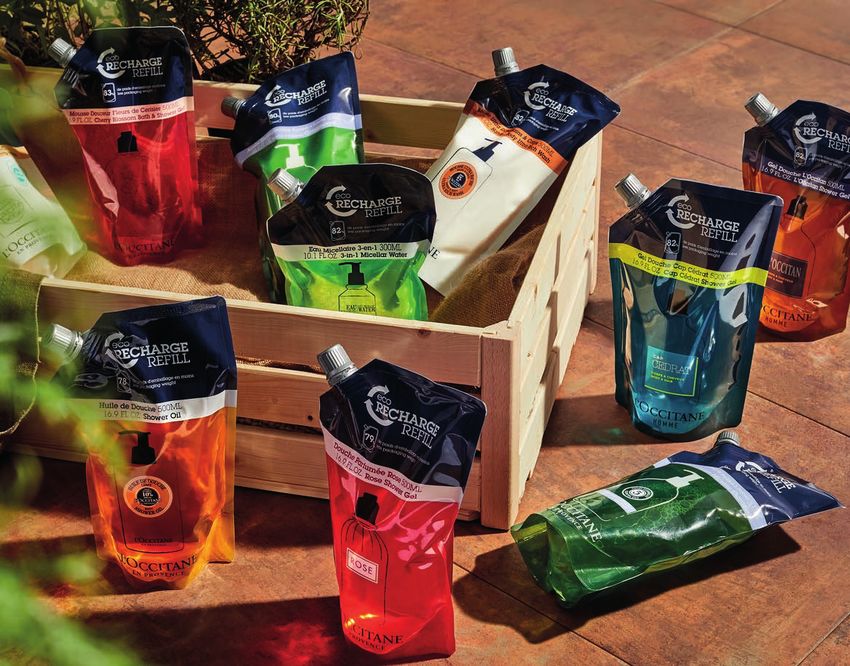
- We favor refills, to increase the life of each pack. We already offer a wide range of eco-refills for some of
our best-selling products, and we intend to introduce even more, while also making the eco-refill packaging
itself more easily recyclable. We’re also experimenting with 3 shops in Spain and in Germany offering
shampoo and shower gel fountains, and we’re planning on opening many more.
A CLOSER LOOK AT OUR ECOREFILLS
When we introduced our eco-refills in 2008, our aim was to offer
25 eco-refills by 2022, but we’ll reach that goal as early as September 2020!
At first, these eco-friendly solutions were available for a few liquid soaps,
but over the years we’ve added to the range and now also offer them
for shampoos, conditioners, shower gels and oils, hand washes and
our Lavender Foaming Bath.
These guys use overall 85% less plastic than a regular bottle (some up
to 90%)*, so we’re saving roughly 200 tons of plastic every single year.
*On the basis of our 2020 numbers.
MORE ON REPLACING CELLOPHANE
We continue to replace our current cellophane with natureflex cellophane
(cellulose base). It is compostable in garden compost (and not only
in industrial compost, because these must meet specific conditions
of temperature and humidity and there is currently no collection system
for these materials). As of 2020, 60% of our references have been replaced,
the objective is to eliminate all cellophane by 2022.L’OCCITANE en Provence 25
Commitment 03 - Reducing Waste
RECYCLE
OUR PLAN OF ACTION
Our goal is to achieve 100% recycled plastic for our bottles and 100% recyclable plastic for all our
packaging, by 2025.
For now, and since March 2020, our bottles consist of 32% recycled plastic and 92% of the materials are
recyclable. By 2021/2022 we’ll be integrating Loop Industries’ PET plastic to reach our 2025 goal.
We also want to educate customers about the impor tance of recycling and grow our offers of recycling
service in our boutiques, for products that are not accepted by public facilities, thanks to par tnerships
with TerraCycle(R) and iCycle to name a few. Hopefully, encouraging our customers to recycle with us.
OUR 100% RECYCLED PLASTIC BOTTLES
Our Aromachologie hair care bottles have been made with100% recycled PET for the past 10 years! And all our 300ml
and 500ml liquid soap bottles are made from 100% recycled plastic too. We have 68 references of 100% recycled
plastic products in total, look for them in our Aromachologie and liquid soap ranges, among others.L’OCCITANE en Provence 26
Commitment 03 - Reducing Waste
IN STORE RECYCLING
As early as 2014, the brand launched a partnership with TerraCycle ®,
a company specializing in recycling ‘hard-to-recycle waste’. This partnership
encourages consumers to recycle empty beauty and skin care packaging,
preventing them from ending up in landfi ll or being incinerated. TerraCycle ®,
and all our other recycling partners, such as iCycle, adapt their conditions
to local regulations, and recycle what is not supported by public facilities
(which can widely vary from country to country). In some countries, like
the UK, Ireland, US and Canada, our boutiques also accept packs from other
brands. Over 46% of L’OCCITANE boutiques worldwide currently offer
We’ve already collected more than
in-store recycling, the goal is to expand that to 100% by 2025.
1,2 million items with our in-store
recycling partners by 2019.
“ L’OCCITANE en Provence was the first beauty brand to join forces with TerraCycle ®
in Europe to recycle its ‘hard-torecycle’ beauty and skin care waste. We are proud to partner
with this committed brand to give a second life to these packaging.
”
Laure Cucuron, General Manager TerraCycle® Europe
HAND IN HAND WITH OUR CONSUMERS
L’OCCITANE may be a small player in the grand scheme of
things, yet we strive to make a difference. We work hard to
increase the awareness of our commitments - which include our
dedication to fi ghting plastic pollution – and focus our consumers
on these issues. We’ve decided to produce our eco-refi lls and
promote recycling to encourage them to reduce their own use of
plastic and make recycling second nature. We also guide them
towards rethinking the use of their waste, by giving them ideas to
transform it, via tutorial videos for example.
LOOP INDUSTRIES
In December 2018, we announced at L’OCCITANE that we were signing a multi-year supply agreement with Loop
Industries, with the aim of transitioning to 100% sustainable PET plastic. Our new partner uses truly transformational
technology that allows no-value and low-value plastics to be diverted, recovered and recycled endlessly into new,
virgin-quality Loop™ PET plastic.
Thanks to this innovation, plastic bottles and packaging of any color, transparency or condition – along with polyester
textiles and ocean plastics that may have been degraded by sun and salt – can be transformed into plastic that meets
FDA requirements for use in food-grade packaging. Loop Industries’ groundbreaking technology decouples plastic from
fossil fuels by depolymerizing waste polyester plastic to its base building blocks (monomers).
The monomers are then repolymerized to create virginquality polyester plastic. With this strategic collaboration with
Loop Industries, we’ll achieve our goal of using 100% recycled plastic for all our bottles sooner than the expected 2025
goal. This transforms our approach to plastic and represents a signifi cant shift in our commitment to a circular economy.L’OCCITANE en Provence 27
Commitment 03 - Reducing Waste
REACT
OUR PLAN OF ACTION
We partner with the most innovative companies
and organizations to fight this pollution, getting
ourselves involved in cutting edge, committed
projects like the Plastic Odyssey expedition and
SPICE. We also participate in spreading awareness,
among our own teams, with our PES - employee
engagement plan - for example, and our consumers,
through our communications.
Employees can also dedicate their PES day to waste collection,
a day organized locally by our subsidiaries.
SPICE
We have joined SPICE - the Sustainable Packaging Initiative for CosmEtics. An initiative that brings together organizations
in the cosmetics industry to work towards a common goal: to collectively shape the future of sustainable packaging.
THE PLASTIC ODYSSEY EXPEDITION
A boat powered by plastic waste, impossible you say?
And yet...
Not only does it have a recycling laboratory on board,
it also provides lowtech and open source technologies
to stimulate recycling in the most polluted coasts of
Africa, Asia and Latin America, transforming waste
into a resource for all. We’re very proud to be their
priority partner. After almost 2 years of preparation,
they’ll be ready to set sail on their 3-year journey
in January 2021.
“ We are facing an environmental crisis, and companies need to do more than reduce
their impact on the planet. They have a responsibility and a duty to find real, concrete solutions
in order to generate value for our ecosystem. As the main sponsor of Plastic Odyssey,
L’OCCITANE en Provence is supporting a project focused on transforming plastic waste
into a resource and thus helping to develop a new economy.
We’re proud to be the main partner, for a duration of five years, and to be part
of this incredible human adventure for the good of mankind.
”
Adrien GEIGER, Global Brand Director04
EMPOWERING
WOMEN
A story of emancipation
LET’S GIVE WOMEN OUR SUPPORT SO THEY CAN GROW
THEIR BUSINESS AND PURSUE THEIR DREAMS.L’OCCITANE en Provence 29
Commitment 04 - Empowering Women
OUR COMMITMENT
At L’OCCITANE, we have long admired the women of Burkina Faso, whose skill in making shea butter, the “women
gold”, has been passed down from one generation to the next. We began to source hand-made shea butter from
women’s cooperatives in Burkina Faso 40 years ago. From a dozen women working with us at the beginning, we can
now count over 10 000 partners using easier, mechanized equipment.
Over the years, we have built with them a long term and fair partnership, thanks to the work of our Biodiversity
& Sustainable Ingredients Department and, since 2006, our Foundation, to promote more globally women emancipation
and leadership in the country.
OUR PLAN OF ACTION
Leadership is a key value for L’OCCITANE and it’s something we want to share with the women of Burkina Faso. We want
to continue building a fair partnership with them, thanks to our fair-trade* sourcing and the RESIST program ensuring
their access to the shea trees, their trainings and activity diversification.
And we will continue to work tirelessly, with our Foundation and its partners, to support women empowerment through
Entrepreneurship, Microcredits, Education for girls and Women Literacy programs.
We have today almost reached our 2020 objective of supporting 33000 women and we will set, for 2025, a new more
ambitious objective. Thanks to the local presence of our African Philanthropic project manager, we will make sure that
we’ll look into to the real needs of Burkinabé women.
* Fair Trade certified according to the Fair for Life standard, available at fairforlife.org.
WHAT’S AT STAKE
Burkina Faso is one of the
OUR ACTIONS
poorest countries in the world
THE AIM:
where more than 3.7 million
women live in a state of poverty.*
To support over 33,000 women
in Burkina Faso in their socioeconomic
development by the end of 2020. BEYOND OUR
ACTIVITY
TRADE FAIRLY TOGETHER. REINFORCE WOMEN’S LEADERSHIP.
Continue to build our fair trade par tnership Work with our Foundation and partners
with our women shea butter producers, to further promote women leadership.
thanks to our sustainable sourcing
and the RESIST program.
** Source: INSD (the National Statistics and Demography Institute of Burkina Faso). Figures from 2014.L’OCCITANE en Provence 30
Commitment 04 - Empowering Women
MORE ABOUT BURKINA FASO
Burkina Faso, a landlocked country in western
Africa, ranks 183 out of 189 countries and territories
in the UNDP ’s Human Development Index (HDI ).
It is one of the poorest countries in the world.
Women – who are the pillars of society – represent
52% of the total population and play a key role
in the country’s economic and social development.
OUR SHEA BUTTER SOURCING
The production of shea butter, also known as
“women’s gold” (because only women are allowed to
harvest the nuts and make the butter), provides a
source of income for many women in Burkina Faso.
Since the 1980s, L’OCCITANE has been purchasing
shea butter from Burkina Faso and working with
women shea butter producers, with a focus on
support and joint development.
Since 2009, our shea butter supply chain has been
100% fair-trade* certified, ensuring a fair-price and
shared value for the women.
And, with the RESIST program, launched in 2018, we help secure women’s economic emancipation by giving them
training to learn how to preserve shea, securing their access to shea parks and making sure they can diversify their
activities. Not only does it help the women’s unions in finding new customers for their shea butter; it also encourages
them to develop new productions, such as bissap (also known as roselle), a drink made from hibiscus flowers.
A cooperative of two women’s unions (more than 1000 women) producing, harvesting and selling hibiscus calyces is
currently being set up.
* Fair-trade certification according to the Fair for Life standard, available at fairforlife.org
THE L’OCCITANE FOUNDATION
One of the Foundation’s three fields of action is to commit for Burkinabé women’s leadership, through long-term partnerships
with many NGOs and Organizations such as Entrepreneurs du Monde (microcredits) or UNICEF (education for girls) ;
and solid actions, such as the L’OCCITANE pour Elles program (entrepreneurship), thanks to a partnership with La Fabrique
and Initiatives France.L’OCCITANE en Provence 31
Commitment 04 - Empowering Women
ENTREPRENEURSHIP
In 2010, the female TEA rate (Total Entrepreneurial Activity) in Burkina Faso was barely 18%. This can be partly explained
by lower levels of literacy and qualifications, as well as difficulties in obtaining funding. It’s a statistic that drove
the L’OCCITANE Foundation to increase its commitment to women entrepreneurs in the country.
L’OCCITANE pour Elles
In 2016 the L’OCCITANE Foundation launched the L’OpE
program to boost the growth of companies run by women.
The winners, selected by means of a competition, receive
personalized support (technical, legal and fiscal, support
regarding project visibility, fundraising, staff development,
access to suitable workspaces etc.) for a period of 6 to
24 months depending on their needs.
In total since 2016, and thanks to the contribution of actors such as the social incubator La Fabrique and the network
of financers Initiative France, 17 companies managed by women were supported by the program, which contributed
more globally to the socioeconomic development of more than 1,400 women.
MICROCREDITS
One of the keys to the sustainable socio-economic development of the poorest communities is building women’s skills
to help them become self-sufficient. Women living in impoverished areas rarely have access to capital that would help
them develop their activities and even fewer have access to trainings that could help them manage those capitals.
That’s why microcredits and trainings are so important, as they provide a financial boost and social recognition, making
it possible to develop an income-generating business.
The L’OCCITANE Foundation began working with Entrepreneurs du Monde in 2009. This French NGO, founded
in 1998, operates in developing countries. It helps thousands of men and women who are living hand to mouth
to improve their living conditions, and it does this by supporting their economic initiatives and improving their access
to energy as well as trainings. By working with EDM, the L’OCCITANE Foundation is also able to help women working
in the shea butter industry to generate an additional income through microcredits.
“ My work brings in enough money to allow me to be financially
autonomous and support my family.
My projects: finding a permanent outlet from where to sell my cakes,
buying the abandoned plots of land next to mine to grow onions,
and carrying on supporting my children’s studies.
I want to be able to give them the things I never had.
”
Assetou, a beneficiaryL’OCCITANE en Provence 32
Commitment 04 - Empowering Women
EDUCATION FOR GIRLS
The Foundation supports UNICEF in its support for young girls
education in Burkina Faso. This project covers the fees that go hand-in-
hand with schooling (fees, supplies, food, bikes, accommodation etc.),
and also focuses on raising awareness in girls and communities. Thanks
to these initiatives, in 2019 the rate of progression into secondary
education among girls receiving support is well above the average rate
in the region: 84% compared to 71%.
LITERACY FOR WOMEN
According to UNESCO*, the adult literacy rate in Burkina Faso is 34.6%. The vast majority of the country cannot read or
write. As for women, only 26.2% are literate, or one woman in four, this is in spite of the fact that literacy is vital to the
emancipation of women.
Literacy for rural women in Burkina Faso has been supported by the L’OCCITANE Foundation in collaboration with
Aide et Action International for 10 years. These years of collaboration have made it possible to build, equip and
operate more than 30 literacy centers. More than 2000 women are now able to read, write and, above all, keep up with
the development of their income-generating activities thanks to this project.
The Foundation has also supported the development of collective income-generating activities which aim is to allow
literacy centers to operate independently in the long term.
SOCIAL AND ECONOMIC IMPACT OF OUR ACTIONS
L’OCCITANE is a member of the United Nations Development Program Business Call to Action (BCtA) initiative.
As such, it took part in 2017 in a study to evaluate the impacts of its actions on the women who produce shea butter
in Burkina Faso. The conclusions showed that:
40% 84% 43% 75%
of the 1,890 women were able to make benefited had enrolled
surveyed had access a financial contribution from literacy programs their children
to a microcredit system to their household as a result (under the age of 14)
of the increase in their incomes in schools
In 2019, L’OCCITANE was invited to attend the BCtA Forum about Inclusive Business (taking place on the sidelines
of the United Nations General Assembly in New York City) to present its holistic approach to development in favor
of the women shea butter producers of Burkina Faso, and its promotion of local biodiversity.
A SOLIDARITY PRODUCT FOR WOMEN
Every year since 2011 L’OCCITANE commercializes a solidarity
product. All of the profi ts** from the sale of this product go to
NGO projects promoting the socio-economic development of
women in Burkina Faso.
2019 & 2020 Solidarity balms
* https://fr.unesco.org/countries/burkina-faso
** Sales price in store minus taxes, transport and production costs.You can also read


