Acknowledgement of Country - RACGP
←
→
Page content transcription
If your browser does not render page correctly, please read the page content below
COVID-19 vaccine safety and efficacy

   Date                              Thursday 15 April 2021, 12.30pm AEDT
   Presenters                        Prof James Ward
                                     Prof Kristine Macartney

 This activity has been developed in partnership with Aboriginal Health & Medical Research Council of NSW , NSW Health, Centre for
                          Aboriginal Health and National Centre for Immunisation Research and Surveillance

Acknowledgement of Country
We recognise the traditional custodians of the lands
and seas on which we live and work.

We pay our respects to Elders past and present.

                                                                                                                                     1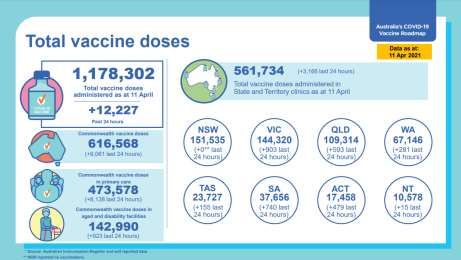
Presenters

         Prof James Ward                      Prof Kristine Macartney
       Director, UQ Poche Centre           Director of The National Centre for
UQ Poche Centre for Indigenous Health         Immunisation Research and
  Viertel Snr Medical Research Fellow            Surveillance (NCIRS)
 School of Public Health, the University
              of Queensland

Learning Outcomes

 By the end of this webinar, participants will
      1. Understand the impact and the need for ongoing consideration of
         COVID-19
      2. Understand vaccine safety and efficacy
      3. Identify possible risk factors and adverse events

                                                                                 2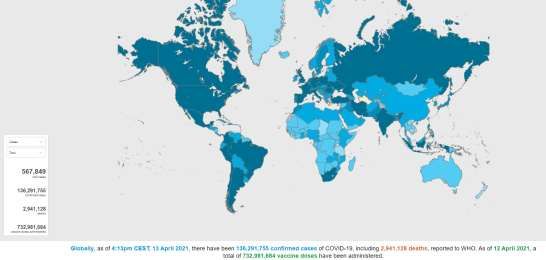
Global impact of COVID-19

            Ref: WHO COVID-19 Dashboard. Geneva: World Health Organization, 2020. Available online: https://covid19.who.int/ (14 April 2021)

Vaccination for COVID-19

                                                                               https://www.nytimes.com/interactive/2021/world/covid-vaccinations-tracker.html

                                                                                                                                                                3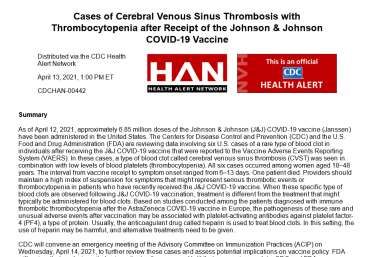
Global Indigenous populations COVID-19
                    Cases         Active cases   Deaths   Vaccines
Australia           150 (1)       0              0        Commenced
(Aboriginal &                                             within 50 ACCHS,
Torres Strait                                             data available
Islander)                                                 soon on doses

Canada (FN, Inuit   25,174 (2)    635            290      610 communities
Aboriginal)                                               60-75%
                                                          community adults
                                                          vaccinated
USA (AI AN)         181,576 (3)                  5,477    >400,000
                                                          32% of total AI/AN
                                                          population
NZ (Maori)          202 (4)       1 (4)          5        Just starting
Pacific islanders   191 (4)       2 (4)          1        vaccine program
                                                          Border and HCW

  Indigenous peoples and COVID-19
  • Brazil death rate is 16x higher among Indigenous peoples

  • 1000 deaths and 50000 infected

  • Very much likely to be an under estimation

  • New variant of concern

                                                                               4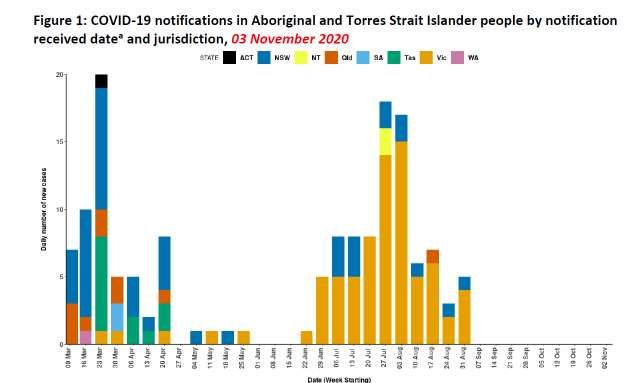
COVID-19
 • Its here to stay its never going away
 • As soon as we open borders we will be liable
 • Increasing VOC in global population
 • At pandemic height for last 7 weeks more than 4m cases per week
 • Disparity in vaccine availability between rich and poor countries
 • Its not where we ant to be 16 months into a pandemic

Vaccination and Public health
• Heralded as one of the big breakthroughs in public health
• Polio measles smallpox tetanus Hib cases have dramatically
  decreased since vaccines introduced
• As much as we vaccinate children with concern for their livelihood
  we now need to consider our elderly and their livelihoods COVID-
  19 impacts the frail people with comorbidities and the elderly
• Intergenerational households, family events funerals and other
  large gatherings are especially prevalent in our communities.

                                                                       5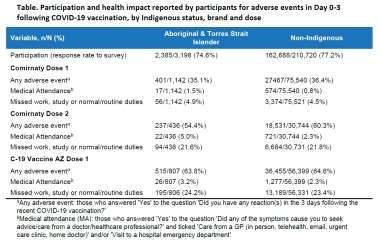
Vaccination for COVID-19

Which vaccines where and when for Australia?                                                                         Pfizer/BioNTech
                                                                                                                      mRNA vaccine
                                                                                                                    - 800 C storage
                                                                                                                   (now some -200 C )
                                                                                                                     Aus: 40m doses
                                                                                                                 2 doses: 21 days apart

                                                                                                                  Started: 22 Feb 2021
                                                                                                                  Hubs in major metro
                                                                                                                     ACF outreach

     Novavax
  Protein sub-unit                                                                                                 AstraZeneca/Oxford
   With adjuvant                                                                                                   Viral vector vaccine
       2-80 C                                                                                                             2-80 C
                                                                                                                    TGA Registration
 Aus:51m doses                                                                                                      Aus:53.8m doses
 2 dose schedule                                                                                                 2 doses:12 weeks apart

 Not yet registered                                                                                              Started: 7 March: hubs

                      https://www.nps.org.au/australian-prescriber/articles/covid-19-vaccines-are-we-there-yet

                                                                                                                                          6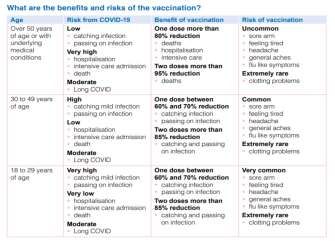
Vaccination: known side effects

AusVaxSafety safety data (4th April)

                                                                          •   Day 3 survey responses on adverse
                                                                              events
                                                                          •   Both Comirnaty and AstraZeneca

     https://www.ausvaxsafety.org.au/safety-data/ covid-19-vaccines       •   Data complements the TGA enhanced
                                                                              safety surveillance activities

COMIRNATY Dose 1                                     COMIRNATY Dose 2
Responses to Day 3 survey                            Responses to Day 3 survey

36% reported one/more adverse event                                   60% reported one/more adverse event
  0.7% reported medical attendance                                      1.9% reported medical attendance

                                                                                                                  7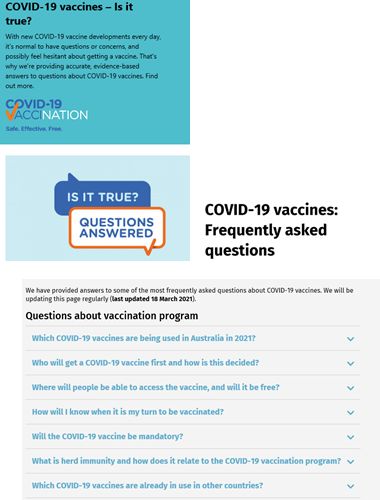
AstraZeneca Dose 1
 Responses to Day 3 survey

                                                                                       72% reported any adverse event
                                                                                      2.4% reported medical attendance

Real-world vaccination UK:
Self-reported systemic adverse events after vaccines
                                      Pfizer vaccine
                     Dose 1                                   Dose 2                               Astra Zeneca vaccine
                                                                                                          Dose 1

       Menni et al. (2021) preprint: https://papers.ssrn.com/sol3/papers.cfm?abstract_id=3795344

                                                                                                                          8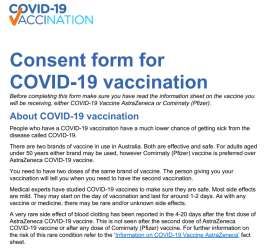
Adverse events: Indigenous and non Indigenous people in
Australia

                    Unpublished data: NCIRS and AusVaxSafety

                                                               9
Vaccination and co-morbidity

 Benefits                                                                                  Risks
 • People with certain health                                                              • Clinical trials – no evidence of
   conditions at higher risk of                                                               different risk profile in those
   COVID-19                                                                                   with comorbidities
 • Priority group for vaccination                                                          • No risk in post-market
 • Many of 800 million                                                                        surveillance seen
   vaccinated worldwide have
   risk conditions

     Thrombosis (clots) and thrombocytopenia (low platelets)
     syndrome (TTS) after vaccination?
 •   appears to be new syndrome (internationally accepted name to be confirmed, also called VITT, VIPIT at present)

 •   mechanism may be similar to rare reaction to heparin infusion (HITS) but without heparin

 •   Blood clots in unusual places and low platelets – platelet dysfunction causes clotting and
       • Veins in brain (cerebral sinus venous thrombosis)
       • Veins in abdomen (splanchnic veins)
       • Also can be other sites (very ill patients) and rarely arterial thrombosis

 •   Onset and progression over 4-20 days after vaccination with Astra Zeneca vaccine

 •   Exact rate uncertain – estimates currently 4-6 per million; slightly more common, but still rare in younger adults

 •   No RISK FACTORS identified (including gender) – ie can’t predict individuals who will get it

 •   Exact mechanism still under study
                MHRA: www.gov.uk/government/news/mhra-response-to-irish-authorities-action-to-temporarily-suspend-the-astrazeneca-covid-19-vaccine
               EMA: www.ema.europa.eu/en/en/news/emas-safety-committee-continues-investigation-covid-19-vaccine-astrazeneca-thromboembolic-events
                     https://www.tga.gov.au/alert/astrazeneca-chadox1-s-covid-19-vaccine

                                                                                                                                                     10
Case series – 10 April
New rare thrombosis and thrombocytopenia syndrome
• Case management and investigation
• What to look out for – new onset severe headache, abdominal pain 4-20
days after vaccination
• First steps
• detailed medical assessment
• FBC, d-dimer and other clotting studies
• If hospitalised – consult haematologist on medical management
• IS rare, but awareness important
• TGA reporting of cases (2 confirmed in Australia in ~700,000 doses of AZ)
https://www.tga.gov.au/alert/astrazeneca-chadox1-s-covid-19-vaccine-1
11Program materials updated
https://www.health.gov.au/initiatives-and-programs/covid-19-vaccines/information-for-covid-19-vaccination-providers#consent-information-and-patient-resources
12UK benefit risk
https://assets.publishing.service.gov.uk/government/uploads/system/uploads/attachment_data/file/9
76877/CovidStats_07-04-21-final.pdf
UK assessment of benefit v risk
https://www.gov.uk/government/publications/covid-19-vaccination-and-blood-clotting
https://assets.publishing.service.gov.uk/government/uploads/system/uploads/attachment_data/file/976880/PHE_COVID-19_AZ_vaccination_guide.pdf
13News overnight
NACCHO FAQ
https://www.naccho.org.au/aboriginal-health-
alerts-coronavirus-covid-19/
Latest safety information to be
updated
28
14COVID-19 vaccination and influenza
• 14 days between COVID-19
vaccine and any other vaccine
(including flu)
• All Aboriginal people (aged ≥ 6
months) – flu vaccine free
https://www.ncirs.org.au/updated-resources-
2021-influenza-vaccines-australians-fact-sheet-
and-faqs
Take home messages Astra Zeneca
• Preference Pfizer for under 50 year olds
• Under 50 yr olds can weigh individual risk-benefit
• AZ = not contraindicated
• Rare but severe event
– ?1 per 200 000 doses
Commonwealth, state and territory governments
• Onset 4-20 days post vaccine examining how overall immunisation program will
• Only reported after dose 1 be ‘modified’ to account for these changes and
ensure greater access to Pfizer doses
• Dose 2 can be given
15Other questions?
What about those aged 50-60 years old?
– If no contraindication – current advice is proceed
What if I have had “clots” in the past?
– If acquired – eg DVT after leg surgery – then current recommendation is safe to proceed
– If congenital thrombotic disorder
• Advice is being generated by ATAGI – due for release in next week
What if I have already had dose 1 of AZ?
– If no reactions continue with dose 2
Should I get a different vaccine for dose 2?
– At the moment = No
– Mixed vaccine schedule studies underway in the UK
Current status of COVID-19 in Aboriginal &
Torres Strait Islander communities
• Since January there have been 145 cases of COVD-19 reported among
Aboriginal and Torres Strait Islander Peoples compared to near 27,000 cases
in the non Aboriginal population here.
• This equates to a rate of around 6 times less than the non-Indigenous rate of
diagnosis
• There have been no deaths, no cases reported in remote communities and we
constantly are governing the situation
• But we are very early into the pandemic
16Previous Research from H1N1 2009 influenza
pandemic
• Highlighted serious gaps in governance aspects of the pandemic (notifications
hospitalisations and deaths)
• Including expressed distrust and scepticism in relation to current Australian
health policies on containment and told the researchers that specific plans for
Aboriginal and Torres Strait Islander peoples were needed.
• Respondents indicated that policies and plans had been developed without
respectful engagement with communities.
17We listened, we learnt, so did Government
• Established early in March 2020
• Taskforce is Chaired jointly by the National Aboriginal Community Controlled Health
Organisation (NACCHO and Dr Dawn Casey) and the Commonwealth Department of
Health (Dr Lucas De Toca)
• The taskforce has 30-40 members; mostly comprising Senior staff from ACCHS
nationally, including CEOs, and Aboriginal and non Aboriginal Doctors, experts
• Met initially three times per week and now once a week to discuss strategy, emerging
issues, reports from strategies already implemented; concerns from the field.
Aboriginal & Torres Strait Islander COVID-19
Taskforce Roles
• Implement an Emergency Response Plan for Aboriginal & Torres Strait Islander Australians and
communities, across urban regional and remote by developing a National Management Plan
• Advise on the National Management Plan
• Identify and escalate emerging and pressing issues
• Review and inform key documents, guidelines and plans as needed –the CDNA Series of
National Guidelines for Public Health Units: Coronavirus Disease 2019 (SoNG)
• Liaise with Australian Health Protection Principal Committee (AHPPC) and its standing
committees
• Review new communication materials to be sent out through existing channels
• Present information and advice to the Department of Health’s Communications Branch
• Aid the flow of information with the Aboriginal and Torres Strait Islander Health sector
18National Cabinet Australian Health Protection Principal Committee
• Prime Minister and State and Territory • Chief Medical Officer Australia and State and
Premiers Chief Minister Territory Chief Medical Officers
• National communication response plans • Protection of State and Territories, Border
restrictions,
• S/T surveillance responses plans
Regular Advice
Communicable Diseases Network
Aboriginal and Torres Strait Islander Taskforce on
Australia COVID-19 Working Group
COVID-19
• Leaders of State and Territory
• Chaired by NACCHO & Department of Health
Communicable Disease Branches,
• ACCHS representation nationally, Government reps
experts
nationally
• National Surveillance, guidelines, policies
• Specific issues related to surveillance,
and advice to and from Aboriginal
preparedness, response and communication,
Taskforce AHPPC and National Cabinet
planning documents
Useful resources
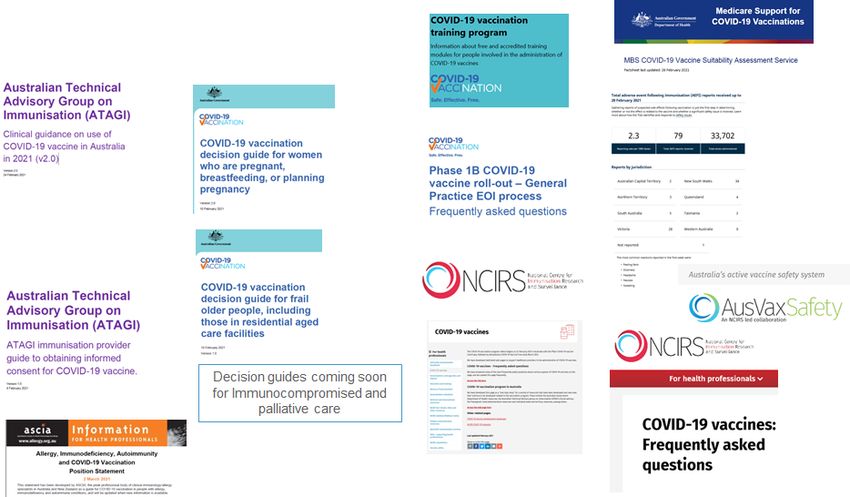
• COVID-19 vaccines, Department of Health: The latest news and www.health.gov.au
information about COVID-19 vaccines in Australia.
www.ncirs.org.au
https://www.health.gov.au/initiatives-and-programs/covid-19-
vaccines www.ausvaxsafety.org.au
www.tga.gov.au
• Coronavirus (COVID-19) Updates and Information, National
www.mbsonline.gov.au
Aboriginal Community Controlled Health Organisation
(NACCHO)
https://www.naccho.org.au/aboriginal-health-alerts-coronavirus-
covid-19/
• COVID-19 Resources for Aboriginal and Torres
• NCIRS
Strait Islander communities
https://www.ncirs.org.au/covid-19/covid-19-vaccination-
program-australia https://www.naccho.org.au/covid-19-resources
https://www.ncirs.org.au/updated-resources-2021-influenza-
vaccines-australians-fact-sheet-and-faqs
https://www.ncirs.org.au/public/influenza-vaccination-during-
covid-19-faqs-aboriginal-and-torres-strait-islander-people
19Useful resources
Other useful resources
COVID-19 vaccines – Is it true
– Accurate, evidence based answers
– https://www.health.gov.au/initiatives-and-
programs/covid-19-vaccines/is-it-true
NCIRS Frequently Asked Questions
– https://www.ncirs.org.au/covid-19/covid-19-vaccines-
frequently-asked-questions
National coronavirus and COVID-19 vaccine helpline
– 1800 020 080
Translating and Interpreting Service
– 131 450
20Any questions….
21You can also read


