Parkrun practice Toolkit - parkrun UK - Wiltshire Council
←
→
Page content transcription
If your browser does not render page correctly, please read the page content below
parkrun practice Toolkit

                                        START

parkrun UK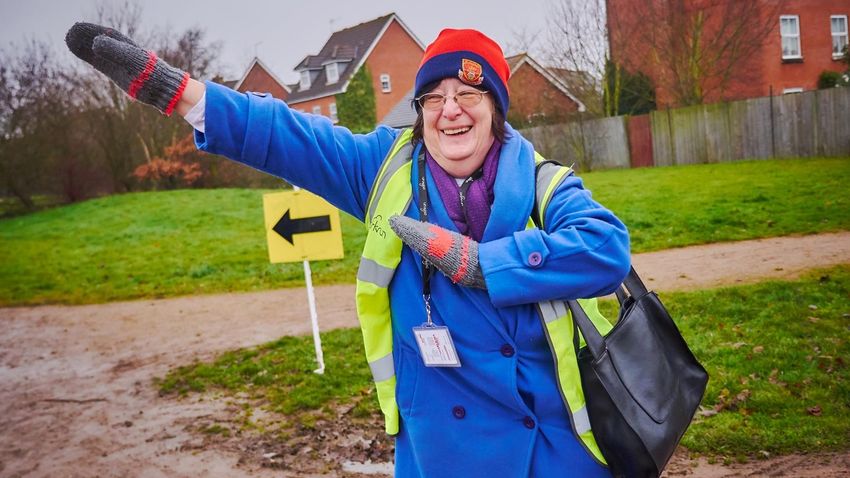
Setting the Scene

parkrun: the impact on health and wellbeing
Are you interested in:

  ●   improving health and wellbeing through physical activity, including volunteering?
  ●   opportunities to socialise, make friends and be part of a welcoming, supportive community?
  ●   activities that are free, outdoors and accessible to all?

If so, parkrun could be the answer.

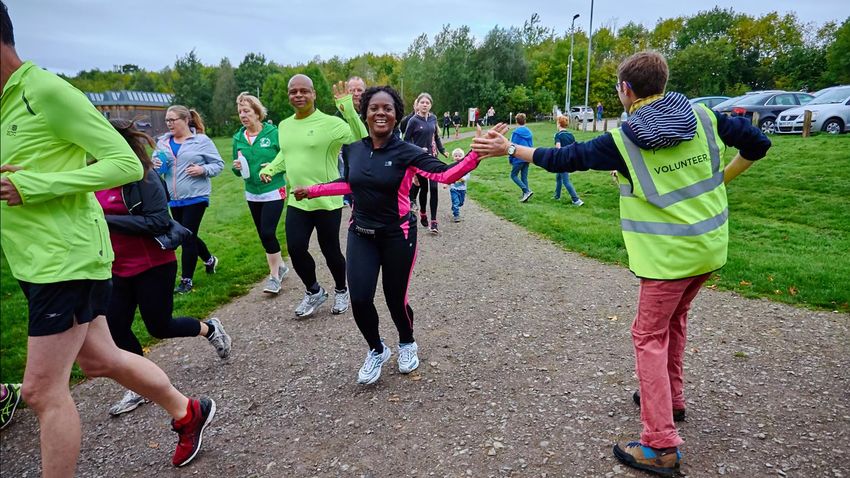
  ●   Free, weekly 5k events for all ages from 4+, every Saturday morning, in areas of open space
  ●   2k junior parkruns for 4-14 year olds and their families on Sunday mornings
  ●   Over 750 locations in UK
  ●   Organised by local volunteer teams
  ●   Not races: walk, run, jog, volunteer or spectate
  ●   Taking part is easy: register once on the parkrun website, print off your personal barcode and head
      down to your local event
  ●   parkrun is open to all, including those who are inactive or have health conditions or disabilities

Whether people want to improve their fitness, make new friends, cope with health problems, learn new
skills or simply be outside with others, parkrun has a positive impact on health and wellbeing and changes
lives.
                                                                                                             19/06/18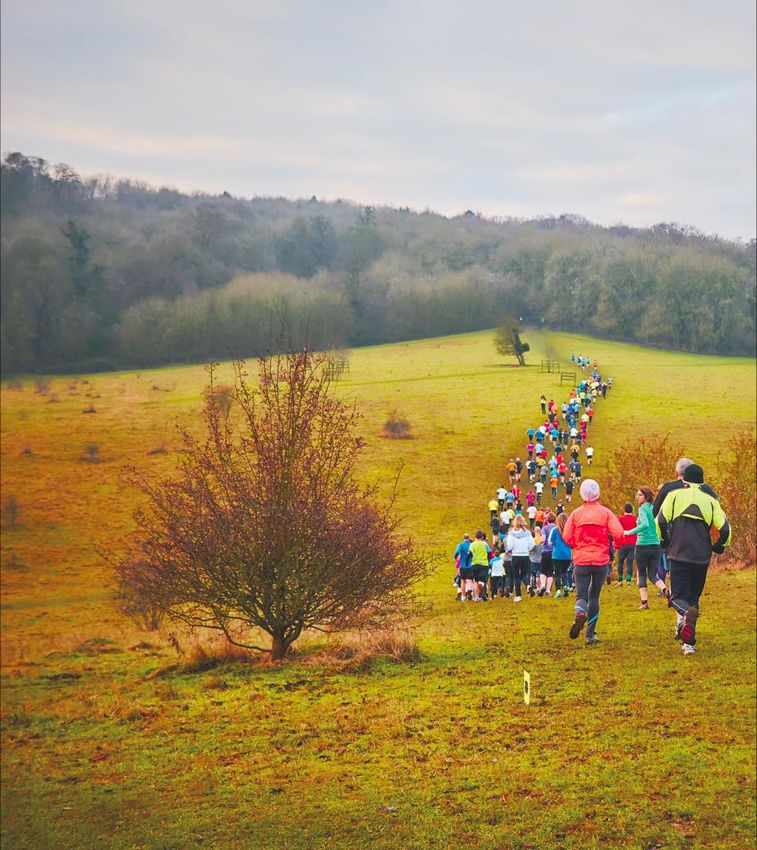
Setting the Scene

parkrun: the impact on health and wellbeing
   What if there was one prescription that could prevent and treat dozens of diseases, such as diabetes,
                   hypertension and obesity? Would you prescribe it to your patients?”
               Robert E. Sallis, M.D., FACSM, Exercise is Medicine Advisory Board Chairman

     parkrun benefits health and wellbeing through increased physical activity, skill development,
              friendships and socialisation, mutual support and personal empowerment.

The UK CMO’s advice is for ALL adults to get at least 150 minutes of moderate intensity activity or 75
minutes of high intensity activity per week – and just 10 additional minutes can make a clinical difference,
reducing the impact of the chronic health conditions GPs and their teams see every day

One third of men and half of all women do not achieve this target, and one fifth of men and a quarter of
women are physically inactive – achieving less than 30 minutes of moderate activity per week

And there’s good evidence that volunteering itself offers health benefits – studies have shown that it
decreases rates of depression, reduces social isolation and improves self esteem

Primary healthcare teams can play a key role in empowering patients to make positive behaviour
changes – educating them to recognise the link between their chronic health conditions and lifestyle           19/06/18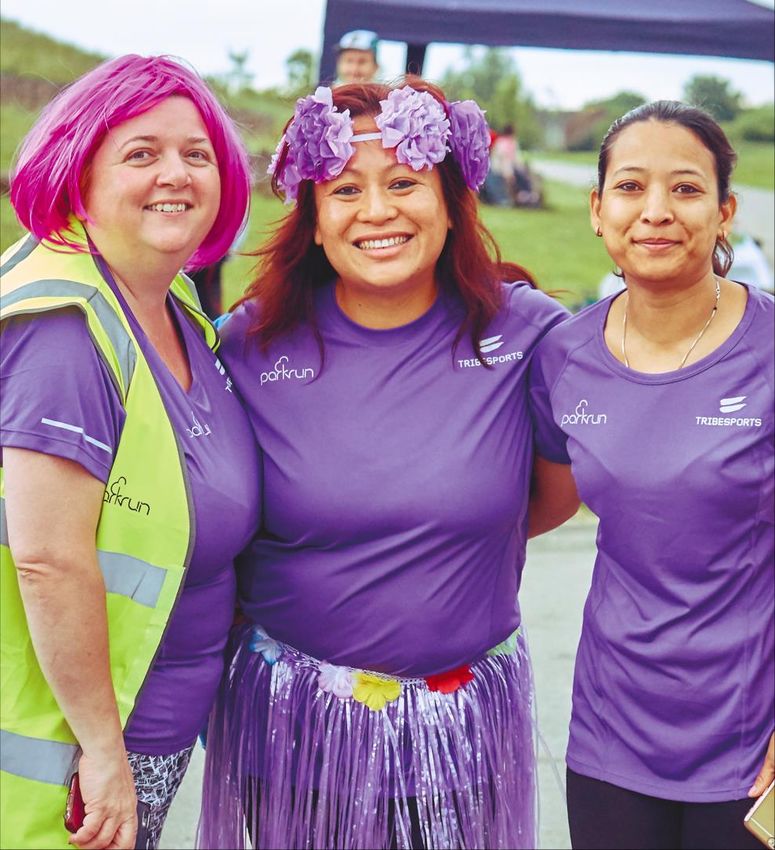
“   Almost every day I invite my
                patients to come to parkrun. I’ve
                 had successes with people with
                anxiety, depression, diabetes and
               heart disease as well as those who
                   want to improve their blood
               pressure or get fitter. It’s a win-win
                situation for my patients and the
                 NHS. My patients are healthier,
               happier and on fewer medications,
                 and the NHS saves a fortune on
                 unnecessary drugs and dealing

                                          ”
                      with their side effects.

                         Dr Simon Tobin

Presentation
                                                        DD/MM/YY
    Title
Setting the Scene

The parkrun practice initiative

parkrun UK has launched a new ‘parkun practice’ initiative with the Royal College of General
Practitioners (RCGP). Under this initiative, GP practices across the UK are encouraged to develop
close links with their local parkrun to become ‘parkrun practices’.

Involvement in this initiative will help practices:

  ●   Improve the health and wellbeing of practice staff
  ●   Improve the health and wellbeing of patients, reducing the need for lifelong medication
  ●   Raise awareness amongst the parkrun community of services that practices provide
  ●   Help develop a local community and environment centred around wellness generation
  ●   Support the UK-wide movement to scale up social prescribing activities

                                                                                                    19/06/18
Setting the Scene
The purpose of the Toolkit
This toolkit is for:
● GP practices who want to become parkrun practices
● parkrun event teams who become linked to these practices
It provides practical guidance for becoming a parkrun practice. In addition to the
suggested activities that a GP practice can undertake, in collaboration with their local
parkrun event, the Toolkit contains a number of promotional resources and links that can
be personalised, printed or digitally shared.
19/06/18Presentation DD/MM/
Title YYEligibility and Process
Criteria and self-certification
● A parkrun practice is one that makes a
commitment to promoting parkrun through
the appropriate channels (suggested actions
below).
● Adherence to the suggested criteria will be
self-declared rather than independently
adjudicated.
● It requires mutual agreement by GP practice
and the local parkrun.
● The practice GPs do not have to be a member
of RCGP to take part in this initiative.Eligibility and Process
Process for becoming a parkrun practice
● Practices contact their local parkrun event team and discuss the possibility of becoming a
parkrun practice. Event team contact details can be found here.
● At least one designated person should be chosen as the principal contact within the practice.
● The practice and the parkrun team should liaise and agree how to implement the partnership..
● Practices should fill out the form at www.rcgp.org.uk/parkrun to register their interest in
becoming a parkrun practice. A follow-up email will include a link to the certificate. It is hoped
that this certificate will be prominently displayed in the practice waiting room.
● Undertake some/all of the activities suggested below. The list is for guidance only, and GP
practices and parkrun events should feel empowered to decide what will work best for them.
19/06/18Activities: being a parkrun practice
Possible ways to promote parkrun
There are many ways that a practices can get involved and it’s up to individual practices to decide
what activities they want to undertake. Some suggestions include:
● Display parkrun flyers/posters in waiting rooms. The flyers can be found here
● Display information about parkrun on television screens
● Deliver a parkrun presentation to staff and/or patients, with the support of parkrun where
possible
● Share parkrun flyers with patients and staff (electronically or hard copy)
● Include a parkrun page or a link to the parkrun website on the practice website
● Mention parkrun in practice communications, for example newsletters and social media
● Co-facilitate local PHE Physical Activity Champions’ teaching sessions
● Encourage all staff to register for parkrun and give it a go
● Encourage patients and carers to register and take part in parkrun
● Undertake a volunteer takeover (practice staff/patients fill all volunteer roles at a parkrun event)19/06/18
● Share inspirational stories with parkrun HQ and RCGPActivities: being a parkrun practice
Promoting parkrun practices
● Media (newspapers, radio, television): Contact local media to explain the initiative and its
benefits
● Social media: Highlight the great work you are doing using the hashtags
#parkrunpractice, #parkrunRCGP and #parkrunprescription
● Case studies: Collate inspiring case studies to exemplify the benefits of an association
with parkrun. These can be shared within the practice and with parkrun (for publication in
the weekly parkrun Newsletter), RCGP and the local media. Case studies of existing
parkrun practices are below.
19/06/18Promoting parkrun
Resources
● parkrun and junior parkrun flyers/posters can be used electronically, or printed off and
displayed in waiting rooms or handed to patients.
● parkrun YouTube Channel contains inspirational videos about parkrun, including this
video which highlights the health and wellbeing benefits of parkrun to patients and the
health sector, including the value of being a parkrun practice
● loveparkrun.com is a microsite which has been created to help present the benefits that
parkrun can provide to communities and individuals.
● parkrun image library contains a bank of freely available images (please credit the
photographer)
● This video of Stanley Park junior parkrun is a great example of a junior parkrun in action.
19/06/18Promoting parkrun
Some inspiring stories
Weekly doses of inspiration can be found on the parkrun blog. See the following stories for a
flavour of how parkrun changes lives:
http://blog.parkrun.com/uk/2018/01/24/overcoming-the-odds/
http://blog.parkrun.com/uk/2017/04/24/a-toast-to-the-tail-runners/
http://blog.parkrun.com/uk/2018/01/17/6374/
http://blog.parkrun.com/uk/2018/01/15/autism-and-parkrun/
http://blog.parkrun.com/uk/2017/10/29/a-genuine-transformation/
http://blog.parkrun.com/uk/2017/02/19/an-enormous-sense-of-satisfaction/
You may also be interested in this fantastic story about 89-year-old Elisabeth Marris. Elisabeth
lives in a care home opposite Bushy Park in London, and every weekend comes down to support
the 1,300 participants at Bushy Park parkrun. She is a valued member of the parkrun family, has
made new friends and found a new lease of life through parkrun. Elisabeth has been given the
title of honorary marshal in recognition of her contribution to the parkrun community.
19/06/18Promoting parkrun
Existing case studies
Norwood surgery, Southport
Dr Simon Tobin has been a GP at Norwood Surgery in Southport for 23 years. Over the past few
years he has become increasingly passionate about the benefits of ‘lifestyle medicine’. In 2016 a
friend from his running club was involved in setting up Southport parkrun. The start line is 800
metres from Simon’s home and right in the middle of the area covered by his medical practice.
As a parkrunner Dr Tobin was keen to be involved, and started volunteering. Three of the GPs
and their spouses are now regular parkrunners as well as the Practice Manager, Practice Nurse,
Palliative Care Nurse and several members of the reception staff. Dr Tobin and other practice
staff actively and regularly encourage their patients to attend parkrun, even meeting them at
the event and accompanying them as they walk or run around the course. Dr Tobin has a bank
of inspirational stories about patients, and their families, whose lives have been changed
through parkrun, and Norwood surgery is proud to be associated with the event.
19/06/18Promoting parkrun
Existing case studies
Sloan Medical Centre, Sheffield
Sloan Medical Centre helped set up Graves parkrun in Sheffield six years ago. The staff and
patients raised the initial event start-up costs with a sponsored run in the park and it was
matched by the local council to reach the total. The original volunteers were mostly from the
practice. Dr Ollie Hart was Event Director, but stepped down after a couple of years. One of the
Centre’s receptionists took over and has blossomed in the role. She was initially quite nervous
about getting involved, but she has grown in confidence and now holds court over 300 people
each week. She went on to take a promotion at a neighbouring practice as her career
developed. Through the association many of the Centre’s staff and patients are regular runners/
walkers or volunteers at Graves parkrun. Dr Hart knows people with multiple sclerosis, diabetes,
airway disease, mental health issues, to name but a few conditions, who have all benefited
hugely from a ‘life changing’ association with parkrun. Dr Hart says that, as an intervention,
helping to start Graves parkrun and having a close association with the event has had the
biggest health impact of anything he has done in his career so far.
19/06/18Promoting parkrun
Research papers: parkrun and health and wellbeing
C. Stevinson, M. Hickson; Exploring the public health potential of a mass community
participation event, Journal of Public Health, Volume 36, Issue 2, 1 June 2014, Pages 268–274,
https://doi.org/10.1093/pubmed/fdt082
Stevinson, C., Wiltshire, G. And Hickson, M., 2015. Facilitating participation in health-enhancing
physical activity: a qualitative study of parkrun. International Journal of Behavioral Medicine,
22(2), pp.170-177
Wiltshire, G., Fullagar, S., & Stevinson, C. (2018). Exploring parkrun as a social context for
collective health practices: Running with and against the moral imperatives of health
responsiblisation. Sociology of Health and Illness, 40(1), 3-17. DOI: 10.1111/1467-9566.12622
Gareth Wiltshire & Clare Stevinson (2017) Exploring the role of social capital in community-based
physical activity: qualitative insights from parkrun, Qualitative Research in Sport, Exercise and
Health, 10:1, 47-62, DOI: 10.1080/2159676X.2017.1376347
19/06/18Help & Support
Key contacts
If you have any questions about being a
parkrun practice please contact:
Dr Simon Tobin, parkrun’s volunteer Health
and Wellbeing Ambassador, GP and GP
Trainer on simon.tobin@parkrun.com
Alice Smith, RCGP’s Membership Events
Coordinator on Alice.Smith@rcgp.org.uk
19/06/18Presentation DD/MM/
Title YY 1
8FINISH www.parkrun.com
You can also read


