ALL SAINTS RC SCHOOL - Year 9 Curriculum Guide (2019/2021)
←
→
Page content transcription
If your browser does not render page correctly, please read the page content below
ALL SAINTS RC SCHOOL
                                          Diocese of Middlesbrough
                                            Head Teacher: Mrs S Keelan-Beardsley
  ________________________________________________________________________________________________________________________

                  SUCCESSFUL

                                        FAITHFUL

                                                         WELCOMING

                                                                         HARD WORKING
       Year 9
       Curriculum Guide
       (2019/2021)
                                                                                      ACCEPTING

Compassion      Truth         Respect      Forgiveness     Justice       Service      Gentleness     Humility      Stewardship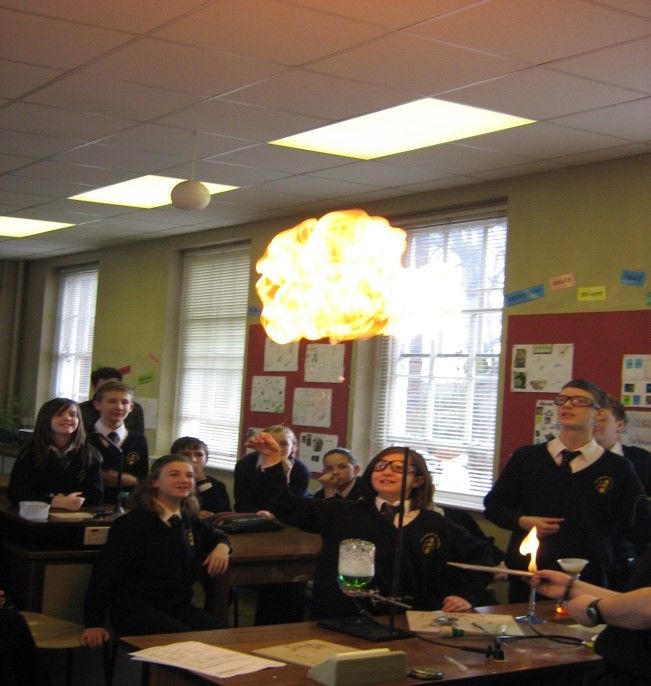
Contents
Page
Introduction 1—7
Section 1—Compulsory Courses
English Language and English Literature 8
Maths 9
Modern Foreign Languages 10 & 11
Physical Education 12
PSHCE 13
Religious Education 14
Science 15
Section 2—Optional Subjects
Art 16
Business Studies 17
BTEC Tech Award in Business 18
Computer Science 19
Dance 20
Design and Technology 21 & 22
Drama 23
Food Preparation and Nutrition 24
Geography 25
Health and Social Care 26
History 27
Music 28
Physical Education 29
Princes Trust Achieve Programme 30
Triple Science 31
Year 9 Curriculum Guide—2019/2021 Page 1
BUSINESS
ART STUDIES DANCE D&T
RESISTANT MATERIALS
Making Decisions
SCIENCE
D&T
During the next few weeks you will be making decisions about the textiles
choices available to you in years 10 and 11. Do not worry if there seems
a lot to understand. You can find useful information by speaking to your
Subject Teachers, Form Tutors and Mr Flanagan. You will also find a lot
of useful information in this booklet. You can then talk it over with
family and friends. When going through the booklet you need to think
carefully about a number of things such as:
RE
Which subjects do you think you will enjoy? These are often
FOOD
PREPARATION
the subjects in which you get the best results. & NUTRITION
Why are you choosing these subjects? Do not choose a subject
because your friend has done so. You may have different interests
and abilities, and it is likely you will be in different groups anyway. MODERN
PHYSICAL FOREIGN
EDUCATION LANGUAGES
Who are you going to talk to about your choices? Discuss your
choices with your parents as well as your teachers. Some of the
courses will be new to you. If you have any questions you can ask at
the Year 9 Options Information Evening on Thursday 10 January
at 7 pm at the Upper School, starting in the Hall.
TRIPLE
DRAMA
SCIENCE
Do not choose a subject because you like or dislike a particular
teacher. Again no-one can be certain who will teach you in Years 10
and 11.
Remember in order to achieve the English Baccalaureate you will
have to study your core subjects of English, Maths, Science, a
Foreign Language (or Latin) and History or Geography.
ENGLISH
MUSIC
Once you have chosen a subject, you have made a commitment to
follow the course for two years. You will not be able to change the
course, except under exceptional circumstances.
REMEMBER : You must take as much time to consider your “reserve”
as you do your other choices
HEALTH &
MATHS
SOCIAL CARE
COMPUTER
HISTORY GEOGRAPHY
SCIENCE
Year 9 Curriculum Guide 2019/2021 Page 2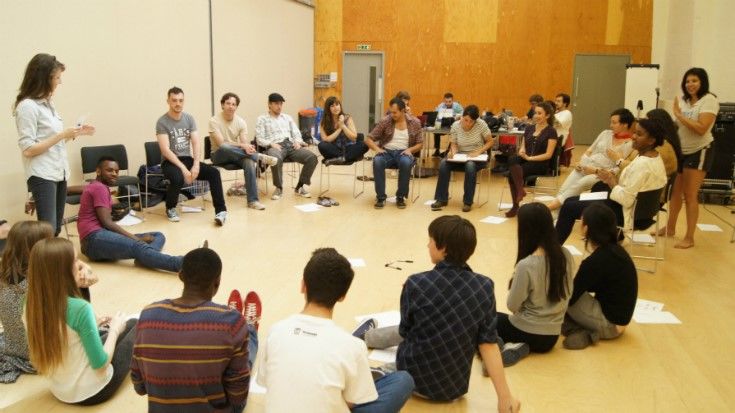
ART                              BUSINESS                   TRIPLE
                                                                                               DANCE
                                        STUDIES                   SCience

                                                                                                          D&T
                                                                                                       Resistant

    SCIENCE                     Yo u n e e d t o c h o o s e                                           materials

                                w i s e l y th e f i r s t t i m e
                                                                                                       D&T
                                                                                                     textiles
       RE

                           Mr Flanagan and Mrs Watkins are available to speak to you about
                           your choices and help complete the choices form.

   PHYSICAL
                             Options Choices Forms will be distributed during Year 9 Assembly             FOOD
                                                                                                       PREPARATION
  EDUCATION                   on 10 January. All forms must be returned to Mr Flanagan by:             & NUTRITION

                                             15 JANUARY 2019 AT THE LATEST

                           As soon as these forms have been received by Mr Flanagan, the
                           choices will be analysed and groups created in order to suit as many
     BTEC                  students’ preferences as possible.                                            DRAMA

   Business
                           Once this is done;

                           1.       It may be necessary to ask some of you to use your reserve
                                    subject if your initial choices cannot be accommodated. We
                                    ask for your co-operation in this as we do try to accommodate         MUSIC
                                    the requests of the majority of students.
   MODERN
   FOREIGN                 2.       It may also be necessary at this stage to decide
  LANGUAGES
                                    whether any course needs to be withdrawn because not
                                    enough students have chosen it.

                                                                                                          ENGLISH

       MATHS

                                                                                                     HEALTH &
                                COMPUTER                                                            SOCIAL CARE
                                                        HISTORY
                                 SCIENCE
                                                                            GEOGRAPHY

Year 9 Curriculum Guide 2019/2021                                                                           Page 3
Making Your Subject Choices
                                    Compulsory Subjects Studies by all students are:-

      English Language and English Literature                     GCSE (2 GCSEs)
      Religious Studies                                           GCSE
      Mathematics                                                 GCSE
      One Modern Foreign Language                                 GCSE
      Science                                                     GCSE (2 GCSEs)
      Physical Education—not GCSE
      PHSCE—not GCSE

                  Currently there are 3 choices to be made in Year 9 for study in Year 10

        You will be asked to choose ONE Modern Foreign Language from this box or alter-
                                      native by agreement

       French
       German
       Spanish
       Princes Trust Achieve Programme (by agreement with Mr Flanagan)

                                      Then you can choose TWO subjects from this box

         Art                                    French                            Spanish
         Business Studies                       Geography                         Triple Science

         BTEC Business                          German

         Computer Science                       Health and Social Care

         Dance                                  History

         Design Technology                      Music

         Drama                                  Physical Education

         Food Preparation and Nutrition         Princes Trust Achieve Programme

Year 9 Curriculum Guide 2019/2021                                                                  Page 4
BUSINESS
      ART                                                      DANCE                             D&T
                                         STUDIES
                                                                                               TEXTILES

                                                                                                          D&T
    SCIENCE
                                                                                                    RESISTANT

                                How to Complete                                                     MATERIALS

                               Yo u r C h o i c e s F o r m
      RE                                                                                             Food
                                                                                                  PREPARATION
                                                                                                  & NUTRITION

                     Please make sure that you have read the notes on each subject first and
                     asked any questions that you have!

                     When you are sure you have made up your mind, complete all the sections     PHYSICAL
                     on the option choices form.                                                EDUCATION
     PSHCE

                     REMEMBER to add in a reserve choice.

                     This should then be signed by you and your parents and returned to your
                     Form Tutor for signing by Tuesday 15 January 2019

                                                                                                       DRAMA

     MUSIC

                           TUESDAY 15 JANUARY 2019 at the latest.                                    ENGLISH

   MODERN
   FOREIGN
  LANGUAGES

                                                                                                  HEALTH &
                                                                                                 SOCIAL CARE

       MATHS
                                    COMPUTER         HISTORY              GEOGRAPHY
                                     SCIENCE

Year 9 Curriculum Guide 2019/2021                                                                Page 5
BUSINESS               BIOLOGY
      ART                                                                          DANCE          CHEMISTRY

  PSYCHOLOGY
                                    T h i n k i n g a b o u t l i f e a f t e r Ye a r 1 1 a t       Design

                                                         All Saints                               technology

PHILOSOPHY           We know that not all students are the same and All Saints hopes to
                     offer a wider range of subjects on differing levels over the next few          SOCIOLOGY
                     years.

                     A Levels
                     To study A Levels an average point score of 40 points across all
   LATIN

                     subjects taken (preferably including English and Maths at Grade 4 or            physics
                     above). PLUS at least a Grade 4 in the subject or closely associated
                     subject at GCSE.

                     Below is a comprehensive list of ‘A’ Level and BTEC courses that we
    pe               currently offer at All Saints.
                                                                                                   Government
                     A LEVELS                                                                       & politics

                     Art                                    Media Studies
                     Biology                                Music
  ENGLISH
                     Business Studies                       Music Technology
                     Chemistry                              Philosophy
LITERATURE
                                                                                                    TEXTILES
                     Computing                              Philosophy, Ethics and Theology
                     Dance                                  Photography
                     Design Technology                      Physical Education
                     English Language                       Physics
   MUSIC             English Literature                     Psychology
                     Extended Project (AS only)             Sociology                              THEATRE
                     French                                 Spanish                                 STUDIES
                     Geography                              Textiles
                     German                                 Theatre Studies
  MODERN             Government & Politics
  FOREIGN            History
                     Latin                                  BTEC Courses
 LANGUAGES
                                                                                                   ENGLISH
                     Mathematics
                     Further Mathematics                    Business Studies                      LANGUAGE
                                                            Health & Social Care

  MATHS                                                                                             HEALTH &
                                                                                                   SOCIAL CARE

          MEDIA                     Philosophy, Ethics
         STUDIES                        & THEOLOGY             COMPUTING                         GEOGRAPHY
                                                                                    HISTORY

Year 9 Curriculum Guide 2019/2021                                                                      Page 6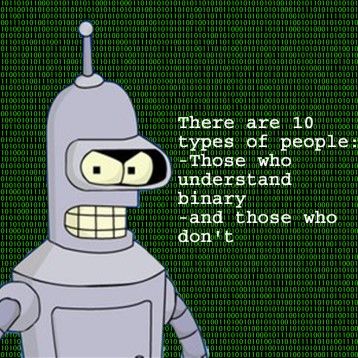
BUSINESS
      ART                                                  biology                  DANCE          chemistry
                                    STUDIES

                                                                                                      Design

                                                                                                    technology
psychology

                         Advanced Level Vocational Courses
                                                                                                     HEALTH &
 GEOGRAPHY               If you have the equivalent of 4 GCSEs at grade ‘4’ or better, we           SOCIAL CARE
                         offer a vocational ‘A’ Level route leading to ‘A’ Level equivalent
                         qualifications.

                                                 At present we offer two courses:
   Ethics
                                                                                                      physics
      &                                        BTEC Business Studies Level 3 Course
 philosophy

                                               Health & Social Care Level 3 Course

                         These vocational courses can be taken alongside A Levels.
   PHYSICAL
  EDUCATION              We look forward to hearing which courses you may be interested in
                         doing at this level, towards the end of Year 11.                           Government

                                                                                                     & politics

                         GCSE Qualifications in Maths and English
     English             All Sixth Form students are expected to have gained a Level 2,
   literature
                         (GCSE grade 4 or above) in Maths and English Language before they
                         leave us and courses will be made available to achieve this.
                                                                                                      TEXTILE
                                                                                                    TECHNOLOGY

       MUSIC

                                                                                                      Theatre

                                                                                                      studies

     MODERN
     FOREIGN
    LANGUAGES

                                                                                                     ENGLISH
       MEDIA
                                                                                                    language
      STUDIES
                                         MATHS                       HISTORY           COMPUTING

Year 9 Curriculum Guide 2019/2021                                                                     Page 7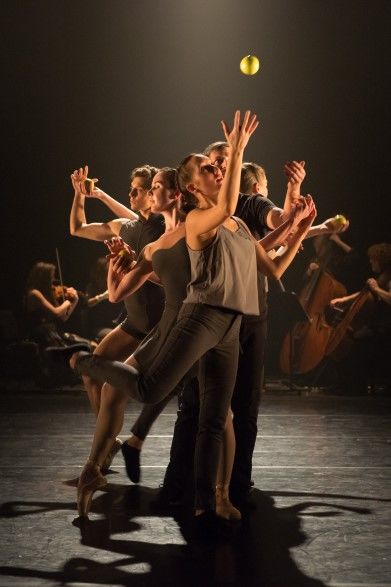
Section 1

                     Compulsory Courses

Year 9 Curriculum Guide—2019/2021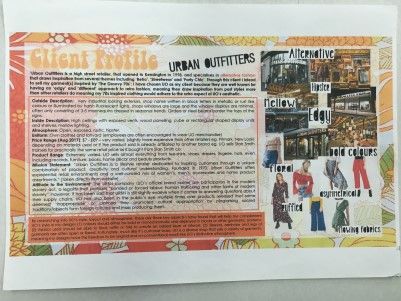
All Saints RC School

ENGLISH LANGUAGE AND ENGLISH
LITERATURE
Full Course:                   2 Years
Exam Board:                    AQA

General Outline
The English Literature and English Language course develops the reading, writing, speaking and
listening skills of students whilst also teaching them to become more analytical and evaluative.
Students will have the opportunity to study a range of texts from Shakespeare, to modern drama,
poetry to non-fiction texts and they will enhance their written ability through creative writing. The
course results in two GCSE grades, one for Literature and one for Language.

English Literature

Unit 1: Shakespeare and the 19th Century novel - Examination
Students will study a Shakespeare text in depth and will be required to write in detail about the
whole play and an extract in an examination. Students will also study a 19 th Century novel over the
course and must also write in detail about the whole text and an extract. The aim of this Unit is to
encourage an appreciation and understanding of traditional texts in our cultural heritage and to use
these texts to inspire students’ own written styles.

Unit 2: Modern Texts and Poetry – Examination
Unit 2 will see the students studying either a modern novel or a modern drama. In the examination,
students must answer one question and respond with an analytical essay about their chosen text.
They also have the opportunity to study a range of different poems from an anthology cluster. This
will develop the students’ skills and abilities to read and understand poetry from different eras
independently. The examination requires students to compare an unseen poem to one that they have
studied and to then compare two unseen poems.

English Language

Paper 1: Explorations in Creative Reading and Writing – Examination
Within this module, students explore what it takes to be a good writer, deepening their knowledge
of narrative and descriptive skills through the study of a fiction text. In the examination, students
must answer several questions on their fiction text before demonstrating their written ability
through descriptive or narrative writing.

Paper 2: Writer’s Viewpoints and Perspectives - Examination
Students study a range of non-fiction texts from different historical periods and investigate how
and why language is used to present a particular viewpoint or perspective. In the exam, they must
read two non-fiction texts and answer several questions to analyse them before
writing to present a viewpoint.                                                    Final grade is made up
                                                                                       of:

                                                                                       100% written
                                                                                       examinations at the end
                                                                                       of Year 11.

Year 9 Curriculum Guide—2019/2021                                                                       Page 8
All Saints RC School
MATHS
Full Course: 2 Years
Exam Board: EDEXCEL
General Outline
The fact that Maths is not an option indicates how important it is.
In Maths there are two tiers of the syllabus. There is much more emphasis on Algebra in the higher
tier than in the foundation tier.
Every day we rely upon the mathematical skills of others. Doctors and nurses need to administer
the correct amount of medicines, engineers need to ensure their buildings or bridges don’t fall down;
shop assistants need to give us correct change. If we are to play a useful role in our society we
need to have some of these mathematical skills ourselves.
The work in mathematics covers the following content areas:
Number & Algebra
Geometry & Measures
Statistics & Probability
Ratio, Proportion & Rates of Change
There are eight Mathematics lessons per fortnight in Year 10 and six in Year 11. Some lessons will
be whole class lessons which deal formally with the subject matter. Other lessons will involve
open-ended investigations, practical work and use of computers.
Year 10 and 11 Maths at the higher level forms the basis for further
studies at Sixth Form level. Anyone wanting to study Maths at ’A’ Level The final grade is made up of:
should be aiming to achieve grade 7,8 or 9 at GCSE and be in one of
Final examination 100%
the top sets.
The final exams can be taken at
two levels:
Foundation (Grades 5-1)
Higher (Grades 9-4)
Year 9 Curriculum Guide—2019/2021 Page 9All Saints RC School
MODERN FOREIGN LANGUAGES
Full Course: 2 Years
Exam Board: Edexcel GCSE French, German or Spanish
At All Saints the majority of our students continue to study at least one language at KS4.
We are also pleased to offer you the opportunity to take two Modern Foreign Languages,
depending on what you have studied in KS3.
How the system works:
One Language
Many of our students choose to continue with one language at
GCSE. You can choose from GCSE French, German and Spanish if
you have studied the language in KS3.
Two Languages
Many students choose to study two languages each year. You can
choose from GCSE French, German and Spanish which take place
during the normal school day.
In the increasingly competitive world of international business, proficiency in languages is
recognised as highly desirable by employers, and is looked upon extremely favourably by the
best UK universities when offering places to prospective students.
The Edexcel GCSE qualification in each language is designed to show how language is used in
real life. Authentic cultural content has been embedded throughout the specifications,
assessments and support materials, giving students a sense of purpose to language learning
in a fun way.
The final exam consists
of 4 papers with 25%
weighting each in the
skills of Listening,
Reading. Speaking and
Writing.
Year 9 Curriculum Guide—2019/2021 Page 10All Saints RC School
MODERN FOREIGN LANGUAGES
Why choose two languages
More languages
Languages are fun! mean better
JOB PROSPECTS
Languages are for Good communication
leisure and are skills are essential in the
modern world
practical
Year 9 Curriculum Guide—2019/2021 Page 11All Saints RC School
PHYSICAL EDUCATION
(NOT GCSE)
General Outline
Activities are offered in the form of options.
These activities are likely to be:
Girls Boys
> Netball > Football
> Hockey > Rugby
> Basketball > Basketball
> Volleyball > Volleyball
> Aerobics > Badminton
> Dance > Hockey
> Badminton > Athletics
> Gymnastics > Tennis
> Athletics > Cricket
> Tennis > Gymnastics
> Rounders
You will do five activities – three winter and two summer, each activity lasting approximately seven
weeks.
In Year 11, additional activities on offer include: trampolining, swimming, girl’s rugby, football and
use of facilities at Energise Sports Centre.
The upper school offers the opportunity to use the MUGA (multi use games area), which has opened
up many activities on site and is a superb practice and training facility.
A comprehensive fixture list is maintained in the major sports, and clubs are run in a variety of
others.
Year 9 Curriculum Guide—2019/2021 Page 12All Saints RC School P.S.H.C.E. (PERSONAL, SOCIAL, HEALTH & CITIZENSHIP EDUCATION) General Outline At All Saints RC School our PSHCE programme underpins everything we do in our roles as Christians and allows our young people to make their own informed choices and decisions while growing in the Catholic faith. It is taught during the collapsed curriculum days throughout Years 10 and 11, as well as in various GCSE subjects. Some of the topics covered during the course include: Relationship and Sex Education Drug and Alcohol Education Revision Techniques Study Skills and Exam Preparation Enterprise and Business Skills Citizenship Work Experience Careers Education including Career Options CVs and Interview Skills The course will also improve many generic life skills such as: Problem Solving Relationships Communication Target Setting, Organisation Time Management Decision Making Year 9 Curriculum Guide—2019/2021 Page 13
All Saints RC School

RELIGIOUS EDUCATION
Full Course:               2 Years
Exam Board:                Eduqas

At All Saints everyone takes GCSE RE. RE will help you learn about yourself and other
people, by studying the phenomena of religion.

                                    Through debate and discussion you will be encouraged to wrestle
                                    with some of the key moral issues which young people face today.
                                    You will develop important skills: for example, how to present an
                                    argument clearly and coherently. You will learn how to think and
                                    not necessarily what to think.

                                    We are a Catholic School. You will have an opportunity to
                                    appreciate the traditions of the Roman Catholic Church, some of
                                    its beliefs and practices, and its links with other Christian
                                    churches. As well as Christianity, you will also have the
                                    opportunity to study Judaism and its place in the world today.

We all have an instinct to look for truth and for justice. This course helps you to find a way
through the moral maze, to ask what is good, bad; right or wrong and how can we know. You
will look at issues related to prejudice, racism, sexism, warfare, pacifism, relationships,
sexual ethics, crime and punishment. We hope that you will get to the heart of these
matters and be able to appreciate religious perspectives on them.

In recent years RE has been one of the fastest-growing and most popular GCSE subjects in
the country. More and more employers are recognising and appreciating the skills people
learn through studying RE and it is becoming highly thought of in the work place.

If you are prepared to work and think hard, and above all if you enjoy a good discussion, you
will enjoy the RE experience.

                                                                                 Final grade is made up of:

                                                                                 100% written examinations
                                                                                 at the end of Year 11.

Year 9 Curriculum Guide—2019/2021                                                                     Page 14
All Saints RC School
COMBINED SCIENCE DOUBLE AWARD
Full Course: 2 Years
Exam Board: AQA
All students study Combined Science in the form of a spiralled curriculum from Years 9 to 11. Students who
choose to study Triple Science will do this in addition to following the Combined Science curriculum.
Combined Science contains equal amounts of Biology, Chemistry and Physics and will thoroughly prepare
students for Science A Levels. In Year 9 students will have one or two teachers covering the whole course,
structured into Biology, Chemistry and Physics topics.
In Year 10 the course is split into Biology, Chemistry and Physics. Students will have three hours of Science a
week, one for each subject, taught by a specialist teacher.
In Year 11 students will have six hours of Science teaching each week, two for each subject, taught by a
specialist teacher.
At the end of this course students sit two exams for each of Biology, Chemistry and Physics. The results of
these will be combined and each student will receive two GCSE Science grades, these can be two of the same
grade, or a split grade i.e. 4, 5
There is no longer any coursework in science. Instead students will complete a wide range of practical work to
prepare them for questions on practical science that will be in the exams.
Further information on these courses can be found at:
http://www.aqa.org.uk/subjects/science/gcse
Year 9 Curriculum Guide—2019/2021 Page 15Optional Subjects Year 9 Curriculum Guide—2019/2021
All Saints RC School

 ART
 Full Course:         2 Years
 Exam Board:          AQA                                Check us out on Instagram
                                                         Search for ALLSAINTSYORK

 Who is this course for?
 GCSE Art is a popular and exciting course aimed at enthusiastic students who want time to explore their
 creativity, develop their skills and build their confidence. You don’t have to want to be a professional artist!
 This is a good introduction to the creative arts and gives you chance to take control of your own projects
 and areas of study. We’ll help you with drawing, painting, Photoshop, collage, sculpture, digital photography
 and encourage you to work to your strengths and personalise your work as the course progresses.
 Find us on Instagram — See for yourself how creative you could become
 Our Instagram features hundreds of images of student work from Year 10 and 11, so you can get a good
 idea of the GCSE course. You will also see inspirational work from our A Level Art and Photography
 students so you can see what you could move on to in future years.
 What could this GCSE Art lead to..?

 Taking GCSE Art is essential if you to want to study Art or Photography at A Level at All Saints and it is a
 popular progression for many enthusiastic students. Art can lead to many exciting occupations including
 advertising, animation, architecture and interiors, graphic design, game design, fashion, film and television,
 fine art, product design, photography, teaching and web design. We will also teach you skills to help with
 research, presentation, page layout and even time management—these skills will help in other subjects too.
 Even if you decide not to follow a career in the creative arts, Art is a great subject to study because it
 develops your creative expression, evaluation skills, visual literacy and a host of other valuable life skills.

 We will celebrate your creativity and achievement
 We have an end of year exhibition called TALENT and your work will feature in it when you finish Year 11.
 Hundreds of visitors attend the opening night and we sell lots of images. You can see the previous TALENT
 exhibitions if you search for allsaintsyork on Flickr.com - imagine how good it would be to exhibit your
 work!

 Coursework and Exam - we give you three months to develop your exam project!
 You’ll produce a coursework unit featuring a series of short, exciting workshops, giving you a broad base of
 experiences in Art and Design. You’ll have chance to work independently and personalise your ideas along the
 way, before producing an exam project in Year 11. For the exam, you are given a number of starting points
 and you choose your favourite to base your project on. We help you develop your personal response to
 your chosen topic and ensure you showcase your many skills and ideas leading to your final outcome. Teachers
 will help guide you through this three month exam period to make sure you realise your intentions - there’s
 no rush and no written exam either… the aim is to see you at your best.
 Where will you spend your time?
                                                                                        Coursework       60%
 We have two large art rooms, a photography studio and two dedicated computer
 suites (just for you!). We also have a kiln and lots of other professional             Exam              40%
 equipment for you to get your hands on and learn how to use.
                                                                                        All work completed is
 Any questions .. ? Just chat to any of the Art staff and we’ll be happy to help.
                                                                                      practical and there are no
                                                                                            written exams

 Join in the fun and build your confidence

Year 9 Curriculum Guide—2019/2021                                                                        Page 16
All Saints RC School
BUSINESS STUDIES
Full Course: 2 Years
Exam Board: OCR
General Information
What you learn about in Business Studies
The ownership and objectives of businesses
Marketing and advertising
Finance and accounting
Employment and people in business
Production in business
External influences on business activity
A GCSE in Business Studies
develops valuable research (primary & secondary), ICT,
communication and report writing skills
develops the ability to analyse and evaluate
combines well with all other subjects
has direct relevance to jobs in all types of businesses and may provide you with a foundation
for running your own
The course consists of two main sections, Business 1 and Business 2
Business activity, marketing and people—delivered in
Business 1
Year 10.
Operations, finance and influences on business—
Business 2 delivered in Year 11. There will be two exams at the end of
the course which are designed to
assess all levels of ability, from
multiple choice questions to longer
format questions.
Application and assessment of
quantitative skills (minimum 10% of
overall marks) is set at the level of Key
Stage 3 Maths.
Year 9 Curriculum Guide—2019/2021 Page 17All Saints RC School
BTEC TECH AWARD IN BUSINESS AND
ENTERPRISE (Level 2)
Full Course: 2 Years
Exam Board: Edexcel
Unit Title Weighting How
Number Assessed?
1 Exploring Business Enterprises: Learners will examine 36 Internal
different business enterprises to develop their knowledge
and understanding of the characteristics of business
enterprises and the skills needed by entrepreneurs.
2 Planning For and Running a Business Enterprise: Learners Internal
will select a business enterprise idea to plan and pitch for. 36
They will work as a small group to run a micro-enterprise
activity, and will develop their skills in operating and
reviewing the success of the business enterprise.
3 Promotion and Finance for a Business Enterprise: External
Learners will explore the different promotional methods 48
used by business enterprises and the factors that influence
how business enterprises identify and target their market.
They will explore financial documents and how to use them
to monitor and improve the performance of a business
enterprise in order to make decisions and recommend
strategies for the success of a business enterprise.
This qualification aims to give students a stimulating and engaging introduction to the world of
business.
If you are someone who enjoys the challenge of working independently and producing coursework this may
well be the course for you. This qualification aims to give you a practical understanding of what “being in
business” entails and it will help you to develop the knowledge, understanding and competency needed when
entering employment or starting yourself up in business. The course provides a natural stepping stone onto
our Level 3 BTEC National Diploma in Business.
Year 9 Curriculum Guide—2019/2021 Page 18All Saints RC School
COMPUTER SCIENCE
Full Course 2 Years
Exam Board Edexcel
GCSE Computer Science course is one of the fastest growing subjects in the UK that requires students to
be able to think abstractly and work independently to decompose and solve problems. It gets students
working with real-world, practical programming techniques that give them a good understanding of what
makes technology work. Where ICT is about working with the software, Computer Science is more about
what is behind the hardware and how a computer works. The course also includes emerging trends in
computing technology such as hacking, so covers a large amount of up-to-date content that would set
students up for studying Computer Science at a higher level and/or be useful for everyday use with
computers.
Although the course is 80% based on written exams that gauges students theoretical knowledge it is taught
in a way that makes it as practical as possible. For example, opportunities to create databases, take
computers apart and complete programming challenges will make up a large part of the teaching content
bringing the subject to life. It is also one of the few Progress 8 subjects that still has a non-exam element
to the course where students have to complete an assignment (worth 20%) on programming.
Students wishing to study would be helped by having strong levels in Maths and Science which transfer
really well onto this course. It is counted within the English Baccalaureate as a Science and is a subject that
many students engage in. Overall, GCSE Computer Science is a fantastic challenging subject that stretches
students intellectually whilst creating skills and knowledge that are transferrable to other subjects as well
as laying foundations to study at a higher level.
Benefits of studying Computer Science: -
What students learn: - Clear path into A-Level and University
How to program a computer Successful students in Computer
Science are hugely sought after in
Algorithms industry .
Binary High level understanding of computers
and their components.
Databases
Learn a wide range of skills that
Networks transfer well across many subjects.
Computer Confidence from solving problems.
Hardware and Software
Many modern day jobs include the use
Creating webpages using HTML of computers; this qualification gives The qualification is split into
students a real grounding for working three components:
How the internet works with computers.
2 written exams (40% each)
1 NEA (20%); create a
programming solution for a
problem.
Year 9 Curriculum Guide—2019/2021 Page 19All Saints RC School
DANCE
Full Course: 2 Years
Exam Board: AQA
GCSE Dance is a hugely exciting option that we are very fortunate to be able to run at All Saints RC School.
The course is delivered over two years and would suit anyone who loves movement and/or is currently involved
in extra curricular dance.
The course content mainly focuses around the three areas of Performance, Choreography and Appreciation.
The performance material generated by AQA offers a high level of challenge in Performance and students are
also required to create a piece of choreography from scratch based round a given stimulus.
The exam is weighted at 60% practical work and 40% theory work. At the end of the course the students will
sit a 90 minute exam as well as perform a solo, be part of a group piece and group choreography numbers.
The theory side of the course looks at the appreciation of 6 different professional works, ranging in style and
genre. These include:
Shadows by Christopher Bruce
Infra by Wayne McGregor
Within her Eyes by James Cousins
Emancipation by Expressionism by Blue Boy Entertainment
A Linha Curva by Itzik Gallili
Artificial Things by Lucy Bennett
Students also have to reflect on their own practice as well as be able to articulate the process of
choreography.
Performances It is a requirement of the course for students to perform in front of an audience and to
support this all GCSE students are required to be part of the Dance Showcase that takes place annually in
March. It is also important for students to take part in all other performance opportunities offered in school
to support their confidence as performers.
Trips The Dance Department aims to run two trips a year to see professional dance companies, these
are often linked to the works the students are studying.
Workshops Over the past four years we have also successfully invited professional artists into school to
lead practical workshops, such as Rambert Dance Company, Mathew Bourne’s New Adventures and Akram
Khan’s Dance Company, which have proven to be very successful.
Interested in Further Education in Dance? We have AS/A Level Dance on offer The final grade is made up
at Sixth Form which has run successfully for the past eight years through AQA. of:
Written exam paper 40%
Performance 20%
Solo Choreography 15%
Group Choreography 25%
Year 9 Curriculum Guide—2019/2021 Page 20All Saints RC School
DESIGN AND TECHNOLOGY
Full Course 2 Years
Exam Board AQA
General Outline
The new Design and Technology GCSE places greater emphasis on understanding and applying
iterative design processes. Students will use their creativity and imagination to design and make
prototypes that solve real and relevant problems, considering their own and others’ needs, wants
and values.
Students can choose to follow a RESISTANT MATERIALS focused course or a TEXTILES focused
course. (it may be possible to take both of these options or one of these and the Food & Nutrition
GCSE)
Whatever course they choose to follow, ALL students will need to study the same core technical
principles. These are:
New and emerging technologies
Energy generation and storage
ALL OF THIS SECTION MUST BE
Developments in new materials
TAUGHT AND ALL WILL BE ASSESSED
Systems approach to designing FOR BOTH THE TEXTILES COURSE AND
Mechanical devices THE RESISTANT MATERIALS COURSE
Materials and their working properties
All students will be required to develop an in-depth knowledge and understanding of the following
specialist technical principals (taught through practical activities)
Selection of materials or components
Forces and stresses
Ecological and social footprint
EACH SPECIALIST TECHNICAL
Sources and origins
PRINCIPLE MUST BE DELIVERED
Using and working with materials THROUGH EITHER RESISTANT
Stock forms, types and sizes MATERIALS (TIMBER, METAL AND
POLYMER BASED MATERIALS) OR
Scales and production
TEXTILES
Specialist techniques and processes
Surface treatments and finishes
Year 9 Curriculum Guide—2019/2021 Page 21All Saints RC School
DESIGN AND TECHNOLOGY
What is assessed?
Core Technical Principles
Specialist Technical Principles
Design and Making Principles
How it is assessed? - One written exam of two hours worth 1 00 marks and 50% of GCSE.
Section A—Core Technical Principles (20 marks)
A mixture of multiple choice and short answer questions assessing a breadth of technical knowledge
and understanding.
Section B—Specialist Technical Principles (30 marks)
Several short answer questions (2-5 marks) and one extended response to assess
a more in depth knowledge of technical principals.
Section C– Designing and Making Principals (50 marks)
A mixture of short answer and extended response questions.
Non Exam Assessment (NEA) (Coursework)
What is assessed? - Practical application of:
Core Technical Principles
Specialist Technical Principles
Design and Making Principles
How is it assessed? -30—35 hours approx. (NEA) Coursework worth 100 marks and 50% of GCSE.
Task(s)
Substantial design and make task (you need to make a
product) in either TEXTILES or RESISTANT MATERIALS
Assessment Criteria:
Identifying and investigating design possibilities
Producing a design brief and specification
Generating design ideas
Developing design ideas Your products will be shown in the Fashion
Realising design ideas Show at the annual TALENT evening
Analysing & evaluating
Students should investigate, analyse and evaluate the work of the past and present designers and
companies to inform their own designing.
Contextual challenges to be released annually by AQA on 1 June in the year prior to the submission
of the NEA.
Students will produce a prototype (practical outcome) and a portfolio of evidence.
Work will be marked by teachers and moderated by AQA.
Year 9 Curriculum Guide—2019/2021 Page 22All Saints RC School
DRAMA
Full Course: 2 Years
Exam Board: AQA
General Outline
What is GCSE
Drama all about
GCSE drama is all about understanding what it is like to put yourself in
somebody else’s shoes. Throughout the two year course you will have the
opportunity to analyse texts, consider character motivation and play a variety of roles.
As well as learning about key practitioners such as Brecht, Berkoff and Stafford-Clark,
you will write and devise your own performance pieces and evaluate professional live
theatre. GCSE Drama follows on from drama work that you will have done in Key Stage 3
Drama (Year 8&9) and English but in many ways is an entirely new subject allowing you to
develop your improvisation and acting skills to a higher level. For those interested in
technical theatre, there are also opportunities to explore lighting, set design, costume
and sound.
Will I enjoyYou will enjoy this course if you want to study a subject that is both
this course
practical and creative. You may have done some acting before or helped
out backstage on a production. You may have always wanted to have a go at
making a play, performing, making costumes, building a set or operating the lights but
never had the chance. You will enjoy this course if you enjoy working as part of a team as
Drama involves a lot of group work.
How will I be
assessed The course is assessed in 2 parts: 60% Practical Work and 40% Written
Exam.
Obviously, GCSE Drama is ideal for those students who wish to pursue
What can I do with
a career in the Performing Arts and/or Media, but the Drama GCSE will
a GCSE in Drama
equip all students with a whole range of valuable skills which are easily
transferable to other career areas. For example communications, team
work, problem solving, leadership and dedication.
We recommend that students who wish to continue onto ‘A’ Level
The final grade is made up
Theatre Studies should have studied Drama at GCSE. of:
Practical Work 60%
Written Exam 40%
Year 9 Curriculum Guide—2019/2021 Page 23All Saints RC School
FOOD PREPARATION & NUTRITION
Full Course: 2 Years
Exam Board: AQA
Do you enjoy cooking?
Do you want to find out more about the food you eat?
Are you creative?
Do you enjoy practical work?
Would you like to learn essential life skills which will help to contribute to a healthy lifestyle?
Are you interested in working in the food industry?
YES? Then choose to study Food Preparation & Nutrition at GCSE!
Food Preparation & Nutrition is a demanding, exciting and challenging course in which you will build
on the skills that you have learnt throughout your food lessons in Key Stage 3. The course is
designed to give you some very important life skills, help you to understand the importance of wise
food choices for good health, develop useful practical skills and work in a well organised and hygienic
way. You will also learn about food science and food development, and how ingredients are used to
make a successful dish. Essential skills and knowledge are taught through theory, practical,
experimental and research tasks.
The Food Preparation & Nutrition GCSE will cover five main subject areas:-
1. Food nutrition and health
2. Food science
3. Food safety
4. Food choice
5. Food provenance
Assessment Your overall grade is made up of two parts: -
Written Paper - Worth 50% of your final grade. You will use the knowledge that you have gained
during the two year course in an exam taken at the end of Year 11.
Non-exam Assessment - Worth 50% of your final grade. This will consist of a food investigation on
a given topic and a food preparation assessment including a three hour practical. Both of these
elements have an accompanying written report, containing photographic evidence, evaluation, and
analysis of the practical investigation.
The final grade is made up of:
Written Paper 50%
Non-Exam Assessment 50%
Year 9 Curriculum Guide—2019/2021 Page 24All Saints RC School
GEOGRAPHY
Full Course: 2 Years
Exam Board: AQA
General Outline
Geography will help you understand how the world you live in works and will allow you to give informed opinions
on problems that face us all. It is suitable for pupils of all abilities. The course focuses on the processes that
shape our world through the study of physical and human Geography. Many of the topics include things that you
see and hear about in the news every day.
Paper 1: Living in the physical environment
Natural hazards: earthquakes, volcanoes, tropical storms, extreme UK weather,
climate change.
UK physical landscapes: coasts and rivers.
Living world: ecosystems; tropical rainforests and cold environments.
Paper 2: Challenges of the human environment
Urban issues and challenges: world population and mega cities; urban planning,
regeneration and sustainability.
The changing economic world: measuring development, reducing the development gap,
regional growth in the UK.
The challenge of resource management: the global inequalities in supply and demand; UK energy mix,
nuclear power and shale gas; energy insecurity.
Paper 3: Geographical applications
Issue evaluation: problem-solving element based on a pre-released resource sheet
Fieldwork: pupils will undertake two geographical enquiries. Questions will be asked in
the exam about fieldwork in general and about the students’ individual projects. The data will
be collected during two separate day trips.
Geographical skills: a range of cartographic skills including atlas maps, OS maps and maps in association
with photographs; as well as graphical, numerical and statistical skills.
These skills can be transferred to many careers or further education courses. If you are The final grade is
thinking of A levels later on, Geography is seen as the ideal link between Arts and Science made up of three
elements:
subjects. It helps to keep your options open.
Final Exam
Paper 1 35%
Paper 2 35%
Geography, if you attain a grade 5 or above, contributes to the English Baccalaureate.
Paper 3 30%
Year 9 Curriculum Guide—2019/2021 Page 25All Saints RC School
BTEC TECH AWARD IN HEALTH & SOCIAL CARE
Full Course 2 years
Exam Board Edexcel
This BTEC Tech Award in Health & Social Care is suitable for students who wish to go on to work
with children and adults in education, health and social care settings.
This Award is made up of three Units; two coursework units and one synoptic module which is
externally assessed. It is worth one GCSE and the grading is Level 1, Pass, Merit or Distinction and
Level 2, Pass, Merit, Distinction and Distinction*.
Component 1—Human lifespan and development
Aim: Understand how we grow and develop throughout our lives
Assessment: internally assessed assignments
Weighting: 30% of total course.
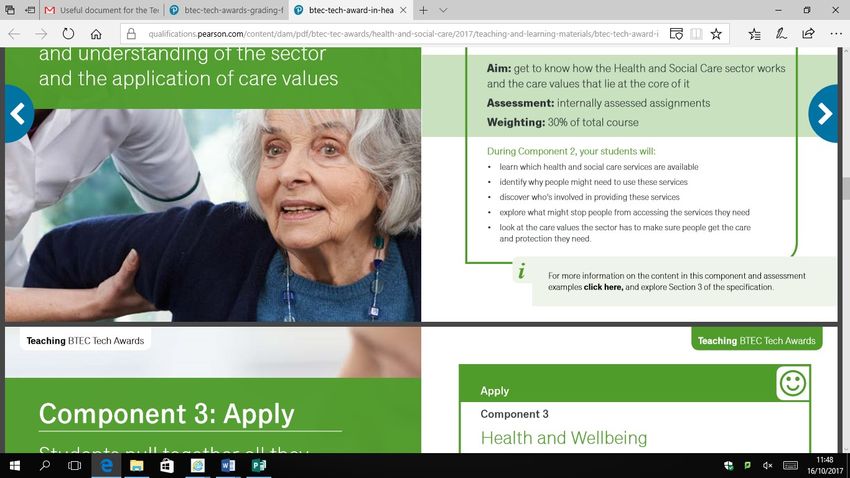
Component 2— Health and Social Care services and values
Aim: Get to know how the Health and Social Care sector works and
the care values that lie at the core of it.
Assessment: Internally assessed assignments
Weighting: 30% of the course.
Component 3—Health and Wellbeing
Aim: Help improve someone’s health and wellbeing
Assessment: eEternally assessed task, in which students create a health
and wellbeing improvement plan for an individual, based on a brief.
Weighting: 40% of total course.
There are many transferable skills you will develop from studying Health and
Social Care. Some of these are research skills, communication skills and caring skills.
You will achieve a grade for each component, which are allocated points. At the end of the course,
Pearson will calculate the final grade by adding their points from each component, and matching this
against the qualification grade point thresholds.
The BTEC Tech Award in Health and Social care has been included on the DFE List of qualifications
which will count towards performance tables in England (2019 results).
The final grade is
made up of:
Four Units—all of 30
learning hours .
3 X coursework units.
1 X examined unit
Year 9 Curriculum Guide—2019/2021 Page 26All Saints RC School
HISTORY
Full Course: 2 Years
Exam Board: AQA
General Outline
There are two main reasons for studying History:
a) To acquire knowledge and understanding about people who lived in the past and subsequently
understand the present better.
b) To develop academic (thinking) skills which will be of importance throughout life.
Paper 1.
Part A: Germany, 1890–1945: Democracy and dictatorship
This period study focuses on the development of Germany during a turbulent half century of
change. It was a period of democracy and dictatorship – the development and collapse of democracy
and the rise and fall of Nazism. Topics include: World War I, Weimar Germany, Wall Street Crash,
Rise of Hitler, living under the Nazis and the Holocaust.
Part B: Conflict and tension in Asia, 1950–1975
This wider world depth study enables students to understand the complex and diverse interests of
different states and individuals and the ideologies they represented. It focuses on the causes and
events of the Cold War in Asia and seeks to show how and why conflict occurred and why it proved
difficult to resolve the tensions which arose. This study also considers the role of key individuals
and groups in shaping change, as well as how they were affected by and influenced international
relations. Topics include: Korean War, Vietnam War, Protest movements in the USA.
Paper 2.
Part A: Britain: Health and the people: c1000 to the present day
This thematic study will enable students to gain an understanding of how medicine and public
health developed in Britain over a long period of time. It considers the causes, scale, nature and
consequences of short and long term developments, their impact on British society and how they
were related to the key features and characteristics of the periods during which they took place.
Topics include: Medicine through time – Medieval through to present day – disease and cures!
Part B: British depth studies: Elizabethan England, c1568–1603
This option allows students to study in depth a specified period, the last 35 years of Elizabeth I's
reign. The study will focus on major events of Elizabeth I’s reign considered
from economic, religious, political, social and cultural standpoints, and arising
contemporary and historical controversies. Topics include: Elizabeth I and The final grade is made up
the problems she faced, life in Elizabeth England, religion and executions! of:
We offer many enrichment opportunities, including an exploration of the Paper 1
local and Roman history of York in the final term. (externally assessed) 50%
Paper 2
(externally assessed) 50%
Each exam = 1hr 45 mins
Year 9 Curriculum Guide—2019/2021 Page 27All Saints RC School
MUSIC
Full Course: 2 Years
Exam Board: PEARSON
The GCSE music course has 3 sections:
Performing (30%)
where you play one piece of your own choice on any instrument at the
highest standard you can reach. The second part of this paper involves
performing with others, again in any style and with your own choice of
ensemble.
Composing (30%) where you have to compose two
pieces lasting at least 3 minutes in total. ICT and various
music software programmes are used as part of this.
Again all musical styles and periods of history are
represented.
Listening and Appraising (40%)
The only written paper deals with musical history
and theory through a ‘Listening Exam’. The
listening paper will involve you studying ‘set works’
and answering questions on extracts that you
hear. Pieces include ‘Star Wars’, ‘Killer Queen’ by
Queen and music from the musical ‘Wicked’.
This course is useful in that it provides a varied and thorough
grounding in all aspects of music. It is a useful preparation for the
study of music at 'A' level and provides opportunities for group
ensemble work, composition, development of practical skills and
listening to music from a variety of backgrounds and styles. Whatever The final grade is made up of:
your musical interests the syllabus is broad enough to include and use
them for academic credit. It is expected that pupils can play a musical
instrument and/or sing. Coursework 60%
Final Exam 40%
Year 9 Curriculum Guide—2019/2021 Page 28All Saints RC School
PHYSICAL EDUCATION
Full Course: 2 Years
Exam Board: AQA
You will be examined in THREE physical activities. One activity needs to be an individual sport such
as Athletics, a second sport has to be team orientated such as Football and then a third sport can be
either. At least ONE if not TWO of these activities will be taken from those activities studied in
school during the two-year course. A THIRD activity could be a sport not covered within school
e.g. Golf, where you would gather video evidence.
Activities offered are likely to be:
> Athletics > Football > Dance
> Basketball > Gymnastics > Rugby
> Badminton > Hockey > Fitness
> Cricket > Netball > Swimming
Theory
1 Health Active Lifestyle.
Skeleton and joints
Muscles
Circulatory and respiratory systems
Skill
Motivation
Social reasons for participation
School / social background
Local / national facilities
2 Relationships between Health, Fitness and Practical Activity.
Components of fitness
Factors affecting fitness
Investigating fitness and performance
Fitness training principles.
Methods and effects
3 Risk Assessment in Physical Activity.
Prevent hazards in PE The final grade is made up
Prevent injury of:
Treatment of injury 70% Theory
30% Practical
Year 9 Curriculum Guide—2019/2021 Page 29All Saints RC School THE PRINCE’S TRUST ACHIEVE PROGRAMME This two year programme is aimed to support young people to engage with learning and develop the skills and confidence needed to progress into a positive future. All Saints is a registered Princes Trust Achieve Club and their programme provides us with a flexible, alternative curriculum which we can adapt to meet our own students’ needs. There are five key activity areas; Personal, Interpersonal and Team Skills; Active Citizenship; Entrepreneurship and Enterprise; Preparation for Working Life; Enrichment Projects. Much of the work is practical; a “hands on” approach is at the core of the delivery. Evidence is provided through a portfolio throughout the programme. This can take the form of photos, witness statements and power-points as well as the more formal written approach. As part of the programme, students consider their transition to post 16 in some depth; there are visits to a range of providers plus opportunities to create CVs, practise interview skills and consider future career pathways. However, this is only a small part of the course; in addition they will take part in community projects, learn about healthy living, try new physical activities and have the opportunity to drive the curriculum through personal projects. This programme provides an alternative to a GCSE but the Princes Trust is approved as a nationally recognised awarding organisation, developing and offering QCF qualification and units. Princes Trust works towards an award or certificate in Personal Development and Employability Skills. This can be at Entry Level 3 or at Level 1 or Level 2. Year 9 Curriculum Guide—2019/2021 Page 30
All Saints RC School TRIPLE SCIENCE Full Course: 2 Years Exam Board: AQA Do you enjoy Science? Do you get excited about new ideas? Do you like solving problems? Are you hardworking and determined? Do you want a job in Engineering, Medicine, the Space Industry or in any of the other exciting professions that Science will allow you to pursue? This is an option that will suit students who are good at Science and who wish to take it further. If you are interested then please ask your Science teacher if this option would be suitable for you. Most of the students who study Triple Science are in a top set in Year 9. In Year 10 students will have two hours of Triple Science in addition to the three hours of Combined Science (which is compulsory). This will be taught by two teachers, dividing the extra units required for sitting the Triple Science exams instead of the Combined Science exams. In Year 11 students will have three extra Science lessons per week, in addition to the six hours that they will have for Combined Science (nine hours in total). These three extra hours will be divided and taught by three specialist Science teachers in Biology, Chemistry and Physics. At the end of this course students sit three separate exam papers for each of Biology, Chemistry and Physics. They will receive separate GCSEs in each of these subjects ie 8, 8, 9 There is no longer any coursework in Biology, Chemistry and Physics. Instead students will complete a wide range of practical work to develop their practical skills. These will be assessed in the exams. Please note: It is not necessary to study Triple Science in order to do an A Level in Science Year 9 Curriculum Guide—2019/2021 Page 31
DANCE
                  BUSINESS                PRINCES TRUST
 ART                                         ACHIEVE
                   STUDIES                 PROGRAMMME

                                                                                   D&T
                                                                                Resistant
                                                                                materials
SCIENCE

                                                                                  D&T

                                                                                TExtiles
       RE

                             Disclaimer

   DRAMA                                                                         FOOD
                                                                              Preparation
                                                                              & nutrition

            At the time of printing this Guide, the
            information contained in it is correct.
       PE

            Please note, however, that any of the                                 BTECH

            courses described may be altered, added                              Business

            to, or deleted from our programme in the
PSHCE
            light of changed circumstances.

                                                                                  ENGLISH

                                                                                 LANGUAGE

  MUSIC

                                                                                    ENGLISH

                                                                                  LITERATURE

 MODERN
 FOREIGN
LANGUAGES

                                                                                   HEALTH &
                                                                                  SOCIAL CARE

MATHS
            COMPUTER
             SCIENCE            HISTORY                   GEOGRAPHY
PLEASE MAKE THE FOLLOWING CHANGES TO THE YEAR 9 OPTIONS
BOOKLET FOR MY DEPARTMENT
Department:_____________________
Changes Required:You can also read


