AMERICAN CLIMATE LEADERSHIP SUMMIT 2021 - Recommendations Report
←
→
Page content transcription
If your browser does not render page correctly, please read the page content below
AMERICAN CLIMATE
LEADERSHIP SUMMIT 2021
Recommendations Report

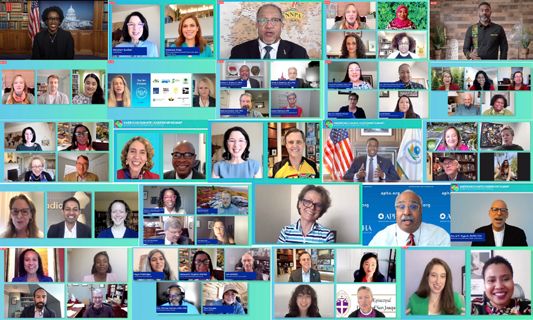
The 10th annual American Climate Leadership Summit 2021 brought together a powerfully
large and diverse group of leaders to expand American public support and political resolve
for climate action. Every session covered AMBITION, RESTORATION, and JUSTICE, including
practical guidance for action. Join us in bringing the recommendations to life.
At the National Health + Climate Forum, panelists and participants discussed health and health
equity implications of climate change and how to drive action and advocacy for climate solutions.
And the National Faith + Climate Forum convened people from across religious traditions and
the country to explore the transformative power of faith communities in advancing bold and just
climate solutions through local climate action with a national purpose.
Enjoy and share this recap including links to all session videos with current thinking and guidance
on accelerating climate action in the US from climate leaders including: Katharine Hayhoe,
The Nature Conservancy; Gina McCarthy, White House; Michael Regan, US Environmental
Protection Agency; Rev. Dr. Benjamin Chavis, National Newspaper Publishers Association; and
Arthur C. Evans, Jr., American Psychological Association.
There is so much that each of us can do. Follow the guidance and join us for climate action, today.

    Bob Perkowitz                       Meighen Speiser      Vanessa Hauc
    Founder + President                 ACLS 2021 Emcee      ACLS 2021 Emcee
    ecoAmerica                          Executive Director   News Anchor/Director
                                        ecoAmerica           Telemundo Network News/
                                                             Telemundo News Planeta Tierra

                                   “If we lead on environmental and economic justice and
                                   clean up our world by electrifying everything and getting
                                   that energy from renewable sources, we will multisolve a
                                   myriad of health, jobs, nature, and climate emergencies.”
                                   — Bob Perkowitz

*Quotes have been edited for length and clarity.

1   ACLS 2021 Recommendations Report                                                              building climate leadership
Table of Contents
    3    Co-Hosts, Partners, Sponsors, + Endorsers

         Day 1
    4    National Health + Climate Forum                18   Cities + Ambitious Climate Action

         Opening Keynote                                19   Bringing America Together on Climate

    5    Climate Impacts on Mental Health               20   Necessary Ambition: You = 2x2x

    6    Climate Action: Through Policy,                21   Hot Topics
         With Community
                                                        23   Advocacy + Collective Action: Local Action,
         Climate Action for Birth Equity                     National Purpose

         COVID Solutions That Multisolve                24   Health Surpasses Jobs in Climate Action +
         for Climate                                         Advocacy Support

    7    Climate Justice + Health Equity                     Closing Keynote

    8    National Health + Climate Forum
         Breakout Findings                                   Day 3
    9    National Faith + Climate Forum                 25   Climate + You Forum: Food, Family,
                                                             Wellness
         Afternoon Keynote
                                                             Opening Keynote + Remarks
         Social + Environmental Justice Through
         Local Action: Imani Village                    26   You — The Planet Taking Care of Each Other

10       Transforming Our Faith Communities             27   Nature + Food + You
         on Climate
                                                        28   Hot Topics
11       Faith As Our Motivator: Building Resilience,
         Pursuing Justice + A Just Transition           29   Home + Energy

12       Faith As Our Motivator: Expanding              30   Engagement Activities
         Engagement + Climate Action
                                                        31   Climate Restoration Forum:
13       National Faith + Climate Forum                      Thriving Nature + Communities
         Breakout Findings                                   Restoring Our Communities

14       American Climate Leadership Awards             32   Restoring Nature: Why + How

                                                        33   Summit Closing
         Day 2
15       Main Session

         Opening Keynotes

16       All We Can Save

17       Climate + Justice: Justice + Climate

2       ACLS 2021 Recommendations Report                                                          building climate leadership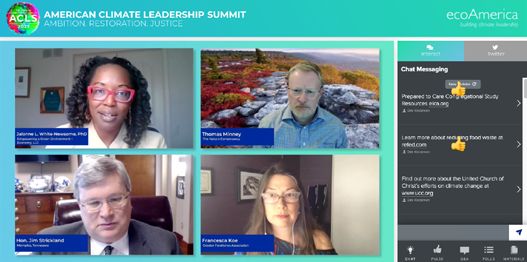
Co-Hosts, Partners, Sponsors, + Endorsers
The American Climate Leadership Summit (ACLS) team extends a special thanks to our partners
for bringing their expertise and experience forward to develop and shape our time together
at the Summit. We are grateful for their intellectual and emotional support to ensure ACLS is
inclusive, immersive, engaging, and empowering for all.

CO-HOSTS

PARTNERS

SPONSORS

ENDORSERS
Alliance of Nurses for Healthy Environments     Mississippi River Cities + Towns Initiative
American Academy of Pediatrics                  National Association of County + City Health
Clean Air Carolina                              Officials
Climate Advocacy Lab                            National League of Cities
Climate Resolve                                 Presbyterian Church (U.S.A.)
Confluence Philanthropy                         Rachel’s Network
Dayenu                                          Religious Action Center of Reform Judaism
Growing Climate Solutions – Path to Positive    Society for Public Health Education
ICLEI USA                                       Trust for America’s Health
Land Trust Alliance                             Utah Clean Energy
Local Government Commission                     Waterkeeper Alliance

3   ACLS 2021 Recommendations Report                                                           building climate leadership
National Health + Climate Forum Welcome
Climate change is one of the largest threats to our health, but few people understand the
connection. We learned about the health and health equity implications of climate change
and how to drive action and advocacy for climate solutions in America at the National
Health + Climate Forum. We heard the latest updates directly from national health leaders. We
collaborated with local and national professionals in health and other sectors to develop new
strategies to bridge the gaps of inaction and build resolve for solutions in your home, at your
workplace, in your community, and with policy makers.

Opening Keynote
                         Gina McCarthy
                         National Climate Advisor, The White House
                         “The climate crisis is an existential crisis. One that threatens our health,
                         our safety and our national security. One that impacts the communities
                         left behind. The Black, Brown and Indigenous and lower income
                         communities that our country has failed to invest in for generations, many
                         who are sitting in the crosshairs of climate risk.… While climate change
                         is a planetary problem, it’s really all about people. It’s about us, our
                         families and our communities.”
                             Watch Now (6:34 mins)

4   ACLS 2021 Recommendations Report                                                              building climate leadership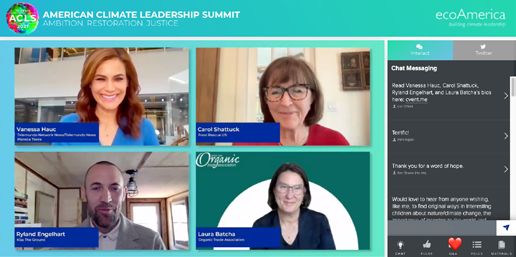
Climate Impacts on Mental Health
The health, economic, political, and environmental implications of climate change affect all of
us. The tolls on our mental health are far reaching. They induce stress, depression, and anxiety;
strain social and community relationships; and have been linked to increases in aggression,
violence, and crime. Children and communities with few resources to deal with the impacts
of climate change are those most affected. But this also means that equitable climate
solutions will bolster our mental and emotional resiliency, as well as build health equity. Speakers
in this session discussed various mental health impacts of climate change, and introduced
solutions that health professionals and community members can implement.

    Watch Now (36:08 mins)

                       Arthur C. Evans, Jr, PhD — Moderator
                       CEO, American Psychological Association
                       “At the American Psychological Association, we are very committed to
                       understanding and using psychological science and knowledge to help
                       address climate change and the impacts it is having on individuals.
                       One way we are doing that is using psychological science to look at how
                       that science can help us understand issues like cognitive biases and how to
                       shape messages so that people are more likely to follow through on policy
                       and other suggestions around how they can affect climate change. Another
                       way we do that is by looking at the impact of climate on mental health.”

                       Joshua Gordon, MD, PhD
                       Director, National Institute of Mental Health
                       “When we think about climate change, we think first and foremost about
                       the myriad of effects the environment has on an individual’s mental
                       health…. Our understanding of the environmental effects on mental
                       health are myriad. It’s important to recognize that the environment has
                       both potential risk factors and potential protective factors. And it’s the
                       combination of these risk and protective factors that lead to both adverse
                       and positive mental health outcomes.”

                       Wael Al-Delaimy, MD, PhD
                       Professor, University of California San Diego
                       “We need solutions and we can’t address mental health specifically without
                       addressing the bigger problem of climate change and its risk factors; we
                       definitely need better mental health care systems to deal with this
                       mental illness tsunami in the making.”

                       Susan E. Pacheco, MD
                       Professor of Pediatrics, University of Texas McGovern Medical School
                       “There’s very clear evidence that displacement due to extreme weather
                       events and even air pollution is associated with adverse mental health
                       outcomes.... There are some basic things that can be done at the individual
                       and community level that can make a difference in the life of children.”

5   ACLS 2021 Recommendations Report                                                             building climate leadership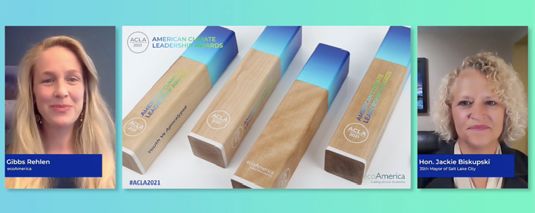
Climate Action: Through Policy, With Community
                         Rep. Lauren Underwood
                         Representative (D-IL 14th), US House of Representatives
                         “Today’s forum is an urgent reminder that climate change is not just a
                         future danger or an abstract one, it’s an immediate threat that is directly
                         affecting people’s lives right now, including in our own communities in
                         the United States. Climate change is creating new environmental health
                         risks and exacerbating existing ones like our nation’s maternal mortality
                         crisis. The role of climate change in fueling adverse maternal and infant
                         health outcomes and disparities is indisputable.”
                             Watch Now (4:33 mins)

Climate Action for Birth Equity
                         Kelly Davis, MPA
                         Vice President, Global Birth Equity + Innovation, National Birth Equity Collaborative
                         “Environments that Black women are in, including exposure to climate
                         change, and other environmental risks, really affect the health of
                         pregnancy and birth outcomes generally.... I encourage folks to continue
                         on their anti-racist journey, particularly on climate change.”
                             Watch Now (15:25 mins)

COVID Solutions that Multisolve for Climate
                         Joshua M. Sharfstein, MD
                         Vice Dean for Public Health Practice + Community Engagement
                         Johns Hopkins Bloomberg School of Public Health
                         “One learning from COVID is to make climate relevant to people every day
                         through measurements of air quality, incidents of extreme weather, and
                         human health impacts of climate on agriculture. We have a daily weather
                         report. Shouldn’t we have a daily climate report?”
                             Watch Now (8:07 mins)

6   ACLS 2021 Recommendations Report                                                                      building climate leadership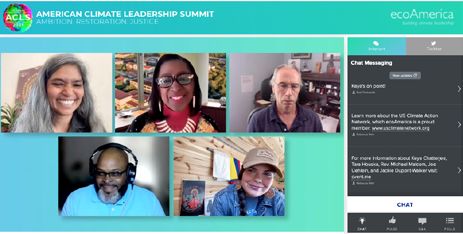
Climate Justice + Health Equity
Climate change is impacting all of us, but some communities are impacted more than others.
Children, older adults, pregnant women, and Tribal, low-income, and communities of color
are some of the most impacted by climate pollution and already experience health disparities. This
also means there is tremendous opportunity to address health equity through climate solutions,
particularly by centering voices who have been left out of climate solutions and decision-making
because of racism, age, income, and educational disparities. Speakers built the connection between
climate justice and health equity and review national, state, and local solutions available now.

    Watch Now (38:32 mins)

                         Nsedu Obot Witherspoon, MPH — Moderator
                         Executive Director, Children’s Environmental Health Network
                         “Today, all children face environmental hazards that harm their growth
                         and development, but children from underserved communities always
                         suffer first and worst. With the continuous threats of climate change, the
                         highest risk children will again suffer the most.”

                         Gaurab Basu, MD, MPH
                         Co-Director/Health Equity Fellow, Center for Health Equity Education/Harvard Chan
                         C-CHANGE
                         “I believe that we have everything we need to create that new future ... the
                         great thing about doing deep, structural work is that you can improve so
                         many things at one time. When we support our Earth, when we stabilize our
                         climate, there’s a cascade of health benefits ... that unlock the opportunity
                         for a brighter and healthier and more just future.”

                         Shasta Gaughen, PhD
                         Environmental Director/Tribal Historic Preservation Officer, Pala Band of Mission
                         Indians
                         “With Tribal communities and Indigenous communities, climate change
                         and the effects of climate change on the environment and ways of life
                         cannot be separated from the culture. Culture and the environment are
                         inseparable. The people ground who they are, in the places that they come
                         from ... Making it personal to people is one of the best ways to get them to
                         see that something is happening.”

                         Misbath Daouda, MPH
                         Climate + Health PhD Candidate, Columbia University Mailman School of Public Health
                         “If we center equity from the very beginning, from the outset, defining
                         outcomes at the very beginning and then ensuring that we measure
                         them all throughout the development of a program or policy, then we are in
                         a much better place to say we are addressing equity issues.”

7   ACLS 2021 Recommendations Report                                                                    building climate leadership
National Health + Climate Forum Breakout Findings
The following action items emerged from the discussion groups:

Solutions that Multisolve for COVID + Climate
Local Action: Center the voices of the most impacted in community education efforts about
the links between air pollution, climate change, and health; build health-promoting infrastructure;
and advocate for reductions in local air pollution, which damages our health and our climate and
increases susceptibility to other respiratory diseases.
Federal Support: Provide robust funding for things that reduce local pollution (e.g. public
transportation) and include deep collaboration with the community and across agencies.
Provide best practices for climate and COVID preparedness for states, counties, and local
communities.

Mental Health + Climate Change: Solution Synergy
Local Action: Host discussions on connections between mental, physical health and environmental
degradation and provide mental health services where people are: schools, places of worship,
community centers, etc. “Normalize” conversations about mental health and asking for help.
Federal Support: Incorporate mental health into disaster response through entities like the Federal
Emergency Management Agency (FEMA); expand the section on mental health in the National
Climate Assessment; and bridge federal, regional, state, and local government efforts.

Local Health + Climate Action
Local Action: Build health care centers and hospitals that are resilient and serve as examples
of climate-friendly infrastructure. Dedicate resources to communities where there has been
disinvestment.
Federal Support: Better reporting on local conditions like air quality (e.g. through partnerships
with tech companies), invest in climate-resilient healthcare, and prioritize input from health leaders
on environmental policymaking.

Health, Justice + Climate: Making the Connection
Local Action: Fully realize “nothing about us without us” through deeper community engagement
at all levels of environmental decision-making. There is no climate justice without racial justice;
fundamentally address the root causes of persistent inequities and disparities.
Federal Support: Fund local workforce development in green jobs, anti-racism training across
government, and streamlining the environmental justice resources that are available across
government in an accessible way. Fully fund and expand programs like the Department of Energy’s
new Energy Equity Office across government.

                     Rebecca Rehr, MPH — National Health + Climate Forum Host
                     Director, Climate for Health, ecoAmerica
                     “We have the opportunity to act now to build the public health
                     infrastructure that will make these concepts a reality. The Biden-Harris
                     administration has committed to an all of government approach to climate
                     solutions and environmental justice. But they need our help to chart the
                     course and put some specifics in place.”

8   ACLS 2021 Recommendations Report                                                                  building climate leadership
National Faith + Climate Forum
This year’s National Faith and Climate Forum convened people from across religious traditions and
the country to explore the transformative power of faith communities in advancing bold and just
climate solutions through local climate action with a national purpose. We heard from powerful
speakers including keynote, the Rev. Dr. Benjamin Chavis, a renowned civil rights and environmental
justice leader. Representatives from faith traditions and supporting organizations shared the
ways their faith traditions are motivating people to move from preaching and teaching about
climate and faith to activating them toward action and advocacy.

Afternoon Keynote
                         The Rev. Dr. Benjamin Chavis Jr.
                         President + CEO, National Newspaper Publishers Association
                         “There is an intersection between climate change, social justice, and
                         environmental justice — this is called climate justice. And we must work
                         toward building a multi-racial, a multi-lingual climate justice movement.
                         A grassroots movement for social change. All of the communities where
                         we have churches, synagogues, mosques or communities of faith must be
                         activated and mobilized to address the serious challenges of climate change.
                         Unfortunately, some persons in high positions are in denial that climate
                         change is real, but we can see the changes … the faith community has to listen
                         to the science and the scientific community must listen to the faith community
                         so we can focus on how to improve quality of life for all of God’s people.”
                             Watch Now (11:09 mins)

Social + Environmental Justice Through Local Action:
Imani Village
                         The Rev. Dr. Otis Moss III
                         Senior Pastor, Trinity United Church of Christ
                         “You cast a vision. You live your values of climate change and racial
                         equity. You sit down with the community because the community knows
                         better than we do. It should never be top down what the community
                         needs, but it should be grassroots up. So you build green, you empower
                         Black, and you give grace to people who need a second chance.”
                             Watch Now (12:20 mins)

9   ACLS 2021 Recommendations Report                                                                building climate leadership
Transforming Our Faith Communities on Climate
We don’t have to wonder if it’s possible to transform our faith communities on climate. Faith
leaders in communities around the country have navigated experiences with environmental racism
and systemic injustice, the fossil fuel transition, and the partisan divide in order to transform
their congregations and communities from inaction to action on climate change. In this
session we heard from leaders who know there is still work to do, empowering us with their stories
to answer our own calls to action.
Watch Now (42:15 mins)
Taina Diaz-Reyes, MDiv, MA — Moderator
Hunger Advocacy Fellow, Evangelical Lutheran Church in America
“These three powerful women are transforming communities on climate
change and rooted in their spiritual teachings. Hear their stories of
navigating uncertainty economic challenges partisanship, environmental
racism and systemic injustice in order to move local congregations
communities and beyond from inaction to action.”
The Rev. Mariama White-Hammond
Chief of Environment, Energy + Open Space, City of Boston
“It’s not enough just to ask people to take individual action. It’s important
that it is part of the solution, but there are barriers for access, on food, on
technology. And if we’re not fighting for all people to have access, equitable
access, then we really won’t be doing God’s work of justice.”
The Rev. Dr. Heather McColl
Pastor, Midway Christian Church, Midway, KY
“As the church, we do more damage not having (climate) conversations.
Because people are looking at the Church to be representatives of Christ’s
love here on Earth, and the very relationship and connection is part of it. And
if we’re not becoming that voice for the voiceless, we are doing more damage
and, the hypocrisy is that it turns more people away from (the church).”
Kandi White
Native Energy + Climate Campaign Coordinator, Leadership Team, Indigenous
Environmental Network
“I use this gift I have to speak to people about how injustices can happen
to certain communities and how as Native People, myself being Native
American woman, I can rely on my culture and my faith to help strengthen
the work that I do to say that damage to the Earth is damage to our souls. If
we don’t respect the land, we don’t respect ourselves, therefore we don’t
respect creation. This is a negative feedback loop that we are in now. My
hope is to transform this from a negative to a positive feedback loop.”
10 ACLS 2021 Recommendations Report building climate leadershipFaith As Our Motivator: Building Resilience, Pursuing Justice
+ A Just Transition
As we are called to activate our faith communities to bolder climate action, what do we do right
now? We must continue talking about climate change as a moral, justice and faith issue in pulpits,
educational programming, and in our communities, but we must do more. Faith traditions are
deploying powerful new programs and resources and building networks to achieve climate
solutions at the local, state, and federal level. In this session, we heard about these new and
innovative efforts to not only activate those already concerned about climate, but to reach
others and build a broader base for faithful climate action and advocacy.
Watch Now (31:56 mins)
Rabbi Jennie Rosenn
Founder + CEO, Dayenu
“This past year we’ve faced these intersecting crises … and all of this is
happening against the backdrop of worsening climate. But just as the
causes are connected, so are the solutions. And this is where we have
been given this opportunity in a very problematic way, but an opportunity
nonetheless, to have a just, green recovery to address these interlocking
issues together. This is a once in a generation opportunity to transform
our society and our economy, not to rebuild the same unjust and
polluting infrastructure.”
Nana Firman
Senior Ambassador, GreenFaith
“A just transition requires courage — courage to change, courage to
create a regenerative economy, courage to promote justice, and courage
to live in solidarity and joy among humanity. No religion sanctions the
destruction of the planet but that is exactly what we are doing at
the moment. Our religious and spiritual beliefs compel us to respond. To
change everything, it takes everyone. Together, we can make this change
and the time to act is now.”
The Rev. Melanie Mullen
Director of Reconciliation, Justice + Creation Care, The Episcopal Church
“Part of our work as Church is to say and lift up that you don’t have to be at
a center of power. You don’t have to be rich. But whoever you are wherever
you are, with your intent to live in a just world and not leave any of those
least able to deal with climate change affects behind, is where we start.
In the past year of COVID and crisis, we see the symmetry, the ways our
struggle for climate equality is intersection and woven together. We
understand that now when we hear communities say they can’t breathe.”
11 ACLS 2021 Recommendations Report building climate leadershipFaith As Our Motivator: Expanding Engagement +
Climate Action
Watch Now (30:12 mins)
Dekila Chungyalpa
Co-Founder + Director, Loka Initiative
“I’m an environmentalist because I am a Buddhist, and I am a Buddhist
because I am an environmentalist. There isn’t a division. Everywhere I look
at the biological basis of life on Earth and I see a display of interdependence
and compassion and impermanence. Buddhism is very much based on this
idea that everything is impermanent and so you embrace uncertainty. And
that is the philosophy that I understand climate change. And I try to reassure
all the communities I work with that we have it in our traditions. The wisdom
is there. The question is are we looking through that lens to understand
what is happening scientifically. If we can bridge that division that is man-
made then I do think that we can reverse so much of what is happening.”
The Rev. Kyle Meyaard-Schaap
Vice President, Evangelical Environmental Network
“So often many people who are outside of the environmental movement,
as many Evangelical Christians are, hear climate action and climate change
communicated in a way that sounds a little something like this. ‘Here are
all of the things about your community or loved ones that are wrong.
Here are all of the things you have to change about the life that you love
to be right. When you do that you’ll be ostracized but don’t worry because
you’ll be more like us. And then the world will be more like we want it
to be.’ Now that’s unintentional of course, but in effect that’s often what
people hear. What we try to do is communicate climate action in a way
that sounds more like this. ‘Here are all of the things about you and your
community that are beautiful and you love. Here are all the people like you
that are doing something about climate change.’ When you take action, you
deepen your connection to these people, and your joy and community and
belonging enhance and the world becomes more how you want it to be.”
12 ACLS 2021 Recommendations Report building climate leadershipNational Faith + Climate Forum Breakout Findings
The following action items emerged from the discussion groups:
Making the Faith + Climate Connection
Local Action: Understand our local context (faiths, economies, habitats) gather voices across
sectors to tell our story, and ask policymakers and decision makers to do their job.
Federal Support: Funding specialized programs that work in each context (not one size fits all) and
listen to communities to understand their unique needs and existing infrastructure for funding.
Climate Change, Covid-19 + Just Recovery
Local Action: Get local, frontline communities involved in decisions and solutions. Preach more about
creation care, include concrete ideas and solutions, and do not be afraid to urge local civic action to
support solutions.
Federal Support: Ensure the White House’s faith-based initiatives office is empowered to coordinate
the voice of the faith community on climate. Encourage collaboration among agencies and let local
communities direct funding decisions.
Building Resilience Through Faith Communities
Local Action: Focus on getting clergy and lay leaders bought-in through education, advocacy and
activism. Build interdenominational and interfaith partnerships with local community and
environmental groups; lift up youth and young adult voices and support them.
Federal Support: Advocate for a values-informed approach to social issues such as climate and
equity to transcend “politics” and siloing of climate approaches. Help leaders understand that
compassion is the common value for the sacred and secular realms and faith communities are key
allies in this work.
Anita Fête Crews — National Faith + Climate Forum Host
Director, Blessed Tomorrow, ecoAmerica
“We can ask ourselves, what is ours to do today? What can we do more,
do better, to pursue climate justice in our own communities in order
to strengthen the movement to care for Creation that we’re all called
into? And we must invite others to join us. How can we invite and help
others partner with the faith sector to do this work, including and especially
policymakers, to improve the air we breathe, the water we drink, the food
we consume.”
13 ACLS 2021 Recommendations Report building climate leadershipAmerican Climate Leadership Awards
Time for some great ideas and inspiration! The American Climate Leadership Awards finalists
provided you with ideas you can take home and implement. We announced and celebrated the
ten finalists ($10,000 each), the runner-up ($25,000), and the winner ($50,000) of the 2021
American Climate Leadership Awards, and their successful and replicable efforts to build public
support and political will for climate solutions. Click HERE to view replication guides.
Watch Now (20:10 mins)
*Winner* Tara Houska — Giniw Collective
“Indigenous peoples are 5% of the global population,
holding 80% of the world’s biodiversity. Building leaders
steeped in Indigenous wisdom and centered in land
defense is critical, as is urgent response to an urgent,
species-ending issue.”
*Runner Up* Youth Vs. Apocalypse
“By teaching how climate connects with their lived
experiences, and how they can bring their whole selves
to collective action, youth who have never considered
themselves ‘into politics’ find a place in this
movement.”
14 ACLS 2021 Recommendations Report building climate leadershipMain Session
Opening Keynotes
Michael Regan
Administrator, US Environmental Protection Agency
“When it comes to fighting climate change and advancing environmental
justice ... we need an all hands on deck approach. These aren’t issues
that affect any one party or community, they affect us all. At EPA we’re
committed to convening stakeholders where they live, where they
work and where they serve.... That’s how we’ll tackle climate change.”
Watch Now (1:21 mins)
Bob Perkowitz
Founder + President, ecoAmerica
“Thriving nature helps us be mentally and physically healthy. It helps
children adjust and get better grades. It gives us clean air and water for
free. Nature was in balance. No waste, no pollution. Then we came along
and started burning fossil fuels. We need to reestablish balance with
nature in our communities, farms, and our forests. If we can restore
thriving nature, we will restore ourselves and go a long way to solving our
climate change problem.”
Watch Now (10:33 mins)
15 ACLS 2021 Recommendations Report building climate leadershipAll We Can Save
Is it too late, or can we restore a healthy climate? Are affordable and realistic climate solutions at
hand, or is there just too much to do? America’s climate and energy experts shared the latest
information and breakthroughs on the state of our climate, solutions, and the prospects for
action in 2021 and beyond.
Watch Now (40:04 mins)
Katharine Hayhoe — Moderator
Chief Scientist, The Nature Conservancy
“In the spheres where we are, women are often typically under-
represented. To give you my own example as a scientist, only 19% of full
professors in any earth science field are women...The fact is bringing
everyone to the table actually helps every single one of us.”
Jacqui Patterson
Sr. Director, Environmental + Climate Justice Program, NAACP
“For us it’s all about intersections, it’s about multi-solving, and dealing
with all these things together. And recognizing that the underpinnings of
racism, climate change, and the disproportionate impacts of COVID in our
communities are all the same systemic groups that we need to work on in
order to solve it all. That’s truly multi-solving.”
Abigail Dillen
President, Earthjustice
“Recognize that climate solutions happen locally. They scale up at the
international level, but we neglect local government, and you have so much
power as a constituent in your city to make the decisions about where your
power comes from for example. Believe in your ability to make change.
Climate touches every single thing whether you’re in insurance, public
health, education. Whatever it is, climate is touching you. By recognizing it
you will demonstrate leadership and it will ripple out in your community.”
“I am honored and grateful to have been able to make a contribution to
your epic summit, which must have involved endless hours of planning,
communication, and coordination. Thank you for pulling it off! There were
some very strong speakers and conversations. May all that hard work bear
good fruit!”
— ACLS 2021 Participant
16 ACLS 2021 Recommendations Report building climate leadershipClimate + Justice: Justice + Climate
Climate change is a justice issue, but most Americans don’t get it. Diverse national leaders shared
clear examples highlighting climate as a justice issue, why it matters to all of us, and the
importance of justice, equity, diversity, and inclusion in solutions.
Watch Now (50:37 mins)
Keya Chatterjee — Moderator
Executive Director, US Climate Action Network
“We’re right on the cusp to totally change our society from one where it’s
everyone for themselves, to one where we really take care of each other.
Being at the cusp of this opportunity means it’s our moment to make
sure whatever changes we make center justice, because if we don’t it’s
not going to get us to where we need to be.”
The Rev. Michael Malcom, MDiv MBA
Founder/Executive Director, The People’s Justice Council
“The reason I speak out having the education, having grown beyond my
lower middle class status is because there may be no one left to speak
out for me.… My goal is to fight to ensure that we have equity so everybody
can experience the same thriving in life.”
Tara Houska
Founder, Giniw Collective
“The best thing or at least one of the best things … is people who are willing
to take direct action and willing to actually put their physical selves with the
Earth. That’s a huge centerpiece of the work I’m doing up here with Giniw
Collective, really standing with our words and taking risks for someone
who’s not born yet because that is really, really powerful.”
Joe Uehlein
President, Labor Network for Sustainability
“The impacts on working people are really profound and I view working
people — although not as a geographic community, but as a community
of people — who stand to lose a lot if we don’t address this challenge of
climate change.”
Jacquelyn Dupont-Walker
Director, Social Action Commission, African Methodist Episcopal Church
“Send your good thoughts. Thoughts and prayers. I’d like to ask people to
give legs to their prayers. The historic Black church has been the trusted
voice in this country since its very beginning and we don’t want that voice to
be muted out of a sense of practicality. We need allies.”
17 ACLS 2021 Recommendations Report building climate leadershipCities + Ambitious Climate Action
Clarence E. Anthony, CEO + Executive Director, National League of Cities in conversation with
Hon. Jennifer Roberts, Director, Path to Positive Communities, ecoAmerica.
Watch Now (25:37 mins)
Hon. Jennifer Roberts
Director, Path to Positive Communities/58th Mayor of Charlotte, ecoAmerica/
North Carolina
“Our cities and our localities have continued to move forward on
climate solutions.... In Utah, we had a Climate and Clean Air Compact pass
during the pandemic that had bipartisan support for the whole state of
Utah. And so many municipalities there took part.”
Clarence E. Anthony
CEO + Executive Director, National League of Cities
“The bottom line, I think every part of our planning process … needs to be
grounded in sustainability and long term impact on communities....This
is our opportunity everybody. We have an administration that is committed
to sustainability and equity. We cannot let this opportunity pass us by.”
18 ACLS 2021 Recommendations Report building climate leadershipBringing America Together on Climate
Americans are more concerned about climate change than ever. For the first time, climate has
emerged as a top voting and federal administration priority. Climate threats and solutions are
radically different now. Academic, political, and communications experts shared new strategies
ideas on public support for meaningful climate solutions.
Watch Now (46:48 mins)
Bob Perkowitz
Founder + President, ecoAmerica
“Americans are more concerned about climate change than ever. For the
first time climate has emerged as a top voting issue and it is a real priority
for our federal government. At the same time, we’re a polarized nation.
Climate change ignores all that. It has no political affiliation.”
Hahrie Han
Director/Professor of Political Science, SNF Agora Institute/Johns Hopkins University
“The glue of people-powered social movements, it’s not attention, it’s not
money, it’s relationships. The way in which you make the change that
you want is by creating the authentic relationships between people
that will transform people so they will begin to transform the world
around them.”
Katie Eder
Executive Director, Future Coalition
“When we talk about issues of racial justice, when we talk about immigration
justice, when we talk about gender justice, and when we talk about any of the
isms, we need to remember the root of all these problems is very similar.”
The Rt. Rev. David Rice
The Diocesan Bishop in the Episcopal Diocese of San Joaquin, CA
“We are looking for partners all over the place because we acknowledge the
immensity of this work before us.... We need to keep one another aware of
our ecological crisis and what we can do. We need to keep the conversations
going in every chat we have, that’s what pushes the ball up the hill.”
19 ACLS 2021 Recommendations Report building climate leadershipNecessary Ambition: You = 2x2x
With all our plans and commitments, we’ll get only halfway to where we need to go — Net Zero
by 2050. Tangible solutions are all around — at home, work, in your community and beyond. We
need to increase ambition and action at all levels. We heard practical guidance and concrete
examples of your best options for action now.
Watch Now (41:32 mins)
Diane Regas — Moderator
President + Chief Executive Officer, The Trust for Public Land
“I’ve been working on climate issues for a couple of decades and I’m feeling
so hopeful today that we are on the precipice of a powerful action. Even
with all our plans and all the commitments, we’ll only get about
halfway to net zero emissions by 2050 ... it’s time to level up.”
Jamie Margolin
Founder, Zero Hour
“What motivates people to take climate action is personal stories.
People are storytelling creatures ... storytelling is who we are.... Actual
impacts of how individuals are impacted by the climate crisis. That’s what
moves people.”
Tommy Wells
Director, Department of Energy + Environment, DC Government
“As a lifelong Democrat, practitioner of incrementalism, incrementalism
is the enemy. I really do see that incrementalism is what keeps you from
getting there in time. We’ve got to not accept incrementalism, we’ve got
to do it now. There are no excuses.”
The Rev. Jenny Shultz-Thomas
Senior Pastor, First Plymouth Church, UCC, Denver, CO
“It’s not just money, it’s about going door to door with your friends, and
winning.”
A Special Message From Amy Luers
Global Lead for Sustainability Science, Microsoft
“We want to work with you, scientists, governments, and the private sector
in order to build the tools we all need to do this better.”
Watch Now (5:59 mins)
20 ACLS 2021 Recommendations Report building climate leadershipHot Topics: COVID + Climate
How we can multisolve for COVID and climate change, and what we can do to ensure this
happens in an equitable way.
Georges Benjamin, MD
Executive Director, American Public Health Association
“Climate change is upending our lives, just as we saw with the tragedy of
COVID. Our nation needs to come together, we’ve been divided for far too
long along this initial activity around climate change.... The health sector
plays a big role in trying to address this problem. I encourage you to learn
a lot, to be involved in climate activism. To educate your friends, educate
your family members and of course educate your policy makers.”
Watch Now (3:00 mins)
Hot Topics: Plastics
Plastics are polluting ecosystems and ocean and contribute to climate change. What’s the
connection and what do we do?
Dianna Cohen
CEO + Co-Founder, Plastic Pollution Coalition
“Eight million metric tons of plastic enter the ocean annually, and large
amounts of it are consumed by marine life at all levels of the food chain,
and thus potentially consumed by humans.”
Watch Now (7:32 mins)
Hot Topics: Policy
Price on carbon? Federal regulations on buildings, appliances, electric cars and utilities? What are
the prospects for policy on climate?
Leah Stokes
Assistant Professor, University of California Santa Barbara
“We need that clean electricity standard to get us 80% clean by 2030,
and in addition deliver massive pollution reduction. That’s 86% reduction
in carbon dioxide, 93% reduction in sulfur dioxide, and 76% reduction in
nitrous oxides.... The fact is the health benefits from this policy alone will
pay itself back. This is an investment not only in jobs, not only in clean
electricity but really in clean air and our health across this country.”
Watch Now (9:00 mins)
21 ACLS 2021 Recommendations Report building climate leadershipHot Topics: Hyper Local Climate Solutions
Climate change and environmental health issues are profoundly local issues; activating local,
trusted voices early in plans to address the public health implications of climate change is a
powerful tool in advancing ambitious climate solutions.
David Dyjack, DrPH, CIH
Executive Director, National Environmental Health Association
“Governmental environmental health professionals are employed in all
eight uninformed services, all 50 states and most of the US territories. They
represent a quietly competent profession. They are highly educated,
modestly compensated public servants. They possess the knowledge,
skills and experience to address some of the most complex climate change
issues.... Search them out, get to know them. They are a national treasure
and essential asset in our effort to create a vibrant future.”
Watch Now (6:00 mins)
Hot Topics: Conservatives on Climate
Think they don’t get it? Think again. Most just have different perspectives and solutions.
Come listen and learn.
Benji Backer
President + Founder, American Conservation Coalition
“I have three important pillars that are vital to engaging conservatives. The first
is making climate change local and tangible. What do people care about, their
backyards, they care about their local community.... The second is economics.
We need to make climate change about economics, job creation,
American energy independence and competition…. The third way is through
optimism. Alarmism and pessimism have not worked for conservatives.... We
should be focusing on the optimistic opportunities that exist.”
Watch Now (10:26 mins)
22 ACLS 2021 Recommendations Report building climate leadershipAdvocacy + Collective Action: Local Action, National Purpose
Many people think important climate solutions happen only on national and international scales.
Not true. Social change happens locally and moves upward throughout society. We need local
action to power state and local policy. Learn how you can make a difference yourself and
multiply your impact by being a visible example and engaging others in your neighborhood,
workplace, and community.
Watch Now (55:36 mins)
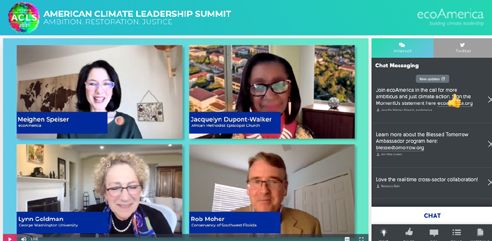
Meighen Speiser — Moderator
Executive Director, ecoAmerica
“We know that visible national leadership on climate is critical and
thankfully we have renewed leadership on the national and international
stage but we also know the rubber meets the road at the local level and this
is where our greatest opportunities lie.”
Jacquelyn Dupont-Walker
Director, Social Action Commission, African Methodist Episcopal Church
“Increasing climate ambition from managing the COVID pandemic and
other plagues and isms is the challenge to all countries. Here in the US, one
more time, equity must be our priority.”
Rob Moher
President + CEO, Conservancy of Southwest Florida
“The reality is if Republican leaders in Florida are looking to the future, they’ve
done their polling. They know that young Republicans care a great deal about
this issue. The solution suite might look different than a young Democrat
club but I think nonetheless at least we’re talking about action. We’re talking
about solutions. We’re talking about investment and I think what we have to
do is start with where we are and then push aggressively forward.”
Lynn R. Goldman, MD, MPH, MS
Michael + Lori Milken Dean of Public Health, Milken Institute School of Public Health,
George Washington University
“One of the biggest struggles is moving people from talk to action.…
Conferences like this are incredibly helpful because there aren’t very
many settings where as a health expert I have a chance to spend time with
somebody like Jackie from African Methodist Episcopal Church and hearing
about her perspective or from somebody like Robert [Conservancy of
Southwest Florida] and hearing about his work. And you know frankly I also
appreciate the health of turtles and I appreciate it because I don’t want the
turtles to be homeless but I don’t want the people in LA to be homeless either.”
23 ACLS 2021 Recommendations Report building climate leadershipHealth Surpasses Jobs in Climate Action + Advocacy Support
ecoAmerica’s latest survey finds “health” at the top of the list of motivations for climate solutions
— ranking even higher than “jobs.”
Watch Now (8:47 mins)
Nicole Hill
Marketing Associate, ecoAmerica
“There is widespread agreement that we have a moral responsibility to
create a safe and healthy future. However, there is still work for climate
and health advocates to do.”
Jennifer Giordano
Vice President Marketing, ecoAmerica
“ecoAmerica’s latest survey, Health Surpasses Jobs in Climate Action Support,
finds ‘health’ at the top of the list of motivations for climate solutions
— ranking even higher than ‘jobs.’ This is a significant shift. We can use
this opportunity to create momentum in our effort for climate action.”
Closing Keynote
Hon. Sheldon Whitehouse
US Senator (D-RI), United States Senate
“We have this great opportunity, but in order to really seize it, it’s not
enough to get the policy right, we’ve got to make sure we get the politics
right so that we win this battle at the end of the day. And, that end of
the day is, I hope, this year.”
Watch Now (26:14 mins)
“This is our moment. We can win the trifecta of a really good climate bill that
actually takes us out of danger, that also at the same time increases our
economic progressivity and economic fairness, and that also provides the
relief that polluted communities have longed for, for so long. We need to do
all of it. We can do all of it. This is our moment — let’s make it happen.”
— Hon. Sheldon Whitehouse
24 ACLS 2021 Recommendations Report building climate leadershipClimate + You Forum: Food, Family, Wellness
Opening Keynote + Remarks
Let’s make climate personal. From the moment you wake up in the morning until the moment
you fall asleep, there are many ways climate impacts you and your family, and many ways you
can be part of the climate solution. Fake meat? Climate anxiety? Active transportation? A cold,
dark home? Fortunately, most things you do to improve you and your families health and
wellbeing also help the wellbeing of the planet. Find out from the experts, make a plan, and
multisolve in your life.
Lisa Renstrom
President, Threshold Foundation
“My spirit and my voice is joined with yours — joined with the millions
of people, nonprofits and some for-profits who care and who are every
day reshaping their relationship with themselves, with others and their
relationship with the soil. So many of us are powerfully moving in the
right direction and so many of us are working hard and from the heart.
We are a force against greed and malice, against profits over people, and
we are joined in solidarity with each other and with nature.”
Watch Now (8:20 mins)
The Rev. Dr. Margaret Bullitt-Jonas
Missioner for Creation Care, Episcopal Diocese of Western MA + Southern
New England Conference, United Church of Christ
“Our own bodies are after all the first bit of nature entrusted to our care.”
Watch Now (5:18 mins)
25 ACLS 2021 Recommendations Report building climate leadershipYou + The Planet Taking Care of Each Other
There are many ways climate change impacts you, and many ways to be part of the solution.
Fortunately, most things you do to improve your and your families’ health and wellbeing also
help the wellbeing of the planet. Hear from experts in mental, physical, pediatric, and public
health on key ways we take care of ourselves and our climate at the same time.
Watch Now (47:42 mins)
Lise Van Susteren, MD — Moderator
Co-Founder, Climate Psychiatry Alliance
“What could be more compelling and give us more meaning in life than
taking care of each other, and especially our Mother Earth. Who is the
progenitor of all that we do, and who we know wants us to work with her,
not as the masters of the universe, but as collaborators.”
Sadiya Muqueeth, DrPH, MPH
Director of Community Health, Trust for Public Land
“Nature doesn’t understand the geopolitical boundaries that we place in our
land and our spaces.... As we think about these communities we’re often
far more connected than we think.... That we really recognize green space,
and parks in particular in this relationship with people as a need to have.”
V. Fan Tait, MD, FAAP
Chief Medical Officer, American Academy of Pediatrics
“As pediatricians we talk about SSNR, safe, secure, and nurturing
relationship. The CDC adds an “E” for environment and what we’re
talking about today is ‘environment.’”
Richard Louv
Author “Last Child in the Woods”
“For a long time the environmental community has been making its case
on numbers … but it doesn’t move people from knowledge to action very
often.... When I talk about imaginative hope, what that means is not blind
hope ... it’s the ability to describe the world we want to go to.”
Theopia Jackson, PhD
President, The Association of Black Psychologists
“What would our communities and decisions look like, where would climate
change be if you started from that space. If all interactions, all laws that
are passed are first critically asking ‘and how are the children’, because
if we understand the impact on the village, on the people, then we will
understand what we need to do to protect the earth because they’re one
and the same.”
26 ACLS 2021 Recommendations Report building climate leadershipNature + Food + You
The connection between nature, food, people, and our climate has often been overlooked and
under explored. Not anymore. Hear some of the latest solutions to climate change from experts
in agriculture, diet, and food systems, including practical steps you can take in your personal
life to nourish yourself, your family, and our climate.
Watch Now (37:51 mins)
Vanessa Hauc — Moderator
News Anchor/Director, Telemundo Network News/Telemundo News Planeta Tierra
“We can control what we put on our plates, so we can definitely be part of
the solution. We can be part of the solution if we’re aware of how our
diet is affecting our planet.”
Carol Shattuck
CEO, Food Rescue US
“We waste between 30-40% of our food from farm to table. It’s both
incredibly inefficient, but when the waste ends up in landfills, which it often
does, it creates methane gas, and methane gas is one of the most harmful
greenhouse gases contributing to global warming.... People really seem to
understand the role that food waste is playing.”
Ryland Engelhart
Co-Founder + Executive Director, Kiss The Ground
“Nature has 500 million years of research and development, it’s a perfect
technology for sequestering carbon. We don’t need to re-invent that, we
just need to support that. Nature is our ally.”
Laura Batcha
Chief Executive Officer/Executive Director, Organic Trade
“Shoppers’ choices alone are not going to solve the enormity of the climate
crisis, it’s also going to require bold policy initiatives that couple with the
choices that consumers make. We all need to push for better incentives
for organic farming.”
27 ACLS 2021 Recommendations Report building climate leadershipHot Topics: Food Waste
Dana Gunders
Executive Director, ReFED
“We like to talk about the Food Waste Five — five things you can do in your
own home right now. First, plan ahead. Second, store your food properly.
Third, use your freezer!... Fourth, learn about date labels. And, fifth, make
sure you eat down all the food that you have before you shop for more.”
Watch Now (10:19 mins)
Hot Topics: Active Transportation
Jenn Dice
President + CEO, PeopleForBikes
“Transportation is the largest source of carbon emissions in the United
States, making up 28% of overall emissions and most of that comes from
passenger vehicles. One simple, low cost solution, is right below our eyes
— the bicycle... One day by bike every week, and you’re well on your way
to showing the world what is possible when people believe in the power of
active transportation and the bicycle.”
Watch Now (9:40 mins)
28 ACLS 2021 Recommendations Report building climate leadershipHome + Energy
From the moment you wake up in the morning until the moment you fall asleep, there are many
ways you and your family can be part of the climate solution, including right in your own
home. Find out what you can do to enhance your home and prospects for a healthy climate from
experts in clean energy and efficiency.
Watch Now (31:25 mins)
Sarah Finnie Robinson — Moderator
Senior Fellow/Founding Director,
BU Institute for Sustainable Energy/51 Percent Project
“One thing people can do is just start talking about the changes that
they’re making because it turns out as we’ve heard that so many people
don’t realize that everyone else of course is alarmed and concerned about
climate change.”
Kiran Bhatraju
Founder + CEO, Arcadia
“We’re using technology to make it easier to make for people to access
cheaper, cleaner, fossil free energy, and make that choice no matter
where they live.”
Carolyn Snyder
Director, Climate Protection Partnerships Division,
US Environmental Protection Agency
“You can help prevent climate change and make your energy decisions
count. Decisions you make today will help shape our world for decades
and even centuries to come, and can make a really important contribution
in support of a clean energy future.”
29 ACLS 2021 Recommendations Report building climate leadershipEngagement Activities
Low Income Energy Assistance Programs
Ariel Drehobl
Local Policy Manager, Energy Equity, American Council for an
Energy-Efficient Economy
“A variety of types of programs offered by the government and utilities can
help make homes more efficient through weatherization and efficiency.
These can help homes use less energy, have lower bills and be healthier
overall.”
Watch Now (10:19)
A Better Home
Gay Browne
Author/Founder, “Living With a Green Heart”/Greenopia
“Be creative in the way you look at your life and understand that no one has
got the rule box for you.... Trying to live a green life is something that
should be fun and enjoyable.”
Watch Now (10:19 mins)
Our Wild Calling: Our Relationship with Animals in the
Time of COVID + Climate Chaos
Richard Louv
Author, “Last Child in the Woods”
“I think we have two habitats. One is the physical habitat that we spend so
much time, as we should, trying to protect and tell our kids about. The
other is the habitat of the heart. We spend very little time protecting it and
telling our kids about it. I think that has much to do about climate change and
diversity collapse and it has a lot to do with the future of environmentalism.”
Watch Now (11:06 mins)
Exercises for Zoom + Stress Relief
Greg Bianchi
CEO, The City is Our Gym
“Burn, breathe, eat and sleep are four essentials in our life. Little tweaks
and adjustments will make your life bigger, better and brighter.”
Watch Now (10:16 mins)
30 ACLS 2021 Recommendations Report building climate leadershipClimate Restoration Forum: Thriving
Nature + Communities
Restoring Our Communities
All across our nation Americans are coming together to restore nature, their communities, and
themselves — overcoming multiple hurdles to multisolve for health, equity, community
cohesion, and our climate. Hear inspiring stories of transformation from leaders in urban,
suburban, and rural communities.
Watch Now (47:24 mins)
Ronda Chapman — Moderator
Equity Director, The Trust for Public Land
”Nature can be a very powerful tool for addressing climate impacts
especially while helping to enrich and heal a community, while also
recognizing the importance of history and cultural resistance.”
Donna Chavis
Founder + Convener/Senior Fossil Fuels Campaigner,
RedTailed Hawk Collective/Friends of the Earth US
“In the Native way, our natural world is not seen as a resource. They are
sources of life. When we commodify those sources of life into resources,
we’re taking a huge step away from our relationship with the natural world.
It’s important that we see ourselves as a part of the natural world, and
it’s our job to protect it.”
Yomi Noibi, PhD
Executive Director, Environmental Community Action, Inc., ECO-Action (Atlanta)
“We have to create our own support systems, and help communities create
their own support system to keep on going on, because we’re not fighting
for today, we’re fighting for the long haul.”
Veronica Padilla-Campos
Executive Director, Pacoima Beautiful
“We have to listen to the community and what they need because there’s
so much going on in the community, so many commutative impacts. Any
project that you do has to have multiple benefits to address multiple
concerns in the neighborhood, it can’t just do one thing.”
31 ACLS 2021 Recommendations Report building climate leadershipYou can also read


