COMMITTEE FOR EQUITY IN WOMEN'S SURFING
←
→
Page content transcription
If your browser does not render page correctly, please read the page content below
COMMITTEE FOR EQUITY IN WOMEN'S SURFING
Website: surfequity.org
Facebook: facebook.com/SurfEquity
Twitter: @SurfEquity
Email: surfequity@gmail.com

Sunday, April 7, 2019

The Honorable Kansen Chu
California State Assembly
Committee on Arts, Entertainment,
Sports, Tourism, and Internet Media
Legislative Office Building
1020 N Street, Room 152
Sacramento, CA 95814

Assembly Bill 467 — Support If Amended #EqualPlayEqualPay

Dear Assemblymember Chu,

The Committee for Equity in Women’s Surfing (CEWS) supports Assembly Bill 467 if
amended to require that permits and leases include female categories, male categories and
open/nonbinary categories in athletic competitions held on California state lands. Please
amend AB 467 to be consistent with the Unruh Civil Rights Act and protect athletes from
gender-based discrimination in athletic competitions held on state lands. Increasing the
number of events and the number of awards for women, as well as offering equal prize
money, is the only way to achieve meaningful equity in competitive sports.

We urge the Committee to address concerns regarding any potential unintended
consequences in order to move the important principles of equality and equal pay
embodied in AB 467. Please close all loopholes in AB 467 that may encourage or incentivize
event businesses and athletic organizations to exclude female categories from athletic
competitions in an effort to thwart equal pay requirements.

Please require the following conditions for athletic competition permits and leases on
California state lands:

    • Equal prize money for a female category, male category and open category.
      Category winner receives the exact same prize amount.
      No total purse formula applied.
    • Equal logistics for all categories (includes travel related expenses; airfare, hotel,
      etc).
    • Equal equipment for all categories.

                                                                                              1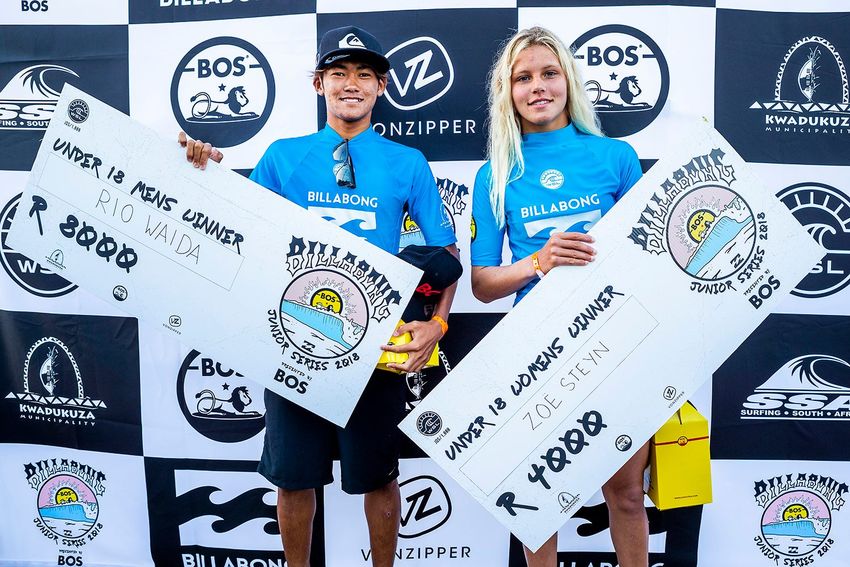
Here’s the Problem: Gender-based discrimination results in the systematic exclusion of
women from athletic competitions. Female athletes have fewer competitive opportunities
than male athletes and working conditions for women are subpar. Discrimination is the
biggest challenge facing women professional surfers in California and globally and this is
found in other sports as well.

Actual Damages: Gender-based discrimination results in less competitive playing time, loss
of income, smaller marketing budgets, loss of sponsorship opportunities, substandard
facilities, sports arenas and stadiums for women’s leagues are located further from densely
populated areas, lack of coaching or no coaching, less training or no training, limited safety
training or no safety training, second-rate equipment, inadequate healthcare, injuries and
prolonged injury recovery. The list goes on…

Women Want To Compete in California!

On March 22-24, 2019, women were excluded from the Jack’s Surfboards Pro competition,
a World Surf League 1,500 Qualifying Series event with prize money and points, held in
Huntington Beach, CA.

On March 20, 2019, CEWS sent an email to the mayor of Huntington Beach and asked the
city council to prohibit gender-based discrimination. We requested that the city change
their event permits to require that ALL surfing competitions include a women’s division and
a men’s division in compliance with the Unruh Civil Rights Act. Huntington Beach City
Manager Fred Wilson said in a statement to the Orange County Register that there have been
no requests from promoters to host a women’s qualifying series event in the city. Mr. Wilson
also said, “We are not in the practice of dictating amount of prize money/pay distributed by
outside promoters for these events.” To-date, CEWS has not received a response from the
Mayor or the City Manager.

Recent news coverage about AB 467:

   •   Orange County Register: https://bit.ly/2I2xR9S
   •   CALmatters: https://bit.ly/2TYWQwn
   •   HuffPost: https://bit.ly/2VJJntT

We Fight Gender Discrimination

The Mavericks big-wave surf competition was founded in 1998. Jeff Clark titled the
inaugural event “Men Who Ride Mountains.” On Feb 17, 1999, the first Mavericks surf
competition was held near Half Moon Bay, San Mateo County. Now it’s two decades later,
and women athletes have still not had an opportunity to compete in Mavericks.

                                                                                             2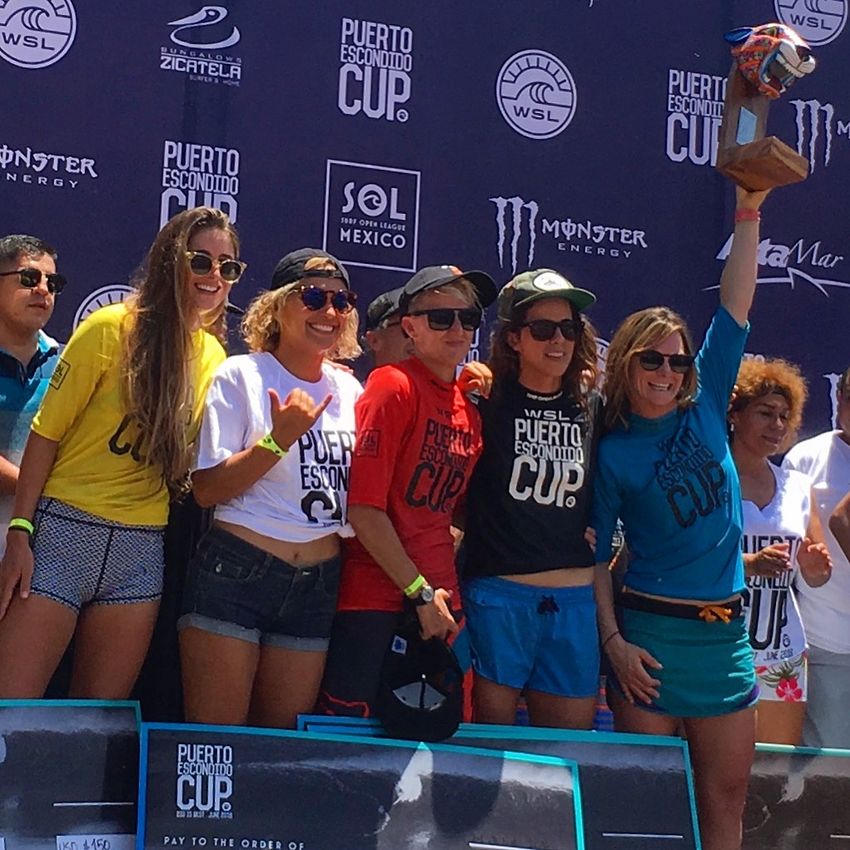
Next time the contest is held women athletes will compete for equal
prize money in a multi-heat women’s division.

How we got here: Starting in 2015, Sabrina Brennan advocated for the inclusion of
women in the Mavericks competition. She persuaded the California Coastal Commission to
require that women athletes be included. Building on that success, Brennan co-founded the
Committee for Equity in Women’s Surfing with Bianca Valenti, Paige Alms, Keala Kennelly,
Andrea Moller and founding counsel Karen Tynan. Since 2016, CEWS has led the charge
for equal access, inclusion and equality in pro surfing.

In 2018, CEWS won the battle for global equal pay in professional surfing. Our work is
the subject of two documentary films, and hundreds of news stories including the New
York Times Magazine feature published Feb 10, 2019, “The Fight for Gender Equality, In
One of the Most Dangerous Sports on Earth.”

We asked for equal pay: Last July, CEWS met with the World Surf League (WSL) at a hotel
in Redwood City and presented a proposal for equal prize money. We told the WSL to end
gender-based discrimination. CEO Sophie Goldschmidt said NO, and threatened to cancel
Mavericks rather than pay women equally.

What did we do? Back down? Accept less? No! We stood our ground and went back to
the Coastal Commission and demanded equal access and equal pay at Mavericks. We also
got help from Betty Yee and Gavin Newsom and the California State Lands Commission.

Here’s what happened next: Last Sept, the WSL announced global equal prize money for
every WSL event, including the Mavericks Challenge, which may be held next season
depending on surf conditions.

Four women surfers, an activist, a lawyer and our supporters stood
together, united in our demand for equality and pay equity.

And here we are today: We’re pleased that Assemblymembers Tasha Boerner Horvath and
Lorena Gonzalez have taken an interest in the precedent our work has set. Together, they
co-authored AB 467 and we applaud their efforts to address the pay gap in athletic events
held on state lands and we respectfully request that the bill be carefully considered to
protect athletes from gender-based discrimination in competitions held on state lands.

                                                                                            3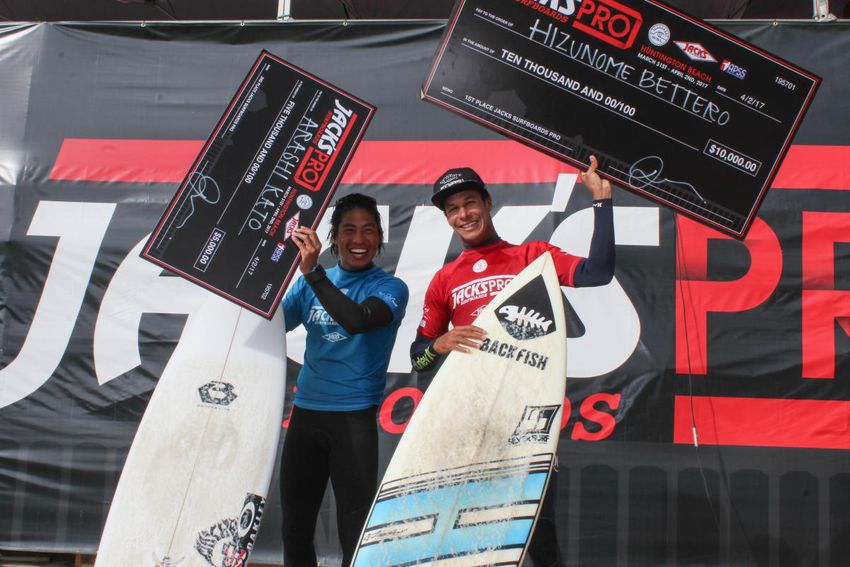
Equal Pay is Only Part Of The Problem

It’s impossible to achieve equal pay in athletic competitions that exclude
women OR in competitions that provide unequal playing time, unequal
awards, unequal honors and unequal logistical support.

We ask the Committee to carefully consider how best to insure that female categories,
male categories and open/nonbinary categories are included in athletic competitions held
on California state lands.

It’s difficult and sometimes impossible for women professional athletes to earn a living
without opportunities to compete to earn equal money. The lack of opportunity, inclusion
and equal pay is a complex system of problems rooted in discrimination.

The best strategy for sorting out this mess of interlocking civil rights violations is to address
them simultaneously.

Please require that all state agency permits and leases prohibit
discrimination. Please amend AB 467 to require businesses and
organizations that manage and promote athletic competitions on
California state lands comply with the Unruh Civil Rights Act.

Unfair business practices prevent women professional surfers from utilizing public resources
and coastal access. Please take action to prohibit gender-based discrimination.

Please ensure that AB 467 provides the oversight necessary to stop decades of gender-
based discrimination.

Please read our attached paper on California civil rights law and see the attached photos
that depict gender-based discrimination.

Thank you,

Bianca Valenti, Keala Kennelly, Andrea Moller, Paige Alms and Sabrina Brennan

Copy:   Assemblymember Tyler Diep
        Assemblymember David Chiu
        Assemblymember Steven S. Choi, Ph.D.
        Assemblymember Laura Friedman
        Assemblymember Sydney Kamlager-Dove
        Assemblymember Adrin Nazarian
        Assemblymember Kevin Mullin
        Assemblymember Lorena Gonzalez

                                                                                                    4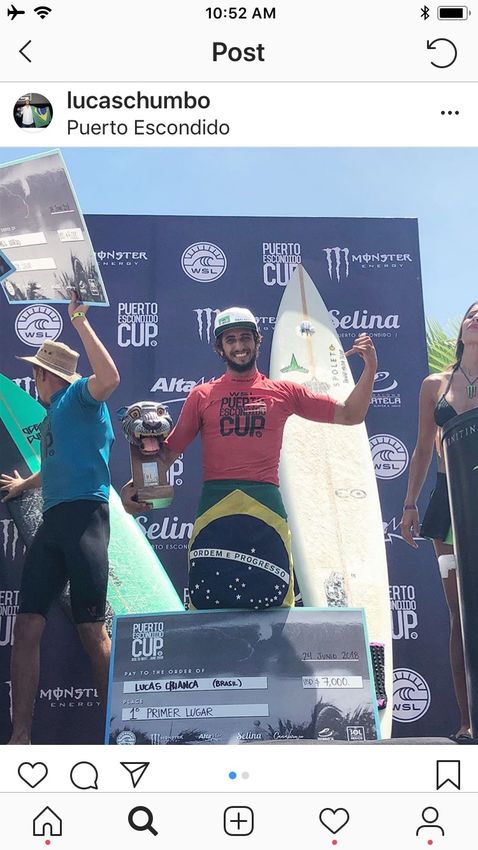
Assemblymember Tasha Boerner Horvath
Dana L. Mitchell, Chief Consultant, Dana.Mitchell@asm.ca.gov
Sonia R. Valverde-Strong, Committee Assistant, ArtsCommittee@asm.ca.gov
Robert Charles, Chief of Staff, District 76, Rob.Charles@asm.ca.gov
Even McLaughlin, Chief of Staff, District 80, Evan.McLaughlin@asm.ca.gov
Laurel Brodzinsky, Legislative Director, District 80, Laurel.Brodzinsky@asm.ca.gov
Ben Cohn, District Representative, District 22, Ben.Cohn@asm.ca.gov
Katelin Van Deynze, Legislative Director, District 25, Katelin.VanDeynze@asm.ca.gov
Even McLaughlin, Chief of Staff, District 80, Evan.McLaughlin@asm.ca.gov
Julia Kingsley, Legislative Assistant, District 43, Julia.Kingsley@asm.ca.gov
Jim Metropulos, Legislative Director, District 43, Jim.Metropulos@asm.ca.gov
Allison Ruff-Schuurman, Chief of Staff, District 43, Allison.RuffSchuurman@asm.ca.gov
Nikki Johnson, Chief of Staff, District 54, Nikki.Johnson@asm.ca.gov
Howard Quan, Legislative Director, District 54, Howard.Quan@asm.ca.gov
Alina Evans, Legislative Aide, District 54, Alina.Evans@asm.ca.gov
Cliff Wagner, Chief of Staff, District 68, Cliff.Wagner@asm.ca.gov
Miles Horton, Legislative Aid, District 11, Miles.Horton@sen.ca.gov
Alan Moore, Senate LGBT Caucus Consultant, District 11, Alan.Moore@sen.ca.gov
Alina Hernandez, Assembly LGBT Caucus Consultant, District 78, Alina.Hernandez@asm.ca.gov
Rick Zbur, Executive Director, Equality CA, rick@eqca.org
Tony Hoang, Managing Director, Equality CA, tony@eqca.org
Tami Martin, Legislative Manager, Equality CA, tami@eqca.org
Patti Paniccia, Patti.Paniccia@gmail.com
Susan Jordan, SJordan@coastaladvocates.com
Jennifer Savage, JSavage@surfrider.org
Jennifer Lucchesi, Jennifer.Lucchesi@slc.ca.gov
Colin Connor, Colin.Connor@slc.ca.gov
Sheri Pemberton, Sheri.Pemberton@slc.ca.gov
Anne Baker, ABaker@sco.ca.gov
Sloane Viola, Sloane.Viola@gov.ca.gov
Danna Stapleton, Danna.Stapleton@ltg.ca.gov
Aleksandra Reetz, Aleksandra.Reetz@ltg.ca.gov
Dan Carl, Dan.Carl@coastal.ca.gov
Jeannine Manna, Jeannine.Manna@coastal.ca.gov
Stephanie Rexing, Stephanie.Rexing@coastal.ca.gov

                                                                                            5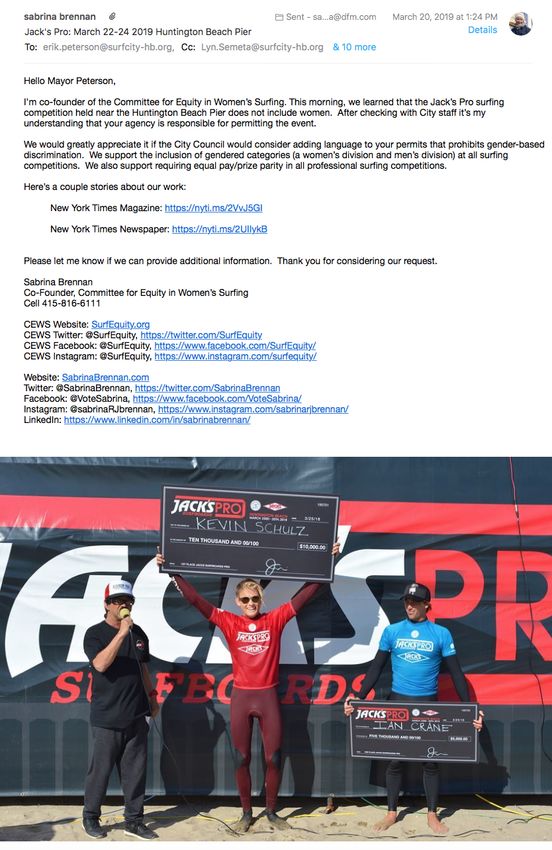
COMMITTEE FOR EQUITY IN WOMEN'S SURFING
Karen Tynan | July 9, 2018

The World Surf League’s Discrimination Against Women Athletes Violates
Civil Rights Law

California’s Unruh Civil Rights Act provides harsh penalties, including attorney’s fees, for
any California business that discriminates against individuals based on a broad list of
protected categories including gender. California Civil Code Sections 51 through 52.1
provide broad protections and severe penalties for those businesses that discriminate in the
accommodations, advantages, facilities, privileges, or services of the business establishment.

Below is a compendium of important California civil rights cases:

•   The Department of Alcoholic Beverage Control properly determined to revoke the
    license of a business establishment licensed to sell liquor on public premises based on a
    finding that the licensee had engaged in a sexually discriminatory admittance policy.
    Apart from testimony of the licensee’s own personnel which chronicled their conceded
    attempts to dissuade potential male customers, the testimony of the department
    investigators and the licensee’s advertisements placed in a newspaper clearly
    constituted substantial evidence upon which to base a finding of a sexually
    discriminatory admittance policy. Such discrimination having been established, the
    department’s authority to revoke the liquor license was clear. The apposite public policy
    is set forth in CC §51 (the Unruh Civil Rights Act), which provides that “all persons
    within the jurisdiction of this state are free and equal, and no matter what their sex …
    are entitled to the full and equal accommodations, advantages, facilities, privileges, or
    services in all business establishments of every kind whatsoever.” Easebe Enterprises, Inc.
    v. Alcoholic Bev. etc. Appeals Bd. (Cal. App. 2d Dist. Apr. 18, 1983), 141 Cal. App. 3d 981.

•   “Ladies Day” and “Ladies Night” discounts offered by various car wash facilities and
    nightclubs violate the provisions of the Unruh Civil Rights Act (CC §§51, 51.5). The
    Legislature established that arbitrary sex discrimination by business is per se injurious
    and that differential pricing based on sex may be generally detrimental to both men and
    women, because it reinforces harmful stereotypes. Reese v. Wal-Mart Stores, Inc. (Cal. App.
    3d Dist. Aug. 3, 1999), 73 Cal. App. 4th 1225.

•   Text of the Unruh Civil Rights Act, CC §51 et seq., does not support the assertion that,
    in order to recover under the Act, plaintiffs who are discriminated against when they
    present themselves at a business establishment and pay the price of admission also
    must demand equal treatment and be refused. It is not consistent with the policy of the
    Act, or with California case law, to read such a requirement into the language of the
    Act. Angelucci v. Century Supper Club (Cal. May 31, 2007), 41 Cal. 4th 160.

                                                                                                   6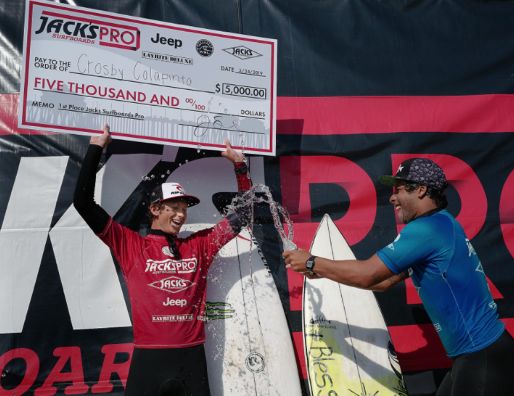
•   By passing the Unruh Civil Rights Act (CC §§51, 52) the Legislature established that
    arbitrary sex discrimination by businesses is per se injurious: §51 provides that all
    patrons are entitled to equal treatment, and § 52 provides for minimum statutory
    damages of $250 for every violation of §51, regardless of the plaintiff’s actual
    damages. Koire v. Metro Car Wash (Cal. Oct. 17, 1985), 40 Cal. 3d 24, 219.

•   The Unruh Civil Rights Act (CC §51, prohibiting arbitrary discrimination by business
    establishments) proscribed not only the direct discrimination against women by an
    international organization of local professional and businessmen’s clubs but also
    discrimination by the organization against a local member club on account of its having
    admitted women to its membership. Rotary Club of Duarte v. Board of Directors (Cal. App.
    2d Dist. Mar. 17, 1986), 178 Cal. App. 3d 1035.

•   In an action by a woman who was in the business of procuring and selling scrap metal
    to scrap metal processing and distribution centers against the owners and operators of
    a scrap metal processing and distribution facility, in which plaintiff alleged defendants
    retaliated against her by denying her access to their property due to her previous
    gender discrimination lawsuit against them (which was settled), the trial court erred in
    sustaining defendants’ general demurrer to her cause of action for violation of
    the Unruh Civil Rights Act (CC §§51 et seq.). The act is not restricted to persons who
    have been identified as members of a particular class; an individual has the right to be
    free from discrimination by business establishments. The act must be liberally construed
    with a view to effecting its object and to promote justice, and allowing defendants to
    discriminate against plaintiff because of her gender discrimination suit would be
    contrary to the primary purpose of the act, which is to compel recognition of the
    equality of all persons and the right to the particular service offered by an organization
    or entity covered by the act. Further, permitting defendants to discriminate against
    plaintiff in retaliation for exercising a statutory right would be contrary to public
    policy. Vaughn v. Hugo Neu Proler International (Cal. App. 2d Dist. Sept. 25, 1990), 223 Cal.
    App. 3d 1612.

•   Defendants’ motion to dismiss plaintiff student’s claim under Civ C §§51, 51.5,
    and 52(a) was denied, in an action against the school district, superintendent, and
    principal for sex discrimination after plaintiff, a female junior high school student, was
    harassed by male students. Public schools are business establishments under
    the Unruh Act. Allegations of inadequate action on the part of a school district and its
    officials can rise to the level of intentional discrimination. Nicole M. v. Martinez Unified
    Sch. Dist. (N.D. Cal. Apr. 14, 1997), 964 F. Supp. 1369.

•   In a case alleging sexual orientation discrimination in violation of the Unruh Civil Rights
    Act, physicians at a medical clinic who refused to perform an intra-uterine insemination
    for a lesbian patient could not assert affirmative defense based on the free exercise of
    religion and free speech. North Coast Women's Care Medical Group, Inc. v. Superior Court
    (Cal. Aug. 18, 2008), 44 Cal. 4th 1145.

                                                                                                   7
Women Are Not Invited To Compete In The Jack’s Pro in Huntington Beach
89
Before 2019, The World Surf League Routinely Paid Women Less Than Men

In Nov 2016, Paige Alms made history as the first Woman Big Wave Champion at the Pe’ahi
Challenge and in Oct 2017 Alms successfully defended her title. The WSL paid Alms
$15,000 in prize money per event. Her counterpart in the men’s division received $25,000
per event. The female winner earned 40% less then the male winner at the past two Pe’ahi
competitions.

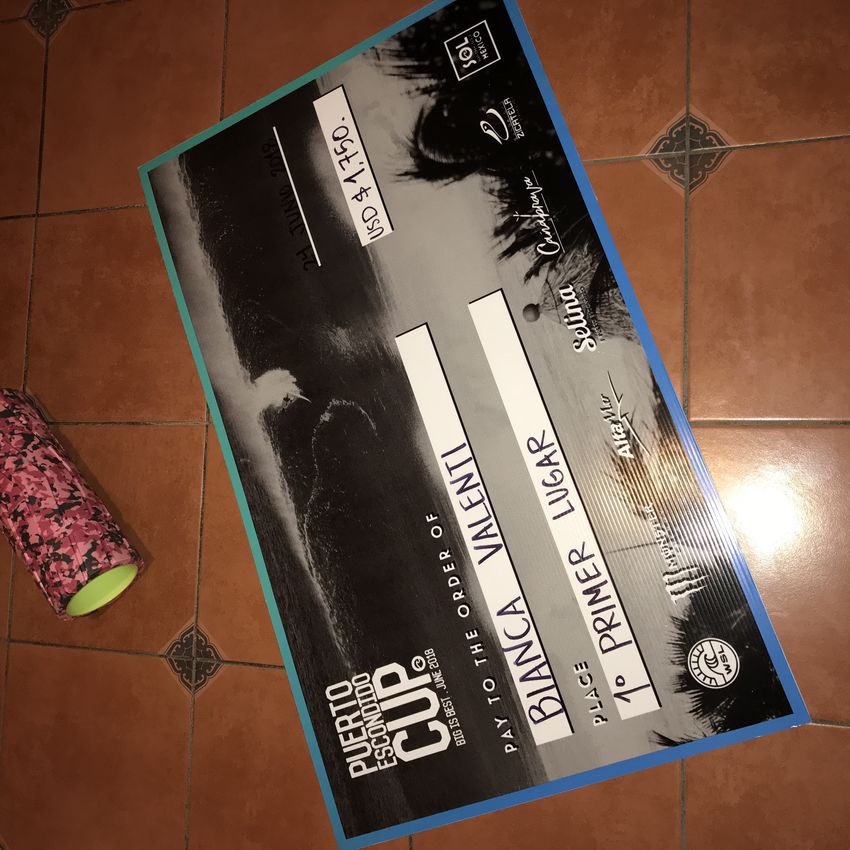
This summer, the Puerto Escondido Cup first place winner, Bianca Valenti earned $1,750
while her counterpart in the men’s division took home $7,000. We’ve done the math.
Valenti earned 75% less than her male counterpart surfing the same wave.

The World Surf League (WSL) has a history of gender-based discrimination.

On June 26, 2018, the San Francisco Chronicle published an article on the Puerto
Escondido Cup that included an interview with WSL Big Wave Tour Organizer Gary Linden
and remarks by women competitors:

  “This is the best event that’s ever happened for women…Even better than the two
  events we had at Pe’ahi” Hawaii in 2016 and ’17. The women really stepped it up. The
  surfing level was so good, we didn’t have to change the criteria; we judged them equally
  as the men. The winner (Valenti) surfed well enough to have gotten through a men’s
  heat. This is a huge step in the right direction.”
    —Gary Linden, WSL Big Wave Tour Organizer, 2018

  “The risks are the same so why aren’t the prizes the same?
   I think we deserve it.”
     —Emily Erickson, Professional Surfer, 2018

  “All the athletes, male and female crushed it and put on a great show. It was
  rad! The entire town was stoked, the men, the women, the boys, the girls, everyone!
  We’re all in this together. Women-up!”
    —Bianca Valenti, Professional Surfer, 2018

  “The chicks showed up and blowed up. So how about that equal pay?”
    —Keala Kennelly, Professional Surfer, 2018

                                                                                         10
Puerto Escondido Cup first place winner, Bianca Valenti earned $1,750 while
her counterpart in the men’s division took home $7,000.
Bianca Valenti earned 75% less than Lucas (Chumbo) Chianca.
1112
Meet the 2018 Billabong Junior Series Ballito Pro Junior winners, Rio Waida (Indonesia) and
Zoe Steyn (East London, SA) who claimed their victory on June 24, 2018 in medium sized
onshore conditions at Willard Beach, Ballito.

Zoe Steyn earned 50% less than Rio Waida. The WSL paid the top male athlete
double what they paid the top female athlete. This is gender-based discrimination.

SURFER | The WSL’s Gender Prize Money Gap Sparks Controversy and Donations

The event organizers and sponsor, Billabong, were quick to realize the public relations issue
they had on their hands-and they were equally quick to toss that hot potato squarely into
the WSL’s hands.

”Billabong has always been actively invested in and supportive of women's surfing in South
Africa," wrote Chad D Arcy, event license holder of the Billabong Junior Series in a
statement. "We've proudly watched women's surfing grow over the years, in part thanks to
the host of women's events we've run. For many years, we've sponsored a team of female
athletes, nurturing their careers in surfing from an early age....In order for any
professional surf event to be internationally accredited, it has to be sanctioned by
the WSL. The WSL also determines the allocation of prize money and points for
each event.“

                                                                                           13
You can also read


