Awareness Campaign & GST UPDATE - Dr Mangesh Gondavale Dy Commissioner of Sales Tax
←
→
Page content transcription
If your browser does not render page correctly, please read the page content below
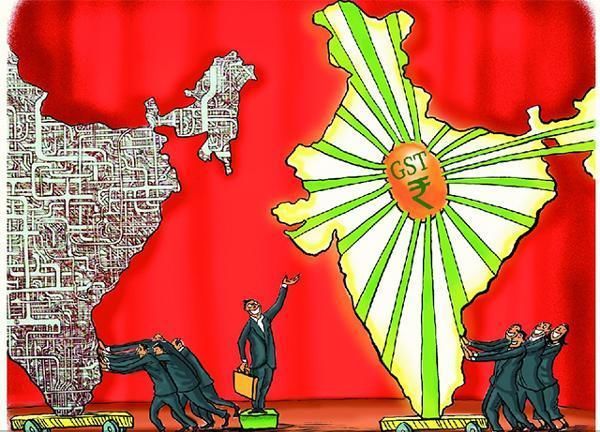
Awareness Campaign & GST UPDATE

      Dr Mangesh Gondavale
       Dy Commissioner of Sales Tax

                                      1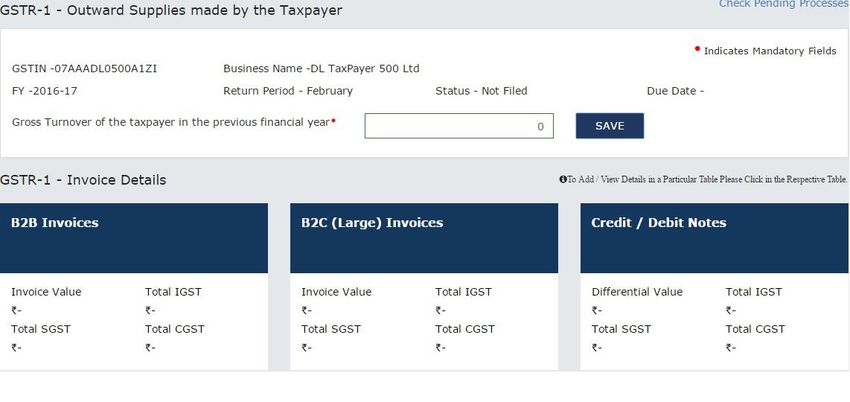
Problems in Existing Tax System

• Multiplicity of Central and State indirect taxes,
• No comprehensive input tax system,
• Cascading of tax by levy of VAT on Excise Duty,
  Service Tax,
• No integration between goods and services tax,
• Narrow tax base,

                                                      2
Limitations of current Tax regime
         1. Cascading Effect of Tax
     MAHARASHTRA
                                   MADHYA
                                   PRADESH

                                    Credit of CST Not
                                    Available (This should
    Credit of Excise not            relate to interstate
    allowed                         supply. An arrow can be
                                    shown from wholesaler
                                    in Maharashtra to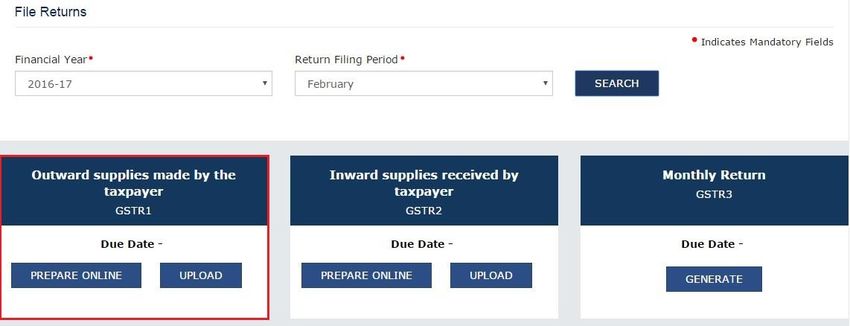
Limitations of current Tax regime :

                           2. Multiple Registrations

                                                       Central
                                                       Excise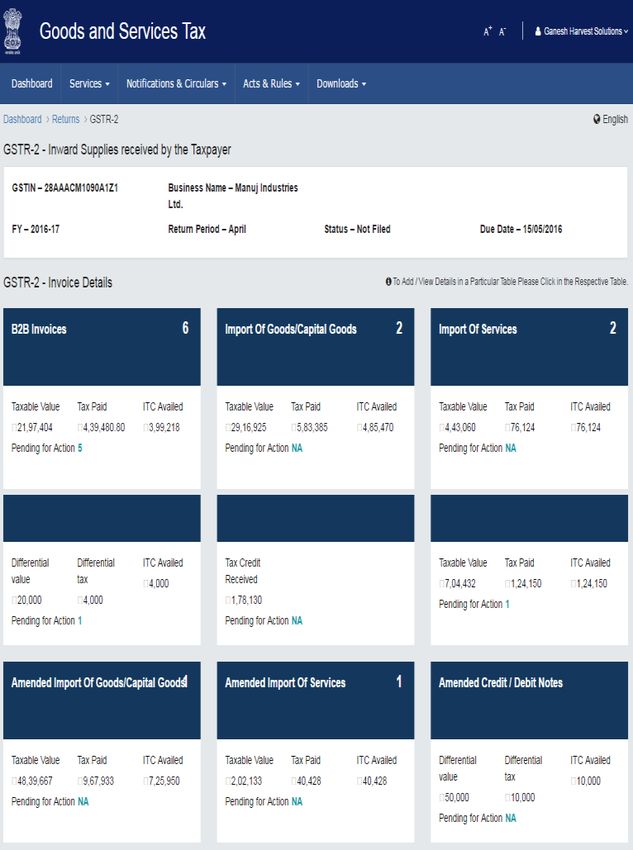
Limitations of current Tax regime :

                      3. Different Points of Taxation

                                      Limitations of current Tax regime :

             Central Excise                  Service Tax                        VAT
                  (On                      (On provision of                 ( On sale of
             Manufacturing)                    Service)                       Goods)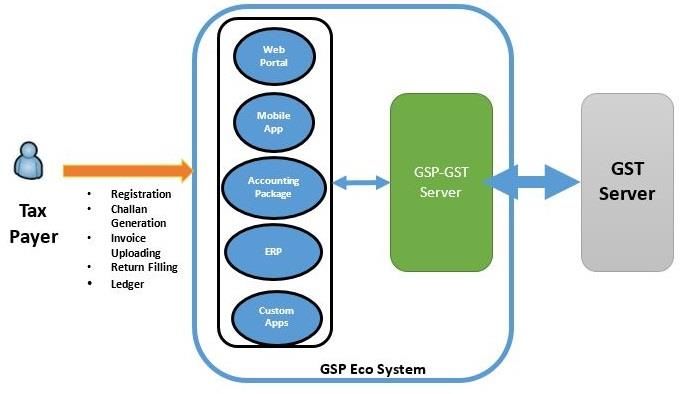
Limitations of current Tax regime :

                            4. Lack of Uniformity

                                                  No Entry Tax

                                          Entry
                                          Tax

                                      @ NIL                   @
                                      %                       4%

                                              Value Added
                                                    Tax
                                              e.g. on Sugar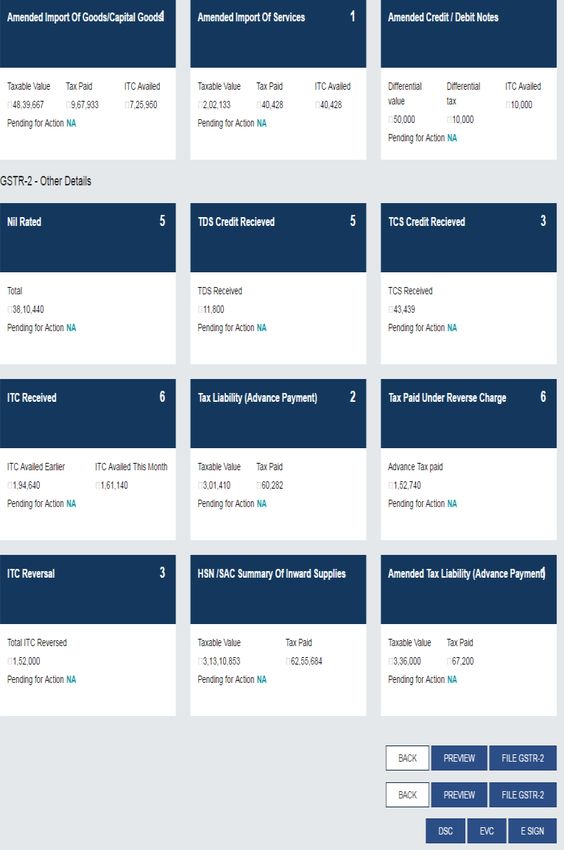
Limitations of current Tax regime :

               5. Goods Vs. Services dilemma ?

             License                            Sale of Food In
           Software in                            Restaurant
               CD

                                       Sale

                            Services
                                              Manufacturing
What is GST?
One Tax
  For

Manufacturing

   Trading

  Services
                            ONE NATION: ONE TAX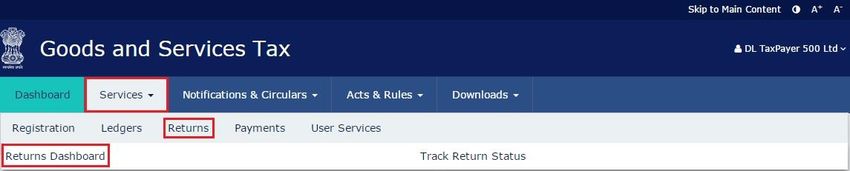
Benefits of GST (1/2)

• Reduction in Cascading of Taxes       Decrease in
• Overall Reduction in Prices            Inflation

• Common National Market                Ease of Doing
• Benefits to Small Taxpayers             Business

• Self-Regulating Tax System             Decrease in
• Non-Intrusive Electronic Tax System      “Black”
                                        Transactions

                                                        9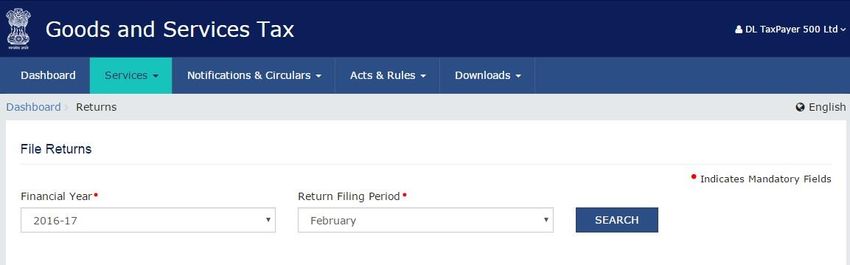
Benefits of GST (2/2)

• Simplified Tax Regime                    More informed
• Reduction in Multiplicity of Taxes         consumer

• Consumption Based Tax                    Poorer States
• Abolition of CST                            to Gain

• Exports to be Zero Rated
• Protection of Domestic Industry - IGST   Make in India

                                                           10
Changes under GST
• Additional power to levy on services for the State,
• Additional power to levy tax on value addition on
goods for the Centre
• Subsuming of several taxes levied by State and
Centre
• System of comprehensive set-off relief of CENVAT,
VAT and service tax
• Removal of burden of CST and rationalization of
rates
• Introduction of destination based inter-State GST
11Central Taxes to be subsumed under GST
•Central Excise Duty
•Additional Excise Duties
•Excise Duty levied under the Medicinal and Toiletries
Preparation Act
•Service Tax
•Additional Customs Duty, commonly known as
Countervailing Duty (CVD)
•Special Additional Duty of Customs - 4% (SAD)
•Surcharges, and
•Cesses.
12State Taxes to be subsumed under GST
•VAT including purchase tax
•Entertainment tax (unless it is levied by the local bodies).
•Luxury tax
•Taxes on lottery, betting and gambling.
•State Cesses and Surcharges in so far as they relate to
supply of goods and services.
•Entry tax not in lieu of Octroi.
13Taxes NOT to be subsumed under GST
•Central Taxes
•Customs Duty
•Excise on tobacco products and petroleum products
•State Taxes
•Excise duty on liquor
•Octroi
•Sales Tax on petroleum products (Natural Gas is
undecided)
•Stamp duty
•Taxes and duties on Electricity
14Salient features of GST
• The GST would be applicable on the supply of
goods or services.
– other than alcoholic liquor for human consumption
and five petroleum products.
• Destination based consumption tax
• Exports would be tax-free and imports taxed at the
same rate as integrated tax (IGST)
15Salient features of GST... (contd.)
• Tax payers with an aggregate turnover in a financial year up to
Rs.20 lakhs would be exempt from tax.
For special category states specified in Article 279A, the
threshold exemption shall be Rs. 10 lakhs.
Tax payers making inter-State supplies or paying tax on
reverse charge basis shall not be eligible for threshold
exemption.
• Small taxpayers with an aggregate turnover in a financial year
up to Rs. 50 lakhs shall be eligible for composition levy.
16Salient features of GST... (contd.)
• An Integrated GST (IGST) would be levied and collected by the
Centre on inter-State supply of goods and services.
• HSN code shall be used for classifying the goods under the
GST regime.
• Taxpayers whose turnover is above Rs. 1.5 crores but below
Rs. 5 crores shall use 2-digit code and the taxpayers whose
turnover is Rs. 5 crores and above shall use 4-digit code.
• For Services, Service Accounting Codes (SAC) shall be used
17GST Rates • Rates: 0%( on essential items, rice/wheat) • 5%: ( on items of mass consumption ) • 12%/18%:(standard rates covering most manufactured items and Services) • 28% : ( on Consumer Durable Goods, Pan masala, tobacco and aerated drinks etc) • Basic philosophy behind these rates are that, to the extent possible, the current combined rate of tax levied on individual goods by the Central and the State Governments should be maintained in GST • Uniform GST rate not possible at this stage as luxury goods and goods consumed by poorer sections of society cannot be taxed at the same rate • Rates will be notified by Government on recommendations of GST Council.
Registration

     Compulsory Registration for
     Each State where business
             situated

Option      to     take    multiple
registration for each business
vertical within same state
Mandatory Registration
(irrespective of threshold)
Persons making inter-State taxable supply
Persons required to pay tax under reverse charge
Casual and non-resident taxable persons
E-Commerce operator /Those required to collect TDS
Persons supplying goods through e-commerce operator
Persons making supplies on behalf of a registered taxable
person
Input Service Distributer
Every person supplying online information and data base
access or retrieval services from a place outside India to a
person in India, other than a registered person
20Registration… (contd.)
• Registration ( GSTIN)to be granted State-wise.
• PAN mandatory for GSTIN (except for NRTP- here
Passport)
• Separate registration permitted for multiple
business verticals in a State.
Registration deemed to be granted if objection by way of
Notice is not communicated within the time of 3 working days.Transitional Provisions
• Existing taxpayers to be issued Provisional Registration
valid for 6 months (extendible)
Upon furnishing of prescribed information, final RC to be
granted
• Cenvat credit/VAT carried forward in return allowed as ITC
under GST
• Un-availed Cenvat/VAT credit on capital goods, not carried
forward in return, shall also be allowed as ITC under GST
• Eligible duties and taxes in respect of inputs held in stock
permissible as credit to registered personsTransitional Provisions
• Eligible duties and taxes in respect of inputs held
in stock available as credit to taxable person
switching over from compounding
• Transitional credit available generally only if both
laws permit and invoice is not more than 12
months old
• No tax payable on goods removed/despatched
earlier but returned within 6 months after the
introduction of GST
• Proceedings under earlier law to be conducted
under old law
23Job Work
• Registered person may send any inputs or capital goods,
without payment of tax, to a job worker for job-work and
shall,––
– bring back inputs within one year
– capital goods, other than moulds and dies, jigs and fixtures, or
tools, in three years,
• supply such inputs from the place of business of a job
worker on payment of tax within India, or with or without
payment of tax for export, as the case may be:
– unless the said principal declares the place of business of the
job-worker as his additional place of business except in a case—
– (i) where the job worker is registered under section 25;
• waste and scrap generated during the job work may be
supplied by the job worker directly from his place of
business on payment of tax, if such job worker is registered,
or by the principal, if the job worker is not registered. 24Job Work
• Where the inputs or capital goods sent for job
work are not received back or are not supplied
from the place of business of the job worker it
shall be deemed they have been supplied by the
principal to the job-worker on the day when they
were sent out.
• Input tax credit allowed on inputs and capital
goods sent to a job-worker for job-work.
• If inputs or capital goods are sent directly to a job
worker, the period of one year shall be counted
from the date of receipt of inputs by the job
worker.
25Resource Material
• CGST /IGST/ UTGST Bills
• Nine Rules on Valuation, Compensation, Returns,
Registration, Composition, Invoice, Payment, Refund,
Transition
• Various Formats of returns/ registration
• FAQs on GST
• Migration
– GSTN FAQs on migration
– FAQs on Migration to GST by CBEC
– Step by Step guide to taxpayers
– Migration PPT
26Resource Material- Links • http://www.cbec.gov.in/htdocs-cbec/gst/gst • http://www.cbec.gov.in/htdocs- cbec/migration-to-gst/migration-to-gst .....for migration related information • https://www.gst.gov.in/ • http://www.gstn.org/ • http://tutorial.gst.gov.in
Help lines • www.gst.gov.in Helpline number: 0124-4688999 helpdesk@gst.gov.in • www.aces.gov.in : for migration of existing assessees and getting provisional ID & Password • cbecmitra.helpdesk@icegate.gov.in :for migration issues Helpline toll free number: 1800-1200-232 • CBEC GST Mobile App at Google Play Store
Returns for Taxpayers
Why Returns?

• Means of compliance verification
• Mode for transfer of information to tax
  administration
• To declare tax liability for a given period
• Providing necessary inputs for taking policy
  decision

                                                 30
Features of Tax Returns in GST
Based on transactions – Invoice based
Designed for system based matching of Input Tax
Credit and other details (import, export etc.)
Auto-population from details of outward supplies
Auto-reversal of ITC in case of mismatch
Concepts of ledgers – cash, ITC and liability
No revised returns – changes through
rectifications and reported in the return for the
month in which error detected
31Returns for Taxpayers
Overview of GST Returns
Monthly Quarterly
GSTR 4 Compounding taxpayer
GSTR 1 Statement of Outward Supplies
GSTR 2 Statement of Inward Supplies Annual
GSTR 3 Monthly GST Return GSTR 9 Annual GST Return
GSTR 9A Annual return for
GSTR 5 Non-resident taxable persons Compounding Taxpayer
GSTR 9B Reconciliation
GSTR 6 Input Service Distributor (ISD) Return Statement
GSTR 7 Tax Deduction at Source (TDS) return
Unscheduled
GSTR 8 Tax Collection at Source (TCS) Return
GSTR 10 Final return after
GSTR 11 Inward Supplies for Government Bodies cancellation, within three
month of cancellationReturns for Taxpayers
GSTR 1, GSTR 2, & GSTR 3: Due Date for Filing
GSTR 1 GSTR 2 GSTR 3
10th of every month 15th of every month 20th of every month
Please note: The tax period for the monthly deadlines is the previous calendar monthReturns for Taxpayers
GSTR 4, GSTR 5, & GSTR 6: Due Date for Filing
GSTR 4 GSTR 5* GSTR 6
18th of the month following end
of financial quarter 20th of every month 13th of every month
*Important: For GSTR 5 non-resident taxable persons, final
return must be filed by the 20th of the succeeding calendar
month or within 7 days of expiration of registration
whichever is earlier.
Please note: The tax period for the monthly deadlines is the previous calendar monthReturns for Taxpayers
GSTR 7, GSTR 8, & GSTR 9: Due Date for Filing
GSTR 7 GSTR 8 GSTR 9*
10th of every month 10th of every month 31st December
*For previous financial year
Please note: The tax period for the monthly deadlines is the previous calendar monthReturns for Taxpayers
GSTR 1: Statement for Outward Supplies
A Supplier Taxpayer is required to prepare GSTR 1 wherein they will report
invoice level information
GSTIN of recipient , Invoice, Number, date, HSN/SAC, ….Value, Taxable
value…. POS , Tax – IGST, CGST, SGST/UTGST – Rate and Tax amount
GSTR 1 needs to be filed even if there is no business activity (i.e. Nil Return)
during the period of return.
Supplier Taxpayer will file return in electronic form only.
Invoices for IGST, CGST/SGST will be issued separately (in other words, one
invoice can’t have IGST as well as SGST/CGST).
An invoice can’t have two different places of supply. POS should be a
mandatory field in the inter-state invoice.
Bulk upload facilities are available for suppliers who have above specified
entries per month.Returns for Taxpayers
GSTR 2A: Draft of GSTR 2
GSTR 2A contains an auto populated list of all invoices received from all Suppliers
Taxpayers’ corresponding returns for the given tax period; these invoices can be
acted upon directly in the GSTR 2 before filing.
Before filing the GSTR 2, Receiver Taxpayer shall take action on all
the invoices received in the GSTR 2A.
Receiver Taxpayer can accept, reject, & modify any pending invoices received in the
GSTR 2A. Also, receivers can park items for next tax period & such items will roll over
to next month’s GSTR 2.
Accepted & Modified Invoices will flow to GSTR 2 & in case of Rejection
only an intimation will be sent to Taxpayer & Tax Officer.
GSTR 2A is a read-only document & will be available for view even after the tax
period is over.Returns for Taxpayers
GSTR 2: Statement of Inward Supplies
Receiver Taxpayer can Add any missing invoices in the GSTR 2.
GSTR 2 is editable until receiver taxpayer has acted upon all the
invoices received from all the supplier taxpayers (bulk
approval/rejection is possible in GSTR 2).
Receiver taxpayer may choose to not act upon one or more invoices
which will carry the ‘pending’ status & may be acted upon in
subsequent tax periods.
After executing all the necessary actions, receiver taxpayer can file
the GSTR 2.
GSTR 2 needs to be filed even if there is no business activity (i.e. Nil
Return) during the period of return. Receiver Taxpayer will file return
in electronic form only.
GSTR 2 can be filed only after 10th of the succeeding month.Returns for Taxpayers
GSTR 1A: Addendum to GSTR 1
In the event of any amendment to an invoice or addition (in GSTR 2 of
Receiver Taxpayer), the amended/added invoice(s) will auto populate
the GSTR 1A of the Supplier Taxpayer.
This will happen in case of any error or discrepancy in the invoice level
details at supplier’s end.
The Supplier Taxpayer can Accept or Reject the amended/added
invoice.
If Supplier Taxpayer accepts the amendment/addition, their GSTR 1
will be auto-amended & liabilities will be updated accordingly.
In case they reject the amendment/addition, there will be no impact
on their GSTR 1 & associated liabilities.Returns for Taxpayers
Monthly Returns: Data Flow
GSTR 5 (NRTP)
GSTR 6 (ISD)
GSTR 7 (TDS)
GSTR 8 (TCS)
GSTR 2/2A OF SUBSEQUENT TAX PERIOD
GSTR 1 GSTR 2/2A
MODIFY ADDED INVOICE
ACCEPT
GSTR 1A MODIFY or ADD REJECT ACCEPT or MODIFY
MISMATCH
REJECT FILE GSTR 2GST Returns:
GSTR 3
• Auto-populated based on GSTR-1 and GSTR-2
• Outward Supplies
– All B2B inter and intra state supplies
– All B2C inter-State supplies above the value of Rs. 2.5 lacs
– Exports
– Revision of tax of previous periods
• Inward Supplies
– Inter and intra state supplies received
– Imports
– Amendment to tax of previous periods
– Credit to ITC Ledger
41GST Returns:
Correction in returns
• No Revision of returns
As per the return taxes have already been paid and fund
transfers already settled
No significance as the basis now is individual transaction
• All changes through rectifications reported in
subsequent returns
• If an invoice has been left out in GSTR-1 or GSTR-2 : can
be uploaded in subsequent returns but to pay interest
for any tax not paid on this account
• If any invoice has been wrongly entered but remains
unmatched – can be amended in subsequent returns
42GST Returns:
Correction in returns
• Post transaction changes to be done through
debit or credit notes
• Other details like B2C supplies can be amended in
subsequent returns
• Delayed uploading coupled with payment of
interest
• All changes, credit or debit notes to be carried
out before September of the next financial year
To enable any auto-reversal before Annual Return
43GST Returns:
Annual Return
• Annual summary of all transactions
• Accounts to be certified by Chartered Accountant etc. if
turnover more than Rs. 2 Crore
• Personal Details
• Details of Expenditure
Purchases – goods/services – intra/inter state
Imports
• Details of Income
Supplies – goods/services – intra/inter state
Exports
• Not to be filed by ISD, TDS Deductor, Casual Taxpayer, and
Non resident taxpayer
44GST Returns:
First and Final Returns
• First Return
Required when the liability to register and pay tax
arose before grant of registration
• Final Return
On closure of business
Reversal of credit on goods in stock
45Returns for Taxpayers
Filing GSTR 1: Demonstration Using ApplicationReturns for Taxpayers
Filing GSTR 1: Demonstration Using Application
In the Services Menu, click on Returns > Returns DashboardReturns for Taxpayers
Filing GSTR 1: Demonstration Using Application
1. Select Financial Year & Return Filing Period (Calendar Month)
2. Click SEARCHTaxpayers’ Interface
Taxpayer’s Interface: View E-filed Returns
1 2
Taxpayer logs into GST portal & clicks On making the selection, the
‘View e-filed Returns’ in Returns taxpayer will be able to view
section under the Services menu returns filed for a selected
period as per the criteria in the
screenshot
3
Based on selected criteria,
system will display valid
returns filed during that periodReturns for Taxpayers
Filing GSTR 1: Demonstration Using Application
3. Select GSTR 1 – Outward supplies made by the taxpayer by clicking on PREPARE ONLINEReturns for Taxpayers
Filing GSTR 1: Demonstration Using Application
4. Click on B2B Invoices & you will be directed to the Add Invoice PageReturns for Taxpayers
Filing GSTR 1: Demonstration Using Application
5. Click on ADD INVOICEReturns for Taxpayers
Filing GSTR 1: Demonstration Using Application
6. Enter Receiver GSTIN & Receiver Name will get auto populated. Enter the other mandatory details
7. Proceed to add line item-wise data in dropdown that appears after entering GSTIN (next slide)Returns for Taxpayers
Filing GSTR 1: Demonstration Using Application
8. Enter all the mandatory details like HSN Code (Goods) or SAC (Services) , CGST + SGST or IGST (depending
on whether Inter-state or Intra-state supply,) CESS etc.
9. Click ADD to add the line itemReturns for Taxpayers
Filing GSTR 1: Demonstration Using Application
10. Once all line items are added for a particular invoice, click SAVE to add the invoiceReturns for Taxpayers
Filing GSTR 2: Demonstration Using Application
4. The Summary wise details for the data uploaded will be available in this screen where the
taxpayer will be able to view the summary of all data uploaded & processed.Returns for Taxpayers
Filing GSTR 2: Demonstration Using Application
9. When you click on supplier name, you will see the above screen
10. There are 3 categories – uploaded by Supplier, uploaded by Taxpayer (Receiver), &
modified by Supplier
11. Select one or multiple invoices to Accept & then to Reject (if any)
12. Use the action button against each invoice to edit the invoice if necessaryReturns for Taxpayers
Filing GSTR 2: Demonstration Using Application
15. Similar process will be followed for the other sections of the GSTR 2, & upon completion of
correctly uploading all invoice level details in all sections or modifying the invoice level details
received from various sources in the auto populated sections, Receiver Taxpayer is ready to file
the monthly GSTR 2Returns for Taxpayers
Filing GSTR 2: Demonstration Using Application
18. Once user clicks on File GSTR-2 button the below message for confirmation to proceed will
appear.Returns for Taxpayers
Filing GSTR 2: Demonstration Using Application
19. Once user clicks on Confirm button, the Acknowledgment Reference Number will be
generated & the pop-up message will appear as shown in screenshot.Returns for Taxpayers
Filing GSTR 3: Demonstration Using Application
1. From the landing page of returns, select return filing period (Financial Year + Month)
2. Click on GENERATE under GSTR 3Returns for Taxpayers
Filing GSTR 3: Demonstration Using Application
1. On clicking GENERATE, Taxpayer will be directed to GSTR 3 Dashboard where a summary of
GSTR 3 will be displayed if the GSTR 1 and GSTR 2 for the tax period have been filed by
the taxpayer. This summary will be generated based on the details filed in GSTR 1 and
GSTR 2Returns for Taxpayers
Filing GSTR 3: Demonstration Using Application
1. User can cross verify the prefilled data of Outward SupplyReturns for Taxpayers
Filing GSTR 3: Demonstration Using Application
1. User can cross verify the prefilled data of inward SupplyReturns for Taxpayers
Filing GSTR 3: Demonstration Using Application – Business Rules
1. Post generation of GSTR-3, the liability (tax/interest/late fees/penalty) of
the Taxpayer & ITC will be computed & updated in then Tax liability Register
& Electronic Credit Ledger.
2. If GSTR 3 is filed with Short/No Payment of liability, it will be treated as an
Invalid Return & mismatch of recipients will be generated as if GSTR 3 for
that tax period has not been filed.Returns for Taxpayers
Mismatch Reports
The purpose of this report is to capture the mismatch reported by the
Supplier Taxpayer & Receiver Taxpayer.
The Mismatch Report will capture the details of all such line items of the
invoices & will be available as a Report for the supplier and receiver
Taxpayer’s information & convenience.
This system generated report will only be available for viewing & will not be
liable for any manipulations by the viewer. The jurisdictional Tax Authorities
will also be eligible to view the Mismatch Report.
Mismatch Report will be generated for every tax period on filing of valid
GSTR 3 by the Taxpayer or 21st day of (M+1) whichever is later.
Communication will be sent to both the parties (Supplier & Receiver) on
generation of Mismatch Report.Role of GSTN: The IT Backbone of GST
a. 70 to 80 Lakhs taxpayers;
b. 260 to 300 Crores B2B invoice
data per month
• Strong IT
c. More than 120,000 tax
Infrastructure
officials to work
• Independent
d. Monthly filing of returns • Flexibility of
e. Credit of ITC Pvt Sector
f. Creation of Business • Strategic
Intelligence reports and Control of
Analytics Govt
g. Both Central and States Tax
Departments
67GSTN
a. Section -25 (section has changed under the new Company Act),
non-Government, Private Limited company
b. Provide common Registration, Return filing and e-Payment
services to the taxpayers
c. Ensure integration of the GST Common Portal with existing tax
administration systems of Central / State Governments and other
stakeholders
d. To run the clearing-house mechanism for IGST amongst Centre
and States
e. Provide Analytics and Business Intelligence to tax authorities
f. Carry out research, study best practices and provide training to
the stakeholders
68GST IT Strategy
Harmonization of Business Autonomy of back-end systems of
Processes and Formats States and Centre
Common & Shared Centre/States
IT
IT Infrastructure Tax IT Systems
Interfaces
• Core Services • Approval of Registration
Non-Statutory Functions
– Registration • Assessment
Statutory Functions
– Returns • Refunds
– Payments • Audit and Enforcement
• Helpdesk support • Adjudication
• Information on Inter-State supply and • Internal workflows to support
cross-credit utilization above functions
• Analytics • Recovery
• IGST Settlement • Analytics and BIReturns for Taxpayers
Where can I file my GST Returns?
GST Portal Through a GSP GST Offline Utility
GST Suvidha Provider Software
www.gst.gov.inReturns for Taxpayers
What is a GSP?
GST Suvidha Provider (GSP) is an additional mechanism available for taxpayers
to facilitate uploading invoices as well as filing returns & act as a single stop
shop for GST related services.
Currently there are 34 approved GSPs (including companies like Tally, TCS,
Deloitte)
Taxpayers can choose services of one or multiple GSP based on their
requirement & offerings of the GSP.
GSP can create their own unique products like Mobile apps, User interface, ERP
solutions to help their clients be GST compliant.
GSPs will communicate data directly to GST Core system (& not through GST
website available for all taxpayers).
Slide 71
Page 71GSP Ecosystem
72Payments
Electronic Cash Ledger Introduction
Cash Receipts (Credit) Liability Payments (Debit)
IGST, CGST, SGST, Cess IGST, CGST, SGST, Cess
• Cash receipts using • Tax
Online/other mode
• Interest
• TDS • Penalty
• TCS • Fee
• Other Amounts
Slide 73Payments
Electronic Cash Ledger: Important Note Introduction
Date of Deposit: The date on which taxpayer deposits funds into the
Electronic Cash Ledger
Date of Payment: The date on which funds are utilised from the
Electronic Cash Ledger to make a GST payment
Important: Date of deposit is not considered when calculating liabilities;
only Date of Payment is considered
This means even if you have funds in your Electronic Cash Ledger, until
you utilise these funds towards a payment, they will not be considered as
payments made against your liabilities
Slide 74Create Challan Screenshot
SGST(0004)
Major Heads
Minor HeadsReturns for Taxpayers
Utilising Cash & ITC: Business Rules
Payment through ITC
1. Provisional/Final ITC can be utilised for payment of tax only.
2. Provisional/Final ITC cannot be utilised for payment of reverse charge liabilities.
3. Provisional/Final ITC cannot be utilised for payment of TDS, TCS, interest, penalty, fee etc.
4. Provisional ITC availed for the current tax period can be utilised only for return related
liability of the current tax period only. Once taxpayer files Valid GSTR 3/5, the said ITC
would be available for payment of other liabilities.
5. The amount allowed to be entered for utilisation of credit can’t be more than the amount of
balance available.Returns for Taxpayers
Utilising Cash & ITC: Business Rules
Payment through CASH
1. The amount of Cash deposited for CGST/SGST/IGST/Cess can be used only for payment of
CGST/SGST/IGST/Cess liabilities respectively. No inter-head adjustment is allowed for
major-minor heads.
2. Cash deposited under the minor head i.e., Tax/Interest/Fee/Penalty/Others can only be
utilised for payment of Tax/Interest/Fee/Penalty/Others respectively. It implies that no
inter-head adjustment is allowed.
3. The amount allowed to be entered for utilization of cash can’t be more than the amount of
balance available under the respective major/minor head of tax.
4. Amount under Cash Ledger will be used in the following priority order:
a. Self-assessed tax, & other dues related to returns of previous tax periods;
b. Self-assessed tax, & other dues related to return of current tax period;
c. Any other amount payable under the Act or the rules made thereunder including the
demand determined under section 66 or 67.Returns for Taxpayers
Utilising Cash & ITC: Business Rules
Payment through ITC
IGST IGST
CGST CGST
SGST SGST
Order of Priority 1 2THANK YOU
79You can also read


