BELARUS Vibrant Barometer Information - IREX
←
→
Page content transcription
If your browser does not render page correctly, please read the page content below
BELARUS   Vibrant
          Information
          Barometer
          2 0 2 1
Vibrant Information Barometer BEL ARUS
Highly Vibrant
In 2020, two major trends influenced the flow of information in media outlets to overcome web blocks. However, at the same time,
Belarus: the government’s handling of the COVID-19 crisis and it allowed for the spread of hate speech and politicized narratives
the repressive aftermath of the August presidential elections. from both sides of the aisle.
Those trends negatively affected the information space in Belarus.
Belarus’ country score is one of the lowest in the 2021 VIBE study.
State institutions avoided providing factual information about
It was challenging for panelists to assess the pre-election period,
the pandemic, and independent outlets were fined for spreading
Somewhat Vibrant
which was relatively unrestricted, as it is overshadowed by the
“fakes” on COVID-19 while pro-state media spread President
brutal repressions and censorship of the last five months of the
Alexander Lukashenka’s dismissive narratives.
year. Panelists scored Principle 1 (Information Quality) principle
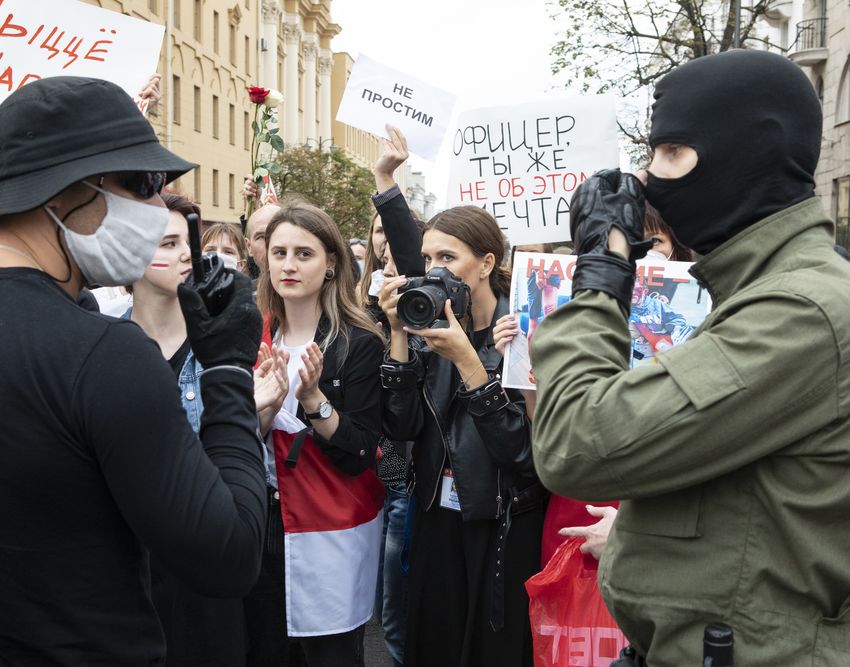
For the first time in decades, hundreds of thousands of Belarusians the highest (18) due to the outstanding work of independent outlets
flocked the streets of Minsk and other major cities, demanding free and freelancers who reported on COVID-19, the election campaign,
and fair elections. After these protesters were brutally dispersed and the post-election protests in a professional manner. The
in August 2020, there were popular demands for investigation lowest-scoring Principle 2 (Multiple Information Sources) is driven
into police violence and release of political prisoners. However, by long-standing barriers to independent broadcasters’ ability to
the authorities did not relent. The government claimed that the receive in-country licenses and adverse economic conditions for
subsequent Internet blackouts in August 2020 were the result print media. Despite these challenges, access to the Internet was
of foreign interference, but human rights organizations such as relatively free, with only some media outlets blacklisted. However,
Human Rights Watch held the Government of Belarus responsible these conditions drastically changed in August 2020 and did not
Slightly Vibrant
OVERALL for this outage as an attempt to quash information about protests improve until the end of the year, with authorities labelling an
SCORE and police brutality. Subsequent online censorship deprived increasing number of media channels (including on social media)
millions of Belarusians of access to vital information. “extremist,” initiating administrative and criminal cases against
15 The year of 2020 set a record in the history of modern Belarus
regarding repression against journalists and media. The crackdown
against civil society that followed the August 2020 presidential
independent sources, and massively increasing the list of the
websites access to which is blocked.
Principle 3 (Information Consumption and Engagement) and
election targeted journalists and media from the very first days Principle 4 (Transformative Action) received scores of 14 and 15,
of the anti-government street protests. The number of cases of respectively. Principle 3 was the most difficult to gauge, as the
repression against individual journalists and media outlets was the regime in Belarus creates hurdles for independent polling, allowing
highest since tracking began in 1994. only registered by the state pollsters to operate. On top of that,
due to the change in the ways people receive online information
Not Vibrant
However, according to Nieman Reports, 2020 was also a year
caused by blocking websites, it is difficult for media outlets to
of unprecedented growth in trust of independent media. The
analyze audience metrics. Despite all of this, the panelists noted
digital literacy and ICT skills of Belarusians passed the test, with
that Belarusians actively use censorship circumvention tools in
Belarus becoming a world leader in the use of tools to circumvent
order to access media content and are more active than before
censorship. According to infopolicy.biz, Telegram, a messenger app
when interacting with newsrooms, especially on topics related to
that combines features of Twitter and private chats and originated
health (COVID-19) and politics. Principle 4 showed the continuing
in Russia, became the second most popular messenger app in
trend of governmental agencies to ignore and avoid answering
Belarus, making it possible for many traditional independent
journalists’ or citizens’ requests for information.
2BEL ARUS Vibrant Information Barometer
Due to unprecedented politicization of Belarusian audiences, for some
Slightly Somewhat
Not Vibrant Vibrant Vibrant
Highly Vibrant outlets it was challenging to introduce any “common” topics in their
Vibrancy Rating agenda after August 2020. As one expert observed, “Even when trying to
cover environmental issues, my outlet had to find ways to present them
PRINCIPLE 1:
INFORMATION QUALITY 18 from the point of view of a political struggle.” Although there is not yet
a content analysis showing the percentage of political versus everyday
Strength of Evidence Rating news coverage in independent media, experts agreed that overall, for
Weak Somewhat Somewhat Strong several months following the presidential election, audiences were
Weak Strong
primarily interested in the protest movement and repressions.
The government continued to obstruct receiving or confirming
Panelists scored Indicators 1 (quality information is available) and 4
information from official sources. During the first half of 2020, it
(content is inclusive and diverse) scored the highest within Principle
restricted any data about COVID-related deaths or incidents, while the
1. The relatively unrestricted online space that existed in Belarus prior
official statistics did not appear trustworthy. In the second half of the
to August 2020 allowed for quality information to be produced and
year, by blocking access to around 20 websites and depriving the leading
distributed to the wider population. Despite attempts to block access to
portal TUT.BY of official mass media registration, it restricted access to
independent media, it was still available, and the newsrooms produced
information even more. Editors of independent regional outlets were
quality information on a variety of topics. At the same time, there was
advised to subscribe to state-owned media to receive any quotes.
widespread availability of pro-Kremlin Russian content on the main
television channels, with anti-Western, anti-democracy, pro-Kremlin, Constraints in access to official sources for independent media,
and pro-Lukashenka propaganda intensifying after August 2020. This, combined with intensified propaganda campaigns by state outlets,
combined with restrictions in income sources for independent media made it difficult to produce and distribute fact-based information. The
and a campaign from state media to discredit fact-based media and legislation in Belarus suggests punishment for misinforming the public,
journalists, contributed to the low scores of Indicators 2 (information is but it does not offer equal treatment to nonstate and state media.
based on facts), 3 (information is not intended to harm), and 5 (content Article 3-1 of the 2020 version of the Code of Administrative Violations
is sufficiently resourced). was used against independent regional outlet Media Polesye, which was
fined in spring 2020 for wrongly reporting the death of a coronavirus
Quality information is produced and disseminated first and foremost
patient. In fall 2020, the same outlet was fined for misquoting a teacher
by nongovernmental media, predominantly online. The government
of presidential candidate Sviatlana Tsikhanouskaya. At the same time,
heavily regulates the broadcast industry, not allowing any independent
authorities did not follow up numerous misleading publications and
broadcaster to get a license in Belarus, while the print market has shrunk
broadcasts from state or Russia-based media. In the spring, Belarusian
due to both global trends and post‒August 2020 repressions against
governmental media widely circulated the president’s words about
independent publishers.
dry saunas and farm work being “the cure” for COVID-19 and other
In the nonstate media, COVID-19 and the presidential election dominated statements dismissive of the pandemic that may have caused thousands
coverage, but other topics were present too, including disability rights, of people to risk their lives. In November, state propaganda used an
gender equality, climate change, and information manipulation. Still, approach borrowed from Russia and employed actors to pretend to be
many of those topics were covered within the context of either COVID-19 interviewees: the same people claimed to have different names and
or the election. professions.
3Vibrant Information Barometer BEL ARUS
Belarusian media regularly identified misinformation spread by the Telegram channels of large independent media organizations, mostly
government, especially when it came to coverage of COVID-19 and the quoting other sources, but newsrooms generally responded quickly to
elections. However, the government refused to follow up and instead remove the offending content. Meanwhile, state media continued to
continued business as usual. Some websites in Belarus provide fact- feature people like Grigory Azaronak, who puts portraits of opponents
checking and analysis of narratives that are spread by Belarusian under the gallows on a CTV channel that is co-owned by the state. The
and/or Russian propaganda. Those websites (e.g., http://mediaiq.by pro-state Belarusian Union of Journalists has an ethics committee with
and http://isans.by) target experts and specialists as their audience. designated tasks, but they do not evaluate things related to the political
Belarusian experts on disinformation contribute to the European Union’s crisis. “They mostly provide opinions on the bills and whether members
anti-disinformation efforts as well. There is not a nationwide, popular are loyal or not loyal to the government,” an expert explained.
fact-checking platform, although media and journalists engage in fact-
checking in their daily work. A November 2020 analysis by Belarusian State University Professor
Inga Voyush of SB.BY’s columnist Andrei Mukavozchyk found that in the
Because the current legislation makes media responsible for any summer of 2020, 120 of his 200 published articles contained derogatory
information posted in their comments sections online, many outlets narratives. “One of the instruments that the author uses is so-called
either heavily moderate the comments section or have switched off hate speech, which allows the researchers to mark [his] publications as
the comments entirely. In this way, they are preventing the spread propagandist.” Mukavozchyk, prominently featured by one of the most
of misinformation on their platforms. Media outlets also try to avoid circulated state newspapers in the country, used hate speech against
distributing false information themselves. “When the government is the opposition, representatives of foreign nations, other journalists,
looking for an excuse to issue a warning or shut you down, you have to scientists, and artists.
verify everything several times to not give them real grounds for that,”
explained a female expert. But this is largely true only for independent The Belarusian nongovernmental
media. State-owned media spread disinformation on both traditional Information Quality Indicators organization (NGO) Journalists
and social media channels. for Tolerance monitored 26
z There is quality information on outlets from July to November
The post-election narrative from pro-state media increasingly went a variety of topics available. 2020 and found 21 percent of all
on to reach new, harmful levels. In its regular publications, the daily z The norm for information stories related to LGBTIQ topics
newspaper Sovetskaya Belorussiya – Belarus’ Segodnya, owned by the is that it is based on facts. contained hate speech. The
Presidential Administration and one of the leading outlets in the country, Misinformation is minimal. leading outlets were state-owned
spread hate speech directed at pro-democratic forces and independent SB.BY and the state-leaning
z The norm for information
media. is that it is not intended to
Vecherniy Mogilev, but also the
harm. Mal-information and Russian-owned Belarusian
Media often rely on help from users to distinguish true information from version of AiF, which has both
hate speech are minimal.
misinformation. “Because of the danger, journalists were prevented a print edition and website.
from covering street protests, and many newsrooms started using user- z The body of content overall
Established independent media
generated content, which needed to be checked. Big newsrooms started is inclusive and diverse.
were more restrained in their
verifying them, and if some untrue information came from users, it was z Content production is narratives—as one of the experts
deleted quite quickly. The mechanism relied on other users to verify sufficiently resourced. mentioned, “often in fear of
the claim,” one expert said. Hate speech did sometimes appear on the disproportionate repressions.”
4BEL ARUS Vibrant Information Barometer
However, the new type of “media” in the form of Telegram channels/ National minorities are rarely presented, especially Ukrainians and
accounts often did not follow the same behavior. When pro- Poles. Ukrainians are vilified by state propaganda, which follows the
governmental sources provoked them, they answered in kind with hate Kremlin narrative, and are not given a chance to speak. The Poles were
speech and the dehumanization of “opponents,” several experts noted. not represented in 2020 and then in the beginning of 2021 became the
This resulted in an incident in October 2020 in which Apple demanded next victims of political repression, with Andrzej Poczobut, a journalist of
Telegram delete three accounts on its platform that spread the personal Polish origin, jailed.
data of police officers in Belarus. Telegram has been routinely criticized
for not reacting swiftly to hate speech or extremist content during Access to information in minority languages is limited; there are some
recent crises in both the region and globally. Russian media have played Internet-based outlets and publications with small circulations. “If
a significant role in the post-election crackdown: representatives of you’re not a member of this minority group, you won’t know about
RT.com and other Russian outlets came to Minsk to replace state media those media,” an expert said. “State TV and radio doesn’t represent
workers who went on strike in summer 2020. any national minorities except for Russians. Religious communities
are discriminated against as well; in the fall of 2020, TV broadcasts of
The dominance of the pandemic and election campaign coverage, plus Sunday Catholic prayers stopped on ‘technical grounds’ while Orthodox
the resulting repressions, made the content offerings of many media Christian ones continue. Those who are not Catholics or Orthodox don’t
outlets politicized and narrowly focused. The narratives about minorities have a chance for their sermons to be broadcast,” observed an expert.
and vulnerable groups appeared mostly within the context of health or
politics. But the rights of those groups were not central in the campaigns In state media, the political opposition is totally underrepresented—they
of any of the candidates running and thus were not prominently featured are portrayed only negatively or in a position of weakness.
by the media. Several protests by people with disabilities resulted in
The insufficient resources for quality content production could be one of
repressions against the Office of People with Disabilities and the arrest
the reasons for the limited content offerings. The system of state funding
of its leader Siarhei Drazdouski, which was reported as part of the overall
to media in Belarus is highly centralized and politicized. The government
coverage of the crackdown on human rights. has been providing state-owned media with roughly $60 million in
In terms of the representation of women in non-state newsrooms, many subsidies1 annually, of which the biggest share goes to state-owned
outlets are traditionally female staffed, television. Funding of independent media
including within leadership, but this, When the government is looking is restricted by economic inequality (price
difference for newsprint and distribution,
according to one of the experts, is the result for an excuse to issue a warning
of lower wages in the independent media inability to be registered as Belarus-based
or shut you down, you have to broadcasters, limiting web advertising by
sector rather than progress in gender
equality. Independent media outlets try to verify everything several times to blocking access to websites), as well as
provide a balanced picture, although the not give them real grounds for one of the strictest laws on foreign aid. The
regime’s representatives are sometimes latter is going to be amended in 2021 to
that,” said an expert. include the definition of a “foreign agent.”2
portrayed negatively. The female
perspective is rarely presented equally: women are more often asked for The media’s share in the online advertising market was 32 percent,
a comment from their personal point of view but not the professional
point of view. For example, the female presidential candidate was asked 1 https://reform.by/188247-pravitelstvo-potratit-v-2021-godu-na-smi-156-mln-rublej
about her favorite meatball recipe. 2 https://112.international/politics/belarus-wants-to-adopt-law-on-foreign-agents-59013.html
5Vibrant Information Barometer BEL ARUS
a decrease from 36 percent in 2019.3 In contrast to other countries election crackdown. Media Solidarity Belarus reports that over the
around the world, Belarus did not lockdown during the pandemic in last four months in 2020, it provided support to more than 30 outlets
2020, and its economy did not directly suffer due to COVID. Moreover, whose incomes dropped. Several regional outlets, including Brestskaya
despite limitations in the neighboring countries, businesses were able Gazeta and Gazeta Slonimskaya, had to shut down print editions due
to move their goods across the borders. However, events in Belarus to the state’s unwillingness to print them and continue to run online
after the election caused many companies to revisit their advertising only. Minsk-based Narodnaya Volya is no longer published due to
and investment plans in Belarus. This intensified when the Lukashenko governmental pressure and now maintains an online version.
regime started targeting IT companies, along with small businesses that
supported the protestors. As a result and in combination with economic Not Vibrant Slightly Somewhat Highly Vibrant
Vibrant Vibrant
sanctions imposed against Belarus by the EU and US, the country’s Vibrancy Rating
advertising market is less attractive. However, performance advertising
PRINCIPLE 2:
13
has grown to 68 percent of all online advertising, which includes
advertising that is targeted through social media. Advertising placement MULTIPLE CHANNELS: HOW INFORMATION
continues to be politicized, with the government informally advising FLOWS
Strength of Evidence Rating
local companies to avoid independent media. Somewhat Somewhat
Weak Strong
Weak Strong
As experts noted, the volatility of the political situation has also
influenced advertising contracts from international companies as well,
who increasingly choose short-term contracts over long-term ones. Within Principle 2, the average score is a result of a significant gap
Blocking access to more than 20 independent news websites deprives between the more highly scored indicators that describe the ICT
those outlets of click- and audience-related advertising revenues. infrastructure and those lower scored indicators that describe a lack
Independent media outlets have increasingly invested in crowdfunding of equality in access to and the distribution of information between
as a way to overcome revenue shortfalls. Nasha Niva runs a reader’s club, independent and governmental media or limitations in rights to create,
which is based on a membership model, while Imenamag.by was able share, and consume information.
to collect around $200,000 through subscriptions and donations for the
The rights of Belarusians to create, share, and consume information
work of its newsroom.
as well as their access to channels of information have been severely
The EU’s adoption of several rounds of sanctions against Belarus has limited with the Internet shutdowns in August 2020 and the introduction
resulted in retaliative measures by the Belarusian government against of the most popular Telegram channels on the government’s list of
neighboring countries’ embassies and those—including among media “extremists” in October 2020.4
and bloggers—whom it considers their “proxies.” On top of that,
Legal protections for journalists formally exist but are rarely practiced.
limitations on leaving the country, presumably to contain coronavirus
Journalists’ rights are protected by the Law on Mass Media that regulates
and imposed in late 2020, have deprived some of the media of access to
both the work of the outlets and individual journalists. Journalists
funds abroad.
working for foreign media can do so only if they are accredited, but
Journalists’ wages have suffered since the beginning of the post- the accreditations of most Belarusian citizens employed by foreign
outlets were withdrawn in October 2020 and not re-issued. In the fall of
3 https://marketing.by/analitika/itogi-belaruskogo-rynka-internet-reklamy-za-2020-kakie-
kanaly-i-klienty-pokazali-rost-a-kakie-padeni/?mobile=N 4 https://www.article19.org/resources/belarus-nexta-crackdown/
6BEL ARUS Vibrant Information Barometer
2020, some independent outlets published the accounts of victims of Beltelecom for private users costs $7‒$10 monthly.8
beatings tortured in the aftermath of the post-election protests, as well
as articles about bonuses paid to the perpetrators of the violence. This Government information is widely available via state television and
led to a number of outlets receiving warnings and others having their radio (http://tvr.by), which are present in the majority of Belarusian
sites blocked. In December 2020, a court decision resulted in the portal households, and state-funded newspapers and their portals, such as
TUT.BY losing its media license, and in November 2020, police arrested SB.BY, zviazda.by, and Respublika.by. Beltelecom’s interactive digital
journalist Katsiaryna Andreeva and camerawoman Daria Chultsova while television channel, Zala, is available in 1.8 million households, which
they were livestreaming street protests from a private apartment. Their accounts for around half of all households in Belarus.9 According to the
subsequent trial led to two years in jail. Ministry of Information, there are 214 newspapers and 207 magazines,
137 radio programs/channels, 44 television programs/channels, and
Although governmental information freely flows on a variety of 27 websites that are state-owned. The majority of the others, experts
platforms, including social media, non-governmental media are forced note, do not undertake the risk to publish a news agenda that would
to exist in a parallel reality. “In my 20 years of observing press freedom counteract the government’s position.
violations, this has been the worst year so far,” said one expert. “This
year’s pressure is systemic—it concerns all sectors of the media market. Among leading independent news channels there are Belarus-based
Five times more journalists were detained than in 2017, and there have portals and news sites, such as TUT.BY, Onliner, Nasha Niva, Gazetaby,
been at least 62 cases of violence against journalists, and I am sure we and BelaPAN news agency, but also exiled or hybrid outlets, such as
did not register them all, as well as criminal cases against journalists. But European Radio for Belarus (Euroradio) or kyky.org. There is also a
the year wasn’t just marked by violence or network of independent regional publishers, United Mass Media, who
detentions. Dozens of websites, including cooperate on programmatic and business
In my 20 years of observing press levels and continue to play an important
BAJ, have been blocked; printed media,
such as Narodnaya Volya, SN+, Belgazeta,
freedom violations, this has been role in the Belarusian periphery. The
and KP v Belarusi, have been denied the worst year so far,” said one existence of this diverse independent
media market has made it possible to
printing and then distribution.” expert. create quality content despite numerous
As far as existing infrastructure for information flow, Belarus has repressions. The independent outlets are not owned by conglomerates
a multiplicity of channels to receive and share news. According to or oligarchs. Some of them belong to the same owner, such as kyky.org
Hootsuite’s 2020 Digital Report, 82.9 percent of Belarusians used the and thevillage.me (their owner was incarcerated for his alleged support
Internet, while 41.3 percent were active social media users.5 The price of of protests, while the outlets had to emigrate), or European Radio for
Internet connection is affordable and available in nearly all geographical Belarus and the weekly Belorusy i Rynok. The only dominant player in the
locations, although the quality of connection varies. An unlimited 3G/LTE media ownership market is the state.
monthly package costs around $10 through A16 and MTS,7 the leading
mobile providers, and broadband connection from the state company Belarus’ legislation provides for the right to access information for media
and citizens, but these rights are increasingly limited. For example,
although the law does not require special accreditation from media to
5 https://datareportal.com/reports/digital-2021-belarus 8 https://beltelecom.by/private/internet/high-speed
6 https://www.a1.by/ru/plans/c/tarify-dlya-smartfonov 9 https://www.belta.by/society/view/televizionnyj-reklamnyj-aljjans-vse-uchastniki-rynka-
7 https://www.mts.by/services/mobile/tariffs/for_smartphone/bezlimitishche_plus/ dolzhny-imet-ravnyj-dostup-k-issledovanijam-379400-2020/
7Vibrant Information Barometer BEL ARUS
attend press conferences or court editorial freedom. Several dozen workers from state media left their jobs
Multiple Channels Indicators trials, in the reality online media in 2020 to protest the level of censorship.
and registered independent
z People have rights to create, media are often denied access There has been discussion among the experts about whether Telegram
share, and consume information. to those events. Moreover, while channels that serve both national and local communities can be
the Constitution of Belarus considered “media.” Most of these channels are run by activists or
z People have adequate access journalists who do not hide their political affiliations and, consequently,
to channels of information. currently guarantees access to
information about events of do not prioritize their independence. There are multiple incidents of
z There are appropriate channels the right to information’s being disregarded, including the arrests of
public, social or cultural life for all
for government information. journalists from Belsat TV and TUT.BY while they were on assignment.
citizens, the Law on Mass Media
z There are diverse channels allows authorities to limit access According to statistics from the Belarusian Association of Journalists,11
for information flow. to certain type of information, authorities detained journalists 477 times in Belarus throughout 2020.
z Information channels including but not limited to
Slightly Somewhat
are independent. state, commercial, private or Not Vibrant Vibrant Vibrant
Highly Vibrant
other legally protected secrets Vibrancy Rating
and details on law enforcement PRINCIPLE 3:
investigations. At the same time, more than 60 governmental institutions
have a right to determine that certain information is ‘secret’.10
INFORMATION CONSUMPTION AND
ENGAGEMENT 14
Strength of Evidence Rating
The process for spectrum allocation is transparent but not fair. The Somewhat Somewhat
Weak Strong
market entry and tax structure for media remain unfair, compared Weak Strong
with other types of companies, and independent media face more
disadvantages than state media. Unlike other businesses, media
Within Principle 3, panelists scored highly the indicator related to
newsrooms cannot be located in residential homes, and individual
Belarusians’ ability to safely use the Internet and circumvent censorship.
entrepreneurs are not allowed to publish any media, including online
The overall score of this principle would have been higher if there
outlets. An editor-in-chief of a media outlet who applies for registration
had been consensus among panel experts on what to consider “local
is required to have at least five years of media management experience.
community media.” The majority of panelists marked the indicator
A broadcast media editor-in-chief must pass a special exam on
related to them as not applicable, although some of them considered
broadcast law knowledge, the technical settings of radio and television
nascent Telegram chats as future media of this type. Those who had
broadcasting, and advertising law for his or her outlet to receive a
another opinion were considering niche media or new hyperlocal chats
dissemination license. Such licenses are not given to independent
and channels as such.
broadcasters, like European Radio for Belarus, Radio Racja, or the
television channel Belsat TV (run from Poland). One expert noted, “The main evidence that Belarusian citizens are
advanced in media and information literacy is the total downloads of
Belarus does not have public-service media. State media provide some
Psiphon, a tool that helps circumvent web censorship. Between August 9
educational news and programming but are heavily limited in their
and 11, 2020, when the Internet was nearly fully shut down, Belarusians
10 https://baj.by/ru/content/dostup-k-informacii 11 https://baj.by/en/analytics/figures-year-repression-media-and-journalists-belarus-2020
8BEL ARUS Vibrant Information Barometer
managed to download this application around 2.7 million times, which pensioners, people living in remote areas, people with disabilities and
is impressive for a country of 9 million.” However, when it comes to special needs.” Another sign of the state’s animus toward media literacy
privacy protection, post-election events was the arrest of six media managers of
demonstrated a severe lack thereof. “It’s Nonstate media rely on audience Press Club, an educational NGO that runs
not about the disadvantages of legislation data and feedback, while the state a Media IQ project aimed at helping to
but rather about its blatant violation. When
media are more closed and never identify Russian propaganda narratives and
the police beat up or torture detainees to other manipulative content in Belarusian
learn their passwords to personal devices acknowledge their mistakes,” said media.13
and social media, they are breaking the one expert.
law, but they still do it,” one expert said. There are no established local or state
initiatives to enhance public knowledge about misinformation or fake
Independent media outlets have access to digital protection instruments news. Moreover, freedom of expression is heavily limited by media law
and tools, and they have passed trainings enabling them to resist and Internet legislation. As one expert put it, “There are no platforms
hacking attempts, as well as secure their information. National outlets to foster discussion and influence decision-making. Instead, the state
widely use VPN, two-factor authentication, and encryption; they share makes them up in order to imitate the dialogue about already pre-
tips with audiences on how to protect oneself digitally. Regional media, determined political steps.”
however, have fewer skills in ICT protection. As one expert said, “During Information Consumption
a search, on a confiscated computer of one of the regional outlets, there There were several initiatives and Engagement Indicators
was a lot of sensitive information not only about the outlet in question by the state aimed at
but about other regional media.” d e m o n s t ra t i n g d i a l o g u e s z People can safely use the
between the authorities and internet due to privacy
Media literacy and the ability to protect privacy were regularly tested the population, such as face-to- protections and security tools.
in the second half of 2020. Government actors used Telegram channels, face meetings in Minsk with pro-
z People have the necessary skills
both official (Pul Pervogo) and unofficial (Zheltye Slivy, Shtab Onoshko) Lukashenka loyalists or public
and tools to be media literate.
to publish degrading and defamatory content about members of the conversations spurred by activist
political opposition and civil society actors, while at the same time Yury Voskresenskiy’s release z People engage productively
local communities on Telegram were often a target for hacker attacks, from pre-trial detention14. This with the information that
resulting in arrests of their administrators.12
“roundtable of democratic is available to them.
forces” was preceded by a z Media and information
The government does not proactively develop media literacy skills. visit by President Alexander producers engage with
According to the EU Neighbours report, in 2020, “As the government kept Lukashenko to the pre-trial their audience’s needs.
ignoring the outbreak of the Coronavirus and did not impose a nation- detention center, where his main z Community media provides
wide lockdown, there were no positive policy interventions observed political opponents were held, information relevant for
in the country to promote digital skills or improve remote learning. and having a ‘dialogue’ with community engagement.
The good practices so far include the joint support of the international them. All of these attempts are
organizations. For instance, the EU, Red Cross, UNICEF, UNFPA, and
the World Bank provided a wide range of digital trainings for teachers, 13 https://cpj.org/2021/01/belarus-authorities-detain-at-least-6-in-tax-investigation-of-local-
press-club/
12 https://euroradio.fm/en/can-police-hack-your-telegram 14 https://nn.by/?c=ar&i=263221&lang=ru
9Vibrant Information Barometer BEL ARUS
top-down, and they do not provide space for inclusive participation of Until mid-August 2020, there
the civil society or nonstate media. Transformative Action were attempts by pro-state
Indicators
actors to cross ideological
But experts said nonstate media nevertheless attempt to engage with lines. For example, the state-
their audiences using a variety of online tools, including comments z Information producers and
controlled Belarusian Union of
sections on websites, live chats and live streaming shows, and analyses distribution channels enable or
encourage information sharing Journalists had a meeting in
of audiences’ behavior in real time. It is possible to participate in most the Belarusian parliament with
of those streams ad hoc and with no prior registration. “Nonstate media across ideological lines.
the independent Belarusian
rely on audience data and feedback, while the state media are more z Individuals use quality
Association of Journalists
closed and never acknowledge their mistakes,” one female expert said. information to inform
(BAJ) in order to design a joint
Amendments on the Law on Internet from late 2018 make media outlets their actions.
statement condemning excessive
responsible for the content of comments on their web pages and ban z Civil society uses quality post-election violence. On
anonymous comments, which have subsequently restricted audiences’ information to improve August 13, 2020, more than 250
engagement. communities.
state and nonstate journalists
The majority of experts questioned the existence of community media z Government uses quality jointly signed an open letter
in Belarus, though some suggested that such outlets somewhat exist. information to make requesting an end to the violence.
public policy decisions. But in the following months,
This might be related to the relatively low spread of the community
media model in Belarus. The nascent Telegram channels that have z Information supports the government took a clear
formed around micro-communities have not yet transformed into media good governance and ideological position and included
outlets, and traditional media mostly cover larger regional or thematic democratic rights. media and journalists in its
audiences. list of targets. BAJ’s managers
became the focus of criminal
Slightly Somewhat investigations, while officials searched the organization’s office and
Not Vibrant Vibrant Highly Vibrant
Vibrant seized equipment in early 2021. Moreover, in 2020, the COVID-19
Vibrancy Rating
pandemic did not enhance information-sharing. Interviewed experts
mentioned extreme defensiveness by the Belarusian state institutions
PRINCIPLE 4:
TRANSFORMATIVE ACTION 15 on the issues related to public health.
Strength of Evidence Rating Non-partisan media exist among magazines and websites that refuse
Weak Somewhat Somewhat Strong to cover politics, non-state news-oriented actors such as BelaPAN news
Weak Strong
agency, or leading websites such as tut.by, nn.by, euroradio.pl, onliner.
by and others. At the same time, the government does not consider
these websites non-partisan and persecutes them as its ideological
The most polarized results for VIBE in Belarus relate to Principle 4. The
enemies, e.g. by withdrawing licenses, imposing fines etc. Sports website
indicators relating to individuals, civil society, and (mostly independent)
tribuna.com was blocked by the authorities as soon as it started covering
media, score 20 or higher. However, indicators relating to state actions,
statements of sportswomen and men who did not support the violence
public policy, and democratic rights, score below 10.
10BEL ARUS Vibrant Information Barometer
after 2020 protests15. “The moment one dares to provide balanced for the sake of civic action, were based on years of expertise from civil
information about the current affairs the authorities consider them society actors, both formal and informal, combined with the creative
taking sides”, a female editor interviewed for the chapter said. potential of the well-developed IT sector and a large Belarusian
diaspora. When the crowdfunding initiative #BY_help started in 2017, it
Despite these obstacles, non-governmental media are able to keep in celebrated $50,000 in donations as success. In 2021, the same initiative
contact with their engaged audiences. The collected more than $3 million17 to support
growth of the Telegram platform’s users has The moment one dares to provide tortured and injured protesters. Similar
brought soaring audience figures to many balanced information about the initiatives, such as BySOL and Media
outlets, and as a result thematic chats have Solidarity Belarus, demonstrated huge
formed on these platforms. Through these current affairs the authorities
fundraising potential as well. The latter, set
chats and special chatbots, people send consider them taking sides”, said a up in September 2020 to cover the most
user-generated content, suggest topics female editor. urgent needs of independent media outlets
for new shows and articles, and discuss and journalists, has raised more than
publications. Live streaming on YouTube by svaboda.org, belsat.eu, and $300,000 and distributed two-thirds of funds.
euroradio.pl is routinely accompanied by reading out and commenting
on inputs from the viewers. Discussions on those platforms are led by The government, however, launched an offensive against producers
people with varied ideological stances and views. “Sometimes it was of quality information and went further to deprive Belarusians of their
evident that some of the participants were third party-sponsored trolls, democratic rights.
but often there was a meaningful conversation among supporters and
opponents of the regime,” a media analyst noted. As a result, trust in Press conferences continued to be limited primarily to state media.
independent media significantly grew16. When TUT.BY lost media outlet status and the government blocked the
websites of independent media, reporters from those outlets faced
Despite an ideological standoff, Belarusians were able to demonstrate difficulties in receiving official comments and attending press briefings.
their ability to make choices based on quality information. “In spring
2020, when President Alexander Lukashenka called COVID-19 ‘a The government does not refer to quality media, nor quote them in
psychosis,’ many urban dwellers chose to self-isolate themselves despite presenting its decisions or reacting to criticism. Some independent
the official news,” one expert said. Belarusians registering en masse media even received recommendations to subscribe to the state-owned
to the Russia-based independent election watchdog GOLOS platform outlets to get reactions from local government. Government actors
also demonstrated public distrust in official information. Citizens would often use misinformation when explaining their decisions—for example,
ultimately send photographs of their voting bulletins to GOLOS in August referencing the supposed plan by the West and NATO to invade Belarus,
2020. The historic protests that gathered hundreds of thousands of criticizing the “extremist” nature of paying the fines for protestors, or
people illustrated people’s reliance on quality information. calling independent media and pro-democratic forces puppets.
GOLOS, as well as dozens of other platforms that united Belarusians The government does not react to the media’s uncovering of corruption
or wrongdoing, although it praises the work of the police in uncovering
such cases. When sources reveal human rights violations, the
15 https://telegraf.by/sport-news/mininform-zablokiroval-tribuna-com-reportery-bez-granic-
pomogli-zapustit-zerkalo-kotoroe-dostupno-bez-vpn/
16 https://www.dw.com/ru/issledovanie-lish-chetvert-belorusov-doverjajut-prezidentu- 17 https://www.theguardian.com/world/2020/sep/22/we-raised-2m-in-days-the-donations-
strany/a-56514991 helping-protesters-in-belarus
11Vibrant Information Barometer BEL ARUS
government then attempts to silence those sources (e.g., by directing The panel was not possible due to security concerns, but experts were
them to remove publications about human rights violations, as in the interviewed individually.
case of Naviny.by and Nasha Niva).18 As such, it is difficult to say such
reporting reduces the number of human rights violations. There was no IREX protects the identity of the panelists who agreed to participate in
evidence of quality information contributing to free and fair elections this study. Amendments to the criminal code include an article titled
and, in fact, quite the opposite occurred. However, it contributed to “Discrediting the Republic of Belarus,” which provides for criminal liability
people’s awareness of the widespread election fraud and subsequent for giving international organizations “false information” about the
violence against peaceful protesters. country.
Copyright © 2021 by IREX
Notice of Rights: Permission is granted to display, copy, and distribute
VIBE in whole or in part, provided that: (a) the materials are used with the
acknowledgment “The Vibrant Information Barometer (VIBE) is a product of IREX
with funding from USAID.”; (b) VIBE is used solely for personal, noncommercial, or
informational use; and (c) no modifications of VIBE are made.
This study is made possible by the support of the American People through
the United States Agency for International Development (USAID). The opinions
expressed herein are those of the panelists and other project researchers and do
not necessarily reflect the views of USAID, the United States Government, or IREX.
18 https://euroradio.fm/ru/mininform-otvetil-za-chto-zablokiroval-sayty-nasha-niva-i-navinyby
12You can also read


