BEYOND PRIDE THE RIGHTS OF LGBTI PEOPLE AND THE CORPORATE RESPONSIBILITY TO RESPECT - Shift
←
→
Page content transcription
If your browser does not render page correctly, please read the page content below
B E YO N D P R I D E
 THE RIGHTS OF LGBTI PEOPLE AND THE
CORPORATE RESPONSIBILITY TO RESPECT

IN EVERY REGION OF THE
                                    WORLD LESBIAN, GAY,
                                    BISEXUAL, TRANSGENDER
                                    AND INTERSEX (LGBTI)
                                    PEOPLE FACE SOME DEGREE
                                    OF VIOLENCE, PERSECUTION
                                    OR DISCRIMINATION:
                                    From what is said around a family dinner table to who gets to compete
                                    in a sports contest; from who is welcome in a bathroom to who is
                                    sentenced in a court room; to forced sterilization and harmful medical

                                    procedures; and from who gets an apartment, job offer or promotion to
                                    who gets imprisoned, flogged or sentenced to death. The contexts for
                                    such violence and discrimination are as varied as the people in the LGBTI
                                    acronym, and pose a wide range of human rights risks for companies.

                                    Businesses have a responsibility – under the UN Guiding Principles on
1			 BEYOND PRIDE 		SHIFT PROJECT

                                    Business and Human Rights (UNGPs) – to understand and address how
                                    their actions, decisions, omissions and business relationships can lead
                                    to negative impacts on people. In the case of LGBTI people, that means
                                    considering how they could be adding to the risk that they already face
                                    on the basis of their sexual orientation, gender identity or expression,
                                    or sex characteristics (SOGIESC). For example: a company’s decision
                                    to promote a lesbian employee and send her to a country where risks
                                    to LGBTI people are high could place her in a position where she must
                                    choose between advancing her career and protecting her family; what
                                    may seem like a harmless requirement to include a birth certificate
                                    in a job application may exclude a prospective trans employee out of
                                    a recruitment process; a decision to enter into a partnership with an
                                    openly discriminatory government could bolster the persecution of gay or
                                    bisexual men and transgender women.

                                    It is very positive to see an increasing number of companies – albeit
                                    mostly in the Global North – openly engaging with LGBTI issues.
                                    Numerous organizations and intergovernmental bodies have published
                                    a handful of resources to help guide their actions, many of which we list
                                    at the end of this piece. However, most of what is available to companies
focuses on allyship and corporate activism. In other words, the emphasis
                                    tends to be on how businesses can have a positive impact through their
                                    voluntary actions to advance LGBTI causes. While those are critical and
                                    very much needed efforts, they often do not delve into the ways in which
                                    companies can prevent and address harm that they are that they are
                                    connected to and respect the rights of LGBTI people. The UN Standards
                                    of Conduct on tackling discrimination against LGBTI people remind
                                    companies that as per the UNGPs, they should prevent and address risk
                                    to people, including in the workplace and marketplace. Yet, businesses
                                    still need support to figure out how to appropriately integrate LGBTI
                                    concerns into their human rights due diligence processes. This resource
                                    aims to help fill this gap.

                                    The resource is not intended to provide exhaustive guidance on the
                                    topic; rather, it is to help enable more comprehensive discussions about
                                    the role of business in preventing and addressing risk to LGBTI people
                                    in their workforce, amongst consumers, in the communities and contexts

                                    where they operate and across their operations and value chain.

                                                   USE THIS
                                                   RESOURCE
                                                                                                   EXPLORE
2			 BEYOND PRIDE 		SHIFT PROJECT

                                                                                                              How companies can understand the
                                                   TO:                                                        particular vulnerabilities experienced
                                                                                                              by LGBTI people to better identify
                                                                                                              risks and prioritize action.
                                         LEARN

                                                              How business activities and
                                                              relationships can exacerbate risks
                                                              faced by LGBTI people.                          What companies are doing to
                                                                                                   REVIEW

                                                                                                              address risks to the rights of LGBTI
                                                                                                              people, and where the gaps are in
                                                                                                              existing practice.
                                         U N D E R S TA N D

                                                              Why risk can vary depending on
                                                                                                   CONSIDER

                                                                                                              Meaningful ways in which companies
                                                              geographical and cultural context,              can engage with LGBTI stakeholders
                                                              and what that means for global                  and use their leverage with peers,
                                                              businesses.                                     partners, suppliers, governments
                                                                                                              and others
THE CURRENT STATE OF PLAY:
                                    HOW COMPANIES TRADITIONALLY ENGAGE WITH LGBTI ISSUES
                                    Over the past few decades, as
                                    LGBTI movements have reached                    Countries where consensual sex
                                    important milestones in the                     acts between adults of the same

                                                                         67
                                    recognition and protection of                   sex are criminalized. In six of
                                    their human rights, we’ve seen                  them, is punishable by death.
                                    an increasing number of global                  Source: ILGA
                                    companies and brands starting
                                    to consider LGBTI issues. Several
                                    are taking important steps                      Countries where employees

                                                                         112
                                    to recognize the needs and                      can be legally fired based on
                                    identities of LGBTI people. For                 their perceived or true sexual
                                    example, sexual orientation and                 orientation.

                                    gender identity are starting to                 Source: ILGA
                                    be explicitly protected in anti-
                                    discrimination policies. Some
                                    human resources departments
                                                                         29%
                                                                                    Percentage of transgender people
                                    have amended parental leave                     in the US who live in poverty (vs
                                    policies to include same-sex
                                                                                    15% of the general population).
                                    couples; or health benefits to
                                                                                    Source: Williams Institute
                                    tend to the needs of transgender
3			 BEYOND PRIDE 		SHIFT PROJECT

                                    employees. We’ve also seen
                                    a significant uptick in publicity
                                    directed at LGBTQ consumers                     Only one in three bisexual
                                                                                    employees would feel comfortable
                                                                         1/3

                                    (who represent over $1 trillion in
                                    buying power in the US alone);                  disclosing their sexual orientation
                                    improved visibility of LGBTQ                    to colleagues at work.
                                    identities in the media and                     Source: Stonewall UK
                                    advertising; and an important
                                    number of companies engaging
                                                                         < 2% 70%

                                    in corporate social responsibility              Percentage of LGBT people in the
                                    campaigns to raise funds for                    UK who claim that they have been
                                    LGBTQI organizations. Some                      sexually harassed at work.
                                    companies have also started                     Source: Stonewall UK
                                    tracking their performance on
                                    LGBT inclusivity (for example,
                                    through the HRC Corporate
                                    Equality Index) and expressing
                                    support for global initiatives,                 Fewer than 2% of countries have
                                    such as the UN Standards of                     any legal protections against
                                    Conduct.                                        discrimination of intersex people.
                                                                                    Source: Living Free and Equal, page 67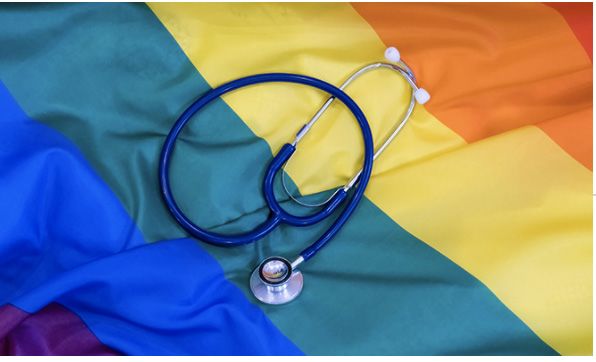
A number of companies are engaging with initiatives at a national level
                                    such as Stonewall and Prout at Work, in the UK; LGBT Chambers of
                                    Commerce in Latin America; and local civil society organizations or multi-
                                    stakeholder initiatives in some parts of Asia and Africa.

                                    Significantly, several companies have also begun using their influence
                                    – either through quiet diplomacy or publicly – to advocate in favor of
                                    the rights of LGBT
                                    people, particularly
                                    in North America and                                             They often rely on the
                                                                                                     leadership of a small
4			 BEYOND PRIDE 		SHIFT PROJECT

                                    Europe.
                                                                  SHORTCOMINGS                        group or individual(s)
                                                                  OF CURRENT                          within the company who
                                    While many of these           APPROACHES                          take it upon themselves to
                                    efforts are laudable                                              move these issues forward.
                                    and can result in
                                    critical differences
                                    in people’s lives,
                                    current approaches
                                    tend to have                 They frequently address
                                                                                                    They tend to be siloed and
                                    a number of                  LGBTI people as a single,
                                                                                                    disconnected across functions.
                                                                 homogeneous group.
                                    shortcomings. Most
                                    importantly, they
                                    rarely lead to long-
                                    term, comprehensive
                                    change because they
                                    are not embedded             They are sometimes received          Even when well-intentioned,
                                                                 with skepticism by LGBTI             they may lead to poor or
                                    into decision-making                                              even dangerous outcomes
                                                                 organizations and activists
                                    processes across the         (particularly when they are          if they are not informed by
                                    business.                    seen as an attempt to generate       affected stakeholders or lack
                                                                 revenue or “pink wash”).             a proper risk assessment.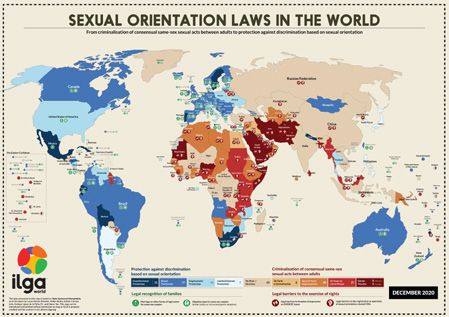
USING “RISK TO PEOPLE”                                    AS AN ENTRY-POINT
                                    When engaging on the rights of LGBTI people, it is important for
                                    companies to use a “stethoscope” before they use a “bullhorn.” In other
                                    words, to first identify the ways in which their operations, products and
                                    services, and business relationships are connected to harm to LGBTI
                                    people.

                                    Assessing human rights risks should be part of any human rights
                                    due diligence process. In the case of LGBTI people, it is important for
                                    companies to also understand that through their actions, omissions and
                                    business relationships, they may be exacerbating risks that people are
                                    already facing on the basis of their sexual orientation, gender identity,
                                    gender expression and/or sex characteristics.

                                          E V E R Y DAY
                                          DECISIONS CAN
                                          H AV E N E G AT I V E
                                                                                       WHEN A COMPANY REQUIRES an
                                          I M PA C T S O N                             employee to transfer to a country that
5			 BEYOND PRIDE 		SHIFT PROJECT

                                          THE RIGHTS OF                                may be a hostile context for LGBTI
                                          LGBTI PEOPLE.                                people, it may be asking that employee
                                                                                       to choose between advancing their
                                                                                       career and protecting their life.

                                       FOR EXAMPLE:
                                                                                       WHEN A COMPANY LIMITS the
                                                                                       parental leave that employees can take
                                          WHEN A COMPANY DEPICTS LGBTI                 based on their sex or gender, they may
                                          people in a negative or stereotypical        indirectly affect same gender couples
                                          way in its advertising, it is underpinning   and transgender employees.
                                          hatred and violence.

                                                                                       WHEN A COMPANY PROVIDES funds
                                          WHEN SCHEDULES LEAD to staff                 to a government or another company
                                          leaving work after dark in an area           that is hostile to LGBTI people, it could
                                          where violence against transgender           be bolstering persecution and/or
                                          women is prevalent, the company              violence.
                                          could be putting some of their
                                          employees at heightened risk.
LGBTI people often face cultural,                These risks may be experienced
                                    social and legal environments                    in vastly different ways by people
                                    that are hostile, or that do not                 within the LGBTI acronym.
                                    grant them the protections that                  For example, in a number of
                                    others may have. They are often                  countries, laws that criminalize
                                    more likely to face violence and                 sodomy or buggery only apply
                                    harassment; to receive lower                     to men, and are predominantly
                                    wages for the same work; and                     used against gay and bisexual
                                    to face income insecurity and                    men and transgender women
                                    experience poverty. LGBTI                        – though in other countries,
                                    people are at higher risk of                     lesbian and bisexual women
                                    experiencing homelessness,                       are also persecuted. On the
                                    facing obstacles to access                       other hand, lesbian and bisexual
                                    justice, or being denied access                  women are affected by a range
                                    to basic public services and                     of patriarchal cultural norms that
                                    fundamental rights – including                   impose gender roles on them
                                    social security, the ability to                  and put them at higher risk of

                                    inherit, migrate or to start a                   discrimination as well as sexual
                                    family.                                          and gender based violence,

                                                                              U N D E R S TA N D I N G H O W
                                                                              S T R U C T U R A L D I S C R I M I N AT I O N
                                                                              LEADS TO HEIGHTENED
6			 BEYOND PRIDE 		SHIFT PROJECT

                                                                              VULNERABILITY
                                       BECAUSE OF

                                       Cultural and social stigma                                             Lack of knowledge/
                                                                         Prejudice and assumptions
                                                                                                                  awareness

                                        State-based persecution,                                            Family and community

                                                                                                                                       Which in turn lead to discriminatory
                                                                          Gaps in legal protections
                                     discrimination, criminalization                                              exclusion
                                                                                                                                             perceptions that feed

                                             AND
                                          P O S S I B LY    Other Compounding Factors: race, ethnicity, immigration status, etc.

                                      L G B T Q I + P E O P L E A R E M O R E L I K E LY T O :

                                       Face violence, harassment            Have lower wages and
                                                                                                            Have mental health needs
                                               and death                      income insecurity

                                         Experience                 Lack access to          Face economic              Experience
                                        homelessness                   justice                exclusion                 poverty
while favoring men – including gay and bisexual men. In the vast majority
                                    of countries transgender people have no access to legal recognition of
                                    their gender – or are forced to undergo sterilization, divorce and other
                                    abusive requirements in order to obtain it. This underpins the widespread
                                    violence and many other rights abuses faced by trans people, including
                                    in education, employment, health, housing and travel. Intersex people
                                    are particularly at risk of abuse and harmful practices in medical settings,
                                    which can cause severe, life-long physical and psychological suffering.

                                    IT IS ALSO IMPORTANT TO CONSIDER THAT
                                    LGBTI PEOPLE DO NOT EXIST IN DISCRETE
                                    GROUPS.
                                    Rather, sexual orientation, gender identity, gender expression and
                                    sex characteristics are layers of someone’s identity, sexuality and

                                    physiology that could result in more or less risk of facing violence and
                                    discrimination. For instance, in certain contexts a transgender woman
                                    may face compounded violence because of her transgender status
                                    (the fact that she is transgender); and because of her gender (the fact
                                    that she is a woman). A gay man who has a stereotypically masculine
                                    gender expression may face less scrutiny than another gay man whose
                                    expression is considered feminine. Lastly, risks may also be heightened
7			 BEYOND PRIDE 		SHIFT PROJECT

                                    or mitigated by other compounding factors such as race, ethnicity,
                                    age, disability, origin, immigration and economic status – in the US,
                                    for example, LGBT Black, Indigenous and people of color are at a
                                    disproportionately high risk of facing poverty or homelessness.

                                    Being aware of these complexities is critical for companies that wish to
                                    properly identify and address risks that they could be could be causing,
                                    contributing or linked to.
RISKS VARY                 DEPENDING ON CONTEXT
                                    While all LGBTI people face                           FOR EXAMPLE, IN SOME COUNTRIES

                                    structural discrimination, risks                     A N LG B E M P LOY E E M AY:
                                    on the basis of SOGIESC vary
                                    significantly, depending on
                                                                                                 BE CHARGED WITH A CRIME FOR ENGAGING
                                    context. To date, LGBTI people                               IN CONSENSUAL SAME-SEX SEXUAL ACTIVITY
                                    face criminalization in dozens
                                    of countries around the world.
                                                                                                 BE LEGALLY FIRED, PREVENTED FROM
                                    In Barbados, for instance,                                   RENTING A HOME OR BUYING A PRODUCT
                                    consensual sex acts between
                                    same-sex adults are punished
                                    with up to 10 years of prison;                               NOT BE ALLOWED TO MARRY OR
                                                                                                 HAVE THEIR MARRIAGE RECOGNIZED
                                    in Indonesia, it can lead to
                                    public flogging. In Brunei,

                                    Iran, Mauritania, Saudi Arabia                               NOT BE ALLOWED TO ADOPT A CHILD
                                                                                                 WITH THEIR SAME-SEX PARTNER
                                    and Yemen, it could be death.
                                    Even where no criminalization
                                    exists, the large majority of                                NOT BE ALLOWED TO
                                    countries lack legal protections                             DONATE BLOOD
                                    against discrimination and hate
                                    crimes. This includes countries                       TO LEGALLY AFFIRM THEIR GENDER

                                    where opposition against legal                       A T R A N S E M P LOY E E M AY:
8			 BEYOND PRIDE 		SHIFT PROJECT

                                    protections for LGBTI people has
                                    become more overt in recent
                                    years, like Poland, Russia and                               BE REQUIRED TO PRESENT A
                                                                                                 MENTAL HEALTH DIAGNOSIS
                                    Hungary; as well as countries
                                    where efforts to ensure full
                                    equality before the law have                                 BE REQUIRED TO
                                                                                                 UNDERGO SURGERY
                                    stalled, such as Japan and the
                                    United States.
                                                                                                 BE REQUIRED TO
                                                                                                 UNDERGO STERILISATION
                                    Only 40% of countries have
                                    any legal protections against
                                    discrimination in employment                                 BE REQUIRED TO DIVORCE
                                    based on sexual orientation.
                                                                                                                        Source: ILGA, TGEU, EQUALDEX
                                    That number drops to 10% in
                                    relation to gender identity and
                                    to 2% of countries in relation
                                                                        TERM DEFINED

                                                                                       S T R U C T U R A L D I S C R I M I N AT I O N
                                    to sex characteristics. Very few
                                    countries offer legal recognition                  Structural discrimination refers to rules, norms, routines,
                                                                                       patterns of attitudes and behavior in institutions and other
                                    for the gender identity of trans                   societal structures that represent obstacles to groups or
                                    people, and the majority that do,                  individuals in achieving the same rights and opportunities
                                                                                       that are available to the majority of the population.

                                                                                       Source: OHCHR
have abusive
                                    requirements in place
                                    like forced sterilization         “The kinds of challenges that LGBTQ+ people face
                                    or having to divorce their        around the world vary widely, so our approach to
                                    spouse. Intersex people           face them also has to vary. At P&G we know that, in
                                    face harmful practices            some countries, using our voice can help bring about
                                    in medical settings,              change while in others, it could lead to a dangerous
                                    particularly in Western           backlash. That is why we’ve put in place tools to
                                    countries.                        understand the challenges LGBTQ+ people face and
                                                                      the types of actions that we can take to have a positive
                                                                      impact in people’s lives.”
                                    It’s important not to
                                    assume that because
                                    a country will have                - Clare Iery, ASSOCIATE GENERAL COUNSEL P&G
                                    strong protections
                                    for lesbian, gay and
                                    bisexual persons, they
                                    will also have protections for trans and intersex people. LGBTI people

                                    also face violence and discrimination, even when strong protections may
                                    be in place. Brazil and Mexico, where such protections exist, are among
                                    the countries with the highest number of murders of trans and gender
                                    diverse people in Latin America.

                                    Therefore, the ways in which a company could harm, exacerbate risk
9			 BEYOND PRIDE 		SHIFT PROJECT

                                    or be connected to impacts on people’s rights, also vary, depending on
                                    context. For example, a company’s policies may be written in a way that
                                    provides benefits to employees on the basis of their marital status. This
                                    could lead to discrimination against same-sex couples in countries where
                                    marriage equality is yet to be recognized. If a company offers health
                                    benefits to their employees in a way that is differentiated by sex (e.g.
                                    a private health insurance that covers gynecological visits for women,
                                    but not for men), transgender men could be affected. In contexts where
                                    there are high levels of harassment, violence and killings of transgender
                                    women, something as simple as shifting working hours in a way that
                                    forces employees to leave work after dark could put some employees
                                    at potentially lethal risk. And, where professional development inside a
                                    company is dependent on an employee’s ability to relocate, this could
                                    limit the opportunity for LGBT employees if their relocation options are
                                    countries where their identities are persecuted and/or their rights are not
                                    recognized.
UNDERSTANDING CONTEXT IS IMPORTANT
NOT ONLY TO IDENTIFY RISK, BUT ALSO TO
MAKE INFORMED DECISIONS ABOUT HOW
TO TAKE ACTION.
For example, in a country with robust legal protections and wide social
acceptance of the rights of LGBTQI people, a campaign celebrating
diversity may be a good way to signal that a company offers a welcoming
and safe space; in other contexts, the same campaign could provoke
strong negative reactions and result in retaliation or persecution. Using
a one-size-fits-all approach to the rights of LGBTI people regardless of
context is not only ineffective; it could also lead to harm to people and
consequently to the business.
THERE ARE NUMEROUS RESOURCES
AVAILABLE FOR COMPANIES WISHING
TO BETTER ASSESS AND UNDERSTAND
RISKS TO LGBTI PEOPLE ACROSS DIFFERENT
CONTEXTS .
10 BEYOND PRIDE SHIFT PROJECT
These include risk and legal protection maps, such as those provided
by ILGA and Transgender Europe; some international organizations
like Human Rights Watch also track risks on a yearly basis in their
country profiles. While there is not yet comprehensive mapping in
relation to intersex people, there is an increasing number of intersex
organizations raising awareness of violence and discriminationn the
basis of sex characteristics. Moreover, engaging with local and grassroots
organizations is essential, not only to identify risks but also to understand
political, cultural and social sensitivities. And as with other human rights
issues, often the most effective way to understand human rights impacts
is to engage directly with affected stakeholders.CONSIDERATIONS WHEN ENGAGING WITH
AFFECTED LGBTI STAKEHOLDERS
11 BEYOND PRIDE SHIFT PROJECT
Engaging with affected stakeholders is one of the cornerstones of quality
human rights due diligence. In the case of LGBTI people, it is important
for companies to understand how to effectively engage with stakeholders
in a way that is inclusive, acknowledging the needs, identities and lived
experiences of the wide diversity of people within the LGBTI acronym;
and to be cautious of the ways in which poorly designed stakeholder
engagement could put LGBTI people at risk.
In some cases, the design of stakeholder engagement processes could
be implicitly discriminatory or biased against LGBTI people. For example,
in-person consultations or consultations that require a person to provide
their name, gender and/or marital or relationship status, could discourage
some LGBTI people from participating, if they feel that information about
their sexual orientation, transgender status or sex characteristics could
be inferred, required or exposed. Companies should make conscious
decisions about whether to require certain information from participants.For instance, a company
may believe that
including multiple gender “When we designed our engagement with transgender
options in a survey and intersex athletes, we were well aware that for
is a way of signaling some of them, something as simple as showing up
allyship to queer or to a consultation could feel unsafe. We worked to
gender-nonconforming offer alternatives to those who wanted to participate
people. At the same but remain anonymous; we also made sure that we
time, collecting that data put in place safeguards for those who did come to
could be particularly the consultation. I believe that simple things like
dangerous if the referencing our gender pronouns when introducing
information can be traced ourselves went a long way in creating a safe and
back to participants, welcoming space for dialogue.”
especially in contexts
where certain identities - Katia Mascagni, HEAD OF PUBLIC AFFAIRS
and acts are criminalized INTERNATIONAL OLYMPIC COMMITTEE
or linked to increased
risks of violence and
discrimination. It is often
the case that information
such as “gender” is required Identifying prospective
as part of standard processes, stakeholders can also be a
without there being a real need challenge, in and of itself. For
for the company to have that example, a person who is gay,
information. lesbian or bisexual may not may
12 BEYOND PRIDE SHIFT PROJECT
not wish to disclose their sexual
orientation at work; a person
At times, companies may have who is transgender may not
legitimate reasons to consult identify as transgender. A person
specifically with people who with intersex characteristics
are LGBTI, whether they may have very valid reasons
are employees, consumers, not to disclose them, or even
community members or other. to identify as part of the LGBTI
They will need to assess whether community. It could also be that
the conditions exist to do so an engagement requiring LGBTI
in a safe manner and whether participants to self-select could
measures can be put in place to lead to results being biased
prevent or mitigate such risks. towards those who are “out”
They should also be equipped to or more comfortable disclosing
ensure that any data collected – their orientation or identity; at the
including people’s identity – will same time, this might limit access
be kept confidential and that the to the experiences of those who
privacy of participants will be may feel most at risk. That is why,
respected. when designing consultations,
it is important for companies toconsider an array of options,
from focus groups – where
those who are comfortable “At L’Oreal we know that our different brands are
may share their stories, used by different consumers, so the way they express
experiences and concerns support for LGBT rights cannot and should not be the
– to anonymized surveys or same. However, we are convinced that regardless
questionnaires. In the case of how light or bold their LGBT advocacy may be, all
of in-person consultations, brands should embed respect for LGBT people in the
companies should way they market and communicate. And that, in and
consider whether they of itself, can bring meaningful change in people’s lives.”
have facilitators who are
properly trained and referral - JULIE VALLAT, VP HUMAN RIGHTS, L’OREAL
pathways in case consulted
parties need support
before, during or after the
consultation. Companies may also want to consider third-party facilitators,
such as local LGBTI organizations, who could be better equipped to offer
a safe space for stakeholders.
IT IS ALSO PARAMOUNT FOR COMPANIES
TO ACKNOWLEDGE THE DIVERSITY
OF IDENTITIES ACROSS THE LGBTI
13 BEYOND PRIDE SHIFT PROJECT
ACRONYM, WHEN IDENTIFYING POTENTIAL
PARTICIPANTS IN STAKEHOLDER
ENGAGEMENT PROCESSES.
A common mistake is for stakeholder engagements to aggregate LGBTI
people into a seemingly homogeneous group of stakeholders, while
failing to understand the vastly different lived experiences and needs
of people on the basis of their sexual orientation versus their gender
identity, expression or sex characteristics.
Lastly, grievance mechanisms are important vehicles for companies to
assess risks and impacts that may exist, particularly where other forms of
stakeholder engagement are not possible. However, LGBTI people may
be discouraged from using such mechanisms if they are not safe or if it
means that they would have to reveal their orientation or identity in order
to access them.TAKING ACTION
LGBTI issues may seem to bring SEEK EXPERT HELP
a high level of complexity to the It is often the case that LGBTI
already intricate challenge of issues are advanced by
assessing and addressing human those who feel most fervently
rights risks. It is common for or personally engaged on
practitioners to be tempted to the matter. That places an
disregard them, particularly when unnecessary burden on
working in industries or contexts employees and groups who
where the rights of LGBTI people take it upon themselves to make
are ignored or even disputed. progress on this topic in addition
to their work responsibilities. It
also can result in well-intended
While it may be true that the actions that lead to unintended
issues of sexuality and gender harm; or, in diversity and
may be difficult to address inclusion groups, having a limited
in some contexts, it is also mandate to take action.
important to recognize that
failing to do so can and does
lead to severe harm and abuse. Companies that make the
There are ways to ease the commitment to make progress
complexity: on these issues should ensure
14 BEYOND PRIDE SHIFT PROJECT
senior leadership support,
provide adequate resources
LEARN AND COLLABORATE including staff time, find more
This is a topic that is challenging holistic ways to integrate
for many global companies, the work of D&I groups into
some of which may already decision-making processes; they
have valuable experiences should also be ready to seek
and learnings. Collaborating support from organizations that
can also lead to more effective understand and work on these
use of leverage (for instance, topics on a day to day basis.
a group of companies that use
the same supplier may be able
to encourage them to include SELECT THE RIGHT
sexual orientation, gender LANGUAGE
identity and sex characteristics LGBTI, as an acronym, may
in their non-discrimination seem mainstream in Western
policy). Peer leverage can also settings. But, it may not be well
be critically important when known in other contexts. And,
companies use their voice and in some cases, it may even
influence to advocate for the be understood as radical or
rights of LGBTI people. colonialistic. Work with localNGOs to understand what WHEN SUITABLE, USE THE
language and approach works BUSINESS CASE
best for each market. While respect for human rights
should not depend on whether
the issue is profitable or
CHOOSE THE RIGHT ENTRY beneficial, showing how inclusion
POINT and non-discrimination can be
At times, starting with a advantageous to a company or
broader conversation about a country may be a useful entry
discrimination and/or bias – point to begin a conversation.
particularly in contexts where
mentioning the rights of LGBTI
people could be contentious or
dangerous – could help provide
the space to discuss the issues
of sexual orientation, gender
identity and/or expression and
sex characteristics.
THE
BUSINESS
15 BEYOND PRIDE SHIFT PROJECT
CASE Companies that adopt
$
SHARE
LGBT policies/ have
PRICE
LGBT senior leaders
WHY RESPECTING LGBTI see a positive effect in
RIGHTS IS GOOD FOR share price.
BUSINESS
Lower turnover costs,
health costs, better
R E P U TAT I O N
TA L E N T
outcomes, greater Among an increasingly
commitment to jobs. supportive consumer
and prospective
Broader pool to hire employee.
from.
Compounded effect of
It is costly and discrimination/ exclusion
LEGAL
inefficient to deal with can result in great
multiple jurisdictions. economic loss.
GDP
Prevents lawsuits. ($3 billion in India, $730
million in Philippines,
$105 million in Kenya).
Source: The Economic Case for LGBT EqualityBeyond Pride: The Rights of LGBTI people and the Corporate
Responsibility to Respect
Shift, New York. April 2021
© 2021 Shift Project, Ltd.
ABOUT SHIFT
Shift is the leading center of expertise on the UN Guiding Principles on
Business and Human Rights. Shift’s global team of experts works across
all continents and sectors to challenge assumptions, push boundaries
and redefine corporate practice in order to build a world where business
gets done with respect for people’s dignity. We are a non-profit, mission-
driven organization headquartered in New York City.
shiftproject.org
@shiftproject
ACKNOWLEDGMENTS
This resource was authored by Daniel Berezowsky, with valuable
feedback from Francis West and Rachel Davis.
16 BEYOND PRIDE SHIFT PROJECT
Shift is grateful for the research contributions by Nora Mardirossian, and
for the feedback received from Michael Van Gelderen of OHCHR and
Kathryn Dovey of Open for Business.
Design by Julia Ferragamo. Photo credits: Cover: Jacob Lund via Adobe
Stock; Page 4: Jjfarq via Adobe Stock; Page 11: Zackary Drucker via The
Gender Spectrum Collection.SHIFT RESOURCES
USING THE LENS OF ON LGBT RIGHTS, TRUE
VULNERABILITY TO ASSESS CORPORATE ALLYSHIP MEANS
CORPORATE IMPACTS ON USING A STETHOSCOPE, NOT
17 BEYOND PRIDE FURTHER READING SHIFT PROJECT
LGBTQI PEOPLE | WATCH A BULLHORN | READ
EXTERNAL RESOURCES
UN GUIDING PRINCIPLES UN STANDARDSD THE CHANNELS OF
ON BUSINESS AND HUMAN OF CONDUCT FOR INFLUENCE | READ
RIGHTS | READ BUSINESS | READ
ILGA MAPS – SEXUAL
ORIENTATION LAWS
GLAAD MEDIA
THE ECONOMIC | VIEW ILGA – TRANS LEGAL
REFERENCE GUIDE –
CASE FOR LGBT MAPPING REPORT
GLOSSARY OF TERMS
EQUALILTY | READ | READ
| READYou can also read


