Bluebook 2018-2020 first days
←
→
Page content transcription
If your browser does not render page correctly, please read the page content below
Bluebook
2018-2020
 An introduction to the

                            first days
                          						         1
D
                                                                                      B   lue
      ear
                                                                                                 Editor-in-Chief                Video Team
                      Welcome to the Blue Book for the 2018-2020 class of Erasmus                Kelechi Okechukwu Amakoh       Diana Yunusova
                                                                                                                                Dominika Pihova
                      Mundus Master in Journalism, Media and Globalization. This is
      Reader,                                                                                    Managing Editor                Elsa Maishman
                      a Mundus tradition and we are proud to be part of it.

                                                                                          ook
                                                                                                                                Gwyneth Kwai Lam Ho
                                                                                                 Kathryn Lam
                                                                                                                                Hara Kotsai
In this 14th edition, 85 Mundusians were divided into 18 categories. These cat-                  Editorial Team
                                                                                                                                Juan Manuel Gari
egories were formed from three words: MUNDUSIANS IN AARHUS. Each cat-                                                           Mamta Banga
                                                                                                 Arushi Rajput			               Mariana Sales
egory is an amazing topic worth reading. It is hoped that these categories                       Giselle Silva dos Santos

                                                                                          Team
                                                                                                                                Po Wen Wang
will interest future Mundusians, alumni and anyone interested in this Eras-                      Louise Rasmussen               Salma Bouchafra
mus Mundus programme. In addition, the video team created videos to                              Nivetha Dayanand               Simran Thakral
                                                                                                 Petra Vrablicova               Manas Pratap
assist future Mundusians in understanding what makes the only Erasmus                            Sabine Berzina
Mundus programme in Media, Journalism and Globalization tick.                                    Sarah Van Meel                 Blue Book
Keep an eye (and an ear!) out for the part where Mundusians spoke                                Tanushree Basuroy              Volume XIV, November 2018

in their native languages. You can watch these videos on the offi-                               Yuliia Mishyna                 Blue Book - Mundus Journalism
cial social media networks of the Mundus Journalism progamme.                                                                   Chair of the Board of Studies: Henrik Bødker
                                                                                                 Design Team                    Programme Coordinator: Bettina Andersen
                                                                                                                                Mundus Consortium Coordinator: Inger Munk
                                                                                                 Kathryn Lam
You will agree with us that whenever 85 Mundusians from 38                                       Tiago Bianchi
                                                                                                                                Email: mundusjournalism@au.dk
                                                                                                                                Website: http://mundusjournalism.com
countries sit in one room, it can be likened to a miniature United                               Yasmine Hassan                 Twitter: http://twitter.com/mundusjourn
                                                                                                                                Facebook: http://facebook.com/
Nations General Assembly. Every class is always a ‘hit’. It’s a room                                                            MundusJournalism
of diversities- wonderful ideas, professional and academic experi-                               Photography Team               Instagram: https://www.instagram.com/mundus_
                                                                                                                                journ/
ences, different perspectives and learning attitudes. I commend all                              Camila Cabral de Mello Viero
                                                                                                 Johanna Panknow
those who worked on this project for the immeasurable work put into                              Kankanit Wiriyasajja (Gun)
                                                                                                                                The Blue Book is a yearly book of the Mundus
                                                                                                                                Journalism Programme created for past, current,
this project. In the end, it was worth the while.                                                Kathryn Lam                    and prospective students. Opinions expressed
                                                                                                                                herein are not necessarily those of the Mundus
                                                                                                 Mariana Pereira Camargo        Journalism Programme.
I wish you a seamless read,                                                                      Melon (Dan Zhang) Cheung
                                                                                                 Tiago Bianchi                  All images were taken or created by the
                                                                                                                                Photography and Design Teams unless otherwise
Kelechi Okechukwu Amakoh,                                                                                                       marked, except Clip Art which was sourced from
                                                                                                                                https://openclipart.org.
On behalf of the Blue Book Team
                                   						                                         2                                  						                                                 3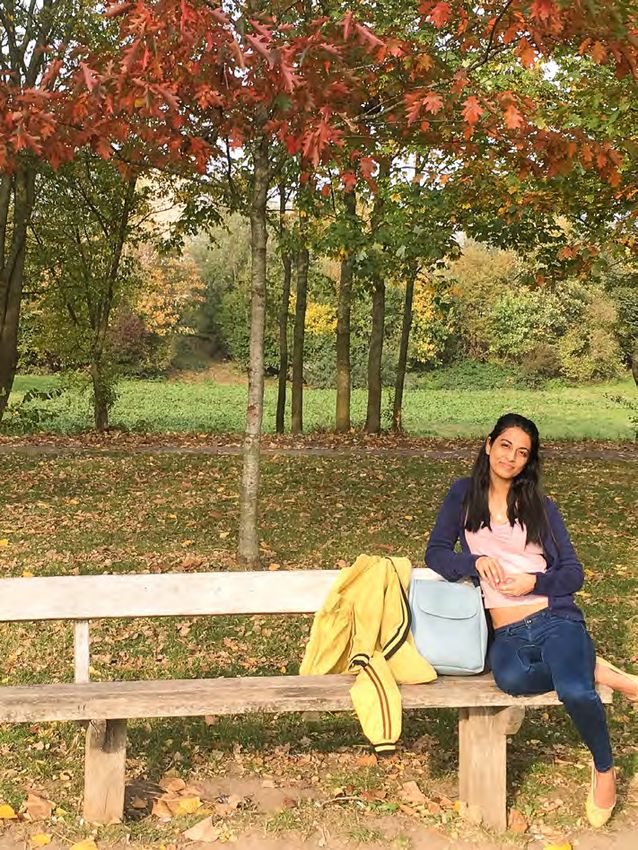
Editor’s note                      2

Contents
               Bluebook Team                      3
               Contents                       4 - 5
               Admin message                  6 - 7
                                                           I   Inside Journalism                    73 - 78

           M   Moving to Aarhus              8 - 13
                                                           N   Next plan after mundus               79 - 83

           U   University study culture      14 - 18

           N   Nice to know                  19 - 23
                                                           A   Apart from journalism                 84 - 88

           D   Denmark and the Danes         24 - 28
                                                           A   A typical day as a student            89 - 93

           U   Unique selling point          29 - 34
                                                           R   Relaxing in Aarhus                    94 - 99

           S   Survival tips                 35 - 39
                                                           H   Hygge                               100 - 104

           I   Interesting spots in Aarhus   40 - 48
                                                           U   Understand people in study groups   105 - 109

           A   Accommodation in Aarhus       49 - 56
                                                           S   Shocks and surprises                110 - 113

           N   Navigation in Aarhus          57 - 63

           S   Specialisation choice 64 - 72
                                						                 4                                                 						   5
Welcome                       A   warm welcome to the 2018-20 group of Mundus Journalism students! We are very excited that you
                                   have decided to become part of our Mundus Journalism family.

                               And this is indeed a big family, with almost 1000 family members. The Mundus Journalism family tree has
                               branches within more than 100 different countries and most continents. Across cultures we aim at sharing
                               the best of world journalism.

to the Mundus Journalism
                               We believe that you are already walking very
                               well in the footsteps of our famous, Danish
                               author, Hans Christian Andersen:

  family!
                               ‘To move, to breathe, to fly, to float,
                               To gain all while you give,
                               To roam the roads of lands remote,
                               To travel is to live.’

                               [The story of my life, Hans Christian Andersen,
                               1871]

                               We wish you all the best for your future travels,
                               while we hope that you will keep Aarhus in your
                               heart!

                               Inger Munk
                               Mundus Journalism Consortium Coordinator

                               Bettina Andersen                                         Hugs from Inger & Bettina!
                               Mundus Journalism Programme Coordinator
            						         6                                                        						                                         7
Ruchi Harish Pujari, 22, India

M        oving
                                                        War and Conflict, Swansea University
                                                      Languages: English, Hindi, Marathi, Tulu
                                                              Email: ruchi.pujari@gmail.com

         to Aarhus                         “O     n the 1st of March, I avoided opening my
                                                  email, because I knew that the university
                                           selection results would come in. Actually, my friend
                                           from work forcibly opened the letter for me,” recalls
                                           Ruchi. “I read it with a ghastly expression on my face

  F
                                           and shouted out, ‘I’m selected!’”
     or Mundusians, the journey to
     Aarhus started as early as            After that, time went by quickly. “I had no idea where
   March 1, 2018, when they got            all those months went,” she notes. Not only was she
                                           excited, but the journey ahead of her also caused a
   informed of their application           lot of anxiety. “I always wanted to live alone, I always
    status.                                thought that if I did my masters, I would do it away
                                           from Bombay. That was not causing any anxiety. But
                                           new people, a new place...”
    During this period, students had
   to apply and get visas to Den-          Now she can look back at it and laugh, but the first
  mark, purchase flight tickets,           weeks in Denmark were very difficult. However, mid-
                                           October marked two months since she arrived in
 stuff suitcases with the needful          Denmark, and Ruchi feels like she has been living in
and needless items and tell their          Aarhus for years now. This feeling is hard to evaluate
goodbyes to loved ones.                    in terms of good or bad, but it definitely means
                                           that the anxiety has settled. Moving to Aarhus is
                                           something one can do.

    						                             8    						                                            9
Mariana Sales, 25, Brazil                                           Kelechi Okechukwu Amakoh,
  Media and Politics, University of Amsterdam                       23, Nigeria
  Languages: Portuguese, English, French,
   Spanish                                                          Media and Politics, University of Amsterdam
    Email: salesol.mariana@gmail.com                                Languages: English, Igbo, Yoruba, Nigerian Pidgin
                                                                     Email: kelechi.amakoh@gmail.com

    I t’s a long and exhausting trip from Rio de Janeiro to
      Aarhus. Especially if you are carrying four suitcases like
      Mariana.                                                        “W          hen I came here, I was surprised that there was
                                                                                  such a place like this in the world.” This is Kelechi’s
                                                                       first time in Europe and Denmark feels very different to him.
        “I brought a lot of hair products,” she says defensively         The country’s public transportation system comes to his
         and laughs. It only gets more difficult when the train           mind first: “It is scheduled, right on time, and reliable.” He
           from Copenhagen to Aarhus turns back ten minutes                 also notes the organised and individualistic nature of peo-
             after it has left the station, and the announcements            ple. He thinks it can’t be compared to his home country.
             explaining why are only in Danish. It was hard, but               However, he remains positive about the Mundus experience.
             what made it easier was a phenomenon frequently                   “I still feel homesick sometimes. I am the only person from
           overlooked - Danish hospitality.                                   Africa, there are cliques and you sometimes feel like the odd
                                                                             one out.” Kelechi thinks his fellow Mundusians are lovely peo-
          For Mariana, the stereotype of cold Scandinavians is              ple but that “you have to learn to understand them.”
         not true. She has never had any trouble finding anyone
        to help her with her bags and translations, and when             In the end, he decided to come to Europe exactly to expe-
       the train was sent back to Copenhagen, a worried                 rience something different than what he was used to. He ex-
     friend came to help. This kindness is something she has           plains: “When you get used to an environment, you become
    experienced continuously. She remembers mention-                   what I call a ‘small champion’. I have found out that I might
   ing to some of her dormmates the other day that she                be good in my own area, but there are better people out
  was having trouble with her bike. Soon after, they were            there I need to interact with.” For prospective Mundusians, he
 armed with toolboxes, willing to help. “It makes you feel          suggests two things—bring a lot of good food from home and
at home, they make it easy,” Mariana thinks.                        get ready to challenge yourself.
        						                                            10                                                                   						         11
Sarah Hassan, 25, Syria
 Business and Financial Journalism,
  City University of London
   Languages: Arabic and English
                                                                                  Moving is a cumbersome adventure!
    Email: sarahassan93@hotmail.com                                               What means of transportation did you use
                                                                                   while travelling to Aarhus?
      D  enmark has exceeded Sarah’s expectations. There is a
         sharp contrast between Aarhus and Dubai, where she
       worked and lived before. To her, this made the process of                    Aeroplane................63.51%
        moving to Aarhus easy. The differences have helped her
        appreciate things others might take for granted.                              Bus .........................33.78%
                                                                                                                                      y were your
                                                                                        Bicycle ..................2.97%      How heav
                                                                                                                             bags?
            “I love it. I can see why the Danes are one of the happiest
             people in the world. The country is beautiful, the nature is                 Boat/Ferry ..........2.70%
              amazing. It is easy to bond with the simplicity of life. It’s not
                                                                                                                                                       12%
                                                                                                                                    20 - 24 kg
             consumption based happiness, it’s experience based. A small                  Car ....................28.38%
            picnic or a sunny day can cheer you up and these are the                                                                                 6.67%
           things you miss when you live in a very complex, cosmopolitan                 Total:    74 Mundusians
                                                                                                                                    25 - 29 kg
                                                                                                                                                    13.33%
                                                                                                                                    30 - 34 kg
          and capitalist community like Dubai,” Sarah explains.
                                                                                     How many are in a long                                            20%
        Prior to moving to Aarhus, Sarah worked for CNN, which sound
      like a journalists’ dream come true, but she craved change. Her                distance Relationship?                         35 - 44 kg         12%
     feeling towards transforming from work to university life is similar to                                                        45 - 49 kg         27%
    coming from Dubai to Aarhus. “Teachers always want you to be                   Yes.................52.63%                       50+ kg
   your best self. They want you to focus in class, do your assignment
  and perform well in the exams. This is very different from work life             No .............................47.37%
 which is very competitive and it’s not your ultimate best that’s
                           						                                            12                                             						                      13
sought. Here, I can just invest in myself.”                                       Total: 57 Mundisians
Yasmine Hassan, 25, Egypt

   U
                                                         War and Conflict, Swansea University
                                                         Languages: Arabic, English, French

                                                             A
                niversity
                                                                lthough the study culture at Aarhus university is not
                                                                that different from what she was used to at The
                                                              American University in Cairo, Yasmine notes that one
                                                               of the greatest values of the experience is seeing

                 study culture                                  her own world from a Western perspective.

                                                                     In international relations classes, the Middle East
                                                                       is a frequent topic, which “has been both a
                                                                         challenge and a blessing,” Yasmine explains.
                                                                         It requires a conscious effort to keep an open

     M       undusians come from all over the world.
             It means that everyone experiences
     the study process at Aarhus University and
                                                                        mind and not to take it personally; but it has
                                                                      also been an opportunity to work on some-
                                                                    thing she says she was never good at—speaking
                                                                   up and being an active part of the debate that
    the Danish School of Media and Journalism                    touches very close to home.
   a little differently. What are the most signif-
  icant differences from previous academic                   “Listening to how others think of my region or my country made me realize that I was living in a bub-
 experiences? How can you deal with them?                   ble,” she says, adding that this experience is exactly what she needed to pursue her dream and con-
Four Mundusians share their stories.                       vey a more “correct” image of her region. “To be able to report on the Middle East to an international
                                                          audience, you need to understand how the world sees it.”

                                                        The international spirit of this program adds a valuable dimension to the studies. Not only do you learn
                                                       about different topics but you also get to explore diverse perceptions from all over the world.
      						                                   14                                                                 						                                      15
Denitsa Dimitrova, 23, Bulgaria                                                                                Media and Politics, University of Amsterdam

Media and Politics, University of Amsterdam
                                                      Anastasia Park, 23, Uzbekistan                           Email: anastasiya-park@mail.ru
                                                                                                               Languages: Russian, English, Spanish,
Languages: Bulgarian, English, some Russian                                                                    French, Uzbek

A    lthough there is a continuous stream of work,
     the way that some professors and students
                                                      “B     ack home, we never called professors just by
                                                             their first name, like here,” Anastasia notes.
                                                      However, it is just a single superficial manifestation
talk about it can make the workload seem more         of a difference in study culture that actually has a
overwhelming than it has to be, Denitsa shares        significant impact on the way one has to learn to
her experience. The rule especially applies to the    approach their studies.
exam week and coping with stress throughout it.
                                                      Anastasia was used to a more authoritative way of
Denitsa’s advice is to take it all calmly. On the     teaching, where lecturers fix your every error and
one hand, you have to write an analytical paper       point out your strengths and weaknesses, but here
on a broad topic in one week, on the other, “it       “you are on your own.”
is 4,000 words in a week on things that we had
been doing for a month”. Taking it step by step,      However, it is not a bad thing, she reasons. To her,
dividing things one has to do in bitesize chunks      it is an invitation to think independently. It can
                                                      be seen and felt everywhere, even in the way
is a way to make both differences in study cul-
                                                      the exams are organized. Students are asked
ture and differences between undergraduate
                                                      open-ended questions and they have to apply
and graduate level tasks bearable. “I think a
                                                      theories to particular countries and issues. This is a
lot of students tend to perceive this year as one     great opportunity to link theories learned in class
continuous thing, whereas it is way healthier and     to areas one is interested in. She summarizes: “I
way better to take it step by step, day by day,       was overwhelmed at first, but not frustrated. I am
course by course,” she says.                          happy and always look forward to work.”
 						                                          16                                                            						                               17
Azade Kakavand, 23, Germany
                                                  Journalism and Media across Cultures, University of
                                                  Hamburg
                                                  Email Address:azade.kakavand@gmail.com
                                                  Languages: German, English, some French and
                                                  Turkish, learning Danish

                                                  “D     uring my bachelor’s studies, there were 500 people in
                                                         my class. Teachers didn’t really care whether we at-
                                                  tended the lectures and obviously you cannot participate,”
                                                  Azade recalls. If you come from a similar background, you
                                                                                                                    N         ice to
                                                                                                                              know
                                                                                                                               Recommendations for
                                                                                                                               future Mundus students

                                                                                                                          T
                                                  can expect the opposite in Aarhus—there is a strong em-                     he Erasmus Mundus Master’s in Journalism,
                                                  phasis on group work and discussion classes. This will not
                                                                                                                              Media and Globalisation is an amazing oppor-
                                                  allow passive sitting-in. “I’m pressured and freak out some-
                                                  times, but I like it. You test your borders,” she says.                  tunity for students to broaden their horizons and
                                                                                                                         build a close, professional network that can make
                                                  The discovery of the libraries in Aarhus has helped her to             a difference in your career. However, this oppor-
                                                  make it easier to deal with the workload. No matter the               tunity involves adjusting to new countries, in some
                                                  working style, there are rooms available for any necessity—
                                                                                                                        cases far from home, which can be challenging.
                                                  silent rooms, reading rooms, spaces where you are allowed
                                                  to talk and eat.                                                     With this in mind, some Mundusians have shared
                                                                                                                      their recommendations for future students, so that
For Azade, finding ways to balance studies with other activities is also important. She suggests seeking out         they can make themselves home in Denmark
extra-curricular activities. That helps take her mind off studies and enrich her stay in Aarhus. Currently, Azade   and make the most out of the course as well. We
plays lacrosse, takes Danish language classes, is one of the student representatives and a member of the
                                                                                                                    know it is not an easy task, but we promise: it is
Mundus Experience team organizing events for other students.
                                                                                                                    very rewarding!
                                                         						                                            18                   						                                  19
Mariana Pereira Camargo, 25 Junjie Wu, 27, China
Brazil, Portugal
Media and Politics,
Journalism and Media across Cultures, University of Amsterdam
University of Hamburg Languages: Mandarin and English
Languages: Portuguese, English and French Email: echobrook.91@gmail.com
Email: mariana.pereira.camargo@gmail.com
B efore coming to Aarhus, I had a lot of questions
in my mind and I think this is what happens to
“P lease, definitely remember to bring your
adaptor! If possible, bring two adaptors,
as you will need to use them in your dorm, and
everyone when they are digging into something also in the classroom or at the library for your lap-
completely new. About the masters, I would say top. For those who come from China, it is a good
that the beginning is quite challenging, but after idea to bring a SMALL rice cooker to comfort your
awhile, you get used to a new study routine and Chinese stomach sometimes, as rice cookers are dif-
everything goes in the right direction. Reading all ficult to buy here. I would say, in order to make the
the pre-class texts is my biggest tip because with most out of the course, that you should prepare well
this knowledge you can go through the lectures for every lecture – do the readings, take notes, finish the
pretty well. But please, don’t forget your leisure pre-class assignments. It would help you a lot to take full
time! It is really important to recharge your ener- part in group work and discuss with your classmates. One
gies in order to relax and even learn better. Aarhus thing you should not worry about is the weather. Especially
is a nice city to explore, so you should definitely for those from China, I understand you–I also worried a lot
do that. Some other things that help me here are about the rain in Denmark before coming here, as they men-
all the memories from back home that I have with tioned it a lot. But the truth is in Denmark, I have never seen a
me—some food that I brought, and a lot of pic- rain lasting more than one hour and mostly drizzles so far. Plus,
tures of family and friends, have helped to make there are always beautiful sunshine moments and, sometimes,
me feel at home really quickly. double rainbows after the rain!”
20 21Kankanit Wiriyasajja (Gun)
23, Thailand
Business and Financial Journalism,
City University of London
Languages: Thai and English
Email Address: kwiriyasajja@gmail.com
T
he thing that makes me feel like home is food, so I
always bring instant noodles or things that I think that
I cannot find in the country that I am going to. Usually
Top 5 Countries
just food and maybe some sentimental things, like pic-
tures with family and best friends, gifts that people gave
me. I try my best to go through all the readings because
I think they are very crucial to class. But I think one major
recommendation I have for future Mundus students is to
be social! When I studied abroad before, I spent most of
my time in the apartment. In Aarhus, I try to go out more
and explore the city because they have many interest-
ing places and cute cafés. So, make friends. Be friends
with people in the program, hang out with them, go out
more, try to expose yourself to Aarhus. Of course, you
should always worry about something, but don’t make
it a priority. You can worry about money, about grades,
but try to enjoy most of your time here, because it’s ac-
tually very short.
Germany India Brazil Denmark China
22 11 9 7 6 5 23Galina Borisova, 27, Russia
Business and Financial Journalism,
City University of London
D
Languages: Russian, Ukrainian, English
Email: borisova755@gmail.com
enmark & “D enmark thinks about everything. I feel good, being a
very average person, with no high income because
I feel that the government, the state treats me well, and
the Danes
it thinks about me.First, it’s a very friendly atmosphere for
everybody. Second, I think the way they build the hous-
es and infrastructure tries to adjust houses to nature,
and not otherwise. So when you look at these [plac-
es], you have a sense that they were here forever.
S
o, you want to move to Denmark.
[The Danes] are not very expressive, like Italian or
What better way to learn about the Spanish people. I like that they are modern and calm.
country and people you’ll soon be They are not very open, but I wouldn’t say that it’s very
living with than from students themselves? easy to make friends in Russia, for instance. It’s normal in
Here, international students experiencing every country because they already have a tight circle
Denmark for the first time and Danish of friends, family, colleagues and so on. I would say they
are open to have a conversation, to like to meet you, to talk
students share their thoughts on the country
to you. But if you want to be something closer, it’s very complicated sometimes.
of the Vikings.
In general, the Danes that I have met so far are very helpful. I have a lot of them in my dorm and they help
me a lot—with my bank account, my bike, my groceries... I like them, but they still stick to each other. They feel
more comfortable talking to somebody in Danish than in English. But that’s totally okay, it’s about everybody,
24 every nation.” 25William Brøns Petersen, 24, Louise Rasmussen, 25,
Denmark
Media and Politics, University of Amsterdam
Luxembourg, Denmark
Languages: Danish, English, German Media and Politics, University of Amsterdam
Email: wbpetersen@hotmail.com Languages: Danish, Luxembourgish, German,
French, English
“I t takes some time to get closer to Danes be-
cause they are a little bit reserved but as soon as Email: Lbr@pt.lu
you get close to someone then you are friends. There
aren’t big cultural differences if you move within Den-
mark, but small things that make a difference.
“I am Danish but I didn’t grew up here, I grew
up abroad. We spoke Danish at home and we
lived a very Danish lifestyle. One of the typical Danish
things is hygge. It is about being with people you like,
Generally, the most typical Danish thing is food, the ones you are comfortable with. It is also about
especially during Christmas. For example, aebleskiv- doing things. Danish people are very active and
er which literally means “apple slices” but there is no enjoy being outdoors, whether it is the forest or the
apple in it and it’s not sliced. But maybe there was beach.
an apple once. Another one is risengrød, what is rice
porridge with butter and cinnamon in it.You can also The way Danes interact with each other is generally
have it for a dinner or ris à l’amande, which is rice with very straightforward and honest. This honesty is based
almonds and cinnamon. During Christmas we put one on a close relationship. You are not going to be as
whole almond and whoever finds it will get a present. straightforward with people you are not that close
with. Danish people’s interactions are not based on
But back to cinnamon, when you turn 25 in Jutland your status but rather on who the person is and how he/
friends throw a pile of cinnamon over you, but I never she behaves towards others. For me, it feels like home
heard of this before I came to Aarhus. There are also here. I haven’t experienced any culture shock. Riding
other typically Danish things like not blowing our noses in bikes is also very Danish, although other countries like
public, although sometimes you cannot help it, or being the Netherlands have a biking culture as well. I really
keen on dividing the day into five or six parts, sometimes enjoy bike-riding, it gives me a sense of freedom.”
26 27
even seven. And don’t forget about biking!”DeChun Zhang, 23, China
u
Media and Politics, University of Amsterdam
nique Selling
Languages: Mandarin, Cantonese, English
Email: dominic199563@outlook.com
“I think I like the North actually. I like Aarhus be-
Point
cause it is a quiet city and it is a small city. Al-
though it is a small city, you can live comfortable
here and it is not so noisy here. I am from Beijing
and I have spent most of my life in Hong Kong.
Those cities are very noisy and people are always
busy. Here in Aarhus, you can just enjoy your day.
T
I like that, I enjoy living here.
here are many reasons to choose
I had a Danish friend in Hong Kong and he told a grad program. Here a few of our
me that Danes are cold and not very willing to
make new friends. But I discovered that this is not students share what exactly intrigued
necessarily true, it depends on the person. In my them about Mundus Journalism and
dormitory, I think all the Danes are really friendly
and talkative. They like to communicate with you.
what led them to choosing this particular
But other Danes do not like to talk to foreigners at programme.
all.
My roommate and I made some Danish cake,
but it was way too sweet. I didn’t like it. He forced
me to eat it, as we didn’t want to waste our food.
It’s expensive here you know.”
28 29Gwyneth Kwai Lam Ho, 28, Juliette Freysson, 22, France
Hong Kong Media and Politics, University of Amsterdam
Language: French, English, Spanish, German
Media and Politics, University of Amsterdam
Email: freyssonjuliette@gmail.com
Languages: Cantonese, English, Mandarin
Email: sintaneel@gmail.com
“I want to become a correspondent, and I want
to travel all around the world. WIn France,
“T he Mundus programme is like a dream
combination for me. I first read about it
while going through the catalog of the Uni-
most of the journalism schools are very France-fo-
cused. The main reason I chose Mundus Journal-
ism is to have an international masters, meet peo-
versity of Amsterdam, where I will specialize in
ple from so many different nationalities and build
Media and Politics. When I was in my Bache-
real connections with them. It’s something that I
lor’s I started considering to go abroad for my
could not find in my home country.
Master’s so I began to search. I already knew
by then that I wanted to do it in English and in
My dream is be to be a correspondent for French
Europe. I’m really interested in political com-
or English speaking newspapers in West Africa. I did
munication and I think that the combination of
an internship in Togo last year, I fell in love with the
International Relations, Journalism and Politics
people, the country and the politics; it’s something
is what I like the most about this programme
not well-covered in the news, especially in West-
and is also what I am most capable of doing.
ern media. There are not a lot of journalists that
The way they put all of these disciplines to-
do long-term or in-depth journalism. That’s what I
gether and how they interact is everything I
would like to do.
am interested in, especially because I don’t
want to be just a political scientist or a jour-
I take this programme as a very serious thing, and
nalist, but to be able to do it all together: that
the first step to build my career. I think this is really
is what fascinates me. Back in Hong Kong I
something I could sell to my future employers: not
worked as a political reporter. In this career we
only the training of journalism, but also internation-
face many challenges and I want to be able
al relations and political science.”
to solve
the difficulties I encounter.” 30 31Lukas Sheid, 26, Germany Mamta Banga, 32, India
War and Conflict, Swansea University Business and Finance, City University of London
Languages: German, English Languages: English, Hindi, Punjabi
Email: Lukas.scheid@outlook.com Email: mamtabanga@gmail.com
“I have always been interested in the intercon-
nection between historical events and cur-
rent political incidents. When I was looking for a W ith 11 years of Journalism experience under her
belt, Mamta finally decided to pick up on a
way to relate those areas in an academic field, I long-delayed plan and pursue a Master’s program
found out about this program through a friend. It outside India. Seeking a unique experience of glob-
is very international, and it covers a lot of conflicts al exposure, where she’d get to meet and work with
and environments. I was like ‘ok, this is perfect. This people from all over the world, she says the Mundus
is exactly what I want to do’. That is why I choose program had quite an edge over any other option.
this specialization of War and Conflict in Swansea.
“When I saw the curriculum, I was very impressed. I
Before coming here, I had some experience with studied journalism before but not much about glo-
sports journalism, which I liked but had some issues balization and how the world works,” she says. “I im-
with. A lot of times it is too related to PR, you are mediately thought it would be a golden chance to
basically just reproducing what somebody else learn about what is going on beyond the boundar-
is giving you, not producing any new content. I ies of my own and neighbouring countries.”
didn’t want to do that anymore. I am very inter-
ested in these more political topics, like corrup- Going back to the lecture halls and tons of read-
tion, doping, that whole sports structure that is ings is definitely a challenge; one that Mamta chose
going on. wholeheartedly.
India centric; and it was about time to take the
I would love to do stories about this kind of things. “I wanted to do this for myself. I strongly believe that leap and get to know how it works in the West-
I do love talking about sports, but not as a job. I there’s no age for learning. My whole experience in ern world. The Mundus program was the perfect
want to do that in my free time.” 32
the industry so far has been Asia specific, especially
catch.” 33Sarbas Nazari, 36, Iran
S
War and Conflict/ Swansea University, Wales
urvival tips
Languages: Kurdish, Persian and English
Email: sn8884@gmail.com
“I ’d heard about the program years ago, but I never took the time to
search a lot or focus on it because I was busy with my job. In Iran, as
a journalist, you suffer from lack of freedom. You have no choice but to
work for the state’s media which is under censorship and many restric-
tions. After working for 10-11 years as a journalist, I realized: ‘Enough
is enough. I have to leave this country if I want to continue to be a
successful journalist and continue my career down the right path.’
S
From a professional point of view, it is the decision I had to make. o, you are really committed to being a part of
To be a successful journalist, you have to work in an environment the Mundus family. We appreciate that! But
with the freedom to speak out and to investigate. This program
before moving to Denmark and settling down
opens up a new chapter in my life and a new career in the future.
I’ve always dreamt about working, for example, with BBC, CNN, in Aarhus, perhaps you would like to know some of
Washington Post, or the New York Times. We don’t know really at the our survival tips. From saving money to cooking your
moment what fate has in store for us. I just increase my opportunities so own meal, shopping for the best options, preparing
it opens up the new windows. yourself for the cold and rainy weather or coping
with the language barrier, members of our 2018-2020
Coming from Iran creates a lot of problems. I received the visa much later
than other students so the relocation took me a long time. I had to bring my cohort share with you their best insights on how to
family so I arrived late and I missed a few lectures at the beginning. But now make the best of this amazing experience!
I’m back on track. At the moment, I believe we made the right decision al-
though we’re facing so many challenges. But maybe that’s the best thing about
it. These challenges are the things that make your life more exciting and more
beautiful.”
34 35
Photo Courtesy of Sarbas NazariManas Pratap, 25, India Arushi Raput, 22, India
Business and Financial Journalism, Business and Financial Journalism,
City University of London City University of London
Languages: Hindi, Urdu, English Languages: Hindi, English
Email: manascitizen@gmail.com Email: arushirajput01@gmail.com
“W ell if you haven’t lived or studied in Northern Eu-
rope before this, like me, settling in Aarhus can be
a challenging task. But before you get nervous, I think I
“T he first thing I did after coming here was
to check out supermarkets because I really
wanted to know how much things would cost.
have a few tips that can help.
People from last year’s batch had told me ear-
lier that ‘if you actually go to the correct super-
The first month will make a big dent in that wallet of yours,
markets, you will get stuff that otherwise would
so be prepared for it. If you need some basic furnishing for
be very expensive’. So, you need to be careful
your apartment or dorm room, you could definitely visit
where you go, because a lot of supermarkets
IKEA. But it can turn out to be quite an expensive affair if
have discounts and sales going on most of the
you are not really careful. So, I’d suggest finding JYSK on
time.
Google maps. A visit there can be a good idea, as they
have many offers (like clearance sales) and you’d get
I also realized eating outside is really expensive, as I relied
almost everything that IKEA has to offer.
a lot on it in the first week because I wasn’t really sorted to
cook enough food and I didn’t know what to buy or where
The city of Aarhus, and Denmark in general is a beauti-
to buy it. Now, I mostly eat home food or the stuff I get from the
ful place. The people here are reserved but extremely
supermarket.
helpful once you speak to them. The language barrier
won’t be too bad if you are fluent in English, as Danes
A nice tip is to also bring some food if you can. Just to give you a head-
surprisingly have a great command of the language as
start. That is why my baggage limit didn’t have a lot of clothes, I had more
if it were their mother tongue. But you should learn the
groceries. I brought a lot of lentils, rice, the stuff we usually eat in India. You
most important Danish word if you are coming to Aarhus:
could probably get these things here as well, but it is going to be expensive.”
Skål, Cheers!”
36 37Tamkinat Tariq, 27, Pakistan Christine Haoruo Wei, 22, China
“I
Journalism and Media across Cultures, f I could give survival tips for any future Mundus Journalism and Media across Cultures,
University of Hamburg students, they would be: University of Hamburg
Languages: Urdu, English Languages: Mandarin, English, German
Email: tamkinattariq@gmail.com 1) Be ready to ride your bike in rainy and windy days, oth- Email: weihaoruo@gmail.com
erwise prepare to pay 375 DKK for monthly public transport
“A arhus is beautiful in its understated and quiet
charm. It grows on you every day. Although
the winters may be challenging, the summers are
tickets.
2) Bring your raincoat if possible. Umbrellas don’t work here.
filled with people in parks and endless events.
3) Everything here is expensive, so cook for yourself and buy
Keep a lookout for the Jazz Festival in July and the second-hand clothes or stuff from Facebook or flea markets!
Aarhus Festival in the first week of September. You
really get to experience the city and the “happiest 4) You will hardly have time for your own life in the begin-
people on earth” during these festivities. ning, especially in the first month. But be brave, you can
make it!
Another tip is to manage your money. Aarhus is
quite tempting with all its treasures, so make sure to 5) Lidl is a cheap supermarket, and the cookies there are
budget. If you’re smart, the city has a lot of good perfectly tasty.
deals to offer.
6) Don’t expect to gain a large amount of practical journal-
Also, stay updated through social media. You will ism skills in this course. At least in the beginning, you will be
make friends, so don’t stress over that. It’s fascinat- academic and theoretical.
ing to see the world come together inside a class-
room with people from each corner. You will find 7) The best Asian store I encountered so far is called Far East.
yours in time.
8) It is normal to not finish all the readings before the class.
And last, but not least, stay warm! 38 Take it easy on yourself. 39I
Camila Viero, 26, Brazil
Business and Financial Journalism,
City University of London
Languages: Portuguese, English
Email: camilacmviero@hotmail.com
nteresting “I really love animals, so my interesting spot
in Aarhus is the deer park. I really miss my
spots in Aarhus
dogs back home, so it was so nice to be in
contact with animals again. They’re so sweet
and come to eat from your hand.
I don’t know exactly the time that it opens up,
but it closes when the sun goes down. The en-
A arhus is a city with its own charm, try is free and it is good to take some carrots with
blending a traditional history with you because they can only eat that.
urban settings. It boasts of multiple things It’s near the Infinity Bridge, in the south of Aarhus, so you
to do, go to, eat and spend time at. The can go to both places. You can also do a picnic there. It
city is dotted with cafes, restaurants, librar- has a lot of grass, some tables, and you can spend a whole
ies, parks, canals, astounding buildings, day there.”
museums and surrounded by a water-
Ouch...
front. Mundusians talk about their ultimate “I was in the park, video calling my grandmother and was excited be-
favourite spots here in the town, where thet cause I’d never seen a deer before. I was showing all that to her, and
have fun, chill and to have some thinking then a deer suddenly came in my direction and hit me on my belly. Maybe
time—a home away from home. he did that because there were some small deer around me and he was
40 trying to protect them. My grandma was like oh my god, what’s going on?”
41Sabīne Bērziņa, 24, Latvia Hanna Paul, 24, India
Media and Politics, University of Amsterdam Business and Financial Journalism,
Languages: Latvian, English City University of London
Email: sabiineb@gmail.com Email: hannapaul99@gmail.com
“When people tell you to get a bike when you live in Languages: Malayalam, English, Hindi,
Aarhus, it’s a very sound advice because nothing Tamil
is as far away here when you’re cycling. When I “The place I’ve spent the most amount of
came to this city, I was just cycling around ran- time in Aarhus, is the beach at Risskov. It is
domly, exploring the neighbourhood, and I my thing to do because it’s kind of sooth-
found a farm with Scottish cows, really fluffy ing to go out there and get some fresh air.
and brown. It was funny.Finding a nice, quiet You’ve to go through a forest, and it’s re-
spot like this can be very useful when you’re ally beautiful at any time of the day. Every
stressed out. Just take your bike, find the woods time I went to the beach, I met really in-
and quiet places close to nature. teresting people. They also told me about
winter bathing which is really interesting
Another spot that I really like is the Botanical Gardens, and something I could do mostly only in
not very far away from the university, and it’s very beau- Denmark. I don’t think any other country
tiful in Autumn. If it’s sunny outside, you can take a walk accepts this sort of liberation. It’s more
around it and it’ll cheer you up. It’s not a place where I go than just nude beaches, you could talk to
to have fun but to relax and soothe myself. anybody you see inside that place, regardless of what they do in actual life. When I first went there, I
jumped into the water and soon the sky turned a really nice pink and the sun was just setting. I felt like the
Another thing that I can definitely recommend for students are wind kind of stopped to a breeze, and with a beautiful sunset, it became a really nice moment.
the libraries—Dokk1and Royal Danish library. It definitely makes
focusing easier. 42 Everything is so nice here, any random road you take
looks pretty.” 43Bridget Dooley, 25,
Tiago Bianchi, 25, Brazil
United States of America
Journalism and Media across Cultures,
University of Hamburg Media and Politics, University of Amsterdam
Email: bianchitiago9@gmail.com Email: bdooley@gm.slc.edu
Languages: Portuguese, English, Spanish, Languages: English, Spanish
German “The best place in Aarhus to do some quiet
work is Cafe FolkeVen, a really cute Volkswa-
gen themed cafe. They make great coffee
“E verything is Aarhus is impressive, the
Dokk1, the libraries, but my favour-
ite spot in Aarhus is in front of my room—
and are open till late on Sundays, with a good
WiFi connection.
the trash. I live in the University Park and
If you want to spend the day exploring, Gods-
the thing which most surprised me was
banen is the place. This old freight warehouse is
that every time I woke up, I saw people
an artist’s Mecca. There are exhibitions, events,
throwing a lot of stuff in there and then I
and the outdoor space has a ton to explore.
thought, let’s check it out. I got so many
Don’t miss reuse and the plant cafe.
things! Cloth hangers, two portable scan-
ners, party lights, and a yoga mat.
To get a good meal, Aarhus street food has an
incredible array of food from around the world.
It’s actually intriguing because Denmark claims to be such a sustainable country. In Brazil we use
It’s a cheaper option than the rest, and is so
our things to the max because things are too pricey for us. And this was perhaps the main shock
good! My recommendation is the Bánhmi Ban-
that I’ve had here in Denmark, to actually find this trash. To see the real Danish light within itself was
dits. To have a beer, Mikkeller is a sweet alter-
an awesome thing to me, and the reflex of it is the trash.”
native spot, where they brew their own beer!”
44 Photo courtesy of Bridget Dooley 45Diana Langer, 24, Germany Méline Laffabry, 23, France
Journalism and Media across Cultures/ University of
Hamburg War and Conflict
Email: diana.langer94@gmail.com Swansea University, Wales
Languages: English and German Email: meline.laffabry@gmail.com
Languages: French, English and Spanish
“T he place I've found to be the most fun in Aarhus
is the boulder hall. We have a little group of Mun-
dus students who spend a few hours there each week,
work out a little bit and practice bouldering. Doesn't
matter if you're good or not, we just get together,
“M y favourite place in Aarhus is the Latin
Quarter in the City Centre. I like this part of
the town very much because it’s filled with small
have a lot of fun, and afterwards, we often eat restaurants, bars and small shops. People hang out
cake. on the street with a beer in one hand and talk until
late night hours. The ambience is really cool!
You can overcome fears if you're afraid of heights,
or you can practise strength and the way everyone [The Latin Quarter] is the neighbourhood where I
treats each other is really nice. It depends on when first met some fellow Mundusians, shortly after ar-
you go but if you have your own climbing shoes and riving. We still hang out there, quite often. Now
other equipment, and if you go in the mornings, It is 80 I even go there with my Danish roommates.
dkk for one time. After you become a member, the fee Sometimes, I bike there, but most of the times I
is a little less. prefer walking so I can appreciate it and find
new places to go to. I can walk around the
One of the guys didn't make it to the top and so when area on a sunny Sunday afternoon, looking
he fell down, he screamed in a very high pitched voice. It at the colourful and pretty little houses.”
wasn't that he was scared, just that he didn't make it as far
as he wanted to and so he just started screaming.”
46 47One of the perks of studying abroad is to have an exciting experience
A
in a new country & a new language
We asked our Mundusians if Denmark has met their expectations so far ccommodation
in Aarhus
A bit
22.67%
Y
ou can choose from a plethora of
YES
IT HAS
77.33% options—dorms with shared facilities,
studios, two-room apartments, and also
multiple room houses. There’s a range to select
from the housing provided by the university
And whether they are learning the unique Danish language (AU Housing), and also the private market
accessible to you via facebook groups, and
Aarhus housing websites. Read along to know
Yes A B C D E F G H 27.03% where some of our Mundusians live, how they
found their new homes, their experiences
and have a better idea about what to
No A B C D E F G K L M N O P Q R S T UV 64.86% choose…
Currently speaking Danish A B 8.11%
48 49Aftab Bose, 24, India Alena Eichler, 24, Germany
Business and Finance, City University of London Media and Politics, University of Amsterdam
Languages: English, Hindi Languages: German, English, learning Danish
Email: bose.aftab@gmail.com Email: alena.eichler@t-online.de
“M y accommodation type is a studio. I
chose it because I’d lived with people
“I live in Skejbyparken in a dorm where I share
my apartment with one other person, using the
same kitchen and bathroom. I live with a girl from our
before and I knew that with my schedule and master’s program and we were really lucky that we
job, I needed to have some peace and quiet.” fit together so well.
It’s very close to the ARoS Museum and to the We’re a dorm park with five dorms together and
centre. All the nice parts of town are around, have a common house where we hang out and
that I like to visit quite often. It’s also quite ac- play Mario Kart. A disadvantage of where we live
cessible to university and I can cycle to universi- is that it is far out, and you have to go uphill to go
ty and back in ten minutes, so I love that about home. But I love it. We live on the third floor and
it. I have a supermarket called Føtex just across have amazing rooms which are really bright and
the road. cosy.
I’m really very lucky in that sense and I really It’s very green since we are living outside the city. We
don’t think that there’s anything that I dislike go for walks and to the beach. For two semesters it’s
about it. So far at least. It’s the ideal condi- great, but If I would stay in Aarhus for longer I would
tions—I don’t have to share with anyone. I’m try to move to the city centre.
very close to all the spots, and am very happy
with it so far.” I think it’s definitely easier to get housing through AU
Housing, because you can be sure that you have
furniture and cutleries. It will be a lot more expensive
50
to look for something by yourself.”
51Diana Yunusova, 31, Russia
Delia Brändli, 24, Switzerland Business and Financial Journalism,
City University of London
War and Conflict, Swansea University Languages: Russian, English and Spanish
Languages: German, English, Spanish, French Email: ditvtv@gmail.com
Email: delia.braendli@gmail.com
“I live in Brabrand. There isn’t any other dormi-
“F irst, I lived in an accommodation tory which is further away, but it’s quite close
from AU housing and I liked that it was to the facilities—Bilka, a huge supermarket with
a cheap option, but now I live in the city lots of discounts, is really near. I came here with
centre in an apartment that I found on my husband and with my dog. We applied for a
Facebook. It was really easy for me to get a two-room apartment and I guess this is the only
private flat, I just texted one day and got it. dorm which accepts pets. I have my small and
well-equipped kitchen and a private
I live with my boyfriend. It’s a very nice bathroom.
place. The location is amazing since it is in
the city centre and has a lot of supermar- “I like this location because it’s a really green zone,
kets, cafes and restaurants. The apartment and you feel that you’re in a national park. There
is very spacious and bright, kind of big for are two big lakes around my dorm. The week I ar-
two people. Almost next to my house is the rived in Aarhus, I saw a deer 30 meters to my front
ARoS museum, and the Latin neighbour- door. It was unreal and two days later I also saw a
hood called the Latin Quarter is nearby too. fox. I was like, am I living in a National Park?
I come to the university by bike. It’s all up- I ride every day—when it’s windy, it’s like almost
hill so it’s kind of tiring but it’s not that far. It lovely but on a rainy day I’m riding like crazy to get
takes me 15 minutes.” to the university faster. The hills are a huge trouble,
because 15 minutes to my place, you’re going just
52 up, up and up.” 53Giselle Silva dos Santos
Lisa Lechner, 24, Germany
28, Brazil
Media and Politics, University of Amsterdam
Media and Politics, University of Amsterdam
Languages: English, German, French
Languages: Portuguese, English, Spanish
Email: lisamarie.lechner@gmx.de
Email: gi.santos1990@gmail.com
“I live at the University Park, a dorm with a shared kitchen
and shared bathroom. One of the cheapest categories, “I looked for accommodations in the private
market via Facebook groups. It was a strug-
gle because you were writing to so many peo-
I chose it because of the price. Nothing is too far, and is also
close to the classes. ple, but then I found a room where everything
just fit perfectly.
The area I live in, is in a park, with a big lake having little
ducks in it. Under the Sun, it’s amazing to just lay on the I’m living in a room which is sub-rented by an-
grass, read or chat with your friends. other girl so I can use her furniture and other things.
I like my room, with the furnishing and the cosy factor.
I’ve never lived in a dorm before so it’s been a nice ex- The balcony helps me enjoy the shining sun. I’m living
perience of getting to know everybody who lives in the with two other Danish students, and we share a common
same corridor as me. There are a lot of Danish students kitchen and bathroom. We have conversations, and cooking
and it’s interesting to learn about their culture. They do evenings together. We respect it when one of us wants to have a
common dinners and have an event Tour De Chambre, closed door. I ended up being so happy in the accommodation and
where people put themes to their rooms, drink and en- wouldn’t consider moving.
joy.
It’s a good surrounding to take walks, being close to university, coming to
Applying through AU Housing was pretty simple. I just the city centre quite fast and oh, what’s also worth mentioning is that I’m
stuck to the deadlines and mentioned that I would pre- living on top of a bakery. If I don’t have food at home or am lazy on a Sun-
fer it to be near the university and the centre. They ex- day morning, I can just go downstairs to get bread rolls.”
plain the process quite well through emails.”
54 55N
Shalini Nagarajan, 24, India
Business and Financial Journalism,
avigation
City University of London
Languages: English, Hindi
in Aarhus
Email: shalini.nagarajan28@gmail.com
“I live at Skejbyparken which is 15 minutes from
college by bike. I really like the area because
the houses are like no other and it’s like a Lego Block.
There’s also a basketball court and a football ground.
W
Sometimes they set up common dinners. We have a hat is the best way to move around
common room right with laundry, a fancy TV and a bar
Aarhus? Just after their arrival, all the
where you can set up common parties. We also have
two supermarkets—Føtex and Lidl. I prefer Lidl because Mundusians had to answer this question
it’s cheaper but Føtex has a lot of variety. and decide which transport to choose. And
while the majority of students have immersed
I chose shared accommodation because I think it’s themselves in local biking culture, there are still
nice to come back home and have someone to talk those who prefer using public transport or simply
to in a place that is away from home. I like the fact walking. Now, after some time to adjust to their
that it’s a person from a different course because new city, Mundusians are ready to share their
I get to know what is happening through their fresh experience of exploring Aarhus!
perspective as well. My housemate is a part of a
lacrosse team, so I hear about that, something my
friends aren’t doing.”
56 57Nils Tillmann, 27, Germany Chara Kotsai, 23, Greece
War and Conflict, Swansea University Media and Politics, University of Amsterdam
Email: tillmann.nils@gmail.com Languages: Greek, Albanian, English
Languages: German, English, Spanish Email: harakotsai@gmail.com
“I bike every day and have actually taken
a bus one or two times. Biking saves your
money, makes you move a lot and be indepen-
B ack in her native Greece, Chara drove a car
and never tried biking at all. However, things
changed when she moved to Aarhus one and
dent,” says Nils, who has been biking since the
a half months ago and decided to start learn-
childhood, and even brought his bike here from
ing how to bike. Chara is persistent in this: “I am
Cologne. “The average route is not that long.
still struggling with balance and stopping, but
Actually, you can cross the city from one edge
soon I’ll be biking in the city, you will see!”
to the other just in 40 minutes. Of course, it’s less
fun when it’s cold and rainy so that you can get
She recently bought her own bicycle and can
completely soaked on your way. But still, it’s the
now dedicate much more time for practising
best way of getting around the city.”
new skills. One more reason that keeps Chara’s
excitement is the second year of studies which
Nils is convinced that Aarhus is one of the plac-
she will spend in Amsterdam—the biking capital
es to get rid of unconfidence in biking: “Cycling
of the world. Any practice she can get in now
infrastructure is great, and the drivers are very
will be well worth the work!
respectful towards cyclists. Everyone is sticking
to rules, so I have never seen a better place to
Chara’s message to the newcomers who have
learn how to bike in the city.”
never biked is clear: “Be patient and try to un-
derstand that it’s ok to fall. Constantly fall.” Any-
But most of all, Nils is surprised by fellow Mundu-
way, with the support of her peers and friends,
sians: “They started biking right after moving here
she continues to masterher skills. See you on the
and are always helpful whenever it comes to
Aarhus bike lanes, Chara!
borrowing a pump, lights or anything else for the
bike.” 58 59Aarhus—the city that cycles Elsa Maishman, 23, Ireland
& the United Kingdom
S
o, you’re thinking about moving to a city which cycles? Maybe you’re Media and Politics, University of Amsterdam
asking yourself: “just how many cyclists are there really in Aarhus? And Languages: English, Spanish, French, Irish
how many Mundusians cycle, too?” Wonder no futher! Out of 75 Mundu- Email: emaishman@gmail.com
sians surveyed for this book, 70% either brought or bought bicycles to partici-
pate in Aarhus’ cycling culture. 17% of Mundusians rely on the
buses while 12% walk and the final 1% of Mun- “Y ou educate yourself and even can drink
coffee on your way,” says Elsa, explain-
ing why she prefers walking in Aarhus to biking
dusians take the city tram to
or busing. She’s convinced that the rhythm of
get around.
walking gives you time to think about life and
do useful things meanwhile, such as listening to
the podcasts or learning Danish.
Tram “And you can’t usually do it when cycling be-
cause using the earphones is quite dangerous
then. It’s better to have 30 minutes of a good
Walking
time walking rather than 15 minutes of dead
time cycling,” persuades Elsa.
For those who decide to walk around Aarhus,
Bus she advises to always have an umbrella or
raincoat and not to relax for a second: “It’s
easy to watch the birds or listen to the music,
Bicycle
but it’s wasting time. Maximize the benefit from
walking, educate yourself and go to the places
where you will never get by car—explore the
60
Botanical Gardens, for example.” 61Huizhong Pang, 22, China Simran Suphanida Thakral,
Business and Financial Journalism,
City University of London
22, Thailand
Business and Financial Journalism,
Languages: Mandarin, English
City University of London
Email: 13580337382@163.com
Languages: English
“I usually use the tram to get to the University, Email: suphanida.thakral@gmail.com
S
the dancing studio or the Asian market in the
imran, who grew up in Bangkok, a city of 10
centre,” says Huizhong, who moved to Aarhus from
million people with very heavy traffic and very
Guangzhou—one of the biggest Chinese cities. She
cheap taxis, decided to change her habits and
walks and uses public transport at least twice a day.
use the bus to move around Aarhus. “Initially I was
choosing between the bus and bike, but then re-
“Usually for me, it takes up to 15-20 min to get
alized that I could easily get cold here, so I simply
around, and it’s incredible. In my hometown it’s
bought the season bus pass. I was also worried
impossible. Guangzhou is, I guess, ten times bigger,
about whether I would manage to bike when it
and people there mostly use cars or subway, but
gets dark and cold without any previous expe-
not bikes like here,” says Huizhong. She admits that
rience of biking in the city and decided to wait
the adaptation in Aarhus was very smooth for her
until the summer and maybe then rent a bike be-
as the routes are much shorter: “The gym is located
cause you still need this experience,” says Simran.
just near my dorm, the library is also not far, so I am
saving my time here!”
For her, it usually takes up to 20 min to get to the
university or other places. And although the buses
However, Huizhong finds some drawbacks in the
here are comfortable, Simran notes that 375 DKK
transportation in Aarhus: “If you miss the tram or bus,
per month is quite costly. However, she admits
you really need to wait twice as long until the next
that the transport here is punctual: “Just make
one comes, but the apps help a lot in planning the
sure that you checked the schedule in the Rejse-
route.” Nevertheless, she recommends everyone bike
planen app, bought the ticket via the Mobilbillet
in the summer.
62 63
app, and you can get to any place in the city.”You can also read


