Master's programmes Wageningen University & Research - www.wur.eu/master
←
→
Page content transcription
If your browser does not render page correctly, please read the page content below
Master’s programmes
Wageningen University & Research

www.wur.eu/master | 2019-2020

Wageningen University & Research

Master students                                                                                    Rankings

                                                                                                             Agricultural university
                                                                                                     1       in the world
                                                                                                             National Taiwan University Ranking 2017-2018

                                                 57%                 43%
5,821                                            Dutch               international
students                                         students            students                                University in the world in
                                                                                                     1       the field of agriculture and
                                                                                                             forestry
                                                                                                             QS World University Rankings 2018

                                                                                                             Of all universities worldwide
103                                              58%                 42%                            64       Times Higher Education Ranking 2017-2018

nationalities                                    female              male

Alumni                                                                                                       SustainaBul-Award winner
                                                                                                             5 years in a row

                                                                                                             The best university in
                                                                                                             the Netherlands for
47,164                                           36,698                     10,466                   1       the 13th year in a row
alumni                                           Dutch                      international                    The Dutch study choice guide ‘Keuzegids masters’

                                                                                                             Shanghai Ranking
                                                           13%                 85%                   1       Academic ranking of world universities 2017.
live and/or work abroad                                                                                      Wageningen University & Research holds the
                                                           Dutch               international                 first position in the subjects ‘agricultural sciences’
                                                                                                             and ‘food science & technology’.
                                                           alumni              alumni

Living in Wageningen                                                                 Wageningen University & Research

                                                                                      19    BSc programmes                                      3
                                                                                                                                                online
                                                                                      29    MSc programmes                                      masters
            12min                                24min              54min
to train station                 to Utrecht                  to Amsterdam
                                                                                        25                                     87 chair groups
Living expenses                                                                       MOOCs
                                                                                                                               8 partnerships
                                                            60                        on EdX
                                                            different sports
USA
                                                            for less than
UK
Norway
                                                            €100 per year
Netherlands
Spain

                         €500           €1,000    €1,500
                                                            16%                       11             7                                          2
                                                            of the residents          research       test locations &                           libraries
Indication only, source www.nuffic.nl                       is student                institutes     innovation centres
Welcome

'To explore the potential
of nature to improve
the quality of life'

That is the mission of Wageningen University & Research. Within the domain of
‘healthy food and living environment’, our scientists and students work around
the globe conducting research for non-governmental organisations, government
agencies and the business community. Contributing to the improvement of the
quality of life is our goal. Wageningen University & Research is the number 1
university when it comes to the agricultural life sciences and among the top 10
when it comes to environmental sciences. Our education programmes focus
on complex issues in food production, the relation between food and health,
environmental issues and biodiversity. These issues are subject to increasing
worldwide concern.

At Wageningen, we first take a broad picture into account before zooming in on
the finer details and subjects. This enables us to both understand processes on a
molecular level and their influence on and interaction with higher integration
levels,such as ecosystems, crop characteristics or human health.

A lot of the solutions seem to come from a technological approach, like creating
better crops or smarter technology, but an approach from a merely biological,
chemical or physical angle does not do the job. In the complex dynamics of the
modern world, it is no longer possible to solve complex issues through a simple
mono-disciplinary result or approach. Solving government issues and dealing
with socio-economic and cultural constraints are as important as coming up with
technical solutions. This approach is taught to our students and is the driving force
behind our leading research groups. Our scientific and educational endeavours are
internationally oriented and have an impact on society, policy and science.

On our wonderful campus students and scientists from around the world gather to
form a large international community that bridges cultures in a natural way. This
not only enriches the dynamic climate of our university, but it stresses the
necessity to work together on a global scale and in international teams. Global
challenges have no boundaries and co-operation is of utmost importance. In
Wageningen, the ability to work in intercultural international teams comes
naturally.

I hope this brochure captures your interest and that we may welcome you in the
near future as a new member of Wageningen University & Research’s international
academic community.

Prof. dr. Arthur P.J. Mol
Rector Magnificus
Master of Science programmes

Studying in Wageningen                             4    Biotechnology                              16
                                                        Cellular and Molecular Biotechnology
Admission & Application                            6    Process Technology
                                                        Medical Biotechnology
Study online                                       8    Food Biotechnology
                                                        Environmental and Biobased Technology

                                                        Food Quality Management                    17
Life Sciences                                           Quality Control and Assurance
                                                        Quality and Food Logistics
Animal Sciences                                    10   User-oriented Food Quality
Genetics and Biodiversity                               Quality Management and Entrepreneurship
Nutrition and Metabolism
Global and Sustainable Production                       Food Safety                                18
Adaptation, Health and Welfare                          Applied Food Safety
Molecule, Cell and Organ Functioning                    Food Law and Regulatory Affairs
Animal Ecology                                          Supply Chain Safety
Professional Tracks and International Programmes
                                                        Food Technology                            19
Aquaculture and Marine Resource                    11   Ingredient Functionality
Management                                              Product Design
Aquaculture                                             Sustainable Food Process Engineering
Marine Resources and Ecology                            Food Biotechnology and Biorefining
Marine Governance                                       Dairy Science and Technology
                                                        Gastronomy
Biobased Sciences                                  12   Sensory Science
Biomass Production and Carbon Capture                   Food Digestion and Health
Biorefinery and Conversion                              Food Innovation and Management
Biobased and Circular Economy                           European master's in Food Studies
                                                        Online master's Food Technology
Bioinformatics                                     13
Bioinformatics                                          Molecular Life Sciences                    20
Systems Biology                                         Biological Chemistry
                                                        Physical Chemistry
Biology                                            14   Biomedical Research
Animal Adaptation and Behavioural Biology               Physical Biology
Bio-interactions
Molecular Ecology                                       Nutrition and Health                       21
Conservation and Systems Ecology                        Epidemiology and Public Health
Evolution and Biodiversity                              Online master's
Health and Disease                                      Nutritional Physiology and Health Status
Marine Biology                                          Molecular Nutrition and Toxicology
Molecular Development and Gene Regulation               Sensory Science
Plant Adaptation                                        Food Digestion and Health

Biosystems Engineering                             15   Organic Agriculture                        22
Farm Technology                                         Agroecology
Information Technology                                  Sustainable Food Systems
Systems and Control                                     Double Degree Agroecology
AgroLogistics
Environmental Technology                                Plant Biotechnology                        23
Biobased Technology                                     Functional Plant Genomics
                                                        Plants for Human and Animal Health
                                                        Molecular Plant Breeding and Pathology

2   www.wur.eu/master
Plant Sciences                              24   Landscape Architecture and Planning                          37
Crop Science                                     Landscape Architecture
Greenhouse Horticulture                          Spatial Planning
Natural Resource Management
Plant Breeding and Genetic Resources             Leisure, Tourism and Environment                             38
Online master's                                  Tourism and Development
Plant Pathology and Entomology                   Tourism and Natural Resource
                                                 Tourism and Global Mobilities
Water Technology                            25   Tourism, Experiences & Place-making

Food Technology (online MSc)                26   Metropolitan Analysis, Design and                            39
                                                 Engineering
Nutritional Epidemiology and                27
Public Health (online MSc)                       Urban Environmental Management                               40
                                                 Environmental Economics
Plant Breeding (online MSc)                 28   Environmental Policy
                                                 Environmental Systems Analysis
                                                 Geo-information Science
                                                 Management Studies
Environmental Sciences                           Land Use Planning
                                                 Urban Systems Engineering
Climate Studies                             30
The Physical Climate System
Biogeochemical Cycles
Ecological and Agroecological Systems            Social Sciences
Human-Environment Interactions
Climate, Society and Economics                   Communication, Health and Life Sciences                      42
                                                 Communication and Innovation
Earth and Environment                       31   Health and Society
Hydrology and Water Resources
Meteorology and Air Quality                      Development and Rural Innovation                             43
Biology and Chemistry of Soil and Water          Communication and Innovation Studies
Soil Geography and Earth Surface Dynamics        Technology and Development
                                                 Sociology of Development and Change
Environmental Sciences                      32
Environmental Quality                            International Development Studies                            44
Human-Environment Interaction                    Sociology of Development
Environmental Policy and Economics               Economics of Development
Environmental Technology                         Inclusive Innovation, Communication and Development
                                                 Politics and Governance of Development
Forest and Nature Conservation              33
Policy and Society                               Management, Economics and                                    45
Management                                       Consumer Studies
Ecology                                          Business Studies
                                                 Consumer Studies
Geographical Information Management         34   Economics and Governance
and Applications                                 Management in Life Sciences

Geo-Information Science                     35
                                                 Also at Wageningen University & Research                     46
International Land and Water Management     36
Sustainable Land Management                      Location of Wageningen                                       47
Irrigation and Water Management
Adaptive Water Management                        Steps to enrolment                                           48

                                                 Meet us                                                      49

                                                                                          www.wur.eu/master    3
Studying in Wageningen

                                                The university

                                                Wageningen University & Research is one of the leading international universities
                                                in the field of healthy food and living environment. Here, you will focus on current
                                                and future global issues that are of increasing importance to both industry and
                                                government. You are ensured personal guidance throughout your student career
                                                with a teacher-student ratio of 1:18. Which allows you to make the most of all the
                                                study options provided. Studying in Wageningen guarantees you premium quality
                                                education and an international quality benchmark on your curriculum vitae.
                                                www.wur.eu/whywageningen

    Housing
    Most students of Wageningen University      Campus and facilities
    & Research also live in Wageningen.
    Idealis is the biggest student
    accommodation provider in Wageningen
    and you can apply for one of the several
    thousands of housing units they own.
    You can also try to find suitable housing
    via HousingDesk Wageningen or via one
    of the national organisations mediating
    housing in the Netherlands. Idealis will
    provide prospective students with
    information about the application
    procedure for student housing. Idealis
    will contact you approximately two to
    three months before the start date of       With 70.000 m2, Wageningen Campus equals the size of 11 soccer fields. It offers
    your programme in Wageningen. After         excellent student facilities and it is a place where students, teachers, researchers
    receiving the information about the         and staff from all over the world come together and exchange ideas. Forum is
    application procedure you can register      Wageningen University & Research’s largest education building. The main library is
    with Idealis as a house seeker and          located in Forum and is open 14 hours per day. There are several places on
    respond to the available housing offers     campus where you can relax and enjoy a drink with your fellow students like the
    on their website. If your current           ‘Grand Cafe’ at Forum, ‘the Spot’ in Orion, or you can have lunch at the
    residential address is more than 130        ‘Restaurant of the Future’. Nearby, sports centre ‘De Bongerd’ offers over
    kilometres away from Wageningen, you        60 different sports ranging from tennis, squash and indoor biking to football,
    qualify for distance priority.              rugby and athletics. There are multiple student associations and each study
                                                programme has its own study association that organises a wide range of activities
    www.wur.eu/housing                          and services for students.
                                                www.wageningencampus.com

                                                Wageningen town

                                                The university is centrally located in the Netherlands. The cities Amsterdam,
                                                Rotterdam and The Hague are only one-hour travel by train from Ede-Wageningen’s
                                                station and Utrecht only 25 minutes. From train station Ede-Wageningen to
                                                Wageningen Campus is a 12-minute bus ride. Wageningen is built on 'bicycle
                                                scale' meaning that all university facilities and the city centre are within cycling
                                                distance. There are historic and modern buildings, high-rise student flats, works of
                                                art and botanical gardens that all add to the diversity of Wageningen.
                                                More than 10,000 students study in Wageningen and they, accounting for more
                                                than 20% of the population, turning Wageningen into a university town. The many
                                                international students, professors and researchers contribute to the international
                                                atmosphere. Wageningen has a thriving cultural and social life. Theatres, cinemas,
                                                student clubs, bars, nightlife and restaurants create the elegance of a city in a
                                                beautiful rural setting. The nearby floodplains of the Rhine river and National Park
                                                the Veluwe are ideal for those who enjoy nature, hiking, running or cycling.
4    www.wur.eu/master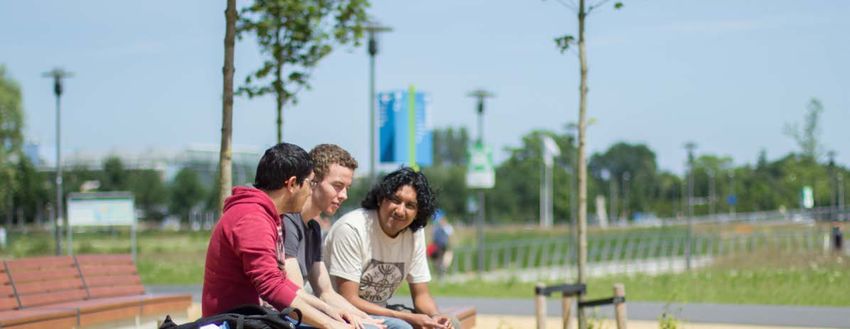
Structure of the programme
Wageningen University & Research offers 29 Master of Science (MSc)
programmes and the language of instruction is English. All master’s study
programmes are full-time, have a duration of two years and are comprised
of 120 ECTS credits. In addition to this, it is possible to follow one of
the three part-time online master’s specialisations from all over the world
through the university’s virtual learning environment. This pioneering
way of studying is an ideal opportunity for you if you want to obtain a full
master's degree, but are not able to spend two full years away from home.
Annual
In Wageningen, the academic year is split up into six periods. During each
period, you follow one or two courses that are completed with an exam. Introduction
The first three periods, and the fourth, fifth and sixth period run
parallel to the European semesters, which means you can combine your
Days
courses in Wageningen with courses at other universities without running
into scheduling problems. The Annual Introduction Days (AID) are
held prior to the start of the master’s
The first year of the master’s study programme is comprised of mandatory programme and are highly recommended
courses, but you also have several elective courses which allow you to for all new students. During the
specialise within your programme. introduction programme, you can
become acquainted with Wageningen,
The second year includes an internship and a master’s thesis. The subject your fellow students and the university:
of the thesis is developed in consultation with a senior staff member. https://aidwageningen.nl/en.
Students usually propose their own thesis research topics while taking
ongoing research into account.
Academic year 2019-2020
September
November
December
February
October
January
August
August
March
June
April
May
July
introduction
p1 p2 p3 p4 p5 p6 p6
Courses
International
Exams Re-exams Holidays
character
Academic year 2020-2021 Wageningen University & Research has
a very international character with
students coming from over 103 different
September
September
November
December
countries. Through partnerships with
February
October
January
August
March
numerous Dutch and international
June
April
May
July
companies and governments,
Wageningen University & Research has
become a major university in Europe
and one of the best universities world-
Graduation
Internship/ Major thesis wide in the field of life sciences. As a
Minor thesis
result, students have no problems
finding internships, challenging work
experience spots and career
opportunities around the world.
www.wur.eu/master 5
Application & Admission
General admission requirements
All MSc study programmes at Wageningen University & Research have the following general admission requirements:
• A bachelor’s degree (or equivalent) in a field of science relevant to the selected programme;
• Sufficient quality of the BSc degree as shown by an average mark of at least 7 (Dutch system), a Grade Point Average (GPA) of at
least B/B+ (US system) or a classification as 2nd upper (UK system); (visit www.wur.eu/admission for specific requirements)
• Good working knowledge of mathematics and/or statistics;
• Fluency in English, both written and spoken (see schedule).
In addition to these general requirements, specific requirements may apply to individual programmes. See the website
of the specific MSc programmes for more information.
English language proficiency
Level 1 Level 2
IELTS Overall grade 6.0 Overall grade 6.5
(with a minimum sub-score of 6.0 for speaking) (with a minimum sub-score of 6.0 for speaking)
TOEFL Internet-based 80 Internet-based 92
(with a minimum sub-score of 20 for speaking) (with a minimum sub-score of 23 for speaking)
RATEr Level 1: Listening pass, Reading pass, Writing Level 2: Listening pass, Reading pass, Writing pass,
borderline, Speaking borderline Speaking pass
Cambridge FCE Pass at grade B or above Pass at grade A
Cambridge CAE Pass at grade C or above Pass at grade B or above
Cambridge CPE Pass at grade C or above Pass at grade B or above
International Baccalauréat 3 for English 4 for English
German Abitur 06 Punkte for English. English must have been taken 09 Punkte for English. English must have been taken
as a final exam [prüfungsfach]. as a final exam [prüfungsfach].
Belgium ASO 60 for English 70 for English
Level 2: MSc Aquaculture and Marine Resource Management - MSc Biology - MSc Communication Health & Life Sciences - MSc Develop
ment and Rural Innovation - MSc Food Quality Management - MSc Food Safety - MSc International Development Studies - MSc Landscape
Architecture and Spatial Planning - MSc Management, Economics and Consumer Studies - MSc Metropolitan Analysis, Design & Engineering
- MSc Organic Agriculture - MSc Plant Biotechnology - online MSc Plant Breeding - MSc Plant Sciences. All other programmes require
Level 1. The RATEr can be taken at Wageningen in'to Languages. Note: IELTS and TOEFL tests should have been taken no longer than
two years prior to the application. www.wur.eu/into
Study expenses
Study expenses consist of tuition fees, research fees, living expenses (housing, foods, drinks) and other expenses (insurance, residence
permit, handling fee, books, study materials). These expenses are an indication only, see the website www.wur.eu/tuitionfee for
up-to-date information.
2019-2020 EU/EFTA students Non-EU/non-EFTA students
Tuition fee* € 2,100 / year € 18,700 / year
Estimated living expenses € 10,800 / year € 10,800 / year
Other expenses € 500 / year € 1,500 / year
*Except online master’s programmes, more information can be found on page 8.
Application deadlines
February 2019 September 2019 February 2020
Dutch, EU/EFTA students 1 December 2018 1 July 2019 1 December 2019
Non-EU/Non-EFTA students 1 October 2018 1 May 2019 1 October 2019
Bioinformatics All programmes Bioinformatics
Biotechnology Biotechnology
Biology Biology
Environmental Sciences Environmental Sciences
Study programme
Forest & Nature Conservation Forest & Nature Conservation
Molecular Life Sciences Molecular Life Sciences
Plant Biotechnology Plant Biotechnology
Plant Sciences* Plant Sciences*
*Except the online master's Plant Breeding
6 www.wur.eu/master
Application procedure
Step 1: Application Step 4: Visa (non-EU/EFTA nationals only)
A completed MSc application. Nationals of Australia, Canada, Japan, Monaco, New-Zealand,
For information on the application procedure please visit our South Korea, U.S.A or Vatican City need a residence permit
website: www.wur.eu/apply to study in the Netherlands.
If you are a national of any other non-EU country you need
The following documents are required. both a MVV entry visa and a residence permit.
BSc degree. A copy of your bachelor’s degree (or equivalent
• It is not possible to apply for a MVV entry visa and a residence
as recognised by Nuffic) in Dutch or English (or a certified permit yourself. International Office of Wageningen University &
English translation). Students in the final year of their Research will start this procedure upon receipt of your payment.
bachelor's may also apply for admission prior to graduation.
The Academic Committee on Admissions can tentatively admit Part of the Dutch immigration policy is that all international
students based on a transcript of their academic record and students who require a resident permit will be subject to a
the expected date of graduation. Students must submit the yearly study progress check. Students must obtain at least
official degree before 1 September. Students who require an 50% of the credits per year (or part of a year). The immigration
entry visa for the Netherlands must submit proof of graduation office will cancel the residence visa of students who do not
before 1 July. meet these criteria.
Transcript of your academic records. A copy in Dutch or
•
English (or a certified English translation) including a list of
marks or grades obtained during your bachelor's and your Step 5:Housing and insurance
Grade Point Average (GPA).
Sufficient English language proficiency test results.
• Idealis will contact you approximately two to three months
Please note that other documents than the indicated accepted before the start date of your programme in Wageningen. After
test results will be rejected. receiving the information about the application procedure you
A statement of motivation.
• can register with Idealis as a house seeker and respond to the
• Curriculum Vitae. available housing offers on their website (www.idealis.nl).
Please note that you will only be able to submit your application
if you have uploaded all required documents. Only complete
applications submitted before the application deadlines will be
evaluated.
Step 2: Result
Your application for admission will be evaluated by the Academic
Committee on Admissions of Wageningen University & Research.
The decision will be communicated through an official letter,
sent by email. The committee will also inform candidates if the
application is not accepted. The letter of admission is required
before you can apply for most fellowships.
Step 3: Payment
Non-EU students: an invoice will be sent to you or your
sponsor. The invoice includes important information about the
payment. The required amount should be paid into our bank
account before the deadline as mentioned on the invoice. Do not
make any payments before receiving the invoice.
EU Students: can complete the payment module in studielink
as from May 2019.
www.wur.eu/master 7
Study online

                                                                         Combine study and work

                                                                         The online master’s are designed as a part-time study, which
                                                                         gives you the flexibility to combine study and your professional
                                                                         career. In the first two years, you will follow a series of courses
                                                                         with a study load of approximately 20 hours per week. The
                                                                         online master’s may include one or two short mandatory period
                                                                         of course work in Wageningen, in order to take part in the
                                                                         necessary lab-practical’s. The course work is followed by
You can work from wherever you are through our virtual online            a tailor-made internship and master’s thesis. Depending on
learning platform, with a personal approach. During the courses,         the effort and time you invest, the programme will take
you will closely collaborate with lecturers, tutors and your fellow      3-4 years to complete. After successful completion, you will
online master’s students through online group work, forum                obtain a fully recognised Master of Science degree from
discussions or peer reviews. Studying online is a way of profiting       Wageningen University & Research. More information on the
from today’s modern learning environments and really utilizes            admission requirements and the application procedure can be
the opportunities that technology provides us with.                      found on page 6 and 7.

Study expenses for online master’s

The online master’s programme may take 3 or 4 year to                    Other expenses that are not covered by the tuition fee are the
complete, depending on how you want to do your thesis and                costs for the short stays(s) in Wageningen for lab-practical’s.
internship. If you are able to spend approximately 40 hours per          The travel and accommodation costs of these Wageningen
week in the third year on your thesis and internship, you can            Weeks are not included in the tuition fee. Incidentally you will
finish the programme in 3 years.                                         also need to buy a book for a course that is not included in the
                                                                         tuition fee.
The tuition fees mentioned below are estimations, because the
fees for 2020 and beyond are not yet known. Please visit the             Estimation of tuition fees for students starting in September
website for more detailed information www.wur.eu/tuitionfee              2019:

                  EU/EFTA nationals                                              Non-EU/Non-EFTA nationals

                  Finish in 3 years           Finish in 4 years                  Finish in 3 years           Finish in 4 years
                  (3rd year full-time)        (3rd and 4th year part-time)       (3rd year full-time)        (3rd and 4th year part-time)

 2019-2020        € 2,100                     € 2,100                            € 10,000                    € 10,000
 2020-2021        € 2,100                     € 2,100                            € 10,000                    € 10,000
 2021-2022        € 2,100                     € 2,100                            € 10,000                    € 10,000
 2022-2023                                    € 2,100                                                        € 10,000
 Total            € 6,300                     € 8,400                            € 38,000                    € 40,000

8   www.wur.eu/master
Life Sciences
MSc Animal Sciences
Dr René P. Kwakkel | Programme Director | +31 (0)317 48 31 47 | education.animalsciences@wur.nl | www.wur.eu/mas

Programme summary

Animals are an integral part of our society: they provide us with
food and companionship. Sustainable animal husbandry and
livestock development is influenced by technical factors, such as
feed supply, animal health, management and genetics, and also
by infrastructural and socio-economic factors. Today’s animal
scientists need in-depth scientific training combined with a
critical attitude towards all these factors.

The master’s Animal Sciences offers 6 specialisations. Within
each specialisation you can choose different study tracks. You
will take in-depth courses to prepare you for your 6 months                  Global and Sustainable Production This specialisation
master’s thesis. In addition, you take skills courses, and you do            studies the development of sustainable animal systems across
a minor thesis or internship, in the same field as your                      the world by integrating knowledge from different disciplines.
specialisation, or in a different field. Because there are many              The goal is to ensure global food availability in a responsible
options, study advisers support you with your choices to make                way.
an individual programme that fits your interests in the best way.
                                                                             Adaptation, Health and Welfare This specialisation focuses
Our tailor-made and thesis-oriented programme trains you to                  on the capacity of individual or groups of animals to adapt to
become a skilled professional animal scientists well equipped                changes in the direct environment, such as dietary or housing
to develop modern, efficient and humane ways to care for                     interventions.
and make the best use of the animals who share our lives.
                                                                             Molecule, Cell and Organ Functioning This fundamental
                                                                             specialisation focuses on mechanisms and processes at all levels
Your future career                                                           of physiology: from molecules, to organs, to the individual
                                                                             animal.
Our graduates often start as scientific researchers, advisers,
trainers, nutrition or breeding specialists or policymakers.                 Animal Ecology This specialisation studies the interaction
Common employers are companies involved in animal nutrition                  between animal populations and their wider environment, i.e.
or breeding, research institutes and universities, but also                  the ecosystem ((partly) affected by human intervention).
regional and (inter)national governmental and non-governmental
organisations. Graduates usually advance to a managerial level               Professional Tracks and International Programmes
as their careers progress.                                                   In addition to a specialisation, you can choose a professional
                                                                             track that prepares you for a specific career. You can focus on
                                                                             Research, Education, Communication & Policy or Business &
Specialisations                                                              Management. Furthermore you have ample opportunity to gain
                                                                             international experience, by participating in one of our Double
Genetics and Biodiversity In this specialisation,                            Degree programmes, or by taking courses at a foreign university
quantitative, population and molecular genetic approaches are                or doing a thesis abroad. The study adviser is there to support
integrated to protect and use sources of genetic variation in                you in your choices.
captive populations of animals and livestock species.
                                                                              Admission requirements
Nutrition and Metabolism The aim of this specialisation is to
                                                                              See page 6
understand the relation between nutritional demands, diet
formulation, digestion and metabolism in animals, and their                   Related programmes
responses in terms of performance, health and waste emission.
                                                                              MSc Biology – MSc Forest and Nature Conservation
                                                                              MSc Aquaculture and Marine Resource Management
                                                                              MSc Biosystems Engineering – MSc Organic Agiculture

                                      Alumna Janneke Aelen│ “As a project manager at the R&D department of MS Schippers I translate
                                      scientific research into practical solutions that can be applied by farmers to enhance animal health, with the
                                      main goal to minimalize the use of antibiotics in livestock production. Wageningen has taught me to approach
                                      issues in a multidimensional way. In my job I apply these skills every day as the solutions that MS Schippers
                                      provides do not only have to benefit the farmer, but they also should meet the interests and needs of the
                                      animals and society.“

10    www.wur.eu/master
MSc Aquaculture and Marine Resource Management
Vera van Berlo MSc | Study Adviser | +31 (0)317 48 20 53 | mam@wur.nl | www.wur.eu/mam
Programme summary
Oceans, seas, estuaries and lakes are major providers of
ecosystem goods and services such as food, tourism and coastal
protection. In many cases, exploitation levels have bypassed the
carrying capacity of these ecosystems, leading to devastating
effects on biodiversity and ecosystem functioning.
To preserve marine biodiversity and its ecosystem functions,
innovative and sustainable solutions are necessary. Therefore,
there is a need for young professionals who know how to take
an integrative approach to marine ecosystems management. In
this programme you learn to solve interdisciplinary problems in
aquatic systems by both looking at the ecology of organisms and
communities, and social and management aspects.
The programme starts with courses that give a common basis on environment, develop in-depth knowledge of the biology and
aquaculture and marine resource management. In these physiology of aquatic organisms and gain insight in economic
courses, you will learn the principles of marine ecology and the and social driving factors.
governance of marine systems, the biology and ecology of
aquatic organisms and the role of science in public policy Marine Resources and Ecology focuses on the sensitivity of
processes. Within Aquaculture and Marine Resource marine communities in relation to human interventions, including
Management, you can choose one of three specialisations: climate change, fisheries and habitat destruction. You will learn
Aquaculture; Marine Resources and Ecology; Marine Governance. to address limiting factors in order to be able to contribute to an
improved biodiversity, environmental quality and sustainability of
marine ecosystems. This requires mathematical models of
Your future career ecological interactions and processes that form the basis for the
marine food chains, population dynamics and fishery yield,
The interest in sustainable management of the seas and coasts international regulations, management tools, and the economics
is booming, while there are only few professionals available with of resource use.
an integrated and specialised training in this field. Numerous
types of specialists are needed, including technical specialists, Marine Governance provides you with the skills and tools to
researchers, consultants and project leaders in commercial, understand sustainable governance and economics of marine
governmental and non-governmental organisations. Check our and coastal systems. The goals and strategies of national and
website for our career booklet with examples of jobs our alumni international commercial enterprises, non-governmental and
currently have. governmental organisations and international institutions are
analysed, and their effects are evaluated in relation to both
organisations and ecosystems involved. You will become
Specialisations proficient in policy instruments, such as eco-certification and
marine spatial planning and learn to propose innovative solutions
Aquaculture deals with the culture of numerous aquatic for efficient, effective and legitimate marine governance.
organisms (such as finfish, shrimp, shellfish, ornamental fish,
corals, sponges and algae) in a wide range of culture Admission requirements
environments (from sea enclosures to semi-extensive ponds and
See page 6
high-tech recirculation systems). These cultures are increasingly
important for providing humans with animal proteins and should Related programmes
therefore continually be optimized. You will acquire technical
MSc Animal Sciences - MSc Biology - MSc Forest and Nature
skills and physical and chemical knowledge required for Conservation - MSc Environmental Sciences
maintaining a healthy and sustainable aquatic production
Alumna Momo Kochen│ “I currently work at MDPI, an Indonesian grassroots organisation that works
with small scale fishermen and their associated supply chains to 'do the right thing'. We are implementing
Fisheries Improvement Projects aiming for MSC certification, building and testing traceability technology and
implementing the world’s first Fair Trade project for wild caught seafood. My job is very versatile: One day I
am in Jakarta working with the national government on fisheries management development, the next I am
measuring fish and drinking coffee with the fisherman in a rural community in Eastern Indonesia.”
www.wur.eu/master 11MSc Biobased Sciences
Dr. Sonja Isken | Programme Director | +31 (0)317 48 25 92 | mbt.msc@wur.nl | www.wur.eu/mbs
Programme summary
Many challenges, current and future, lie ahead in a transition to
a sustainable and circular biobased economy. The number of
people in the world is growing, as are the levels of well-being
and prosperity. It is possible for all nine billion humans to have a
relatively high level of prosperity and welfare in 2050. For this to
happen, however, major changes in the way we deal with food,
animal feed, materials and energy are required. Right now,
materials and energy are often produced from fossil fuels, and
this should increasingly be replaced by biomass in the future.
The main challenge for the current generation of students is to
work on improving resource efficiency and the use of land in
order to meet all these needs, while not forgetting climate,
biodiversity, multiple land use, recreation and social issues.
You will cover the transition from a petrochemical to a biobased
society from the different disciplines in a multidisciplinary
approach. The programme includes design of production chains
including biomass production, bioconversion, biorefinery and
social, logistic and economic transition processes. New products
will be designed in multidisciplinary teams, taking into account
the socio-economic, ethical and environmental aspects related
to biomass production and carbon capture in an international
context. Wageningen offers many pilot facilities, such as
AlgaePARC, Acrres and CAT AgroFood, as well as production Trade-offs between biomass components (fibers, proteins, etc.)
facilities for products such as bioplastics, chemicals and are studied in an integrated systems approach.
packaging materials.
Biorefinery and Conversion
The specialisation Biorefinery and Conversion focuses on the
Your future career processing steps, starting from biomass refinery up to the
production of chemicals, biopolymers or renewable energy.
Students of this programme are well trained to work in a Engineering is fully integrated with organic chemistry,
multi- and interdisciplinary team in a biobased research and biochemistry and biology and product quality- and process
development environment as scientist, process engineer or requirements from the interested party or customer.
manager. Graduates will have careers in the agrifood business,
water companies, energy producers, logistics, governmental and Biobased and Circular Economy
non-governmental organisations. They will work in an innovative The specialisation Biobased Transition focuses on knowledge of
and emerging market. economic and logistic aspects to enable the transition from a
petrochemical to a biobased society.
Specialisations Admission requirements
See page 6
Biomass Production and Carbon Capture
The specialisation Biomass Production and Carbon Capture Related programmes
focuses on the knowledge of plant physiology and development,
MSc Biotechnology - MSc Plant Sciences - MSc Biosystems
agronomy, genetics and breeding, and plant biotechnology for Engineering - MSc Plant Biotechnology - MSc Environmental
biomass production in fields, greenhouses, forests and the sea. Sciences
Alumna Ellen Slegers│ “After my master’s I started my PhD research during which I developed
simulation models for micro-algae production. During my PhD research I got intrigued by the on-going
innovations for the biobased economy. Now I am a post-doc researcher at Wageningen University & Research.
The university offers a unique combination between biological and technological research and is very strong in
applying systematic approaches to complex and interrelated research areas. My research focuses on
sustainable biorefinery designs, and in particular how we can include sustainability assessment during early
stages of biobased process development.”
12 www.wur.eu/masterMSc Bioinformatics
Dr. Sonja Isken | Programme Director | +31 (0)317 48 25 92 | mbf.msc@wur.nl | www.wur.eu/mbf
Programme summary
DNA contains information about life, but how is this information
used? Biological data, such as DNA and RNA sequence
information produced by next-generation sequencing
techniques, is accumulating at an unprecedented rate. Life
scientists increasingly use bioinformatics resources to address
their specific research questions. They bridge the gap between
complex biological research questions and this complex data.
Bioinformaticians use and develop computational tools to predict
gene function(s) and to demonstrate and model relationships
between genes, proteins and metabolites in biological systems.
Bioinformatics is an interdisciplinary field that applies
computational and statistical techniques to the classification,
interpretation and integration of large-scale biological data sets. while the others choose for careers at research-oriented
If different data types are joined then complex interactions in pharmaceutical and biotechnological companies.
biological systems can be studied. The use of systems biology
methods to study complex biological interactions offers a wealth
of possibilities to understand various levels of aggregation and Thesis tracks
enables control of biological systems on different scales.
Systems biology approaches are therefore quickly gaining The bioinformatics track focuses on the practical application
importance in many disciplines of life sciences, such as in applied of bioinformatics knowledge and skills in molecular life sciences.
biotechnology, where these methods are now used to develop It aims at creating and using bioinformatics resources to address
strategies for improving production in fermentation. Other specific research questions. The knowledge and skills gained can
examples include bioconversion and enzymatic synthesis, and in be applied in many life science disciplines such as molecular &
the study of human metabolism and its alteration. In these cell biology, biotechnology, (human) genetics, health & medicine
examples, systems biology methods are applied to understand a and environmental & biobased technology.
variety of complex human diseases, including metabolic
syndromes and cancer. This master’s programme focusses on The systems biology track focuses on the study of the
the practical application of bioinformatics and systems biology complex interactions in biological systems and on the emerging
approaches in many areas of the life sciences. To ensure that properties derived from these. Systems biology approaches to
you acquire a high level of understanding of modelling and complex biological problems offer a wealth of possibilities to
computing principles, the students are trained in the understand various levels of aggregation. It enables control of
fundamentals of database management, computer biological systems on completely different scales, ranging from
programming, structural and functional genomics, proteomics the molecular cellular level to marine, plant, or animal
and systems biology methods. This training includes advanced ecosystems to a desired state. The knowledge and skills gained
elective courses in molecular biology and biostatistics. can be applied in many life science disciplines including
molecular and cell biology, applied biotechnology, genetics,
medicine and vaccine development, and environmental and
Your future career biobased technology.
Bioinformatics and systems biology are new fast growing biology Admission requirements
based interdisciplinary fields of research poorly served by the
See page 6
traditional curricula of life sciences. As demand has outpaced
the supply of bioinformaticians, the first job after graduation is Related programmes
often a PhD project at a research institute or university. It is
MSc Biotechnology - MSc Molecular Life Sciences - MSc Plant
expected that five years after graduation, about one third will Biotechnology - MSc Biology.
stay employed as a scientist at a university or research centre,
Alumnus Tom van den Bergh│"It is sometimes difficult for doctors to diagnose genetic diseases
caused by missense mutations. A missense mutation does not necessarily mean that you have the gene-
associated disease and will become ill, since not all missense mutations lead to appreciable protein changes."
Tom created a database for Fabry’s disease for his final thesis. He wrote a computer programme that reads
publications and stores all information about Fabry mutations in its database. After graduation he initiated a
start-up company. At the moment he is working at Bio-Prodict and combining this job with PhD research at
the university chair Systems and Synthetic Biology.”
www.wur.eu/master 13MSc Biology
Ir Arno Hoetmer | Study Adviser | +31 (0)317 48 52 23 | mbi.msc@wur.nl | www.wur.eu/mbi
Programme summary
The MSc Biology allows you to get a broad overview of the latest
developments in biology, from genes to ecosystems. You learn
to critically discuss the newest scientific developments in the
biological sciences. Within your area of specialisation, you
deepen your knowledge and skills in a certain subject. To
prepare for a successful international career, we strongly
encourage you to complete part of your programme
requirements abroad.
Your future career
Many graduates from the MSc Biology study programme enter
careers in fundamental and applied research. Besides that,
biologists end up in the field of communication and education,
consultancy or governance. Compared to other Dutch
universities, many biology graduates from Wageningen
University & Research find a position abroad. See our online
career booklet for current jobs of our alumni.
Health and Disease revolves around mechanisms that play a
role in maintaining the health of humans, animals and other
Specialisations organisms. You look at the regulation of the immune system and
observe the role of organs in immune responses.
Animal Adaptation and Behavioural Biology focuses
mainly on adaptations of animals that have occurred in the Marine Biology provides you with insights in the complexity of
course of time, mechanisms involved in these adaptations and the marine ecosystem. You learn about the impacts of, for
behaviour of animals. instance, fishery and recreation on this ecosystem or the
interaction between different species.
Bio-interactions gives you the opportunity to obtain
knowledge about interactions between organisms, from a Molecular Development and Gene Regulation deals with
molecular to an ecosystem level. You apply this knowledge on gene regulations and developmental mechanisms of organisms.
for example natural pest control. You use microscopic and molecular techniques to explore for
example enzymatic regulation or embryonic development.
Molecular Ecology is about using molecular techniques to
solve ecological questions. Think of interactions between plants Plant Adaptation is about the adaptations that different plants
and viruses, microbial diversity in an ecosystem or the influence gained in order to adjust to various conditions. You learn to
of the environmental factors on a population. understand the regulation processes in plants that underlie these
adaptations.
Conservation and Systems Ecology focuses on
fundamental ecological processes. You learn to analyse Admission requirements
ecosystems and interpret relations between chemical/physical
See page 6
processes and bioprocesses. This knowledge can be used to
manage and conserve ecosystems. Related programmes
MSc Aquaculture and Marine Resource Management - MSc Animal
Evolution and Biodiversity emphasizes the systematics of Sciences - MSc Biotechnology - MSc Forest and Nature
biodiversity in an evolutionary perspective. Subjects that will be Conservation - MSc Molecular Life Sciences - MSc Organic
addressed in this specialisation are: evolution, genetics, Agriculture - MSc Plant Biotechnology - MSc Plant Sciences
biosystematic research and taxonomic analysis.
Alumna Renske Onstein│ “After my master’s I started my PhD at the University of Zurich on
flowering plants. Why are there so many species of flowering plants? Where do they come from, who is
related to who, and what has triggered some groups to evolve many species, whereas other groups are
species-poor? I want to find out what drives speciation and answer this question within a phylogenetic context,
using DNA, distribution data, morphological/physiological data and fossils. I’m enjoying the challenge, the
philosophy and the opportunities PhD research brings: conferences in Brazil, fieldwork in South Africa and
inspiring discussions.”
14 www.wur.eu/masterMSc Biosystems Engineering
Gerard Straver MSc | Study Adviser | +31 (0)317 48 39 08 | mab.msc@wur.nl | www.wur.eu/mab
Programme summary
In the master’s Biosystems Engineering you are trained to find
innovative solutions. The programme combines knowledge of
technology and living systems with integrated thinking using a
systems approach. Solutions can be applied to food or non-food
agricultural production throughout the whole agricultural supply
chain. During the programme, you develop independence and
creativity while acquiring skills that enable you to analyse
problems and work as part of an interdisciplinary team.
Biosystems Engineering is a broad study programme which
offers you a lot of possibilities to fill it in according to your
specific interests. Due to the programme’s small-scale nature,
there is personal attention for every student and students know
each other.
Your future career
Most graduates of Biosystems Engineering are employed in the
agro- food sector or related sectors of industry, varying from
local to international companies. Four representative functions
frequently fulfilled by Biosystems Engineers are: designer,
product engineer, logistic engineer, or researcher.
Operations Research and Logistics: The goal of this track is
to get the right quantity and quality of product at the right
Thesis tracks location at the right time. This requires the design of innovative
networks in the agri-food chain in which you also incorporate
requirements of stakeholders.
The programme of Biosystems Engineering has no specialisation
but thesis tracks. Each thesis track contains two or three
Environmental Technology: Closing cycles and reusing
courses that prepare your for doing a thesis in this field.
waste and by-products are key issues in environmental
technology. You learn how to design systems in such a way that
Farm Technology: This track focuses on sensing, modelling
they reuse waste or separate it into distinct and reusable
and systems design of on-farm primary production processes.
components.
The main application fields are arable farming, livestock
production and horticulture, but also the potential of novel
Biobased Chemistry and Technology: The importance of a
systems like algae and insect production is explored.
biobased economy is increasing. In this track, you learn more
about process engineering, biological recycling technology and
Information Technology: Information and communication
biorefinery. You learn how to develop a physical model and
technology play an increasing role in optimizing agricultural
analyse it using software.
production processes. Design and management of business
information systems, software engineering, database design and
Admission requirements
simulation are useful information technology tools you will learn
to use in this track. See page 6
Related programmes
Systems and Control: Production processes and machines
have to be operated as efficiently as possible while reducing MSc Animal Sciences - MSc Plant Sciences - MSc Geo-information
Science - MSc Geographical Information Management and
environmental impact. In this track you learn how computer
Applications - MSc Organic Agriculture.
models and simulations can help to achieve optimal control for
broad a spectrum of applications.
Alumnus Thijs Verploegen│“Biosystems Engineering is not just focusing on big tractors and impressive
machines! The programme offers a broad spectrum of methods and knowledge. During my internship at Bosch
Deepfield Robotics in Germany, I also focused on entrepreneurship. In my internship, I combined Internet-of-
Things with entrepreneurship. I was able to continue with this mix as a job. Since that day, I enjoy my diverse
function as a product manager in which I focus on small, innovative solutions for agriculture.”
www.wur.eu/master 15MSc Biotechnology
Dr. Sonja Isken | Programme Director | +31 (0)317 48 25 92 | mbt.msc@wur.nl | www.wur.eu/mbt
Programme summary
Biotechnology is defined as the industrial exploitation of living
organisms or components derived from these organisms.
Its practical applications include age-old techniques such as
brewing and fermentation, which are still important today. In
recent decades, gene modification has revolutionised the
biotechnology industry, spawning countless new products and
improving established processes. Modern biotechnology has
become an applied area of science with a multidisciplinary
approach embracing recombinant DNA technology, cellular
biology, microbiology and biochemistry, as well as process
design and engineering.
Your future career
Graduates in biotechnology have good career prospects. More
than 60 percent begin their careers in research and applied in food biotechnology, medicine and vaccine
development. Many of these master’s graduates go on to earn development, environmental and biobased technology.
their PhD degrees and often obtain management positions
within a few years. Approximately 30 percent of our graduates Medical Biotechnology focuses on the use of modern
start working for biotechnology companies immediately. biotechnology in the development and production of new
vaccines and medicines. Advanced molecular and cellular
Relatively few begin their careers outside the private sector or in techniques are used to study diagnostic and production methods
a field not directly related to biotechnology. In the Netherlands, for vaccines and medicines. Possible majors: molecular biology,
some graduates work for multinational companies such as MSD, microbiology, virology and cell biology.
DSM, Heineken, Unilever and Shell, while others find positions at
smaller companies and various universities or research centres Food Biotechnology focuses on the application from
such as NKI and TNO. biotechnology to food processing. The approach includes
microbial and biochemical aspects integrated with process
engineering and chemistry. Possible majors: food microbiology,
Specialisations food chemistry and process engineering.
Cellular and Molecular Biotechnology focuses on the Environmental and Biobased Technology focuses on the
practical application of cellular and molecular knowledge with design and development of biotechnological processes for solving
the aim of enhancing or improving production in micro- environmental problems by removing waste products or by
organisms or cell cultures. Possible majors: molecular biology, producing renewable energy and biobased products. Possible
biochemistry, microbiology, virology and cell biology. The majors: environmental technology, bioprocess engineering,
knowledge and skills gained can be applied in food microbiology and biobased chemical technology.
biotechnology, medicine and vaccine development,
environmental and biobased technology. Admission requirements
See page 6
Process Technology focuses on engineering strategies for
developing, enhancing or improving production in fermentation, Related programmes
bioconversion and enzymatic synthesis. In addition, up- and
MSc Molecular Life Sciences - MSc Food Technology - MSc
downstream processing is included. Possible majors: bioprocess Bioinformatics - MSc Plant Biotechnology - MSc Environmental
engineering, food or environmental engineering and biobased Sciences - MSc Biobased Sciences
chemical technology. The knowledge and skills gained can be
Alumnus Sina Salim│ “In America and Brazil, production of maize and sugarcane for bio- ethanol takes
up enormous swathes of arable land that could otherwise be used for food production. This leads to the
well-known food versus fuel dilemma. An alternative method for producing biodiesel is the use of algae. Sina
Salim’s first job was to develop a cheap and energy efficient harvesting method to ultimately produce biodiesel
from algae, a competitor of fossil fuel. Later he became operational scientist at Bioprocess Pilot Facility B.V.
and worked at different companies. Now he is working as Manager Business Development at a sub-
department of the Ministry of Economic Affairs.”
16 www.wur.eu/masterMSc Food Quality Management
Ralf Hartemink | Programme Director | +31 (0)317 48 35 58 | food.science@wur.nl | www.wur.eu/mfq
Programme summary Specialisations
Food quality management assures the health and safety of food Quality Control and Assurance deals with complex problem
and other perishable products (e.g. flowers) and has become solving by the techno-managerial approach, food safety
increasingly important in today’s society. This is due to changing knowledge, quality and safety standards, fraud and authenticity,
consumer requirements, increasing competition, environmental and food law. You will perform research in topics such as food
issues and governmental interests. It has resulted in a turbulent safety culture, risk-based auditing, food integrity management,
situation on the food market and in the agro-food production effectiveness of food safety management systems (FSMS) in
chain. The situation is further complicated by the complex global supply chains, FSMS development and food safety
characteristics of food and food ingredients, which include enforcement in emerging countries.
aspects such as variability, restricted shelf life and potential
safety hazards. Also many chemical, biochemical, physical and Quality and Food Logistics allows you to investigate,
microbiological processes play an important role. Wherever analyse and improve food supply chain management based on
knowledge of modern technologies and management methods is surveys, case studies, conceptual frameworks and decision
required, continuous improvement in food quality management support models. This specialisation provides the knowledge for
methods is required, to face this challenge. understanding how complex food supply chains work, with
emphasis on product quality, sustainability and technology. You
Quality issues in food and other perishable products are will develop innovative logistics concepts and dedicated decision
generally tackled using either a technological or a managerial support models to deal with the complexity in the agri-food
approach. At Wageningen, a concept has been developed that sector. You will perform research in topics such as quality
combines both aspects. This ‘techno-managerial’ approach controlled logistics, and logistics collaboration concepts.
forms the basis of the Food Quality Management programme. It
provides a comprehensive and structured overview of quality User-Oriented Food Quality studies food quality from the
management for predicting food systems’ behaviour and consumer’s perspective. Quality systems exist to check and
generating adequate improvements in these systems from a control food quality in the production chain. After the point of
food chain perspective. sale, however, the consumer is in charge. Consumer practices in
combination with use of appliances determine food quality at the
The programme teaches you to understand and work together moment of consumption. What consumers do and why they do
with the different players in the food industry in order to ensure so is important to know. Taking this into account in the food
high quality products. production chain, contributes to an improved quality after the
point of sale. Research focuses on how consumers perform food
related practices and how companies can anticipate on this.
Your future career
Quality Management and Entrepreneurship gives insight
Graduates from this programme will be experts in the field of into developing business in that complex and dynamic
food quality management and can enter careers in food- environment and taking into account the several and sometimes
agribusiness, research and in government. conflicting demands (on quality, safety, environment-
Typical positions include: sustainability) posed by consumers, companies (e.g. retailers,
• Quality assurance manager (e.g. responsible for the quality of producers), governmental agencies and/or NGO’s. Research
the ingredients for a specific product). focuses on how food companies deal with such different and
• Specialist in food quality logistics. dynamic demands in designing a management system, and the
• Adviser/consultant (e.g. advising companies on certification). influence of stakeholders on prioritizing the demands.
• Researcher (e.g. studying the improvement of existing quality
assurance systems in the food industry). Admission requirements
See page 6
Related programmes
MSc Management, Economics and Consumer Studies - MSc Food
Technology - MSc Food Safety
Student Andreea Simion│ “Having completed a bachelor’s degree in Romania in Food Science, I have
decided to continue this path and have some additional managerial competences. Choosing the MSc. Food
Quality Management was the best option. I have gained in one year of courses extensive knowledge to prepare
me for the ‘real life’ experience. From Food Quality Management principles courses to microbiology, food
safety management, economics and food law, this specialisation opens a lot of doors for the future.”
www.wur.eu/master 17You can also read


