REVIEW INSTITUTIONAL REVIEW OF - ROYAL COLLEGE OF SURGEONS IN IRELAND (RCSI)
←
→
Page content transcription
If your browser does not render page correctly, please read the page content below
REVIEW
       INSTITUTIONAL REVIEW OF
ROYAL COLLEGE OF SURGEONS IN IRELAND
                (RCSI)

             APRIL 2014

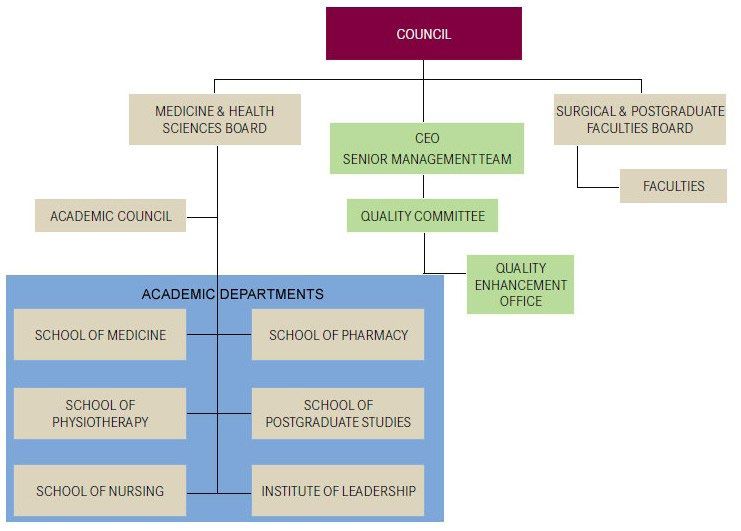
www.QQI.ie
Contents
Foreword iii
The Review Team iv
The Review Report
Section 1: Introduction and Context 1
Section 2: Institutional Self-Evaluation Report (ISER) 8
Section 3: Follow-up to the 2010 Review 10
Section 4: Quality Assurance and Accountability 15
Section 5: Quality Enhancement 28
Section 6: Review Objectives 34
Section 7: Conclusions 40
Appendices
Appendix 1: RCSI Review 2013 Terms of Reference 42
Appendix 2: Main Review Visit Timetable 80
Appendix 3: Overview of the Institutional Review Process 87
Appendix 4: Institution Response to the Report 90
iGlossary
GLOSSARY OF TERMS AND ABBREVIATIONS
A&QC Awards and Qualifications NAQQAET National Authority for Qualifications
Committee and Quality Assurance of
Education and Training, Bahrain
AC Academic Council
NARIC National Academic Recognition
AWG Assessment Working Group and Information Centres
CAA Commission for Academic NFQ National Framework of Qualifications
Accreditation, United Arab Emirates
NPIP National Pharmacy
CEO Chief Executive Officer Internship Programme
COSECSA College of Surgeons of East, NQAI National Qualifications
Central and Southern Africa Authority of Ireland
COWG Curriculum Outcomes Working Group NUI National University of Ireland
CPR Cardiopulmonary Resuscitation NUIM National University of
DCU Dublin City University Ireland, Maynooth
PDP Professional Development Planning
ESG Standards and Guidelines for
Quality Assurance in the European PEoT Peer Evaluation of Teaching
Higher Education Area
PI Principal Investigator
EWG Evaluation Working Group PMC Penang Medical College
FP7 Seventh EU Framework PRG Peer Review Group
Programme for Research and
Technological Development PSI Pharmaceutical Society of Ireland
HEA Higher Education Authority PU Perdana University
HEIs Higher Education Institutions QA/QI Quality Assurance/
Quality Improvement
HETAC Higher Education and
QC Quality Committee
Training Awards Council
QEO Quality and Enhancement Office
HPEC Health Professions Education Centre
QIP Quality Improvement Plan
HR Human Resources
QQI Quality and Qualifications Ireland
IHEQN Irish Higher Education
Quality Network RCSI Royal College of Surgeons in Ireland
IIP Irish Institute of Pharmacy REACH Recreation Education and
Community Health
IPE Inter-Professional Education
SAR Self-Assessment Report
IRWG Institutional Review Working Group
SLG Senior Leaders Group
ISER Institutional Self-Evaluation Report
SMT Senior Management Team
IUA Irish Universities Association
SPFB Surgery and Postgraduate
IUQB Irish Universities Quality Board Faculties Board
KPI Key Performance Indicator SSO Student Services Office
LLP Lifelong Learning Program TOR Terms of Reference
MCI Medical Council of Ireland UAE United Arab Emirates
MHSB Medicine and Health Sciences Board UCD University College Dublin
MQA Malaysian Qualifications Authority VLE Virtual Learning Environment
iiForeword
Foreword
The Qualifications and Quality Assurance (Education and Training) Act (2012) came into
effect on 5th November 2012 and Quality and Qualifications Ireland (QQI) was established
on 6th November 2012 as a new integrated agency replacing FETAC, HETAC, NQAI and
incorporating the functions of IUQB.
The 2010 Review by the Higher Education Authority (HEA) and National Qualifications
Authority of Ireland (NQAI) of the Royal College of Surgeons in Ireland (RCSI) in relation
to the commencement of its degree-awarding powers, confirmed the degree-awarding
powers and recommended, inter alia, that an external review of RCSI by the national quality
assurance body (established in the 2012 legislation) should take place no later than two
years from the time of the granting of awarding powers to the institution, and should, as
part of its remit, establish the level of implementation of the recommendations as set out in
the 2010 Review.
In May 2012, it was agreed that the NQAI executive should advance the preparations for
the review of RCSI and agree timelines for the review. Following the establishment of
QQI in November 2012 and the concomitant dissolution of the NQAI, preparations for the
Institutional Review of RCSI were further advanced by QQI.
The Review Team was appointed in May 2013. RCSI completed an Institutional Self-
Evaluation Report in August 2013. A planning visit by the Review Team took place at the end
of August. The main review visit took place in October 2013. This is the report of the findings
of the Review Team in relation to the objectives for the review as set out in the Terms of
Reference.
Disclaimer
The QQI Institutional Review process is designed to address only those objectives described in the Terms of Refer-
ence (included in Appendix 1).
The Review Team points out that it cannot make any findings regarding:
1. The financial standing and commercial viability of the Institution reviewed.
2. The Institution’s compliance with its general statutory obligations.
or
3. The general fitness of the Institution’s systems and arrangements for the governance and management of
financial matters.
4. Other matters not covered by the objectives set out in the Terms of Reference.
The Review Team’s report contains no assurances, warranties or representations, express or implied, regarding the
aforesaid issues or any other issues outside the Terms of Reference. While QQI has endeavoured to ensure that
the information contained in the Review Team’s report is correct, complete and up-to-date, any reliance placed
on such information is strictly at the reader’s own risk, and in no event will QQI be liable for any loss, damage or
consequence (including without limitation, indirect or consequential loss or damage) arising from, or in connection
with, the use of the information contained in the Review Team’s report.
iiiThe Review Team
The Review Team
The RCSI review was conducted by the following team of six reviewers selected by QQI in
2013. The Review Team was trained by QQI on 29 August 2013. The Chair and Co-ordinating
Reviewer undertook a Planning Visit to RCSI on 30 August. The Main Review Visit was
conducted by the full Team between 21 and 25 October 2013. QQI approved the release of
the RCSI reports for publication on 11 April 2014.
Professor Simon van Heyningen, Honorary Fellow and Emeritus Professor,
University of Edinburgh, Scotland (Chair)
• Vice Principal at the University of Edinburgh, 2003-2009
• Director of Quality Enhancement at the University of Edinburgh 1998-2009
• Vice Provost for Teaching in the Faculty Group of Medicine and Veterinary Medicine
from 1998-2002
• QAA Reviewer
• Auditor for the Council for HE in South Africa, Quality Assurance Authority in
Bahrain, and European Universities Association
• Direct knowledge and experience of HE quality in 10 countries
Dr Christiane Gaehtgens, Consultant specialising in governance and quality assurance
for universities and research institutes, Germany
• Former Secretary General of the German Rectors’ Conference
• Former Secretary General of the Research Council for Lower Saxony
• Director of Deutscher Akademischer Austausch Dienst (DAAD) - German Academic
Exchange Service, London and Head of the DAAD North America programmes
• Senior official in the German accreditation and quality assurance authority (HKO)
responsible for reviews of German universities 2003-2008
• Senior benchmarking expert for the European Centre for Strategic management in
Universities, Brussels
• Appointed as international expert to the Croatian Universities Quality Panel (AZVO)
• Direct knowledge and experience of HE quality in six countries and recently
participated in/chaired the Institutional Review of Zagreb and Zadar Universities
Professor James J Ward, Professor Emeritus,
National University of Ireland Galway (NUIG)
• Consultant on the BioInnovate programme at Cairnes School of Business and
Economics, NUIG
• Formerly NUIG Registrar and Deputy President for three years and a Professor of
Marketing for 30 years in NUIG
• Former Vice President for Physical Resources, including responsibility for Quality
Assurance and Quality Management function in NUIG for eight years
• External examiner in 6 national and international universities
• Board member of several regional businesses
• Member of Governing Authority of NUIG for 20 years
ivThe Review Team
Mr. Leon Cremonini, Research Associate at the Centre for Higher Education Policy
Studies (CHEPS) at University of Twente (UT), The Netherlands, working towards a PhD
through publications
• Research at CHEPS concentrates on quality assessment at the institutional and
programme level and on accreditation. Designed and conducted modules on the
topic at UT and abroad
• Graduated in International Political Science from the University of Bologna, Italy, in
2000
• Post-graduate diploma from Profingest School of Business, in Bologna - focusing
on European policies and research
• Worked at the RAND Corporation, first in the Netherlands, then at the headquarters
in Santa Monica, California from 2001-2005
Professor Charles F.A. Bryce, Professor Emeritus at Edinburgh Napier University
(former Head of School of Life Sciences and Dean of Science)
• Direct knowledge and experience of International Quality Audit and Assessment in
higher education
• Involved in formal Quality Audit and Teaching Quality Assessment (TQA) reviews in
UK and overseas
• Invited by British Council to introduce formal system of Quality Audit and
Assessment Reviews (QAAR) for Medical Schools in Bangladesh
• Developed the core curriculum in biochemistry for the medical universities in India
(UGC India)
• Chair of the Accreditation of forensic science programmes in the UK and Europe for
the Forensic Science Society
• Appointed International Expert for Accreditation of Higher Education Institutions in
Bosnia and Herzegovina
• Awarded a Tempus grant with the University of Pristina, Kosovo, for a project
entitled “Kosovo Interdisciplinary Knowledge Triangle Centre – PhD-Based
Education, Research and Training for Medical and Natural Sciences” (2009)
Mr Tony Platt, Assistant Director, Quality Assurance Agency for Higher Education (QAA),
UK (P/T) and Assistant Registrar, University of Essex, (P/T) UK (Co-ordinating Reviewer)
• Responsible for the development of the new QAA Institutional Review process for
Wales
• Secretary/Co-ordinator for QAA UK-based reviews since 1996, two QAA Overseas
Audits and reviews in Ireland and in Lithuania
• At the University of Essex, was responsible for the management of administrative
service reviews, validations and, until 1999, responsible for the whole of ‘Registry’
and faculty management functions
vvi
SECTION             1
                                                                 Introduction and Context

Section 1: Introduction and Context

The Royal College of Surgeons in Ireland
1.1   The Royal College of Surgeons in Ireland (RCSI), established in 1784 and granted
      a royal charter in 1844, is the second oldest third-level academic institution in
      Ireland. It is both a health sciences Higher Education Institution with Schools
      of Leadership, Medicine, Nursing, Pharmacy, Physiotherapy and Postgraduate
      Studies, and a Postgraduate Training Body in Surgery and related specialties.
      The College is unique in having this double role. It is one of four Royal Colleges of
      Surgeons in Great Britain and Ireland. RCSI established a School of Medicine in
      1886. RCSI became a Recognised College of the National University of Ireland (NUI)
      in 1978. In the decade from 1996 to 2006, RCSI underwent significant expansion
      through the establishment of additional Schools and Institutes on the Dublin
      campus, and of three international campuses (Penang Medical College, RCSI-
      Bahrain and RCSI-Dubai) as well as delivery of the RCSI medicine curriculum at
      Perdana University (PU). In 2011, RCSI entered into a licensing agreement with
      Perdana University (Kuala Lumpur, Malaysia) to establish the PU-RCSI School of
      Medicine.
1.2   RCSI is an independent, not-for-profit health sciences institution with charitable
      status in the Republic of Ireland. The institution operates a primarily self-funding
      model, with State funding accounting for less than 20% of total income. The
      model is based on the education of a substantial cohort of international students
      alongside Irish/EU students.
1.3   RCSI currently is the largest medical school in Ireland and awards medical degrees
      in Ireland, Bahrain and Malaysia. The RCSI School of Medicine is one of six medical
      schools in Ireland - the others are located in Cork, Dublin (Trinity College Dublin
      and University College Dublin), Galway and Limerick. RCSI provides undergraduate
      degree programmes in Pharmacy and Physiotherapy in Ireland, undergraduate
      Nursing degree programmes in Bahrain and Masters (both taught and by research)
      and doctoral programmes variously in Ireland, Bahrain, Dubai and Malaysia.
1.4   Following a Review by the Higher Education Authority and National Qualifications
      Authority of Ireland of RCSI in relation to the commencement of its degree-
      awarding powers (‘the 2010 Review’), RCSI was granted independent degree-
      awarding powers in 2010.
1.5   In 2012, RCSI launched the ‘3U Partnership’ in conjunction with Dublin City
      University (DCU) and the National University of Ireland, Maynooth (NUIM). The 3U
      Partnership provides a framework that assists in forging new solutions across
      disciplines including medicine, science, engineering, business, arts, humanities
      and social sciences and developing a range of joint degree programmes. The
      strategic alliance aims to address major research questions by working together.
1.6   Arising from its dual role, RCSI offers education and training at all career levels (i.e.
      undergraduate, postgraduate and professional) in medicine, surgery and related
      disciplines. The focus of this review is RCSI’s role as a higher education institution
      with degree-awarding powers and as a postgraduate training body.

                                                                                                  1
SECTION 1
Introduction and Context
1.7 Objectives of this review include:
-- the consideration of strategic planning, governance and ownership of quality
assurance and enhancement in the context of RCSI’s role as an independent
degree-awarding institution and the effectiveness of quality assurance
procedures;
-- the operation of internal quality assurance procedures and reviews that
are clear and transparent to all its stakeholders, and which provide for the
continuing evaluation of all academic, research and service departments,
national and transnational, and their activities, as outlined in Part 1 of the
Standards and Guidelines for Quality Assurance in the European Higher
Education Area (European Standards and Guidelines [ESG]);
-- the evaluation of the extent to which RCSI planning, structure and systems
support its responsibilities as an awarding body with qualifications
recognised by the National Framework of Qualifications (NFQ).
The Terms of Reference for this review, including the objectives and criteria, are
available in Appendix 1.
1.8 Senior staff provided evidence that they were confident that, overall, staff were
engaged with the processes for strategic planning and the management of change,
especially since 2010. Formal discussion and ratification takes place at Academic
Council. The Review Team heard that the Senior Leaders Group facilitates more
in-depth discussion around issues of strategic importance and helps to overcome
compartmentalisation. Open agenda question-and-answer coffee mornings are
held on a regular basis and these are well-attended. Heads of Schools confirmed
the close interaction between them and evidence was provided to demonstrate
interactions in faculty governance and input to strategic planning.
Governance
1.9 Under the terms of the Royal College of Surgeons in Ireland (Charters Amendment)
Act 2003 and earlier Royal Charters, the sole governing body of RCSI (the Council)
consists of 21 elected Fellows of the College. The Council elects a President and
Vice-President from among its number, both of whom serve two-year terms of
office. Arising from strategic reviews carried out in 2003 and 2005, a process to
examine internal governance structures had been underway for several years
prior to the 2010 Review. ‘Lay representatives’ were appointed to Council and its
Standing Committees and a Governance Committee of Council was established.
1.10 Council then established two new Boards to oversee the main educational, training
and research activities of RCSI – the Medicine and Health Sciences Board (MHSB)
and the Surgery and Postgraduate Faculties Board (SPFB) – and delegated its
overall authority to them, except for a number of reserved matters. In the new
structure, MHSB and SPFB are the governing bodies for degree and professional
awards respectively. The former ‘Faculty Board’ has been reconstituted as
Academic Council (AC) reporting to MHSB. The Schools of Medicine, Nursing,
Pharmacy, Physiotherapy and Postgraduate Studies and the Institute of Leadership
report through AC to MHSB. The Postgraduate Faculties (Dentistry, Nursing and
Midwifery, Radiology, Sports and Exercise Medicine and the Committee for Surgical
Affairs) are brought together under SPFB, although the Review Team learned from
2SECTION 1
Introduction and Context
discussions with Heads of Postgraduate Faculties that the faculties tended to
operate as relatively autonomous units (paragraph 1.16).
1.11 At the time of this review, in October 2013, the Council had agreed to the
establishment of a College Board to “provide oversight and constructive challenge
to management for all non-surgical matters in RCSI”. Whilst the Council would
remain responsible for overall governance and its members would remain as
trustees responsible to Fellows and Members, further non-executive members
to sit on the Board would be required to provide expertise in education, research,
business, finance and property.
1.12 The Review Team agreed that the formation of a College Board was a step in the
right direction, although it adds to the complexity of the current arrangements.
The Review Team encourages the College to proceed with its proposals to further
reform Council, and to develop as simple a structure as possible which avoids
duplication and facilitates greater transparency. There should be a much clearer
separation between the Surgical College functions and the ‘Medical School’. The
RCSI Council itself should retain a trustee function for the medical school whilst
continuing to act as “a voice for Irish surgeons”.
1.13 The Review Team met the CEO and members of the Council and formed the opinion
that, although considerable progress had been made, the governing structure
remained over-complicated and not suited to the College’s wide remit. It should
be reviewed and revised to ensure clarity of role and purpose. Restructuring of
the Council would require an Act of the Oireachtas and the Review Team noted the
need to proceed with reasonable caution before bringing fully-developed proposals
forward.
1.14 The Review Team recommends that RCSI proceeds with its proposals to reform
and simplify the structure of its Council and precedes this with a process of
briefing politicians, senior civil servants and the Higher Education Authority
(HEA) about its intentions and the requirements for change
1.15 The Review Team recommends that clearer separation be established between
the governance of RCSI’s Surgical College functions and that of its health
professions education activities, whilst retaining RCSI’s trustee function for the
whole institution through its Council
1.16 As noted above, the Review Team had observed that the individual postgraduate
faculties have more autonomy relative to SPFB. The reasons for this varied
between faculties. In discussions with the Heads of the Postgraduate Faculties,
it was clear that, as a primarily training body at postgraduate level, the
faculties have a strong quality culture deriving in part from their relationships
with their professional bodies and their regulatory structures. The faculty
board was described as having limited authority, being more of a structure to
facilitate communication across what are independent faculties. RCSI’s Quality
Enhancement Office (QEO) involvement with the postgraduate faculties is primarily,
but not exclusively, concerned with the scheduling of reviews. Whilst there is clearly
a good relationship between the faculties and between them and QEO, the Review
Team felt that both RCSI overall and the individual faculties might benefit from a
closer relationship and the exchange of information on curriculum design and good
practice.
3SECTION 1
Introduction and Context
1.17 The Review Team recommends that the role of the Surgical and Postgraduate
Faculties Board and the relationship of the postgraduate faculties to the Board
be reviewed to facilitate closer integration of processes and procedures in
quality assurance, curriculum design and the dissemination of good practice
Organisational Structure
1.18 RCSI’s headquarters are in Ireland with a network of international campuses
located in the Gulf and Malaysia. The Dublin campus accommodates the Faculty
of Medicine and Health Sciences and its component Schools and Institutes. It
also accommodates the Postgraduate Faculties. The Irish Institute of Pharmacy
(IIP), which is under contract to the statutory regulatory body for Pharmacy, the
Pharmaceutical Society of Ireland (PSI), is currently being established at RCSI.
1.19 A number of hospitals in Ireland are affiliated to RCSI and these provide
opportunities for clinical training, as well as subsequent employment
possibilities in many cases. Beaumont Hospital Campus and Connolly Hospital,
Blanchardstown are located in Dublin, together with a total of five paediatric and
maternity hospitals, and other hospitals are located within the North Eastern
Regional Cluster in Cavan, Drogheda, Dundalk, Monaghan and Mullingar, and in the
rest of Ireland in Kilkenny, Waterford and Galway.
1.20 RCSI has three international campuses: Bahrain; Dubai; and Penang, Malaysia. At
Bahrain (established in 2004), a branch campus of RCSI is now located adjacent
to the King Hamad University Hospital. RCSI-Bahrain delivers programmes
in medicine, nursing and healthcare management. Whilst RCSI-Bahrain is
categorised by the College as non-collaborative transnational provision, it is
also licensed as an independent university and designated awarding body in the
Kingdom of Bahrain and subject to Bahraini legislation and quality assurance
processes. RCSI-Dubai (established in 2005), located in Dubai Healthcare
City, offers postgraduate education, training and consultancy in leadership,
management and patient safety and quality. RCSI-Dubai is also categorised by
RCSI as non-collaborative transnational provision.
1.21 The provision at the two locations in Malaysia is categorised as collaborative
transnational provision. Penang Medical College (PMC) was established by RCSI
and University College Dublin (UCD) in 1996 and students spend their pre-clinical
years in either RCSI or UCD in Dublin before returning to Penang to complete
their clinical studies. The Perdana University-RCSI School of Medicine is based at
Perdana University and has been established as part of a much larger project, the
Kuala Lumpur Academic Medical Centre.
Management Structure
1.22 RCSI is managed by the Chief Executive Officer (CEO), supported by a seven-person
Senior Management Team comprising the Dean of the Faculty of Medicine and Health
Sciences, the Director of Corporate Strategy, the Director of Finance, the Director
of Human Resources, the Managing Director of the Department of Surgical Affairs,
the Director of Research and the Acting President of RCSI-Bahrain. The Heads of all
schools within the Faculty of Medicine and Health Sciences report to the Dean.
4SECTION 1
Introduction and Context
1.23 The Institutional Self-Evaluation Report (ISER) described the management
structure for the overseas campuses. The Review Team noted that, in 2010, a
Director of Corporate Strategy (paragraph 3.5) was appointed, and established
‘RCSI Enterprises’ as a unit to support the Senior Management Team in identifying
and evaluating potential new international opportunities. RCSI Enterprises acts
effectively as the ‘gatekeeper’ for new overseas ventures. The services provided by
RCSI Enterprises include:
-- developing appropriate international strategies and business models,
-- identifying suitable markets, potential partners and operational models,
-- evaluating opportunities,
-- negotiation and management of new projects to implementation.
1.24 The role of the Quality Enhancement Office (QEO) (paragraph 3.7) is described
as being “to support the implementation of the RCSI’s Quality Assurance/Quality
Improvement (QA/QI) strategy by co-ordinating all relevant activities and by
collecting the data needed to allow the Quality Committee to quality assure
all aspects of programme delivery”. The QEO is staffed by a Director, Associate
Director and an Executive and it reports directly to the CEO as Chair of the Quality
Committee, in itself an indication of the priority afforded to quality assurance and
improvement in the overall management of RCSI. In addition to quality assurance
within RCSI, which includes assistance in the preparation for accreditation
visits by professional regulatory authorities, the QEO assists colleagues in the
overseas campuses in the preparation for, and response to, site visits by the local
professional regulatory and quality assurance authorities.
1.25 During meetings with the President, the CEO, members of Council and members
of the Senior Management Team (SMT), the Review Team was provided with clear
evidence of the strong leadership, in particular of the CEO as well as members
of SMT and officers of the QEO, not only in managing the institution but also
in addressing the challenges which face the College including programme
management as well as managing the cultural and political challenges across the
campus network.
1.26 The Institutional Self-Assessment Report submitted to the External Review
Panel for the 2010 Review described the significant level of quality assurance/
quality improvement (QA/QI) activities ongoing within RCSI and presented plans
for the creation of structures to provide central co-ordination and communication
functions for these activities. While recognising the existing quality culture within
RCSI, the 2010 Panel had emphasised the importance of a formal QA/QI structure
and urged RCSI to implement the planned measures.
1.27 The 2010 Review Report acknowledged this strong quality culture which already
existed within RCSI and the Review Team was able to confirm this and in particular
the strong leadership to facilitate the significant steps already made to strengthen
the formal quality assurance/quality improvement structures. Staff across the
institution paid tribute to the strength of leadership.
1.28 The Review Team commends the leadership and foresight of RCSI in promoting
and further strengthening the quality culture and processes throughout the
College
5SECTION 1
Introduction and Context
1.29 The 2010 Review Report recommended that RCSI should consider changing the
title of CEO/Registrar ‘to a title more in keeping with comparable positions in other
Irish HEIs’. In the short-term the term ‘Registrar’ has been removed from the title.
The Review Team, in considering the responsibilities of the CEO and the likely
development of the governance arrangements, suggests that the title ‘Rector’ - a
term widely used in European universities - would be appropriate.
1.30 The Review Team recommends consideration of the title ‘Rector’ for the CEO
1.31 The 2010 Review Report made a series of recommendations including the
operation and management of RCSI, its education and training programmes,
research activities, participation in the Bologna process and the implementation
of related national policies. The College’s response to those recommendations is
considered in detail in Section 3 of this report. Significant developments since
publication of the 2010 Review Report include:
-- the establishment of the PU-RCSI School of Medicine,
-- the ‘3U Partnership’ with Dublin City University and NUI Maynooth,
-- the development of the Strategic Plan 2013-2017 after a period of intense
consultation,
-- the establishment of QEO and its branch office in Bahrain,
-- the development of the Quality Assurance Handbook,
-- the introduction of the Quality Committee and development of quality policy
and QA/QI procedures
-- the first QA/QI review of an international campus.
All these developments have taken place against a backdrop of relative austerity
as a result of the national economic downturn. RCSI is the only degree-awarding
body in Ireland which is not publicly funded and this has been an additional factor.
Commendations
The Review Team commends
-- the leadership and foresight of RCSI in promoting and further strengthening
the quality culture and processes throughout the College
6SECTION 1
Introduction and Context
Recommendations
The Review Team recommends
-- that RCSI proceeds with its proposals to reform and simplify the structure
of its Council and precedes this with a process of briefing politicians, senior
civil servants and the Higher Education Authority (HEA) about its intentions
and the requirements for change
-- that clearer separation be established between the governance of RCSI’s
Surgical College functions and that of its health professions education
activities, whilst retaining RCSI’s trustee function for the whole institution
through its Council
-- that the role of the Surgical and Postgraduate Faculties Board and the
relationship of the postgraduate faculties to the Board be reviewed
to facilitate closer integration of processes and procedures in quality
assurance, curriculum design and the dissemination of good practice
-- consideration of the title ‘Rector’ for the CEO
7SECTION 2
Institutional Self-Evaluation Report (ISER)
Section 2: Institutional Self-Evaluation Report (ISER)
Development of the Self-Evaluation Report
2.1 Following the recommendation of the 2010 Review, that an external review of RCSI
by the national quality assurance body should take place no later than two years
from the time of the granting of degree-awarding powers to the College, RCSI
submitted Annual Institutional Reports to the National Qualifications Authority
of Ireland (NQAI), and its successor body Quality and Qualifications Ireland (QQI).
Between January 2012 and January 2013 Terms of Reference for the Review were
developed and preparations for the review commenced within RCSI in January
2013 (see Appendix 1 for the Terms of Reference for this review).
2.2 In its Institutional Self-Evaluation Report (ISER), RCSI described the arrangements
for establishing an Institutional Review Working Group (IRWG) responsible for the
preparation of the report and accompanying documents. It was constituted in
March 2011 as a standing sub-committee of the RCSI Quality Committee. It also
monitored implementation of the Action Plan developed by RCSI in response to the
2010 Review Report (see Section 3).
2.3 The Review Team noted that preparation of the ISER by RCSI was completed in
several stages, including an analysis of implementation of the Degree Awarding
Status Action Plan, staff surveys, use of ‘end-of-semester’ student evaluation
surveys, the thematic analysis of internal reviews carried out in 2011-2012, and
consultation with internal and external stakeholders. The ISER was drafted by
members of the IRWG, supported by the QEO, prior to review and ‘sign-off’ by the
Senior Management Team and the implementation of a QEO Communications
Strategy for the review.
2.4 The IRWG commissioned two staff surveys:
i) of staff in academic and administrative support units that were subject to
Internal QA/QI Review by the QEO in 2011 and 2012 to gauge attitudes to, and
perceptions of, the review process,
ii) a survey of all RCSI-Dublin staff, which included questions to gauge broader
perceptions of quality issues among staff.
Student end-of-semester evaluation surveys, focusing on indices of student
satisfaction represented the views of current students in all undergraduate
programmes in Dublin, Bahrain and Malaysia. Use was also made of the RCSI
Student Experience Survey 2013, completed during April-May 2013. This survey
enjoyed a 48% response rate and generated a significant quantity of data which
was made available to the Review Team.
2.5 The QEO conducted meetings with internal and external stakeholders to gather
views on issues arising from the 2010 Review Report and its recommendations, to
confirm the implementation status of Action Plan actions and to source relevant
supporting documents. The stakeholder groups comprised Senior Management,
Heads of Faculties, Schools and administrative functions, ‘lay’ representatives on
the RCSI governing bodies and representatives of statutory regulatory bodies and
advocacy groups.
8SECTION 2
Institutional Self-Evaluation Report (ISER)
2.6 A communications strategy was developed around the Institutional Review process
and has been implemented since February 2013. This comprised formal briefings
for the Council, Academic Council, MHSB and SPFB and their preparation for the
Review Team site-visit and communication with the staff and student bodies
through regular emails at key stages and information on the staff portal, Moodle
and the RCSI website. Updates were also provided to staff in ‘town hall’ meetings
convened from time to time by the CEO.
2.7 The Review Team met members of the Quality Assurance Team and the Quality
Committee. The Review Team was impressed with the quality of the ISER and
accompanying documentation which had been presented to it. The Review Team
formed the opinion that RCSI had developed an efficient and effective process to
prepare for the Institutional Review and for engaging staff across the institution in
this process.
9SECTION 3
Follow-up to the 2010 Review
Section 3: Follow-up to the 2010 Review
General
3.1 Following the 2010 Review Report which had recommended that an external review
take place no later than two years from the time of the granting of degree-awarding
powers to the College (see paragraph 1.4), RCSI developed an Action Plan. It also
submitted Annual Institutional Reports to the National Qualifications Authority of
Ireland (NQAI), and its successor body Quality and Qualifications Ireland (QQI). A
copy of the Action Plan, with the current status of the actions, was made available
to the Review Team. RCSI also provided an updated commentary on the status of
actions categorised as ‘In Progress’ or ‘Continuing’.
3.2 The Review Team was aware that, as part of its remit, it should establish the
level of implementation of the recommendations and came to the view that
considerable progress had been made. The current position is summarised below.
Follow-up Actions on Governance and Management
3.3 RCSI reported that new Boards of Medicine and Health Sciences and Surgery and
Postgraduate Faculties were established early in 2011 and relevant powers of
Council had been delegated to them. Governance training had been scheduled,
which subsequently took place.
3.4 A Governance Committee (a sub-committee of Council) continues to meet and
is developing governance proposals which will form the basis of a Private Bill
for enactment by the Houses of the Oireachtas in due course. As part of its on-
going work, the Governance Committee is carrying out a review and analysis
of governance models in comparable institutions and has also engaged in
consultations with other institutions in order to identify suitable governance
models. The Bill will provide for changes in the composition of Council, the election
of members and its role and remit. Meanwhile, as an interim measure, a College
Board was established in October 2013 (paragraph 1.11). The title of RCSI ‘CEO/
Registrar’ has been amended to omit ‘Registrar’ and the Council is currently
considering alternative titles (paragraph 1.29).
3.5 A formal Resource Allocation Strategy and a formal policy for a centralised
international strategy have been developed. A Director of Corporate Strategy
has been appointed with responsibility for strategic financial planning both in
Ireland and overseas (in collaboration with the Director of Finance). The Director
of Corporate Strategy is supported by a team of business, property and financial
experts who are engaged on a consultancy basis. The updated Institutional
Strategy (paragraph 4.2) was completed in 2012.
3.6 A complete review of RCSI’s interactions with its alumni is in progress, led by
the newly appointed Associate Director of the Alumni Office. This includes
consideration of on-going communication with alumni, involving alumni overseas
as local advisors and points of contact for students engaged in electives and (in
conjunction with the Development Office) the development of targeted fundraising
initiatives. Funds are currently being raised for the development of RCSI library
facilities.
10SECTION 3
Follow-up to the 2010 Review
3.7 The Quality Enhancement Office (QEO) was established in 2010 and a Director,
Associate Director and Executive, responsible to the CEO of RCSI, were appointed
in 2010. An interim central Registry function was created in 2011. Implementation
of policies, procedures and operations commenced on a phased basis in 2011. The
remit of the office now covers both the Medicine and Health Sciences Board and
the Surgery and Postgraduate Faculties Board (paragraph 1.10).
Follow-up Actions in Education and Training Programmes
3.8 Following the establishment of the QEO, a communications plan was established
including a substantial presence for the QEO on the staff portal and Moodle for
students; both platforms include QEO and Quality Committee (QC) documents,
particularly detailed reports on the quantitative data generated by the end-of-
semester evaluation surveys and the RCSI website in the public domain, together
with podcasts and occasional general information (‘town hall’) meetings. The
outputs from the RCSI programme of Internal QA/QI are published on the QEO
pages of the RCSI website.
3.9 An online Quality Assurance/Quality Improvement handbook has been established
and RCSI is a member of the Irish Higher Education Quality Network (IHEQN).
The QEO manages RCSI’s internal review process of schools, non-academic
departments and services, which now includes representation from other higher
education institutions.
Follow-up Actions on Assessment
3.10 The Assessment Working Group (AWG) is currently co-ordinating a project
in which all Schools within the Faculty of Medicine and Health Sciences are
producing Assessment Strategy documents, Marks and Standards documents
and Assessment Guides for students using a common set of templates. These
documents are being developed for submission to and approval by Academic
Council and MHSB within the academic year 2013-2014.
3.11 The College reports that the linkage of high-level curriculum learning outcomes
to the NFQ level descriptors is continuously reviewed by the Awards and
Qualifications Committee, both in the context of programmatic review and the
validation of new programmes. The linkage of learning outcomes to programme
delivery and assessment are standing items of business for all programme
governance committees within RCSI.
Follow-up Actions in Staff Development
3.12 The newly-established Health Professions Education Centre (paragraph 5.10)
offers workshops for academic staff on a wide range of aspects of curriculum and
assessment. Work is underway to formalise these in a structure that will allow
staff to complete a Postgraduate Certificate in Education.
3.13 In addition to lecturer support measures already in place, an MSc in Leadership
in Health Professions Education is being run by the Institute of Leadership and
is now in its third year of operation. The Human Resources (HR) Department has
developed a staff competence framework and has appointed a Learning and
Development Manager to facilitate the roll-out of staff development programmes,
11SECTION 3
Follow-up to the 2010 Review
which will focus on broader aspects of staff learning and development.
3.14 A pilot programme on Peer Evaluation of Teaching (PEoT) was run during 2012-
2013; this was well-received by staff and is intended to serve as a working model
for implementation of PEoT college-wide. A PEoT Committee was established to roll
out this programme.
3.15 The 2010 Review concluded that RCSI’s HR policy on recruitment was fully
compliant with Irish and EU legislative provisions around Equality and Diversity,
including gender, and includes measures to prohibit gender bias in recruitment and
promotions. Through meetings and discussions, the Review Team was satisfied
that this continues to be the case.
Follow-up Actions on Student Feedback
3.16 RCSI reported that the Evaluation Working Group co-ordinates a sophisticated
system for the collection of student evaluation data, semester-by-semester, across
all programmes and campuses, and for reporting that data in a timely fashion to
students and staff, particularly module co-ordinators and programme directors.
Follow-up Actions in Management Information
3.17 The QEO has co-ordinated a programme of work to identify a set of metrics
and key performance indicators (KPIs). A set of metrics has been identified and
refined and will be discussed by Senior Management, the Senior Leaders Group
and the governing boards for discussion and approval later in the academic year
2013-2014. Metrics and KPIs will be used to produce regular ‘status reports’
and to monitor implementation of the Strategic Plan 2013-2017. The Associate
Director of QEO is a member of the Institutional Research Officers Group of the
Irish Universities Association (IUA) and this is expected to facilitate greater co-
ordination with the sector and the sharing of knowledge/expertise.
3.18 The Review Team was satisfied that RCSI’s policies and procedures in relation to
management information are compliant with the requirements of Part 1: ESG.
Follow-up Actions in Research Activities and their Relationship to
Programmes of Education and Training Leading to Awards at Masters
and Doctoral level
3.19 A new Director of Research was appointed in 2012 and the Research Strategy
(paragraph 4.25) was revised in parallel with the creation of the overall RCSI
Strategy 2013-2017. The Research Strategy complements and supports the
RCSI-Bahrain Research Strategy. An MSc in Health Research (Public Health) has
been launched at Penang Medical College (PMC). The College expects that this
development, occurring in parallel with the opening of a Cochrane Review Centre at
PMC, will serve as a useful stimulus to develop research at PMC. A single Research
Committee was established to ensure centralised decision-making in the area of
research.
3.20 As part of efforts to support research-active staff to acquire funding, a Senior
Research Project Officer has been appointed specifically to assist staff in the
preparation of multi-centre (especially EU) funding proposals. The Principal
12SECTION 3
Follow-up to the 2010 Review
Investigator (PI) Forum has been launched as a forum for exchange of ideas among
researchers at RCSI and to provide targeted assistance through internal peer-
review of funding proposals. A ‘seed-funding’ programme has been implemented
to provide moderate grants to researchers to allow them to collect sufficient
preliminary data to support a funding proposal.
3.21 The RCSI Research Office has defined a set of KPIs to allow RCSI to measure and
report on its research outputs; these are included in the overall ‘dashboard’ of
metrics / KPIs being implemented by the QEO (paragraph 3.17).
3.22 The focused support around collaborative international research proposals within
RCSI has been instrumental in the award of several large FP7 grants (Seventh EU
Framework Programme for Research and Technological Development) to consortia
of researchers involving RCSI staff members, whilst the 3U Partnership (paragraph
4.17) has already resulted in a significant number of collaborations between the
three institutions (RCSI, DCU and NUIM).
Increasing Participation in the Bologna Process and the
Implementation of Related National Policies
3.23 RCSI established a Bologna Committee in early 2011 to promote and develop
awareness of the Bologna Process within the College. The College reports that
the Awards and Qualifications Committee has placed the key Bologna Action
Lines - modularisation, correctly specified learning outcomes, ECTS credits and
transferability - at the centre of its standards for programme approval and review.
The on-going work to upgrade the ‘Quercus’ Student Information System includes
the automated generation of Diploma Supplements for all students in conformity
with the Bologna specifications (paragraph 6.9). Diploma Supplements are issued
to students currently on a request basis.
3.24 RCSI is a member of the Irish Higher Education Quality Network (IHEQN) and
the Director of QEO was a member of the Working Group that produced the 2013
IHEQN ‘Guidelines for the Approval, Monitoring and Review of Collaborative and
Transnational Provision’. RCSI engages with QQI, and engaged with its predecessors
NQAI and HETAC, in the context of their national consultation on the alignment of
professional awards with the NFQ.
3.25 A RCSI International Officer has been appointed with responsibility for all RCSI
international mobility activities including those of the Erasmus Lifelong Learning
Program (LLP) and Erasmus Mundus. A stated priority objective is to stimulate
outgoing mobility for both students and staff and the main priority of the RCSI
International Office is to expand the awareness of the Erasmus Project among the
student and staff cohort. The College aims to have at least 20% of its students
completing some part of their studies abroad by 2020.
3.26 The College stressed that student mobility activities take place in several areas,
other than Erasmus. A student exchange programme takes place between RCSI-
Dublin and RCSI-Bahrain and many undergraduate students complete elective
modules outside Ireland in the UK, Canada, US and around the developing world.
3.27 When advice is necessary, RCSI avails of the services of NARIC in comparing
overseas and Irish qualifications in the context of undergraduate and postgraduate
student admissions.
13SECTION 3
Follow-up to the 2010 Review
3.28 The College has also engaged with the relevant statutory accrediting bodies in
relation to programmes offered in the overseas campuses. The Medical Council
of Ireland (MCI) has determined that its legal remit extends to all medical
programmes offered by Irish providers, wherever situated. The Nursing and
Midwifery Board of Ireland, however, has determined that its remit is limited to
the Republic of Ireland. The Review Team learned that RCSI has had preliminary
discussions with the statutory bodies with a view to developing collaborative
approaches, such as hybrid institutional reviews /programmatic reviews/
accreditations both in Ireland and on overseas campuses.
3.29 Staff at RCSI made frequent references to being “on a journey”. The Review Team
formed the view that RCSI had made considerable and commendable progress on
that journey and concluded that RCSI’s response to the recommendations of the
2010 Review had been both appropriate and timely.
14SECTION 4
Quality Assurance and Accountability
Section 4: Quality Assurance and Accountability
Strategic Planning and Quality Assurance
4.1 A key recommendation arising from the 2010 Review was to update the Institution’s
strategic plan. The ‘Senior Leaders Group’ (SLG) was established including the
Senior Management Team (SMT), faculty officers, heads of schools and heads of
administrative functions. This group played an important role in supporting SMT in
shaping the strategy and has subsequently continued to meet on a quarterly basis
and is felt to be a very useful cross-institution discussion forum.
4.2 The ISER states that “the RCSI quality policy supports, informs and responds to the
College’s Institutional Strategy, identifying as core values of RCSI the quality of the
student experience, continuous quality enhancement in all our activities and in the
quality of our contribution to our stakeholders and to the communities in which we
work across the world”.
4.3 The Review Team had noted the steps taken by RCSI to ensure that it was
cognisant of the standards set out in Part 1: ESG (paragraphs 6.9 - 6.12) and was
satisfied that RCSI’s policies and procedures in relation to quality assurance were
consistent with these Guidelines.
4.4 In meetings, staff stressed the value of quality assurance and their belief that
the successes of RCSI were very much founded on quality, and future financial
viability in a very competitive market would be dependent on quality. Since being
granted degree-awarding status (2010 Review), the approach has been formalised;
quality assurance and quality improvement were regular substantive items on
committees; and others spoke of the necessary dynamic tension between making
sure, by tracking, that the quality culture is real whilst avoiding undue bureaucracy.
4.5 The Quality Committee (QC) is responsible for the creation of policy and for the
implementation of quality processes and QA/QI activities across the academic
and administrative areas on all campuses, and this committee reports to both
the MHSB and the SPFB. The Quality Committee also supports the international
campuses of RCSI in their interactions with QA/QI structures and processes,
both locally and centrally within RCSI itself. An RCSI-Bahrain Quality Assurance
Committee, chaired by the Acting President of RCSI-Bahrain, was established in
2011. Similarly, a Quality Assurance Committee has been established in Perdana
University-RCSI School of Medicine, chaired by the Foundation Dean.
4.6 The Awards and Qualifications Committee (A&QC) was established early in 2012
and has been delegated authority and operational responsibility by the MHSB to
evaluate and consider all programmes which fall under the National Framework of
Qualifications (NFQ) for approval, accreditation and periodic review. The committee
sets standards for programme accreditation, overseas programme accreditation
and a rolling cycle of programmatic reviews in accordance with best practice and
in collaboration with NUI, the RCSI Quality Enhancement Office (QEO) and other
relevant stakeholders.
4.7 The ISER describes the role of the QEO as acting as the executive function of the
Quality Committee and of its sub-committees. The QEO also co-ordinates and
supports the work of the IRWG and of three sub-committees of Academic Council:
15SECTION 4
Quality Assurance and Accountability
-- the Assessment Working Group (AWG),
-- the Curriculum Outcomes Working Group (COWG),
-- the Evaluation Working Group (EWG).
Officers of the QEO also undertake external consultancy work and participate in
external quality assurance activities.
4.8 The Team met representatives from the Quality Enhancement Office from Bahrain,
which works in conjunction with the Dublin QEO, not only in co-ordinating internal
QA/QI initiatives and reviews, but also complying with the statutory requirements
and quality assurance processes of the Bahraini authorities. The quality assurance
processes for RCSI-Dubai and the Commission for Academic Accreditation of the
United Arab Emirates are managed by RCSI-Dublin’s Institute of Leadership. The
Manager of Programme Accreditation and Development at Penang Medical College
(PMC) reports on quality matters to QEO and also co-ordinates PMC participation
in Institutional Review and Programme accreditation processes of the Malaysian
Qualifications Authority as well as accreditation processes of both the Malaysian
and Irish Medical Councils. In Perdana the University’s Quality officer provides
administrative support.
4.9 The Review Team noted the progress which has been made since the
establishment of the Dublin QEO. The Team learned from the ISER and from site
visit meetings that RCSI’s approach to quality, as outlined in its Quality Policy
2011, focuses on the fact that the College’s ability to deliver effectively on the
mission and vision depends crucially on an all-pervasive culture of quality in which
responsibility for the quality of the student experience, and for continuous quality
enhancement, is shared by all staff.
4.10 The Review Team became aware during site visit meetings of the strong role being
played by the Dublin QEO and its officers. The ISER described clearly the Quality
Governance Structure, showing the linkages between deliberative and operational
structures, between SPFB and MHSB and the Quality Committee, and Academic
Council and its sub-committees and from the CEO to QEO respectively.
4.11 The Review Team commends the proactive role of the Dublin QEO in driving
forward quality initiatives and putting into operation a formal Quality
Assurance/Quality Improvement structure
4.12 In addition to RCSI’s quality assurance of programmes leading to degree
qualifications, its postgraduate faculties are involved in the administration
of a range of postgraduate professional examinations in Surgery and related
specialities. These examinations determine entry to higher specialist training. All
of the professional examinations employ quality assurance procedures concerned
with curriculum review, test item development, data analysis including standard
setting, and reporting, in particular the use of external examiners and reciprocal
arrangements with the other Royal Colleges of Surgeons.
4.13 The Review Team observed that the engagement of the postgraduate faculties
with QEO was fairly restricted and felt that both the faculties and RCSI itself would
benefit from a closer involvement, particularly to facilitate the dissemination of
good practice both between faculties and across faculties and schools.
16SECTION 4
Quality Assurance and Accountability
4.14 The Review Team recommends that RCSI explore closer co-operation between
the QEO and the postgraduate faculties to provide further opportunities for the
dissemination of good practice across and between the professional institutions
and the College
4.15 The Review Team noted the role of the QEO in institutional research, specifically
the routine collection and analysis of institutional data about quality. This
included the end-of-semester student evaluation surveys and other student-
facing surveys - for example, the 2013 Student Experience Survey, staff surveys
and bespoke surveys as required [e.g. the 2013 survey of staff of academic and
administrative units subject to Internal QA/QI Review in 2011-2012]. It is also
developing, in consultation with RCSI SMT and internal stakeholders, the QEO
range of institutional metrics for routine monitoring of RCSI activities and outputs
and metrics for the implementation of the RCSI Strategic Plan 2013-2017. It has
also conducted analyses of student progression, particularly within the School of
Medicine. The Quercus student records management system is currently being
upgraded to facilitate this kind of work.
Partners and External Stakeholders
4.16 In discussions with external stakeholders, emphasis was placed on the quality of
training - hospital patients are the beneficiaries of the service provided by high
quality students and subsequently graduates including, for example, graduate
entry and placements which can give new energy and impetus in a hospital. The
development of quality assurance systems impacted on the hospitals through
the work of teaching staff and training staff rather than directly on hospital
management although this gave hospital management greater assurance and the
opportunity for feedback by them to RCSI.
4.17 The Review Team noted the opportunities being presented by the establishment of
the 3U Partnership between RCSI, DCU and NUIM to exploit the synergies between
the three institutions not only to develop new degree programmes and joint
research initiatives but to collaborate in the area of quality assurance and benefit
from the dissemination of good practice - for example, in programme evaluation,
accreditation and review. Agreement has been reached between the partners that
all new programmes will be evaluated for accreditation as joint degrees, and that
the responsibility for programmatic review will lie with the ‘lead institution’ on each
programme.
Dissemination of Quality Assurance Information to Students, Staff and
the Public
4.18 The 2010 Review had emphasised the importance of communicating to staff and
students at RCSI (both in Ireland and on all the international campuses) the role
and remit of the Director of Quality Enhancement and of the QEO. The QEO avails
of a number of mechanisms to communicate with staff, students and the public
domain, as described above (paragraph 3.8). The Review Team was satisfied that
RCSI’s processes for the dissemination of public information were consistent with
Part 1: ESG (paragraphs 6.9 – 6.12).
17You can also read


