ANNUAL QUALITY ACCOUNTS 2019-2020 - DORSET HEALTHCARE
←
→
Page content transcription
If your browser does not render page correctly, please read the page content below
Annual Quality Accounts 2019-2020
PART ONE                                                                            5
Statement on quality of the healthcare services provided from the Chief Executive   5
Declaration of Accuracy                                                             6
PART TWO                                                                            8
Priorities for Improvement and Statements of Assurance from the Board               8
Quality Improvement Priorities 2019/20                                              9
Patient Experience                                                                  9
Patient Safety                                                                      10
Clinical Effectiveness                                                              11
Quality Improvement Priorities 2020/21                                              14
Patient Experience                                                                  15
Patient Safety                                                                      15
Clinical Effectiveness                                                              15
Quality Improvement – Sign up to Safety Campaign                                    16
Pressure Ulcers                                                                     17
Promoting Positive and Proactive Practice to Reduce Restrictive Intervention        18
Deteriorating Patient and Sepsis                                                    19
Suicide Prevention                                                                  20
Falls                                                                               22
Safe Medication                                                                     23
Learning from Deaths - Mortality                                                    26
Celebrating Success                                                                 27
Dorset HealthCare the first “outstanding” trust of its kind in the South            27
Online mental health support for children and young people                          28
Harry Redknapp unveils Swanage Hospital’s new radiology department                  29
Access Mental Health provides 24/7 help for people struggling to cope               30
Sherborne’s community hospital wins national award                                  31
A decade of ‘Steps’ towards better mental health                                    32
New van offers refuge and support to people on the streets                          33
Bridport Hospital opens new-look inpatient ward                                     34
Dorset radiology departments celebrate national recognition                         35
Young people are given a helping hand into adult life                               36
Duty of Candour                                                                     37
Freedom to Speak Up / Whistleblowing                                                38
Statement of Assurance from the Board 2019/20                                       39

                                            Page 2 of 87
Review of Services                                                             39
Participation in Clinical Audits and National Confidential Enquiries           43
Participation in Clinical Research                                             46
Commissioning for Quality and Innovation (CQUIN) Framework                     47
Meeting Care Quality Commission Fundamental Standards                          50
Trust Ratings 2019/20 by core service and quality domain                       52
Registration with the Care Quality Commission (CQC)                            55
Staff Survey                                                                   56
Quality of Data                                                                59
Information Governance                                                         59
Information on Payments by Results                                             59
Performance against the key national priorities – Quality Indicators 2019/20   61
PART THREE
Quality Indicators 2019/20                                                     65
Patient Experience                                                             67
Patient Safety                                                                 67
Clinical Effectiveness                                                         67
Performance against key national quality indicators                            70
How to contact us                                                              73
Join us a member and have your say in our future plans                         73
Check out our website                                                          73
ANNEX 1
Feedback from our stakeholders                                                 72
Comments by the Council of Governors                                           72
Comments from Dorset Health Scrutiny Committee                                 74
Comments from Dorset Clinical Commissioning Group                              75
Comments from Healthwatch Dorset                                               76
ANNEX 2
Statement of Directors’ Responsibilities                                       77
ANNEX 3
Definition of Indicators                                                       80
Quality Report - Limited Assurance Report                                      82
GLOSSARY OF TERMS                                                              83

                                            Page 3 of 87
PART ONE
STATEMENT ON QUALITY OF THE HEALTHCARE SERVICES PROVIDED FROM THE CHIEF
EXECUTIVE OF THE TRUST
This year we reviewed our Trust strategy and reconfirmed our
number one priority is to provide outstanding quality services.
Achieving an overall rating of ‘outstanding’ from the Care
Quality Commission in summer 2019 was just the beginning –
we are determined to continue our relentless focus on
providing the best quality services for the people we serve.
This includes reducing harm, variation and transforming our
services, making best use of new technologies. Our Quality
Improvement ethos and drive is already having an impact,
encouraging creativity, innovation and learning.
Our second strategic ambition is to support people in living healthy lives. We are taking a
population-based approach to planning our services, working in partnership with others in the
health and care system. Local people will be much more involved in identifying their priorities
and co-producing the services they need with us. As people are empowered to be in control of
their health and wellbeing, we will work with them to prevent ill health and make the most of
everyone’s strengths.
Along with all NHS organisations and the public sector as a whole, we face significant
challenges in funding and demand. This makes it all the more important that we make
considered and prudent decisions about the use of our limited resources, without compromising
quality. Our third priority aims to maximise value and sustainability, making best use of our
finances, our buildings and reducing environmental impact.
Our staff are our greatest asset so our fourth priority is to make Dorset HealthCare the best place to
work. We’re building on our compassionate, inclusive and open culture to empower staff to do their
best work. We’re working to retain and develop our workforce and to attract the right people into our
Trust, as well as improving the diversity of our workforce. I am extremely proud of all our staff, who
show dedication, flexibility and commitment whatever challenges we face.
We have a great deal to be proud of and this year’s successes include:
Launching our Access Mental Health Service which provides rapid response for people
in a mental health crisis, including a 24/7 telephone helpline, two drop-in Retreats in
Bournemouth and Dorchester and three drop-in community front rooms
The Willows at the Yeatman Hospital, Sherborne becoming the first ever ‘Hospital Ward
of the Year’ for end-of-life care
Accreditation from the Quality Standard for Imaging for the radiology departments at
Victoria Hospital Wimborne and Swanage Hospital
Developing a band new website, working with young people and their families, to offer
advice and information for young people with mental health issues
Opening the brand new 24-bed Colmers ward at Bridport Hospital
We will continue to improve and develop to build on our ‘outstanding’ rating and ensure we provide
excellent quality services to everyone who needs them. All our work brings us closer to our vision to be
better every day through excellence, compassion and expertise.
Eugine Yafele, Chief Executive, 30 April 2020
DECLARATION OF ACCURACY
Page 4 of 87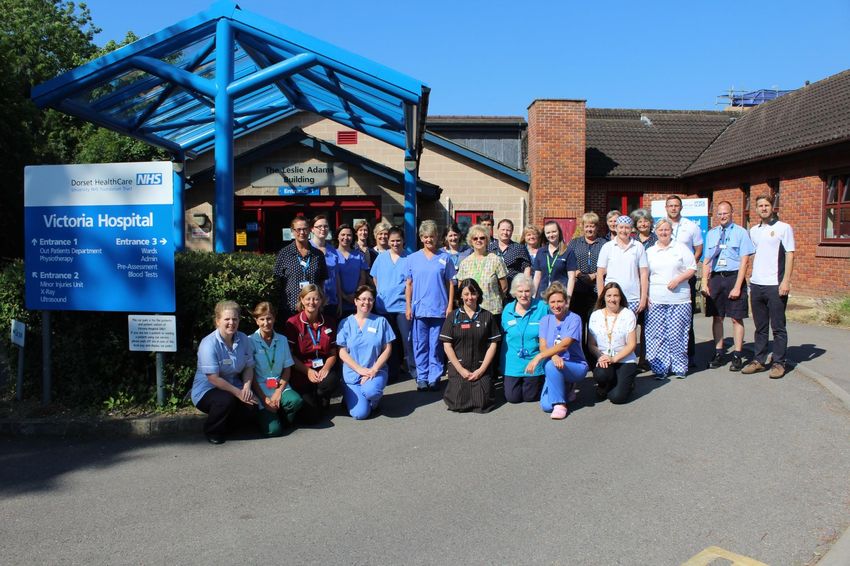
Dorset HealthCare University NHS Foundation Trust (DHC) remains committed to continuous
quality improvement in all the services we provide. The Board has strengthened over the past
year and continues to improve the way it obtains assurance:
This report is an open and honest assessment of what we have achieved and how we have
improved the quality of our services through our quality priorities and other quality indicators. It
details the progress made against our quality targets and the priorities we have set for
ourselves over the past year. The report is consistent with internal and external information
presented to and agreed by our Quality Governance Committee (QGC) and the Trust Board.
Each meeting receives monthly updates or quarterly quality reports against our agreed targets.
The Board receives an integrated performance report including a quality dashboard covering
all three domains of quality:
patient experience
patient safety
clinical effectiveness.
The Quality Governance Committee (QGC) provides further scrutiny of the quality of
services. This committee is supported by the Clinical Governance Group which meets
monthly to examine the internal quality and clinical processes. It provides an in-depth review
of the data to assure the QGC that adequate systems are operated by the organisation.
Non-Executive and Executive Directors have visited wards and teams to hear and observe
first-hand the quality of care being delivered, enhancing the line of sight from 'Board to
Ward'. The Board is committed to being visible and accessible to front-line staff and patients.
The Trust is committed to raising standards of care and will respond promptly and positively
to criticism and suggestions for improving care. We value the feedback of patients, carers,
family and friends alongside all our staff to guide how we improve the quality of services.
The Council of Governors, Board of Directors and clinical leaders were committed to
delivering a programme of continuous quality improvement during 2019/20.
In preparing our Quality Account and Report, we have worked hard to ensure that the
information presented is accurate and provides a fair reflection of our performance during the
year. I hope you find this report an interesting and informative document. I think it presents a
fair and balanced view of what we have achieved and what we hope to achieve this coming
year. To the best of my knowledge the information in the document is accurate.
Eugine Yafele, Chief Executive, 30 April 2020
Page 5 of 87
Page 6 of 87

PART TWO

PRIORITIES FOR IMPROVEMENT AND STATEMENTS OF ASSURANCE FROM THE BOARD

PRIORITIES FOR IMPROVEMENT 2019/20

The Trust is committed to providing high quality care - first time; every time. To determine our priorities for
2019/20 we continued to work with those service directors and leads who attended our previous workshop
to review all the improvement programmes underway in the Trust. We have a wealth of improvement plans
to address various work streams and are in the early stages of developing and embedding the Quality
Improvement team and Quality Improvement approach across the Trust. The Quality Improvement
programme is being designed to shift the balance to our staff and people who experience our services, to
identify areas for improvement that matter most and are locally owned.

We also considered themes from complaints, incident feedback from patients and staff and performance
against key quality indicators. We reviewed recommendations from external reviews such as those
published by the Care Quality Commission, NHS Improvement and other national bodies, as well as
recommendations from Her Majesty’s Coroner for Dorset.

As part of our consultation on the priority indicators we held a focus group with the Trust’s Leadership
Forum to comment and feedback on the proposed priorities. An online survey was launched on 24 January
2019 to gather feedback from staff and stakeholders. We also made the consultation available on our
website to enable members of the public and other stakeholders to express their views.

Attendees at the Quality Matters Conference on 31 January 2019 were asked to complete the online survey
and were canvassed for their feedback to refine our selection of Quality Improvement Priorities for 2019/20.

                                                    Page 7 of 87
QUALITY IMPROVEMENT PRIORITIES 2019/20

We start this section by reporting on our achievements against the Trust’s quality priorities we set ourselves
for 2019/20. The following tables outline the priorities and progress over the past year.

Priority 1 Patient Experience:                                                                    Outcome:

To be an organisation that involves the patient, their families and carers and hear               Progress
the voices of those that are harder to hear                                                       made

Rationale:

In 2018/19 we wanted to build on the success of introducing the Triangle of Care (ToC) into our mental
health inpatient and community teams, as well as the crisis services to further enhance the experience of
people who use our services and their carers. We will continue to embed the ToC into our mental health
and crisis teams whilst rolling out across all our adult services.

At the Trust, we have captured patient satisfaction for several years. Although this data has been valuable
in tracking trends, there has been a shift in focus to capturing patient experience rather than patient
satisfaction. Taking this positive shift further we will endeavour to learn from those experiences so we can
improve our services. We will also focus on gaining the experiences of those patients who do not readily
give or feel able to provide feedback.

       Quarter 1                     Quarter 2                     Quarter 3                  Quarter 4

                                                                                       Collaboration with
                                                            Engagement with local      stakeholders delivered
                                                            groups, other Trusts and   on development of a
                             Qualitative feedback
                                                            organisations to gain      New Bereavement
Baseline data for use of     from staff identifying
                                                            more feedback and to       booklet that gives
Bereavement survey           issues received.
                                                            support final              opportunities for families
completed.                   Improvement plan in
                                                            development of             to give feedback and
                             place.
                                                            questionnaire and          supporting literature for
                                                            support tools.             families who’s loved one
                                                                                       died at home or at a
                                                                                       hospital.
                                                                                       Improvement plan has
                                                                                       been put into action:
                                                                                       team leaders meeting
A Task and Finish group
                                                                                       regularly. There is
has been established to
                             Baseline exercise                                         shared access to
improve joint working
                             reviewing transition                                      Information Technology
between Steps to
                             planning conducted with        Audit results shared and   (IT) systems, link
Wellbeing Service and
                             an agreed action to            improvement plan in        workers (individual
Community Mental
                             identify gaps or deficits in   place.                     cases and attendance at
Health teams
                             practice through Clinical                                 Multidisciplinary Teams
established, and an
                             Audit.                                                    - MDTs) and attendance
initial review took place.
                                                                                       at quarterly team
                                                                                       leader/service managers
                                                                                       meeting.
Baseline audit                                              Feedback received from     Sexual Health service
determining use of                                          services:                  was going through a
                             Bespoke improvement
feedback tools and                                          Actions being              competitive tender
                             plan with agreed actions
systems in place to                                         progressed in Looked       process. All services
                             and timescales
capture information from                                    After Children and         have implemented a
                             developed and shared
looked after children and                                   Speech and Language        number of tools
                             with Clinical Leads.
service users of the                                        Therapy (SALT)             including: social media,
paediatric speech and                                       services. Sexual Health    digital and telephone

                                                      Page 8 of 87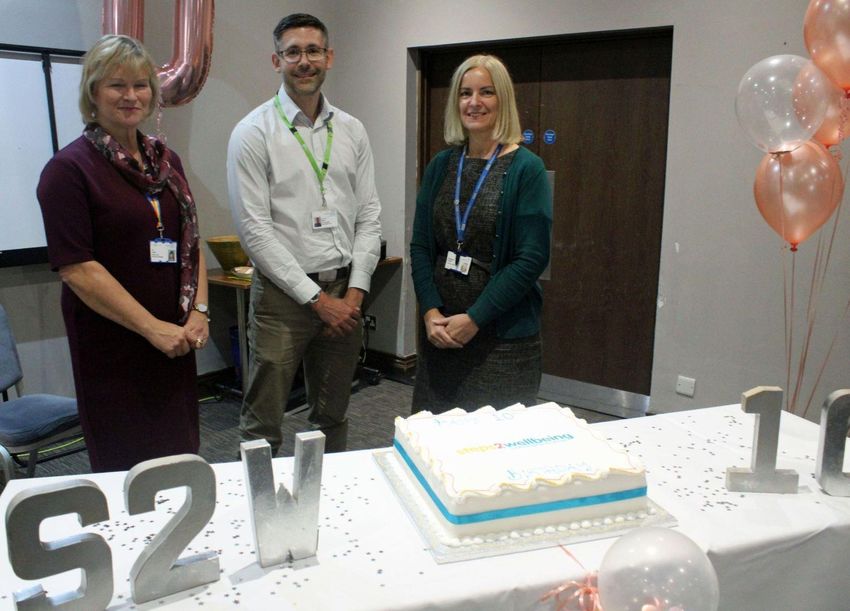
language therapy Services improvement contact. The service
service and sexual plan was put on hold as has linked in with local
health services. service was going Dorset Clinical
through a tender. Commissioning Group
(CCG) to continue
capturing feedback
through Pan Dorset
pathway projects and
focus groups. Additional
digital resources have
been provided to gather
more feedback.
Websites are being
designed in
collaboration with
service users.
Going forward:
Continue to regularly revisit our survey and support materials for families and carers of end of life care.
We have joined 3 year project with Care Opinion for patients and families to share their stories.
We will continue to review our robust mechanism between Steps to Wellbeing Service and Community
Mental Health Teams to ensure regular communications between the services is taking place to work in
collaboration on transition between the services.
We will keep on revisiting feedback mechanisms, working with local organisations, with our patients,
their carers and families to ensure their voices are heard and acted upon.
Priority 2 Patient Safety: Outcome:
Enable staff to proactively identify and mitigate where patients or service users are Progress
at risk of avoidable harm made
Rationale:
Our patient safety priority in 2018/19 was to be an organisation that creates a positive and strong safety
culture. We wanted to support our staff in the early detection and management of deterioration in adult
inpatients.
As a Trust we have learnt through our understanding and appreciation of national reports and learning from
our own internal investigations that good channels of communication, both internally and externally with
other organisations is a key requirement of patient centred care.
Continuing with our understanding of the need and benefits of joint working we want, through additional
information and education, to increase our staff’s awareness of domestic abuse. We want our staff to feel
supported and enabled to act effectively and promptly in response to suspected domestic abuse.
In line with national guidance we will broaden our Suicide Prevention Strategy, for the benefit of all people
accessing our services.
Quarter 1 Quarter 2 Quarter 3 Quarter 4
E-learning package for
domestic abuse (DA) E-learning package
training developed, to be reviewed in light of Staff continue to
signed off at a joint Equality and Diversity. eLearning completion complete the eLearning
safeguarding meeting. 2 Training action plan in rate at 68%. Training package and the
specialist DA staff to be development. 2 specialist action plan in progress. completion rate has
employed by DA staff commenced increased to 86.4%.
independent provider to working.
provide support.
Suicide Prevention (SP) SP Group agreed to QI work commences with During Covid 19 the
Page 9 of 87
Group established and undertake QI approach, different directorates to prevention strategy was
in progress of reviewing identified next steps and widen the scope of SP progressed virtually.
current SP plans. a resource to support agenda. Zero Suicide Alliance
initiative going forward. Training video was
created to upskill all staff
to support people with
suicidal thoughts. 425
staff completed training
by end of March 2020.
A mental health Support
worker works with
schools to raise
awareness.
103 incidents were
reported. The identified
Task and Finish (T&F)
Learning is shared
Group established to A robust system for Hospital Matrons are
within the Team and
ensure robust system is sharing information with reviewing all patients
acute hospitals.
in place to enable acute hospitals during who are unexpectedly
appropriate handover for unexpected transfers via transferred during
Agreed Process of
any expected or A&E or outpatients quarter 2 identifying
Transfer from
unexpected patient agreed. learning.
Community Hospital to
discharge.
Acute care flow chart.
Going forward:
We will continue to promote and provide training for Domestic Abuse in other services across our Trust
(Community Adult Mental Health and Learning Disabilities services have had over 50% completion
rates in 2020/21 Q1) and we will improve compliance rate in Public Health Nursing service.
Suicide prevention - we will continue to promote the training video to staff in all services and monitor the
data on a quarterly basis. The Suicide Prevention Group will support further promotion.
We will monitor and review the agreed process of transfer from community hospital to acute care
process and collaboration with stakeholders to ensure a person centred approach to admission.
Priority 3 Clinical Effectiveness: Outcome:
Enable clinical staff to use their professional judgement when assessing patients Progress
and users of services when developing personalised care plans made
Rationale:
In 2018/19 we focussed on the prevention of ill health and supporting people who used our services and
who would benefit from adopting healthier lifestyles. We continued supporting staff who worked in the
mental health setting to prevent and manage potential blood clots, known as venous thromboembolisms.
This year we are going to concentrate further on valuing people as active participants and experts in the
planning and management of their own health and well-being. Enabling staff to ensure that their patients
and service user’s outcomes are developed to have meaning to the person in the context of their whole
life. This process recognises the person’s skills and strengths, as well as their experiences and the things
that matter the most to them.
We have developed an ambitious Quality Improvement (QI) programme and QI approach across the Trust.
The Trust’s QI programme is being designed to enable our staff and people who experience our services
to identify areas for improvement that matter most and are locally owned. It is already starting to support
them to work together to identify and address a range of quality issues, enabling creativity, innovation and
learning.
Page 10 of 87Quarter 1 Quarter 2 Quarter 3 Quarter 4
Goals are being set with
Business Cases for
teams to enhance
Task and Finish Group therapeutic provision for
therapeutic interventions
A review of therapeutic established to review Acute and Adult inpatient
and put these into
interventions in inpatient outcome of scoping Mental Health (MH)
practice and embed in
services in progress. exercise. A draft Action developed. A pilot in
teams. This will be
plan produced. Older People MH
reflected in patient care
inpatient progressing.
plans.
District nursing and
What Matters Most
inpatient services have
(WMM) evaluation report
agreed personalised
presented at the Clinical
care plans and training
Governance Group WMM Oversight Group
for staff to enable them
together with A plan for mobilisation established. Lessons
have personalised
recommendations on and implementation learnt reviewed.
conversations with
how to improve and developed and further
patients. Integrated
build patient centred learning from teams Approaches going
Community
documentation & care piloting plans in forward agreed and
Rehabilitation Teams
planning within physical collaboration with training package
and Community Matrons
health District Nursing patients gathered. development
are agreeing a
(DN), Community commenced.
standardised approach
Matrons, Rehabilitation
for recording What
teams and inpatient
Matters Most to our
services.
patients.
An approach for district
nurses has been
A further proposal Task and Finish groups developed and training
included in WMM report established to focus on resources are ready to
to enable clinical staff to finalising training roll out. Inpatient
use their professional material. Cooperation services work with
Mandatory risk
judgement and to use with SystmOne team to second early
assessments identified
SOAP (subjective, enable professionals to implementers to finalise
for services and guides
objective, assessment evidence that all risk training. Community
for staff in development.
and plan) notes assessments have been Matrons and Integrated
methodology to considered as Community
document a patient appropriate. DN guide Rehabilitation Team
during treatment for junior staff in representatives continue
progress. development. engagement to agree
use of professional
judgement.
Going forward:
We will continue to improve and sustain the therapeutic offer from inpatient mental health services by
increasing investment in interventions and activities, resulting in better patient outcomes and
experience in hospital.
We will train staff, provide tools and resources, empower them to have personalised conversations
and to record What Matters Most to our patients.
We will deliver training and empower staff to use their professional judgement; we will provide
resources to support staff. Staff will use SOAP notes methodology to document patient care.
Page 11 of 87Page 12 of 87
QUALITY IMPROVEMENT PRIORITIES 2020/21

This year we have been reviewing our strategies and direction of travel to make sure they are fit for the
future health care needs of the people of Dorset. Working in partnership with health and social care
colleagues we are developing services across Dorset in line with the clinical services review led by Dorset
Clinical Commissioning Group.

We have developed the Trust strategy which is supported by both the clinical strategy and the quality
strategy. The quality strategy will support the development and sustainability of our culture for continuous
quality improvement so the Dorset HealthCare can be better every day.

Changes to the way that services are designed and commissioned are central to the Integrated Care
System within Dorset. When any change takes place it is essential that quality objectives are at the
forefront. We need to ensure that new services and care delivery models provide high quality care within
the available resources; which are based on evidence, needs and outcomes.

The Long Term Plan for the NHS brings together providers of care in local communities. Our strategy
recognises the interdependence of local government, providers, commissioners and the third sector to
deliver quality services for the population we serve.

We have identified key quality priorities by listening to the views of patients, service users, staff,
commissioners and other stakeholders to ensure we continue to deliver improvements. Internally, we
triangulate information from many sources including patient and service users, staff feedback, incidents,
compliments, complaints, and performance against our key quality indicators. We also look at
recommendations from external inspections including the Care Quality Commission, NHS England, NHS
Improvement and national reports and recommendations.

The quality priorities support the Trust’s vision to be better every day through excellence, compassion and
expertise in all we do, as well as the strategic goal to provide high quality care; first time, every time.

                                                   Page 13 of 87
PATIENT EXPERIENCE
Improve the experience of people accessing services by reducing unwarranted variation in clinical
practice and working efficiently to maximise clinical hours.
We will use patient experience to inform service development, and ensure the voice of the patient, families
and carers is sought, heard and acted on to improve quality. We will learn from the experience of patients,
their families and carers, seeking their feedback across all areas of our business. To support service
improvements we will develop an outstanding research culture and standard pathways of care.
PATIENT SAFETY
We will promote an outstanding patient safety culture supported by continuous improvement,
quality assurance, governance and oversight.
We will ensure there are robust and effective quality governance and assurance arrangements in place so
we can identify, manage and learn from potential risks to quality. We want to achieve the highest patient
safety standards and equip patients, staff and partners with skills and opportunities to improve patient
safety. We will identify and share best practice and learning when things go well in addition to learning
from when things go wrong and continue to embed continuous quality improvement using the Institute for
Healthcare Improvement (IHI) model for improvement.
CLINICAL EFFECTIVENESS
We will provide timely access to services by maximising their effectiveness and efficiency.
We will target growth in our specialist mental health services and in integrated community and primary care
services by integrating service planning and delivery with Primary Care Networks and other community
providers, delivering services as close to home as possible and supporting the sustainability of primary care
services. We will lead and contribute to improvements in the effectiveness and efficiency of pan-Dorset
elective and non-elective services, ensuring rapid admission and discharge to and from our inpatient
services and reduce reliance on bed-based care. We will end the use of inappropriate out of area beds by
2024 for people accessing inpatient mental health services.
Page 14 of 87QUALITY IMPROVEMENT - SIGN UP TO SAFETY CAMPAIGN
The Trust committed to the NHS England ‘Sign Up to Safety’ campaign in November 2014 having made the
following five pledges.
Put safety first A commitment to reduce avoidable harm.
Acting on the feedback from patients and constantly measuring and
Continually learn
monitoring how safe services are.
Be transparent with people about our progress to tackle patient safety issues
Honest and support staff to be candid with patients and their families if something
goes wrong.
Take a leading role in supporting local collaborative learning, so that
Collaborative
improvements are made across all of the local services that patients use.
Help people understand why things go wrong and how to put them right.
Supportive
Give staff the time and support to improve and celebrate the progress.
The ‘Sign Up to Safety’ campaign vision brought all of the national safety work streams together under one
campaign. We developed a plan which incorporated nine ‘Sign up to Safety’ work streams to reduce
avoidable harm and save lives. Each work stream had a nominated lead, supported by staff from a wide
variety of services throughout the organisation. Progress against the campaign action plan is monitored
with a quarterly report sent to the Clinical Governance Group.
The National ‘Sign Up to Safety’ campaign disbanded at the end of March 2019. Dorset HealthCare made
the decision to continue with the current work streams, as described below, under the title of ‘Patient Safety
Work streams”.
The number of work streams has reduced from nine to six. Sepsis has combined with the Deteriorating
Patient work stream to align with the Wessex Patient Safety Collaborative Network. Safe Transfer of Care
and Care Planning are continuing having been incorporated into core business.
The following pages detail progress against the six work streams:
Pressure ulcers
Mental Health Units, Use of Force Act
Deteriorating patient and sepsis
Suicide prevention
Falls prevention
Safe medication.
Page 15 of 87PRESSURE ULCERS
Aim: For StEIS reportable inpatient pressure ulcers in 2019/20 (remained the same as the previous year)
to be reduced by 50%. The aim for community-acquired StEIS reportable pressure ulcers in 2019/20 (also
remained the same as the previous year) to be reduced by 20%. However at the end of Q1 new Pressure
Ulcer (PU) reporting was adopted, the PU: Revised Definition and Measurement recommendations from
NHS Improvement, was adopted. This replaced the old Department of Health criteria for reporting to the
Strategic Executive Information System (StEIS) of all PU’s deemed avoidable where lapses in care had
occurred. This has resulted in fewer incidents to be reported onto StEIS; therefore data from Q2 onwards is
different and not comparable to previous reports. The terms avoidable and unavoidable are no longer
considered. These changes were adopted to support the focus of the level of harm sustained and
significant organisational wide learning being identified after reviewing incidents. The StEIS reportable PU’s
in this report reflects these changes.
Outcome 2019/20
Pressure Ulcer Q1 Q2 Q3 Q4 Total YTD % Reduction
Year to date
Hospital-acquired avoidable, now Not comparable with
1 0 0 0 1
termed StEIS reportable PU previous years data
Community-acquired avoidable, Not comparable with
3 3 0 1 7
now termed StEIS reportable PU previous years data
NB: There have been changes in the STEIS reporting criteria since April 2019
Key success:
PURPOSE T and Documentation - Tissue Viability involved with the implementation of “What
Matters Most”. A PURPOSE T guide has been developed explaining the risk tool, how and when it
should be used to encourage a standardised approach. The tool has been updated on SystmOne to
reflect the changes in the pressure ulcer categorisation. PURPOSE T education is incorporated in
the monthly Pressure Ulcer training.
Training - Merged training for Health Care Assistants / Support workers and Registered staff, this
will result in the course content being standardised across the Trust for all staff. Restructuring the
course now offers an increased availability for Health Care Assistant / Support workers. The course
is now structured with pre eHub module, face to face training and competencies to help meet
different learning styles.
Equipment - Tissue Viability have raised awareness and shared the Medicines Healthcare
Regulatory Agency (MHRA) information poster (Don’t Judge A Mattress By Its Cover). The audit
results have been shared with matrons and team leads via Medical Device Safety officer.
Reporting and reviewing of Deep Tissue Injuries (DTI’s) - NHS England category poster has
been shared to teams and uploaded on to Tissue Viability page on Doris. Pressure Ulcer eHub
module and training has been updated. Tissue Viability team carry out an audit on reported DTI’s
every 6 weeks to check accuracy of reporting.
Shared learning from RCA themes - A spread sheet has been developed to capture recurring
themes identified at panel. This is shared at the steering group and will be cascaded to Band 7
meetings. Tissue Viability includes RCA themes on the Tissue Viability and Leg Ulcer newsletter.
Tissue Viability Team capacity - Recruited Band 6, 0.8 WTE in January 2020, but due to pressures
and risks within the Leg Ulcer service the nurse is only working for Tissue Viability 0.4 WTE due to
supporting the Leg Ulcer service and orientation programme.
Page 16 of 87 Complex patients with multiple co-morbidities developing pressure ulcers - Tissue Viability,
Leg Ulcer Service and Diabetic Foot Clinic are developing a lower limb referral pathway to ensure
the patient is referred to the correct specialist service at the right time to ensure the care is not
delayed.
Delayed wound care products getting to patients in the community in a timely manner - Staff
questionnaire was developed. Working group established to look at new initiatives and different
ways of working.
Going Forward:
PURPOSE T and documentation - Launch the PURPOSE T guide with the ‘What Matters Most’
project. Tissue Viability team lead to meet with clinical lead for mental health to complete this action.
Equipment - Tissue Viability team lead is working with Procurement and Medical Device Safety
Officer to organise a Mattress replacement programme. This will include looking at replacing some
of the static foam mattresses with hybrid mattresses to help reduce the expenditure on rentals of full
air replacement systems. Tissue Viability Team is working with the Medical Device Safety Officer to
look at alternative low profile cushions.
Reporting and reviewing of Deep Tissue Injuries (DTI’s) - Tissue Viability and Patient Safety
Advisor are working with Ulysses to develop an incident form specifically for pressure ulcers.
Tissue Viability team capacity - Leg Ulcer service recruited Band 6 who commenced in March
2020. Due to the COVID-19 pandemic the Tissue Viability Service has been working in collaboration
with the Leg Ulcer Service as one united team since March 2020. Supporting the leg ulcer service at
such a challenging time has resulted in establishing a cohesive team, which share the same goals
for patients, maintaining high quality patient care. The team support each other daily and network
weekly via Microsoft teams and as required. During this period the Tissue Viability Service were
only able to assess complex urgent patients, which is impacting on Tissue Viability Service waiting
times
Complex patients with multiple comorbidities developing PUs - To develop a care plan for the
ischaemic limb to support staff. Tissue Viability team lead having “Deal with Heels” article published.
Delayed wound care products getting to patients in the community in a timely manner - Audit
team to compile a report, this will be shared with Dorset CCG, Director of Nursing, Therapies and
Quality, Clinical Service Improvement Lead for District Nursing , Integrated Community Services,
Joint Wound Formulary Group (JWFG), Link Advisors, Tissue Viability Steering Group, Procurement
and Medicines Management.
PROMOTING POSITIVE AND PROACTIVE PRACTICE TO REDUCE RESTRICTIVE INTERVENTION -
Mental Health Units, Use of Force Act
Aim: DHC aspire to the principle that all staff embrace the Mental Health Units (Use of Force) Act 2018 and
focuses on least restrictive practice and ensuring therapeutic care is provided in safe conditions that
promote recovery. Aims: To improve and share best practice in relation to managing planned care.
Page 17 of 87Restrictive Interventions 2019/20
Intervention Q1 Q2 Q3 Q4 Total
Rapid tranquilisation 32 48 54 33 167
Prone restraint 37 60 53 42 192
Seclusion 19 20 15 14 68
Key successes:
Matrons attended Restraint Reduction Network in December. This has helped informed the way in
which we will review our service.
Matron (East) nominated as clinical lead for PMVA (Prevention and Management of Violence and
Aggression).
A review of PMVA and induction is planned for 2020/2021. The admission pack for patients is under
review which will include information regarding use of force.
PMVA team now based at St Ann’s to enable closer working with ward teams.
All acute in-patient adult mental health wards are taking part in the Promoting Positive Practice
Quality Improvement collaborative & attend bi-monthly learning sets. These events are an opportunity
for wards to share their learning and build relationships across the Trust, as well as improve safety,
patient and staff experience.
There have been a number of changes being tested across the wards ranging from patient welcome
packs, increased patient activities, staff wellbeing and discharge planning. Teams will be using this
approach to support a significant change in how restraint training is undertaken to enable wider
impact.
Going Forward:
Matron (East) to meet with QI team lead to commence project for review of PMVA and induction for
MH staff. Plans include:
Review of staff feedback forms following PMVA
Staff survey on PMVA
Standards Audit – for PMVA team (Self-assessment), Clinical Lead staff who have received training
Survey to reach staff who failed PMVA
Review of exit interviews
Next QI collaborative will have a focus on Safe wards and PMVA. Matron (West) is leading on the
rollout of Safe wards across inpatient areas.
Wellbeing plan – a workshop is planned for end of January to review the wellbeing plan. This was to
include the enhanced inpatient plan with reference to use of restraint. This was postponed due to the
covid-19 pandemic.
Guidance documentation has not been released nationally for the MH Units Use of Force Act (2018).
Once the guidance is published, it will then inform local guidance work.
A pilot project for body worn cameras is in the planning stage. Matron (East) is meeting with
representatives in next few weeks to pull together project plan. IT & IG supportive and standard
operational procedures (SOPs) drafted. New survey to be circulated to gain views from stakeholders
(patients, careers and staff).
Staff have been encouraged to report all episodes of abuse. The security manager has been very
supportive and is working closely with ward teams to tackle anti-social behaviour and encourage the
police to pursue prosecution where appropriate. Lack of capacity has historically been seen as a
barrier to reporting. This however, stops a forensic picture being built and risks are potentially
deemed lower as a result.
DETERIORATING PATIENT AND SEPSIS
Page 18 of 87Aim: By May 2020, all patients under the care of the Trust who deteriorate are identified and have a timely
response.
The focus for 2017/18 was to determine the criteria for raising an incident report when a patient’s physical
health deteriorates. An incident report would be completed when a patient’s condition unexpectedly
deteriorated resulting in a transfer and admission to an acute hospital. Throughout 2018/19 this process
has been embedded in practice.
There has been an overall increase in the number of Deteriorating patient incidents reported, this is to be
celebrated as staff are recognising and responding to signs of deterioration. Staff also report a variety of
other reasons for this which include some Community Hospitals admitting an increasing number of step-up
patients who have a higher acuity on admission. There have been concerns raised about the quality of
discharges from a particular acute hospital which has resulted in a number of patients being transferred
back, these have been referred to the appropriate Trust for investigation and feedback.
Key successes:
Teams are encouraged to photocopy charts prior to transfer however this can be difficult in urgent
situations.
The Deteriorating Patients Group Terms of Reference has been reviewed and updated including the
group membership.
The Deteriorating Patient Questionnaire (DPQ) has been reviewed and updated, any outstanding
DPQs have been chased.
A Venous Thromboembolism (VTE) Prophylaxis Task and Finish group has formed and has been
developing a tool to promote improved risk assessment and promote appropriate prophylaxis to
reduce the risk of VTE.
A NEWS2 audit has been completed in physical health wards in Q3, the results are expected
imminently.
Roll out of NEWS2 within community services is progressing.
Acute Kidney Injury (AKI) Guideline undergoing final review.
Agreed a time frame of 5 working days with the deteriorating patient group for DPQs to be returned to
the patient safety team.
Going Forward:
Review physical health NEWS2 audit results when available and support to achieve any improvement
plans.
Support the rollout of the updated VTE risk assessment tool once finalised and approved.
Pilot an adapted NEWS2 audit in mental health wards.
The Physical Health in Mental health strategy to be launched.
Develop a Mental Health in Physical Health strategy.
SUICIDE PREVENTION
Aim: To reduce the number of suicides by 10% by the end of 2020 in line with the National Suicide
Prevention Strategy.
The Trust’s Suicide Prevention Action Plan, which forms the overarching direction for this work stream, is
built around the ten ways to improve patient safety identified by the National Confidential Enquiry into
Suicide and Homicide Review of 20 years of data (published in October 2016).
Key Success:
The planned change from a routine seven day follow up standard to a 72 hour follow up standard for
patients discharged from mental health units was implemented during Q3. This change was brought
about in direct response to published evidence from the National Confidential Enquiry into Suicide
and Homicide (November 2018) which highlighted the time period of greatest risk. Since the
introduction of the new standard, the early indications are that this is being met most of the time.
Page 19 of 87 There was a plan that all staff working in mental health should be trained in dual diagnosis work at
least to a basic level. In 2018/2019 staff within the CMHTs attended a one day skills based training
package which was produced by the Specialist Nurse Practitioner for the Early Intervention Service
together with the Addictions Service Manager. This is now being rolled out to all inpatient staff who
work with working age adults in the Trust. The aim is to improve staff knowledge, recognition and
confidence when working with patients who have co-existing severe mental illness and substance use
problems.
Training in managing mental health crises and practical advice on how to access services in an
emergency was provided for staff of the Coastguard Service and the Royal National Lifeboat
Institution (RNLI) in October 2019. This was jointly delivered by the lead for suicide prevention and
staff from the Retreat. This was well received.
Since attending the South West Suicide and Self Harm Conference on 3 June 2019 we have been
keen to develop a service to help address the needs of family members and others who have been
bereaved by suicide (Postvention). Meetings have taken place and there is work ongoing to examine
what is provided in other areas where this service is better developed than is the case in Dorset.
Consideration is being given to providing Postvention through Steps2wellbeing. There have been
meetings involving staff and carers who have been affected by suicide in order to plan what we do.
This is an ongoing piece of work that will continue.
In December 2019, the Head of Nursing, Therapies and Quality – Mental Health and Learning
Disabilities services (MH&LD) started an engagement process with the School Nursing team to
explore ways of supporting their suicide prevention work in schools. At the meeting, it was identified
that further support is needed to help develop a booklet for staff on how to respond to
frequently presenting scenarios through their Chathealth texting service. School nurses identified the
need for guidance on how best to respond to children presenting with very challenging scenarios. The
plan was to work with Child and Adolescent Mental Health services (CAMHS) to develop this further.
The team also identified the need for extra training and this will be explored further in the next quarter
in collaboration with CAMHS, this has been delayed due to the Covid 19 pandemic. Podcasting as a
resource has reportedly been well received by children in the last year. It was felt this was an area to
look at developing further. The Head of Nursing, Therapies and Quality for MH&LD plans to discuss
this with the Communications team to see how best we can progress this.
As described in previous quarterly reports, we have been seeking to adapt the distrACT app in order
that this can contain links to local sources of support available in Dorset. Currently it is tailored to the
support needs of patients in Bristol and in Exeter but not in Dorset. A meeting took place with the
senior community mental health service manager and representatives of Dorset Mental Health Forum
in November 2019. Both agreed that they would consult widely to ensure that we do not have any
“blind spots” when including appropriate links and sources of support available in Dorset. Funding
has already been agreed to set this up. The DistrACT app is planned to be implemented in Q1 2020.
Through the Medicines Management committee for Mental Health and in combination with the
Suicide Prevention Group, there has been quest to understand issues around opioid prescribing and
safety. Upon analysing available data and meetings between the Lead for Suicide Prevention,
primary care pharmacists and CCG representatives, an introduction of standards for prescribing
opioid analgesia in primary care has been implemented. The aim is to limit both the dosages
prescribed (above which there is no additional benefit) and the total quantities issued in any one
prescription. This is a strategy aimed at reducing access to means.
Going Forward:
Seek to progress revision of the RiO risk assessment tool when IT service is adequately provisioned
to complete this work.
Full roll out of dual diagnosis training for all staff working within mental health who are involved with
Page 20 of 87adults of working age.
Aim to finalise work to adapt the DistrACT app to the needs of patients in Dorset.
Steps2Wellbeing exercise aimed at establishing best practice in Postvention and seeking options for
provision of a service locally.
Further work to assist and support school nursing services (as above).
Advance the inpatient aspects of our Trust Suicide prevention plan in line with the national ambition
for Zero Suicides on inpatient units.
Further work to be undertaken with Service Directors for Community Services and for Integrated
Services for Children, Young People and Families, to ensure all services are included within the DHC
action plan and activities of this work stream.
Continue to contribute to the Pan-Dorset Suicide Prevention Group by representing DHC at
forthcoming meetings and workshops set to take place in February.
The Lead for suicide prevention attended the latest launch of the National Confidential Inquiry into
Suicide and Homicide in January 2020 in order to incorporate national findings into the work we are
planning locally.
FALLS
Aim: To reduce the number of falls resulting in moderate or minor injury by 10% annually.
2018/19 2019/20
2014/15 2015/16 2016/17 2017/18
Falls resulting in fracture NOF 33 27 15 15 14
Falls resulting in Fracture (not 5
NOF)
Falls resulting in head injury 2 0 0
Inpatient falls: minor injury 491 439 392 361 368 363
Inpatient falls: without injury 987 876 712 734 599 483
Total falls 1478 1348 1135 1112 978 865
3 year trajectory 2015/16 2016/17 2017/18 2018/19 2019/20
10% reduction in injury-only trajectory 466 452 438 394 *N/A
Actual Total 472 419 370 383 382
*Indicator removed by Dorset CCG
Key success:
Falls dashboard
Developed with the Quality Improvement Analyst available on our intranet (Doris).
Education and learning
E-Learning package in place from October 2018.
National Falls Audit
DHC is registered on the National Audit of Inpatient Falls as part of the Falls and Fragility Fracture
Audit Program.
Going Forward:
CQUIN – completion of Q3 audit and report on findings
Page 21 of 87 As of 1 January 2020, the National Audit of Inpatient Falls (NAIF) will extend its dataset to comprise a
full audit of both falls prevention activity prior to the hip/femoral fracture and post-falls care. This audit
will extend in April 2020 to include femoral fractures. Re-registration for the audit program will take
place during March 2020. NAIF 2019 Annual report was published in March 2020 and a review for the
Trust has been delayed due to the covid-19 pandemic.
Launch the Multi Factorial Falls Assessment (MFFA) on SystmOne and RIO for community and
mental health hospitals.
Falls prevention policy update to include bed usage and height with use of crashmats with the aim of
reducing level of harm and reduction in hospital transfers, moving patient from the floor where harm is
suspected
Balance strength and exercise service – workshop booked to agree patient’s pathway through the
service, associated documents and audit program.
SAFE MEDICATION
Aim: Reduce Medication Errors by 25% by January 2019
Average number of monthly incidents
2017/18 2018/19 2019/20 to date
2016/17
85 49 46 51
Represents a 41%
Represents a 6%
decrease, largely Represents a 11%
decrease compared
attributed to termination increase
with 2017/18
of the Prisons service
Key success:
Safe Prescribing of Sodium Valproate Medicines - In order to improve some of the areas of
concern highlighted by the Sodium Valproate Audit (see above), the following actions have been
completed:
Presentation of the results of the audit at the Medicines Management Mental Health Group to raise
awareness of the risks highlighted (completed October 2019)
Develop and deliver teaching sessions / education for prescribers of valproate (completed Oct 2019)
In January 2020 attendance at a POMH workshop on Topic 20a Prescribing valproate before
planning and delivering POMH audit. This relooked at the risks highlighted by this audit to show if
improvements have been made.
Localised safety concerns - Nightingale Court, the issue with drug preparation space has been
highlighted by the Medicines Safety Group to Health and Safety who are now investigating and are
looking at possible solutions. Stanley Purser, the safety concerns have been reviewed by the
Medicines Safety Group and plans are being discussed to support prescribing on the ward.
Developing and delivering training relating to Medicines Safety - Over the last quarter, the
following training relating to medicines safety has been delivered:
o Insulin Safety (at a Diabetes Study day)
o Medicines Management training for newly qualified nurses
o Medicines Administration Record (MAR) chart training
o Valproate prescribing (NMP conference)
o Suicide prevention / reducing access to means (NMP conference)
o Falls and medicines (NMP CPD event)
Page 22 of 87 Falls prevention and improving medication reviews - In the last Quarter, the pharmacy team has
been involved in a falls awareness week, highlighting issues relating to medications and falls. The
number of falls occurring across the organisation has decreased over the last 6 months and this has
been partly attributed to pharmacist’s regularly attending consultant ward rounds and carrying out in
depth medication reviews.
Going Forward:
Safe Prescribing of Sodium Valproate Medicines - In order to improve some of the areas of
concern highlighted by the Sodium Valproate Audit (see above), the following actions are being
planned:
- Creation of a pharmacy owned database listing all patients prescribed valproate by specialists
working for Dorset HealthCare. Use this database to create a robust means of identifying patients
of child bearing potential, who are prescribed valproate and to provide specialists with a reminder
when the annual risk acknowledgement form is due to be completed This was due to be
completed March 2020 but was delayed due to the covid-19 pandemic.
- Presentation of the results of the audit at the Medicines Advisory Committee to raise awareness
of the risks highlighted was completed in February 2020.
FP10 security - In order to improve security around FP10 prescription pads, a FP10 security audit is
currently being designed to review adherence to the FP10 prescription policy trust wide. This was
delayed due to the covid-19 pandemic, once finalized, a trust-wide audit will be carried out to highlight
areas for improvement.
Quality Improvement Project – ePACT data and the medicines safety prescribing metrics
embedded within have been used to identify an area of prescribing that needs improvement across
Dorset. The MSO plans to carry out an audit of prescribing the ‘triple whammy’ combination of
diuretics, ACE inhibitors / ARBs and NSAIDs locally and the Dorset MSO group have agreed to take
on this as a Pan-Dorset QI project.
Insulin safety – Following a review of issues relating to insulin safety involving 5 trusts nationwide,
insulin administration in care homes (including training needs) is being reviewed. The community
drug chart is to be redesigned to include a checklist for discharge, insulin prescribing advice and
space to record blood glucose and ketone levels on the chart. The chart will be shared with the local
acute trusts and community hospitals so that the drug chart will be available for district nurses to
record administration on at the point of patient discharge. A pilot for this chart was being planned for
April 2020 but has been delayed due to the Covid-19 pandemic.
Page 23 of 87Learning from deaths
In March 2017 the National Quality Board (NQB) issued a framework for Trusts to learn from patient
deaths. Learning from a review of the care provided to patients who die should be integral to clinical
governance and quality improvement work. The Trust’s Mortality Governance Group, chaired by the
Medical Director, has oversight of the programme.
MORTALITY
During 2019/20 437 of Dorset HealthCare University NHS Foundation Trust’s patients died.
This comprised the following number of deaths which occurred in each quarter of that reporting period:
101 in the first quarter 116 in the second quarter 101 in the third quarter 119 in the fourth quarter
By 31st March 2020, 266 case record reviews and 30 investigations have been carried out in relation to
the deaths included above.
In 0 cases a death was subjected to both a case record review and an investigation
The number of deaths in each quarter for which a case record review or an investigation was carried
out was:
67 in the first quarter 79 in the second quarter 71 in the third quarter 79 in the fourth quarter
0 representing 0% of the patient deaths during the reporting period are judged to be more likely than not to
have been due to problems in the care provided to the patient.
In relation to each quarter, this consisted of:
0 representing 0% for 0 representing 0% for the 0 representing 0% for 0 representing 0% for
the first quarter second quarter the third quarter the fourth quarter
These numbers have been estimated following after death analysis.
8 case record reviews and 4 investigations completed after 31/03/2019 which related to deaths which
took place before the start of the reporting period.
0% representing 0% of the patient deaths before the reporting period, are judged to be more likely than
not to have been due to problems in the care provided to the patient.
This number has been estimated using the After Death Analysis.
0 representing 0% of the patient deaths during 2019/2020 are judged to be more likely than not to have
been due to problems in the care provided to the patient.
Page 24 of 87CELEBRATING SUCCESS
Dorset HealthCare the first “outstanding” trust of its kind in the South
“Dedicated, compassionate and caring” staff have helped turn Dorset HealthCare into one of the top NHS
trusts in the country. Following a recent inspection of its services, the Care Quality Commission (CQC)
upgraded the Trust’s rating from “Good” to “Outstanding”.
Dorset HealthCare is the first mental health trust providing community services in the South to be given this
rating – and one of only a small handful nationally. Inspectors found that not only were a number of
individual services outstanding – including, for the first time, community health services for adults – but also
that the Trust was, overall, outstanding for being caring and well-led. As recently as 2014, Dorset
HealthCare was in breach of its licence, and criticised for significant failings in governance and the quality
of its patient care.
Chief Executive Eugine Yafele said: “This is a fantastic achievement, and a testament to our staff’s hard
work, dedication and relentless focus on quality improvement over the past few years. Organisations do not
provide outstanding care – people do. Therefore, this rating reflects our collective effort and determination
to deliver the very best outcomes and experiences for our patients, their families and friends. Most
importantly, this is great news for our patients and service users. It will help increase public confidence in
what we do across all our services and sites.
“However, we are not complacent; nor do I believe that we are at the limits of the improvements that need
to be made across our Trust. We know we can always improve what we do and, ultimately, would want to
see all our services rated as outstanding. That is our next challenge, and we are fully committed to meeting
it.”
CQC Deputy Chief Inspector of Hospitals (and lead for mental health) Dr Paul Lelliott said: “In June 2015,
when we first inspected Dorset Healthcare using our new approach, we rated the Trust as ’Requires
Improvement’. Since then, it has worked steadily to improve the quality of its services.
“Staff’s determination to develop a culture of continuous improvement has significantly improved the care
they provide for their patients. I am delighted at this achievement, which is a credit to all of the Trust’s staff.
Their hard work is making a real difference to the lives of people using the services.”
Page 25 of 87You can also read


