Bringing Robotics Closer to Students - A Threefold Approach
←
→
Page content transcription
If your browser does not render page correctly, please read the page content below
Proceedings of the 2006 IEEE International Conference on Robotics and Automation
     Orlando, Florida - May 2006

               Bringing Robotics Closer to Students -
                       A Threefold Approach
                                       Niko Sünderhauf, Thomas Krause, Peter Protzel
        Department of Computer Science and Department of Electrical Engineering and Information Technology
                                        Chemnitz University of Technology
                                            09126 Chemnitz, Germany
                                   niko.suenderhauf@informatik.tu-chemnitz.de
                                {thomas.krause, peter.protzel}@etit.tu-chemnitz.de

   Abstract— In this paper, we present our threefold concept of            and graduate students.
”bringing robotics closer to students”. Our efforts begin with
motivating high-school students to study engineering sciences                  II. ROBO K ING - A CONTEST FOR HIGH - SCHOOL
by increasing their interest in technical issues. This is achieved                                  STUDENTS
by a national robotics contest.
Besides our work with high-school students, we also focus                     During the past few years, mobile robotics has increa-
on projects for undergraduate university students. Several                 singly attracted public attention. Many TV documentations
robotics projects and competitions are included into the                   about the DARPA Grand Challenge, about new develop-
curriculum of electrical and mechanical engineering and                    ments in robotics in general, and several reports about Ro-
computer science. These projects offer chances to do spe-
cial assignments and student research projects. It may be                  boCup demonstrate this development. Nonetheless, many
important to point out that most of the work described in                  universities report stagnating or even declining numbers
this paper, including inventing and specifying the projects                of students in engineering subjects while at the same
and organizing the events, has been done by undergraduate                  time, the economy experiences a massive lack of skilled
and graduate students.                                                     engineers. Therefore, universities and private enterprises
   Index Terms— robotics contest, competition, students
                                                                           make big efforts to increase the number of young students
                                                                           in engineering subjects.
                                                                           The best way to encourage high-school students to study
                      I. I NTRODUCTION
                                                                           engineering sciences is to increase their interest in technical
   Robotics, seen from an educational point of view, is                    issues. This, on the other hand, is best done by giving
a mixture of electrical and mechanical engineering and                     them the opportunity to gain some practical, hands-on
computer science. Hardly any other topic is better suited to               experience, combining fun and learning. As mobile robotics
address students interested in either topic and bring them                 combines electrical and mechanical engineering as well as
together with other students with other fields of interest.                 computer science, a contest of mobile autonomous robots
Teamwork with other students and interdisciplinary com-                    provides an excellent opportunity to bring students of
munication skills are important soft-skills that can only be               different interests together in one team and raise or increase
developed and improved by practical experiences and pro-                   their interest in engineering and technology.
jects. During the past years, our group has initiated several
projects with two main goals: The first is to motivate high-                A. Why yet another robot competition?
school students to study engineering sciences by increasing                   Today, there already exist a number of international
their interest in technical issues. This is achieved by a                  and national robotics contests. The most famous inter-
unique national robotics contest, called RoboKing. Up to                   national robotics contest is the annual RoboCup [1] [2]
25 teams of high-school students can participate in this                   [3]. Although the Junior-League, Sony-League or even
contest every year. We will present and explain the idea                   the Small-Size-League could be suitable for teams of
and concept of RoboKing in the first part of this paper. Our                encouraged young students, several problems occur. The
second goal is to address young university students which                  Junior-League is well suited for younger kids, but students
study electrical or mechanical engineering or computer                     with some advanced knowledge feel very limited by the few
science. We want to raise their interest in mobile robotics                opportunities the mandatory LEGO Mindstorms environ-
and help them develop the necessary hard- and soft-skills.                 ment offers. They also feel subchallenged by the relatively
Following the successful RoboKing-concept, we organize                     simple tasks the robots have to do. On the other hand, the
several robotics projects and robotics competitions at our                 Sony- and Small-Size Leagues are too complex for students
university.                                                                because the tasks always require multi-robot interaction and
   It may be important to point out, that most of the work                 advanced image processing. Furthermore, both the AIBO-
described in this paper, including inventing, specifying, and              Robots and the parts for the small-size-robots are very
organizing the projects, has been done by undergraduate                    expensive, thus taking part in these competitions requires a

     0-7803-9505-0/06/$20.00 ©2006 IEEE                              339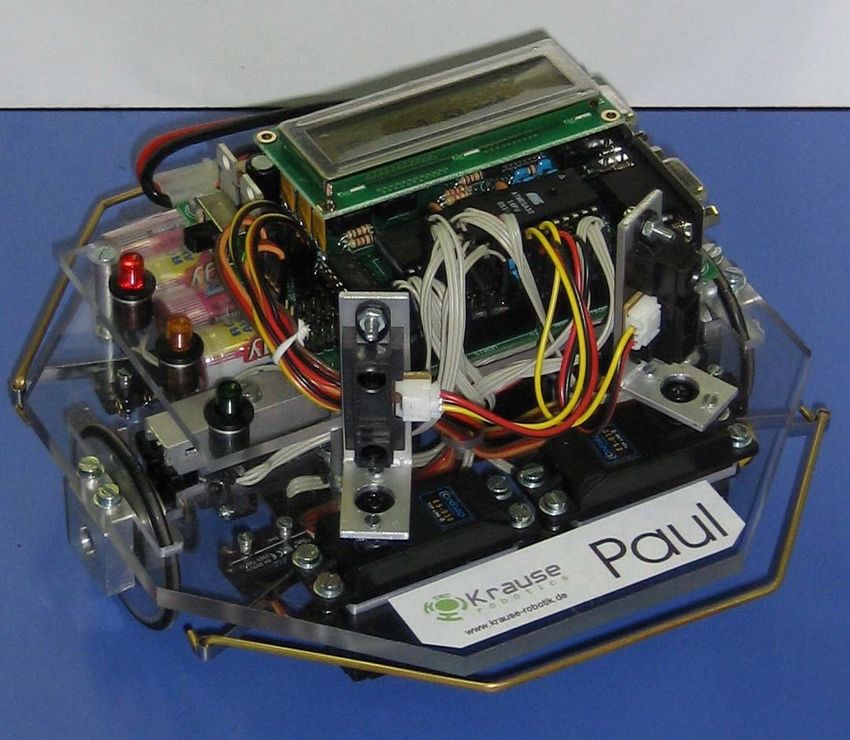
lot of financial support, which in most cases neither schools
nor parents can provide.
The First Lego League (FLL) [4] [5] is an international
contest especially aimed at students. It offers challenging
and complex tasks which are changing every year. Alt-
hough the tasks are quite complex, they consist of easier
subtasks which can also be mastered by younger students.
The main drawbacks of FLL are the mandatory use of
LEGO and a relatively high fee the teams have to pay for
participation.
Another international contest is Eurobot [6], which has
been annually held in France and is now going to take place
in different countries every year. Due to its very complex
tasks, Eurobot is more appealing to teams of university
students than to high-school students.
Besides these international contests, there are several na-
                                                                       Fig. 1. Two LEGO-Robots in the maze of RoboKing 2004. Notice the
tional robotics competitions in Germany. Most of these                 black beacons and how the black lines divide the table into quadratic
competitions act as meeting points for robotics-hobbyists              sections.
from the whole country but are not focused on students or
educational issues.
In this situation, we felt there was a gap to fill and thus we          B. The Tasks
created the idea of RoboKing [7] [8]. This new robotics                   As mentioned above, the tasks should be a challenge
contest should have the following characteristics:                     to advanced students without asking too much of the
                                                                       beginners. So the tasks have to be designed in a way
  •   A task suitable for teams of up to 5 students of age
                                                                       that they can be solved by several differently complex
      14 and above. The task should be simple enough for
                                                                       (regarding programming as well as mechanics) strategies
      committed students without previous knowledge in
                                                                       and solutions. The more complex these solutions are, the
      robotics, but should also offer enough potential and
                                                                       more advantages should the robot have, but the harder it is
      complexity to be challenging for advanced pupils.
                                                                       to implement them.
  •   Financial support for the teams. Each team should
      be supported with a voucher of approximately 300                 C. The Task 2004
      Euro they can use to pay for all the materials that                 In the first contest in 2004, the robots had to navigate
      are needed to build the robot. These vouchers are                through an unknown maze, find some infrared emitting
      completely financed by our sponsors.                              beacons, and switch them into one of two possible states.
  •   Unexperienced teams should be supported with a de-               At the same time, the opponent robot tried to switch the
      tailed documentation about sensors and other robotics            beacons in the opposite state. So there were always two
      specific issues. There should be a forum where the                robots playing against each other. The field was a flat blue
      participants can ask questions about whatever problem            surface with dimensions of 2.40 by 2.40 meters. Black lines
      they might face.                                                 divided it into 64 quadratic fields of 30 cm length each.
  •   No restrictions regarding the materials or sensors used.         The robots could use these lines for orientation. A simple
      The students should be able to build the robot just the          CNY70 reflex-coupler was able to distinguish between the
      way they want to.                                                blue surface and the black lines.
  •   Presentation on a fair to get as much public attention           The corridors and dead ends of the maze the robots had to
      as possible.                                                     move through, were formed by white walls of 15 cm height.
  •   The teams should be able to keep their robot after the           These walls could be put together in a very flexible way
      contest.                                                         which enabled us to create many different mazes. The only
  •   Attractive prizes as additional incentives. (The first            limitation was that the walls always had to form rectangular
      prize at RoboKing 2004 was a Sony AIBO, this year’s              corners. The robots started in two opposing corners of the
      price will be a Robonova humanoid robot.)                        table. The maze was always designed symmetrically, so
After we developed the ideas and a detailed concept, we                that it looked the same for both robots.
began looking for sponsors and supporters. We were able to             The beacons (Fig. 2) hung down from the walls into the
organize the first RoboKing finals on the Hannover Messe,                corridors and emitted a infrared signal that was modulated
the biggest industrial fair worldwide, in April 2004. All              with 38 kHz. The robots could sense that signal with a
RoboKing finals have been held on the fair since then. After            TSOP38 sensor. To switch the states of the beacons bet-
the great success, we continued and extended RoboKing                  ween ”red” and ”green” the robots simply pushed against a
to more teams. And of course, there is a new task every                trigger at the bottom of the beacons. The beacon’s current
year. The following sections describe the tasks of the three           state was signaled by two LEDs on top of them. To make
contests that took place so far.                                       the states ”visible” to the robots, the emitted infrared signal

                                                                 340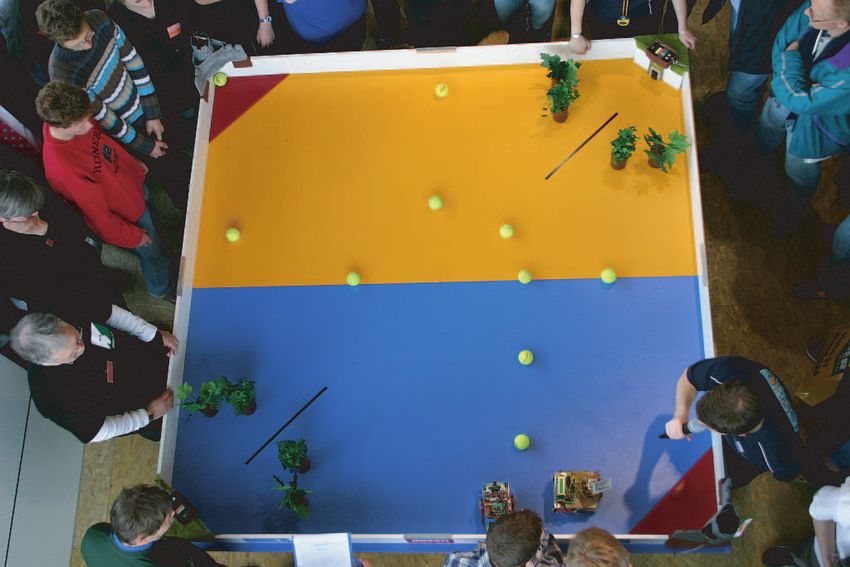
Fig. 3. The arena of RoboKing 2005 during the finals in April 2005
                                                                                   at Hannover Messe, the biggest industrial fair worldwide. Notice the
                                                                                   homebases (red triangles), the tennisballs, and the hidden switches in the
                                                                                   corners behind the trees which emptied the opponent’s base.

                                                                                   D. The Task 2005
                                                                                      The task for the second national RoboKing contest was
                                                                                   entitled ”Treasure Hunt”. The robots had to collect 10
                                                                                   tennis balls that laid on the field and bring them into their
                                                                                   own base. To make the task more challenging and more
                                                                                   dynamic, there were two hidden switches on the field. If
                                                                                   a robot activated that switch, the home base of the enemy
                                                                                   was lifted up, so all collected balls rolled out back into the
Fig. 2. A beacon. Notice the big red and green LED on top of it. They
show the actual state the beacon is in. The infrared-LED is just beneath
                                                                                   field. Of course, these switches were not easy to find. The
the white body. The switch is at the bottom, so that the robots can simply         robots had to find a way through some stylized ”trees”
drive against it.                                                                  which served as obstacles before they could reach the
                                                                                   switch. Although a black line could be used to navigate
                                                                                   into the forest (see figure 3 for a layout of the arena),
                                                                                   finding out was very difficult for the robots. So only the
                                                                                   best teams were able to use this strategic possibility. The
changed as well. The ”red” and ”green” signal had different                        switches could be used only twice per game and were
on-off ratios. One robot had to switch all beacons to red,                         deactivated during the last 90 seconds of the match. Each
the opponent had to switch everything to green.                                    match lasted 5 minutes.
All beacons started in a neutral state. After being triggered                      20 Teams participated in this second national RoboKing
for the first time, they switched into red or green randomly.                       contest. Again, the teams tried several strategies of
After that, each trigger pulse switched the state from red                         different difficulty levels to solve the task. Some tried to
to green alternately. After a beacon had been switched to                          find the balls and homebases by using a small camera,
green, the ”red” robot was of course able to switch it back                        the CMUcam. Others searched the table systematically
to red and vice versa.                                                             and used the walls to localize themselves on the arena.
Each game lasted 10 minutes. After that, each team got                             The matches themselves were very dynamic, due to the
points for each beacon switched to their respective color. If                      many balls that were rolling and moving across the table.
the teams had to touch the robots during the match, maybe                          The possibility to empty the opponents base added an
because they got stuck, the referees subtracted penalty                            extra amount of thrill and challenge so both teams and
points for each interference.                                                      spectators got very excited watching the matches.
This task met our requirements in terms of complexity.
The very basic behaviors the robots needed to have were
detecting the beacons, sensing walls and being able to                             E. The Task 2006
drive straight ahead in the corridors and turn at junctions.                          The motto of the current contest is ”Building the Castle”.
Teams of beginners without previous knowledge were able                            The robots have to collect wooden building blocks and
to construct and program such a basic robot in the given                           transport them through a series of obstacles to a predefined
time. More sophisticated robots included algorithms for                            construction site on the opposite side of the table. Obstacles
mapping of the maze, path planning or even strategies that                         include a narrow bridge over a trench, a canyon and
took the movements of the opponent robot into account.                             a stylized forest. The robots can score bonus points by

                                                                             341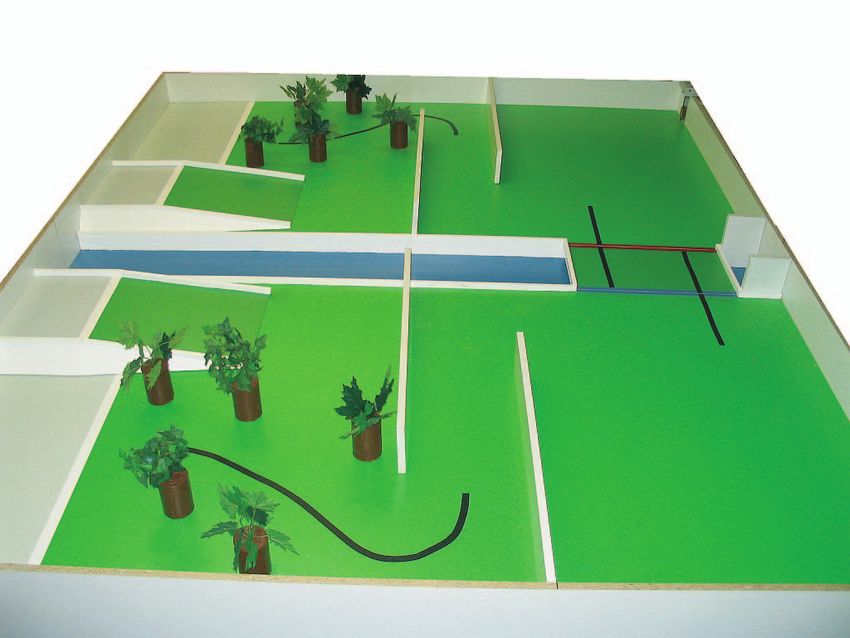
in 2004, over 280 high-school students participated in the
                                                                                contest. Many teachers who served as team leaders started
                                                                                to use robots in their lessons, especially during computer
                                                                                science courses. We further support those teachers by
                                                                                organizing workshops and tutorials, sharing our experience
                                                                                with educational robotics and thus giving them a good start.
                                                                                In addition, many students and teachers continue to work
                                                                                in robotics or electronics projects in their spare time after
                                                                                school.
                                                                                G. Evaluation
                                                                                   Of course we are interested in the team’s opinion about
                                                                                the contest itself, but also in how they addressed the task,
                                                                                how and what they learned, what their main interests are
                                                                                and what they are going to study after finishing school.
                                                                                These answers are gained by questionnaires for the team
Fig. 4. Two of the robots built by high-school students during RoboKing
2005.
                                                                                as a whole and for individual students. This section pres-
                                                                                ents some of the most interesting results from this year’s
                                                                                evaluation.
                                                                                   Asked ”What are your main interests?”, the majority
                                                                                (25 from 40) mentioned ”programming”, and 17 answered
                                                                                ”electronics”. An interesting effect is that being asked ”In
                                                                                which fields did you learn most during the contest?” 26
                                                                                from 40 answered ”electronics” and only 18 said ”pro-
                                                                                gramming”. So it seems the students learned most in the
                                                                                fields they were not interested most in the beginning. Figure
                                                                                6 shows these results. Another proof which stresses the
                                                                                fact that RoboKing is a team-experience can be found in
                                                                                the answers to the question ”How did you learn?” 48%
                                                                                answered ”from other team members”, 36% claimed ”I
                                                                                learned by myself from books, internet etc.”. Only 15%
                                                                                learned from the teacher or adult tutor (fig. 7). The student’s
                                                                                main interests also influence what they want to study after
                                                                                finishing school. Only one of the 40 asked students does not
Fig. 5. The arena for RoboKing 2006. Notice the three main obstacles:           want to study at an university. As can be seen in figure 8,
The bridge, the canyon, and the forest.
                                                                                the students clearly favor computer science as their planned
                                                                                main subject at university (26%), followed by electrical
                                                                                engineering, information technology and automation (13%
delivering the wooden blocks on a small elevated platform
                                                                                together), and physics (13%). Mechanical engineering ran-
which can be reached by a hidden slope. To our surprise,
                                                                                ked 4th with 11%. These ratings did not change signifi-
hardly any team used the slope to actually drive up that
                                                                                cantly during the participation, although a few students
platform. Instead, they constructed a mechanical device to
                                                                                changed their plans signigicantly (e.g. from becoming a
lift the stones up from the side and let them slip onto the
                                                                                police officer to studying electrical engineering).
platform.
Although this task is more statically than the previous one,                        III. ROBO K ING - A CONTEST FOR UNIVERSITY
it requires several different abilities, such as wall following,                                         STUDENTS
line following, precise navigation by wheel encoders and                          RoboKing is not only a contest for high-school students.
re-orientation on several landmarks. Due to increasing                          A similar concept (and the same name) has been used for
support from our sponsors we were able to extend the                            5 years for an internal contest for university students of au-
number of participating teams to 25.                                            tomation technology and computer science. Accompanied
                                                                                by lessons in control theory, automation technology and a
F. RoboKing - A successful concept                                              basic course in artificial intelligence, they have to solve the
   The public presentation of the RoboKing contest on                           ”Robots-In-A-Maze”-task described in section II-C during
the Hannover Messe, the world’s biggest industrial fair,                        a one year mandatory course. The students can use a fleet
caused a lot of positive feedback and reactions by media,                       of six little robots which are equipped with two turnable
sponsors and spectators. Several newspapers and magazines                       range sensors mounted on servos, wheel encoders, reflex
reported, as well as one of the best known TV science                           couplers and bumpers (figure 9). The robot’s controller, an
program in Germany and Austria. Since the first RoboKing                         ATmega32, is programmed in C.

                                                                          342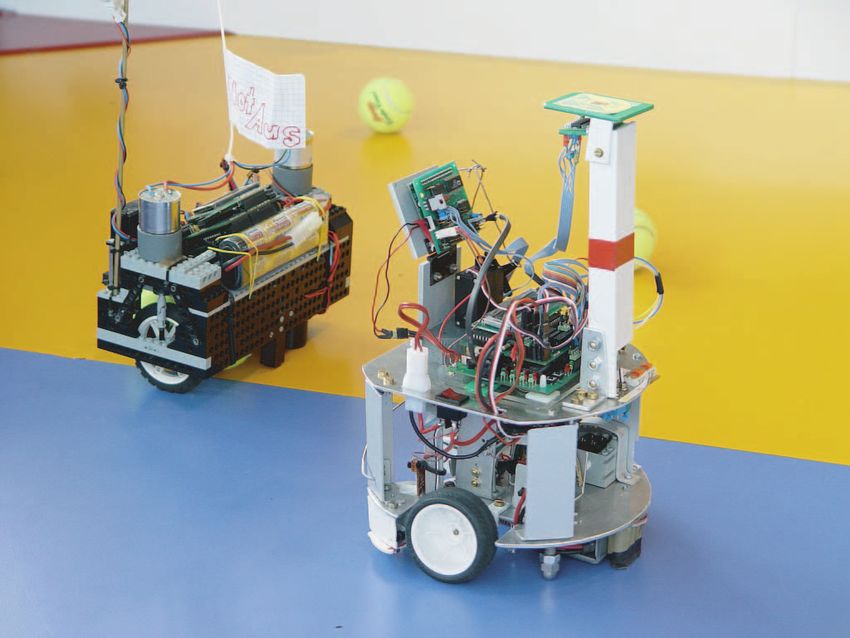
Fig. 8. What do RoboKing students want to study after finishing school?

Fig. 6. What are RoboKing students interested in and what did they
learn most during the contest?

                                                                           Fig. 9. One of the robots used by undergraduate students during their
                                                                           contest.

                                                                           instance the open day. The best teams are awarded with
    Fig. 7.   How did RoboKing students learn during the contest?
                                                                           certificates and prices.

                                                                            IV. E UROBOT - A N INTERNATIONAL CHALLENGE FOR
   During the course, the students can apply several to-
                                                                                            OUR BEST ROBOT BUILDERS
pics they learned in the theoretical lessons, for instance
the various types of controllers, or software architecture                    Eurobot [6] is an international robotics contest which is
approaches like the well-known subsumption architecture                    especially aimed at university students but is also open
or simple neural networks.                                                 to amateur robotics groups. It evolved from the French
Students work together in small groups of 2 or 3 students.                 Coupe de France de Robotique to an international event
We usually form mixed groups consisting of one student                     open to teams from all over the world. Eurobot is held
of electrical engineering and one of computer science. This                annually in different European countries, for instance Fran-
helps students to improve their interdisciplinary communi-                 ce, Switzerland or Italy. The first international Eurobot
cation skills, and makes them learn from each other. This                  competition was held in 1998. Since that time the contest
concept has profen to be very effective.                                   grew constantly and thus over 50 teams participated in the
   Over the year, we hold several preliminary contests,                    latest Eurobot in 2005.
where the robots have to solve simple tasks that are part                     The rules are changed every year, although some key
of the overall task of navigating through the maze. These                  features, e.g. the match time of 90 seconds, remain the
sub-tasks involve wall-following or driving straight ahead                 same. The competition area is usually a 2 x 3 meter wide
without orienting on walls but using wheel encoders only.                  surface. During the last years, the robots had to play Rugby,
The preliminary contests serve as milestones and help                      Bowling, Billiard or Basketball. Besides the exciting robot
students to develop the robot’s abilities in a logical order.              competitions, Eurobot also includes demonstrations, talks
The contest ends with the big finals which attract many                     and conferences and social events. Eurobot is promoted
spectators, students as well as professors. If possible, we                throughout Europe by television stations, like the French
hold the finals on public events at the university, for                     M6 channel.

                                                                     343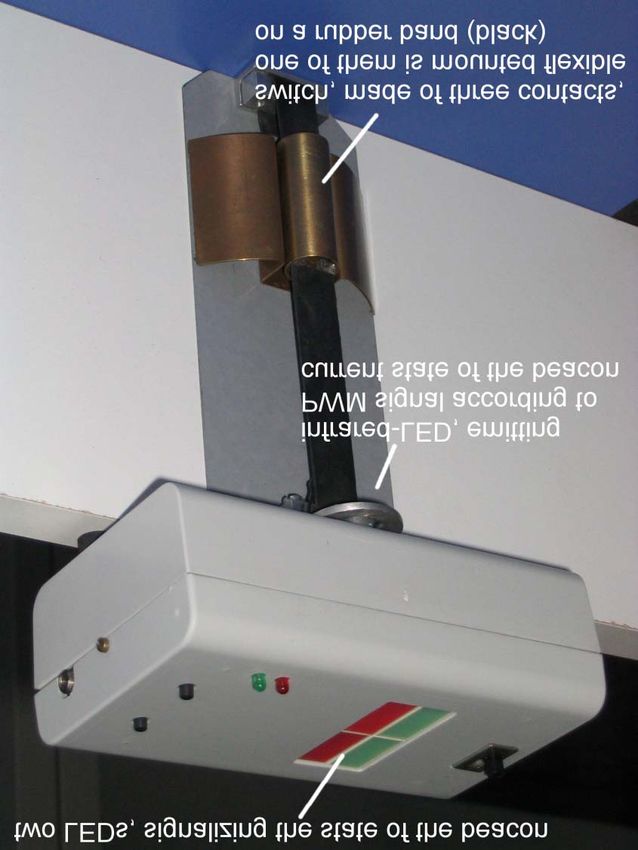
dents to study engineering sciences. Robotics contests offer
                                                                                 excellent possibilities to achieve this goal. Not only the
                                                                                 participating students are influenced in a positive way, but
                                                                                 also the spectators of the event or even those reading
                                                                                 about the contest on a website. There are many high-
                                                                                 school students out there who would like to gain practical
                                                                                 experience and apply their knowledge and talents. Too
                                                                                 often, they lack the opportunity to do so, or they cannot
                                                                                 find classmates or friends with the same interests. Technical
                                                                                 contests in general, not only those related to robotics, can
                                                                                 help to bring those interested students together. Very often,
                                                                                 once the first step is taken, a permanent interest group is
                                                                                 established in the school under the supervision of a teacher.
                                                                                 This way, even after the contest, more pupils in that school
                                                                                 can share their interests and continue working on technical
                                                                                 projects.
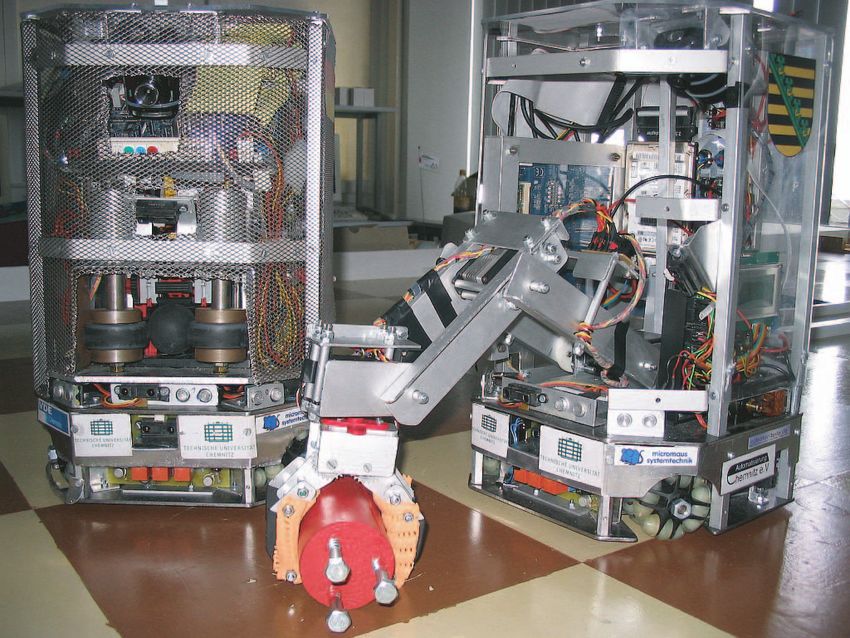
Fig. 10. The two robots our team built for Eurobot 2005. The left robot
is the attacker, it can shoot squash-balls at the enemy skittles to make         The second goal of our efforts, motivating young university
them fall down. The robot on the right is the defender, it can use its           students to specialize in robotics or related disciplines, can
gripper to re-erect the own skittles that were shot by the opponent.             also be supported by the contests we presented in this
                                                                                 paper. Many Students entered our robotics group during
                                                                                 their first years at the university and later took part in
   At our university, our robotics group participated three
                                                                                 RoboKing or Eurobot competition or even both. During
times in this unique competition. Every year, a team of
                                                                                 the end of their studies, these students are more and more
approximately 20 students is formed. The challenging tasks
                                                                                 involved into the current robotics related research going on
requires the team to consist of students of different engi-
                                                                                 at our institute. [9] [10] [11].
neering sciences. Our team usually unites students from the
                                                                                    Most of the work described in our paper has been done
electronics, mechanics and computer science department.
                                                                                 and organized by undergraduate and graduate students,
Students can not only use the Eurobot competition as a
                                                                                 including the authors. These very committed students spend
perfect chance to apply the knowledge they gained during
                                                                                 many hours of their spare time to help bringing robotics
their studies in a practical project. Even more important
                                                                                 closer to other students and therefore help to foster and
is the teamwork, the collaboration of students from so
                                                                                 educate future researchers in the field of robotics.
many different backgrounds and subjects. So participating
in Eurobot does not only require and advance technical                                                     R EFERENCES
knowledge, but also a lot of soft-skills. Besides that, to                        [1] Hiroaki Kitano, Minoru Asada, Yasuo Kuniyoshi, Itsuki Noda, and
finance the costs for the robots (which are usually more                               Eiichi Osawa. RoboCup: The robot world cup initiative. In W. Lewis
than 1000 Euro each), the students have to look for                                   Johnson and Barbara Hayes-Roth, editors, Proceedings of the First
                                                                                      International Conference on Autonomous Agents (Agents’97), pages
sponsors and support.                                                                 340–347, New York, 5–8, 1997. ACM Press.
   The many hours of work the students invest into the                            [2] Hiroaki Kitano, Sho’ji Suzuki, and Junichi Akita. Robocup jr.:
Eurobot project are credited by a special certificate. Parti-                          Robocup for edutainment. In Proceedings of the IEEE International
                                                                                      Conference on Robotics and Automation, ICRA00, 2000.
cipating students also use the Eurobot project to gain their                      [3] RoboCup. http://www.robocup.org/.
mandatory project assignments, seminar papers or student                          [4] The First Lego League. http://www.firstlegoleague.com/.
research projects. In this way, Eurobot is integrated into                        [5] Doug Oppliger. Using first lego league to enhance engineering
                                                                                      education and to increase the pool of future engineering students.
the normal curriculum.                                                                In Proceedings of the IEEE Frontiers in Education Conference
   Eurobot’s rules are always published in late September.                            (FIE02), 2002.
The international finals are held in May, but the rules                            [6] Eurobot international website. http://www.eurobot.org/.
                                                                                  [7] Niko Sünderhauf, Thomas Krause, and Peter Protzel. Bringing
require national qualification contests if there are more than                         Robotics Closer to Pupils. In Proceedings of the IEEE International
three teams from one country. We organized the last two                               Conference on Robotics and Automation (ICRA05), 2005.
national contests in conjunction with the RoboKing contest                        [8] RoboKing website. http://www.roboking.de/.
                                                                                  [9] Niko Sünderhauf, Kurt Konolige, Simon Lacroix, and Thomas
for high-school students on the Hannover Messe in April.                              Lemaire. Comparison of Stereovision Odometry Approaches. In
So besides building, programming and testing our robots,                              Workshop Planetary Rovers, IEEE International Conference on
our group also has to deal with the organizational issues                             Robotics and Automation (ICRA05).
                                                                                 [10] Niko Sünderhauf, Kurt Konolige, Simon Lacroix, and Peter Protzel.
of organizing a booth on a fair.                                                      Visual Odometry using Sparse Bundle Adjustment on an Autono-
                                                                                      mous Outdoor Vehicle. In Levi, Schanz, Lafrenz, and Avrutin,
                        V. C ONCLUSIONS                                               editors, Tagungsband Autonome mobile Systeme 2005, pages 157–
                                                                                      163. Springer Verlag, Reihe Informatik aktuell, 2005.
   We presented our threefold approach to increase the                           [11] Thomas Krause and Peter Protzel. Steuerungskonzept für mobile
interest of high-school students and young university stu-                            Roboter in dynamischen Umgebungen. In Levi, Schanz, Lafrenz,
                                                                                      and Avrutin, editors, Tagungsband Autonome Mobile Systeme 2005,
dents in robotics and in technical issues and engineering                             pages 287–293. Springer Verlag, Reihe Informatik aktuell, 2005.
in general. Our first goal is to motivate high-school stu-

                                                                           344
You can also read


