Brookfield Elementary Family Handbook 2019-2020 - A CARING LEARNING COMMUNITY - 276-3153 1728 Ridge Road, Brookfield, VT 05036 - Orange ...
←
→
Page content transcription
If your browser does not render page correctly, please read the page content below
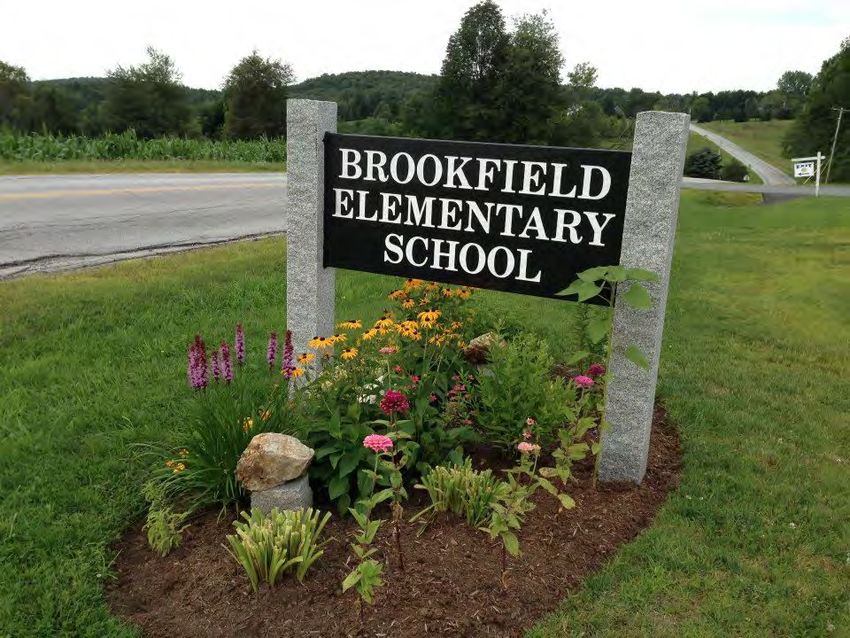
Brookfield Elementary
  Family Handbook
     2019-2020
               276-3153
  1728 Ridge Road, Brookfield, VT 05036

     http://www.orangesouthwest.org/brookfield

       https://www.facebook.com/brookfield.vt

    A CARING LEARNING COMMUNITY
Welcome to the 2019-2020 school year at Brookfield Elementary!

       This handbook is intended to be a resource for you and your family. Keep it
handy for when you need to get in touch or if you need to check on a school policy or
procedure. Whenever you have a question or feel that you have helpful input, please
give us a call.

       Our motto is that we are “A Caring Learning Community.” We take this
responsibility very seriously. Caring is hard work and requires vigilance. It means
being actively aware of the needs of every individual – academically, socially, and
emotionally. Caring is not passive. It means our radar is up continually to monitor
the well-being of everyone in our learning community. You, as a parent/guardian,
are part of this caring community. We rely on you to let us know if there are things
we need to be aware of regarding your child; changes in your home situation; or
events that may impact your child’s school life. At the same time, we are committed
to communicating with you to keep you in the loop when things are going well and
when we have a concern. Effective communication is the foundation of caring.

       This handbook is a small part of our efforts to share information with you.
When we are all on the same page regarding expectations and procedures, life is less
stressful for all of us, especially our kids. Please let us know if you have concerns,
questions, or ideas to continue to keep our school a vibrant and healthy community

David Roller
Principal

                         Student Hours: 8 a.m. – 2:40 p.m.
                    Playground supervision begins at 7:30 a.m.

               The Brookfield School District is an active partner in the
                         Orange Southwest School District
OSSD Administration
24 Central Street, Randolph VT 05060
802-728-5052
Layne Millington, Superintendent
Robin Pembroke, Business Manager
Steve Kinney, Director of Student Services
Wes Gibbs and Bob Worley , Co-Directors of Maintenance and Building Safety
Karen Russo, Director of Food Services
Tina Schiendel, Director of Technology
Danny Bellavance, Director of Transportation
Linda Lubold, Administrative Assistant
Brookfield Elementary Administration
802-276-3153
David Roller, Principal
Christina Jacobs, Administrative Assistant
Brookfield Staff
Tiffany Seitz: Kindergarten
Haley Pratt: Grade 1
Sylvia Moore: Grades 2 and 3
Amy Ferris: Grades 3 and 4
Richard Hayward: Grades 5 and 6
Jennifer Wellman: Special Education
Julie Maccarone: Special Education
Katie Clark-Johnson: Academic Intervention
Christine Gilbert: Library/Media, Math
Jennifer Grace: Nurse
Todd Keenhold: Physical Education
Lauren Futtner: Health and Physical Education
Martha Blaisdell: Guidance
Lyndley Mittler: Art
Kathy Hollander: General Music & Instrumental Music
Harriet Hart: Preschool
To contact any staff member, please call the main school number. Staff email
addresses use the first initial and last name followed by orangesouthwest.org
Sample: Alice Smith would be: asmith@orangesouthwest.orgENDS STATEMENT
In 2009, the school boards of the Orange Southwest School District
(encompassing Brookfield, Braintree, and Randolph), embarked on a
process to solicit input from community members to identify the skills
and knowledge that our students must acquire to be successful in the
21st Century. The result of this lengthy process was distilled into a
“mission statement” for the schools of the OSSD, known as the ENDS
STATEMENT. This statement was revised in October of 2010. This
statement of purpose, along with the standards mandated by state and
federal regulation, drives all of our curricular, instructional, and
assessment goals and practices.
“Students have the knowledge, skills and tools to be prepared for the
next stage of their lives, which justify the resources invested by the
community.
Further, our core focus is on the following:
1.1 Critical Thinking: Students creatively apply experiences and
critical analysis to solve problems and make informed decisions.
1.2 Foundational Thinking: Students possess comprehensive
knowledge of a core curriculum in the following areas:
1.2.1 Reading, writing, and communication
1.2.2 Mathematics
1.2.3 Science
1.2.4 Social Studies
1.2.5 Life Skills
1.2.6 The Arts
1.3 Ability to Adapt: Students are adaptable, resilient, and can
manage change.
1.4 Information Technology: Students use and apply information
and technology appropriately, effectively, and objectively.”
Adopted June 2009
Revised October 11, 2010Brookfield Elementary and Orange Southwest School District
SCHOOL AND PARENT COMPACT FOR LEARNING
Created by parents and school personnel
Adopted September 2006
Orange Southwest School District is committed to working with all parents in the best interests of their
children. The purpose of this agreement is to provide guidance on the development of an effective
partnership between school personnel and parents. Research shows a strong link between parental
involvement and academic success for children. Together, we can assist each student to achieve high
standards, as delineated in the Vermont Framework of Standards and Learning Opportunities (these
standards identify the essential knowledge and skills that should be taught and learned in school), and to
develop the ability and desire to learn independently.
The cornerstone of the parent-school relationship is communication. Thus, the school commits to conducting
a minimum of two parent conferences each year – one in the fall to learn from you about your child and to
share early observations. The mid-year time is devoted to parents and teachers with specific concerns or
questions about student progress. Spring conferences are to review student work and to set end of the year
goals. The school will communicate frequently through other means such as class and school newsletters,
telephone calls, and additional conferences as necessary. Also, the OSSD reporting system ensures
communication regarding student progress. School personnel will make themselves available to parents
who have questions or concerns and will attempt to work together with parents to resolve any issues.
Parent participation in the goals of this compact is essential. It is important to acknowledge that parental
involvement can be achieved in many different ways. Parents are welcome to visit classrooms to observe,
volunteer, and otherwise participate in their child’s education. Being involved really means making sure that
your child gets a clear message that learning is important to you. Parents can accomplish this in a variety of
ways. Each family can find its own best way of being involved. Below are some suggestions for how to be
involved with your child’s education in positive ways.
RESPONSIBILITIES
Each staff member, parent, and student is encouraged to pledge to this compact according to his or her role:
As a staff member, I will strive to:
• Provide a safe, pleasant, and caring learning atmosphere, helping students learn to resolve
conflicts;
• Encourage students and parents by providing verbal and written information about the current
school programs and about student progress;
• Invite parents to visit classrooms, volunteer, and otherwise participate in their child’s
education;
• Help each child achieve academic and social success in his/her school experience;
• Make a deliberate effort to get to know and value each child;
• Demonstrate professional behavior and a positive attitude.
As a parent, I will strive to:
• Support my child, the staff, and the school;
• Let the school know when I have a concern so that we may address it together;
• Talk with my child about his/her academic and social successes and challenges;
• Talk with my child about the importance of school and life-long learning;
• Promote learning at home by encouraging reading, problem solving, writing, etc.
As a student, I will strive to:
• Show respect for myself, others, and the environment;
• Cooperate with other students and adults;
• Ask for what I need to be successful;
• Take responsibility for my actions, words, and attitude;
• Always do my best.VISITING THE SCHOOL
We welcome parents and other community members to be a part of our school. On the
other hand, our staff is primarily responsible for and to the children, so we need to avoid
distractions from the school’s primary purpose. We have created the following guidelines in an
attempt to have your visit be successful without causing undue distraction to school staff and
children.
All Visitors: During school hours, the building will be locked, so you will need to be let into the
building at the front door after identifying yourself and purpose. We ask that, all visitors sign our
guest book and check in at the office and complete all necessary forms. If you are not a “familiar
face” you will be asked to wear a visitor tag, so that school personnel will be assured that you
have checked in.
Parents: Occasionally, parents need to stop by before school to touch base with their child’s
teacher or another staff member. This is understandable and manageable as long as it is done
by appointment. The front door will be locked, so you will have to wait until someone is available
to let you in. If it happens often, it interferes with the staff’s ability to get the day off to a smooth
start. We ask that you keep the following in mind:
• Keep such visits to a minimum
• Remember that children come into the building at 8 AM – staff members are on duty at
that time, so please arrive before that and leave your child outside to line up with his or
her class
If you need to stop in during the day, when you check in before entering the building please
state the reason for your visit. In an effort to keep class interruptions to a minimum, we will try
to help you first. Also, we will be able to tell you if the class is elsewhere in the building. If you
are dropping something off, we’ll deliver it at an appropriate time. If you are just checking Lost &
Found, we’ll show you the way!
If you are picking your child up during the day, please check in at the office and we will
phone the room to get your child. Only parents (or those authorized by the parents) may pick up
children. It is always helpful if you let us know ahead of time that your child will be leaving early.
If you are picking your child up at the end of the day, please follow the guidelines under
“Dismissal” in the Attendance section. If you arrive earlier than 2:40 pm, please wait in the
lobby. This is a particularly busy time for teachers, with many important details that require their
attention. Visits to the classroom at the end of the day need to be avoided if at all possible.
Volunteers and Chaperones: We welcome and value your commitment to our school. Please
note the following guidelines.
• Annually, all volunteers and chaperones must fill out the Volunteer Enrollment form prior
to the event, preferably at the beginning of the school year.
• Treat any information regarding students as confidential
• Report disciplinary issues to the supervising staff member
• Conform to the school district policies, which forbid the use of tobacco, alcohol or drugs
by students or adults at school or at school related events.
• Report information of a personal nature or information, which relates to child safety to
the supervising staff member or principal
• Use appropriate and respectful language/behavior
• Please wear clothing respectful to our school environment
• Seek answers to questions and advice from the supervising staff member
• Understand that we do not permit younger siblings of our students to be with
chaperones on field trips or to accompany a parent when they are volunteering.ENROLLMENT OF STUDENTS
When a student enrolls in one of our elementary schools, the office will ask for the following
information:
● A copy of the student’s birth certificate
● A copy of the student’s social security card
● A current immunization record
● A Release of Records to request files from the previous school
● Proof of residency
In accordance with the Vermont Statutes (T. 16, § 1075), Principals and Directors (or
designee) of the OSSD will pursue legal residency issues through the following procedures:
If a child is suspected of being a non-resident of a school district, the Principal/Director
(or designee) will contact the central office and superintendent.
The Principal/Director (or designee) will provide the parents a copy of the statutes (Title
16, § 1075).
Any or all of the items below may be requested from the parents:
● The first page of their most recent IRS Tax remittance.
● A signed affidavit stating their domicile is located within the school district’s
boundaries.
● An authorized Town document demonstrating the parent’s names are on the voting
list.
● A copy of the parent’s current driver’s license showing the proper address.
● A copy of a current utility bill (or other bill statement) showing the proper address.
The Principal/Director will ensure there is no “Homeless” issue with another school district.
If the Principal/Director remains unsatisfied with the information obtained, he/she will contact the
Superintendent who may obtain the proper consulting services for further investigation.
ATTENDANCE
It is the policy of the school district to set high expectations for consistent student school
attendance in accordance with Vermont law in order to facilitate and enhance student learning.
In accordance with 16 V.S.A. § 1121, Act 44, Section 46 (Truancy), and Vermont Department
of Education guidelines (March 23 , 2010 Memorandum), Truancy is defined as a student who is
rd
subject to compulsory attendance and who is absent without valid cause or excuse for ten days.
Valid causes for absences include: illness, observance of religious holidays, death in the
family, family emergency, situations beyond the student’s control as determined by the
superintendent (or designee), or other circumstances which cause reasonable concern to the
parent or guardian for the health or safety of the student and are confirmed in writing or verbally
by the parent or guardian to the student. To view the complete Attendance/Truancy Protocol
please go to Appendix Q in the back of this handbook.
When it is necessary for a child to be absent from school, the administrative assistants
should be informed by phone, or word should be sent by a brother, sister or friend the first day
of the absence. When calling the school, please do so before 8:30 AM. You are welcome to
leave a message on our voicemail system.
For the safety of the students, if a child is absent and the school has no communication from
home, the school will call home or each parent’s place of work to verify the absence.VACATION ABSENCE
Parents of children who miss school due to vacation plans not aligned with the school
vacations are asked to notify the school by filling out a planned absence form, providing as
much advance notice as possible. Our general procedure is or the classroom teacher to collect
missed assignments for a student, so they can be completed upon the student’s return, but it
may be possible for the assignments to be prepared in advance and sent with the student. The
student or parent should consult with the teacher to devise a plan for completing the work and
to minimize the disruption of the student’s learning.
TARDINESS
All students are expected to arrive on time. Delay of buses due to circumstances beyond the
control of the student is an acceptable excuse for tardiness. Parents providing private
transportation are expected to see to it that their children do not arrive late. Chronic tardiness is
a handicap for the student and a disruption to the entire class and teacher. If a student arrives
after the start of the school day, they will need to be let into the building and make their way to
their classroom.
DISMISSAL
The end of the day can be a very stressful time for students if they do not know whether they
are to take the bus, walk, be picked up or stay for an after-school meeting or event. Parents
and children should make these arrangements before the start of the school day. If your
arrangements vary from the transportation form, please send in a note or call the office in the
morning. In the event of an emergency, please call us by 2:00 and we will let your child know of
any changes. Please help us keep these last minute arrangements to emergency situations only.
If your child’s after school procedures vary in any way, such as waiting for a parent when
they usually rides the bus, or riding to a friend’s on a different bus, you must send in a note.
(NOTE: There may not be room for extra riders on some routes. If you want your child to
take a bus he or she is not assigned to, please check with the Transportation Supervisor,
Danny Bellavance, at 728-9276.)
Parents should understand that supervision is provided for students after school until
students are dismissed to their busses or are picked up. Students should be picked up no later
than 2:50. The after-school program is available for our students, but space is limited, so sign up
early.
CURRICULUM
Orange Southwest School District is working to adopt a K-12 curriculum, which fulfills the
requirements of the Common Core State Standards and the OSSD Ends.
Our goals:
• Establish clear goals and expectations for students
• Devise effective measures of student progress
• Report to students, families, and the community about student progress.
In striving to complete our vision of enabling "all students to realize their individual potential"
we offer a wide variety of supports to students. Parents concerned about their child's progress
are encouraged to bring their concerns to the classroom teacher.
FIELD TRIPS
Parents should be aware that classes from time to time will leave school grounds as part oftheir academic program. This may include a trip to the High School for a rehearsal or
performance, a visit to Chandler Music Hall or a local business, or in pursuit of a natural
resource. We will seek permission prior for these events.
EXTRA CURRICULAR ACTIVITIES
We believe that it is important for our students to have opportunities to practice leadership
skills as well as contribute to their community. There are several organizations, teams, clubs
and tests that are available for students to work together, compete or socialize. We are pleased
to be able to offer opportunities for students from all three OSSD Elementary Schools to
combine their efforts, such as our annual Music in Our Schools concert and 5K Fun Run.
ASSESSMENT
Assessment and testing has a role in a student’s life at school. We believe that assessment
should be ongoing, should demonstrate growth and achievement, and should highlight areas of
learning which drive our instruction.
We use a variety of assessments to help us understand what students know and in what
areas they need to grow. Authentic assessments in reading, math problem solving, and writing
assist teachers in understanding what students are able to do independently. Teachers can then
design instruction to help students increase their performance in the basic areas of the
curriculum.
In addition, federal and state regulations require that our students complete a number of
assessments. We have been using the SBAC (Smarter Balanced Assessment Consortium) in the
spring.
OSSD has developed a reporting system that helps parents and students understand each
child’s progress in learning basic skills as well as growth in social/emotional development. The
district is continuing to pilot a reporting system, which will be sent home in December, March
and June. These report cards focus on skills acquired at each grade level. Student
self-assessment is an important part of this reporting system. Children are encouraged to reflect
on the quality of their work during the learning process.
TRANSPORTATION
It is our goal to maintain a transportation system that is both safe and efficient and to make
sure each student has a safe, comfortable ride to and from school. In order to do this, each
student riding a school bus shall follow the expectations listed below:
• Be at the bus stop on time. Bus drivers are not required to wait for a tardy child.
• Load the bus in an orderly manner.
• Take a seat immediately and remain seated.
• Keep aisles clear.
• Talk in low voices, using proper language.
• Keep hands, head, and all other body parts inside the bus.
• Do not eat or drink on the bus.
• Do not be destructive.
• Keep the bus clean.
• Students may be assigned seats.
• Fighting and fooling around on the bus or while waiting are not allowed.
• Students should not have trinkets hanging off their backpacks that could
accidentally hit another student or get caught in the bus doors.
• Cooperate with the driver and observe classroom conduct.
Bus Disciplinary Procedures:In the event students fail to comply with the rules on the previous page, a three-step
procedure will normally be followed. However, for serious offenses, such as vandalism, fighting,
smoking, insubordination, use of drugs or other serious violations, the principal can go directly
to step 2 or 3 of the procedures.
1. Upon receipt of a written report from the bus driver, the principal and/or the behavior
specialist will discuss the incident with both the driver and the student involved.
The principal and/or the behavior specialist will warn the student and notify his/her
parents in writing that a second report will mean a bus suspension for up to five days.
2. Upon issuance of a second report, the student will be suspended from riding the bus for
up to five days.
3. Should a third report be issued, the principal may suspend the bus riding privilege for
the remainder of the year.
It is the responsibility of the parents or legal guardians to ensure the safety and well being of
their child until s/he enters the school bus each morning and to again resume that responsibility
when the child leaves the bus at his/her bus stop after school each day. (see Transportation
policy #9201)
Students must have a note from their parent or guardian if they would like to ride a bus to a
location other than their usual drop off. If it is on a different bus, parents should contact the
Transportation Supervisor, Danny Bellavance, at 728-9276 to determine if there is room.
At the discretion of the bus driver, music may be played on your child’s bus. Maintaining a
safe, positive environment for the children is our goal.
POSITIVE BEHAVIOR INTERVENTIONS AND SUPPORTS (PBIS)
Learning how to be a successful member of a diverse community is one of the most important
elements of a child’s public school education. At Brookfield Elementary, we have embraced the
principles of PBIS. This approach to helping students to be successful at school is based on the
idea that children benefit when expected behaviors are taught explicitly, just as we teach
academics, and that we respond to behavior errors in the same way that we respond to
academic mistakes. In short, we are clear about what successful behavior looks like and we
reteach, model, and support students who are having difficulty achieving the expected behavior.
Just as we would never punish a student for spelling a word incorrectly, punishment has no
place in school. We believe in helping children learn from behavior errors through reflection,
making amends if necessary, and planning what to do moving forward so that the same error
isn’t repeated. ALL students make behavioral errors at times. It is a learning process.
At times, there are appropriate consequences imposed for repeated behaviors when a child is
struggling to put “good citizenship” rules into practice or is intentionally ignoring those
expectations. For example, a child who is repeatedly inappropriate with peers during soccer
games at recess, despite many discussions and second chances, may be “benched” from
playing soccer for a period of time in order for him/her to understand the need for good
sportsmanship. Parents will always be informed of repeated behavior concerns or serious
consequences. However, the vast majority of minor behavior-learning situations are simply part
of growing up and learning how to be a friend. Your child’s teacher is your best resource for
concerns about your child’s specific behaviors or if your child shares a concern with you
regarding a classmate’s behavior.
Tapping into the symbolism of our school mascot, the Brookfield Bear, we have created an
acronym to help our students remember our school-wide behavior expectations - “PAWS”,
which stands for:• P- Prepared for Success
• A - Attitude of Respect
• W - Willing to Help
• S - Showing Responsibility
As you will see below, every area of our building has specific behavior expectations aligned with
this acronym to help create consistency and common understandings for adults and children
alike.
Prepared for Attitude of Willing to Help S
howing
Success Respect Responsibility
* Be prepared to * Respect yourself * Look for * Take care of your
All Settings follow * Respect others opportunities to be own materials
instructions * Respect property helpful * Take care of
* Be aware of school materials
yourself and * Follow rules
what you need
to do
* Focus on * Walk at all times *Pick up items on * Walk directly to
Hallways where you are * Keep your hands the floor your destination
going and body to yourself * Report any * Take care of your
* Be aware of * Quiet concerns to a own business!
what you need teacher
to do
* Listen for
directions
* Wear * Include everyone; * Be a problem * Follow recess
Playground appropriate be kind; share solver rules
Recess clothing * Respect personal * Help younger * Use structures as
* Go to the space students designed and
bathroom * Be a good sport * Pick up items left safely
before recess behind * Take care of
* Know the equipment
playground
rules
* Use the * Use Level 2 voices * Use good table * Eat your own
bathroom * Sit in one place manners food
Cafeteria * Wash your * Ask permission if * Clean up your * Take your
hands you need to get up table area even if lunchbox
* Bring what or leave you didn’t make and water bottle
you need to the mess with you after
lunchroom lunch
* Be on time at * Use Level 2 voice * Help younger * Take care of your
the bus stop * Stay in your seat students follow materials and
Buses * Know the bus * Allow the driver to the bus rules make sure you
rules and focus on driving * Pick up any trash don’t leave
follow them or lost items anything on the
* Report any bus
bullying or other
behaviors* Ask to use the * Keep the bathroom * Report any * Wash your hands
bathroom clean problems after using
Bathrooms * Knock before * Flush you find in the bathroom
opening the bathroom * Quietly return to
door * Leave the your next activity
bathroom
cleaner than you
found it
On *Wash hands *Carry laptop in a hug *Report any *Respect
prior to using *Keep water bottle on problems passwords - yours
Computer computer the floor *Offer to help and others
or Online *Know password *Place the computer others *Follow online rules
*Wait for on a level surface *Take care of the
instructions computer
Dismissal *Have all of * Sit at assigned table *Be ready to help *Follow adult
your materials * Level 2 voice younger students directions
Room with you and be * Listen for directions *Pick up anything cheerfully
ready to go *Give personal space left behind *Take care of your
*Be ready when own materials and
your bus is Business!
called *Do not play with
*Have your note the tables
in hand if one is
needed
EXTREME BEHAVIORS
When very serious behavior problems arise, the teachers and principals will do everything
possible to make sure the student is handled in a fair and consistent manner, according to the
Student Conduct and Discipline policy #6202. Copies of the policy are available by calling the
school and are posted on our school website. We are required by state regulation to publish this
rubric for your information. However, in an elementary school, the vast majority of student
behavior errors never reach this level. In most cases, even serious behaviors are an opportunity
for teaching and supporting a student. Research into student learning shows that the traditional
avenue of punishment is NOT effective in teaching students the preferred behaviors to be
successful at school.
Note that bullying and harassment are serious. Often, students will share what they perceive to
be bullying behaviors with parents before we hear about it at school. Please call us as soon as
you hear your child describing behaviors of this nature!
Behavior First Time Second Time Third Time
Physical Aggression: • Reflection and • Reflection and • Reflection and
Pushing, hitting, punching, Process, Reteach Process, Reteach Process, Reteach
grabbing, kicking, throwing objects Expectations Expectations Expectations
that could harm someone or • Complete Student • Complete Student • Complete Student
similar behaviors that result or Success Plan Success Plan Success Plan
could result in someone getting • Student phone call • Student phone call • Student phone call
injured home home home
• Time may be spent • In-school • Suspension the rest
out of the classroom suspension the rest of of the day and the
for a period of the the day and possibly following day
day the following day • Team meeting with
the parents/guardian
Bullying: • Reflection and • Reflection and • Reflection and
Bullying” means any overt act or Process, Reteach Process, Reteach Process, Reteach
combination of acts, including an • Complete Student • Complete Student • Complete Student
act conducted by electronic Success Plan Success Plan Success plan
means, directed against a student • Student phone call • Student phone call • Student phone callby another student or group of home home home
students and which: • Time may be spent • In-school • Suspension the rest
(A) is repeated over time; out of the classroom suspension the rest of of the day and the
(B) is intended to ridicule, for a period of the the day and possibly following day
humiliate, or intimidate the student; day the following day • Team meeting with
and • Bullying reported to • Bullying reported to the parents/guardian
(C)(i) occurs during the school day the VT Department the VT Department of • Bullying reported to
on school property, on a school of Education (DOE) Education (DOE) the VT Department of
bus, or at a school-sponsored Education (DOE)
activity, or before or after the
school day on a school bus or at a
school-sponsored activity; or
(ii) does not occur during the
school day on school property, on
a
school bus, or at a
school-sponsored activity and can
be shown to pose a clear and
substantial interference with
another student’s right to access
educational programs.
Sec. 36. 16 V.S.A. § 11(a)(32)
Harassment: • Reflection and • Reflection and • Reflection and
Harassment” means an incident or Process, Reteach Process, Reteach Process, Reteach
incidents of verbal, written, visual, • Complete Student • Complete Student • Complete Student
or physical conduct, including any Success Plan Success Plan Success Plan
incident conducted by electronic • Student phone call • Student phone call • Student phone call
means, based on or motivated by home home home
a student’s or a student’s family • Time may be spent • In-school • Suspension the rest
member’s actual or perceived out of the classroom suspension the rest of of the day
race, creed, color, national origin, for a period of the the day and possibly • Team meeting with
marital status, sex, sexual day the following day the parents/guardian
orientation, gender identity, or • Harassment • Harassment • Harassment
disability that has the purpose or reported to the VT reported to the VT reported to the VT
effect of objectively and Department of Department of Department of
substantially undermining and Education (DOE) Education (DOE) Education (DOE)
detracting from or interfering
with a student’s educational
performance or access to school
resources or creating an
objectively intimidating, hostile, or
offensive environment.
Sec. 35. 16 V.S.A. § 11(a)(26)(A)
Vandalism: • Reflection and • Reflection and • Reflection and
Causing damage to or destroying Process, Reteach Process Process
school or another individual’s • Complete Student • Complete Student • Complete Student
private property, using graffiti on Success Plan Success Plan Success Plan
school and or private property • Student phone call • Student phone call • Student phone call
home home home
• Student restitution • Student restitution • Student restitution
• Student assigned a • Student assigned a
pass for designated pass for designated
areas areas for a longer
period of time
Maintaining a positive approach to behavior expectations in our elementary school is very
important. When behavior in the school is positive and responsible, students learn more and
teachers are able to teach better. OSSD believes the following principles create a strongframework for school expectations:
• The right of all to learn and teach
• Emotional safety for all
• Physical safety for all
• Respect for school and personal property
• Responsibility for attendance, work completion, and cooperation in the classroom and
other school environments
Student Rights
All students have the right to learn in an environment that promotes:
• Intellectual development
• Emotional safety
• Physical safety
• Social development
PROTOCOL FOR ADDRESSING SCHOOL/STUDENT PROBLEMS
Parents at times will ask us who to talk to if there is a serious question, concern, or complaint
regarding their child. First, please call sooner rather than later. Don’t let your concerns or anger
fester. Our school, as part of the Orange Southwest School District, has a step-by-step
procedure in place to help you through this process.
How to address a serious school concern regarding your child:
For a concern regarding a classroom/playground/cafeteria issue, speak first directly with
the supervising teacher. Ninety-nine percent of parent concerns are resolved at this
step! Call as soon as you have the concern.
If your concern is not resolved, or it is a bigger issue outside of your child’s classroom,
have a conversation with the principal. The principal may include teachers or other
staff members to participate in this discussion. Transparency and trust are critical
to all of us working together as a team to support your child.
If you still do not feel your concern has been adequately addressed, the next step is to
set up a meeting with the Superintendent of Schools, Layne Millington (728-5052).
Before meeting with you, he will speak with the principal and any other relevant staff
members to understand the scope of the problem and to be sure the previous steps
have been followed.
If, after speaking with the superintendent, you still feel that your concern has not been
addressed, you would then request that the superintendent set up a meeting with
the School Board chair to further discuss the issue.
HEALTH SERVICES
The American Academy of Pediatrics: Bright Futures recommends that all infants, children and
adolescents have an annual well care visit with their pediatrician.
School Nurse
The school nurse is in our school every Thursday. Her office is located in the main office suite
and is well equipped for routine school health care. Minor health issues (band-aids, aspirin, etc.)
are handled by the Administrative Assistant in the nurse’s absence. The school nurse or
Administrative Assistant sees many students each day for chronic health needs, illnesses, injury
and medication administration. The School nurse does vision and hearing screenings each
school year. The nurse visits each classroom each year to discuss personal safety. She also
conducts human growth and development classes on puberty with 5th and 6th graders. The
school nurse welcomes parents to call or visit to consult and discuss any health concerns theymay have regarding their child.
Medication
If your physician requests that your child receive medication at school, the medication needs
to be in the original pharmacy container (the pharmacy can give you a second bottle for school)
and accompanied by a Prescription Medication Order Form signed by your physician. An adult
must transport to and from school the medication. On field trips, individual doses will be packed
by the nurse and sent with the classroom teacher or individual assistant to administer. These
adults will receive complete instructions on the medication and its administration.
Non-prescription medication may be administered if the parent/guardian completes a
Non-prescription Medication Permission Form and returns it to us with the desired medication.
Permission for Tylenol administration is included on the Annual Health Questionnaire.
Immunizations
Vermont’s immunization law requires vaccination of all children enrolled in childcare or
school. Immunizations protect both individuals and the community. An official immunization
record must be presented to the school upon admission. If a student does not meet the vaccine
requirements they may be admitted provisionally only after the school nurse approves a
compliance plan for the child. Failure to meet requirements may result in exclusion.
During the 2012 legislative session, changes were made with regard to Vermont law that
allows for immunization exemptions. In order to claim a medical exemption, the child’s health
care provider must complete a medical exemption form. If a parent or guardian chooses to
exempt their child on religious grounds, they must sign an exemption form annually
acknowledging they have read and understand evidence-based information regarding
immunizations, and are aware of the risks associated with not vaccinating their children. All
exemption forms need to be completed, signed, and returned to the school. Students who
claim an exemption may be excluded from school during the course of a disease outbreak.
Additional information about immunizations and required forms may be found at:
http://healthvermont.gov/hc/imm/schoolentry.aspx
Illness
We expect children to come to school relatively healthy and fever free. However, because
of the number of students we have, parents should assume that their children will be exposed to
many communicable and nuisance diseases, such as the flu, whooping cough, strep and head
lice. Should there be several cases in a classroom, parents of the children in that classroom will
be notified. Please notify the school nurse if your child contracts something contagious.
Children are not kept in from recess for health reasons unless there are unusual circumstances
and a note from the child’s doctor has been received. If your child gets ill during school, the
parent (or the emergency care person named on the Annual Health Questionnaire) will be called
to come pick the student up.
Injury
Please notify the school nurse of any significant injury your child receives at home. Should
your child be injured at school, he/she should report it to an adult. The child will be referred to
the school nurse for treatment and assessment. If there is a concern that the injury is serious,
the parent will be contacted. If it is an emergency, the ambulance will be called for treatment at
our local facility.
Annual Health Questionnaire
Each school year parents will receive an Annual Health Questionnaire. This enables us to
have current information regarding your child’s latest health needs, whom to call in case of
illness or injury and whether you would like your child to be able to receive Tylenol should he/she
request/need it. Please help us by filling it out promptly. Parents should also inform the school
of a change in phone number, place of employment, or emergency contact so we can reach you
in case of emergency.O.S.S.D. School Nutrition Program
2019-2020
Every school in the O.S.S. District participates in the National School Breakfast and Lunch Program.
These are federally assisted meal programs allowing schools to receive reimbursement from the US
Department of Agriculture (USDA). To receive these benefits, schools must serve meals that meet
federal meal pattern requirements.
School meal programs must offer students selections from at least four different food groups at every
breakfast, and selections from five different food groups at every lunch. In order for the school to
receive reimbursement for the meals from USDA, students need to choose at least a minimum
number of the offered foods, including at least one fruit and/or vegetable at every meal.
School meals have become increasingly healthier and include a wide variety of fresh fruits and
vegetables, whole grains and multiple sources of protein. Cereals are low sugar, whole grain bagels,
pizzas are made with whole grain crust, low fat cheese and low sodium sauce. Chicken strips are
made with whole grain breading. Fries are trans fat free, sweet potato fries and roasted root
vegetable all baked. Never Fried!
Breakfast is offered to all students at the beginning of the school day.
Lunch is a time for students to enjoy a meal with their classmates. Each school has a 20-minute lunch
period. We offer a few choices for lunch. Hot lunch is most popular, salads, pre-made sandwiches,
fruits and milk.
Menus are published on our web-sitehttp://orangesouthwest.org/Nutrition and in the Herald of
Randolph newspaper.
Free and reduced priced meals are available for students whose families meet the federal income
guidelines. Applications for eligibility are available in the office and you may apply anytime. Many
federal funds are distributed to schools based on the number of students eligible for free/reduced
price meals, so we encourage parents to review the income guidelines and apply if they believe their
children may be eligible.
Full-Pay Price Pre-k – 6 Breakfast $2.25 Lunch $3.25
Student accounts are established in our Point of Sale (POS) computer system. The POS system
increases speed and gives accurate account balances when your child goes through the serving line.
All students have a Personal Identification Numbers (PIN), which is used to purchase meals in the
serving line. Students can access their account by entering their PIN at any time. Students PIN
numbers remain the same year after year.
There are several ways you can pay for meals. Send a check in with your child and have them deliver
it to the Café, mail a check to 15 Forest Street, Attention Food Service or pay on-line with
myschoolbucks.com mySchoolBucks.comTMis a free on-line system that will allow you to make
deposits into your student’s school meal account.
Simply visit http://www.mySchoolBucks.comand register using the "REGISTER FOR A FREE
ACCOUNT" link on the upper right side of the page. A confirmation email will be sent to the address
you provide. Simply follow the link included in that email and your registration will be complete.
It is the parent’s responsibility to make sure that their child’s account remains at a positive balance at
all times.
ACCOUNT CHARGE POLICY:For children who do not qualify for free or reduced priced meals and do
not have money on their account for lunch or in-hand to cover the cost of the meal at the time of themeal service, the following charge policy has been developed.
No balance in debt shall be allowed beyond the limit of two (2) lunches for elementary school grades
Pre-k , 6. The Account Charge Policy can be found on our web page or contact me and I will forward
you a copy.
Unpaid meals place a financial strain on our program and reduce our revenue that affects the ability
to pay bills. Our revenue is generated by student and adult sales along with federal reimbursements
based on the number of meals we serve…only! Please stay on top of your child’s account.
If you have any questions or concerns, please feel free to contact Karen Russo, Director
802.728.6191 ex. 109 or email krusso@orangesouthwest.org
Expected Lunch Room Behavior
● Hands are to be washed properly
● Arrive to lunch “on time”
● Wait “quietly” in line
● Be polite and use your manners (please and thank you)
● Wait for the cashier to dismiss you from the line
● While eating, you may talk “quietly” to the people next to you
● Do not share your food with other classmates (for health and sanitary reasons)
● When you are finished eating:
● Close your milk carton if it is not completely gone
● Pick up any food or trash on the floor around you (even it it isn’t yours!)
● Place your silverware in the bucket
● Uneaten food is to be placed in the trash
● Stack your tray in the dish room window
● Return to your seat and wait to be dismissed
RECESS AND PLAYGROUND GUIDELINES
Recess is a vital part of the elementary school program. It is a time set aside for children to
develop social skills in a semi-structured setting. Whenever possible, students go outside for
their recess time. Factors such as weather, the outside temperature, wind-chill and the
conditions of the playground are considered before a decision to go outside is made. Students
must come dressed appropriately for the weather.
Any child not well enough to go outside should remain at home unless we have a physician’s
recommendation that the student remain inside. If a child is too sick to play outdoors they are
too sick to come to school.
The playground at school provides a valuable play area for our students. All children are
expected to follow the PAWS expectations, the directions of the supervising staff, and to respect
the equipment. Children will lose their privilege to play outside at recess if they fail to follow the
rules. It is our responsibility to be good neighbors and to respect the property of others. Please
impress upon your children the need to take care of their school grounds, equipment, and
building and to report problems to the staff on duty or the office.
School Messenger NOTIFICATION
OSSD uses the Schoolmessenger Notification Service to enhance parental communication. This
service allows us to send a voice message to ALL of our students’ parents on ALL of their
contact numbers within minutes and also allows us to send you an email.
We anticipate using this service for• Emergency Notification
• Inclement weather cancellations or delays
• Early dismissals due to inclement weather
• Early release reminders
• Transportation messages, such as late bus routes or field trips
• Event reminders
The ability to deliver a message is only as successful as the contact information we have
for our families, so please make certain we have the most up-to-date direct dial numbers
and email addresses. If this information changes, please let us know immediately.
What you need to know about receiving calls sent through Schoolmessenger
1. Your caller ID will display OSSD or one of the district’s school names anytime an
emergency call is being sent. Examples of an emergency include evacuation from our
site or if we’ve needed to lockdown our facility.
2. Your caller ID will display OSSD or one of the district’s school names anytime a
non-emergency call is generated. Caller ID will not display a name with the number.
3. Schoolmessenger will leave a message on your voicemail or answering machine.
4. If you have such things as Telemarketer Zapper or Privacy Director on your telephone
lines, you may not receive the call.
5. Schoolmessenger will attempt to call extensions. If you have a live operator at the
switchboard
where you work, you should inform them of this system. If you have a direct dial
number at work, you should provide us with that number rather than the main number
plus the extension.
We sincerely appreciate your cooperation, and if you have any questions, please don’t hesitate
to contact us.
EMERGENCY SCHOOL CLOSINGS
When conditions warrant it, the Transportation Supervisor travels roads and contacts the town
road foreman to help decide whether or not to close school. The superintendent will make the
decision by 6:00 AM, if possible, and report to the Vermont Association of Broadcasters which
posts our school closings on local radio and TV stations. You can also check
http://www.vpr.net/apps/school-closings/. You will receive notification of school closings from our
Schoolmessenger Emergency System.
Occasionally, it may be necessary to close school early for various reasons. When this decision
is made, it will be reported to these radio stations, and the Schoolmessenger Emergency System
will be used as soon as possible. Please talk with your children about procedures to follow in
case school is closed early. It is important to keep all emergency information up-to-date.
EMERGENCY RESPONSE PLAN
As we have seen in recent years, school violence can happen anywhere, even in rural Vermont.
Schools are required to be prepared as much as possible for situations where we may have to act
quickly to protect students and staff. Each school creates a School Crisis Plan to provide specific
direction in the event of an emergency. The plan is developed and updated yearly by a team of
teachers, administrators, the school nurse, guidance counselor, and our facilities manager. The
team gathers information from our local police and rescue as well as planning facilitators provided
by Homeland Security, to insure that the plan is flexible enough to respond to a variety of
potential crisis – including fires, severe weather events, power outages, chemical spills, or
intruders. All school staff are trained to implement this plan.The experts have taught us that there are 4 basic initial responses that apply in most crises: Clear
the Halls, Secure the Building, Lockdown, and Evacuate the Building. We practice one of these
responses monthly to keep our skills sharp. These drills help our students learn how to respond
instinctively and without question when an alarm sounds, which may be critical in the event of an
actual emergency.
It is our intention to create friendly and welcoming schools that are also a safe and secure
learning environment for our students and staff. With this in mind, we respectfully ask all visitors
to check into the office when entering the building during school hours. If you wish to learn more
about our School Crisis Plan, please feel free to call the school.
ITEMS NOT ALLOWED ON SCHOOL GROUNDS
Due to their dangerous nature, the following items are not allowed on school grounds: guns,
knives or other sharp objects, any kind of weapon, including toy weapons. Parents are
requested to assist the school by not allowing your child to take such items to school. These
items will be confiscated if found at school and may be picked up by parents.
Weapons (see Weapons Policy Appendix L), alcohol, tobacco, unauthorized drugs, or other
such items are also forbidden in school. Parents and visitors should be aware that the use of
tobacco on school grounds is a violation of state law and is therefore prohibited (see Appendix
K).
TELEPHONES
We are fortunate to have a voice mail system in our school. You may call during the school day or after
hours to leave a message for any staff member. If your call is of an emergency nature, please let the
administrative assistant know how they can help. Please keep in mind that we do not want to disrupt
classroom teachers while they are teaching.
Students are only allowed to use the phones with special permission, and are not allowed to use them to
arrange after school visits with friends. We ask for your assistance in helping your child plan ahead.
ELECTRONIC RESOURCES
Students and staff use a variety of electronic resources such as the Internet to support their learning and to
enhance their knowledge of information technology. The following are examples of appropriate student
activities:
● Searching for information using approved search engines
● Participating in supervised web-based projects
● Using electronic resources and software (digital camera, word processing application) for
school projects
● Reading daily news or using other real-time resources
The OSSD has developed a policy (Acceptable Use Policy for Electronic Resources – Appendix G)
establishing guidelines for appropriate use. Use of electronic resources is a privilege that can be taken away
if these guidelines are not followed.
BSD DEVICE PROCEDURE
Brookfield School District (BSD) may provide and assign students a device for use at school as a means to
promote academic achievement and provide flexible learning opportunities. This policy provides guidelines
and information about district expectations for students who are being issued these one-to-one (1:1)
computing devices. Additional rules may be added as necessary and will become a part of this procedure.We expect and believe that students will use these devices and any district technology responsibly.
Students need to understand the appropriate and acceptable use of both the technology and district network
resources. We also expect that students will make a good faith effort to keep their district-issued devices
safe, secure and in good working order. Our policies and procedures for district-issued devices include the
following specific student responsibilities and restrictions.
RESPONSIBILITIES
In order to keep devices secure and damage free, it is your responsibility to follow these guidelines each
time the device is used.
● You are responsible for the device. Do not loan it to anyone else.
● Charge your 1:1 device daily by connecting it to its charging cable before the end of the school day.
● Handle the device with care. There are many fragile components that can easily be damaged by
dropping, twisting or crushing the device.
● Keep the device away from unsafe locations like table edges, floors, or seats.
● Transport computer in sleep mode, with the screen closed.
● Make sure hands are clean. Wash hands after eating and before using device.
● Do not eat or drink while using the device OR have food or drinks in close proximity. Any liquid
spilled on the device may very well cause damage (often irreparable) to the device.
● Do not stack objects on top of the device.
● Do not store or transport papers between the screen and keyboard.
● Do not close pencils, pens, etc. between the screen and keyboard.
● Do not write on, mark, or place stickers on the device.
● Do not pick on keys or otherwise damage the device.
● Only clean the screen with a soft, dry microfiber cloth or anti-static cloth provided by your teacher.
It is expected that students will apply common sense to the care and maintenance of district-provided 1:1
technology.
COMPUTER DAMAGES PROCEDURE
If a computer is damaged, the school must be notified immediately. If a student damages a computer due to
negligence, the student/student’s family is responsible for paying repair costs determined by the Brookfield
School District (BSD) up to the full cost of a replacement device. BSD reserves the right to charge the
Student and Guardian the full cost for repair or replacement when damage occurs due to negligence as
determined by the administration.
Examples of negligence include, but are not limited to:
● Leaving equipment unattended and unsecured. This includes damage or loss resulting from an
unattended and unsecured device at school.
● Lending equipment to others other.
● Using equipment in an unsafe environment.
● Using equipment in an unsafe manner.
● Ignoring common sense guidelines delineated above
PERSONAL ELECTRONIC DEVICES
Students are not permitted to use personal electronic devices for entertainment during the school day
(including cell phones, MP3 players, etc.). If a student brings such a device to school, it should be turned off
and stored in a backpack. There may be some exceptions to this rule with teacher permission only if these
items are used for educational purposes. These devices may be confiscated and returned to parents if they
are being used inappropriately. Students do not need a phone at school. They are permitted to use a
designated phone in the office if they need to call a parent/guardian.Personal electronic devices will only be allowed in school if they do not create a distraction. The school
reserves the right to ban such items if there is a problem. See Appendix G for OSSD Policy 5203 regarding
the acceptable use of electronic resources within the school system.
Teachers may choose to allow the use of certain devices on field trips when there is a long bus ride. This is
at the teacher’s discretion and may include certain rules that must be followed.
The school is not responsible for lost, stolen, or damaged electronics that students bring to school
or on a field trip.
CLOTHING EXPECTATIONS
The way students dress when attending or representing the school, affects the opinion of all with
whom they come in contact. We expect that student clothing will be clean; cover all private
body parts and undergarments; be appropriate for the weather; be safe and respectful of
themselves and their school. Clothing with sexual innuendos, violent or offensive language,
pictures, or symbols, or clothing that advertises alcohol or other items deemed inappropriate for
an elementary school will not be permitted. Hats and sunglasses may not be worn inside the
building unless there is a special occasion. If at any time, a staff member feels that an article of
clothing does not meet these clothing expectations, students may be required to cover the
clothing or change into something that we provide. Your role, as a parent, is to be sure that your
child’s clothing is appropriate for elementary school.
Your child has recess daily and scheduled PE classes on Tuesdays and Thursdays, so please be
sure that he/she wears or brings sneakers to participate in lots of fun physical activites. During
the winter months, students are expected to have appropriate outdoor clothing which includes,
a hat, mittens, jacket, snow pants, and boots.
LOST AND FOUND
Please mark everything your child brings to school.This helps to prevent loss of personal items.
Please check your child’s classroom and the Lost and Found bench. Any items not claimed will
be brought to the Thrift Shop.
JEWELRY
Jewelry worn by students should be appropriate for school. No spikes or sharp protrusions
(including belts). Any jewelry that is a symbol (peace sign, cross, etc.) should be appropriate for
elementary school. Students may be asked to remove some jewelry during PE for safety
reasons (such as large hoop earrings). Students should not wear or bring expensive jewelry to
school. The school is not responsible for lost or stolen jewelry.
ASBESTOS MANAGEMENT PLAN AVAILABILITY
The Asbestos Hazard Emergency Response Act (40CFR 763.93 [g] [4]) requires that written
notice be given that our school has a Management Plan for the safe control and maintenance of
asbestos-containing materials found in our building. This Management Plan is available and
accessible to the public in our school.
Appendix A
PARENT/STUDENT RIGHTS IN IDENTIFICATION, EVALUATION & PLACEMENT
(Section 504 of The Rehabilitation Act of 1973)
Following is a description of rights granted by federal law to students with handicaps. The intent
is to keep you advised of decisions about your child and inform you of your rights if you
disagree. You have the right to:You can also read


