Campaigning for change: The Co-op's approach to tackling modern slavery and supporting victims
←
→
Page content transcription
If your browser does not render page correctly, please read the page content below

Rights Lab

Campaigning
for change:
The Co-op’s approach to
tackling modern slavery and
supporting victims
March 2021

Contents                                                                                Introduction
        Introduction
        The report
                                                                                            3
                                                                                            3      “    They want to do the right things… and by doing
                                                                                                        those right things, they’re demonstrating those
                                                                                                        credentials on a daily basis.”
        The Co-op                                                                          5
                                                                                                        —Simon Murray, Dixons Carphone
        The Co-op’s Modern Slavery Campaign                                                 7
        Business action                                                                     7
        The Bright Future programme                                                        9    The report
        Advocating for survivors                                                           11   In 2017, at the Co-op’s Annual General Meeting (AGM), members voted for the Co-op to
                                                                                                campaign on modern slavery and, specifically, better victim support.
        Lessons for business action                                                       14
                                                                                                In launching the modern slavery campaign that followed, Co-op believed that its position
        An asset-based approach                                                           14    as a key business leader in the community, and its particular commitments, values and
                                                                                                principles, placed it in a potentially influential position to address the problem of modern
        Takeaways for businesses                                                          16
                                                                                                slavery in supply chains and communities. Following its principle that no person should be left
        The Freedom Dividend                                                              18    behind, the Co-op embarked on a number of campaign activities with a key purpose of giving
                                                                                                survivors of modern slavery the opportunity to take back control of their lives.
        References                                                                        19
                                                                                                Throughout all of its campaign activities, including the modern slavery campaign (January
                                                                                                1, 2017 to June 30, 2020), the Co-op has sought independent assessments of its actions. Its
                                                                                                campaign on modern slavery has been recognised with national and global awards, including
                                                                                                the Thomson Reuters Stop Slavery Award. However, in 2020, the Co-op asked the Rights Lab
                                                                                                (University of Nottingham) to analyse its modern slavery campaign in detail, so that it could
                                                                                                learn further lessons, identify potential improvements to its campaigning approach in the
                                                                                                future, and share key takeaways with the wider business community.

                                                                                                The Rights Lab completed a full, independent evaluation of the Co-op’s modern slavery
                                                                                                campaign activities for response and use by the Co-op, as well as this current “evidence in
                                                                                                practice” report of March 2021 that identifies the Co-op’s key model for how to campaign
                                                                                                for social change. In analysing the Co-op’s campaign of 2017-2020, Rights Lab researchers

    “
                                                                                                analysed and theorised the Co-op’s modern slavery campaign and identified transferable
                                                                                                lessons. This report offers a framework for understanding the campaign’s purpose and value,
        This report explores the meaning and                                                    and suggests key takeaways for other businesses that may seek to take a leading role in anti-
        lessons of how the Co-op applied its                                                    slavery, or other human rights and social justice issues.
        own vision, identity and principles to                                                  The Rights Lab’s research involved:
        the delivery of a major campaign”                                                       1. a review of publicly accessible documents plus internal documents supplied by the Co-op,
                                                                                                   including strategy documents, campaign documents, and emails
                                                                                                2. semi-structured interviews with external stakeholders and senior leaders at the Co-op
                                                                                                3. an online survey of internal and external stakeholders

        Cover image: A Circle of Light – image provided by Hestia’s ‘Art is Freedom’ project.
2                                                                                                                                                                                                 3
Campaigning for change: The Co-op’s approach to tackling modern slavery and supporting victims                                     Campaigning for change: The Co-op’s approach to tackling modern slavery and supporting victims

    The Co-op’s modern slavery campaign activity took place before the coronavirus pandemic.           The Co-op
    This report does not include an assessment of the pandemic’s impact on how businesses are
    prioritising and addressing social issues, including modern slavery. However, survey data from     The Co-op is the world’s oldest and the UK’s largest consumer co-operative, with over 4
    other Rights Lab research suggests that all aspects of modern slavery survivors’ lives in the UK   million members and over 60 thousand employees, with a history of fair trading that dates
    have been negatively impacted to varying degrees by Covid-19, including access to work.1 The       back to its founding in the 19th century. It originated from the principles established by
    Co-op’s campaign activities, including the Bright Future programme, will only become more          the Rochdale Pioneers in 1844, a group of mill workers who championed a different way of
    vital in the context of the pandemic and in its aftermath.                                         doing business: a business that would be owned by its members and that would support the
                                                                                                       communities it serves. The Co-op draws on this inspirational history by committing to care
    The full evaluation was authored by Rights Lab (University of Nottingham) researchers Dr Reem      for others, to improve the lives of people within and outside the organisation, to use its co-
    Muaid (Research Fellow in Modern Slavery and Business Responses), and Dr Akilah Jardine            operative as a vehicle for change in addressing social injustice and, ultimately, to stand up for
    (Research Fellow in Antislavery Business and Communities), with additional inputs from             what it believes in.
    Emily Kenway (Policy Fellow) and project management from Anneke Love (Research Projects
    Officer). This report was authored by Dr Reem Muaid, Dr Akilah Jardine, Professor Zoe Trodd        In line with the International Co-operative Alliance, a federation representing co-operatives
    (Rights Lab Director), and Professor Kevin Bales CMG (Rights Lab Research Director).               worldwide, the Co-op’s identity is based on six core values:

                                                                                                          ■ Self-help – uniting members to help make a difference in society
                                                                                                          ■ Self-responsibility – empowering members to take responsibility individually by
                                                                                                            supporting its activities
                                                                                                          ■ Democracy – ensuring that all members have a say in how the organisation is run
                                                                                                          ■ Equality – ensuring that all members are able to get involved in activities
                                                                                                          ■ Equity – promoting and upholding fairness
                                                                                                          ■ Solidarity – leveraging the collective identity of its members to strengthen the
                                                                                                            organisation and its activities

                                                                                                       As Co-op CEO Steve Murrells has explained, Co-op’s stated vision of “co-operating for a
                                                                                                       fairer world” focuses on making things fairer for “colleagues, communities and the Planet.”
                                                                                                       Given its identity and roots as a co-operative, the Co-op has a long history of leveraging its
                                                                                                       position to advocate on issues such as workers’ rights and climate change. Additionally, it has
                                                                                                       embarked on a number of time-bound specific campaigns to address issues such as the use of
                                                                                                       neonicotinoids, reducing inequalities, promoting safer communities, tackling loneliness and,
                                                                                                       since 2017, tackling modern slavery. In 2020, Co-op members raised £15 million for investment
                                                                                                       into local causes and issues.

                                                                                                       The Co-op believes that businesses will succeed in the long-term if they combine social
                                                                                                       purpose with commercial agility and innovation. This report explores the meaning and lessons
                                                                                                       of how the Co-op applied this belief, and its own vision, identity and principles, to the delivery
                                                                                                       of a major campaign for rights and justice.

                                                                                                             Over                                                        The world’s
                                                                                                             60 thousand                                                 oldest and the
                                                                                                             employees                                                   UK’s largest
                                                                                                             Over    4 million 		                                        consumer
                                                                                                                      members                                            co-operative

    Pictured: Passage – image from Hestia’s ‘Art is Freedom’ project.
4                                                                                                                                                                                                                                       5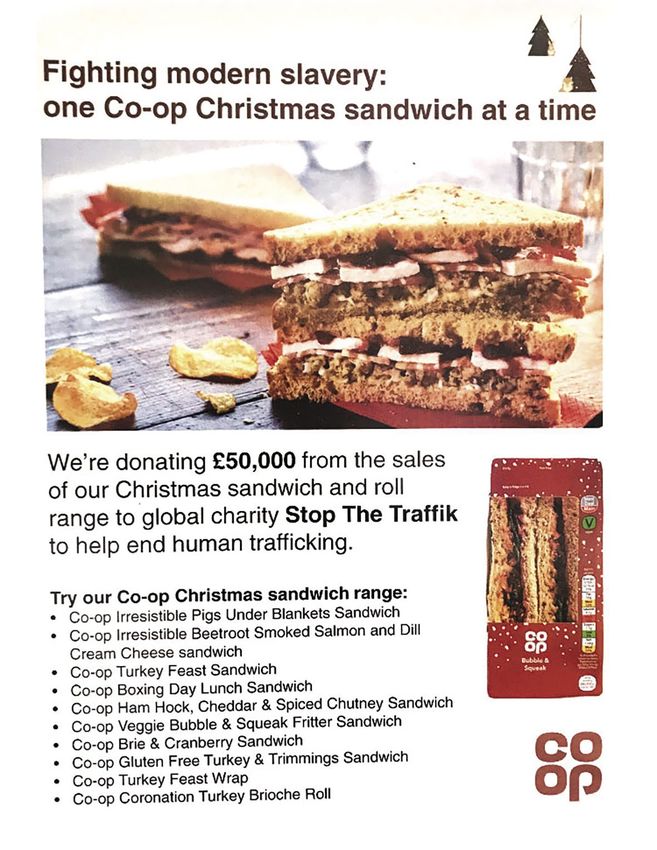
The Co-op’s Modern Slavery
                                                         Campaign

                                                            “    The campaign has led the field amongst retailers
                                                                 in tackling and supporting victims of Modern
                                                                 Slavery, leading by example and driving an
                                                                 agenda that is sometimes hidden.”
                                                                  —Andy York, Pilgrims Ltd

                                                         Business action
                                                         The Co-op’s goal with its modern slavery campaign of 2017-2020 was to play a part in the
                                                         global movement to end modern slavery—now a target within the United Nations Sustainable
                                                         Development Goals, as target 8.7: “take immediate and effective measures to eradicate forced
                                                         labour, end modern slavery and human trafficking.” To achieve its overarching goal, the Co-
                                                         op’s campaign objective was to ensure that survivors of modern slavery have the support and
                                                         opportunity they need to aid their recovery and reintegration into society.

                                                         Modern slavery is an umbrella term used to describe a range of exploitative practices such as
                                                         slavery, servitude, forced labour, human trafficking and related practices. The International
                                                         Labour Organization (ILO) and Walk Free estimate that 40.3 million people are enslaved
    Pictured, clockwise: Sandwich campaign poster,
    Business Against Slavery forum, ASI Charter Group,   worldwide, including many in the UK.2 The National Referral Mechanism – the UK’s process
    campaign packaging photograph and Stop The Traffik   for identifying and safeguarding victims – identified 10,627 potential victims in 2019. Modern
    social media screenshot.
                                                         slavery is a priority issue for the UK Government, which in 2015 passed world-leading
                                                         legislation in the form of the Modern Slavery Act (MSA).

                                                         The Co-op’s method to deliver its objective was to leverage its assets: its identity, leadership,
                                                         members, employees, networks and relationships. In other words, the Co-op aligned its
                                                         objective closely with its core identity, drawing on its history and values to campaign
                                                         for change. This meant that across all elements of its modern slavery campaign, the Co-
                                                         op turned its explicit value of “solidarity” into a focus on collaboration. As one survey
                                                         respondent, Amelia Knott (Romanac Consulting Ltd), explained of the Co-op’s modern
                                                         slavery campaign, “the Co-op is particularly effective at engaging peer companies and
                                                         are highly respected among those working towards similar
                                                         goals….The Co-op is also highly collaborative….the Co-op’s
                                                         approach provides examples that I can use to engage other
                                                         companies in the issue.”

                                                         For example, in 2018, when Anti-Slavery International                The Co-op aligned
                                                         established the Anti-Slavery Charter setting out the
                                                                                                                              its objective closely
                                                         fundamental principles that organisations across the
                                                         international community should adopt to tackle modern
                                                                                                                              with its core
                                                         slavery, the Co-op took the lead in becoming the first business      identity.”
                                                         to sign the Charter—then encouraged other businesses to
                                                         make the same pledge.3 It sent direct emails to 111 private

6                                                                                                                                                            7
Campaigning for change: The Co-op’s approach to tackling modern slavery and supporting victims Campaigning for change: The Co-op’s approach to tackling modern slavery and supporting victims
companies in the UK, and at least six of those companies agreed to commit to the principles differently and are, perhaps, more likely to take on board our approach than they might be
outlined in the Charter. with regard to PLCs [publicly listed companies], for instance. We also have a reputation for
taking on board and campaigning on ‘unfashionable’ issues (or at least ‘unfashionable’ at the
Also in 2018, the Co-op joined the Home Office’s Business Against Slavery Forum (along time).” The Co-op knew that it could lead by example on the issue of modern slavery, and so it
with 12 other businesses), and organised a Greater Manchester Modern Slavery Business actively encouraged others to go beyond the minimum requirements of the MSA.
Network that brings together businesses, law enforcement, academics, local authorities,
charities and other agencies to strengthen the business response to the problem of modern
slavery. In 2019, the Co-op invited the Home Office to the Manchester business network in The Bright Future programme
order to facilitate dialogue with the business community and to review the recommendations The Co-op also recognised another aspect of its identity and history that could be leveraged
from the Independent Review of the MSA. In 2020 it joined other businesses to support a for the campaign. While action was being taken by various and multiple stakeholders to tackle
project to assess the benefit of free transport for survivors. The same year, it joined with other modern slavery in the UK and globally—such as strengthening law enforcement—its own
businesses and associations to sponsor and launch the Responsible Recruitment Toolkit (RRT), focus on communities meant it could play an additional, unique role and focus on the vital
which supports suppliers to achieve responsible recruitment in their supply chains.4 area of modern slavery survivors’ recovery and community reintegration.
Within and beyond its work in these collaborative networks and initiatives, the Co-op Choosing to align its modern slavery campaign with its stated ambition of “championing a
encouraged its business peers to have open and honest conversations about modern slavery better way of doing business,” the Co-op therefore campaigned differently. Not only working
risks in supply chains—to see it as not just a compliance issue, but an issue of social justice. A as a business on the issue of transparency in supply chains, it launched a national campaign
key component of the MSA is Section 54 on transparency in supply chains, which encourages in support of a major new bill about long-term survivor support. And not only advocating for
transparency and accountability of the steps taken by businesses to tackle modern slavery in the bill and for survivor support, it chose to take action itself: it created a pioneering survivor
their supply chains and operations. Trying to level the playing field for business engagement support programme called Bright Future.
on modern slavery, the Co-op led by example in this area of supply chain transparency. This
included the active provision of evidence on the topic, responses to multiple consultations, In March 2017, the Co-op launched the Bright Future programme to support survivors of
and the submission of several briefs to parliamentarians. modern slavery with paid work placements and employment opportunities in its food business,
as part of their reintegration into communities. Launching the programme, the Co-op CEO
Pointing to the Co-op’s approach of going beyond mere Steve Murrells observed: “It is clear to me that victims need to
compliance with the MSA—i.e. the annual publication of a be supported while they rebuild their lives and central to that
Modern Slavery Statement—Kelly Tolhurst MP, Minister of is the dignity that paid, freely chosen employment provides.
State for Corporate Responsibility, observed: “The Government ....important Without this, there is a real chance that they could fall back
welcomes the leadership role the Co-op has taken in promoting into the hands of those who have exploited them and for the
for both their
transparency in supply chains and engaging with the terrible, unspeakable cycle of enslavement to begin again.”
Government and other leading businesses.” From the business
example to other
community, a business leader respondent to the survey for businesses and for
this report confirmed that the Co-op “made us think more their collaborative, Campaigning
deeply about how Modern Slavery might manifest itself within inclusive approach.” Stamping out
th
of modern sla e scourge
our supply chain.” An NGO respondent for this report, Louise Research und
very
ertaken by the
suggests that Co-op
Gleich (CARE), explained that the Co-op’s business leadership
1 in 5 of the UK
population don
’t know what mod
slavery is – des ern
pite press and
media
was important for anti-slavery action because it could access a
coverage. Tha
t’s why we’ve
sought to
It’s hard to im educate our colle
agine a situatio members abo
agues, custome
rs and
hours, for little n where peop ut the issue of
different set of people—including other businesses: “I think it’s really great to have a different le are being ex slavery – using modern
or no pay, often ploited to wo opportunities
coercion. But through threa rk long depots and offic in stores,
the horrifying t of violence or understand the
es to help them
reality is that other means of
voice outside of just the NGO sector and be able to reach into different spaces and speak to
issue and wha
here in the UK mo dern slavery is they suspect it. t to do if
, right now. happening rig in the press to
We also placed
adverts
ht October 2017
mark Anti-Slavery
Day in
different people.”
and 2018.
We’ve also wor
ked hard to chal
the existing law lenge
on modern slav
When Bright Futu ery.
re began, victi
slavery were enti ms of
Other respondents pointed to the fact that the Co-op leveraged its own identity as an ethical of support from
We’ve worked
tled to just 45
the government.
with a coalitio
day s
n called
business in order to achieve this leadership. Ian Jarvey, Deputy Head of Procurement at
‘Free for Good’,
encouraging
government to
increase that peri
of time. Lord McC od
Carphone War oll, a Conserv
the University of Manchester, said that “the Co-op certainly come across as a business that Tulip and Typh
ehouse, Greenc
oo, in addition
Co-op. It’s a pow
erful coalition
ore,
to the
Peer, introduc
bill in 2017 whic
a year, so we’v
ed a private mem
h would extend
ative
ber’s
this to
practices what it preaches.” From the charity sector, a survey respondent connected the
like-minded bus of e provided opp
inesses and NGO for Co-op mem ortunities
united by a com s bers to let the
mon and simp Minister and hom Prime
– to support victi le vision e secretary that
ms of slavery would back this they
Co-op’s own brand to the ultimate impact of its campaign: “I think the impact is significant into employm
ent.
bac k
In early 2019
bill.
we launched a
in conjunction campaign
because the Co-op is well known and a good brand to have behind any campaign.” ‘Working in a with The Sun calle
A
store brought ‘Stamp out slav d
ery’ – leading
back my ability of articles exp to a series
to laugh and loring the issu
e and
t the Co-op AGM enjoy myself.’ seeking to edu
cate a new aud
in 2017, ience.
members vote But as a respons An unusual cho
d ible business ice of partner
In leveraging its own identity and history as an ethical, campaigning business, the Co-op itself overwhelmingl knew there was we issue but a pow given the
y for us to more we could erful one. Sun
campaign to raise in particular to do, were provided readers
awareness support the victi The fact that 47 with an opportu
of the issue of of slavery in the ms other organisa take action by nity to
modern slavery have joined Brig tions signing an Anti
explicitly recognised its ability to influence awareness within the business community. Alison call for greater and to UK. ht Future shows -Slavery
support and International peti
tion to call on
opportunities In 2017, in resp government to the
for victims. onse to the AGM provide better
motion, we laun for victims of slav support We’ve sought
Scowen, the Co-op’s Senior Public Affairs Manager, explained to Rights Lab researchers that Through our cam ched our Brig ery. out
paign we have programme – ht Future opportunities
to show other tried offering the opp The work that to raise
businesses how of a paid work ortunity we’ve done thro money for the
responsible thro to be placement and campaign and ugh our charities The Co-op will
galvanising other businesses “was something we could do because of our reputation and
ugh simple, prac Co-op, to thos a job at , in particular, that work to end continue to
actions. The Co- tical e rescued from Future has a prof Bright modern work on this issu
op’s number one slavery. The prog modern ound effect on slavery in the e – liaising with
responsibility ram me – establish of individuals the lives UK. Over our suppliers
is to make sure partnership with ed in and that should £50,000 was raise to ensure that
that d for
perceptions within the business community of us as a different kind of business. Because
modern slavery the charity City everyone at the make everyone who
has no place in – has grown to Hearts Co-op feel very Stop the Traffik in plays a part in
business. We’ our include 28 char In July 2019 our proud. producing and
re doing everyth 20 businesses. ities and real progress. Senior Campaig 2018 through delivering the
can to make sure ing we As we move into Public Affairs Man ns and sales
our supply chai 2020, of our festive goods and serv
the Co-op will ager, Alison Sco
we have a history of campaigning and social action, other businesses perceive us slightly ns, support Bright ices we sell is
and everyone Bright Future Future went to Bucking wen sandwiches and treated fairly.
who works to has provided to continue as ham Palace to We’ll also con
our goods and produce 50 an independen Princess Eugenie talk to tinue
services, is trea placements for Bright Future t initiative. of York and the £650,000 has to provide opp
ted fairly. survivors so far expects that by Ambassador abo US been ortunities for
8 evergreen range of busines in a the end of given charities of slavery to wor victims
| Autumn 2019
ses including 2020 more than ut the Co-op’s providing victi k at the Co-op.
Dixons 300 placements campaign aga support. Colleag m
have been prov will inst modern slav ues have also Modern slavery
ided to survivor Princess describ ery – the raised can be ended
s. ed our project money by runn but for this to
ing the Great
8 9
cool’ in her sum as ‘pretty North happen it will
ming up remarks Run and Royal Parks Half everyone to be take
! Anti-Slavery Inte for brave enough
rnational. step up and play to
their part.
evergreen | Autu
mn 2019 9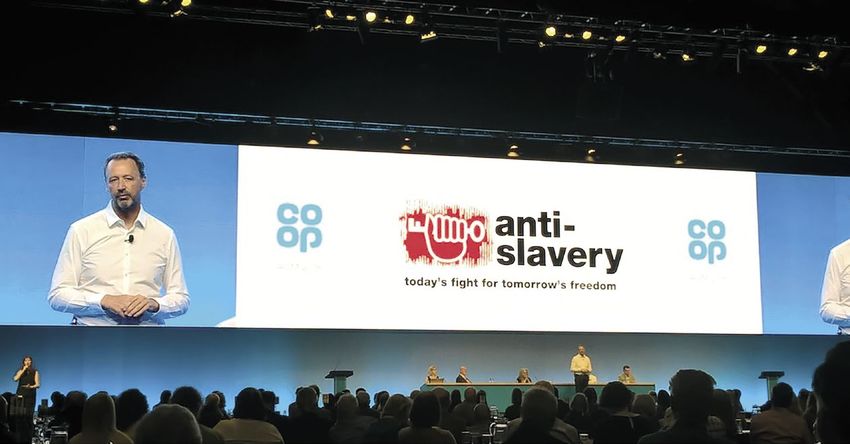
Campaigning for change: The Co-op’s approach to tackling modern slavery and supporting victims                                                          Campaigning for change: The Co-op’s approach to tackling modern slavery and supporting victims

     The programme was based on an original concept developed by Stronger Together and                                       retailer facilitated this collaboration, and the programme became a proof of concept for
     City Hearts and brought to the Co-op. It was designed based on evidence that the key                                    other businesses. Gareth Snell MP explained the power of this example across the business
     barriers to finding work for survivors include lack of qualifications, experience, employment                           community: “I know many other companies are looking at the Co-op Group’s work. All I can
     references, and confidence. The Co-op collaborated with the charity City Hearts to identify                             say to them is, ‘Go and ask, and help. They will help you become part of this life-changing
     survivors to join the programme. In a Westminster Hall Debate in October 2018, Gareth                                   partnership.’”
     Snell MP characterised Bright Future as the Co-op bringing together “charities, providers
     and first responders to give people who have been through modern slavery a way into paid                                The number of businesses involved in the Bright Future programme increased each year
     employment—a route back to dignity without waiting for charity.”                                                        since its launch – an indication of the businesses’ keenness to be involved and of the Co-op’s
                                                                                                                             outreach. Bright Future has now transitioned into a new co-operative with 28 charities and 23
     The initial aim of the Bright Future programme was to                                                                   businesses working together. As one external stakeholder, Simon Murray (Dixons Carphone),
     provide paid placements for 30 survivors a year to support                                                              explained in an interview for this report, the Co-op developed Bright Future “into something
     them in living freely with dignity and to fully reintegrate                                                             that then went on to being a multi-organization scheme,” then “managed to progress it to
     them within society. As part of the programme, survivors are                                     Trying to level        something that actually stands in its own right. It is now living and breathing things that can
     offered a placement at the Co-op’s food stores, followed by                                      the playing field      actually carry on.”
     a non-competitive interview for a permanent position. If the                                     for business
     interview is successful and there is a vacancy available, the                                    engagement on          Another business confirmed in a survey for this report that Bright Future and the Co-op’s
     candidate will be offered a permanent job. As of May 2020,                                                              modern slavery campaign were important for both their example to other businesses and for
                                                                                                      modern slavery,
     75 survivors had been offered paid work experience, with 40                                                             their collaborative, inclusive approach across the business community: “I wish my company
                                                                                                      the Co-op led by       could get as good at campaigning with a social purpose! What I loved about Bright Future
     offered full-time employment at the end of their placement.
                                                                                                      example in this area   was that there was an employment and survivor support component as well as a research
     The programme has provided evidence for how survivors’                                           of supply chain        component to it and that the Co-op tried to make it a broad church by partnering with other
     lives can be improved by business action. As one survey                                          transparency.”         companies.”
     respondent described the programme, it is “a best practice
     model in helping survivors to rebuild their lives.” Another, from
     the NGO sector, called the programme “really beneficial,” because it “brings that stability
                                                                                                                             Advocating for survivors
     that is necessary as part of their recovery...we are delighted it’s there.” Survivors reported that                     Bright Future proved that survivor support was a key space in which businesses could have
     Bright Future helped them to acquire new skills, increased their confidence, and expanded                               anti-slavery impact. The programme also gave the Co-op the ability to advocate with data and
     their professional networks. All these gains are vital to the reintegration of survivors back into                      experience on behalf of a new bill before Parliament. Bright Future had highlighted to the Co-
     communities and to survivors successfully securing paid and sustainable employment.                                     op a significant barrier for survivors in the UK: that only survivors with residency rights could
                                                                                                                             benefit from the programme or access vital long-term support.
     As one NGO leader, Andrew Wallis (CEO of Unseen), explained in an interview for this report,
     the programme’s success was due to how the Co-op approached it from the start—as a co-                                  In 2017, House of Lords member Lord McColl of Dulwich tabled a Private Members’ Bill that,
     operative effort, in line with the organisation’s very identity: it was “not just ‘here’s a business                    if enacted, would provide for confirmed adult victims of modern slavery to receive a grant
     response. This is what we think you need. Take it or leave it.’ It was co-created. I think that put                     of leave to remain for 12 months, together with assistance and support during this period.
     the victim at the centre, in terms of thinking through what the hurdles were that needs to be                           This Modern Slavery (Victim Support) Bill failed to pass before the end of the Parliamentary
     overcome, what the requirements were in terms of support and what the potential outcomes                                session. In 2019, Lord McColl brought forward the Bill again, proposing to mandate support
     would be for that individual.”                                                                                          provisions for survivors, extend support to at least 12 months, and grant identified victims
                                                                                                                             ‘leave to remain’ in the UK for a specific period of time. The Bill passed all stages in the Lords
     Crucially, and again in line with its collaborative approach, the Co-op encouraged other                                in 2019 but Parliament was dissolved before a Second Reading in the Commons. Lord McColl
     charities and businesses to join the programme. This ensured a wider availability of                                    reintroduced the bill in 2020. Its progress was delayed by a Parliamentary focus on Brexit and
     employment opportunities for survivors. The Co-op’s reputation and position as a major food                             Covid-19 but Lord McColl continues to express hope about its passage.

                                                                                                                                      Bright Future proved that survivor support was a key space in
                                                                                                                                      which businesses could have anti-slavery impact. The programme
                                                                                                                                      also gave the Co-op the ability to advocate with data and
                                                                                                                                      experience on behalf of a
                                                                                                                                      new bill before Parliament.”

     Pictured: Steve Murrells, Co-op, Dr Richard Benjamin and               Pictured: Students from the Co-op Academies.
     Alison Scowen with the chosen logo.
10                                                                                                                                                                                                                                                            11
Campaigning for change: The Co-op’s approach to tackling modern slavery and supporting victims Campaigning for change: The Co-op’s approach to tackling modern slavery and supporting victims
Due to the insights that it gained from working with City Hearts and other charities on the extensive awareness-raising and advocacy work on the Bill,
Bright Future programme, the Co-op recognised the significance of Lord McColl’s Bill. It first the topic of modern slavery, and survivor support, including
met with Lord McColl in July 2017, then supplied him with a briefing in August 2017 about through the media, amongst its members, colleagues and the It was of
the Bright Future programme and the value of paid work for victims, and the difficulties of public. This advocacy involved displaying posters on modern
significance that
providing paid work opportunities as part of the Bright Future programme—including due to slavery in its stores; displaying information on modern slavery
immigration laws. on selected sandwich packaging to raise awareness of the the Co-op brought
issue and funds for an anti-slavery organisation; using its social these perspectives
The briefing emphasised the importance of the Bill’s provisions for tackling some of the media presence to draw attention to the issue of modern as a business—
difficulties in offering permanent work for victims after completing their paid placement slavery; sending thousands of emails to its members and in my view that
via Bright Future, especially as some require support to improve their language skills and employees asking them to contact their Member of Parliament; helped me to show
work readiness. The Co-op pointed out that the section of the Bill covering the “meaning collecting and delivering thousands of messages to the UK that this is not just
of assistance and support” did not yet specifically reference the provision of support to government urging them to back Lord McColl’s Bill; submitting
ensure “work readiness” and suggested in its briefing that Lord McColl consider including
the concern of
numerous briefings to parliamentarians in advance of debates the NGO sector
pre-employment training / work readiness where appropriate to the individual. As Lord on modern slavery and the Bill; meeting with policy-makers;
McColl explained in an interview for this report, the Co-op’s experience of the Bright Future but also there is a
proactively engaging with journalists who wrote newspaper
programme “provided vital tangible evidence of the problems of the current system and the articles on this issue; and hosting and presenting at numerous business case for
possibilities for rehabilitation and recovery if changes were events internationally, including at the UN and in the UK. supporting victims’
made to long term support and immigration status for victims long term.”
after a positive conclusive grounds decision.” The Co-op’s emphasis on collaboration meant that it
joined forces on this advocacy work with numerous other
As it brought concrete lessons from the Bright Future organisations, businesses and charities in order to achieve a strong collective voice, including
programme into its support for the Bill, the Co-op also evolved The Co-op’s
the Greater Manchester Modern Slavery Business Network, the British Retail Consortium, and
its modern slavery campaign responsively in order to advocate experience of
the Co-op’s own suppliers.
to Government for the Bill’s passage and more widely for the Bright Future
enhanced victim support. The Co-op recognised the need programme In addition, the Co-op’s identity as a business meant that it could credibly and authoritatively
for greater attention on long-term survivor support as an “provided vital make an important point in support of the Bill: that the benefits of longer-term support for
important facet of tackling modern slavery and so set out to tangible evidence survivors of modern slavery could outweigh the initial costs. In a submission to the Home
improve consumer and corporate awareness of the issue. It of the problems of Affair Committee in September 2018, the Co-op explained that “not only is [there] a moral
wanted people to understand how survivors are treated by the the current system imperative to support victims but [the Co-op] believes that there is a sound cost-benefit case
state, in order to build momentum for more survivor support. to provide an enhanced level of public support to victims.”
and the possibilities
It drew again from its learnings from the Bright Future for rehabilitation The Rights Lab took up this idea and in 2019 completed a full cost-benefit analysis of Lord
programme—including an independent evaluation of the and recovery...” McColl’s Bill.5 We found that there would be a direct financial benefit of implementing the
programme (October 2017) that recommended engaging with changes proposed in the bill that would outweigh the costs: a net overall benefit (direct and
the Government about long-term support for survivors—for indirect) of up to £25.1m annually. This cost-benefit analysis was used as evidence in the
judicial review claim by Duncan Lewis Solicitors on behalf of two modern slavery victims,
NN & LP v Secretary of State for the Home Department, which resulted in the Home Office
agreeing that the support should be provided in reference to an individual’s needs rather than
by any reference to how long the individual had been supported, and in the introduction of a
needs-based system.
As Lord McColl explained in an interview for this report, it was significant that the Co-op,
as a business, argued for the Bill and believed there was
a financial case for longer-term victim
support: “It was of significance
that the Co-op brought these
perspectives as a business—in
my view that helped me to show
that this is not just the concern of
the NGO sector but also there is a
business case for supporting victims’
long term.”
Pictured: Co-op AGM big screen.
12 13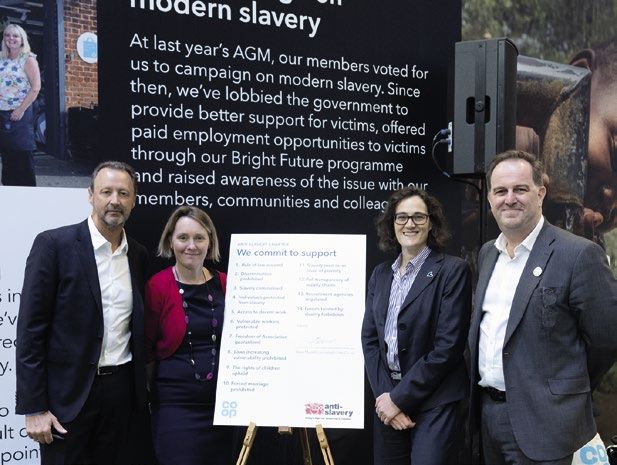
Campaigning for change: The Co-op’s approach to tackling modern slavery and supporting victims

     Lessons for business action
                                                                                                       issue of transparency in supply chains helped it lobby for the Bill and bring other businesses
                                                                                                       into the Bright Future programme. As one survey respondent explained, “the Co-op comes
                                                                                                       across as leading by example and committing their business to addressing modern slavery,
                                                                                                       not simply raising awareness. This makes their campaigning much more effective.” In both

        “
                                                                                                       interviews and survey responses, external stakeholders understood that the Co-op could
             Their approach has a number of planks that                                                campaign authentically and effectively on victim support in part because it was committed to
             together are greater than the sum of their parts”                                         tackling modern slavery in its own operations.

             —Amelia Knott, Romanac Consulting Ltd                                                     A key asset that the Co-op used for its mutually-reinforcing
                                                                                                       campaign elements—a whole organisation approach—was
                                                                                                       its identity as a co-operative. Repeatedly, survey respondents
                                                                                                       pointed to the Co-op’s approach of working together with                             This approach
     Today, as in the 19th century, businesses play a crucial role in the anti-slavery agenda.
                                                                                                       other businesses in partnership on the issue of modern slavery,                      of carefully and
     Beyond examining their own supply chains, businesses have multiple roles they can play in
     community-based action. This includes a leadership role in influencing local decision-makers,
                                                                                                       rather than seeking to create an anti-slavery hierarchy—or                           pragmatically
                                                                                                       what a survey respondent from Greencore described as an                              designing campaign
     sharing intelligence with enforcement agencies, training staff and implementing good labour
                                                                                                       “edict” approach: “Think they are the one retailer that I can                        elements that used
     practices, raising awareness with clients and suppliers, and providing support for survivors.
                                                                                                       see tangible results from of their support. Their impact has
                                                                                                                                                                                            its assets...meant
     However, whereas historically businesses were at the centre of community and civic anti-          been immense. Very much so as it has been through guidance
                                                                                                       and working together rather than as an edict.”
                                                                                                                                                                                            the Co-op could
     slavery action, a more globalised marketplace and the increasing dominance of online
                                                                                                                                                                                            create a coherent
     commerce means that businesses are less frequently identified with one specific town or city.
     In the Rights Lab’s surveys of multi-agency anti-slavery partnership work across the UK, it was
                                                                                                       Another business respondent termed it a “broad church”                               whole: a series of
                                                                                                       approach: “The Co-op tried to make it a broad church by                              mutually reinforcing
     clear that some local partnerships were struggling to engage with business partners, with the
                                                                                                       partnering with other companies.” The Co-op’s collaborative                          campaign activities.”
     majority of partnerships dependent upon statutory, voluntary and faith-sector partners for
                                                                                                       values also supported its close work with leading survivor
     funding and administration.6
                                                                                                       support charities to pioneer its employment scheme for
     Nonetheless, a number of businesses have been proactive in embracing anti-slavery                 survivors of slavery.
     campaigns. In the case of the Co-op, it provided collaborative industry leadership both in its
                                                                                                       A second key asset that the Co-op used was of course its identity as a business—whether
     hometown of Manchester and in multiple local communities with a three-year modern slavery
                                                                                                       suggesting there would be a positive cost-benefit case of long-term survivor support, creating
     campaign that leveraged its whole organisation.
                                                                                                       a work programme for survivors, or leading by example on transparency in supply chains.
                                                                                                       The Co-op’s strong historic roots in social entrepreneurism and ethical trading supported its
     An asset-based approach                                                                           vigorous approach to monitoring supply chains, as well as its decision to take action itself
                                                                                                       with Bright Future.
     A key factor in the coherence, profile and impact of the Co-op’s modern slavery campaign
     was its asset-based approach. As laid out in the previous sections, the Co-op leveraged its       A business respondent to the survey for this report explained the importance of this business
     existing strengths and resources across the whole organisation. It built its campaign from the    example to their own company, including the shift in perspective towards understanding “value
     inside out, mobilising its members, networks and identity. By taking an asset-based approach,     creation”: “The Co-op’s campaigning activities are effective, proactive, out-of-the box, and
     the Co-op could use its internal expertise and member interests without needing expensive         sensitive to survivors….It helped our leadership see this space as far more than compliance and
     investment in external campaign resources. Instead, equipped with a small budget to support       see how it links to purpose and to value creation as well if done in the right way.”
     its aims, it leveraged its existing, available assets.
                                                                                                       Another survey respondent, from Pilgrims Ltd, confirmed that the Co-op had led by example
     This approach of carefully and pragmatically designing campaign elements that used its            as a business, not only by driving the anti-slavery agenda, but also by providing practical
     assets—including its identity and history as a community-based co-operative—also meant            solutions like Bright Future’s work programme or supply chain insights: “The campaign has
     the Co-op could create a coherent whole: a series of mutually reinforcing campaign activities.    led the field amongst retailers in tackling and supporting victims directly of Modern Slavery,
     Its “whole organisation” approach to campaigning, where it brought together its existing          leading by example and driving an agenda that is sometimes hidden. [The Co-op] gave us the
     assets, enabled the Co-op to create something that, as one survey respondent described it,        practical solutions to enable us to help and support victims better and understand their point
     was “greater than the sum of their parts.” The campaign elements reinforced one another so        of view. Also raise awareness in our own operations.”
     well because each reflected part of the Co-op’s explicit, existing culture.
                                                                                                       By recognising the importance of an asset-based, whole organisation approach, the Co-op
     For example, the Bright Future programme provided evidence and a platform to work                 was able to leverage its unique, co-operative identity to lead by example, and collaboratively.
     on the passage of Lord McColl’s Bill, and both the campaign around the Bill and Bright
     Future positioned the Co-op as an anti-slavery leader with the leverage to encourage other
     businesses to go beyond mere compliance with the MSA and take meaningful action within
     their supply chains and operations. In turn, the Co-op’s evidence and business action on the

14                                                                                                                                                                                                                                     15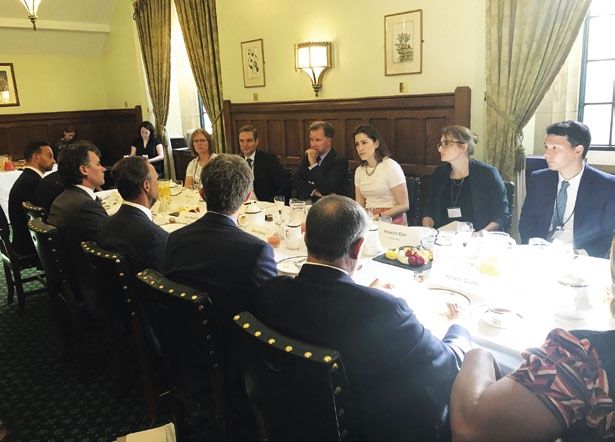
Campaigning for change: The Co-op’s approach to tackling modern slavery and supporting victims                                                Campaigning for change: The Co-op’s approach to tackling modern slavery and supporting victims

     Takeaways for businesses                                                                           7. Multi-stakeholder collaboration. Collaborating with other organisations that have
                                                                                                           specialist expertise can facilitate better knowledge-exchange and complement a
     In commissioning this report about its campaign’s transferable lessons, the Co-op is leading          campaign’s activities and reach. The Co-op collaborated with numerous anti-slavery
     by example again—trying to make its experiences useful to other businesses. To that end, we           stakeholders to strengthen its work. For instance, it collaborated with City Hearts and a
     have designed eight key takeaways for businesses from the Co-op’s example:                            number of other charities to identify survivors to join the Bright Future programme, and
                                                                                                           is currently working with St. Mary’s University to develop a summer school that will equip
     1. Identity. A coherent campaign should be rooted in a company’s identity, vision and values.
                                                                                                           survivors with skills to secure work.
        An integrity-based, “whole organisation” approach can help a business communicate its
        aims effectively, leverage the brand’s identity for change, and generate greater brand          8. Multiple communication channels. Businesses can increase their reach into difference
        loyalty. The Co-op’s choice to tackle modern slavery and support survivors was deeply              target audiences and increase support for campaign causes by using various and multiple
        rooted in its values, history and its commitment to doing business differently, which makes        communication channels that to consider the audience demographic. The Co-op had a
        it a trusted messenger in its communities.                                                         mixed-channel communication strategy involving social media, emails and press releases
                                                                                                           to connect with people. For instance, it partnered with Global Citizen – a US-based non-
     2. Leadership. Effective campaigning requires senior level commitment to translate values
                                                                                                           profit Global Poverty Project – which resulted in over 9,000 emails and 5,000 tweets to
        into action and bring attention to causes. On his first day as CEO of the Co-op, Steve
                                                                                                           MPs, and over 4,000 emails and 800 tweets to then Prime Minister Theresa May.
        Murrells’ first press release was not about corporate plans, but about the Bright Future
        programme and advocating for survivors. This put a spotlight on the Co-op’s modern
        slavery work and gave a bigger platform to the issue of survivor support.
     3. Employees. A key awareness-raising and advocacy asset for campaigning activities
        are employees, and engaging employees in social justice campaigning can also lead to
        increased loyalty towards the brand and business. The Co-op mobilised its workforce
        to support its work on modern slavery. It sent over 600,000 emails to its employees
        encouraging them to take actions such as fundraising, contacting politicians and learning
        more about the issue.
     4. Consumer engagement. An organisation can leverage its relationship with its own
        consumers to help raise awareness of its campaign causes. The Co-op, as a business
        owned by its members, was able to engage with members/consumers to promote
        awareness and activity. The Co-op did this in several ways, including by emailing its
        members and displaying information on modern slavery in its stores and on selected
        products. The Co-op also asked its members to support the Free for Good campaign that
        is working to pass Lord McColl’s Victim Support Bill. This resulted in over 5,000 emails to
        MPs. A survey of 254 Co-op members found that 63% were encouraged to find out more
        about the issue because of the Co-op’s messages to its membership.
     5. Sector engagement. Collectively, businesses can make significant strides in campaigning
        by pooling their knowledge, resources, influence, and reach. The Co-op recognised
        that one of its biggest assets is that it is a business: this meant it could lead by example,
        collaborate, and be a powerful messenger to other businesses. It actively sought ways
        to engage in knowledge-exchange with other businesses, encourage collaboration, and
        motivate organisations to do more. For instance, it encouraged 23 businesses to join the
        Bright Future programme, set up a modern slavery business network, and sent over 100
        emails to businesses urging them to sign the Anti-Slavery Charter.
     6. Policy engagement. Businesses can have significant influence when engaging with
        policy-makers compared to other organisations which might find it more challenging to be
        heard. The Co-op briefed parliamentarians ahead of important debates on modern slavery,
        in order to support them in advocating for survivor support and for enhanced corporate
        reporting on modern slavery. It also became part of the Free for Good campaign, the only
        business to do so.

                                                                                                        Pictured: Mural – image from Hestia’s ‘Art is Freedom’ project.
16                                                                                                                                                                                                                                                  17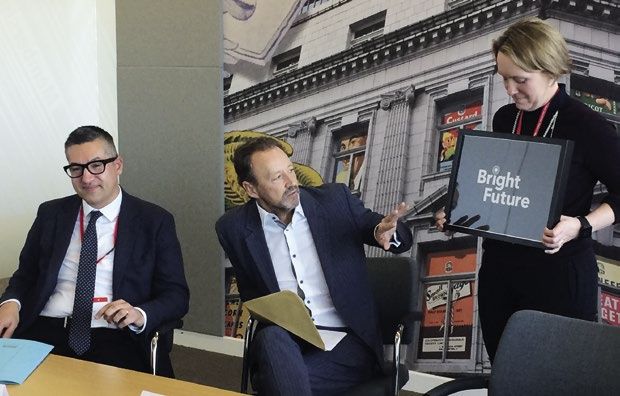
Campaigning for change: The Co-op’s approach to tackling modern slavery and supporting victims

     The Freedom Dividend
     The Co-op’s modern slavery campaign embodies what we term in the Rights Lab a “Freedom
                                                                                                      References
     Dividend.” We know from our research that where slavery is suppressed, the economy
     grows—and for survivors of slavery, this can mean the chance of transformation. When             1
                                                                                                          Rights Lab, “Impact of COVID-19 on Modern Slavery Survivors in the UK & USA” (2021).
     freedom comes to formerly enslaved people, and includes the enjoyment of human rights,
     learning and training for job skills, and access to medical and psychological care, the whole
                                                                                                      2
                                                                                                          International Labour Organization and Walk Free, “Global Estimates of Modern Slavery:
     society receives a Freedom Dividend: increases in economic attainment and education levels,          Forced Labour and Forced Marriage” (2017).
     and reductions in health problems and gender inequality, among other all-society benefits.       3
                                                                                                          www.antislavery.org/anti-slavery-charter/
     The Freedom Dividend is a theory about change. In the case of the Co-op’s work on modern         4
                                                                                                          https://responsiblerecruitmenttoolkit.org/
     slavery, the dividend was evident to the stakeholders who we interviewed and surveyed
     for this report. The Co-op’s impact reached far beyond its own supply chain monitoring: it       5
                                                                                                          Rights Lab, “The Modern Slavery (Victim Support) Bill: A Cost-Benefit Analysis” (2019).
     generated a Freedom Dividend through a work programme where people freed from slavery
     rebuilt their lives and could go on to create stronger local economies and communities. After    6
                                                                                                          Rights Lab, “Partnerships for Freedom: Improving Multi-Agency Collaboration on
     being forced to work for others’ profit, survivors could now work, train, and recover what our       Modern Slavery” (2020) and Right Lab and the Office of the Independent Anti-Slavery
     Rights Lab colleague Minh Dang and co-authors have called “a full freedom.”7 At the same             Commissioner, “Collaborating for Freedom: Anti-Slavery Partnerships in the UK” (2017).
     time, the Co-op’s campaign brought education to its members and the wider public, along
     with the opportunity to be part of transforming lives through ethical purchasing and support
                                                                                                      7
                                                                                                          Andrea Nicholson, Minh Dang, and Zoe Trodd, “A Full Freedom: Contemporary Survivors’
     for Bright Future and the Victim Support Bill.                                                       Definitions of Slavery,” Human Rights Law Review 18.4 (2018): 689-704.

     Like the Co-op’s own dividend system—where it shares profits (‘dividends’) amongst its
     members rather than rewarding outside investors—the Freedom Dividend rewards everyone
     who invests in it. And during a pandemic that has caused businesses to consider their wider,
     social purpose, the example of the Co-op’s asset-based approach can encourage other
     organisations to design their own, unique roles in social action, leverage their own assets to
     work against injustice and for human rights, and help to achieve the Freedom Dividend.

     Pictured: Together We Can End Human Trafficking mural by Joel Bergner and community partners.
18                                                                                                                                                                                                  19
Campaigning for change: The Co-op’s approach to tackling modern slavery and supporting victims
Rights Lab
Hestia is the leading provider of modern slavery support in
London, having supported more than 4,300 victims since
the service began in 2011. Now, their modern slavery work
has grown to support more than 2,200 adult victims and
1,200 dependent children every year, through their outreach
support, seven safe houses in London and the South East,
and long-term community-based support through their
award winning volunteer-led Phoenix project. Hestia have
partnered with the Co-op Group via their Bright Future
programme and wider research projects.
Art Is Freedom is Hestia’s annual photography and art
exhibition, featuring work captured and created by survivors
of modern slavery, and marking Anti-Slavery Day on 18th
October. The exhibition enables survivors of modern slavery
to creatively tell their story and express their recovery
journey with the aim of highlighting the prevalence of
modern slavery in the UK today.
Discover more about our
world-class research
nottingham.ac.uk/rights-lab
rightslab@nottingham.ac.uk
@rightsbeacon
This publication is available
in alternative formats.
+44 (0)115 951 5559
© University of Nottingham 2021. All rights reserved.
Published March 2021.You can also read


