CAP Post-2020 Consultative Committee Meeting - Agriculture House Wednesday 4th September 2019
←
→
Page content transcription
If your browser does not render page correctly, please read the page content below
CAP Post-2020 Consultative Committee Meeting

       Wednesday   4th   September 2019
             Agriculture House
Proposed CAP Post-2020
Direct Payment Modelling Exercise

                                          Francis Morrin
                                    4th September 2019
Context
• Direct payments are a system of interacting measures – the application of each
one affecting all others.
• A measure of complexity despite all efforts to the contrary.
• DAFM is always seeking to utilise the best evidence base possible to inform
decisions.
• Direct payments are of critical importance to farming in Ireland – and especially
so in a time of change.
An Roinn Talmhaíochta, Bia agus Mara │ Department of Agriculture, Food and the MarineKey messages
• The overall level of the budget, and how the direct payments ceiling is divided
will directly impact all parts of direct payments.
• The impact of convergence will depend heavily on the minimum convergence
level implemented.
• ECO-schemes will account for a significant part of a farmer’s direct payments –
their decision to participate or not will have significant impact on their total
direct payments amount.
An Roinn Talmhaíochta, Bia agus Mara │ Department of Agriculture, Food and the MarineIntroduction to the draft Direct Payments Regulations
Regulations 1307/13, 1305/13, 1306/13 and more are
             all to be replaced by 3 new regulations:

             • COM 392 – the strategic plan regulation

             • COM 393 – Finance and monitoring

             • COM 394 – Common markets, Quality Schemes, and
               Geographical ID

             These are at draft stage at present
An Roinn Talmhaíochta, Bia agus Mara │ Department of Agriculture, Food and the Marine
COM 392 – Strategic Plan Regulation
• Contains the key articles relating to direct payments
• Tries to walk the line between giving subsidiarity to member
states but also keeping a level playing field across all member
states
• Key direct payments articles are from14-31 –these lay out all
the proposals under discussion
An Roinn Talmhaíochta, Bia agus Mara │ Department of Agriculture, Food and the MarineAn Roinn Talmhaíochta, Bia agus Mara │ Department of Agriculture, Food and the Marine
Current versus Proposed Direct Payment Elements
Current Direct Payments Elements                                                                                             Proposed Direct Payments Elements
2015 – 2020                                                                                                                  2021 – 2027
Basic Payment Scheme (BPS) and Greening Payment                                                                              Basic Income Support for Sustainability (BISS)
                                                                                                                             Based on Payment Entitlements and will require increased conditionality including additional SMRs/GAECs.

                                                                                                                             ECO Schemes
                                                                                                                             Mandatory for Member States to set up. Voluntary for farmers to participate.
                                                                                                                             Annual environmental schemes. Compliance with a specific set of green obligations.

                                                                                                                             Sectoral allocations for producer groups / producer organisations in
                                                                                                                             “other sectors”.
                                                                                                                             Up to 3% of the direct payment envelope.

Capping (Reduction of Payments)                                                                                              Capping (Reduction of Payments)
Member States must reduce BPS Payments over €150,000 by at least 5%. Ireland applied a 100% capping limit on all BPS         Capping proposed to apply to all Direct Payments.
payments in excess of €150,000. Capping didn’t apply to other Direct Payments.                                               The cap is set at €100,000 with degressivity from €60,000.

Young Farmers Scheme                                                                                                         Complementary Income Support for Young Farmers (CISYF)
Additional payment for eligible young farmers.                                                                               Additional payment for eligible young farmers.
                                                                                                                             Minimum 2% overall target for young farmer support.

Voluntary Coupled Support                                                                                                    Voluntary Coupled Support
Maximum 13% of ceiling plus 2% for protein crops                                                                             Maximum 10% of ceiling plus 2% for protein crops.
Ireland currently allocates < 1% to the Aid for Protein Crops Scheme.

Redistributive Payment                                                                                                       Complementary Redistributive Income Support for Sustainability
Voluntary for Member States to transfer funds from large to small or medium farms.
                                                                                                                             (CRISS)
                                                                                                                             Mandatory for Member States to transfer funds from large to small or medium sized farms to improve sustainability.

Small Farmers Scheme                                                                                                         Round Sum Payment for Small Farmers
Voluntary for Member States to establish a payment for small farms to replace Direct Payments. Voluntary participation for   Voluntary for Member States to establish a payment for small farms to replace Direct Payments. Voluntary participation for
eligible farmers.                                                                                                            eligible farmers.
Novel Interventions ECO-Schemes: The European Commission proposals state that all Member States must provide support for a voluntary ECO Scheme. The proposals state that support for ECO Schemes must take the form of an annual payment per eligible hectare granted as either, payments additional to the BISS, or payments compensating beneficiaries for all or part of the additional costs incurred, and income foregone arising from the action(s) undertaken. Sectoral Interventions The Commission proposals provide for up to 3% of a Member States allocation for Direct Payments to be spent to fund the actions of recognised producer organisations in a range of “other sectors” outside fruit and vegetables, apiculture, wine, hops and olive oil/table olives. An Roinn Talmhaíochta, Bia agus Mara │ Department of Agriculture, Food and the Marine
Takeaway messages from the proposals:
     • A set of rules with some mandatory measures and some subsidiarity.

     • Where subsidiarity is allowed, its generally subject to a MS specifying measures
       in the CSP – which must be approved by the Commission.

     • Only the interventions specified are allowed.

     • There is very significant interaction between interventions.

     • Some interventions are similar, while others are very different and none are
       finalised

An Roinn Talmhaíochta, Bia agus Mara │ Department of Agriculture, Food and the Marine
Modelled Data Set
Allocation of funds
                                     National Ceiling: Maximum Amount of Funding Available

               Subtract Funding Allocations to Mandatory and Optional Direct Payment Schemes
                      (CISYF, Coupled Income Support, Sectoral Interventions, ECO Scheme, CRISS, Round Sum Payment for Small Farmers)

                  Remainder is the Basic Income Support for Sustainability Scheme (BISS) Ceiling

                                      Subtract the Funding Required for the National Reserve

                                 Final amount is the Available Fund for Distribution under BISS

An Roinn Talmhaíochta, Bia agus Mara │ Department of Agriculture, Food and the Marine
Sample Population for modelling, 01/10/18 Description Value No of Farmers 125,509 No of Payment Entitlements 4.4m No of Sets of Payment Entitlements 152,356 Total Value of Payment Entitlements plus Greening €1.17bn Average Payment Entitlement Unit Value plus Greening €265 Average Payment (BPS plus Greening estimated for 2019) €9,385 Average Area Submitted (Hectares) 36.3 An Roinn Talmhaíochta, Bia agus Mara │ Department of Agriculture, Food and the Marine
Exercise 1 – Individual Components
Taking just one measure and “freeze” all other
     measures

     • Effects are all circular – each one affecting all others.

     • Difficulty in isolating the effect of any one component.

     • Exercise undertaken to isolate one component, even though this
       is not a reflection of reality.

An Roinn Talmhaíochta, Bia agus Mara │ Department of Agriculture, Food and the Marine
Individual Example - Capping
• Caveats!
• 3 capping models:
• Minimum level of capping
• 25% from €60,000 to €75,000
• 50% from €75,000 to €90,000
• 75% from €90,000 to €100,000
• 100% reduction to values over €100,000
• Maximum level of capping (full capping from €60k)
• COMAGRI capping proposal (full capping from €100k)
An Roinn Talmhaíochta, Bia agus Mara │ Department of Agriculture, Food and the MarineModelled Individual Capping Comparison – in
reality will not be implemented this way
• Individuals in sample population impacted by capping varies from 113 to
716.
• Percentage of the BISS ceiling released varies from 0.29% to 1.43%.
• Maximum direct payment possible varies from €60,000 to €100,000.
• Funds released by capping are transferred to CRISS for redistribution.
• Those contributing most to capping those with larger farms (ha).
An Roinn Talmhaíochta, Bia agus Mara │ Department of Agriculture, Food and the MarineExercise 2 - Composite Models
5 Models Examined:

  • Models (i) to (iv) – based on the EU Commission draft
    regulations

  • Model (v) –based on the COMAGRI proposal

An Roinn Talmhaíochta, Bia agus Mara │ Department of Agriculture, Food and the Marine
Model Parameters and Assumptions
European Commission Proposals COMAGRI Proposal
Description Model (i) Model (ii) Model (iii) Model (iv) Model (v)
Complementary Income Support for Young
2% minimum proposed value across all models
Farmers
0.25% assumed value applied across all models
Coupled Income Support
1% assumed value applied across all models
Sectoral Interventions
20% 20% 30% 30% 20%
ECO Scheme
3% assumed value applied across all models
National Reserve
Min degressivity Min degressivity
Capping 100% @ €60,000 100% @ €60,000 100% @ €100,000
above €60,000 above €60,000
Convergence by 2026 75% 75% 75% 75% 100%
An Roinn Talmhaíochta, Bia agus Mara │ Department of Agriculture, Food and the MarineImportant notes regarding the modelled scenarios • Based on a static sample population at a point in time • No proposal is final yet – so all is subject to change • Capping only applied to BISS and ECO-Schemes • No allowance made for deduction of salaries • 100% participation in ECO-Scheme • Comparison drawn between BPS+Greening to BISS and ECO-Schemes • ECO –Schemes are a novel measure. Very challenging to model – many assumptions An Roinn Talmhaíochta, Bia agus Mara │ Department of Agriculture, Food and the Marine
Outcomes from Theoretical Modelling Exercise –
        Results Overview

        • All models show a significant decrease in payment amount if an
          individual choses not to participate in the ECO-Scheme.

        • Participation in the ECO-Scheme restores payment levels close to the
          modelled 2019 average payment.

        • All models have a significant number of individuals with an increasing
          and a decreasing payment in 2026 versus modelled 2019 payment.

An Roinn Talmhaíochta, Bia agus Mara │ Department of Agriculture, Food and the Marine
Outcomes from Theoretical Modelling Exercise –
Payment Entitlement values
• Allocation of funding to other Direct Payment interventions means
that the average Payment Entitlement value is lower in every model.
• Spread of Payment Entitlement values around the average narrows as:
1. increasing funds are allocated to other Direct Payment
interventions and
2. the level of convergence increases towards 100% of the national
average.
An Roinn Talmhaíochta, Bia agus Mara │ Department of Agriculture, Food and the MarineOutcomes from Theoretical Modelling Exercise -
Convergence
• Under the 4 modelled scenarios based on the Commission Proposals
approximately 0.65% of the National Ceiling is re-distributed within
the sample population.
• Under the modelled scenario based on the Comagri’s Proposals
approximately 2.14% of the National Ceiling is re-distributed within
the sample population.
An Roinn Talmhaíochta, Bia agus Mara │ Department of Agriculture, Food and the MarineOutcomes from Theoretical Modelling Exercise -
Capping
• The lower the threshold for capping the greater the number of
individuals that will be affected and the greater the sum of money that
will be redistributed.
• Depending on how capping is implemented under the 5 modelled
scenarios:
1) Between 86 and 614 individuals within the sample population are
affected.
2) Funding released for redistribution varies from €2.5m to €13.7m
per year.
An Roinn Talmhaíochta, Bia agus Mara │ Department of Agriculture, Food and the MarineConclusions
• Exercise to inform stakeholders. Focus on trends arising from proposals
not specific values.
• Proposals signal continuation of some EU policies – convergence,
redistribution, generational renewal.
• All Direct Payment interventions interact to create an overall effect.
• Capping is likely to release a small proportion of the fund for
redistribution.
• Participation in ECO-Schemes will likely have a significant effect on an
individuals overall payment amount.
An Roinn Talmhaíochta, Bia agus Mara │ Department of Agriculture, Food and the MarineCAP Post-2020 Consultative Committee Meeting
Wednesday 4th September 2019
Agriculture HouseCAP Strategic Plan
Focus on the SWOT analysis
Ultan Waldron
Rural Development Division
4 September 2019Overview
➢SWOT – what is it ?
➢SWOT – why is it important ?
➢What the Regulation says
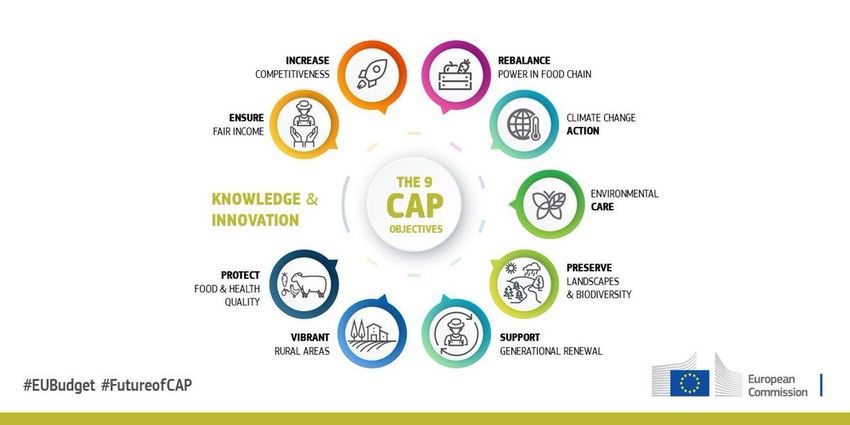
➢Nine specific objectives of the CAP
➢Key considerations
➢Preparations to date
➢Next steps
An Roinn Talmhaíochta, Bia agus Mara │ Department of Agriculture, Food and the MarineSWOT: What is it?
Current Strength Weakness
Future Opportunity Threat
An Roinn Talmhaíochta, Bia agus Mara │ Department of Agriculture, Food and the MarineSWOT as a first step: why is it important?
➢To provide the foundation for the needs assessment
➢To provide justifications for interventions, providing an evidence-based
rationale for strategic choices
➢The SWOT is a tool, not an end in itself: it’s the first link in a chain
An Roinn Talmhaíochta, Bia agus Mara │ Department of Agriculture, Food and the MarineWhat the draft Regulation says....
➢Article 95(2): Annex II “shall include a SWOT analysis of the area to be
covered by the CAP Strategic Plan”
➢Article 103: “..for each specific objective…include a comprehensive
overall description of the current situation..”
An Roinn Talmhaíochta, Bia agus Mara │ Department of Agriculture, Food and the MarineWhat the draft Regulation says for....
➢climate change, biodiversity and environment: refer to the national plans
➢young farmers: include access to land, land mobility, access to finance
and access to knowledge / advice
➢cross-cutting objective related to knowledge, innovation and
digitalisation: provide details about AKIS and related structures
➢AKIS (Agriculture Knowledge and Innovation System)
An Roinn Talmhaíochta, Bia agus Mara │ Department of Agriculture, Food and the MarineNine specific objectives An Roinn Talmhaíochta, Bia agus Mara │ Department of Agriculture, Food and the Marine
Key considerations for the SWOT ?
➢EU Context and impact indicators
➢Data sources such as; CSO, NFS, EPA, EUROSTAT, JRC, etc.
➢Evaluations, reports and external studies
➢Data should be quantitative and qualitative
An Roinn Talmhaíochta, Bia agus Mara │ Department of Agriculture, Food and the MarinePreparation to date
➢Internal - ongoing interaction between policy and implementing
divisions
➢Inter-Departmental consultations
➢Preparation of draft SWOT ‘quadrants’ for the nine specific objectives
An Roinn Talmhaíochta, Bia agus Mara │ Department of Agriculture, Food and the MarineNext steps
➢Launch open call for submissions on 9 th September closing date 11th
October
➢ Presence at Ploughing Championship 17 th – 19th September
An Roinn Talmhaíochta, Bia agus Mara │ Department of Agriculture, Food and the MarineThank you Email CAPStrategicPlan@agriculture.gov.ie Ultan Waldron Rural Development Division 4 September 2019
CAP Post-2020 Consultative Committee Meeting

       Wednesday   4th   September 2019
Agriculture HouseYou can also read


