Census 2020 Complete Count Committee Kickoff Meeting - Germanna Community College-Fredericksburg Campus Fredericksburg, VA July 31, 2019
←
→
Page content transcription
If your browser does not render page correctly, please read the page content below

Census 2020
Complete Count Committee
     Kickoff Meeting
Germanna Community College- Fredericksburg Campus
                Fredericksburg, VA
                  July 31, 2019
Meeting Objectives
•Orient Committee members on the purpose of:
   •The 2020 Census
   •Regional and Local Complete Count Committee
•Provide data on “hard to count” populations:
    •Informing good strategy

•Develop excellent strategies for the Regional and Local CCCs

•Confirm our schedule and focus

                           Have Fun!!!                          Page from 1790 Census, Census.gov

                                                                                   2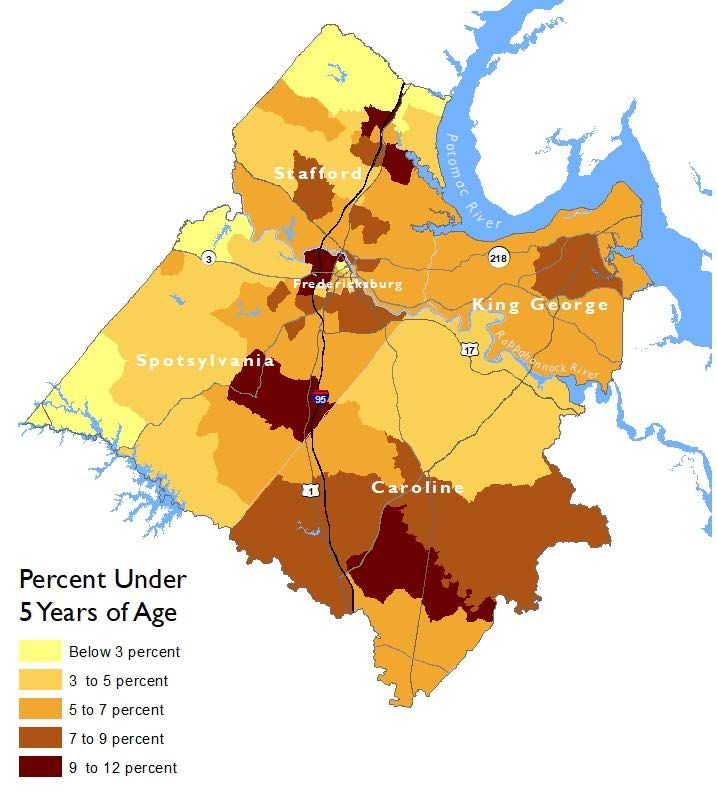
Welcome and Introductions
Who are we missing?
Overview of Census 2020 and Purpose of Complete
Count Committee(s)
George Washington Region Demographics and Hard
Agenda to Count Populations
Group Breakouts – Strategy Development
Report Out
Links to Local CCC Actions
Regional Focus
Discussion and Questions
Next Steps
• Treat each other with respect
               • Only one person speaks at a time
               • Give everyone a chance to participate equally; avoid
               dominating
               • Listen as an ally, not an adversary
                   • Everyone should feel comfortable expressing their opinion
Ground Rules         regardless of differences
               • Ask for clarification-- don’t assume you know what
               someone means
               • Do not characterize other people’s views in or
               outside a meeting
               • Turn off or silence all cell phones and mobile devices
               • Be positive!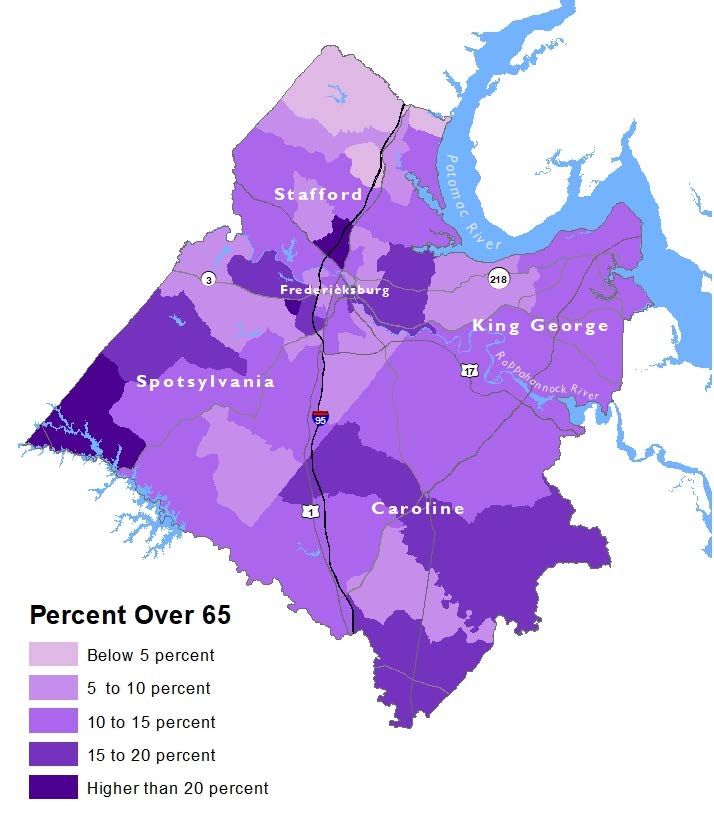
Welcome
and Introductions

                    5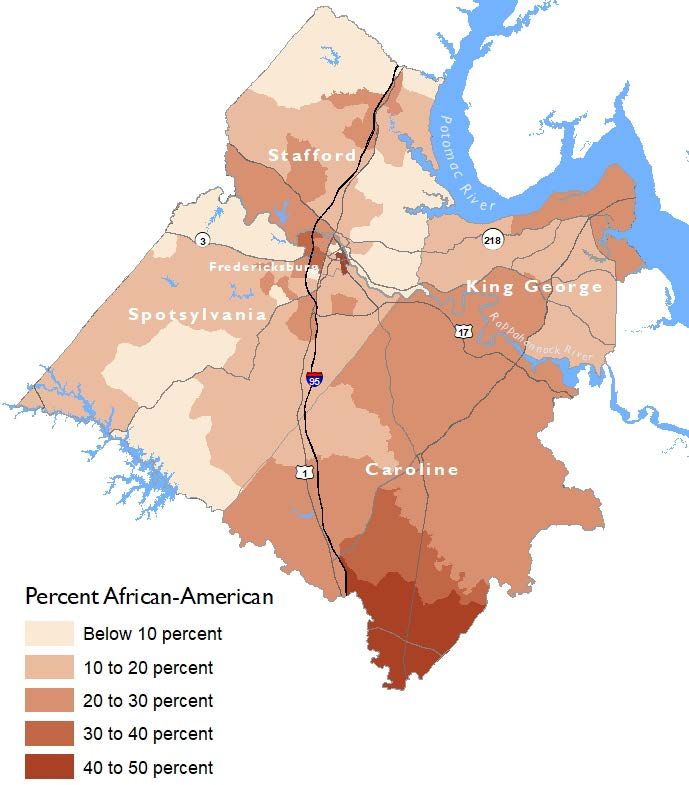
Who are we missing?

                      6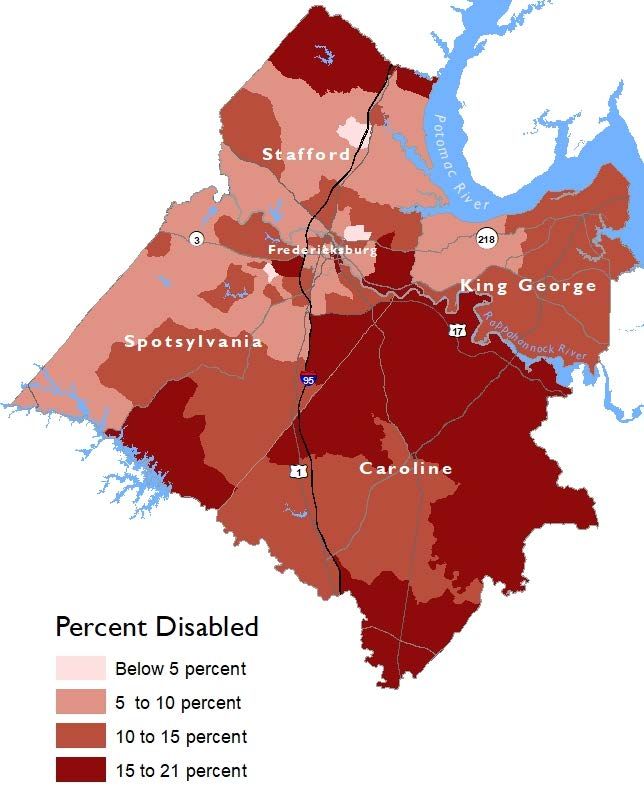
GOAL: Count everyone once, only once, and in the right place

                    The George Washington Regional
     Regional       Complete Count Committee will
                    support the 2020 Census by:
    Complete         •Convening training
                     •Offering data and analysis of “hard to count”
       Count         •Develop and support regional strategies
                     •Develop and distribute marketing materials for
   Committee         regional and local use
                     •Help coordinate as needed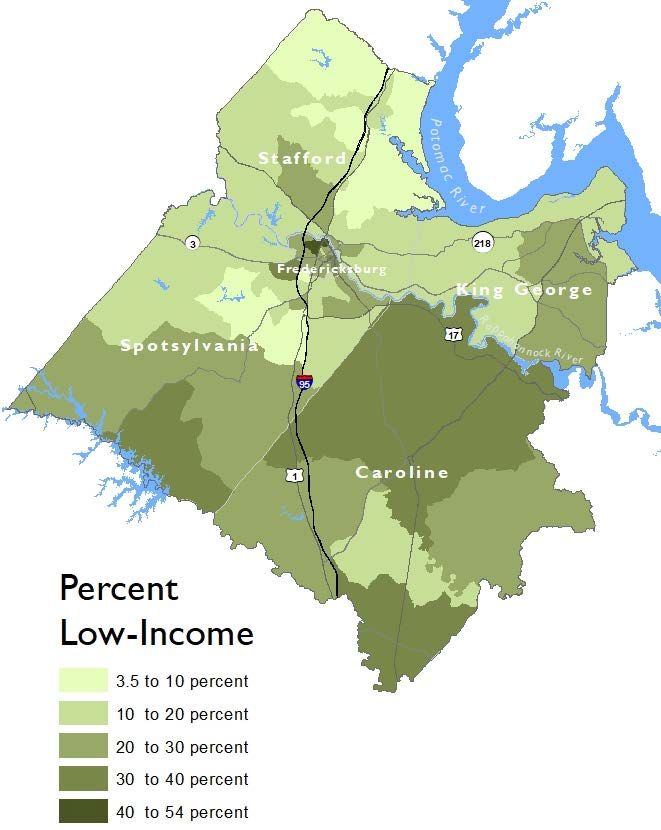
GOAL: Count everyone once, only once, and in the right place

                    The Local Complete Count Committees will
         Local      support the 2020 Census by:
     Complete
                    •   Implementing local strategies linked to regional efforts/plans
                    •   Make the real work happen of being sure everyone is counted
                        Caring about your community
        Count
                    •
                    •   “Hands, feet and heart”

   Committees
Census 2020
   Overview

              9
Why conduct
 a Decennial   • Required in the US Constitution (Article 1,
                 Section 2)
    Census?    • The goal is to count all residents once, only
                 once, and in the right place
               • Aggregated results are shared with the public
                   • Census data are only ever shared in aggregate
                  •   Individual records are kept strictly confidential
Why should we care if everyone is counted?
• Representation
• Apportion seats in the U.S. House of Representatives
• Conduct redistricting at federal, state, and local levels
• Resource Allocation
• Allocate over $675 billion in federal resources to state
and local governments
• Help regional agencies, localities and non-profits
design appropriate programming and services
• City of Richmond estimates a $20,000 loss per each
person missed or “undercounted”.
• Provide Statistical Support for the
Community
• Supports grant applications from nonprofits and local
governments.
• Helps YOUR community plan for future needs Getty Images
11Sample Uses of Census Data
• Decision making at all levels of government. • Planning outreach strategies.
• Drawing federal, state, and local legislative districts . • Understanding labor supply .
• Attracting new businesses to state and local areas. • Assessing the potential for spread of communicable
• Distributing over $675 billion in federal funds and even more in state diseases.
funds .
• Analyzing military potential.
• Forecasting future transportation needs for all segments of the
population. • Making business decisions.
• Developing "intelligent" maps for government and business.
• Planning for hospitals, nursing homes, clinics, and the location of • Understanding consumer needs.
other health services. • Providing proof of age, relationship, or residence certificates provided by
• Planning for congregations.
• Forecasting future housing needs for all segments of the population. the Census Bureau.
• Locating factory sites and distribution centers.
• Directing funds for services for people in poverty. • Distributing medical research.
• Distributing catalogs and developing direct mail
• Designing public safety strategies. • Reapportioning seats in the House of Representatives.
pieces.
• Development of rural areas. • Planning and researching for media as backup for news stories.
• Setting a standard for creating both public and private
• Analyzing local trends. • Providing evidence in litigation involving land use , voting rights, and equal
sector surveys.
• Estimating the number of people displaced by natural disasters. opportunity.
• Evaluating programs in different geographic areas.
• Developing assistance programs for American Indians and Alaska • Drawing school district boundaries.
• Providing genealogical research.
Natives.
• Planning budgets for government at all levels .
• Planning for school projects.
• Creating maps to speed emergency services to households in need
of assistance. • Spotting trends in the economic well - being of the nation .
• Developing adult education programs.
• Delivering goods and services to local markets. • Planning for public transportation services.
• Designing facilities for people with disabilities, the elderly, or • Planning health and educational services for people with disabilities.
children.
• Establishing fair market rents and enforcing fair lending practices.
• Planning future government services.
• Directing services to children and adults with limited English language
• Planning investments and evaluating financial risk.
proficiency.
• Publishing economic and statistical reports about the United States • Planning urban land use.
and its people.
• Facilitating scientific research. 12What Information will the Census
Bureau Collect?
For each resident in each household:
• Age (on April 1, 2020)
• Sex
• Ethnicity
• Race
• Relationship to the householder
• Home owner or renter
Census taker and small girl, 1960, Getty Images
13How will the Census Bureau collect information?
Households will be able to respond to
the Census via:
March-July 2020 • Internet self response
• Phone
• Paper Survey
Census enumerators will attempt to
April-July 2020 contact households that have not
responded in one of these ways
What’s New Census Taker, 1939 Getty Images/Library of Congress
We’re maximizing outreach by using both traditional and new media
We’re offering and encouraging people to use the secure online response option
For the first time ever, people will be able to call in and complete the census
We’re providing our fieldworkers with handheld devices for collecting Census data
We’re utilizing automated systems for recruiting, training, and payroll
14Will the Census Bureau protect individual
information?
The Census Bureau is required, by law, to keep individuals’
information confidential. Individual responses are only used
to generate population statistics.
• All information is strictly confidential under the authority of Sec. 9,
Title 13 of the U.S. Code
• Census workers are required to pass a security check and are sworn to uphold a
pledge of confidentiality
• The penalty for violating the pledge is up to a $250,000 fine and up to a 5-year
prison term
• The Census Bureau cannot share individual responses for 72 years after the data are collected
• Not even the President of the United States, the Federal Bureau of Investigation
(FBI), the Central Intelligence Agency (CIA), the Internal Revenue Service (IRS), other state or federal
welfare departments, or any court of law can have access to individual responses before this time
15What challenges do we anticipate in the region?
• Language barriers
• Technological barriers- lack of internet access/ability
• Informal or complex living arrangements
• Distrust of government entities
• Lack of awareness about the Census
• Remote areas
• Belief that some residents are not obligated to respond to the Census
(To be clear – 100% of residents are required to respond!)
16And Another
Challenge:
17George
Washington
Region
Demography
18Undercounted demographic groups:
Certain demographic groups are more likely to be
undercounted:
• Households with Limited English Proficiency
• Residents under the age of 5 or
over the age of 65
• Disabled Residents
• Low-income households
• Hispanic and Latino; Black and African
Associated Press
American residents
19Limited English
Proficiency Population
In the George Washington Region, the
greatest density of households with
limited English proficiency are found
along the I-95 corridor in the suburban
areas of northern Spotsylvania County,
the City of Fredericksburg, and Stafford
County.
20George Washington Region
Limited English Proficiency
21Population Under Five
The youngest residents of the
George Washington Region are
found mainly adjacent to the I-95
corridor, with the exceptions of rural
parts of southern Caroline County
and eastern King George County.
22Over 65 Population
The older population in our region is
concentrated in two different types of
areas; the suburban outskirts of the City
of Fredericksburg, and the rural parts of
southern Stafford, Spotsylvania and
Caroline County, some of which are
remote.
23Disabled Population
With the exception of Marine
Corps Base Quantico, the disabled
population is shifted more toward
the southeast part of our region,
in both suburban and large rural
areas of Spotsylvania, Caroline
and King George Counties,
including remote areas.
24Low-Income Population
There is a strong concentration of
low-income residents in the City
of Fredericksburg. Outside of the
City, the population is shifted
more toward the southern part of
our region across large rural areas
of Caroline and southern
Spotsylvania Counties, including
remote areas.
25Hispanic or Latino
Population
The highest concentrations of
Hispanic and Latino residents
occur closer to the City of
Fredericksburg and the Military
bases of Quantico and Dahlgren
and near the I-95 corridor in
Spotsylvania and Stafford.
26Black or African-
American Population
The highest percentages of Black
or African-American residents in
the George Washington Region
are found in two different types
of areas: in the City of
Fredericksburg and in rural
southern Caroline County.
27Breakout Conversations:
How can we BEST make this work?
Shutterstock.com
28Schedule
Committee Activity Phases
Education Phase: Promotion Phase: Motivation Phase:
(Now through (Fall 2019- January (February- June 2020)
September 2019) 2020)
• Motivate each
• Raise awareness within • Implement activities household to make a
the Committee on how from the work plan conscious decision to
the Census data are participate in the
used • Continue to raise census
• Develop a work plan awareness on how • The Committee will
for how to encourage Census data are used sunset after Census
Census participation operations have
culminated
29Getting Your Ideas/By Focus Area
• Business
• Education
• Health Care
• Social Services
• Church and Community
Groups
• Etc.
Census taker, 1920s. Library of Congress
30Regional Complete Count Committee Schedule
Fall Meeting – October 9, 2019
• Check-in, strategies working, connections made, marketing on-track
Winter Re-Energizer – January 22, 2019
• Get everyone refocused, increase momentum, marketing push
Census Day EVENTS!! – April 1, 2020
• All CCCs (Regional and Local) encourage special events: “I count” theme
31Next Steps
• Caroline
• King George
• Spotsylvania
• Stafford
• City of Fredericksburg
Deseret News
32Questions about the Census?
Contact us:
• Janel Donohue, RCCC Chair, United Way:
jdonohue@rappahannockunitedway.org
(540) 373-0041 x307
• Linda Millsaps, GWRC Executive Director:
Millsaps@gwregion.org,
(540) 642-1580
Dr. George Millsaps: 540-842-2379
Email: George.e.millsaps@2020census.gov
Philadelphia Regional Census Center- 1-844-507-2020
Recruiting Phone – 1-888-480-1639 ( USA JOBS) and 1-855-562-2020 (ACO)
Email us at - Philadelphia.rcc.partnership@2020census.gov
33Let’s Go!!
34You can also read


