Citizenship & Immigration Canada
Hiring Temporary Foreign Workers
←
→
Page content transcription
If your browser does not render page correctly, please read the page content below
Citizenship & Immigration Canada Hiring Temporary Foreign Workers
1. What is a Work Permit &
         Exemptions
Working in Canada Legislative authority lies with Citizenship and Immigration Canada as governed by the Immigration and Refugee Protection Act (IRPA) The Immigration and Refugee Protection Act stipulates who may work in Canada that foreign nationals can enter as temporary foreign workers or as permanent resident skilled workers IRPA designates certain authorities to the federal and provincial governments

What is Work?
Work is:
An activity for which an individual is paid a wage or
commission
OR
One that competes with activities of Canadian citizens or
permanent residents in the Canadian labour market
A foreign national may not work in Canada unless authorized.
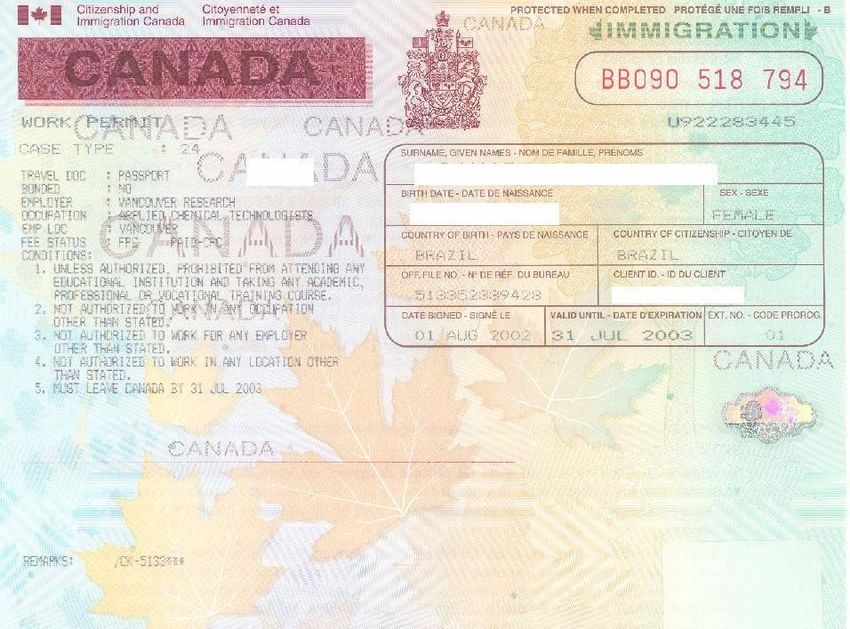
What is a Work Permit?
• Documents that
  allows a foreign
  national to temporarily
  work in Canada

• Conditions are usually
  imposed:
   – type of work
   – the employer
   – duration of work
   – location of work

Temporary Residence
• A Temporary Foreign Worker is first a Temporary
  Resident in Canada

• A reasonable, finite, and predictable end to a worker’s
  assignment in Canada

• Circumstances surrounding an application should
  convincingly indicate that the worker will depart Canada
  upon completion of the assignement

Working in Canada

1.   Work without a work permit

2.   Work with a work permit, but no Labour Market
     Opinion (LMO)

3.   Work with a work permit and a positive LMO
Work Without a Work Permit

Work Permit Exemptions

• Business Visitor              •   Convention Organizers
• Foreign representatives       •   Clergy
• Family Members of Foreign     •   Judges and Referees
  Representatives               •   Examiners and evaluators
• Military Personnel            •   Expert Witness or
• Foreign Government Officers       Investigators
• On-campus Employment          •   Health Care Students
• Performing Artists            •   Civil Aviation Inspector
• Athletes and Coaches          •   Aviation Accident or Incident
                                    Inspector
• News Reporters
                                •   Crew
• Public Speakers
                                •   Emergency Service
                                    Providers
                                •   Implied Status
Work with a work permit but no LMO
Jobs Requiring a Work Permit
          but no LMO

• Workers covered under international agreements
• Entrepreneurs and intra-company transferees
• Participants in exchange programs
• Co-op students
• Spouses of skilled workers
• Academics and students
• Religious workers
• Others
Intra-company Transfers
Executives
Managers
Specialized knowledge
Two entry options for transferees:
1. General provision: Canadian interests – All countries
2. International agreements: Canada’s commitments in
international agreements (e.g., NAFTA Chapter 16)Intra-company
Transfer Considerations
Qualifying business entities
Qualifying workers
Qualifying past employment with same employer
Required documentationQualifying Business Entities
Companies:
Must be legal entities
Must have one of the following qualifying business
relationships:
Affiliate
Branch
Parent
Subsidiary
Must be doing businessDoing Business Regular, systematic and continuous production of goods or provision of services Must demonstrate ongoing international nature by continuing to do business in Canada and abroad NB: Non-Qualifying Business Relationships: Contracts Licensees Franchises
Qualifying Workers & Past
Employment
Only workers employed in the following capacities
qualify:
Executives
Senior managers
Specialized knowledge workers
The worker must have been employed:
Continuously for 1 year in the previous 3 years by
the company ( F/T not accumulated part-time)Executive • Directs the management of the organization or a major component or function of the organization; • Establishes the goals and policies of the organization, component, or function; • Exercises wide latitude in discretionary decision- making; and • Receives only general supervision or direction from higher level executives, board of directors, or stockholders.
Manager
• Manages the organization, or a department, subdivision,
  function, or component of the organization;
• Supervises and controls
   – other managers or supervisors;
   – professional employees, or
   – manages an essential function ( functional manager)
     within the organization, or a department or
     subdivision of the organization
• Has the authority to undertake personnel actions
• Exercises discretion over the day-to-day operations in
  the company.
Specialized Knowledge Special knowledge of a company’s product or service and its application in international markets An advanced level of knowledge or expertise in the organization’s processes and procedures Is unusual and different from that found in a particular industry The knowledge need not be proprietary or unique, but uncommon and complex
Characteristics : Special
               Knowledge
• Usually holds a position that is critical to the well-being of
  the enterprise.
• Has been utilized as a key employee abroad in
  significant assignments which have enhanced the
  employer's productivity, competitiveness, image, or
  financial position.
• It would be difficult to train another worker to assume
  such duties
• The knowledge is complex and cannot easily be
  transferred
TIPS : Specialized Knowledge
• If TFW only has one year of experience with the
foreign company, they may demonstrate
comprehensive knowledge of a specific facet of the
company (which may have been acquired within that
year or had worked on extensively) accompanied by
studies in the appropriate field AND/OR years of
experience in an associated industry.
• Responsibility of applicant to show what sort of
specialized technical or managerial expertise they
have that could not be sourced within a reasonable
period of time or at a reasonable cost from within
Canada.
21TIPS : Specialized Knowledge
( Cont’d)
• Each intra-company transferee application will be
evaluated on its own merit and when assessing a
specialized knowledge worker ICT, officers will
consider a number of factors including the proposed
salary to determine if it supports the claim.
• Given the extent and uniqueness of such knowledge,
we would anticipate that specialized knowledge
workers in Canada would normally be at or above the
average wage for the stated occupation in the
specified geographical location while working in
CanadaOther LMO Exemptions FTA professionals (T23) Emergency repairs (C13) Reciprocal employment (C20) Spouses of skilled workers (C41) Post-grad employment (C43)
NAFTA Professionals
Over sixty professions are listed
Requirements:
US or Mexican citizenship
Pre-arranged employment with Canadian employer
Profession on NAFTA list of professionals
Qualified to work in profession
Provision of professional services in field of qualification
Meet minimum educational qualificationsDocumentation for
NAFTA Professionals
Proof of citizenship
Evidence of pre-arranged employment with Canadian
employer
Details of position with Canadian employer
Evidence of minimum educational qualifications
In instances where a baccalaureate degree is required, the degree must be in the specific
field or in a closely related field. Baccalaureate degrees (or licenciatura) need not have
been obtained in colleges or universities in the United States, Mexico or Canada,whereas
post secondary diplomas or certificates should have been earned in one of the three
NAFTA countries.Management Consultants • Do not take part in the company’s production but seeks to improve the client’s goals, objectives, policies, strategies, administration, organization, and operation. • They assist and advise in implementing recommendations but do not perform functional operational work for clients or take part in the company’s production. • Usually on a contract or employee of consulting firm • Any training or familiarization must be incidental.
Emergency Repairs ( C13) Workers whose admission is required to carry out repairs to industrial equipment Allowed entry to prevent disruption of employment Should be in possession of a letter, email or fax indicating why the nature of their work is an emergency Not preventive maintenance
Reciprocal Employment ( C20) Reciprocal opportunities for Canadians must exist abroad Duties must be substantially the same as those of the Canadian in the foreign jurisdiction Advisable to apply for work permits abroad or through TFWU Review of a HR Global Mobility Policy
Spousal Exemption Must be spouse or common law partner of a skilled worker Skilled worker must have work permit valid for at least 6 months Skilled worker: Skill Level 0 – Management Occupations Skill Level A – Professional Occupations Skill Level B – Skilled Trades Occupations
Work with a work permit and a positive LMO
2. Applying for a Work Permit
Step One: Employer makes job offer to
           foreign worker

           Job offer must include: Job title, a concise
           description of the job, a list of required
           education, skills and experience, details of
           when the job will start and end, salary
           details, address where employee will be
           working

           Wages: Wages and working conditions must
           be consistent with the Canadian labour
           market
Step Two: Employer determines which
scenario applies:
1. Work without a work permit
2. Work with a work permit, but no Labour Market
Opinion (LMO)
3. Work with a work permit and a positive LMOStep Three: If required employer applies for
an LMO from Service Canada
Some types of work are LMO-exempt:
Int’l Free Trade Agreements
NAFTA, CCFTA, GATS
Reciprocal arrangements with other countries
Working Holiday Program, SWAP
Public policy to give Canada a competitive
advantage
Post grad, spouses of students/skilled workers
Humanitarian & Compassionate situations
Provincial Nominees
Significant Benefit to CanadaStep Four: Foreign worker applies for a work permit Apply for work permit prior to entry: Most foreign workers must apply for a work permit prior to their arrival in Canada either to CIC at a Visa Office or to CBSA at a port of entry (POE). Conditions: Foreign worker must adhere to conditions listed on the work permit
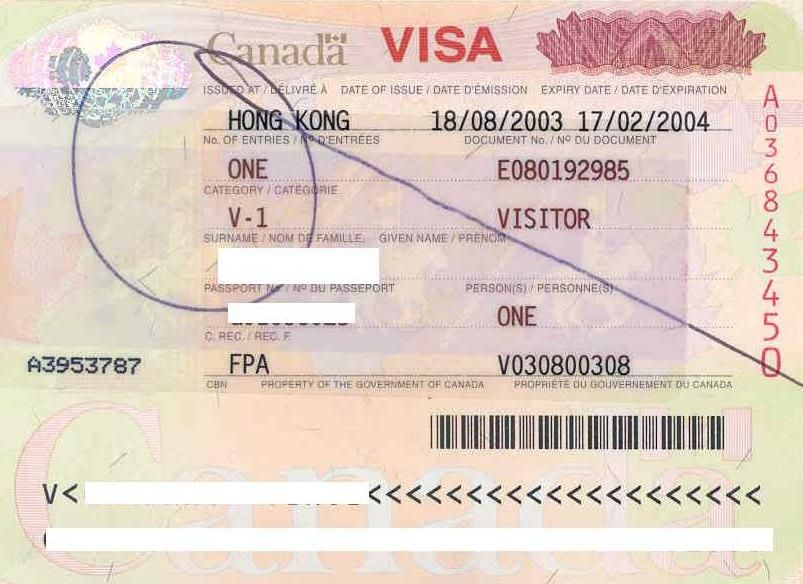
Temporary Resident Visa
A work permit IS NOT a visa.
Citizens of approximately half of the world’s nations require a
temporary resident visa (TRV).
    – Must be obtained at a Canadian Visa Office
    – Allows foreign nationals to present themselves at the
      POE for examination
    – Does not determine length
      of stay in Canada
    – May be for single entry or
      multiple entries
    – List of countries requiring
      TRV www.cic.gc.ca
Step Five: CBSA POE examination – Foreign
worker must meet requirements of
IRPA
If foreign worker provides documentation to
support reason for entry and is admissible to
Canada, CBSA may issue work permit.Important In addition to submitting all necessary documents in support of the work permit application the applicant must satisfy the immigration, visa or port of entry officer that they: • will leave Canada at the end of the work permit • show they are not a risk to the security of Canada • be in good health • show they have enough money to support themselves (and family if necessary) • complete medicals if required • have no criminal record
Where to Apply for Work Permits
• At a Canadian Embassy or Consulate
      www.cic.gc.ca
            - “Find a CIC Office”
            - “Where to Send Your Application”

• At the border: if eligible

• Renewals: in Canada
     Case Processing Centre (CPC) – Vegreville
     (Alberta)
3. Temporary Foreign Worker
UnitsTemporary Foreign Worker Units
(TFWU)
Created by CIC to:
Educate employers and their
representatives on the process of hiring
a temporary foreign worker;
Act as a resource for employers and
service delivery partners;
Determine, upon request, if a foreign
worker position appears to be exempt
the requirement for a Labour Market
Opinion (LMO) from Service Canada.
41Temporary Foreign Worker Units Facilitative process, does not represent a change in policy or procedures; The Border Services Officer remains the delegated decision maker; TFWU officers are a resource equally accessible by clients and delivery partners;
Temporary Foreign Worker Units
Request submitted prior to
temporary foreign worker
seeks entry.
TFWU Officers have the
opportunity to assess the
request without the client
present.
Additional information can be
requested, if required.Request for Exemption Opinion
Request form includes:
Employer’s details
Employee’s details
Date of expected arrival to
Canada
Rationale for requested
exemption
Relevant supporting
documentsPositive Opinion
Positive Opinion provided to
Employer in writing in the
form of a letter or fax.
Positive opinion also recorded
FOSS
under CIC Client ID number.
Reminder in the letter that
final decision rests with
officer at the POE.
Client advised to have
relevant documentation
available to present to the
officer at the POE.Negative Opinion Applicant provided with a letter or fax advising of negative opinion; Notes placed under employees Client ID outlining reasons for opinion; In most cases, applicant referred to Service Canada to obtain LMO; Reminder that the officer at POE is delegated decision- maker.
Benefits to our partners
Consistency of
approach;
Better informed client;
Streamlining POE
process (review
already completed);
A resource and pre-
screening for partners.Contact us
Vancouver TFWU Calgary TFWU
Telephone: 604-666-7509 Telephone: 403-292-4183
Fax: 604-666-7548 Fax: 403-292-6843
TFWU-Vancouver-UTET@cic.gc.ca TFWU-Calgary-UTET@cic.gc.ca
Toronto TFWU Montréal TFWU
Telephone: 416-954-7954 Telephone: 514-283-1061
Fax: 416-973-9768 Fax: 514-283-1877
TFWU-Toronto-UTET@cic.gc.ca CIC-QUE-SRTE@cic.gc.ca
Moncton TFWU
Telephone: 506-851-2664
Fax: 506-851-3238
TFWU-Atlantic-UTET@cic.gc.caYou can also read


