Clean Water State Revolving Fund - Below-Market Financing for Land Conservation 4-28-2021 Alison Souders - NEIWPCC
←
→
Page content transcription
If your browser does not render page correctly, please read the page content below
Clean Water State
Revolving Fund
Below-Market Financing for Land Conservation
4-28-2021
Alison Souders

                                               1
The CWSRF provides below-market financing for water
        quality projects…

                                                    Water Quality
                                                      Projects

                  Seed Money

     Bond
    Holders
2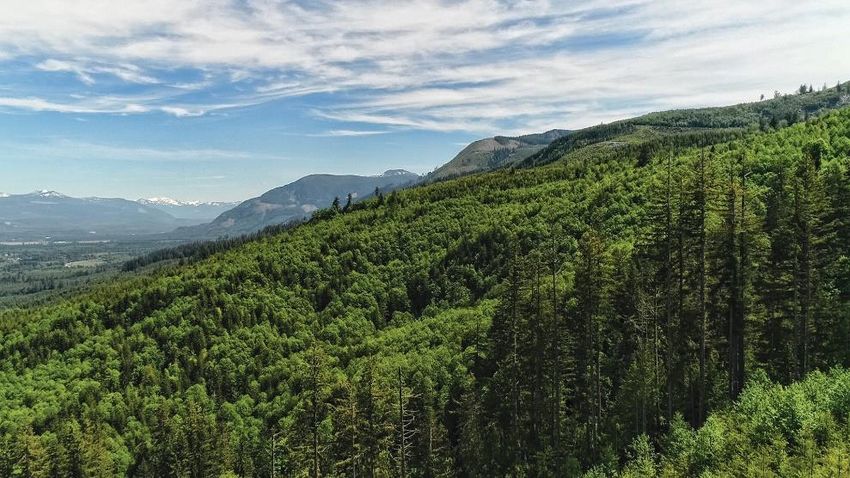
Who is eligible?
   (eligibility varies by state and project type)

Communities            Private Entities

         Nonprofit                        Citizen
       Organizations                      Groups3
Terms: Up to 30 years
 or useful life of the project, whichever is less

 Below-market rates: 1.46% average interest rate
 in 2019 (compared to market rate 4%)

           May also include additional subsidies
           (e.g., loan forgiveness and grants)

Repayment starts one year after project completion

                                                     4
Significant Savings!

• UNC EFC Subsidized Loan Calculator
  Allows Potential Borrowers to
  compare a SRF loan to a commercial
  loan at the market rate.
• “Add Sub” (Principal Forgiveness)
• In this case, on a $500k loan,
  the SRF loan with $10,000add
  sub (principal forgiveness) would
  save this borrower $205,537
  over the life of the loan.

https://efc.sog.unc.edu/resource/what-value-srf-loan-   5
subsidized-loan-calculator#panel-1
National CWSRF Accomplishments
$145.5 billion provided via the 51 CWSRF programs since 1988
$7.5 billion provided by the 51 CWSRF programs in FY20
$1.64 billion = federal allotment in FY20
42,000 assistance agreements (a.k.a. “projects”) since 1988
1.4% - National average interest rate for CWSRF loan in 2019 (vs. 3.6%
prevailing market rate)

Just 3.6% of overall funding pie has gone toward NPS

                                                                         6
Clean Water Act
                                              • 603(c)(1) Construction of publicly owned treatment works (POTW)

                                              • 603(c)(2) Implementation of a nonpoint source management program
What Projects are Eligible for                • 603(c)(3) Implementation of a national estuary program CCMP
   CWSRF Assistance?                          • 603(c)(4) Decentralized systems

                                              • 603(c)(5) Stormwater management

                                              • 603(c)(6) Projects that reduce the demand for POTW capacity through
                                                water conservation, efficiency, and reuse

                                              • 603(c)(7) Watershed pilot projects

                                              • 603(c)(8) Projects that reduce the energy consumption needs for
                                                POTWs

                                              • 603(c)(9) Reuse of wastewater, stormwater, or subsurface drainage
                                                water

                                              • 603(c)(10) Security measures at POTWs

                                              • 603(c)(11) Technical assistance to small and medium POTWs

                                              • 603(3)(12) Assistance to a qualified nonprofit entity to provide
                                                assistance to an eligible individual for the repair or replacement of
                                                household decentralized treatment systems                  7
Squalicum Creek, Washington Stream Re-Route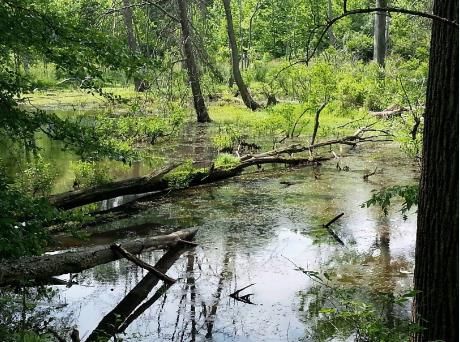
CWSRF for Land Conservation
https://www.epa.gov/cwsrf/funding-land-conservation-projects-cwsrf

            Land Conservation
              –Easements
              –Leasing of land
              –Fee simple purchase of land
 A full listing of CWSRF eligibilities including examples of eligible projects can be found in
 the “Overview of Clean Water State Revolving Fund Eligibilities,” which can be
 downloaded from our website at: https://www.epa.gov/cwsrf/overview-clean-water-
 state-revolving-fund-eligibilities                                                   8
CWSRF Funding - Land Conservation Through FY20, $M

  $126M
  since
  1987…

                                                     9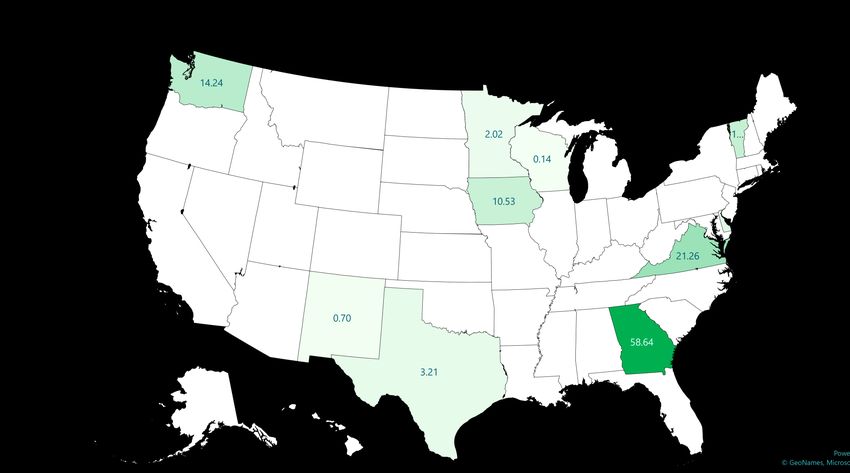
Challenges for Using CWSRF for Land Conservation

• Identifying a repayment source
• State-imposed restrictions on lending to NGOs and
  Community Development Financial Institutions (CDFIs)
• Higher administrative burdens associated with smaller loan
  sizes and greater # of projects
• Capacity constraints at state CWSRF agencies to explore new
  directions

                                                                10
Flexible Repayment Options
• Identifying a repayment source
can be challenging for land
conservation projects…
•Sustainable timber harvest revenues
•Stormwater district fees
•Non-profit membership fees
•Homeowner fees
•For profit company revenue
•Property tax revenue
•Carbon or water quality trading credit
revenue
•Hunting or fishing license revenue
Lower Klamath River,
11
CaliforniaInnovative Financing Mechanisms
• Co-Funding
• Grant Match
• Sponsorship Financing
• Programmatic Financing
• State Incentives
• Linked Deposit
• Pass-Through Lending
https://www.epa.gov/cwsrf/clean-water-state-revolving-fund-cwsrf-nontraditional-
financing 12The Sponsorship Lending Model:
How it Works
• A typical sponsor would be a
wastewater utility willing to fund a NPS
project that costs significantly less.
• CWSRF can finance both the POTW
project and the NPS project in one loan
and offer an incentive rate. To the
sponsored project, the financing feels
like a grant.
Loan Amount Interest Total Repayment
Rate Over 20 Years
CWSRF Loan $1,000,000 3.8% $1,463,707
CWSRF Loan w/ $1,393,442 0.3% $1,463,707
Sponsored Project
13Ohio’s Water Resource Restoration Sponsor Program (WRRSP)
Medina Marsh Land Conservation Project
Northeast Ohio Regional Sewer District (NEOSD) received 0.06%
discount on standard rate in exchange for sponsoring land protection
• NEORSD saved $432,900 in reduced interest
payments
• Sponsored acquisition of 87-acre Medina Marsh
with partners Western Reserve Land Conservancy
and Medina County Park District
• Protects 1,450 linear feet of floodplain and
forested buffer along the Rocky River, 32 acres of
high quality wetlands, and various habitats
14EPA’s Drinking Water State Revolving Fund
Set-asides available for Source Water Protection
State Program Management (10% Set-Aside)
• Most commonly used to support staff in the state’s SWP program or
other technical assistance providers
Local Assistance and Other State Programs (15% Set-Aside)
• Loans to PWS for SWP land acquisition/easements, voluntary, incentive-
based SWP measures, and SWP programs
• Delineation, assessment, and updates to assessments for SWP areas
• Establishment and implementation of wellhead protection programs and
implementation of efforts to protect source water
• Assist PWS with capacity development
www.epa.gov/sourcewaterprotection
www.epa.gov/dwsrfDWSRF & CWSRF Coordinate to Protect 250
Acres in Washington
• DWSRF grant from 15% local assistance
set-aside for property value appraisal
• CWSRF loan used to purchase 250 acres
of forest (up to 50% principal
forgiveness)
• Protects drinking water source for Skagit
PUD’s 65,000 customers in perpetuity
Skagit Public Utility District, Washington
https://www.epa.gov/sourcewaterprotection
16Next Steps:
• Reach out to your state CWSRF & DWSRF
program
–https://www.epa.gov/cwsrf/forms/contact-
us-about-clean-water-state-revolving-fund-
cwsrf#state
• Encourage your states to fund land
conservation activities
• Have a discussion on the financing
options available to you.
17Resources:
Water Finance Learning Modules (SRF, DWSRF, WIFIA, etc.) https://ofmpub.epa.gov/apex/wfc/f?p=165:9:801484
A 101 of each program is available. 4532819::NO:9::
Overview of CWSRF Eligibilities https://www.epa.gov/cwsrf/overview-clean-water-
state-revolving-fund-eligibilities
CWSRF Webinars https://www.epa.gov/cwsrf/cwsrf-webinars
• Topics including land conservation, sponsorship, and more…
CWSRF Fact Sheets https://www.epa.gov/cwsrf/clean-water-state-
revolving-fund-cwsrf-project-success-stories
State CWSRF Websites https://www.epa.gov/cwsrf/forms/contact-us-about-
clean-water-state-revolving-fund-cwsrf#state
DWSRF Set-Asides https://www.epa.gov/dwcapacity/use-drinking-water-
state-revolving-fund-dwsrf-set-asides
Memo: Expanded Source Water Protection Related https://www.epa.gov/dwsrf/protecting-source-water-
Eligibilities under DWSRF’s Local Assistance and dwsrf-set-asides
Other State Program Set Aside
Protecting Source Water with the DWSRF Set-Asides https://www.epa.gov/dwsrf/protecting-source-water-
dwsrf-set-asides
UNC “What is the Value of an SRF Loan?” savings https://efc.sog.unc.edu/resource/what-value-srf-
18
calculator loan-subsidized-loan-calculator#panel-1Please reach out with any
questions!
Alison Souders
Souders.Alison@epa.gov
CWSRF@epa.gov
http:/www.epa.gov/cwsrfYou can also read


