COLL ABOR ATION COMPASSION & COUR AGE - The Southwest Ontario Aboriginal Health Access Centre Approach to Care During COVID -19
←
→
Page content transcription
If your browser does not render page correctly, please read the page content below
COLL ABOR ATION
COMPASSION & COUR AGE
The Southwest Ontario Aboriginal Health Access Centre Approach to Care During COVID -19
GREETINGS FROM THE CEO

                                                           A YEAR OF
                                                           RESILIENCE & COURAGE
                                                           Aanii, Boozhoo, Shekoli, Koolamalsi,
                                                           The past year has been one of constant change and challenge, and also of incredible teamwork
                                                           and a commitment to sustaining our high-quality wholistic care.

                                                           I could not be prouder of our team across the region and I know our senior leadership and
    CONTENTS   3
               6
                    Greetings from the CEO
                    Overcoming Obstacles
                                                           Board of Directors share this immense pride.

                                                           The past year, our landscape changed almost daily and required constant monitoring,
               10   Our Clients                            evaluation, and most importantly, flexibility as we adapted to changing protocols and
                                                           restrictions. Whether it was in-person with careful health protocols or through adapting to
               14   Our Services                           virtual service delivery, our staff ’s resilience throughout this entire time has been inspiring.

               24   Pathways to Care
                                                           COVID-19 Support
               28   Our Locations                          In partnership with our local health units and the Ministry of Health, our Chippewa site was
               40   Nshwaasnangong Child Care              among the first in the province to deliver Indigenous-led COVID-19 testing, which then
                                                           expanded to other sites, allowing our clients to receive culturally-aware testing at a challenging
                    & Family Centre
                                                           and uncertain time. This expanded to include both COVID-19 vaccine delivery and system
                                                           navigation across our sites to help remove barriers for Indigenous peoples to get vaccinated.
                                                           By the beginning of June, we had vaccinated over 7,000 Indigenous people across the region.
                                                           Thanks to Dave Remy, Director of Client Care, and our staff for this tremendous effort.

                                                           Our mental health teams have stretched beyond capacity to ensure clients were supported in
                                                           many different ways. Our mental health needs have grown over 150 % when compared to pre-
                                                           pandemic levels. This demonstrates how difficult the pandemic has been for many Indigenous
                                                           families, and how vital our services are in keeping people connected and well.

2                       SOAHAC ANNUAL REPORT 2020 - 2021   SOAHAC ANNUAL REPORT 2020 - 2021                                                                      3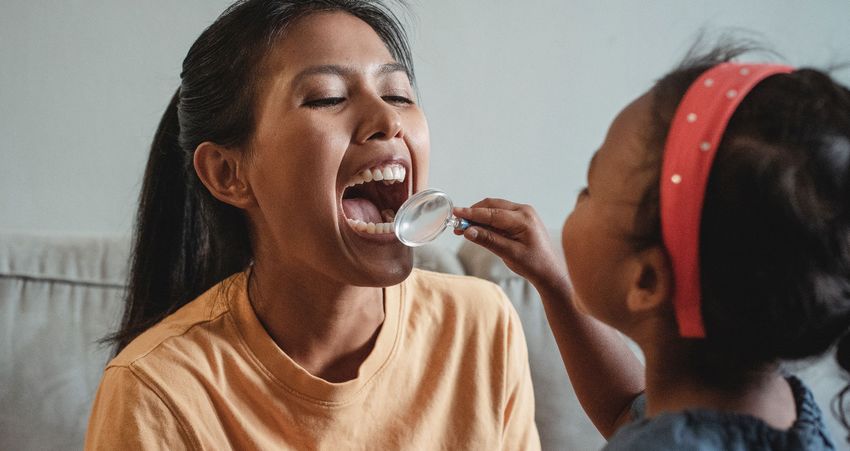
GREETINGS FROM THE CEO                                                                                                                                                                GREETINGS FROM THE CEO

Expansion of Services                                                                                     Our Team
Despite the difficulties of COVID-19, we were able to keep expanding and developing our                   The word “team” is a word that encompasses what I have seen from our staff and Board
services to support more clients and provide different forms of care.                                     of Directors, including those behind the frontlines providing administrative support, data
                                                                                                          management, and so much more. The resilience, courage, and willingness to step in wherever
In December 2020, we expanded services into Waterloo Wellington, taking over the Indigenous               needed, made it possible to continue providing a high-level of wholistic care and support
Health and Wellness Program from the Guelph Community Health Centre, which allowed us to                  strong patient outcomes throughout the pandemic.
expand our mental health and traditional healing services to support their existing programs.
We anticipate developing a full Wholistic Integrated Primary Health Care team in the near                 Growth and expansion also means providing more leadership support to staff and those we
future to support Indigenous peoples in this region. And, in February, we opened a new Dental             serve. We’re pleased to welcome Stephanie Vandevenne as Privacy Officer and Director of
Clinic at our Chippewa site to allow for easier access for children and families living on reserve        Quality and Accountability, to round out our team which includes Shannon Marchand, Chief
and in the area to receive dental care.                                                                   Financial Officer, Jan Martin, Director of Indigenous Relations, Dave Remy, Director of Client
                                                                                                          Care, Deanna Guernsey, Director of Strategy and Planning and Anna-Marie Evans, Human
Nshwaasnangong Child Care and Family Centre is nearing completion and is expected to                      Resources Manager. We continue to work as a collective leadership group with our Integrated
open in summer 2021, despite supply chain interruptions during the building phase. Its unique             Care Managers at each site to support the delivery of client care and improved patient
building will be an exciting addition to the SoHo neighbourhood and will be a vibrant place               outcomes.
of learning, sharing, and gathering. We look forward to welcoming our community into this
beautiful new space and watching our little stars grow and flourish.                                      I am so grateful for our staff, Board of Directors, funders, and many community partners,
                                                                                                          collaborators and supporters. It is an honour to work beside you to serve our First Nations,
Looking Ahead                                                                                             Métis and Inuit families and communities, empowering them to live a healthy, balanced life
                                                                                                          through mental, physical, spiritual and emotional wellbeing.
As vaccinations levels increase and pandemic restrictions lift, we’re looking ahead to how we can
continue to deliver excellent and expanded care across our service area.                                  Each and every day, we do the work of supporting survivors, of helping people heal from
                                                                                                          intergenerational trauma, of connecting people to their life-giving culture, and of building up
We’re excited for the potential of our new partnership at Four Counties Health Services (FCHS),           our community that has known such pain and loss. I want to acknowledge how our community
one of two hospital sites of the Middlesex Health Alliance, to expand access to primary care and          was and continues to be affected by the tragedy that unfolded on the Tk’emlúps te Secwépemc
traditional healing services for the area’s Indigenous population to help create better health            First Nation in Kamloops, British Columbia and which brought many of these issues to the
outcomes.                                                                                                 forefront. I know how difficult it was to support clients when many of you were feeling your own
                                                                                                          pain and loss, and I thank each and every one of our staff members for their commitment to
We’ll also begin our capital renovations project at 493-495 Dundas Street in London, which aims           helping our clients on their healing journey - not just when events make the news, but in every
to improve access to care for patients and will allow us to serve more patients more efficiently -        patient encounter.
something our London team is greatly looking forward to.
                                                                                                          Chi-miigwetch,
                                                                                                          BRIAN DOKIS
                                                                                                          Chief Executive Officer
4                                                                      SOAHAC ANNUAL REPORT 2020 - 2021                                                                                                    5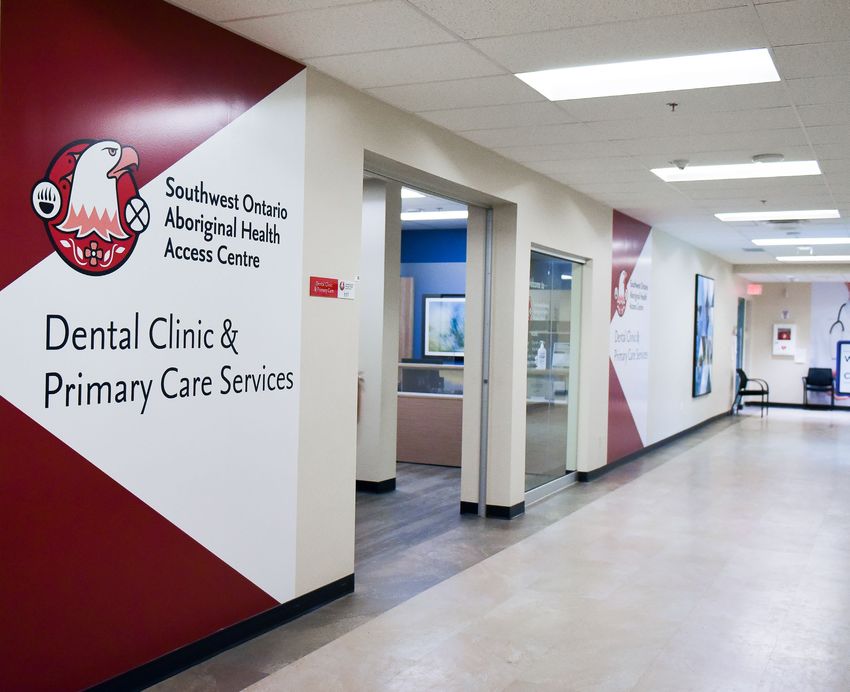
OVERCOMING OBSTACLES

             The Story of Compassionate
             & Collaborative Care During
             the COVID-19 Pandemic.
             The impact of COVID-19 on primary care services across the province cannot be understated.
             Organizations, including SOAHAC, have had to find ways to reach clients in different ways and
             to enhance their protocols to ensure both staff and client safety.

OVERCOMING
             Throughout these new challenges, SOAHAC has developed innovative and collaborative
             ways to provide health care, facilitate COVID-19 testing, and deliver vaccinations to many
             Indigenous people living on and off reserve. Our strategy has made SOAHAC a leader in the
             health care community across all of the regions we serve, and the subject of many positive
             press articles that detail the dedicated efforts of our staff to provide culturally safe care to

OBSTACLES    thousands of Indigenous people.

             Windsor
             SOAHAC Windsor was the first of our sites to receive the vaccine due to the high volume of
             active infections of COVID-19 at the time. We immediately partnered with Windsor Regional
             Hospital, seconded an Indigenous nurse, prepared specific space for Indigneous vaccination
             in the St. Clair College mass vaccination site, and began scheduling any identifying Indigenous
             person to receive a vaccine.

             This model of vaccine delivery was then replicated in London and Cambridge and has been
             featured in many positive press articles, and mentioned by Marc Miller, Federal Minister
             of Indigenous Affairs in a press briefing, due to its high success rate. The Windsor site also
             provided a popup clinic to members of Can-Am Urban Native Homes in Windsor with both
             first and second doses.

             SOAHAC ANNUAL REPORT 2020 - 2021                                                                   7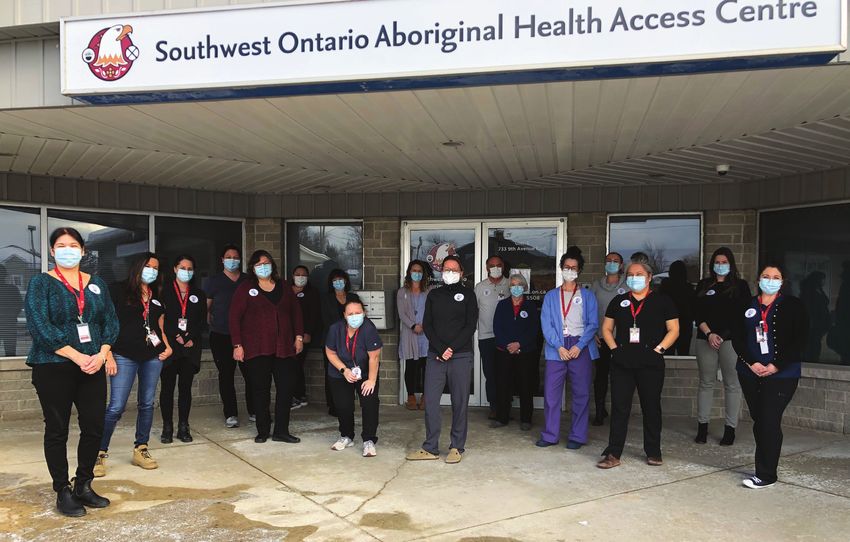
OVERCOMING OBSTACLES

London & Chippewa
Early in the pandemic, we initiated the province’s first Indigenous-led COVID-19 assessment       Owen Sound
centre at our Chippewa site, and with the development of vaccines, built upon this success        SOAHAC Owen Sound worked with Grey Bruce Public Health to lead several of its own mass
and partnered with London Health Sciences Centre and the London Middlesex Health Unit to          vaccination clinics, including one that provided 400 people with vaccinations in one day. Grey
provide specific space for Indigenous vaccination at the Western Fair Agriplex mass vaccination   Bruce Public Health was so impressed with SOAHAC’s ability to provide vaccinations they
site. SOAHAC has seconded two Indigenous vaccinators who, with the support of a Traditional       procured additional space for SOAHAC-led mass vaccination events. We continue to support
Healing Liaison, provide culturally appropriate care to those identifying as Indigenous.          the area’s vaccine efforts by providing nursing support to vaccine clinics across the county.

We also partnered with N’Amerind Friendship Centre and Atlohsa Family Healing Services to
offer vaccinations at a pop-up clinic at the N’Amerind Friendship Centre. During the two-day      Waterloo Wellington
event, we provided 309 vaccinations, including several to Residential Schools and 60s Scoop
Survivors. SOAHAC will continue this partnership with more vaccination clinics, including a       SOAHAC Cambridge, started its vaccination program in late May after being asked by the
youth clinic in June.                                                                             Region of Waterloo to take on the vaccination of Indigenous people at its Cambridge mass
                                                                                                  vaccination site. The site was opened with a blessing by Myeengun Henry in the presence of
                                                                                                  SOAHAC Staff, community leaders, and many staff and leadership from Grand River Hospital
                                                                                                  and Region of Waterloo Health Unit. It’s the first site where we have weekend coverage through
                                                                                                  the utilization of an Indigenous medical student, making vaccines more accessible
                                                                                                  for Indigenous folks in the region.

                                                                                                  Each site of the SOAHAC team worked diligently during the changing environment throughout
                                                                                                  the pandemic and it resulted in real impacts for Indigenous peoples. By June 2021, SOAHAC
                                                                                                  gave over 7,000 vaccines across the region, and created new partnerships with on-reserve health
                                                                                                  centres, hospitals, funders, and health units. As vaccines continue to roll out across the province,
                                                                                                  SOAHAC will continue to be a leader in every region we represent, as all of our clinics will soon
                                                                                                  have the ability to provide vaccines in-house. We will also be in possession of a mobile unit
                                                                                                  allowing us to reach outlying communities and assist Community Health Centres with primary
                                                                                                  care and vaccine supply.

                                                                                                  The response from SOAHAC staff during the pandemic has demonstrated our purpose
                                                                                                  in action: to improve access to, and the quality of, health services for First Nations, Inuit
                                                                                                  and Métis peoples in the spirit of partnership, mutual respect and sharing, all with an
                                                                                                  abundance of care and compassion for each client.

                                                                                                  SOAHAC ANNUAL REPORT 2020 - 2021                                                                   9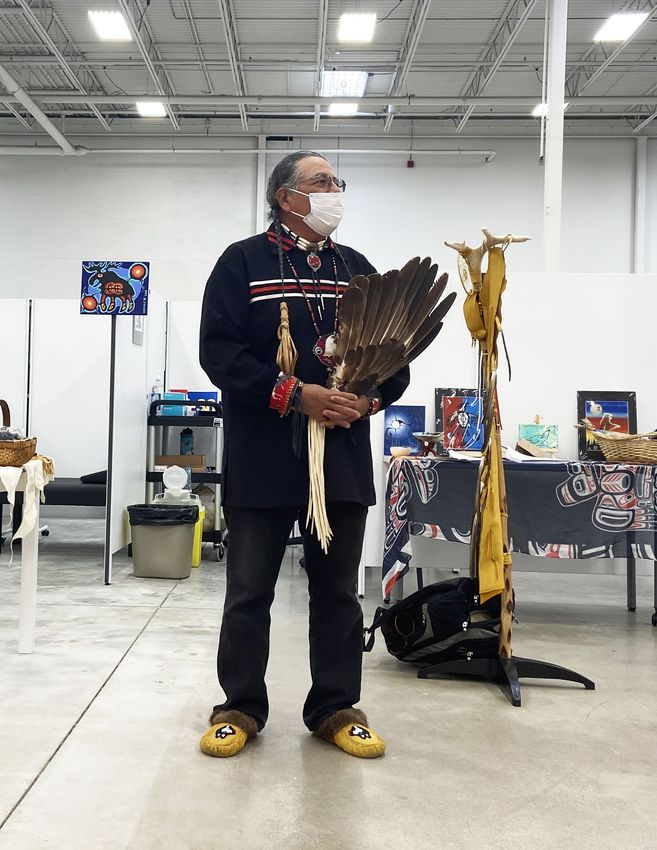
OUR CLIENTS
OUR CLIENTS                                                                                                                                                                                OUR CLIENTS

Connecting to Clients:                                                                Indicators
By the Numbers                                                                        of Complexity:
Client Intake : 569                                                                   Number of Visits
     LONDON
     CHIPPEWA
     DELAWARE NATION / WINDSOR                                                           NUMBER OF VISITS                  > 100        50 - 99       40 - 49       30 - 39    20 - 29      10 - 19
     OWEN SOUND
     WATERLOO WELLINGTON
     OTHER
                                                                                        NUMBER OF CLIENTS                      27         174           121          183         392          694

Client Demographics                                                                   Clients with One or More
                                                                                      Chronic High Cost Conditions

Adults                     Children    Men                            Women
                           & Seniors                                                                   17 %    have life limiting chronic illnesses

              50%   50%                      43%         57%                                                             34%   have 10 or more interactions with a provider

                                                                                                                                                  have high cost conditions such as Heart Disease,
                                                                                                                                          57%     COPD, Diabetes, Substance Abuse, Mental Health

12                                                 SOAHAC ANNUAL REPORT 2020 - 2021   SOAHAC ANNUAL REPORT 2020 - 2021                                                                                13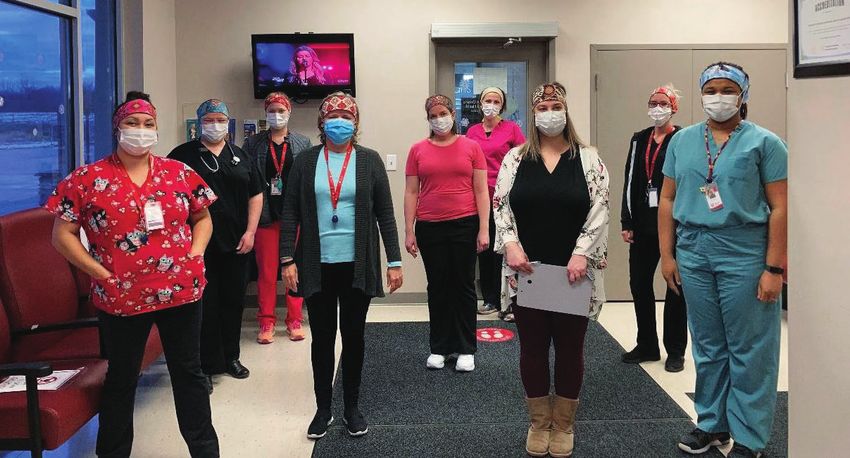
OUR SERVICES

                         SOAHAC Locations & Service Areas

                               10

                                             7
                                                  8   OWEN SOUND

                                    9

                                                                                    18

OUR SERVICES
                                                                                    WATERLOO

                                                                                    17
                                                                                6   LONDON
                                                                    4                          1    EELÜNA APÉEWI LAHKÉEWIIT (DELAWARE NATION)
                                                                            5                  2    SOAHAC – CHIPPEWA
                                                                2
                                                                                               3    MUNSEE-DELAWARE
                                                                        3
                                                                                               4    CHIPPEWAS OF THE THAMES FIRST NATION
                                             16                                                5    ONEIDA NATION OF THE THAMES
                                                           19
                                                                                               6    N’AMERIND (LONDON) FRIENDSHIP CENTRE
                                                                    1                          7    M’WIKWEDONG NATIVE CULTURAL RESOURCE
                                        11                                                          CENTRE
                                                                                               8    SOAHAC – OWEN SOUND
                                                                                               9    ZAAGIING (SAUGEEN FIRST NATION)
                                                                                               10   NEYAASHIINIGMIING (CHIPPEWAS OF
                                             12                                                     NAWASH FIRST NATION)
                                                                                               11   AMJIWNAANG FIRST NATION
                                                                                               12   WALPOLE ISLAND
                                                                                               13   CAN-AM FRIENDSHIP CENTRE
                                        13                                                     14   SOAHAC – WINDSOR
                                                                                               15   CALDWELL FIRST NATION
                                    14   WINDSOR
                                                      15
                                                                                               16   KETTLE & STONY POINT FIRST NATION
                                                                                               17   SOAHAC – LONDON
                                                                                               18   SOAHAC – WATERLOO WELLINGTON
                                                                                               19   SOAHAC – NEWBURY

               SOAHAC ANNUAL REPORT 2020 - 2021                                                                                   15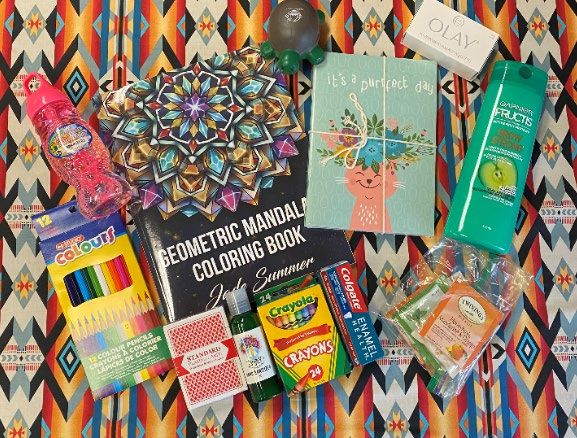
OUR SERVICES                                                                                                                                                                                     OUR SERVICES

Clinical Services                                                                           Top Concerns
                                                                                                                                                                           Due to COVID restrictions, we have had limited
                                                                                                                                                                           in-person visits for most of the year, lowering
                                                                                            The multidisciplinary team supports clients on                                 the rates of disease management encounters.
                                                                                            healing paths through a range of health needs:
41, 604 Patient        Providing health care from infancy to the elder years,
                       clinical services work together to provide clients with
    Encounters         the best possible care including:                                                                                         PAIN MANAGEMENT                                        7%
                                                                                                                                                 HYPERTENSION ( high blood pressure)                   12 %
                                                                                                                                                 SOCIAL ISOLATION, ANXIETY,
                       34, 179   PRIMARY CARE                                                                                                    TRANSPORTATION                                        16 %
                        1,629    PHYSIOTHERAPY                                                                                                   DIABETES & RELATED                                    23 %
                        2,344    DIABETES EDUCATION PROGRAM                                                                                      MENTAL HEALTH, DEPRESSION,
                        3,452    NUTRITION                                                                                                       ANXIETY                                                42%

                       11 Babies welcomed and new life celebrated
                       23 Clients Supported through our Palliative
                          Care Program
                       34 Women supported through our Aboriginal                            Preventing &
                          Midwifery Program
                                                                                            Managing Diseases
                                                                                                          COLORECTAL CANCER SCREENING RATE for eligible clients 50 – 74 who had a fecal occult blood
           Wholistic   Integrated care is core to our care philosophy. Internal
                       referrals and clients accessing multiple services                    67%           test within the past two years, sigmoidoscopy or barium enema within five years, or a colonoscopy
     Integrated Care   helps create compassionate care for the whole person.
                                                                                                          within the past 10 years.

                       58% of clients are accessing 3 or more service
                       providers and 34% of our team’s referrals are internal.              66%           CERVICAL CANCER SCREENING RATE for our eligible clients 20 – 69 who had a Papanicolaou
                                                                                                          (Pap) smear within the past three years

                                                                                            44%           CHILDHOOD IMMUNIZATIONS COMPLETED (Ministry of Health target is 95% by 2025)

16                                                       SOAHAC ANNUAL REPORT 2020 - 2021   SOAHAC ANNUAL REPORT 2020 - 2021                                                                                 17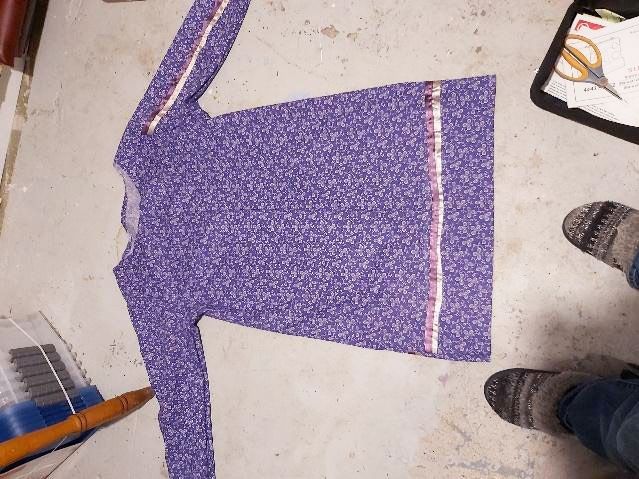
OUR SERVICES

SOAHAC Dental Clinic
Expands to Chippewa
Dental care is health care, that’s why SOAHAC is supporting clients with oral health including
432 encounters for 303 clients in 2020-2021.

In March 2021, our newest Dental Clinic at Chippewa of the Thames opened, expanding access to
a full range of dental care that is open to both Indigenous and non-Indigenous patients, many of
whom are covered under various government support programs.

Some of our services include:
Cleaning and polishing teeth     Root canal therapy
White fillings                   Single crowns
Tooth extractions                Full and partial dentures

                                                                                                         “ Expanding our Dent al Services is just one more way
                                                                                                           of suppor ting Indigenous individuals, families and
                                                                                                           communities in accessing health care services that
                                                                                                              suppor t a wholistic lens on their wellbeing. ”
                                                                                                                           SOAHAC | DENTAL CLINIC

18                                                                    SOAHAC ANNUAL REPORT 2020 - 2021                                                           19
OUR SERVICES OUR SERVICES
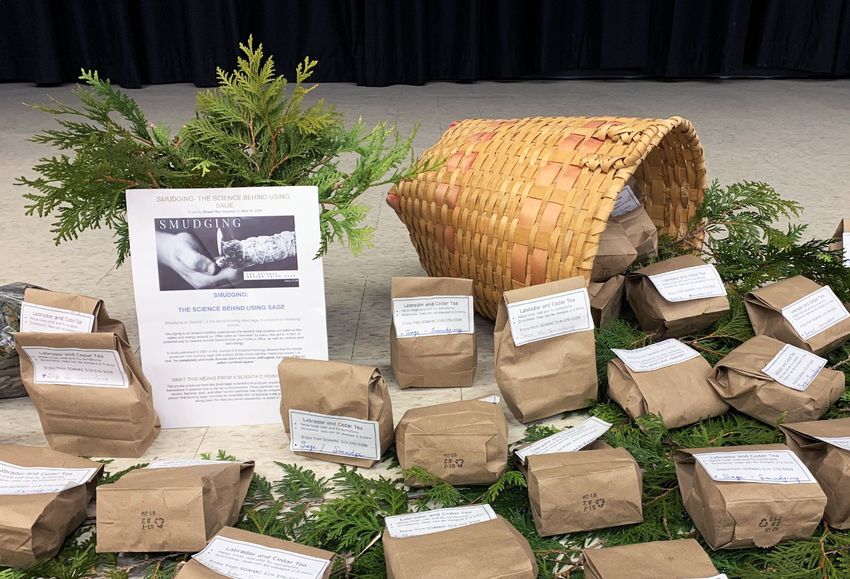
Our Traditional Healing Liaisons continued to be a major source of wellness and
Traditional Healing Successfully healing supports for clients by utilizing traditional knowledge and practices and
engaging clients through the following virtual programming:
Transitions to Virtual Care
RETURNING TO OUR TRADITIONAL PRACTICES through virtual nature walks for
Through the guidance of traditional healers, as well as through the shared goals of the Indigenous harvesting traditional medicines that incorporated meditation and spiritual reconnection.
and health care communities, traditional wellness is an important part of a healthier future and an
essential part of wholistic care. The Traditional Healing program is an integral part of SOAHAC’s TRADITIONAL MEDICINE TEACHINGS CLASSES with Traditional Healers.
model of care that is improving and transforming Indigenous health.
TRADITIONAL COOKING CLASSES included Indian cookies, traditional corn soup making,
and healthy smoothies.
With the coronavirus in our Indigenous communities, SOAHAC put a strong emphasis on
protecting the health of our clients, staff, and Traditional Healers. As the knowledge and wisdom TRADITIONAL ARTS PROGRAMS where crafting supplies and technical equipment were
of our Traditional Healers is invaluable, Traditional Healers were encouraged to use virtual services provided to clients ahead of time and created art in different mediums, including painting,
to interact with clients and minimize person-to-person contact. traditional ribbon dress, moss bag, beaded earring, and tie blanket making classes.
STORYTELLING WITH ISAAC MURDOCH, in partnership with Greater Essex County District
School Board, Aboriginal Child Resource & Prenatal Centre & Can-Am Urban Native Homes,
which featured guided discussions where participants were encouraged to connect the
teachings back to the land, health, and ceremony.
1,794 INDIVIDUAL SHARING OUR VOICES THROUGH SONG, a monthly series focused on sharing musical and
145 PARTICIPANTS IN 10 GROUPS cultural practices of Anishinaabeg Shi Shi gwan teachings with Joseph Syrette, in partnership
HIGHLIGHTS
with the Greater Essex County District School Board.
Traditional Healing Major Category of Engagement with Individuals WELLNESS CIRCLES AND SHARING CIRCLES were transitioned to an online format
Services: 2,034 • 32 % Spiritual Guidance, Counselling
to allow those who are in recovery or seeking healing from substance abuse to continue
connecting.
• 63 % Traditional Teaching
• 2 % Traditional Ceremony SELF-CARE AND WELLNESS CIRCLES were developed to connect with youth, who faced
particularly difficult restrictions during the pandemic.
• 3 % Other Traditional
All programs aimed to provide connections to culture to combat the mental health issues
associated with isolation.
20 SOAHAC ANNUAL REPORT 2020 - 2021 SOAHAC ANNUAL REPORT 2020 - 2021 21OUR SERVICES OUR SERVICES
Early Life Care Mental Health &
Children hold a sacred place in Indigenous culture, and with that comes a sacred responsibility
to care for them. In collaboration with the SOAHAC Aboriginal Midwives, beginning and early Addiction Ser vicess
life educational programs were provided to mothers that incorporated Indigenous teachings
for caring for little ones. Programs offered included Traditional Midwifery for each trimester
and home birth, parental stress relief, relationship management, postpartum baby care,
Needed More Than Ever
prenatal nutrition, and breast-feeding support. SOAHAC’s mental health and addiction services are needed more than ever. Over the past year,
16,791 children, youth, families and adults accessed this care team in the following ways:
End of Life Care
Just as we support our children and their entrance into this world, we hold sacred our elders
and everyone on the journey to end of life. We are proud we continued to provide in-person
traditional healing supports to palliative care clients and families throughout the pandemic.
6,339 1,501 8,951
INDIVIDUAL COUNSELLING CHILDREN & YOUTH HARM REDUCTION
COVID-19 Supports
We coordinated the opening ceremonies, teachings, prayers and songs for the COVID-19
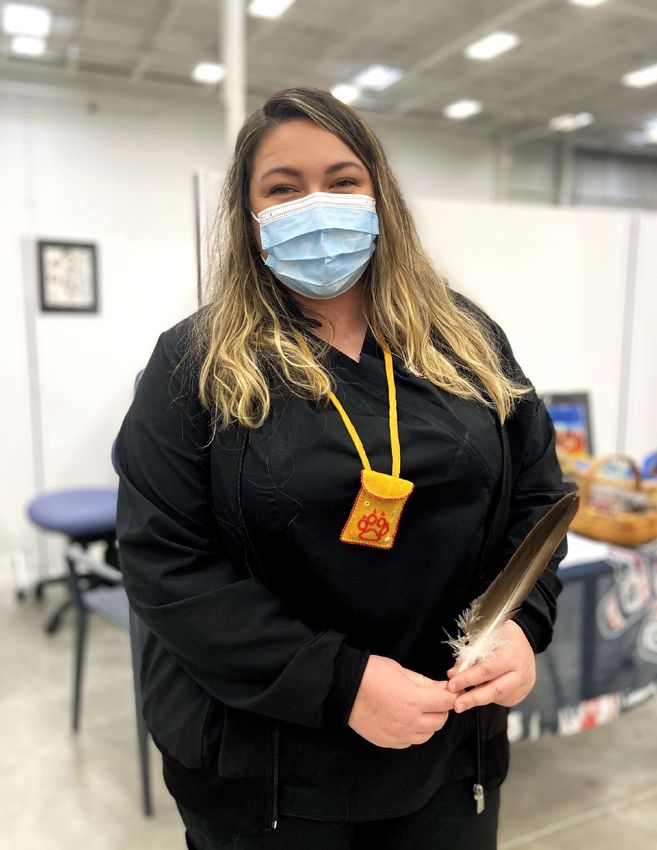
vaccine clinics at all sites and provided medicine bundles to all vaccine recipients to support
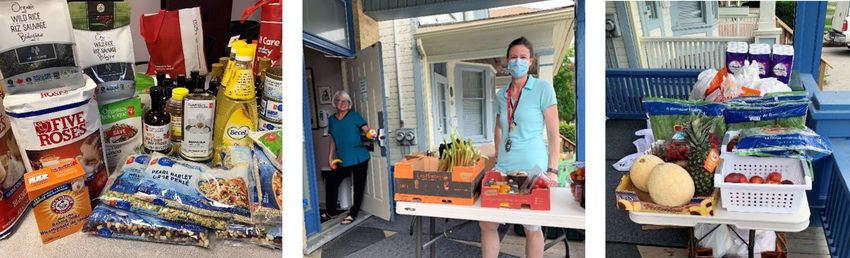
their wellbeing. We also provided food hampers and traditional medicine bundles to clients
who were self-isolating at home to ensure they had the supplies and support they needed.
Supporting Food Security
Working in collaboration with Atlohsa Family Healing Services and N’Amerind Friendship
Centre, our London site provided traditional healthy foods to urban Indigenous children and
youth for the Hot Meals Program. The initiative provided 100 meals per day, 4 days a week,
from June to October 2020. We also worked to ensure longer-term food security with the
Growing Healthy Spirits Garden by maintaining and adding to the garden throughout the
entire season and incorporating planting teachings and spiritual connections to the land.
As we continue to navigate through this pandemic, we are reminded that our wholistic
wellbeing is a time to find balance and different ways to connect. We have embraced this new
forum of virtual connection, and continue to look after each other with wisdom, love, respect,
courage, honesty, humility, and truth.
22 SOAHAC ANNUAL REPORT 2020 - 2021PATHWAYS TO CARE
Pathways to Care
Improving Indigenous
Outcomes Project
Funded by the Public Health Agency of Canada, SOAHAC has been working in partnership
with the Indigenous Primary Health Care Council (IPHCC ) and with five hospital partners in
the Erie St. Clair region on the Pathways to Care Improving Indigenous Outcomes Project.
This project aims to foster greater cultural safety for Indigenous people in the healthcare
PATHWAYS
system.
The project will provide Indigenous Cultural Safety training to health care providers,
managers and leaders across the collaborating hospitals and will support hospital
partners in developing and implementing organizational change plans that promote
TO C ARE and strengthen cultural safety for Indigenous patients, families and communities.
The project team has been working diligently over the last seven months co-designing the
educational content with the insight, advice, and guidance from the advisory committee and
the Indigenous circle. The advanced training meets the needs of healthcare leaders and gives
them the opportunity to:
Reflect on the social and structural determinants of Indigenous health;
Deepen learning about biases and stereotypes that negatively impact patient safety
and create barriers to accessing care for Indigenous people;
Build confidence in their ability to intervene when they see or hear something
problematic; and,
Explore practical examples of how hospitals can improve their inclusiveness and
accessibility for Indigenous peoples by addressing bias in mental health and addictions.
SOAHAC ANNUAL REPORT 2020 - 2021 25PATHWAYS TO CARE
We recently hired Danielle Alcock, our new Regional Practice Lead, who will be supporting the
planning and implementation of the educational strategies and organizational development
plans with each hospital lead champion.
The next phase of the project will see the final training sessions rolled out eight times over
the summer and fall months. We will be hosting five think tank sessions where Danielle will
be working closely with the lead champions to identify the root causes of Indigenous-specific
disparities within their health systems and to design change plans to help eliminate racism
and discrimination, therefore reducing barriers and better serving Indigenous patients in
their hospital.
“ Together, we share a vision of Indigenous people in our
region receiving equity in health service and reaching
equity in their health outcomes. We have joined together
for this project to move us closer to realizing this vision
in our communities and our organizations .”
DANIELLE ALCOCK | REGIONAL PR ACTICE LEAD
26OUR LOCATIONS
Chippewa of the Thames: One of
Ontario’s First Indigenous-led
COVID-19 Assessment Sites
In April 2020, SOAHAC identified the need to better suppor t Indigenous individuals’ access
to COVID-19 testing and support, and site staff collaborated to set up one of the first
Indigenous-led COVID-19 assessment centres in Ontario. Since then, the Chippewa site has
screened 958 individuals for COVID-19 and administered 938 COVID-19 screening swabs.
OUR While last year was an incredibly challenging time of loss, illness, isolation and fear, SOAHAC
Chippewa staff did not waver in the care they provided, despite hardships and health risks.
Yaw^ko/Chi-Miigwetch ( Thank you) for your hard work and dedication. We deeply appreciate
the sacrifices made and the commitment to the care of patients, families, and communities
LOCATIONS this past year.
From our nursing staff who managed our COVID-19 testing; to Lainie Gardner and her team
who put together Comfort Bags to support families coping with isolation ; to Rose McKenna
and others who took on new tasks, big and small, to support our clients; and to Carla Jones,
our Child & Youth Navigator who created inspirational boards to support our staff and put
a smile on their faces, everyone came together to ensure we supported our clients through
this time.
This was a year that truly emphasized the importance of teamwork at our Chippewa Site.
In November 2020, staff took a moment from their busy day to take a team photo that
showcased their new headbands for use with long days of mask wearing. Rose recognized
that this brief but substantial moment demonstrated how they could get through the
pandemic together by supporting one another. Miigwetch to our team for their collaboration
and compassion for clients.
SOAHAC ANNUAL REPORT 2020 - 2021 29OUR LOCATIONS
Supporting Children and Youth With Virtual Workshops
During the pandemic, children and youth have struggled with the lack of routine and structure,
and therefore have had difficulty with being able to control how they feel and react. Our
Child & Youth Navigator, Charlie Elijah, has worked with our youth to strengthen their coping
techniques to manage their feelings of anger, frustration, irritation, and sadness. They also
worked on crafts such as beading, painting, blanket making and tie dye to keep them engaged
and to create a community of support. Charlie even partnered with Jocelyn, our dietitian, to
lead sessions on healthy and traditional cooking to encourage healthier food choices while at
home.
Chippewa Site staff showcasing their new headbands.
Innovative Programs in
London Support Clients
During COVID-19
Over the past year, SOAHAC London has made great strides in ensuring our staff and
community members are practising safe measures, following all protocols, and supporting
each other through these tough times. Traditional Ribbon Dress Making Paint Night with Moses Lunham Moss Bag Making
Our London team took a number of measures to ensure a safe space for staff and clients,
including erecting plexiglass in shared office spaces, scheduling appointments with more time Mental Health & Addictions Team Steps Up to Support Clients
in between clients, providing virtual appointments for some clients, rotating staff in and out of The Mental Health and Addictions team has continued to provide critical mental health
the office to allow for distancing in our limited space, screening for staff and clients entering support throughout the pandemic restrictions. We would like to acknowledge our London
the building, COVID-19 testing on-site, and the use of lots of Personal Protective Equipment! site colleagues for their support, collaboration, and availability to address many complex
Through it all, our team has adapted to the ever-changing protocols and ensured a safe mental health challenges that were exacerbated by the pandemic, which have also involved
environment for clients and for each other. medical complexities, poverty, food insecurity, transportation challenges, and homelessness.
30 SOAHAC ANNUAL REPORT 2020 - 2021 SOAHAC ANNUAL REPORT 2020 - 2021 31OUR LOCATIONS OUR LOCATIONS
We have truly needed to be flexible, collaborative, and creative in our efforts to continue Wellness Bags were put together and
to support our clients. distributed to many of our clients which
included colouring books, journals, personal
The pandemic has been particularly difficult for those already struggling with mental health care products, tea and a turtle stress ball,
and addiction, many of whom also have complex health challenges and lack access to basic along with information and web links provided
needs such as food and shelter. An increased fear of getting sick has meant many of our clients so clients knew where to access reliable health
are now reluctant or unwilling to leave home or take a bus, further limiting their ability to and wellness information, online groups
access the services they need. and resources.
We have provided consistent support to address the mental health and addiction We continued to work with clients to complete
goals people had before the pandemic arrived, and have increased our accessibility by important documentation for court, ODSP,
providing more ways to connect, including phone, text, email, and virtual support, in Day School applications, and Jordan’s Principle applications. Often, staff took extra time to
addition to in-person support following safety guidelines and protocols. transpor t documents to and from clients, at home and in hospital, to ensure clients were
prepared. We provided a space to support clients through court when they did not have the
Our weekly Wellness Circle has gone online, with many efforts to connect folks to this vital ability and means to do so from their home. Finally, we advocated to find shelter, food, legal
form of support for Indigenous adults who are in recovery, or seeking healing for substance advice, system navigation, and street outreach to support some of our most vulnerable people
abuse. During this time together online, as a group we smudge, read meditations from who have been heavily impacted by the pandemic.
Indigenous authors and literature, and share in each other’s healing journeys. The circle helps
minimize isolation and build hope for those struggling with addictions in a culturally safe,
non-judgmental, and supportive Indigenous virtual environment.
Food Insecurity Leads to
Innovative Partnerships
At the London site, the number of clients that we support that are experiencing new or
worsening food insecurity significantly increased in 2020 as a direct result of the pandemic.
In fact, more than triple the clients reported food insecurity to their primary care provider
versus 2018-2019.
We knew that we had to help alleviate some of this burden. We were successful in attaining
three grants: two through the FoodRescue.ca Emergency Fund and one through the
United Way.
32 Wellness Circle, Wednesdays 11AM-12PM Eileen Hagar, Mental Health Counsellor, ensures SOAHAC ANNUAL REPORT 2020 - 2021 33
all clients are feeling safe during their visitOUR LOCATIONS OUR LOCATIONS
We also partnered with Atlohsa for the Hot Food Delivery program, which ran for the entire
year. Though these projects did not solve food insecurity on a large scale, they did offer
temporary relief to families during the pandemic.
To help us communicate with our clients, SOAHAC also received an emergency communication
fund grant, allowing staff to provide pre-paid cell phones. Clients were able to call, or text, not
only SOAHAC staff, but other professional allied health providers to stay connected.
• 289 grocery cards or food boxes delivered through the FoodRescue.ca
Fighting Food Insecurity
HIGHLIGHTS Emergency Fund, in partnership with Second Harvest. in Owen Sound
• 320 bags created from the Good Food Box Program, sponsored by
United Way and the Harvest Bucks Program. To support families living with food insecurity due to the pandemic, SOAHAC Owen Sound
• Monthly food hampers and gift cards, including Christmas food and provided over 250 Good Food boxes to local families and supported over 10 vulnerable
comfort hampers, were distributed 284 times to 140 different families older adults with daily meals through Meals on Wheels. We’re thankful for the Grey County
thanks to the United Way. Housing Covid Relief program for their support.
• 558 Food Hub Fresh Produce bags were packed by staff, supported Elaine Watts, our dietitian, participated in the development and implementation of the
by the London Food Coalition at the Centre of Hope Salvation Army Food Families Program through the generosity of the Grey Bruce Community Foundation.
and supplemented with pantry items from the London Food Bank. 11 women participated in a virtual program that taught food skills and financial literacy,
• Through a partnership with the Chippewa site, we were able to including topics like creating a budget, stretching your food dollar, food preservation,
distribute 150 comfort bags to support our seniors and children cooking with and for kids, and lots of new recipes!
and youth.
Elaine also celebrated Nutrition Month in March with Facebook video posts showcasing
• 150 traditional food bags, featuring wholesome foods like beans,
recipes to try at home. Her dedication to creating innovative programs engaged many clients
wild rice, maple syrup, and salmon were created to support clients
and helped them to develop a new relationship with food. Another SOAHAC staff member
who couldn’t participate in our traditional healing program due to
puts it best: Elaine has “changed the lives of some of the people that I work with. Thanks
restrictions.
for taking time to figure out what works best with each client and being able to move at the
client’s pace.” That’s the SOAHAC approach in action.
34 SOAHAC ANNUAL REPORT 2020 - 2021 SOAHAC ANNUAL REPORT 2020 - 2021 35OUR LOCATIONS
care information. We also delivered iPads to clients to ensure they had the right tools to access
virtual care from home.
Windsor Leads the Way When we were able, we gathered in-person to care for our Growing Healthy Spirits Garden,
participated in Full Moon Ceremonies with Myrna Kicknosway on Bkejwanong First Nation,
on Culturally-Aware Care walked in the Orange Shirt Day Socially Distanced Honor Walk, and held an Ancestors Feast with
Joe George, Oneida Nation, Bear Clan where we feasted Big & Hand drums as well as our staff ’s
bundles.
As we navigated through COVID-19, the Windsor team remained focused on providing services
and fostering positive relationships with our clients, patients and partners in Essex-Windsor, We also continued to provide counselling through our partnerships, both to students in Lambton
Caldwell First Nation, Aamjiwnaang First Nation, and the Delaware Nation at Moraviantown Kent District School Board when schools were open, and to Indigenous patients of the Chatham-
(served from Four Counties Health Services in Newbury). Kent Health Alliance who needed mental health support, including those entering programs.
Throughout the year, our team worked hard to make connections with our clients and help them
Vaccination Clinic Leads the Way improve their wellbeing.
Windsor is proud to be the first SOAHAC location to provide culturally-aware care for COVID-19
vaccinations. Our work started in early January 2021, when we gathered representatives from the
Can-Am Indian Friendship Centre, Can-Am Urban Native Homes, Windsor Regional Hospital,
Erie-St. Clair Regional Cancer Program, Windsor-Essex County Health Unit, and Legal Assistance
of Windsor to gather input on how best to provide culturally-aware care for Indigenous peoples.
This led to the development of posters, program sheets and radio ads to encourage Indigenous
people to get their vaccines, along with materials for the vaccination site itself to welcome people
into the space. These efforts were successfully replicated across SOAHAC’s sites in London and
Waterloo Wellington to support the delivery of culturally-aware care.
Care in Action
Over the past year, our staff have continued to provide virtual care to our clients in innovative
ways, including virtual crafting sessions, packaging and delivering food and traditional medicines,
connecting clients to Traditional Healers through phone calls, and creating and delivering
holiday gift and food hampers to our clients. We also did a series of presentations on Facebook
that talked about how to stay safe and follow health protocols regarding COVID-19, overdose
awareness, and breast cancer awareness, so that clients wouldn’t miss out on crucial primary
36 SOAHAC ANNUAL REPORT 2020 - 2021OUR LOCATIONS OUR LOCATIONS
New Site for SOAHAC Care Services, Awareness Events and Outreach, Community Capacity Building, Cultural Safety
Training, Program Development and Integration, Poverty Reduction, Family Strengthening
in Waterloo Wellington Supports, Cultural Programs, and Palliative Support.
Builds on Strong Foundations The Waterloo Wellington SOAHAC team is committed to organizing and supporting
community engagement activities in the area to ensure we are responsive to emerging
community needs. Strategies to enhance community engagement, recruitment and retention
In December 2020, SOAHAC welcomed a new team and service site to our ever-growing will be a key priority as our team continues to grow and support primary care, traditional
organization. We are excited and proud to take over operations and leadership of the former healing and mental health programs. Over the next year we will re-engage and consult with the
Waterloo Wellington Indigenous Healing and Wellness Program (IHWP) from the Guelph Indigenous community members in Waterloo-Wellington, with a goal of updating community
Community Health Centre (Guelph CHC) and the Indigenous Healing and Wellness Program’s needs and examining our potential for program expansion and site locations.
Advisory Circle. This opportunity, our fifth site in the Southwest Ontario region, has been many
years in the making and is the result of a comprehensive review process by Indigenous-led
consultant, INDSight.
The opportunity to provide oversight and leadership of the IHWP will allow us to broaden and
deepen our reach and impact for the new catchment area in which there are an estimated 50,000
First Nation, Métis, and Inuit peoples. Through this exciting expansion, we are strengthening
our ability to provide high quality, wholistic health and wellness services that are integrated,
inclusive, safe and based in Traditional Healing – the heart of our care model. “ Through this exciting expansion, we are
strengthening our ability to provide high quality,
The new clinic, located at 745 Coronation Boulevard in Cambridge, will be led by our dedicated
team, which includes Tamie Coleman Dell, Kim Hanlon, Trista Hill, Carrie McCutcheon, wholistic health and wellness services that are
and Rachel Radyk, with Charisse Sayer as our Integrated Care Manager. Welcome to the
SOAHAC team! integrated, inclusive, safe and based in Traditional
Healing – the heart of our care model. ”
As our team grows, and in response to the needs of the First Nations, Métis, and Inuit
community members living in Cambridge, Guelph, Waterloo, Kitchener, and surrounding areas, SOAHAC
we plan to continue providing programs that our predecessors worked so carefully to restore,
recover and reignite in this area. In addition to aligning the existing programs with SOAHAC’s
model, we will continue to offer Traditional Healing & Therapies, Healthy Living & Wellbeing
Programs, Youth Services & Programs, Advocacy, Elimination of Barriers to Appropriate Health
38 SOAHAC ANNUAL REPORT 2020 - 2021 SOAHAC ANNUAL REPORT 2020 - 2021 39NSHWAASNANGONG
All Are Welcome Here:
Nshwaasnangong Child Care
and Family Centre
Nshwaasnangong is the spirit name given to the centre in ceremony. It means “place of
the eighth star” in Anishinaabemowin. The name, gifted to the centre in an Anishinaabe
Naming Ceremony, references the original eighth star in the Big Dipper that fell to earth
and became the Anishinaabe people. The name infers a great responsibility for caring
NSHWAASNANGONG
and sharing the gifts of the sky world, including the culture, teachings and language, for
children and families who attend the centre.
In collaboration with our partners on the Journey Together Committee and the City of London,
CHILD CARE & FAMILY
the Nshwaasnangong team achieved many milestones while operating within a global pandemic.
While we met with many challenges on our journey to opening the Nshwaasnangong Child Care
and Family Centre, our team remained focused and adapted to the changing times to continue
to develop and provide the following programs and services for the Indigenous peoples living in
and around London and Middlesex County:
Licensed child care for infants, toddlers and preschoolers;
Drop-in playgroups, along with art and land-based learning activities;
Indigenous language learning;
Gatherings and ceremonies; and
Family programs, support and community collaborations.
SOAHAC ANNUAL REPORT 2020 - 2021 41NSHWAASNANGONG NSHWAASNANGONG
Establishing Administrative, Management EarlyON Program
Systems, and Child Care Development Planning and Development
In the summer of 2020, SOAHAC began the recruitment process to hire the Nshwaasnangong Our team quickly focused in on their own creativity and learning as they adapted their
management team. The recruitment plan was guided in principles identified by the Journey practice and shifted to offer virtual EarlyON years connections with children and families to
Together committee of reinforcing positivity and the open mindset of “unlearning and relearning” stay connected in a way that best met their needs.
so the Centre becomes inclusive of indigenized approaches. By late fall, the Nshwaasnangong
management team was established with the onboarding of our Operations, Family Centre, and This included:
Child Care Managers who hold the child care expertise of working within Indigenous contexts and
understanding culture and identity. A virtual workshop offered over three days in December to 30 registrants that focused
on dissolving the toxic behaviours and dynamics that fuel the dysfunctionality in our
The Nshwaasnangong managers actively began obtaining resources to begin the full process of families and communities;
development towards achieving the goal of becoming a licenced child care centre. SOAHAC on Delivered self-care packages and activities to families with young children in the fall by
behalf of Nshwaasnangong also entered into a contract with Niswi Kwe Consulting to guide the leveraging existing food programs;
managers in building programming and training grounded in language and culture. Together they
developed the Indigenous framework for programing, which utilized the grandmother moons, and Virtual storytelling; and
drafted policies and procedures in all areas of services and administration, ensuring services are Cooking Indigenous food demonstrations.
culturally responsive and inclusive, which will be implemented as we move into the next phases of
the project.
Food Security Program -
ASHAMAAWASO (s/he feeds a child)
Given the Journey Together and community engagement pieces we conducted with the
Indigenous community in London and Middlesex County, it was clear that food security was a
priority for the centre. As such, we began developing a multi-pronged approach to address this
which we call ASHAMAAWASO (s/he feeds a child). Our first step was to apply for the Harvest
Bucks Program, where vouchers are used to buy fresh vegetables and fruit at various locations
SOAHAC ANNUAL REPORT 2020 - 2021 43NSHWAASNANGONG NSHWAASNANGONG
in London. We were successful in securing $4,700 for the community and it will be distributed Social Media
as part of community programs that support healthy eating. The program is a partnership of
London’s Child and Youth Network, Middlesex-London Health Unit, local businesses and other Unfortunately, the global pandemic impacted much of the kind of engagement we would be
community organizations. focused on leading up to the opening of the centre. But our team stepped up to this challenge
and adapted and fleshed out a strong social media plan to help keep the community apprised
We were also successful in securing the Nature’s Path Organic Foods and Gardens for Good of our progress, develop brand awareness, and showcase some of what Nshwaasnangong
grant, which enables us to move forward with the development of our own food security Child Care and Family Centre will have to offer. We have focused on language through our
program. Our garden project was chosen as one of 21 recipients from across North America to #WordWednesday posts in which we highlight different words in Anishinaabemowin, Oneida
and Lenape dialects. We also showcase culture through #AffirmationFriday posts which are
receive the grant and will help us feed urban Indigenous families in London, who, at times, do
quotes by Indigenous people or allies relating to Indigenous ways of knowing and being with
not have access to fresh and nutrient-rich foods. We will be using the grant to make our vision a a focus on children. We have found sharing parenting and mental health tips in addition to
reality by planting organic fruits, vegetables, and traditional medicines for Indigenous locals. various activities has been very popular.
Thank you to all of those who took the time to vote for our project - we couldn’t have
done it without your support!
Community Involvement
One of the things we heard through Journey Together and our own community engagement is
that it’s important we involve community in as many aspects of Nshwaasnangong Child Care
and Family Centre as possible. And, we’ve already begun doing so even before our doors open!
We have sourced ribbon shirts, ribbon skirts, hand drums, water drums, rattles and moccasins
for child care registrants so parents, caregivers and their families can start building their little
stars’ bundles. We partnered with several Indigenous artists who reside in and around London,
including Tsista Kennedy, Mem Ireland, Robin Henry, Hawlii Prichette, Moses Lunham and
Mikaila Stevens, to create a Nshwaasnangong colouring book which has been well-received by
the community.
Technical Support
We secured the Community Foundations of Canada Application-Healthy Communities Initiative
We also partnered with Rezonance Printing and their Out of Sound Rezonance Silkscreen Intern funding that will be used to support the Nshwaasnangong website. The website will not only
Program, which is a paid internship program for Indigenous youth that unites emerging artists act as a way to increase Nshwaasnangong Child Care and Family Centre brand awareness in the
interested in the art of silkscreening in the London community with established Indigenous Indigenous and non-Indigenous community, but will also act as an informative hub. The website
artist mentors. They focus on developing both visual arts skills as well as entrepreneurial skills will support parent, caregiver, family and community communications, and we will continue to
in a culturally relevant way. Through this project all of the Nshwaasnangong Child Care and consult our community to ensure positive and continuous participation in our new, welcoming
Family Centre swag was developed – tote bags, onesies, and t-shirts and hoodies for both and inclusive place.
youth and adults.
44 SOAHAC ANNUAL REPORT 2020 - 2021 SOAHAC ANNUAL REPORT 2020 - 2021 45NSHWAASNANGONG
Construction
Construction experienced delays due to COVID-19 supply chain issues and province-wide
lockdowns. We are happy to report that construction is now well underway and to be completed
mid-August 2021.The Nshwaasnangong Child Care and Family Centre team has applied for
additional funding to support investments in Indigenous-led outdoor learning and land-based
healing, including a Knowledge Keeper to support programming and medicines for the land, “ We look for ward to welcoming
which we hope to report back on in next year’s report.
all those “ little stars ” to our space
Next, we will be focusing on hiring for both the child care and family centers, with a full staff
roster anticipated by July 2021. Our wait list for child care is currently at 71 children and when the doors open - and beyond.”
growing. We will be reaching out to those families in the coming weeks with more information
about the opening date and how they’ll be able to formally register for child care. We are SOAHAC | NSHWAASNANGONG
confident that all 88 child care spots will be filled rather quickly as awareness of the project
grows within the community.
46 SOAHAC ANNUAL REPORT 2020 - 20211-877- 454 -0753
info@soahac.on.ca
soahac.on.caYou can also read


